CEOs trust Steve Faktor to find powerful trends and innovations. Here, he rates which trends will shape your future and which won’t. Make sense of the world’s chaos with a dash of dark humor. Subscribe 📧 at SteveFaktor.com for all charts and big ideas from this strategist, futurist, and provocateur. 🔥 THE MCFUTURE ARCHIVE Check out Steve’s original The McFuture podcast series for provocative, funny monologues on technology, economics, and cultural trends. Plus, amazing guests like broadcasting icon Larry King, comedian Jim Jefferies, Governor Jesse Ventura, Nobel Economist Joseph Stiglitz, former ACLU President Nadine Strossen, and Megachurch Pastor AR Bernard. 🧠 WHO THIS IS FOR If you consume contrarian political satire, deep-dive economics, and uncompromising futurism—or if you actively follow independent journalism, anti-establishment comedy, and open-source tech philosophy—you will fit right in. We cover the friction between society, big data, healthcare, and global strategy
Listen to episodes
60 recent
June 28, 202615 min
Never Close Your Eyes In Canada (The Real Price of “Free” Healthcare)
https://youtu.be/cD01tFE-_LM The real price of Europe and Canada’s “free” healthcare has is an intervention…with a body count, measured in energy, taxes, AI, and other self-inflicted wounds. Spoiler alert: I don’t really think Europe and Canada are murdering their citizens to make their socialized healthcare numbers work…but I wouldn’t be surprised. I’m sure it’s come up in side-chats, been floated as “what a weird coincidence”, or lurked in the dark recesses of policymakers’ minds, right next to their OnlyFans password. Let’s talk about the curb-stomping Europe and Canada are getting from Trump, technology, and reality, itself. Read the rest of this week’s newsletter here (and subscribe)
June 4, 202645 min
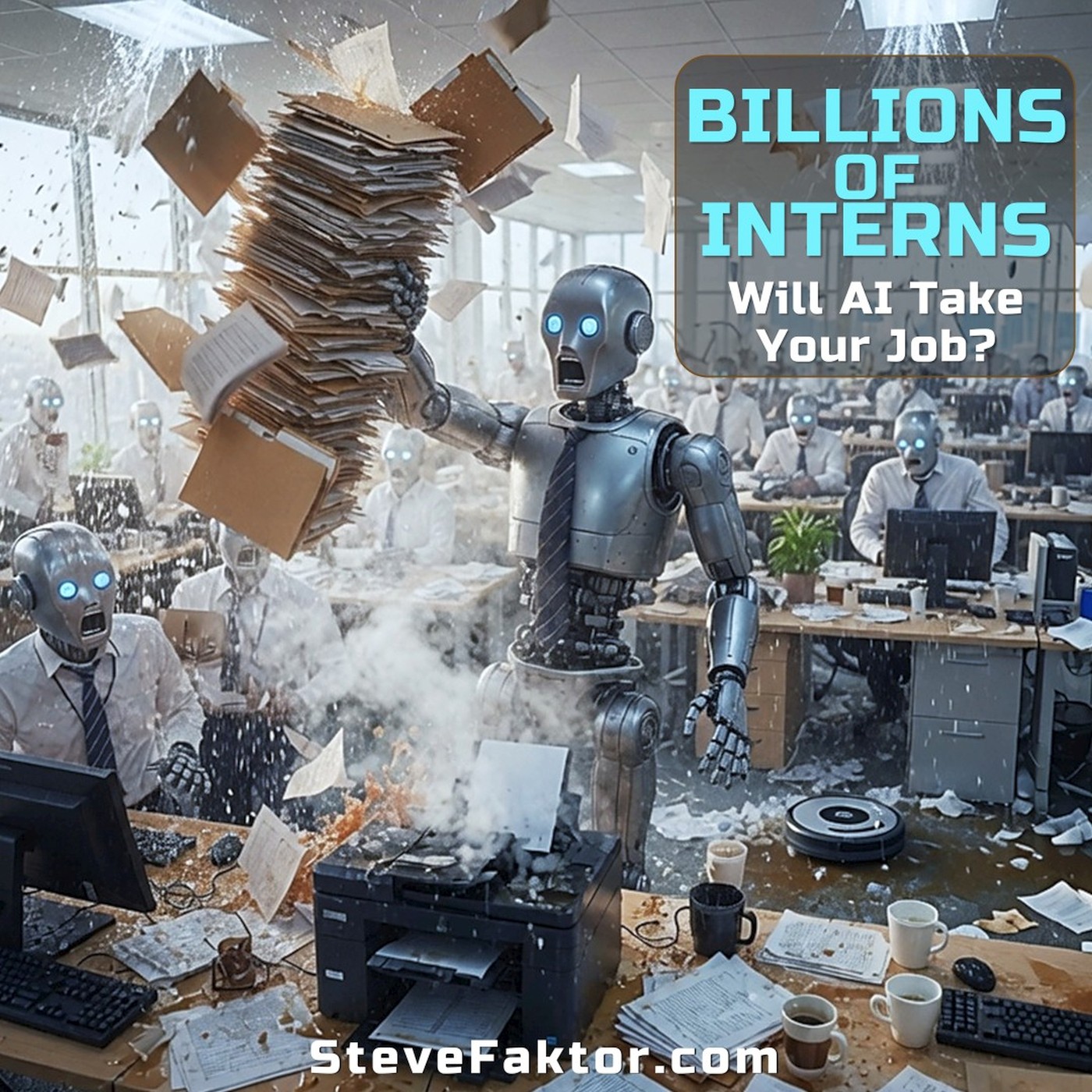
BILLIONS OF INTERNS: Will AI Steal Your Job?
https://youtu.be/Eanr77K2Vuo “In 2023, I thought AI was like releasing billions of “workers” into our economy…But the more I use it, the more I realize we unleashed billions of interns…One in seven is a star. The others are favors to your neighbor in Connecticut.” – BILLIONS OF INTERNS…Will Steal Your Job? America’s TikTok Intellectuals are booing AI at their college graduations as spectrummy billionaires say AI will steal your job. The truth? They’ve unleashed billions of interns. Is this job thief coming for us all? The revolution will not be tokenized. Here’s the real 5-year outlook…and what you can do to thrive. In this episode and newsletter (with all the fancy charts): AI Jobs Impact Shopping Spree The Humanity Amplifier AI’s Sloppy Engine Room Swans of Color AI Ozempic Survivors, Strivers, Thrivers Don’t forget to subscribe to get newsletters and episodes a day to a week sooner.
August 12, 20258 min
EP5.9: A Less Tarrifying Way To Bring Manufacturing Back
https://youtu.be/pHq1cENJntk In business, all things move to remove friction — cost, complexity, labor. So reviving manufacturing, a people, capital, and energy-intensive industry in a digital service economy, seems regressive and unsustainable. Reminds me of crypto, which was supposed to replace dollars as currency. It failed, because it was more complicated, slower, and less convenient. Unlike credit cards, it offered no extra buying power, purchase protection, customer service, or rewards. Why switch from Amex or PayPal? So if you’re going to re-introduce friction, the benefits better be spectacular, or it will fail. In a way, offshoring manufacturing to China did add friction. Suppliers were now half a world away. Collaborating with them was infinitely more complicated and laggy. BUT the cost savings were so dramatic that corporations scurried to move production abroad, despite the extra friction. So reshoring manufacturing might re-capture some of the advantages of local manufacturing. Especially now that China’s old labor cost advantage is neutered with automation. It can boost GDP, if not employment. What’s more important is the US needs to swap devaluing dollars into real, productive assets. That’s exactly what China’s been doing, liquidating dollar reserves to buy US farmland, mineral mines, capital equipment, and domestic infrastructure. It’s also been building infrastructure across Africa (Belt and Road) in exchange for access to their resources. Our window to do the same is closing. Trump’s trade war is speeding up devaluation and rewiring global trade around the US, without much to show for it. I say all this to assert that whatever we do now must be strategic, not chaotic. Before touching tariffs, I’d do everything possible to prepare for manufacturing to succeed. Specifically… Another Way 1. Stop the bleed The low hanging fruit is pulling every unspent penny from The IRA and other stimulus programs. Anything that’s not targeted towards growth and hasn’t shown results by now. I would have halted all tax cuts and let Trump’s 2017 tax cuts lapse. That did not happen in the Big Beautiful Budget that just passed. These are mostly gifts to the rich. I’d keep the child tax credit, opportunity zones, and business asset deductions, which are a small part of the total. What’s most revealing is cuts for the rich are permanent and those for the poor/middle class expire in 2028. 2. Laser focus on China First, that means, supply chain diversification. No matter what you hear from conspiracists screaming about “globalists”, globalization is inescapable . No single country can make everything their citizens expect — or will want in the future. Certainly, not without inputs from other countries. Foreign dependencies—or natural resource distributions—don’t just magically go away. Here’s famed economist Milton Friedman’s classic pencil example: https://www.youtube.com/watch?v=67tHtpac5ws Instead of trying to do everything ourselves, we should to accelerate and subsidize, shifting supply chains from China to allied countries. It’s something we’ve already started doing. This reduces reliance on China, while retaining sourcing flexibility, competitiveness of global markets, and expertise of top producers. It gets us up and running much faster than trying to build everything from scratch ourselves. But you can’t do that if we alienate them—threaten annexation, start trade wars, and undermine them mid-war. In 2019 I wrote : “How are Korean & Japanese electronics companies failing to capitalize on the massive, growing, global distrust of China?? Wake up!” It’s six years later. Their door to pick up the slack in high tech manufacturing is closing. The new trade deal with Japan is promising, with its 15% base tariff. But it’s too soon to know if any new business will materialize. Many of these announcements sound like smoke blown up Trump’s *ss to inflate his ego at a press conference. It’s not real. 3. Secure Allies Allies, in this case, fall into two categories—regional sourcing partnerships and large consumers markets (that import from China). Let’s start with sourcing partnerships. The Trans-Pacific Trade Partnership (TPP), introduced under Obama, would have been a great start . It was a way to create a sphere of influence across Asia, countering the growing fear of Chinese power. Instead, we had a dumb, partisan backlash, killing the deal. Most simple Chinese products (clothes, toys, knickknacks) could just as easily come from Vietnam, Malaysia or Thailand. There aren’t many big consumer markets. After the US, China, Eurozone, Japan, and India, things get quiet. Each warrants individual deals—ones that should present a unified front to China. They need to sit on our side of the table in those negotiations. In Trump’s approach, they are just another adversary, no different than China itself. Rich Arab states have small populations. Africa, Latin/South America, and most of Asia have huge, but poor populations. Their consumption can add up in some categories, like agriculture and aviation. But our goal with emerging countries should be to help them emerge. We need to take away their incentive to join the BRICs alliance. A good way to do this is with an incentive-based system. Not unlike the Mar-A-Lago Accords, instead of focusing on debt or dollars, focus our incentives on trade. In 2016, I wrote How to Make The U.N. Great Again…For the First Time . There, I proposed a more substantive alternative to the UN that transforms NATO into a trade entity. Almost any country could join, as long as it fulfilled multiple requirements. Benefits would escalate, as alignment with our interests increased. This is a positive, transparent, incentive-driven system to achieve what we flaccid, clandestine organs of soft power, like USAID, couldn’t. Here is a sample tier system from that post. (The actual requirements and benefits can be anything we want.) Membership Levels Requirements (additive) Benefits (additive) 1. Prime •Free democratic elections with term limits •Free press •Minimum level of human rights •Minimum standard education levels (literacy, math, science) •Aid •Low tariff/access to trade and development •Training (Agricultural, industrial, entrepreneurial, teachers, etc) 2. Super Prime •Unrestricted internet •Equal rights for women & minorities •Secular education •Economic Freedom •Military defense (a la NATO) •Access to loans/ growth capital •Direct investment 3. Optimus Prime •STEM Education •Healthcare •Sustainability •Quality of Life •Unrestricted travel & movement of labor •Additional UN voting rights (like entry into G20) •Date with Rihanna or Leo Dicaprio From: How to Make The U.N. Great Again…For the First Time 4. Renegotiate trade deals With clear objectives and allies lined up, we can effectively use tariffs to pressure China. Let our companies compete there, stop product dumping, unfair subsidies, IP theft, and so on. We also need to unleash our secret weapon: BRANDS. The leverage brands give us is criminally underrated. Click to expand: Why BRANDS Are Our Secret Weapon...For Now From the NBA to Nike to iPhones, what the US and Europe manufacture in spades, is Kate Spades. We manufacture DEMAND . Kantar BrandZ ranks Apple as the world’s most valuable brand at ~$1.3 trillion, followed by Google and Microsoft. Only two Chinese brands recently cracked the Top 100 ($24B for Shein and $22B for Nongfu Spring). They’re hardly high end. Interbrand’s 2024 ranking has dozens of American and European brands in the $50–$500 billion range. Xiaomi and Huawei just cracked $6–8 billion on that list. Western firms have mastered perceived value at scale. U.S. companies now carry ~90% of their value in intangibles like R&D and brand. They are global standards for identity, status and desirability. Have you browsed Amazon lately? Half the listings read like Scrabble tiles after a hurricane. Dozens of knockoff chargers and mystery cables are the opposite of branded goods. They’re sold on price, not prestige. This is China’s default setting. This generic junk is the result of intra-regional competition within China. They’d flounder in low-cost commodity hell…if not for us. https://twitter.com/ideafaktory/status/1261443103392780292 Manufacturing our premium products is a lifeline that props up China’s AGGREGATE national margin. For example, Foxconn has low single-digit margins to Apple’s ~40% . But 60% of its revenue comes from making Apple products. So, in effect, China’s factories get a “vig” on our designs that’s HIDDEN in low unit margins. It’s the same way Spotify saved the music industry—by restoring aggregate industry profit . Even though unit profits (per artist and per song/album) fell or vanished. China is the music industry, US brands are Spotify, Chinese manufacturers and employees are the artists. The artist always suffers. Our leverage won’t last forever. China is investing in innovation and consumer brands. While it still hasn’t birthed a Louis Vuitton—or a romantic Dim Sum restaurant, the margin gap is narrowing. Chinese consumers already buy a huge share of luxury goods. They’re on pace to be 35–40% of the world’s luxury market by 2030. The value of brands like Li-Ning have rocketed 66% in a single year, riding a wave of patriotism. Apple slid to third place in China’s phone rankings. Other U.S. firms now warn of “ record-low profits ” in the region. For now, brand gives the West outsized negotiating strength. Soon, Western brands will become immaterial to both Chinese producers and consumers. 5. Prime the pump of domestic manufacturing The US needs to play the long game. While procuring from more friendly nations, we must keep domesticating strategic industries. This means: Encourage foreign manufacturers to build here, as we’re doing with shipbuilding from South Korea. ( Bloomberg ) In any high-stakes military conflict with China, the US Navy will be critical to winning. But America’s shipbuilding industry is far from able to support what the Navy needs. Enter South Korean shipbuilding powerhouse Hanwha Ocean Co. The company is buying a former Navy shipyard in Philadelphia and recently secured Korea’s first ever contract to overhaul a US naval vessel. These steps pave the way for the company to play a bigger role in the US naval shipbuilding sector and could herald the start of a new wave of investment. America’s shipbuilding industry has virtually collapsed over the last generation, with years-long delays and cost overruns making it hard for the Navy to build the ships and submarines it needs. “Look at the difference in shipbuilding between the United States and China — deeply concerning,” Deputy Secretary of State Kurt Campbell said a July testimony to a Senate committee. Policy : For a while, Biden was more MAGA than MAGA. He kept Trump’s tariffs, added new ones, and incentivized domestic manufacturing with the CHIPS and Inflation Reduction Acts. Subtract the waste and social agenda, add performance incentives and monitoring, and it’s a better driver for manufacturing than Tariffpalooza. https://twitter.com/ideafaktory/status/1908871939302531411 Private Investment : tech giants, automakers, and pharma companies would need to make massive investments in new facilities. Workforce Development : Not only is there a huge skills gap, but Americans aren’t exactly fired up for factory work. We’d not only need training programs and automation, but Lizzo and Kardashians posting FOMO bait from assembly lines. 6. Facilitate the future With AI waiting in the wings to power the future economy, we will see entirely new industries and professions flourish. The key is letting them— occasionally facilitating their success with policy, investment, regulation. At the same time, we need programs to ease life disruptions by transitioning people into emerging job categories. We should also give every American a financial stake in the success of this new economy. (I’ll cover that in a future installment.) R&D investment : I’ve sifted through clients’ IP portfolios to find buried treasures to commercialize. We should do the same across DARPA, NSF, NIH, and every other government-funded program. Then companies can reward us for that investment. And let’s invest in new long-term research. Building a pipeline of foundational technologies is something the US has been good at. I broke this down in this episode . https://twitter.com/ideafaktory/status/1410244254979530753 What’s Next? I’ll pause the series here, for now. Suffice it to say, this road we’re on has many forks. The good news, rich people will be just fine. The working class and poor will need a plan—and some luck. You can reach out for speaking, scenario planning, or innovation inquiries. I’ll also gauge interest in live Q&A’s on how to plan for this uncertain future (career choices, education, investments, etc). Meanwhile, sign up for The Trendaddy newsletter and videos on all social platforms for updates. Be sure to set notifications on so you actually see my updates. If you found this helpful, share it with others.
August 1, 20256 min
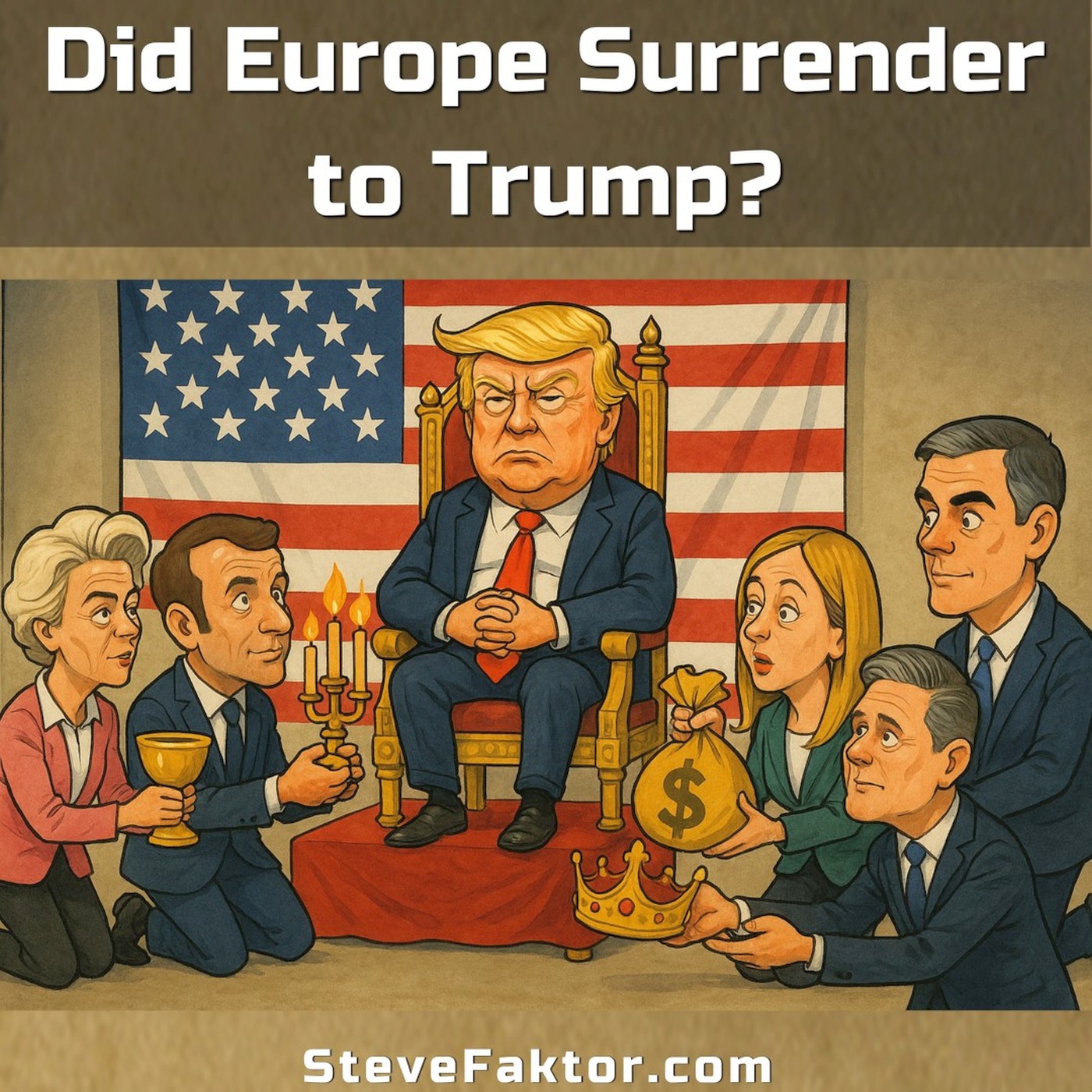
Did Europe Surrender to Trump? Will US Manufacturing Boom?
https://youtu.be/7Pfd_bqIXtY Like Japan, Europe just agreed to a 15% across-the-board tariff, while the US will enjoy no tariffs on its exports to EU. Europe promised additional investments in the US, along with energy and weapons purchases. Europeans are ”appalled” at this deal, which looks like total surrender to Trump. Meanwhile, MAGA superfans like Rod Martin view this deal as a huge victory. On the surface, Rod’s rod for Donald is justified. Trump got big concessions and made very few. But when you dig deeper, this is neither the surrender for Europe nor the win for domestic manufacturing we’ve been sold. The one indisputable benefit of this deal is the end to trade war chaos. Even a punitive certainty is better than hopeful ambiguity, which made long-term planning impossible. Both Europe and US win in this regard. The revenue from new tariffs is a double-edged sword, depending on who pays. Luxury brands are thrilled . They can absorb or pass on the extra cost because of high margins and price insensitive customers. Sellers of highly differentiated foreign goods that have few substitutes, will also pass higher costs to US consumers. Only producers of commodities (or categories with lots of substitutes, like mid-tier cars) will have to eat some of the tariffs. Ironically, the billions in new taxes are desperately needed to close the gaping budget deficits created by the “One Big Beautiful Bill”. Republican Josh Hawley is even proposing a $600 tariff rebate to Americans as reparations. As Howard Lutnick admits , many details of this deal aren’t hammered out yet. Two of these seem far-fetched. The WSJ and economic analysts think Europe’s $750B commitment to buy US energy is a fantasy. Europe bought $16-19B in all of 2024 and that much in the first half of 2025. At that level, our production and shipping capacity, along with Europe’s buying capacity, are maxed out. Hitting $250B a year would require the (return of the?) Messiah. The other suspicious figure is a promise by Europe to invest $600B in the US. This follows a long string of similar announcements by Saudi Arabia, Qatar, Japan, and Narnia. No details, no timeline, no penalties for non-performance. Just a big crazy number to puff up Trump’s ego at a press conference. They’ve all cracked the super-secret code to our stoic, mysterious leader’s heart (and toilets) of gold. He likes big bucks and he cannot lie. (He can.) Let’s put it this way, don’t add these numbers to your 401k calculator just yet. The most interesting commitment is “hundreds of billions” in military purchases. Not only does it address one of Trump’s biggest gripes with NATO members not paying their fair share (even war needs a Bernie Sanders), but it binds America’s military industrial complex to European defense. We are now inseparable in the only way America understands—money. As a byproduct, it also stunts any domestic manufacturing Europe may have been planning. No self-reliance on the horizon. (Writer Warwick Powell thinks this was an intentional move by Europe. I think it’s more incidental and expedient.) When it comes to spurring manufacturing, it’s a mixed bag. We clearly beefed up our defense industry, which didn’t need the help. Beyond that, I doubt 15% is a big enough number to incentivize a big push for domestic manufacturing. In fact, 15% is a lower tariff on cars than what existed. It might even motivate BMW and Mercedes, which have been producing in the US, to re-shore that production. A lot will depend on the strength of the dollar, which has dropped 10% since the start of the year, and other conditions (taxes, incentives, labor cost/supply) that can make manufacturing in the US more or less attractive. A lot of what I expect to happen is business-as-usual, because of loose enforcement and vague commitments. Even the exemptions for chemicals, agriculture, and aircraft are nods to worries about key inputs, inflation, and powerful lobbies. Consistent with my series on manufacturing , this victory is shortsighted. This exchange on X captures my feelings on this weak use of American leverage. By treating European allies no different than China—as adversaries and customers—we get concessions today and trade re-routed around the US, tomorrow. Transactional relationships are reciprocated, in kind. NATO was supposed to be a true allyship. Now, it’s an ex-girlfriend that still shares custody of the chihuahua. Or maybe nothing consequential actually happens, besides a big tax hike on American consumers.
July 18, 20252 min
EP5.8: 5 Ways Trump is Amputating America’s Power
https://youtube.com/shorts/QAdIFUnotPs?feature=share In the last installment , I was practically fawning (by my standards) over Trump’s ability to see a future the rest of us can’t. With manufacturing, he’s doubling down on the physical world, the place least susceptible to AI disruption. The problem is how he’s doing it. So much of this Master Plan seems chaotic and incoherent. But given our rudderlessness, even a bad strategy might be better than none at all. Enough to move us forward. But we aren’t making friends along the way. Here’s are the five things that bother me most. And if you do nothing else today, please read #5 . First, The Good News Let’s starts with some positives. There are early signs of re-industrialization, according to libertarian economist Peter St. Onge: Adjusted GDP growth hit 4.5%, nearing 5% when accounting for reduced government spending, doubling China’s growth rate. Private sector investment surged 22%, fueling prosperity and re-industrialization, driven by foreign companies relocating production to the U.S. Announced investments reached $5 trillion, potentially $8 trillion per Trump, compared to pre-COVID gross private investment of $4 trillion, with projects like Taiwan Semiconductor creating 40,000 high-paying jobs. Consumer spending rose 0.7% monthly, nearing a 9% annualized rate. Inflation remained flat (though the most recent month showed a small uptick to a 2.7% annualized rate) Soaring investment and stable inflation signal a strong economic outlook https://twitter.com/profstonge/status/1918281821730861059 This popsicle paradise is also a minefield. And Trump is careening through it, unworried about blowing up the dollar, economy, or our reputation. Below are five reasons I am worried. 1. Public Shaming I mentioned in the video that public shaming is a tool of last resort, especially when dealing with powerful people. What I didn’t mention is how vengeance against powerful bullies might play out, in practice. Remember how cable companies treated us? Constant fee hikes, service windows of four to six hours on work days, inexplicable bundles of things you didn’t want. The minute Netflix and streaming services became viable, millions ran for the hills. They cancelled cable in groves. Few under 40 have cable, anymore. Now imagine that, but with The World. It’s hard to know when – or if – payback will come, but Trump is inviting it. For now, I’ll brace for an extra dusting of arsenic in every Hot Wheels package. The other part I left out of the video is how bullies trigger patriotism. Shaming a leader shames an entire nation, even if that leader is unpopular. When their citizens start to hate us, any cooperation is perceived as capitulation. Suddenly, those leaders are emboldened to say ‘no’ — even to good deals — just to spite the bully. Trump is building a wellspring of such resentment. 2. China, China, China!! If our real target is China, why agitate the rest of the world? As I wrote in 2018 , Trump was right to target unfair trade with China, but wrong to go it alone. We have far more leverage with allies, who are desperate for leadership, something America used to provide. Trump’s lone wolf take on ‘America first’ leaves us exposed, with all our cards on the table, and everyone rooting against us. Even though Europe has diminished economically, it still makes up a sizable chunk of China’s trade surplus (24.9% to our 36.4%). That means, together, we’d have more leverage than we would alone. That’s not how Trump operates. 3. The Clinton Mistake In Econovation , I was all over Clinton for signing NAFTA and other free trade deals that bled manufacturing jobs out of the country, with little to replace them. Like Clinton, Trump has built no manufacturing capacity or incentives, before tinkering with tariffs, weakening the dollar, and endangering its reserve currency status. So we’ll get a weaker dollar loooooong before we get manufacturing. I don’t think we’re prepared for the turmoil in between. It’s similar to Trump’s Russia “negotiation” strategy. He flashed major concessions to Putin, only for Putin to sniff out weakness and double-down on pummeling Ukraine. In case it’s not clear from this example, American workers are Ukraine…and might get pummeled. 4. Unintended Consequences I had to cut the video for time, but Trump’s actions are stuffed like a piñata, full of unintended consequences. Just since the tariffs were announced, the President has already floated tax cuts to offset higher cost of tariffed products. He promised carmakers to cut duties on inputs like steel, copper, and aluminum. In his 2018 trade war, he had to pay farmers a $28B bailout , after China imposed retaliatory tariffs. We might need to do it again. And these are just the short-term impacts. Back in 2017, I wrote that the president is expediting the polarization of the world, where countries must align with either the US or China. This time, he’s created conditions that make choosing China easier. We already see adversaries aligning, as China switches LNG imports from the US to Russia . Allies are leaving, as China switches beef imports from the US to Australia. Even our closest neighbor and ally Canada is looking for deals with Asian partners to escape American tariff chaos. https://twitter.com/jdpoc/status/1911529620593135616 5. Amputating Organs of American Power There’s a low-grade cynicism—even nihilism—blanketing America. It feels so alien, compared to the ‘shining city on a hill’ I grew up with. To me, Reagan’s strength and positivity embodied that America. Maybe even Clinton – and the promise of Obama. That America was a magnet for immigrants, like my parents. We came here to chase opportunities unimaginable anywhere else. New immigrants still see America this way, but fewer and fewer citizens do. “We are not prepared to confront the ugliness that was needed to build our comfort.” Both over- and under-educated Americans are falling prey to hate, conspiracy, and fringe derangements. What’s unsettling is how many of these contain kernels of truth. It’s easy to denounce wars, slavery, or assassinations. They’re overt expressions of power. It’s soft power that’s truly unnerving. Books like Confessions of an Economic Hitman exposes the dark underbelly of American dominance. New revelations flood social media daily. We are not prepared to confront the ugliness that was needed to build our comfort. I wasn’t. I captured some of my struggle in this X thread: https://twitter.com/ideafaktory/status/1621732723827015680 Turns out, there are two parts to American greatness: The Dream and its underbelly. What if we need both to keep living the good life? We suspected that Trump might not be the ‘dream builder’. We didn’t realize he’d gouge out our underbelly. The America we have (not necessarily the one we want ) relies on global cooperation and capitulation from other nations. We achieve it through carrots and sticks, administered through programs like CIA, USAID, IMF, NATO, World Bank, and WHO. And we propagate (propagandize?) them through tools like NPR, PBS, Voice of America, and social media. There’s plenty to dislike about all of them. Many are bloated, corrupt, obsolete, or misaligned. But Trump is slashing them with an ax, not a scalpel. He thinks he’s cutting our budget, he might be cutting our power. As I wrote in The McFuture Manifesto , America is going through a national puberty that could drive us mad. Or, help us grow up. https://twitter.com/ideafaktory/status/1504141816081403907 To make it past puberty, we must reconcile the Myth of America with the ugliness needed to achieve it. And hopefully, emerge from that struggle with an aspirational vision for who we want to be, what we want to achieve, and how to do it. But what if we never get that chance? AI is America’s puberty blocker. It suppresses organic human thinking by drowning it in an infinity of synthetic ideas, built from our pre-pubescent knowledge. Effectively, AI hijacks human evolution. Not because its better, but because it’s so powerful and voluminous. We better grow up FAST, or it will do it for us. Is there a better way? Clearly, I digressed from manufacturing and tariffs. But don’t worry, the next episode is the big crescendo. It’s where I lay out what America must do to bring manufacturing back. No idea if I can condense it into a coherent, short video, but be sure to sign up to this newsletter for full, glorious, and happy ending. Till then!
June 27, 20252 min
EP5.7: What Trump Knows…That We Don’t (About Manufacturing & The Economy)
https://youtube.com/shorts/bCxuEINqlyw?feature=share In this newsletter, I’ll do something a little different. I’ll republish “The Debt Spiral” from my 2011 book, Econovation, along with an explanation of each step. I’d probably make a few tweaks if I were doing it today, but it stands the test of time. First, a few thoughts on Trump’s focus on manufacturing and tariffs. It’s hard to know whether Trump’s master plan is well-thought out or intuitive, but I suspect it’s the latter. He’s a real estate guy. I’ve seen his desk. He understands buildings, paperwork, and physical projects. He is not of this digital world. I think that works in our favor. The digital world is about to be vicious and unkind to those who’ve made a living from it. https://twitter.com/ideafaktory/status/1647385774701068288 As I said in the video, whether Trump’s plans work almost doesn’t matter. We are on an unstoppable trajectory towards earth, a place we haven’t visited in a while, as a country. We didn’t have to. Dollars were magical and infinite. We could print them and the world would send us the fruits of their blood, sweat and tears. AKA “fair trade”, am I right? Imagine the nerve — our financial engineers, marketers, consultants, corporate drones, and influencers made a killing. While essential workers — firemen, garbagemen, doctors, nurses, truckers, and countless foreigners with hoes and spatulas — kept us alive. That era is ending. [subscribe_to_unlock_form] Not knowing anyone who makes any of the things we depend on is a big red flag. We chose to ignore it, but can’t any longer. Not all commerce is created equal. Essentials made by outsiders or adversaries are not goods, they are tethers to their agendas and priorities. If the goal is freedom, that ain’t it. The time to make real things is long overdue. I think Trump sees it. Not just sees it, he’s summoning it. The Debt Spiral (From Econovation) The debt spiral applies to people and countries alike. Indebtedness explained in 15 simple steps: It all starts innocently enough with wanting things. Sometimes, when you want things that are really expensive, like a mansion, a highway, or a missile defense system, you borrow. If you make your payments on time, lenders love you. They express their love by sending love letters, also called “offers.” Word of your good credit travels far and wide. Others start offering you credit. After all, they know you’ll pay the bills with a healthy interest. If you’re a country, others feel comfortable buying your bonds and using your money. Armed with lots of cash and a long shopping list, you borrow more. With the money, you can afford lots of expensive hobbies, like space travel, health care, and war. In fact, you can borrow so much, you barely have to work. You can pay other countries with lower wages to make you things. Or, you can bring in “guest workers” to do anything that requires movement. Every year, you borrow just a little more than you earn. That’s okay, you’re still making payments. If you’re a country, your tax revenues start going down, since your citizens are now borrowing instead of producing. If you’re an individual, there are fewer jobs because good credit has made others not work, either. At some point, with enough people not working, the things you needed to buy, like bridge repair and health care are underfunded. Now you need to borrow more—this time, for necessities. The cycle continues for a while, until the lenders start wondering if you’ll ever work again. Or if your new job can produce enough income to pay your debts. Lenders start thinking you’re a higher default risk as you pace desperately through your hollow mansion. They raise your rates. If you were just barely paying the interest before, just wait to see how hard it is to pay it with higher rates. As more of your money goes toward paying debts, you can’t afford the things to which you’ve grown accustomed—from wars to roads to that extra side of guacamole at Chipotle. If things get bad enough, investors stop lending you money. In the case of the U.S., that’s usually private companies and foreign governments. At some point, you can either renegotiate your debts or inflate your currency by “printing” more of it. People can’t make [print] money, but the U.S. can. Either way, the value of your money drops. In the inflation scenario, you still pay off your debt in nominal terms (the numbers are the same, but the value of each dollar is diminished). If you renegotiate, you pay a percentage on the dollar. Either way, your credit rating takes a hit, and you have to start rebuilding your credit score. When your currency is worth less (or worthless), others stop using it and find alternatives, like other countries’ money, precious metals, or wampum. Once you’ve renegotiated, you really have to pay every cent.There are no second chances. The best way to do it is increase revenues. For a country that’s higher taxes. Brave New World The post-financialized, post-digitized economy will look very different. A weaker currency will force us to source more domestically, as imports get pricier. This happened in Argentina after multiple currency crises. In this world, we’ll have to live in the same reality as others do. That means trading goods for others we want, not just paper. It means living by real budgets, not sprees disguised as budgets. No more outlandish military expenditures or massive social programs. I’m concerned many Americans are not equipped to survive this reality…or any kind of reality. https://twitter.com/ThomasSowell/status/1916551266118816125 For all its faults, we’ve taken the global order for granted. The US has been its main beneficiary. We can still lead. We can still be great. But we might not be able to keep printing our way there. For the first time since World War II, the training wheels are off. For now, enjoy Louis CK’s full routine about white people time traveling . We can decide if this also applies to Americans or not. https://youtu.be/2o8jrhF6UK8 In the next and final installment, I’ll tell you what I think of this plan and what I’d do differently. [/subscribe_to_unlock_form]
June 20, 20254 min
EP5.6: What’s Trump’s Endgame for Tariffs & Manufacturing?
https://youtube.com/shorts/lFtOziQXPNM?feature=share Finally, does Trump have a plan? Yes. Can it deliver the results America needs? Reply hazy, try again. I lay out the plan and my issues with it here. Then, finish this series with a BANG over the next three killer episodes. All the charts and thoughts that couldn’t make it into the video, below. First, NOBODY gets manufacturing back by changing one incentive. Some of Trump’s tariff edicts barely last one week. Meanwhile, supply chains are long, complex, expensive investment decisions that require certainty and stability — contracts, legislation, ecosystems (universities, job training, infrastructure, housing), and tax abatements…or as my transcription software called it, “Jason Batemans”. On Trump’s terms, this is like building your dream home on a raft. Or, in the Palisades. These moves are not designed for long-term investment decisions, but invitations to negotiate. Not great invitations. Like 4th of July at Ted Kaczynski’s . This is a chaotic turducken of high stakes bets, built on the idea that America can force other countries to capitulate. Everything has to go right. Even then, we will have alienated our allies and damaged trust in the US and the dollar. This video is a more coherent breakdown of Trump’s plan than anyone, including him, has ever articulated. The steps make sense, on the surface. I’ll break down how they fall apart, in practice. https://twitter.com/shellenberger/status/1910027744496550207 1. chaos as leverage Using chaos to stimulate manufacturing is like yelling at a fat friend to run faster. Maybe they can, or maybe they’ll die. Trump’s first move is meant to destabilize opponents by expanding the Overton Window. That makes previously unthinkable positions look like rational compromises. A 10% global tariff may have been unthinkable, until a 110% tariff was a reality. It’s all part of a pattern. [subscribe_to_unlock_form] Remember when he announced we’re taking over Gaza? Suddenly every Arab nation that was sitting out this latest war, woke up. ‘Oh my God, we don’t want the US in our backyard!’ Now, Egypt, Jordan, Saudi Arabia and Qatar are all trying to figure things out on their own. Or when Trump threatened to drone bomb Mexican Cartels? The goal was to push Mexico to handle the problem so we didn’t have to. Same thing with leaking plans to bomb Iran. Same with threatening to annex Greenland, Canada, Panama Canal, and Ukrainian minerals. Now, Canada dumped Trudeau and Arab states are working on their own solution for Palestine. In a trade war, our panic is the point. It’s what convinces adversaries that this is real, that we’re ready to gut this out. Except… If you pull the trigger, you can’t blink. Trump’s been blinking like a Bedouin in a sandstorm, with one backtrack after another. Blinking invalidates not only the tariff threat, but every other use of this tactic. Now the only way to regain credibility is to bomb Cleveland. OK, Iran will do. Even Trump’s ‘blinks’ are incoherent. Giving Apple and Nvidia tariff exemptions on iPhones and other finished goods, while hiking it for steel, is the exact opposite of bringing manufacturing back. It raises costs on inputs, lowers them on outputs. According to Goldman-Sachs , US input tariffs could raise US manufacturers’ production costs by 5-15%, making them less competitive vs foreign producers, especially overseas. This is not a strategy, unless the strategy is chaos. And it is. Paper tigers get shredded. Ours is about to get shredded by a panda. 2. Reciprocal tariff S Trump’s second step uses the leverage created by chaos to ‘level the playing field’ with reciprocal tariffs. The formula is basically DEI for countries. Instead of judging each country’s ability to import or its specific trade restrictions, its total trade surplus is deemed “unfair” and ‘zeroed out’ with a tariff rate. That means Vietnamese workers, who earn $0.94 an hour, better stock up on Squarespace and Schwab brokerage services, if they want us to keep buying those Nikes they stitched until midnight. Expecting country by country trade balances is as ridiculous as expecting every job, company, and industry to be perfectly representative of a country’s entire demography— or it’s discrimination! Fact is there are very few viable consumer markets that can consume our goods. The theory is we have so much leverage because of the global demand for dollars that countries will trip over themselves to give in. Not only that, these countries will absorb most tariff costs, without raising prices. Now that poor Nike stitcher is down to $0.66 an hour and no breaks! She may gnaw on some rawhide to keep her stomach from growling. It’s so laughably easy to beat up on poor nations that you have to wonder, why was this broad sweep necessary? So much unnecessary animosity. We could have gotten everything we wanted with one blurry fax. Our real target is China. Truth is, we are rich. We’re too big a consumer market to ignore. We will eat, wear, or sit on anything the world sends us. That’s what makes us great. And that’s what the world depends on, especially exporters. Who else will pick up that slack? Europe is shrinking and dying off. China is shrinking and not rich enough to consume all this stuff. India is China’s adversary and too poor. Latin America? Africa? We are the world’s garbage disposal. No one can consume as much plastic trash. One of the officials said Chinese companies were struggling to replace the U.S. market because developing nations cannot buy as many items, and that for many firms this was an existential threat that needed to be resolved in days or weeks. In addition, Beijing was worried it was left without a place at the negotiating table while its major trading partners, such as Vietnam, India and Japan, began talks with Washington, said two officials familiar with Beijing’s thinking. – Reuters For a while, it was working. Everyone was caving in. Singapore, announced they won’t do retaliatory tariffs. Europe was ready to talk. Vietnam proposed 0% tariffs on all US goods. I’ll suck your d\*\*k! Then came China. When Trump hit them with a 127% tariff, they dug in. And they’ve got leverage. Though both China and US have been decoupling from each other, diversifying away from co-dependence perhaps in preparation for a day like this. China is about 15% of US imports and the US is about the same percentage of Chinese exports. It’s big but not insurmountable. China remains a critical exporter in categories we’d have a hard time replacing, especially in smartphones. We’re also reliant on Taiwan for semiconductors, whose independence from China hangs by a thread: Meanwhile, we’ve grown MORE dependent on China for inputs to our own manufacturing. China holds three important cards – manufacturing expertise, scale, and exclusive access to rare earth minerals needed to make high-end electronics. Maybe China’s biggest advantage is it plays the long game and its people are team players, eager…or forced, to play along. Famously, China created a 100 year plan to surpass the US as the leading global power by 2049. Our leaders make 100 character tweets and 2-day tariff edicts. We have the gravitas of a bad intern. China’s already posted a video called “Never Kneel Down!” in which China’s Foreign Ministry denounces ‘bullying’ on tariffs and calls on other countries to isolate the U.S. as a ‘small, stranded boat’ https://twitter.com/MFA_China/status/1917069881142612278 3. Mar-A-Lago Accord The fourth and final step of Trump’s Master Plan is the Mar-A-Lago Accord, apparently modeled after the Bretton Woods Summit, when the US left the Gold Standard. This rumor has been substantiated by Barrons and interviews with reputable right-leaning economist Oren Cass , among others. What is The Mar-A-Lago Accord? Like that last battle in every Bruce Lee movie, this is when we renegotiate our debt and devalue the dollar. It’s a fancy way to say, do-over. The disruption caused by these initial tariffs was meant to make other countries more receptive to a new trading system or global order. What would this new order entail? Weaken the US dollar while preserving its global reserve currency status, likely also restructuring foreign debt obligations. This weaker dollar would help balance trade deficits by making US exports more competitive globally. Let “green country” countries peg their currencies to the US dollar, with a mechanism to appreciate if the dollar gets too strong. In exchange, “green countries” would get access to the US consumer market, security benefits, and the US dollar system. The US might also seek payment for providing security to these nations, Blackwater USA, if you will. The overarching aim is to reorder international economic, military, and political relationships to benefit the US. Take a minute to process this. This is the gamble Trump is making: He’s going to make Americans poorer, diminish our buying power with a weaker dollar, in exchange for less debt and the possibility of more American exports. While at the same time, potentially committing us to new security entanglements that may exceed those of NATO. What could possibly go wrong? Weakening the dollar in exchange for protection money is self-undermining. Our ability to police the globe will be impaired. Same goes for our ability to consume. Suddenly, the reserve currency and security pitches don’t look so hot. This grand vision requires goodwill and trust, something Trump has undermined by subverting NATO, rescinding defense commitments to Ukraine mid-war, threatening annexation, and starting a global trade war. At this point, most countries would sooner get protection from Tony Soprano. So far, the only sure thing Trump’s accomplished is a major tax hike from tariffs. [/subscribe_to_unlock_form]
May 27, 20252 min
EP5.5: Can Manufacturing Bring Jobs Back? [A Special Series On What Manufacturing Can Do For You]
https://youtube.com/shorts/IO1e5QyxlHc?feature=share It all starred with this Twitter scribble from 2019… https://twitter.com/ideafaktory/status/1159818822393708545 Here’s a clean look at that graphic from the video. The percentages are illustrative, but echo the wage info below: Today, it’s more relevant than ever. To manufacture a TV, phone, or router in the US— at a price consumers are willing and able to pay— companies would need to automate. Especially, given the differential in pay for factory workers. Here’s a comparison from Apollo of top manufacturing nations: [subscribe_to_unlock_form] Some industries, like textiles, pay workers so little that competing with them is inconceivable, even with automation: The bottom line is scaled American manufacturing would create a fraction of the jobs we once had. And NOT for skilled blue collar laborers who are cheering this on, but high-end engineers and specialists with advanced degrees. The rest will be done by robots. Even China is no longer the cheap labor play of yesteryear. It’s paying workers more, automating, and moving low value manufacturing to even cheaper places like Vietnam or Bangladesh. Studies show that manufacturing will not bring jobs back . Even countries with large manufacturing sectors and trade surpluses have seen the share of employment from manufacturing decline. Here’s what the US chart looks like. Remember this is absolute numbers. It would be a much more dramatic drop as a share of the population, which increased a lot in that time: You can see the huge drop after Bill Clinton signed NAFTA and other free trade agreements. Offshoring kicked in around 2000. A poorly thought out bleed of jobs that decimated entire chunks of America. Look at the wage differential with Latin America. (It was an even bigger gap then). What did we think was going to happen? We really need to re-evaluate Bill Clinton’s legacy. https://twitter.com/ideafaktory/status/1305158425496739841 Singapore is a great case study on what we can expect. It successfully brought manufacturing back with innovative semiconductor giants like TSMC, but only as a share of GDP. The manufacturing share of employment kept shrinking. In 2011’s Econovation, I wrote about some successes and failures of reshoring manufacturing. These challenges persist. Craftsman tools recently tried and failed to re-shore. It faced issues with automation, equipment delays, the pandemic, foreign supply chains, persistent defects, and more. And famously, Tim Cook explained that the difficulties of bringing manufacturing back to the US go way beyond cost. 🇺🇸👷♂️After decades of offshoring, the US simply does not have skilled workers for manufacturing anymore. 📊Only 8% of the US workforce are in manufacturing, and only 5% are hardcore technical workers – the rest are in sectors like food, beverage and tobacco. 👂Listen to Tim… pic.twitter.com/rhJS2ZNni4 — Sputnik India (@Sputnik_India) March 13, 2025 Sometimes, we forget that manufacturing *IS* automation — and automation is the future. Its sole purpose is to eliminate friction…that’s us. Eventually machines outperform us meatsacks, so we need fewer of us to produce bigger volumes of everything. And the rest can move on to teaching yoga or commemorating cheese pulls on Instagram. Here’s an excerpt on friction from “ Why Even Musk Can’t Trump the Inevitable “ Automation is inevitable, regardless of industry or country. The best we can do is slow its roll. Maybe. But others, including China, will keep pushing ahead. So should we. Ezra Klein’s and Derek Thompson’s book Abundance criticized Democrats for crippling good programs by trying to solve every societal ill at once. As a result, billions were wasted on programs that built nothing, like EV chargers and rural broadband . Let’s not do the same with manufacturing. If we want to bring production back for national security and sovereignty, let’s use every tool at our disposal. Worry about GDP and jobs when and if they become a separate problem. The good news is building factories and servicing workers in physical spaces almost always creates an ecosystem of jobs. Maintenance, shipping, distribution, warehousing, restaurants, housing, etc. I think it’s a big enough halo effect to make a difference. How big, we can’t worry about now. Sneak PeEk At Episode 5.6 On the next episode, I’ll do my best to explain the three pillars of Trump’s Master Plan and how well they stand up to reason. Here’s teaser #1: everything Trump is doing points us towards a Great Reset of America’s position in the global economy. Teaser #2: It almost doesn’t matter what Trump does, we’re headed there regardless. Stay tuned. Tell a friend. [/subscribe_to_unlock_form]
May 23, 20252 min
EP5.4: Can Manufacturing Come Back? [A Special Series On What Manufacturing Can Do For You]
https://youtube.com/shorts/ZXhVK-bK_A8?feature=share As I said in the video, the DNA of the world has changed. Tariffs can’t undo 30 years of manufacturing decline. But what I couldn’t mention in the video is manufacturing never really shrank in America, depending on how you measure. And it’s a good starting point for bringing some of it back. Three Views of ‘Manufacturing Decline’ There are many ways to look at the state of manufacturing in our economy. I’ll explore three here: as a share of GDP, as a share of global production, and total output vs value-add. (You can see why this wonky stuff is impossible to do in a short video). That last one gets at the question of dollars vs. units. The latter being more interesting since China is purposely devaluing its currency to juice exports. 1. Let’s start with the obvious – manufacturing as a percent of GDP has been falling. Depending on the year and source, manufacturing is down to about 11% of GDP from 28% in the 60s. That’s exactly where it is now in China. By itself, this is not necessarily a negative. It just as easily shows we’ve successfully diversified our economy in ways others have not. (I’ll explain later in this series, that diversification is also a double-edged sword.) Either way, production is less pivotal to our economy…at least in dollars. 2. A second way to look at production is compared to world manufacturing output. Here, things start looking better for the US. As we’re down slightly from 1980 to 2023 from 211 to 17.2%. Meanwhile, China is on a tear, producing almost 29% of the world’s manufactured goods. [subscribe_to_unlock_form] 3. Now, let’s look at value-added output (same measure as above). On an absolute dollar basis, US value-added manufacturing is up. Basically, this includes any assembly or extra work that increases the value of a physical good, even imports. That second line (red), shows industrial production in units. That’s where you see us tapering and China taking off (though that part isn’t on this chart). https://twitter.com/Mark_J_Perry/status/1915338236018278460 On balance, we’re not as bad off as it seems. We still make things in America, just not as many compared to our own or the world’s GDP. This gives me hope. We have a good starting point for bringing back more strategic industries, along with others we need for scale. China Is In Our Blood China’s industrial output is truly jaw-dropping—bigger than the next six countries combined. And it’s the only economy whose share of global manufacturing has been growing, as the G7 mostly sinks. Some of that is from cheating. Keeping its currency artificially low, subsidizing domestic manufacturers and international shipping, stealing designs, keeping foreign competitors out, etc. Not only that, but the entire global supply chain is wired into China, relying on its inputs for their outputs. The good news is there’s been a slowdown in globalization (as measured as (exports+imports)/GDP). That flattening buys us time to make moves. Where Net Exporters Succeed I looked at the top countries with trade surpluses and top two exports. I eliminated countries with mostly commodity exports. You either have a resource or you don’t. There’s only a handful of categories that can generate high value manufacturing: semiconductors, electronics, machinery, automobiles, pharmaceuticals, and chemicals. expand to see detailed data for above chart Country Top Export (2023) Resource Type % of Total Exports (Est.) GDP (Est., $B) Total 2023 Manufacturing GDP (Billions USD) Manufacturing GDP/Total GDP % (2023) Total Exports ($B) Total Exports/GDP (%) Trade Surplus ($B) Surplus/GDP (%) China Electronics Manufactured Good 30% 18,000 5,124.0 28% 3,161.6 17.6% 823.2 4.6% Machinery Manufactured Good 20% Germany Automobiles Manufactured Good 20% 4,500 826.2 18% 1,512.9 33.6% 225.8 5.0% Machinery Manufactured Good 15% Ireland Pharmaceuticals Manufactured Good 50% 600 163.5 30% 181.2 30.2% 62.4 10.4% Organic Chemicals Intermediate Good 15% Italy Machinery Manufactured Good 15% 2,200 298.5 15% 518.7 23.6% 37.3 1.7% Vehicles Manufactured Good 12% Netherlands Machinery Manufactured Good 15% 1,000 118.9 12% 646.3 64.6% 92.5 9.3% Chemicals Intermediate Good 12% Singapore Electronics Manufactured Good 25% 500 100.2 20% 426.4 85.3% 52.8 10.6% Chemicals Intermediate Good 15% Switzerland Pharmaceuticals Manufactured Good 30% 900 132.8 15% 278.0 30.9% 56.1 6.2% Machinery Manufactured Good 20% Taiwan Semiconductors Manufactured Good 40% 800 225.3 30% 336.7 42.1% 73.4 9.2% Other Electronics Manufactured Good 20% There are small economies like Taiwan and Ireland that are at 30% of GDP from manufacturing. But they’re too small and homogeneous to learn from. Where Do We Start? Much of America’s GDP isn’t very exportable. What is? In terms of physical goods, manufacturing ($1T+) remains our biggest export sector. Then natural resources ($300B mostly energy and minerals) and agriculture ($150B). Nothing else breaks $100M. see data here Category 2023 US Export Value (Billions USD) Merchandise Exports (USITC) $’s Exported Percent of Total Exports Energy-related products 334 11.0% Chemicals 320 10.5% Cars/Transportation Equip. 356 11.7% Electronics 306 10.0% Agriculture 184 6.0% Minerals & metals 172 5.6% Machinery 165 5.4% Special provisions 67 2.2% Other goods 115 3.8% Total Services Exports 1030 33.8% Total Merchandise Exports 2019 Services Exports (BEA) Services by Type (from attachment) Other business services 281.9 9.2% Travel 189.1 6.2% Transport 97.8 3.2% Financial services 167.5 5.5% Telecom, computer & info 64.7 2.1% Insurance services 25 0.8% Personal, cultural & recreational 30.7 1.0% Government goods & services n.i.e. 12.8 0.4% Maintenance and repair n.i.e. 14.4 0.5% Construction 8.3 0.3% IP 137.8 4.5% Subtotal from Attachment 1030 Total Exports (Merchandise + Services) 3049 https://www.usitc.gov/research_and_analysis/tradeshifts/2023/us_trade_industry_sectors_and_selected_trading More here: top 10 US industries by GDP contribution and exports in 2022, as a percentage of total US GDP of $25.74 Trillion On the services side, our biggest expert is tech ($655B scattered across Professional/Business Services, IP, and Information services). Financial services is between $175-200B. Entertainment is only a marginal export at $60B. Real Estates/Construction, most services, education, healthcare, retail and wholesale are structurally domestic. (I excluded government GDP, which is never exportable and exists as a function of private industry.) Despite these big numbers, we import far more than that. We produce too little of what others want—or what we need, creating big annual trade deficits. To close that gap, we have to build on our strengths in these top export sectors. The Bottom Line With some help from AI, I estimated that—with spectacular execution, the US could get 15-20% of GDP from manufacturing. Even with public incentives, private investment, and workforce development, it won’t be easy. A semiconductor plant costs $10-20 billion to build. But when Taiwan Semiconductor built one here in Arizona, it bled cash as soon as its supply chain was interrupted by the trade war. Countries like China and Germany aren’t just going to lay there and take it. They’ll double down on their subsidies, tariffs, or play hardball with needed inputs to keep their edge. If we’re successful, there could be skill and talent shortages that require…(gulp)…immigration. Going from 11% to 15% or 20% wouldn’t be all additive. On the plus side, there’s the direct GDP boost, halo of jobs servicing new manufacturers, and replacing imports. On the downside, expect talent wars, ramp-up costs, and global trade risks. The lower-end (15%) scenario could net $1.5T in annual GDP. On the high end (20%), as much as $5T! Shots are on us!! (No, not gunshots you monsters!) detailed calculation on net impact of reshoring Table: Quantified Impacts of Increasing U.S. Manufacturing Share Impact Variable Description Low-End Scenario (15% Manufacturing) High-End Scenario (20% Manufacturing) Direct GDP Boost Increase in GDP from higher manufacturing share $1,040 $2,340 Halo Effects (Multiplier) Additional GDP from related industries and spending (multiplier of 2.0) $1,040 $2,340 Talent Cannibalism Reduction in GDP from other sectors due to resource reallocation -$520 -$1,170 Transition Costs Short-term inefficiencies and adjustment costs (10-20% of total boost) -$104 to -$208 -$234 to -$468 Import Displacement Additional GDP from replacing imports with domestic production (20-40%) $208 $936 Productivity Gains Annual GDP increase from efficiency improvements (0.5-1% of GDP) $130 $260 Global Trade Risks Potential GDP reduction from retaliatory tariffs or reduced exports (0.5-1%) -$130 -$260 Net GDP Impact Sum of all impacts $1,664 to $1,456 $5,212 to $4,978 Sneak PeEk At Episode 5.5 What about jobs? Will Jeff from Ohio, who’s been waiting for his factory to re-open since 1993, have a job? In the next episode, I’ll break down that answer using this scribble I made back in 2016: [/subscribe_to_unlock_form]
May 16, 20252 min
EP5.3: Globalism’s Dirty Little Secret [A Special Series On What Manufacturing Can Do For You]
https://youtube.com/shorts/4qoM0uWs7-M?feature=share Does America need to make Dodges AND di***s? Trump thinks so. He’s not just targeting strategic industries but ALL industries with tariffs. Why?? I used to think that was dumb. For years, I wrote that the US can’t rely on China for critical technologies (routers, computers, phones), medicines, or food. The pandemic was a dry run for how dangerous that dependency can be. Then I walked by a manhole cover made in India and the the myth of “strategic industries” became clear. How could it make sense to ship something so heavy and simple to make, all the way from India? Turns out, India’s steel industry is the second-largest globally, producing 140.0 million tons of crude steel in 2023, but still a fraction of China’s 1,019 tons and more than our 81.4. So comparatively , India is swimming in iron ore and low-cost labor. No wonder it’s still cheaper to import their sewer covers, especially when tariffs are low. The US doesn’t manufacture enough products that use steel to make its cost per unit cheaper than India’s, even after shipping costs and delays. [subscribe_to_unlock_form] Trump’s 25% tariff on imported steel, announced on March 12, 2025, caused US steel prices to surge to $912 per metric ton up 23.2% from January to February 28. That might make domestic steel production more competitive domestically but raise costs for manufacturers that use it, including all US home builders. You can’t protect one without hurting the other. Everything is intertwined. Tariffs could incentivize US companies to invest in local steel production but they’d still be constrained by iron ore deposits or mismatch with the kinds of steel domestic producers need. The US produces only 4.3% of the world’s steel. But the very strategic defense industry uses only 3% of that amount. That means other industries must soak up the rest of domestic steel production. Luckily, construction is 50% of that volume. Auto and machinery add another 25%. We can get to 100% of steel produced. But what if there are supply or demand shocks? Specialty configurations needed? Or, timing and throughput issues? A union strike at the supplier? With a global supply chain, those can be mitigated. With a US-only supply chain? Get in line. expand to see detailed chart for each category Industry Estimated Steel Used (million metric tons) Percentage of U.S. Steel Notes Construction 40 50.00% Used in buildings, bridges, roads, and infrastructure projects. Automotive 12 15.00% For vehicle frames, bodies, and components like engines and suspensions. Machinery 8 10.00% Includes industrial, agricultural, and manufacturing equipment. Energy (Oil & Gas, Renewables) 6 7.50% Used in pipelines, wind turbines, solar structures, and drilling rigs. Appliances 4 5.00% For household goods like refrigerators, washers, and ovens. Transportation (Non-Automotive) 3.2 4.00% Includes railcars, ships, and aerospace components. Defense 2.4 3.00% For ships, vehicles, weaponry, and military infrastructure. Metal Products Fabrication 2 2.50% For tools, containers, and structural components. Packaging 1.6 2.00% Primarily steel cans and containers for food and beverages. Electrical Equipment 1.2 1.50% For transformers, motors, and heavy wiring systems. Now, imagine doing that kind of 1:1 matching for EVERY OTHER COMMODITY. It’s madness! Defense Dependencies This problem becomes more stark when starting with a list of essential inputs for the defense industry. Quickly, you see the scope of globalism — and our dependence on China, Russia and Taiwan. And that’s just one industry. expand to see table of 10 Most Critical Inputs for the U.S. Defense Industry Table : 10 Most Critical Inputs for the U.S. Defense Industry (2023 Context) Input Description and Importance Top Sourcing Country and Percentage Notes on Vulnerability or Strategic Priority Steel Primary material for ships, vehicles, weapons, and infrastructure. ~2.4M metric tons used annually. United States, ~70% High domestic production (~81.5M metric tons), but alloying elements (e.g., titanium) face global supply risks. Microelectronics Semiconductors power missiles, drones, and command-and-control networks. Taiwan, ~60% Global chip shortages; heavy reliance on Taiwan and South Korea. DoD prioritizes domestic production. Rare Earth Elements Critical for magnets in motors, sensors, and electronics (e.g., F-35 jets). China, ~70% China dominates ~90% of global supply. U.S. imports 70% from China; stockpiles down ~90% since Cold War. Aluminum Lightweight material for aircraft, vehicles, and munitions casings. Canada, ~50% Robust North American supply, but energy costs and global volatility affect pricing. Titanium High-strength metal for aerospace (e.g., fighter jets) and naval systems. Russia, ~40% U.S. relies on Russia and China for processed titanium; sanctions disrupt supply. Energetic Materials Chemicals for explosives, propellants, and munitions (e.g., TNT, RDX). United States, ~80% Limited domestic producers; aging facilities and regulations constrain supply. Skilled Workforce Engineers, machinists, and technicians for complex systems. ~1.1M defense workers. United States, ~100% Workforce down 2/3 since 1985; competition with tech sectors for talent. Castings and Forgings Precision metal components for engines, turbines, and weapon systems. United States, ~60% Declining U.S. foundry capacity; long lead times and single-source suppliers increase risks. Batteries/Energy Storage Lithium-ion batteries for drones, vehicles, and portable systems. China, ~65% China controls lithium and cobalt markets; U.S. pushes domestic battery production. Artificial Intelligence (AI) Software and algorithms for autonomous systems, cybersecurity, and decision-making. United States, ~90% Relies on domestic talent and chips; DoD invested $1.8B in AI for 2024. Foreign chip dependency persists. Making everything domestically will range from hard to impossible, given China’s near-exclusive control of 12+ rare earth minerals. It’s a problem I wrote about in 2011’s Econovation. If I knew, the people who could have done something about it, knew more. Yet, they did nothing. So here we are: So Do We Need Dodges AND D*l*os? The answer is likely, yes. Even if we had all the raw materials for strategic industries (cars, electronics, military), we need a bunch of other junk manufacturers to drive volumes up and costs down. Only a vibrant domestic ecosystem can ensure there aren’t huge imbalances. But we’re a LOOOONG way from China’s scale to do this. I’m not convinced it’s even possible, but don’t have the data to prove or disprove it. Neither do you. I hope Trump’s team does. Though none of this seems especially data-driven. The approach seems to be, create the incentive and hope everyone acts accordingly. Maybe I’d have more faith if the incentive didn’t change daily, or sometimes, mid-sentence. Realistically, globalism is irreversible. Most manufacturing is a mess of entanglements, with some of our biggest adversaries. Uprooting and re-routing those dependencies will range from slow to never. In this complex economy with advanced goods and voracious expectations, no one country can makes everything it needs or wants, not even ours. Sneak Peak of Episode 4: can we bring manufacturing back? I studied every country that’s a net-exporter. From that, I have an estimate of exactly how much manufacturing we can realistically bring back, from which industries, and what it’s going to take. Follow me on all the socials and via the newsletter to get new episodes, as they post. [/subscribe_to_unlock_form]
Is this your show?
Claim this listing to keep it up to date, reach guests who want to pitch you, and manage bookings with Guestify.