"You Should Know," a podcast delving into pivotal leadership challenges in the workplace. With broad topics, it engages anyone invested in the evolving world of work. Join us as we unravel workplace dynamics. Proudly brought to you by WRKdefined with hosts William Tincup and Ryan Leary.
Listen to episodes
60 recent
August 26, 202628 min
Assessing Skills One at a Time Is Costing You Better Hires
Most hiring assessments break communication, empathy, active listening, and problem-solving into separate scores. The problem is that frontline employees don’t use those skills separately. They use them together during real conversations with customers. HiringBranch takes a different approach. Candidates respond to open-ended scenarios using their own voice or writing, giving employers a better look at how they would actually handle the job. In this episode, Assaf Bar-Moshe talks about new HiringBranch research showing that evaluating skills together can be more accurate than scoring each skill individually. He also explains how HiringBranch turns real job responsibilities into assessment scenarios and uses performance data to improve those assessments over time. Key Takeaways: Empathy alone doesn’t make someone good at customer service. They also need to understand the problem, communicate clearly, and help move the customer toward a solution. Open-ended assessments require candidates to respond in their own words. There are no multiple-choice answers pointing them toward what the employer wants to hear. HiringBranch found a stronger connection to human judgment when skills were evaluated together instead of scored one at a time. The right response depends on the job, customer, industry, location, and situation. Context matters when deciding what good communication looks like. Better assessments start with what employees actually do every day. HiringBranch turns those responsibilities and conversations into scenarios candidates are likely to face on the job. Guest: Assaf Bar-Moshe, Chief Research and Development Officer at HiringBranch Connect with Assaf on LinkedInhttps://www.linkedin.com/in/assaf-bar-moshe-3807738/ William Tincup, Co-founder of WRKdefined and host of the You Should Know podcast Resources: Get the report that Assaf talks about, Accurately Measuring Skills: Isolated vs Multi-Skill Scoring to Predict Performance https://bit.ly/HiringBranch Chapters: 00:25 Meet Assaf and HiringBranch 01:10 Assessing frontline communication roles 02:07 How open-ended assessment scenarios work 03:42 William’s retail customer service story 04:40 The value of scenario-based assessments 05:20 What HiringBranch evaluates 06:20 Measuring language, communication, and soft skills 07:19 Personality testing versus linguistic analysis 09:12 Assessing integrity, grit, creativity, and adaptability 11:21 How acceptable responses are determined 12:20 The new HiringBranch research 13:18 The challenge of measuring empathy 14:45 Why soft skills need context 16:07 Comparing machine learning scores with human judgment 17:07 Evaluating skills together 18:45 Connecting assessment scores to job performance 20:54 Turning job descriptions into conversation flows 22:27 Working with bad job descriptions 23:54 Using customer transcripts and recruiter input 24:52 Building more adaptable assessments 26:30 Where to find the research Learn more about your ad choices. Visit megaphone.fm/adchoices
August 25, 202643 min
AI Adoption Is the Wrong Metric: Measure Work Outcomes Instead with John Phillips ServiceNow
AI adoption should not be measured by how many employees use a tool. It should be measured by whether work gets completed faster, more simply, and with better outcomes. In this episode, John Phillips, Group Vice President of Employee Experience at ServiceNow, explains why employee experience depends on the complete value exchange between people and organizations, including the software and workflows employees use every day. Employee engagement is often reduced to satisfaction scores, survey results, or whether people appear happy at work. A better measure is discretionary effort: the additional energy, care, and judgment someone chooses to contribute beyond the minimum required. That effort depends on the value employees receive in return. Compensation matters, but so do purpose, flexibility, useful technology, and the ability to connect work with personal values and life goals. COVID permanently changed that exchange. It challenged old assumptions about where work happens, how people balance professional and personal responsibilities, and what employees expect from an organization. Technology now shapes that experience as much as policy or culture. Employees should not have to move between disconnected systems, repeat information, or learn a different process for every task. Each point of friction makes work harder and reduces productivity. The future is a simpler, more personalized experience that connects systems around the job an employee needs to complete. AI can support that future, but buying more tools is not the same as improving work. When those tools do not share data, workflows, security, and governance, they create another layer of complexity. Organizations should stop counting licenses, logins, and prompts as proof of successful AI adoption. The better questions are whether employees completed the job, whether the experience improved, and whether the business achieved a meaningful outcome. Key Takeaways ➡️ AI adoption is an outcome question, not a usage metric. More licenses, logins, or prompts do not prove that work has become faster, simpler, or more effective. ➡️ Employee engagement is best understood as discretionary effort. The value exchange between employees and employers determines whether people choose to contribute beyond the minimum. ➡️ Software experience is part of employee experience. Disconnected systems, repeated steps, and fragmented workflows directly affect productivity and satisfaction. ➡️ COVID permanently changed expectations about work. Employees now evaluate flexibility, purpose, technology, and the relationship between work and life as part of the employment experience. ➡️ Hyper-personalization should simplify work around the outcome an employee needs. AI creates value when it connects data and workflows instead of adding another isolated tool. Chapters 00:00 Employee Experience at ServiceNow03:06 The State of Employee Experience09:15 The Employee-Employer Value Exchange12:11 Engagement and Discretionary Effort18:20 How COVID Changed Work23:11 Why Software Is Part of Employee Experience30:39 Defining Work Through Values and Purpose35:27 Measuring AI Adoption by Outcomes Guest John Phillips, Group Vice President of Employee Experience, ServiceNowLinkedIn: https://www.linkedin.com/in/talentfirst Connect with Us : William Tincup LinkedIn: https://www.linkedin.com/in/tincup/Ryan Leary LinkedIn: https://www.linkedin.com/in/ryanleary/ Connect with WRKdefined on your favorite social network: Site: http://www.wrkdefined.comTikTok: https://www.tiktok.com/@wrkdefinedLinkedIn: https://www.linkedin.com/company/wrkdefinedFacebook: https://www.facebook.com/WRKdefined/Twitter (X): https://twitter.com/WRKdefinedSubstack: https://wrkdefined.substack.com/ Learn more about your ad choices. Visit megaphone.fm/adchoices
August 18, 202647 min
Why Fear-Based Leadership Fails: Building Trust in Remote Teams with Tony Jamous
Fear-based leadership rarely announces itself as fear. It shows up as control, surveillance, short-term decision-making, and the belief that people cannot be trusted unless someone is watching them. In this episode, the founder and Executive Chairman of Oyster explores why outdated leadership models continue to survive, how remote work exposes the difference between trust and control, and what leaders must change to build healthier, more effective organizations. The conversation moves beyond leadership theory into psychological safety, ethical behavior, global company culture, and the personal work required to lead without allowing fear to take over. Uncertainty can make even experienced leaders retreat into old habits. They monitor activity instead of measuring outcomes. They become reactive when targets are missed. They assume flexibility will be abused. They convince themselves that tighter control will protect the business. It usually does the opposite. When employees expect blame or punishment, they stop sharing problems early. Creativity slows down. Decisions move upward. Leaders become bottlenecks, and the organization loses the honesty it needs to improve. The issue is not whether leaders experience fear. Every leader does. The issue is whether they recognize it before it shapes how everyone else is expected to work. Trust does not mean removing accountability. It means refusing to treat every mistake, delay, or disagreement as evidence that someone is lazy, dishonest, or disengaged. Leaders create trust when employees can admit failure without being attacked, raise uncomfortable issues without risking retaliation, and make decisions without waiting for constant approval. Assuming best intent creates room for honesty. That honesty gives leaders better information, stronger relationships, and a clearer understanding of what is actually happening inside the business. An office can create the illusion of control. Leaders can see people sitting at desks, attending meetings, and appearing busy without knowing whether meaningful work is being accomplished. Remote work removes that illusion. It forces organizations to define outcomes, communicate expectations, document decisions, and evaluate performance based on results. Leaders can no longer confuse physical visibility with productivity. For companies willing to make that shift, remote work becomes more than an employee benefit. It becomes a forcing function for better management, deeper trust, and access to talent that is not limited by geography. Companies often talk about hiring ethical people as if ethics were a personality trait that could be confirmed during an interview. The environment matters just as much as the individual. People pay attention to what leaders reward, tolerate, question, and ignore. When financial pressure becomes more important than customers, compliance, or human impact, even well-intentioned employees can be pushed toward bad decisions. Ethical companies establish clear standards and protect those standards when doing so becomes inconvenient. The real test of company values is not how they are discussed when business is good. It is whether they survive when a target is at risk. Company culture is not an office, a collection of perks, or a calendar of social events. Culture is how people communicate, make decisions, give feedback, handle disagreement, admit mistakes, and treat one another when leadership is not watching. That becomes even more important inside a global organization. Employees may bring different languages, customs, and perspectives to the company, but they still need a shared understanding of how work gets done. A strong remote culture does not erase local identity. It creates a common operating standard that allows people from different backgrounds to work together with trust, clarity, and accountability. Traditional definitions of success are built around money, status, recognition, and external validation. Those measurements can produce impressive companies while quietly exhausting the people responsible for building them. The deeper shift happens when leadership becomes less about proving personal value and more about serving a purpose beyond the individual. That does not make profit irrelevant. It changes what profit is supporting. When employees, customers, and investors understand the larger purpose behind the business, financial performance becomes one measurement of success instead of the only one. Key Takeaways ➡️ Control is often fear disguised as management. Leaders who do not manage their own uncertainty can spread anxiety throughout the organization and block the people they hired from doing their best work. ➡️ Trust begins with assuming best intent. Employees need room to make decisions, admit failures, and raise difficult issues without expecting suspicion or punishment. ➡️ Remote work replaces visibility with accountability. Distributed teams force leaders to define outcomes and evaluate performance based on results instead of attendance or visible activity. ➡️ Ethical behavior is shaped by the company environment. Standards, incentives, and leadership behavior determine whether doing the right thing remains possible when financial pressure increases. ➡️ Culture is the shared system for getting work done. It lives in communication, decision-making, feedback, accountability, and how people treat one another across countries and time zones. Chapters 00:00 Outdated Leadership Models 02:44 Why Fear Drives Leaders Toward Control 05:38 Moving From Control to Trust 08:44 Building Trust in Remote Teams 11:27 Why Leaders Must Let Go 14:45 Why Trusted Companies Attract Better Talent 17:34 The Stories Leaders Tell Themselves 21:42 Using Fear as a Teacher 22:46 Measuring Success Beyond Profit 26:22 Oyster’s Mission to Democratize Global Talent 29:47 Moving From Founder to Leader 32:40 Creating an Ethical Work Environment 35:17 Managing Fear Across an Organization 39:08 Building Culture in a Global Remote Company Guest Tony Jamous, Founder and Executive Chairman, Oyster LinkedIn: https://www.linkedin.com/in/teljamou/ Connect with Us : William Tincup LinkedIn: https://www.linkedin.com/in/tincup/ Ryan Leary LinkedIn: https://www.linkedin.com/in/ryanleary/ Connect with WRKdefined on your favorite social network: Site: http://www.wrkdefined.com TikTok: https://www.tiktok.com/@wrkdefined LinkedIn: https://www.linkedin.com/company/wrkdefined Facebook: https://www.facebook.com/WRKdefined/ Twitter (X): https://twitter.com/WRKdefined Substack: https://wrkdefined.substack.com/ Learn more about your ad choices. Visit megaphone.fm/adchoices
August 11, 202627 min
The HR Compliance Risks Companies Keep Missing
HR compliance is harder because employers must navigate overlapping federal, state, city, and county rules while managing risks created by AI and remote work. Exposure often begins with basic processes companies assume are handled. In this episode, Jeremy Mancheski, Founder and CEO of OutSolve, explains how HR compliance has evolved since 1998 and why technology has not eliminated the need for experienced human oversight. The shift from paper records to HR systems changed compliance, but critical processes remain stuck between both worlds. Many employers still rely on paper I-9 forms, inconsistent storage, and outdated retention practices. Remote work adds risk. Each state, city, and county may impose different posting, pay transparency, reporting, and employment requirements. AI may improve efficiency, but employers remain responsible for understanding automated hiring decisions, potential bias, and accountability for unlawful outcomes. Some of the most overlooked problems are also the easiest to fix. Outdated workplace posters, incomplete I-9s, missing documentation, and inconsistent processes can signal broader weaknesses before an audit, claim, or enforcement action occurs. Proactive compliance requires reviewing the fundamentals, tracking every jurisdiction, preserving required data, and assigning clear ownership. Technology supports that work, but specialists interpret changing requirements. Key Takeaways ➡️ HR compliance is now a multijurisdictional challenge. Federal rules are only one layer when states, cities, and counties may impose additional or conflicting requirements. ➡️ I-9 compliance deserves immediate attention. Paper records, retention gaps, incomplete forms, and unclear ownership can create significant exposure across an entire workforce. ➡️ Remote work expands an employer’s compliance footprint. Hiring one employee in another jurisdiction may introduce new posting, reporting, pay transparency, and employment obligations. ➡️ AI does not transfer legal responsibility away from the employer. Organizations must understand how automated decisions are made and monitor systems for bias and flawed outcomes. ➡️ Basic compliance failures can reveal larger problems. Outdated posters and poor documentation may appear minor until they become evidence during an investigation or legal claim. Chapters 00:00 What is OutSolve01:14 Building an HR Compliance Company in 199802:29 How HR Compliance Has Changed03:43 The Compliance Issues Creating Risk05:47 Technology and AI in HR Compliance07:33 Remote Work Across Multiple Jurisdictions11:26 What Compliance Audits Reveal13:13 Workplace Posters and I-9 Violations16:53 The Risk of Outdated Compliance Posters18:20 Federal and State Law Conflicts19:49 How HR Leaders Can Reduce Risk22:56 Compliance Advice for Large Employers23:22 Why the Regulatory Environment Is More Complex24:13 When to Outsource HR Compliance25:47 Documentation as a Compliance Foundation26:56 Why Compliance Requires Specialists Guest Jeremy Mancheski, Founder and CEO, OutSolveLinkedIn: https://www.linkedin.com/in/jeremy-mancheski-08176340 Resource OutSolve: https://www.outsolve.com Connect with Us : William Tincup LinkedIn: https://www.linkedin.com/in/tincup/Ryan Leary LinkedIn: https://www.linkedin.com/in/ryanleary/ Connect with WRKdefined on your favorite social network: Site: http://www.wrkdefined.comTikTok: https://www.tiktok.com/@wrkdefinedLinkedIn: https://www.linkedin.com/company/wrkdefinedFacebook: https://www.facebook.com/WRKdefined/Twitter (X): https://twitter.com/WRKdefinedSubstack: https://wrkdefined.substack.com/ Learn more about your ad choices. Visit megaphone.fm/adchoices
August 4, 202645 min
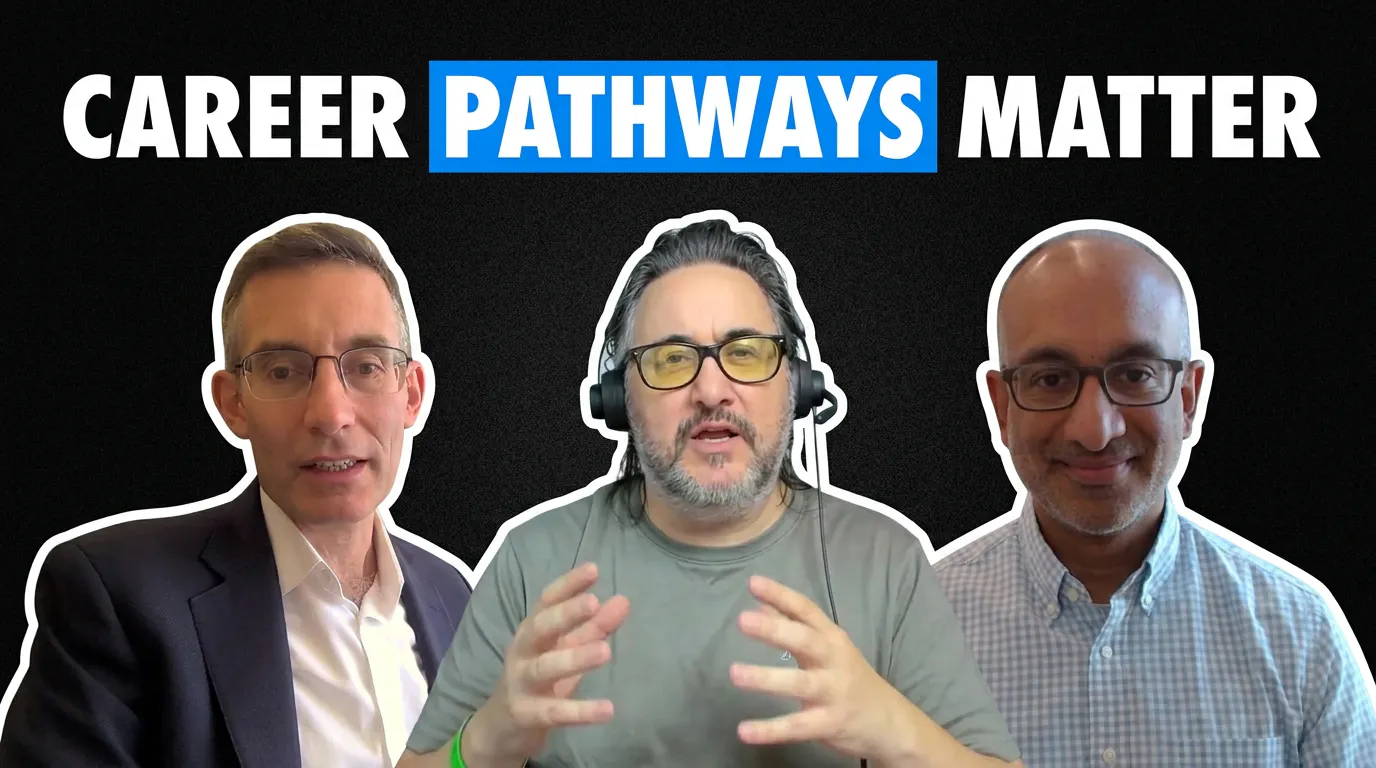
Where You Work Matters: What Workforce Data Reveals About Career Mobility with Matt Sigleman, Burning Glass and Rajiv Chandrasekaran, the Emes Project
Where You Work Matters: What Workforce Data Reveals About Career Mobility Where you work shapes how far your career goes. Real workforce data exposes which employer practices create mobility, retention, and real opportunity — and which ones don't. William Tincup explores how workforce analytics reveals where talent systems work, where they fail, and which roles actually drive business performance over time. This episode digs into workforce development, internal mobility, career pathways, and what happens when companies actually invest in their people instead of constantly hiring from outside. Key Takeaways Where you work matters. Employer practices, culture, and access to opportunity shape an employee's entire career trajectory. Workforce data reveals what employee surveys can't — real career movement, retention patterns, regrettable losses, and long-term outcomes. Internal mobility requires clear pathways, leadership support, and a willingness to develop talent instead of constantly hiring externally. Talent strategy should reflect the business. Companies need to understand which roles create the greatest impact and invest accordingly. Greater transparency helps everyone. Objective employer benchmarks improve company practices and give candidates better information about where they can grow. Guest Information Matt Sigelman — President, Burning Glass Institute — LinkedIn Rajiv Chandrasekaran — LinkedIn About the Host William Tincup is a co-host of You Should Know and a longtime voice in the HR and recruitment space. He brings a sharp, unfiltered perspective on the future of work. Chapters 00:00 — Introducing Where You Work Matters03:08 — How Employers Shape Career Success06:49 — Recognizing and Developing Employee Potential10:07 — Building Better Talent Pipelines13:24 — Turnover, Retention, and Workforce Benchmarks17:13 — Identifying Top Employers and Practices20:44 — Why Employee Experience Varies by Role23:36 — Aligning Talent Practices With Business Strategy28:38 — Internal Mobility and Career Ownership32:25 — Where Traditional Skills Models Fall Short36:15 — Using Workforce Data to Guide Better Decisions40:01 — Building a Fairer, More Transparent Labor Market43:13 — Closing Remarks and Resources Resources Where You Work Matters Burning Glass Institute WRKdefined Connect with WRKdefined on your favorite social network: Site: http://www.wrkdefined.com TikTok: https://www.tiktok.com/@wrkdefined LinkedIn: https://www.linkedin.com/company/wrkdefined Facebook: https://www.facebook.com/WRKdefined/ Twitter (X): https://twitter.com/WRKdefined Substack: https://wrkdefined.substack.com/ Learn more about your ad choices. Visit megaphone.fm/adchoices
July 28, 202634 min
AI Interviews + Skills Validation: Better Together for High-Volume Hiring
AI interviewers can engage every applicant at speed, but they cannot prove job readiness on their own. High-volume hiring works better when automated interviews are paired with job-specific skills assessments. In this episode, Stéphane Rivard, CEO and Co-Founder of HiringBranch, and Prem Kumar, Founder and CEO of Humanly, and explain how AI interviews and skills assessments can work together to improve high-volume hiring. Traditional hiring funnels spend heavily to attract candidates, then fail to engage most of them. AI interviewing changes the comparison from AI versus a recruiter to AI versus silence, delays, or rejection based on resume keywords. Structured AI conversations help employers reach more applicants and collect consistent information. Humanly has found that candidates provide answers averaging 201 words and ask roughly one additional question, creating better information earlier. An interview still cannot replace skills validation. Situational assessments allow candidates to demonstrate how they listen, communicate, solve problems, handle customers, and respond under realistic job conditions. When an interview and assessment disagree, employers should examine the complete body of evidence and connect each signal to the skills and outcomes required for the role. Portable candidate profiles could combine verified skills, assessments, work history, and development data. That could reduce repeated applications and improve skills-based matching. Success should be measured through business outcomes, including candidate conversion, time to hire, onboarding speed, retention, absenteeism, productivity, and quality of hire after 90 days. Key Takeaways ➡️ AI interviewers solve an engagement problem. They give more applicants a structured conversation when the alternative is silence or automatic rejection. ➡️ Skills assessments add proof to the hiring process. Job simulations can reveal communication, judgment, listening, and customer-facing ability that resumes and interviews may miss. ➡️ Interview and assessment data should complement each other. Conflicting signals should trigger a deeper review, not automatic elimination. ➡️ Candidate experience requires a meaningful outcome. Collecting more information only builds trust when employers provide clarity, relevant feedback, or a path toward another opportunity. ➡️ AI hiring success must connect to business performance. Faster screening matters, but retention, productivity, onboarding, and quality of hire determine whether the stack works. Chapters 00:00 AI Interviews and Skills Assessments03:30 What Is Broken in High-Volume Hiring05:22 Engaging Candidates at Scale06:56 Where AI Interviews End and Skills Validation Begins08:11 What AI Interviewers Can Reliably Determine12:22 When Interview and Assessment Results Disagree15:02 Can Hiring Become Fully Automated22:33 Skills Data and Portable Candidate Profiles25:06 What AI Hiring Could Look Like by 203029:38 Risks in AI-Driven Hiring32:37 Measuring Recruitment Success Guests Stéphane Rivard, CEO and Co-Founder, HiringBranch LinkedIn: https://www.linkedin.com/in/stephane-rivard-entrepreneur Prem Kumar, Founder and CEO, HumanlyLinkedIn: https://www.linkedin.com/in/premskumar Resources HiringBranch: https://hiringbranch.com Humanly: https://humanly.io Connect with Us : William Tincup LinkedIn: https://www.linkedin.com/in/tincup/Ryan Leary LinkedIn: https://www.linkedin.com/in/ryanleary/ Connect with WRKdefined on your favorite social network: Site: http://www.wrkdefined.comTikTok: https://www.tiktok.com/@wrkdefinedLinkedIn: https://www.linkedin.com/company/wrkdefinedFacebook: https://www.facebook.com/WRKdefined/Twitter (X): https://twitter.com/WRKdefinedSubstack: https://wrkdefined.substack.com/ Learn more about your ad choices. Visit megaphone.fm/adchoices
July 21, 202624 min
How isolved and Remote Are Opening Global Hiring to SMBs with Barry Gauch, isolved and Pim Altena, Remote
Global Hiring Just Got Real for SMBs: How isolved and Remote Are Making It Work Global hiring used to mean local entities, legal headaches, and a stack of disconnected systems. Not anymore. isolved and Remote are partnering to bring enterprise-grade international hiring to small and midsized businesses without the complexity. William Tincup sits down with Barry Gauch (isolved) and Pim Altena (Remote) to break down how the partnership started as a referral relationship, why Remote built its platform to be embedded, and what convinced isolved to bring global hiring capabilities directly into their ecosystem. They also dig into global payroll, compliance, and what happens when you stop hiring by geography and start hiring by skill. Key Takeaways Global hiring is no longer just for big enterprises. SMBs can now access the infrastructure to hire internationally without building it from scratch. Embedded technology eliminates the friction. Remote's EOR, contractor management, and global payroll sit inside isolved so customers don't need another disconnected platform. Geography becomes irrelevant when hiring infrastructure is in place. Companies can finally focus on finding the right skills wherever they live. Compliance is the biggest barrier. Employment laws vary wildly across countries, and they can contradict each other. You need tech and expertise to keep up. Trust is built through proof, not promises. isolved and Remote started with referrals before committing to a full integration, giving both sides time to validate demand, quality, and cost. Guest Information Barry Gauch — Executive Vice President, isolved Pim Altena — General Manager of Remote Embedded and Vice President of Partnerships, Remote About the Host William Tincup is a co-host of You Should Know and a longtime voice in the HR and recruitment space. He brings a sharp, unfiltered perspective on the future of work. Chapters 00:00 — Meet Barry Gauch and Pim Altena01:19 — How the partnership began03:57 — Why Remote was built to be embedded06:06 — Making global hiring simple09:25 — Hiring for skills instead of location12:38 — How COVID accelerated global work15:29 — Testing the partnership before expanding18:40 — Managing international compliance20:11 — The rollout inside isolved23:27 — Measuring the partnership's success Connect with WRKdefined on your favorite social network: Site: http://www.wrkdefined.com TikTok: https://www.tiktok.com/@wrkdefined LinkedIn: https://www.linkedin.com/company/wrkdefined Facebook: https://www.facebook.com/WRKdefined/ Twitter (X): https://twitter.com/WRKdefined Substack: https://wrkdefined.substack.com/ Learn more about your ad choices. Visit megaphone.fm/adchoices
July 6, 202642 min
Mastering Global Communication: How to Communicate with Clarity, Confidence, and Impact
Strong communication isn't about using bigger words or speaking perfect English. It's about making ideas clear, building trust, and creating connections across cultures. In a world where teams span countries and time zones, the ability to communicate with confidence and clarity has become one of the most valuable professional skills anyone can develop. In this episode, you'll learn why confidence often has a greater impact than flawless grammar, how unconscious bias influences the way we perceive accents and communication styles, practical strategies for simplifying complex ideas without losing meaning, how AI is helping non-native English speakers communicate more effectively, why storytelling remains one of the most powerful business skills, and what leaders can do to create more inclusive communication across global teams. One of the most overlooked challenges in international business isn't language itself. It's the assumptions people make about competence, credibility, and intelligence based on how someone speaks. Those biases affect hiring, leadership, collaboration, and decision-making more often than most people realize. The conversation also explores why simpler communication is often stronger communication. Removing unnecessary jargon, choosing clear language, and focusing on understanding instead of sounding impressive can dramatically improve relationships with colleagues, customers, and clients around the world. Artificial intelligence is changing the way professionals prepare presentations, write emails, and communicate across languages. Used well, AI isn't replacing communication skills. It's helping people express their ideas more clearly and confidently than ever before. Whether you lead global teams, work with international clients, or simply want your message to have greater impact, this episode offers practical insights you can apply immediately. Key Takeaways Why confidence often matters more than perfect English and how it helps reduce unconscious bias. How accents, cultural norms, and communication styles influence trust, credibility, and collaboration. Practical ways to simplify your communication so your message is understood by any audience. How AI can improve writing, speaking, and overall communication for native and non-native speakers alike. Why storytelling and clarity consistently outperform jargon in business conversations. Actionable strategies for creating more inclusive and effective communication across global teams. Guest: Peter Novak, Strictly Speaking Group Connect with Us : William Tincup LinkedIn: https://www.linkedin.com/in/tincup/ Ryan Leary LinkedIn: https://www.linkedin.com/in/ryanleary/ Connect with WRKdefined: Site: http://www.wrkdefined.com TikTok: https://www.tiktok.com/@wrkdefined LinkedIn: https://www.linkedin.com/company/wrkdefined Facebook: https://www.facebook.com/WRKdefined/ Twitter (X): https://twitter.com/WRKdefined Substack: https://wrkdefined.substack.com/ Learn more about your ad choices. Visit megaphone.fm/adchoices
June 10, 202642 min
Assessments Are Dead. Skills Intelligence Is Taking Their Place
Most employees hear the word “assessment” and immediately think of being judged. Kian Katanforoosh thinks that mindset is outdated. The future isn’t about screening people out. It’s about measuring skills, accelerating learning, and helping people prove what they can actually do. The biggest workforce advantage may not be talent. It may be learning velocity. Skills intelligence, AI readiness, workforce development, learning velocity, talent management, skills-based hiring. This conversation explores how AI is reshaping the way organizations measure and develop human potential. In this episode… Kian explains why traditional assessments have earned a trust problem, how AI is reinventing skills measurement, and why learning velocity could become one of the most important workforce metrics of the future. Sharp discussion on AI readiness, skills verification, talent mobility, workforce development, and the future of hiring. Key Takeaways : • Kian argues organizations should stop thinking about assessments and start thinking about skills intelligence • Modern AI can evaluate far more than multiple-choice questions, including problem-solving, coding, communication, and real-world tasks • Trust in skills measurement requires transparent design, continuous auditing, and humans remaining in the loop • Kian believes AI is already less biased than humans in many evaluation scenarios because human bias remains deeply inconsistent • Large organizations often have thousands of managers applying different hiring standards, creating inconsistency that AI can help reduce • Candidates and employees should have the ability to challenge AI-generated outcomes and trigger human review when needed • Meta reportedly hired 7 of 11 top AI researchers from OpenAI, highlighting how intense the AI talent war has become • Kian predicts compensation will increasingly be tied to verified skills rather than traditional credentials or tenure • One metric his customers track is “learning velocity,” measuring how quickly a person improves skills over time • Learning velocity may become a stronger predictor of future potential than current skill level alone • Skills adjacency helps organizations identify employees who can successfully transition into new projects or roles • Kian believes employees will eventually carry verified skills passports between employers instead of relying on self-reported resumes and profiles • LinkedIn profiles are largely self-reported, while future skills credentials will likely be independently verified • Organizations rolling out skills measurement should focus on employee empowerment rather than compliance or screening • AI readiness is becoming the first major use case for enterprise-wide skills measurement programs • Leaders who pretend to understand AI create what Kian calls “dangerous amateurs” throughout the organization • Effective AI transformation starts with leadership openly measuring and improving their own capabilities first • Employees engage more when skill development is tied to clear incentives, promotions, recognition, or financial rewards • The future of workforce development is less about completing courses and more about reaching measurable skill outcomes Guest : Kian Katanforoosh CEO and Founder of Workera, AI educator, Stanford lecturer, and workforce innovator helping organizations measure, verify, and develop skills through AI-powered skills intelligence and learning platforms. LinkedIN : https://www.linkedin.com/in/kiankatan Connect with Us : William Tincup LinkedIn: https://www.linkedin.com/in/tincup/ Ryan Leary LinkedIn: https://www.linkedin.com/in/ryanleary/ WRKdefined : Site: http://www.wrkdefined.com TikTok: https://www.tiktok.com/@wrkdefined LinkedIn: https://www.linkedin.com/company/wrkdefined Facebook: https://www.facebook.com/WRKdefined/ Twitter (X): https://twitter.com/WRKdefined Substack: https://wrkdefined.substack.com/ Learn more about your ad choices. Visit megaphone.fm/adchoices
June 5, 202638 min
You’re More Than Your Job Title. So Why Are You Building Your Career Around One?
Most people spend years trying to find the perfect career fit. Sarabeth Bickerton thinks that’s the wrong goal. The real problem isn’t fit. It’s belonging. People don’t want to be squeezed into someone else’s box. They want to be seen, known, and valued for who they actually are. The workforce is obsessed with skills and titles while people are searching for identity. Career belonging, professional identity, personal branding, workforce development, career growth, leadership. This conversation explores what happens when people stop defining themselves by their job descriptions. In this episode… Sarabeth explains why career belonging matters more than career fit, how professional identity evolves throughout life, and why hybrid professionals are becoming one of the most overlooked talent groups in the workforce. Sharp discussion on personal branding, career transitions, identity, leadership, and the future of work. Key Takeaways : • Sarabeth argues people want to be “seen, known, and valued,” not simply matched to a job opening • Many employees feel invisible at work because they are viewed only through their job title instead of their broader capabilities • She believes career belonging is becoming more important than traditional notions of career fit • Sarabeth identifies three professional identity types: singularity (experts), multiplicity (generalists), and hybridity (people who combine multiple disciplines) • Hybrid professionals often create value by connecting skills and perspectives that normally exist in separate functions • Many organizations still hire using binary expert-versus-generalist thinking while overlooking hybrid talent • Companies are increasingly hiring for adaptability, agility, and the ability to navigate ambiguity because jobs are changing faster than ever • A highly skilled employee can still fail in the wrong role if their professional identity does not align with the work environment • Professional identity is fluid and evolves throughout a person’s life rather than remaining fixed forever • Losing a job, losing a loved one, and going through a divorce are three of the biggest triggers of identity crises • Many career transition programs focus on resumes and job applications before helping people understand who they are becoming • Sarabeth encourages people to map dozens of professional identities instead of reducing themselves to a single title • One of her most powerful exercises involves asking others how they perceive your impact beyond your job description • She uses “First, Best, and Only” career moments to uncover patterns of unique strengths and identity traits • Personal branding is not about marketing yourself. It starts with understanding your identity first • The biggest career breakthroughs often happen when people finally find language that accurately describes who they have been all along Guest : Sarabeth Bickerton Founder of More Than My Title, author, researcher, and career strategist helping professionals understand their professional identity, build career belonging, and move beyond the limits of job titles and traditional career paths. LinkedIN : https://www.linkedin.com/in/sarabethberk/ Connect with Us : William Tincup LinkedIn: https://www.linkedin.com/in/tincup/ Ryan Leary LinkedIn: https://www.linkedin.com/in/ryanleary/ WRKdefined : Site: http://www.wrkdefined.com TikTok: https://www.tiktok.com/@wrkdefined LinkedIn: https://www.linkedin.com/company/wrkdefined Facebook: https://www.facebook.com/WRKdefined/ Twitter (X): https://twitter.com/WRKdefined Substack: https://wrkdefined.substack.com/ Learn more about your ad choices. Visit megaphone.fm/adchoices
Is this your show?
Claim this listing to keep it up to date, reach guests who want to pitch you, and manage bookings with Guestify.