Empowering partners to achieve their greatest results through successful partnering.
Listen to episodes
60 recent
October 12, 202636 min
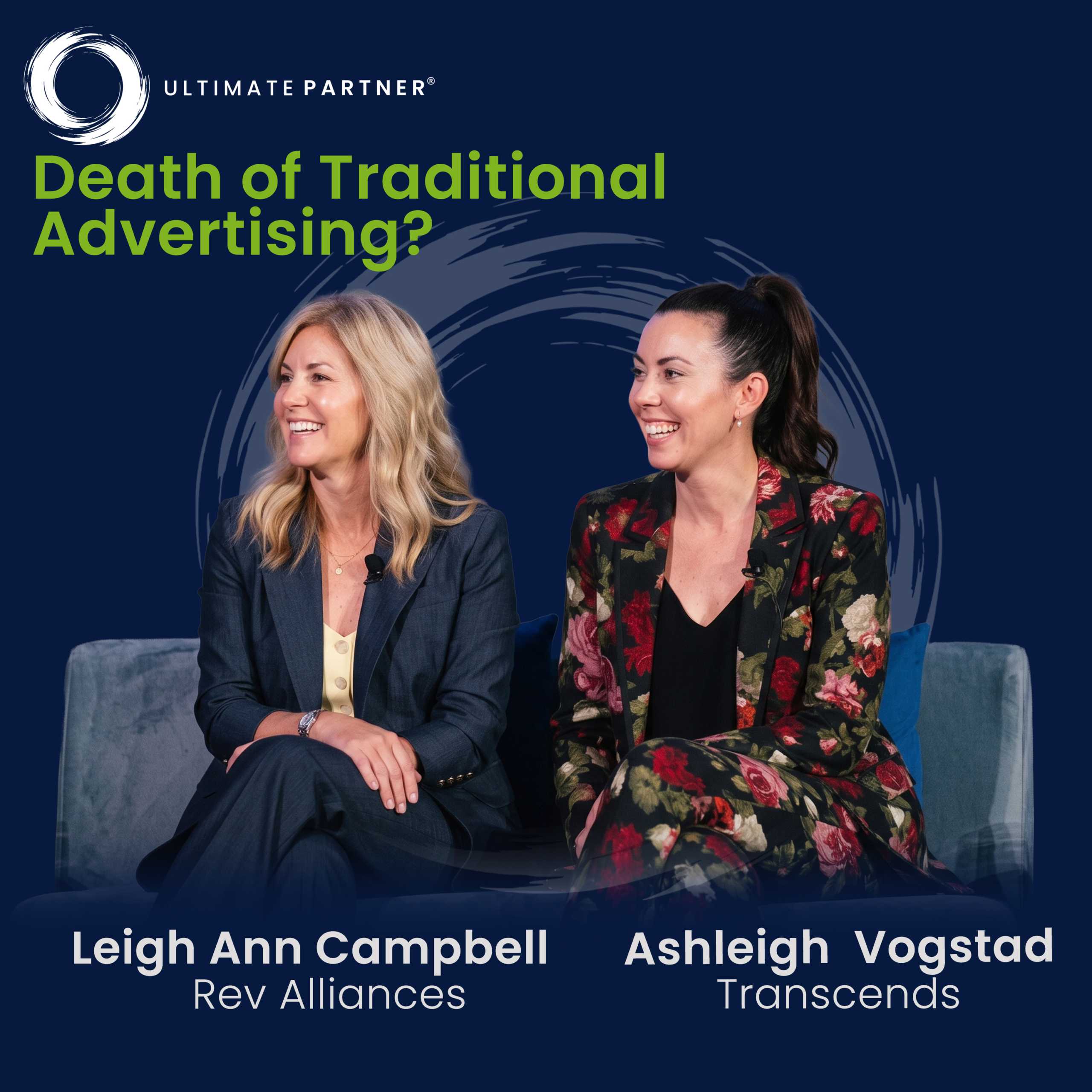
316 – The Death of Traditional Advertising: Secrets to Winning Trust With AI
The end of advertising is here. Subscribe to our Newsletter: https://theultimatepartner.com/ebook-subscribe/ Check Out UPX: https://theultimatepartner.com/experience/ In this insightful discussion, AshleighVogstad and Leigh Ann Campbell dive into the fundamental shift from an attention economy to a trust economy driven by artificial intelligence. They explore how the sunsetting of traditional advertising forces go-to-market leaders to pivot towards product creation, humanized storytelling, and outcome-based hyperscaler partnerships. https://youtu.be/qeV3wgnnr7Q YOUTUBE LINK: https://youtu.be/qeV3wgnnr7Q Key Takeaways The go-to-market industry is transitioning from an attention-based model to a trust-based economy where machines and AI agents act as buyers. With content and product creation becoming commoditized, marketers must deeply integrate with product development to drive business impact. Small, niche in-person community events and executive roundtables are emerging as the most effective marketing tactics over massive conferences. Direct-to-fan platforms and individual thought leadership are thriving because algorithms now prioritize deep engagement and dwell time over vanity metrics. For hyperscaler partnerships, delivering 100% of the specific outcomes a customer needs is the ultimate currency of trust for field sellers. AI is changing the co-sell process by requiring partners to optimize their materials into a searchable, FAQ format for Answer Engine Optimization (AEO). If you’re ready to lead through change, elevate your business, and achieve extraordinary outcomes through the power of partnership—this is your community. At Ultimate Partner® we want leaders like you to join us in the Ultimate Partner Experience – where transformation begins. Key Tags: attention economy, trust economy, artificial intelligence marketing, agentic intelligence, product marketing disruption, in-person community events, direct-to-fan platforms, humanized storytelling, answer engine optimization, AEO, hyperscaler alliances, ISV co-sell pipeline, Microsoft Azure specialist, partner center optimization, outcome-based selling
October 6, 202619 min
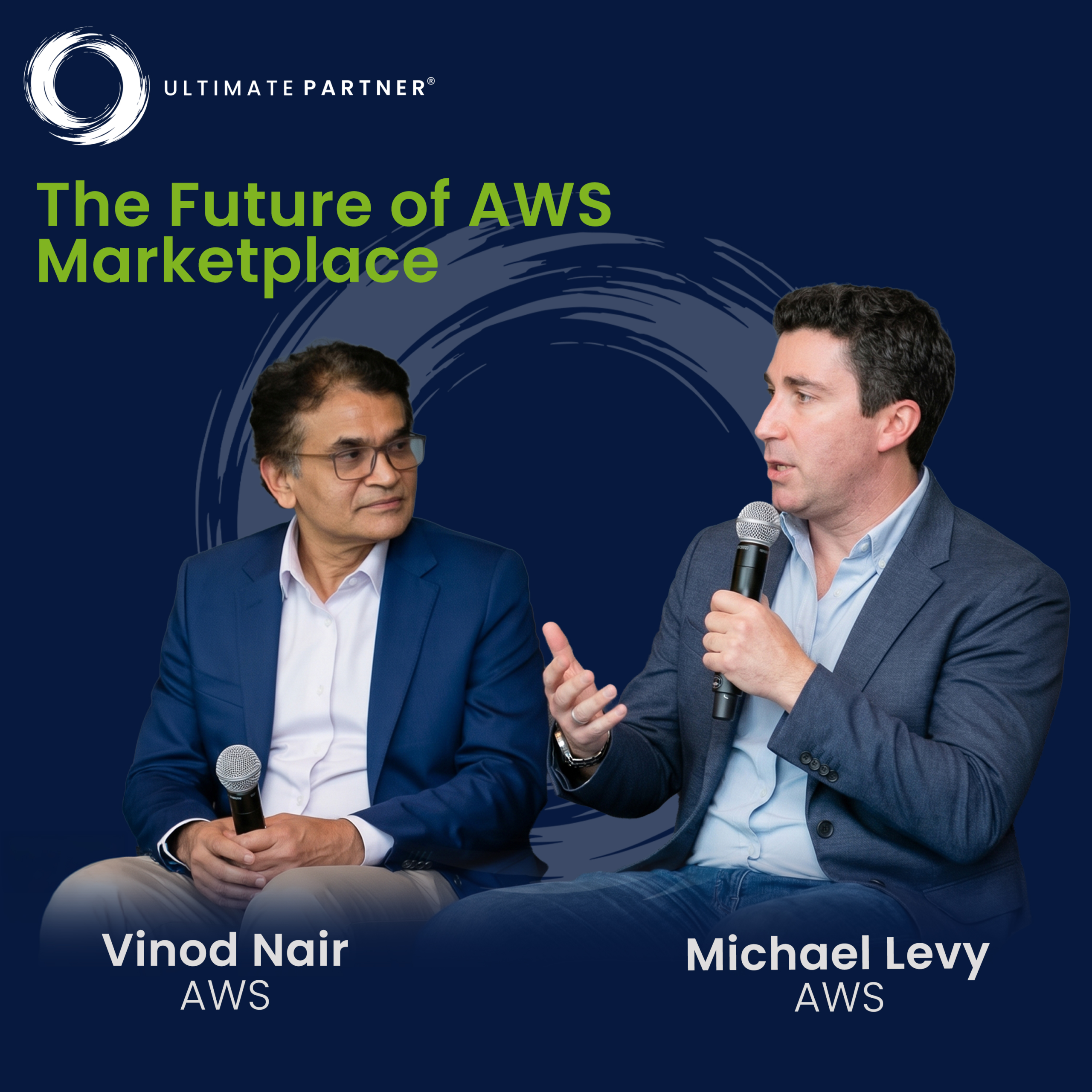
315 – Stop Losing Deals: How to Make Your Software Visible to AI Agents
Will AI buy your software next? Subscribe to our Newsletter: https://theultimatepartner.com/ebook-subscribe/ Check Out UPX: https://theultimatepartner.com/experience/ In this discussion, Vinod Nair and Michael Levy explore how product-led growth (PLG) and agentic AI are fundamentally reshaping the AWS Marketplace. They detail why relying on traditional sales-led motions is becoming obsolete as AI agents increasingly take over software discovery and procurement. The conversation provides actionable insights on auditing API strategies, adopting outcome-based commercial models, and removing setup friction to capture the growing wave of machine-driven B2B buying. https://youtu.be/enLOuppFYq0?si=A1uPSJ9ioXO7zbTS Key Takeaways Product-led growth (PLG) allows users to discover, try, and buy solutions without relying on direct sales interactions. A successful free trial must deliver immediate value rather than forcing customers to spend time on complex setup processes. AI agents prioritize technical availability, structured metadata, and API access over traditional brand identity during procurement. The Marketplace MCP server acts as an official connector for Claude, driving a significant increase in AI-based search and evaluation traffic. Sellers looking to monetize agentic AI should transition their commercial models toward usage and outcome-based billing. Over 90% of surveyed global sellers are expected to transition to product-led growth within the next three years. If you’re ready to lead through change, elevate your business, and achieve extraordinary outcomes through the power of partnership—this is your community. At Ultimate Partner® we want leaders like you to join us in the Ultimate Partner Experience – where transformation begins. Key Tags product-led growth, AWS marketplace, agentic AI, software procurement, Claude connector, API strategy, outcome-based billing, SaaS transformation, technical availability, structured metadata, AWS seller prime, agent core payments Transcript Vinod Nair and Michael Levy AUDIO Podcast [00:00:00] Michael Levy: Humans, for the most part, care about brand and brand identity and all of that. Agents don’t care about that, right? It’s about the technical availability. It’s about the structured metadata. It’s about evaluating whether it’s the right tool to accomplish that task. [00:00:15] Vince Menzione: You can feel it happening. The ecosystem is shifting beneath us, the way Hyperscalers are partnering, how AI is remaking the channel and what it means to win in 2026. [00:00:26] Vince Menzione: Welcome to the Ultimate Partner Podcast. I’m Vince Menzi. Own your host. And each week I sit down with leaders at the [00:00:33] Vince Menzione: intersection of technology, partnerships and outcomes. The voices shaping how ecosystems actually work. We talk about what’s real, what’s changing, and what it takes to lead in this era where the partner channel isn’t just part of the strategy. [00:00:48] Vince Menzione: It is the strategy because being in the room changes everything. Let’s start. [00:00:57] Vince Menzione: All right. Thank you. All right, [00:01:01] Vince Menzione: so we talked about product led earlier today with that, um. Agent powered. And then marketplace growth is, uh, is part, part of your, your mandate. You’ve got a lot of mandates though, from what I remember. Um, why don’t we just go through like introductions and tell, take us through your mandate, your individual mandates and roles at AWS. [00:01:20] Vinod Nair: Okay, thank you. Uh, my name’s Vinod Nier. I’ve been with AWS marketplace close to eight years now. Uh, I started off as a category lead and worked with. Elastic, uh, MongoDB Databricks. Uh, and that’s where I kind of learned that one of the big missed opportunities in marketplace is helping ISVs grow through product led growth. [00:01:43] Vinod Nair: So, literally wrote a paper, got it approved, and this launched AWS marketplace Sell a Prime about three and a half years ago. [00:01:51] Vince Menzione: Nice. [00:01:52] Vinod Nair: Elastic was one of our founding partners. Grateful for their support and it’s. It’s grown, and that’s kind of my charter. How do I help ISVs activate product-led growth in marketplace? [00:02:03] Vince Menzione: I love it. I wanna dive in. [00:02:04] Vince Menzione: Vinod is the godfather of product led growth. I love it on marketplace. [00:02:08] Michael Levy: Um, I’m, uh, Mike Levy. Uh, I’m from our marketplace business development team. So my team focuses on feature launch and go to market. So for across the features, uh, in Matt Wise org. For partners and for customers. [00:02:21] Michael Levy: And I’m also, I’ve also been the BD lead for our AI agents and tools category within Marketplace. So we formally launched that as a category last year and we’ve seen tremendous growth. And along with the category, we’ve also launched like new deployment mechanisms that many of our partners and customers are taking advantage of. [00:02:37] Michael Levy: Basically to make it easier for partners to go to market with ag agentic solutions specifically, uh, and for customers to procure those solutions on marketplace. [00:02:46] Michael Levy: Unbelievable. So I think a lot of people get PLG wrong and we’ll start there. And you, you’ve had, you mentioned some market leaders [00:02:53] Vinod Nair: Yeah. [00:02:54] Vince Menzione: Like outstanding organizations. [00:02:55] Vince Menzione: So take, take us through, I mean, I’m not expecting you to go through all six pages Sure. Of the document you wrote, but we know it’s a six pager usually. Right. Uh, but with the pen. But take us through the thesis of what, what you had to solve. Why, why partners need to get this right. [00:03:09] Vinod Nair: Yeah. Yeah. So I’ll start with just kind of defining product led growth because it’s. [00:03:13] Vinod Nair: It’s, it’s, it’s still ambiguous to a lot. Yeah. And so have a product that basically a user can discover, try and buy without talking to a salesperson. So that’s kind of the key element that it looks, sounds simple, but it is incredibly complex behind the scenes. So there’s a, like the duck swimming very fast. [00:03:36] Vinod Nair: You think everything is fine. So. It incorporates free trial. That same, because that’s how a customer actually sees the value, but the free trial needs to have some value. It’s delivering. Otherwise, if the customer is just spending most of their time trying to start your product, then free trial’s a waste. [00:03:56] Vince Menzione: Yeah. [00:03:57] Vinod Nair: Then, then it is kind of monitoring them through their journey. And so this includes support from marketing. It includes support from sales because sales needs to, sales can now become more of a customer success because they can, they have a very qualified lead. Here’s a customer that’s actually using my product. [00:04:16] Vinod Nair: They’ve seen the value. So I, when I have that conversation with the CTO, it’s like I’ve already won the technical battle. I need to do now is show you the commercials for a, for a bigger deal. [00:04:28] Vince Menzione: What are you doing to help them? Are you helping them embed any technology into their solutions so that you can get the real time feedback you need to on their usage? [00:04:38] Vince Menzione: And [00:04:38] Vinod Nair: so [00:04:39] Vince Menzione: where they’re [00:04:39] Vinod Nair: seeing what, what AWS marketplace has done is a few things. One, we have, uh. Like currently we have, IM delegation and quick, uh, it used to be called moonwalk. What that does is it removes the friction of setting things up. That’s a complex task. So that’s, that’s where we are trying to bring that down to as close to one click as possible. [00:05:02] Vinod Nair: Databricks is a great example where we started off and that hockey stick analogy, they saw a tremendous growth in conversion. Once they did that, [00:05:11] Vince Menzione: yeah. [00:05:11] Vinod Nair: Another one is buy with AWS. So free trial has ended. Don’t let them disappear. Hey, you can continue and buy with AWS so they stay within your product. [00:05:24] Vinod Nair: Complete the free trial and start going down the paid journey. [00:05:30] Vince Menzione: So Mike, 2,700 agent. [00:05:33] Michael Levy: Uh, [00:05:33] Michael Levy: no, I think that’s when we spoke in, uh [00:05:35] Vince Menzione: oh, it’s, oh, okay. [00:05:36] Vince Menzione: I think it’s over 4,000. [00:05:37] Vince Menzione: Wow. It’s over four. Okay. [00:05:38] Michael Levy: And let, let’s be clear, I think Matt cleared this up a little bit, but it’s AG agentic solutions, right? Right. So a lot of that is professional services, uh, which have you tuned in recently. [00:05:47] Michael Levy: There there’s, uh, much more economic incentives to transacting professional services, including agentic professional services, um, and SaaS solutions that have agents embedded within it. So there’s a couple different models with ISVs that we’ve seen on. How they’re going to market with agentic solutions. [00:06:04] Michael Levy: Um, and it’s kind of a, a, a spectrum that I can get into detail, if that’s helpful. [00:06:07] Vince Menzione: Yeah. Well, um, I’m, I’m interested in how your two, uh, wheelhouses your remits, uh, kind of, they, they converge and they diverge, right? In many respects. [00:06:18] Vince Menzione: Definitely. [00:06:18] Vince Menzione: Yeah. [00:06:18] Michael Levy: Um, I think product-led growth has been a story of how humans can procure something, a product without friction and without talking to another human. [00:06:28] Michael Levy: I think agent led growth maybe is the the next evolution of that, where [00:06:31] Michael Levy: sounds like it [00:06:32] Michael Levy: today. If a human can’t come to your product page or come to your product page on marketplace and seamlessly execute the entire funnel from discovery to procurement. I’m sure as hell that an agent can’t, an agent can’t either. [00:06:45] Michael Levy: Mm-hmm. Um, and so Arif touched on this briefly, but it’s really about making your product discoverable to agents. So if you’re not doing that either through marketplace or directly, it means you’re not gonna be showing up in the places where a lot of our buyers, more than half of our buyers now are doing the research. [00:07:01] Michael Levy: Um, and so my call to action, I’ve spoken to ISVs a lot about this is. Look at your product, like audit your API strategy. Like if you look at your product, if an agent comes to your product today, are they gonna hit a login screen or are they gonna hit an API or an MCP server? Mm-hmm. And I think the delta between the two, that should be your product roadmap over the next six to 12 months. [00:07:22] Michael Levy: Makes [00:07:22] Michael Levy: sense. It makes sense. [00:07:23] Vinod Nair: Yeah. And I’d I’d add to that, that one of the. One of, on my LinkedIn feed, there was a developer who said they wanted to try MongoDB and it was human gated because they told their agent, go try MongoDB for me. So keeping that in mind, it’s like you’re gonna see more of that agent, uh, discovery agent, trial agent buy. [00:07:43] Vinod Nair: So all of that is going to happen. Discovery has already happened. One of the. G two studies said that 52% of buyers are now starting somewhere in G two in in the chat GPT or something else. So that’s like a B2B buyer, and about 33% of them bought from a vendor they never even considered to begin with just because the research showed them something new. [00:08:09] Vince Menzione: That’s the testament right there. [00:08:10] Vince Menzione: Yeah. I think agent to that point, you know, humans for the most part, care about brand. Brand identity and all of that. Agents don’t care about that, right? It’s about the technical availability. It’s about the structured metadata. It’s about evaluating whether it’s the right tool to accomplish that task. [00:08:26] Vince Menzione: And the agents are gonna make a very quick analysis, right? Millisecond analysis, and they’re gonna go through that whole catalog and they’re gonna pick. Either good goods are good or bad and they’re gonna make some decision points. [00:08:38] Vinod Nair: Exactly, [00:08:39] Vince Menzione: yeah. We’re seeing that already, like we’re seeing a lot of traction. [00:08:41] Vince Menzione: So we talk about agent mode, which is if a human comes to marketplace and wants to upload an RFP or describe a use case that they want to get a solution for. I think the other aspect is agent mode is powered by the marketplace. MCP. The marketplace, MCP server is also an official connector in Claude, so we’re seeing an increasing amount of marketplace search and evaluation traffic that’s coming from Claude, not just from the Marketplace website. [00:09:05] Vince Menzione: Yes. [00:09:06] Vince Menzione: Let’s talk about where partners stall, where they, where they misstep. ’cause I think it’s important we, we learn the most from our, our mistakes. [00:09:14] Vinod Nair: Yeah. I, I’d say for product led growth, it, it’s very similar to what Stalls sales led growth that Arif mentioned. It’s looking at marketplace as an afterthought saying, I am, yeah, I’m doing pro, I’m doing product led growth on my direct. [00:09:32] Vinod Nair: Site, I’m just gonna use marketplace for enterprise sales. [00:09:37] Vince Menzione: Yeah. [00:09:37] Vinod Nair: And I’m gonna put a a hundred thousand dollars product in marketplace. Like, okay, you’re losing a lot of money. Uh, one of the recent, we are gonna come out with this study, it said that in the next three years, uh, we’ve surveyed a whole bunch of sellers across the globe. [00:09:54] Vinod Nair: 2.8% of the correspond, or the respondents said they’re gonna stick with a sales led motion in three years. Yeah, the remaining 90, my math is always bad, but 90 plus percent are going to adopt product led growth. So if you are not adopting that product LED growth and the other kind of, sorry, don’t want to throw a lot of data, but Marketplace is the second highest cell service route to market after the ISVs own website. [00:10:23] Vince Menzione: Interesting. [00:10:23] Vinod Nair: So if you are not coming there, you’re not thinking about it holistically. You don’t have your executives buy-in. It’s not gonna succeed. [00:10:33] Vince Menzione: That makes sense. What about from your side? [00:10:35] Michael Levy: Yeah, I think it, from a product-led growth pers perspective and an intech AI in general, it’s, it’s the same sort of analysis that you would do. [00:10:41] Michael Levy: It’s like, where is the funnel leaking, right? [00:10:43] Michael Levy: Yeah. [00:10:43] Michael Levy: Is it top of funnel that you need to get your marketing teams involved and, and channeling ’em towards marketplace? Is it sort of trial conversion or is it even post-purchase deployment? Like there’s, there’s a lot of SaaS out there that gets procured in some capacity. [00:10:58] Michael Levy: A lot of it’s pay as you go. Some of it’s product led. And it doesn’t get used. And so Marketplace has some incredible features to help on post-purchase deployment as well. Um, I think where folks are, where partners are getting maybe stalled with it when it comes to agentic ai, um, I think is maybe not jumping in far enough. [00:11:19] Michael Levy: So I talked about that audit of like making your software agent accessible. I think that’s the, the big piece that’s like the table stakes now. Um, I think where we see. Partners succeeding is where they’ve done that audit. They’re making their software agent accessible, but then they’re also shifting their go-to-market model, uh, and maybe their commercial model, and they’re pivoting a little bit more towards usage and outcome-based. [00:11:42] Michael Levy: Zendesk was a good example. Workday was a good example. There’s some other partners that are leaning into this more. Um, and so if you’re able to make that pivot, if you’re able to do that audit internally, internally to say, what is the actual business outcome? What’s the unit of value that I drive for my customers? [00:11:59] Michael Levy: And then you’re able to do the right metering internally. Marketplace is there to meet you, right? We have the product like growth mechanism. We have the flexibility to essentially make an outcome-based product and bill for it on your AWS bill for via marketplace. [00:12:13] Vinod Nair: Yeah. And now just to go back to your earlier question about divergence and convergence of PLG and agent tech, I see this as a convergence story with just sort of humans. [00:12:24] Vinod Nair: You have agents, the same principles that are, that went to driving product led growth will also drive agent growth. Agent led growth. [00:12:32] Vince Menzione: Agreed. [00:12:33] Vince Menzione: So, I am gonna open up for the, a couple questions while, while we still have everyone here in the room, but I, I was thinking maybe the one thing that we could talk about, like in the next 30 days. [00:12:43] Vince Menzione: What should we, the people, the leaders in this room, should be thinking about doing better or differently? [00:12:48] Vinod Nair: So for product-led growth, I’d say what is the va? And I’m, I’m assuming I’m gonna be stealing a little bit of what Michael’s gonna say. What is the, if you’re considering product led growth, what is the value you’re going to deliver to your customer? [00:13:02] Vinod Nair: If you don’t have a good articulation of that, then it’s hard to deliver. And who’s your ICP? Focus on those two and then build the story around that. [00:13:12] Vince Menzione: Yeah, go ahead. [00:13:15] Vince Menzione: Same takeaway I was talking about, which is like, do that audit, like make that assessment of your own software of is it dis discoverable, is it digestible, is it pro curable by agents? [00:13:24] Michael Levy: Um, because I think we’re piloting some stuff in marketplace. Um, agent core payments is something that launched that. Not only can you, you know, find things, but you can actually pay for them autonomously. So things are moving quickly. So I think catching up and doing that audit is, is the most immediate next step. [00:13:43] Vince Menzione: We’re gonna open up to questions. We’re a small, intimate group now, so we can keep it in the room. [00:13:49] Vince Menzione: One happy family. [00:13:50] Vince Menzione: Yeah. Alright. Yeah. We Okay this, oh, we got, here’s some mics. Some, there’s some mics coming. Okay. [00:13:59] Guest: I was just gonna ask stealing Allison’s, uh, organ analogy. Um, [00:14:04] Vince Menzione: we’re all laid out on the table here, Allison. [00:14:09] Guest: We’ve been talking a lot about enablement across organizations, and I’m just curious what that looks like for the technical and engineering teams to loop them in with the, the sales and marketing and co-sell, and how and when do you loop them in and, and get them enabled? [00:14:26] Vinod Nair: So I, I’ll, I’ll say here, uh, one is having leaders like Matt who can kind of talk at, at, at events like this, at other events that says, Hey, what are we building and why you should care. [00:14:40] Vinod Nair: That’s definitely a big, uh, kind of microphone. Uh, we also rely on partners like. WellSpan, tackle laba. These are the people who have the conversations upfront with these, with the ISV to say, what are we building? Why, how, what’s our go to market? Who needs for product led growth? You do need that engineering team in the conversation, and you do need the marketing team. [00:15:06] Vinod Nair: So how do you get them early on? We also work with partners to say, let’s enable our partners. Uh, today there’s also, of course, agents coming in, so they will also be there in the. In the future. [00:15:17] Michael Levy: Yeah. Just to add to that, I think getting in touch with the product and engineer engineering leaders, especially when it comes to age agentic AI is super important. [00:15:24] Michael Levy: We had an event with product leaders a couple weeks ago in San Francisco about like exactly this topic. How does your product need to change for age agentic ai? How does your commercial model need to change how you actually monetizing ai? Those are all product and engineering decisions ultimately, so. [00:15:39] Michael Levy: Bring them to us, bring them to our admins. We’re happy to do that. Have that conversation. There’s resources at AWS too to help think through what we’re calling like a SaaS transformation, so to speak. Um, so that’s one, one aspect of it. [00:15:53] Michael Levy: Nice question. Allison’s got a question I love. Oh [00:15:56] Guest: shit. I have a question. [00:15:57] Guest: Um, so Accenture, we package and offer professional services offerings on marketplace. Do you have any insights or tips to how that differs from a traditional product, you know, in the, in the traditional sense of the word, or any tips for us as services providers to how we capture more demand through marketplace? [00:16:21] Vinod Nair: So one thing I will, uh, start off with saying is whether you’re a professional services, uh, provider or any, you want to know who’s visiting your site or how do you drive more traffic? One of the things that we have enabled through this Seller Prime program that I mentioned is enable you to get that granular data. [00:16:42] Vinod Nair: I ran this marketing campaign. I got these many visitors, so many of them clicked, whatever is the call to action. That gives you sense to say what marketing activities are driving the most conversion. We’ve enabled that. We’ve also made all our go-to-market material, which is PLG, but it’s the same principles who, how do you talk to AWS customers? [00:17:05] Vinod Nair: How do you drive demand? We’ve made that all available to any, any, uh, any seller, including professional services. [00:17:12] Michael Levy: I’ll add to that. I think there’s a lot of room for us to experiment there with you and with others. Like I think the most recent change in the listing fee is just one aspect of how we’re trying to evolve the business to help. [00:17:23] Michael Levy: Reduce friction in transacting professional services. Not just reduce friction, but also help from a discovery, uh, and, and, you know, demand gen capability. So I think candidly, it hasn’t been that much of an engine for professional services now that we’re making all these changes with variable billing and the, the ability to actually transact it. [00:17:41] Michael Levy: Um, we’re leaning into, figure out from a discovery perspective how we, how we can help, I don’t know, public offers for professional services, seller prime, maybe for professional services. I think these are all things that we should be experimenting with. [00:17:53] Vince Menzione: Nice. Yeah. Good stuff. Any other questions? [00:18:02] Vince Menzione: Have we have, we, [00:18:03] Vince Menzione: we stumped him. [00:18:04] Vince Menzione: We stumped him. Well, I am just thrilled to have you both here today. Um, I’m so glad you could make it and I’m hoping to see you again. This is awesome to meet today and have you as well. Thank you for the opportunity. It’s been terrific. Thank you so much. Thank you, Jeff. [00:18:20] Vince Menzione: Good to see you. Great to meet you as well. Thank you. Thanks for listening to The Ultimate Partner Podcast. If today’s conversation resonated, share it with a partner leader in your network, subscribe where you listen, and head over to the ultimate partner.com for show notes related content and the resources for this episode. [00:18:41] Vince Menzione: And if you haven’t already, now’s the time to register for the Ultimate Partner Live event in Reston, Virginia, October 26th through October 28th. Until next time, keep showing up in the rooms that matter because being in the room changes everything.
September 28, 202626 min
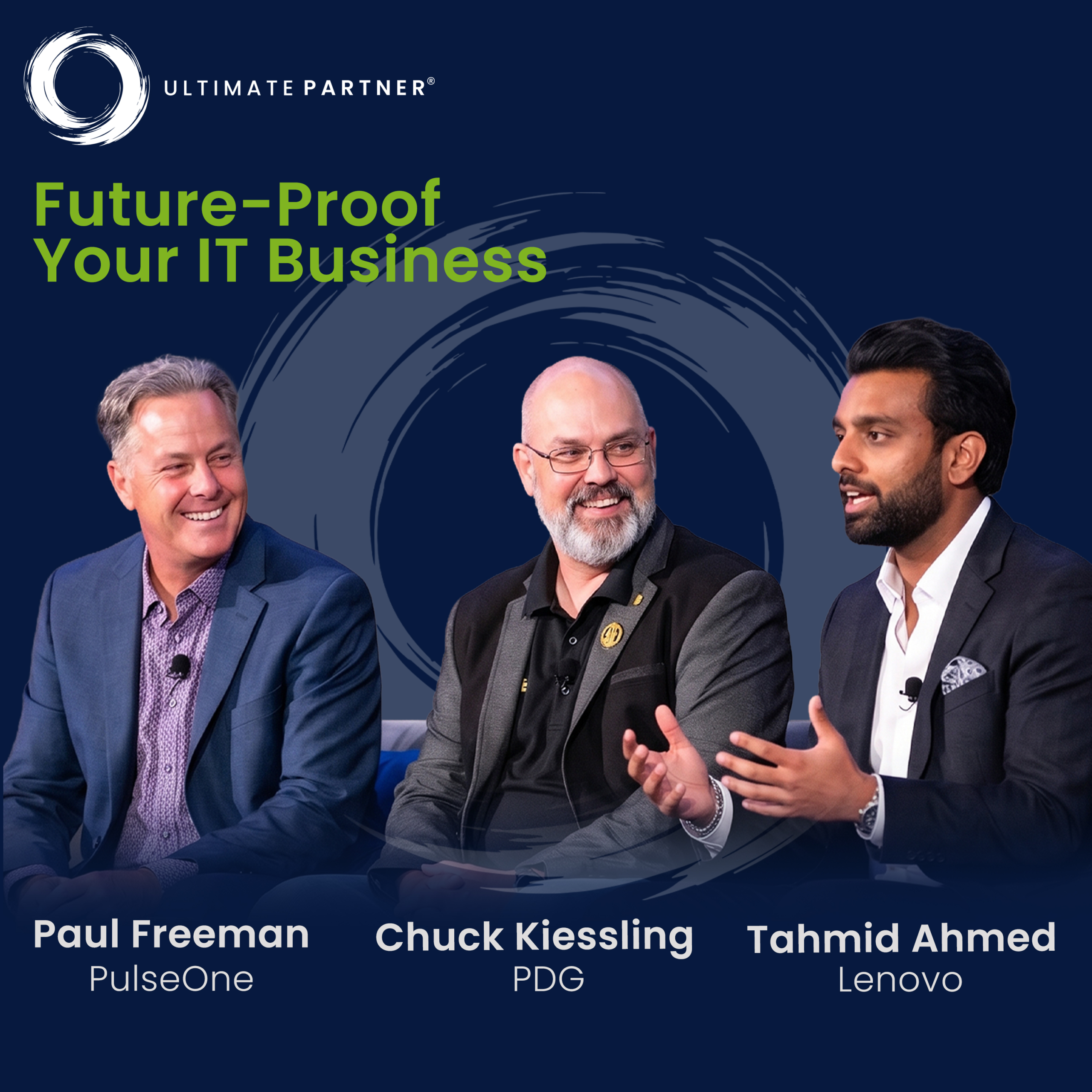
314 – The Brutal Truth: Why Most MSPs Leave Microsoft Money on the Table
Stop Begging Microsoft for Leads: The Proven Playbook Top MSPs Actually Use Subscribe to our Newsletter: https://theultimatepartner.com/ebook-subscribe/ Check Out UPX: https://theultimatepartner.com/experience/ In this insightful episode, Vince Menzione sits down with Chuck Kiessling of Partner Development Group (PDG), Tahmid Ahmed of Lenovo, and Paul Freeman of Pulse One to decode the complexities of the Microsoft partner ecosystem. The panel explores the transition of traditional MSPs into technology integration companies, the importance of operationalizing your Microsoft practice across all internal departments, and the critical need to adapt to generative AI. They also unpack the strategic collaboration between hardware giants, partner development experts, and integration companies to unlock co-sell referrals, optimize licensing, and leverage the Microsoft Marketplace for scalable mid-market growth. https://youtu.be/MHqENEk64S4 Key Takeaways MSPs should evolve into technology integration companies to stay relevant in the changing ecosystem. Success in the Microsoft channel relies on strategic behavior and engaging around the sale, not just asking for direct leads. A Microsoft practice should not be siloed but integrated across marketing, finance, and operations. Partners must focus on solving specific customer problems, such as providing automation and security, rather than just selling technology for its own sake. Optimizing enterprise licensing and moving customers to CSP can create stickiness and immediate ROI. Engaging with end users like HR and marketing provides better feedback on tools like Copilot than stopping at the IT manager level. Chapters 00:00 Intro 00:50 Meet the panel: PDG, Lenovo, and Pulse One 03:12 From MSP to technology integration company 04:39 Stop asking Microsoft for leads 07:32 The old days of the Microsoft channel 09:05 How PDG, Lenovo, and Pulse One work together 12:32 The PDG playbook: structured, not scripted 15:46 Orchestrating the partnership 17:21 Partner Center is a beast: the value left on the table 19:27 Outcomes and Microsoft Marketplace strategy 21:49 Advice for MSPs 25:05 Customers buy from people they trust If you’re ready to lead through change, elevate your business, and achieve extraordinary outcomes through the power of partnership, this is your community. At Ultimate Partner® we want leaders like you to join us in the Ultimate Partner Experience, where transformation begins. Tags Microsoft partner, Microsoft channel, MSP, Microsoft CSP, co-sell referral, Microsoft Marketplace, Microsoft Partner Center, solution designations, generative AI, Copilot, Lenovo, Partner Development Group, Pulse One, technology integration company, EA to CSP, mid-market, hyperscalers, Ultimate Partner Podcast, Vince Menzione Transcript Chuck Kiessling, Tahmid Ahmed, and Paul Freeman on the Ultimate Partner Podcast [00:00:00] Paul Freeman: You know, when, uh, generative AI came out a couple years ago, we kind of saw the writing on the wall like, this is the direction we have to get ready for. [00:00:08] Vince Menzione: You can feel it happening. The ecosystem is shifting beneath us, the way hyperscalers are partnering, how AI is remaking the channel and what it means to win in 2026. [00:00:19] Vince Menzione: Welcome to the Ultimate Partner Podcast. I’m Vince Menzione, your host. And each week I sit down with leaders at the intersection of technology, partnerships and outcomes. The voices shaping how ecosystems actually work. We talk about what’s real, what’s changing, and what it takes to lead in this era where the partner channel isn’t just part of the strategy. [00:00:42] Vince Menzione: It is the strategy, because being in the room changes everything. Let’s start. [00:00:50] Vince Menzione: So we actually have, I’m gonna invite them up here and have ’em introduce themselves. We went from two to three, so there’s gonna be four of us up on stage. Uh, this is gonna be a great conversation on how to get more practical about driving your success on partnership strategy. And so Chuck and team, come on up and then we’ll have you introduce yourselves. [00:01:10] Vince Menzione: Chuck, great to have you. [00:01:11] Chuck Kiessling: Thank you. [00:01:12] Vince Menzione: Partner Development Group. We have Lenovo, Pulse One. Thank you. Good to see you. Awesome. And we’re gonna, we’re gonna start and I’m gonna have everybody introduce yourself, your role and, and, uh, and your company. So, awesome. [00:01:24] Chuck Kiessling: Alright. I guess I’ll jump in. Uh, so I’m Chuck Kiessling, uh, CEO and Founder of Partner Development Group. [00:01:32] Chuck Kiessling: Uh, short version is, I’ve been in the Microsoft ecosystem in some way, shape, or form for the past 25 years. Uh, I am a former Microsoft employee. Like, like some of the other players that are around here today. Yeah. Couple of us. Right. And, and, uh, you know, what really brought me to build PDG was ultimately while I was at Microsoft, I found myself spending a lot of time helping partners help me. [00:01:56] Chuck Kiessling: By helping them. And so I realized there was a bit of a gap in that space. And then over about 15 years, um, I built our operational framework that, uh, allows us to be structured but not scripted. And, um, our goal is really to enhance Microsoft partners in really any way, shape, or form that they need to. So, perfect. [00:02:18] Tahmid Ahmed: Uh, my name’s Tahmid. I’m from Lenovo. My responsibility at Lenovo is managing our Microsoft partners around the globe. Um, we’ve kind of come into the CSP world with Microsoft over the last five years. Um, started off in APAC, in EMEA, and now we’re really looking at, you know, helping our partners and all of our partners from our distributors in that Microsoft space, really seeing how we can accelerate their journeys. [00:02:45] Paul Freeman: Great. Uh, I love being the surprise guest. So, hi, I’m Paul Freeman. I’m, uh, Chief Marketing Officer for, uh, an integration company called Pulse One. Uh, we’re based outta California. Uh, I would’ve described us a couple years ago as an MSP, but I think with all the changes that are happening, I would describe us now more as a technology integration company. [00:03:06] Paul Freeman: So, uh, I’m really happy to be up here, uh, able to hang out with you guys. [00:03:09] Vince Menzione: I like the new term, technology integration company. [00:03:12] Paul Freeman: Ooh, thank you. [00:03:12] Vince Menzione: And I think what’s really kind of, from a grounding perspective for this conversation too, because when people hear Lenovo, uh, I automatically go to hardware. [00:03:23] Tahmid Ahmed: I think it’s really important, right? We are a hardware company. I think most people have used the laptop with the little red dot in the middle. You know, there’s loads of memes flying around saying if you get given one of these devices, you’re gonna work for the rest of your life. Um, we do do the infrastructure, but. [00:03:39] Tahmid Ahmed: Probably you’ve seen recently, we’ve, you know, we’re in the FIFA World Cup, we’re in Formula One. We are really starting to change that shift with hybrid cloud and AI. Um, and our Microsoft partnership is much broader than just Windows Server and, you know, a platform. We want to help our customers really. [00:03:58] Tahmid Ahmed: Find solutions, not just with AI, but with all forms of technology. The goal is how can we help that customer with our partners, really find technology that fits around their business? You know, I’ve had lots of conversations this week around AI. How does AI actually fit into a business, not just buying technology for the sake of buying it, but lots of CTOs that you speak to. [00:04:20] Tahmid Ahmed: They want an ROI, and I really like what Vince went through yesterday about having five or six partners to actually work through. We’re a very channel-focused company, so we’re never gonna go to a customer directly and start spinning up solutions, and that’s where Pulse One and PDG come in. So we can really create that environment. [00:04:39] Vince Menzione: Yeah. Chuck, you’ve been around the Microsoft ecosystem, as I have, for a number of years. Um, it’s complex, right? What, um, so we miss a lot, but partners often miss, what do they often miss working with Microsoft and the Microsoft ecosystem? What do you see? [00:04:53] Chuck Kiessling: Yeah, I think a majority of the partners that we work with, um, and I’ll say like probably one of the first things that we hear is how do we get referrals and leads from Microsoft? [00:05:02] Chuck Kiessling: Right? Exactly. And, and the reality is, it’s about behavior, right? So this is one of those key items that gets missed. A lot of times, you know, historically, if you’ve been a Microsoft partner more than three to five years, it, it used to be more about, let me get certified, I’m gonna get my gold or silver competency. [00:05:18] Chuck Kiessling: But Microsoft spent a lot of time, um, trying to make sure that they could really determine who were true partners and who were just strictly vendors. So, um, that’s where the solution designations came in. So that is algorithm driven, it’s behavior driven. It’s, it’s about focusing on things like, um, everything that is around the sale. [00:05:39] Chuck Kiessling: Right. Because I think everybody in this room that, that is, um, ISV, SI, MSP, they know how to sell what they do. It’s about engaging Microsoft the right way. So it’s everything around that sale, right? Submitting the co-sell referral, making sure that you’re attaching the services, making sure that you’re utilizing the marketplace, reaching out to Microsoft and making sure that you are easy to present in essentially one, one line. [00:06:03] Chuck Kiessling: Yeah. And, and so being easy to work with and everything around the sale, I think is the most critical component. Anything to add to that? [00:06:11] Tahmid Ahmed: I think, you know, going back, I think every partner always asks Lenovo, where can I get leads from? Um, and then they want us to go back to Microsoft and say, you know, give us leads. [00:06:20] Tahmid Ahmed: And I like the comment someone made earlier: leads just don’t fall out of the air. You know, customers aren’t coming to us and saying, I want to buy this from you, or I want to buy this, but it’s about having that conversation around solutions and what they’re actually really trying to achieve. And reading in between the lines, you know. [00:06:35] Tahmid Ahmed: Every company wants AI at the moment. It’s the new buzzword. It’s shiny, or agentic AI, but when you actually start breaking it down with a lot of these CTOs, they’re actually just looking for a bit of automation. And then it’s about feeding into their security. And I think for partners, it’s really defining what do you do as a partner. [00:06:52] Tahmid Ahmed: Um, you know, are you going down a route of Copilot? Are you a security partner? What is your main business? And really understanding that, and that allows us to help you the most. Right. The more support we can give you is when we really can understand what your business does, you know, what’s the primary focus? [00:07:10] Chuck Kiessling: Yeah, I, I think the key in that, right, and this is a conversation that Paul and I have had quite a bit, is it’s about strategic versus tactical, right? So being able to sell a product, a solution, an offering is, is a tactical approach. But when you’re doing it strategically, you’re involving the right people at the right time. [00:07:28] Chuck Kiessling: You are, you’re operationally efficient at doing it and, and you continue to execute the right way. [00:07:32] Vince Menzione: I, I’d love to get Paul’s perspective, ’cause I got to be at Right of Boom earlier this year and I was hearing things I hadn’t heard in a long time from MSPs. Hmm. Like, I don’t have a PDM, I don’t have this, I don’t get enough margin. [00:07:47] Vince Menzione: There was a lot of talk in the room that felt like the old days of Microsoft to me. [00:07:51] Paul Freeman: Interesting. [00:07:52] Vince Menzione: What is your perspective? [00:07:53] Paul Freeman: Well, the old days, I’ve been around long enough to remember the old days of Microsoft. Okay. Um, you know, in the nineties and then in and around the two thousands, uh, we had a partner development manager that would come do lunch and learns for us in our office. [00:08:04] Paul Freeman: Sure. We had access to the field organization. If we— [00:08:06] Vince Menzione: We called them PAMs back in the day. [00:08:07] Paul Freeman: Yeah. Oh yeah. Right. That’s right. Uh, and they, we had access to the field sales organization. Yeah. So if we had a deal, we had somebody we could call who was in the area, we could go have lunch, we could do a joint call together. [00:08:19] Paul Freeman: And of course it’s gotten a lot bigger and a lot more complex, uh, since then. And I think, um, you know, I also was around when we transitioned from resellers to integrators and then integrators to MSPs and then, you know, MSPs into whatever we’re gonna become now. And I think, you know, to, um, to get your hands around that whole environment. [00:08:39] Paul Freeman: The whole ecosystem idea, to learn how to execute in the mid-market space, which is where we play, um, has become very challenging. And, um, in talking to, uh, Monica and some of the Microsoft folks, it’s, it’s complicated for them too. Right? And so it’s, we are absolutely reliant on relationships and partnerships to figure out how to work our way into the system. [00:09:00] Paul Freeman: And, uh, these two guys here have been super helpful for us over the last, uh, year in doing that. [00:09:05] Vince Menzione: I love that. And Chuck, this is, you know, this is where I think that your organization comes in. I know that your organization comes in in a big way. You become, you become that lighthouse. [00:09:13] Chuck Kiessling: Yep. [00:09:14] Vince Menzione: Right. As PDG. Take us through the, because you, you have an interaction here again, across the three organizations in driving outcomes. [00:09:23] Vince Menzione: I hope you were gonna share, share some of that with everyone today. [00:09:26] Chuck Kiessling: Yeah, I mean, um, I think, uh, a relationship like this across the board, and, and I’ll, I’ll kind of define it as I see it, and feel free to interrupt me and tell me I’m wrong. Um, but, uh, you know, PDG brings the playbook, right? So we, we have developed our, our, uh, our platform across. [00:09:43] Chuck Kiessling: 15 years. So, um, we know how to touch every one of those areas of the Microsoft ecosystem end to end as a partner. And so when we sit down with various partners, that’s the first thing we’re trying to understand, is where they are, what they’re trying to do and, and what does success really look like? I think, um, for Lenovo, it’s, it’s a lot of scale and execution, right? [00:10:04] Chuck Kiessling: So there’s, there’s the components that are inside the, the Lenovo organization, the hardware, the software, the resell. And then for Pulse One, it, it becomes the proof, right? So it shows what happens when that strategy, enablement and execution really come together with, with a real customer. And that allows us to really define those pieces for the partner, which is ultimately. [00:10:28] Chuck Kiessling: Who we want to succeed. [00:10:30] Tahmid Ahmed: Yeah, no, I think it’s, you know, for a company like Lenovo, it’s very difficult to always get with every single partner and provide them that support. And that’s where PDG come in, because they’re able to work with our partners to really go and give them that PDM feel or that PAM feel, someone they can call and really define their go-to-market. [00:10:48] Tahmid Ahmed: And that’s when we can come in and help with that execution. Whether that’s funding, whether that’s go-to-market, whether that’s just bringing Microsoft in the room or our solution areas. [00:10:57] Vince Menzione: And Paul, one of the things I’ve been hearing quite a bit in the field is like, it’s really, it, uh, there’s a lot of complexity for partners in your world. [00:11:04] Vince Menzione: To understand the CSP motions, and I think you’ve all solved for that here, and that’s what I was hoping we were gonna uncover here. [00:11:12] Paul Freeman: Yeah, it’s, it’s even more complicated than that because, you know, part of my job is to try to see ahead a couple of years. You know, when, uh, generative AI came out a couple years ago, we kind of. [00:11:21] Paul Freeman: Saw the writing on the wall, like this is the direction we have to get ready for, and where do you start? You know, like how do you, how do you get going on it? And clearly Microsoft is gonna be a key player in that, and we’re aligned on the Microsoft stack. So from our point of view, it makes sense. It’s like, oh, we have to figure this out with Microsoft, but we don’t have anyone to call really anymore. [00:11:40] Paul Freeman: And so, um, so first of all, we got introduced to Lenovo and, and first of all, who knew Lenovo had a licensing division? Okay. I had no idea. Cool. You know. Didn’t know that at all. And, and look, our install base and our existing license revenue is very valuable to companies that maybe wanted us to transition. [00:11:58] Paul Freeman: You know, we’re with this distributor and then this distributor wants to help us, so they wanna earn our business. That’s right. But they don’t really know how to put the backing behind that. Right. The idea that like, well, bring your install base over and then we’ll, uh, you know, we’ll help you. And then they are kind of vague when they get to the “we’ll help you” part of it. [00:12:15] Paul Freeman: And I felt like Lenovo really was the first to say like, this is what we’re gonna do. We’re gonna introduce you to PDG, we’re gonna get you on a program and over the course of time we’re gonna help you figure out actually how to do what you wanna do. And I really, that was a new experience for us relative to this space. [00:12:32] Vince Menzione: Um, licensing space. Take us through the program. It sounds like a playbook. [00:12:37] Chuck Kiessling: Uh, yeah. So, so our program is, uh, again, it’s, it’s structured but not scripted. So we, we do follow a process, but ultimately our, our entire program is immersive. Um, we don’t have like, uh, a scripted program where it’s just, you know. [00:12:53] Chuck Kiessling: Come do this, and we guarantee this. It is about learning everything that we can about the partners and understanding where they are in their overall journey. Um, so we wanna understand like what their, their goals are when it comes to Microsoft, because every partner is different, and what their portfolio is. [00:13:09] Chuck Kiessling: We can’t make any type of recommendations if we don’t understand what that partner actually does. Um, we do our own research to understand where those partners are, and then from there it’s about developing that customized roadmap for every partner that we work with. And we emphasize the fact that it’s customized and immersive just simply because no partner is the same. [00:13:30] Chuck Kiessling: No partner is gonna come to us and say, I want exactly what you did with that partner. I heard that you guys do it. It, it is about us understanding and driving that. And that’s where that 25 years in this space really comes into play. [00:13:43] Vince Menzione: It, it strikes me, ’cause we talk about enablement. Enablement feels like I’m reading from a book or I’m getting some training that’s already prescripted. [00:13:50] Vince Menzione: It’s already, mm-hmm. It sounds like what you’re doing is you’re working directly with the organization almost in a one-to-one fashion. Is that how you’d— [00:13:58] Chuck Kiessling: Yes. [00:13:58] Vince Menzione: —describe it? [00:13:59] Chuck Kiessling: A hundred percent. And, and it’s not just, so, like Paul isn’t the only person in Pulse One that we work with. We work with the marketing team, their delivery team, um, because all of that also comes in. [00:14:09] Chuck Kiessling: So each one of those teams, um, has a specific ownership of the program that we’re going through. Uh, we, we meet with Paul regularly to give updates across all of those meetings, but those individual meetings are about marketplace enablement, making sure they’re doing the co-sell referrals the right way, uh, making sure that the training plan is following where they truly want to go, and actually future-proofing that training plan to say, like, this is where you are now, but this is where you wanna be in a year, so this is what you have to do to really get there. [00:14:36] Chuck Kiessling: So yeah, it, it’s about really meeting with them, but, but most of the time it, it’s not just one person, it’s multiple people within the organization, depending on how they’re defined operationally. [00:14:46] Vince Menzione: And what is Lenovo’s role in this? [00:14:49] Tahmid Ahmed: I think for us, when we brought in PDG and we had that initial conversation, for us it was, you know, every time I talk to a partner, it’s. [00:14:56] Tahmid Ahmed: I really wanna understand what they actually need help with, because it’s very easy providing funding, you know? Yeah. You can just say, hey, here’s a bucket of money, let’s go get some customers. But that doesn’t actually mean anything. [00:15:07] Chuck Kiessling: Right? [00:15:07] Tahmid Ahmed: It’s about, you know, when we sat down with Paul, it was even yesterday, we had this conversation briefly. [00:15:11] Tahmid Ahmed: It’s, what help do you need next? You know, is it a new salesperson you need in your organization? Is it more marketing? You know, what have you found with Chuck that your business needs to really move that needle? Because once you start understanding those little levers, then you can actually start pushing that needle and finding out, okay, this is where I’m gonna take the business next. [00:15:30] Tahmid Ahmed: And then you can start taking advantage of the Microsoft programs, the Lenovo programs, and start fitting into that ecosystem. I kind of like what you said yesterday. Those five or six partners that you work with, if you know what you’re doing, then all those partners will be able to drive your business forward with you. [00:15:46] Vince Menzione: What does that orchestration look like between the, the organizations? How are you driving that? [00:15:50] Chuck Kiessling: I, I almost wanna throw that question to Paul, right? Being the person that kind of experiences the— [00:15:54] Vince Menzione: Of all. [00:15:55] Chuck Kiessling: Yeah. I mean, well, the, the person that kind of experiences that relationship, like, how do you, how do you feel like that really goes? Like, where do you see each piece fitting? [00:16:05] Paul Freeman: Yeah, I think it changes over time. So I think, um, in that, look, Lenovo’s a global brand. Microsoft’s a global brand. We’re not a global brand, you know? Um, so for us it’s like, how can we leverage and utilize the resources that are available in the organization? And one of the things, really early on in the conversations, that I was impressed by was that. [00:16:24] Paul Freeman: Um, Lenovo’s willingness to say, open the door to their marketing organization and get telemarketing support, or to open the door to their engineering team and get engineering support. And even though it has nothing to do directly with licensing, it’s this sort of willingness to, um, utilize the resources that are available across the whole organization to help us with whatever the next thing we need to go forward is. [00:16:47] Paul Freeman: And then to give us somebody who could assess where we’re at today, which was the first step of what we did with Chuck and his team. And then, and so that was sort of phase one. And then to come up with an action plan and then to be able to work with them, leading our teams through the process of that, knowing that if we, you know, if we need support at a moment, we can go back to Lenovo and say like, hey, this is an area we need help with. [00:17:09] Paul Freeman: And not to feel so much like it’s this, um, this, you know, small partner who’s trying to deal with this behemoth, you know? [00:17:17] Vince Menzione: Right. [00:17:17] Paul Freeman: But to feel like we’re a team working together, and that was very cool for us. [00:17:21] Vince Menzione: You know? What was the value you were leaving on the table before that? Like, I can— [00:17:26] Paul Freeman: Oh man. I mean, look, we’ve been a gold partner for a long time. [00:17:30] Paul Freeman: Uh, if you’ve been in Partner Center, it’s a beast. You know, like it’s hard to figure out what to do if you don’t know what to do, right? Yeah. And so, you know, we’ve made investments in places where the partnerships feel small and where we can leverage, um, you know, our teams, what we wanna do with companies that are maybe just emerging, or companies that have, um, a need for partners like us. [00:17:50] Paul Freeman: So, to tackle Microsoft is a big thing. Like I would say, sort of like, uh, using the Microsoft Suite or something, you use like 5% of the capabilities of it. And I sort of felt like we were really, really underutilizing the potential of that relationship. Right. Because it was complex, and we didn’t really know. [00:18:07] Paul Freeman: How to proceed, you know? And so this was super, um, helpful for us from that point of view. [00:18:11] Chuck Kiessling: Yeah. And if I could throw out like one more piece to that. You know, I also think, um, you know, working with your marketing team, a part of that was also about why do we need to do these things, right? Mm-hmm. Because you, you said it, and I, I, you know, I of course heard the laughs across the room, right? [00:18:26] Chuck Kiessling: Partner Center’s a beast. And so some of those tasks seem strictly administrative, like, well, why do I need to do this? And I think that was also a piece. Like once, once your team was able to understand the why behind doing these things, it kind of put that puzzle together. [00:18:42] Paul Freeman: Yeah. That was the annoying part of our initial conversations, because Chuck has so much information. [00:18:47] Paul Freeman: He is really one of the, uh, most knowledgeable people I’ve met around this particular area. And my questions weren’t just like, what do we have to do? ‘Cause it involved things like training our technicians and getting, um, that’s investment of engineering time. Yep. Uh, to get certified for solutions and all these things. [00:19:02] Paul Freeman: It’s like, yeah, I know that Microsoft wants us to do those things, but why? What’s the return on investment for us to put all that energy into it? And he had answers for it. And a lot of it had to do with sort of unlocking the next thing that we needed to do to get into. So in order to get to this area, you have to get through this area first. [00:19:19] Paul Freeman: And, you know, as soon as it makes sense, uh, then the investment and the ROI is now visible, where before it wasn’t visible. [00:19:27] Vince Menzione: What were the outcomes after you’ve solved all those things? [00:19:30] Paul Freeman: Well, to be determined to some extent. Like for us, I look at a lot of, a lot of what I’m hearing in the room and in the sessions yesterday, like, you know, the emphasis on enterprise and big deals and moving billions of dollars through the marketplaces. [00:19:46] Paul Freeman: You know, when it hits the mid-market, I wanna be ready for it. Like for us, when it hits our zone and we get early adopters and, you know, it starts to enter more of the mainstream in our space, I wanna be positioned in a place where we don’t have to worry about figuring out the algorithm and how to get at the top of the list. [00:20:03] Paul Freeman: Like, we are already at the top of the list. And, and then those companies, as they come in, we make sense for them. So that’s kind of, I’m trying to get us positioned into that space. Okay. [00:20:13] Vince Menzione: Any, any— [00:20:13] Chuck Kiessling: Yeah. Um, I, I was, I was kind of along the same lines, right? So, you know, there’s a lot of things with Pulse One that are still in motion. [00:20:21] Chuck Kiessling: But, um, to that point, lately there’s been a, a pretty heavy focus on the marketplace, which, the marketplace itself is kind of a strategy within the strategy, right? So there’s that overall partnership strategy, but when you’re, you’re using the marketplace, you, you have to use it strategically, because there’s the options for co-sell versus in-market versus resell and transactable and, and private offers. [00:20:43] Chuck Kiessling: So utilizing those things the right way with the right people at the right time becomes really important. I think there’s going to be, you know, I think we have a really good strategy in place for that, and it’s in progress, uh, the process being built out. I think there’s gonna be a, a lot of value there. [00:20:58] Vince Menzione: What was the most valuable thing that Lenovo brought to the table? [00:21:01] Vince Menzione: I’ll let you answer that. [00:21:03] Tahmid Ahmed: I think for us it’s, you know, really understanding what customers want. We get to speak to lots and lots of customers on a day-to-day basis, you know, and a lot of them feel like they can speak to us about some of the problems that they’re actually facing on a day-to-day basis. [00:21:17] Tahmid Ahmed: And for us it’s recommending that right partner. And kind of going back to what the guys were saying, it’s when that customer says, okay, I need this specific set of skills. Who do we go to? You know, is that the mid-market team? Is that, you know, X partner over here? And then we can start recommending those different, that ecosystem, and create that ecosystem to go, hey, Mr. [00:21:39] Tahmid Ahmed: Customer, this is who you need to talk to next. So that’s what we’re trying to create. So when those customers come, we have a plethora of partners that they can go out to. [00:21:49] Vince Menzione: There are still many MSPs in the room. Um, how should they think about their business differently moving forward? And what, what’s the, I wanna say the go-dos, or at least, as we say at Microsoft, the go-dos, the advice and learnings that you can bring to them today? [00:22:08] Chuck Kiessling: Yeah, I think, um, you know, for me, don’t think of your Microsoft practice as its own kind of freestanding, siloed practice. Incorporate what you’re doing in regards to that practice as, as an operational component to the entire organization. Include multiple people. Don’t, don’t try to put everything on one person who you deem your alliance manager. [00:22:33] Chuck Kiessling: Incorporate marketing, incorporate the finance team, your operations team, and then make sure that you have a primary stakeholder who all of that rolls up to, like Paul, to make sure that those things are on track. [00:22:45] Vince Menzione: And how do you, how do you measure that? How do you test it as PDG when you’re working with a partner like Paul’s? [00:22:51] Chuck Kiessling: Um, the, the initial, like when we do that initial conversation and we’re, we’re meeting with those stakeholders, um, those stakeholders really tell us everything about what we need to know on how they manage their Microsoft relationship. And that initially kind of sets off some, some light bulbs of, okay, like we need to kind of deep dive here. [00:23:12] Chuck Kiessling: We need to deep dive here, just because some of those focal points are things that maybe they’ve just known for years but didn’t realize other pieces have been added in or have changed. So like, that initial meeting with the stakeholders to understand what they’re trying to get and who is who in the zoo. [00:23:29] Chuck Kiessling: Uh, that really helps us out to, to get started. [00:23:32] Vince Menzione: Any final comments from Lenovo? [00:23:34] Tahmid Ahmed: No, I think, you know, what Chuck was just mentioning about meeting different people within the, you know, like Paul’s business. And I think for the MSPs, you guys are the closest to the end customer, but we always stop at the IT manager or we always stop at procurement managers. [00:23:48] Tahmid Ahmed: We’re selling, and I see this globally, and when I sit down with customers, I don’t really want to speak to the IT manager. He’s just looking at the tech, but the people who are gonna use it are HR, marketing. Those are the people I think the MSPs in the room need to start talking to, because those are your actual customers who are gonna start using that product set. [00:24:07] Tahmid Ahmed: They’re gonna provide you the real feedback, you know. Go ask marketing how Copilot’s going for them. Go ask, you know, finance how Cowork is working for them, because those are the guys who are gonna start moving the needle within your business. And then you don’t have to actually sell anything, because they’ll come to you and go, how do I do this? [00:24:22] Tahmid Ahmed: Um, optimizing licenses is something that we see partners miss all the time. Um, especially recently, over the last few years, lots of enterprise customers who used to be on EAs are no longer on EAs. They’re moving over to CSP. You know, don’t go in with the whole wholesale pitch of, you know, I can sell you this, or I can do this for you. [00:24:40] Tahmid Ahmed: Save them some money. You know, it’s very easy to go to a customer and say, hey, look, you’re over-licensed, or, do you even know what this license is doing? And you’ll be surprised at the amount of people who go, no, I just bought it because someone told me to buy it. [00:24:52] Chuck Kiessling: Yeah. [00:24:52] Tahmid Ahmed: That’s when they’re gonna start seeing the real value that you are providing as a managed service provider. [00:24:57] Tahmid Ahmed: Then they become sticky, and once you’ve got that stickiness, incorporating new technology that Microsoft releases becomes super, super easy. [00:25:05] Vince Menzione: Well, thrilled for this conversation. The other thing I’ll say to the MSP community is what I, one of the things I believe in, is that customers buy from people they trust. [00:25:15] Vince Menzione: The MSP is closest to the customer. You know that. [00:25:18] Chuck Kiessling: Yeah. [00:25:19] Vince Menzione: And having the ability to do that, to provide that service to your customers, I think is outstanding. So, uh, yeah. Thrilled, thrilled to have you, PDG. [00:25:28] Chuck Kiessling: Appreciate it. [00:25:29] Vince Menzione: And Lenovo, so great to have you in the room with us today. [00:25:31] Tahmid Ahmed: Glad to be here. [00:25:32] Vince Menzione: Thank you for, thank you for being here. And I know you have a little booth outside, so please come, come and see everyone. Give us a chat. Yeah. But we have one more session, so I want everybody to sit there for a while. Thank you so much. Don’t go anywhere. [00:25:45] Chuck Kiessling: Appreciate it, y’all. [00:25:48] Vince Menzione: Thanks for listening to the Ultimate Partner Podcast. If today’s conversation resonated, share it with a partner leader in your network. Subscribe where you listen, and head over to theultimatepartner.com for show notes, related content and the resources for this episode. And if you haven’t already, now’s the time to register for the Ultimate Partner LIVE event in Reston, Virginia, October 26th through October 28th. [00:26:15] Vince Menzione: Until next time, keep showing up in the rooms that matter, because being in the room changes everything.
September 21, 202625 min
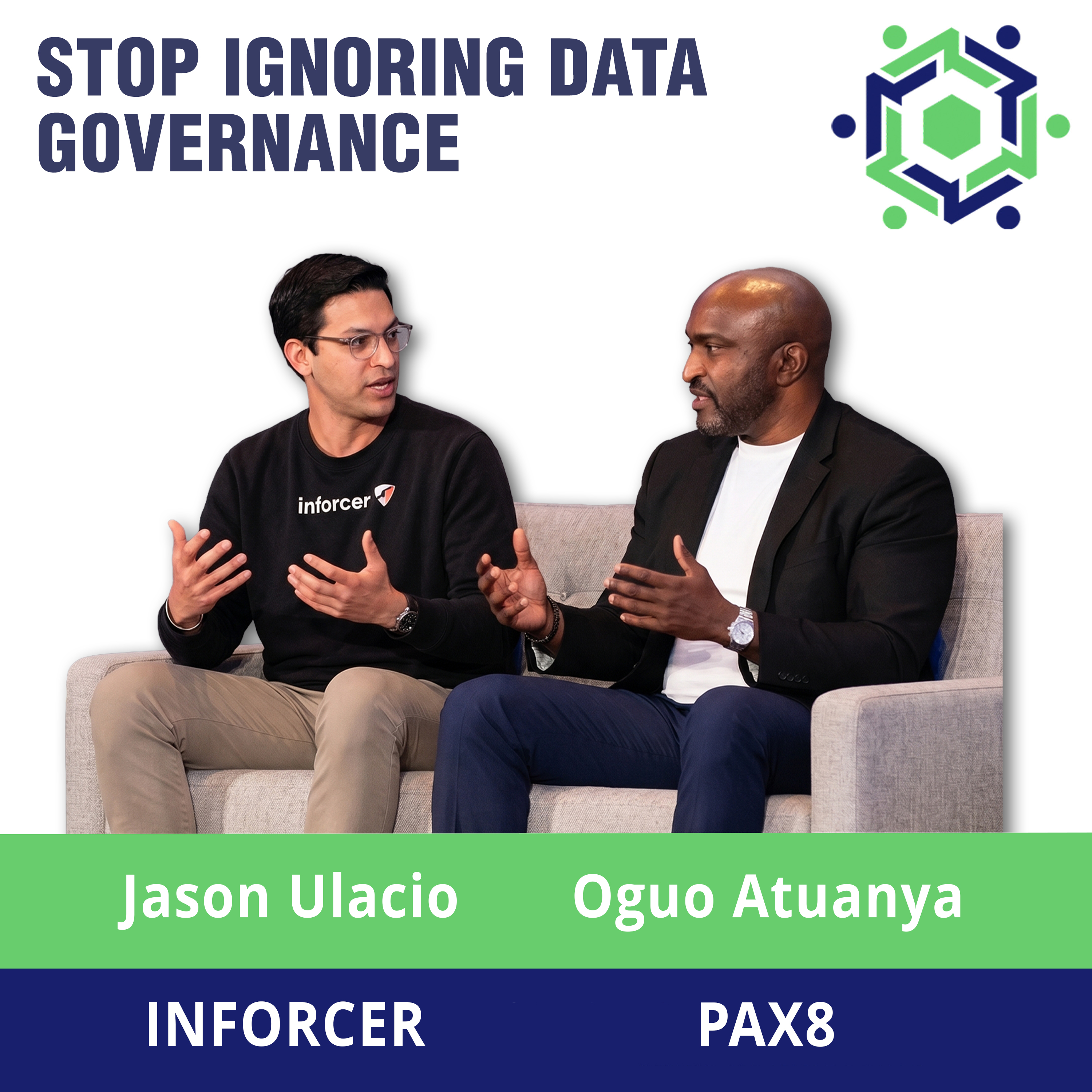
313 – Missing the Copilot Boom? How Top MSPs Are Monetizing AI Now
Don’t miss the AI partnership revolution! Subscribe to our Newsletter: https://theultimatepartner.com/ebook-subscribe/ Check Out UPX: https://theultimatepartner.com/experience/ In this episode, Vince Menzione sits down with Jason Ulacio from Enforcer and Oguo Atuanya from PAX8 to discuss the critical ecosystem shift happening as MSPs transform into Managed Intelligence Providers (MIPs). They explore the hidden dangers of shadow AI running rampant in organizations, the absolute necessity of establishing solid data governance before deploying tools like Copilot, and how curated agent stores are enabling partners to drive repeatable, monetizable business outcomes for SMBs. https://www.youtube.com/watch?v=ajn6FFFWMp4 Key Takeaways The traditional MSP model must evolve into a Managed Intelligence Provider (MIP) that focuses on business consulting and driving repeatable growth for SMBs. Almost 100% of organizations have a “shadow AI” problem, creating massive security vulnerabilities that MSPs must immediately address. Before successfully deploying Copilot, organizations must lay down a foundation of data governance and security to prevent dangerous oversharing of sensitive information. PAX8 is bridging the SMB gap with a curated agent store that ensures agents are native to SMB needs, secure, and deliver outcome-driven experiences. MSPs must become “Customer Zero” by actively using and understanding AI tools internally before attempting to commercialize them for clients. Providing simple, baseline services like monthly shadow AI reporting is an effective first step for MSPs to build recurring revenue streams based on AI. If you’re ready to lead through change, elevate your business, and achieve extraordinary outcomes through the power of partnership—this is your community. At Ultimate Partner® we want leaders like you to join us in the Ultimate Partner Experience – where transformation begins. Key Tags Managed Intelligence Provider, PAX8, Enforcer platform, Microsoft environments, shadow AI detection, Copilot assessment, data governance, work IQ, sensitivity labels, SMB native agents, curated agent store, vendor built agent, MIP playbook, purview adoption, MFA, HIPAA compliance, F1 engine analogy, trust AI, is AI trustworthy, AI governance, AI regulation, AI compliance Transcript Oguo Atuanya and Jason Ulacio Audio Podcast [00:00:00] Jason Ulacio: We are getting to the point where we ask AI questions, we ask copilot. We ask these stat questions, and we trust the answers that come back. [00:00:10] Vince Menzione: You can feel it happening. The ecosystem is shifting beneath us, the way Hyperscalers are partnering, how AI is remaking the channel and what it means to win in 2026. [00:00:22] Vince Menzione: Welcome to the Ultimate Partner Podcast. I’m Vince Menzi. Own your host. And each week I sit down with leaders at the intersection of technology, partnerships and outcomes. The voices shaping how ecosystems actually work. We talk about what’s real, what’s changing, and what it takes to lead in this era where the partner channel isn’t just part of the strategy. [00:00:44] Vince Menzione: It is the strategy because being [00:00:46] Jason Ulacio: in the room changes everything. Let’s start. [00:00:52] Vince Menzione: This is like a Microsoft, uh, alumni meeting. [00:00:56] Oguo Atuanya: Yes. [00:00:56] Vince Menzione: It’s an alumni network meeting. I’m gonna have you both come on, introduce yourselves, and then we’re gonna jump into the conversations. Good to see you, my friends. [00:01:05] Oguo Atuanya: Same here. [00:01:06] Vince Menzione: This is so fun. [00:01:07] Vince Menzione: Fun. Please, [00:01:08] Jason Ulacio: please, [00:01:11] Vince Menzione: Jason, I’ll let you go first. Yes. Welcome to the stage, ultimate Partner Stage. [00:01:17] Jason Ulacio: Yes. Thank you. Thank you, Vince. Thank you for having us. Um, hi everyone. Jason CIO here. Um, as we view of business development at Enforcer, um, I joined Enforcer about eight months ago. Prior to that, uh, spent about nine and a half years at Microsoft, um, working with this gentleman and, and many of of the other folks, some of [00:01:38] Vince Menzione: the other folks in the room. [00:01:38] Vince Menzione: Yeah. Yeah, that’s awesome. And you live here locally? [00:01:42] Jason Ulacio: Yes, yes. I’m based here, Seattle. And your [00:01:43] Vince Menzione: company is based in the UK [00:01:45] Jason Ulacio: And we’re headquarter in the uk, but we have a couple offices here in the US as well. [00:01:49] Vince Menzione: Very, [00:01:49] Jason Ulacio: very cool. [00:01:49] Vince Menzione: And you have a bunch of people here today, so Yes. It’s so great to be here first time in the room with us and this gentleman I’ve known for a little while. [00:01:57] Oguo Atuanya: Yes, sir. [00:01:57] Vince Menzione: Good to. Well, you can, I’ll let you introduce yourself, but you don’t need any introductions you’ve been around for with us for a while. A gula a little [00:02:04] Oguo Atuanya: too old. [00:02:05] Vince Menzione: You’re not old at all. He was in the gym this morning, by the way, like four o’clock in the morning pumping iron. I’m like, I come in to do my Peloton cycle. [00:02:13] Vince Menzione: And you’re like cranking out. Yeah. [00:02:15] Oguo Atuanya: You are making me blush. [00:02:16] Vince Menzione: Alright. Yeah, a little bit. [00:02:18] Oguo Atuanya: Oh, Goya. And, um, I look after the, uh, vendor experience, uh, organization within PAX eight. So that entails, um, our engagement strategy with vendors. Um. How we go to market, how we execute in the regions, and um, how we kind of look around the corner for what’s new. [00:02:40] Vince Menzione: Yeah. [00:02:41] Oguo Atuanya: So, um, I’ve been with PXI now for about a year and a half. Prior to that I spent 22 years at, um, Microsoft. One of my last roles was actually, um. Fighting the SMB fight with Jose, which is how I lost all my hair. [00:02:58] Vince Menzione: Ah, stop. [00:03:00] Oguo Atuanya: But it’s great to be here. Great to be with all of you. Thanks for coming. [00:03:04] Vince Menzione: Yeah. And one of those companies that Jose was referencing earlier, one of the top partners to work with for the MSP community as well. [00:03:11] Oguo Atuanya: Yeah. [00:03:11] Vince Menzione: Let’s talk about that for a a moment. ’cause it was about a year ago you guys hit you guys. I’m saying PAX eight hit the press. Pretty hard on, you know, this, this changing the, trying to change the terminology. [00:03:24] Oguo Atuanya: Yeah. [00:03:24] Vince Menzione: First there was like, we’re not the disty, we’re not, you know, re re redefining who you were and then also redefining the MSP community. [00:03:32] Vince Menzione: Right. And you came up with a new term at that time, at, at your event last year. [00:03:36] Oguo Atuanya: Yeah. [00:03:36] Vince Menzione: Let’s talk about it. You call, you came up with the term managed intelligence provider, so let’s talk about that. [00:03:41] Oguo Atuanya: Yeah. Really it just is the transformation of, um, the MSB in this. Agentic era where, you know, the MFPs have to go from just, you know, being the IT tools provider and doing a lot of break effects to actually, you know, now driving intelligence, um, driving, driving repeatable outcomes. [00:04:11] Oguo Atuanya: And, you know. Govern deployment and, um, orchestrated, um, you know, workforce development across or, uh, uh, you know, deployment across businesses. So you are really looking at an era where the MSB now has to really understand the SMB very well. Um, they have to understand what their SMBs. Um, business model is what their growth aspirations are, where you’re now sitting and saying, okay, Mr. [00:04:46] Oguo Atuanya: SMB, who is my customer? You want to grow x, y, Z percent in three to five years? Um, I’m coming to deploy, um, you know, the, um, you know, business infrastructure that is gonna propel that growth for you. Um, you need, um. A hundred employees, but you don’t have the wherewithal to hire a hundred employees. Right. [00:05:12] Oguo Atuanya: So you helping them build a, a hybrid organization [00:05:16] Vince Menzione: Yeah. With agents and other [00:05:17] Oguo Atuanya: With agents, yeah. Um, you know, articulating exactly how you’re going to make them more productive, reduce cost, and, um, for yourself, do it in a repeat, repeatable, monetizable, you know, fashion. So that’s really what it’s all about. [00:05:32] Vince Menzione: And really a shift from the way tech, I mean, tech, these smaller organizations were not as technology savvy years ago, but this is, it’s changed. The environment has changed considerably. [00:05:41] Oguo Atuanya: Yeah. I mean the, the MSPs really have always known the technology, but they, you now gotta understand the business side of it. [00:05:50] Vince Menzione: Yeah. [00:05:51] Oguo Atuanya: You gotta become that business consultant. [00:05:53] Vince Menzione: So what’s getting in the way and what do you do at PAX eight to close that gap? I know we, uh, you were on the podcast. I had you in the studio back in Boca in [00:06:01] Oguo Atuanya: Yeah. [00:06:02] Vince Menzione: February. We talked a little bit about this, but for this community, like there’s, there’s a big gap that you’re helping to close. [00:06:08] Vince Menzione: You’re, yeah. You’re helping enable this or I’ll call it the academy, right? Is the approach. [00:06:13] Oguo Atuanya: Yeah. Yeah. The academy is, is one of the pillars, but again, it’s what I talked about. They, they understand the technology very well. That’s all they, that’s mostly what they’ve done in the past, right. Um, but now it’s about understanding the business side. [00:06:26] Oguo Atuanya: So, um, a lot of MSPs know what to do, they just don’t know how to do it, [00:06:31] Vince Menzione: right. [00:06:31] Oguo Atuanya: Um, they don’t know how to do it for their SMB customers, so that’s where PAX eight comes in. We’ve got, um, a very prominent enablement infrastructure. I mean, we’ve got the MIP playbook, which, you know, gives you sort of a curriculum driven step by step way of how do you transform from being an MSP to an MIP. [00:06:52] Oguo Atuanya: We’ve got academy that you talked about. [00:06:54] Vince Menzione: Yes. [00:06:55] Oguo Atuanya: Right. Which is essentially university on how to do that. And then we’ve got guided growth, which is a, a targeted, um, um, uh, again, vehicle to drive those changes in the particular, um, scenario or a vertical that your customer might wanna go in. Right. So the infrastructure is one thing, the enablement is actually, um, a big core of it. [00:07:23] Vince Menzione: The skilling is what Jose was just talking about earlier. Exactly. Is up here. It’s exactly what you’re doing here in your driving. Jason, where do you see it? Where do you see from the enforcer side and where do you see partners stuck today? [00:07:33] Jason Ulacio: So what we see often is, um, at enforcer, by the way, we work primarily with MSPs. [00:07:40] Jason Ulacio: Um, so we’re a platform that helps MSPs manage their Microsoft environments at scale. Um, and what we see often is many MSPs, they don’t really know where to start, right? They see AI as a big buzz word. Um, but there’s, they struggle to go and build and commercialize an AI practice with their customers, right? [00:08:04] Jason Ulacio: Like the like. It’s all good and well to sort of sell co-pilot to your customer. But most of the MSPs you’ll work with out there, their bread and butter is build a managed service and commercialize a managed service out of that platform. Right. And so the sort of, I would say baby steps that we give them or we see, like, we see ’em get stuck, stuck sort of not knowing where to start and the the baby steps we help them with. [00:08:29] Jason Ulacio: Um, Jose kind of talked a little bit about this. You know, first is. Help those customers understand where AI is already being used in their environment, right? So over 90% of SMBs and and organizations out there. Already using ai. Your employees are using ai whether you like it or, or know it or not. And, and it is a good thing, right? [00:08:51] Jason Ulacio: It’s because AI is making them more productive, et cetera, et cetera. But one of the things we do is we provide the MSPs with shadow AI detection solution. So for any customer that you have an enforcer, we will give you sort of visibility into what are all the shadow AI products, and for, for our sake. [00:09:10] Jason Ulacio: When you start shadow AI as anything that’s not copilot, but you can kind of white list things, other products in that this customer, um, allows, but it gives you the ability to, one, show this customer what is all the AI usage that’s happening in their environment? How much data is being put in, and just give them that visibility. [00:09:26] Jason Ulacio: Once they have the visibility, you can then start a conversation about controlling and managing them, right? So you use tools like Defend of our cloud and block access to certain things that you think are particularly risky and so on, depending on that customer’s risk appetite. And then once you’ve done that, then you really start triggering towards like, okay, how do we help you deliver value on top of this? [00:09:48] Jason Ulacio: Right? It’s training people, giving them prompt training, starting to deliver and building those agents for different use cases and so on. Well, that’s kind of the roadmap that we, we provide, and it all starts kind of from the visibility that control and management. And then as an MSP, you start building value on that and there’s points for projects, for managed services and sort of revenue opportunities across the [00:10:10] Vince Menzione: board. [00:10:10] Vince Menzione: I’m intrigued. What do you think the percentage of organizations that had this shadow IT problem is? [00:10:16] Jason Ulacio: Oh, [00:10:17] Vince Menzione: almost [00:10:17] Jason Ulacio: every organization I say it’s pretty much like a hundred percent. [00:10:19] Vince Menzione: Yeah. And how many are addressing it with an enforcer? [00:10:22] Jason Ulacio: So we have about, yeah. Oh, how many are addressing that with enforcer today? [00:10:27] Jason Ulacio: So we have about 1200 MSPs that work with us. Okay. Those MSPs are managing, um, upwards of 60,000 SMBs on the platform. Um, we, the co-pilot manager and Saudi AI solution that we, we launched. Um, is very new. We actually just launched it this month in ga. Nice, [00:10:47] Vince Menzione: nice. [00:10:47] Jason Ulacio: Um, but it’s available in the platform for everyone that, that is a customer. [00:10:51] Jason Ulacio: Um, so yeah, we’re, we’re hoping to see every, all of our customers leverage that. [00:10:56] Vince Menzione: Yeah. It, it, the risk is incredible. I just think about taking the, you know, the company’s jewels, basically all the information about the organization. ’cause we use it right where you start. We, we wanna find out the answers, like, how do we grow our business? [00:11:08] Vince Menzione: And you’re taking, you’re compromising the organization by doing this, and this is what organization, this is to me, is the biggest risks with ai. Would you agree? Yeah, yeah, [00:11:17] Oguo Atuanya: yeah. [00:11:17] Vince Menzione: Let’s talk about, let’s talk about AI a little bit though. Walk us through, yeah. Like I want to talk about, you have an agent store, right? [00:11:23] Vince Menzione: Outcome based solutions. [00:11:24] Oguo Atuanya: Yeah. [00:11:25] Vince Menzione: Let’s talk about this curated agent store. [00:11:27] Oguo Atuanya: Yeah. So what we’ve done with our agent store is, is to make sure that. The, the agents that we actually put in the store. Uh, SMB native agents. Right. So ’cause [00:11:43] Vince Menzione: And what does that mean? [00:11:44] Oguo Atuanya: What that means is that you see a lot of instances where folks say they have an agent store that caters to SMB, but you go into the store and these agents are really Enterprise agents. [00:11:56] Oguo Atuanya: Enterprise agents, okay. That have been tried to, um. You know, force fit into serving SMB, kind of like a hand me down. [00:12:04] Vince Menzione: Yeah. Yeah. [00:12:05] Oguo Atuanya: So we have a curation [00:12:07] Vince Menzione: Okay. [00:12:07] Oguo Atuanya: Uh, process. And, and there are three elements to that, right? So it’s curating the supply. [00:12:15] Vince Menzione: Okay. [00:12:15] Oguo Atuanya: Which is, you know, who do we talk to? Um, what do they do? [00:12:20] Oguo Atuanya: Not what the technology is all about, but what do they do? Is it the ideal profile, right? For um. Um, SMB, and, and there, there, there are three prongs to that. There is, you know, the first one, which is the vendor built agent, for lack of better term, like a fully packaged product. Yeah, it’s vendor built, put in store and yeah. [00:12:44] Oguo Atuanya: And then there is also the, um, the parts Built Start, which is sort of a reference platform for. Folks to build on. And then so they [00:12:52] Vince Menzione: can build, they can build something that’s more s and b focused. [00:12:55] Oguo Atuanya: Yeah. And then there is a community or partner. Okay. You know, built, which is, you know, uh, in a curated fashion, uh, uh, uh, sourced from ecosystem to put on the store. [00:13:06] Oguo Atuanya: Right. So we, we, we wanna make sure that it’s, it’s, it’s there serving precise needs and, um, you know, very easy to deploy and use. And then there is a trust. Element of it, which means that everything that we curate and deploy into the store has a security foundation. Right. Because we are now kind of the trust brokers you [00:13:30] Vince Menzione: Yeah, [00:13:30] Oguo Atuanya: exactly. [00:13:30] Oguo Atuanya: Yeah. So it’s the trust. It’s gotta be that way. And then there there’s the experience element of it, which is, um, again, it’s gotta, it’s gotta be outcome driven. It’s gotta absolutely do what it’s supposed to do. Right. So that people get, you know, satisfaction and derive value from what they’ve, you know, purchased to use. [00:13:50] Oguo Atuanya: So that’s how we kind curate this. [00:13:53] Vince Menzione: Nice, well, it makes, it makes total sense. Jason, I wanna talk a little bit more about enforcer too. It seems like you’ve published a practical guide for MSPs. Mm-hmm. Um, becoming manager. I, I find like you’re following similar themes here, like how do you help these organizations to follow the path? [00:14:10] Vince Menzione: That is SMB focus, uh, ’cause everybody’s moving in this direction. Uh, so talk, talk to us through this. Why walk us through it and why? [00:14:20] Jason Ulacio: Yeah. So I mean, in, in the conversation we’re just having where people are trying to, to of figure out how they monetize, et cetera, et cetera. One of the big challenges and, and risks involved, you just, you know, called out the, the risks earlier is like. [00:14:37] Jason Ulacio: AI is like giving someone a, a normal driver, a Dayto Day driver like me, an F1 car. [00:14:44] Vince Menzione: Yeah. [00:14:44] Jason Ulacio: With I love that. My Toyota [00:14:47] Vince Menzione: brakes. We just had my, we just had Miami last week, by the way. [00:14:49] Jason Ulacio: Yeah, yeah, exactly. It was like you gave me, you gave me an F1 engine, but the brakes are still the same. Toyota brakes, uh, of my car and like without proper, uh, going through the proper data governance and security. [00:15:05] Jason Ulacio: Um, work in advance. Really what you’re doing is you are exposing one, what I would call almost like decision risk, right. The, the, Jose was talking about this earlier as well. The, the main differentiator between copilot and the other platforms that you use out there. Is that copilot has what they call work iq, which is it. [00:15:28] Jason Ulacio: It is, it has access, it lives within your tenant, it has access to all of your Microsoft data, the data in your tenants, et cetera, understands it. And then the other piece is it follows the same security policies, access controls, et cetera, et cetera, that you set for your organization Now. If your SharePoint and data stack is a mess and your security policy and posture is non-existent, guess what’s the copilot outcomes are gonna be? [00:15:58] Jason Ulacio: And so what ends up happening is, and [00:15:59] Vince Menzione: then the risk of knowing, Hey, how much does the CEO make? [00:16:03] Jason Ulacio: Yeah, exactly. That [00:16:03] Vince Menzione: information is out in the open. [00:16:04] Jason Ulacio: Like you find, you find a couple risks that are particularly prevalent. One oversharing. Yeah. What you just called out, right? Like, you know. Someone can access HR files for, you know, HR complaints or, you know, salaries or things like that. [00:16:21] Jason Ulacio: The other risk is more, I would call it almost decision risk, which is, you know, we are getting to the point where we ask AI questions, we ask copilot, we ask these stat questions, and we trust the answers that come back. [00:16:35] Vince Menzione: Yes. [00:16:35] Jason Ulacio: And so we might be getting fooled by data that is stale, data is bad, et cetera, et cetera. [00:16:41] Jason Ulacio: Yeah. And obviously the third one is things like compliance risk, et cetera, et cetera. Right? Like if you are. You know, a hipaa, um, regulated organization that you suddenly fall, um, into out of compliance with certain policies because, you know, your employees put, uh, customer data, um, uh, HIPAA compliant data into a system that is not contained and controlled and you don’t know where that went. [00:17:06] Jason Ulacio: Right. Not [00:17:06] Vince Menzione: following HIPAA policies. [00:17:08] Jason Ulacio: Exactly. Yeah. Um, and then all the rest of them might come from that. So, you know, those are. Some of the things that can happen if you don’t go through this journey first of laying down a foundation of data governance and security. Um, so we, we see this as essential and it’s what we try to lay out with those copilot ssessment. [00:17:27] Jason Ulacio: So you do it as [00:17:28] Vince Menzione: guidelines or do you also do it through software? How do you like guardrails around it as well? [00:17:32] Jason Ulacio: The way, the way we do it is actually we have an assessment engine. Um, we, we actually, we started with a security assessment engine that would just look at your customer’s environment or at a customer’s environment and be able to track all the different security policies and things that they had in there and show you what’s active, what’s not. [00:17:50] Jason Ulacio: Okay. And then based on a recommended best practice standard, what you should be doing. We layered, um, the M 365 usage data on top of that Okay. To then look at, so based on that. We’re the top candidates for copilot, uh, and sort of who, who should be getting copilot? Who should, who’s your power user to go talk to? [00:18:09] Jason Ulacio: What are the then security policies that you should implement? And then what work you should do from a data governance perspective? Like this SharePoint site is stale. No one’s using it. Remove access to that from copilot and so [00:18:20] Vince Menzione: on. Do you, do you see a common set of themes like gaps? What are the most common gaps that you see? [00:18:25] Jason Ulacio: The, so the gaps that you most often see, um, are, you know, low adoption of, of purview, right? So, okay. Documents don’t have things like sensitivity labels assigned to them, and therefore. You know, when things that are highly confidential suddenly are at risk of appearing Yeah. In a search result when things Right. [00:18:47] Jason Ulacio: That’s, um, yeah. So think things like purview, things like, um, now to be fair, other basic things like, you know, people don’t have MFA turned on. Yeah. Um, show up. So we, we go back to some of the basics, but from an A perspective, the most common ones are things from purview. [00:19:08] Vince Menzione: So you’ve been on this journey now for a while ago with this MSP to MIP model. What is the Ms, the MIP of, of this year or in the future look like? [00:19:20] Oguo Atuanya: Um, it, it, it, again, it looks like an outfit that’s actually looking at this as, um, a business model. [00:19:28] Vince Menzione: Yeah. [00:19:28] Oguo Atuanya: Transformational management for their SMBs. Right. So. [00:19:35] Oguo Atuanya: Um, again, you’re starting with the outcome in mind and then, um, um, ensuring that you are building, um, an approach that’s repeatable. Um, the governed deployment, you have to treat this as a very serious endeavor. It’s no longer just instances of, um, experiments and hobby, you know, experiences, right? Yeah. [00:20:03] Oguo Atuanya: It’s a project. Then it’s, it’s, it’s ongoing. Um, and then you, yourself, you gotta think about your monetization, right? So that’s, that’s what an MSP, you know, of the future, uh, looks like. And it’s so much opportunity out there. Um, the, the enablement, not just for more the MSPs, but MSPs to, um, the SMB. Very critical. [00:20:30] Jason Ulacio: Yeah. [00:20:30] Oguo Atuanya: And, and it’s really just helping the SMBs manage their business to growth. That’s when you’ve crossed that path, [00:20:38] Vince Menzione: that’s when you’ve crossed the chasm. Yes. That’s when you become, truly become an MMIP When you, when you’ve moved out of kind of just doing the, I’ll call it running, cranking the wrench kind of thing. [00:20:48] Oguo Atuanya: And to be fair, there a bunch of, um, folks that are there right now. Um, but really to fully cross that path. And you’re now going from that, you know, tools, orchestrator and, um, a provider to a strategic, you know, business consultant and advisor to your SME. Yeah. [00:21:12] Vince Menzione: Jason, what do you see from the best of the best? [00:21:14] Vince Menzione: Like, what are the ones that have made the transitions? [00:21:17] Jason Ulacio: What we see from the ones that have made the transition? Is they have gone through that journey that we just shared of helping their customers sort of with a governance and security layer, deploy out like co-pilot. And now they’re starting to helping them manage that. [00:21:36] Jason Ulacio: So they’re helping looking around sort of, are people actually using Copilot? Who’s using copilot the most, identifying champions and helping sort of drive usage around those champions, helping them train other people in the organization. And then almost like. Earning the right to go have the conversations with their customers around agents, right? [00:21:56] Jason Ulacio: And how to further embed themselves as an MSP in the business of their customers because it, it is a transition from moving of outsource IT provider to a consultant, uh, a s and a, a a business partner that is fully embedded in the business. You kinda need to get to that point. To actually build agents and workflows and things that are productive. [00:22:20] Jason Ulacio: Um, and there’s not many that are at that point yet, but that is the MIP journey that I think we’re taking on. We’ve [00:22:27] Vince Menzione: got, we’ve got MSPs in the room today. What should they go do better or different? Right. And I wanna open up, we have a few minutes for questions. We have about four extra minutes. Um. [00:22:38] Oguo Atuanya: I would say first and foremost, become that customer Zero. [00:22:42] Vince Menzione: Customer zero. [00:22:42] Oguo Atuanya: Yeah. Use it like yourself. Become that customer. Zero. Yeah. [00:22:46] Vince Menzione: It’s huge. [00:22:46] Oguo Atuanya: Understand how it works. And then secondly, pick on one thing, you know, pick on one thing. Um, could be one vertical, it could be one outcome. You know, get really good at it. Make it repeatable. Then you can scale from there. [00:23:03] Vince Menzione: Yeah. Get the flywheel. [00:23:05] Oguo Atuanya: Yes. The [00:23:05] Vince Menzione: flywheel fly. Yeah. Jason, [00:23:09] Jason Ulacio: I would say under the assumption here that we’re, we’re, we’re gonna focus on the, on the Microsoft stack. [00:23:15] Vince Menzione: Yeah. [00:23:16] Jason Ulacio: It’s give your customer that visibility from a shadow eye perspective. Show them that this is being used in their environment. Yeah. If they’re not ready to pay for copilot, get them started on copilot chat. [00:23:27] Jason Ulacio: Show them the value that you can provide them from a. Training, security, data management, um, and then just get them on that journey. You know, figure out how do I now offer you a service? Um, it can start as simple as monthly reporting, right on what is happening. And trust me, the CEOs currently are very intent and care about, you know, what is happening? [00:23:51] Jason Ulacio: How are my, how are my employees leveraging AI or not? Are they actually maximizing the roi? So it could be something as simple as. You know, either free or charge monthly reporting that you provide to your customer and get on that journey to build an actual, repeatable, recurring revenue business based on AI and AI services. [00:24:13] Vince Menzione: Very insightful. Very insightful. We’ve got two extra minutes. I want to open it up if there’s any questions We. [00:24:27] Jason Ulacio: Don’t be shy. It was after lunch. [00:24:29] Vince Menzione: It was, we’re getting, we’re getting that, that like, that lull after lunch thing, Donna. So it looks like we’re ready for a break then, I guess, right? Yeah. [00:24:37] Jason Ulacio: Yes [00:24:37] Vince Menzione: sir. Well, thank you. Thank you so much for your support. Thank great to have you. You’ve got your big event coming up, so if people aren’t signed up already Yeah. [00:24:45] Vince Menzione: Beyond event [00:24:46] Oguo Atuanya: this coming up, uh, June 7th tonight. [00:24:49] Vince Menzione: Yep. [00:24:49] Oguo Atuanya: Um. [00:24:51] Vince Menzione: It’s, [00:24:51] Oguo Atuanya: it’s, I think there would be a lot to hear about. [00:24:53] Vince Menzione: Yeah. Yeah. We’ll [00:24:54] Jason Ulacio: be [00:24:54] Vince Menzione: there [00:24:54] Jason Ulacio: as [00:24:54] Vince Menzione: well. [00:24:54] Jason Ulacio: There might [00:24:55] Vince Menzione: be some [00:24:55] Jason Ulacio: other [00:24:55] Vince Menzione: announcements happening, probably. It’s usually quite the event, so I’m excited to [00:25:00] Oguo Atuanya: join [00:25:00] Jason Ulacio: you. Yeah, yeah. [00:25:01] Oguo Atuanya: Looking forward [00:25:01] Jason Ulacio: to [00:25:01] Oguo Atuanya: see everybody. [00:25:02] Oguo Atuanya: Yeah. [00:25:02] Vince Menzione: All right, great. Yeah. Thank you all it for joining us. Thank you [00:25:05] Oguo Atuanya: so much. [00:25:06] Vince Menzione: Thanks for listening to The Ultimate Partner Podcast. If today’s conversation resonated, share it with a partner leader in your network. Subscribe where you listen, and head over to the ultimate partner.com. For show notes related content and the resources for this episode. [00:25:23] Vince Menzione: And if you haven’t already, now’s the time to register for the Ultimate Partner Live Event in Reston, Virginia, October 26th through October 28th. Until next time, keep showing up in the rooms that matter because being in the room changes everything [00:25:41] I.
September 14, 202626 min
312 – AWS Partners Unlock the Proven Path From AI Pilots to Profit
Don’t get left behind in the AI revolution. Subscribe to our Newsletter: https://theultimatepartner.com/ebook-subscribe/ Check Out UPX: https://theultimatepartner.com/experience/ In this powerful episode, Vince Menzione sits down with Rebecca Jones of Bridge Partners and Mark Yaphe, Head of Consulting Partners for AWS, to uncover how AI is fundamentally rewiring the partner ecosystem. They explore the urgent shift from 90% stalled AI pilots to a new era of rapid execution, warning against the trap of “shiny object” syndrome. By unpacking the necessity of a “builder mindset” and a product-focused approach, this discussion reveals exactly what top-performing companies are doing to collapse six-month development cycles into four weeks and secure their place in the 2026 market landscape. Key Takeaways The transition from on-prem to cloud and marketplace is now entirely focused on AI transformation. Top companies approach AI with a product mindset rather than running scattershot pilots. Empowering frontline teams with a “builder mindset” can collapse solution cycles from six months to four weeks. Partners must avoid the $260 billion AI “FOMO” trap by specializing in specific industries and workflows rather than trying to do everything. Evaluating the “highest and best use” of AI models like Claude is essential for managing token economics and ROI. Thriving through AI disruption requires cultivating a strong growth mindset and prioritizing human connection and critical thinking. If you’re ready to lead through change, elevate your business, and achieve extraordinary outcomes through the power of partnership—this is your community. At Ultimate Partner® we want leaders like you to join us in the Ultimate Partner Experience – where transformation begins. Key Tags AI transformation, AWS partner ecosystem, hyperscaler alignment, builder mindset, product mindset implementation, Bridge Partners insights, GenAI solution cycles, AI token economics, Claude model utilization, GSI strategy, 2026 ecosystem shift, AI ROI measurement, agentic tools, workflow specialization. Transcript Rebecca Jones and Mark Yaphe AUDIO EPISODE [00:00:00] Rebecca Jones: You can either, um, think about being disrupted or being a disruptor. [00:00:07] Vince Menzione: You can feel it happening. The ecosystem is shifting beneath us the way hyperscalers are partnering, how AI is remaking the channel. And what it means to win in 2026. [00:00:18] Vince Menzione: Welcome to the Ultimate Partner Podcast. I’m Vince Menzi, own your host. [00:00:23] Vince Menzione: And each week I sit down with leaders at the intersection of [00:00:26] Vince Menzione: technology, partnerships and outcomes, the voices shaping how ecosystems actually work. We talk about what’s real, what’s changing, and what it takes to lead in this era where the partner channel isn’t just part of the strategy. It is the strategy because being in the room changes everything. [00:00:45] Vince Menzione: Let’s start. We have another incredible session today, right? So I get to invite another friend of, of ultimate partner who’s been around for a while and, uh, it’s just absolutely amazing. Rebecca has been in the studio, she’s been at, how many of events have you been with? Fourth, fourth one, and I’m gonna have you introduce Mark as well. [00:01:10] Vince Menzione: So come on, on stage. Rebecca. Rebecca Jones to many of you know. [00:01:14] Rebecca Jones: Thank you, sir. [00:01:15] Vince Menzione: Good to see you. Good to see you. And Mark, great, great to have you. I want to have you, Richard, we’ll have you, Rebecca’s gonna introduce you and then we want you to introduce yourself as well, sir. [00:01:23] Rebecca Jones: Wonderful. Well, [00:01:24] Vince Menzione: and another AWS exec. [00:01:26] Vince Menzione: I love this. Like, I know. Yeah, we’re finishing out the day Strong. [00:01:28] Rebecca Jones: Well, Vince, I have to say, you’ve got me, um, the last time we got together, it was the last session before happy hour. So I guess we’re closing. [00:01:36] Vince Menzione: Well, you know, we’re gonna close us [00:01:38] Rebecca Jones: out [00:01:38] Vince Menzione: really nicely. Know we, yeah. We’re serving Bloody Mary’s, by the way, while you’re guys are up here. [00:01:42] Vince Menzione: No. Good. [00:01:42] Rebecca Jones: So, um, we’re so excited to have Mark. Thank you, mark, for joining us here. Um, head of consulting partners for AWS and, uh. We’re gonna close this down, aren’t we? I love [00:01:54] Vince Menzione: it. I love it. Yes. I’m looking forward to it. [00:01:56] Rebecca Jones: Okay. [00:01:56] Vince Menzione: So Mark’s well, welcome. Good to have you. [00:01:58] Rebecca Jones: Yeah. Do you wanna take a seat? [00:02:00] Vince Menzione: Uh, yeah, [00:02:00] Rebecca Jones: please do. [00:02:01] Rebecca Jones: All right. [00:02:01] Vince Menzione: Please do. I’m morphing the pillows up, by the way. [00:02:05] Rebecca Jones: Oh, are you [00:02:05] Vince Menzione: by the way, for those of who don’t know, these got shipped from my house because we got Oh, I was wondering. It’s hard to find, but yeah. Yeah, they’re, we take them from event to event. It’s so funny to have them. But I wanna, well, thank you for both being here. [00:02:17] Rebecca Jones: Yes. [00:02:18] Vince Menzione: I think it’d probably be helpful for those who don’t know, bridge Of course. Maybe just spend a moment because I know you well. [00:02:23] Rebecca Jones: Yeah. [00:02:23] Vince Menzione: And we know the organization well, those of us. Those of us. [00:02:26] Rebecca Jones: But for me, uh, so let me talk to you a little bit about Bridge Partners and my role, um, the company has been around for almost two decades. [00:02:34] Rebecca Jones: Yeah. And so when you think about the transformation that’s happened within the tech industry. And our primary focus is the tech industry. Uh, and within that we focus on enterprise companies and we help them with product go to market and how they scale that through partners. Yeah. Uh, so that’s given us a really interesting and, uh, vantage point around the transformations from on-prem to cloud, cloud to marketplace and now marketplace and the transformation with ai. [00:03:04] Vince Menzione: I feel like you’re the McKenzie of the, of the partner business. Like I, [00:03:07] Rebecca Jones: I like that. [00:03:08] Vince Menzione: Can we get that? [00:03:09] Rebecca Jones: Yeah. [00:03:10] Vince Menzione: I’ll, I’ll, I’ll sign an agreement with you, but I really do, I feel like as we work together, bridge was always like the organization we bring in to help us. Solve the big issues. Yeah. Like that I think about your organization. [00:03:20] Vince Menzione: Yeah. And Mark, talk to me about Global Consulting services. Sure. So is it all GSIs? Is it, [00:03:24] Mark Yaphe: uh, so I head up, uh, global Consulting Partner Marketing. Okay. So I focus really on, on two key categories for the, the more sig larger, uh, GSIs. Uh, I’ve got a team that actually partners very closely with them. Nice. [00:03:36] Mark Yaphe: That helps them develop the right strategies, go to market approaches, nice to unlock the opportunity. And then for the full consulting community, I look at those mechanisms. Go to market approach is leveraging marketplace to help our whole consulting community become successful with AWS. [00:03:51] Vince Menzione: And we’ve got GSIs in the room here, which is kind of cool actually. [00:03:53] Vince Menzione: Yeah. Um, where do we wanna start? Let’s, let’s, [00:03:57] Rebecca Jones: well, yeah, we’ve got a good list of questions to go through. How’s everybody feeling? We’re we’re good? We’re awake. One more session, everyone. Alright. Okay. [00:04:09] Vince Menzione: So Rebecca, uh, across the organizations you work with. What are you seeing from the highest ’cause? I, I say you’re like the McKinsey. [00:04:16] Vince Menzione: What are you seeing from the highest performing companies? Yeah, that they do differently. When it comes to turning your go-to market strategy into outcomes? [00:04:23] Rebecca Jones: Yeah. Um, I will say the most important thing that we’re seeing from companies is they’re asking different questions, fundamentally different questions when it comes to ai. [00:04:34] Rebecca Jones: Interesting. [00:04:34] Vince Menzione: What do you mean by that? [00:04:35] Rebecca Jones: Well, we, we talked a lot this morning about there’s never been higher access, and I’ll say general adoption for tools and technology. There was a great stat this morning. Uh, I think Jay shared that, uh, from MIT. [00:04:50] Vince Menzione: We keep looking there as if he’s still [00:04:51] Rebecca Jones: sitting there. [00:04:51] Rebecca Jones: Yeah, I’m looking. Where was Jay? He, he was all over the place. Um, there was a great stat from MIT that there was, you know, if you looked at last year, 90% of pilots. Were stuck and they weren’t going anywhere. And now that’s dropped down to 70%. So there’s movement and transformation. And so when I think about that, and when I go back to the types of questions leaders are asking, um, that are really moving ahead, they’re looking at operating systems differently and they’re looking at, um. [00:05:25] Rebecca Jones: They’re asking the questions on where should I apply AI within those work streams, um, and within those operating systems, and the way in which they’re approaching that is with a product mindset. So that is fundamentally different than just the scattershot of let’s just do pilots everywhere. [00:05:44] Vince Menzione: Yeah. You’ve talked about product, uh, mindset with me as well. [00:05:48] Rebecca Jones: Yeah. [00:05:48] Vince Menzione: And I think we were gonna talk about builder mindset as well, mark, that that is a kind of a different point of view. When you think about moving from strategy to execution, how does that mindset show up inside teams and organizations? [00:06:00] Mark Yaphe: No, absolutely. Yeah. You know, the notion of the builder mindset is about, uh, taking the notion of innovation and pushing it out to the edge. [00:06:07] Mark Yaphe: Of the organization, um, the greatest ideas for innovation, the greatest things that will help you scale. They’re in the minds of your customers and the people that can best understand them and best address ’em. They’re your teams. Yeah. Your, your customer teams or your technical teams, but unlocking it. You, you want these teams to do more than just have the conversations and understand needs. [00:06:28] Mark Yaphe: You want them to be tooled and equipped to build. Yeah. So the ones that are right in front of the customers. In that moment of need where they say, I’ve got these offerings and these motions, and it gets me this far, but if I could only do a little bit more, I could delight them. I could really power this up. [00:06:45] Mark Yaphe: And so you wanna unlock that. You want to give them the tools to build, to build the POC to address specific, uh, options in the meeting. And then when they’re showing some success, show the rest of the organization how they can scale that. [00:06:58] Vince Menzione: How do you think about, because I think about big GSIs. Having huge organizations like Accenture has half a million people, and then you have customer teams that may not, are, may not be as fluent in the technology side of things. [00:07:13] Vince Menzione: Like how do you make sure that’s getting from the customer all the way to the right people in the organization and driving that loaded question. I know. [00:07:20] Mark Yaphe: No, I, I, um, you, you, you want to think about how that process works. Yeah. And there are parts of the organization. That define how do we get go to market offers in motions out to the field. [00:07:34] Mark Yaphe: Um, and they look at the whole thing and they say, well, how effective are we and how quickly can we cycle through? Yes. These activities. There’s one partner I worked with, um, they looked at this and they measure the cycle time. How long does it take me to get from pushing on an offer? Working with customers, getting feedback, and then creating new updates. [00:07:53] Mark Yaphe: A long, long time ago, like two years ago, this would take, it was a hundred [00:07:57] Vince Menzione: years ago in AI terms. [00:07:59] Mark Yaphe: Well, that’s basically it. This took about five to six months. They get about two revs a year. Now. They literally implemented a geni solution that number one uses geni to push it out to the teams, makes it bespoke on an engagement by engagement basis. [00:08:14] Mark Yaphe: It makes it relevant for their industries and their use cases. And that same tool is the feedback mechanism. So in real time it’s providing feedback. So they’ve collapsed six month cycle times to four weeks. And the punchline here is we talked about builder teams. The people that figured out they needed the solution, built the solution, and piloted the solutions were the builder teams. [00:08:36] Mark Yaphe: They were the people working with the customers. [00:08:38] Vince Menzione: I love it. Yeah, I love it. Anything to add to that? Rebecca, I know you work again, being the McKinsey of the, of the partner world. [00:08:46] Rebecca Jones: Well, I’ll, I [00:08:47] Mark Yaphe: It’s gonna stick, [00:08:47] Rebecca Jones: stick. It’s [00:08:48] Vince Menzione: gonna [00:08:49] Rebecca Jones: stick. You say it three times, that’s stick. No, I, you know, mark just hit on some really important things with the customer mind. [00:08:57] Rebecca Jones: You’re really looking at what outcomes are you trying to drive for those customers and that builder mindset, you, you’re going to hear a lot about that because companies need, as you transform, you really need to be thinking differently. And transformation takes quite a while. And while there is massive opportunity and you see the, the quickness you have to have that long-term vision and then be able to work backwards from that. [00:09:21] Rebecca Jones: And so I couldn’t agree more with the, the focus on customer outcomes. [00:09:26] Vince Menzione: So we’re in a very interesting, I’ll call it, almost a seminal point, although that’s overused in terms of where we are with AI today, right? I you mentioned like two years, feels like 10 years. Yeah. Ago, right? I mean, we’ve seen such transformation happening, but it also doesn’t feel like organizations are keeping, like, I, I feel like small SMBs actually are further ahead because they, they have to be agile, but the bigger organizations are still trying to figure some things out, right? [00:09:53] Vince Menzione: So. What needs to change around organizations, culture management processes? Like how do we bring, how do we bring everyone along on this journey? [00:10:04] Mark Yaphe: There’s a lot that needs to happen. Um, [00:10:07] Vince Menzione: yeah. [00:10:08] Mark Yaphe: One thing that struck, there’s a lot of things I, I wanted to anchor on. One that Yeah, please. It could be a relevant conversation. [00:10:13] Mark Yaphe: Both, um, as part of your, uh, partner organizations delivering outcomes to customers. And, um, it’s about focusing on the business outcomes. It can be very easy, uh, to talk about the technology and the services, but day to day, the sales organization is going into solve customer problems. They’re meeting line of business leaders in specific industries who have very specific business problems to tackle. [00:10:42] Mark Yaphe: And I think one thing that organizations can do is impress upon them that it’s critical to understand. What are the business problems that we solve for our customers that we’re serving? What are those use cases? What are the drivers for it? In the role that I’m doing in an organization, how does that move the needle? [00:10:58] Guest: Yeah. [00:10:58] Mark Yaphe: For the business outcomes, it’s, it’s not dissimilar to other things, and perhaps it’s a little bit of a pivot, but always thinking about business outcomes, I think is, um, a little bit of a change that needs to be instilled within [00:11:10] Vince Menzione: what, what are the best doing better, and where are you seeing the gaps? [00:11:16] Mark Yaphe: Couple of areas, uh, one area, um, nobody knows everything. Yeah. Nobody’s got all the knowledge. [00:11:23] Vince Menzione: Right. [00:11:23] Mark Yaphe: And so rely on your ecosystem of partners and stakeholders. Yeah. Recognize you’ll only have so much information, um, and reach out, whether it’s to your technology partners, your business partners, your hyperscalers AWS to find out what am I missing. [00:11:38] Guest: Yeah. [00:11:38] Mark Yaphe: Um, again, many years, you know, a hundred years ago, two years, two years ago, um. We’d have these conversations about, well, what use cases are you seeing and what business problems are you solving? But, but those would be in scheduled meetings quarterly. Now there are agenda items on weekly standards. [00:11:55] Mark Yaphe: They’re happening every single week. What are you seeing? What are you seeing? And further, I’ve seen some gen AI and agent solutions that actually automate how that information flows to, to make it, to accelerate. [00:12:06] Vince Menzione: Yeah, it’s, it’s absolutely amazing. Yeah. Anything on, I mean, certainly you’ve got a perspective ’cause you’re working with these organizations. [00:12:13] Rebecca Jones: I have a couple thoughts on this specifically for the partner organizations and the partner companies here. I can understand there’s a lot of, you know, we looked at a stat earlier about the AI partner opportunity and it was. $260 billion somewhere in that bracket. And that can create maybe some fomo, you know, maybe, uh, let’s go after everything in this area. [00:12:37] Rebecca Jones: Yes. And not pick and choose [00:12:39] Mark Yaphe: a [00:12:39] Rebecca Jones: shiny object. Shiny object and not prioritize. And it’s actually the opposite. It’s really understanding where your strengths are in the market. Um, who’s in your partner ecosystem? What are you bringing to market? Are you, uh, a tech company that are looking to break? Bridge and bring out services or your services company, and now that can build product. [00:13:01] Rebecca Jones: But really understanding your opportunity. What industry do you play, what specialization do you have? And go really deep and then know how to augment your partners and the ecosystem around you to make you stronger and better for the customer. So with that market opportunity, which is. Tremendous, how do you focus and prioritize? [00:13:21] Rebecca Jones: And that’s where I have observed partners. Oh, I’m a little bit here, a little bit there, a little bit here. And, and, uh, I would be curious, I mean, that’s probably pretty hard for you if a partner shows up and they’re a little bit of everything. [00:13:34] Mark Yaphe: Well, I, I resonated with a point that you made before. Yeah. I, I’ve spent, um, half my time at AWS on the consulting side working with enterprise customers, the us half the partners. [00:13:43] Mark Yaphe: It’s critical that partners understand what’s unique about them. [00:13:45] Exactly. [00:13:46] Rebecca Jones: Yeah. [00:13:47] Mark Yaphe: You it. I mean, everybody here, they’re looking at cloud migrations and modernizations and agentic, but that’s kind of part of the noise. You’ve gotta know what uniquely you do in an organization to deliver value. Are you developing supply chain for transportation companies or drug acceleration pipelines for. [00:14:06] Mark Yaphe: Pharmaceuticals. Yeah. Starting with that anchoring on your differences, I think is, is really important. [00:14:11] Vince Menzione: When I first started in the partner world, that was one of the biggest challenges and dilemmas, and I’m sure you still see it today, where I do all things. You know the partner that does the big SI that does everything, they have all the certifications. [00:14:24] Vince Menzione: I have 10,000 people trained on every technology certification, right. And then like, well what do you do? Like, and they can’t clarify. Right. Have that conversation. [00:14:33] Mark Yaphe: And then how do people, customers, [00:14:35] Vince Menzione: yeah. [00:14:35] Mark Yaphe: Or sales organizations choose you and why. [00:14:38] Vince Menzione: Yes, exactly. Exactly. So how do you get them to show up in that way? [00:14:43] Vince Menzione: Like especially if they’re like, how do you coach them through that? ’cause it feels like it’s still exists, right? This like mentality or this mindset. I can do all things, especially with the shiny objects that we’re facing today. [00:14:55] Rebecca Jones: Mm-hmm. [00:14:55] Vince Menzione: And I feel like we’re almost, I, I almost feel like we’re at a point right now where we were getting clearer and we’ve had so many shiny objects, even just in the last few months. [00:15:03] Vince Menzione: Like you were talking about how like months feels like ears, uh, you know, I’ll, I’ll use the Claude example here. Yeah. ’cause we, a lot of us pivoted and shifted and like, what do I do now as a partner in the room? Again, I think you, you mentioned the solving for business outcomes for client outcomes as opposed to chasing the next shiny object. [00:15:24] Vince Menzione: Like how do you get, how do you coach them on that? [00:15:27] Mark Yaphe: It’s always on the agenda. It’s, it’s day one conversations. Yeah. Who are you? What’s unique about you? How do you deliver value? Which customers do you focus on and with? Which use cases, and if it is a jack of all trades. Then my team, my and my team will help ’em. [00:15:42] Mark Yaphe: We know that down to specific areas of focus. [00:15:44] Vince Menzione: Yeah. So how do partners need to evolve their capabilities? Like how do they, I mean, how do they actually hone in on this? Like, you know, okay, I can state one thing, but how do I hone in on my capabilities, offerings and teams to stay relevant during this time? [00:15:59] Mark Yaphe: Um, what I’m coaching them on right now? Yeah. That’s what I is, uh, use the technology internally. The agentic tools and the gen AI tools are. I’ve been at this for a while, and the tools that exist right now dramatically expand your capability and capacity. So the thing I coach ’em is embed them in your organization. [00:16:18] Mark Yaphe: Yeah. Mm-hmm. Tackle those key things organizationally. You need to change and leverage these tools to help you accelerate. [00:16:23] Vince Menzione: And they’ll help you solve, they’ll help you solve for absolutely any of them. Right. It’s like, it’s like hiring a consulting organization to come in and solve for that. [00:16:29] Mark Yaphe: Yeah. [00:16:29] Vince Menzione: Yeah. How are you thinking through this? [00:16:31] Rebecca Jones: Well, uh, there’s a couple things I’m thinking about. Um, if you start to. I’ll stay with the customer for just a minute because you’re talking about Claude and just the dramatic improvement. [00:16:45] Guest: Yeah, [00:16:46] Rebecca Jones: that’s there. Just with Claude, uh, we start to think about highest and best use of the model because, uh, we had another talk earlier about the economic conditions and the. [00:16:58] Rebecca Jones: And so now we’re asking partners like, right, [00:17:01] Vince Menzione: the tokens. [00:17:01] Rebecca Jones: Yeah. Yep. How do you specialize and be focused by industry, by workflow, by use cases, you’re gonna start to look at what is the ROI of that investment? Is this a good enough? Look at the models, look at how you’re using that, and you’re having a token conversation because the economics might not be there. [00:17:21] Rebecca Jones: And so as you’re a business and a customer looking to transform their organization. They’re going to look across the business and figure out what are the highest and best use cases that should get that focus. And as a partner, if you wanna be in that conversation and really helping that company or that. [00:17:40] Rebecca Jones: Customer transform from where they are. It’s not only industry specialization, but it’s functional and workflow and really helping them understand what they should be using in that particular use case. So specialization is king or queen and that, um, scenario, and that’s where, you know, you ask partners today to specialize because there’s a whole economic conversation coming behind that, around how do you think about the models as that new one shows up? [00:18:09] Vince Menzione: Let’s shift from the technical side to the human side. [00:18:12] Rebecca Jones: Yeah. [00:18:13] Vince Menzione: Super important, right? I mean, we were having this conversation internally, like everybody’s saying, you know, jobs are going away, jobs are going away. I think I, I believe more jobs are gonna happen, but we’ve gotta get humans aligned properly to what their new roles will be. [00:18:29] Vince Menzione: Comments on this one? [00:18:31] Mark Yaphe: I think this is like a classic organizational transformation Yeah. Question. Mm-hmm. Where the 70, 80% of the problems are people process change. Um, I, I think there are these three areas that organizations need to focus on, and I’m gonna sound a little bit repetitive, but one, it’s okay. [00:18:46] Mark Yaphe: It’s, uh, the role of the team members have gotta be focused on outcomes, especially when things are moving quickly and there’s ambiguity. The one way that you can anchor on moving in the right direction is how do I let my customer, so one is outcomes. The second one is the builder mindset. Move from, I’m presenting, I’m hearing, but I’m gonna build things. [00:19:05] Vince Menzione: Yeah. [00:19:05] Mark Yaphe: And the last one is, uh, inspiring your team, making them competent and confident to navigate ambiguity because that is the premise upon which everybody’s operating. So those three, [00:19:17] Vince Menzione: Rebecca, what capabilities. Would be embodied in, in that organization that Mark describes. [00:19:23] Rebecca Jones: Yeah, I think that the growth mindset, you know, if you can package that around, you can either, um, think about being disrupted or being a disruptor. [00:19:34] Rebecca Jones: And if you have a growth mindset around the opportunity that’s ahead, it’s a whole different perspective of the challenges before you. I love that. And so when I think about what. Capabilities. You know, it’s the critical thinking and the judgment, human connection. We’re all here for a reason. Yes. Right? [00:19:50] Rebecca Jones: Yes, yes. And so as a leader, um, really helping set that tone and letting them see the art of the possible, um, around that vision. But it’s really, if I boiled it down to one thing, it’s having a growth mindset to the opportunity ahead. [00:20:05] Vince Menzione: Well, I wanna open it up. We have about five minutes left. Yeah. And this has been so insightful, but I. [00:20:11] Vince Menzione: I mean, I feel the energy. There’s gotta be some questions out here too. ’cause this, we have two incredible experts up here talking. I mean, and this is such an impactful conversation today. So John’s got a mic and uh, I think we’ve got some questions coming. [00:20:32] Vince Menzione: Yeah, [00:20:33] Rebecca Jones: this’s [00:20:33] Vince Menzione: a long way [00:20:33] Rebecca Jones: around. [00:20:34] Vince Menzione: Took a [00:20:34] Guest: thanks, long David Younger with. Thank you. That was great, great discussion. So, uh, you, you brought up a key statistic, uh, which is the MIT data and around the, the 90, I think it was 95%. Of, uh, businesses, uh, are not in production. And, and actually they, they went further to say that 95% of businesses. [00:20:56] Guest: Uh, we’re achieving zero ROI. And, and that was about a year ago, right? And now, and now you said the number, I think the number was quoted earlier today too, is, is shifting to about 70% of those, uh, projects in production. I’m curious to, to know as you, and I think you nailed it too, when you talk about product, right, have a product mindset or business mindset, right? [00:21:16] Guest: Not just how can I save money, but how can I actually generate revenue, whether it’s saving money or generating revenue. Where would you say. Uh, what, what percentage of companies you talk to are actually achieving real ROI would you say? [00:21:31] Rebecca Jones: Yeah, that’s a, that’s a great question. Really. Great. So I’ll go back and explain a little bit more about what I mean by product mindset. [00:21:39] Rebecca Jones: So a lot of companies did get stuck or there were just, uh, a. Large amount of pilots happening in the organization. And that’s not a bad thing. ’cause you think about, that’s a builder mindset, go and test and trial. But when you’re starting to look at true business transformation, you really need to think about where that, um, high value use case is. [00:22:00] Rebecca Jones: So a. The product mindset I’m talking about is taking a long-term view of the outcomes you’re trying to achieve and how are you going to measure those? And then look at that workflow, that function, and if you’re an expert in that function, whether that be a sales process or a marketing process, you know what KPIs your business is trying to drive today, and you start to unpack that. [00:22:24] Rebecca Jones: And so we’ve seen and what. Um, the most, uh, accelerated motion is knowing the KPIs and the measures you’re trying to achieve and then working towards that. And from there you can build, right? And you start to think and you have an ecosystem approach to that workflow or work stream. So we have seen, um, everybody wants cost on the system. [00:22:46] Rebecca Jones: Um, we have seen dramatic cost reduction in areas we’ve seen, you know. Two to three times, um, faster time to market. Um, there’s multiple things that we’ve seen as, uh, leaders really start to unpack that, understand what they’re trying to accomplish in the business, and I’m happy to go into greater detail. [00:23:06] Rebecca Jones: I know we have just a couple minutes left, but that’s just the product mindset up. How do you get started and how do you look at that long-term opportunity? [00:23:15] Vince Menzione: Really great answer. Mark, do you wanna add that? [00:23:17] Mark Yaphe: I think if you look at all use cases. Maybe 30% perform. But if you look at this across enterprise, I think each enterprise is finding very specific use cases where they’re driving ROI and and um, and so I think it’s about picking your spots, knowing who you are, identifying the top priority ones, not worrying about the broad enterprise transformation. [00:23:38] Mark Yaphe: Find those areas where you can drive value a little bit. Yeah, [00:23:41] Vince Menzione: that’s great that that’s almost a mic drop moment in my opinion. Yeah. That’s really great. Any other questions? I we’re holding every, oh, we got one in the back. I was gonna say I’m holding people up from happy hour. Yeah, [00:23:53] Rebecca Jones: just, we’ll just bring the cocktails in here [00:23:56] Vince Menzione: pretty soon. [00:23:57] Guest: Uh, Jeremy with Integral, um, um, a money question, something comparable. Uh, activator portfolio, the programs for founder firms that are trying to really get off the ground with new ideas. And there’s some comparable programs, I think with different providers. How much of that is a strategy, and I don’t wanna put you on the spot if activating portfolio aren’t the things you’re covering, but, but that money investment for startups that are trying to grow and really focus on AWS uh, the thousand dollars is the founder version that gets us in and then a hundred thousand dollars. [00:24:26] Guest: It’s a bit difficult to get into. And then there’s bigger ones after that if we attend the schools and all these things. But I’m thinking about as we all are trying to grow and really focus in AWS, which a lot of folks really wanna do with Bedrock and all the things that are kind of cool going on, it’s just. [00:24:40] Guest: Great AI focused conversation, but how is that playing into attracting more of the MSPs that are, that are trying to grow and more of the startups to really funding this idea of, of startup mentality. Hopefully that’s not too off topic, but your, your fair game [00:24:57] Mark Yaphe: was, was the question, how does funding. [00:25:01] Mark Yaphe: Attract startups in specific categories, process. [00:25:04] Guest: I think it’s, it’s about if there’s, uh, the other hyperscalers also have programs comparable. So Microsoft’s program is, uh, 150 grand to to, to build out the founder kind of, and it’s fairly easy to get into. Aw. WS is a bit harder to get into, but is that going to change as far as using that as a, as a key strategy for incubating more and more ideas to accelerate the velocity of everything you guys were talking about? [00:25:25] Mark Yaphe: I’m really not the right person. Definitely outta my wheelhouse on that. No problem. [00:25:31] Guest: Yeah. [00:25:37] Vince Menzione: And we’re about seven seconds away from uh, happy hour. [00:25:41] Rebecca Jones: I know, [00:25:41] Vince Menzione: I know. This was fantastic. I know. It was so great. [00:25:44] Rebecca Jones: Yes. [00:25:45] Vince Menzione: And I think the McKenzie thing is gonna stick. I think it is, it is. [00:25:48] Rebecca Jones: Now, mark, I’m gonna make [00:25:49] Vince Menzione: sure it does. And Mark, it was great to have you up on stage with us today. So, so great to have AWS supporting us and sponsoring the event with us and, uh, and having just this broad audience of people just so interested in. [00:26:02] Vince Menzione: Being in the room and and learning from each of you. So thank you so much today. Thank you. Appreciate it. Thank you. Thank you. [00:26:09] Mark Yaphe: Thanks for listening to The Ultimate Partner [00:26:11] Vince Menzione: Podcast. If today’s conversation resonated, share it with a partner leader in your network. Subscribe where you listen, and head over to the ultimate partner.com. [00:26:22] Vince Menzione: For show notes related content and the resources for this episode. And if you haven’t already, now’s the time to register for the Ultimate Partner Live Event in Reston, Virginia, October 26th through October 28th. Until next time, keep showing up in the rooms that matter because being in the room changes everything.
September 6, 202634 min
311 – Why Deals Aren’t Falling From the Sky in Your Marketplace
Don’t miss this massive ecosystem shift! Subscribe to our Newsletter: https://theultimatepartner.com/ebook-subscribe/ Check Out UPX: https://theultimatepartner.com/experience/ Host Vince Menzione sits down with industry leaders Nicole Dziedzic, Erwin Visser, and Mira Ayad to uncover the critical transformations happening across the technology ecosystem and marketplace. The panel explores the impact of Reseller Enabled Offers (REO), the changing role of distribution into aggregation, and the immense opportunities surrounding agentic AI. They also dive into why MSPs need to ruthlessly simplify their technology stacks to make room for business value selling, and how data tools like ASPX are changing the game for proactive channel strategies. https://youtu.be/4Ox507-0l_8 Key Takeaways The marketplace has completely transformed software procurement and is now rapidly expanding into the SMB sector. Reseller Enabled Offers (REO) allow partners to own private offers on behalf of ISVs while maintaining their trusted advisor status. Ingram has introduced the MCP server to help partners automate and pull necessary distribution data seamlessly. The next few years represent a “golden age” for MSPs if they can successfully adopt, build, and operationalize AI agents. Microsoft’s ASPX platform gives partners critical usage and marketing signals to proactively target customer opportunities. MSPs must simplify their bloated technology stacks to create space for selling true business value with agentic AI. If you’re ready to lead through change, elevate your business, and achieve extraordinary outcomes through the power of partnership—this is your community. At Ultimate Partner® we want leaders like you to join us in the Ultimate Partner Experience – where transformation begins. Key Tags agentic AI, Reseller Enabled Offers, MCP server, marketplace syndication, ASPX data, Agent 365, precision velocity, managed service providers, hyperscaler enablement, technology stack simplification, Ultimate Partner Experience, cloud solutions strategy, customer zero, ISV go-to-market. Transcript Nicole – Erwin – Mira Podcast [00:00:00] Mira Ayad: I think it’s a very simple formula. Start where your customer is at, like meet the customer. Where they act is not just a generic cliche state statement. [00:00:10] Vince Menzione: You can feel it happening. The ecosystem is shifting beneath us, the way hyperscalers are partnering, how AI is remaking the channel. And what it means to win in 2026. [00:00:21] Vince Menzione: Welcome to the Ultimate Partner Podcast. I’m Vince Menzi, own your host. And each week I sit down with leaders at the intersection of technology, partnerships and outcomes, the voices shaping how ecosystems actually work. We talk about what’s real, what’s changing, and what it takes to lead in this era where the partner channel isn’t just part of the strategy. [00:00:43] Vince Menzione: It is the strategy because being in the room changes everything. Let’s start. [00:00:53] Vince Menzione: We’ve got some word friends of ultimate partner coming up now, and then I’m gonna have them come up and introduce themselves. Uh, most of these people I’ve had the opportunity to meet Nicole, come on up. Come on. Good to meet you. I’m gonna have everyone introduce themselves. This guy, I never know. I’ve never met this guy before. [00:01:12] Vince Menzione: Mira, great to see you again. We gotta be on stage about a month ago. Yes. And we get to do this again while a different panel conversation. So, terrific. [00:01:22] Vince Menzione: Nicole, we’re gonna start with you on from the far end and come this way. So I’ll have you introduce yourself to, to our audience. [00:01:27] Nicole Dziedzic: Yeah. So, uh, so I lead our, uh, US business for Ingram, uh, really focused on our customer success and renewals across our vendor stack. [00:01:36] Vince Menzione: Thank you for being here. [00:01:37] Nicole Dziedzic: Okay, [00:01:37] Nicole Dziedzic: thank you. I’m excited. Awesome. [00:01:39] Erwin Visser: Yeah. Uh, great to be here again. Thanks, uh, fin for, for having us and a lot of familiar faces. So, uh, Erman, Viser, uh, I recently changed roles, so four weeks ago, uh, in Microsoft. I’m, uh, I just, uh, started to, uh, to lead the, uh, the Cloud Solutions Strategy team, uh, still in GCPS, so our global channel organization. [00:02:01] Vince Menzione: And Mira, great to see you again. [00:02:03] Mira Ayad: Same here. Yes. I’m looking forward for this conversation. We had so much fun last time. [00:02:07] Vince Menzione: Yes, [00:02:08] Vince Menzione: so [00:02:08] Vince Menzione: good. [00:02:09] Mira Ayad: My name is Mira Ayad . I’m the GM for a global Microsoft marketplace. My team leads the strategy and operations. I’ve been with Microsoft for seven months, I think, but this is not my first rodeo. [00:02:21] Mira Ayad: This is my fourth time boomeranging to Microsoft. Yeah. [00:02:26] Vince Menzione: And for context for people, we have talked about marketplace quite a bit, but the conversation has expanded at Microsoft in, in bigger ways. Uh, before, was it November that. REO was announced. [00:02:39] Nicole Dziedzic: Yes. [00:02:40] Vince Menzione: Yes. We’ll talk about that. But maybe you, you talk a little bit about the reseller enabled, uh, offers and, uh, and maybe we’ll take, we’ll take us through that and then how Ingram has been a great partner, and of course, Erwin’s organization has been really front and center with some of this. [00:02:55] Vince Menzione: So let’s go there for, let’s go first tell us, tell us about, about REO. Sure. For those and, and your, your role is, um, we had Cy on stage yesterday. But your role is front and center with the channel, with the with the reseller community. Right. Taking marketplace into the resellers. [00:03:12] Mira Ayad: Sure. So, uh, Cyril is my partner in crime. [00:03:16] Mira Ayad: He leads the marketing for marketplace. Um, my team focus across all personas that hits marketplace from an ISV to channel partners, buyers, and even the Microsoft sellers themselves. Like how can we bring that vibe and that energy? To bring marketplace, to be front and center. Um, REO is, um, a feature that we’ve launched back in November and it’s, it was a very strong statement from Microsoft of how we’re bringing the channel partners into that marketplace journey. [00:03:45] Mira Ayad: With RE Reseller enabled offers, we allow partners to own the private offer that they can extend to their customers on behalf of the SDCs. So kind of bring that scale mechanism for SDCs to access that channel community and for the channel partner to remain the trusted advisor and provide not only marketplace, um, products, but Microsoft services their own professional services. [00:04:12] Mira Ayad: And wrap that and provide a one-stop shop for customers. [00:04:17] Vince Menzione: And it’s really lit up organizations like Ingram. Nicole, I like, it’s been a maybe a minute here, like talking about the evolution of Ingram. ’cause I think back at the old role of the DTI credit, availability of product and delivery, right? Yeah. The kind of the three things. [00:04:34] Nicole Dziedzic: Yeah, and those are still really, really important to the core of how we go to market. ’cause I think we heard yesterday, every dollar of software, uh, requires a dollar of hardware. So it’s not anything that we’re getting away from. But I think, you know, the marketplaces and the automation, and really where we’ve been transforming our business over the last six to 10 years is how do we take some of that transactional work away from our partners? [00:04:57] Nicole Dziedzic: Make it simpler so that you can really focus on more strategic areas. Marketplace has been a, a heavy part of our go-to-market and something that we’ve been embracing for many years now, um, and seen a lot of success in helping the partners on that journey and helping the vendors really accelerate that with the partner community and the end customers. [00:05:15] Nicole Dziedzic: But it’s also really enabled us to look at how do we wanna show up into our partners differently, right? So as we automate our business. Help our partners automate their business. We have the opportunity to upskill our own resources. And so some of the key areas that we’ve really been focused on is our post-sales motions, and how do we really ensure that the partners customers are leveraging the technology, optimizing it, and adopting it in a much faster pace. [00:05:45] Nicole Dziedzic: So that the investments that they’re making are netting an ROIA lot quicker. Those, uh, those have been things that we have accelerated across our vendor stack. Um, and I think it’s gonna become much more important as we continue to see technology evolve, especially around AI and co-pilot’s. A huge part of what we’ve been really focused on for the last year. [00:06:05] Nicole Dziedzic: Um, the biggest thing that we’re really seeing in the market today. Not just within the MSPs, but within our end customers is that they struggle in terms of how they really get the ROI out of it quickly. Um, and so our team is very human first. Uh, we do have digital motions, but really human first to really dive into the different personas. [00:06:25] Nicole Dziedzic: How do we help them attack that from an end customer perspective? How do we really help them drive value out of those solutions? [00:06:32] Vince Menzione: So what does enablement look like for them? [00:06:34] Nicole Dziedzic: Yeah, so, um, I loved the quote, uh, from some of the folks in the last session because it’s really about meeting our customers where they are. [00:06:42] Nicole Dziedzic: And so it is a, I always call it we play in the gray and we love to play in the gray all day. Um, because our partners and our our partners customers wanna interact differently. And so we wanna make sure that we have, um, ways to interact with them across. Stack both from a digital standpoint where you can really drive efficiency through digital messaging and marketing, um, all the way up to high touch. [00:07:03] Nicole Dziedzic: So those larger customers can get, uh, hands-on training and enablement. We can do it on behalf of our partners or with our partners to really drive that into the end customer, and then that enables us to really customize it. So what personas are we going to engage with? What are the key features we’re looking to get out of it? [00:07:20] Nicole Dziedzic: Um, and largely what are the outcomes that that company is driving towards over the next 1, 2, 3 years, so we can always stay ahead of what their needs are. [00:07:29] Vince Menzione: Nice. So Erwin, what is Microsoft doing to enable this distribution channel to be more effective with partners? [00:07:36] Erwin Visser: Yeah. Uh, it’s a great question. And, and Nicole, I I love how you, uh, and, and Ingram is, is kind of really leaning in mm-hmm. [00:07:43] Erwin Visser: In driving these customer outcomes and, and helping your partners that even if needed, kind of working with your partners or stepping in front of your partners to help drive these outcomes. ’cause I, I think that’s, uh, we’re. Uh, it clearly ev you, you need to meet the customer where they is. But, uh, having helping customers adopt ai, adopt these new AI solutions agents, I think that is going to be super important for partners to drive, uh, incremental value and also the ROI for themselves as well as for the, for the customers. [00:08:14] Erwin Visser: But Microsoft is, have we, um, one of the things that we are heavily investing in at this moment is our skills platform, our scaling platform. So we, we, if, if people have followed us, we kind of revamped it in the last three, four months. Uh, and we are really not just investing now heavily in technical skills, but also project readiness skills for partners as well as sales skills. [00:08:37] Erwin Visser: Uh, like how do you sell in this new world of, uh, of ai. So where you can see, uh, uh, incremental, uh, ongoing investment in our scaling platform. Um, the other thing that we’re, we’re really working on at this moment, uh, with our. Tech team is, is building more helping partners to build like standardized service offerings and also understand this what’s, what is the capability they need to be successful in and, and become ed themself. [00:09:05] Erwin Visser: And, and we’re doing that also in partnership with the, with income. So income can use kind of some of these, these frameworks than to, to leverage them for their partners and then help with, uh, with that enablement. [00:09:18] Vince Menzione: So Mira when we think, so we think about it from a couple different lenses here, right? [00:09:22] Vince Menzione: Because we’ve got the Microsoft first party products that are, that are being offered through distribution channel to customers, and then we have what I call third party, right? Mm-hmm. Which is a lot of what the marketplace does. It does both. But I think about the marketplace, I think about ISVs, I think about agentic ai. [00:09:40] Vince Menzione: How do we, how do you bring it all together? [00:09:43] Mira Ayad: Um, the way I think of marketplace, and you and I talked about this before, yes, it’s that intersection where SDCs ISVs services and solutions meet. First party solutions meet professional services provided by system integrator and all wrapped up to provide that complete solution for customers. [00:10:04] Mira Ayad: So marketplace, kind of that perfect intersection for all of those parties to meet, um, from a customer perspective depends on the segment. We all know that marketplace is born and raised to be an enterprise tool. Now we’re seeing more and more s and b customers coming trying to leverage marketplace. [00:10:20] Mira Ayad: Yeah, [00:10:20] Vince Menzione: very much so. [00:10:21] Mira Ayad: So the role of enablement and how we activate the channel to really be front and center, more proactive as they go and talk to their SMB customers. Find the ways to monetize their solutions and their services for the SMB customers so they can adopt that marketplace. Because with everything that’s happening in the industry, one thing we know for sure that marketplace transformed how procurement of software happens. [00:10:46] Mira Ayad: Yes. And it’s here to stay. [00:10:48] Vince Menzione: Very much so. Very much so. And Nicole, I’m interested too on, on this side because we, we have, this is the first year that we’ve invited quite a few MSPs into the room as well. Right. We were very much ISV and reseller and, and SI focused. Uh, this time has changed like no other. [00:11:05] Vince Menzione: Right. We’ve been talking all morning about all this agentic ai. As an as an MSPI, my my sense is like I need to have my hands on the steering wheel for my customer at all times. And how are you thinking through it? How are you working with those organizations on driving some of that? [00:11:22] Nicole Dziedzic: Yeah, so again, it’s about meeting even our partners where they are. [00:11:26] Nicole Dziedzic: And so one of the things that we’ve recently released at Ingram is our MCP server. And so how do we enable our partners to then connect their agent capabilities that they’ve built internally to grab the data from Ingram so that they can interact with us how they want to, you know, we have our platform and, and. [00:11:43] Nicole Dziedzic: We don’t wanna force everybody to go into a platform. And so that server is gonna enable you to build capabilities internally in the tools that you’ve already invested in so that you can, again, refocus your energies and your teams, um, on selling on these new go-to markets that enables you to grab the data that you need and. [00:12:03] Nicole Dziedzic: Essentially a snapshot of your account when you’re buying through distribution, all with a really simple click of a button. I know I, I oversimplify it, but I’m not that technical. Um, but it is really a click of a button. And so as we continue to release capabilities, API feeds, if you’re connected via that server and you have those agent capabilities already internally, then it’s as simple as us just continuing to release and you’ll continue to be able to grab that information. [00:12:28] Vince Menzione: Mira’s gram’s approach, what you’re starting to see across most of the distribution channel. Yeah, [00:12:34] Mira Ayad: more or less, yes. Like we, we’ve seen, we’ve partnering with Ingram on, on multiple fronts. Uh, there’s another feature that we bring and Ingram has been our, uh, partner in crime, which is syndication, which we push the marketplace listings into the Ingram portal to support what Nicole just said. [00:12:52] Mira Ayad: So partners get to use the tools that they are using today. We’re meeting them where they are. We’re not forcing them into one platform over the other. Um, I think enablement. The role of enablement and the distributor as an enabler is going to grow even more. Uh, switching that message of how can you sell a task oriented agent versus a solution [00:13:17] Mira Ayad: Yes. [00:13:17] Mira Ayad: Um, is a, is a game changer. And we also see, I I like to say this, like distribution are now becoming an aggregation and a distributor. Yes. So they get to aggregate all that solution between all hyperscalers marketplaces. And find that core enablement so partners can be a plug and play and use their core competency to sell and be that trusted advisor for their customer instead of wasting time trying to figure out where to get enabled or how to get enabled. [00:13:44] Mira Ayad: Mm-hmm. So absolutely a hundred percent the aligned. [00:13:46] Vince Menzione: Yeah. Enablement seems to be a big theme here, right, Nicole? And, and, and you’ve got some new products is MCP server and. Some of the things you’re doing there as well. [00:13:55] Nicole Dziedzic: Yeah, I would say even above and beyond the, the MCP server for the automation, you know, enablement enable is kind of our core function of our enablement strategy and enable ai, enable MSP are two of the most recent ones that we’ve released to market. [00:14:10] Nicole Dziedzic: Um, one of the things that we’ve really identified. Especially within the M-S-P-S-M-B and mid-market partner community is that there’s still a struggle in what does AI actually mean for my strategy and out to my end customers. And so we’ve created paths to enable our partners, MSPs, their end customers on how do you build that strategy for AI that’s both going to create outcomes for your end customers, um, but also be safe and secure as you kind of bring it to market. [00:14:39] Vince Menzione: Erwin on your side, on the marketing side, and you just shifted roles. You were [00:14:43] Erwin Visser: Yeah. Know. Yeah. Piece. Well, I didn’t forget everything that I did. Okay, good. No, I, it was only last week. Right. I’m, I’m getting older, but I still have a little bit of memory. Last year, uh, the, the, um, yeah, I wanted, uh, react quickly on the, on MSPs, especially think it’s incredible time. [00:14:59] Erwin Visser: And, and, uh, and, and so you, I think most people probably know that Microsoft, this, uh, our fiscal year start on July 1st. So May, uh, uh, April, may up to June is like really our crunch time for planning. So we’re in the middle of it. But, and, and without seeing, like giving you too much like insights or details, but. [00:15:18] Erwin Visser: We, we believe there, uh, is an in significant opportunity, almost like the golden age for MSPs in the next years. [00:15:25] Vince Menzione: Yes. [00:15:26] Erwin Visser: Uh, if they are able, the, the partners that are able to embrace ai, and we, we kind of think about it in, in maybe in three different like steps or, or framework of clearly, uh, being a customer, zero. [00:15:41] Erwin Visser: And I assume a lot of people, or a lot of people talked about it in the last day and a half, so I don’t have to go in deep here, but hey, you have to adopt the technology itself to be able to deliver and sell it to customers. But then the, the other two steps that we believe one is, uh, uh, built an an agents or an agent accelerator and, uh, that can mean that. [00:16:02] Erwin Visser: Uh, leverage, uh, marketplaces for finding and customizing agents or having competency in-house to build agents for your customers. And then the third step is, is operationalize agents. And I think pe the partners that have experience at this moment with managed services probably have a step ahead. ’cause we had the in. [00:16:24] Erwin Visser: For more and more customers in the future, we’ll rely on a partner to manage and to help support their, their, uh, agent infrastructure. And so, uh, MSPs that can really, uh, jump into that and can help customers to manage, protect, secure, uh, uh, uh, their, uh, their agent in, uh, infrastructure, uh, that will be an an significant opportunity. [00:16:49] Erwin Visser: Um, one of the products that, you know, I’m, I’m not gonna do a product pitch yet, but still, I’m gonna mention you can, [00:16:55] Vince Menzione: and you can also share things that are gonna be announced with us as well. [00:16:58] Erwin Visser: Well, this is, uh, this is, this is announced already, but hey, we, uh, one of the technologies we are very excited about that’s, uh, hopefully can also support MSPs is, uh, agent 365. [00:17:10] Vince Menzione: Yes. [00:17:10] Erwin Visser: Which, uh, which really can help partners to, to kind of like secure and manage and, and drive governance around [00:17:17] Vince Menzione: agents. Still, still very new product by the way. [00:17:19] Erwin Visser: Yeah, it’s, uh, uh, [00:17:20] Vince Menzione: makes a big difference. [00:17:21] Erwin Visser: Awesome. [00:17:23] Vince Menzione: So, Mira, this is very, you know, it’s funny because initially when you would think about what you, what you’re doing with REO as being like big ISVs, selling big solutions through marketplaces, we, we now brought the channel in. [00:17:38] Vince Menzione: But now the ag agentic has really changed the things dramatically. Right, right. Let’s talk about that. How does it, how does it fit into your strategy as you go into the SMB market as well? Right. [00:17:48] Mira Ayad: Great question. And um, I’d like to tell a story in a little [00:17:52] Vince Menzione: bit. Please, please. [00:17:53] Mira Ayad: So, one of my greatest mentors, um, I was just having a chat with him a couple of days ago, and I’m just like, the market is changing faster than anyone can catch up. [00:18:02] Mira Ayad: And he told me, Mira. It’s not a chess game anymore, it’s a squash game. So it’s all about being agile, beating the ball with it, what it is, uh, and moving fast. And I think the strategy for marketplace and for the channel, Microsoft has always been a channel first company, so this is not a news for anyone. [00:18:20] Mira Ayad: Next year we’re focusing more into bringing the channel into marketplace. We are having, and I’m sure Sarah talked about it, uh, yesterday a little bit. We’re having very targeted approach to bring. Agents that customer actually wants into marketplace. So not just a, a traffic jam of agents. Uh, we’re being very precise about it from a channel perspective. [00:18:44] Mira Ayad: Alex? Agree. My colleague, she has a, an a a session later. She [00:18:48] Vince Menzione: does for having Alex on stage here. [00:18:50] Mira Ayad: Yes. And she’s gonna talk more about this channel strategy overall, but being customer zero. Is big for us and precision velocity is something else. Like how can we help the partners [00:19:00] Vince Menzione: precision velocity. I like That’s [00:19:02] Mira Ayad: right. [00:19:02] Mira Ayad: And she’s gonna talk a lot about it. I’m [00:19:04] Vince Menzione: not gonna say [00:19:04] Mira Ayad: her thunder. [00:19:05] Vince Menzione: I wanted to hear, I wanna hear more about it. So it’s, it’s compelling. [00:19:08] Mira Ayad: I know. Just, uh, a under session today, [00:19:11] Vince Menzione: well, I think I’m gonna be leading it, but come in this afternoon. Absolutely. [00:19:16] Mira Ayad: Absolutely. Yes. So moving from being a scale player to actually know what you’re really good at and have that precision. [00:19:23] Mira Ayad: To sell and get your customer where they want to be. I think it’s, it’s all how the strategy is aligned, yet shifting a little bit to reflect what’s happening in the industry. [00:19:33] Vince Menzione: And you’re no stranger to marketplace. Right. Um, we talked about your career journey, but you start off in Microsoft. We sort of knew each other back in the day, right? [00:19:43] Vince Menzione: Yes. Public sector. [00:19:44] Mira Ayad: Yes. [00:19:44] Vince Menzione: And then you left and you went across the river or across, across the lake. It was a lake or river? The lake. Lake. Yeah. You can tell I don’t live here, but [00:19:53] Mira Ayad: it’s a pond. [00:19:53] Vince Menzione: It’s a pond, yeah. [00:19:55] Mira Ayad: Um, so yes, I did start in, uh, Microsoft as a PDM for public sector focusing on education partners. [00:20:00] Vince Menzione: Yeah. [00:20:01] Mira Ayad: Um, [00:20:01] Vince Menzione: Anthony Salcito. [00:20:02] Mira Ayad: Anthony STO was the GM back then. And then I spent some time in an ISV. Um, it was a startup. I think I’ve, I had like my MBA on how to start businesses there. Which I boomerang to Microsoft to be part of the architecture team of a tiny program. I’m not sure if you guys are familiar with it. [00:20:23] Mira Ayad: It’s called CSP. So I launched CSP for the channel partners hosting telco’s, distribution. And then, um, our neighbors across the pond called the pond, me to come and help them build a channel program. Um, and then for, for three years, and then I spend the next seven. On AWS marketplace, uh, helping with, uh, channel adoption and strategy and enablement. [00:20:50] Vince Menzione: Nice. Very nice. Okay. And, um, the perspective on that as well. Bringing you, you talking about being precise. I think I heard what I, what I gleaned from your last set of comments is it can be so overwhelming to have all these agents, thousands and thousands of agents out there, how do, how do I decide, what do I go do and do the agents conflict with one another in terms of how they, how they react, and how they maybe start procuring on my behalf. [00:21:18] Mira Ayad: Um, I think it’s a very simple formula. Start where your customer is at, like meet the customer where they at is not just a generic cliche state statement. Customers are gonna lead our MSPs, our channel, our distribution, and our hyperscalers with their marketplaces or what needs to be built and how fast they want it. [00:21:37] Mira Ayad: And we should not lose sight of that. Um, just. Customer win is a win for everyone. That’s the, that’s, I think that’s the simple formula. And across all, uh, hyperscaler marketplaces, I think everyone is trying to win the heart and the mind of the customer first. [00:21:52] Nicole Dziedzic: Yes. [00:21:53] Mira Ayad: And then we, as the platforms and the channel community, we need to work very closely, um, with precision, with high level of, um, depth of knowledge to bring customers faster and make that customer zero. [00:22:10] Mira Ayad: From our perspective as an internal customer first and our first customer that we’re gonna build the case studies around to build that flywheel so we can accelerate that. So the first five offer becomes, the second, becomes the hundreds. Um, and this is how we bring it on. But always start from the customer. [00:22:26] Vince Menzione: I’m thinking about Jay’s slide yesterday, Jim McBain slide about the 28 moments [00:22:31] Mira Ayad: Yes. [00:22:32] Vince Menzione: And all the, all the partner types that are involved in that process. Right. The ISVs. Uh, CSPs, I mean actually lay out more partner types, ISPs, CSPs, distributor, uh, reseller, all all aligned in that customer journey and all. [00:22:49] Vince Menzione: And so just that coordination and that effort. I just wanna get everybody’s point of view on that maybe. [00:22:53] Erwin Visser: Yeah. [00:22:54] Vince Menzione: Or [00:22:54] Erwin Visser: you want start, Nicole? [00:22:55] Nicole Dziedzic: Yeah. I mean, I think it takes an army, right? And I think it’s about how does each. Each kind of persona simplify the process for the next person. And I think that’s probably the key piece of it. [00:23:06] Nicole Dziedzic: And I’ll, I’ll talk from a distribution lens, is that our goal is that we wanna make sure it’s simpler for our vendors, for our partners to be able to transact in the marketplaces. Um, and also be that conduit, right? To provide that feedback back to vendors around what’s working, what’s not working, so we can go faster, right? [00:23:23] Nicole Dziedzic: And so the partners can go faster, um, but also be super sound in how they bring it to market. [00:23:30] Vince Menzione: And I, and I think what I also got outta that conversation, I want to get your point of view on this, is because again, I go back to ISV thinking, direct selling model. [00:23:39] Mira Ayad: Yeah. [00:23:40] Vince Menzione: And oh, there’s this thing called the channel and oh, we have to go do this. [00:23:42] Vince Menzione: But I think what that illustrated, that slide illustrated to me yesterday. Was how important to have all the multiple touch points involved because the deal is happening before you were entering the room. Right. So how, how are you, how and again, why, why do ISVs? I think, I think the answer is right there. [00:24:00] Nicole Dziedzic: Yeah. I, it’s about how do we scale you and how do we simplify. For the partners. Um, I think the biggest challenge that young ISVs really run into is that they do forget about the channel. And the channel is massive. Um, and the channel gives you reach and it gives you scale by leveraging MSPs and better communities. [00:24:24] Nicole Dziedzic: Distribution comes into the fold because we are that scale for the partners themselves. We are that scale for the MSPs, right? And so there has to be a connection between the two to really enable the ISVs that are direct today, um, to scale to probably the levels that they wanna scale, and a trusted partnership where we can bring in. [00:24:46] Nicole Dziedzic: What works, what doesn’t work? Best practices. ’cause we have worked with a lot of vendors and we continue to work with a lot of vendors, um, on how to continue to scale their business. [00:24:55] Vince Menzione: What’s it, what do they get wrong? You mentioned the younger ISVs. Mm-hmm. The newer is more startup ISVs and the startup doesn’t take long. [00:25:02] Vince Menzione: You can get to a billion dollars. Yeah. Pretty quickly these days. What do they get wrong? And then how do you solve for that for them? [00:25:08] Nicole Dziedzic: I, I think what they get wrong at times, um, is building out a true partner program that makes sense for the MSPs, for traditional VARs, um, for sis to actually wanna participate, right? [00:25:24] Nicole Dziedzic: Because there’s a lot of competition out there, and you have to differentiate yourself. And part of that is making sure you’re not forgetting about what you’re. Partner program is gonna be to bring to market. I think that’s probably the biggest thing. The, the other piece is that, you know, there is a lot of solutions out there and so what’s your compelling event, compelling reason, right, for a partner to wanna bring you into their stock, into their end customers. [00:25:47] Nicole Dziedzic: And that is something that we, at times are missing as well, is, is what’s differentiating you from the person next to you. [00:25:55] Vince Menzione: Mira, anything to add to that? [00:25:57] Mira Ayad: Um, I think working with ISBs for the past, I don’t know how many years in my career, um, I always get asked the same question, how can I utilize marketplace? [00:26:06] Mira Ayad: How can I do the pricing? And I listed on marketplace, how come the deals are not falling from the sky? Yes, exactly. And um, my answer has always been. Listing a marketplace is the first step, not the last, right? What is your go-to-market strategy? How are you going to go to market? What’s the role of the channel that they want them to play? [00:26:28] Mira Ayad: Do you want them to become just a reseller and an extended Salesforce arm? Do you want them to take that to implementation and take your support? I think Microsoft kind of between all of the partner types that we have and the great distributors that we partner with, we kind of unlock that for guys because we can have that conversation and help them with their go-to market strategy. [00:26:49] Mira Ayad: But I think first is marketplace need to be in the beginning of the deals, not at the end. So they can always be like, okay, I’m going to be listed to the marketplace when they pitch that to the customer. Bring the marketplace philosophy and the channel into the deal making. Not on the 11th hour. Yeah. [00:27:06] Vince Menzione: Yeah. I liked what an ISV said earlier about actually unlocking their sales organization by putting incentives out there. Yes. To be marketplace first. Erwin, you, you’re the accelerant. Yeah. Go to markets. You’re the marketing guy in the, in this conversation. [00:27:21] Erwin Visser: Yeah. So I, I’m, I’m maybe, uh, I was thinking on the other side, it’s like, and there’s a clearly a role for the ISV. [00:27:26] Erwin Visser: Yeah. And opportunity through marketplace. I also think there’s an opportunity on the MSP side to really, uh, be proactive around, uh, the ISV solutions that you can deliver to your customers. And, and one of the things that, uh, I, I still see is that, uh, some of our partners are not using just the data that is available and that we also have, uh, as Microsoft and with Ingram give to our partners to really see what the opportunities are out there. [00:27:52] Erwin Visser: And, uh, a new, uh, platform that we released, uh, a few months ago. A SPX. Uh, I would kind of be curious to see, uh, hands up like, uh, of the MSPs in the room. Have you heard of a SPX? A few. Okay. So we still have a little bit more eventually to do here, but, uh, yeah. So we we’re, uh, bringing, uh, data sources to our partners, uh, that combine like usage data and marketing signals, other information that we have, licensing data that that really helps our partners also because. [00:28:24] Erwin Visser: To be, to understand where your customer is. Yeah. You first have to understand also the data of your customer and, and the signals that they are giving in the marketplace so you can help understand where the, the next opportunity is. And so we’re, uh, we have another great partnership with, uh, with Ingram around this data sources and in income enriches them and brings them to their resellers. [00:28:45] Erwin Visser: But I think that’s still, uh, uh, clearly if I saw the hands, an opportunity for us to, uh, to bring that more to the market. Yeah. [00:28:53] Vince Menzione: And let’s not forget the MSPs in this conversation, right? Because they are like at, at all, at all levels, whether it be first party, third party, cross marketplace. They are the instrumentation in front of the customer. [00:29:05] Vince Menzione: And I think there’s a great opportunity and know you talk about how you and enabling them. Um, maybe some last comments about how MSPs in this room could be more successful in the coming year, working with your organizations. Yeah. [00:29:18] Nicole Dziedzic: Yeah. I mean, I think for us it’s challenge us, um, bring forward things that you want and need, even if they seem outlandish from a distribution standpoint, right? [00:29:28] Nicole Dziedzic: We wanna continue to make sure we’re meeting you guys where you are with what you need and how you wanna be interacted with. Um, so I think that would probably be my biggest thing. I do. Before we, I just wanna go back to the as PX data real quick. I do wanna give a plug on the as PX data, because I do work with all of our vendors within Ingram and, and I will say the data. [00:29:46] Nicole Dziedzic: Availability that you guys have released has been above and beyond what we’ve seen from most of our vendors. We hear a lot of can’t share that it’s legal, can’t share that it’s legal. Um, this really enables us and the MSPs to, to see not just where their customer needs to go, but where they’ve been. [00:30:04] Nicole Dziedzic: Right. And so how do you really frame a conversation that’s really strategic by leveraging data and data that will intake and be made available for everybody that, um, purchases through distribution so that you can have that ready at your hand. So I just wanna reverse back to that ’cause it is a really great data set, um, and something we don’t see a lot of vendors actually released to the masses within the partner community within distribution to leverage. [00:30:29] Erwin Visser: Yeah. I, I love that quote, by the way, but it’s, thank you, Nicole. Uh, so the, but, uh, uh, your question is around how we are enabling MSPs, correct? Yes. Yeah. Right. So I had the, um, there, there’s a, there’s a few things here. Uh, I think that, am I, if I’m being honest, there’s still some points that we need to improve on our technology and our roadmap Yeah. [00:30:53] Erwin Visser: Of our technology. So this is clearly well understood within Microsoft and there’s areas that we are, uh, that we’re working on and, uh, we’re taking very serious, uh, at this moment. Good. Uh, to help you like, manage, uh, uh, our technology across, uh, uh, significant numbers of, uh, of, of tenants. Um, the, the second thing I would say is that clearly we talked about scaling. [00:31:16] Erwin Visser: We talked about enabling, uh, added technology to help you build out your managed services from, I would say from the, the, or the, the infrastructure to security to also agents. Now with some of the new technology that we, uh, that we have released. The, the third thing, and this is maybe more of an ask to the MSPs, is that, uh, when I talk to MSPs, when I see the research, uh, I believe that still at this stage, uh, you mo uh, the average Ms. [00:31:44] Erwin Visser: P has like 30 different products in the technology stack. That’s crazy. And, uh, and so I, I simplify. Simplify. Yes, I understand how you got here. Uh, it’s a lot of like, uh, best of breed, maybe selection through, through history. But I think, uh, my advice to MSPs is like, if, if, if you wanna create space for selling business value and for building out like an an AI accelerator for your customers, you need to find a also space to simplify your technology stack. [00:32:15] Erwin Visser: ’cause that’s what we believe. That’s not where the, the opportunity sits in the future. Uh, and that’s also not where I think the, uh, the, the margin sits for, for our partners in the future. So simplify your technology stack. We have ideas about that simplification clearly, but, uh, happy to talk to you about it. [00:32:33] Erwin Visser: But, uh, yeah, simplify and then create space for, uh, for really selling business value with, uh, with agenda ai. I think that’s a, a huge opportunity. [00:32:42] Vince Menzione: There any last comments before we start? [00:32:44] Mira Ayad: Um, a very short comment. So from an enablement perspective, we have a very intentional, proactive focus on enabling the MSP and FY 27 and the remaining of FY 26. [00:32:55] Mira Ayad: Um, yes, last year was the year of the channel. I think next year is going to be the year of, uh, marketplace Channel and MSPs. Um, but I do have an ask. We build marketplace. For you and with you, and you are the closest to the customer. So please be the voice of the customer. Bring us that feedback. Let us know how we can build a marketplace that meets your customer needs so it makes your life easier instead of having to spend time figuring out how to incorporate marketplace in your strategy. [00:33:24] Vince Menzione: I love that we had Jose Gomez. K. Uh, with us yesterday and he spent a lot of time with the partners to getting that feedback, so it was wonderful. [00:33:32] Mira Ayad: Another big guy. [00:33:32] Vince Menzione: Thank you so much. [00:33:34] Vince Menzione: Thanks for listening to The Ultimate Partner Podcast. If today’s [00:33:38] Vince Menzione: conversation resonated, share it with a partner leader in your network. [00:33:42] Vince Menzione: Subscribe where you listen, and head over to the ultimate partner.com. For show notes related content and the resources for this episode. And if you haven’t already, now’s the time to register for the Ultimate Partner Live Event in Reston, Virginia, October 26th through October 28th. Until next time, keep showing up in the rooms that matter because being in the room changes everything.
August 29, 202630 min
310 – Why Sticking to a 3-Year Plan Will Destroy Your Business
Don’t get left behind in the AI shift! Subscribe to our Newsletter: https://theultimatepartner.com/ebook-subscribe/ Check Out UPX: https://theultimatepartner.com/experience/ In this critical conversation, Vince Menzione sits down with Shannon Sigmon, Marc Harpster, and Jeff Mesnik to uncover how the rapid pace of change in the Google Cloud Marketplace and AI agent integration is forcing organizations to completely rethink their go-to-market strategies. They break down why traditional three-year business plans are dead, replacing them with agile 100-day sprints to keep up with the shifting ecosystem. The panel reveals that leveraging your Adaptability Quotient (AQ) and turning data patterns into actionable co-sell motions are the only ways to survive the upcoming “agent age” and maintain a competitive edge. https://youtu.be/xIaABKU1jmM Key Takeaways Consistent messaging is required to gather actionable data and build trust with channel partners. Three-to-five-year business plans are obsolete, and leaders must now operate in 100-day sprints to keep pace with hyperscaler changes. Google Cloud Marketplace uniquely supports channel partners by allowing them to own the customer relationship and recognize top-line revenue. The rise of AI agents is shifting discovery away from traditional SEO, requiring ISVs to adapt how they provide access to their tools. Creating interactive content variations from a single asset helps train AI agents to discover and prioritize your solutions. Despite rapid digital transformation, human connection remains the ultimate deciding factor in enterprise software purchases. If you’re ready to lead through change, elevate your business, and achieve extraordinary outcomes through the power of partnership—this is your community. At Ultimate Partner® we want leaders like you to join us in the Ultimate Partner Experience – where transformation begins. Key Tags Adaptability Quotient, Google Cloud Marketplace, agentic age, co-sell motion, digital sales hub, private offers, propensity to buy, AI pattern analysis, hyperscaler CRM, interactive trivia content, product-led discovery. Transcript Shannon – Marc – Jeff AUDIO Podcast [00:00:00] Vince Menzione: That becomes the core of your data analysis because if you’re not submitting consistent content and submit, you know, consistent information, then you’re not gonna get information back. [00:00:13] Vince Menzione: You can feel it happening. The ecosystem is shifting beneath us. The way Hyperscalers are partnering, how AI is remaking the channel and what it means to win in 2026. [00:00:25] Vince Menzione: Welcome to the Ultimate Partner [00:00:26] Vince Menzione: Podcast. I’m Vince Menzione your host. And each week I sit down with leaders at the intersection of technology, partnerships and outcomes. The voices shaping how ecosystems actually work. We talk about what’s real, what’s changing, and what it takes to lead in this era where the partner channel isn’t just part of the [00:00:46] Vince Menzione: strategy. [00:00:47] Vince Menzione: It is the strategy because being in the room changes everything. Let’s start. [00:00:57] ——-: We have another incredible group of leaders coming up here and, uh, and friends of ultimate partner and, uh, Susan, do you need me for, okay, good. Come on up. So I’m gonna, I’m gonna invite you up and then have you each. Introduce yourself, uh, to this conversation. Shannon, it has been a great to see you. Yeah, great friend. [00:01:18] ——-: Been in, it was in Boca. Mark. Great to have you. Good to see you, sir. Jeff, great to have you. Uh, this is incredible. I’m, I’m excited for this conversation. So, uh, yeah, we talked about aq. We talked a little bit about AQ in this last session. Don’t, didn’t we? Yeah. [00:01:34] Shannon Sigmon: A little. [00:01:34] Vince Menzione: Why don’t we go, why don’t we have you, I wanna have you each introduce yourself, your role, your company mission, and, and, and everything here. [00:01:40] Vince Menzione: So why don’t we start with Shannon. [00:01:41] Shannon Sigmon: Um, hey, thank you Vince for having us again, um, here in Bellevue. It’s been great to meet with everybody and see some old friends. Uh, I’m at Software One, so Shannon Sigman, um, based on the East Coast, but I work at Software One I’m responsible for. Um, in my sales role, I’m responsible for our channel and digital sales organization in North America. [00:02:00] Shannon Sigmon: And then I also have, um, responsibility supporting Regina Ma and Freddie and our leadership team as the chief of staff. Um, and we’re focused software one, if you haven’t worked with us before, we’re focused on helping, um, helping our customers and partners deliver real financial impact in their business so they can afford some of the, the cool to do some of the cool stuff you were talking about in the earlier session. [00:02:20] Shannon Sigmon: And it’s, for us, it’s really about coming in on the front end and helping, um, our customers and our partners understand what they’re doing in their software stack, their cloud stack, and then how to, um, optimize that, rationalize the strategy and, and the implementation of of solutions. [00:02:36] Vince Menzione: And a global leader in the marketplace in [00:02:38] Shannon Sigmon: That’s right. [00:02:39] Shannon Sigmon: The, the number one Microsofts, um, we [00:02:41] Vince Menzione: used to say re reseller or ls. We used to all these different, [00:02:44] Shannon Sigmon: yeah. We, um, it’s funny, I was speaking last night. We fall into the scale solution provider. We’re d with Google and AWS. But, um, we operate very differently on the, on the North America market as a more of a boutique, uh, personalized experience than what a traditional dity is. [00:02:59] Shannon Sigmon: I’m less about the transaction and more about the impact and the, the outcomes and, and helping partners with their go-to-market strategy. [00:03:07] ——-: Awesome. Yeah. And sitting next to you, Marc I’ll let you introduce yourself ’cause this kind of ties in very nicely in [00:03:13] Marc Harpster: Yeah. [00:03:13] ——-: In terms of the work you do. [00:03:14] Marc Harpster: Uh, thanks Vince. [00:03:15] Marc Harpster: Uh, hi everyone. I’m Mark Harpster. I am part of the Google Cloud Marketplace organization. So, uh, guy who you just heard from on the last panel is my boss. Uh, I run strategic initiatives within the marketplace team. So this includes our channel program. Uh, so everyone who is. Uh, the partners who like to resell, uh, ISV software out our marketplace. [00:03:38] Marc Harpster: Uh, I have a team who works with, uh, all of you, and that includes distribution. Uh, and uh, then I also, we run, um, the, some of our, like the go to market strategic initiatives. So we have a. Uh, customer credit program that ISVs can take advantage of to help incentivize deals going through marketplace, uh, propensity to buy, uh, data that we can share. [00:04:02] Marc Harpster: Mm-hmm. Uh, a number of different programs along those lines. Uh, basically, uh, we’re we’re helping. You know, customers find the solutions that they want to buy and helping them buy from the who they wanna buy from. [00:04:14] ——-: Yeah. And you were out early. I mean, you’ve been in the, the, I I feel like Google was leaned in very early on the channel. [00:04:20] Marc Harpster: Yeah. [00:04:20] ——-: And it was a couple years now, right? [00:04:22] Marc Harpster: Yeah. I joined Google about two and a half years ago. Uh, I was, you know, at, at another, worked for another cloud marketplace before that. So I’ve, I’ve been in the marketplace space for, uh, over a decade now. Uh, I’m really passionate about it. And with the, to touch on your point, Vince, I think the one key advantage of Google is, you know, within the, our channel partners, uh, we have a huge, uh, partner network, uh, of, of, you know, channel resellers and, uh, system integrators. [00:04:52] Marc Harpster: Uh, and we actively want those channel partners to, you know, own the customer relationship, including all of the billing. Uh, channel partners tend to love this because we’re the only cloud marketplace that really supports sort of the ability to recognize top line revenue for the channel partners. Uh, and so that’s been a real, uh, you know, distinguishing factor. [00:05:11] Marc Harpster: And one thing I’m really excited about within our marketplace. [00:05:14] Vince Menzione: You got it right. Awesome, Jeff. Good to see you, sir. [00:05:17] Vince Menzione: Good to see you. Thank you. Thank you for having [00:05:19] Jeff Mesnik: me. Good to have you. [00:05:20] Vince Menzione: Yeah. [00:05:21] Vince Menzione: Tell us a little bit about your organization, about content amx. [00:05:24] Jeff Mesnik: Well, I’m honored to be here with, uh, these two. Yeah. [00:05:27] Jeff Mesnik: You know, and, and Vince obviously [00:05:29] Vince Menzione: Thank you. [00:05:29] Jeff Mesnik: But you know, our organization is really about coming back, and I’m not trying to plug tackle by you saying this, but we’re doing the blocking and tackling for organizations another. [00:05:40] Vince Menzione: That’s why I named the tackle. [00:05:41] Jeff Mesnik: Yeah, I know. It’s, it’s, it’s part of my every conversation now and I have to think about it, but we basically believe in the idea that trust is starting by consistency and expectation. [00:05:55] Jeff Mesnik: So a few years ago I was listening to, um, an event where Tim Couch and, um, Michelle Ragusa, McBain were talking and they said, partners respond to. You meeting and greet, you know, exceeding expectations. So one of those expectations should be consistent messaging to them and consistent messaging for them to send out to their customers. [00:06:15] Jeff Mesnik: And then the next step is that becomes the core of your data analysis, because if you’re not submitting consistent content and submit, you know, consistent information, then you’re not gonna get information back. So that information back then turns into sales opportunities because you’re not looking at. [00:06:34] Jeff Mesnik: Clicks or having a marketing person say, Hey, you know, this person just stopped by my booth. Or Hey, they downloaded a white paper. It’s patterns using AI to analyze and address and look at patterns and turn those patterns into actions. So, you know, we’ve been talking Shannon and Mark and I about those patterns and how to. [00:06:55] Jeff Mesnik: Respond to them to maybe do a co-sell motion if that’s what’s necessary, or to make sure that the partner is ready for the next step. We’re doing a program for Microsoft. Whoops. So we’re doing a program for Microsoft. Do I still have it? [00:07:11] Marc Harpster: Yeah, you’re [00:07:11] Marc Harpster: good. Um, that en enables the partners to learn about AI and then we can understand where they are in their AI path. [00:07:22] Vince Menzione: Awesome. So Shannon, uh, Regina, man. Freddy. Yeah. Also a great friend of, ultimate Partner. Been on stage, was on stage here a couple years ago. We talked about adaptability quotient. Uh, we, we took that, we took that back. Now we use it all the time. And I, you know, I want, I wanna cover with you what that means to your organization. [00:07:40] Vince Menzione: A lot has changed. [00:07:41] Shannon Sigmon: Yes. Still. Yeah. [00:07:42] Vince Menzione: Still changed. Yeah. And you work with multiple hyperscalers, so take us through like, how, how, how does. What is now Software One used to be crayon, now it’s software one Crayon, or it’s just software one. Now let’s talk about all the change and how you’re absorbing it, and then how are you taking it to market and being successful. [00:08:00] Shannon Sigmon: Yeah, it’s interesting. We spent time, gosh, two, three years ago now, um, talking about adaptability being the next superpower [00:08:07] Vince Menzione: Yeah. [00:08:07] Shannon Sigmon: Uh, of workforce, right? That it wasn’t just about having the experience, but with the rate at which. The pace at which change was happening, having, uh, uh, employees foundationally focused on curiosity and learning and con constant development. [00:08:23] Shannon Sigmon: Um, and my goodness, uh, this year alone, right? We we’re. We, it’s hard to keep up. Right? So this idea of creating a full three to five year plan, we’re, we’re creating sprints plans. Yes. Right. And sprint strategies. And so I do think when we look at our integration of the two companies as Crayon and Software one come together globally, um, that has been a critical mass. [00:08:47] Shannon Sigmon: Uh, issue for us to overcome, but also to get our employee base one feeling comfortable with the pace of change because it can, for those people who are, are not change agents, it can be really uncomfortable and, and stress inducing. Um, but also giving them space to, to try things, fail fast and learn from it. [00:09:07] Shannon Sigmon: And. Um, it, it, it infuses that adaptability quotient, infuses entrepreneurial spirit within the organization a bit. Um, but it has become, it is the superpower of the next generation is how, how quickly can you adapt to change, but not just adapt to it as it’s coming, but stay ahead of it, um, and stay ahead of what’s happening in the industry through communities like this so that you’re skating towards the puck, not waiting for the puck to hit you in between the eyeballs. [00:09:34] Vince Menzione: Yeah. How long are these sprint. I can’t even imagine doing a three-year plan any, any longer. Right. [00:09:39] Shannon Sigmon: I mean, we, there’s some intentionality behind it for us. So my, um, partner in crime, Sean, uh, er, who leads our rev ops, uh, function in North America, we, we sprint pretty fast. So we do leadership offsite every three months. [00:09:52] Shannon Sigmon: Um, and it’s not like it does, we don’t sit in a meeting conference room like this quite often. There’s. We’re running an Airbnb and we’re living and breathing and talking and tumbling rocks together in a real productive way. Um, and it forces our leadership team to not just work at an operational level, but like really down in the trenches at a personal level together to solve problems for our people. [00:10:15] Shannon Sigmon: For our culture, for our business future. And I think that has helped us stay ahead of what’s coming at us from both the hyperscaler community, from the economy, uh, and global, some of the global trends that we’re seeing. It helps us stay ahead of that. And I mean, as leaders, we can, we can conflict and, and, uh, debate in a closed, safe space to get to work through some of that. [00:10:38] Vince Menzione: Mark, what are you seeing? I mean, we were just talking to D about all the significant advances Yeah. In your organization and you work with all these amazing top resellers in the industry. Mm-hmm. Uh, Tony Voya is an old friend of mine’s. Been on the podcast a hundred times. Yeah. Ran another organization’s one of [00:10:54] Marc Harpster: Yeah. [00:10:54] Vince Menzione: Also one of the large, yeah. [00:10:57] Marc Harpster: Yeah. Tony’s great. Um, it’s interesting you mentioned working in sprints. We, we ourselves are even adapting into sort of the notion of like. What are you doing in the next a hundred days? [00:11:07] Vince Menzione: Mm-hmm. [00:11:07] Marc Harpster: Right? You can’t, that six months, a year is too long. It’s too long. So, you know, that’s just internally, uh, within Google Cloud. [00:11:14] Marc Harpster: But, uh, our, you know, I see this across, if, if we go back a decade ago, uh, you know, ISVs had to learn how to change to, to just to, to list a PayGo product in a marketplace. [00:11:28] Vince Menzione: Yeah. Yeah. [00:11:28] Marc Harpster: Right. A whole new business model. Uh, and then, then we. Introduced the notion of like, Hey, it doesn’t have to just be pay, right? [00:11:36] Marc Harpster: It’s, yeah. Now we’re going to introduce the concept of a private offer, right? And how does that work? Right? And so you heard a lot of, uh, insights in the last panel about some of the changes you need to make to your sales organization and how do you adapt to that, right? And then there’s the change of like, well, what about the channel partners? [00:11:52] Marc Harpster: Right? Yeah. So every channel partner. Uh, in that I’ve been working with for the last eight, nine years, make the pivot to like, oh, we still have a place here. We have all these customer relationships and connections and hey, we can sell these things too. Right? But they have to figure out how the channel private offers feature works, right? [00:12:10] Marc Harpster: Um, distribution. Right. Then suddenly we’re, we’re, we’re bringing distributors back into the cloud marketplace world, you know, and they’re actually pushing us for like brand new things, like, Hey, we wanna, we want more APIs, right? And so I, I’ve seen. The entire community of partners. Be, be able to adapt to meet the customer where they are. [00:12:30] Marc Harpster: Right. And, and take advantage of the customer benefits of buying through marketplaces. And so now we’ve got another, another moment of great change, right? As we head kind of into the agent age. And every one of us is gonna have to, to be adaptable again. Yeah. And I think the notion of like. Whatcha gonna do in the next a hundred days? [00:12:47] Marc Harpster: Or like, what, what, what is the first thing that we, what are our priorities? How do we focus on, this is going to be key, right? ISVs need to, to understand, hey, how do, how do agents change the way we, uh, allow customers to access our tools and our software? Right? Uh, the channel needs to then understand like, well, what are we reselling agents? [00:13:07] Marc Harpster: Are we creating our own agents? Yes. Like, how does this change us? Right? And so it’s across the board, uh, and it’s gonna be a really. Fun, you know, rest next few months. [00:13:16] Vince Menzione: What are you seeing with regards to that? I was thinking about that as well. Like does the ISV create the agent or does the, the, the, the channel partner, the reseller, the Gs, I mean the GSIs [00:13:25] Marc Harpster: are involved here as well. [00:13:26] Marc Harpster: Certainly are, are, are, you know, I think DI mentioned this in the last panel. They, they’re, they’re creating agents, uh, you know, all over the place right now. But a lot of ISVs are as well. They recognize that they need to adapt. Right. And so I think we’re getting. Um, we’re getting really good participation, uh, from. [00:13:46] Marc Harpster: All sorts of partners and even, you know, the, the kind of traditional, uh, like what I call a reseller, they’re starting to figure it out as well. Right? Like, do I need to list my own agent? How do I do that? Right. And they’re coming to us seeking some guidance right now. Yeah. Are [00:14:01] Vince Menzione: you? [00:14:01] Shannon Sigmon: Yeah, I mean, I think we look at ourselves as customers. [00:14:03] Shannon Sigmon: You already heard that yesterday. Yeah. A lot on, from some of the Microsoft community. Um, we we’re starting to see pockets and um, we’re, we’re actually running our own company-wide hackathon in June. Um, specifically to intersect with copilot, Gemini, Claude, how do we get our teams on the ground level? Um, I loved what was said earlier, but it’s gotta be a, a bottoms up, tops down approach. [00:14:28] Shannon Sigmon: And the good thing for us is we have leadership support at the top down on, on the tinkering, on the learning, on the implementation. And now we’re working to build the skillset from the bottom up so that we can take some of those use cases to our customers and our partners and, and start to learn and adopt along the way. [00:14:45] Vince Menzione: So Jeff, you’ve been working with channel partners on the marketing side for many years on their go to market strategies. What are you seeing on your side of this aq? Or how are, how is AQ being absorbed and how are you thinking about this new world that we’re living in today? [00:14:58] Jeff Mesnik: Yeah, I mean, I think, you know, we work with 10,000 different types of channel partners and whether it’s through education or passing through and driving demand for them, and what we’re finding is there’s a little bit sometimes also a whiplash. [00:15:12] Jeff Mesnik: I mean, it’s like first it’s like, okay, we gotta go to the marketplace. Now we have ai, and now, oh wait, there’s these ISVs that can add value on top, and how do I do it together? So. Well, we’re, when we’re talking to these partners, we are trying to learn from the customers also who are bringing, because they’re adjusting their, you know, notions like, right? [00:15:34] Jeff Mesnik: You know, Shannon, you’re doing it every three months, [00:15:36] Shannon Sigmon: right? [00:15:36] Jeff Mesnik: So these poor partners, right? They’re trying to communicate and engage and work with the customer, and then all of a sudden it changes on a dime. So you need to have that instantaneous access to the. Information about what a customer is researching, what they’re doing, what they’re most interested in, and that’s really the important part to help with the, you know, adaptability quotient for these partners. [00:16:00] Vince Menzione: Yeah. [00:16:00] Jeff Mesnik: And for them to learn, they have to be pushed into it through a customer. Not just pushed into it from the vendor’s perspective. Also on the distributors are saying, Hey, let’s you know, go to my marketplace. Don’t go to Google’s marketplace. We are, we are Google’s marketplace. And it’s very, it can be very confusing. [00:16:18] Jeff Mesnik: So using AI you can understand what the customer’s needs are. You can enrich it by pulling in data from the different sources of information, whether it’s a CRM system or third party piece, and then use AI to actually define the next step that each partner can take so that they’re adapting faster and their sales team understands what to do next, and then go through some micro learnings or whatever it might be. [00:16:44] Jeff Mesnik: Mm-hmm. I love that. [00:16:45] Shannon Sigmon: Yeah. Yeah, and I was gonna say, Jeff and I are actually working together on a pilot. One of the things, and Vince, we talked about it, um, our teams internally are so consumed with the integration. [00:16:56] Vince Menzione: Yeah. [00:16:56] Shannon Sigmon: I was scared. There’s a lot of work going on behind the scenes. We pulled the plug really early on, at least getting our frontline sales force integrated last year. [00:17:04] Shannon Sigmon: So, at least to the market and to our customer and partner community, we were one company, but there’s a lot of system integration that’s still to come. And so, um, we, we’ve been partnered with Jeff and, and the content MX team because, um, a part of our cycles of getting our message out to market to our partners and helping them with their customer messaging is just the nurturing, the insights and leading the customer, leading the sellers through that sales Next. [00:17:27] Shannon Sigmon: Best step conversation. And so we’re, um, we’ll leverage some of the, the tools and the resources that that Jeff’s team is bringing to bear for us, because our marketing team has got integration work to go do. We’ve got rebranding and new websites to build and new processes to implement. And so for us that adaptability means realizing we can’t do it all ourselves. [00:17:48] Shannon Sigmon: And so we leveraged this community to connect with partners in the ecosystem who can help us. With our own solutioning of, of how we go to market and making sure we’re not missing the beat in those a hundred day sprints. [00:18:00] Vince Menzione: And you’re truly global. That’s right. As an organization. Right. So Switzerland is now the new headquarters that is right. [00:18:05] Vince Menzione: Nor was it Norway before and [00:18:06] Shannon Sigmon: yeah. [00:18:07] Vince Menzione: And then of course you’ve got the Americas [00:18:09] Vince Menzione: and [00:18:09] Shannon Sigmon: Yeah, we have our headquarter office here in Milwaukee and they’ve got a digital sales hub in Nashville, Tennessee. [00:18:13] Vince Menzione: Yeah. So. Bringing all those resources and then having all these people that have to adapt to change and then drive and go to market. [00:18:20] Shannon Sigmon: Yeah. [00:18:20] Vince Menzione: On top of that, [00:18:21] Shannon Sigmon: look, it just allows us to focus on what matters most, which is our customers, our partners, and our people. Um, and so leveraging our partner community, leveraging this network of folks that you’ve built helps us. We’ll continue to focus our team on the things that matter most for driving the business our results. [00:18:38] Shannon Sigmon: Um, we just announced earlier this week we had a bang up, um, Q1 and looking forward to that momentum carrying through the rest of the year. And, and it’s because of the partnerships and, and helping us to, to manage that adapt adaption of our business, um, going forward. [00:18:54] Vince Menzione: Mark, anything else from your side? [00:18:56] Marc Harpster: Uh, I just, I, I think, you know, platforms like yours are, are super exciting to me, and there’s a number of them that we’ve heard from over the last couple days. [00:19:06] Marc Harpster: You, you help all of us, every partner in the room, including the hyperscalers, you know, meet the customer where they are. And I think that’s increasingly important because as complicated as it’s for all of us to figure this out, it still has to be the customers at the center of it all. Right? And so we need to meet ’em where they are. [00:19:22] Vince Menzione: So what does real AI credibility look like for those partners? [00:19:27] Marc Harpster: Yeah, it’s, it’s a great question. Um, you know, it’s, it’s, uh, I’m fortunate to, to get to be at Google right now and we have, uh, uh, you know, we’re obviously working on a lot of things. Um, you know, we’ve been talking a lot about agents and, and, uh, you know. [00:19:45] Marc Harpster: What does it mean to, to listen agent and what’s that gonna do for the customer? Um, you know, I think it, it’s, it’s gonna have a big impact on how we co-sell. Right. I think we touched a little bit on this in the last panel. Uh, I think that, um, you know, customers, uh, are going to find their way to agents and it’s a different type of customer who’s gonna find it. [00:20:08] Vince Menzione: Yeah. [00:20:08] Marc Harpster: Uh, and I think that, you know, this opens up a real opportunity. Uh, for us to, you know, us as hyperscalers in the marketplace, to, um, kind of flip how things have been. Where traditionally it’s like, oh, you know, the ISV or, or the channel reseller sources the deal, and then we’re gonna register a deal in the, in the CRM, it’s gonna go over to, uh, you know, the, the, the hyperscaler CRM and then the sales rep’s gonna get involved. [00:20:34] Marc Harpster: I mean, that stuff is still gonna happen, still gonna be important, but now customers are gonna find their way to agents and now it’s, oh. The marketplace. [00:20:43] Vince Menzione: Yeah. [00:20:43] Marc Harpster: To get that information back out. Right. Or maybe they’re finding the content through a platform like Jeff’s, uh, and they go try something out and suddenly that’s the signal. [00:20:53] Marc Harpster: Right? And so we need to find a way to communicate that, I think a little more nimbly than we have in the past. Um, you know, so that’s a really big one. Um, and I think that like, uh, you know. The next, the next decade is really gonna be like, a little bit like the last decade was, uh, just as you know, in the last decade, really all these, all of the businesses that, you know, all of you guys in this room found a way to grow these astounding businesses, you know, in cloud. [00:21:21] Marc Harpster: And now I get to do the whole thing again in, you know, in the age of AI and agents. So I’m super excited for it. [00:21:27] Vince Menzione: Well, it, I think about SEO and product-led growth, almost like, oh, the agent’s gonna discover mm-hmm. Yeah. The solution in the marketplace, right? [00:21:35] Marc Harpster: Yeah. [00:21:35] Vince Menzione: So how do you think about go-to market strategies around that, right? [00:21:39] Vince Menzione: Yeah. ’cause, ’cause marketing changes dramatically, [00:21:41] Marc Harpster: right? [00:21:42] Vince Menzione: We were talking about that yesterday. [00:21:43] Marc Harpster: Yeah. Like when the agent is the one, finding [00:21:45] Vince Menzione: the agent is the one finding it, and it, it better be able to find it. ’cause then it’s gonna go search other places if it doesn’t. Yep. As if it’s not discoverable. [00:21:52] Vince Menzione: I think we all get to figure that out together. [00:21:54] Vince Menzione: Right. [00:21:54] Vince Menzione: Jeff, you’re, you’re the go-to-market expert, [00:21:57] Jeff Mesnik: I mean, [00:21:57] Vince Menzione: in the panel here. So how do you think about that? [00:22:00] Jeff Mesnik: We think about it the same way, kind of in your video, right? Yeah. Where it’s basically there’s a few ways that you need to be, um, reaching out so that you’re discovered by the AI agent. [00:22:10] Vince Menzione: Yeah. [00:22:10] Jeff Mesnik: So exactly the, you know, for example, you, you know, people here we are all writing white papers and case studies and, you know, doing all that work. [00:22:18] Jeff Mesnik: But what really triggers it is when you create more content from that one piece. So that’s more interactive. So for example, like, you know, you guys were talking about the short, the video shorts. [00:22:29] Shannon Sigmon: Yeah. [00:22:29] Jeff Mesnik: You can instantaneously, like we have a system that’s connected that instantaneously creates these video shorts from the PDF. [00:22:36] Jeff Mesnik: Or some of you may have seen I created a trivia night, which is an interactive element, so it enables people to then share and engage, and that starts to have, you know, some effect with the SEO, which is now. AI agents who are looking out to see, okay, what are the responses? What are the other people saying? [00:22:57] Jeff Mesnik: You’re spearheading that motion. [00:23:00] Jeff Mesnik: Yeah. [00:23:00] Jeff Mesnik: And then as you said, kind of the, kind of the triggers or the, you know, the, for the data insights that come back mm-hmm. From that are the ones that can trigger a co-sell motion where you’re working together with. Other partners you can be, you know, if you’re a vendor and you use us and you see that information, then maybe partner tap comes in and you can basically find which partner is the right one, and the systems can then target and have a co-sell motion together. [00:23:27] Jeff Mesnik: Yeah. [00:23:27] Jeff Mesnik: Right. So that’s the power that’s available now. [00:23:30] Vince Menzione: Yeah. Shannon, you mentioned about skating where the puck is going. Yeah. Famous. What, by the way, Wayne Gretzky lives in Jupiter, Florida. For those who dunno, uh, all the famous athletes, but of course that’s his, his quote. [00:23:42] Vince Menzione: And Joe Namath. Right. [00:23:43] Vince Menzione: And Joe NamUs. [00:23:44] Vince Menzione: Yeah, he’s in the, he’s in that one picture though slide. I have. Let’s talk about that a little bit. ’cause you, you’re navigating quite a bit of change. One of the most trusted resellers in the market working with the hyperscalers. Tell us how you’re adapting to that puck, where that puck is going. [00:24:01] Shannon Sigmon: Yeah, I, I think one of the things that we encourage and we talk about it, we, um, have a regular standing, uh, meeting where we talk about going out in the wild. [00:24:09] Shannon Sigmon: And so I think the, the most important thing that I would leave you all with and something that we are, um, fostering and learning along the way too, is your people in this whole A-E-O-G-E-O world. Your people have to have an opinion. It’s not just enough for them to share the content, click on the content, read the content, but they have to show up with a perspective or an opinion. [00:24:30] Shannon Sigmon: I don’t, I don’t need to be Jay McBain, but my goodness, I’m gonna follow him. I’m gonna learn from him, and I’m gonna share some of the learnings that I read from him because. He’s doing the work and, and getting the research together for us. But it is important that they do that and the, and the learning and adapting to where the puck is going, doesn’t happen behind a pane of glass. [00:24:47] Shannon Sigmon: They have to be out in front of it, in front of their customers, in front of partners, having a cup of coffee down the street with the neighbors. Because everybody is now consuming information in a much more personal way. It’s not, uh, just a corporate feed, uh, trough of AI slop that, um, somebody I was at an event last week they talked about, but to, to really understand it, to know it to be customer zero. [00:25:13] Shannon Sigmon: You have to be in it. And that doesn’t happen behind the pane of glass. So I would say that was probably the first one. And I think, um, one of the things that, uh, sparked, you know, a fire yesterday for me, Vince, was just really this conversation around the marketplace. Um, and especially in our, our, our community and what we do is how do we, this convergence of SaaS. [00:25:34] Shannon Sigmon: This convergence of consumption in the marketplace. Um, how do we as resellers help our customers optimize how they procure, um, their software in a much more modern way, um, and manage that along, along this journey so that they can take advantage of things coming up in ai. But I think those are like the two. [00:25:53] Shannon Sigmon: The one thing is just being curious, getting out in front of it and building your perspective. And you don’t have to be the smartest person in the room, but you do need an opinion. Um. And then showing up at events like this so that you can learn. [00:26:06] Vince Menzione: So Mark, uh, largest go to market shifts happening. I mean, the, the, the, the growth is astounding. [00:26:12] Vince Menzione: What about from your perspective? [00:26:14] Marc Harpster: Yeah, I think, um, you know, how you go to market, uh, in, in this new age is gonna change based on the type of partner that you are, right? Uh, if you’re an AI native startup, then you know that is your go to market. Like, like the AI is who you are, right? It’s part of your identity. [00:26:35] Marc Harpster: Versus if you’re a a, you know, a, a, an incumbent, a, a large ISV, you need to figure out how to wrap AI around your existing solutions, right? Mm-hmm. But if you may have a SaaS solution, and now do you have agents that are talking to that SaaS solution? You know, and are you building that? Where are you building that? [00:26:50] Marc Harpster: How are you running it? And how are you partnering with, you know, the hyperscalers? Uh, how are you partnering? You know, it could be, uh, philanthropic or open ai, right? Mm-hmm. Like we all have to, you know, you have to think about. How each of these different types of partners can help you go to market, right? [00:27:08] Marc Harpster: And really come up with that strategy. [00:27:13] Vince Menzione: Former. Any comments on that? [00:27:14] Jeff Mesnik: Yeah, well, I mean, I’ll just add, I, I just was thinking about this, uh, I’m gonna butcher this Bueller quote, but things are changing really fast, and you gotta take a moment to listen and understand what’s going on out there. So the data coming in is always going to drive everything else that you do. [00:27:30] Jeff Mesnik: So I butchered that quote, but imagine I said it right? [00:27:33] Vince Menzione: Yeah. I, I love Shannon, what you said it, and I’ll. Paraphrase it. The analog is the new digital. [00:27:42] Shannon Sigmon: It is, yeah. [00:27:43] Vince Menzione: Because we need rooms like this. We need to be in the room with other listen experts like [00:27:48] Shannon Sigmon: yourselves. Yeah. I mean, I say quite often human connection still matters, and at the end of the day, people are gonna use AI tools to do the research, to find the information, to surface the video training, but they’re not gonna make the decision until they know the person they’re buying from. [00:28:03] Shannon Sigmon: Yeah. And so that whole adage of people buy from people they like and trust. Is even more important in this, in this day and age. Yeah. [00:28:12] Vince Menzione: Any last comments or go tos for the, for this community? In front of us today. [00:28:17] Jeff Mesnik: I’ll just say that because of this community, you know, Shannon and I met, so we have yeah. [00:28:21] Jeff Mesnik: Great business that we’re gonna be doing together and I met the team at ISSI and we’ve got a great partnership that’s brewing. And, you know, I’m looking forward to other, you know, people that I’ve met here, um, Andrew who’s out there. Um, we’re gonna do some work together. So thank you, Vince. Thank you. I mean, this community has really been fabulous for me personally and for my business. [00:28:39] Jeff Mesnik: It’s been great meeting [00:28:40] Vince Menzione: and I didn’t pay you to say that, by the way. [00:28:42] Jeff Mesnik: No, I paid you. [00:28:44] Vince Menzione: That’s right. You did. You. Okay. Well, alright, mark, anything, any last comments from [00:28:52] Marc Harpster: Yeah. You know, um, don’t be afraid of the change, right? Like, if you have that hour a week, just go play around with play, play with all of the different, uh, AI. [00:29:02] Marc Harpster: Technologies that are out there, right. And just, uh, get to know them, right? The more comfortable you are with them, the easier this whole thing’s gonna be. So dedicate an hour a week, just go, you know, and that’s your time to, to learn how these things work, right? So [00:29:15] Vince Menzione: yeah, [00:29:15] Marc Harpster: I say don’t be afraid of it. [00:29:16] Vince Menzione: Awesome. [00:29:17] Vince Menzione: Yeah. Thank you so much. What a great panel. Great conversation. What do you think? Everyone? Thank you. Thank you so much. [00:29:25] Vince Menzione: Thanks for listening to the Ultimate Partner Podcast. If today’s conversation resonated. Share it with a [00:29:31] Vince Menzione: partner leader in your network. Subscribe where you listen, and head over to the Ultimate partner.com for show notes related content and the resources for this episode. [00:29:42] Vince Menzione: And if you haven’t already, now’s the time to register for the Ultimate Partner Live event in Reston, Virginia, October 26th through October 28th. Until next time, keep showing up in the rooms that matter because being in the room changes everything.
August 23, 202631 min
309 – AWS Marketplace Co-Sell: 3 Moves Partners Must Make in 2026
Don’t miss the marketplace revolution! Subscribe to our Newsletter: https://theultimatepartner.com/ebook-subscribe/ Check Out UPX: https://theultimatepartner.com/experience/ In this episode of the Ultimate Partner Podcast, Vince Menzione sits down with AWS Marketplace leaders George Maroulakos and Arif Razvi to uncover the rapidly shifting ecosystem of technology procurement and partner transformation. They dive deep into the evolution of buyer experiences, the critical necessity of executive alignment, and how agentic AI is redefining software discovery and consumption. If you want to accelerate deal velocity and ensure your business isn’t left behind, this conversation outlines exactly why integrating the AWS Marketplace into your core co-sell motion is no longer optional. https://youtu.be/Avp0sIyxRU8 Key Takeaways Embracing the AWS Marketplace should be viewed as a natural extension of your co-sell motion, not an interrupt-driven exception. Successfully leveraging the marketplace requires top-down executive sponsorship to overcome internal friction across legal, finance, and revenue operations. Partners must prepare for global expansion by ensuring local entities and currencies are wired up to meet buyers where they are. Agentic AI and natural language queries are leveling the playing field for software discovery, moving beyond traditional SEO-driven presence. SaaS pricing models are shifting toward consumption and outcome-based structures, demanding highly detailed product metadata. The speed of deal closure is drastically increased when partners are prepared to transact seamlessly through the marketplace. If you’re ready to lead through change, elevate your business, and achieve extraordinary outcomes through the power of partnership—this is your community. At Ultimate Partner® we want leaders like you to join us in the Ultimate Partner Experience – where transformation begins. Key Tags AWS Marketplace, partner transformation, buyer experiences, hyperscalers, co-sell motion, revenue operations, strategic alignment, agentic AI solutions, outcome-based pricing, metadata optimization, software discovery, private offers, global expansion, deal velocity, cloud centers of excellence. Transcript Arif Razvi and George Maroulakos Audio Episode [00:00:00] George Maroulakos: From my perspective, think about marketplace as a why not as opposed to a why. [00:00:06] Vince Menzione: You can feel it happening. The ecosystem is shifting beneath us, the way Hyperscalers are partnering, how AI is remaking the channel and what it means to win in 2026. [00:00:17] Arif Razvi: Welcome to the Ultimate Partner Podcast. I’m Vince Menzi, own your host. [00:00:22] Arif Razvi: And each week I sit down with leaders at the intersection of technology, [00:00:26] Vince Menzione: partnerships and outcomes. The voices shaping how ecosystems actually work. We talk about what’s real, what’s changing, and what it takes to lead in this era where the partner channel isn’t just part of the strategy. [00:00:39] Arif Razvi: It is the strategy because being in the room changes everything. [00:00:44] Arif Razvi: Let’s start. [00:00:48] Vince Menzione: I’m excited to, because we were talking about some of this earlier with Matt, but I thought this would be a great conversation. I’m gonna ask each of you to introduce yourselves, George and Arif, and your roles. ’cause you have two very unique roles. Uh. Contrasting roles, I would call it, within the AWS Marketplace Organization. [00:01:06] George Maroulakos: Yep. Happy to do so. So I think Vince just didn’t wanna say my last name, so that’s why I’m gonna introduce myself. Mayor. Very, very good. So Mayor Laki, George Meki, pleasure to meet. Hey, I can say that, uh, all of those that I haven’t met before, lots of familiar faces as well here. Uh, so it’s really great to see. [00:01:21] George Maroulakos: Uh, I’m part of the AWS Marketplace team and our center of excellence. That focuses on buyer experiences. So like why is a buyer guy here in this partner session? And I think, you know, I’m gonna help to try to bring some perspective around what our buyers see as the value for using marketplace and. [00:01:40] George Maroulakos: Working with all of these great partners that are here in the room and, uh, you know, the experiences that we see in helping to drive, you know, the blood to all organs. I’m using that a lot, Alison, to copyright it. It’s, it was really good. I love that, that analogy. But, um, for, but for both our partners as well as for our customers. [00:01:59] Vince Menzione: That’s awesome. [00:01:59] Arif Razvi: Hey everybody. I’m Arif Roski. I’m based here in New York City, although I’m a Celtics fan. Um, uh, go, go. I, I still supported the Knicks through the championship and I’m very happy for them. So excited to be here. Excited to be among, uh, other channel and alliance leaders. I’ve spent my entire 25 plus career in channels and alliances. [00:02:20] Arif Razvi: The last seven years, uh, on AWS marketplace where I lead, uh, a couple of functions. One is I support all of Matt Ian’s feature launches. So from a go-to market perspective, uh, I support his launches. I also focus on international expansion of marketplace. So, uh, Matt alluded to this earlier. I’ll mention some, I’ll talk about some stuff in a little bit. [00:02:39] Arif Razvi: And then, uh, we do some deep engagements with some of our most strategic partners to help them accelerate and unblock their marketplace business. By embedding a subject matter expert from my team into their organization to really help drive, uh, adoption of marketplace. [00:02:55] Vince Menzione: So important. Both of your roles. [00:02:56] Vince Menzione: By the way, this is standout roles. I, you know, I. I don’t want to get into trouble here. I talk about other hyperscalers, but I said this with Matt on stage earlier. You guys have been at the forefront of driving marketplace in such a strong way, having somebody who’s customer focused, right? And that lens is so important. [00:03:15] Vince Menzione: I don’t feel, I feel like that’s missed so many times. And then you also have. You know, quite a bit of an important role here in terms of what you’re doing in embedding resources. ’cause a lot of times people get lost in the process and it seems to be the, the common currents. So, um, really great both sides of the same equation here, right? [00:03:33] Vince Menzione: Buyer led, partner built, uh, let’s start George here. Um. Let’s talk about how buying has changed. Right. We go back to the early days of marketplace. It felt like it was a listing at first and it started to become important. Organizations like Work Span started to come to fruition and started to drive, at least in my part of the world. [00:03:53] Vince Menzione: And then we started talking a lot more about Marketplace. And of course the, the cus customer commits really started driving things in a different direction. You’ve got the customer, so talk about what your journey’s been like. [00:04:05] George Maroulakos: So I’ve been with Marketplace nine and a half years, which is pretty long time since the beginning of it, and watching the evolution of, of where things have come and where they started. [00:04:15] George Maroulakos: And I remember, uh, I was covering the, the northeast region when I very first started and working with, uh, you know, different enterprise accounts and financial services and, and, and healthcare and life sciences, and talking about this. This creation that occurred called, called AWS Marketplace, and even folks within AWS didn’t really know what that meant or how to talk about it or sell it. [00:04:38] George Maroulakos: So there was this creation of a infield based business development function to help supplement the account teams and the value and the importance of marketplace as a part of a customer’s AWS journey. And when I first started the, the, the highest, uh, or most frequently subscribed to products that existed were. [00:04:57] George Maroulakos: Uh, Amazon machine images a amis and it’s very specifically open source amis. So think of Bantu or Cintas as the predominant things that were being subscribed out of marketplace. So, um, by definition, not really revenue generating. You’re, these are not the a hundred million dollar transactions or the billion dollar club that we talk about today. [00:05:19] George Maroulakos: It was very much helping. The builders go again, go back 10 years, uh, who are just getting started with the cloud and how could they find partner solutions that they trusted or that they felt were secure and helping them to start to build out and migrate their workloads into, into AWS. Um, so I existed before the. [00:05:39] George Maroulakos: Very first private offer was transacted. Nice. Um, there’s actually a, a gentleman towards the back, uh, who helped with one of our very first private offers. I see you back there, Joe. Nice, nice. Um, so we, we worked on, uh, uh, uh, really big transaction with, uh, with, at the time AppDynamics, uh, and, and helping to get. [00:05:58] George Maroulakos: You know, a customer really up and running with their implementation that, so watching over the 10 years from, you know, the builder mentality of, of getting started with the cloud to really embracing all kinds of partner based, um, solutions that go along with AWS. It’s really been, uh, you know, a, a rocket ship you referenced earlier, moving to the top right quadrant, if we want to use the, the Gartner analogy, and I think we’re at another. [00:06:24] George Maroulakos: Inflection point because with what’s going on with Ag agentic solutions, the way that our customers are finding and discovering different partner solutions is better than ever I would think. And I think it gives much more of a equal opportunity in playing field for all partners of all shapes and sizes because you’re not driving your presence based on SEO or whether or not you have the best Google search results. [00:06:53] George Maroulakos: With AgTech and how you differentiate your solutions, you’re gonna be able to really get yourself in front of more customers more quickly. And as Matt talked about earlier, the, the, the really big penetration that we’ve seen thus far is real, is on the discovery piece, the, the research area, the pre-purchase activity, so validate what’s available. [00:07:13] George Maroulakos: So I think marketplace has really evolved over the 10 year, nine and a half years-ish that I’ve been there. And I think it’s gonna continue to change here in the coming months ahead. Yeah. [00:07:23] Vince Menzione: Any predictions? [00:07:25] George Maroulakos: Yeah, I, I think, you know, the, I, the, the importance of marketplaces is only going to continue to grow. [00:07:32] George Maroulakos: Uh, and I think we’re going to see, you know, even more innovation and expectation from our customers on being able to find the right solutions and being able to procure and deploy them as quickly as possible. [00:07:44] Vince Menzione: Nice. Arif, from your side. Partner transformation. So, you know, embedding resources with the partners. [00:07:51] Vince Menzione: Right. So you basically help kickstart a lot of the, the efforts, right? George? George is looking at it from the customer side, and then you’re kick-starting it on the partner side. [00:08:00] Arif Razvi: Yeah. Either kickstarting it, uh, on the initial stages with a strategic partner. Yeah. Or accelerating their adoption of something that’s already there. [00:08:07] Arif Razvi: Right. So what we’re seeing, what I’m seeing a lot of more recently is partners who say, I didn’t know you had capabilities for us to sell into Korea or Japan, or we just, we just launched India. Yep. Matt alluded to this easier, uh, earlier that we’re making it easier for partners to expand globally. And now partners are realizing, wait a minute, I can match my. [00:08:26] Arif Razvi: Uh, my business processes on marketplace, so revenue recognition, tax collection, locally, local invoices, and now they’re starting to set up multiple entities outside the US to meet those buyers, uh, where they are. [00:08:41] Vince Menzione: Nice. And you mentioned having these resources. How do you determine who gets resources and who? [00:08:47] Arif Razvi: Well, there’s, uh, staging and there’s, uh, there’s qualification mechanisms we use. We work with the PDMs for the partners. So any PDM, uh, any pd DM managed partner can be nominated for, uh, what, what we call a compensation. [00:08:59] Vince Menzione: So you’re overlaying that organization sense. [00:09:00] Arif Razvi: We’re overlaying the PDs. We’re not replacing, we’re only doing time bound sprints to unlock very specific activities. [00:09:05] Arif Razvi: Very [00:09:06] Vince Menzione: cool. So it’s not a poll. Yeah. Cool. You’re not, you’re not there forever. [00:09:08] Arif Razvi: No. [00:09:08] Vince Menzione: You’re there to get the job done. We [00:09:09] Arif Razvi: did that before. Uh, yeah, we’re, we’re doing short sprints now. [00:09:12] Vince Menzione: Yep. Let’s talk about how the buyers are using marketplace. You’ve done some really in, we talked about this earlier with Matt, but we’ve talked about some of the innovative things you’ve done. [00:09:21] Vince Menzione: You know, being, being able to embed into a website and in the storefronts. All these things seem to be unique to AWS. Talk to us about how the buyers are using the marketplace today. And [00:09:31] George Maroulakos: yeah, I think, you know, Matt talked about earlier the. Pre the, the preconception around why customers use marketplaces for the financial incentives, the, the financial benefits that go along with it, whether it’s direct incentives that are associated with the individual product that’s out there, or the Association of Marketplace to our private pricing agreements and the ability for. [00:09:55] George Maroulakos: Transactions that occur in marketplace to count towards those commits. Um, I’m gonna amplify a, a particular point that Matt made, uh, in his talk that, you know, we have many more customers who do not have PPAs with AWS than those that do. And the volume of transactions that take place in marketplace. [00:10:11] George Maroulakos: Dwarf, uh, in volume from those that, uh, are occur from our PPA customers. So yes, there are very large transactions that occur and there is Ben financial benefit that goes along with it. But there’s many other value points that our customers find from discovery. From ease of use, from consolidated billing, from post-purchase, um, you know, management and governance that goes along with it, and reconciliation that’s available, that’s, that exists. [00:10:36] George Maroulakos: Um, you mentioned storefronts. I’m really excited. That was one of the most exciting launches. That’s why I reminded him when he was talking about it, uh, around, you know, what that means. And it’s both a presence for, um, our partners and being able to create their own storefronts on behalf of, of customers or within their own property, but also for our buyers directly too. [00:10:54] George Maroulakos: Take that next generation of something that was previously, you know, our private marketplace and curate a catalog that is very specific and intentional for the things that they’re interested to innovate with and the partners that they’re interested in using. And so I think meeting our customers where they’re at. [00:11:10] George Maroulakos: And being, you know, marketplace anywhere and everywhere is I think really important for our customers. And then the other aspect, you know, in terms of how our customers use marketplace, there’s more than one persona at our customer that we need to be, be, be aligning with. Right. Interesting. We typically talk about procurement and the value points that procurement find in marketplace, but just as important as, as the technologists. [00:11:32] George Maroulakos: It’s the Cloud centers of Excellence. It’s the innovators who are looking for those business applications or those infrastructure solutions that exist and making sure that we have the right things from the right partners available to them. So we see value all over the place with our customers and how they inter interface with [00:11:47] Vince Menzione: more. [00:11:47] Vince Menzione: You brought up something really interesting, insightful, is the fact that all the different personas in the organization that are touching the marketplace, right? [00:11:54] George Maroulakos: And it’s at different points of the journey, right? Yeah. So while there may be early discovery and research and experimentation going on from, you know, the technologists or, or, or the, or the, the, the business application owners, um, as it progresses through the, the, the. [00:12:09] George Maroulakos: The opportunity lifecycle procurement and sourcing and legal, and the shared services then become a more important part of, of making sure that we get those opportunities closed and launched. [00:12:18] Vince Menzione: Yeah, and that was one of the things we were talking about earlier is the fact that how, how, uh, it, it, the work arduous it could be. [00:12:25] Vince Menzione: To go through that whole process at a customer side. Right? ’cause they have to. [00:12:29] George Maroulakos: It is, and and you know, I think when Cloud first got started, it was quite scary for procurement, right? It became another version of Shadow it. And we were seeing things that were getting purchased on P cards because they could quickly stand up infrastructure versus waiting for the IT team to do it. [00:12:44] George Maroulakos: And so now you introduce all of these other things that. Procurement kept near and dear to their heart, and here comes another wave of, is this truly positive disruption? Is it going to affect what’s, what I’m doing affect really my goals and objectives of supporting the company. And as you, you know, you continue to express the value of marketplace, they start to see, hey, this is actually very complimentary and helped me can get better control and governance in a way that I. [00:13:11] George Maroulakos: Perhaps didn’t have before with what was going on inside the cloud. [00:13:15] Vince Menzione: So this is a question for both of you actually, but I was thinking about these partners in the room and what did they get wrong? Like what are they doing? Like what are the things we always talk about, things that they’re doing right? [00:13:26] Vince Menzione: We’re having the happy talk about all the great success that’s been going on, but what is your advice to partners that maybe are not getting it right? Like what, what, what are the things you see that. The easy stumbling blocks that could be fixed. [00:13:38] Arif Razvi: Yeah. Well, probably the easiest is, uh, waiting to talk about marketplace at the last minute and not making it part of the full commercial journey [00:13:45] Vince Menzione: Yeah. [00:13:45] Arif Razvi: That the sellers will go through. Right. So, um, but that includes being able to have those internal conversations from the executive level, getting that executive sponsorship from marketplace upfront. That filters down through the rest of the organization. So you’ve gotta get rev ops teams, finance, legal, you know, the marketplace terms, the, the standard, uh, contract that goes into your listing has to be approved by legal. [00:14:08] Arif Razvi: Uh, and then you get down to the sales teams, making sure that you’re not penalizing sales teams for doing transactions on marketplace, which will create friction, then meeting buyers where they are, right? So local entities, local currency, um, having all that wired up. Uh, I met with a, a partner yesterday at Summit who is literally wiring up 10 new regions, 10 new entities in 10 new locations on marketplace in advance of what they know is a pipeline that’s going to be building into those regions. [00:14:37] Arif Razvi: So they’re getting ready and not waiting for the last minute for marketplace. [00:14:40] Vince Menzione: I love it. And the internal, go ahead. [00:14:43] George Maroulakos: Yeah, I, I echo definitely what Arif was saying and I think the, the other aspect of that is that our customers shouldn’t feel like it’s more painful. To use marketplace versus they would any other way. [00:14:54] George Maroulakos: And so whether that shows up in pricing, it shows up in awareness of what marketplace is and isn’t, or what it can or cannot do. Um, whether it’s introducing it naturally or it’s this, oh, by the way, on the end, like the, the more. Integrated marketplace is as a part of your co-sell motion, whether you’re doing it directly on your own or through a reseller or with AWS or all of the above. [00:15:17] George Maroulakos: Um, it’s, it should be a natural extension and a value point that you’re bringing to your respective customers, not some. Interrupt driven or, or exception based activity that goes along with selling your, your, your, your solution. [00:15:31] Vince Menzione: Why do you think customer, some customers or some partners are held back or what, what, what is, is it a mindset? [00:15:38] Vince Menzione: I mean, I talk about the principles, you know that, but like, is it mindset? What is it? Is it, [00:15:42] Arif Razvi: it’s, it’s internal. Friction. Yeah. A a a lot of what I see, especially in these, in, in embedded engagements is the amount of, you know, I have a lot of empathy for this room, right? Because you are the ones that have to go internally and navigate all of these stakeholders to be able to convince them that marketplace is the route to market. [00:16:01] Arif Razvi: It’s the preferred route to market, and it’s the way that a AWS wants to co-sell. With its partners. And that’s a hard thing to do if you don’t speak the same language that the tax legal, rev ops, finance, accounting, because everything changes. When you start doing transactions on marketplace, your revenue is booked differently, right? [00:16:20] Arif Razvi: It’s booked as a w from AWS and not from the, you know, from the, so things change and having that conversation is often challenging. Uh, we are working on some tools that will help make that conversation easier. Um, and we’ve already written blogs, and again, there are mechanisms that your partner managers have internally that they can request support and guidance. [00:16:43] Arif Razvi: Uh, and we’re happy to provide that. [00:16:45] Vince Menzione: What needs to change so that marketplace becomes a true go to market engine. [00:16:49] Arif Razvi: Top down, top down, top down where, where I’ve seen the most success. From a partner is where they’ve gotten strategic alignment at the executive level. That marketplace is the way we are going to, uh, sell globally. [00:17:02] Arif Razvi: Right? Then that starts to filter down, as I mentioned earlier, into the different teams and yes, it is a journey and you may start with the US or if you’re EMEA based. Partner, you may start with just amea, but eventually you will start to expand your, you’ll want to expand your business. Um, and marketplace is a great place to do that because we have all of those mechanisms globally to help you scale without adding incremental resources to handle the tax or the compliance or the invoicing and collection and all that stuff. [00:17:30] George Maroulakos: Yeah. I’ll add to that because I’m gonna steal a second thing you said, Allison, about centering around a customer. I, I loved a lot of Allison. Come on now. I’ll be your hype guy. I absolutely, but, but, but the but demand will drive supply. And I think to what you were talking about, Arif, when are customers, when. [00:17:46] George Maroulakos: Our customers come to you about wanting to use marketplace. Yeah. How are you ready to adapt to that? How are you ready to respond to it? And if it becomes a disjointed, not centered around a customer, bespoke based, independently based interaction with the customer, everybody loses. Versus if you’re ready to embrace what that means and how to make that as good of an experience, if not better, versus how they might have traditionally procured your solution and deployed it. [00:18:13] George Maroulakos: Um, now we have a much better together story. So I think understanding that customers more and more are going to use marketplaces, particularly AWS marketplace, and want to make use of partner solutions that embrace marketplace as a part of their way to procure and deploy. You have a much better chance of being successful with them. [00:18:33] Vince Menzione: You know, it made me think about this. Is there a seminal event? Like I think about, I think back to COVID changing buying behavior, right? I’m, we’ll use AWS, an example, three boxes show up in my house every day, right? That didn’t happen before. We used to go to the store. Is there a seminal event we’re waiting to happen? [00:18:50] Vince Menzione: I, I know that the millennial buyer, we talked about this earlier with Matt, is the new buying persona. Over 50% of buyers are millennial and they’re used to doing comfortable with phones and trust Is all there. Is there something else we’re missing or what do, what do you think’s gonna happen? [00:19:03] George Maroulakos: I really think it’s what in front of us right now. [00:19:05] George Maroulakos: Yeah. Vince, I think what. Agen solutions, what Agen SaaS offers, what the power of information and research that’s now directly available to customers versus maybe indirectly available through consultancies or deeper research. Um, the velocity of what our customers are going to be able to do and with partners that they may not have even heard of right before. [00:19:32] George Maroulakos: You know, they started their journey. I, I think this is a present day. Inflection point. Yeah. Um, going back, you know, over the past several years, the advent of supporting private offers I think was a pretty big milestone for marketplace. It allowed for our partners to be able to. Work through customized terms and conditions and commercials that were important for a particular opportunity in a customer. [00:19:54] George Maroulakos: But today, the here and now I think becomes the next inflection point for the success of marketplace. [00:19:59] Arif Razvi: That would [00:19:59] Vince Menzione: Go ahead. [00:20:00] Arif Razvi: I was just gonna add on top of that, but partners need to be ready for that. Right? And if they’re not ready to accelerate a deal and get it closed in days versus stalling it for weeks to negotiate. [00:20:11] Arif Razvi: Yes. Like they’re not gonna stand. Customers are not gonna stand for that. So partners need to be ready to move quickly. If you think about all the innovations that Matt is delivering for Marketplace and Partner Central. They’re about accelerating co-sell. They’re about accelerating deal velocity. They’re about, we know f from, from the Forrester studies and others that we presented, that we’ve made public that the deal value goes up when you’re dealing with marketplace and co-selling with AWS. [00:20:36] Arif Razvi: So how can we just accelerate that? Yeah. Partners need to be ready for that and move quickly. [00:20:40] Vince Menzione: And you use partners in sort of a, you know, plural sense, but I think about those organizations as so many multifaceted. We talked about finance, we talked about all of different functions in the organization. [00:20:51] Vince Menzione: What are you doing to help that? I mean, we talked about you’re doing a lot of readiness work, but I do feel like there’s a lot of evangelism still to be done internally with those organizations. How do you think about [00:21:02] Arif Razvi: that? Yeah, we, um, obviously events like this are fantastic mechanisms to at least get the conversation started and get your head thinking about what you need to think about. [00:21:10] Arif Razvi: But we have other activities. We have, uh, rev Ops squads, right? So revenue operations teams, and we bring them together, uh, around the world op, uh, ops squad, which is operational teams, so deal desks and others that help them, uh, understand the capabilities that marketplace can bring to accelerate deal velocity. [00:21:28] Arif Razvi: And then we have, like, obviously other events like the, the, uh, marketplace Seller Conference in September where we bring marketplace sellers together and give them, you know. Guidance. And so there are ways to get this information beyond just like getting somebody from my team, of which there are very few as you, you know, as we start to, to consolidate down. [00:21:47] Arif Razvi: But um, but they are available and there’s other mechanisms and we’re happy to share those out. [00:21:50] Vince Menzione: Nice, nice. Well coming here doing this and we’ll make a podcast episode out of this as well. Can you hear. I hear us all, uh, because I do think it’s important to get in front of, especially the Chief Finance Officer and operations and all those different departmental heads who aren’t really embedded into, like, they don’t come to these events. [00:22:07] Arif Razvi: Yeah. And they also don’t log into Partner Central. That’s right. So how do they get this information right? Yeah. So we have to one to one it with them. Yeah. But that doesn’t scale when you think about what’s gonna happen now with this next wave of GSIs and sis and, and others coming onto Marketplace who hadn’t been there. [00:22:22] Arif Razvi: Yes, they’re gonna need the same guidance. Yeah. So we have to start thinking about what we’re building is AI tooling to help with those conversations. [00:22:28] George Maroulakos: Well, and, and you know, if, when I think about it from, from our buyer’s perspective, even just yesterday we held a, a couple of round table discussions with some procurement leaders that were, we’re here for the summit and, you know, we do a lot of enablement and, and awareness. [00:22:42] George Maroulakos: With alliance leaders at our partners, and that’s certainly a, the tip of the spear of getting the conversation started, but it’s not enough. And one of the things that we hear from our customers is. Well, you may have a great partnership with particular partner A, but the individual experience that I had with that sales rep doesn’t match that. [00:23:02] George Maroulakos: And so yeah, the evangelism and the awareness, yes, and the understanding of marketplace has to go beyond just the alliance team. You guys are the amplifier to it. But the folks that not only are in the back office and all the, the, the operational teams, but on the front lines and field sales need to also understand and embrace, not understand all the features and capabilities of marketplace. [00:23:25] George Maroulakos: AWS needs to handle that, but understand how marketplace fits into the co-sell strategy in what’s going on for that particular customer is very, very important to make sure our customers get the right experience. [00:23:37] Vince Menzione: Well, I think Arif, you mentioned this earlier about compensation models. And that’s a, that’s a factor too. [00:23:42] Vince Menzione: ’cause people, people, um, they’re fearful of change. They’re fear, fearful of compensation changing. Especially, especially sellers. I, um, again, that’s a coaching area. [00:23:54] Arif Razvi: Yeah, it’s a coaching area. Um, it, it, it is, um. It’s probably one of the easier ones to solve. Um, and, and, and, you know, we have these conversations with partners about net, uh, cost neutral or uh, seller neutrality and things like that. [00:24:06] Arif Razvi: Once you show them the economics of how AWS can increase their deal value, those economics sort of, they go away. The problems go away, but they, you have to get in front of those. Uh, you know, senior leaders, the CROs and the CFOs, to have that conversation to then go, okay, I get what’s going on here. I get why I’m paying. [00:24:23] Arif Razvi: The listing fee is, is about funding all of these marketing activities that we do for our partners, right? [00:24:29] George Maroulakos: Well, and then you use the word neutrality. The other end of that neutrality problem or, or, or challenge is the pricing that goes along with the opportunities that are made available to customers. [00:24:38] George Maroulakos: And so to one of your earlier questions on points of friction or what, what stops it from taking off further? When, when partners and our customers have a disconnect on. What they’re expecting to pay when they use marketplace, or if there is a unnatural cost that goes along with procuring that solution through marketplace. [00:24:57] George Maroulakos: That also tends to bring a, a pretty bad experience, not only for that opportunity in front of them, but for respective opportunities that may, may be in play thereafter. So thinking about not, you know, having an a, an unnatural experience for our customers relative to pricing as well as compensation and, and everything else is, is also very important. [00:25:17] Vince Menzione: So we’ve got a few minutes left, and we haven’t really touched on ag agentic AI and agen AI solutions. A little bit different than the SaaS solutions per se. How, how are these solutions brought and sold differently than SaaS? [00:25:30] Arif Razvi: Uh, well, as Matt said, the SaaS apocalypse is not real. [00:25:34] Vince Menzione: Yeah. [00:25:34] Arif Razvi: Um, he doesn’t, I’m glad to hear that, nor nor do I. [00:25:37] Arif Razvi: Um, I, I think what, you know, where, where SaaS has been very user seat based, you’re moving now to a world that’s gonna be more consumption based or outcome-based pricing. And so that’s really changing the dynamic and I think partners need to think about what does an outcome-based, uh, pricing model look for My particular. [00:25:55] Arif Razvi: Um, product, uh, Zendesk is a good example of, Matt published a blog, uh, earlier this week, I think it was, where we, we referenced Zendesk pricing on closed tickets or, or resolutions to tickets, right? For, for outcome-based pricing. So I think we need to think about on the pricing side, how to reprice, how to think about pricing. [00:26:13] Arif Razvi: But on the discovery side, thinking about what your, what your listing looks like, it’s no longer about marketing copy. It’s about, it’s almost, I was talking yesterday about being an API contract. ’cause the agent needs to have all the details that a person doesn’t necessarily need to have in order to make a recommendation that your product is the best fit based on the technology that’s underlying that, where it’s gonna fit in the infrastructure. [00:26:37] Vince Menzione: So three and a half minutes left lightning round. Um, but seriously, what, what if I’m in the room or even any, any partner that’s listening today, what do I need to change in the next 30 days? [00:26:50] George Maroulakos: From my perspective, think about marketplace as a why not as opposed to a why. And if you change your mindset around marketplace can be better together in helping to accelerate and expand your opportunities with our mutual customers. [00:27:03] George Maroulakos: You’ll get a whole lot more value out of it. You’ll get away from the fud in the system or some of the traditional roadblocks that you either have been or could be encountering when you think about marketplace, uh, together with your, with your solution. So think about the why not think about the value that the, the, the total solution can bring to our mutual customers and integrate it much more naturally into your total sales motion. [00:27:26] Vince Menzione: Nice. [00:27:27] Arif Razvi: I would say maybe three things. One, um, don’t just sell globally. Operate locally. Think about how your buyers wanna buy and then meet them there, right? As a partner, even if you’re doing CPPO transactions, um, you know, meet them in the location. Number two, top down, go get that executive alignment so the problems start to disappear, or at least are easier to manage when you’ve got that executive alignment. [00:27:51] Arif Razvi: And the third was, uh, don’t wait till the last minute to introduce marketplace. Work with your sales teams to make sure it’s part of the early conversation versus no procurement leader wants to know at the end of the day, oh wait, it’s coming. I gotta deal with this marketplace thing. They don’t wanna deal with it on the buyer side. [00:28:06] Vince Menzione: No, absolutely. Alright, we’ve got time for like one question in the back. Is that Eric? Yeah, that’s [00:28:12] Guest: me. [00:28:13] Vince Menzione: Hey. [00:28:14] Guest: Hi, Eric Rosenstein, um, with Cornerstone Strategy XAWS. So George, you talked about, uh, tools around that customers can use to research for self discovery. So what guidance, uh, first of all, like what capabilities are these tools gonna bring and what guidance would you give an industry specific ISV? [00:28:36] Guest: So someone that’s focused on law enforcement or private equity. That solution may be Angen solution, or it may be something more SaaS related. What guidance would you give an ISV to think about how to best leverage those tools? Is it metadata? Is it like. The outcome that your solution’s gonna drive, how would you tell ’em to best utilize those coming tools? [00:28:58] George Maroulakos: Yeah, excellent question and, and I think this is gonna, going to continue to emerge in the days, literally in weeks, weeks ahead. But recently, I, I’d say over the last six months, the advent of agent mode I think has been a game changer and the ability for our customers to use marketplace directly to research. [00:29:18] George Maroulakos: Efficiently what’s in our catalog. Prior to that, we had a category based. Old school based, search based category, click through way, which became very buried beyond the first page for any solution that was out there. Now with natural language query and the ability to propose, what am I specifically looking for, it gives partners that were on the first page or the last page in equal opportunity to be surfaced. [00:29:48] George Maroulakos: So then for a partner being able to do many of the things you just enumerated. Better metadata, better keywords, better description and differentiation for what your solution offers allows for the Ag agent search, whether it’s natively within AWS or outside of AWS through Claude Chat, GBT Crock Pick your, your, your agent of choice. [00:30:10] George Maroulakos: To be able to identify and know that your solution’s available. [00:30:13] Arif Razvi: And from a partner side to your question, I would say, uh, rich metadata, uh, both so that agent mode can find it. Yeah. Use cases, problems, it solves, you know, uh, technical specifications, pricing where you can, right. So that agents can really understand the solution, uh, that the buyer is, um, is looking for. [00:30:33] Vince Menzione: GEO is. [00:30:37] Guest: Perspective should be like as detailed as saying, so this agent is gonna act on these various data sources. [00:30:44] Arif Razvi: Yes. [00:30:45] Guest: Bringing it all together to drive that outcome that you want the agent [00:30:48] Arif Razvi: drive, if you can include what it needs to connect to in order to deliver that outcome as part of the listing. [00:30:53] Arif Razvi: Absolutely. ’cause the agent will want to know. For sure. [00:30:57] Guest: Thanks. [00:30:58] Vince Menzione: Alright, we are at time and this was a great session. [00:31:01] Arif Razvi: Thank you Vince. [00:31:01] Vince Menzione: Great to see you, George. George and I grew up, uh, five miles away from each other and went to the same college. I love it. Great to, great to spend some [00:31:09] Arif Razvi: time with you, George. [00:31:11] Vince Menzione: Thanks for listening to the Ultimate Partner Podcast. If today’s conversation resonated, share it with a partner leader in your network. Subscribe where you listen, and head over to the ultimate partner.com. For show notes related content and the resources for this episode, and if you haven’t already, now’s the time to register for the Ultimate Partner Live Event in Reston, Virginia, October 26th through October 28th. [00:31:38] Vince Menzione: Until next time, keep showing up in the rooms that matter because being in the room changes everything.
August 16, 202629 min
308 – 7 Partner Secrets Microsoft’s New Channel Sales Leader Just Exposed at UP LIVE
Don’t miss this massive channel shift! Subscribe to our Newsletter: https://theultimatepartner.com/ebook-subscribe/ Check Out UPX: https://theultimatepartner.com/experience/ In this episode of the Ultimate Partner Podcast, host Vince Menzione sits down with Alexandra Zagury, Corporate Vice President of Channels at Microsoft, to explore ecosystem shifts, partner-led growth, and AI transformation. https://youtu.be/9jrSGX5bM90 Key Takeaways Microsoft’s telemetry and propensity data offer unprecedented insights that many partners are currently failing to unlock. Partners must evolve past basic licensing models and build comprehensive managed service stacks across the entire customer lifecycle. Establishing an AI Center of Excellence on the Microsoft platform is critical for capturing future market share and technical intensity. The modern tech ecosystem demands a shift from product-led growth to true partner-led growth driven by multi-partner collaboration. Renewal engines targeting 110% to 125% retention require an always-on motion starting well in advance of contract expiration. Investing in sales readiness and precision velocity training ensures that end sellers can effectively articulate the value of the Microsoft platform. If you’re ready to lead through change, elevate your business, and achieve extraordinary outcomes through the power of partnership—this is your community. At Ultimate Partner® we want leaders like you to join us in the Ultimate Partner Experience – where transformation begins. Key Tags Microsoft, telemetry, Hyperscalers, channel, small medium enterprise, telcos, hosters, SSPs, Cisco, CSP, agentic GTM, propensity data, SPX, PUPP, cloud descent, MSPs, managed XDR, Agent 365, skilling, co-sell, renewals, flywheel, AI Center of Excellence, enterprise Transcript Alexandra Zagury Audio Podcast [00:00:00] Alexandra Zagury: One of the things that I think is the best kept secret at Microsoft is the telemetry that we offer our partners. [00:00:08] Vince Menzione: You can feel it happening. The ecosystem is shifting beneath us, the way Hyperscalers are partnering, how AI is remaking the channel and what it means to win in 2026. Welcome to the Ultimate Partner Podcast. [00:00:22] Vince Menzione: I’m Vince Menzi, own your host, and each week I sit down with leaders at the intersection of technology. Partnerships and outcomes. The voices shaping how ecosystems actually work. We talk about what’s real, what’s changing, and what it takes to lead in this era where the partner channel isn’t just part of the strategy. [00:00:41] Vince Menzione: It is the strategy because being in the room changes everything. Let’s [00:00:46] Guest: start. [00:00:50] Vince Menzione: I am thrilled because I get to have a leader that is somewhat new in role and is the corporate vice president of channels for Microsoft. And so Alex is here to, is joining us for the first time at Ultimate Partner. I’m thrilled to have you. Thank, thank you so much. Thank you so much. Welcome, welcome. [00:01:14] Vince Menzione: Thank you. Thank you. You and I are gonna be in the center seat in the middle. Okay. Yeah. Yeah. We wanna. So I am thrilled. Um, you’re relatively new in your role at Microsoft. [00:01:24] Alexandra Zagury: Seven months. [00:01:25] Vince Menzione: Seven months, [00:01:26] Alexandra Zagury: yes. [00:01:26] Vince Menzione: Wow. That’s a, that’s a crazy. So take us through, ’cause for those who don’t know you, but a little bit of an introduction, your title, your role, CVP, and uh, your remit. [00:01:37] Vince Menzione: Let’s talk about that and what your organization is focused in, in your mission. Yeah. [00:01:41] Alexandra Zagury: So hi everybody. Really exciting to be here. Thanks for the invitation, Vince. I always love to be with partners and with the channel. So my, I came to Microsoft to lead a new role, which we call Global Channel Sales, and it was part of the strategy of Microsoft to really bet on the growth in small, medium enterprise. [00:02:04] Alexandra Zagury: With the channel partner led growth. So my remit is really to lead our managed partners, but also to lead the strategy when it comes to the channel. Very specifically looking at the telcos, the distributors, the hosters. The sis and, uh, the SSPs of course. And, and so my role can be summarized in one word growth, and that’s what we do every single day is map our ambition to your ambition and figure out how we actually conquer this age of ai. [00:02:40] Vince Menzione: It’s a pretty big role. It’s a pretty, you know, I forgot about hosts ’cause we don’t, we don’t talk about them as much these days in the cloud. [00:02:48] Alexandra Zagury: Still a lot [00:02:48] Vince Menzione: of opportunity. You’ve got, and you’ve got all the telcos as well, which are pretty significant organizations, right? Lumen Field, just around the corner. [00:02:56] Vince Menzione: Mm-hmm. Right up the. Right up, I said across the river, but it’s across the pond in Seattle. And, uh, what does that look like from an organization perspective in terms of dollars? Are you allowed to disclose numbers? [00:03:08] Alexandra Zagury: No, we [00:03:08] Vince Menzione: don’t talk numbers. Okay. And, but you have a long career in this type of environment, in this role. [00:03:15] Vince Menzione: 10 years at Cisco, right? [00:03:17] Alexandra Zagury: Mm-hmm. [00:03:17] Vince Menzione: Tell us a little bit more about your background, [00:03:18] Alexandra Zagury: please. Yeah, sure. Um, well I started out as a, a sales leader. Uh, actually I started out in banking, if you wanna go all the way back. Um, but I fell in love with the channel actually, when I was at Yahoo, believe it or not. Wow. [00:03:32] Alexandra Zagury: Because it was the first interact sales model that I had the privilege to operate in, and I really understood. Stood the power of going through a channel. And then I was at Blackberry where I, I, I also, um, well had various sales leadership roles, but our model was all through, was all through the channel. [00:03:51] Alexandra Zagury: Yes. Um, some startups and then help [00:03:54] Vince Menzione: in those days too, right? [00:03:55] Alexandra Zagury: Yeah. It was all sps and I learned from Jim Balze the channel fundamentals. So, um, and then ended up, of course, at Cisco the last. Nearly 11 years, which I think is also one of the greatest channel companies. Yes. And really has thrived in a partner, partner led growth, and in a partner led model. [00:04:12] Alexandra Zagury: And so when, when Microsoft called, I mean, this was just the opportunity of a lifetime. To lead the channel during an era where we’re all getting disrupted, we’re all having to blueprint new systems, new ways of working, where go to market is getting identified, and we’re all having to figure out how to become customer zero ourselves, but then also how to go to market. [00:04:36] Alexandra Zagury: With, with agents. And so this was the, the most exciting time that I could think of to join the Microsoft ecosystem and really take us to the next level. [00:04:44] Vince Menzione: Well, your background is perfect for this. I, I, Rodney Clark is a friend, has been a guest on the podcast and in, in the studio, and I think of Cisco is the quintessential channel company. [00:04:56] Vince Menzione: Like when I think about how channel got created and how it worked well, it was always Cisco that did it. So give us like your perspective now, like seven plus months and like how does this feel like you’ve You’ve got a big remit and, uh, various, uh, routes to market. We’ll call them, uh, channels to market. [00:05:14] Vince Menzione: So take us through a little bit of that, like Yeah, sure. [00:05:16] Alexandra Zagury: Describe [00:05:16] Vince Menzione: the transition, what it’s been like [00:05:18] Alexandra Zagury: for you. So one of the things we’re focused on is supporting the channel through the transformation, and we look at it in a couple of lenses. The first lens is really helping the channel become customer zero. [00:05:29] Alexandra Zagury: We really believe that the partners that invest in. Actually identifying their own processes and their own go go to market are the channels, are are the partners that it can actually win because if you are using it, you’re gonna be able to sell it. The second layer is all about technical intensity, and I’m very passionate about this because I see it from two lenses. [00:05:51] Alexandra Zagury: One is. I would like each and every of our partners to lead in building an AI Center of Excellence based on the Microsoft platform. It is a unique opportunity. I can give you lots of numbers, right? We’ve all heard about the trillions of agents that are gonna be here by 2030. We’ve all heard about the tam. [00:06:12] Alexandra Zagury: I mean, our TAM is going from 777. Million to over a billion, uh, to over a trillion. I, it’s, the numbers are just enormous, insane, right? Over half a billion of customers in our base that are using, that are, that are based already on the Microsoft platform. So all the goodness of our IU IQ platform can be unlocked with all the services that the partners can build. [00:06:36] Alexandra Zagury: So investing in that technical skilling and building those practices are gonna be, is gonna be essential. The third part. The third pillar is all about ag agentic, GTM. So once you’re actually using, uh, the Microsoft platform, you’re gonna have to reimagine all your business’s pro processes, your sales processes, and the more that you are integrated into how we do, how we do things. [00:07:00] Alexandra Zagury: One of the things that I think is the best kept secret at Microsoft is the telemetry that we offer our partners. Yeah. I mean, it’s unbelievable. I’ve never seen the quality of propensity data. And now I’m gonna give you the ABCs, which is please, A SPX, which is where we get all our copilot data, PUPP, which is our proposal upsell, uh, planner, right, cloud descent, where you can actually get your next action directly to your sellers. [00:07:27] Alexandra Zagury: There is just so much goodness that we give, which is part of our, our investment in partners. Which takes me to the fourth pillar, and that is all about value alignment and one of the things that I’m very focused and I bring with me from, from Cisco and the work that I did with MSPs is really thinking through what is that value exchange between us and the partner. [00:07:49] Alexandra Zagury: I believe that I’m in the business of earning your trust. Earning your preference. And, and, and we do that by really mapping that value alignment. So not just, one of the things that the whole industry has copied from Microsoft is really looking at our incentives across the customer lifecycle. Yes. So really mapping the value alignment across the customer lifecycle, not just at the point of the deal. [00:08:13] Alexandra Zagury: ’cause that was the whole purpose of CSP. That’s right. The investments we make in tele telemetry, the investments we make in our go-to-market assets and having those bi-directional feedback loops so that we can be continuously improving. So those are sort of the things that I’m thinking about every day. [00:08:29] Alexandra Zagury: There’s a couple of others as we lead and support you in this transformation. ’cause I think of my job as to supporting and driving growth with you so that we have that joint ambition. But also supporting the transformation that both of us are on this journey. [00:08:44] Vince Menzione: And Microsoft was the first with Jay McBain was with us yesterday, and we talked, we’ve talked about this before, but you were the first company to take and look, get rid of the old metal systems, right? [00:08:55] Vince Menzione: The bronze, silver, gold, mm-hmm. And move to basically a point system for partners so that they can come at it from a kind of a global perspective on how they drive success. What was, um, what did you learn about this partner community, your first months that you didn’t expect? [00:09:12] Alexandra Zagury: Can I say something controversial? [00:09:14] Vince Menzione: Absolutely. Okay. [00:09:14] Alexandra Zagury: I love, [00:09:14] Vince Menzione: we love controversial, [00:09:15] Alexandra Zagury: so I think one of the things that I was surprised was that I didn’t see all the partners really unlocking the value of CSP. Yeah. What do I mean by that? When Microsoft moved to the Point System, and I was on the other side, really, I was so jealous of CSP when I was running managed services. [00:09:34] Alexandra Zagury: Here’s an offer that is for partners, for Partner that gives you that initial. Guarantee in terms of the margin that helps you throughout the customer life cycle with all the incentives and, and programs that we have. And I didn’t see, I mean there are some partners, but I was surprised not seeing more partners really building their value stack and their services across the lifecycle. [00:09:59] Alexandra Zagury: And I think there’s such a great opportunity now to do that. That was one of the most surprising things I thought. Oh my gosh, there must be so many, so many services stack, so many people really unlocking, unlocking that, that value. That was a, that was a little bit surprising. [00:10:14] Vince Menzione: Why? Why do you suppose, why do you suppose that was happening? [00:10:17] Alexandra Zagury: I think some of the things that we were listening here, there’s some, sometimes complexity. There are things that we still have to. Get better on, and I’m one of the first ones to say that like our partner experience, we have, um, you know, a lot of focus right now on partner center and ensuring that we’re identifying it. [00:10:36] Alexandra Zagury: I don’t know if I can say it, but, you know, one of the things that we’re looking at is replicating internally. We have Agent J. That supports our sellers through the sales process. Nice. We’re looking at having something similar for our partners. Very cool. Getting some claps there. So, yeah, so, uh, I think, you know, that I, some, there are some lockers that we, we have to acknowledge a lot of them are operational and comes with being a 50-year-old company. [00:11:02] Vince Menzione: I, I’ll give you my perspective too. I wanna get your thoughts on this. ’cause I got to, I’ve gotten to know this MSP community, which is a, you mentioned managed services and that, um, I think that some of them, well, I think Microsoft is leaning in, in a much bigger way. Um, we had Jose on stage yesterday and just the, the energy around the room, there he is, he’s back here. [00:11:23] Vince Menzione: The energy in the room around the MSP community is palpable and it maybe it wasn’t there a few years ago. Maybe some people got off the bus, so to speak, like they weren’t really paying attention mm-hmm. To all the change and all the investments. That you men, you’re mentioning or being made to support this, would you, what would you say about that? [00:11:42] Alexandra Zagury: Yeah, I’d say that that that is correct, but I’d also say that what I learned, you know, leading MSP at Cisco was that. All the stars have to be aligned, right? And if one thing is not right, if you don’t have product market fit, if you, if you, if you don’t have a good way to, uh, consolidate your offer, if you don’t have that investment in practice development, like there’s a series of things that we need to get right. [00:12:07] Alexandra Zagury: And I think Jose and I spent a lot of time thinking through those things and we’re, we’re ready to, to welcome the community and specifically around security. I mean, that was the second thing that I was really surprised because I lost so many deals on the other side to Microsoft, and I was like, and then I come on this side and I’m like, there’s all this opportunity everywhere. [00:12:28] Alexandra Zagury: I look underneath this chair, this opportunity, and I’m like, why are people not going after it? There is the opportunity to build managed XDR solutions, the opportunity to reinvent the song. There’s, there’s just so much opportunity and I think people get so stuck in the. Just thinking of it from a licensing model and not thinking it from the, the full on end-to-end value that you can then unlock through the best licensing model on the planet. [00:12:55] Alexandra Zagury: And so, look, we’re here, we’re, we’re ready to talk to all of you and, and really figure this out ’cause we are gonna place really bet big bets next year on ensuring that we’re growing with the MSP community. [00:13:08] Vince Menzione: So what are you personally focused on in changing Microsoft to drive this. [00:13:13] Alexandra Zagury: Well, uh, I don’t know. [00:13:14] Alexandra Zagury: Changing is a, is a, is a big word. Well, I like evolution, change, [00:13:17] Vince Menzione: evolution, evolving. [00:13:18] Alexandra Zagury: You know, I [00:13:19] Vince Menzione: transition. [00:13:21] Alexandra Zagury: I think there is, there is a couple of things that I’ll say that one of the things that I, I’m really focused on right now, the first one is skilling. We’re at a time of such transformation. That investing in skilling, and if you look at our skilling model, it has four pillars. [00:13:37] Alexandra Zagury: The first pillar we’re best in class, in which is certification specializations, and making sure that our ecosystem is certified to go to market. The second one, which we call project ready. It’s sort of how we help you, uh, technically skill the folks that sit in your practices. And there’s more work to do there, and there’s more that you can learn about how we can actually help you. [00:13:59] Alexandra Zagury: And then the middle part I’m obsessed with right now, which is sales ready and tech sales ready. So it is ensuring, because AI is new for everybody. Yes. It’s a muscle, it is a proposition that you have to sell it’s value that you’re selling. I, I love what the gentleman from Lenovo was talking about. It’s, it’s that CSB always on motion. [00:14:21] Alexandra Zagury: Yes. And so really getting very crisp to the end seller at the, at the reseller. For example, at the end, seller at the partner about why Microsoft. Why now, how do I sell and how do I win? And giving them the assets, the competitive battle cards, the, the, the ability to end objection handling all these. Great, we have them. [00:14:45] Alexandra Zagury: I mean, the amount of content we have, but it’s about doing it at what I call precision velocity. [00:14:51] Vince Menzione: Precision [00:14:51] Alexandra Zagury: velocity, right? Which is this concept of how do we get very precise at a persona level. So that we get the velocity of impact. And so I’m, I’m very obsessed with that right now. And there’s two other things I’m very obsessed with, right? [00:15:04] Alexandra Zagury: The other one is this practice building, ensuring that we are together building these AI centers of excellence, um, especially for all our managed partners. This is something that I’ve put on, uh, every single PDM in our org is gonna, is gonna be talking about that. And then the third one is one that I find super interesting, which I think all of us. [00:15:25] Alexandra Zagury: Have a lot of work to do, which is partner to partner. [00:15:29] Vince Menzione: Yes. [00:15:29] Alexandra Zagury: If we look at a customer outcome, thank you. A customer outcome is built of many partners, right? There’s so many different touch points. I think some folks talk about seven partners in, in a customer outcome, and so how do we actually. Use agents, use agent solutions to suddenly unlock this opportunity because most of the time you’ll see an SSP with an si, maybe an ISV in the middle of a transaction to deliver on that customer outcome. [00:16:04] Alexandra Zagury: Yes. So what can we Microsoft do? And I’d love ideas, right? I haven’t cracked this. I don’t think the industry has completely cracked this. It’s more of a, a science than, than, well, more of an art than it is a science today. So that’s the third thing that I, I, I’d love to really improve and, and get better at. [00:16:20] Vince Menzione: I wish you got to see my slide earlier. ’cause I had the seven seats. I had this, I had the seven partners surrounding the customer. Customer is able to make their decisions now because with their cloud commitments [00:16:31] Alexandra Zagury: mm-hmm. [00:16:32] Vince Menzione: They’re in the, they’re in the seat where it used to be. I would rely on the partner to tell me what to do. [00:16:38] Vince Menzione: I, I’m cobbling together the best solution for my organization. Based on the trusted partners, to your point, those seven seats, and that’s partner to partner action. And Jay McBain was here yesterday and he took us through a great example. It’s AstraZeneca, that Microsoft won AWS, thought they were gonna win the deal, and then there were Microsoft partners in involved. [00:17:00] Vince Menzione: And the, the decision was made in December, but the deal didn’t happen until July. And that whole process was because all these different partners showed up. And influence the decision and the solution areas for that customer. [00:17:12] Alexandra Zagury: Yeah, that’s the best example of PLG partner led growth in action, which I think, again, that is the other thing that I’m super excited about is that actually p proving in the AI era that it’s about PLG as partner led growth, not the other PLGI. [00:17:31] Vince Menzione: I love that. I love that. Instead of product led growth, it’s partner led growth. So I understand there’s three layers that you’re very interested in that you want, you were gonna take us through today. Okay. Do you know about this, [00:17:44] Alexandra Zagury: the layers [00:17:45] Vince Menzione: of we have, uh, copilot chat. Oh, yes. 365 and, and agents. [00:17:49] Alexandra Zagury: Yeah. [00:17:50] Vince Menzione: From a product perspective, I thought maybe, [00:17:51] Alexandra Zagury: yeah, sure. [00:17:52] Alexandra Zagury: This is, I mean. This is the, uh, advantage of choosing the market Microsoft platform. Yeah, so as you look, look at it, there’s, there’s definitely different options, but when you look at Microsoft, what’s really, really interesting is that we have all the, all the layers. There’s no AI without data, and we’ve got that data foundation. [00:18:15] Alexandra Zagury: We also have the intelligence data foundation, right? Then we’ve got the, the layer of actually building those AI agents, and then the last layer that we have is actually the experience or the application layer. So when you look at our platform is a completely integrated platform with the different choices. [00:18:35] Alexandra Zagury: We are not behold, beholden to one LLM or another LLM. You’re actually able to bring your data and, and bring the LLM that you want to deliver on the, on the outcomes that you need. And I think that is very, very unique about our proposition. Yeah, I [00:18:50] Vince Menzione: agree. [00:18:50] Alexandra Zagury: But the other thing that is unique, it’s the most exciting product out there. [00:18:55] Alexandra Zagury: Agent 3, 6 5, our own oh oh seven. It really is a differentiated proposition that every single partner can build services around. Starting with your advisory services, tell me customer, what is it that you are thinking of? Then you actually move on to thinking about security because again, just like there’s no AI without data, you have to start with that data foundation. [00:19:24] Alexandra Zagury: There’s no AI without security and no security without ai. And so really thinking through how, uh, agent 3, 6, 5, I love it. I get these claps once a, I love, love really thinking about how Agent 3, 6 5 really unlocks, not only. A security budget, but an observability budget because you can do both. You are talking to both, uh, folks at the customer, right? [00:19:47] Alexandra Zagury: You can actually start talking about how you’re gonna actually govern all of these agents, manage all of these agents, but also there’s the observability layer, which is gonna tell you what actually can you do? How can you actually deliver on the outcomes that we all want from ai, which is productivity. [00:20:05] Alexandra Zagury: Experience and efficiency and all the other things. So I think this is the biggest opportunity this channel has ever seen, and every single partner is gonna have to make a choice on what platform they’re gonna lead with, and we believe it should be ours because it is completely integrated across these three layers with our very own oh oh seven. [00:20:30] Vince Menzione: I wanna get your perspective, but it feels like many of these partners in the MSP community are stuck at that CSP level. We were having this conversation about getting through that, coaching ’em through it. What would your be your perspective on that? [00:20:44] Alexandra Zagury: Um, I’d say, uh, use this moment to unlock that opportunity. [00:20:50] Alexandra Zagury: First off, invest in your skills. Get your, get your team skilled and, uh, on Microsoft, build your center of excellence. Map out your strategy where actually you’re gonna monetize and use all the different assets that we have. And if you are being really, um, I mean, most of them are serviced through a distributor. [00:21:12] Alexandra Zagury: Make your distributor accountable for supporting you in packaging the offers and giving you the, uh, information that you need in terms of skilling. And then in terms of co-selling, again, distributor has a lot of tools that can help you understand how to unlock the co unlock, the co-selling opportunity with Microsoft. [00:21:35] Alexandra Zagury: I think that’s another really big competitive advantage that Microsoft has. When, uh, Microsoft changed what it started by, by, by changing its strategy. I think clarity is kindness. We were very, very clear that where we want, we wanted partners, of course, to play an enterprise with a services stack, but we were very clear that we were betting on a partner led growth in small, medium enterprise, right? [00:22:03] Alexandra Zagury: And so we’ve built our whole operating system. Around that. And so I think it’s really about finding the information that you know you want, planning your strategy, getting skilled and go to market with us. Our co-sell Advantage is very, very unique. It is one of the only companies that has the sales teams completely aligned because CSP is our hero motion. [00:22:29] Vince Menzione: So being with a customer through the journey on CSP, but also renewals are a big component of growth. Talk to us about that. [00:22:36] Alexandra Zagury: Yeah. Renewals are, uh, a machine and an engine that is just absolutely beautiful. It’s your [00:22:42] Vince Menzione: flywheel. [00:22:43] Alexandra Zagury: It is your flywheel. Um, and it is the gift that keeps on giving. We, of course, have a very focused, um, and in fact, one of the things that I’ve done since. [00:22:52] Alexandra Zagury: Uh, since we’ve started, it started a very focused motion in terms of looking at our renewals. We have very specific targets. We, we like to see a renewal at 110% at the moment of renewal. And then we like to see a motion, t plus three, T plus six. That gets us to that a hundred and and 25%. But what we’ve also found out is that this needs to be an always on motion. [00:23:18] Alexandra Zagury: So one of the things that we’re doing is using this concept of precision velocity becoming very rigorous. ’cause we have all the data. Yeah. In terms of what is that next action, and really looking at starting that renewal process, we see that the partners that are able to reach the targets are the ones that start at T minus. [00:23:36] Alexandra Zagury: Six, maybe T minus three, you’re cutting it, but T minus six. And really building that constant motion, getting out in front Yeah. With the customer is really important. And then of course, we now even have these amazing go back motions, uh, with, with our partners where we actually, after the renewal, we go and. [00:23:56] Alexandra Zagury: The renewal was not at the target. We just constantly keep on going. Uh, going back with the, with the partners and we’ve unlocked a, a bevy of data. We, our operating model, we call it the pods, where the PDM sits at the center and orchestrates it with all the different roles that we have. And so we now have a very systematized moment, uh, motion of how to do the renewals. [00:24:18] Vince Menzione: So for the partners in the room, what’s one investment that they should make and what should every partner in the room do differently? Going into, uh, July 1st. [00:24:27] Alexandra Zagury: Well, I think the first thing, remember, CSP is our hero motion, so really for, uh, real, really focused on that. But the one investment, can I say two? [00:24:38] Vince Menzione: Please, please. [00:24:38] Alexandra Zagury: Your time. The, the first one is skilling, right? This is the time. [00:24:43] Vince Menzione: Yeah. [00:24:43] Alexandra Zagury: Technical intensity is super, super important, and really making those investments in skilling not only from a practice perspective, your your, your technical practice, uh, teams, but also from a sales readiness perspective. [00:24:59] Alexandra Zagury: This is a new muscle. It’s we’re all learning how to truly sell outcomes, and so getting your sales teams ready. Is is really important. And then the second one very tied to that is building your AI Center of Excellence based on the Microsoft platform. Because as we go into FY 27, you will see that the partners that prefer and grow with us are the ones that will see the investment come to them. [00:25:28] Vince Menzione: So I want to use the term front. I I, I’ve been avoiding the term frontier firm, but I think it is super critical. Everything I’ve heard today, like you need to be customer zero. You need to get in train, advance on it and go build against it. [00:25:41] Alexandra Zagury: Absolutely. Well, if you had, let me a third, I would’ve said customer zero. [00:25:46] Vince Menzione: You have it? Alright. We have less than a minute. Would you be okay if we ask for like maybe one question? Yeah, absolutely. We’ll do like one, maybe two. So good to have you by the way. Thank you, Vince. So nice to have you here. [00:26:04] Vince Menzione: I think we did such a good job. Oh, here we go. Here’s, here’s fun. A mic is coming your way. [00:26:20] Vince Menzione: Thank you. Here we go. Okay. [00:26:22] Guest: So we’ve been very keen on, um, skilling our people, and I still find it very hard to get all of the information out of Partner Center to get a complete global view. Are you and your team thinking about maybe having an MCP server access and having a real portal working with that data? [00:26:41] Alexandra Zagury: You just touched on one of our areas of improvement. Absolutely. In fact, um, thank you for, stay tuned for holding us accountable to that. That is definitely one of the things that we’re working on is how to integrate skilling hub into partner center. Right. As most of you will know, there are it Qs, and so that’s one of the things that we are definitely prioritizing, but thank you for holding me accountable to that one. [00:27:09] Vince Menzione: Awesome. [00:27:13] Vince Menzione: We have one more back here, David. I see. We wanna see how fast they can move that microphone across the room. Relay system here. The relay team. There we go. [00:27:25] Guest: That was excellent, Alexander. Thank you. And welcome. [00:27:28] Alexandra Zagury: Thank you. [00:27:29] Guest: Can you point to a specific example? ’cause I think it’s so critical what you highlighted just the skill piece and the customer outcomes piece. [00:27:35] Guest: Right. Can you point to a specific example of a story that you really love that highlights, uh, customers lighting it up with ROI. [00:27:44] Alexandra Zagury: Yeah, I think, you know, we’re, we’re, we’re a platform, so I just saw a win wire. Like at Microsoft, we get these win wires all the time about how an SSB actually won a, a deal against one of these big AI only companies. [00:28:00] Alexandra Zagury: And it was really about selling the full platform, right? Yeah. Because if, if you, if you put a full platform against an LLM proposition, I mean, the full platform really stacks up because it’s completely integrated. It’s not behemoth to one, you’re not making a bet on one company. And it really highlighted our mantra around trust and intelligence. [00:28:24] Alexandra Zagury: The customer was able to see, they, they were an M 365 customer, so all their iq, all their intelligence was already there. They knew that they, there were guardrails against it. They had a problem with shadow ai and by actually standardizing on copilot and going on that journey from copilot paid to agents, they sue the, they saw the full, uh, value proposition. [00:28:49] Alexandra Zagury: And so we won that deal and it was one of the. First E seven deals that we won, so it was great. [00:28:55] Vince Menzione: Fantastic. Great. Congratulations. [00:28:57] Alexandra Zagury: Thank you [00:28:58] Vince Menzione: Alex. I am so honored and thrilled that you got, you chose us to be your I I would say the first big Yeah, absolutely. Presentation in front of the partner community. [00:29:07] Vince Menzione: I’m so excited to have you. [00:29:08] Alexandra Zagury: Thank you [00:29:09] Vince Menzione: guys, and hopefully many more times ahead with us. [00:29:10] Alexandra Zagury: Absolutely. Invite me at anytime. [00:29:12] Vince Menzione: Okay. Well, thank you [00:29:13] Alexandra Zagury: so much. [00:29:14] Vince Menzione: Thank you. So great [00:29:15] Alexandra Zagury: to have you. Thank [00:29:16] Vince Menzione: you so much. Thanks for listening to The Ultimate Partner Podcast. If today’s conversation resonated, share it with a partner leader in your network. [00:29:26] Vince Menzione: Subscribe where you listen, and head over to the ultimate partner.com. For show notes related content and the resources for this episode. And if you haven’t already, now’s the time to register for the Ultimate Partner Live Event in Reston, Virginia, October 26th through October 28th. Until next time, keep showing up in the rooms that matter because being in the room changes everything.
August 9, 2026
307 – Service Now & WorkSpan Debunk The Co-Sell Myth: Why 50% of Sellers Decide Your Fate
Don’t miss the AI partnership revolution Subscribe to our Newsletter: https://theultimatepartner.com/ebook-subscribe/ Check Out UPX: https://theultimatepartner.com/experience/ In this episode, Vince Menzione sits down with Amit Sinha from WorkSpan and Marc Monday from ServiceNow to dissect the rapid evolution of AI-native partnerships and the shifting dynamics of the channel ecosystem. They explore how the hyperscaler co-sell model has transformed into a complex strategy of asymmetrical collaboration that demands unprecedented speed, simplicity, and scale from publishers. By integrating AI agents to orchestrate workflows, manage high-risk renewals, and automate low-dollar deals, companies can activate their sellers and drive explosive, exponential growth in their partner programs. https://www.youtube.com/watch?v=ZP4cFBcCI9Q Key Takeaways The partner channel is no longer just a piece of the strategy; it is the entire strategy for winning in 2026. Modern co-selling is an asymmetrical collaboration where publishers must often do more than fifty percent of the heavy lifting. Implementing AI agents within partnerships can lead to massive revenue impacts, such as a 24% higher lift on renewals for companies like Boomi. True scaling requires moving beyond traditional time-and-materials consulting toward outcome-based frameworks for customers. Activating sellers through continuous AI-driven account orchestration is the ultimate key to unlocking exponential ecosystem growth. The market is moving faster than ever, necessitating that partner enablement and roadmaps shift to agile, sprint-based cycles rather than long-term rigid plans. If you’re ready to lead through change, elevate your business, and achieve extraordinary outcomes through the power of partnership—this is your community. At Ultimate Partner® we want leaders like you to join us in the Ultimate Partner Experience – where transformation begins. Key Tags AI native, ecosystem shifting, hyperscalers, Work Span, ServiceNow, lifecycle incentives, cloud native, consumption led, DocuSign, Gong, Boomi, workflow orchestration, asymmetrical collaboration, CRM integration, marketplace private offers, high propensity, seller activation, agentic solution, outcome based consulting, LLM control tower. Transcript Amit Sinha and Marc Monday Audio Episode [00:00:00] Marc Monday: We have to be soup drop dead simple and we’re gonna talk about that nice. In this world. It has to be simple. Even though under the covers it’s very complicated, [00:00:10] Vince Menzione: you can feel it happening. The ecosystem is shifting beneath us. The way Hyperscalers are partnering, how AI is remaking the channel and what it means to win in 2026. [00:00:21] Vince Menzione: Welcome to the Ultimate Partner Podcast. I’m Vince Menzi, own your host. And each week I sit down with leaders at the intersection of technology, partnerships and outcomes. The voices shaping how ecosystems actually work. We talk about what’s real, what’s changing, and what it takes to lead in this era where the partner channel isn’t just part of the strategy. [00:00:43] Vince Menzione: It is the strategy because being in the room [00:00:46] Marc Monday: changes everything. Let’s start. [00:00:52] Vince Menzione: And, uh, two incredible friends up on, uh, up on stage. But I think I’m just gonna have my, one of my first friends come up. Amit Sinha from Work Span, a great, great friend and supporter. We’ve been together since the beginning, since the very first ultimate partner in Dallas when we commandeered Microsoft facility. [00:01:12] Amit Sinha: Yeah, [00:01:12] Vince Menzione: you have a little bit that you’re gonna share first and then we’re all gonna come join you. [00:01:16] Amit Sinha: Absolutely. And [00:01:17] Vince Menzione: then we’re gonna have my other great friend, mark Monday on us on stage with us as well. So yeah, [00:01:21] Amit Sinha: what a privilege. Uh, what a privilege. Vince, you do an amazing job as a community and, uh, incredible. [00:01:27] Amit Sinha: Shout out to Alexandra. Uh, we work together at Cisco talking about lifecycle incentives across the whole lifecycle. So amazing work done there as well. So. Very quickly, I’m gonna talk to you about AI native partnerships. A quick motivation. That’s me. Of course, we are using Nano banana to cover that. [00:01:45] Amit Sinha: That’s me looking up a Yellow Pages. I will date myself. That’s, uh, McDonald’s coming to India and me looking up, uh, the nearest McDonald’s, right? And this is me now booking Uber Eats Ma and I had this real experience yesterday night. I flew in from Sapphire in Orlando and I was hungry. Ma said, let’s, let’s get Uber Eats. [00:02:06] Amit Sinha: And we had a great. De this is digital native, right? We had no idea the world would transform this way, but completely new ways of working. Okay. Um, and, uh, another great experience that Mike, my co-founder and CEO seated the back half, I spent a decade at SAP, uh, doing hana, which was a database product, but it was on premise. [00:02:28] Amit Sinha: We had these racks and our whole gig was actually take an amazing HANA database with this server mounted, deployed. Wow. The CIO and the CFO, that this is the most amazing thing. And they would not say, Hey, you can’t take that box away, because it’s such a good insight that I get for my, uh, analytics product, right. [00:02:47] Amit Sinha: So that’s the old way. And look at us. We are all cloud native, right? Cloud has gotten to a place where it’s not just about infrastructure, running things and meters and stuff like that in a scalable way. It is a also source of innovation. New capability, new business model, consumption led business model. [00:03:07] Amit Sinha: Whole new way of working, right? So this comes to the new world now, what does AI need to look like? We heard all the amazing speakers talk about, uh, you know, the promise of ai, right? But you have a choice. Uh, you have a choice to do it yourself or, uh, especially as partnership professionals, right? When you do it yourself, you have this chat bots and stuff that you get from all the major. [00:03:33] Amit Sinha: You can always get more productive, but that’s about half an hour saved. The bar is too low there. So this is an amazing piece of, uh, research put together by all the experts. Vince, thank you for doing that. Uh, we had Jay McBain lend his voice as well. We had Rob Moyer with all his, uh, decades of, you know, insight and wisdom as to what would the future with AI look like, uh, encapsulate in that. [00:03:57] Amit Sinha: So go ahead, take a picture. Uh, this is not gated. Um, beautiful piece of content has also new insights from leading firms. AI native, I would dare say frontier firms who are like DocuSign or Gong who are really pioneering AI native partnerships, Boomi, and how they’re powering their renewal business case across AWS Google and Microsoft Marketplaces. [00:04:21] Amit Sinha: Uh, this really talks about that. And here, uh, this is the thought leadership that we bring to the table. And again, this is not a vendor pitch. This is, you know, as you elevate from the low bar about making yourself productive where you’re cut and paste, uh, into a chatbot, your context so that you can get a better co-sell email out there. [00:04:40] Amit Sinha: You DIY, this thing. But if you think of working with works span, these are three things that you should think about. First is imagine instead of cut and paste, you have your entire partnership context right there. And because the context is there, the right better together story, the right case study, the right partnership documents, the right opportunity and accounts that intelligence not only informs you, but also your team in a, in an extended way, and even your partnership in an extended way that’s fully automated. [00:05:13] Amit Sinha: Second is it’s not just informing you or sensing you, it is also acting. And I think this is where there are, you know, death by a thousand cuts if happening in the world where all this time gets taken up, right? But if you have an agent that scales in ly, whether you are big mature partnership, you got lots and lots of accounts and opportunities to cover, the agent can do that. [00:05:36] Amit Sinha: Or if you’re a new partnership, how do you get to market quickly? With the right assets, the right get to market content. This can work both ways. And lastly, how do you secure this partnership is done in trust. So you should have an agent for every partnership, uniquely your partnership with Microsoft, your partnership with ServiceNow, your partnership with uh, AWS and Google. [00:05:59] Amit Sinha: They all get a different agent. And the point here is these agents can work in a circle of trust and the boundary that gets established. So via work span, come talk to us outside. And with that, Vince, let’s uh, bring Mark along. Come on, mark. [00:06:17] Vince Menzione: Alright. I am gonna have you and then Mark, uh, yeah. Want mark in the middle? [00:06:22] Marc Monday: Oh, uh oh. [00:06:24] Vince Menzione: So, uh, let me move over so I get back to the picture slide. Look at those two handsome gentlemen up there. Uh, thrilled to have you Mark as well. Uh, for those of you who don’t, because you’ve been, you were just in Boca with us this Yeah. This winter. [00:06:39] Marc Monday: That’s right. [00:06:40] Vince Menzione: And, uh, tell us about your new role at ServiceNow. [00:06:43] Marc Monday: Well, I have the absolute privilege of leading the partner channel at ServiceNow. Yeah. Um, it’s comprised of our partner programs, our program gives and gets, and importantly our five routes to market, our consulting and implementation partners, our resell partners, our service provider partners, our hyperscaler partners, and importantly our build partners. [00:07:03] Vince Menzione: I love it. I love it. So let’s talk about the partner programs and why they’re so critical to ServiceNow right now. [00:07:08] Marc Monday: I think in this world scale is everything, and so this profession has always been a bit mercurial and a little bit of a black box for organizations. What does the partner team do? What does that look like? [00:07:21] Marc Monday: But what we have to continue to do is explain, this is your force multiplier. Working together in collaboration helps you scale beyond your individual numbers. And that’s really the thing that we’re focused on is how do we drive that? And I have three big things that we have to focus on is we have to be sup, drop dead simple, and we’re gonna talk about that [00:07:40] Vince Menzione: nice. [00:07:41] Marc Monday: In this world, it has to be simple. Even though under the covers it’s very complicated. We have to be incredibly fast. Agility is the key in this very moment. And then as I said, with that becomes the scaling element and the force multiplier. [00:07:56] Vince Menzione: And you have spent many, you, well, we both worked at Microsoft together. [00:07:59] Vince Menzione: It’s [00:07:59] Marc Monday: true. [00:07:59] Amit Sinha: Way back way. [00:08:00] Marc Monday: I feel like you’re punking me having me right before lunch. Like I remember back at Microsoft, you did something to me, so I’m gonna have you right before lunch. [00:08:07] Vince Menzione: It’s, no, it’s really terrific to have you. But, uh, so yeah, you, you mentioned about like the change and the specificity and the clarity around it. [00:08:16] Vince Menzione: Amme you have, uh, broken the model, so to speak, working with ServiceNow, right? Yeah. You went from being a traditional. I’ll call it co-sell Engine Marketplace Company. Uh, tell us, tell us, tell us about the innovation that’s going on in the room. We’re working with ServiceNow. [00:08:31] Amit Sinha: Absolutely. Uh, when you think of co-sell, the first mine goes to just co-sell with the hyperscalers, right? [00:08:36] Amit Sinha: Because they kind of pioneered and started this in a unique way. We, of course, got started with Microsoft eight years ago, doing not just co-sell and P two P, but since then AW S and Google right. You would be surprised to know that we do about 10% of AWS sales through work, expand co-sale. Right. Just [00:08:53] Vince Menzione: wow. [00:08:53] Amit Sinha: But that’s where we started. Where we ended up is really looking at all partner types and all motion types and. Mark and I disagreed and he, he really pushed me hard on this. Yeah, and the point here is if you look at your build partner motion, it’s also a co-sell. You build, then you co-sell and go to market, [00:09:11] Vince Menzione: right? [00:09:12] Amit Sinha: If you think about your services partners, right? You have a product. They have amazing last mile services and digital transformation. Uh, capabilities, and again, there’s a coastal motion there. So where we world works span eventually was not just coastal with hyperscalers, but across all partner types. And Mark, thank you for pushing us on that. [00:09:31] Amit Sinha: Yeah. And being a pioneering partner on works span with us. I really appreciate [00:09:34] Marc Monday: this. It was a fun rumble we got there. [00:09:37] Vince Menzione: So why does it matter now for ServiceNow specific? [00:09:40] Marc Monday: Yeah. I mean the reality is, um, I’m gonna say something provocative. We’re, we’re all friends. Yeah. Um, Cosell iss probably a misnomer. It’s not a 50 50 coequal relationship. [00:09:53] Vince Menzione: Yeah. You don’t walk in together holding it back. [00:09:55] Marc Monday: It’s asymmetrical collaboration. I love that. And I want to put the stake in the ground. The co-sell motions that have been created by the hyperscalers are wonderful. The pipe has been opened, but the reality is the publisher. Has to do a lot of the work and the systems are there, but the key is not just connecting into partner center as an example. [00:10:16] Marc Monday: Yeah. But building your own infrastructure and processes. That’s where the magic comes together, and that’s where we really drive scale. And so if we approach co-selling is asymmetrical collaboration and recognizing that you probably need to do more than 50%. When a, when a a team collaborates on co-authoring a book, it’s not like someone’s writing every other word, and it’s exactly 50%. [00:10:40] Marc Monday: Or if a pilot, a co-pilot is with a pilot on a plane, they’re not doing exactly 50% of the work’s, [00:10:46] Vince Menzione: right? No. [00:10:47] Marc Monday: This asymmetric approach requires that we do a lot of the work on our side. Yeah. And that’s where AM and team have really helped us a ton. [00:10:55] Vince Menzione: And ServiceNow was known as a ticketing solution back in the day. [00:10:58] Vince Menzione: Right. And you’ve kind of, I mean, it it, it started that way. [00:11:01] Marc Monday: We have a wonderful heritage 20 plus years Yeah. Of workflow orchestration. Yeah. And in a diggen world, what are we really doing? We’re orchestrating workflows, and importantly, we need to govern those workflows and we need to sequence them in a meaningful way. [00:11:17] Marc Monday: And so our vision of a control tower across any hyperscaler, any LLM, any workflow, any system of record, any time, that’s the key to everything. [00:11:27] Vince Menzione: And so now you’ve taken the work span approach and driven it across what I see, like taking, taking this. This stack, we’ll call it. Yeah, the tower. Yeah. And then applying all of the methodologies and best practices on what we’ve called co-selling and ecosystem orchestration, essentially is what it really is. [00:11:46] Amit Sinha: Absolutely. [00:11:46] Vince Menzione: Yeah. [00:11:47] Amit Sinha: Yeah. And we are thrilled to partner with ServiceNow on this. So ServiceNow, as you guys know, uh, release their CRM product. So we got in at the ground floor on that opportunity and with the now assist agents as well. What we’ve really built is an integration between work span as a platform. [00:12:03] Amit Sinha: And ServiceNow, CRM as well. So if anybody is using that all the way from ServiceNow opportunities to Marketplace private offers, you can a genetically do that. Of course you can do it on Salesforce Hub, spot and Dynamics, but now ServiceNow is an additional option on that. I wanna really double click though, mark, on your point around asymmetry around this, when we say six to seven partners are gonna surround the end customer, right? [00:12:27] Amit Sinha: Yes. They will come at different points in time. Yes. Right? And they will also have different roles to play. So just as you think of a team, right? A soccer team for that matter, or a football team, pick your analogy right. Not everybody’s equal. Right? There’s always a qb. There’s always somebody who holds the prime on the deal. [00:12:45] Amit Sinha: There’s always a role to play. [00:12:46] Marc Monday: Yeah, [00:12:47] Amit Sinha: and I think what’s beautiful about our partnership here is when you look at it applied to services partners, it’s about building billion dollar businesses around ServiceNow, using their competency, but knowing the kind of joint accounts you need to go pursue in order to. [00:13:03] Amit Sinha: You know, burn down their inventory or, or co-sell alongside. If it’s the build partner, it’s about attacking an industry vertical or a joint account there. Right? So knowing very intelligently who to partner with and when to bring them on is the AI orchestration that is key in this partnership [00:13:19] Vince Menzione: here. Yeah. [00:13:19] Vince Menzione: So important. ’cause you, it isn’t single threaded this, this asymmetrical approach. [00:13:24] Amit Sinha: Right. So [00:13:25] Vince Menzione: incredible. You just ha you just finished your big event. I was hoping I did spare Share with us a little bit of your perspective on what’s been changing and how your ecosystem is evolving. Uh, I had Jen Odes in the studio. [00:13:38] Vince Menzione: That’s right. As you know, back in the fall. Fall, go back and watch it again. Yeah, it’s available. Great. Great podcast interview. Yeah. And you’ve been on stage at our events before and we’ve had that as a podcast, but take us how things are changing from the partner type perspective. We have MSPs in the room. [00:13:53] Vince Menzione: I know MSPs are, I know again, hands on the steering wheel. So important, right? Yeah. This technology is so complex. How are you thinking about ecosystem in your role? [00:14:03] Marc Monday: Yeah, I said earlier it’s about simplicity, speed, and scale. Yeah. Last week we had our big customer event knowledge, and on the first day we had our partner event. [00:14:13] Marc Monday: I think the biggest thing that’s happening right now is the pace of change is a bit overwhelming at times. And keeping pace with that is super critical. So what we’ve tried to do and what we announced last week was a lot of investment in giving our channel partners the exact same tools that we use in our business, right? [00:14:32] Marc Monday: So we were really focused on. Um, delivering business value. And so we took our, the solution that we use or the tools that we use for, um, delivering, uh, business value through our partners. It’s an assessment tool. Um, we’ve syndicated that to our partners. We’ve made that available. We also put a little bit of a stake in the ground around what do customers expect right now? [00:14:56] Marc Monday: Um, the time and materials business is gonna be under a tremendous amount of pressure. Some studies are predicting that it could be. Compressed by as much as 30% customers are looking for outcome based. Yeah. Um, they may stop on that journey and, and have something that’s fixed fee. But the reality is everyone is expecting value from the, the technology that they buy, and particularly from an agent perspective. [00:15:21] Marc Monday: We really leaned in on that and published what I think is a pretty good framework mm-hmm. For, um, outcome-based consulting. And we had a couple partners co-author that with us, which was really wonderful. Nice. Um, and it was a nice piece of co-creation and I think I’m seeing more and more of that where we’re co-creating with our partners in ways that we’ve never done before. [00:15:41] Marc Monday: And then I think importantly, security and reliability, um, and managing risk increasingly will be important. In an agentic world, we call it a control tower. We made two fairly big acquisitions in the last several months in terms of both the front door and the back door in terms of securing with the calls that are going into that agent or from that agent. [00:16:04] Marc Monday: To your various data sources. And so for us trying to bring that all together with our strong history of workload flow, orchestration, and then importantly, governance, security, and risk, uh, in the environment today, when you have the potential for hundreds of thousands or even millions of agents touching your core systems of record, [00:16:24] Vince Menzione: how are you thinking about both tiering your partners and also enabling your partners? [00:16:30] Marc Monday: Yeah, I think this is also an, an an area where I’d love to benchmark with y’all, um, because, you know, historically most of us built a fairly robust learning plan for our partners. You’d have a certification and then you would have a competency, and then you, maybe you’d have a wrapper around that competency. [00:16:48] Marc Monday: And it would take a long time, maybe 12 or 18 months to get to that highest level of certification. And it was incredibly robust and that’s wonderful. But when the roadmap is moving so fast that we’re releasing weekly, monthly, and every 90 days, does that type of training still hold water? So I’m proposing that we have both a volume view of how many trained individuals can we get as quickly as possible, and then value. [00:17:16] Marc Monday: And so we don’t want to lose this rich history, what I would describe as the rear view mirror, how we got here, but we also need to approach the windscreen, the windshield, where are we going and what is that opportunity? Yeah, so we have to go a little bit faster when it comes to enablement, [00:17:32] Vince Menzione: so. You, you were in a partnership, you, you call it a built on partnership. [00:17:37] Vince Menzione: Is that, is that the approach that [00:17:38] Amit Sinha: Yeah. ServiceNow has an ISV program called The Built On Partnership. Built On [00:17:41] Vince Menzione: Partnership, yeah. [00:17:42] Amit Sinha: Uh, so we sign onto that program, great accelerators to build lot of coaching and help to build on the ServiceNow platform. It’s not just the CRM integration, where it’s the opportunities and orders. [00:17:54] Amit Sinha: And by the way, this is the best platform or order management out there. So if you think of, uh, of your, if you are a MSP or consulting partner, building orders for your customers, now you want them to land on the marketplace, right? You wanna build that highway. Think of work span, right? So that’s where we came in and we said that if we look at the large number of channel partners, MSPs, who need to do that and are using ServiceNow as a platform to do it, can they genetically do it right from the now CRM? [00:18:24] Amit Sinha: Yeah, so that’s why we came in. The three big use cases we saw, number one was renewals. You talked about Alexandra doing it. Renewals is so [00:18:31] Vince Menzione: important. Yeah. [00:18:32] Amit Sinha: Oh my goodness. If you think about the renewals playbook [00:18:34] Vince Menzione: was so huge, [00:18:35] Amit Sinha: six months, nine, you know, uh, 90 days out, you wanna build that playbook. Mm-hmm. In an agent way when you reach out. [00:18:43] Amit Sinha: And by the way, you heard, uh, die Talk about 462 billion of uncontested Cloud commits out there. Yep. You want your high risk renewals to go against the high propensity to buy accounts. Right. So imagine that matchmaking, if you were to do it humanly, it’ll take you days. If you had an agent to do it like the now assist agent, it can just be done like that. [00:19:06] Amit Sinha: So that was the first use case we went after. Nice. The second one was the low dollar automation. We all have businesses that we land, right? Sub 50 K deals, so we have inside sales teams calling on those customers all day long. So now imagine a Gentech solution where you take all those low dollar deals and again, tie to the marketplace. [00:19:26] Amit Sinha: How can you have express private offers, right, from your opportunities? So those were the two use cases that we went after first and boy, uh, we got some amazing results, [00:19:36] Vince Menzione: I bet [00:19:36] Amit Sinha: for one of these companies, Boomi, we showed that 24% higher lift on renewals. That’s like hundreds of millions in impact just in one year alone. [00:19:46] Vince Menzione: And using AI internally as obviously you’re an AI company. Yeah. How are you thinking about how’s the impact of AI helping the partner function within ServiceNow? [00:19:54] Marc Monday: I, I think there’s this really wonderful opportunity right now where in the short term, we’re taking busy work out of the partner management profession. [00:20:05] Marc Monday: Um, partner managers historically have spent a lot of time chasing data and chasing information and really acting as an ombudsman for the partner within the organization. That work is very quickly. Getting identified. That’s phase one. The thing I’m actually a little more excited about is when it can expand the horizon to have different types of conversations, expanding the partnerships, expanding the multi-partner oppor opportunities. [00:20:29] Marc Monday: That, for me is the next phase, but we, I believe we are the most progressive when it comes to using AI on ourselves and really trying to take the profession to the next level. [00:20:40] Vince Menzione: Nice. Well, I was gonna, I was gonna, I want to go back to the platform again. ’cause you, you’re, you’re starting, you, you mentioned renewals, you’re mentioning some of the success. [00:20:50] Vince Menzione: What else can you point to on the success side, [00:20:52] Amit Sinha: there’s some, uh, amazing research that Sam here has done, uh, with all the data that Wepan has. So we looked at close to a million opportunities and, uh, looked at all the companies doing well. And we actually tabulated how many sellers are engaged on co-sell, not the partnering team, but how many end sellers. [00:21:11] Amit Sinha: This shows the extent of the transformation that the company has gone through, and what we found was amazing. If more than 50% of your sellers have engaged on 10 or more deals, your ecosystem is exponential. It doesn’t need the kind of the doctoring or the prod or the push to kind of say, Hey, use partners. [00:21:31] Amit Sinha: The sellers get it themselves, right? So we, we did this analysis and found like, wow, how can we then get sellers to activate? And the bottleneck that we found was. That there are not enough partner managers to assist every seller in the world. I think that seller activation is the unlock that AI can do. [00:21:50] Amit Sinha: Imagine if you have a partner agent sitting on every account and every opportunity 24 by seven, right? As the world changes, as the world evolves, as the solutions come in. As you know, market events happen. These agents are listening, positioning the right. One of those six partners, or all six partners for that matter, in front of people. [00:22:10] Amit Sinha: So I feel like that that big unlock is seller activation. Yeah. So if all partner managers do with ai, next is one. Of course, get yourself skilled up and yourself productive. But next, direct it to your own internal sales teams and get them activated on your partnerships because that’s where you will move the revenue lever the fastest, in my opinion. [00:22:30] Vince Menzione: Fantastic. What advice do you have for whether they be ISV partners or other partners in the room? ’cause we have partners of all types here. Yeah. What would you have, what would you say to them that need to do differently or better? [00:22:43] Marc Monday: Yeah. [00:22:44] Vince Menzione: Starting today, [00:22:46] Marc Monday: I, I don’t wanna be a broken record, but I would just say go faster. [00:22:48] Marc Monday: However fast you think you’re going, it’s not enough. Yeah. Um, the reality is I think Bill McDermott says like, the market’s never been this fast before and it will never be this slow again. Oh. The reality is this is the pace we run at, and the only way we can run at this pace is if we have the agents doing much of the work for us. [00:23:09] Marc Monday: So I would say go faster. The second thing I would say is automating a bad process is a bad process. So really go and interrogate the workflow that you’re actually thinking about identifying. I’ve seen too many instances from partners and partnerships where you’re taking a bad process and you’re trying to build automation. [00:23:29] Marc Monday: Go back and deconstruct it or start fresh blank piece of paper. Um, again, to my metaphor of the rear view mirror and the wind screen, like it’s, we should honor the past. We’ve done a wonderful job in the last 30 years of building all of this stuff. It’s just not built for this speed. So we need to really stay focused on what’s in front of us. [00:23:49] Vince Menzione: We talked a little bit earlier in one of the other sessions about the playbook and the three year plan, and then maybe moving to sprints. That’s right. How are you, how are you thinking? Are you thinking along the same lines? A [00:23:59] Marc Monday: hundred percent. Uh, we need to move at the pace. Sorry, I’m, we need to move at the pace that the roadmap is moving. [00:24:05] Marc Monday: So if we’re doing weekly, monthly, and quarter releases, we don’t wanna whipsaw the channel. We have to be careful of that. But the reality is, if we’re pivoting our product strategies or release strategies on a quarterly basis. We have to have that same level of agility. That’s where the people who’ve grown up in this profession taking really complicated stuff and making it simple is so critical. [00:24:26] Vince Menzione: Ami, you touched on AI’s role in the partner function. But let’s expand on that. What, what’s it gonna look like in two years? If AI becomes, will it replace the partner function? What, what do you see happening? [00:24:38] Amit Sinha: Absolutely not. I think, uh, we are seeing this evolution and, and you can see the parallels in the engineering organization. [00:24:44] Amit Sinha: When Claude Cursor came along, you saw engineering completely transformed as to how products are now built. How they are, how product managers write PRDs, how engineers actually code this, you know, code the scaffolding all the way to the user experience, how it’s tested. Everything has fundamentally changed. [00:25:01] Amit Sinha: So if you went and asked the engineering leader, how will your role change? Right? Imagine answering that question today, right? It’s fundamentally different. I feel like it’s coming to every function. Whether you want it or not, it’s coming to every function. And the partnership leader will look like the partnership operator that Rob talks about. [00:25:19] Amit Sinha: Yes. It’ll be about orchestrating real time relationships at the account level, at the opportunity level, and being a hands-on person. Uh, i, I would say even at the leadership level or down to partner managers, how can you cover the breadth of accounts and opportunities that’s out there to, for you to prosecute? [00:25:36] Amit Sinha: It’ll not look like I’m managing a partnership. It’ll not look like, Hey, I have to offer an MDF. It’ll not look like, Hey, let’s do A QBR, you know, and get all the teams engaged because that’ll be too late essentially. So this operator perspective is what’s gonna change just as it changed in engineering, it’s gonna happen in partnerships [00:25:56] Vince Menzione: perspective as well. [00:25:57] Marc Monday: Big plus one on what Rob’s talking about. I, I, I’m a big fan of that and I love this idea of using what’s happening in the developer world as an analog for where we’re going. Yeah. Um, I met a product manager last week and she was saying that she was producing 30 or 40 product requirement docs every week. [00:26:14] Marc Monday: Um, that’s remarkable output and she can only do that because of the way she’s leveraging ai. The same will be true for a partner manager, a 10 x, a 20 x, a 30 x on each individual once we get to that stage, and it will happen very quickly. [00:26:29] Amit Sinha: Yeah. Imagine putting a hundred joint account plans together in a day. [00:26:33] Amit Sinha: Yep. [00:26:33] Vince Menzione: Right. Incredible. [00:26:34] Amit Sinha: Imagine putting like five connections on an opportunity just surrounding your deal right now. Right. Doing that. [00:26:41] Vince Menzione: I couldn’t even, I, I couldn’t even imagine. I know you couldn’t even imagine when we were back in the days we were running PAMs and Yeah, totally. Those resources, what they had to do and what’s all totally automated today. [00:26:52] Marc Monday: It. It’s true, it’s true. I was, um, I was bemoaning this, I’ve been on the road a lot lately and I was like telling my wife, like, I long for the days where you have one meeting and you go, you know, you go to New York and you do a two hour QBR and you go to a nice dinner and then maybe you walk around Central Park. [00:27:06] Marc Monday: The reality is you’re doing a hundred of those every single day. It’s a different era. That’s where we need to get the tools to work for people. [00:27:15] Amit Sinha: Mark, I love your analogy around the rear view mirror versus the windshield. Mm-hmm. You have to see through the windshield. [00:27:20] Marc Monday: We do. We do. It’s amazing. Don’t be afraid. [00:27:23] Marc Monday: I, I mean, I would just say do not be afraid. Be excited. We in this room, get to lead the path. Yeah. It is an absolute privilege. [00:27:32] Vince Menzione: So insightful, gentlemen, you’ve been incredible to be on stage with today. Uh, I we have a le a little less than a minute. I was hoping maybe if there was like one question we could take. [00:27:42] Vince Menzione: I got John with a mic and then it’s lunchtime after this, so [00:27:48] Marc Monday: ask on because he can be more pithy. [00:27:50] Vince Menzione: Yeah. [00:27:55] Vince Menzione: Well, you’re both are gonna be around here. I hope [00:27:57] Marc Monday: we will be here. [00:27:58] Vince Menzione: Mark didn’t have you got to sleep in your own bed last night? [00:28:00] Marc Monday: Uh, yeah. It was a long day, but yes. I thank you for, it was very late. Thank you so much. Let’s put this on the record. Marks down. We’re having the event in Bellevue. That was great. [00:28:09] Marc Monday: We’re gonna [00:28:09] Amit Sinha: bring it back. We’re gonna bring it back to Bellevue. [00:28:12] Marc Monday: Seven mile commute is the best trip that I’ve had in many, many weeks. [00:28:17] Amit Sinha: Thank you. Well, thank you, gentlemen. It [00:28:19] was [00:28:19] Marc Monday: incredible. [00:28:20] Vince Menzione: Thanks for listening to the Ultimate Partner Podcast. If today’s conversation resonated, share it with a partner leader in your network. [00:28:28] Vince Menzione: Subscribe where you listen, and head over to the Ultimate partner.com for show notes related content and the resources for this episode. And if you haven’t already, now’s the time to register for the Ultimate Partner Live event in Reston, Virginia, [00:28:44] Marc Monday: October [00:28:45] Vince Menzione: 26th through October 28th. Until next time. Keep showing up in the rooms that matter because being in the room changes everything.
Is this your show?
Claim this listing to keep it up to date, reach guests who want to pitch you, and manage bookings with Guestify.