Find partners
The Tech Humanist Show

The Tech Humanist Show

Hosted by Kate O'Neill

BusinessSocietyCultureInterviews guests

Episodes

79

Latest episode

Jul 2026

Language

EN-US

About the show

where data and technology meet humanity

Listen to episodes

60 recent
September 10, 202649 min

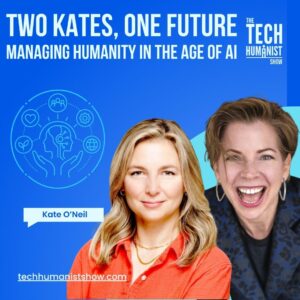
Two Kates, One Future: Managing Humanity in the Age of AI

What if AI could help managers see the whole human, not just the numbers? Discover how technology is reshaping performance management to be more personalized, supportive, and genuinely human-focused in this conversation between two Kate O’Neills (O’Neil and O’Neill). Topics covered: The confusion and connection of sharing a nearly identical name The mission and approach of Opre in performance management The challenges and insights from building an AI-powered HR tool How AI can complement (not replace) human judgment in management The pitfalls of traditional performance reviews Identifying and using the right signals for employee growth Addressing bias and ensuring fairness with AI in the workplace The impact of local culture (Nashville) on tech company building Dimensionalizing the human experience at work The importance of patience and hope in the future of work and AI Connect with Kate O’Neil Website LinkedIn Episode Chapters: 00:04 Introduction: The Two Kate O’Neills 03:07 Opre ’s Mission and Origins 05:36 Personal Story: Management Firsts and Professional Growth 07:41 What Software Hasn’t Helped With & Insights from Management Practice 10:09 Reimagining the Performance Review 12:10 What Signals Matter in Evaluating Performance? 14:14 Where Humans Must Take the Lead Over AI 17:09 Skills, Systems, Culture & Human Judgment 20:32 Addressing Power Dynamics and Bias in Performance Management 23:09 Improving Performance Without Flattening People 25:19 Dimensionality, Data, and Learning from Knowledge Graphs 29:51 Platform-Mediated Identity & Selfhood 36:00 Nashville’s Influence and the Power of Collaboration 42:10 The Future of Opre and What’s Still Hard at Work 46:24 What This Moment in Work and AI Asks of Us 48:19 Where to Connect with Opre 48:45 Credits and Closing

July 23, 202641 min

When Weird Becomes Normal with Kate Marshall

What can weird fiction teach us about navigating a reality shaped by technology, environmental crisis, and the shifting boundaries between human and non-human perspectives? In this episode of the Tech Humanist Show, the conversation focused on the power of “weirdness” as both a signal from the future and a way to make sense of our rapidly changing world. Special guest Kate Marshall, professor of English at the University of Notre Dame and author of Novels by Weird: Tales and the 21st Century, joins to explore how weird fiction, genre hybridity, and non-human narration can offer unique insights into technology, scale, and what it means to stay human as reality grows stranger. Dive into how stories, genres, and the unexpected “weird” help us make sense of complex systems and imagine better futures. Topics Covere d Weirdness as a lens for the future The evolution of “weird fiction” and its historical context Non-human narration and narrative experiments Genre’s role in conceptual thinking Scale and the challenge of representing catastrophe The reading crisis and cultural shifts in reading AI, storytelling, and the transformation of narrative Speculative fiction as a thinking tool Weirdness as data and a signal from the future Balancing melancholy and optimism for the future Connect with Kate Marshall Website Linkedin Novels by Aliens: Weird Tales and the Twenty-First Century Episode Chapters 00:00: Introduction to the Tech Humanist Show and the concept of weirdness 01:55: Kate Marshall on taking weirdness seriously 04:40: How 21st-century novels are getting weirder 06:09: The rise of non-human perspectives in contemporary fiction 09:48: Genre as a space for novelists to wrestle with scale 13:54: Genre fragments as creative encounters with societal wreckage 16:00: Scale: Representing catastrophe and individual experience 20:27: Tension between decentering the human and human narration 23:18: How non-human perspectives shift agency and responsibility 25:50: The contemporary crisis in reading and criticism 28:03: AI, large language models, and the future of reading/writing 31:32: Genre, language models, and the future of literary creativity 36:16: Story moves for imagining and building better futures 38:56: Treating weirdness as data, not doom 40:46: Optimism, storytelling, and hope for the future 43:22: Outro and thanks

July 16, 202641 min

Algorithmic Justice with Rebekah Tweed

What does it really mean for AI governance to be more than just buzzwords—and how do we build systems that are worthy of our trust? This week on the Tech Humanist Show, we get candid with responsible AI expert and Algorithmic Justice League advisor, Rebekah Tweed. Together, we explore the not-so-glamorous (but oh-so-crucial) world of AI governance—think less “theater,” more real talk on trust, transparency, and protecting our privacy. Topics covered: The evolution of responsible AI as a corporate function Balancing safety and privacy in AI applications Algorithmic harms in everyday life (hiring, healthcare, security) Why harm in AI is more than just a technical bug Organizational trust and accountability in AI governance Practical evidence of responsible AI practices The importance of transparency, literacy, and public trust Building AI governance that is operational—not just performative Roles for government and open source in shaping responsible AI What gives hope for the future of AI and public infrastructure Connect with Rebekah Tweed AJL Website AJL United LinkedIn Rebekah’s LinkedIn Episode Chapters: 00:04 Introduction to the Tech Humanist Show 00:17 Responsible AI Becomes an Organizational Norm 01:29 Rebekah Tweed’s Journey from Music Industry to AI Governance 03:36 AI’s Impact on the Creative Arts and Early Influences 04:57 The Rise of AI Governance Teams and Job Roles 06:12 Building Responsible Tech Career Development 07:38 What Responsible AI Means in Human Terms 09:36 Algorithmic Harms in Ordinary Life and Public Response 15:38 When AI Harm is a Deeper Systems Problem 18:57 How to Build Genuine, Non-Theatrical AI Governance 25:16 Evidence That AI Governance Is Real 29:12 Cultural Weirdness, Systems Strangeness, and Literacy 35:13 Speed, Trust, and What Leaders Need to Know 37:42 What Gives Hope for a Responsible AI Future 40:22 Outro and Credits

July 9, 202643 min

The Qualified Self with Lee Humphreys

How do our everyday digital traces—social posts, check-ins, photos—shape our identities, relationships, and the very nature of privacy in a hyper-connected world? Kate O’Neill sits down with Lee Humphreys, professor and Chair of the Department of Communication at Cornell University and author of The Qualified Self: Social Media and the Accounting of Everyday Life . The conversation explores the rich history and surprising continuity of documenting daily life, from centuries-old diaries and photo albums to today’s social media and sensor-driven platforms. Topics Covered: The history and meaning of phatic communication Social media as an extension of historical practices (diaries, notebooks, albums) Privacy, data, and the networked self The context collapse of online identities Location-based sharing and identity work Algorithmic identities and platform agency The impact of digital spaces on rituals and remote work Policy, power, and responsibility in platform design Hopeful uses of technology to build community Connect with Lee Humphreys Cornell Website LinkedIn ”The Qualified Self – Social Media and the Accounting of Everyday Life” Episode Chapters: 00:04 Introduction to the Tech Humanist Show & guest 00:17 The concept of phatic communication 02:27 Lee’s route into communication technology 04:42 From photo manipulation to tech distrust 06:00 Diaries, Twitter, and the origins of media accounting 12:10 Social reinforcement vs. narcissism in social media 13:33 Location sharing and its role in identity 16:35 Parasocial relationships and context collapse 19:53 Data, experience, and mismatched realities 22:33 The shifting meaning of place and time in data 24:31 Networked privacy and the collective dimension 27:39 Incentives, policy, and platform accountability 30:01 Algorithmic identity and the “qualified self” 35:26 Digital rituals, remote work, and connection 40:31 Closing thoughts: technology, humanity, and hope 41:04 Lee’s story of hope and innovation through tech 42:58 Episode wrap-up and thanks

July 2, 202645 min

America @ 250: Grand Strategy, Trust, and the Future

As the United States celebrates its 250th anniversary, the nation faces unprecedented challenges: political polarization, economic insecurity, climate change, and the complex influence of technology and AI. How can America rethink its long-term strategy—and rebuild trust—at this historic crossroads? Host Kate O’Neill is joined by strategist and author Patrick Doherty, co-author of “The New Grand Strategy,” and Brandyn Keating, founder of YOUnify and an expert in repairing civic trust. Together, they explore: America’s 250th anniversary and its significance The meaning and practice of grand strategy Historical context: past U.S. grand strategies Infrastructure and systems for the 21st century The erosion of trust and polarization Aligning economic engines, governance, and foreign policy The consequences of strategic incoherence Data, AI, and information environments Remedies for polarization and rebuilding trust Thriving conversations framework Bridging grassroots and national strategy The Global Flourishing Goals and Write the Future campaign Hopes for America’s future Connect with: Patrick Doherty The Center for the Constitution & Grand Strategy: https://ccgstrategy.org/ Long Haul Capital: https://www.longhaulcapital.com/team X: @PatrickCDoherty LinkedIn The New Grand Strategy: Restoring America’s Prosperity, Security, and Sustainability in the 21st Century Connect with Brandyn Keating YOUnify: https://www.younify.org/ LinkedIn Episode Chapters: 00:00 Introduction & Setting the Stage: America at 250 00:04 Grand Strategy Explainer with Patrick Doherty 00:46 Infrastructure, Generational Planning, and Lessons from Eisenhower 01:46 Trust, Polarization & the Grassroots Perspective with Brandyn Keating 03:38 Linking Grand Strategy to Community & Trust 05:04 Coherence Gaps and Economic Realities 09:38 Political Consequences & Declining Trust 13:00 Strategic Risks When Citizens Lose Faith 16:12 Remedies: Information Environments & Offline Connection 18:35 The Dilemma of Celebrating vs. Critiquing America 21:05 Overcoming Binary Thinking & Building Shared Values 24:04 Policy, Thriving Conversations & Bridging Local to National 29:05 Making Grand Strategy Inclusive 34:32 Global Flourishing Goals & Write the Future 38:01 Parallels to Tech Humanism & Organizational Strategy 39:06 Hopes for America’s Next 250 Years 44:05 Connect with the Guests & Closing Remarks

June 25, 202652 min

All The Feels with Pamela Pavliscak

Are our emotions shaped—and even expanded—by technology, or are we just becoming more disconnected and manipulated online? Dive into this episode as Kate O’Neill and Pamela Pavliscak explore the complicated emotional landscape of the digital world and what it truly means to “stay human.” Topics Covered How technology mediates and shapes emotions The evolution from tech optimism to algorithmic influence Common myths about screen time and digital well-being How emotional metrics differ from traditional digital metrics Shame, AI use, and the pressure to behave perfectly online New “neo emotions” and expanding emotional vocabularies The algorithmic amplification of outrage Persuasion vs. manipulation in emotional design Emotional externalities and digital ethics Future guardrails for emotionally-aware AI Human inventiveness in tech-mediated relationships Finding hope and vitality in the digital age Connect with: Pamela Pavliscak Pamela Pavliscak on LinkedIn All the Feels: How to Stay Human in the Digital World Instagram (@pamelapavliscak) Substack https://feelingdigital.substack.com/ Episode Chapters 00:00 Introduction & Heart of the Conversation 01:40 What is the Future of Feelings in Technology? 02:25 Why Emotions Matter in Design 04:43 A Butterfly Story: Tech & Personal Grief 05:17 Early Tech Optimism vs Today’s Realities 07:39 Debunking Myths About “Screen Time” 10:00 Diaries and Meaningful Online Experiences 12:55 Metrics Beyond Time: How to ‘Measure’ Digital Well-Being 14:46 Shame, AI, and Tech Purity Culture 18:04 Individual Responsibility vs Systemic Change 20:17 Living in a Tech Ecosystem: What Do We Do Now? 20:33 Emotional Life on the Internet vs. Emotional Life with AI 24:17 Navigating Social Norms with Generative AI 28:41 Are Neo Emotions Expanding Our Feelings? 36:37 Why Does Outrage Rule the Internet? 39:09 Persuasion vs. Manipulation in Emotional Interfaces 42:28 Should Tech Be Accountable for Emotional Harm? 45:00 Needed: Guardrails for Emotionally-Aware AI 49:35 Staying Hopeful & Staying Human 51:36 Outro & Where to Find the Book

June 18, 202652 min

Beyond The Playlist with Craig Havighurst

How can deeper, more intentional listening help us stay human in an age of algorithm-driven music and AI-generated sound? Topics Covered: The connection between music and the human experience Defining and democratizing “musicality” Listening for versus listening to music The impact of corporate consolidation and streaming platforms on music discovery The difference between musical genres and industry formats How categories shape who gets heard Design flaws in music streaming and stunted musical literacy Bluegrass as a model for musical ecosystems Authenticity, AI, and the challenges of provenance in modern music The civic and democratic roles of music Practical tips for cultivating a healthy musical life Connect with Craig Havighurst Website Substack – StringTheories Episode Chapters: 00:04 – Welcome and introduction to Craig Havighurst 01:22 – The relationship between music and being human 04:15 – Craig’s first memorable music experience 07:28 – What is musicality and why does it matter? 11:03 – Listening for vs. listening to music 14:41 – The concept of a healthy musical diet 19:09 – The effect of industry shifts on music access 20:51 – Genres, formats, and who gets heard 25:17 – How streaming platforms affect musical literacy 33:20 – Bluegrass as a healthy musical ecosystem 34:38 – AI, authenticity, and musical provenance 44:13 – Music, empathy, and democracy 48:26 – Practical steps for intentional listening 51:34 – Closing thoughts and where to find Craig Havighurst

June 4, 202644 min

AI Augmentation vs. Automation

Are leaders thinking big enough—and human enough—in the AI era? Explore how AI and technology shape the human experience with Kate O’Neill and guest Brian Solis, Head of Global Innovation at ServiceNow. Discover the concept of cognitive Darwinism, AI transformation stories, leadership in the AI era, and how to drive growth while staying human-centric. Topics Covered: AI augmentation vs. automation Cognitive Darwinism and self-awareness Capacity and capability overhang in AI adoption Transformation as a human story Purposeful iteration vs. intentional innovation Return on intelligence vs. return on ignorance Reskilling and workforce transformation case studies (IKEA & Walmart) Human-centric leadership and psychological safety Personal relationship with technology & digital attention Mind shifts required for future-ready leadership Connect with Brian Solis BrianSolis.com Brian’s latest book: Mindshift ServiceNow LinkedIn Brian Solis, Author at Workflow® Episode Chapters: 00:04 Introduction & Guest Welcome 01:00 Transformation as a Human Story 02:24 The Human Story Leaders Miss in the AI Era 03:06 AI’s Anti-Human Trajectory & Cognitive Darwinism 04:28 AI Tax and Brain Fry 05:49 AIQ: Artificial vs. Augmented Intelligence Quotient 09:16 Agentic AI & Process Reinvention 11:11 Grand Strategy and Leadership Mindsets 15:55 Mind Shifts and Self-Awareness 17:18 Book Inspiration and Becoming a Leader of the Moment 20:13 Unlearning Disruption Myths in Enterprise 25:16 Innovation: Creating New Value 26:59 Evaluating AI Use: Efficiency vs. Net New Value 31:13 Psychological Safety and Human-Centric Leadership 32:28 IKEA & Walmart: Augmentation and Reskilling Case Studies 38:00 Personal Relationship with Technology & Life Scale 41:48 Closing Thoughts: Questions for Embracing Change 43:05 Episode Wrap-Up and Farewells

May 14, 202649 min

The Antidote to Future Shock with Fred Marshall

Are you overwhelmed by nonstop change and wondering how to truly thrive in a world shaped by AI and information overload? Tune into the latest Tech Humanist Show episode, where Kate sits down with Frederick Marshall—gardener, CEO, and author of Thrive: The Antidote to Future Shock —to unearth how we can cultivate clarity, resilience, and actual human thriving in our tech-saturated world. Topics covered: Future shock in 2026 and its effects Common leadership misdiagnoses of burnout and overwhelm Strategies for managing information overload and uncertainty The Thrive framework: Priorities, obligations, and noise Observations from top performers across industries Design by subtraction and life “ecosystems” The Super 8 factors for thriving AI as collaborator and human-AI symbiosis Responsible and human-centered AI adoption at work Building thriving business and personal ecosystems Meaning, contribution, and human adaptability Connect with Fred Marshall Episode Chapters: 00:04 Introduction and future shock today 01:11 Fred Marshall’s background and philosophy 02:07 Defining future shock in the modern era 04:10 How leaders misdiagnose overwhelm 05:31 AI tools and strategic alignment 08:07 Design by subtraction—managing time and attention 11:05 What top performers do differently 12:57 Assumptions, autopilot, and learning 15:11 The problem Thrive solves for leaders 16:06 Role of AI and personalizing technology for growth 18:47 Accelerating learning with AI—cognitive friction 21:20 Systems thinking for complexity 22:04 The “Super 8” life factors 27:02 Meaning, contribution, and purpose 30:46 Thriving organizations and business ecosystems 33:08 Speed vs. thoughtful strategy in fast-changing times 41:43 Human-AI partnership and neural net overlap 44:03 What leaders should believe about humans 46:51 Why people give hope for the future 48:38 Closing and where to find Thrive

May 7, 202640 min

Authentic Intelligence with Allison Shapira

How can leaders harness AI in their communication without losing their authentic human touch? Topics covered: The meaning and value of authenticity in leadership The risks and rewards of using AI for executive communication Building trust and executive presence in an AI-mediated world The difference between confidence and certainty for leaders Coaching for on-camera executive presence Communicating vulnerability and clarity under uncertainty The “anti-pitch” approach to introductions Ethical use of AI in relationship building Practical steps for leaders to leverage AI responsibly Connect with: Allison Shapira Website LinkedIn Instagram Episode Chapters: 00:04 Introduction and overview of the Tech Humanist Show 00:32 Allison Shapira’s background: Opera to executive communication 03:39 Why AI for the Authentic Leader—leadership problems and urgency of the moment 06:09 Defining authenticity in a leadership and AI context 08:40 AI’s impact on executive presence—when the tools are “better than us” 11:27 Tension between what AI rewards and what leadership requires 14:37 Navigating ambiguity and nuance in leadership communication 18:33 Projecting confidence versus certainty as a leader 20:40 Communicating clarity and maintaining trust amid uncertainty 22:27 Over-explaining, under-explaining, and AI’s potential impact 23:49 Executive presence on camera and its evolving demands 26:27 Societal expectations of leaders’ communication skills 28:42 Bringing authority and warmth on camera; avoiding “performance” of leadership 31:09 The “anti-pitch” idea—rethinking introductions in a tech-driven world 34:51 Ethical use of AI in relationship building and values alignment 37:18 Practical steps: What leaders should start (and stop) doing with AI 38:56 Final takeaways and how to lead authentically in an AI-shaped world 40:01 Outro and credits

Is this your show?

Claim this listing to keep it up to date, reach guests who want to pitch you, and manage bookings with Guestify.

Claim this listing

More Business podcasts