The Glossy Podcast is a weekly show on the impact of technology on the fashion and luxury industries with the people making change happen.
Listen to episodes
60 recent
September 11, 202629 min
Inside Uniqlo's US expansion strategy with head of marketing Nico Cessot
Uniqlo has taken the U.S. by storm. The Japanese purveyor of affordable but high-quality basics has become a household name, particularly on the populous East and West Coasts of the country. But in the last year, Uniqlo has ratcheted up its expansion in the U.S. It has opened dozens of new stores across the U.S., with its 87th store opening in Washington, D.C. at the end of last month. Nico Cessot, head of marketing in North America for Uniqlo, joined the Glossy Podcast to talk about some of the expansion strategies Uniqlo has adopted to grow its American audience. According to Cessot, despite operating in the U.S. since 2005, Uniqlo still has plenty of room to grow its customer base and build awareness. "Our biggest priority is to continue to drive our brand awareness," he said. "Ultimately, we're still new in this market. This year is our 20th anniversary. So we're still pretty new. We want to continue to appeal to the U.S. customers. And how do we do this? Obviously, the store expansion is one thing, but the brand awareness and the discovery of who we are, what we stand for, what products we promote, I think that is also key for the success of Uniqlo moving forward." Ultimately, Uniqlo's goal is to reach approximately $19 billion in U.S. sales with nearly 200 stores in the next few years. Part of that strategy is to expand its store fleet beyond the coasts and into the middle of the country. "For many, many years, Uniqlo has been expanding in both the East Coast and West Coast," Cessot said. "New York is obviously a big market for us, but we also have California and L.A. locations. We recently opened in Texas — Dallas and Houston — Seattle in Washington state, Boston, D.C. and Chicago, where we recently also opened another local flagship store. But I think many, many customers still don't have acce
September 4, 202627 min
The 3 reasons Shein is trading at a quarter of its previous valuation
After several years of ups and downs, the Chinese fast-fashion brand Shein finally went public this week. But the IPO wasn't what Shein hoped for. For one, it came four years late. The company first started attempting to go public in 2022, but a series of political hurdles in New York and then London led to long delays. Finally, Shein went public in Hong Kong this week at a valuation of around $25 billion, down from $100 billion in 2022. On this week's Glossy Podcast, senior fashion reporter Danny Parisi and international reporter Zofia Zwieglisnka break down the three big reasons Shein has struggled to maintain the valuation it held in recent years.
August 28, 202630 min
What Chloe Malle's first September issue means for Vogue
The Vogue September issue is the most important issue of the year for the storied fashion magazine. And this year's edition is the first one published under the new direction of Chloe Malle, head of editorial content, who took over for the legendary Anna Wintour last September. On the Glossy Podcast this week, hosts senior fashion reporter Danny Parisi and editor-in-chief Jill Manoff take a look at Malle's first September issue and break down some of the ways that both Vogue and the larger fashion media industry have evolved. Chief among those changes is that print magazines are no longer the primary source of style information for the vast majority of fashion enthusiasts. The September issue of old was a bellwether for trends, informing the public about what was in style now and coming down the pipeline. But print can't compete with the speed of online publishing, where much of that timely trend analysis has moved, meaning that print has to be more timeless. The result is a sometimes contradictory product, full of ads for brands that are hot right now, but with editorial content that feels detached from the fashion business. "It's interesting that Chloe Malle is coming from a digital background," Manoff said. "I was a Vogue subscriber for years, and I used to read things that were buzzy and new. This issue had stories about improving your mood with Botox or one about the dangers of clenching your jaw. I was just like, 'What am I reading here?'" "A lot of it doesn't feel very timely," Parisi said. "Part of that is that people are more likely to buy print magazines today as a collector's item, as a coffee table book. That's why you see so many of those commemorative issues of random magazines in the grocery store aisle. They're not meant to give you timely information, which has all moved online." The hosts also discuss the cover story, featuring Kaia Gerber and Homer Gere, two children of famous parents, and the connection to Chloe Malle, herself the daughter of actress Candice Bergen and filmmaker Louis Malle. The issue ties the theme of children of famous parents to the many designers who have taken over at legacy fashion houses in the last year. And the September issue would be nothing without the clothes. This issue continues a trend in fashion editorial of single-brand looks. "We've definitely moved away from the stylist-driven looks, which haven't been the norm for a while," Manoff said. "I like when you see 'stylist-owned ball cap' or 'vintage jeans' in the credits. It's unfortunate that that's gone, because that is very inspiring to me. When you see a head-to-toe look that's all one brand, you're not getting ideas on how to style it. Nobody dresses that way."
August 21, 202630 min
Why Mike Ashley’s growing luxury empire has the fashion industry on edge
On this week’s Glossy Podcast, international fashion reporter Zofia Zwieglinska joins senior fashion reporter Danny Parisi to explain who Mike Ashley is, why the Harvey Nichols deal matters and how Frasers is gaining influence across the fashion industry.
August 14, 202635 min
Who is buying the Palantir chore coat?
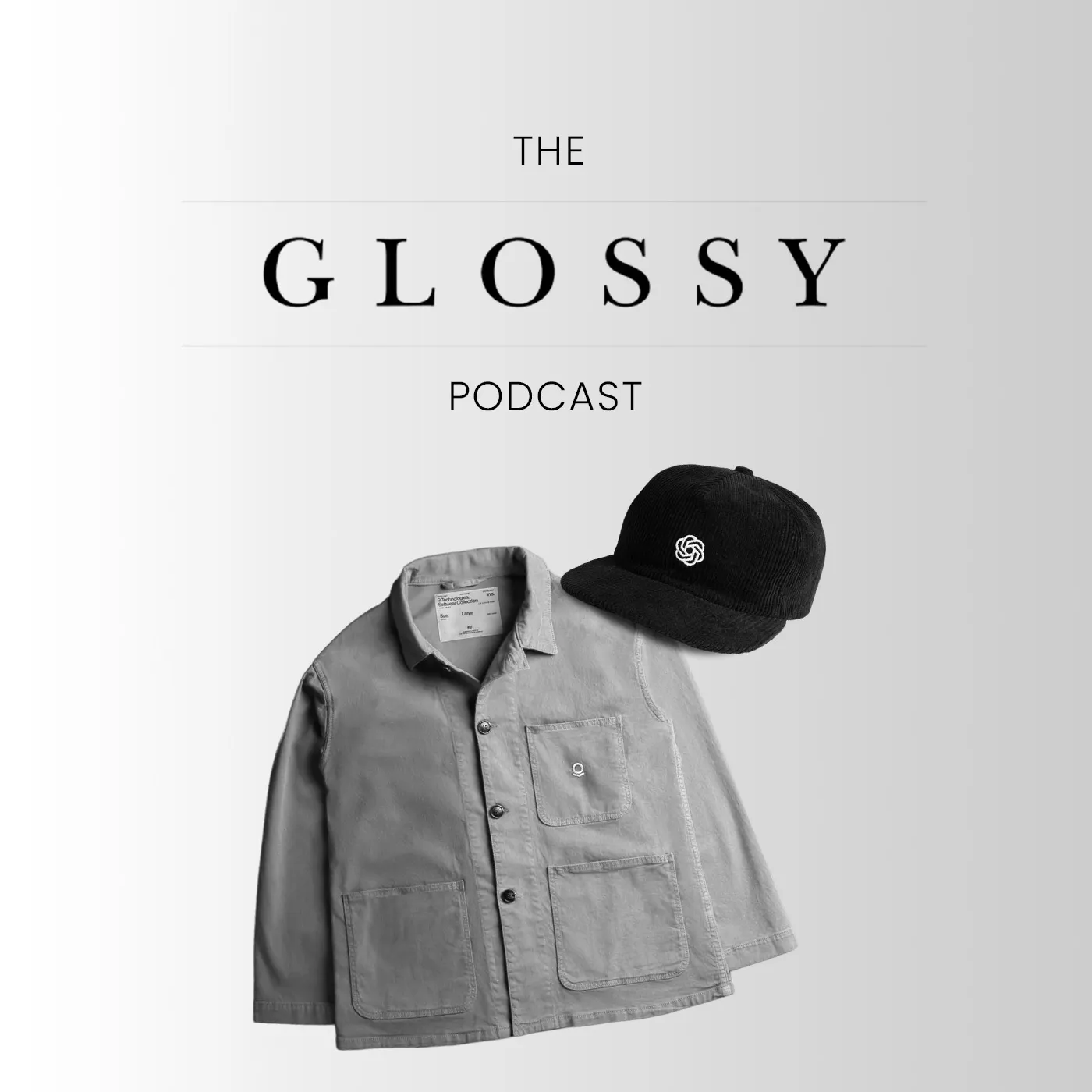
It started with the Palantir chore coat. Then it was the Anthropic "thinking cap." Now, OpenAI has its own regular merch drops through its apparel arm, Supply Co. Over the last year, big tech and AI companies have started to get into the fashion game, releasing streetwear-inspired drops, hiring people into roles like "head of vibes" and opening pop-up shops to show off their merch. The reaction has been split. Many in the fashion community have lambasted these releases, calling them inauthentic and using fashion as a means of reputation laundering. Many of the companies involved, particularly Palantir, have been widely criticized for reasons including their environmental impact, unethical data acquisition models or contributions to mass surveillance. Highsnobiety style writer Chris Erik Thomas joined the Glossy Podcast this week to discuss why these companies are entering the fashion game and why the reaction from streetwear communities has been so negative.
August 7, 202632 min
Copenhagen Fashion Week built the Scandi boom. Can it still grow another Ganni?
Copenhagen Fashion Week has spent the past two decades growing from a regional trade event into fashion’s unofficial fifth city. Along the way, it helped define the Scandi aesthetic, pioneered sustainability requirements that have influenced fashion weeks around the world and launched brands including Ganni, Cecilie Bahnsen and Saks Potts onto the global stage. But as many of its biggest success stories move to Paris, what comes next? This week, Glossy international fashion reporter Zofia Zwieglinska is joined by fashion editor and broadcaster Natalie Salmon to discuss Copenhagen’s rise, the legacy of the “Scandi girl,” the evolution of Ganni, why editors increasingly prioritize the week and what the next 20 years could look like.
July 31, 202622 min
The dos and don'ts of method dressing with Micaela Erlanger
Method dressing is once again dominating the red carpet. At the Los Angeles premiere of “Spider-Man: Brand New Day” on July 27, Zendaya arrived in an Ashi Studio fall 2026 gown with a plunging neckline framed by sculptural elements resembling a spider’s appendages. Three days later, she and longtime stylist Law Roach continued the narrative at the film’s London premiere with a cream Tamara Ralph couture gown traced with metallic, web-like lines. The London look was finished with a diamond-encrusted gold spider brooch by couture jewelry designer Keren Wolf, placed at the base of Zendaya’s back. The piece was originally created to form part of a spiderweb headpiece designed by Shani Dvorkin with Wolf, before being reworked as an embellishment for the gown. Tom Holland joined in with an articulated spider brooch by British jeweler Pragnell, worn on the knot of his tie. The appearances were the latest demonstration of the red-carpet strategy Zendaya and Roach have helped turn into an entertainment-marketing event of its own, from “Dune” to “The Odyssey”. Instead of treating each premiere as an isolated fashion moment, they build a visual world across photocalls, press events and carpets, giving fans another reference to identify and circulate with every appearance. During the current “Spider-Man” tour, that has included a vintage Giorgio Armani dress covered in silver cobwebs at the film’s Rome premiere on June 23 and a $34.99 vintage Spider-Man T-shirt sourced on eBay for a Paris photocall two days later. The pair have simultaneously been promoting Christopher Nolan’s “The Odyssey,” shifting between literal spider references and contemporary interpretations of Greek dress. But as increasingly recognizable references become a fixture of movie promotion, celebrity stylist Micaela Erlanger believes the most successful looks should not resemble costumes. Erlanger, whose clients include Lupita Nyong’o and Meryl Streep, prefers the term “meta dressing”: using colors, silhouettes and more discreet cultural references to connect an actor’s wardrobe to a project without overwhelming the person wearing it. “For me, it hasn’t always felt like it has to be that literal,” Erlanger said on the Glossy Podcast this week. “I like the idea of referencing a character, or referencing a film, a moment, a dialogue or a period in time, without it having to feel gimmicky or obvious.” Erlanger used that approach while styling Nyong’o, who plays Helen of Troy, for “The Odyssey” press tour. At the film’s London premiere on July 6, Nyong’o wore a silver Christian Cowan gown with a relatively restrained silhouette from the front, but deep sculptural cutouts beneath the arms that revealed her figure from the side. Rather than reaching for an overtly Grecian chiffon dress, Erlanger wanted the look to communicate Helen’s legendary beauty more indirectly. “She’s playing Helen of Troy, the most beautiful woman in the world,” Erlanger said. “You don’t need a lot of clothing or a whole lot of look when it’s about who the woman wearing the dress is and how she stands on her own.” Erlanger had limited information when she began working on the wardrobe. Nolan is known for keeping his films private, while Nyong’o initially disclosed little beyond the identity of her character. Erlanger instead drew from Homer’s poem, Greek mythology and her own interpretation of Helen. For an earlier New York appearance, Nyong’o wore a custom Sally LaPointe look with ostrich feathers. The idea was developed by Erlanger and Nyong’o as a reference to the story that Helen was born after Zeus took the form of a swan. “If you know, you know,” Erlanger said. “Lovers of the book and Greek mythology might be able to pick up on that.” The outfit still worked independently for audiences unfamiliar with the reference, which is central to Erlanger’s distinction between meta dressing and simply recreating a film’s costume. She applied the same thinking while styling Streep during the press tour for “The Devil Wears Prada 2.” At an April 12 event in Shanghai, Streep wore a cobalt-blue Saint Laurent military-inspired coat dress with oversized sunglasses, subtly recalling both Miranda Priestly and the original film’s famous cerulean monologue. In the speech, Priestly describes cerulean military jackets supposedly shown by Yves Saint Laurent before the color filtered down through the fashion system. The collection described in the screenplay never actually existed, making Streep’s coat what Erlanger called “a reference within a reference.” “If you were paying attention, you would pick up on these kinds of things,” she said. Social media has made such details increasingly valuable. An obscure reference decoded by fans can become a viral post, generating attention for the actor, stylist, designer and film simultaneously. It has also brought stylists themselves out from behind the scenes. Erlanger said their work now extends far beyond choosing attractive clothes, encompassing public-image management, brand exposure and the strategic positioning of clients. “We are responsible for shaping the public image of some of the biggest names in entertainment,” she said. “There’s a whole business to all of it.”
July 24, 202642 min
The end of the shopping calendar
The shopping calendar isn't what it used to be. Prime Day has become Prime Week, Black Friday has become Black Friday Month, back-to-school shopping now starts in June, and holiday shopping is starting in October. As brands and retailers compete for an edge during these lucrative periods, the traditional shopping calendar is getting elongated and spread out. According to Kelly Pedersen, global retail lead at the professional services firm PwC, these shifts are being driven by both businesses and consumers. On the Glossy Podcast this week, Pedersen shared that PwC's research on back-to-school shopping shows that the average family is spending around $920 during the back-to-school period. Those customers are continuing to spend around $630 a month on their kids throughout the school year. "It starts with the brands," he said. "The retailers always want to capture consumers during these moments, and they want to be first. It's not just about revenue during those windows, but [it's also about] customer acquisition, capturing those customers and using that momentum to carry spend on throughout the entire year." Pedersen said today's consumers are being trained to expect holiday sales and back-to-school sales earlier, meaning they're waiting to spend until those periods start. That further incentivizes brands to elongate the period as much as possible. The natural question becomes whether a longer shopping event leads to consumer fatigue and risks robbing those periods of their urgency. But Pedersen said he doesn't think that is the case. "Theoretically, it could actually increase overall spending because people get paid in cycles," he said. "They're going to spend a certain percentage of their paycheck on holiday shopping. But if you elongate that period, you have more opportunities to pick up on that cash flow from the consumer." Ultimately, Pedersen recommends that brands think about these shopping periods — like holiday, back-to-school and Mother's Day — as opportunities to capture a customer in the long term, not just as a one-off revenue driver. He also pointed to PwC data showing that almost 0% of surveyed customers said they planned to use AI to help them shop for holidays last year, but that number jumped to 73% this year. "Consumers are using technology to become smarter about how they shop with a retailer, and retailers really need to think about this new channel," Pedersen said. "And it's not a channel in the traditional sense, meaning they're not transacting via AI, but it's a discovery channel, and it's a price-checking channel."
July 17, 202637 min
Victoria's Secret Pink's Gen-Z-focused holiday strategy, with president Ali Dillon
Pink wants to be the first stop on a Gen-Z shopper’s trip to the mall this holiday season. To get there, the Victoria’s Secret-owned brand is expanding beyond the pajamas, fleece and intimates it is best known for, using accessories, denim, beauty and collaborations to position itself as a broader lifestyle brand for 18- to 24-year-old women. The strategy follows a period of renewed momentum. Pink delivered low-double-digit growth in the first quarter of 2026, supported by its core apparel and intimates businesses, improved regular-price selling, and new customer acquisition among 18- to 24-year-olds. According to president Ali Dillon, the brand’s turnaround has been driven by a renewed focus on “clarity, customer and connection.” “Today, Pink is evolving into a digitally native, socially driven lifestyle brand with a bold, playful and irreverent point of view,” Dillon said on the podcast. “Our product, our voice, our marketing — they’re all uniquely Pink.” Dillon said Pink had previously lost sight of its core customer as the brand aged alongside its original shoppers. Now, it is specifically targeting 18- to 24-year-olds rather than broadly marketing to Gen Z, a generation that will continue to age out of that bracket. Recent efforts have included working with K-pop group Twice around the Victoria’s Secret Fashion Show and Valentine’s Day, launching a festival campaign with “Love Island USA” star Gabby Mora, and opening a dedicated store in New York’s Soho neighborhood. According to Dillon, customers began lining up outside the Soho store at 1 a.m. on its opening day. The Victoria’s Secret Fashion Show held last October was also an important catalyst. Dillon said some bras featured during the event sold out almost immediately, supported by TikTok videos showing customers running into stores to buy them. “That moment of true brand health, of this feeling like, ‘I have to go get it right now,’ is definitely something that we’ve been really proud of,” she said. Pink is now looking to carry that urgency into the holiday 2026 season. Rather than treating the season solely as a period for traditional gift exchanges, the brand is building around what Dillon described as “treat culture”: the tendency among younger shoppers to buy smaller gifts for themselves and their friends to mark everyday achievements. “She’s not necessarily waiting for major milestones to celebrate,” Dillon said. “She’s creating these real reasons to celebrate all the time.” The holiday assortment, spanning a range of price points, will include everything from accessories and beauty to fleece, sleepwear, bras and matching sets. Accessories are becoming particularly important as younger shoppers remain price-conscious, though Dillon said value is not simply a matter of offering cheaper products. “Value isn’t just about price. It’s about feeling like what you’re buying is worth it, too,” she said. One example is Pink’s Campus Tote, which generated approximately 115,000 backorders. Dillon said the bag initially took off organically after appearing in the background of social content, rather than through a major marketing campaign. Store employees soon began reporting that shoppers were repeatedly asking when it would be restocked. The response has encouraged Pink to further expand accessories and personalization. Dillon said the brand remains interested in charms and other customizable elements across categories including intimates, swimwear, fleece and beauty. “Our girl loves to personalize,” she said. “She loves to make something unique.” Sleepwear will remain central to Pink’s holiday business, but the brand is increasingly presenting it as part of an all-day wardrobe. Dillon pointed to shoppers wearing pajama-inspired clothing from bed to brunch or the beach, allowing Pink to merchandise sleepwear alongside bras and casual apparel. That cross-category approach was recently used for the Marshmallow bra, which the company launched last week alongside a modal sleepwear collection. Pink developed the bra after research found that 60% of women ages 18-24 wanted a more comfortable option. Denim and beauty are also areas of expansion. Pink has tested trend-driven jeans, shorts, skirts and jackets, and Dillon said the company has “a lot of exciting things in the hopper” for beauty. Collaborations will remain part of the strategy, but Dillon said they are intended to amplify Pink rather than define it. The brand’s first LoveShackFancy drop last November generated what she described as the strongest five minutes of sales in the history of Pink’s website, with shoppers gravitating toward established Pink products reworked through the collaboration. Pink is also trying to build a healthier business by relying less heavily on discounts. Dillon described the approach as prioritizing “emotion over promotion,” while acknowledging that the company will still need to deliver competitive value during Black Friday this season. By the end of the season, Pink will be looking at customer acquisition, regular-price demand, and whether holiday shoppers continue to engage with the brand into 2027. “We often say, ‘Meet me at Pink,’” Dillon said, talking about where teens meet up in the mall. “Where are you meeting when you’re starting your shopping trip? We want her to go there first.”
July 10, 202640 min
The new rules of denim (RERUN)
On the Glossy Podcast, senior fashion reporter Danny Parisi and international reporter Zofia Zwieglinska are joined by Glossy editor-in-chief Jill Manoff to discuss the new rules of the denim market. Denim is a perennially popular category, and there’s more diversity and competition in denim than ever. We talk about the trends that are dominant and the ways the denim customer is changing, plus we group together some of the current top brands to provide a better sense of how the sector is evolving.
Is this your show?
Claim this listing to keep it up to date, reach guests who want to pitch you, and manage bookings with Guestify.