Find partners
Seismic Sessions

Seismic Sessions

Hosted by Seismic Sessions

Episodes

20

Latest episode

May 2026

Language

EN

About the show

This is Seismic Sessions: Enabling the Financial Services Industry - a podcast show dedicated to two things, revenue enablement and the Financial Services sector. Join us as we feature experts and leaders across the Financial Services industry, who discuss innovative and impactful ways to sell, market, and deliver, memorable client experiences through enablement.

Listen to episodes

20 recent
May 5, 2026Episode 1931 min

19: Beyond the Data: The Human Edge in Financial Services

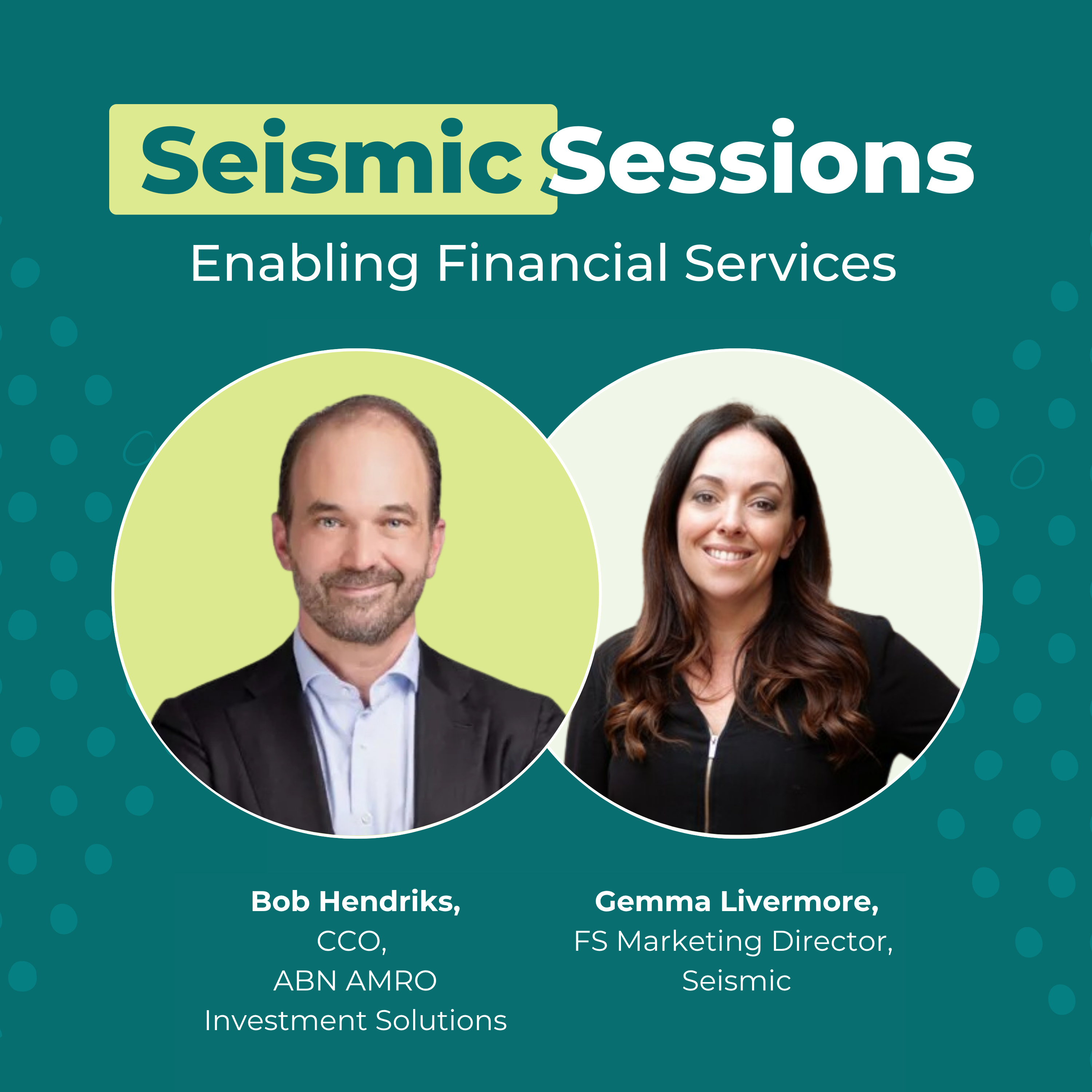
In this episode of Seismic Sessions, host Gemma Livermore is joined by Bob Hendriks, Chief Commercial Officer at ABN AMRO Investment Solutions, to explore how client behaviour, technology, and AI are reshaping commercial roles across financial services. Together, they discuss the shift from information advantage to knowledge parity, the growing role of AI in enabling commercial teams, and why curiosity, communication, and strategic thinking will remain critical skills for leaders in an increasingly automated industry.Key takeaways  Tremors: The earliest shifts in financial services began with the rise of the internet and the collapse of information asymmetry between advisors and clients. In the 1990s, advisors held a clear advantage - accessing market data and insights through specialist terminals while clients relied on them for information and trade execution. As the internet expanded, that advantage rapidly disappeared. Clients could research markets, companies, and investment opportunities themselves, creating what is now known as knowledge parity. This shift forced advisors to rethink their role. Rather than simply providing information, they increasingly focused on interpreting data, managing portfolio risk, and guiding clients through complex decisions. Market events such as the TMT bubble further highlighted the need for advisors to act as strategic partners - helping clients balance enthusiasm for emerging opportunities with disciplined portfolio construction and diversification. Epicentre: Today, the industry sits at the epicentre of another transformation driven by data, digital tools, and artificial intelligence. Technology has significantly improved efficiency across commercial teams, automating tasks such as reporting, meeting preparation and content creation. However, as AI adoption grows, productivity gains alone will not create competitive advantage - because the same tools will become widely available across the industry. Instead, the differentiating skills will be human ones: curiosity, imagination, and the ability to build meaningful client relationships. Commercial teams must combine technological fluency with consultative selling—asking better questions, listening carefully, and anticipating change before it becomes visible in the data. In this environment, AI enhances decision-making, but human judgment remains essential. Aftershocks: AI will enable commercial teams to operate with greater precision and impact. Automation will remove many low-value administrative tasks, allowing professionals to focus on strategic thinking and deeper client engagement. Intelligent insights will help teams identify opportunities, anticipate client needs, and tailor interactions more effectively. At the same time, AI-powered coaching and feedback tools will support continuous skill development, improving how professionals communicate and collaborate. For leaders, this shift creates an opportunity to spend less time managing operational detail and more time focusing on strategy and market dynamics. Ultimately, the most successful organisations will be those that combine technological capability with a culture of curiosity - remaining students of the market while harnessing AI to move faster and think more strategically. Jump into the conversation:[02:30] The early tremors: information asymmetry and the rise of the internet[05:30] How knowledge parity transformed the advisor-client relationship[10:30] Portfolio construction, diversification, and evolving client expectations[13:30] The epicentre: AI, technology adoption, and new commercial skillsets[16:00] Why curiosity and imagination matter more than ever[18:00] The importance of understanding markets before relying on AI[25:00] The aftershocks: the future of high-performing commercial teams[27:00] Consultative selling, listening, and the human side of client relationships[30:30] Advice for the next generation of financial services leaders

May 29, 2025Episode 1826 min

18: Redefining Enablement in Financial Services: Where It Started, Where It’s Going

In this episode of Seismic Sessions, hosts Gemma Livermore and Rachael Rowe explore the seismic shifts transforming enablement in financial services. Joined by industry leaders Jalpa Bhatt, Director of Marketing Technology at Janus Henderson Investors, and Deepika Sehgal, Enablement Strategist at Capital Group, the conversation dives into how firms are evolving their approach to empower sales, marketing, and compliance teams with the tools, data, and alignment needed for success. Together, they discuss the rise of enablement as a strategic discipline, the impact of technology and AI, and the critical need to break down silos within organisations.Key takeaways  Tremors: Enablement in financial services emerged as a response to rising complexity across sales, marketing, and compliance. Digital acceleration—particularly during the pandemic—exposed the limits of traditional support roles. Sales teams, burdened by new tools and shifting demands, needed more than tech—they needed structure, guidance, and training. At the same time, regulatory change, a broader product landscape, and advisor turnover revealed critical gaps in onboarding and knowledge sharing, prompting a shift toward a more strategic approach. Epicentre: Enablement has evolved into a cross-functional strategy focused on unifying experiences across teams. While many firms are investing in platforms to support this shift, challenges remain: fragmented tech stacks, poor integration, and reactive execution. There's growing urgency to better leverage data, measure impact, and break down silos. Today, enablement is increasingly recognised as a driver of efficiency, alignment, and enhanced client experiences—not just internal support. Aftershocks: Looking ahead, enablement will play a central role in digital transformation. The future lies in real-time, in-flow guidance powered by AI and automation—surfacing insights, supporting compliance, and embedding coaching into daily workflows. As content, data, and training converge, enablement will move from a background function to a growth engine—driving performance, building trust, and delivering differentiated experiences. The focus will shift from adding tools to optimising and integrating what’s already in place. Jump into the conversation:[04:27] The origins of enablement[06:06] Overcoming tech overload in sales teams[08:50] The breaking point: why traditional models no longer work[13:57] The integration challenge[17:58] The role of data in driving strategy[20:18] AI as a strategic enabler

April 14, 2025Episode 1731 min

17: Empowering Advisors, Elevating Experiences

In this episode of Seismic Sessions, hosts Gemma Livermore and Rachael Rowe explore how financial services firms are leveraging technology to enhance advisor enablement. Joined by Kirsty Watson from Aberdeen and Dean Heltemes from Ameriprise Financial, they discuss the evolving landscape of advisor practices, the challenges of integration, and the importance of scalable, efficient technology. The discussion also highlights how firms are balancing technological advancements with the human element to create meaningful client interactions.Tremors: With fewer advisors managing more clients, financial services firms are under pressure to scale efficiently. Technology is key - automating workflows and streamlining processes to support advisor enablement. The consolidation of smaller firms into larger entities offers operational advantages, but also raises challenges around standardising practices and maintaining a consistent client experience.Epicentre: Automation is helping advisors reduce manual tasks like meeting prep and data collection, freeing up time for deeper client engagement. Standardisation is now a top priority, ensuring consistent, high-quality service. As compliance demands grow, firms are focusing on better data management and streamlined reporting. Yet, the human touch remains essential—technology must enhance, not replace, the personal nature of financial advice.Aftershocks: The future points to a fully digital, automated, and paperless industry. Firms must adapt to the expectations of younger, tech-savvy investors by embracing AI-driven insights, personalised experiences, and faster client interactions. Staying ahead requires not just reacting to change, but proactively investing in infrastructure that supports long-term advisor efficiency and client engagement.Jump into the conversation:[03:18] Advisor enablement trends[04:26] Challenges of integration[09:05] Capacity constraints[11:18] The epicentre of change[11:59] Supporting varied IFA clients[23:14] Future steps for advisor enablement

March 21, 2025Episode 1636 min

16: Innovating Through Partnerships: Banks and Tech Companies Driving Financial Services Forward

In this episode of Seismic Sessions, hosts Rachael Rowe and Gemma Livermore sit down with Esra Demir, Group Digital Partnership Director at HSBC, and Marcus Martinez, Financial Services Industry Advocate – EMEA at Microsoft, to explore how partnerships between banks and tech firms are reshaping financial services. They discuss the role of open banking, cloud adoption, and AI in driving innovation, efficiency, and customer experience—highlighting why collaboration, not competition, is the key to industry growth. The conversation also uncovers how HSBC and Microsoft are leading the way in building the future of finance through strategic alliances.Show notesKey takeaways  Tremors: Financial services are undergoing a major shift, driven by open banking, cloud adoption, and fintech disruption. Open banking regulations have pushed greater transparency, while cloud technology has enhanced scalability, efficiency, and security. The smartphone revolution has further raised customer expectations, accelerating the demand for seamless, embedded financial experiences. These forces have moved banks away from siloed, in-house development towards open innovation, with external partnerships proving to be a more agile and cost-effective path forward. Epicentre:  Today, collaboration is at the core of financial innovation. Banks, fintechs, and tech giants are working together to enhance efficiency, resilience, and customer experience. Beyond adopting fintech solutions, banks are now co-creating technology, using AI, machine learning, and automation to streamline operations and personalize customer interactions. The focus has shifted from short-term integrations to long-term, strategic alliances that drive sustainable growth and industry-wide transformation. Aftershocks: Looking ahead, AI and cloud computing will drive the next wave of financial innovation, making automation, decision-making, and customer experience more advanced and secure. Banks will deepen their partnerships with tech firms, shifting from transactional relationships to long-term co-innovation. The industry is moving toward a hyper-connected ecosystem, breaking down silos and fostering collaboration among financial institutions, regulators, and customers to solve real-world financial challenges. Jump into the conversation:[04:38] Partnerships in Financial Services[05:06] Evolution of digital partnerships[10:32] Key milestones shaping the ecosystem[22:11] Collaboration as a catalyst for innovation[24:45] Marketplace and MAC agreements[25:57] AI and cloud computing driving innovation

February 27, 2025Episode 1541 min

15: Evolving Customer Roles in Financial Services

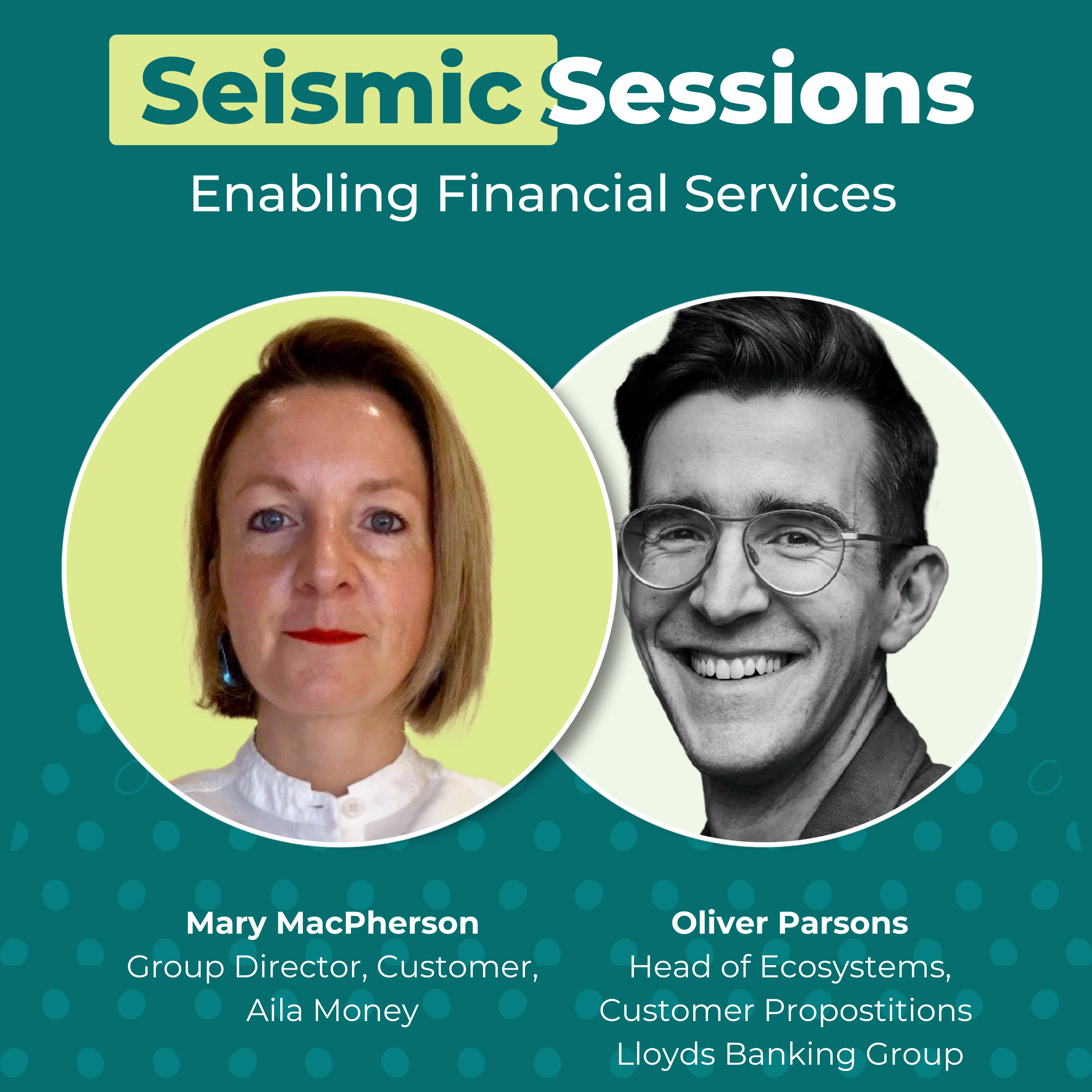
In this episode of Seismic Sessions, hosts Gemma Livermore and Rachael Rowe dive into the evolving roles of customers within the financial services industry. Joined by special guests Mary MacPherson from Bank of Ireland and Oliver Parsons from Lloyds Banking Group, the discussion covers the industry's shift towards customer-centric models, the impact of digital transformations and the future of customer strategy in financial services.Show notesKey takeaways  Tremors: Customers are now seen as key drivers of revenue, prompting a shift to customer-first strategies that prioritise needs over technology or products. Digital-first organisations and new technologies like AI and open banking are setting higher standards for personalisation, trust and real-time experiences. Organisations are breaking down silos to align teams and unify services, fostering a more holistic approach. However, balancing innovation with regulatory requirements, such as consumer duty, remains critical as the industry evolves toward sustainable growth and stronger customer relationships. Epicentre:  Today, organisations are embracing digital tools, technology, and partnerships to enhance customer-centricity. By leveraging data, API integrations, and open banking, businesses are creating seamless, personalised experiences while fostering trust and loyalty. Collaboration between customer-focused and technology teams has become essential, enabling real-time insights and improved service delivery. Despite advancements, the sector continues to navigate challenges like regulatory compliance and balancing innovation with responsible practices, emphasising the importance of ecosystems in shaping meaningful customer connections. Aftershocks: As financial services are evolving to be driven by increasing customer expectations, hyper-personalisation and rapid technological advancements, organisations are focusing on creating nimble, proactive customer strategies that integrate data, technology, and commercial goals. Embedded finance and ecosystem partnerships are becoming critical to delivering seamless, relevant experiences. As the industry evolves, balancing innovation with regulatory compliance and societal responsibilities remains essential, with an emphasis on fostering trust, loyalty and deeper customer relationships through innovative and personalised solutions. Jump into the conversation:[04:06] Challenges in implementing customer-centric strategies[04:26] From service to strategy[07:18] The role of FCA’s Consumer Duty[20:15] Internal silos and collaboration[24:07] Leveraging technology and ecosystems[31:58] The future of customer strategy

December 9, 2024Episode 1435 min

14: Marketing for the Great Wealth Transfer

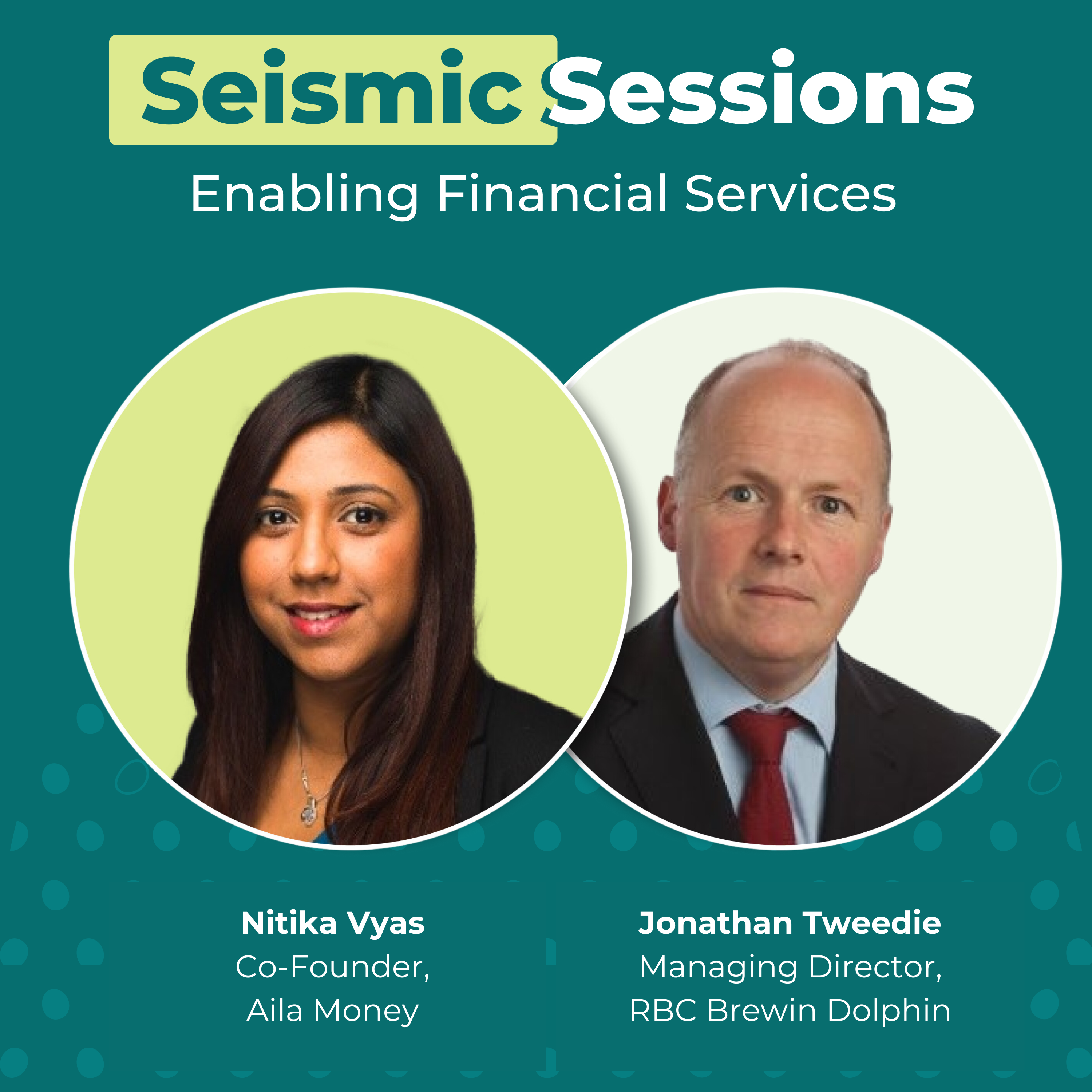
In this episode of Seismic Sessions, hosts Gemma Livermore and Rachael Rowe are joined by Nitika Vyas, co-founder of Aila Money, and Jonathan Tweedie, Managing Director at RBC Brewin Dolphin, to discuss The Great Wealth Transfer. With $84 trillion set to move from Baby Boomers and The Silent Generation to heirs by 2045, this seismic shift is transforming wealth management. The discussion delves into adapting to a diverse, multi-generational client base, building trust across communities, and how digitalisation is reshaping the industry.Show notesKey takeaways  Tremors:Traditionally, wealth management was reserved for high-net-worth individuals, making it expensive and inaccessible for broader communities. Trust-building relied on long-term relationships rather than the quality of expertise, limiting scalability. Regulatory challenges also hindered innovation, focusing on legacy practices rather than addressing evolving client needs. Epicentre:  Today, trust hinges on diversity and inclusion, as wealth managers navigate a more varied client base. Historically male-dominated, the industry faces challenges at wealth transfer points, especially with younger, more diverse generations. Digitalisation is redefining the client experience, enabling personalised financial guidance via open finance platforms. These tools provide on-demand, customised solutions, expanding access to clients with smaller investments and fostering broader trust within communities. Aftershocks: As values shift toward ESG and ethical investing, wealth managers must build relationships earlier in clients’ financial journeys. A holistic approach that balances financial goals with societal impact is crucial. To stay relevant, firms need to evolve marketing strategies, enhance client education, and collaborate with regulators, ensuring services align with modern values and priorities. Jump into the conversation:[00:03:45] - Pre-digital wealth management[00:08:20] - Digitalisation and accessibility[00:10:30] - Self-service and personalisation[00:14:05] - Diversity in wealth management[00:16:50] - Trust and client-centricity[00:20:40] - Generational trust issues with banks[00:24:55] - The role of guidance vs. advice

November 21, 2024Episode 1341 min

13: ESG: How to Colour Green Within the Lines

In this episode of Seismic Sessions, host Gemma Livermore and co-host Rachael Rowe talk with Valentina Kristensen of OakNorth and Sharon Wilson of Schroders about the growing importance of ESG in financial services. They discuss ESG’s evolution into a business priority, the challenges of avoiding greenwashing, and the impact of regulations. Practical advice is shared on embedding ESG authentically into operations, building stakeholder trust, and navigating complex compliance landscapes.Show notesKey takeaways Tremors: Once sidelined by short-term profit goals, ESG has gained prominence due to rising awareness of climate change, social justice, and corporate governance. While early challenges stemmed from inconsistent reporting standards, recent progress has brought clearer frameworks. Despite advancements, firms still face hurdles like greenwashing and maintaining transparency. Epicentre: To integrate ESG authentically, firms must prioritize transparency and honesty, especially in the early stages. Clear, consistent communication helps build trust and navigate the evolving ESG landscape effectively. Aftershocks: Future success hinges on adaptability as regulations and expectations shift. Firms must empower climate-aware teams, meet rising demand for detailed reporting, and leverage AI to scale ESG efforts, ensuring transparency and credibility. Jump into the conversation00:03:05 - The Historical Rise of ESG00:09:12 - Greenwashing as a Key Challenge00:12:30 - Regulation Driving ESG Adoption00:16:40 - Lack of Standardisation in ESG Reporting00:20:20 - Transparent Communication00:25:18 - Increasing Client Demand for ESG Data00:28:40 - AI and ESG Reporting00:32:10 - Building "Climate-Confident" Teams00:37:15 - Future Outlook for ESG

November 8, 2024Episode 1233 min

12: Starting Your Enablement Journey

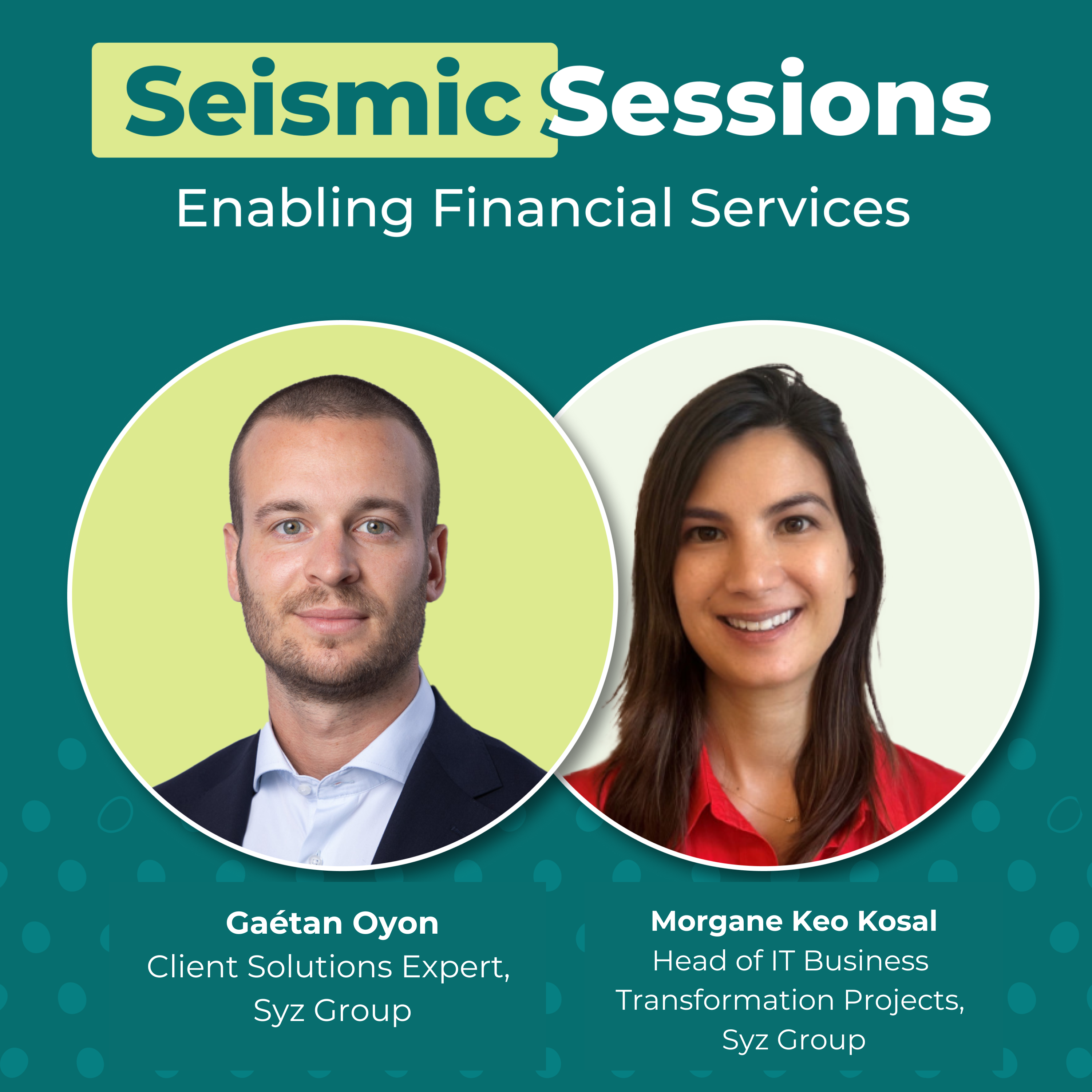
In this episode of Seismic Sessions, hosts Gemma Livermore and Rachael Rowe are joined by Morgane Keo Kasal and Gaétan Oyon from Syz Group, to discuss the latest content distribution strategies and innovations in private banking. They highlight the journey of transforming their own content automation, overcoming challenges in technology adoption, and the anticipated improvements in efficiency and client relationships.Key takeaways Tremors: In a pre-automated world, client relationship managers at Syz Group faced significant challenges when endeavouring to service their customers. The fragmented state of their content, including its inconsistent formatting and disparate location across the business, together with wider inefficient internal processes, meant managers spent much of their time searching for, amending, or creating new bespoke content, rather than focusing on value-adding client engagement. This triggered a realisation of the benefits of automation and customisation, particularly regarding pitch books, plus the broader potential of envisioning a comprehensive content enablement strategy, to replace solving isolated issues with point solutions. Epicentre: Syz Group has used the initial automation of pitch books as the catalyst to create a centralised content platform that not only serves as the golden source for the business but also enables wider content automation and distribution use cases in the future, including client content subscriptions based on themes. While already realising the transformative impact this initiative will have on both internal operations and client-facing activities, their focus is also on implementing a data-driven approach and proactively using available analytics to accurately measure these efficiency gains. Aftershocks: Looking forward, there is an important focus on change management and user adoption, ensuring all stakeholders and internal teams are supported and trained during the transition, and experience a new-found confidence in their roles as a result of better enablement. There is an optimism for the platform's role in wider business growth, and a belief that it will showcase the organisation as true innovators, encouraging other institutions to collaborate and partner with them. Jump into the conversation00:01:23 - Defining Enablement in Private Banking00:06:07 - Initial Expectations and Discoveries00:07:09 - Life Before Automation00:09:50 - Change Management00:16:03 - Future Outlook and KPIs00:17:03 - Measuring Efficiency Gains00:20:51 - Impact on Personalisation and Client Interaction00:21:01 - Future Growth and Breaking Down Silos00:23:34 - Ensuring Continuous Improvement00:26:04 - Vision for Future Business Growth

October 18, 2024Episode 1134 min

11: How End-to-End Customer Journeys Generate Profitability and Growth in B2B Sales

In this episode of Seismic Sessions, hosts Gemma Livermore and Rachael Rowe are joined by Nils Hafner from Luzern University of Applied Sciences and Art, and Adrian Whelan from Brown Brothers Harriman. They discuss modernising B2B sales in Financial Services by enhancing customer experiences and improving sales processes. Together, they explore topics such as transitioning from a multi-channel to multi-experience approach, the reasons for end-to-end customer journey failures, and the importance of breaking down silos between marketing, sales, and service divisions. Show notesKey takeaways  Tremors: Customer journeys have evolved significantly over the last decade. Historically, businesses followed a multi-channel approach, where financial institutions structured their operations around individual channels. These channels operated in silos, each responsible for its own set of marketing, sales, and customer service tasks often leading to a disjointed customer experience, where clients felt like they were dealing with different entities rather than a unified firm. The onus on customers to engage with firms through the institutions’ preferred channels meant customer needs were not adequately catered to, prompting the industry to shift towards a more integrated and customer-centric approach that focused on delivering a seamless and cohesive multi-experience journey. Epicentre:  The industry has made strides to improve the customer journey, but still faces its share of challenges. There is an ongoing transition from traditional multi-channel approaches to more integrated multi-experience strategies. Efforts are being made to integrate marketing, sales, and service functions to improve collaboration, data sharing, and to present a cohesive experience to clients. However, the necessity of compliance and risk management is often seen as a barrier to innovation.  Aftershocks: Delivering a seamless and frictionless customer experience in the B2B Financial Services sector is pivotal. Firms need to integrate more personalised, data-driven approaches and use advanced analytics to tailor their interactions to customer needs. The adoption of AI and automation will help them streamline their processes andmake the customer journey more seamless and efficient. Their AI strategies should include driving a more proactive and predictive approach to customer support by using insights to address potential issues before they arise, Jump into the conversation:[00:04:07] - The evolution of customer journeys[00:06:00] - Drivers of the multi-experience transition[00:07:02] - The impact on the asset management industry[00:11:45] - Regulatory challenges in customer journeys[00:15:19] - Regulatory and compliance impact[00:25:57] - Breaking down silos for future success[00:27:57] - Leveraging technology in asset management[00:30:23] - Blue sky thinking: The future of the industry

October 4, 2024Episode 1040 min

10: Protecting the Brand

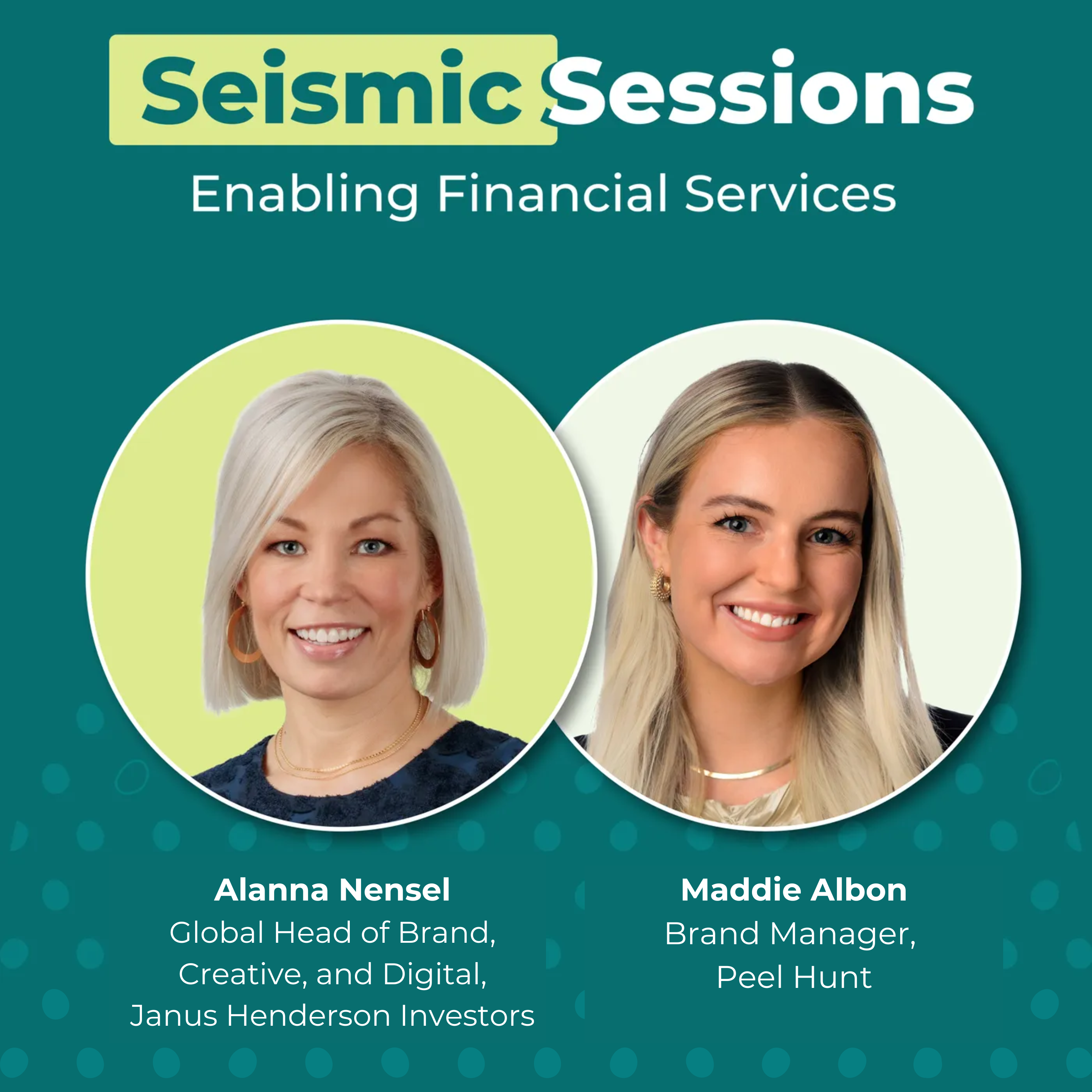
In this episode of Seismic Sessions, the focus is on the evolution of brand in the financial services industry. Join the discussion with hosts Rachael Rowe and Gemma Livermore, Seismic,  and guests Alanna Nensel, Global Head of Brand, Creative, and Digital at Janus Henderson Investors, and Maddy Albon, Brand Manager at Peel Hunt, as they delve into the impact of AI, the significance of a centralised brand asset platform, and the necessity of understanding diverse target audience needs across multiple markets and regions.Show notesKey takeaways  Tremors: The episode delves into evolution of brand - from a logo and colours to a more inclusive approach, highlighting the need to consider how audiences connect with brands across diverse platforms, including podcasts, videos and written content. With this multi-channel aspect, brands can effectively engage and resonate with their target market.  Epicentre: Brands are encountering challenges that highlight the importance of having a centralised source of truth to maintain brand consistency. As digital tools continue to offer valuable insights into audience preferences, they are also becoming more essential in monitoring the effectiveness of branding efforts.  Aftershocks: Looking ahead, AI is seen as an essential tool for driving personalisation and creating experiences that resonate with the target audiences, especially when targeting multiple segments. This shift highlights the collaboration between human input and AI, emphasising a thoughtful approach to using AI effectively.  Jump into the conversation:[00:03:04] Automation in branding strategies.[00:07:19] Brand evolution and growth.[00:08:44] Evolution of brand perception.[00:13:20] The evolution of branding.[00:15:25] Branding colours in the industry.[00:24:46] Protecting your brand online.[00:28:20] AI for brand control.[00:31:37] The human element.[00:39:17] Inclusion and feedback.

Is this your show?

Claim this listing to keep it up to date, reach guests who want to pitch you, and manage bookings with Guestify.

Claim this listing

More Business podcasts