Listen Frontier is a podcast exploring the investigative journalism of The Frontier and featuring conversations with those on the frontlines of Oklahoma's most important stories. At The Frontier, our mission is to hold public officials accountable, give a voice to the powerless and tell the stories that others are afraid to tell, or that illuminate the lives of people in our community. We will shine a light on hypocrisy, fraud, abuse and wrongdoing at all levels in our community and state. We will delve into complex issues and explain them to our readers, arming them with the information they need to make change.
Listen to episodes
60 recent
October 8, 202622 min
Jena Nelson on Trump, Stephanie Bice and her plan to win Oklahoma's 5th District
Frontier Executive Editor Dylan Goforth spoke with Jena Nelson, a Democrat running to unseat Republican Rep. Stephanie Bice in Oklahoma’s 5th Congressional District. Nelson discussed her efforts to appeal to Republican voters, her concerns about federal healthcare cuts and rising costs, and why she believes listening to constituents rather than following national party politics could help her flip the Republican-held seat. She also criticized Bice's support for President Donald Trump's policies and outlined her priorities on education, immigration and affordability. Bice's campaign did not respond to requests to participate in an interview.
September 24, 202618 min
‘David against an army of Goliaths’: The fight over a proposed Google data center near Sand Springs
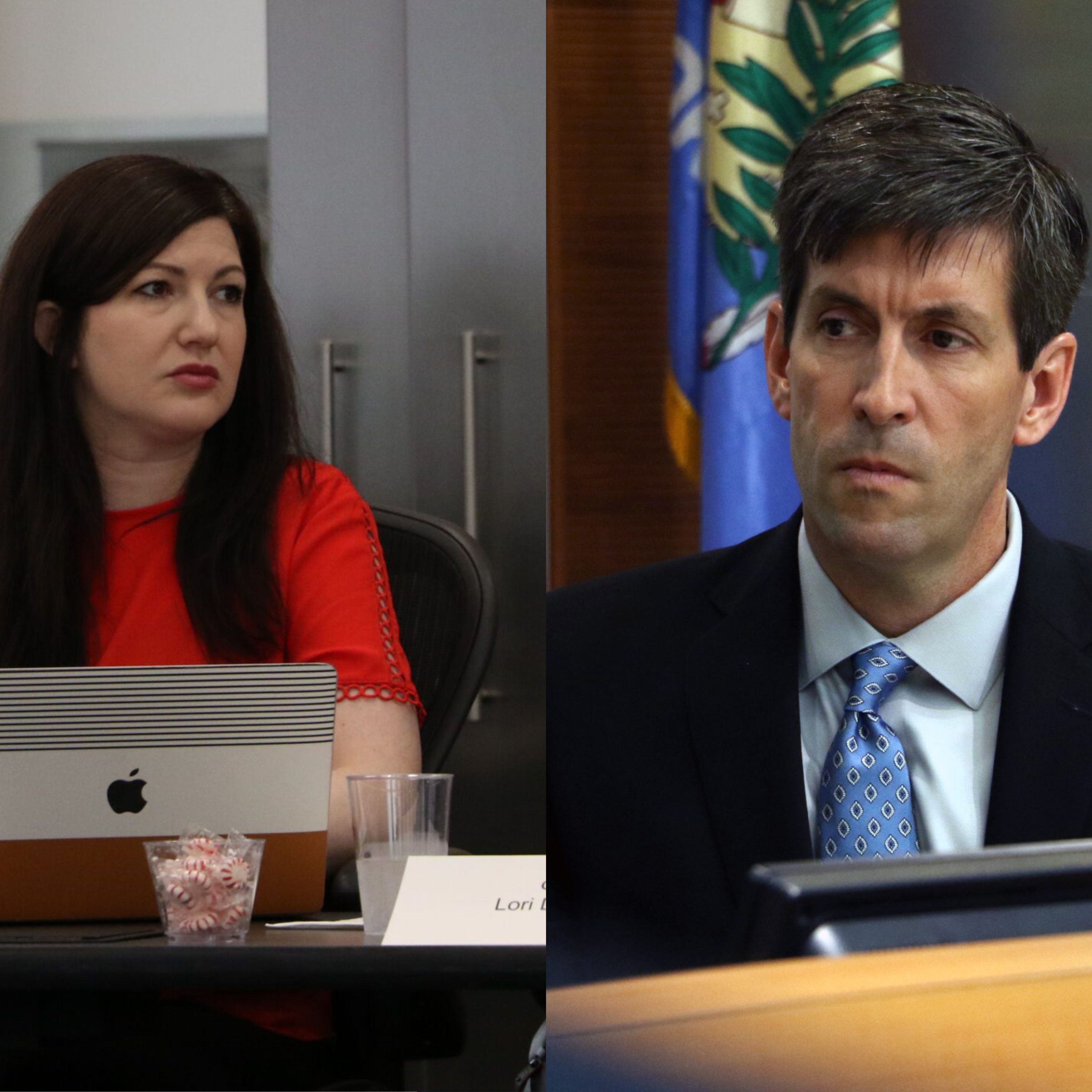
Dylan Goforth: Before anyone was talking about Google or a data center, what exactly did the family — and tell us a little bit about the family there who signed that conservation easement — but what did they agree to when they signed it with Land Legacy, and what did Land Legacy receive in return? Michael Patton: W hat Land Legacy does is conservation easements, and that puts restrictions on land forever and ever. And people can do it a variety of ways. They can donate them to us. They can sell them to us if we have a buyer for those. But it protects land forever. It's a green space that forever and ever Land Legacy will put those restrictions and fight them in court. So in 2013, the Ringel family decided on their family ranch they would put these restrictions, and it's a unique easement. And they put a circle around the entire property. All the stuff near the highway was the easement, plus a big spot in the middle. So 270 acres of their 835 acres were restricted, and they all signed an agreement. Everybody in the family signed it and notarized it that they would follow these restrictions. And the restrictions are fairly simple: no industrial park, no access, no roads, no buildings. We do that all the time. We have 18 of these in Osage County, Oklahoma alone, and we have 130 of these around the state, around 30,000 acres. A family would do this for the tax benefits. So, in 2013, the Ringel family made a non-cash donation to Land Legacy, $3.822 million, that they were able to use as a tax write-off, as a deduction off their income. So that was 13 years ago. Now suddenly they just feel they can break the rules. So without our knowledge, they went to the city of Sand Springs, got it annexed. I heard about it after, when they started to get rezoned, and it's restricted. So we have filed a lawsuit against the Ringel family, who have now sold those rights to Google. So now we've amended our lawsuit to also against two developers and the Google people. So we have restrictions on the land. We are going to win in court. Every lawyer tells me they can't do this project, and they just thought they would lie about it. Goforth: W e're talking about a lot of land and a lot of development. What I was wondering, like you said, the easement protects roughly, I think you said 270 acres, is that right? But it doesn't prevent development elsewhere on the property. Patton: No, it does not. Goforth: So how do those things interact? You know what I mean? Is the development touching these 270 acres? Patton: Yes. In fact, the Ringel family has tried to change the easement boundaries to make the Google plant fit, but no, we have an entire circle around it. It's a ring around the property that you can't cross. No roads can cross that. So even if they could build something in the middle, they couldn't get to it because there's an easement prohibiting a road. And the main part of it is there's a big swath of it that's two beautiful Osage hills and a ravine between them that they plan to blow up and flatten to make the Google plant fit. So they took that part of the easement on their own and said, "Oh, we're just going to move this and put some other land way over here and give that to Land Legacy." So they don't have the right to change legal boundaries. You don't have the right to change your neighbor's fence on your own and file these things. So I think that will also be thrown out. So they've been telling people and telling Google, "Oh, we can fit it now because we changed the easement," and they can't unilaterally change the easement. And this will be dramatic changes to Osage County. They're going to have to flatten, dynamite these two hills, and fill the ravine. And this is the start of Turkey Creek. I just can't imagine the amount of environmental damage that's going to happen from this. There's much higher conservation value protecting those hills and that ravine than there is just some pastureland over on the side that they want to swap out. Goforth: Now I know that you appeared before the Sand Springs Planning Commission earlier this year, and correct me if I'm wrong, but you told them there that Land Legacy had rights involving this property. Can you tell us a little bit about that meeting and what you told the Planning Commission? Maybe what they said in return, and sort of where all that stands now. Patton: Yeah, I literally was not notified by state law. The annexation is still being fought by a separate group, but they have to annex. We are a property rights — this is not an anti-data center argument. It's a property rights issue, and property rights are part of the bundle of rights you have when you own property. You may own mineral rights or water rights, and development rights can be donated to a nonprofit. The mineral rights is owned by Osage County or Osage Tribe. They own all the mineral rights in the county, so it's a whole separate issue from us. But yeah, I literally did not know about this. They'd already annexed it. Suddenly had rezoning, and no one notified us. And then at the Sand Springs Christmas Parade, someone said, "Oh, this is Michael's Land Legacy stuff." So I heard about it quickly, instantly showed up. They'd already filed the papers for rezoning. I went to the Planning Commission and said, "You can't do this. I have an easement. Please step back from this." And they ignored me. Then I said, "You have this easement, and you should have found it." Their attorney, the developer's attorney, which is a very famous Tulsa attorney, Lou Reynolds, admitted in writing, "Whoops! I never did a title search." This easement was so easy to find. Any person who looked at anything would have found this. The developer never looked for a title search, and then so did the city of Sand Springs. They also failed to look for this, so they went ahead and did all these things they can't legally do without notifying us. And so I said that at the planning meeting, and then I said that for the City Council meeting afterward for rezoning. I handed them a piece of paper, date-stamped, that said, "This is the easement. This is not legal to do this. You can't." And they simply asked the developer's attorney, who said, "Oh, it's no big deal," and slowly passed it. It was really flying in my face just to say, "Wow! Even though I've shown you the evidence, you ignore us." And I think that's one of the issues on this, is that people think this is no big deal, yet the courts, I believe, will say otherwise. Goforth: Right. Let's talk about the court a little bit because there was a recent-ish ruling, I guess, from Judge Burl Estes about some of the central claims against the Ringels and against this development. Can you tell us what that ruling actually was, and maybe what still has to be proven before Land Legacy could prevent the development of this property? Patton: Yeah. So on May 11th, we filed a lawsuit on May 23rd against the Ringel development, the Ringel family. On May 11th, they filed a motion to dismiss. So it took four months for the judge to decide, but he came out on September 2nd with a ruling denying the motion to dismiss. It was a declaratory judgment. He said it's inappropriately resolved through this process. There are significant issues here that renders dismissal inappropriate. Fairly strong language to say to the Ringels, no, this will go forward to court. That's quite a victory for us. I was concerned. Even though everyone tells me I have a great case on this, you don't know in the court's case, and then there is some ambiguity once you try to falsify documents, and I just didn't know. So I was very pleased the judge said there's plenty more to go here and go forward. So it was pretty much a rebuke, and a motion to dismiss was denied by Judge Justice.
September 9, 202616 min
‘It’s time we do something big and bold’: Sen. Rosino pushes child welfare overhaul
The Oklahoma City Republican wants to move child welfare out of DHS and combine several state programs under a new agency focused on children.
August 26, 202621 min
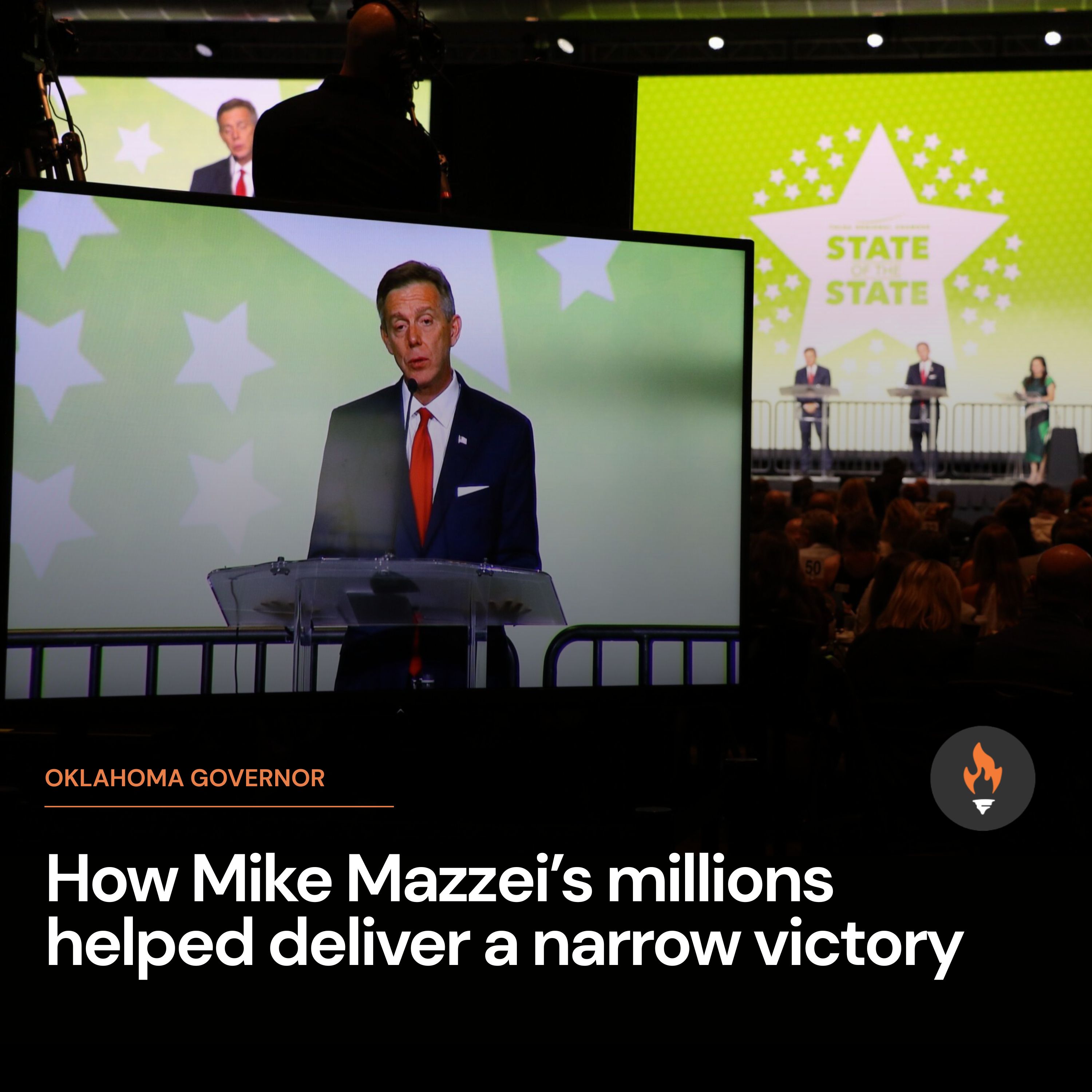
‘He needed all of it’: How Mike Mazzei’s millions helped deliver a narrow victory
The Frontier spoke with pollster Pat McFerron about Mike Mazzei’s slim win over Gentner Drummond to secure the Republican nomination for governor. McFerron is president of the Oklahoma-based polling firm Cole Hargrave Snodgrass & Associates. For the full interview, listen to our podcast. Dylan Goforth: Let's talk about what we saw last night. It's funny: There were a lot of eyes on the election, but not so many votes. Once again, turnout in an Oklahoma runoff wasn't great, but everyone was paying attention to what happened. When you look at the runoff results, what do you think Oklahoma voters told us? Pat McFerron: I think the key takeaway is a little bit of a repudiation of the Freedom Caucus. Obviously, everyone wants to talk about the governor's race, which was very, very close. I believe it's the closest Republican runoff election we've had in the state for governor. But I think the continuation last night of support for Senate Pro Tem Lonnie Paxton — and voters increasingly siding with him over the Freedom Caucus — is probably the biggest takeaway. That, and I think you hit on it a little bit, is how few people are participating. I do think the Republican runoff election exceeded some people's expectations, but you're still talking about less than 10% of Oklahoma residents participating. It's a larger percentage of voters, but we're talking about a state of 4 million people. Less than 10% decided who is likely to be the next governor of the state. Dylan: Looking at the governor's election, Mazzei won by essentially half a percentage point. Does that look like basically a coin flip, or did you see something in the results that explains why Mazzei was able to hold off Drummond, even by the slim margin that he did? Pat: If you compare the margins — if you took out the other candidates in June and looked at the margins Drummond and Mazzei had vis-à-vis each other, then looked at what happened last night — the southeastern part of the state turned out pretty solidly and really moved toward Mazzei. In McCurtain County alone, Mazzei won by a little over 2,000 votes. He picked up 779 net votes there. So he picked up more than a third of his statewide margin in McCurtain County alone. Dylan: Do you think that's the Trump endorsement? I know southeastern Oklahoma, and I don't think of Mazzei as your typical southeastern Oklahoma candidate. Pat: It is the most Trumpian. I think the Brecheen endorsement there mattered. You also had the late Markwayne Mullin endorsement. Those are the last two congressmen there. Especially in McCurtain County, which is in the Shreveport media market, they're not seeing quite as much television advertising as some of the others are. I think they rely a little more on endorsements. So, yes, I do think that's a key part of it there. Dylan: Let's talk about the money, because I think that's an interesting part of the results. There was a lot of spending. I think Mazzei took out almost $12 million in loans. The Associated Press reported more than $14 million in television and digital advertising during the runoff, with many more millions spent before that. What did Mazzei actually buy with that money? Pat: When a race is this close, any decision on financing probably makes a difference. So, yes, I would argue that he needed it all to get there. That being said, you may recall I released numbers three weeks out that had it at 44-44. I did two other surveys that I did not release that had it at 45-45, and the last survey I did, which I finished last Thursday, had it at 45-45. That makes you wonder whether the money was wasted. But if it hadn't been there, you don't know what would have happened on the other side. It looks to me like he needed all of it—or almost all of it—to be successful. Dylan: Taking out $12 million in loans is enough to give you stress. But I guess when you win by 2,000 votes, you don't look back and regret taking out those loans. Pat: The worst feeling — and I've been on campaigns that have done this before—is to say, “I should have done something else. I should have put in another $100,000, or I should have done X, Y or Z. If I'd bought broadcast television in Shreveport, maybe I would have done better in McCurtain County.” Those are the things that drive you crazy. Very seldom do I have someone say, “We paid for a landslide, and I'm upset about it.” Dylan: I love a close race because it gives you so much to think about and dwell on. When you're talking about 2,000 votes, anywhere you're picking up votes is relevant, important and probably meaningful. One thing I was thinking about last night was the polling you released before the runoff. These guys had essentially been tied for a long time. I remember seeing numbers in June, and the June election results were close. What do last night's results — and the way the last six months played out — tell you about where the supporters of the other candidates went? Pat: Obviously, it means they split rather evenly. I haven't gone down to this level yet, but looking at the maps, it appeared Drummond ended up winning out west, where (Jake) Merrick and (Chip) Keating had done well. Mazzei did well on the eastern side of the state, where McCall had more support. For example, in Atoka County, it wasn't a huge difference, but compared with June, Mazzei picked up a net 294 votes. In a county where only about 1,600 people voted, that's a pretty big margin. Dylan: For people looking through the numbers today and trying to sort this out, are there any obvious mistakes you would caution them against making when interpreting the numbers? Pat: One thing that's interesting in a race this close is looking at local elections. That's something I always advise people to do. Look at the turnout in Ottawa County, for example. We actually had 58% more people vote in the August Republican runoff than voted in the June primary. They had a much larger turnout because there was a local sales-tax issue on the ballot that got 94% of the vote, I think. Their sheriff had been sued, and everybody was going to pay this big settlement through property taxes. They decided to pay it off with a sales tax instead. That meant a lot more people voted in Ottawa County. We saw the same thing in Adair County and Tahlequah, where there were some very important school bond issues on the ballot. Those were also places where more people voted in August than in June. Looking at some of those things matters when you get into a race that's this close. That's all short-term. Long term, I think one of the keys will be the involvement of the metro areas in nominating Republicans in the future. We'll see what happens with Cyndi Munson, and all due respect there, but if you look at the residents of Oklahoma, Tulsa, Cleveland and Canadian counties, they account for about 48% or 49% of all the residents in the state. They accounted for only 42% of the Republican primary voters. If you change that—and given that Drummond won those counties—he might be the nominee. Oklahoma County did turn out quite a bit more in the runoff than it did in the primary. Tulsa County did a little more, percentage-wise. But to me, that's a big question: Are we going to continue to be a state with rural dominance even though the metro areas are becoming more populated? Dylan: I want to look ahead to November. If you're advising Cyndi Munson, what does such a close split in the Republican runoff tell you about Mazzei's strengths and possible vulnerabilities? Is there anything in the results that gives a Democrat an opening or hope? Last night, I went back to look at the split between Drew Edmondson and Kevin Stitt in the 2018 governor's election. Obviously, the Munson campaign isn't going to say, “Our goal is to lose by less than Edmondson lost by.” But is that a good starting point for them to look at those results? What would you tell her to do over the next few months? Pat: I will tell you, 2018 is a lot different from 2026. With the teacher walkout and everything else, our generic-ballot test in 2018 had only about an eight-point Republican advantage. I'm at a 20-point Republican advantage in 2026. I think you have to create your own hope. But I don't think the opportunity for the Munson folks is necessarily the Gentner Drummond voters. I think it's the Republicans who stayed home, and they're a tougher group to reach as well. They're a little less engaged. They will vote Republican, but I think it'll take a little while to happen. I think we'll see the Republicans come back together.
April 6, 202629 min
Why Tulsa is hitting pause on data centers
Data centers are coming to Tulsa. Eventually. But that momentum has hit a pause. City leaders have unanimously approved a temporary moratorium on new data center development, stepping back amid growing concerns about what these massive projects could mean for Tulsa’s power grid, water supply and long-term growth. At the same time, data centers promise jobs, investment, infrastructure and a foothold in a rapidly expanding industry. But they also come with enormous demands. So where does Tulsa go from here? On this episode of Listen Frontier, we’re talking with Tulsa City Councilors Phil Lakin and Laura Bellis about why they supported the moratorium, what questions still need answers, and what it would take for them to feel comfortable moving forward with data center development in Tulsa. Tulsa District 4 City Councilor Laura Bellis Dylan: What does the moratorium actually do and what does it not stop? Laura Bellis: Project Anthem’s Phase One is still moving forward, and potentially Phase Two depending on future approvals. What the moratorium does is create a nine-month pause so our planning office can update how data centers are handled in our zoning code. Right now, our code treats them like light industrial uses, which assumes they won’t have off-site impacts like noise or vibration. But that’s not what we’re seeing with large-scale, hyperscale data centers. So this pause gives us time to study best practices and update our policies. During the moratorium, no new permits can be pulled for data centers. The goal is that when it ends, we’ll have clearer rules about where they can go and whether our community has the capacity to support them. Dylan: Are there limits to what this moratorium can accomplish? Laura Bellis: This is a good first step, but it’s not a complete solution. Technology, especially AI and data centers, is evolving faster than regulation. At the city level, we can address land use and zoning, but we really need broader policy at the state and federal levels as well. My hope is that during this time, we can learn from other communities, see what works elsewhere, and start building a more comprehensive approach. Dylan: What does success look like when the moratorium ends? Laura Bellis: Success would mean we have clear definitions in our zoning code for different types and sizes of data centers, along with requirements to mitigate impacts. Ideally, we’d limit where hyperscale data centers can go and have a better understanding of how many our region can realistically support, especially when it comes to water and power. We’ll also have more information from things like the Cherokee Nation’s upcoming study and potential state legislation. Right now, we just don’t capture the nuance. By the end of this process, we should. Tulsa District 8 City Councilor Phil Lakin Dylan: What led you to support the moratorium? Phil Lakin: I supported it, but really as a way to take time and get policy right. The final version was the result of compromises, and that’s why it passed unanimously. Our zoning code wasn’t written with data centers in mind, and right now they could potentially be built next to neighborhoods or existing businesses. This gives us time — about 270 days — to fix that. It also allows projects already in the pipeline to continue, which was an important consideration. Dylan: How did you balance economic opportunity with community concerns? Phil Lakin: That was a big part of the discussion. On one hand, data centers bring investment, property tax revenue and franchise fees from electricity use. Those can be meaningful for the city. On the other hand, there are concerns about water use, power demand and proximity to neighborhoods. For me, the key was balance. We want to remain open for business, but we also want to be thoughtful about where these projects go. A moratorium gives us time to get that planning right instead of reacting after the fact. Dylan: What does success look like after the moratorium? Phil Lakin: The most important thing is getting the zoning code right, clearly defining where data centers can and can’t go. Beyond that, I think success is having a better public understanding of both the benefits and the downsides. A lot of people focus on one side or the other, but we need to look at the full picture. We all use data centers every day, whether it’s cloud storage, Google searches or AI. So part of this is helping people understand both the impact and the role they play in our daily lives.
March 6, 202621 min
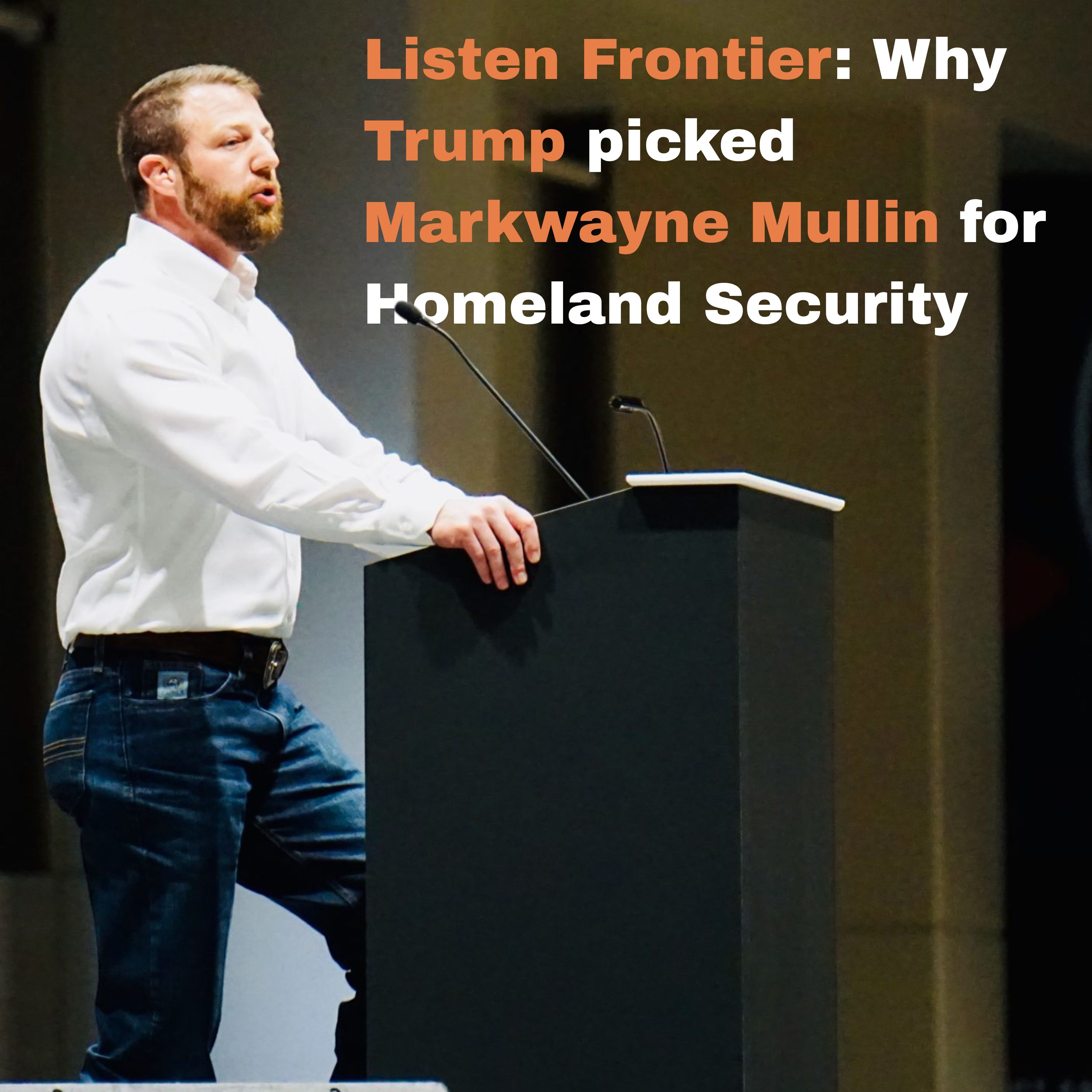
Why Trump picked Markwayne Mullin for Homeland Security
Today on the Listen Frontier podcast, we’re talking about one of the more surprising political shakeups in Washington — the firing of Kristi Noem and the appointment of Oklahoma Sen. Markwayne Mullin to replace her. Noem was abruptly pushed out of her role leading the Department of Homeland Security by President Donald Trump, setting off a scramble over who would take over one of the federal government’s most powerful agencies — responsible for border security, immigration enforcement, disaster response and counterterrorism. Trump’s pick of Oklahoma Senator Markwayne Mullin stunned many. If confirmed, Mullin would leave what is often considered one of the most secure jobs in American politics — a U.S. Senate seat — to take on a Cabinet position in an administration known for frequent turnover. To help us break down what happened, why Mullin might take the job, and what it could mean for Oklahoma politics, I’m joined by Reese Gorman. Reese is a national political reporter for NOTUS covering Congress and the Trump administration. Before that, he worked here in Oklahoma as a reporter for The Frontier.
February 11, 202621 min
Salty, oily drinking water left sores in their mouths. Oklahoma refused to find out why.
In our latest investigation, reporter Nick Bowlin digs into a troubling question: What happens when families report salty, oily drinking water that leaves sores in their mouths — and the state declines to determine the cause? In “Salty, oily drinking water left sores in their mouths. Oklahoma refused to find out why,” Nick traces complaints of oilfield contamination, examines how regulators responded and explains why key questions remain unanswered. In this conversation, he takes us behind the scenes of the reporting, the documents that shaped the story and what it reveals about oversight of oil and gas pollution in Oklahoma. Dylan Goforth: When you first heard about the Boarmans’ situation, what made you think this wasn’t just a private well problem but a story about the state’s oil and gas regulator? What was the moment where the story “clicked” for you? Nick Bowlin: After my initial conversations with Tammy and Chris, I sent in an open records request with the state. Once I got the files and began to read, the click happened pretty fast. I saw that officials at the OCC had found strong signs of oil and gas pollution using a number of different metrics and tests. And this was for a house that sits in the middle of a legacy oilfield, drilled in the 1940s. Old wells plugged with mud – a common practice at the time – surround their house. But all this evidence didn’t seem to lead to urgent action. The agency slow-walked testing nearby oil and gas operations and water sampling for heavy metals. And when they finally ran those tests, they found problems. People all over the state are dealing with pollution threats from historic and current oil and gas. Tammy and Chris were unusually proactive in pushing the state to help them and trying to learn all they could about their situation. If this is how the state handled the Boarmans’ case, it didn’t bode well for other Oklahomans coming to the OCC for help. Dylan: A huge part of this story relies on internal emails, test results and agency reports. How did you go about getting those records, and what was the most surprising or revealing document you found? Nick: I relied primarily on open records requests to the OCC. My first one took a while, since my request covered over a year of agency work on the Boarmans’. But after that, I could submit requests covering only a few months at a time and the agency tended to return these promptly. To my mind, the most revealing set of emails come from September 2024, after the Boarmans’ state senator got involved. His arrival seemed to spur the state to finally order long-delayed tests. I was also struck by the electromagnetic survey images: For the most part, oil and gas reporters don’t get to see the pollution we report on. Leaks happen deep below our feet, while CO2 emissions are invisible. But those images taken by the agency offered a rare and disturbing picture of the pollution plume contaminating the Boarmans’ drinking water. Dylan: There are several points in the story where agency staff appear to know more than the Boarmans do about what’s happening to their water. How did you piece together that timeline of who knew what, and when? Nick: I built out a detailed chronology, based on the records I received and interviews with the Boarmans’. It wasn’t hard to do that with the agency emails. But I also built a timeline of the evidence. There isn’t a single test that definitively proves oil and gas contamination. Instead, the state relied on an accumulation of data, evaluating things like salts, the presence of certain metals, chemical ratios and the belowground electromagnetic maps. That was a useful exercise: to see the growing pile of evidence pointing to oil and gas, compared to the agency’s handling of the Boarmans’ pollution case. Dylan: The McCoon injection well becomes central to the story. How did you figure out it might be a key suspect, and what did you have to learn about injection wells and groundwater science to understand what was going on? Nick: I looked into the McCoon simply because the state flagged it as a problem well. Internal emails noted its checkered operational history and proximity to the Boarman house. And a report commissioned by the state about the Boarman case offered a number of recommendations; the McCoon was the only nearby well singled out for further testing. But near the McCoon are a number of poorly plugged wells, all of them potential pollution threats. It’s not hard to envision these wells working together, with wastewater rising up the poorly plugged wellbores. The report I mentioned just now talks about the pollution possibly spreading through“complex pathways.” That’s the thing about these oil and gas pollution cases: they’re incredibly complex and definitively proving a culprit is an enormous challenge. The state ultimately told Tammy and Chris that it could not find where the pollution originated and closed their case. Dylan: Tammy herself becomes almost an investigator in this story, combing through records late at night. How did your reporting overlap with her own digging, and how did you verify what she was finding? Nick: Tammy has a second career as a reporter if she wants one. She probably filed more records requests than I did, and she spent many hours learning about oil and gas operations and the pollution threats they pose. In many cases, we had the same sets of documents, since I obtained her case files independently of her. So, after our interviews, it was easy to fact-check things she’d told me, and pull up the relevant documents to get to the primary source. She was also good about taking pictures of signs of the pollution around her house, helping me verify anecdotes before I began speaking to her. Dylan: You tie this one family’s ordeal to a much larger problem — tens of thousands of unplugged wells and weak oversight statewide. How did you balance telling such a personal story while also showing readers the systemic picture? Nick: This story is one in a series about oilfield pollution, produced by The Frontier and ProPublica, so I have the benefit of being able to do different types of stories about different facets of this issue. The first story in this series took an expansive, statewide view of the oilfield wastewater blowouts called purges, so, for this one, I was interested in doing a zoomed-in look at the toll of pollution on a single family. Those are the stakes of bad regulation: everyday people are harmed. But I wanted to make clear that Tammy’s story isn’t just an outlier, so we made sure to talk about the issues with legacy oilfield pollution elsewhere in the Edmond area. The West Edmond Field was one of the state’s most important oil plays in the 1940s, and now, new homes are being built on land littered with orphan and mud-plugged wells, especially in the Deer Creek neighborhood. And no one knows how much old contamination there is beneath the surface. Dylan: After months of reporting, what part of this story surprised or frustrated you the most as a reporter? Nick: I definitely felt anger at the uncertainty of it all, a lesser version of the frustration that’s been eating at Tammy and Chris for years: there’s an obvious problem with their water, the state didn’t do everything it could to investigate it and now we will likely never know the source of the contamination. And now they just have to live with it – until they can get on rural water. In that sense, the Boarmans’ are lucky. I’ve interviewed other homeowners dealing with industry pollution on their properties who have no hope of cleanup or are too far out in the country to hook up to a water system. It’s hard to witness people forced to resign themselves to such hopeless circumstances.
January 21, 202627 min
‘The risk is moving too slow’: How Oklahoma's government wants AI to reshape the state's economy
Frontier: Hey everyone. Welcome to another episode of listen frontier today. I am joined by Hart Brown, the president of artificial intelligence and transformation at Saxum. He also helped author Governor Stitt's Artificial Intelligence strategy for the state. Thanks for joining us today. I wondered if you would tell us a little bit first about yourself, your background and how you got involved in this project and in this area. Hart Brown: You bet. Coming out of school, I was doing a lot of work in what we now refer to as predictive analysis, so algorithmic based decision making, using math to help understand what's likely to happen and then make the best decisions you possibly can. I had a number of people come to me and say Hart, can you build an artificial intelligence system that can do what you do on paper in real time? I answered. I said let's find out. It sounds really interesting. At that time, there was really only one system that anybody could really use, and that was IBM Watson. And so I built an artificial intelligence system on top of IBM Watson to be able to leverage this algorithm in real time. And got very good success. Frontier: So let's talk about the governor's report a little bit. The document calls itself a forward thinking approach, which is right means, in a lot of ways, that some of it is aspirational in a sense that we're at a point where we don't exactly know where we're going to end up with AI. What are some of the concrete things that Oklahoma could do in the next six months, 12 months that are realistic to embrace AI better or better understand how it’s shaping Oklahoma? Hart Brown: It’s really important to understand that we're really talking about a longer timeline. So some elements of that are going to happen closer to a two year time frame. Some may be a little bit further out now. We're transitioning from a period of time where artificial intelligence really kind of felt like a toy. It was interesting, it was fun. We all started to use it. We downloaded the apps. We were making pictures and lots of different things. Oklahoma is in a relatively low unemployment environment, meaning it's hard for Oklahoma employers to find good people to hire, and so with that, let's use the technology. Let's grow the businesses as quickly as we can by leveraging that in a responsible and reasonable way. Frontier: Is it even possible at this point to have guardrails, or to know what the guardrails would even be? At some point, it will start to affect people's jobs. You mentioned low unemployment, people having difficulty filling some of these positions that maybe AI could replace, but at some point people's jobs will be what's being replaced. And so are there guardrails to protect workers? Or how should people approach that part of the discussion? Hart Brown: From an economic productivity perspective, I need everybody working and I need everybody using the technology. If the technology replaces people in this ecosystem, I don't get the economic value out of the system at the end of the day. And really what we're seeing in the next two to three years, whichever country maximizes its potential related to artificial intelligence, is likely to be the dominant economic country for the next 75 to 100 years. So first and foremost, I need everybody in the ecosystem being productive. It doesn't make sense for us to have a broad based disruption of the employment environment, because we don't win at the end of the day. We won't be the dominant economic country. So I'm very optimistic that if we do see that turbulence, that we have enough opportunities to resolve that before it really becomes a problem. Frontier: Looking at the strategy and at this report, if we revisit it in five or 10 years, what would success look like in Oklahoma, and what would count as a failure that Oklahoma should be willing to try to avoid? Hart Brown: Five years is a great horizon. What I would love to be able to say is that Oklahoma is at the forefront of artificial intelligence and advanced technology for the country and the world, which absolutely we have that that opportunity, I would say, from an economic perspective, that we've grown our economy by 40% here in the state overall by being able to do This, and that is a benefit to every single individual here in the state. So those two things, I think, are incredibly important for us moving forward, and we can accomplish that in a five year window.
December 19, 20258 min
Inside the legal fight over immigration detention in Oklahoma
Immigration detention usually happens out of public view — inside private prisons, through sealed court filings, and far from scrutiny. But in Oklahoma, those cases are starting to surface. In recent months, immigrants who’ve lived in the U.S. for years — some for decades — have been jailed for months without bond hearings, even when they have no criminal convictions and deep ties to their communities. Their only path to release has been through habeas corpus petitions filed in federal court. At the same time, Oklahoma is becoming a growing hub for immigration detention as private prison companies expand their footprint. Our reporter, Ari Fie, has been digging into these cases to understand who’s being detained, why this is happening now, and what it means for due process. I spoke with her about what she found.
December 12, 202516 min
Listen Frontier: Clifton Adcock on the Real Impact of Oklahoma’s Data-Center Explosion
For the past several months, Frontier reporter Clifton Adcock has been digging into one of the fastest-moving — and least transparent — developments in Oklahoma: the rapid rise of data centers. These facilities promise big investment, but they also bring enormous demands for power and water, and much of the planning has happened out of public view. In this week’s Q&A, Clifton walks us through how he pieced this story together: from tracking down hard-to-find utility filings to decoding dense regulatory documents and uncovering data center projects that weren’t publicly disclosed. He also talks about the challenges of explaining highly technical issues in a way readers can understand, and what surprised him most as he followed the money, energy, and incentives behind Oklahoma’s data-center boom. Read the story: Oklahoma’s data center boom is about to hit the grid — and your power bill
Is this your show?
Claim this listing to keep it up to date, reach guests who want to pitch you, and manage bookings with Guestify.