Find partners
Foundational Impact

Foundational Impact

Hosted by Good Future Foundation

Episodes

37

Latest episode

Jun 2026

Language

EN

About the show

Welcome to Foundational Impact, a podcast series that focuses on education and artificial intelligence from a nonprofit perspective. Hosted by Daniel Emerson, the Executive Director of Good Future Foundation, a non profit whose mission is to equip educators to confidently prepare all students, regardless of their background, to benefit from and succeed in an AI infused world. This podcast series sets out to explore the trials and tribulations of building a non profit from the ground up, while also investigating the changing world of technology in life, learning, and work.

Listen to episodes

37 recent
June 9, 202631 min

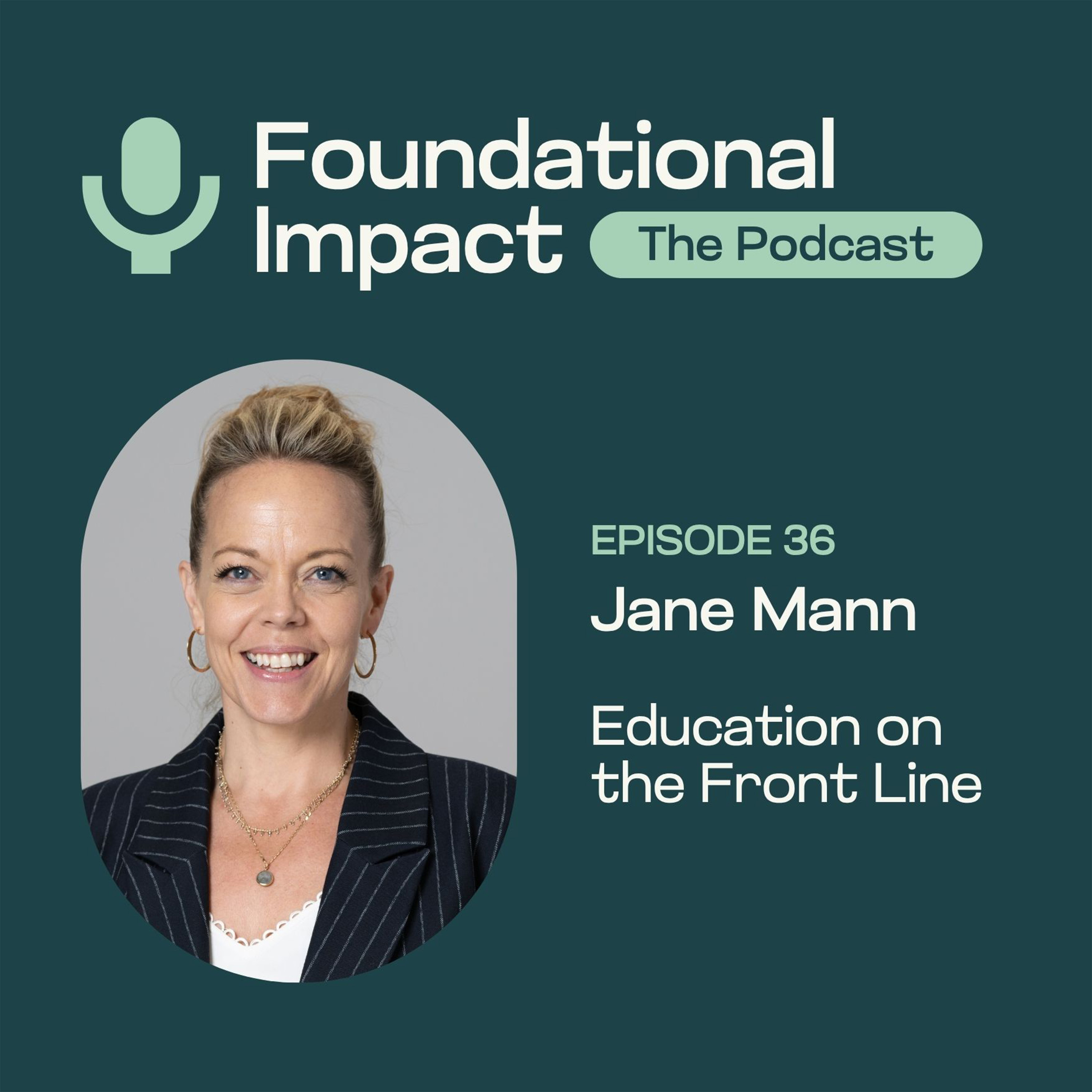
Education on the Front Line

What does great education look like when the classroom is a refugee camp? When the teacher is under-resourced, under-supported, and still showing up?We are delighted to welcome Jane Mann, Managing Director of the Partnership for Education and Education Director for International Education at Cambridge University Press and Assessment. Jane leads work spanning 30 countries, including some of the world's most fragile and complex contexts, from refugee camps to conflict zones. And while no two contexts are ever quite the same, she is clear that the fundamentals of great education do not change. Wherever you are in the world, the foundations look the same: a coherent curriculum, meaningful assessment, well-supported teachers, strong leadership, and quality materials.In conversation with Daniel, Jane reflects on the role of technology and the importance of letting context lead. Where it is available and appropriate, technology can be transformative. But it carries real risks too: widening equity gaps and creating new vulnerabilities in settings where a device is a valuable and coveted object.On AI specifically, rather than rushing it into students’ hands, Cambridge's focus is on the adults in the room to empower teachers, streamline curriculum mapping, support lesson planning in under-resourced regions like sub-Saharan Africa, and help governments build policy frameworks. The HP Cambridge EdTech Policy Fellowship extends this work further to facilitate structured cross-national learning and conversations and drive systemic change.Tune in for a conversation that is as expansive in its thinking as it is grounded in the realities of education on the front line.

May 19, 202630 min

Philanthropy Filling the AI Education Gap

The conversation between Elizabeth Moore and Daniel in this episode provides a window into how the Gates Foundation is navigating the evolving landscape of AI in K-12 education. As Deputy Director with the U.S. K-12 team, Elizabeth explains that the Gates Foundation operates at multiple levels to improve classroom instruction through research, quality standards, and strategic investments. This includes influencing frontier AI labs like OpenAI and Google, developing evaluation frameworks, and creating networks to disseminate evidence-based practices. They choose this approach hoping to help bridge gaps that neither government nor markets adequately address, particularly important as AI development outpaces traditional curriculum cycles.One concerning trend that Elizabeth observes when discussing AI adoption in schools is the well-meaning but counterproductive “no AI” policies that prevent students from developing critical skills for their futures. She, instead, advocates for thoughtful implementation guided by clear educational purposes and robust evaluation of outcomes.The conversation also highlights mathematics as an area with AI potential. Elizabeth describes how AI can support personalised learning by instantly diagnosing specific prerequisite skill gaps and delivering targeted instruction which is a process that traditionally required extensive teacher time and effort.Other suggestions for school leaders that are mentioned by Elizabeth in the episode include:Involve teachers in evaluating AI tools by encouraging them to test the systems' boundariesAlign on the specific educational problems AI should solve before implementationLook beyond data security to broader considerations of pedagogical qualityCreate transparent communication channels with parents about AI's purpose and impactThroughout the discussion, Elizabeth emphasises the need for healthy skepticism about AI-generated data, balanced with recognition of its potential to enhance parent engagement and address learning gaps when implemented with clear purpose and ongoing assessment.Tune in to discover how one of education's most powerful philanthropies is working behind the scenes to ensure AI serves teachers and students, not the other way around.

May 5, 202627 min

When Your Students Trusts AI Over You

Our guest for this episode is Calvin Eden, the founder of LoudSpeaker who works with students across the UK through high-energy and interactive workshops on topics like resilience, emotional intelligence, and healthy relationships.Calvin meets young people in his everyday work, and seeing AI tools become a growing part of students' social and emotional lives reinforces his belief in the urgent need for schools to strengthen young people's confidence, communication skills, and sense of belonging.One major theme in his conversation with Daniel is the importance of human connection. While AI can be a useful tool in different ways, young people need to practice communication, build relationships with others, and learn to speak about their own vulnerability and ask teachers and parents for help when needed. He warns that if AI becomes a substitute for human interaction, students may become less resilient and more isolated.Their conversation also explores the student voice. Daniel shares Good Future Foundation's belief that students should help shape responsible AI policies in schools. Calvin agrees and describes how his work supports schools to build student voice strategies, run student conferences, and create opportunities for young people to be heard.Calvin also encourages school leaders to create a culture where staff and students connect as people, not just through formal roles. He wraps up the conversation by inviting educators to share stories, talk honestly about challenges and failures, and celebrate what they are proud of with their students to build a school environment where young people feel seen, safe, and valued.

April 21, 202641 min

The AI Research to Classroom Gap No One is Talking About

In this episode, Daniel sits down with Erin Mote of InnovateEDU about how education systems are responding to AI and where current approaches are falling short.Erin challenges the assumption that progress in education operates within fixed limits. She argues that system-level change depends on collaboration, shared practice, and open infrastructure rather than competition between schools, organisations, or regions.This approach underpins the work of the EDSAFE AI Alliance, which brings together policymakers, educators, and industry to define practical standards for AI use. Its SAFE framework focuses on safety, accountability, fairness, transparency and efficacy, with direct implications for procurement, policy and classroom practice.The conversation addresses the tension between the pace of AI adoption and the slower development of traditional evidence. Schools are already using these tools at scale, while formal research remains limited. Erin outlines the need for informed, iterative decision making supported by shared insight across systems.There is also a detailed discussion of risk. AI-driven personalisation has potential, but current implementations can narrow opportunity through rigid progression models, limited student agency and the use of sensitive data in ways that affect outcomes. These issues require closer scrutiny of how tools are designed and deployed.For school leaders, the priority is to act with intent. Building AI literacy across students, staff and parents is identified as the most immediate and practical step. Current usage levels among educators are high, while formal guidance remains inconsistent, creating a gap that needs to be addressed quickly.Erin also shares resources from InnovateEDU, including policy frameworks, planning tools and AI literacy materials designed to support schools in making informed decisions.The discussion returns throughout to the role of shared standards and coordinated action. Where systems align on safety and implementation, progress becomes more consistent and risks are easier to manage.Resources shared by Erin in this episode:InnovateEDU ManifestoNew York City Public Schools policy and guidelineEdSafe policy paper on chatbots and companions2026 evidence report (released in March with Instructure and the list of 150 tools classification)AI literacy blueprint paper

March 3, 202652 min

Dr. Biljana Scott: Language as Our Defining Asset

What makes human communication unique in an age of increasingly sophisticated AI?Daniel Emmerson invites Dr. Biljana Scott, a linguist with expertise in diplomatic communication and language analysis, to explore this question in depth. With her multilingual background and extensive experience in teaching the nuances of communication, Biljana probes the complex interplay between human language and AI interaction.Their conversation illuminates whether our increasing reliance on AI might reshape how we think and express ourselves, unpacks linguistic concepts like “presuppositions” in everyday speech, and reveals how the terminology we use to describe AI carries powerful connotations that fundamentally shape our relationship with technology.

February 6, 202639 min

Claire Archibald: Creating Effective AI Governance Structures in Schools

Is having an AI policy enough to protect your school? In this episode, Daniel Emmerson speaks with Claire Archibald, Legal Director at Brown Jacobson and former Data Protection Officer, about what effective AI governance in schools looks like.Their conversation covers essential topics including what makes a good Data Protection Impact Assessment (DPIA), the importance of vendor due diligence, and why schools need robust governance structures beyond just having an AI policy. Claire emphasises the critical role of incident reporting, creating transparent cultures around AI use, and the need for collaborative approaches involving all stakeholders. She also shares a six-step governance framework and practical advice for schools starting their AI journey.

January 14, 202640 min

Setting Visible Boundaries to Safeguard our Students in an AI-infused World

Daniel's conversation with Gemma Gwilliam, Portsmouth's Head of Digital Learning, Education and Innovation, explores transparency, privacy and safeguarding in AI education. The discussion takes a dramatic turn when Gemma puts on a pair of AI-enabled glasses which she purchased easily for under £10 right in the middle of the recording, bringing theoretical concerns into stark reality. This jaw-dropping demonstration underscores the urgent challenges teachers face as sophisticated AI wearables become increasingly accessible to students.While we may debate whether AI belongs in classrooms, we cannot ignore the significant risks these technologies present to young people. This episode reveals how Portsmouth supports its schools and teachers in approaching AI responsibly to strike a balance between innovation and essential safeguarding measures.

December 9, 202534 min

Hult Prize Accelerator Startups: How the Next Generation is Solving Global Problems with AI

What skills will our students genuinely need to thrive in a future driven by AI? To find the answer, Daniel Emmerson goes straight to the source and sits down with brilliant young minds behind seven teams from the Hult Prize Global Accelerator, one of the final stages of the world’s largest student startup competition.This episode takes you on a global tour of innovation. You'll hear how these young entrepreneurs are using AI to tackle large problems, like enhancing public safety by turning CCTV cameras into proactive witnesses, helping firefighters respond faster, pioneering sustainability by transforming agricultural waste into valuable resources, and creating a "calorie counter" for your carbon footprint. The conversations also cover how AI is being used to deliver personalised education in Ethiopia and provide gentle, effective speech therapy for children. Although these startups focus on very different issues, they all agree that the future isn’t about AI replacing people, but being empowered by it. Tune in to find out the essential skills our future generation will need.

November 25, 202535 min

Stick’Em: Hult Prize Winner Building Critical Thinkers for an AI World

In this episode, we spotlight Adam, the co-founder of Stick’Em, the innovative startup that just won the prestigious $1 million Hult Prize. He explains how his team develops a robotics kit that costs a mere fraction of traditional models to make quality STEAM education more accessible to children everywhere. This conversation, in two parts, offers a rare before-and-after glimpse of a startup on the cusp of greatness. First, hear from Adam during the Hult Prize Accelerator where he emphasises the importance of STEAM education in fostering skills like creative and analytical thinking to prepare students for an AI-infused world. Then, Daniel reconnects with Adam following his win and discusses how Stick’Em is already leveraging AI to streamline startup operations and plan their global expansion.Tune in for an interesting look at the intersection of affordable education, social impact, and cutting-edge artificial intelligence.

November 11, 202524 min

Muireann Hendriksen: Adapting AI Tools Based on Learning Science

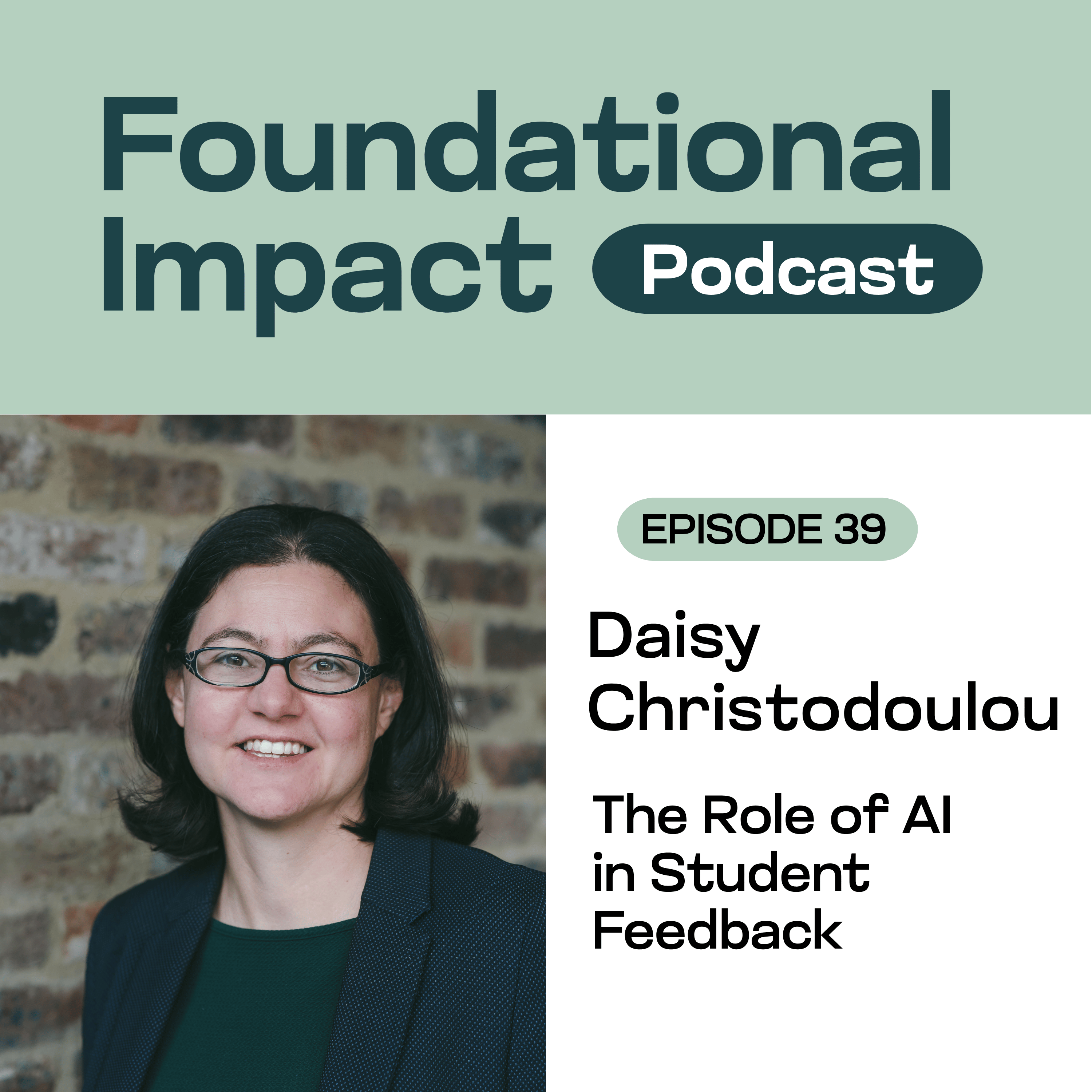
In this episode, Daniel speaks with Muireann Hendriksen, the Principal Research Scientist at Pearson, about her team's recent research study called "Asking to Learn" The study analysed 128,000 AI queries from 9,000 student users to gain deeper insights into how students learn when they interact with AI study tools. Their key finding revealed that approximately one-third of student queries demonstrated higher-order thinking skills. Their conversation also explores important themes around trust, student engagement, accessibility, and inclusivity, as well as how AI tools can promote active learning behaviours. You can find the full research report at https://plc.pearson.com/sites/pearson-corp/files/asking-to-learn.pdf

Is this your show?

Claim this listing to keep it up to date, reach guests who want to pitch you, and manage bookings with Guestify.

Claim this listing

More Technology podcasts