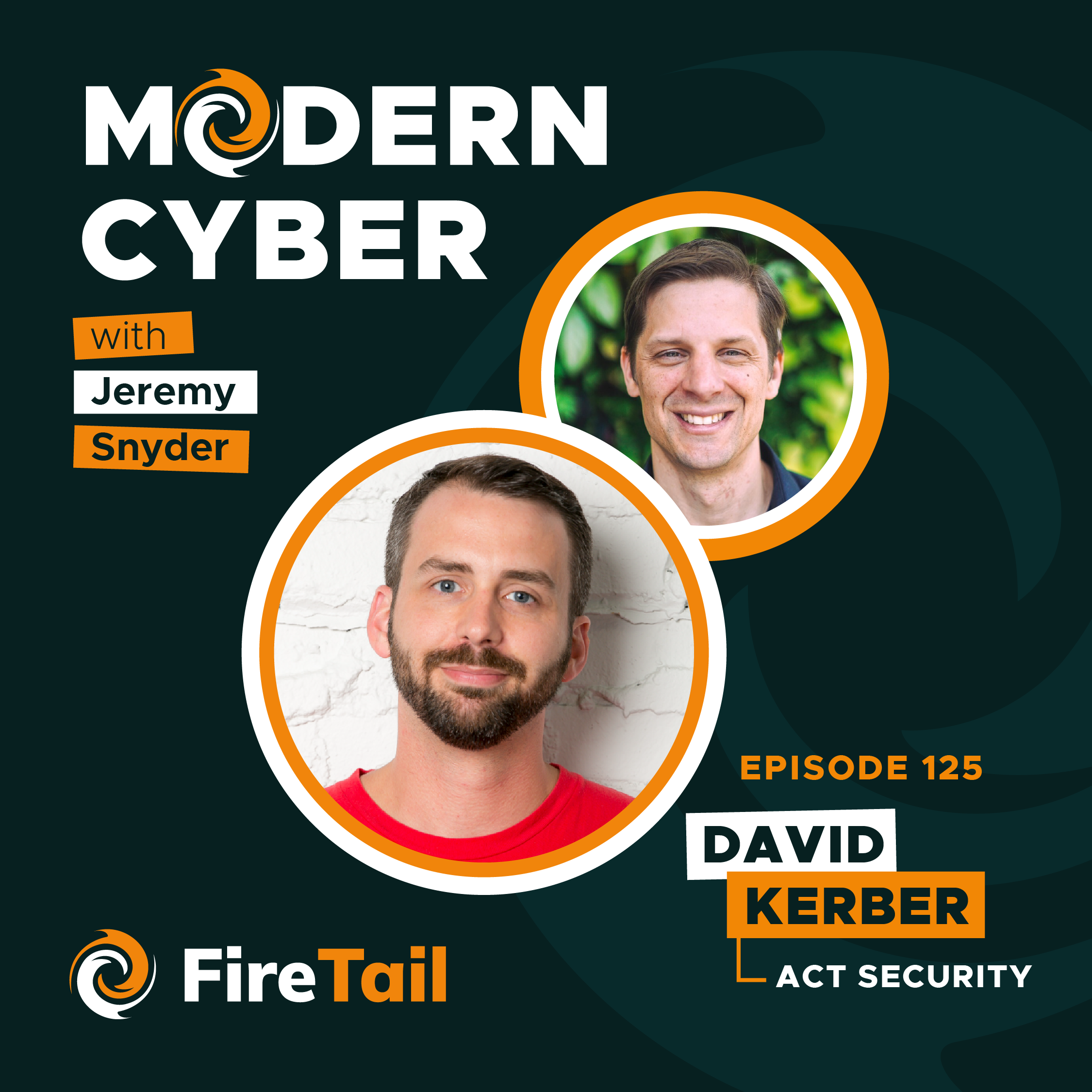
David Kerber of Act Security
In this episode of Modern Cyber, Jeremy is joined by David Kerber from Act Security and Cloud Copilot to explore the complex, heavily misunderstood world of AWS IAM. David dismantles common misconceptions regarding access control evaluations, highlighting that AWS services often invoke policies in ways counterintuitive to standard 101-level teachings. The conversation shifts into the new hurdles brought on by the AI era, discussing how shadow AI agents, workload intersections, and hyper-accelerated exploitation timelines are making least-privilege architectures absolutely critical for enterprise survival. Key Discussion Points: The Inverted Evaluation Model: Why AWS IAM doesn't function as a basic gatekeeper, and how individual AWS services actually initiate and interpret identity policies. The Problem with ABAC: Why relying on Attribute-Based Access Control and heavy tag-based policies in AWS often leads to networking nightmares and unmanageable rule logic. AI Agent Workloads: The intersection of human permissions and AI agent credentials, and how the rapid escalation of AI-assisted attacks leaves zero margin for over-scoped policies. Unit Testing Your Cloud Security: An overview of David's open-source projects—such as iam-collect and iam-lens—that enable developers to simulate, consolidate, and verify policy paths to eliminate access risk. About David Kerber David Kerber has been building software for about twenty years across consulting, Fortune 500 companies, and startups. He has been heavily involved in cloud security tooling since 2018. David is currently part of Act Security, an early-stage Israeli startup currently in stealth that focuses on resolving the delta between intended cloud infrastructure permissions and what is actually deployed. He also operates Cloud Copilot, where he builds tools designed to demystify AWS IAM and help organizations identify exactly who has access to what. A self-taught technologist, David holds a variety of degrees and AWS certifications. Episode Links https://iam.cloudcopilot.io/ https://act.security/