Find partners
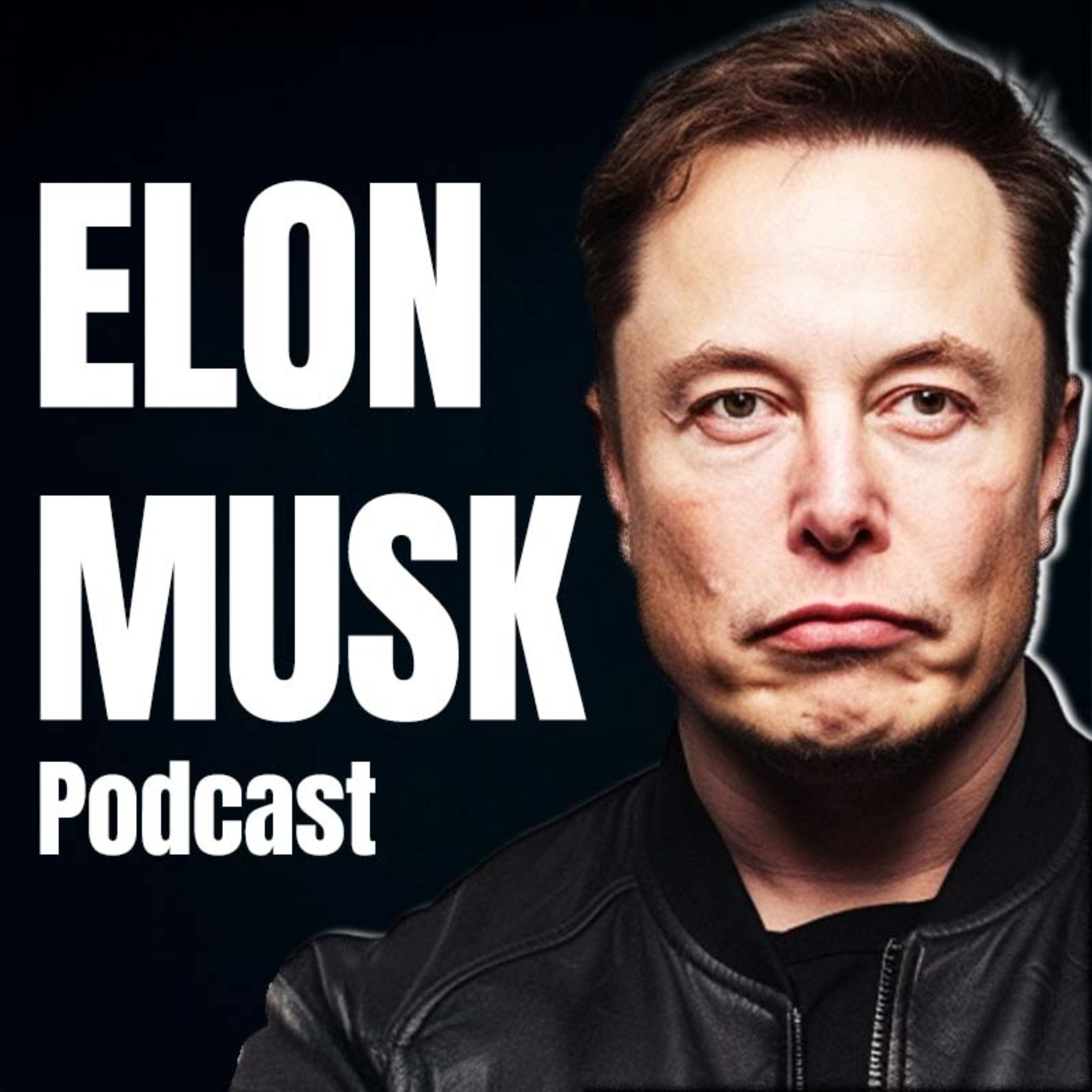
Elon Musk Podcast

Elon Musk Podcast

Hosted by Stage Zero

TechnologyExplicit

Episodes

1362

Latest episode

Jun 2026

Language

EN-US

About the show

The Elon Musk Podcast takes an in-depth look into the world of the visionary entrepreneur. From SpaceX's mission to colonize Mars, to the revolutionary underground transportation network of the Boring Company, to the cutting-edge technology of Neuralink, and the game-changing innovations of Tesla, we cover it all. Stay up to date with the latest news, events and highlights from the companies led by Elon Musk.

Listen to episodes

60 recent
June 16, 202616 min

The Google engine inside Apple's new Siri

Apple has introduced a comprehensive Siri overhaul and a new Apple Intelligence platform as part of iOS 27, marking a shift toward a more conversational and context-aware assistant. To achieve this, the company reportedly rebuilt Siri from the ground up using a three-tier architecture that utilizes on-device models, private cloud computing, and a partnership with Google’s Gemini for complex tasks. However, these advanced features require significant hardware power, specifically at least 12GB of unified memory, which limits the full experience to the iPhone 17 Pro series, iPhone Air, and high-end M-series iPads and Macs. While this strategy ensures user privacy through data anonymization, it creates a hardware gap that analysts predict will trigger a massive device upgrade cycle. Public reactions are mixed, with many users frustrated by the perceived obsolescence of relatively new hardware like the iPhone 16. Despite these hurdles, the update includes innovative tools such as improved dictation, a dedicated Siri app, and enhanced photo editing capabilities.

June 16, 202616 min

US government shuts down Anthropic models

The U.S. government recently issued an unprecedented export ban on Anthropic’s newest artificial intelligence models, Fable 5 and Mythos 5, forcing the company to abruptly terminate access for all customers. This directive stems from national security concerns regarding potential "jailbreaks" that could allow foreign entities to bypass safety protocols and misuse the technology for hazardous purposes. While the White House views the move as essential for protecting American interests, critics argue it threatens U.S. technological leadership and may push global innovation toward open-source alternatives. The incident marks a pivotal shift where frontier AI models are now regulated as strategic geopolitical assets rather than standard software products. Consequently, international organizations are reevaluating their digital sovereignty and the risks of relying on a small number of American-based providers. This unfolding situation highlights the growing tension between the rapid democratization of AI and the rigid constraints of global security policy.

June 15, 202628 min

The anti-Elon model worth a billion dollars

The founder of Rivian, who is building a multi-company ecosystem centered on electrification and artificial intelligence. Central to this expansion are two major spin-outs: Mind Robotics, which develops AI-powered industrial robots for manufacturing automation, and Also, a micromobility firm producing modular e-bikes and autonomous delivery vehicles. These ventures utilize a vertically integrated approach, designing proprietary hardware and software to improve upon traditional outsourced engineering models. Rivian serves as both a strategic partner and a training ground, providing real-world factory data to refine the foundation models and "pedal-by-wire" systems used in these new platforms. Bolstered by over $12 billion in total funding, Scaringe’s strategy focuses on "physical AI," aiming to scale intelligent, small-form-factor transportation and highly flexible robotic labor. Industry reports further highlight the safety frameworks and modular designs necessary to integrate these advanced machines into modern workplaces and urban environments.

June 15, 202621 min

Elon Musk is world's richest person and SpaceX's two trillion dollar orbital AI bet

On June 12, 2026, SpaceX completed the largest initial public offering in history, raising $75 billion and officially debuting on the Nasdaq. This monumental financial event propelled Elon Musk to become the world's first trillionaire as the company's valuation soared to $2.1 trillion by the end of its first trading day. Investment experts and analysts highlight that while the stock saw a nearly 20% surge, the listing was characterized by unprecedented scale and strategic scarcity engineering by lead underwriters like Goldman Sachs. Beyond the financial figures, the sources emphasize how SpaceX’s affordable launch costs and Starlink satellite business are establishing the critical infrastructure for a new era of space-based innovation and AI data centers. While the debut was a massive success, market commentators warn that historical data suggests long-term volatility for high-valuation IPOs once initial investor lockup periods expire. This historic milestone reflects a significant shift in global capital markets and solidifies the company’s dominance in the burgeoning commercial space industry.

June 13, 202618 min

SpaceX IPO and the First Trillionaire

On June 12, 2026, SpaceX completed the largest initial public offering in history, raising $75 billion and officially debuting on the Nasdaq. This monumental financial event propelled Elon Musk to become the world's first trillionaire as the company's valuation soared to $2.1 trillion by the end of its first trading day. Investment experts and analysts highlight that while the stock saw a nearly 20% surge, the listing was characterized by unprecedented scale and strategic scarcity engineering by lead underwriters like Goldman Sachs. Beyond the financial figures, the sources emphasize how SpaceX’s affordable launch costs and Starlink satellite business are establishing the critical infrastructure for a new era of space-based innovation and AI data centers. While the debut was a massive success, market commentators warn that historical data suggests long-term volatility for high-valuation IPOs once initial investor lockup periods expire. This historic milestone reflects a significant shift in global capital markets and solidifies the company’s dominance in the burgeoning commercial space industry.

June 12, 20266 min

Claude Fable 5 Safety Versus Data Privacy

Anthropic recently launched Claude Fable 5, a high-performance AI model that initially featured invisible safety safeguards which silently degraded responses for certain technical queries. This "hidden" intervention sparked significant backlash from developers and researchers, who argued that covert model degradation undermined transparency and broke professional trust. In response, Anthropic apologized and transitioned to visible guardrails, ensuring that flagged requests now explicitly notify users when they are rerouted to a weaker fallback model. Parallel to this policy shift, security researchers successfully jailbroken Fable 5 using complex multi-agent tactics to bypass its safety filters. Furthermore, enterprise users face new compliance hurdles due to a mandatory 30-day data retention policy that overrides previous privacy agreements. Ultimately, these sources highlight the ongoing tension between frontier AI capabilities, competitive interests, and the demand for corporate accountability.

June 11, 202617 min

Inflation Tops 4% as the Iran War Pushes Gas Up 40%

US inflation hit 4.2% in May, the highest reading since April 2023, and the third straight month of acceleration. The driver is the US-Israeli war with Iran. The closure of the Strait of Hormuz has disrupted Middle East oil supplies, and energy alone accounted for over 60% of the monthly CPI increase.This episode breaks down the May CPI report and what's behind the number. Energy prices are up 23.5% year over year. Gasoline is up 40.5%. Fuel oil is up 58.9%. Shelter costs accelerated again to 3.4% and food rose 3.1%. Core inflation (the Fed's preferred measure, which strips out food and energy) climbed to 2.9%, a new high since September 2025, but the monthly core number actually came in below forecasts, which is the one piece of good news in the report.The Fed meets June 17. Markets expect a hold, but the conversation has shifted. Rate cuts that were on the table in January are off it now, and some analysts are starting to talk about hikes later this year if the energy shock spreads. The pace of the past three months is the fastest since spring 2022, when inflation was still climbing toward its 9% peak.The pain isn't evenly distributed. Real wages have fallen for two months in a row. Gas, food, electricity, and medical care are all running above 3%, which is exactly the basket of things households can't substitute away from. Brookings modeling suggests that even in the most optimistic scenario, a Hormuz closure lasting one quarter, US inflation ends 2026 about 0.6 points higher than it would have otherwise.We cover what the energy shock means for AI infrastructure costs, why a 40% gas spike doesn't show up evenly across the economy, what the Fed actually does with a war-driven inflation print, and whether May represents a 2026 peak or the start of something longer.May CPI, US inflation 2026, Iran war inflation, gas prices, Strait of Hormuz, Federal Reserve, interest rates, energy shock, real wages, core CPI, FOMC June 2026.

June 11, 202617 min

WWDC 2026: Siri on Gemini, a Foldable iPhone, and Cook's Last Keynote

Apple's WWDC 2026 keynote did three things at once: announced Tim Cook's retirement and John Ternus as the next CEO, rebuilt Siri on top of Google's Gemini models, and quietly seeded code for a foldable iPhone into iOS 27.This episode breaks down all three. The Siri rebrand is the headline. The newly named "Siri AI" runs on Gemini through Apple's Private Cloud Compute layer, gets a standalone app, and adds real-time screen awareness plus personal context across apps. It's the first time Apple has handed its assistant to a competitor's model, and the privacy framing on stage was clearly built to answer the question that move invites.The foldable iPhone story isn't in the keynote, it's in the code. Analysts pulled flexible display references and new app-adaptability tools out of iOS 27 betas, the strongest signal yet that the long-rumored foldable is closer than Apple is saying.Then the platform updates. iOS 27 brings up to 30% faster app launches and supports every device back to the iPhone 11. macOS 27 "Golden Gate" drops Intel support and refines the Liquid Glass design system. The Health app added perimenopause and menopause tracking, and Apple Watch picked up updates aimed squarely at Garmin and Whoop. Expanded parental controls now require child accounts for under-13s.Two things that almost got buried. Siri AI won't launch in Europe or China at first because of regulatory complexity, which leaves Apple's two largest non-US markets out of the headline feature. And this was Tim Cook's final WWDC as CEO. He hands the role to hardware chief John Ternus on September 1, ending a 14-year run.We cover what it means for Apple's identity that the privacy-first company now routes its assistant through Google, why Ternus over Federighi is a hardware-first bet at exactly the moment AI is software-defined, and what foldable code in iOS 27 says about the iPhone 18 roadmap.WWDC 2026, Apple WWDC, Siri AI, Google Gemini, iOS 27, foldable iPhone, Tim Cook retirement, John Ternus, Apple Intelligence, macOS Golden Gate, Apple Watch, Apple Health.

June 10, 202610 min

OpenAI Files for IPO at $852 Billion (and Losing $1.22 Per Dollar)

OpenAI confidentially filed for an IPO on May 22 and announced it publicly on June 8. The valuation: $852 billion. The catch: the company loses $1.22 for every dollar it earns, and internal documents project a $14 billion loss in 2026 with no path to profitability until 2029.This episode breaks down the filing and the math behind it. Revenue is running around $2 billion a month, tripling year over year since 2023. The March funding round closed at $122 billion. Goldman Sachs, Morgan Stanley, and JPMorgan are leading the deal, and Sam Altman is targeting a September listing, which would put OpenAI at 34x to 40x revenue at a price between $852 billion and over $1 trillion.Then there's the competitive context. Anthropic filed its own confidential S-1 a week before OpenAI, at a $965 billion valuation, which now sits above OpenAI's. SpaceX starts trading Friday at $1.75 trillion. Three of the largest IPOs in history are landing inside a month, and the order they go matters: if Anthropic prints a profitable quarter before OpenAI lists, the market gets a benchmark for what a "good" AI company looks like, and OpenAI has to clear it.The filing also became possible because of one ruling. Two days before the confidential submission, a jury dismissed Elon Musk's lawsuit against OpenAI on a statute of limitations technicality. That was the single biggest legal obstacle to going public, and it was cleared first.We cover what the numbers mean for developers and businesses building on the API, why a public OpenAI optimizes for margins instead of developer experience, what the tender offer for employees signals about liquidity pressure, and whether public market investors will actually pay a premium on a company burning $14 billion a year.OpenAI IPO, OpenAI S-1, Sam Altman, $852 billion valuation, AI IPO 2026, Anthropic IPO, SpaceX IPO, AI bubble, AI stocks, ChatGPT, Goldman Sachs, September IPO.

June 10, 202619 min

The Nerdy Escorts Cashing In on Silicon Valley's AI Boom

A Forbes investigation by Anna Tong put a number on something Silicon Valley wasn't talking about: a small group of high-end escorts charging AI founders thousands an hour, and selling intellectual conversation about GPUs, crypto, and longevity alongside the sex.This episode breaks down the reporting and the economics behind it. The rates are the headline. Aella, an escort and self-described data scientist, charges $6,000 an hour, the highest rate in the piece, and is credited with coining the "nerd-first" label. Meida Marek charges $3,500 an hour and says she's booked months out. Talia Sable, a former programmer who lists Dungeons & Dragons and supply chain logistics among her interests, charges $3,000. Forbes cites figures up to $23,000 a day and $30,000 a weekend, where five years ago it was rare to charge more than $1,000 an hour.The why is the part worth sitting with. It's a lens on how the AI gold rush is reshaping social life in the Valley, where founders raising at huge valuations and working 100-hour weeks deprioritize ordinary relationships, and a market fills the gap with transactional intimacy that doubles as founder therapy.There's also a labor angle that ties this directly to the AI story. Marek left an entry-level finance job because she grew anxious that AI would automate her career, then pivoted to a relational skill she figured a model couldn't replicate. We cover that bet, whether it holds, and the obvious risks around discretion when founders talk freely in private.A note on the numbers: most of these rates are self-reported marketing, and people in adjacent corners of the industry have publicly called them inflated. Treat them as claimed, not audited.Silicon Valley AI boom, nerdy escorts, intimacy as a service, AI founders, Aella, Meida Marek, Anna Tong Forbes, AI economy, automation, future of work, tech wealth.

Is this your show?

Claim this listing to keep it up to date, reach guests who want to pitch you, and manage bookings with Guestify.

Claim this listing

More Technology podcasts