Find partners
Digital Health Podcast- Royal Society of Medicine

Digital Health Podcast- Royal Society of Medicine

Hosted by RSM Digital Health Council

TechnologyInterviews guests

Episodes

56

Latest episode

Jun 2026

Language

EN

About the show

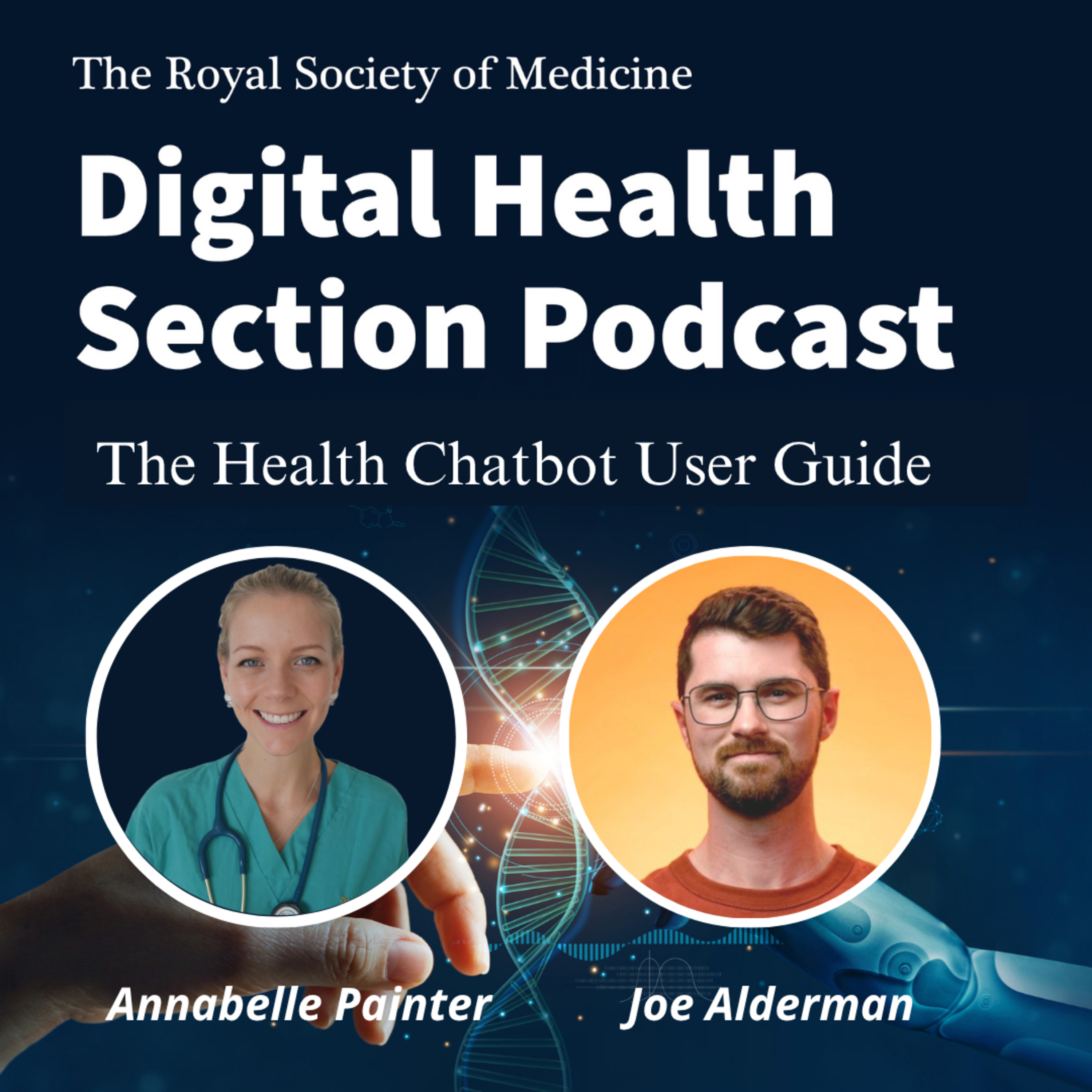
Discover how digital technologies are transforming healthcare through interviews with leading digital health experts. Presented by Dr Annabelle Painter All views expressed in this podcast are of the speakers themselves and not of the RSM. Find out more about the RSM digital council: rsm.ac/dhsectionpodcast Hosted by Annabelle Painter: www.linkedin.com/in/dr-annabelle-painter/

Listen to episodes

56 recent
June 15, 202647 min

Is AI moving too fast to prove it’s safe? With Paul Wicks- Founder of Proofstack

What happens when the timescales of rigorous evidence are fundamentally incompatible with the speed of health technology? In this episode, we're joined by Paul Wicks-research neuropsychologist, former BMJ editorial board member, and independent evidence strategist- to explore one of health tech's most pressing unsolved problems. We discuss why the traditional publishing system is struggling to keep pace with AI, how companies are navigating and sometimes circumventing the evidence landscape, and what a more strategic approach to research actually looks like in practice. We also ask the bigger question: does evidence generation in health tech need to be redesigned from the ground up, and if so, who should be leading that conversation?

June 2, 202646 min

Bad Influence: The Rise of the Health Influencer. With Deb Cohen

In this episode, Annabelle is joined by Deb Cohen, author of Bad Influence, to explore how social media has become a major source of health information and how it is reshaping the way medical ideas, diagnoses, and treatments are promoted and consumed. We discuss the rise of the health influencer, the booming online market for health and wellness products, and why persuasive storytelling often outperforms traditional medical evidence. From parasocial relationships to fear-based narratives, we unpack the techniques being used to sell health online, how they interact with regulation, and what this means for patient safety, trust, and the future of medical truth in an attention-driven digital world.

May 12, 202644 min

Informed Consent in the Age of AI. With Anthony Searle- Barrister

In this episode, we explore what informed consent actually looks like when AI is involved in patient care. Annabelle is joined by Anthony Searle a barrister specialising in medical law, and together they unpack how UK consent law is created, how it applies to a world of clinical decision support, autonomous algorithms, AI scribes, and black-box models. They discuss when AI may change the risk profile of care, whether patients need to be told when AI is being used, and the practical challenge of explaining risks and limitations when even developers may not fully understand how some systems reach their outputs.With no case law, formal NHS guidance, or professional consensus yet on AI-specific consent, this conversation focuses on what can be done now. Including practical principles clinicians, healthcare organisations, and healthtech companies can adopt today- from transparency with patients, to clinician training, to AI providers being clearer about the known, and unknown, limitations of their tools.

April 13, 202632 min

Cybersecurity as a Clinical Risk. With Florence Hudson- Columbia University

Cybersecurity in healthcare is not just an IT concern—it’s a clinical risk. As systems, data, and devices become increasingly connected, vulnerabilities can directly impact patient safety, from disrupted hospital operations to compromised data and malfunctioning medical devices. In this episode, Florence shares insights from her unique background across aerospace, cybersecurity, and healthcare, and introduces TIPPSS—Trust, Identity, Privacy, Protection, Safety and Security—a practical framework for managing cyber risk at a systems level. This conversation explores why we must move beyond securing individual technologies and start thinking holistically about protecting patients in an increasingly digital and interconnected healthcare system.

March 25, 202635 min

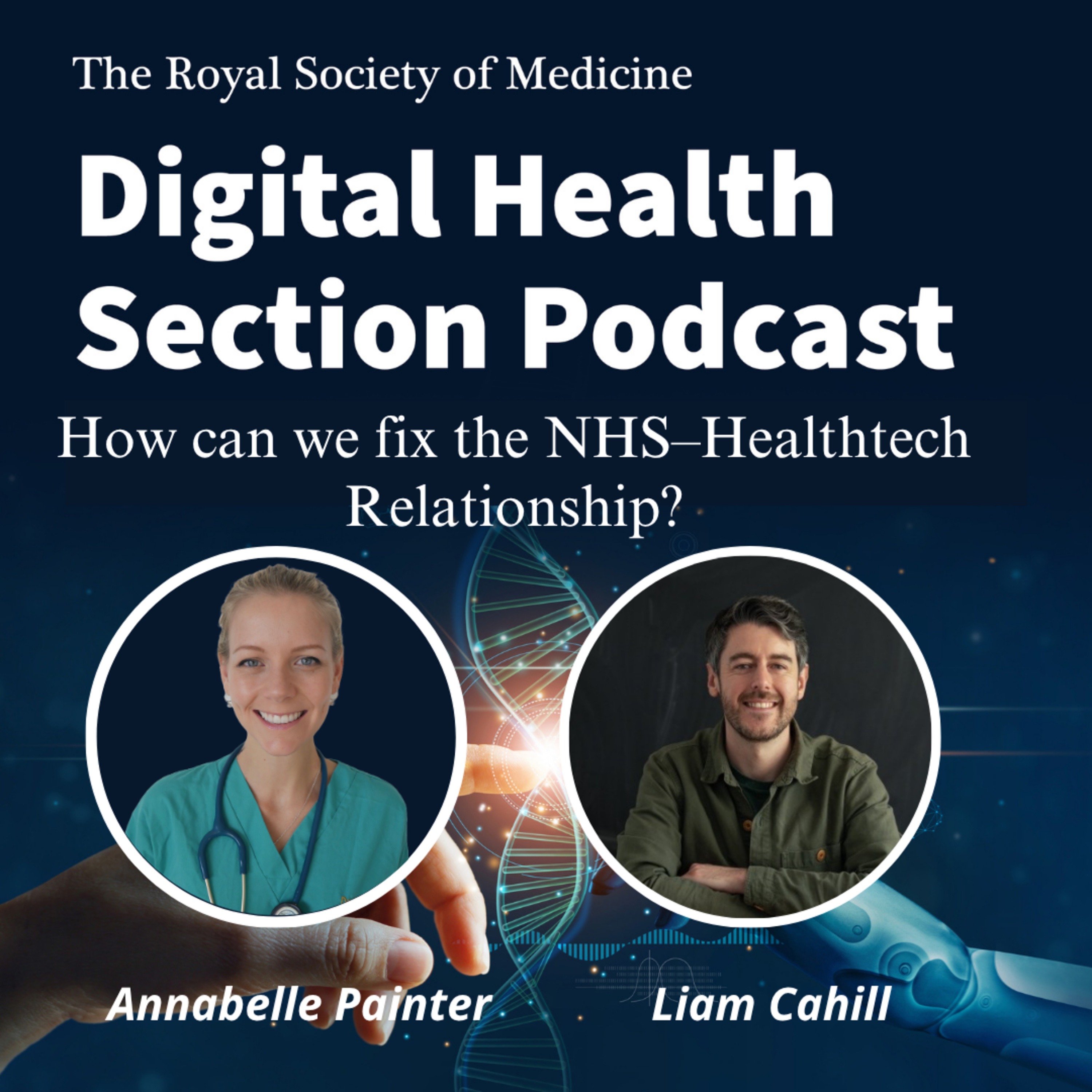
How can we fix the NHS-Healthtech relationship? With Liam Cahill

What does it really take for the NHS to become a better partner for healthtech? In this episode, Annabelle is joined by Liam, to unpack why so many innovations struggle to move from pilot to practice. Drawing on insights from his recent workshop with the NHS Innovation Accelerator.Full NIA report can be accessed here

March 17, 202626 min

Innovative Evidence: From Lab to Wrist with Loss-of-Pulse Detection. With Dr Jake Sunshine- Research Scientist at Google

Annabelle speaks with physician-scientist and Google research lead Dr. Jake Sunshine about bringing loss-of-pulse detection from research concept to a regulated feature on consumer wearables. Jake shares the journey from early laboratory experiments to real-world deployment, and how his team designed an evidence strategy where no clear playbook existed—combining simulation, opportunistic clinical validation, and early regulatory engagement. It’s a powerful reminder that innovative technologies often require equally innovative approaches to generating evidence.

March 11, 202641 min

AI-induced psychosis- With Dr Josh Au Yeung

In this episode, we explore the emerging phenomenon of AI-induced psychosis and the hidden risks of conversational AI. Dr Josh Au Yeung joins Annabelle to discuss how large language models — designed to engage and please — can unintentionally reinforce harmful beliefs, especially for vulnerable users. We dive into the technical reasons behind this, the societal implications, and the importance of monitoring, education, and safeguards to keep users safe.

February 25, 202629 min

Youtube & Health: Safeguarding Medical Truth in an Algorithmic Age. With Dr Vishaal Virani.

YouTube is now one of the most influential sources of health information in the UK.In this RSM Podcast episode, Annabelle speaks with Vishaal Virani, a clinician leading YouTube’s UK health strategy, about how the platform approaches medical accuracy, tackles misinformation, and elevates trusted sources like the NHS.We explore how algorithms shape visibility, Youtube's “health shelves” and what they mean for credibility, and what healthcare can learn from digital creators about clarity and communication.If health journeys now begin on YouTube, we discuss: how do we safeguard medical truth at scale?

February 3, 202638 min

Autonomous AI- Part 2: Liability. With Majid Hassan

As AI in healthcare becomes more autonomous, the question of who is legally responsible when it makes mistakes becomes urgent. In this episode, Annabelle speaks with Majid Hassan to explore the liability gap in the UK and the practical steps organizations and developers can take to protect themselves.Topics covered include:The difference between clinical negligence and product liability Why fully autonomous AI complicates accountability, especially when clinicians are taken out of the decision loopThe concept of a “liability gap” in UK law, and how proving defect or causation in AI is difficultPractical steps for healthcare organizations: vendor due diligence, compliance roadmaps, audit trails, staff training, and insurance coverageSteps for AI developers to demonstrate due diligence, risk management, and adequate insuranceLessons from the EU’s revised product liability directive and its potential implications for UK law

January 21, 202638 min

Autonomous AI- Part 1: Risk & Regulation. With Dr Hugh Harvey

Autonomous AI is often described as a red line in healthcare — something that should only ever assist clinicians, never act independently. But is that really where we are today?This is the first episode in a series examining autonomous AI. Annabelle is joined by regulatory expert Dr Hugh Harvey to explore the foundations of autonomous AI in healthcare. Together, they unpack what autonomy actually means, where it already exists in clinical practice, and why current regulatory frameworks struggle to address systems that operate without a human in the loop.The conversation covers risk classification, clinical evidence, post-market surveillance, liability, hospital governance, and why regulatory approval alone is not enough to guarantee trust or adoption.

Is this your show?

Claim this listing to keep it up to date, reach guests who want to pitch you, and manage bookings with Guestify.

Claim this listing

More Technology podcasts