Find partners
Age of Adoption

Age of Adoption

Hosted by Keith Zakheim

TechnologyInterviews guests

Episodes

96

Latest episode

Jun 2026

Language

EN

About the show

The Age of Adoption podcast explores the monumental transition from a period of social, economic, and environmental research and exploration – an Age of Innovation – to today's world in which companies across the economy are furiously deploying sustainable solutions – the Age of Adoption. Listen as our host, Keith Zakheim, CEO of Antenna Group, talks with experts from across the climate, energy, health, and real estate sectors to discuss what the transition means for business and society, and how corporates and startups can rise above competitors to lead in this new age. This podcast is brought to you by Antenna Group, a global marketing and communications agency that partners with Fully Conscious brands — those with the courage to lead transformative change across Climate & Energy, Real Estate, Health, and beyond. Our clients include visionary corporations, startups, investors, and nonprofits who recognize that meaningful impact requires more than awareness; it demands bold action. In today's Age of Adoption, where every sector must incorporate sustainable solutions into foundational systems, we amplify brands standing at the forefront of change, shaping a better future for our planet and its people. To learn more, visit antennagroup.com.

Listen to episodes

60 recent
June 9, 202621 min

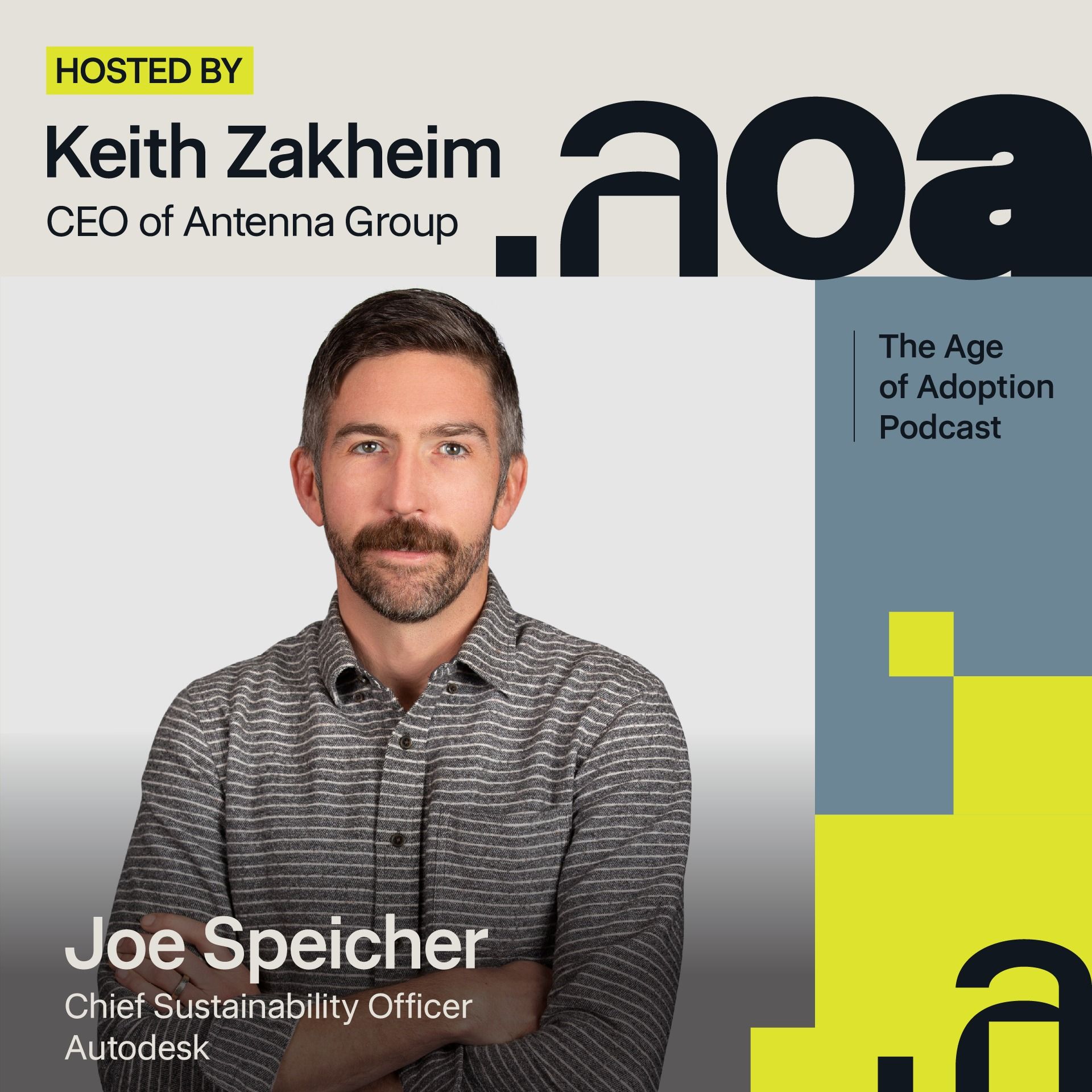
From Commitments to Measurable Action

The data says we're making real progress on climate. So why does the conversation still feel like we're losing, and what does it mean to finally separate the signal from the noise? Joe Speicher didn't arrive at Autodesk's Chief Sustainability Officer role through a conventional channel. Deutsche Bank, the Peace Corps in the Philippines, impact investing — each stop informed how he thinks about deploying capital and measuring what actually changes. That background matters now more than ever, because the sustainability conversation, he argues, has too often been happening at the wrong altitude. Organizations set targets, publish disclosures, and track compliance. Meanwhile, the real decisions — how a building gets designed, which materials get specified, how early-stage procurement choices lock in carbon for decades — happen elsewhere, mostly without sustainability in the room. Autodesk's software sits upstream in that process, shaping choices before ground is ever broken in industries responsible for roughly 40% of global emissions. "Sustainability cannot be a sidecar," Speicher says. It has to be embedded in the tools people use every day, making it everyone's job rather than one team's report. He also makes the case for reading the data honestly: 40% of global electricity now comes from renewables and nuclear, 43 countries have peak emissions behind them, and $2.3 trillion was invested in the energy transition in 2025. Are you building your strategy around the signals — or the noise?Joe Speicher is Chief Sustainability Officer at Autodesk, where he leads global ESG strategy and works to embed carbon intelligence across the tools used by architects, engineers, contractors, and asset operators — industries collectively responsible for roughly 40% of global emissions. His path to the role was anything but direct: he began his career in finance at Deutsche Bank, served in the Peace Corps in the Philippines, and spent years working at the intersection of impact investing and corporate philanthropy before becoming Autodesk's CSO. That cross-sector background — finance, development, technology — shapes how he approaches sustainability as a strategic business function rather than a compliance obligation, focused on translating climate risk into decisions that drive measurable resilience and performance. In This Episode:  (00:00) Joe Speicher’s unconventional path to climate leadership (03:26) From Deutsche Bank and Peace Corps to leading Autodesk's sustainability strategy (06:41) Why a finance and development background sharpens climate decision-making (09:20) Reading the real signals: global emissions progress and the economics driving change (12:05) Moving from commitments to action: embedding carbon intelligence into daily workflows (14:11) Climate adaptation, wildfire recovery, and the CSO as strategic operator Share with someone who would enjoy this topic, like and subscribe to hear all of our future episodes, send us your comments and guest suggestions! About the show:  The Age of Adoption podcast explores the monumental transition from a period of social, economic, and environmental research and exploration – an Age of Innovation – to today's world in which companies across the economy are furiously deploying sustainable solutions – the Age of Adoption. Listen as our host, Keith Zakheim, CEO of Antenna Group, talks with experts from across the climate, energy, health, and real estate sectors to discuss what the transition means for business and society, and how corporates and startups can rise above competitors to lead in this new age.  This podcast is brought to you by Antenna Group, a global marketing and communications agency that partners with Fully Conscious brands — those with the courage to lead transformative change across Climate & Energy, Real Estate, Health, and beyond. Our clients include visionary corporations, startups, investors, and nonprofits who recognize that meaningful impact requires more than awareness; it demands bold action. In today's Age of Adoption, where every sector must incorporate sustainable solutions into foundational systems, we amplify brands standing at the forefront of change, shaping a better future for our planet and its people. To learn more, visit antennagroup.com. Resources: Joe Speicher: https://www.linkedin.com/in/joespeicher/Antenna GroupKeith Zakheim LinkedIn

May 19, 202626 min

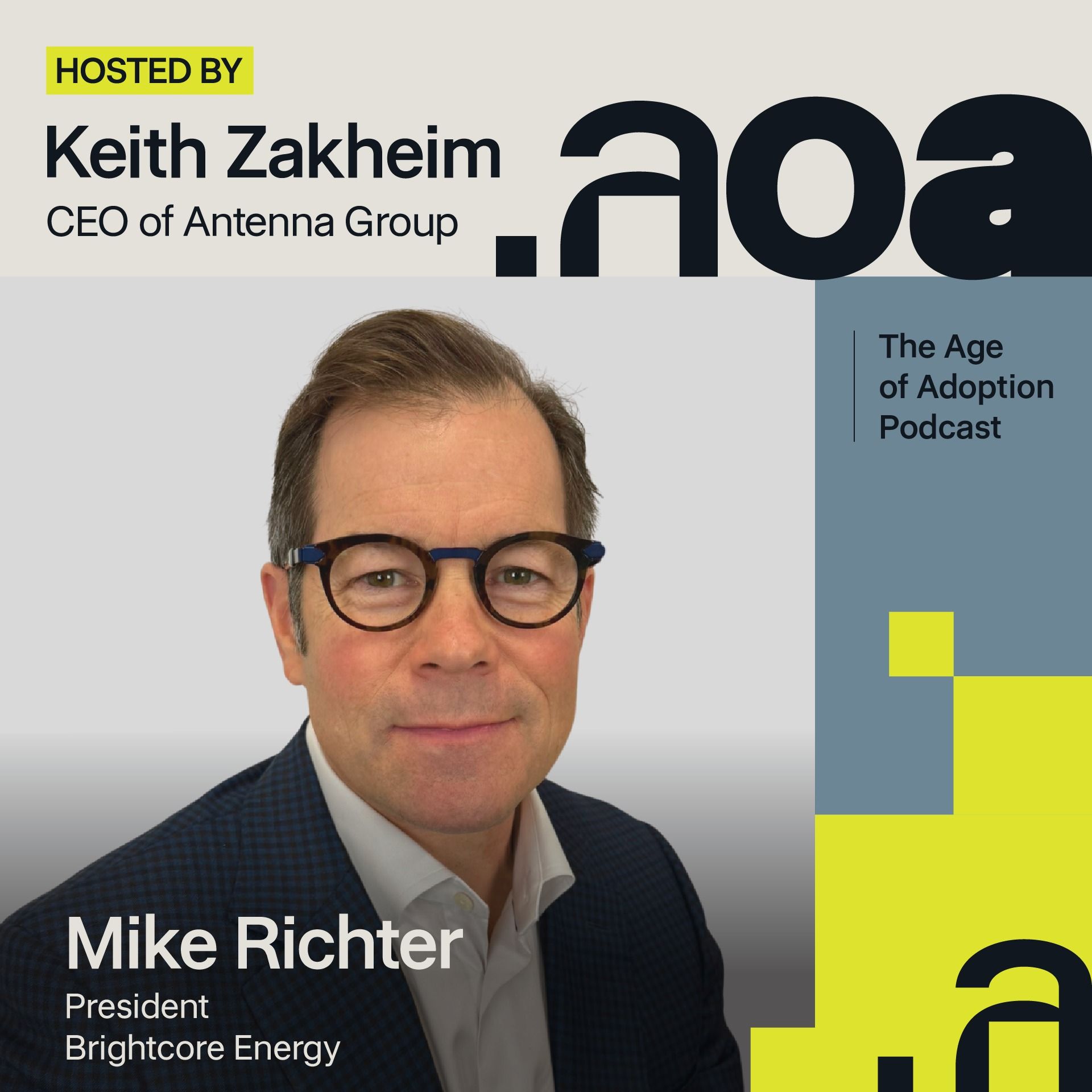
Net Positive

What would it take to fit a geothermal system into a 125-year-old Manhattan co-op — and what happens when you actually do it? Mike Richter spent two decades as one of the NHL's elite goaltenders, winning a Stanley Cup with the New York Rangers. Now, as President of Brightcore Energy, he's applying the same discipline and focus to decarbonizing commercial buildings. On this episode of Age of Adoption, Richter breaks down why geothermal heating and cooling — long considered niche and prohibitively expensive — is finally hitting its stride. "If I'm a competitor of yours and my energy costs are 40 to 50% lower than yours, I'm eating your lunch," he says. Brightcore's turnkey model — integrating design, drilling, financing, and a 10-year performance guarantee — removes the friction that has kept geothermal on the sidelines for decades. Drawing on lessons from Scandinavia, where geothermal penetration tops 25% compared to less than 1% in North America, Richter argues the technology is commercially proven and deployment-ready. Mike Richter is President of Brightcore Energy, a turnkey clean energy firm serving commercial, institutional, and government clients across geothermal, solar, and energy efficiency solutions. Before entering the energy sector, Richter was one of the NHL's premier goaltenders for two decades, earning a Stanley Cup championship with the New York Rangers and representing the United States in multiple Olympic Games. After retiring from professional hockey, he pursued undergraduate studies and coursework at Yale's School of Forestry, developing a foundation in environmental policy and resource economics. He joined Riverkeeper's board before moving into clean energy finance, ultimately joining Brightcore in 2016. Richter brings a rare combination of competitive discipline, academic grounding, and business acumen to one of the most consequential challenges in building decarbonization. In This Episode:  (00:00) Mike Richter, Stanley Cup goalie turned energy leader (03:50) Richter's career path from hockey to Yale and environmental advocacy (08:39) How Brightcore Energy was founded and why geothermal was chosen (14:24) Brightcore's age of adoption story: lighting, solar, and geothermal scale-up (21:30) Economics of geothermal: cost, scale, and competitive advantage explained (24:28) Host wraps with why adoption is now economics, not just virtue Share with someone who would enjoy this topic, like and subscribe to hear all of our future episodes, send us your comments and guest suggestions! About the show:  The Age of Adoption podcast explores the monumental transition from a period of social, economic, and environmental research and exploration – an Age of Innovation – to today's world in which companies across the economy are furiously deploying sustainable solutions – the Age of Adoption. Listen as our host, Keith Zakheim, CEO of Antenna Group, talks with experts from across the climate, energy, health, and real estate sectors to discuss what the transition means for business and society, and how corporates and startups can rise above competitors to lead in this new age.  This podcast is brought to you by Antenna Group, a global marketing and communications agency that partners with Fully Conscious brands — those with the courage to lead transformative change across Climate & Energy, Real Estate, Health, and beyond. Our clients include visionary corporations, startups, investors, and nonprofits who recognize that meaningful impact requires more than awareness; it demands bold action. In today's Age of Adoption, where every sector must incorporate sustainable solutions into foundational systems, we amplify brands standing at the forefront of change, shaping a better future for our planet and its people. To learn more, visit antennagroup.com. Resources: Michael Richter LinkedIn: https://www.linkedin.com/in/mike-richter/ Brightcore Energy: https://brightcoreenergy.com/Conscious Compass Assessment (at antennagroup.com) — Assess your brand against the eight traits of brand consciousnessAntenna GroupKeith Zakheim LinkedIn

April 8, 202623 min

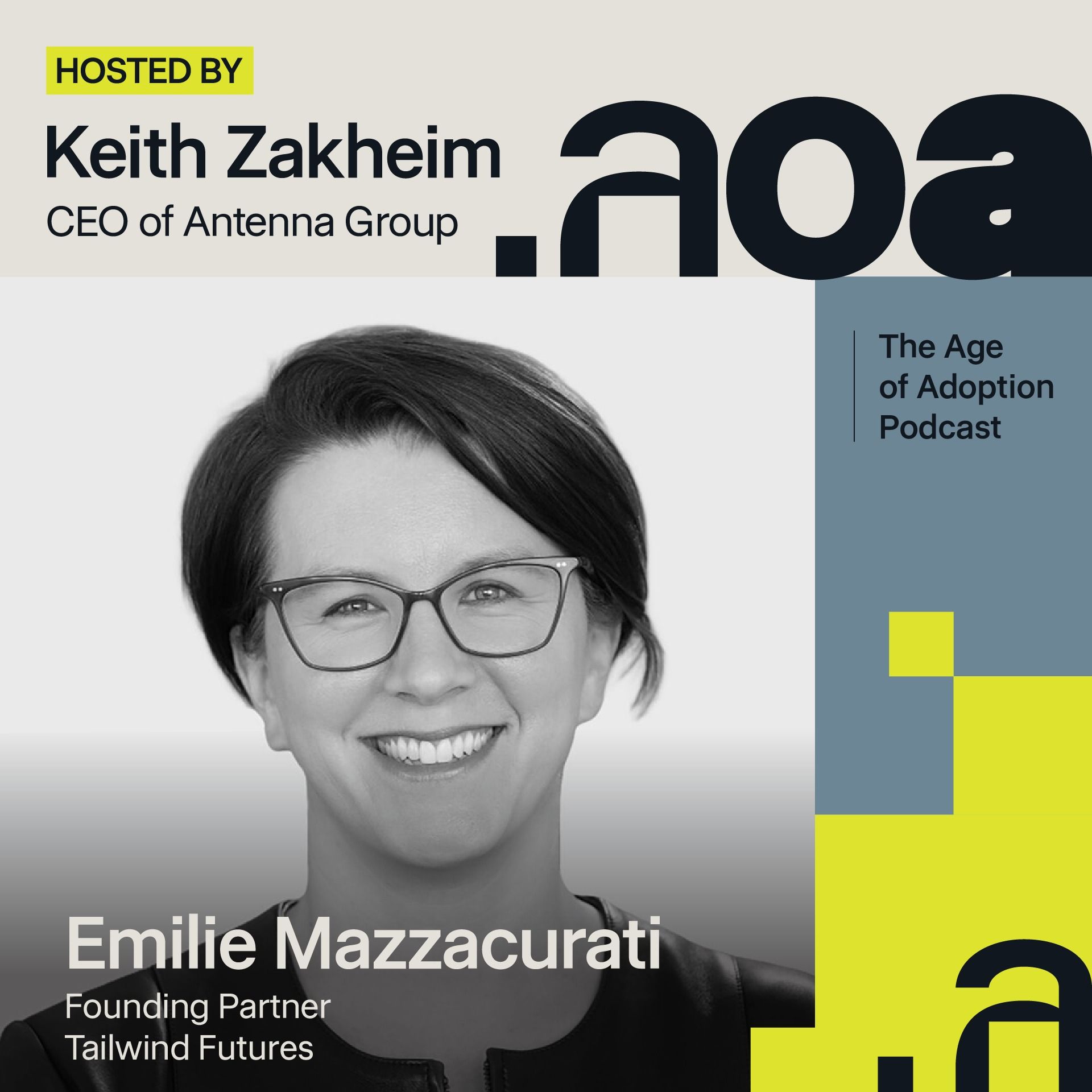
The Business Case for Adaptation

Why are Fortune 500 companies still investing billions in climate resilience while staying publicly silent about it? Emilie Mazzacurati, Founding Partner at Tailwind Futures, didn't start in venture capital—she began in European public policy before pivoting to carbon markets and eventually climate adaptation. After selling her climate risk company 427 to Moody's in 2019, she recognized a critical gap: the innovation ecosystem wasn't supporting adaptation solutions. Her core thesis? "We don't have time to wait for a full cycle of this tiny company that's going to become very big in 10 years. We need the solutions in three years." Emilie argues that climate resilience has shifted from virtue signaling to business imperative. Corporations are still investing heavily in adaptation, just talking about it differently—focusing on economics, risk mitigation, and operational continuity rather than moral arguments. How is your business preparing for climate impacts that are already locked in?Emilie Mazzacurati is Founding Partner at Tailwind Futures, an investment and innovation platform accelerating climate adaptation and resilience solutions. Trained in political science and public policy, she began her career in European government before pivoting to climate after watching Al Gore's "An Inconvenient Truth" in 2006. She founded 427, one of the first companies translating climate models into business risk signals for corporations managing millions of asset locations. After selling 427 to Moody's in 2019, she helped integrate climate data into global financial analytics before co-founding Tailwind Futures with Katie McDonald. Emilie focuses on fast-tracking adaptation innovation through corporate partnerships, bridging the gap between early-stage climate tech and enterprise adoption. In This Episode:  (00:00) Emilie's career journey from European policy to climate risk (10:06) Tailwind Futures and the adaptation investment landscape today (16:32) How corporations discuss climate investments amid political headwinds (19:51) Emerging resilience technologies and phase change material innovations (22:02) Closing remarks  Share with someone who would enjoy this topic, like and subscribe to hear all of our future episodes, send us your comments and guest suggestions! About the show:  The Age of Adoption podcast explores the monumental transition from a period of social, economic, and environmental research and exploration – an Age of Innovation – to today's world in which companies across the economy are furiously deploying sustainable solutions – the Age of Adoption. Listen as our host, Keith Zakheim, CEO of Antenna Group, talks with experts from across the climate, energy, health, and real estate sectors to discuss what the transition means for business and society, and how corporates and startups can rise above competitors to lead in this new age.  This podcast is brought to you by Antenna Group, a global marketing and communications agency that partners with Fully Conscious brands — those with the courage to lead transformative change across Climate & Energy, Real Estate, Health, and beyond. Our clients include visionary corporations, startups, investors, and nonprofits who recognize that meaningful impact requires more than awareness; it demands bold action. In today's Age of Adoption, where every sector must incorporate sustainable solutions into foundational systems, we amplify brands standing at the forefront of change, shaping a better future for our planet and its people. To learn more, visit antennagroup.com. Resources: Emilie Mazzacurati LinkedIn: https://www.linkedin.com/in/emazzacurati/ Tailwind Futures: https://www.tailwindfutures.com/Antenna GroupKeith Zakheim LinkedIn

March 24, 202630 min

Scaling the Circular Economy

Did you know the U.S. has only 27 years of median landfill capacity left while throwing away $6.5 billion in reusable materials every year? Ron Gonen, Founder and CEO of Closed Loop Partners, challenges everything you thought you knew about recycling economics. With backing from Walmart, Unilever, Coke, and Pepsi, Ron reveals how America has only 27 years of median landfill capacity left while throwing away $6.5 billion in reusable materials annually. "The landfill industry deserves a PR award of the century," Ron argues, exposing how they convinced us recycling costs money when landfill disposal actually costs more per ton. Can circular economy become the rare bipartisan win in Washington? Ron explains why robotics, material science, and supply chain chaos are finally making his vision scalable.Ron Gonen is the Founder and CEO of Closed Loop Partners, a venture capital firm investing in circular economy solutions backed by Walmart, Unilever, Coke, Pepsi, and other Fortune 500 companies. His sustainability journey began in 1980s Philadelphia, babysitting for green architect Paul Macht, and continued when he co-founded Recycle Bank in 2003. Ron later served in the Michael Bloomberg administration, where he gained critical insights into municipal waste management. He launched Closed Loop Partners in 2014 to address the growing complexity, cost, and risk of global supply chains. Ron's work focuses on robotics, material science, and infrastructure that makes circular economy economically viable and politically bipartisan. In This Episode:  (00:00) Ron Gonen's sustainability path begins in his babysitting days (07:48) Post World War II consumer culture and the Madison Avenue shift (10:10) Career journey from Recycle Bank through Bloomberg to Closed Loop (15:43) Landfill industry's PR triumph and the real economics of recycling (20:13) Age of adoption answer: supply chains, bipartisan support, and robotics (25:46) Climate community must become more inclusive and less exclusive Share with someone who would enjoy this topic, like and subscribe to hear all of our future episodes, send us your comments and guest suggestions! About the show:  The Age of Adoption podcast explores the monumental transition from a period of social, economic, and environmental research and exploration – an Age of Innovation – to today's world in which companies across the economy are furiously deploying sustainable solutions – the Age of Adoption. Listen as our host, Keith Zakheim, CEO of Antenna Group, talks with experts from across the climate, energy, health, and real estate sectors to discuss what the transition means for business and society, and how corporates and startups can rise above competitors to lead in this new age.  This podcast is brought to you by Antenna Group, a global marketing and communications agency that partners with Fully Conscious brands — those with the courage to lead transformative change across Climate & Energy, Real Estate, Health, and beyond. Our clients include visionary corporations, startups, investors, and nonprofits who recognize that meaningful impact requires more than awareness; it demands bold action. In today's Age of Adoption, where every sector must incorporate sustainable solutions into foundational systems, we amplify brands standing at the forefront of change, shaping a better future for our planet and its people. To learn more, visit antennagroup.com. Resources: Ron Gonen LinkedIn: https://www.linkedin.com/in/ron-gonen-807a49/Antenna GroupKeith Zakheim LinkedIn

March 3, 202626 min

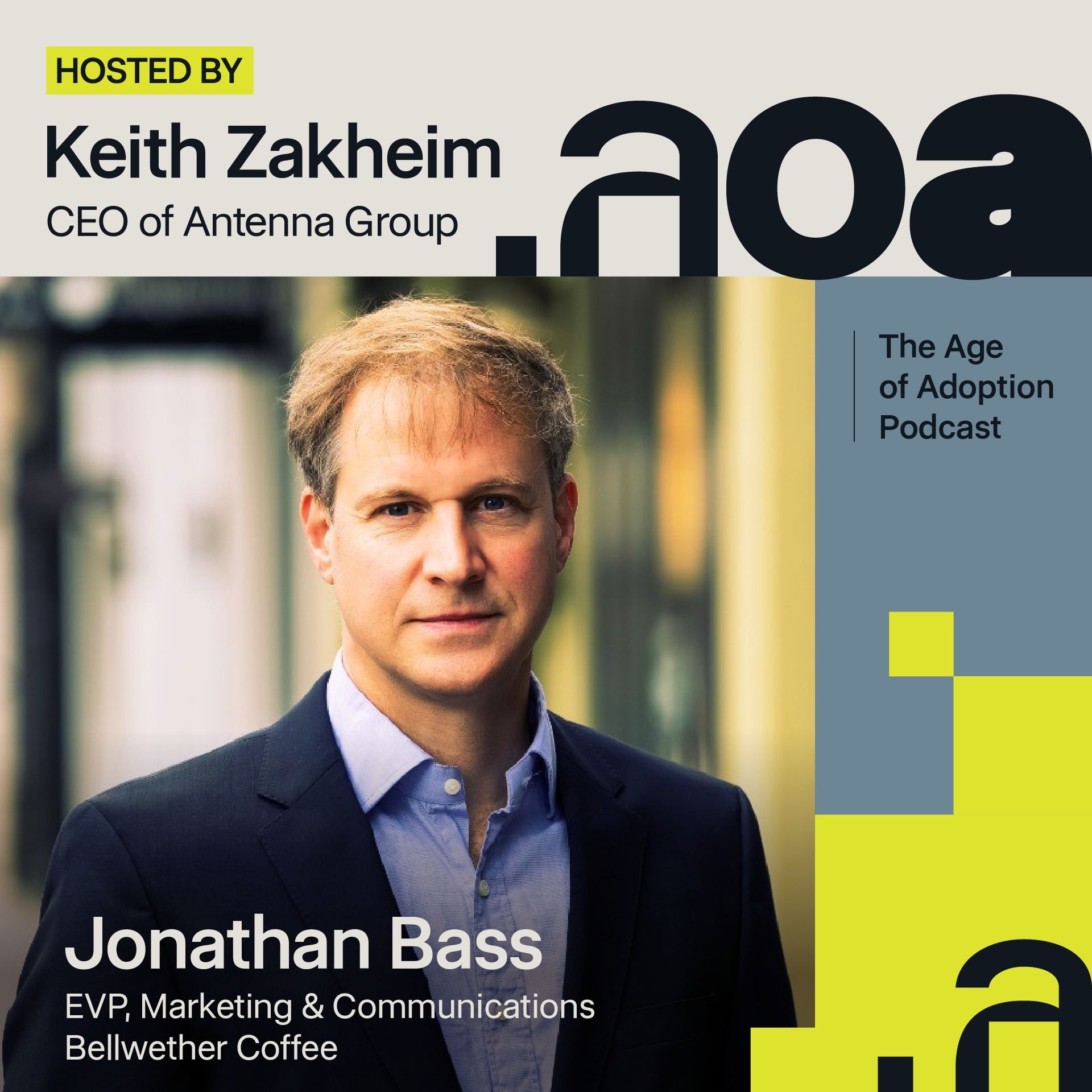
Better Coffee, Lower Carbon

Can a coffee roaster that pays for itself in three months really transform a $200 billion industry? Jonathan Bass, EVP of Marketing & Communications at Bellwether Coffee, brings decades of cleantech experience to the conversation about sustainable coffee. After nine years at SolarCity (through its Tesla acquisition), he learned a crucial lesson: lead with value, not virtue. At Bellwether, he's applying that philosophy to coffee roasting. The company's electric roasters reduce carbon emissions by 87% while cutting costs in half for cafes—the machines pay for themselves in three to six months. But what really drives Jonathan's passion is the farmer equity component. With 80% of coffee farmers living below the poverty line, Bellwether sources directly and pays living wages. "You can almost take greenwashing off the table by focusing on what's important to the customer," Jonathan explains. Can a better product that happens to be sustainable really change an entire industry?Jonathan Bass is the EVP of Marketing & Communications at Bellwether Coffee, where he leads efforts to transform the coffee industry through electrification and farmer equity. With over two decades in cleantech communications, Jonathan spent nine years at SolarCity through its Tesla acquisition, learning that sustainable products must lead with value, not virtue. He previously worked at Google Wing on drone delivery, gaining unexpected insights into coffee logistics and quality. His career began in Silicon Valley tech communications after brief stints as a substitute teacher and banker. Throughout his journey, Jonathan has remained committed to building business models around sustainability that create superior products while driving meaningful environmental and social impact. At Bellwether, he champions electric coffee roasting technology that reduces carbon emissions by 87% while ensuring coffee farmers receive living wages. In This Episode:  (00:00) Jonathan Bass - from SolarCity to Bellwether Coffee (03:39) How drone-delivered lattes led Jonathan to coffee innovation (14:53) The dirty truth about traditional coffee roasting processes (18:43) Bellwether's age of adoption story and economic value proposition (23:12) Avoiding greenwashing by focusing on customer value over virtue Share with someone who would enjoy this topic, like and subscribe to hear all of our future episodes, send us your comments and guest suggestions! About the show:  The Age of Adoption podcast explores the monumental transition from a period of social, economic, and environmental research and exploration – an Age of Innovation – to today's world in which companies across the economy are furiously deploying sustainable solutions – the Age of Adoption. Listen as our host, Keith Zakheim, CEO of Antenna Group, talks with experts from across the climate, energy, health, and real estate sectors to discuss what the transition means for business and society, and how corporates and startups can rise above competitors to lead in this new age.  This podcast is brought to you by Antenna Group, a global marketing and communications agency that partners with Fully Conscious brands — those with the courage to lead transformative change across Climate & Energy, Real Estate, Health, and beyond. Our clients include visionary corporations, startups, investors, and nonprofits who recognize that meaningful impact requires more than awareness; it demands bold action. In today's Age of Adoption, where every sector must incorporate sustainable solutions into foundational systems, we amplify brands standing at the forefront of change, shaping a better future for our planet and its people. To learn more, visit antennagroup.com. Resources: Jonathan Bass LinkedIn: https://www.linkedin.com/in/jonathan-bass-6b248b/ Bellwether Coffee BellwetherCoffee.comAntenna GroupKeith Zakheim LinkedIn

February 17, 202625 min

Where Finance Drives Climate Impact

Can a tethered drone flying 400 feet in the air really replace traditional wind turbines?Marissa Brydle, Sustainability Director at KeyBank, did not study sustainability in school. After 13 years at sustainability consultancy Brown Flynn and a stint at steel producer Cleveland Cliffs, she landed at one of America's oldest banks. KeyBank remains the #2 renewables financier and #2 affordable housing financier in the U.S., deploying $20 billion toward their $38 billion sustainable finance goal. "It doesn't make good business sense to not do these things," Marissa explains. How does a 200-year-old institution navigate political headwinds while maintaining unwavering climate commitments? And what's next for engaging 17,000 employees across 15 states?Marissa Brydle is Sustainability Director at KeyBank, where she leads climate strategy, disclosure, and sustainable finance initiatives for the 200-year-old institution. She began her career at sustainability consultancy Brown Flynn, spending 13 years building expertise across industries before moving to Cleveland Cliffs, a major North American steel producer. There, she discovered steel's critical role in the low-carbon transition. At KeyBank, Marissa oversees the bank's $38 billion sustainable finance commitment, carbon neutrality goals, and climate risk management. She's passionate about engaging KeyBank's 17,000 employees across 15 states to integrate sustainability into daily operations and decision-making.In This Episode: (00:00) Marissa's unconventional path from communications to sustainability consulting(07:30) Transitioning from Cleveland Cliffs steel to KeyBank sustainability role (13:40) KeyBank's 200-year history and resilience through market shifts (15:41) Sustainable finance commitments despite political headwinds and climate disclosure (23:28) Employee engagement and walking the talk on sustainabilityShare with someone who would enjoy this topic, like and subscribe to hear all of our future episodes, send us your comments and guest suggestions!About the show: The Age of Adoption podcast explores the monumental transition from a period of social, economic, and environmental research and exploration – an Age of Innovation – to today's world in which companies across the economy are furiously deploying sustainable solutions – the Age of Adoption. Listen as our host, Keith Zakheim, CEO of Antenna Group, talks with experts from across the climate, energy, health, and real estate sectors to discuss what the transition means for business and society, and how corporates and startups can rise above competitors to lead in this new age. This podcast is brought to you by Antenna Group, a global marketing and communications agency that partners with Fully Conscious brands — those with the courage to lead transformative change across Climate & Energy, Real Estate, Health, and beyond. Our clients include visionary corporations, startups, investors, and nonprofits who recognize that meaningful impact requires more than awareness; it demands bold action. In today's Age of Adoption, where every sector must incorporate sustainable solutions into foundational systems, we amplify brands standing at the forefront of change, shaping a better future for our planet and its people. To learn more, visit antennagroup.com.Resources:Marissa Brydle LinkedIn: https://www.linkedin.com/in/marissa-b-32560a16/KeyBank: https://www.key.com/personal/index.htmlAntenna GroupKeith Zakheim LinkedIn

January 13, 202623 min

Resilient Energy, Anywhere

Can a tethered drone flying 400 feet in the air really replace traditional wind turbines?Rob Creighton, Founder and CEO of Windlift, brings an unconventional background to clean energy innovation. After mapping the human genome as a lab technician, his concerns about peak oil led him to Miles Lloyd's revolutionary 1980 paper on airborne wind energy. "Cut off the tip of a wind turbine blade, attach it to a tether and generate the same electricity with 95% less material," Rob explains. Windlift's tethered drones fly at 400 feet, generating power without towers or massive infrastructure. Can this technology scale beyond defense applications? Rob shares why he's willing to risk everything for climate solutions that protect the Minnesota wilderness where his nephew can no longer play pond hockey.Rob Creighton is the Founder and CEO of Windlift, which he established in 2006 after discovering Miles Lloyd's pioneering research on airborne wind energy. With a BS in Genetics and an MBA in Strategic Management from the University of Wisconsin-Madison, Rob worked as a biologist on the Human Genome Project before pivoting to clean energy innovation. Based in Durham, North Carolina, he has secured over $30 million in contracts with the Naval Research Laboratory and Pentagon, developing tethered autonomous drones that generate electricity with 95% less material than traditional turbines, serving both military and commercial applications.In This Episode: (00:00) Rob Creighton - from mapping human genome to airborne wind(02:45) Windlift's technology explained, tethered drones generating power at altitude(05:28) Peak oil concerns and discovery of Miles Lloyd's groundbreaking paper(10:07) Challenges of airborne wind energy, learning from Makani's failure(15:06) Defense market strategy and working with Pentagon operational energy(19:39) Personal commitment to climate action and wilderness preservationShare with someone who would enjoy this topic, like and subscribe to hear all of our future episodes, send us your comments and guest suggestions!About the show: The Age of Adoption podcast explores the monumental transition from a period of social, economic, and environmental research and exploration – an Age of Innovation – to today's world in which companies across the economy are furiously deploying sustainable solutions – the Age of Adoption. Listen as our host, Keith Zakheim, CEO of Antenna Group, talks with experts from across the climate, energy, health, and real estate sectors to discuss what the transition means for business and society, and how corporates and startups can rise above competitors to lead in this new age. This podcast is brought to you by Antenna Group, a global marketing and communications agency that partners with Fully Conscious brands — those with the courage to lead transformative change across Climate & Energy, Real Estate, Health, and beyond. Our clients include visionary corporations, startups, investors, and nonprofits who recognize that meaningful impact requires more than awareness; it demands bold action. In today's Age of Adoption, where every sector must incorporate sustainable solutions into foundational systems, we amplify brands standing at the forefront of change, shaping a better future for our planet and its people. To learn more, visit antennagroup.com.Resources:Rob Creighton LinkedIn: https://www.linkedin.com/in/rob-creighton-3572702/WindliftAntenna GroupKeith Zakheim LinkedIn

December 18, 202528 min

Nuclear’s Second Act

Is restarting Three Mile Island the ultimate redemption story—or the industry's biggest PR gamble?Judy Rader, Senior Vice President of Corporate Affairs and Chief Communications Officer at Constellation Energy, runs communications for the nation's largest clean energy producer. Operating 21 nuclear reactors representing 25% of U.S. nuclear capacity, Constellation has transformed nuclear's narrative from defensive to proactive. "I want to save nuclear power plants. I think it's important for our climate," Judy told a skeptical colleague before joining the 2022 spinoff. She explains why restarting Three Mile Island was the right call, how eating a banana delivers more radiation than living near a reactor, and what it takes to build new nuclear at scale. Can America compete with China's nuclear buildout?Judy Rader is Senior Vice President of Corporate Affairs and Chief Communications Officer at Constellation Energy, the nation's largest producer of clean, carbon-free electricity. With operational oversight of 21 nuclear reactors representing 25% of all U.S. nuclear capacity, Judy leads corporate communications and public affairs strategy. Her 20-year energy career began at ComEd in 2005 after agency experience with blue-chip clients including Kraft, Boeing, and Allstate. A passionate advocate for nuclear energy's climate benefits, Judy joined Constellation's 2022 spinoff from Exelon to advance the industry's clean energy mission. She spearheaded the Come Clean campaign, helping drive public nuclear support to 60%.In This Episode:(00:00) Judy Rader and Constellation Energy's nuclear leadership (04:08) From agency life to utilities, expecting boring work (08:18) Nuclear's perception problem and the Come Clean campaign (14:30) Three Mile Island restart announcement and strategic messaging (20:43) Radiation facts, banana comparisons, and public education (23:00) Building new nuclear capacity to meet demand growthShare with someone who would enjoy this topic, like and subscribe to hear all of our future episodes, send us your comments and guest suggestions!About the show: The Age of Adoption podcast explores the monumental transition from a period of social, economic, and environmental research and exploration – an Age of Innovation – to today's world in which companies across the economy are furiously deploying sustainable solutions – the Age of Adoption. Listen as our host, Keith Zakheim, CEO of Antenna Group, talks with experts from across the climate, energy, health, and real estate sectors to discuss what the transition means for business and society, and how corporates and startups can rise above competitors to lead in this new age. This podcast is brought to you by Antenna Group, a global marketing and communications agency that partners with Fully Conscious brands — those with the courage to lead transformative change across Climate & Energy, Real Estate, Health, and beyond. Our clients include visionary corporations, startups, investors, and nonprofits who recognize that meaningful impact requires more than awareness; it demands bold action. In today's Age of Adoption, where every sector must incorporate sustainable solutions into foundational systems, we amplify brands standing at the forefront of change, shaping a better future for our planet and its people. To learn more, visit antennagroup.com.Resources:Judy Rader LinkedIn: https://www.linkedin.com/in/judyrader/Constellation Energy: https://www.constellationenergy.com/Antenna GroupKeith Zakheim LinkedIn

December 10, 202523 min

Personal Care, Global Responsibility

Can major corporations truly do well by doing good?  Alexander Habib, VP of Sustainability Communications at L'Oréal, reveals how the €43.5 billion beauty giant has embedded environmental considerations into every aspect of operations over 25 years. Chair of the Personal Care Products Council's sustainability committee, Habib explains why L'Oréal discontinued their seemingly perfect Maybelline Green Edition mascara and what it taught them about consumer behavior. "Consumers like sustainability, but not necessarily as a benefit," he notes, describing how the company shifted from separate sustainable product lines to integrating eco-features throughout their core portfolio. The conversation explores L'Oréal's SPOT tool—now a design standard for every new product—and how the company achieved record 20% operating margins while pursuing ambitious 2030 sustainability goals.   Alexander Habib serves as VP of Sustainability Communications at L'Oréal, where he leads storytelling for the beauty giant's ambitious environmental transformation. With a career rooted in impact-driven work, Habib transitioned from New Jersey politics and campaigns to corporate communications, bringing policy expertise to sustainability advocacy. As chair of the Personal Care Products Council's sustainability committee, he helps scale sustainable practices across the beauty industry, from major corporations to small players. His work focuses on embedding environmental considerations into every aspect of business operations, from product design to market strategy, demonstrating how financial and environmental performance can be inextricably linked for long-term business resilience.   In This Episode:  (00:00) Alex's career journey from politics to sustainability communications  (08:18) Leading sustainability committee at Personal Care Products Council  (12:02) L'Oréal's 25-year sustainability commitment and age of adoption story  (17:23) Financial performance aligned with environmental impact and business resilience  (22:00) Closing remarks and Antenna Group information  Share with someone who would enjoy this topic, like and subscribe to hear all of our future episodes, send us your comments and guest suggestions!  About the show:  The Age of Adoption podcast explores the monumental transition from a period of social, economic, and environmental research and exploration – an Age of Innovation – to today's world in which companies across the economy are furiously deploying sustainable solutions – the Age of Adoption. Listen as our host, Keith Zakheim, CEO of Antenna Group, talks with experts from across the climate, energy, health, and real estate sectors to discuss what the transition means for business and society, and how corporates and startups can rise above competitors to lead in this new age.  This podcast is brought to you by Antenna Group, a global marketing and communications agency that partners with Fully Conscious brands — those with the courage to lead transformative change across Climate & Energy, Real Estate, Health, and beyond. Our clients include visionary corporations, startups, investors, and nonprofits who recognize that meaningful impact requires more than awareness; it demands bold action. In today's Age of Adoption, where every sector must incorporate sustainable solutions into foundational systems, we amplify brands standing at the forefront of change, shaping a better future for our planet and its people. To learn more, visit antennagroup.com.  Resources:  Alexander Habib LinkedIn: https://www.linkedin.com/in/alexhabib/  Antenna Group  Keith Zakheim LinkedIn
October 14, 202520 min

Powering Solar's Next Chapter

John Beaver, CFO of Highland Materials, brings a unique perspective to solar manufacturing after living through two distinct cleantech eras. Following 25 years in the chemical industry, Beaver first entered solar in 2009 as CFO of Silicor Materials, scaling from 40 to 450 employees in 18 months while proving metallurgical-grade silicon could produce high-quality solar cells. "We ended up making 20 million solar cells. Really proved out the concept that we could use a metallurgical grade silicon versus electronic grade silicon to make high-quality solar cells," Beaver explains. After weathering policy headwinds and Chinese oversupply that shuttered their plans, Beaver spent years in dental lasers before returning to solar silicon at Highland Materials. Now he believes the tipping point has arrived. The big question: Can domestic manufacturing finally compete with China's 95% market control?John Beaver serves as Chief Financial Officer of Highland Materials, and has over 40 years of finance expertise across a variety of industries. After starting his career at Fortune 50 company Monsanto, Beaver spent decades in the chemical industry before making his first foray into cleantech as the inaugural CFO of Silicor Materials in 2009. There, he helped scale the company from 40 to 450 employees in 18 months while proving that metallurgical-grade silicon could produce solar cells indistinguishable from traditional electronic-grade silicon. Following a detour as CEO of dental laser company Biolase, Beaver returned to solar silicon manufacturing with Highland Materials, where he's working to establish domestic polysilicon production in Tennessee using zero-waste technology that cuts emissions by 90% while recycling industry waste into valuable raw materials.In This Episode:(00:00) John Beaver’s cleantech journey(04:25) Chemical industry background and transition to Silicor Materials(08:04) China tariff wars and Silicor challenges(11:00) Highland Materials return and current market opportunity(17:08) Zero-waste manufacturing and product diversificationShare with someone who would enjoy this topic, like and subscribe to hear all of our future episodes, send us your comments and guest suggestions!About the show: The Age of Adoption podcast explores the monumental transition from a period of social, economic, and environmental research and exploration – an Age of Innovation – to today's world in which companies across the economy are furiously deploying sustainable solutions – the Age of Adoption. Listen as our host, Keith Zakheim, CEO of Antenna Group, talks with experts from across the climate, energy, health, and real estate sectors to discuss what the transition means for business and society, and how corporates and startups can rise above competitors to lead in this new age. This podcast is brought to you by Antenna Group, a global marketing and communications agency that partners with Fully Conscious brands — those with the courage to lead transformative change across Climate & Energy, Real Estate, Health, and beyond. Our clients include visionary corporations, startups, investors, and nonprofits who recognize that meaningful impact requires more than awareness; it demands bold action. In today's Age of Adoption, where every sector must incorporate sustainable solutions into foundational systems, we amplify brands standing at the forefront of change, shaping a better future for our planet and its people. To learn more, visit antennagroup.com.Resources:LinkedIn profile: https://www.linkedin.com/in/john-beaver-a086561b/Highland Materials website: https://highlandmaterials.com/Antenna GroupKeith Zakheim LinkedIn

Is this your show?

Claim this listing to keep it up to date, reach guests who want to pitch you, and manage bookings with Guestify.

Claim this listing

More Technology podcasts