Find partners
A guy with a scarf

A guy with a scarf

Hosted by carlo de marchis

Episodes

81

Latest episode

Aug 2026

Language

EN

About the show

An original take on the world of sports and media tech by Carlo De Marchis

Listen to episodes

60 recent
August 5, 202645 min

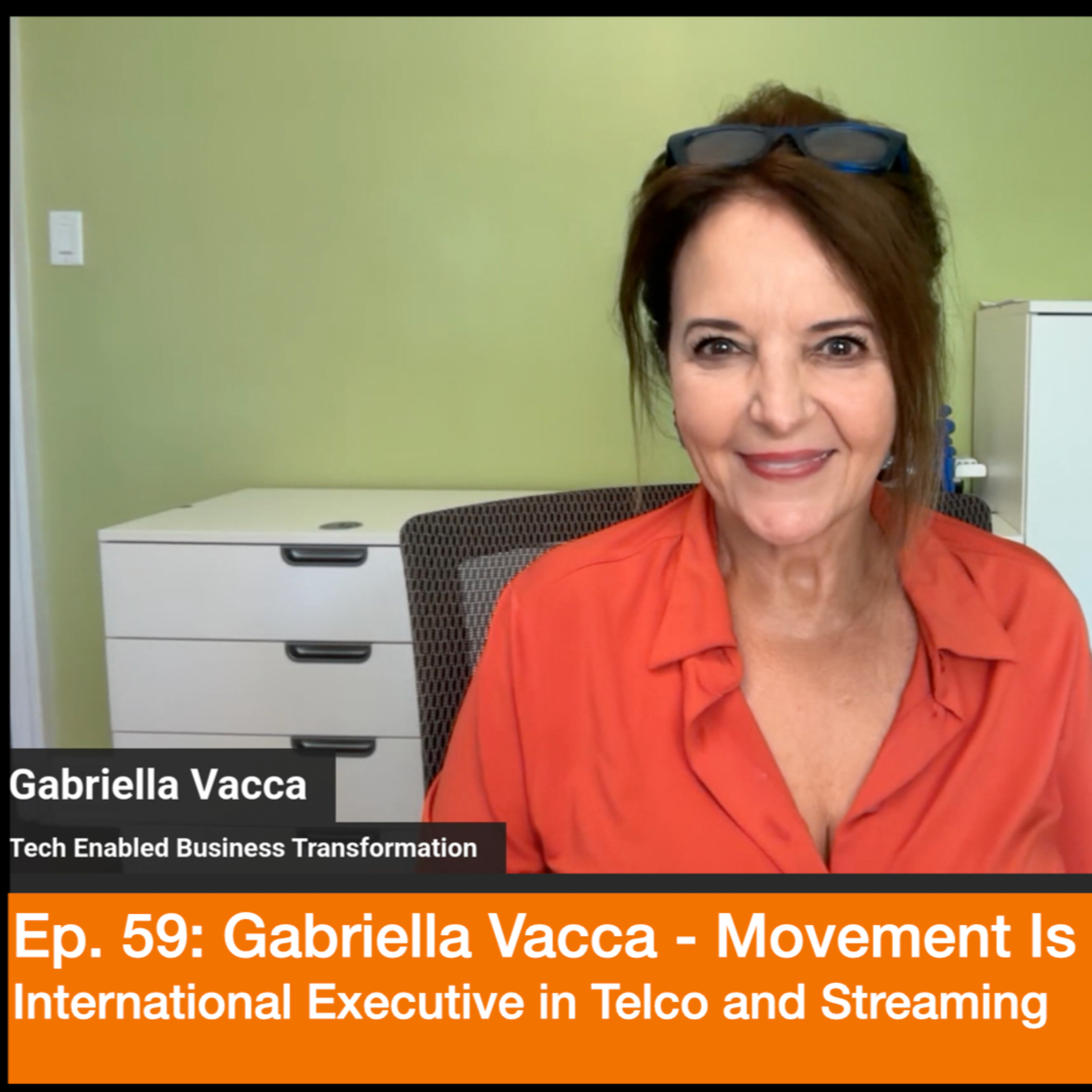
Ep. 59: Gabriella Vacca - International Executive in Telco and Streaming - Movement Is Life

What must change when your team becomes too large to know everyone by name. Gabriella Vacca and I studied computer engineering together in Turin, where she was the more dedicated student, and she built an international career: Olivetti, Omnitel, Bouygues Telecom, Cingular and AT&T, ESPN Mobile, Gogo, ten years at Comcast and five years as CTO of Sky Italia until last July 2025. She left Italy with two suitcases and a plan to be home within a year and, thirty years later, she is based in Philadelphia leading a strategic advisory portfolio.The spine of the episode is that leading 200 people and leading 2,000 are two very different jobs, and the second one only works if you design the organization intentionally, with clear purpose. Values become infrastructure. When your organization has fewer than roughly 300 people, you know everyone, and the why can travel through you. As she put it, "it is easier to inspire your team with the why, rather than only the what and the how." Above that size, the why must be built into the organization. She uses the Gartner pyramid, adding a foundational values layer underneath and KPIs that serve both the tech org and the business.Transparency, defined properly, does not mean handing the business every report you produce. . That level of detail is too specific to be meaningful outside the organization. Her analogy is a visit to the doctor: do you need someone simply to read your lab scores; you need interpretation, empathy and a clear explanation of what the scores mean. Are you fine? Can you improve? Is there something serious to worry about? She put that value to the test in a meeting with lawyers present, when her own team admitted that it had chosen not to disclose a data point. She stopped the meeting and told the business stakeholders: "Please forgive for failing to uphold our commitment to transparency." A value becomes real the first time defending it publicly costs you something.Crossing the forest. Intended change is like crossing a forest you have never entered before, without survival training. You keep the destination in sight, bring the right equipment, surround yourself with people who have skills you do not have, act with humility, and clearly say what you know and what you do not. Knowing your own limits becomes part of the operation you lead. She needs seven hours of sleep, and during COVID at Comcast, while moving call centres and thousands of people to remote work, that fact shaped the plan: work shifts from day one and a designated backup for every team member, including herself, to keep operations running 24/7 if anyone became unavailable.“Live operations” (or ON SCREEN?) changes the discipline. In media, "the damage is already done. It's real time. You are on screen." At Sky that meant tracking near-miss KPIs, because once a failure has occurred, it can’t be undone; the near misses help prevent the next one. The 92% conversation. Growing up near Turin meant being measured against the best of the best, and learning that risk is personal, so failure feels personal too. Moving to the States rewrote that mindset into four words: "Movement is life. Movement is learning." Take calculated risk, and learn to be satisfied with 90% or 92%, because investing 100% of your energy on a single destination leaves every other opportunity unexplored.A swimmer, not a diver. She can dive deep when needed but doing so costs her the broader view. The role of a senior job is to make sense of complexity so other leaders can make sound decisions, including recognizing when the right technology decision is the wrong decision for the company.The reality of women at work. Gabriella hosts a nine-episode series of that name on the EveCareers Podcast Network. She defines luck as readiness plus opportunity plus the ability to say yes. Her view on where women stand in the workplace is shaped by two factors: the company culture and what each individual is willing to do within it. .

July 15, 202638 min

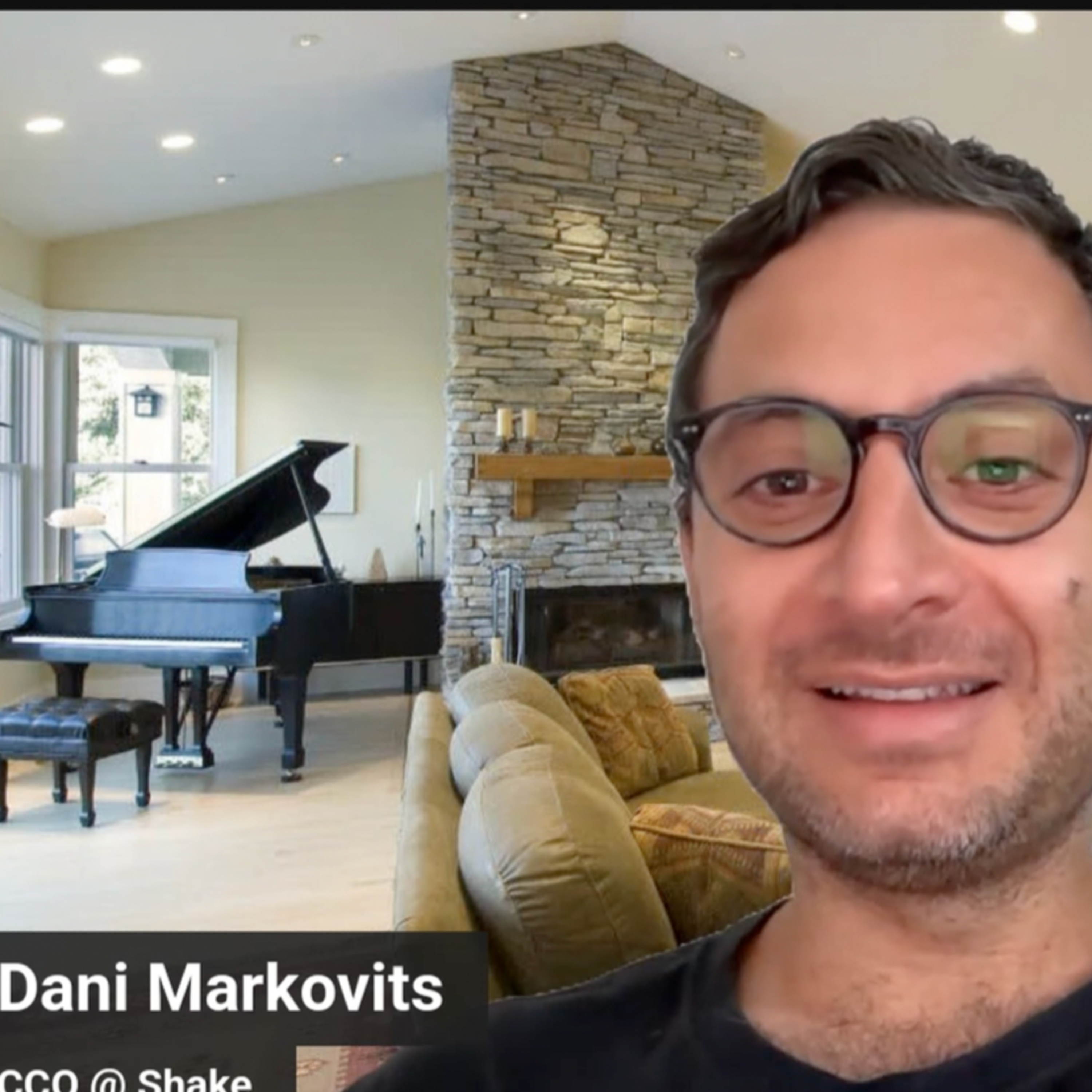
Ep. 58: Dani Markovits - Must Watch LinkedIn Expert on the platform's credibility shift & sport

The Ex-LinkedIn now Shake Content CCO on the platform's credibility shift, why athletes are finally moving in, and why the person now carries the brandFor episode 58 of A Guy With A Scarf, summer edition, I spoke with Dani Markovits. Dani joined LinkedIn in 2021 as one of its first creator managers and stayed four years. Now he is CCO at Shake Content, a LinkedIn agency. Few people have watched the platform change from the inside and the outside the way he has.His headline point lands fast. LinkedIn stopped being the place you open only when you want a job. Ten years ago almost everyone logged in to hire or to be hired. Today people scroll it on the bus like TikTok. It became a mix of social feed, job market, and the room where professional conversations happen.The word Dani kept using was intention. People arrive ready to connect and talk business, which is why direct messages work there and fall flat on Instagram. Trust sits underneath all of it.On personality, his take is that you earn the right to go off-topic. Keep your expertise as the anchor, then let the human side show. "If you only share memes, if you only talk about music or about food, I don't think that's a recipe for success."Sport is arriving late, and that is the opportunity. When Dani pushed sport at LinkedIn, colleagues doubted the fit and athletes said the platform was "for boring people." That has flipped. Athletes want to invest, sit on boards, back causes. LinkedIn is where the audience wants to hear about the life beyond the pitch. They "don't wanna be known only as the tennis guy or as the football lady." And here they read their own comments, because they are speaking straight to decision-makers.I saw this in a bar in Torino. Alex Del Piero sat in front of me, talking for hours about family, business, investments, and cinema. Close to zero football. That is the version athletes bring to LinkedIn.Reach is not the metric. "You don't need a huge audience," Dani said. What matters is who you get in front of. He has seen athletes with small followings do very well.The biggest recent change is that LinkedIn now measures who is posting, alongside what they post. It judges whether the author has the credibility to speak on a topic. One football post, word for word, should travel further from me than from him. "It matters the credentials, it matters the earned experience." Reach can drop while engagement holds or improves, which means the matching is working.LinkedIn is finally serving creators too. A native creator marketplace, video monetization, a call-out feature. Brands now see that creators and experts drive the decisions, and in B2B they all live on LinkedIn.Shake Content puts the person ahead of the company page. The share of people who actually post on LinkedIn is in the low single digits, so the room to stand out is wide open. Dani works with founders, executives, and athletes on credibility and visibility, with the person first and the company page second.On the corporate side, the old fear that employees build their own brand at the company's expense is the wrong lens. Companies gain from association. Four years ago firms blocked employees from posting. Now they push them and hire on the strength of their LinkedIn activity. "The best people suited to speak about your company is your own employees." Cheaper, and more impactful. His caveat: anybody can do this. Not everybody should. There is no shortcut.Dani also launched his newsletter, "LinkedIn/actually," after years of telling everyone else to do the same.My position is clear. LinkedIn rewarding credibility over raw reach is the healthiest move it has made in years. It favors people who know their subject and show up as themselves.

October 26, 202510 min

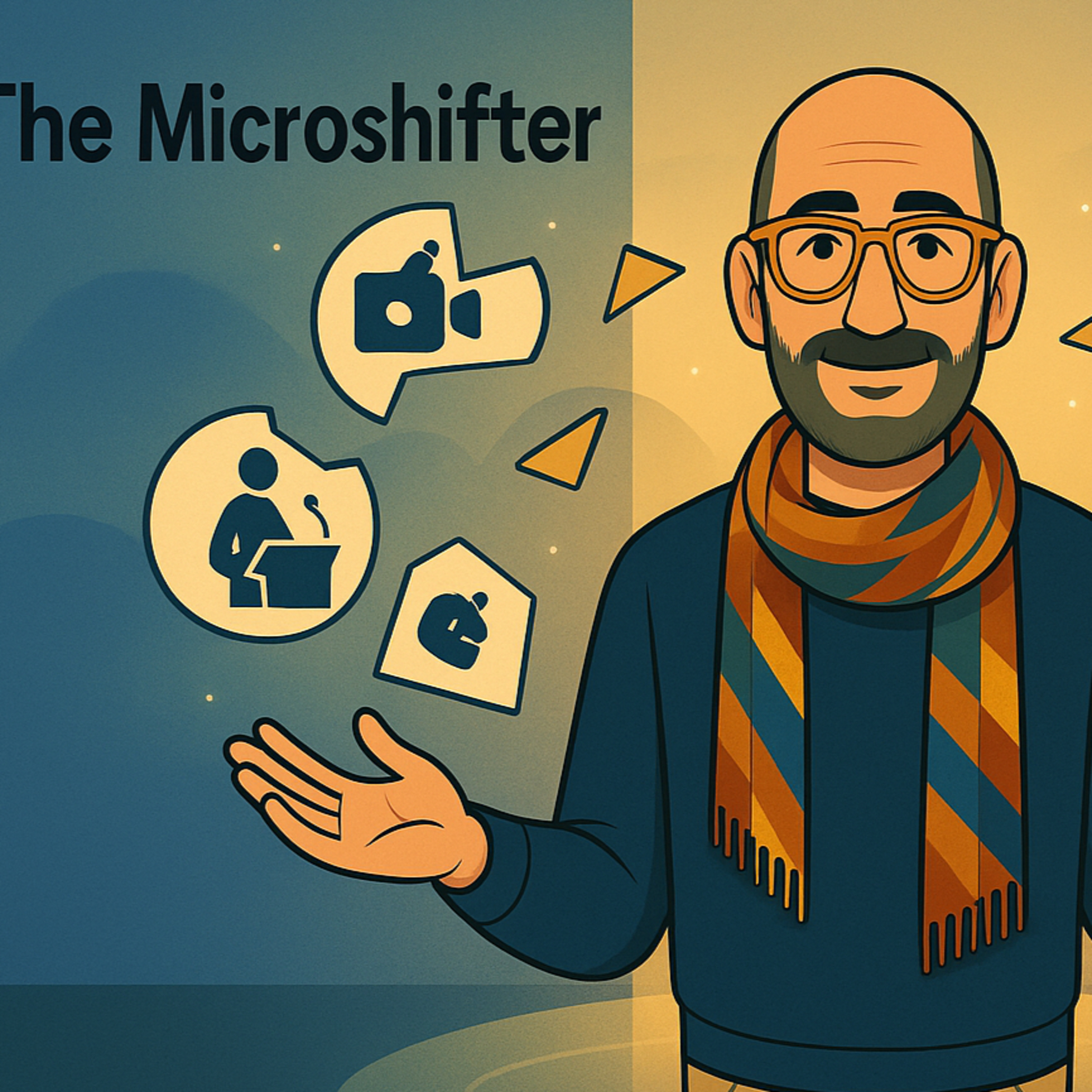
I am a Microshifter. Is that Good or Bad? 10 Thoughts from my Experience

The Microshifter's Guide to Fragmented WorkWelcome to our discussion on Microshifting: the new rhythm of work that aims to make your professional life "shorter, sharper, and more human". This practice is gaining traction, especially among solo professionals and Gen Z, and has been called the next evolution of flexible work.What is Microshifting?Microshifting is defined as the art and occasional struggle of working in shorter, intentional blocks of time, typically under six hours, instead of continuous stretches . It involves breaking the day into fragments, creating a "mosaic" rather than the linear 9-to-5 schedule of the past.For independent workers—creators, advisors, and thinkers—microshifting is often necessary for survival. It allows professionals to build around peaks of inspiration and align their work with personal rhythms, energy levels, and creativity, rather than against real life. This approach is seen by some as liberation, though others view it as fragmentation.The concept fits neatly into the new modular economy and the creator economy, where work involves short cycles, quick releases, and frequent recalibration. It signifies a cultural shift toward customizing work to fit the human, instead of forcing the human to fit the clock.The Choreography of FragmentationMicroshifting is not chaos; it is choreography. The author of the accompanying guide realized they were a Microshifter when they began working in bursts—a few hours of intense focus, a pause, another window of deep work, and sometimes a late block of writing.In this model, days are designed like a musical score with movements and pauses. Each block of time has its own specific start, end, and purpose, such as a creative block in the morning or a communication block in the early afternoon.The Freedom Trap and the Need for EdgesWhile the freedom is seductive, it presents a danger: flexibility, when unmanaged, becomes erosion. Without fixed corporate schedules, there is a risk of stretching time infinitely, leading to 15-hour days spent across five different tasks and four different moods.The key insight is that flexibility is not the opposite of structure; it needs structure to survive . Microshifting must involve "framed fragments," meaning that you must fiercely defend the edges where each work block begins and ends.A core challenge is the Cost of Fragmentation . Splitting the day requires extra effort to reconnect the dots, potentially fracturing the sense of flow and making the Microshifter feel perpetually "halfway through" everything. This risk means one might become incredibly responsive but slowly lose the ability to go deep, which requires time, boredom, and friction. To mature as a Microshifter, one must move from being merely flexible to being intentional.What the Science SaysThe principles underpinning Microshifting are supported by research on focus and recovery.• Productivity Peaks are Short: Behavioral data suggests that most people sustain true high-focus work for only about 2 to 3 hours per day, supporting the use of short, high-intensity blocks.• Breaks Improve Well-being: Studies indicate that micro-breaks (typically under 10 minutes) significantly reduce fatigue and increase vigor. Active micro-breaks, such as stretching or walking, can improve mental well-being and reduce musculoskeletal pain.• Autonomy is Key: The ability to take breaks and have control over one's time and rhythms is vital for sustainable performance.However, the science also presents warnings about excessive fragmentation:• Cognitive Load: Switching tasks frequently, even within short blocks, incurs a measurable switching cost, potentially consuming 10–20% of working time as the brain reorients.• Overwork Risk: When individuals have high control but low boundaries (like working flexible hours from home), they tend to work longer overall and struggle to detach, potentially leading to higher fatigue.

October 16, 20252 min

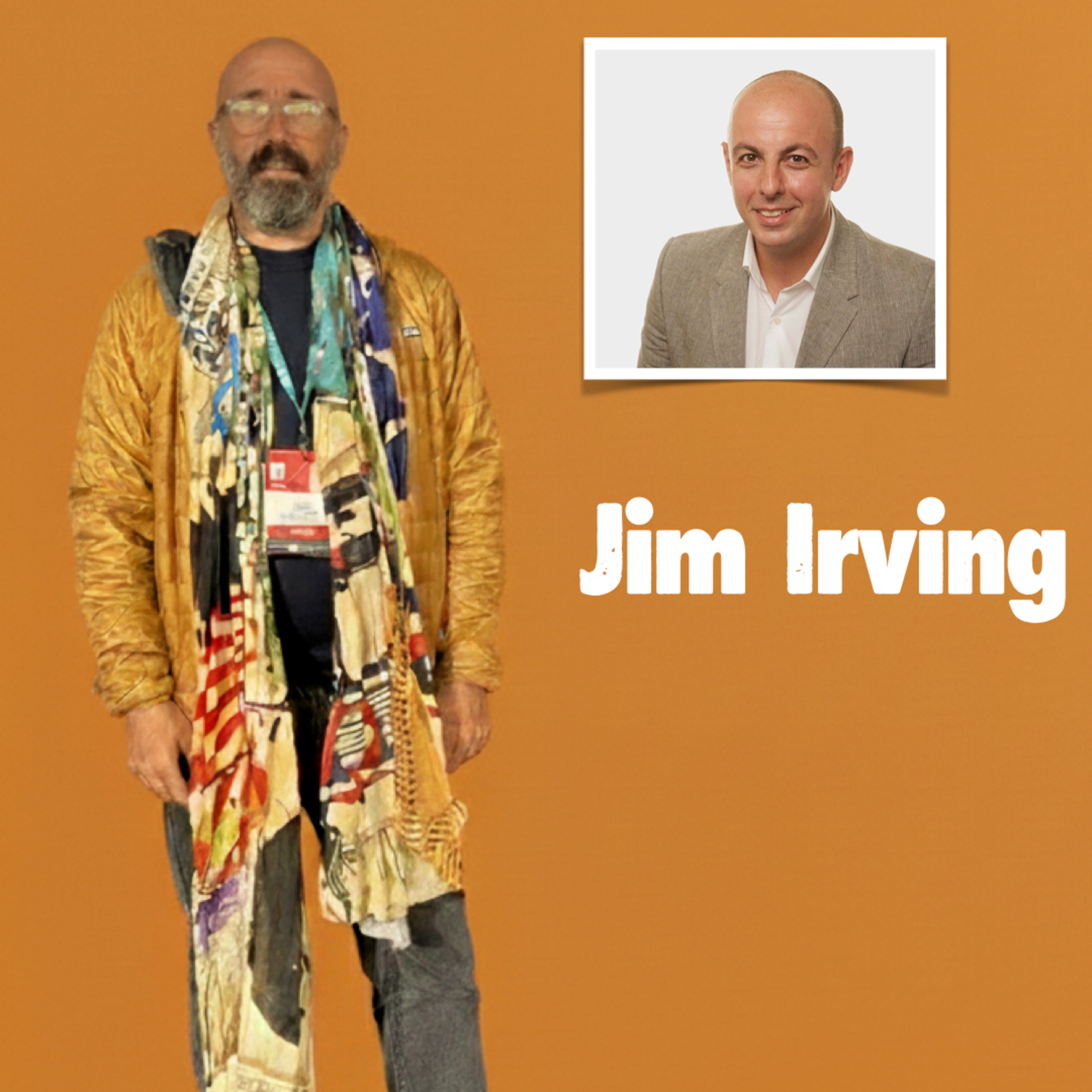
Ep. 5: A guy with a scarf asks a question to Jim Irving

This week, I asked my ex-colleague Jim Irving about one of the biggest frustrations in streaming — finding what to watch. His new app, Recce, takes a surprisingly human approach to solving it.🎙️ Q: What is Recce?💬 Jim’s take:Finding what to watch has become one of the biggest pain points in media — and Recce wants to fix that by bringing trust back into recommendations.➡️ Recce is a movie and TV review app built around trusted recommendations — not algorithms, but real people you actually know.➡️ It digitizes the most natural discovery habit we all have: word of mouth. That moment in a café or pub when someone says, “You’ve got to see this.”➡️ Users can share, rate, and discuss shows within their communities while building their own curated watchlists.➡️ Through Recce Rewards, engagement is rewarded — since people create value on the platform, they also share in it through access to exclusive content and prizes.As Jim puts it: “We’re trying to digitize the most trusted way of finding great content — word of mouth.”📱 Recce goes on pre-order this week — a small but meaningful step towards a more personal way to discover what’s worth watching.

October 13, 20252 min

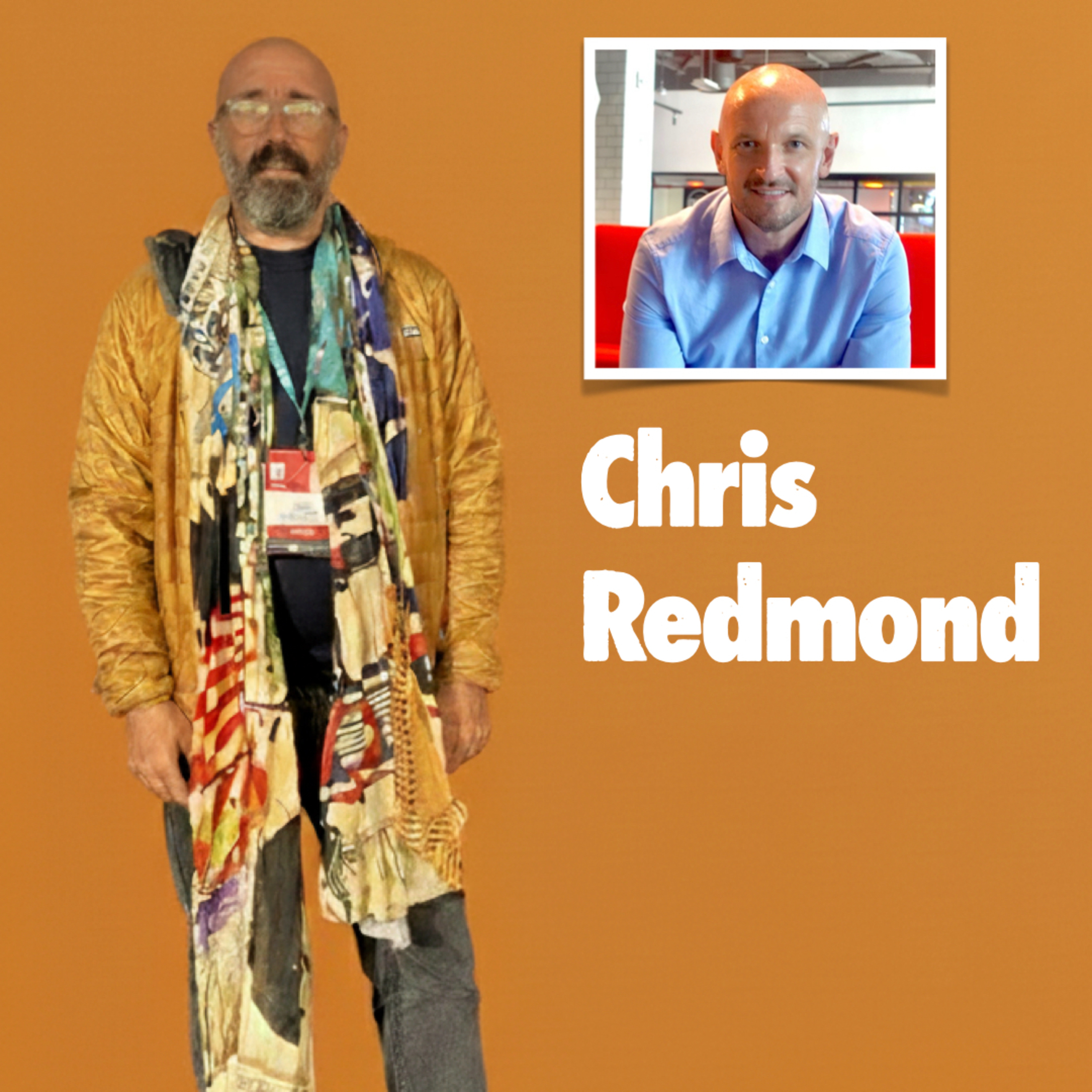
Ep. 4: A guy with a scarf asks a question to Chris Redmond

🎙️ Q: What are the traits and skills to get hired in our industry in 2026?💬 Chris’s take:The game of hiring has changed — and not always for the better.AI and automation aren’t necessarily improving recruitment; they’re exposing how broken and outdated many processes already were.➡️ Recognize that job hunting today can be demoralizing — applications often disappear into a black hole.➡️ Stop “job hunting” and start “job farming”: use your LinkedIn network as fertile ground. Those connections are your community, not random numbers.➡️ Productise yourself: craft your narrative — where you’ve been, where you are, where you want to go — and anchor it around what you truly love.➡️ And finally, don’t underestimate likability. Skills matter, but positivity and energy are what make people want to work with you.Chris puts it perfectly: “If you go in with years of experience but speak in a polluted way about where the industry is going, that’s going to put people off.”🎧 Watch the full 3-minute video on A Guy with a Scarf asks a question to… Chris Redmond.

October 1, 202513 min

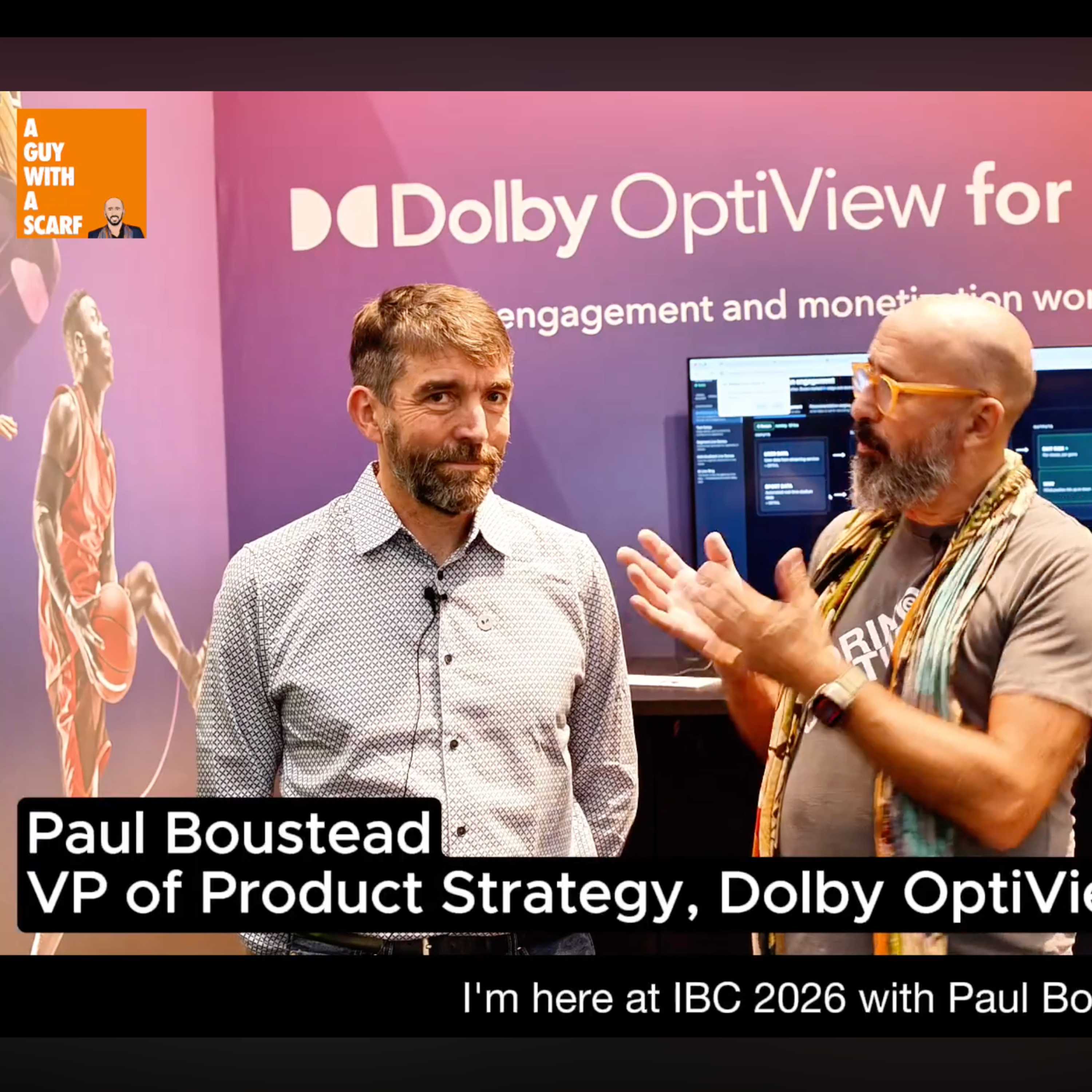
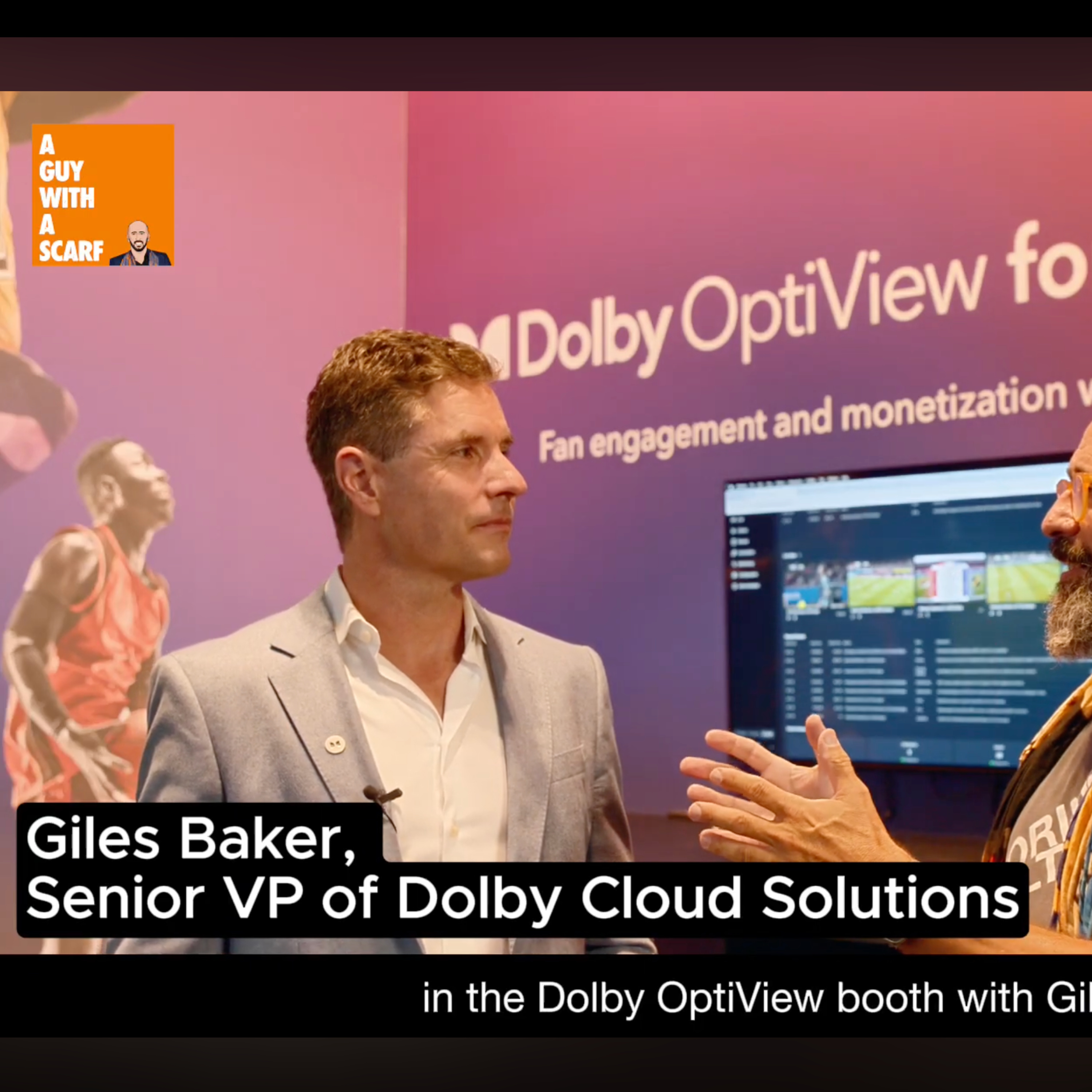
Ep. 57: Giles Baker – Dolby OptiView and the Future of Live Sports Experiences

At IBC 2025, I sat down with Giles Baker of Dolby to explore how the company is shaping the next chapter of live sports and immersive streaming. Dolby is a brand we encounter daily — from iPhones with Dolby Vision to cinemas with Atmos — but with Dolby OptiView , they’re pushing further into live experiences. Giles has spent 15 years at Dolby, driven by a passion for sound and vision: “What excites me today is seeing all the things we’ve been working on come together with Dolby OptiView.” Dolby Vision has been around for a decade, but the second generation goes further: More control for creators over how content looks on different devices. TVs that finally meet the dream Dolby had years ago — and can now stretch content to full performance. A sharper focus on live sports , making broadcasts smoother and closer to real life without the dreaded “soap opera effect.” As Giles put it: “It’s about being immersive without putting anything on your face.” OptiView combines three critical layers: The Player – Consistent, high-quality across devices, flexible enough for mobile or big screens. Latency Control – Not a race to the lowest number, but tuned to each use case. “If you need half a second latency, we’ll deliver it at scale. But if you don’t, you shouldn’t have to pay for it.” Monetization – With server-guided ad insertion (SGAI), ads become seamless, personalized, and less intrusive. They can appear side-by-side, in a corner, or as part of the flow. This isn’t just about ads: “Over time, people will innovate and deliver different types of content to different users. Personalized highlights, live games, analysis — all mixed into the experience.” The sports industry has long struggled with fragmented tech: inconsistent players, latency headaches, and clunky ad breaks. Dolby’s approach is to unify these into one system . At scale, that means leagues, broadcasters, and platforms can focus on storytelling and fan connection rather than integration challenges. For fans, the impact is clear: more immersive images, real-time experiences that sync you with the crowd, and personalized highlights without losing the live moment. Giles summed it up: “Immersion is about making you feel as close as possible to the action, together with everyone else, without adding friction.” ➡️ Dolby Vision 2 puts creators in control and makes sports look real. ➡️ OptiView offers flexible latency as a business choice, not a tech constraint. ➡️ Ads are reframed as content — personalized, non-intrusive, and even enriching. ➡️ Dolby is building a complete system to support the scale of modern sports streaming. ➡️ The future lies in personalization powered by AI, surfacing what fans care about in real time. Dolby Vision 2: Designed for NowDolby OptiView: A Complete SystemWhy It MattersKey Takeaways

September 24, 20252 min

Ep. 1: A guy with a scarf asks a question to Sébastien Audoux

🎙️ Sébastien is a French sports media expert with 20+ years of experience in the industry.Q: With Ligue 1 going D2C and the new app being deployed in France, what is the reception of the app and of Ligue 1?Sébastien shared that fans in France have welcomed the new Ligue 1 app — lower price (€14.99/month for 8 out of 9 games) and strong editorial coverage have made the experience feel premium. Pre-game shows, behind-the-scenes content, and immersive storytelling quickly pushed the platform past 1M users.But here’s the catch: revenue for clubs is nowhere near the past cycles. Where the 2018–19 champion earned ~€60M from media rights, this year’s winner might only see ~€5M.The challenge for Ligue 1 is clear: how to turn engagement into sustainable value for clubs. New revenue streams like interactive rights, betting, and sponsorship may be needed to bridge the gap.A fascinating reminder that fan reception and financial sustainability don’t always move in sync.🎥 Full reply in under 3 minutes — that’s the spirit of this new series.

September 22, 202522 min

Special IBC 2025: Paolo Pescatore – The Analyst vs. The Creator

This year at IBC, instead of writing another list of highlights, I sat down with analyst Paolo Pescatore to reflect on what the show really told us.Paolo put IBC in context with other global events. CES sets the tone, MWC defines connectivity, GITEX is now the largest consumer electronics show, while NAB and IBC feel smaller but remain key networking hubs. Attendance and exhibitor numbers were down. “If companies spend hundreds of thousands, they want ROI. Declining numbers are worrying,” Paolo noted.My own view was that conversations were more realistic. Less hype, more honesty. AWS again dominated with its vast booth and live production demos, while camera and production halls were packed. Microsoft and Google felt less present.One clear theme: live sport. Almost everyone I met asked about it. Paolo confirmed: “Live sport is still the anchor. It drives innovation—from multi-view streaming to personalized advertising—and it’s where people are still willing to pay.” Streamers like Netflix and Amazon are investing heavily, while broadcasters struggle with costs and late pivots to cloud/IP.The conference sessions felt detached from the show floor. The Tech Zone was little more than last year’s AI Zone. Paolo suggested more innovation and ecosystem diversity are needed.AI itself was everywhere. But value today is pragmatic—metadata tagging, subtitles, file transfers, personalization. “Beyond that, it gets wishy-washy,” Paolo warned. Netflix remains best-in-class in user insights. Hardware and connectivity—Nvidia chips, 5G workflows—are driving real opportunities.For me, IBC was focused and productive: hosting Retention Zone Live with Cleeng, collaborating with Dolby OptiView, and exploring partnerships. I left with a sense of grounded optimism.Paolo closed with a challenge: “We’ve plateaued. Walk-ups are rare. Everyone knows each other. Now we need a shift in gear.”IBC remains valuable, but it faces a moment of truth. Less spectacle, more realism. Maybe that’s no bad thing.

September 18, 20253 min

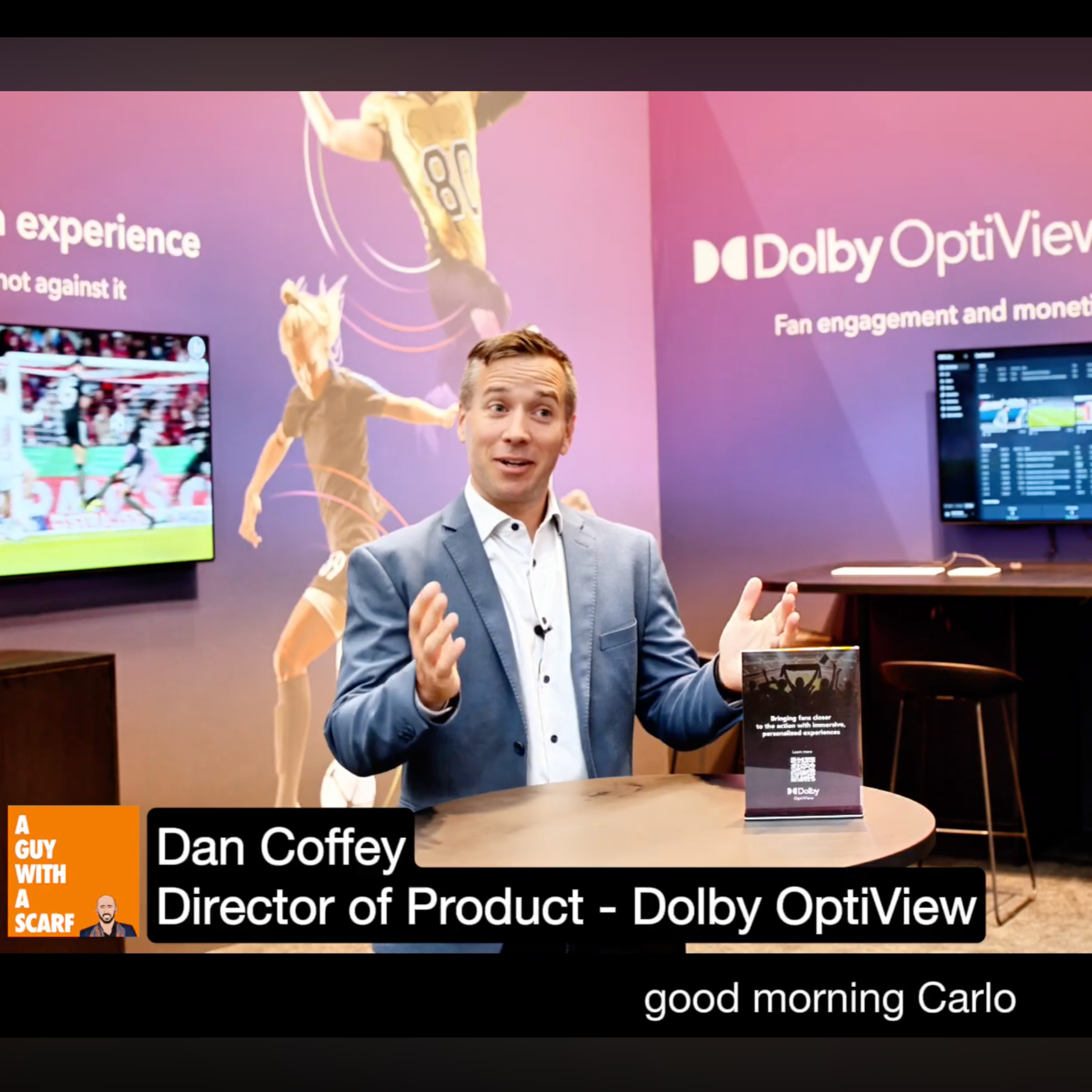
Special IBC 2025: Dan Coffey – Reinventing the Streaming Experience with Dolby OptiView

For this special IBC 2025 edition of A Guy with a Scarf, I spoke with Dan Coffey, Director of Product at Dolby OptiView, about the future of immersive streaming, new ad formats, and the role of consistency in low-latency delivery.Coffey joined Dolby six years ago through the acquisition of Hybrik. Since then, he has been shaping Dolby OptiView’s product roadmap. For him, technology is always in service of a bigger mission: storytelling. “Telling a good story is immersive when you can use the best technology. It’s like putting the right tool for the right task.”At IBC, Coffey presented Dolby’s latest server-guided ad insertion (SGAI) technology. Instead of the traditional one-size-fits-all ad break, Dolby enables multiple non-linear formats: double box, squeeze-back, or full takeover. The result? More ad opportunities and better monetization without breaking the live experience. “It’s really about giving the opportunity for more ad breaks, and that increases the opportunity for more revenue.”The system also powers regionalized and personalized targeting. Ads can be delivered by geography or down to the individual user, with the same mechanism extended to editorial content such as replays. Imagine watching your favorite match and automatically receiving highlights featuring the players you care most about. As Coffey put it, “It’s about personalizing the ad to the user and the experience to the device.”Latency was another central topic. Dolby OptiView has built a streaming stack that doesn’t just chase the lowest possible delay—it delivers predictable, consistent latency. Sub-second delivery works for interactive features, two seconds is tuned for sports betting, and five seconds aligns with broadcast. “What’s really special about our streaming product is that the latency is very consistent—far more consistent than HLS.”Dolby also showcased an SDR-to-Dolby Vision upconversion demo, upgrading standard feeds to premium HDR quality. For platforms managing mixed-source content, this can ensure audiences always get the best possible viewing experience.Key takeaways: – Storytelling drives technology at Dolby OptiView. – Advertising is being reinvented with non-linear formats and regional targeting. – Personalization goes beyond ads, into editorial content. – Consistency is king in latency, tuned to use cases from fan polls to betting. – Quality upgrades like SDR-to-Dolby Vision ensure premium delivery at scale.What emerges is not just a set of features, but a vision for streaming as a unified, orchestrated experience. Ads, latency, personalization, and quality don’t live in silos—they come together to create a seamless and immersive narrative for fans everywhere.

August 13, 20256 min

📺 📲 Ads, Interrupted: Why Streaming Advertising in 2025 Feels Stuck – and How to Fix It

💡 How Server-Guided Ad Insertion (SGAI) Could Redefine the Streaming Ad Experience

Is this your show?

Claim this listing to keep it up to date, reach guests who want to pitch you, and manage bookings with Guestify.

Claim this listing

More Technology podcasts