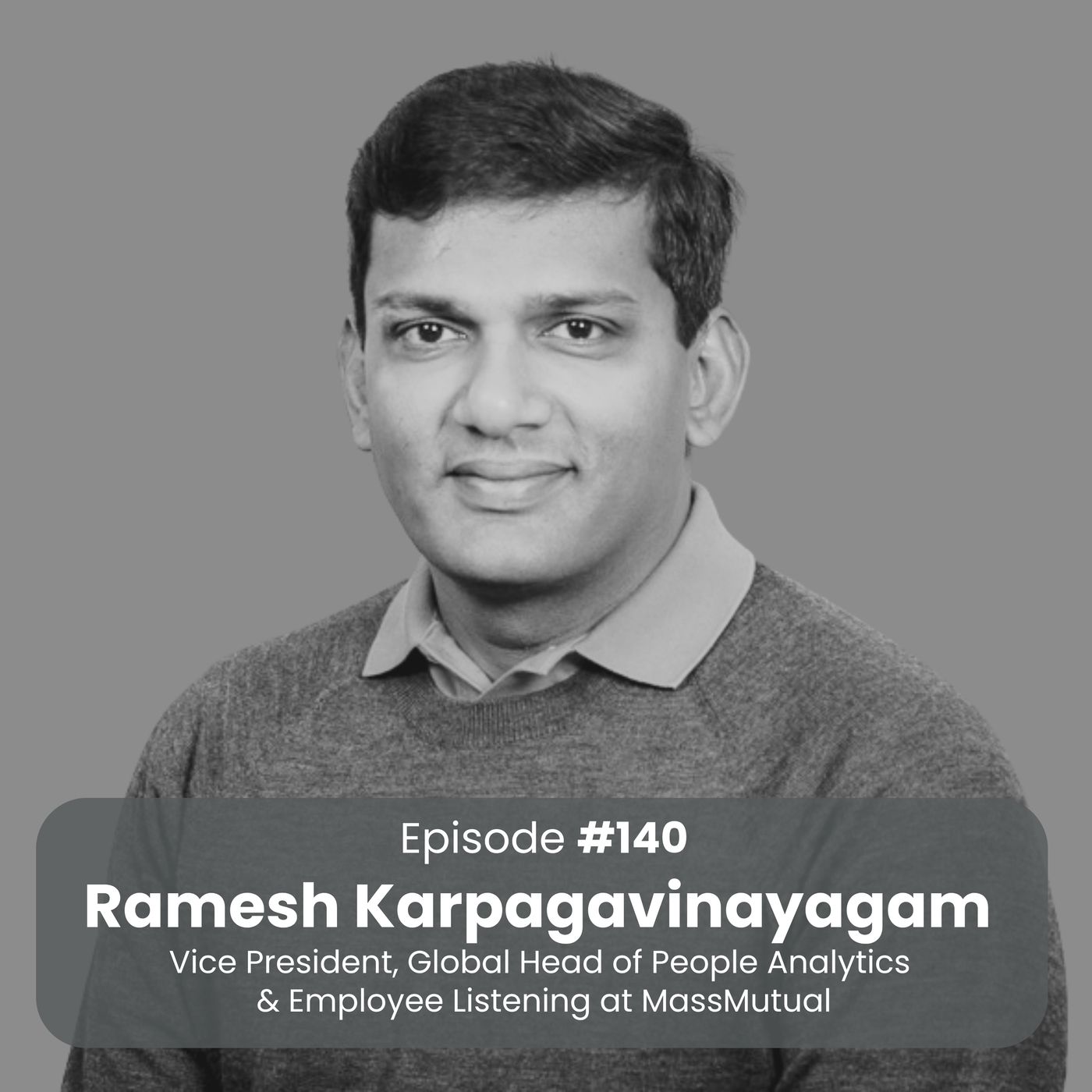
HR Data Storytelling and Strategic Workforce Planning at MassMutual: Ramesh Karpagavinayagam
People analytics is often hailed as an HR game-changer, promising dashboards, predictive models, and ‘data-driven’ decisions. But as Ramesh Karpagavinayagam, Vice President and Global Head of People Analytics at MassMutual, explains, fancy technology alone is not the answer. Real transformation starts with upskilling HR, embedding a new mindset, and building relationships that unlock real value from analytics. You will want to hear this episode if you are interested in… [01:34] Shift in HR partnership: from data/report requests to hypothesis/problem-solving orientation [12:25] Building capability as an adoption strategy, not siloed training [15:00] Moving beyond awareness and definition-level learning to behavior change [25:53] Relationship-building at scale through accompanying HR in their learning journey [34:01] Investing time and resources to make storytelling a key HR outcome [43:03] Ownership and implementation of strategic workforce planning [46:29] Attracting, developing, retaining talent, and defining roles in the AI era [53:18] Change management as the biggest barrier over technical or executional challenges [01:02:20] Focusing on real people impact Why Building HR’s Data Capability Comes First Ambitious analytics roadmaps often stall because HR isn't prepared to translate insights into action. When Ramesh joined MassMutual, he immediately recognized this gap. Dashboards and predictive analytics would be fruitless unless HR professionals could ask sharper questions and connect data to real business outcomes. Ramesh focused the first three years of his tenure on intentional upskilling. He treated capability-building not as an isolated training effort, but as the core adoption strategy for every data initiative they hoped to launch. This foundational work transformed HR’s approach: instead of requesting reports, HR partners now lead conversations with, “What are we solving for?”, bringing hypotheses, not just data asks. Embedding Learning in the Flow of Work The upskilling journey at MassMutual wasn’t confined to workshops or one-off sessions, they built learning into real projects, coaching HR partners through actual business challenges and designed a progression that cultivates behavioral change: Level 1: Awareness and basic data literacy. Level 2: Understanding metrics and basics of interpreting data. Level 3+: Contextual application—how to use data and analytics to reframe and solve real problems in the business. The magic happens when HR professionals solve problems differently, reflect on the new approach, and internalize a hypothesis-driven mindset. Leadership, Champions, and Community None of this would work without leadership support, though, and in this case upskilling only gained traction when MassMutual’s HR leadership made it a stated priority—woven into the fabric of how people decisions would be made going forward. Driving change also depended on mobilizing champions: progressive thinkers within HR who were hungry to learn more, even if they were already data-savvy. These advocates modeled new behaviors, and as community participation grew, momentum for broader transformation grew with it. The Resourcing Reality Just 20% of the team’s time, deliberately carved out from traditional analytics work, enabled the extensive coaching, learning design, and contextual support needed to build HR’s muscle. This relatively modest investment yielded outsized returns by empowering HR partners to own the “last mile” of analytics and by strengthening the trust and relationships essential for lasting change. Setting Up for the AI Era Perhaps most presciently, this upskilling journey has future-proofed MassMutual’s people analytics function. AI and large language models will increasingly automate dashboard creation and data gathering. But what technology can’t (yet) replicate is human trust, contextual judgment, and the ability to shape insights into compelling business narratives. People analytics can feel foreign to some HR professionals, but building trust by focusing on their problems, partnering through learning, and embedding your work in their real-world challenges is what drives collective success. MassMutual’s experience shows that the future of HR analytics depends on building people’s capabilities—not just better tools. Resources & People Mentioned The Josh Bersin Institute The 70:20:10 Model - A different view of work, performance and learning Connect with Ramesh Karpagavinayagam Ramesh Karpagavinayagam on LinkedIn Connect With RedThread Research Website: RedThread Research On LinkedIn Subscribe to WORKPLACE STORIES