Find partners
Women in Safety Podcast

Women in Safety Podcast

Hosted by Women in Safety Podcast

BusinessInterviews guests

Episodes

126

Latest episode

Jun 2026

Language

EN

About the show

A podcast designed to connect the safety profession through conversation and inspiration.

Listen to episodes

60 recent
June 15, 2026Episode 1612 min

The Capability Shift: What Safety Professionals Need Next

​In this episode of the Women in Safety Podcast, Alanna Ball reflects on how the role of safety professionals is changing, and why technical knowledge on its own is no longer enough. As workplaces become more complex and expectations continue to shift, safety work is increasingly about leadership, influence, judgement, and the ability to work well across different parts of a business.Alanna talks about the growing need for safety professionals to build business acumen, understand organisational priorities, and communicate in ways that connect safety to real business outcomes. She also explores why continuous learning matters more than ever, especially in a world shaped by AI, rapid change, and rising complexity. This is a grounded conversation about what the future of safety looks like, and how professionals can prepare for it without losing sight of the human side of the work.Episode HighlightsHow the role of safety professionals is shifting from technical delivery to leadership and influenceWhy decision-making and stakeholder management are becoming more important in safety rolesThe value of business acumen in shaping conversations and influencing outcomesHow understanding organisational priorities can strengthen credibility and impactWhy safety language needs to connect with business performance and decision-makingThe importance of continuous capability development in a fast-changing environmentHow AI and organisational complexity are reshaping the future of work in safetyWhy adaptability, curiosity, and communication are key strengths for future safety professional​This episode is a timely reminder that the future of safety is not just about knowing the rules or managing compliance. It is about leading conversations, building trust, making sound decisions, and understanding how safety fits into the wider business. Alanna encourages listeners to keep developing their capability, stay curious, and recognise that influence often comes from speaking the language of the people around you. For anyone working in safety, this conversation offers a clear and practical look at where the profession is heading, and what it will take to grow with it.Stay connected with Women in SafetyWebsitewww.womeninsafety.netVisit the website for upcoming events, programs, and community updates, and subscribe to the newsletter to stay informed throughout the year.Instagramwww.instagram.com/womeninsafetyFollow along for conversations, community highlights, and insights from women across the health and safety profession.Become an Empowered Memberwww.womeninsafety.net/empoweredmembersExplore Empowered Membership to access deeper learning opportunities, exclusive events, and meaningful connection within the Women in Safety community.
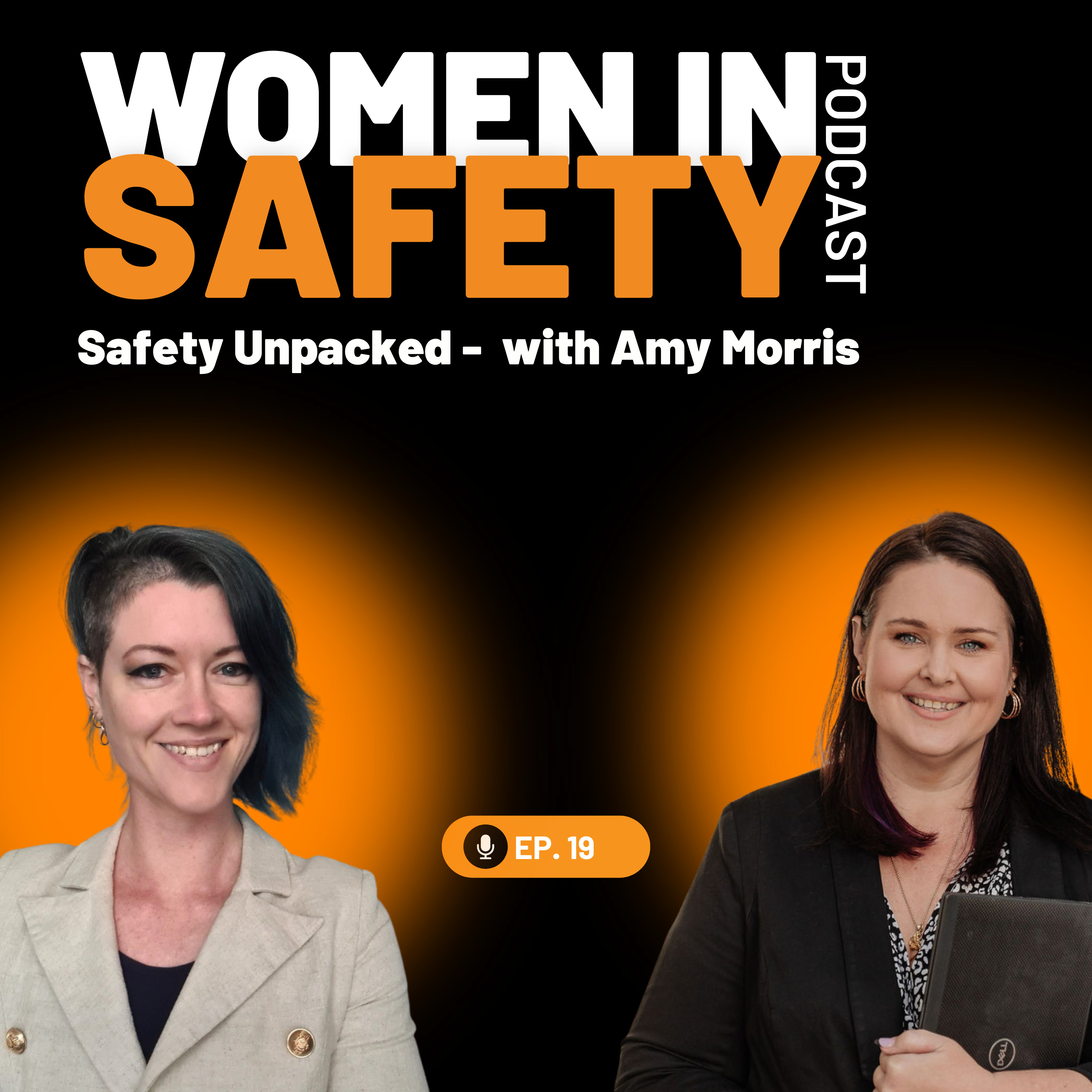
June 9, 2026Episode 1534 min

Safety Unpacked - Learning or Blaming? with Amy Morris

In this episode of the Women in Safety Podcast, Alanna Ball and Amy Morris take a closer look at incident investigations and the bigger system issues that often sit behind safety events. Rather than defaulting to worker blame or behaviour-based explanations, they explore what happens when controls are poorly designed, hard to apply, or simply do not hold up in real working conditions.The conversation highlights why incident investigations need to go beyond surface-level findings and ask better questions about how work is actually done. Alanna and Amy discuss the importance of classifying incidents properly, understanding the difference between workable and unworkable controls, and looking at the wider organisational conditions that shape risk and decision-making.​Episode HighlightsWhy correct incident classification matters when deciding where effort and resources should goHow many incidents involve controls that are difficult or unrealistic to apply in real-world conditionsThe difference between easy, difficult, and unworkable controls, and why that matters in preventionCommon examples of control failure, including broken equipment, impractical PPE, and the workarounds people create to get the job doneHow poor system design and organisational culture can weaken even well-intended controlsWhy investigation methods need to ask better questions, not just produce quick conclusionsHow strict rule enforcement can sometimes drive unsafe workarounds instead of safer workThe role of wider system weaknesses, beyond individual behaviour, in shaping incident outcomesPractical ways to build more resilient controls through stronger design and organisational learningWhy storytelling matters in incident reporting and helps reveal the full picture behind an event​This episode is a strong reminder that incidents rarely make sense when viewed through blame alone. Alanna and Amy encourage safety professionals to look more closely at the systems, controls, and organisational conditions surrounding an event, rather than stopping at what the worker did or did not do. When investigations focus on the full story, including the pressures, design flaws, and control gaps involved, they become far more useful for learning and prevention. For anyone working in health and safety, this conversation is a call to strengthen investigations, improve control design, and build systems that work in practice, not just on paper.Connect with Amy:LinkedIn: https://www.linkedin.com/in/amyleahmorris Stay connected with Women in SafetyWebsitewww.womeninsafety.netVisit the website for upcoming events, programs, and community updates, and subscribe to the newsletter to stay informed throughout the year.Instagramwww.instagram.com/womeninsafetyFollow along for conversations, community highlights, and insights from women across the health and safety profession.Become an Empowered Memberwww.womeninsafety.net/empoweredmembersExplore Empowered Membership to access deeper learning opportunities, exclusive events, and meaningful connection within the Women in Safety community.
May 4, 2026Episode 1431 min

Safety Unpacked - Leading Through Change with Amy Morris

In this episode of the Women in Safety podcast, Alanna Ball and Amy Morris explore what leadership looks like when the path ahead is unclear. Using a recent Harvard Business Review Executive masterclass as a starting point, they unpack how ideas from outside the safety profession can help leaders think differently about change, uncertainty, and the systems around them. The HBR piece, How to Lead When You Can’t See the Way, centres on leading through uncertainty when the future feels difficult to read, which becomes a useful lens for this safety conversation.From there, Alanna and Amy bring the discussion back to health and safety, looking at how data, feedback, communication, and adaptive systems can support better decisions in uncertain environments. Rather than relying on rigid habits or traditional safety thinking alone, the episode encourages leaders to stay curious, test assumptions, learn from mistakes, and create stronger connections across teams and functions.​Episode HighlightsWhy leadership in uncertain environments requires more than technical knowledge or fixed plansHow ideas from outside the health and safety field can strengthen leadership thinking and decision-makingThe role of data, feedback, and hypothesis testing in understanding what is working and what needs to changeWhy learning from mistakes is essential to innovation and continuous improvementHow communication supports trust, adaptability, and safer decision-makingThe importance of breaking down silos and creating stronger collaboration across teamsWhy adaptive systems are more useful than rigid processes when change is constantHow safety leaders can move beyond traditional approaches and build a culture of learningConclusionThis episode is a thoughtful reminder that uncertainty is not a temporary disruption for leaders to wait out. It is often part of the environment they are working in. Alanna and Amy highlight the value of looking beyond the safety profession for ideas, frameworks, and language that can help shape better leadership practice. By using data more thoughtfully, encouraging feedback, learning openly from mistakes, and fostering collaboration across silos, safety professionals can lead with more confidence even when the way forward is not fully visible.Link to the article mentioned - https://hbr.org/2026/03/how-to-navigate-through-the-fog Stay connected with Women in SafetyWebsitewww.womeninsafety.netVisit the website for upcoming events, programs, and community updates, and subscribe to the newsletter to stay informed throughout the year.Instagramwww.instagram.com/womeninsafetyFollow along for conversations, community highlights, and insights from women across the health and safety profession.Become an Empowered Memberwww.womeninsafety.net/empoweredmembersExplore Empowered Membership to access deeper learning opportunities, exclusive events, and meaningful connection within the Women in Safety community.
April 20, 2026Episode 1314 min

What My Life Taught Me About Why People Don’t Follow Procedures

In this episode of the Women in Safety podcast, Alanna Ball shares a personal and thoughtful reflection on how life outside of work can shape the way people show up within it. Drawing on recent experiences of grief, family responsibility, and health challenges, she explores how personal change can affect focus, energy, judgement, and the ability to respond well to risk.This episode brings a human lens to safety, reminding listeners that people do not arrive at work as blank slates. Alanna unpacks the impact of cognitive overload and emotional fatigue, and why these factors matter when organisations are introducing change, expecting compliance, or asking people to make important safety decisions in already demanding environments.​Episode HighlightsHow personal change can affect focus, confidence, and safety decision-makingThe impact of grief, family pressure, and health issues on cognitive load at workWhy cognitive overload and decision fatigue can increase risk and reduce complianceThe importance of recognising the human realities people carry into the workplaceHow empathy can strengthen change management and improve safety outcomesWhy simplified systems and clearer communication are essential during times of pressure or changeThe need for organisations to consider emotional capacity, not just process and performance​This episode is a reminder that safety is deeply connected to the human experience. Alanna highlights that when people are carrying stress, grief, or major life change, their capacity to absorb information, make decisions, and respond to change may be reduced. For safety professionals and leaders, the message is clear: empathy is not separate from safety, it is part of it. By simplifying processes, communicating clearly, and leading with greater understanding, organisations can create safer and more supportive environments for the people doing the work.Stay connected with Women in SafetyWebsitewww.womeninsafety.netVisit the website for upcoming events, programs, and community updates, and subscribe to the newsletter to stay informed throughout the year.Instagramwww.instagram.com/womeninsafetyFollow along for conversations, community highlights, and insights from women across the health and safety profession.Become an Empowered Memberwww.womeninsafety.net/empoweredmembersExplore Empowered Membership to access deeper learning opportunities, exclusive events, and meaningful connection within the Women in Safety community.
April 13, 2026Episode 1236 min

Safety Unpacked - Hierarchy of Control

In this episode of the Women in Safety podcast, Alanna Ball and Amy Morris take a practical look at risk treatment options and the hierarchy of controls, unpacking how safety decisions are shaped through systems, design, and context. Rather than treating controls as a checklist exercise, the conversation explores how safety professionals can think more critically about what is actually effective, what is simply assumed to work, and where gaps may still exist.​The discussion moves beyond theory and into the realities of risk management, including the difference between active and passive controls, the value of bow tie analysis, and why safety should be considered much earlier in the planning and design of work. Alanna and Amy also highlight the importance of testing and verifying controls, rather than assuming they are effective just because they are documented.​Episode HighlightsWhy safety often sits within data, decisions, and systems, not just frontline actionsHow the hierarchy of controls can support risk management, while still requiring context and critical thinkingThe importance of understanding the difference between active and passive controlsHow the bow tie method can help identify gaps in risk treatment and control effectivenessWhy safety professionals should be involved during the planning and design stages of workThe need to test, verify, and review controls rather than relying on assumptionsHow designing good work can help prevent both physical and psychosocial harmWhy overcomplicating safety processes can create confusion and reduce effectivenessHow asking better questions can lead to stronger and more practical risk management decisions​This episode is a useful reminder that effective risk management is not about adding more steps or more paperwork. It is about understanding the context, choosing controls with intent, and making sure they actually work in practice. Alanna and Amy encourage listeners to look beyond the language of compliance and focus on designing good work, asking sharper questions, and building safety into decisions from the beginning. For safety professionals, this conversation offers a more thoughtful and practical approach to managing risk in real-world settings.Stay connected with Women in SafetyWebsitewww.womeninsafety.netVisit the website for upcoming events, programs, and community updates, and subscribe to the newsletter to stay informed throughout the year.Instagramwww.instagram.com/womeninsafetyFollow along for conversations, community highlights, and insights from women across the health and safety profession.Become an Empowered Memberwww.womeninsafety.net/empoweredmembersExplore Empowered Membership to access deeper learning opportunities, exclusive events, and meaningful connection within the Women in Safety community.
March 23, 2026Episode 836 min

Lessons and Laughs with Kristen Harley

In this episode of the Women in Safety podcast, Alanna Ball speaks with Kristen Harley about her journey into health and safety, the realities of working while neurodivergent, and what more inclusive leadership can look like in practice. The conversation brings together career reflection, lived experience, and practical insight, showing how empathy, communication, and system design all shape the way safety is understood and experienced at work.Kristen shares how her experience with neurodivergence, including ADHD and autism, has influenced the way she thinks about safety, leadership, and communication. Rather than treating inclusion as an add-on, this discussion highlights why designing systems and processes with different ways of thinking in mind can create stronger, safer, and more effective workplaces for everyone.Episode highlightsKristen Harley’s journey into health and safety and how her career developed over timeHow neurodivergence, including ADHD and autism, can shape the way safety is experienced and practisedWhy inclusive leadership requires more than awareness and needs to be reflected in everyday communicationThe role of empathy and vulnerability in building trust and strengthening safety culturePractical ways to design systems, processes, and communication approaches that are more inclusive for neurodivergent workersWhy understanding different needs and perspectives can lead to better leadership and better safety outcomesThis episode is a thoughtful reminder that inclusion and safety are deeply connected. Kristen’s insights show that when leaders communicate with empathy, stay open to different experiences, and design systems that consider how people actually think and work, safety becomes more human, more accessible, and more effective. For safety professionals and leaders alike, this conversation offers an important reflection on how inclusive practice can strengthen both culture and outcomes.Connect with Kristen on LinkedIn: https://www.linkedin.com/in/kristen-h-2b906816a/ Stay connected with Women in SafetyWebsitewww.womeninsafety.netVisit the website for upcoming events, programs, and community updates, and subscribe to the newsletter to stay informed throughout the year.Instagramwww.instagram.com/womeninsafetyFollow along for conversations, community highlights, and insights from women across the health and safety profession.Become an Empowered Memberwww.womeninsafety.net/empoweredmembersExplore Empowered Membership to access deeper learning opportunities, exclusive events, and meaningful connection within the Women in Safety community.
March 17, 2026Episode 1037 min

Safety Unpacked - Safety Clutter with Amy Morris

In this episode of the Women in Safety podcast, Alanna Ball is joined by Amy Morris for a practical conversation about safety clutter and why more safety activity does not always mean better safety outcomes. Together, they unpack how excessive procedures, duplicated paperwork, and overcomplicated systems can quietly weaken trust, create confusion, and pull attention away from the work that actually keeps people safe.The discussion explores how safety clutter often builds over time through client requirements, compliance pressure, audits, and the habit of adding rather than reviewing. Amy shares why it is so important to question whether a task, document, or control genuinely supports safety, or whether it simply adds more weight to an already overloaded system.Episode highlightsWhat safety clutter looks like in practice, including rules, documents, roles, and activities that do not improve safetyWhy safety clutter is often context-specific, especially in industries like constructionHow external pressures such as regulation, certification, and client demands contribute to overloaded safety systemsThe risks of over-prescriptive procedures, including worker mistrust and checkbox behaviourWhy updating and simplifying existing processes is often better than creating new onesHow practical tools, flexible guidance, and clearer communication can improve engagementThe role of risk registers, process mapping, and bow tie analysis in identifying unnecessary or duplicated controlsWhy safety professionals need to understand the origin and purpose of each activity within the systemThe value of continuous improvement and making safety systems even slightly better over timeThis episode is a strong reminder that effective safety systems are not built on volume, but on value. Alanna and Amy challenge listeners to look closely at what has been added to their systems over time and ask whether it still serves a clear purpose. By reducing clutter, simplifying communication, and focusing on controls that are active, practical, and trusted, safety professionals can create systems that support real work instead of getting in its way.If your safety systems feel heavier than they need to be, this conversation offers a useful place to start. Listen in, reflect on what may no longer be serving your people, and consider what one small improvement could look like in your own workplace.Stay connected with Women in SafetyWebsitewww.womeninsafety.netVisit the website for upcoming events, programs, and community updates, and subscribe to the newsletter to stay informed throughout the year.Instagramwww.instagram.com/womeninsafetyFollow along for conversations, community highlights, and insights from women across the health and safety profession.Become an Empowered Memberwww.womeninsafety.net/empoweredmembersExplore Empowered Membership to access deeper learning opportunities, exclusive events, and meaningful connection within the Women in Safety community.
March 9, 2026Episode 942 min

Listen to Learn with Charlotte Jameson

In this episode, Alanna Ball speaks with Charlotte Jamieson about the role of connection, mental health, and emotional regulation in safety leadership. Charlotte shares how her early career in sports psychology shaped the way she approaches safety today, bringing a deeper understanding of human behaviour, resilience, and performance into workplace safety conversations.Their discussion highlights how safety leadership is not only about systems and processes, but also about relationships. Charlotte introduces ideas such as the Art of Connection and explains how neurobiology and emotional awareness can influence the way people respond to stress, risk, and change. The conversation encourages safety professionals to think beyond compliance and consider how belonging, trust, and empathy shape both safety culture and recovery after incidents.Episode highlightsCharlotte’s transition from sports psychology into health and safetyWhy connection and belonging play a critical role in safety culture and recoveryThe Art of Connection framework and how it supports effective leadershipHow neurobiology and emotional regulation influence decision making in safetyPractical strategies for managing stress and building stronger workplace relationshipsThe importance of empathy when influencing safety conversations and behaviourThis episode offers a powerful reminder that safety leadership begins with understanding people. Charlotte’s insights show how connection, empathy, and emotional awareness can strengthen communication, support wellbeing, and improve safety outcomes. For safety professionals seeking to influence culture and build trust across teams, this conversation highlights practical ways to lead with greater awareness and human understanding. Stay connected with Women in SafetyWebsitewww.womeninsafety.netVisit the website for upcoming events, programs, and community updates, and subscribe to the newsletter to stay informed throughout the year.Instagramwww.instagram.com/womeninsafetyFollow along for conversations, community highlights, and insights from women across the health and safety profession.Become an Empowered Memberwww.womeninsafety.net/empoweredmembersExplore Empowered Membership to access deeper learning opportunities, exclusive events, and meaningful connection within the Women in Safety community.
March 3, 2026Episode 840 min

Real not regulatory with Jo Prigmore

In this episode, Alanna Ball sits down with Joe Prigmore for an honest and practical conversation about finding your path in health and safety. Joe shares how her move from biomedical science into the safety profession was not carefully planned, but ultimately deeply fulfilling.Their discussion centres on the human side of safety. Beyond systems and compliance, Joe reflects on the importance of curiosity, empathy, and people skills in building safer workplaces. She shares how learning from mistakes, developing professional judgement over time, and understanding basic human needs are all part of shaping effective safety leadership.Episode highlightsJoe’s unexpected transition from biomedical science into health and safetyWhy people skills are just as important as technical knowledge in safety managementHow curiosity helps uncover root causes and improve safety outcomesLearning from mistakes and using reflection to strengthen professional judgementInfluencing leaders by understanding their priorities and pressuresThe value of a partnership approach in safety rather than a policing mindsetWhy practical, hands-on training often creates more impact than theory aloneRecognising that fundamental needs, such as access to clean facilities, are central to safety cultureThe role of empathy and understanding in managing risk effectivelyThis episode reminds us that safety is grounded in people, not paperwork. Joe’s experiences highlight how curiosity, empathy, and partnership can shift conversations and strengthen culture. For safety professionals at any stage of their career, the conversation reinforces that growth often comes through experience, reflection, and the courage to learn from mistakes. It also challenges us to remember that the basics matter, and that meeting fundamental human needs is central to building trust and credibility in safety leadership.Stay connected with Women in SafetyWebsitewww.womeninsafety.netVisit the website for upcoming events, programs, and community updates, and subscribe to the newsletter to stay informed throughout the year.Instagramwww.instagram.com/womeninsafetyFollow along for conversations, community highlights, and insights from women across the health and safety profession.Become an Empowered Memberwww.womeninsafety.net/empoweredmembersExplore Empowered Membership to access deeper learning opportunities, exclusive events, and meaningful connection within the Women in Safety community.

February 24, 2026Episode 734 min

Safety Unpacked - Worker attitudes and behaviors

In this episode, Alanna Ball and Amy Morris explore the complexity of safety culture and the often unseen factors that shape how safety is experienced in organisations. Rather than focusing on policies alone, the conversation centres on perception, trust, and the motives workers attribute to leadership decisions.They unpack the idea of preservation orientation and question whether safety measures are viewed as genuine care for employees or as protection for the organisation. This discussion highlights how worker perception can influence engagement, compliance, and overall trust in leadership.Episode highlightsHow worker perceptions of management motives shape safety cultureThe concept of preservation orientation and its impact on trustWhy credibility, reliability, and authenticity matter in leadershipThe link between business decisions and safety outcomesThe risk of treating safety as separate from broader organisational strategyHow communication influences whether safety is seen as supportive or controllingWhy understanding the reasons behind safety measures builds stronger engagementThe importance of framing surveys and safety conversations constructivelyRecognising that organisational culture must support safety as a shared responsibilityThis episode challenges listeners to look beyond surface-level safety metrics and consider the deeper cultural signals being sent through business decisions and communication practices. Alanna and Amy remind us that safety culture is not created by policies alone. It is shaped by trust, clarity of intent, and alignment between organisational values and everyday actions. For safety professionals, this conversation is an invitation to reflect on how decisions are perceived, how messages are delivered, and how safety can be integrated meaningfully into the broader business context.Stay connected with Women in SafetyWebsitewww.womeninsafety.netVisit the website for upcoming events, programs, and community updates, and subscribe to the newsletter to stay informed throughout the year.Instagramwww.instagram.com/womeninsafetyFollow along for conversations, community highlights, and insights from women across the health and safety profession.Become an Empowered Memberwww.womeninsafety.net/empoweredmembersExplore Empowered Membership to access deeper learning opportunities, exclusive events, and meaningful connection within the Women in Safety community.

Is this your show?

Claim this listing to keep it up to date, reach guests who want to pitch you, and manage bookings with Guestify.

Claim this listing

More Business podcasts