Find partners
Wired to Build

Wired to Build

Hosted by Nick Caravella

BusinessInterviews guests

Episodes

42

Latest episode

Jun 2026

Language

EN

About the show

The construction industry doesn't have an innovation problem. It has an understanding problem. Every conversation on Wired to Build goes deeper than the tool, the trend, or the technology — into the systems behind the project, the humans shaping them, and the friction that makes both of them real. Nick Caravella is a registered architect and construction technologist who left working in the industry to work on it. If you've ever stood in the middle of a project and thought there has to be a better way to understand this — you're in the right place. Wired to Build is powered by Avicado
Listen to episodes

42 recent
June 10, 2026Episode 934 min

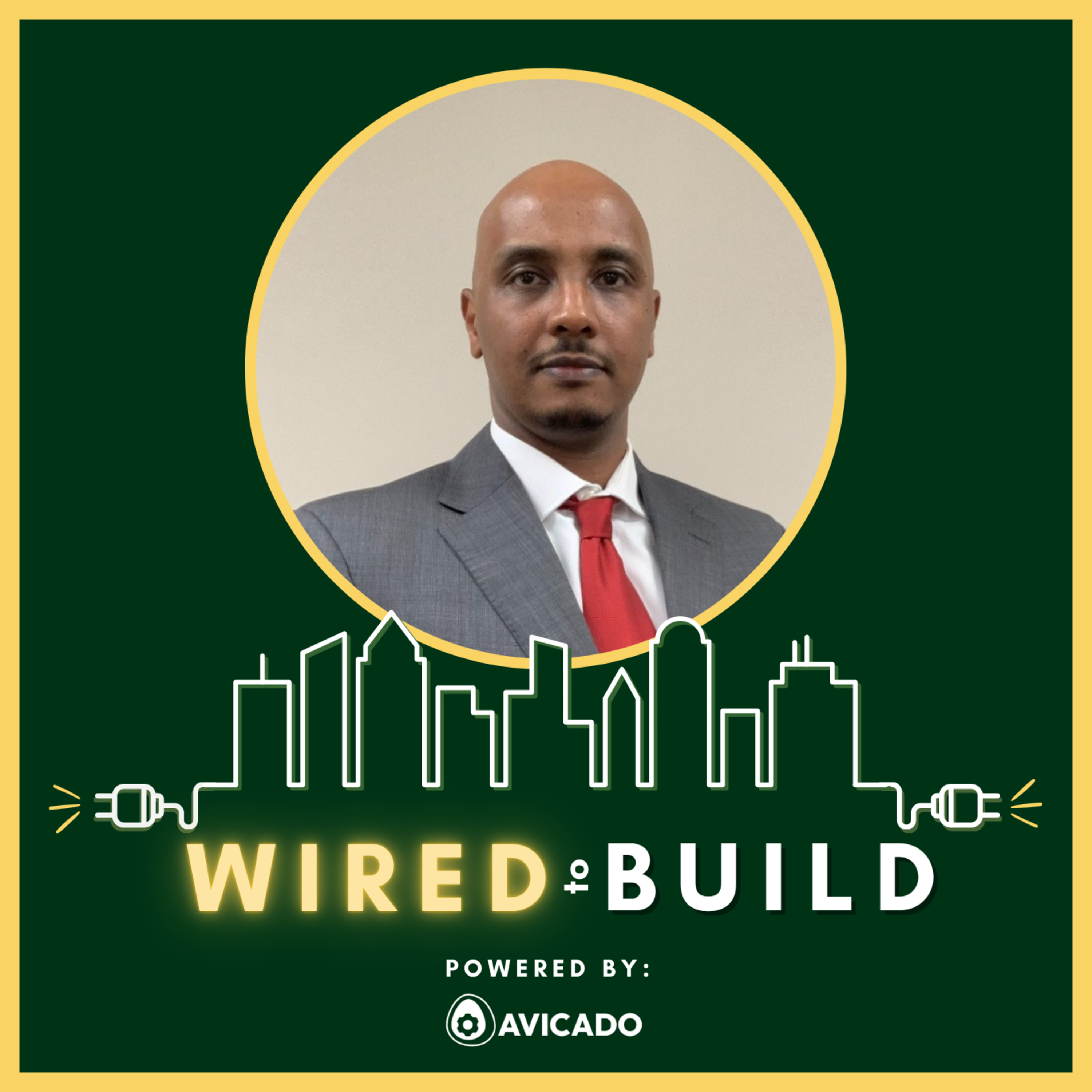
Guest Intro - Dr. Ahmed El-Rasheed | Megger

What does it actually mean to know electrical work was done right?Not hope.Not assume.Know.Dr. Ahmed El-Rasheed has spent his career inside the world of electrical testing and measurement. As Industry Director at Megger, he works at the intersection of power systems, field practice, and the instruments used to verify that critical infrastructure is ready to perform.In Part 1, Ahmed and Nick cover:How Ahmed’s path from taking apart broken VCRs to electrical engineering shaped the way he thinks about measurementWhy Megger became synonymous with insulation resistance testing in the electrical tradesThe difference between work being done and work being provenWhat Ahmed’s research with Jaguar taught him about visual completion versus verified qualityWhy electrical testing matters before energizing data centers, hospitals, power stations, and other critical infrastructureHow renewables, HVDC, bidirectional power flow, and data center demand are changing the complexity of the gridWhy certainty, skilled labor, and documentation matter more as the margin for error gets smallerPart 2 picks up where this leaves off: testing culture, commissioning, workforce readiness, and what it takes to hold a higher standard in the field before the lights come on.Support the show!Make sure to like, subscribe, and share your thoughts.Visit our founding sponsor at www.avicado.com

June 4, 2026Episode 82 min

Field Notes 03 - Slow is Smooth, Smooth is Fast

"Slow is smooth. Smooth is fast."You've heard it on a call, on a jobsite, in a review — and nobody ever asks what it means. We just nod.This Field Note is about why that phrase keeps resurfacing right now. The built world is accelerating — bigger projects, tighter schedules, less room for error — and the cost of getting things wrong is climbing. But most failures don't begin when something breaks. They begin weeks or months earlier, in a skipped verification, an assumption, a rushed review. Something that saved a few minutes. Until it didn't.Everybody wants acceleration. Very few people talk about recovery. A short one on why speed without control eventually creates its own delay.Field Notes. No guests. Just what the work is teaching us.

May 27, 2026Episode 1045 min

Should Tech Adoption Be Disruptive or Constructive with Jeff Sample

Most construction technology conversations ask the wrong question. They ask why adoption is slow. Jeff Sample asks something harder: are we even solving the right problem?Jeff is Senior Industry Development Manager for Trades at Bluebeam and host of The ConTech Crew — a technologist with 30 years in IT who found construction a decade ago and never left. His perspective crosses job sites, startups, and strategy in a way most people in this industry never get.In Part 2, Nick and Jeff get into: why disruption is a byproduct and not a goal — and what the Uber story actually teaches us. Why construction's technology problem is a translation problem, not an adoption problem. What separates high-performing crews from struggling ones when it comes to innovation. Why proximity to the work is non-negotiable for anyone trying to change how building gets done. And what the next generation of builders needs from the people ahead of them.What you'll walk away with: a cleaner frame for why good tools fail in the field, and a sharper sense of what it actually takes to connect leadership intent to field reality.Support the show!Make sure to like, subscribe, and share your thoughtsVisit our founding sponsor at www.avicado.com

May 19, 20263 min

Field Notes 02 | What It Takes To Be Ready

The industry knows the barriers. Community opposition. Workforce gaps. Power constraints. Access. Everyone in the room at DICE this week could name them.But naming barriers isn't the same as being ready to clear them.In this Field Note, Nick Caravella breaks down what readiness actually requires in data center construction — and why the industry keeps confusing hitting a schedule date with actually being prepared to finish the work.Readiness isn't a milestone. It's a condition. And until we stop using the schedule as a substitute for that condition, we'll keep handing over buildings that aren't done — we just ran out of time to pretend otherwise.Three conditions this episode examines:— The schedule problem: why the date gives you somewhere to hide— The workforce problem: people don't fall from the sky— The community problem: they're not an obstacle, they're a condition of completionField Notes. No guests. Just what the work is teaching us.

May 13, 2026Episode 1041 min

Guest Intro - Jeff Sample

Why does construction technology keep landing wrong — even when the tools are better than they've ever been?Jeff Sample has spent years traveling the industry as a host of the ConTech Crew and, more recently, as head of global industry strategy at Bluebeam. He's been in more contractor offices, job site trailers, and conference rooms than almost anyone in the construction technology space — which gives him a rare view of how technology actually behaves inside real companies and real teams.In Part 1, Jeff and Nick cover:How Jeff's path from IT architect to ski resort technologist to construction tech leader shaped how he reads the industryWhy people, process, and technology have to happen in that order — and what breaks when they don'tThe shift from evangelist to facilitator: why you can't preach adoption and what actually creates room for changeWhat the industry gets wrong about RFIs — and what that reveals about how we handle expertise and riskPart 2 picks up where this leaves off: culture beyond the company, grassroots adoption versus leadership alignment, and what it means to build an industry that's greater than the sum of its parts.Support the show!Make sure to like, subscribe, and share your thoughts.Visit our founding sponsor at www.avicado.com

April 22, 2026Episode 41 hr 6 min

AI Doesn't Know What Good Looks Like. You Do. | Marcus Turner @ Constructrr

Most conversations about AI in construction focus on what the tools can do. This one focuses on what it actually takes to use them.Marcus Turner has been building with AI tools in real construction and knowledge-work contexts for years. He is not predicting the future of AI. He is living in the present tense of it.In this conversation:Why domain knowledge is the multiplier and AI only amplifies what you already understandWhat "context engineering" means and why most people are still using AI like a search engineHow builders can start experimenting today without feeling like they are already behindWhat a personal AI agent stack looks like when someone actually builds oneThe industry is not short on AI opinions. It is short on people who have gotten their hands dirty with it. Marcus is one of them.

March 26, 2026Episode 358 min

The Field Isn't Rejecting the Tech. It's Rejecting the Slowdown. | Rob Sloyer @ KAST

Most conversations about construction technology focus on what the tools can do. This one focuses on what they actually do — to the people using them.Rob Sloyer is VP of Innovation and Strategic Services at KAST Construction, a Florida-based multifamily builder with over two decades building at scale. He's been close to BIM since before most companies knew how to spell it — and he's watched enough hype cycles to know that technology without purpose doesn't just fail to help. It actively makes things worse.In this conversation:Why BIM shifted problems earlier in the process instead of eliminating themThe three-part test for whether a tool actually belongs in the workWhat AI adoption is getting wrong — and why it's hitting the same walls as every wave before itThe workforce shortage, rework as a safety multiplier, and why the field pushes backWe never have time to do it right, but we always find time to do it again. This conversation is about changing that.

February 26, 2026Episode 24 min

Field Notes 01: The Work Isn't Done Until It's Documented

Last week on site, a quality program manager said something I can’t shake:“The work isn’t done until it’s documented.”In this first Field Note, I unpack what that actually means — not as paperwork, but as protection.When documentation is embedded in the act of building, it changes behavior. It protects craftsmanship. It reduces rework. And it shifts QA/QC from a phase at the end to a design decision at the beginning.This isn’t about binders.It’s about building work that’s defensible.Field Notes are short dispatches from the field — observations from job sites and real conversations across the industry.If you’re in construction, ask yourself:Is documentation something you assemble later — or something designed into the way you work?Wired to Build is supported by Avicado — helping owners and project leaders design smarter systems for capital programs.

January 29, 2026Episode 11 hr 8 min

Clarity Starts With Reality | Matthew Byrd

Season 3 of Wired to Build begins with a foundational idea:You can’t improve what you don’t first understand.In this episode, Nick Caravella is joined by Matthew Byrd, founder of Reality Capture Network, to explore how clarity in the field shapes better decisions across construction, infrastructure, and technology.Together, they discuss:– Why understanding reality as it actually exists is the starting point for improvement– How reality capture has evolved from niche tools to critical infrastructure– The role of trust, standards, and shared data in technology adoption– Workforce enablement and why tools should elevate—not replace—people– What the future of digital twins and connected systems really looks likeSeason 3 focuses less on hype and more on the systems, people, and decisions that hold up when the stakes are real.🎧 If you’re building in complexity and care about getting things right, this episode sets the tone for what’s ahead.Additional 🔗:Founding Sponsor: AvicadoReality Capture Network Conference: RCON2026

November 27, 2025Episode 2039 min

Curiosity & High-Stakes Dialogue with Kyle Majchrowski

🔍 Episode SummaryIn part 2 of this month's episode, host Nick Caravella and Kyle Majchrowski dive into the theme of curiosity—a foundational topic from Kyle’s book Powerful Conversations.Together they explore how curiosity shapes leadership, project delivery, and personal growth. What begins as a question—“what does curiosity really mean?”—unfolds into a workshop-style dialogue on learning, vulnerability, and slowing down under pressure.This episode brings the Wired to Build story arc full circle: understanding how to create systems that empower people to think differently, lead authentically, and stay curious even in high-stakes environments.👤 Guest BioKyle Majchrowski is a leadership coach, author, and founder of Ripple Intent, a nonprofit dedicated to improving communication and collaboration in the built-environment industry.After decades spanning subcontractor, GC, and owner roles—including work with Banner Health—Kyle now helps teams master the art of powerful, people-first conversations.💡 Episode InsightsCuriosity is the courage to ask what if—to explore possibilities without demanding immediate answers.Environments that reward speed and certainty often suppress curiosity; leaders must create space for “slow-down moments.”Asking questions from a place of not knowing builds trust and psychological safety across teams.Fear of failure and imposter syndrome can shut down curiosity—especially when cultures punish mistakes.Curiosity in leadership is as much about permission-giving as it is about inquiry: inviting others to think, test, and learn.Slowing down can accelerate progress; taking time to reflect often leads to better, faster decisions later.🔗 Resources⁠Get the book, Powerful ConversationsJoin the Ripple Intent Community⁠Sign up for the Avicado Toast Newsletter

Is this your show?

Claim this listing to keep it up to date, reach guests who want to pitch you, and manage bookings with Guestify.

Claim this listing

More Business podcasts