Find partners
Uploading

Uploading

Hosted by Ramon Berrios, Blaine Bolus

Episodes

31

Latest episode

May 2025

Language

EN

About the show

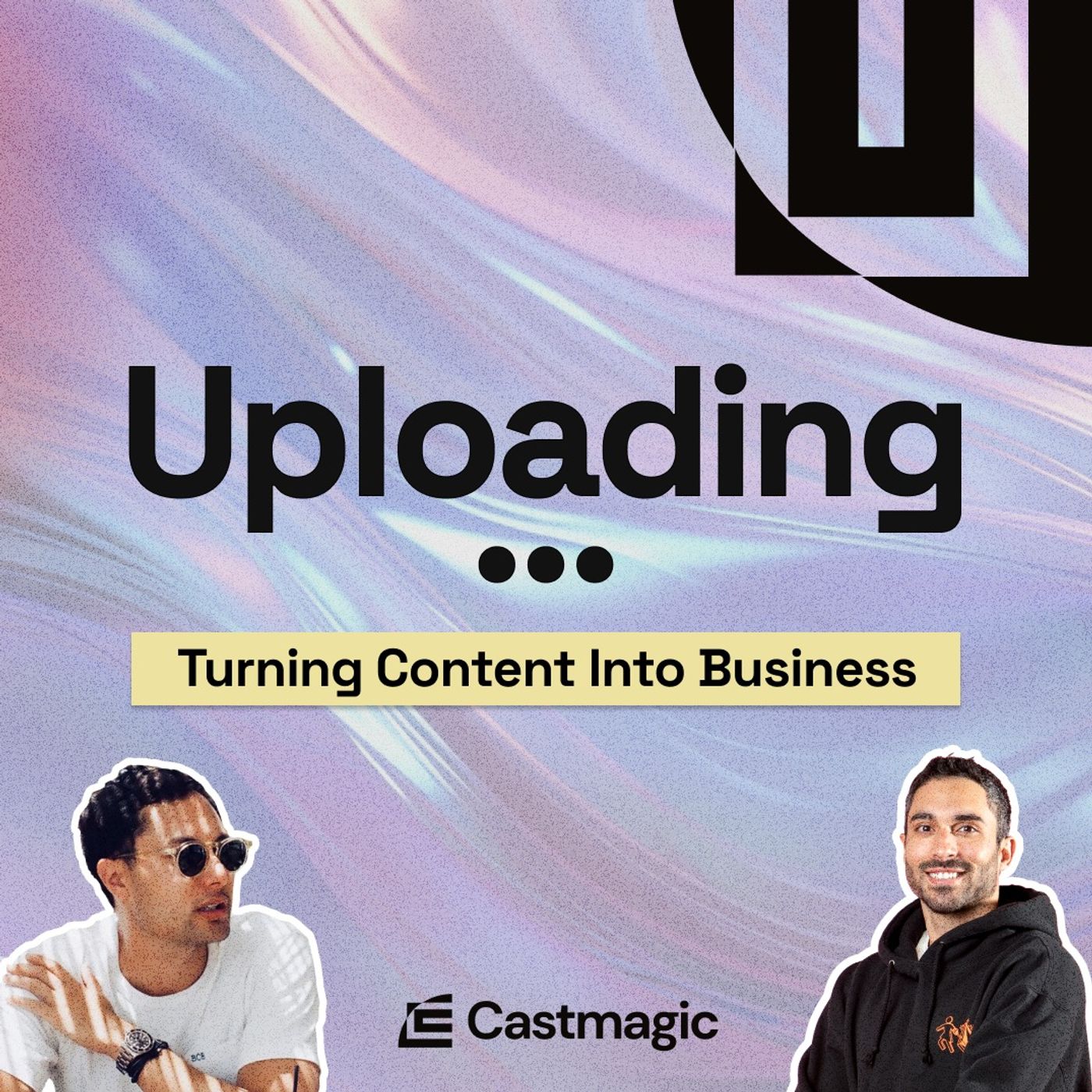
Uploading is the podcast that helps you turn content into business. Hosts Blaine Bolus & Ramon Berrios, co-founders of Castmagic, take you behind the wheel with the world’s best creators, marketers, and professionals who have cracked the code on how to profit through content. You’ll learn the ins and outs of content strategy, creation, production, distribution, growth, platforms, tools and more.

Listen to episodes

31 recent
May 21, 202547 min

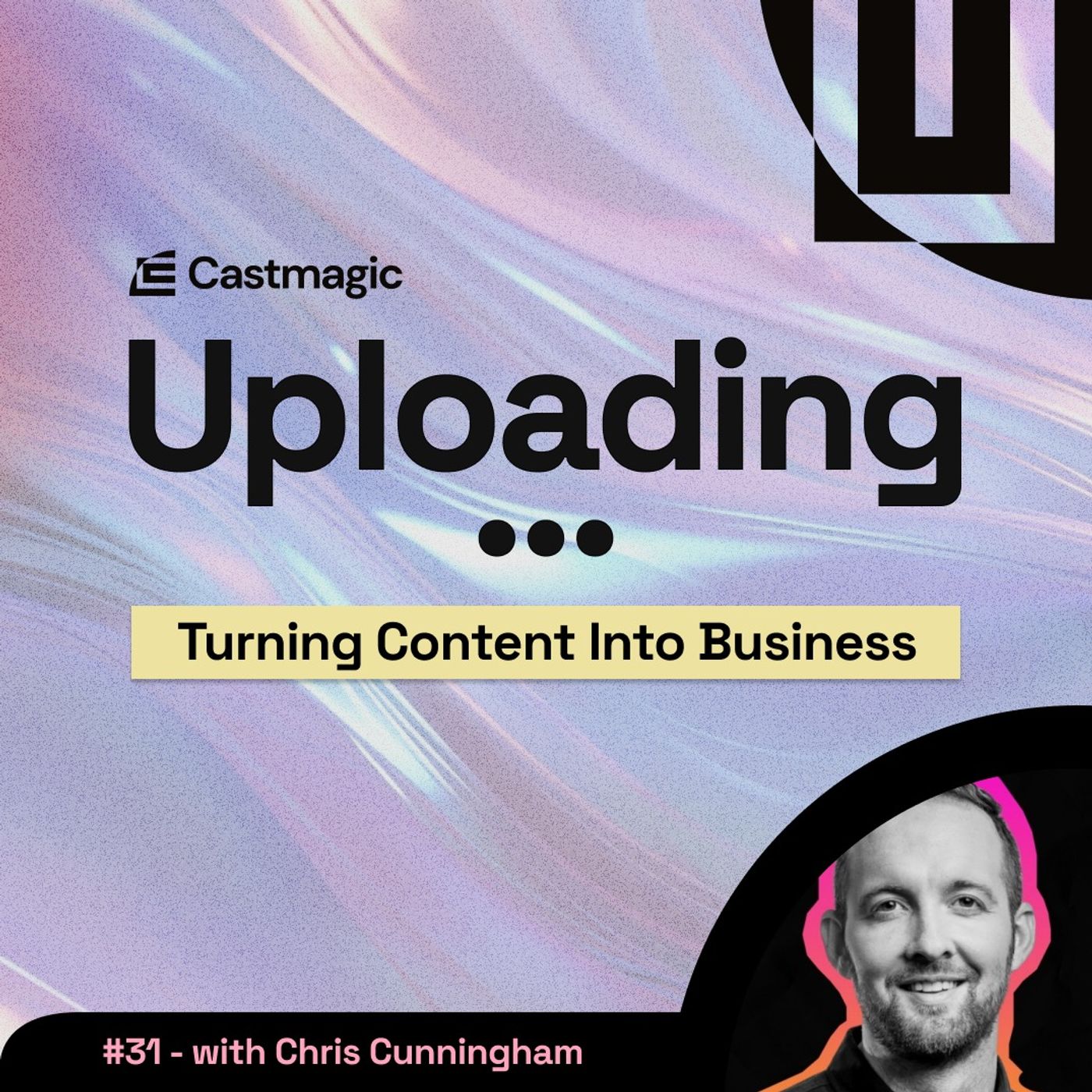
The Playbook Behind ClickUp’s $4B Content Engine

About the Episode:Chris Cunningham is a founding member and Head of Social Marketing at ClickUp, the fast-growing productivity platform now valued at $4 billion. Since shaping ClickUp’s brand voice and social presence from 2017, Chris has been instrumental in engineering a content system that regularly generates 200M+ monthly impressions and consistently translates content virality into real leads and customers.In this workshop episode of Uploading, Chris breaks down ClickUp’s journey from early hustle—making videos solo and closing deals by hand—to building a repeatable, scalable content operation with an in-house “writer’s room,” comedic actors, and a growth strategy spanning multiple platforms.Chris and host Blaine unpack content pivots, hiring creators, building brand voice, and why entertainment-first content matters for B2B. Chris also gets tactical: how to mix content types across the funnel, the operational playbook for consistent output, leveraging AI tools, success metrics, and what it takes to hit massive growth milestones.Finally, Chris shares actionable frameworks for solo founders and small teams starting from scratch—plus candid takes on virality, team structure, platform strategy, and what’s next for ClickUp’s $4B content engine.Today, we'll cover:- How ClickUp scaled from low-budget solo content to 200M+ impressions per month- The “bets” and breakthroughs that defined ClickUp’s content playbook- Building a repeatable system: team, workflow, “writer’s room,” and actors- Entertainment vs. product-driven content—and the ideal content mix- Measuring ROI: turning impressions and brand awareness into real leads and customers- Frameworks and advice for solo creators and early-stage teams to start content from scratch- Platform-specific strategies for LinkedIn, Instagram, TikTok, YouTube, and beyond- Personalization, AI, and creator partnerships: the new wave of B2B contentWhat You'll Learn1. Building a Scalable Content Engine2. Hiring and Leveraging In-house Creators3. Mixing Entertainment and Product Content4. Omnipresence across Multiple Social Platforms5. Testing, Iterating, and Doubling Down on Winners6. Aligning Content with Business Goals and Funnels7. Creating Efficient, Repeatable Content SystemsTimestamps00:00 Meet Chris Cunningham: ClickUp’s content architect02:11 Chris’s background: from agency to ClickUp’s founding team08:07 Platform-specific content strategy & goals11:28 Making content a team priority: systems & scheduling14:37 Inside ClickUp’s instagram strategy15:38 The ABCD formula: testing for virality16:09 Case study: viral skits, trends, & relatable office content19:29 Operations: writers’ room, shooting schedule, & execution23:23 Starting from scratch: building in public & early tactics25:47 Frameworks for virality: the anatomy of a viral video27:41 Winning concepts: relatability, shareability, & emotional triggers30:55 Scheduling vs manual posting: what works best32:18 YouTube strategy: current state & future focus33:36 Platform prioritization: focus, layering, & growth sequence35:52 Content funnel mix: brand awareness vs product promotion37:24 Content ratio: top, middle, & bottom of funnel by stage40:00 Staff vs. actors: who should be in your content?42:10 Video length: short vs long content & platform preferences43:35 Looking ahead: 2025 content experiments & new channels46:19 Where to follow Chris & ClickUp“We’ve very big on shots on goal. We want to put as many shots up as possible, but we want to have calculated shots. We want to take them with low budgets… I’ll make a bet and I’ll start it very cheaply.” — Chris Cunningham“The only way it’s really going to scale is if I brought in an expert... I took a bet that all companies would have content creators if they wanted to compete. They’ll have some kind of creator that creates content for them consistently.” — Chris Cunningham“Content's just another task, right? Like anyone can make excuses. So if you're just not making content, it means you don't prioritize it. We prioritize it.” — Chris Cunningham“The dividends content rewards with is nuts. The amount of people I’ve met, the people who DM me and just what I’m learning… There’s no reason not to make content.” — Chris Cunningham“If I had to start over and I’m at a new company—we’re building in public... No actors, just talking about what we’re working on. At the end of the day, I would just ask for like 5-10 minutes of all the early employees: what did you do today? And find a cool, clever way to chop it up. That’s exactly what I would do.” — Chris Cunningham“You need to know your ICP. If you’re creating content and you don’t know who you’re creating for, you really just lost the whole goal right there.” — Chris CunninghamShow notes powered by Castmagic---Have any questions about the show or topics you'd like us to explore further?Shoot us a DM; we'd love to hear from you.Want the weekly TL;DR of tips delivered to your mailbox?Check out our newsletter here.Follow us for content, clips, giveaways, & updates!Castmagic InstagramCastmagic TwitterCastmagic LinkedIn  ---Blaine Bolus - Co-Founder of CastmagicRamon Berrios - Co-Founder of CastmagicChris Cunningham - Head of Social Marketing at ClickUp
March 26, 202555 min

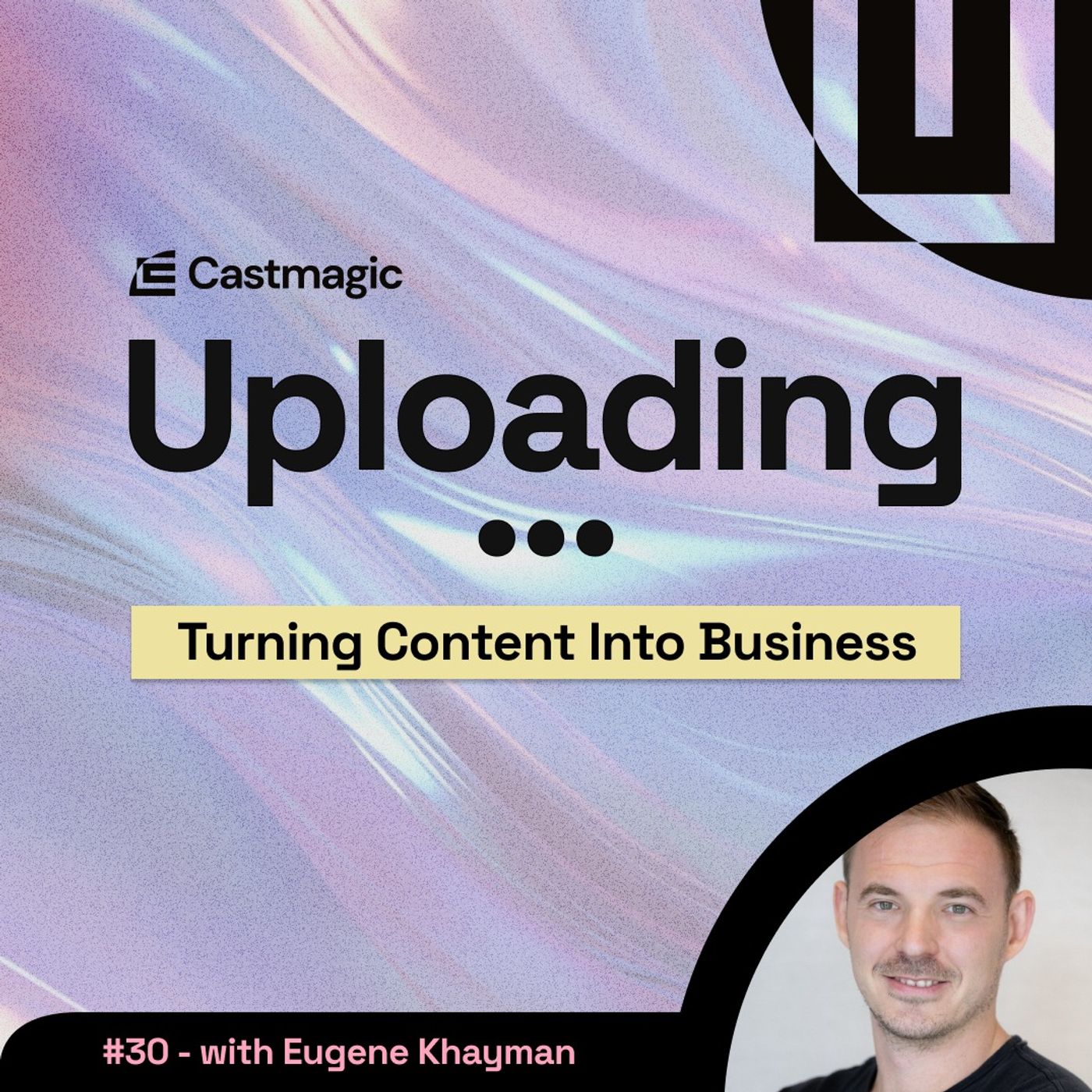
The Million Dollar Community Blueprint

About the Episode:Eugene Khayman is the COO of Million Dollar Sellers (MDS), an exclusive community for top Amazon entrepreneurs that he helped grow from a humble Facebook group into a thriving six-figure membership of 700 members generating $11 billion in annual sales.In this episode of "Uploading...", Eugene shares the organic journey of building MDS alongside running his own Amazon brand. He discusses key strategies that made MDS successful, such as their "give more, get more" philosophy, setting a high bar for membership to filter out noise, and delivering immense value that justifies the $7,500 annual membership fee.Eugene also unpacks the business model powering MDS, including multiple revenue streams from membership, partnerships, affiliates, and events. He emphasizes the importance of member-only perks, local chapters, and a robust software platform to organize resources and drive engagement in a community. Finally, Eugene offers advice for content creators looking to launch their own paid communities.Today, we'll cover:- How MDS grew organically from a humble Facebook group to a thriving community- The "Give More, Get More" philosophy that drives member engagement and success- Strategies for filtering out noise and maintaining a high-quality, focused community- The business model behind MDS and why people pay over $7,000 a year to be part of the network- Eugene's insights on scaling communities while maintaining their identity and core values- Tips for building and monetizing your own niche membership communityWhat You'll Learn1. How to Start a Community from Scratch2. Strategies for Organic Community Growth 3. How to Filter Noise in Early Stages of Community4. When and How to Monetize a Community5. Thriving vs. Dead Communities6. Software for Managing Communities7. Application and Onboarding Process for Established Communities8. Tips for Creators on Building and Monetizing a CommunityTimestamps00:00 Intro and background on Eugene and Million Dollar Sellers (MDS) 04:45 Current stats of MDS community: revenue, members, ticket price 06:45 Starting a community organically and verifying/filtering members 08:33 Monetization: when to do it and how to create value14:44 Where to host a new community and who to bring in17:53 Seeding a new community: starting conversations and keeping it alive24:02 Application process and onboarding new members to MDS now 26:55 Where MDS community is going; chapters for local connections 30:30 Platforms used to run MDS community; GroupOS app development33:44 Opportunities for content creators to monetize via communities 38:33 Q&A: Strategies for specific community examples from audience 44:00 Building a wait list and leveraging existing audience for a community 46:02 Options for immediately monetizing a new community 50:44 Turning virality into community; setting criteria and values 55:15 Wrap-up; where to find Eugene on socialBuilding Engaged Communities: “I think your first objective should always be like that core group of the founding members. For us I think it was like 150 members before we started actually monetizing. But you know, I would say you want to get to 100 members, you want to have at least 40, 50 die hard members that are engaging in there every single day. You want to get at least five to 10 conversations happening a day. If somebody can ask a question and have it answered that same day like that, that's the value creation right there, right? You don't want to be the one, you yourself answering every single question because you yourself, you don't know everything.” — Eugene Khayman, 00:08:33 → 00:09:25Monetizing and Scaling a Community: “Whenever somebody starts making a profit because of others, there's going to be some level of, like, why are we doing this? And there's also going to be that, that hesitation to grow. Everybody's going to be like, ’We're so great, we don't need more people.’ Right? And we've crossed that bar—100 members, 200 members, 400 members—there's always that, ‘Oh, we're too big, we're too big, we're too big.’ And you're going to get that pushback. The biggest thing that I think that helped us do it together is one, once we started monetizing, we started putting all of that money back into more events and more resources, building a team… Once you start adding back value by hiring people that help keep things organized, putting on calls regularly, doing events regularly, you'll get that respect from those members, those existing members. And then the new people that are coming in, you have to show that these new people actually bring value to the community.” — Eugene Khayman, 00:11:33 → 00:13:03Show notes powered by Castmagic---Have any questions about the show or topics you'd like us to explore further?Shoot us a DM; we'd love to hear from you.Want the weekly TL;DR of tips delivered to your mailbox?Check out our newsletter here.Follow us for content, clips, giveaways, & updates!Castmagic InstagramCastmagic TwitterCastmagic LinkedIn  ---Blaine Bolus - Co-Founder of CastmagicRamon Berrios - Co-Founder of CastmagicEugene Khayman - COO of Million Dollar Sellers

January 28, 202557 min

How to Grow Your Newsletter in 2025 feat. Flodesk CEO Martha Bitar

About the Episode:Martha Bitar is the co-founder and CEO of Flodesk, an email marketing platform that makes it easy for creators and entrepreneurs to make beautiful emails designed for conversion. Flodesk has quickly grown to a $30 million ARR business while remaining completely bootstrapped.In this episode of "Uploading...," Martha shares strategies for creating engaging email content, growing a subscriber list, and using email to build authentic audience relationships. She covers key topics like email design, subject line optimization, and future trends like AI-powered email marketing. Martha also provides actionable insights on deliverability, segmentation, automation, and more.Today, we'll cover:- Why email marketing is still one of the most effective channels for creators and businesses- Martha's favorite tactics for rapidly growing your email list and keeping subscribers engaged- The ideal email content and design elements that drive opens, clicks and conversions- How segmentation and personalization can supercharge your email performance- The future of email marketing and how AI will enable solopreneurs to compete with big businessesWhat You'll Learn1. Power and Benefits of Email Marketing for Creators2. Strategies for Growing an Email Newsletter3. Importance of Building an Email List4. Segmentation and Its Importance in Email Marketing5. Automations and Workflows in Email Marketing6. Best Practices in Email Design and Content7. Factors Affecting Email Deliverability8. Relationship Between Open Rates, Deliverability, and Spam9. Future Trends and AI in Email MarketingTimestamps00:00 Martha's background and starting Flodesk00:42 Why existing email solutions weren't working03:30 What makes Flodesk different 04:55 Flodesk's fast growth and bootstrapped success 05:47 How to build and grow an engaged email list 09:36 Strategies for email segmentation 15:50 Overview of the email marketing tool landscape19:52 Best practices for subject lines and preview lines25:49 Two ways to improve email deliverability28:58 Ideal email content and design35:15 Optimal email sending frequency38:02 When and how to clean your email list42:56 How AI will positively impact email marketing46:49 Q&A: Referral programs to grow email lists48:41 Q&A: Reliability of open rates with machine opens49:46 Q&A: Ideal number of emails in a welcome series 52:16 Q&A: Best image-to-text ratio for click rates 54:26 Q&A: Email list quality vs quantity57:02 Where to find Martha and Flodesk onlineWhy Design-Driven Emails Convert Better: “Like there's a lot of noise, attention spans are super short. So every single email, it can't just hit the inbox, it has to stand out, it has to engage from the beginning. It has to be hyper optimized for conversion. And text based without any of your brand just doesn't cut it anymore, right? And not just for solopreneurs. We actually we looked at a case study with Stripe. Stripe is a massive company, right? I think it's the largest private company in the world and they A/B tested a text-based email and one that was actually optimize for conversion using their own brand. And the on brand design-based email increased conversion by 21%. So whether you're a very small business or a large business, like design is not a luxury anymore.” — Martha Bitar, 00:03:32 → 00:04:14.160Why Owning Your Audience Matters: “The risk is not using it [email] because you saw what happened with TikTok, right? It can really disappear overnight and you're really on rented space. You don't own your audience. So over all of the effort that you put into building that followership and engagement can really go away. Where if you're building that on social media, but you're also saying, ‘Hey, by the way, join my newsletter.’ That's the list that you own. You're not platform-dependent. Even if we at some point make a mistake and become like a dinosaur as well, and you want to jump ship and go to another platform, you can just download and export your entire subscriber list and go use another platform.” — Martha Bitar, 00:18:48 → 00:19:25Show notes powered by Castmagic---Have any questions about the show or topics you'd like us to explore further?Shoot us a DM; we'd love to hear from you.Want the weekly TL;DR of tips delivered to your mailbox?Check out our newsletter here.Follow us for content, clips, giveaways, & updates!Castmagic InstagramCastmagic TwitterCastmagic LinkedIn  ---Blaine Bolus - Co-Founder of CastmagicRamon Berrios - Co-Founder of CastmagicMartha Bitar - Co-Founder and CEO of Flodesk

January 14, 202545 min

How to Turn Content Into a $7M Business

About the Episode:Jonathan Goodman is the creator of the Personal Trainer Development Center ($35M+ rev) and host of the popular Obvious Choice podcast, a top podcast for coaches, entrepreneurs, and small business owners.Jonathan’s been featured in most major business and fitness publications including Men's Health, Forbes, Entrepreneur, Robb Report, Inc., and many more. Over 200,000 coaches and small business owners in more than 120 countries have purchased business development materials from him.In this episode of "Uploading...," Jonathan shares insights from his journey of building a multimillion-dollar fitness business through strategic content creation. He discusses key concepts like understanding audience needs, developing scalable systems, and focusing on meaningful metrics for long-term success.Today, we'll cover:- Jonathan's transformative journey from personal trainer to successful online entrepreneur- The key principles for creating impactful, business-focused content that resonates with your audience- How to develop a range of offerings that serve your audience at different stages of their journey- Adopting a balanced, seasonal approach to work and life for long-term success and fulfillment- Powerful, timeless lessons from Jonathan's new book, The Obvious Choice, on mastering the game of business and lifeWhat You'll Learn1. Content Creation and Business Success2. Understanding Human Behavior vs Chasing Trends3. Goodhart’s Law and Social Media Metrics4. Jonathan’s Life and Business Philosophy5. Business Structure and Offerings6. Client Management and Online Income Growth7. Viral Content vs Content that ConvertsTimestamps00:00 From working as a personal trainer to a $7M per year business04:20 Jonathan’s new book, The Obvious Choice; the parade problem07:01 First steps to start growing an audience online13:34 Personal Trainer Development Center’s first online course14:57 How to create a scalable system and avoid the trap of false economies19:57 Thinking of content as a long-term savings account24:11 Goodhart’s law: when the metric becomes the goal, it ceases to be a good metric28:00 Building businesses in seasons; balancing personal life and work33:12 The four arms of Jonathan’s business36:53 Broader community vs high ticket offers; choosing customers wiselyLikes vs Business Impact: “It's easy to be rich with likes and poor with dollars because what feeds the ego is what's bad for the wallet… I have lots of posts that have 10, 20, 30, 40, 100,000 likes. I also have posts that have less than a thousand likes. And I can tell you that the posts with less than a thousand likes drive more business than the posts with 30 or 40,000. Now, does that mean that neither is valuable? I believe that we need three types of content. I believe that we need viral, value, and depth-based content.” — Jonathan Goodman, 00:25:59 → 00:27:08Content as a Savings Account: “Most of the time, everything that's working for you will be bubbling underneath the surface, invisible to the eye. You don't know when that inflection point is going to hit… You have to think of content as a savings account and you have to think of content as a way to primarily nurture and convert people and leads that are generated elsewhere.” — Jonathan Goodman, 00:21:10 → 00:21:56Show notes powered by Castmagic---Have any questions about the show or topics you'd like us to explore further?Shoot us a DM; we'd love to hear from you.Want the weekly TL;DR of tips delivered to your mailbox?Check out our newsletter here.Follow us for content, clips, giveaways, & updates!Castmagic InstagramCastmagic TwitterCastmagic LinkedIn  ---Blaine Bolus - Co-Founder of CastmagicRamon Berrios - Co-Founder of CastmagicJonathan Goodman - Founder of Personal Trainer Development Center

January 9, 202536 min

Jay Clouse Reveals How to Get 100k Followers in 2025

About the Episode:Jay Clouse is the founder of Creator Science, a media company that offers advanced creator education through newsletters, podcasts, and YouTube. With over 100,000 YouTube subscribers and a successful podcast interviewing content creators and strategists, Jay has established himself as an expert in the creator economy.In this episode of “Uploading…,” we explore Jay’s content strategy that spans newsletters, podcasts, and social media. Jay shares insights on the underspoken art of packaging in content and its impact on performance. He also shares podcasting strategies, covering topics such as balancing scripting and spontaneity, effective interview techniques, and the importance of active listening.Today, we'll cover:- Jay's background and journey as a content creator and founder of Creator Science- The importance of email and social media in building audience ownership and discoverability- Strategies for creating engaging content across various platforms, including newsletters, podcasts, and YouTube- Tips for conducting effective podcast interviews and packaging episodes for maximum impact- Jay's diversified business model and how he leverages content for audience growth and product promotionWhat You'll Learn1. Packaging and Pre-Production2. Post-Poduction Strategies3. Social Proof in Content4. Hook and Tension in Content5. Scripting and Spontaneity in Podcasts6. Podcast Interview Techniques7. Creator Science Business ModelTimestamps00:00 From product management to content03:25 Email, social media, audio podcasting05:18 Content ecosystem; channels and cadence06:27 Content strategy; how to keep content fresh09:48 Content packaging and performance11:43 Elements of YouTube video packaging15:01 The role of social proof in good content17:39 How to package audio podcasts20:54 Scripting vs non-scripting in podcasts26:28 Tips for recording a podcast remotely29:46 Podcast post-production best practices32:10 How to turn content into business34:43 What’s next for Creator ScienceImportance of Packaging in Content: “There are elements of a piece of content that people engage with, interact with, before they make the decision to actually go deeper into that thing. So on YouTube, title, thumbnail, and kind of the idea that's inherent in those things. If you go to a bookstore, it's the title and the cover of the book, it's even the spine of the book. An email, it's the subject line. Audio podcast, it’s the title of that episode. So, every form of content has some bit of packaging that you can think about or you can't think about. But if you do think about it, you're going to be more successful because if you intentionally design the package for that medium to be inherently clickable, compelling, where people are like, I need to know more about this, then it's going to be more successful as a piece of content. — Jay Clouse, 00:10:50 → 00:11:41Podcast Hosting and Active Listening: “To be a great interviewer, you really have to have good active listening skills. And so the act of prepping questions is more priming my own mind than it is like a structure that I have to follow. I'm very intentional about where I start, and I'm good at leading us to the area of discussion that I want. But often I would say at least half the questions that I asked were not, you know, quote unquote, prepped. They, they come from what happens. And I think, I think that's the right balance because even if you have a two display system, as I do here, if I have the interview doc on my right hand display and I have questions there, if I'm looking at that and trying to think about which one of these questions should I ask next, I'm not listening. And a guest is opening some door that inevitably I won't walk through. And as the listener of the final product, you're going to be saying, ‘Why didn't you follow up on this thing that person just said?’ And the answer is, because you weren't listening. You were looking at your display.” — Jay Clouse, 00:21:42 → 00:22:42Show notes powered by Castmagic---Have any questions about the show or topics you'd like us to explore further?Shoot us a DM; we'd love to hear from you.Want the weekly TL;DR of tips delivered to your mailbox?Check out our newsletter here.Follow us for content, clips, giveaways, & updates!Castmagic InstagramCastmagic TwitterCastmagic LinkedIn  ---Blaine Bolus - Co-Founder of CastmagicRamon Berrios - Co-Founder of CastmagicJay Clouse - Founder of Creator Science

December 18, 202458 min

The Personal Brand Blueprint: How to Build, Engage, and Monetize an Audience

About the Episode:JT Barnett is a content creator, entrepreneur, and founder of CreatorX, a headhunting firm that matches creators with consumer brands to ideate, film, edit, and post content on their behalf. He has worked with major brands like Microsoft, Skechers, and Nissan.In this episode of “Uploading…,” JT shares strategies for creating compelling content, building an audience, and monetizing through brand partnerships. He emphasizes the importance of enjoying the creative process, engaging with a niche audience, and using feedback to inform content decisions.JT also gives practical advice on topics such as developing signature content series, avoiding burnout, using AI tools in the creation process, and more.Today, we'll cover:- JT's transition from pro athlete to content creator and entrepreneur- The importance of organic social media engagement over paid ads- Impactful content strategies for YouTube, Instagram, TikTok, and LinkedIn- How to build a signature content series to stand out and grow an audience- Insights on partnering with creators to drive business growth and successWhat You'll Learn1. Content Monetization2. Long-form Content Benefits3. YouTube Strategy4. Personal Brand Building5. Content Creation Strategies6. AI in Content Creation7. Future Content TrendsTimestamps00:00 How CreatorX helps brands leverage influencers04:04 From being a pro athlete to building a 7-figure business07:53 Case study: Poppy’s content strategy success10:25 Where to start creating content; choosing a platform13:20 Strategies for making podcast clips engaging15:40 How to reach and engage your niche audiences17:37 Best practices for optimizing social media profiles20:18 What is a signature series and how to come up with one23:59 How to create content consistently and avoid burnout25:51 The importance of perspective on viewership28:33 How to approach content monetization 30:57 Long-form vs short-form organic video content34:53 Content strategy for JT’s personal brand and CreatorX36:58 JT’s content workflow and team39:24 How to expand niche as a content creator42:57 Social media content trends to watch out for in 202545:16 Strategies for podcast guest outreach47:48 Best practices for using AI in content creation51:07 Adding musical score to podcast clips vs posting them as is52:13 Best aspect ratio to use for LinkedIn videos53:01 Creator tools and agentic workflows54:33 What data to look at when developing a brand strategy55:46 How to get podcast sponsorsWhy Brands Partner with Creators: “You might actually have the ideas, but when you go to film it, you just don't know the technique, you don't know how to edit, you don't know how to create in an actual capacity. Even if people have ideas, they need makers, they need people to do it. There's something really missing here where brands are going to need these creators, and creators also want these kinds of jobs to work within companies." — JT Barnett, 00:06:52 → 00:07:02Why Creators Need to Engage Niche Audiences: “Whose accounts do you really enjoy that you could see yourself being somewhat similar to? And I don't think of it in a way of like, let's go copy that person. I think of it like, let's go and make friends with everybody that's in their audience. Because if that person has an audience of fitness minded people and you love their content, there's a really good chance that that audience is also going to be the audience that you're trying to get to follow you and care about you." — JT Barnett, 00:16:17 → 00:16:34Content Creation and Monetization: “I think a lot of people want to monetize too soon... And the people that actually make money from it find enjoyment in the process of what they're doing. So I think that literally on day one, I would be like, I need to find a way to actually enjoy this." — JT Barnett, 00:29:14 → 00:29:25Show notes powered by Castmagic---Have any questions about the show or topics you'd like us to explore further?Shoot us a DM; we'd love to hear from you.Want the weekly TL;DR of tips delivered to your mailbox?Check out our newsletter here.Follow us for content, clips, giveaways, & updates!Castmagic InstagramCastmagic TwitterCastmagic LinkedIn  ---Blaine Bolus - Co-Founder of CastmagicRamon Berrios - Co-Founder of CastmagicJT Barnett - Founder of CreatorX

November 6, 202439 min

#25 - Why Every Founder Should Create Content

About the Episode:Chris Savage is the co-founder and CEO of the video marketing platform Wistia. He is a key figure in the video content space and personal brand, having famously scaled his company to over $50M a year in revenue, without outside investors. Chris is also a content creator, regularly sharing insights from his entrepreneurial journey on LinkedIn and hosting the podcast Talking Too Loud.In this episode of “Uploading…,” Chris discusses the evolution of video content, the impact of AI on content creation, and the enduring importance of authentic storytelling. He also shares lessons learned from Wistia's growth, his content creation process and workflow, and strategies for building a strong personal brand as a founder.Today, we'll cover:- The evolution of video content and the impact of AI on content creation- The significance of trustworthiness and authenticity in an AI-driven content landscape- Adapting to audience expectations and leveraging various content formats- Chris Savage's journey as a content creator and the value of personal branding for founders- Strategies for creating engaging content, setting realistic goals, and avoiding burnoutWhat You'll Learn1. Evolution and Future of Video Content2. AI’s Impact on Content Creation3. Personal Branding for Founders4. Content Creation Strategies5. Content Workflow6. Podcast Content Strategy7. Strategic Goal-SettingTimestamps00:00 Chris Savage’s background and company04:51 Evolution of video tech and production06:59 Impact of AI on video content creation 13:53 Importance of content creation for founders17:44 Chris Savage’s content funnel 20:14 Tips on getting started as a content creator22:41 Creating content for personal brand vs business brand25:34 Chris Savage’s content workflow and team27:27 Strategies for growing a podcast31:44 Importance of goal framing on successEvolution of Video Tech: “Basically what keeps happening is that new technology comes out that makes it tremendously cheaper and easier to make video. And then the uses of video magnify and the expectations magnify." — Chris Savage, 00:05:17 → 00:05:27Role of Founders in Business Growth: “I think there's a good question every founder should ask themselves, which is like, what's the thing that I can uniquely do that is going to add value?” — Chris Savage, 00:15:22 → 00:15:35Trust in the Age of AI: "So I think while you should be using AI to aid in your content creation, you need to find ways to make sure that human beings that you can connect with are still really there." — Chris Savage, 00:10:10 → 00:10:23Show notes powered by Castmagic---Have any questions about the show or topics you'd like us to explore further?Shoot us a DM; we'd love to hear from you.Want the weekly TL;DR of tips delivered to your mailbox?Check out our newsletter here.Follow us for content, clips, giveaways, & updates!Castmagic InstagramCastmagic TwitterCastmagic LinkedIn  ---Blaine Bolus - Co-Founder of CastmagicRamon Berrios - Co-Founder of CastmagicChris Savage - Co-Founder & CEO of Wistia

October 2, 202431 min

How to Reach 100K+ Followers and Land Your Dream Content Job

About the Episode:Jay Yang is a content creator with over 100,000 followers and the Head of Content for Noah Kagan, founder of AppSumo. At only 18 years old, Jay has already made a significant impact in the world of content creation while still attending university.In this episode of “Uploading…,” Jay shares his journey from experimenting with various online projects to landing an opportunity to work with Noah Kagan using his TAG method. He discusses his content creation process, balancing his work with education, and overcoming imposter syndrome. Jay also shares insights into his upcoming project on creating accessible social content templates for beginner creators.Today, we'll cover:- Jay Yang's content creation and audience growth frameworks- How to land high-profile opportunities using Jay Yang’s TAG method- Overcoming imposter syndrome and embracing the learning process in content creation- Benefits of social content templates for beginner creatorsWhat You'll Learn1. Target-Audit-Gift Method2. Importance of Empathy and Pre-Work3. Content Creation and Repurposing Strategies4. Content Testing and Metrics5. The “Name Test”6. Top-Down Approach to Content Creation7. Bottom-Up Approach to Content Creation8. Benefits of Using Content TemplatesTimestamps00:00 How Jay Yang got into content creation03:03 Jay Yang’s “portfolio of failure,” TAG method06:42 Key learnings from working at Beehiiv09:59 How to land an opportunity with your favorite company14:38 Optimizing Noah Kagan’s content workflow17:27 Quantitative approach to marketing; content testing21:10 From experimentation to building a content engine that works24:13 Overcoming imposter syndrome in content creation28:02 Benefits of using social content templatesMastering Empathy in Business: “I think the greatest skill you can learn as a marketer, a creator, an entrepreneur, even just as a person, is empathy and being able to place yourself in someone else's shoes.” — Jay Yang [00:08:00 → 00:08:10]Keys to Building Professional Relationships: “I think that strategy of where most people ask, how can I help you? Or what can I do to work for you for free? The problem with that approach is that by asking, without showing, you're actually making the other person do more work to figure out who you are and if you're any good and what you can actually help with... And so the question that I ask myself, and I encourage people listening to this to ask is, how can I make this a no brainer for the other person? And that kind of ties back into that empathy, right? Putting yourself in the other person's perspective... To work with your favorite entrepreneur or company, basically, you need to show two things, that, number one, you want the job, and number two, that you can do the job. And the best way that I believe you can do that is to do the work upfront, to use the TAG method, to do what I like to call pre-work. And I think the coolest thing about this approach is you don't have to have any experience or, you know, credibility or a degree." — Jay Yang [00:12:46 → 00:13:13]Overcoming Impostor Syndrome in Content Creation: "I only have to be one chapter ahead of the textbook of life. Like, you don't have to be the guru preaching at the top of the mountain. You just have to be one or two steps ahead of the people behind you and the people you're sharing content to. So that's kind of what I'm realizing is, as I grow my brand, I'm not trying to be the professor at the front of the class. The way I like to view myself is as that kid in the back sharing his notes with the rest of his classmates." — Jay Yang, [00:25:21 → 00:25:49]Show notes powered by Castmagic---Have any questions about the show or topics you'd like us to explore further?Shoot us a DM; we'd love to hear from you.Want the weekly TL;DR of tips delivered to your mailbox?Check out our newsletter here.Follow us for content, clips, giveaways, & updates!Castmagic InstagramCastmagic TwitterCastmagic LinkedIn  ---Blaine Bolus - Co-Founder of CastmagicRamon Berrios - Co-Founder of CastmagicJay Yang - Head of Content at AppSumo

August 28, 202439 min

Rhythm, Hooks, and a Billion Views: Kane Kallaway’s Short-Form Video Content Secrets

About the Episode:Kane Kallaway is a content creator specializing in tech, AI, and cult brands with over 550K followers and 1B+ views. Founder of WavyStudios, Kane helps companies enhance their video content for audience growth and conversions. He also leads WavyWorld, a community/course on short-form storytelling, and shares insights into the creator entrepreneur world through his newsletter Blueprint.In this episode of “Uploading...,” Kane shares his strategies and workflow for creating engaging short-form video content. He discusses the importance of creating curiosity loops, placing strategic hooks throughout the video, and tailoring content to each platform's unique consumption experience.We discuss at length Kane’s content creation process, where he finds his ideas, how he chooses relevant topics and writes scripts with his unique angle, why rhythm and pacing are important in video editing, and how all these factors in creating an engaging short-form video content which then drives his audience to longer-form content where conversion happens.Today, we'll cover:- The importance of curiosity loops and strategic hooks in engaging audiences- Crafting the perfect rhythm and pacing for soothing, engaging videos- Tailoring content for different platforms and their unique consumption experiences- Kane's workflow for idea generation, scripting, recording, and visualizing content- Leveraging short-form content to nurture audiences and drive conversion to long-form formatsWhat You'll Learn1. Short-form vs. Long-form Videos2. Storytelling Techniques3. Personal Brand Building4. Audience Engagement and Conversion5. Content Creation Workflow6. Video Idea Generation7. Video Editing Process and ToolsTimestamps00:00 Kane Kallaway’s journey from consultancy to full-time content creation03:44 Choosing a content type, topic, and platform for online growth07:48 Content evolution, brand deals, short-form vs long-form content11:41 Creating native short-form content vs repurposing long-form videos into clips18:45 Kane Kallaway’s 5-step content workflow, from ideation to editing25:12 How to hook and rehook the audience throughout a video30:32 The importance of rhythm, pacing, and visuals in video editing35:19 Kane Kallaway’s tools and software for video recording and editingShort-form vs. Long-form Content: “The fragility of the audience with short form cannot be overstated. It's like it takes hundreds if not thousands of reps of a short-form video in front of somebody on Instagram or on TikTok for them to actually understand who you are and, like, buy into you. I had this framework called content minutes, which is like, let's assume for someone to go from a stranger to a superfan level, it takes like 90 minutes of your content watched. Well, if you're making short-form video and the average one is watched 20 seconds long, that's 270 videos they would have to watch to hit that bar and become a superfan versus a podcast. If they listen to the whole hour, it's like two podcasts.” — Kane Kallaway [00:09:27 → 00:10:05]Newsletters as Content Idea Source: “So the first piece of finding what's interesting, I just am constantly scanning, and I find for the videos I make, which is like business of culture, tech stuff, email newsletters are the best place for me to find topics because they're already a curated filter on everything. So if I didn't have email newsletters, I would have to go to like TechCrunch, The Verge, Business of Fashion, Entrepreneur.com, whatever the sites are. I'd be scanning like 30 sites. And you can use something like FeedLIVE to do this, but I've tried it and there's a lot of noise, there's not enough signal, it's like way too much noise. And so what I find is email newsletters, people who have actual businesses designed to filter the bad stuff out, curate just what's interesting. And so I subscribe to like ten or twelve newsletters that I love.” — Kane Kallaway [00:19:48 → 00:20:29]Video Script Structure: “Most people think of videos as like a hook, the body, and the conclusion. I think of it like a hook, there's a dance, and in that dance, you have context and conflict, which is basically just set up, rehook. Set up, rehook. Set up, rehook. You're trying to rehook them. Then at the very end, I tried to hook them again with, like, the ending so that they share it.” — Kane Kallaway [00:23:11 → 00:23:28]Show notes powered by Castmagic---Have any questions about the show or topics you'd like us to explore further?Shoot us a DM; we'd love to hear from you.Want the weekly TL;DR of tips delivered to your mailbox?Check out our newsletter here.Follow us for content, clips, giveaways, & updates!Castmagic InstagramCastmagic TwitterCastmagic LinkedIn  ---Blaine Bolus - Co-Founder of CastmagicRamon Berrios - Co-Founder of CastmagicKane Kallaway - Founder of Wavy Labs

August 14, 202434 min

The Art of Going Viral: Content Lessons from Dakota Robertson, Founder of Growth Ghost

About the Episode:Dakota Robertson is the founder of Growth Ghost, a social media ghostwriting business with high-profile clients that include best-selling authors, prominent influencers, and 7 and 8 figure entrepreneurs. He scaled this venture to generate $30,000-$50,000 per month within its first nine months, then transitioned to his current role as a personal brand consultant after two successful years.Now with an audience of over 550,000 followers and generating monthly earnings exceeding $100,000, Dakota's mission is to help others to achieve freedom and make an impact through their content and online businesses. He offers a free personal branding course for creators, coaches, and business owners.In this episode of DTC Pod, he shares his strategies for creating viral content, emphasizing the importance of sharing personal experiences, addressing pain points, and providing actionable advice to connect with audiences. He also discusses his ‘what-why-how’ writing framework, his content repurposing workflow, and the value of ghostwriting for those who struggle with content creation.Today, we'll cover:- The art of simplifying your message and leveraging psychology in copywriting to create compelling content- The critical roles that relevance and curiosity play in content consumption and purchasing decisions- Dakota Robertson's proven "what, why, how" framework for creating highly engaging content- The growing importance of ghostwriting in the social media space and how it can help clients achieve their goals- Strategies for building a content funnel to nurture relationships and convert followers into customersWhat You'll Learn1. Techniques for Creating Engaging Content2. Social Media Growth and Ghostwriting3. Content Creation Workflow4. Repurposing Content5. Building a Personal Brand6. Relevance and Curiosity in Content7. The “What, Why, How" Framework8. Funnel Strategy and Long-Form ContentTimestamps00:00 Dakota Robertson’s background02:22 How Dakota Robertson started on socials05:15 Two important copywriting lessons07:24 Inciting relevance and curiosity in social content10:47 Dakota Robertson’s what-why-how framework14:19 On ghostwriting as a career path16:08 Creating content yourself vs employing a ghostwriter19:18 Dakota Robertson’s content workflow22:41 Ways to think of content ideas25:06 How to create a transparent relationship with your audience29:23 Sales funnel offers and how to convert with contentUnderstanding the Audience’s Pain Points: “Imagine you're in a desert and you have no water. It's scorching hot. You've been walking for days, and then someone has a little water bottle. How much would you pay for that? You’d probably empty your entire bank account. Opposed to, if you're just walking on the street, you're not thirsty, you're fine. It's like, you probably won't even buy it. The only difference is the context of the pain you're in. So something is showing, ‘Hey, like, I can solve this pain point for you,’ then it's gonna be more relevant to the person.” — Dakota Robertson [00:08:30 → 00:09:02]Creating and Sharing Personal Content: “I find a lot of people in business, they're so focused on, you know, giving value and actionable stuff, and they totally neglect the personal side of things. So I think there should be more of a focus on personal stories, worldviews, and opinions, even if it's polarizing, because that's the stuff that's gonna make people love you, even if it means other people hate you.” — Dakota Robertson [00:24:44 → 00:25:06]Impact of Long-Form Content on Conversion: “If someone consumes a three-second tweet, it's like, okay, but if someone consumes a ten-minute YouTube video, you're taking up more real estate in their mind, and you're nurturing that relationship way more because they can see and hear you. And that's the stuff that converts way better, is long form. So I'm always thinking about how can I convert my short-form content to long-form and ideally get them on my newsletter so they can have a direct line of access?" — Dakota Robertson [00:32:01 → 00:32:29]Show notes powered by Castmagic---Have any questions about the show or topics you'd like us to explore further?Shoot us a DM; we'd love to hear from you.Want the weekly TL;DR of tips delivered to your mailbox?Check out our newsletter here.Follow us for content, clips, giveaways, & updates!Castmagic InstagramCastmagic TwitterCastmagic LinkedIn  ---Blaine Bolus - Co-Founder of CastmagicRamon Berrios - Co-Founder of CastmagicDakota Robertson - Founder of Growth Ghost

Is this your show?

Claim this listing to keep it up to date, reach guests who want to pitch you, and manage bookings with Guestify.

Claim this listing

More Business podcasts