
Find partners

Episodes

36

Latest episode

Jun 2026

Language

EN

About the show

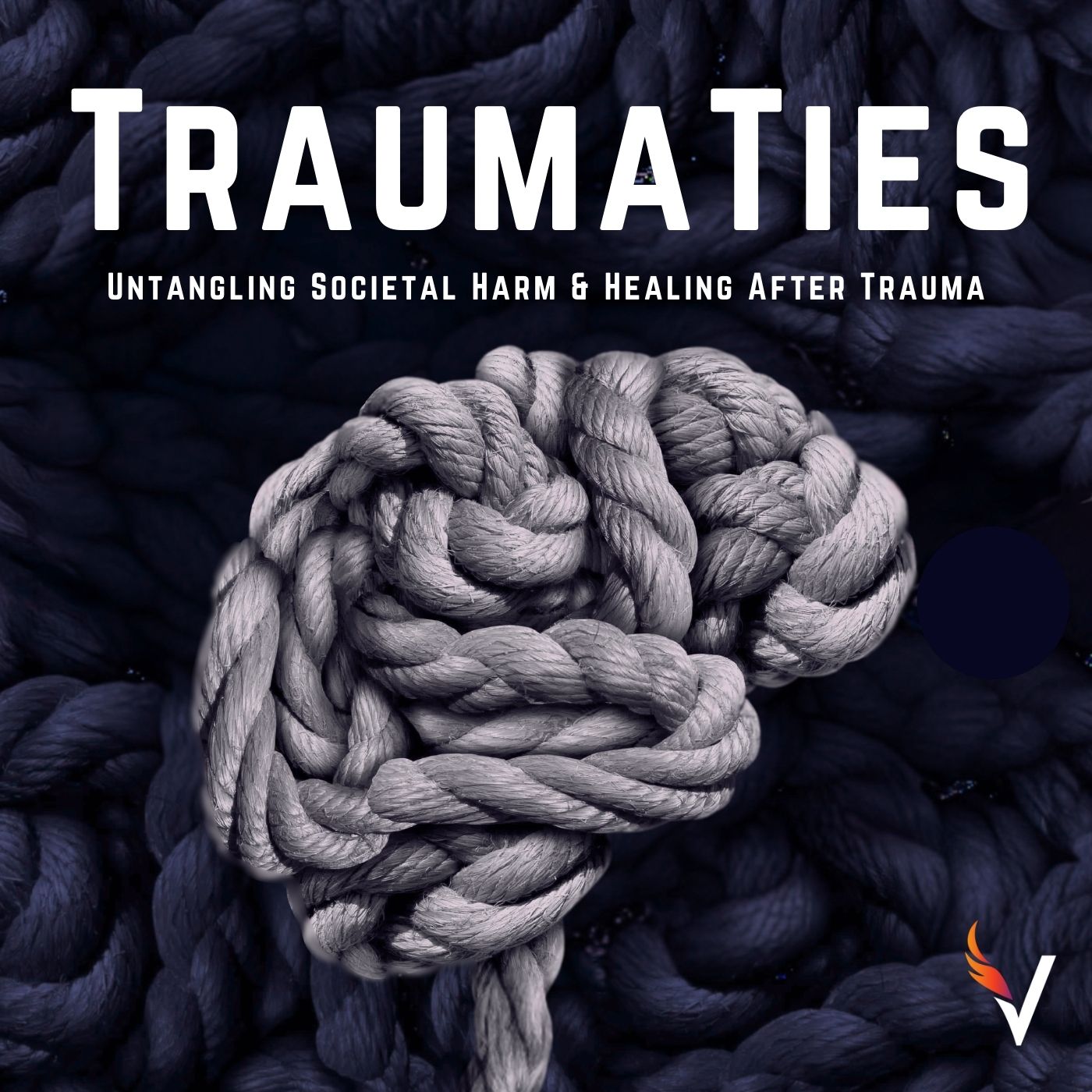
It may be invisible to some or ever present to others. But trauma entangles us all. Welcome to TraumaTies. Brought to you by Volare, TraumaTies is a podcast that creates space and conversations to untangle the societal knots that keep us from addressing trauma after crime. For you, we want this podcast to be an experience--one where you leave understanding how you can be a crossing point to minimize the deeply painful and costly consequences of trauma, no matter who you are. This podcast is just one of our many resources. Volare welcomes all survivors of crime and their supporters, so please visit us at https://www.volare-empowers.org/ to learn more about how to access our trauma education and how to partner with us to create empowering experiences for survivors

Listen to episodes

37 recent
June 16, 202627 min

Understanding Childhood Trauma and Healing with Dr. Stacy Phillips

In this episode of TraumaTies, Bridgette, Lindsey, and Dr. Stacy Phillips discuss childhood trauma, polyvictimization, how we can shift the conversation from blame to understanding and invite us all to go beyond being trauma-informed to trauma-sensitive. Dr. Phillips is the founder and CEO of IMPACT (Intervening Mitigating Preventing Adolescent and Childhood Trauma), an organization working within schools to understand and implement trauma-informed, hope centered practices. She has also worked on national initiatives to expand support and resources for survivors.Key TakeawaysTrauma is often cumulative, not isolated.Understanding brain science helps us respond with empathy instead of judgment.Trauma-responsive systems go beyond awareness to actively support healing.Hope is not a feeling—it is a skill that can be taught and strengthened.Creating pathways to hope may be one of the most effective ways to promote well-being and recovery.Resources MentionedDr. Bruce Perry and The Boy Who Was Raised as a DogDr. Chan Hellman and the Hope Research CenterHope Science (Goals, Pathways, and Agency)Research on polyvictimization and trauma-responsive systemsConnect and Learn More☑️ Bridgette Stumpf | LinkedIn☑️ Lindsey Silverberg | LinkedIn☑️ Volare | LinkedIn | Instagram | Facebook☑️ TraumaTies Website | Instagram | TikTok | YouTube☑️ Subscribe Apple Podcasts | SpotifyBrought to you by Volare, TraumaTies: Untangling Societal Harm & Healing After Crime is a podcast that creates space and conversations to dissect the structural and systemic knots that keep us from addressing trauma.Rooted in a belief that survivors of crime deserve respect for their dignity in the aftermath of victimization, Volare seeks to empower survivors by informing them of all of the options available and working to transform existing response systems to be more inclusive of the diverse needs that survivors often have after crime.Volare also provides free, holistic, and comprehensive advocacy, therapeutic, and legal services to survivors of all crime types. Visit our website to learn more about how to access our trauma-informed education training and how to partner with us to expand survivor-defined justice.

June 9, 202624 min

What Trees and Nature Teach Us About Healing

In this episode of TraumaTies, Bridgette Stumpf and Lindsey Silverberg explore how healing is shaped not only by what happens inside of us, but also by the environments around us. From neuroscience and trauma research to forest bathing and the hidden communication systems of trees, they unpack how nature, community, and physical spaces impact nervous system regulation and recovery.In This Episode🌿 Healing Is Environmental, TooThe hosts discuss how healing is often framed as an individual responsibility, while research shows our surroundings play a major role in stress, regulation, and recovery.🌳 Nature and Nervous System RegulationBridgette and Lindsey explore studies showing that exposure to nature can reduce stress, improve recovery, and help regulate the nervous system—including research on forest bathing, birdsong, and green spaces.🧠 Trauma, Attention, and RecoveryThe conversation connects trauma and hypervigilance to environments that constantly demand attention, while nature allows the brain and body to recover more effectively.🌲 What Trees Teach Us About CommunityInspired by The Hidden Life of Trees, Bridgette shares how trees support one another through underground root systems—offering a powerful metaphor for collective care, connection, and healing.Key TakeawaysHealing is influenced by both internal and external conditions.Nature can help regulate the nervous system and reduce stress.Trauma recovery is supported through safety, connection, and restorative environments.Community care exists throughout nature—and humans need it too.Resources MentionedThe Hidden Life of Trees by Peter WohllebenAttention Restoration TheoryResearch on green space, trauma recovery, and nervous system regulationConnect and Learn More☑️ Bridgette Stumpf | LinkedIn☑️ Lindsey Silverberg | LinkedIn ☑️ Volare | LinkedIn | Instagram | Facebook☑️ TraumaTies Website | Instagram | TikTok | YouTube☑️ Subscribe Apple Podcasts | Spotify Brought to you by Volare, TraumaTies: Untangling Societal Harm & Healing After Crime is a podcast that creates space and conversations to dissect the structural and systemic knots that keep us from addressing trauma.Rooted in a belief that survivors of crime deserve respect for their dignity in the aftermath of victimization, Volare seeks to empower survivors by informing them of all of the options available and working to transform existing response systems to be more inclusive of the diverse needs that survivors often have after crime.Volare also provides free, holistic, and comprehensive advocacy, therapeutic, and legal services to survivors of all crime types. Visit our website to learn more about how to access our trauma-informed education training and how to partner with us to expand survivor-defined justice.
June 2, 202625 min

Why Everything Feels Harder Alone, Part 2

In this episode of TraumaTies, Bridgette Stumpf and Lindsey Silverberg continue their conversation about support, resilience, and the neuroscience of healing. Through research, personal stories, and reflections on trauma and grief, they explore how connection can fundamentally change the way we experience suffering—not by removing the weight, but by helping us carry it.In This Episode💡 Why Support Changes Our Capacity to CopeThe hosts discuss research showing that support doesn’t just feel comforting—it actually changes our brain’s perception of what we can handle. Even symbolic support can make challenges feel lighter and more manageable.🧠 Hyper-Independence and SurvivalBridgette and Lindsey unpack how hyper-independence can develop as a survival response when support was inconsistent, unavailable, or unsafe earlier in life. They explore how trauma, parentification, and adverse childhood experiences can shape the way people relate to help and connection as adults.🤝 What Real Support Looks LikeThe conversation turns practical as they share examples of meaningful support during grief, trauma, and crisis:Physically showing upAcknowledging the hard thing directlyOffering practical help without waiting to be askedContinuing support long after the initial crisis passesKey TakeawaysSupport changes how heavy hardship feels to the brain and body.Independence can sometimes be a survival strategy rather than a personality trait.People often don’t need solutions—they need presence, consistency, and connection.Healing becomes more possible when we don’t have to carry difficult things alone.“Support doesn’t always fix the problem—but sometimes it shifts how heavy the problem feels.”Connect and Learn More☑️ Bridgette Stumpf | LinkedIn☑️ Lindsey Silverberg | LinkedIn ☑️ Volare | LinkedIn | Instagram | Facebook☑️ TraumaTies Website | Instagram | TikTok | YouTube☑️ Subscribe Apple Podcasts | Spotify Brought to you by Volare, TraumaTies: Untangling Societal Harm & Healing After Crime is a podcast that creates space and conversations to dissect the structural and systemic knots that keep us from addressing trauma.Rooted in a belief that survivors of crime deserve respect for their dignity in the aftermath of victimization, Volare seeks to empower survivors by informing them of all of the options available and working to transform existing response systems to be more inclusive of the diverse needs that survivors often have after crime.Volare also provides free, holistic, and comprehensive advocacy, therapeutic, and legal services to survivors of all crime types. Visit our website to learn more about how to access our trauma-informed education training and how to partner with us to expand survivor-defined justice.

May 26, 202623 min

Why Everything Feels Harder Alone

TraumaTies — Season Premiere:Welcome back to TraumaTies and the beginning of a new season. This chapter of the podcast expands beyond trauma awareness into deeper conversations about neuroscience, resilience, relationships, nervous system regulation, and the ways healing shows up in everyday life.In this season premiere, Bridgette Stumpf and Lindsey Silverberg explore a powerful question: Why do hard things feel even harder when we carry them alone? Inspired by research showing that people literally perceive a hill as less steep when standing beside a trusted friend, they unpack how support changes not only our emotional experience, but our brain’s perception of stress and difficulty.Through personal stories, reflections on grief and trust, and insights from trauma-responsive work, Bridgette and Lindsey examine the difference between simply having people around and truly feeling supported. They also discuss how trauma can disrupt a person’s sense of safety, making even manageable challenges feel overwhelming without connection and regulation.This episode sets the tone for a season focused on untangling the science and lived experience of trauma while exploring practical ways we can build resilience, safety, and support in our lives.Connect and Learn More☑️ Bridgette Stumpf | LinkedIn☑️ Lindsey Silverberg | LinkedIn ☑️ Volare | LinkedIn | Instagram | Facebook☑️ TraumaTies Website | Instagram | TikTok | YouTube☑️ Subscribe Apple Podcasts | Spotify Brought to you by Volare, TraumaTies: Untangling Societal Harm & Healing After Crime is a podcast that creates space and conversations to dissect the structural and systemic knots that keep us from addressing trauma.Rooted in a belief that survivors of crime deserve respect for their dignity in the aftermath of victimization, Volare seeks to empower survivors by informing them of all of the options available and working to transform existing response systems to be more inclusive of the diverse needs that survivors often have after crime.Volare also provides free, holistic, and comprehensive advocacy, therapeutic, and legal services to survivors of all crime types. Visit our website to learn more about how to access our trauma-informed education training and how to partner with us to expand survivor-defined justice.

March 17, 202621 min

The Roots of Trauma: Looking Back, Moving Forward

Season Four of “TraumaTies” explored how trauma lives in our bodies, our systems, our digital spaces. In this finale episode, hosts Bridgette Stumpf and Lindsey Silverberg look back but also share exciting news about the podcast going forward.Recording in Podcasthon, the world's largest podcast charity initiative, Bridgette and Lindsey revisit standout Season Four moments such as Ila Kumar's concept of "squishy ground" to build safe digital environments for children, Dr. Jaz's traffic light approach to nervous system regulation, Reesie’s work on generational trauma and epigenetics, Adaku's practice of pausing to check in with the body before entering a space, Patrice's reframing of bold systemic change, and Anna Baucher's fellowship embedding trauma-informed thinking into government systems. Check out every episode here.Bridgette then turns the season's anchor question on Lindsey: What does the public most need to understand about trauma and healing? Lindsey's answer — that trauma doesn't happen in isolation, that connection is essential, and that resilience is something we can all build — captures the spirit of the entire season. The hosts close by previewing the next season: Beginning in May, “TraumaTies” will shift from a seasonal format to a weekly release cadence, bringing more consistent conversations, host reflections, and guest perspectives throughout the year.Connect and Learn More☑️ Bridgette Stumpf | LinkedIn☑️ Lindsey Silverberg | LinkedIn ☑️ Volare | LinkedIn | Instagram | Facebook☑️ TraumaTies Website | Instagram | TikTok | YouTube☑️ Subscribe Apple Podcasts | Spotify Brought to you by Volare, TraumaTies: Untangling Societal Harm & Healing After Crime is a podcast that creates space and conversations to dissect the structural and systemic knots that keep us from addressing trauma.Rooted in a belief that survivors of crime deserve respect for their dignity in the aftermath of victimization, Volare seeks to empower survivors by informing them of all of the options available and working to transform existing response systems to be more inclusive of the diverse needs that survivors often have after crime.Volare also provides free, holistic, and comprehensive advocacy, therapeutic, and legal services to survivors of all crime types. Visit our website to learn more about how to access our trauma-informed education training and how to partner with us to expand survivor-defined justice.

March 10, 202620 min

Rewriting Justice: Trauma, Power, and Public Safety, with Patrice Sulton

The criminal legal system inflicts trauma at every stage — arrest, incarceration, and prosecution — not only on those accused but on victims, witnesses, and even jurors. Patrice Sulton has spent her career working to change that dynamic. The executive director of the Center on Race, Inequality, and the Law at NYU School of Law, Patrice is an attorney, professor, and nationally recognized criminal justice reform advocate who challenges how we think about who we punish, why, and how. Hosts Bridgette Stumpf and Lindsey Silverberg sit down with Patrice for a conversation about what “trauma-informed public safety” looks like in practice. At its core, trauma-informed public safety recognizes our humanity. “We really have to make sure that they're making knowing, intelligent, and voluntary decisions, and that means accounting for things including the trauma that they've experienced over the course of their lives,” she says.Patrice explains how navigating rooms of power requires shifting the question from "was this legally authorized?" to "was this preventable?” and “was this necessary?” And she outlines how language can be manipulated in the public safety context, particularly the word “dangerousness.” She encourages her students to think about “dangerousness” through a different fact pattern to avoid thought bias, racial animus, and unequal outcomes. How to reform the system? Tune in for her insights about why “going big” is better than taking small and incremental steps.Connect and Learn More☑️ Patrice Sulton | LinkedIn☑️ Bridgette Stumpf | LinkedIn☑️ Lindsey Silverberg | LinkedIn ☑️ Volare | LinkedIn | Instagram | Facebook☑️ TraumaTies Website | Instagram | TikTok | YouTube☑️ Subscribe Apple Podcasts | Spotify Brought to you by Volare, TraumaTies: Untangling Societal Harm & Healing After Crime is a podcast that creates space and conversations to dissect the structural and systemic knots that keep us from addressing trauma.Rooted in a belief that survivors of crime deserve respect for their dignity in the aftermath of victimization, Volare seeks to empower survivors by informing them of all of the options available and working to transform existing response systems to be more inclusive of the diverse needs that survivors often have after crime.Volare also provides free, holistic, and comprehensive advocacy, therapeutic, and legal services to survivors of all crime types. Visit our website to learn more about how to access our trauma-informed education training and how to partner with us to expand survivor-defined justice.

March 3, 202630 min

Trauma, Lineage, and Collective Healing, with Adaku Utah

What if trauma isn't just something that happened to you, but something your body has been carrying for generations? Adaku Utah offers their perspective on that question in this episode of “TraumaTies.” Born in Baltimore and raised in Nigeria, Adaku is an Igbo, queer, non-binary healer grounded in a lineage of farmers, healers, and community caretakers. They approach healing not as a private endeavor but rather a shared responsibility that lives in our bodies, our relationships, and our lineages.In this conversation with hosts Bridgette Stumpf and Lindsey Silverberg, Adaku shares personal reflections about singing as their grandmother did and carrying survival wisdom from parents who endured the Biafran Civil War. “I would even argue that all of us have something in us that comes from a people – not just the way that we physically look, but our instincts, the ways that our blood has learned how to congeal, and even from the oceans that we grew around,” Adaku says. Tune in for their insights about how living in a capitalist society creates the “illusion” that our mind and body are separate. Instead, they suggest that “we literally are alive because of the lineages that we come from – not just because somebody gave birth to us and they passed on a set of traits.”Connect and Learn More☑️ Adaku Utah | LinkedIn☑️ Bridgette Stumpf | LinkedIn☑️ Lindsey Silverberg | LinkedIn☑️ Volare | LinkedIn | Instagram | Facebook☑️ TraumaTies Website | Instagram | TikTok | YouTube☑️ Subscribe Apple Podcasts | SpotifyBrought to you by Volare, TraumaTies: Untangling Societal Harm & Healing After Crime is a podcast that creates space and conversations to dissect the structural and systemic knots that keep us from addressing trauma.Rooted in a belief that survivors of crime deserve respect for their dignity in the aftermath of victimization, Volare seeks to empower survivors by informing them of all of the options available and working to transform existing response systems to be more inclusive of the diverse needs that survivors often have after crime.Volare also provides free, holistic, and comprehensive advocacy, therapeutic, and legal services to survivors of all crime types. Visit our website to learn more about how to access our trauma-informed education training and how to partner with us to expand survivor-defined justice.

February 24, 202621 min

Champions of Change: Trauma-Informed Leadership with Anna Boucher

What does it mean to lead through a trauma-responsive lens — and why does it matter across legal systems, government, and academia? For answers, host Bridgette Stumpf sits down with Anna Boucher, associate professor of Public Policy and Comparative Politics at the University of Sydney, solicitor, and global expert on migration, labor rights, and systems-level inequality. Anna works at the intersection of law, public policy, and comparative politics, surfacing what Bridgette describes as "quieter, often hidden forms of harm that live inside institutions.”Anna maps three distinct ways that trauma surfaces in public institutions: through institutional responses (or non-responses) to traumatic events, through dehumanizing bureaucratic processes and leadership styles, and through the inherently re-traumatizing nature of adversarial legal systems. She discusses her upcoming fellowship with the Australian and New Zealand School of Government, where she will explore how senior executive leadership within the Australian Public Service can better understand trauma and protect staff from vicarious trauma. Anna also addresses how professional language itself can function as a form of compassion fatigue, where people dissociate from those they serve. “Professional language – whether it's policy jargon, legalese, or academic language – can be a form of separation from the person who we see as traumatized,” she observes, adding that such separation can be an attempt by the leader to insulate themself from the other person’s trauma. But that attempt always fails: “That is a fallacy, because all of us in our life will experience some form of trauma, even if it is not of the magnitude of our clients.” Tune in for her insights about how “new” ways of thinking about trauma in leadership models are actually very old and for her suggestion of a book that speaks to the deep, repeated nature of complex or developmental childhood trauma.Connect and Learn More☑️ Anna Boucher | LinkedIn☑️ Bridgette Stumpf | LinkedIn☑️ Lindsey Silverberg | LinkedIn☑️ Volare | LinkedIn | Instagram | Facebook☑️ TraumaTies Website | Instagram | TikTok | YouTube☑️ Subscribe Apple Podcasts | SpotifyBrought to you by Volare, TraumaTies: Untangling Societal Harm & Healing After Crime is a podcast that creates space and conversations to dissect the structural and systemic knots that keep us from addressing trauma.Rooted in a belief that survivors of crime deserve respect for their dignity in the aftermath of victimization, Volare seeks to empower survivors by informing them of all of the options available and working to transform existing response systems to be more inclusive of the diverse needs that survivors often have after crime.Volare also provides free, holistic, and comprehensive advocacy, therapeutic, and legal services to survivors of all crime types. Visit our website to learn more about how to access our trauma-informed education training and how to partner with us to expand survivor-defined justice.

February 17, 202626 min

Trauma, Inheritance, and Healing, with Reesie Sims

The word “inheritance” brings to mind images of a financial legacy, but Reesie Sims suggests another meaning: an inheritance of trauma that ancestors may have left behind. The director of therapeutic services at Volare, Reesie explains why she considers a client’s emotional inheritances in this conversation with hosts Bridgette Stumpf and Lindsey Silverberg. “The tree remembers what the ax forgets,” she says. “Trauma either begins a story in a person, or it continues a story in a person.”Traumatic “inheritances” can lie deep in a person’s genetic make-up, she says: “All of your pregnant grandma's experiences, including those that could have been traumatic, undoubtedly had an impact and influence on the expression of genes that were developed for you, for your mom, and for you in the womb.” She encourages clients to investigate their family's emotional history to identify whose trauma stories they might be carrying. “I think this type of self-awareness will encourage self-betterment, and it allows you to become an active writer in your trauma story. And I think that can lead to a feeling of agency.”Reesie also discusses emerging trauma treatment approaches like Eye Movement Desensitization and Reprocessing, or EMDR, and the flash technique. Tune in for her insights about why such modalities should always be done with skilled supervision and why she’s always thinking about a client’s culture when developing different tools.Connect and Learn More☑️ Reesie Sims☑️ Bridgette Stumpf | LinkedIn☑️ Lindsey Silverberg | LinkedIn☑️ Volare | LinkedIn | Instagram | Facebook☑️ TraumaTies Website | Instagram | TikTok | YouTube☑️ Subscribe Apple Podcasts | SpotifyBrought to you by Volare, TraumaTies: Untangling Societal Harm & Healing After Crime is a podcast that creates space and conversations to dissect the structural and systemic knots that keep us from addressing trauma.Rooted in a belief that survivors of crime deserve respect for their dignity in the aftermath of victimization, Volare seeks to empower survivors by informing them of all of the options available and working to transform existing response systems to be more inclusive of the diverse needs that survivors often have after crime.Volare also provides free, holistic, and comprehensive advocacy, therapeutic, and legal services to survivors of all crime types. Visit our website to learn more about how to access our trauma-informed education training and how to partner with us to expand survivor-defined justice.

February 10, 202625 min

Trauma in Systems: Designing Digital Care for Youth, with Ila Kumar

Healing from trauma doesn’t happen only in clinical spaces. Digital spaces can also be a lifeline, as Ila Kumar explains in this visit with hosts Bridgette Stumpf and Lindsey Silverberg. A PhD candidate and research assistant in the Lifelong Kindergarten group at the MIT Media Lab, Ila focuses her scholarship on non-traditional pathways that support mental health care, particularly for youth in foster care systems. “I don't necessarily see myself as someone who believes that these digital spaces will be sites of healing,” Ila says. “But I feel that the only way to try to get to that goal of digital spaces that are healing is to do so in a way that considers holistic wellbeing and centers the needs, voices, and context of those who are most impacted.”In this conversation, Ila shares her approaches to helping vulnerable kids as they navigate the foster care system. As a technology designer, she explains that centering youth voice “leads to technologies that more effectively take youth's needs, barriers, cultures concerns into account and results in technologies that are definitely more impactful, engaging, and accessible.” And she stresses the balance between leveraging tools that carry potential risks – such as augmented reality platforms that claim to make lives easier – and tools that support youth self-expression, connectedness with others, and development of their identity.Connect and Learn More☑️ Ila Kumar | LinkedIn☑️ Bridgette Stumpf | LinkedIn☑️ Lindsey Silverberg | LinkedIn☑️ Volare | LinkedIn | Instagram | Facebook☑️ TraumaTies Website | Instagram | TikTok | YouTube☑️ Subscribe Apple Podcasts | SpotifyBrought to you by Volare, TraumaTies: Untangling Societal Harm & Healing After Crime is a podcast that creates space and conversations to dissect the structural and systemic knots that keep us from addressing trauma.Rooted in a belief that survivors of crime deserve respect for their dignity in the aftermath of victimization, Volare seeks to empower survivors by informing them of all of the options available and working to transform existing response systems to be more inclusive of the diverse needs that survivors often have after crime.Volare also provides free, holistic, and comprehensive advocacy, therapeutic, and legal services to survivors of all crime types. Visit our website to learn more about how to access our trauma-informed education training and how to partner with us to expand survivor-defined justice.

Is this your show?

Claim this listing to keep it up to date, reach guests who want to pitch you, and manage bookings with Guestify.

Claim this listing

More Business podcasts