Find partners
The VetMed Weekly Huddle

The VetMed Weekly Huddle

Hosted by Veterinary Growth Partners

Episodes

188

Latest episode

Aug 2026

Language

EN

About the show

The VetMed Weekly Huddle is provided by Veterinary Growth Partners to help support you and your team to have a great start to their workday. Topics range from Emotional Intelligence to Team Dynamics.

Listen to episodes

60 recent
August 20, 20264 min

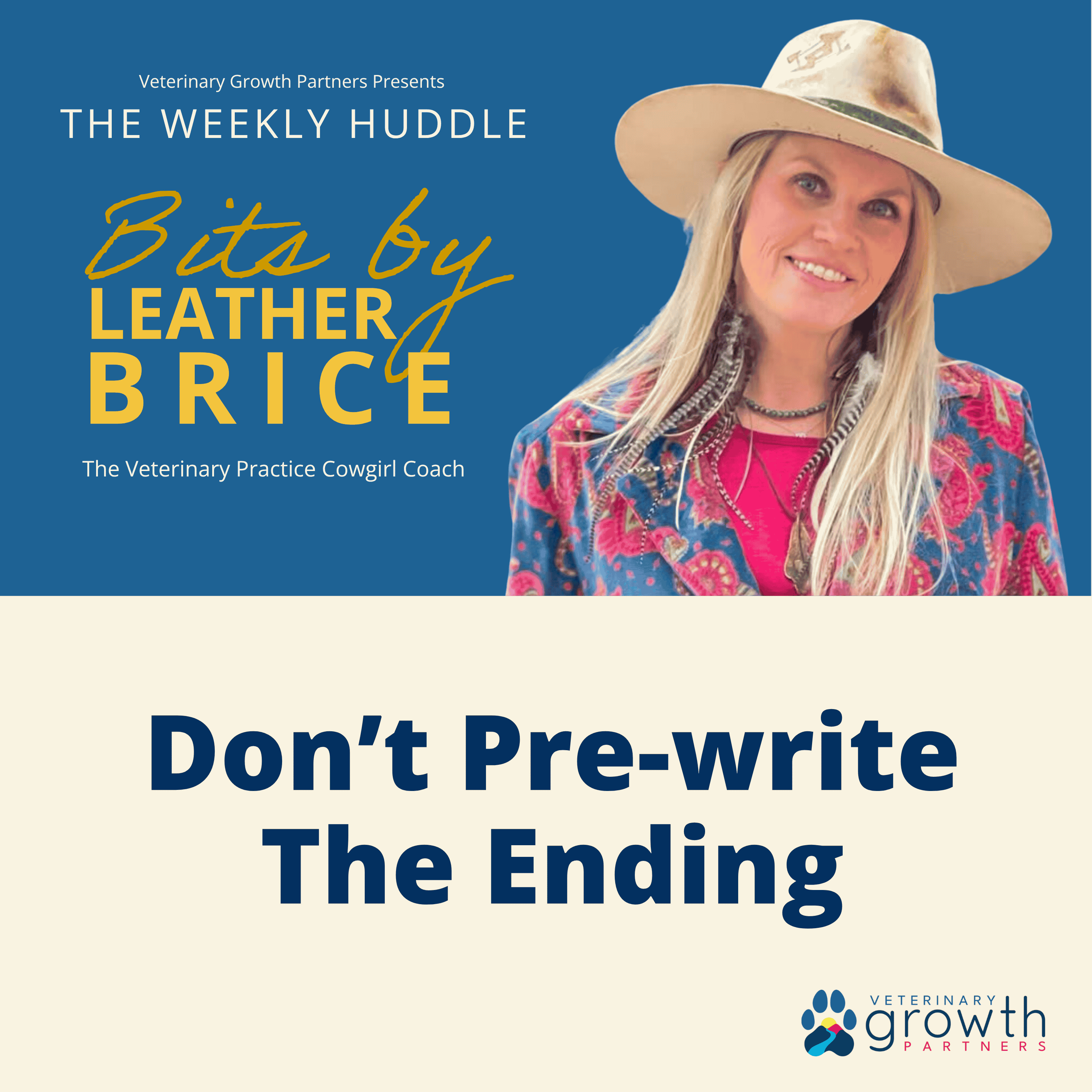
Don’t Pre-write The Ending

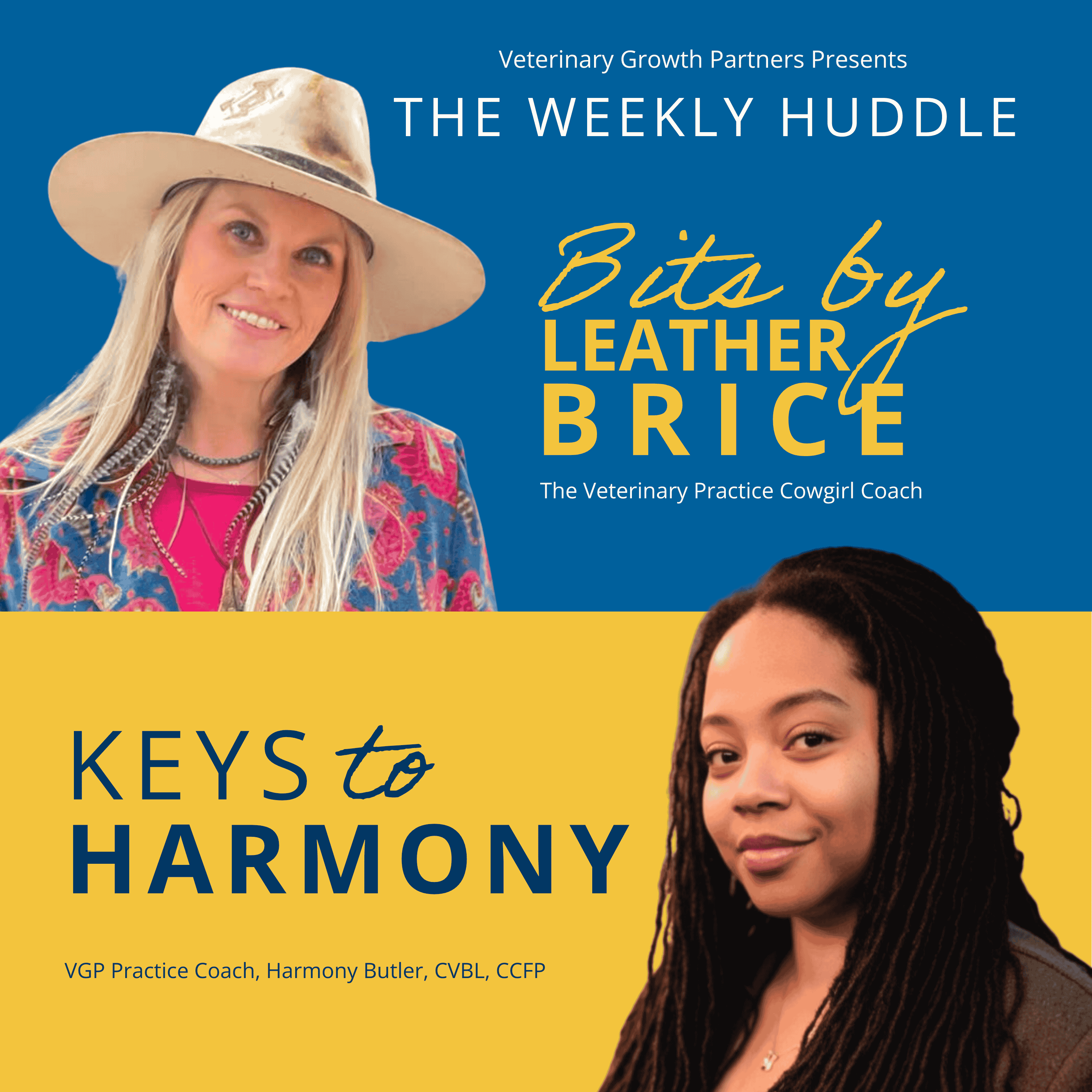
In this bite-sized episode of Bits by Leather, Leather Brice, CVBL tackles a common team trap: focusing on how others behave instead of how we show up. Leather makes the case for ownership-why you can’t control teammates, but you can control your mindset, your words, and your willingness to practice direct, honest communication. She breaks down the difference between the stories we tell ourselves and the facts we can act on, and how true team buy-in starts at the individual level. If you want a healthier culture, lead yourself first: give feedback, skip the gossip, and model the change you want to see. Leather invites your questions and scenarios for future Bits-send what you’re wrestling with and bring it to the show. Be kind to each other, and remember: the only person you control is you. 🐴 Key Takeaways Focus on what you can control—you, not others. Communication is key: practice direct, honest conversations. Replace gossip and silence with clear, constructive feedback. Don’t pre‑write the ending; assumptions are just stories, not facts. Implement better communication tactics regardless of how others might react. Team buy‑in begins with individual buy‑in; culture shifts start person by person. Modeling good behavior increases the odds others follow. Aim for a healthier environment by owning your words, mindset, and actions. Invitation to listeners: share topics, scenarios, and feedback for future Bits. Parting reminder: be kind; the only person you control is yourself.

August 11, 20264 min

Summer Soundtracks

In this warm-weather edition of Keys to Harmony, Harmony Butler, CVBL, CCFP invites you to rediscover the magic of summer through the songs that shape our memories. From windows-down drives and neighborhood cookouts to quiet sunsets and early-morning house music, Harmony explores how melodies can transport us to the past, steady our breath in the present, and connect us more deeply to the people and moments that matter. You’ll be inspired to build your own summer playlist—not just for nostalgia, but for peace, joy, and courage in every season. Tune in for practical prompts to curate tracks that lift your spirit, and share your favorite summer song to spark someone else’s memory. Turn up the volume, soak in the sunshine, and create a soundtrack you’ll smile about for years to come. 🔑 Key Takeaways: Music powerfully triggers memories, transporting us back to people, places, and feelings from past summers. Songs don’t just recall the past—they shape the present by calming, energizing, and reminding us we’re not alone. Seeking harmony isn’t always about changing circumstances; it’s about choosing what fills our minds. Create a summer playlist that lifts your spirit, brings peace, and reflects what matters most. Share your favorite summer song—your story can spark connection and inspire others. The best summer moments are often simple: windows down, family singing, neighborhood festivals. Use music intentionally for mood: calm melodies to slow breathing; upbeat tracks to amplify joy. Connection grows through shared music—community, memories, and harmony deepen together. Call to action: build and share your playlist this week; be the “work DJ” and invite others in. Make new memories now—turn up your songs and enjoy the sunshine

July 16, 20265 min

The Critical Difference Between Helping and Enabling

While veterinary professionals are naturally inclined to be caregivers and fixers, failing to set boundaries can lead to emotional exhaustion and resentment. The conversation explores how enabling keeps people stuck in unhealthy patterns while true helping encourages independence and responsibility. Listeners will gain insights into why self destruction should not be confused with dedication and how to foster a healthier clinic culture. 🔑 Key Takeaways: Helping promotes growth and independence while enabling fosters dependence. The instinct to rescue others can lead to unsustainable workloads and burnout. Healthy leadership requires teaching and guiding rather than carrying others indefinitely. Boundaries are necessary to ensure that empathy remains sustainable. Accountability is a key component of a healthy and functional team.

July 9, 20266 min

Why Micromanagement Feels Like a Lack of Trust

This episode of Bits By Leather, she takes a deep dive into the triggers and consequences of micromanagement. The discussion explores how constant monitoring can be perceived as a lack of trust, even when the leader intends to ensure consistency. Listeners will learn the vital difference between constructive feedback and micromanagement, as well as strategies for leading through expectations and outcomes to empower their teams. 🐴 Key Takeaways Micromanagement challenges professional competency and reduces the sense of ownership. Autonomy is a key driver for motivation and engagement in any role. Feedback is essential for growth, but it must be distinguished from controlling the process. Focusing on expected outcomes rather than individual steps helps maintain consistency. Clear communication regarding standards is the best way to bridge the gap between leaders and teams.

July 2, 20266 min

Why Defensiveness Stops Growth

In this episode of Keys to Harmony, we explores the root causes of defensiveness and provides practical tools for fostering emotionally healthy communication. While defensiveness often feels like a personal attack, it is usually a protective response triggered by fear or stress. This is especially prevalent in high pressure fields like veterinary medicine. Harmony outlines how to shift from self protection to genuine connection by slowing down and staying open to feedback. 🔑 Key Takeaways: Understand that defensiveness is a natural protection response rather than a sign of incompetence. Utilize the power of the pause to respond with wisdom instead of reacting with emotion. Shift the focus from proving a point to listening for understanding and empathy. Learn to separate professional accountability from personal humiliation. Bridge the gap between intent and impact to heal strained conversations. Embrace vulnerability as a tool for building trust and team health.

June 25, 20265 min

The Power of Words in Vet Practice

In this candid Bits by Leather episode, Leather shares a vulnerable realization. For years, she used “standard of care” when she really meant something different: consistent client communication and team-driven processes that improve patient outcomes. She clarifies the difference between medical standards of care (the veterinarian’s domain) and the operational standards that help everyone, including technicians and CSRs, deliver clear and consistent recommendations, schedule proactively, document thoroughly, and follow up reliably. By resetting the language and defining minimum expectations across diagnostics, treatment recommendations, documentation, and follow-up, practices can align teams, boost compliance, and create a predictable client experience, no matter which doctor is on the schedule. This episode kicks off a clearer conversation and a stronger connection across the hospital. 🐴 Key takeaways “Standard of care” refers to clinical medicine. This episode focuses on consistency in communication and process. Define minimum expectations for diagnostics, recommendations, documentation, and follow-up. Empower technicians and CSRs to initiate scheduling and set expectations with clients. Consistent communication drives better compliance and patient outcomes. Adjusting language builds alignment between doctors and support teams. Vulnerability and clarity open the door to practice-wide improvement.

June 18, 20265 min

Rest Without Guilt: Turning Stillness Into Strategy

Harmony Butler explores how downtime, rest, and stillness can strengthen performance in high-demand settings, including veterinary medicine. Instead of treating slow moments as a threat to value or productivity, this episode reframes unstructured time as an essential tool for clarity, creativity, and sustainable impact. Listeners learn how to replace reactive habits like doom scrolling and busywork with intentional practices that reset attention, align priorities, and support better decision-making. 🔑 Key takeaways Downtime is not a productivity gap. It is part of a sustainable system for performance. Unstructured time creates space for clarity, creativity, and better decisions. Reactive downtime looks like mindless scrolling and urgency theater. Intentional downtime resets focus and prepares for what matters. Culture and leadership shape whether quiet moments are hidden or used well. Simple prompts like What matters most right now help direct meaningful action. The people who thrive know when to move and when to pause with purpose.

June 11, 20265 min

Ending “Tattletale” Culture in Your Practice

When workplace tension turns into triangulation, “she’s ignoring me,” “he’s unfair”, leaders often feel pressured to jump in and fix it. In this episode of Bits by Leather, Leather Brice, CVBL, explains why stepping into the middle can actually escalate conflict—and how to build a culture of direct, solution‑seeking communication instead. You’ll learn practical ways to redirect team members back to the source, coach accountability without seeming unsupportive, and normalize feedback through emotional intelligence training, role‑play, and consistent language. Leather also shares a simple leader script you can use the next time someone comes to you about “someone else,” and how to know when it’s time to intervene. Ready to turn drama into dialogue? Bring your real‑world scenarios to EdQuest, our coaches are actively responding, and explore our Emotional Intelligence workshops and conflict resources to equip your team. 🐴 Key Takeaways Feelings are valid, but address concerns directly with the person involved before escalating. Triangulation (going to a third party instead of the source) creates bigger, longer-lasting issues. Owners/leaders shouldn’t take sides or jump into conflicts they didn’t witness. Support doesn’t mean mediating first—it means coaching team members to talk to each other. Build accountability by consistently redirecting: “Have you spoken to them first?” Step in only after a direct conversation has been attempted and business flow is at risk. Invest in emotional intelligence, conflict skills, and feedback training; practice with role-play. Normalize open, solution-seeking communication as a team standard. Keep reinforcing the message: “We talk about talking”—make communication a visible priority. Use EdQuest and workshops as ongoing resources for real scenarios and skill-building.

May 28, 20265 min

The Beginning of Becoming

In this graduation-season reflection, Harmony Butler, CVBL, CCFP, honors new veterinary graduates, mentors, technicians, professors, and invites all of us to revisit the joy that first called us into veterinary medicine. Beyond diplomas and match results lies the deeper work of becoming: staying connected to empathy, curiosity, humility, and hope. Harmony shares a heartfelt reminder to protect the version of yourself that loved this work before anyone paid you for it and to notice the “small” moments that are actually the heartbeat of our profession. Whether you’re stepping into practice for the first time or decades in, this episode is an invitation back to purpose. 🔑 Key takeaways: Graduation is not the end of training—it’s the beginning of becoming. Protect your original spark: wonder, compassion, and the capacity to be moved by small victories. The profession should refine your heart, not harden it. Success is both skill and humanity—service, curiosity, empathy, and hope. Remembering why you started is as vital as knowing where you’re going.

May 14, 20265 min

The Courage to Change Keys

In this heartfelt episode of Keys To Harmony , Harmony Butler, CVBL, CCFP, draws a powerful parallel between music and life’s transitions. Just as musicians know when to change keys to elevate a song or support a unique voice, we too must recognize when it’s time to shift our mental “mold” as we move through life’s seasons. Harmony explores the lingering effects of survival mode, how it can quietly shape our actions and relationships, and why it’s essential to consciously let go of old patterns that no longer serve us. With compassion and wisdom, she guides listeners through the process of honoring their past resilience while embracing growth, fulfillment, and new opportunities. Tune in for practical insights and encouragement to help you find your own “key to harmony” in every season. 🔑 Key Takeaways: Changing mental molds is as essential as changing musical keys—what served you in one season may hold you back in another. Survival mode can become a default mindset, even after circumstances improve, leading to exhaustion and unfulfillment. Physical and mental tension can linger as “muscle memory” from past stressful experiences. Old coping mechanisms like hiding, people-pleasing, or aggression may have protected you before, but can hinder growth and leadership now. It’s important to consciously acknowledge and thank your “younger self” for surviving, but allow your wiser, present self to take the lead. Growth requires letting go of outdated habits and embracing new ways of thinking and being. Your body and mind may need time and reminders to adjust to new seasons—be patient with yourself. The key to harmony is found in courageously switching molds and seeking new melodies in life.

Is this your show?

Claim this listing to keep it up to date, reach guests who want to pitch you, and manage bookings with Guestify.

Claim this listing

More Business podcasts