Find partners
The Crux of Medtech

The Crux of Medtech

Hosted by The Crux of Medtech

BusinessInterviews guests

Episodes

78

Latest episode

Jun 2026

Language

EN-GB

About the show

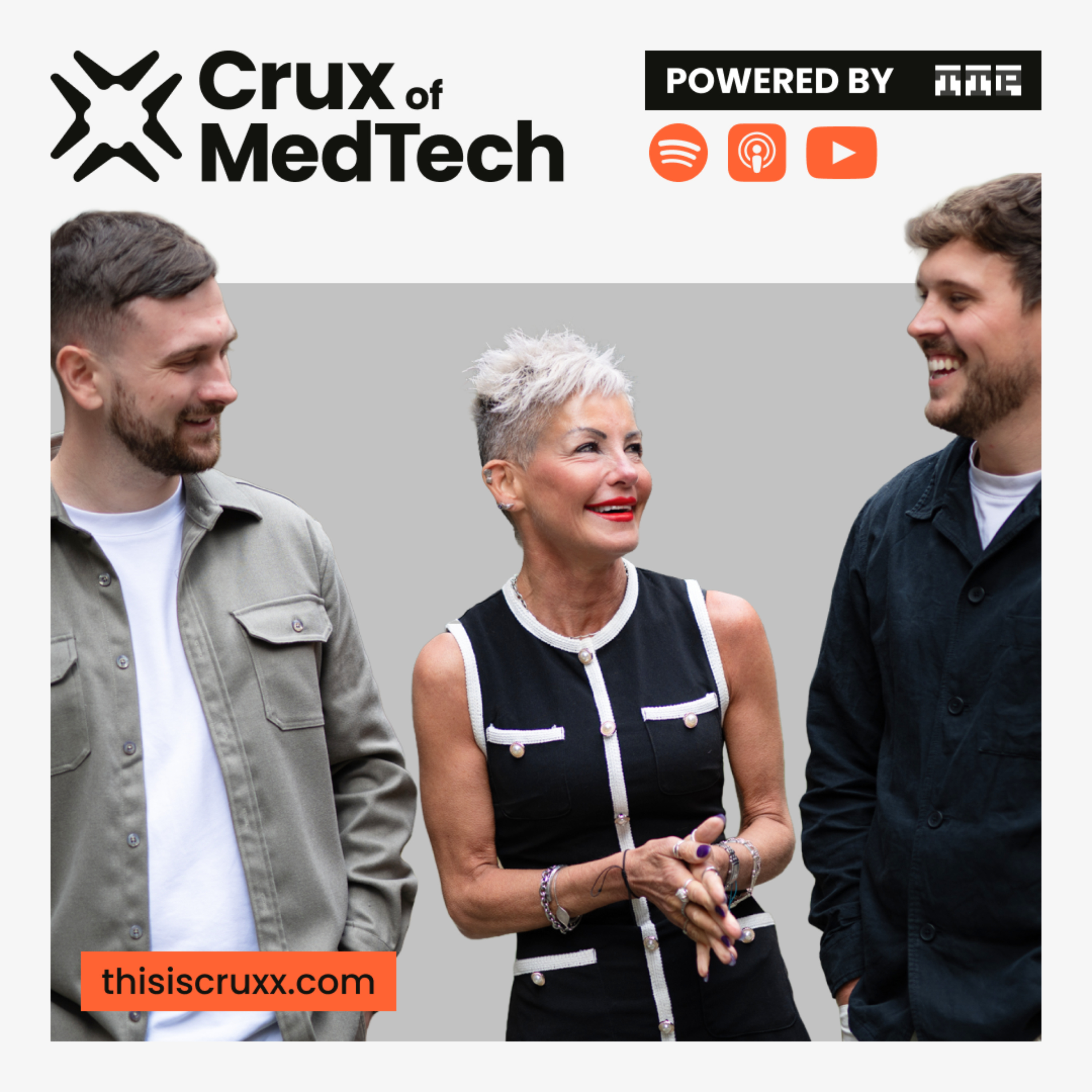
Welcome to The Crux of Medtech, where we sit down with special guests from the medtech industry. We tell the stories of this incredible sector by looking inside businesses from across the trade. Our guests are leaders from companies at all levels, from pre-seed startups and scale-ups to global-scale players. We’re uncovering experiences from the whole medtech ecosystem.

Listen to episodes

60 recent
June 12, 202639 min

The Himalaya of Medtech: Building a Next-Gen Heart Pump From Scratch with Louis de Lillers

In this episode of the Crux of Cardio, your host Jordan Burgin sits down with Louis de Lillers, CEO of CorWave, the French company developing a next-generation LVAD powered by the wave membrane technology inspired by the motion of marine animals.Louis shares why current LVADs leave patients alive but without a pulse, and how CorWave's approach could restore physiological blood flow, reduce devastating adverse events, and even open the door to cardiac recovery. "He also gets candid about what it really takes to build a medtech company from five employees to first-in-human in an industry where billion-dollar leaders thrive, the fundraising journey that included the European Commission's first direct equity investment since 1957, and why the best advice he can give founders is: if you can avoid raising money, don't raise money.Key Topics:Why current LVAD patients live without a pulse and the clinical consequencesCorWave's wave membrane technology and how it restores pulsatile flowThe 13-year journey from R&D startup to first-in-human implantationFundraising strategy: from Sofinnova Partners to the EIC FundBuilding and retaining a world-class team in a startup environmentRelated Insights:The case for physiological flow over continuous flow in mechanical circulatory supportWhy clinical trial centres can double as early commercial launchpadsThe European medtech talent gap and why experienced operators are in short supplyCore Challenges:Current continuous-flow LVADs disrupt the cardiovascular system, leading to stroke, gastrointestinal bleeding, aortic insufficiency, and severely limited patient quality of life.CorWave's wave membrane LVAD is designed to restore physiological pulsatility, modulate flow for patient activity, and potentially enable cardiac recovery, all while navigating a market with 10+ year barriers to entry and a single dominant player.Tune in now to hear how CorWave is challenging the status quo in mechanical circulatory support and what it takes to build a paradigm-shifting medtech company from the ground up.The Crux of MedTech podcast is brought to you by Cruxx, a specialist surgical robotics recruitment agency. To learn more about Cruxx,⁠⁠⁠⁠⁠⁠⁠⁠⁠⁠⁠⁠⁠⁠⁠⁠⁠⁠⁠⁠ ⁠click here.⁠⁠⁠⁠⁠⁠⁠⁠⁠⁠⁠⁠⁠⁠⁠⁠⁠⁠⁠⁠A big thank you to our sponsors on this season of the podcast; ⁠⁠⁠⁠⁠⁠⁠⁠⁠⁠⁠⁠⁠⁠⁠⁠⁠⁠⁠TTP plc⁠⁠⁠⁠⁠⁠⁠⁠⁠⁠⁠⁠⁠⁠⁠⁠⁠⁠⁠⁠⁠ With a 35-year track record, TTP excels in turning innovative ideas into market-ready solutions. Their team of 300+ experts deliver breakthrough solutions in areas ranging from endoluminal robotics and navigation systems to ultrasound imaging. Whether you're a startup or a multinational, ⁠⁠⁠⁠⁠⁠⁠⁠⁠⁠⁠⁠⁠⁠⁠⁠⁠⁠⁠⁠⁠TTP plc⁠⁠⁠⁠⁠⁠⁠⁠⁠⁠⁠⁠⁠⁠⁠⁠⁠⁠⁠⁠⁠ can accelerate your development with the latest technologies. Learn more at ⁠⁠⁠⁠⁠⁠⁠⁠⁠⁠⁠⁠⁠⁠⁠⁠⁠⁠⁠⁠⁠TTP.com⁠⁠⁠⁠⁠⁠⁠⁠⁠⁠⁠⁠⁠⁠⁠⁠⁠⁠⁠⁠

June 9, 202648 min

Changing The Law To Fund Medtech with Thom Rasche

In this episode of The Crux of MedTech, Henry Norton sits down with Thom Rasche, Managing Partner and founding force behind Earlybird Health, the venture fund that literally changed German law to get public health insurers investing in early-stage medtech. Thom shares the unvarnished reality of European health VC: where the arbitrage lies, why the CE mark has lost its edge, and what separates the 5% of startups using AI meaningfully from the 95% just putting it in the business plan. From building a fund around patient outcomes to coaching founders through the painful moment their company outgrows them, this conversation is a masterclass in what it takes to back revolutionary healthcare technology in Europe and get it to the US market.Key Topics:The real cost advantage of developing medtech in Europe vs. the USWhy the CE mark has fallen behind the FDA as a regulatory pathwayHow Earlybird got public health insurers into venture (and changed the law to do it)What separates a better mousetrap from a game-changing technologyThe three phases a startup CEO must navigate, and why most can’t cover all threeRelated Insights:Why outcomes-based pricing could reshape pharmaceutical reimbursementHow AI is accelerating platform validation and clinical trial recruitmentThe role of collaboration over competition in European VCCore Challenges:European medtech startups face smaller funding rounds and a fragmented market, meaning the best companies must eventually flip to the US to access the world’s largest healthcare market and viable exit routes.Assessing founding teams remains the hardest part of due diligence. The biggest reason companies fail is not the technology, it’s that the people cannot execute through the shifting demands of growth, clinical validation, and commercialisation.Tune in now to hear how one of Europe’s most experienced health VCs backs revolutionary technology, navigates the transatlantic funding gap, and coaches founders through the moments that make or break their companies.The Crux of MedTech podcast is brought to you by Cruxx, a specialist surgical robotics recruitment agency. To learn more about Cruxx,⁠⁠⁠⁠⁠⁠⁠⁠⁠⁠⁠⁠⁠⁠⁠⁠⁠⁠⁠⁠ ⁠click here.⁠⁠⁠⁠⁠⁠⁠⁠⁠⁠⁠⁠⁠⁠⁠⁠⁠⁠⁠⁠A big thank you to our sponsors on this season of the podcast; ⁠⁠⁠⁠⁠⁠⁠⁠⁠⁠⁠⁠⁠⁠⁠⁠⁠⁠⁠TTP plc⁠⁠⁠⁠⁠⁠⁠⁠⁠⁠⁠⁠⁠⁠⁠⁠⁠⁠⁠⁠⁠ With a 35-year track record, TTP excels in turning innovative ideas into market-ready solutions. Their team of 300+ experts deliver breakthrough solutions in areas ranging from endoluminal robotics and navigation systems to ultrasound imaging. Whether you're a startup or a multinational, ⁠⁠⁠⁠⁠⁠⁠⁠⁠⁠⁠⁠⁠⁠⁠⁠⁠⁠⁠⁠⁠TTP plc⁠⁠⁠⁠⁠⁠⁠⁠⁠⁠⁠⁠⁠⁠⁠⁠⁠⁠⁠⁠⁠ can accelerate your development with the latest technologies. Learn more at ⁠⁠⁠⁠⁠⁠⁠⁠⁠⁠⁠⁠⁠⁠⁠⁠⁠⁠⁠⁠⁠TTP.com⁠⁠⁠⁠⁠⁠⁠⁠⁠⁠⁠⁠⁠⁠⁠⁠⁠⁠⁠⁠

June 5, 202652 min

Five Billion-Dollar Deals in 45 Days: Inside the Cardiac Monitoring Gold Rush with Ken Nelson

In this episode of The Crux of Cardio, Jordan Burgin sits down with Ken Nelson, one of the most experienced commercial leaders in cardiac digital health.Ken helped scale commercial teams at iRhythm, BioTelemetry/CardioNet, and Bardy Diagnostics, three of the defining names in ambulatory cardiac monitoring. He shares the inside story behind the 2020–2021 cardiac monitoring M&A wave, including Philips’ acquisition of BioTelemetry, Hillrom’s acquisition of BardyDx, and Boston Scientific’s acquisition of Preventice.The conversation also covers the Medicare reimbursement shock that nearly derailed the Bardy transaction, the court decision that forced Hillrom to complete the deal, and the personal loss that now shapes Ken’s work as an investor, board member, and mentor across cardiac and EP startups.Key Topics:The 45-day acquisition wave: Philips/BioTelemetry, Boston Scientific/Preventice, and Hillrom/BardyHow a Medicare reimbursement error nearly killed the Bardy acquisitionKen's people-first commercialisation playbook for medtech startupsThe personal tragedy that made fighting heart disease his life's missionKen's current thesis at Nelson Jennings Ventures and his portfolio companiesRelated Insights:Why angel investors and family offices matter more than ever for early-stage cardiac startupsHeartBeam's credit-card-sized 12-lead ECG and the future of at-home heart attack detectionHow Echo IQ is applying AI to echocardiography to detect aortic stenosis and heart failureWhy wearable therapeutics like StimCardio will disrupt the standard of care in cardiac arrhythmiaCore Challenges:Remote patient monitoring reimbursement codes haven't kept pace with multi-sensor, multi-condition wearable devices, creating a bottleneck for commercialisationCardiac startups need tighter collaboration between the FDA, CMS, payers, and industry accelerators to drive faster adoption of emerging technologiesSeries A funding goalposts have shifted: earlier clinical data is now expected, making angel investors and family offices critical for bridging the gap🎧 Tune in now to hear how Ken Nelson went from a finance cubicle to building the commercial engine behind cardiac monitoring's biggest exits, and what he's betting on next.The Crux of MedTech podcast is brought to you by Cruxx, a specialist surgical robotics recruitment agency. To learn more about Cruxx,⁠⁠⁠⁠⁠⁠⁠⁠⁠⁠⁠⁠⁠⁠⁠⁠⁠⁠⁠⁠⁠ ⁠click here.⁠⁠⁠⁠⁠⁠⁠⁠⁠⁠⁠⁠⁠⁠⁠⁠⁠⁠⁠⁠⁠A big thank you to our sponsors on this season of the podcast; ⁠⁠⁠⁠⁠⁠⁠⁠⁠⁠⁠⁠⁠⁠⁠⁠⁠⁠⁠⁠TTP plc⁠⁠⁠⁠⁠⁠⁠⁠⁠⁠⁠⁠⁠⁠⁠⁠⁠⁠⁠⁠⁠⁠ With a 35-year track record, TTP excels in turning innovative ideas into market-ready solutions. Their team of 300+ experts deliver breakthrough solutions in areas ranging from endoluminal robotics and navigation systems to ultrasound imaging. Whether you're a startup or a multinational, ⁠⁠⁠⁠⁠⁠⁠⁠⁠⁠⁠⁠⁠⁠⁠⁠⁠⁠⁠⁠⁠⁠TTP plc⁠⁠⁠⁠⁠⁠⁠⁠⁠⁠⁠⁠⁠⁠⁠⁠⁠⁠⁠⁠⁠⁠ can accelerate your development with the latest technologies. Learn more at ⁠⁠⁠⁠⁠⁠⁠⁠⁠⁠⁠⁠⁠⁠⁠⁠⁠⁠⁠⁠⁠⁠TTP.com⁠⁠⁠⁠⁠⁠⁠⁠⁠⁠⁠⁠⁠⁠⁠⁠⁠⁠⁠⁠⁠

June 2, 202637 min

Patients Fought to Use This Blood-Drawing Robot with Toon Overbeeke

In this episode of The Crux of MedTech, Henry Norton sits down with Toon Overbeeke, CEO and Co-founder of Vitestro, the company behind the world's first CE-marked autonomous robotic phlebotomy device, Aletta. Fresh off a $70M oversubscribed Series B backed by Labcorp, Mayo Clinic, Sutter Health and Sonder Capital, with Intuitive Surgical founder Fred Moll on the board, Toon shares how a friend's father struggling through chemotherapy blood draws sparked the idea to automate the most commonly performed invasive procedure on the planet.Toon breaks down how Vitestro approached the problem from a business case first, not an engineering push, and why that distinction has kept their thesis intact for nine years. He shares surprising patient adoption data, including the counterintuitive finding that elderly patients are more willing to use the system than younger ones, and the moment a waiting room fight broke out because patients wanted to skip the line to use their robot.He also opens up about the personal evolution required to scale from a two-person team to over 100 FTEs, the trade-offs of managing long-standing team members through company growth, and how having Fred Moll and strategic investors on the cap table has accelerated their journey toward European commercial launch.Key Topics:The origin of Vitestro and why business case came before engineeringAutonomous robotic blood drawing and the Aletta devicePatient adoption data and the counterintuitive age findingsScaling from prototype to product and the factor-10 ruleBuilding a strategic investor base and cap table strategyPreparing for European commercial launchRelated Insights:Why standardising the pre-analytical phase matters for diagnostic accuracyHow a one-to-many supervision model makes autonomous devices commercially viableThe role of strategic investors like Labcorp and Mayo Clinic in de-risking commercialisationCore Challenges:Blood drawing remains the only part of the diagnostic chain that hasn't been automated, creating a bottleneck driven by staffing shortages, high turnover, and inconsistent quality that leads to hemolysis and rejected samples.Scaling from a working prototype to a reliable, serviceable, manufacturable medical device requires orders of magnitude more engineering and operations effort than most founders anticipate, encompassing everything from cyber security compliance and regulatory approvals to remote access infrastructure and field serviceability.Tune in now to hear how Vitestro is automating the world's most common invasive procedure and what it takes to build a medtech company from first principle to commercial launch.The Crux of MedTech podcast is brought to you by Cruxx, a specialist surgical robotics recruitment agency. To learn more about Cruxx,⁠⁠⁠⁠⁠⁠⁠⁠⁠⁠⁠⁠⁠⁠⁠⁠⁠⁠⁠⁠ ⁠click here.⁠⁠⁠⁠⁠⁠⁠⁠⁠⁠⁠⁠⁠⁠⁠⁠⁠⁠⁠⁠A big thank you to our sponsors on this season of the podcast; ⁠⁠⁠⁠⁠⁠⁠⁠⁠⁠⁠⁠⁠⁠⁠⁠⁠⁠⁠TTP plc⁠⁠⁠⁠⁠⁠⁠⁠⁠⁠⁠⁠⁠⁠⁠⁠⁠⁠⁠⁠⁠ With a 35-year track record, TTP excels in turning innovative ideas into market-ready solutions. Their team of 300+ experts deliver breakthrough solutions in areas ranging from endoluminal robotics and navigation systems to ultrasound imaging. Whether you're a startup or a multinational, ⁠⁠⁠⁠⁠⁠⁠⁠⁠⁠⁠⁠⁠⁠⁠⁠⁠⁠⁠⁠⁠TTP plc⁠⁠⁠⁠⁠⁠⁠⁠⁠⁠⁠⁠⁠⁠⁠⁠⁠⁠⁠⁠⁠ can accelerate your development with the latest technologies. Learn more at ⁠⁠⁠⁠⁠⁠⁠⁠⁠⁠⁠⁠⁠⁠⁠⁠⁠⁠⁠⁠⁠TTP.com⁠⁠⁠⁠⁠⁠⁠⁠⁠⁠⁠⁠⁠⁠⁠⁠⁠⁠⁠⁠

May 29, 202643 min

Half a Million Patients a Year and No Good Options. Until Now with Dr. Lucy O'Keeffe

In this episode, your host Jordan Burgin sits down with Dr. Lucy O'Keeffe, CEO and Co-Founder of CroíValve, for the first ever in-person recording of the Crux of Cardio. Lucy explains why the tricuspid valve was once considered the "forgotten valve", how her Dublin-based team is building a device that sits between repair and replacement, and what it really takes to raise €60 million and navigate clinical validation as a first-time founder in structural heart.Key Topics:Why the tricuspid valve was overlooked for decades and what changedCroíValve's "adaptive co-optation" approach and how it differs from clip and replacement technologiesClinical validation: early European data, device updates, and the path to FDA and CE markFundraising as a first-time founder in Ireland's medtech ecosystemBuilding a team culture that retains talent and creates future foundersRelated Insights:Why Ireland has become a launchpad for medtech startupsThe role of Enterprise Ireland and angel syndicates in early-stage medtech fundingWhy a dual US/Europe regulatory strategy still matters in the MDR eraCore Challenges:Tricuspid regurgitation affects 3.6% of the over-65 population, yet current commercial devices leave many patients anatomically unsuitable for treatment and deliver variable outcomes.CroíValve's DUO system is designed to treat the broadest range of patients while preserving right heart function, but the capital-intensive journey of clinical validation competes with venture timelines and a funding landscape increasingly tilted toward AI.Tune in now to hear how a Trinity College spin-out is rewriting the playbook for tricuspid valve treatment.The Crux of MedTech podcast is brought to you by Cruxx, a specialist surgical robotics recruitment agency. To learn more about Cruxx,⁠⁠⁠⁠⁠⁠⁠⁠⁠⁠⁠⁠⁠⁠⁠⁠⁠⁠⁠⁠ ⁠click here.⁠⁠⁠⁠⁠⁠⁠⁠⁠⁠⁠⁠⁠⁠⁠⁠⁠⁠⁠⁠A big thank you to our sponsors on this season of the podcast; ⁠⁠⁠⁠⁠⁠⁠⁠⁠⁠⁠⁠⁠⁠⁠⁠⁠⁠⁠TTP plc⁠⁠⁠⁠⁠⁠⁠⁠⁠⁠⁠⁠⁠⁠⁠⁠⁠⁠⁠⁠⁠ With a 35-year track record, TTP excels in turning innovative ideas into market-ready solutions. Their team of 300+ experts deliver breakthrough solutions in areas ranging from endoluminal robotics and navigation systems to ultrasound imaging. Whether you're a startup or a multinational, ⁠⁠⁠⁠⁠⁠⁠⁠⁠⁠⁠⁠⁠⁠⁠⁠⁠⁠⁠⁠⁠TTP plc⁠⁠⁠⁠⁠⁠⁠⁠⁠⁠⁠⁠⁠⁠⁠⁠⁠⁠⁠⁠⁠ can accelerate your development with the latest technologies. Learn more at ⁠⁠⁠⁠⁠⁠⁠⁠⁠⁠⁠⁠⁠⁠⁠⁠⁠⁠⁠⁠⁠TTP.com⁠⁠⁠⁠⁠⁠⁠⁠⁠⁠⁠⁠⁠⁠⁠⁠⁠⁠⁠⁠

May 19, 202647 min

25 Years of Unfinished Business in Emphysema. Apreo Health Is Going Back In with Karun Naga

In this episode, Henry Norton sits down with Karun Naga, CEO of Apreo Health, to talk about one of the most underserved patient populations in respiratory medicine and why everything the industry tried before was heading in the wrong direction. Karun takes us inside the 25-year journey from the original Emphasys Medical valve device through to Apreo's BREATHE Airway Scaffold, a fundamentally different, non-destructive approach to treating severe emphysema.He explains how a June 2021 cadaver lab session in Minnesota confirmed the science, how the team raised $130 million despite most investors wanting to wait, and why a mechanical engineer turned patent lawyer ended up leading a clinical-stage medtech company.Key TopicsWhy the original emphysema valve approach was answering the wrong questionHow Apreo's BREATHE Airway Scaffold works differently to every predecessorThe Foundry's venture studio model and what "maniacal focus" actually looks likeIP strategy for medtech founders: filing early, going broad, and securing global optionsRaising $130M when most investors wanted to wait for the dataRelated InsightsThe career path from mechanical engineering to patent law to medtech CEOWhy "publish or perish" and intellectual property protection go hand in handHow The Foundry turns clinical curiosity into venture-backed companiesWhat Inari and Penumbra prove about building an entire market through focused executionCore ChallengesSevere emphysema leaves patients with as little as 60-70% of their functional lung tissue, and the diseased tissue hyperinflates to two to three times its size, compressing healthy lung and making every breath a struggle. Every prior interventional approach, from valves to coils to vapour, has been destructive to the lung, limiting treatment to a narrow subset of patients.Apreo Health's BREATHE Airway Scaffold takes a collaborative, tissue-sparing approach: a minimally invasive implant that releases trapped air without sacrificing lung tissue, designed to reach the majority of severe emphysema patients who current treatments cannot help.🎧 Tune in now to hear how Karun Naga and Apreo Health are rewriting the playbook on emphysema treatment after 25 years of unfinished business.The Crux of MedTech podcast is brought to you by Cruxx, a specialist surgical robotics recruitment agency. To learn more about Cruxx,⁠⁠⁠⁠⁠⁠⁠⁠⁠⁠⁠⁠⁠⁠⁠⁠⁠⁠⁠⁠ ⁠click here.⁠⁠⁠⁠⁠⁠⁠⁠⁠⁠⁠⁠⁠⁠⁠⁠⁠⁠⁠⁠A big thank you to our sponsors on this season of the podcast; ⁠⁠⁠⁠⁠⁠⁠⁠⁠⁠⁠⁠⁠⁠⁠⁠⁠⁠⁠TTP plc⁠⁠⁠⁠⁠⁠⁠⁠⁠⁠⁠⁠⁠⁠⁠⁠⁠⁠⁠⁠⁠ With a 35-year track record, TTP excels in turning innovative ideas into market-ready solutions. Their team of 300+ experts deliver breakthrough solutions in areas ranging from endoluminal robotics and navigation systems to ultrasound imaging. Whether you're a startup or a multinational, ⁠⁠⁠⁠⁠⁠⁠⁠⁠⁠⁠⁠⁠⁠⁠⁠⁠⁠⁠⁠⁠TTP plc⁠⁠⁠⁠⁠⁠⁠⁠⁠⁠⁠⁠⁠⁠⁠⁠⁠⁠⁠⁠⁠ can accelerate your development with the latest technologies. Learn more at ⁠⁠⁠⁠⁠⁠⁠⁠⁠⁠⁠⁠⁠⁠⁠⁠⁠⁠⁠⁠⁠TTP.com⁠⁠⁠⁠⁠⁠⁠⁠⁠⁠⁠⁠⁠⁠⁠⁠⁠⁠⁠⁠

May 15, 202646 min

The Heart Failure Industry Has It Wrong, This Tiny Turbine Could Fix It with Arnaud Mascarell

In this episode of Crux of Cardio, Jordan Burgin sits down with Arnaud Mascarell, CEO and Co-Founder of FineHeart, the Bordeaux-based company behind the FlowMaker, a fully implantable cardiac assist device that works in synchrony with the heart's natural contraction rather than replacing it.Arnaud shares the full journey: 18 years at Medtronic pioneering CRT pacemakers, the origin story that started with a child's toy boat, why the current approach to heart failure is fundamentally broken, and what it takes to spend a decade building a device that nobody else has been able to replicate. He also opens up on fundraising in European medtech, securing a €48M EU grant, and why he measures success in patients saved rather than acquisition price.Key Topics:Why the heart failure industry is failing patients between medication and late-stage devicesThe FlowMaker: a fully implantable, wireless, synchronized cardiac assist deviceThe origin story behind FineHeart and the CRT pacemaker connectionEliminating the driveline and what that means for patient quality of lifeWireless energy transfer as a platform technology for all active implantablesFundraising a €100M+ medtech startup with VCs, industrialists, and cardiologists as investorsRelated Insights:The IPCEI Tech4Cure programme and European sovereignty in active implantable devices5P medicine: preventive, predictable, proof-based, personalised, participativeWhy disruptive medtech innovation now comes almost entirely from startups, not corporatesBuilding digital twins and surgical planning tools to de-risk implantationCore Challenges:Current MCS devices arrive too late in the disease progression, require invasive surgery and external drivelines, and carry significant infection risk. This limits cardiologist referrals and keeps the therapy niche.FineHeart's FlowMaker is designed to intervene earlier with a minimally invasive, fully implantable device that accelerates native blood flow rather than bypassing the heart, with the ambition of promoting cardiac recovery rather than lifelong device dependence.Scaling from feasibility trials to a commercial product serving 100,000+ patients per year demands parallel investment in manufacturing, regulatory approval, and clinical demonstration, all while maintaining fundraising momentum in a risk-heavy European medtech landscape.Tune in now to hear how a Playmobil toy boat sparked a device that could transform heart failure treatment for hundreds of thousands of patients.The Crux of MedTech podcast is brought to you by Cruxx, a specialist surgical robotics recruitment agency. To learn more about Cruxx,⁠⁠⁠⁠⁠⁠⁠⁠⁠⁠⁠⁠⁠⁠⁠⁠⁠⁠⁠⁠ ⁠click here.⁠⁠⁠⁠⁠⁠⁠⁠⁠⁠⁠⁠⁠⁠⁠⁠⁠⁠⁠⁠A big thank you to our sponsors on this season of the podcast; ⁠⁠⁠⁠⁠⁠⁠⁠⁠⁠⁠⁠⁠⁠⁠⁠⁠⁠⁠TTP plc⁠⁠⁠⁠⁠⁠⁠⁠⁠⁠⁠⁠⁠⁠⁠⁠⁠⁠⁠⁠⁠ With a 35-year track record, TTP excels in turning innovative ideas into market-ready solutions. Their team of 300+ experts deliver breakthrough solutions in areas ranging from endoluminal robotics and navigation systems to ultrasound imaging. Whether you're a startup or a multinational, ⁠⁠⁠⁠⁠⁠⁠⁠⁠⁠⁠⁠⁠⁠⁠⁠⁠⁠⁠⁠⁠TTP plc⁠⁠⁠⁠⁠⁠⁠⁠⁠⁠⁠⁠⁠⁠⁠⁠⁠⁠⁠⁠⁠ can accelerate your development with the latest technologies. Learn more at ⁠⁠⁠⁠⁠⁠⁠⁠⁠⁠⁠⁠⁠⁠⁠⁠⁠⁠⁠⁠⁠TTP.com⁠⁠⁠⁠⁠⁠⁠⁠⁠⁠⁠⁠⁠⁠⁠⁠⁠⁠⁠⁠

May 5, 202653 min

Surgeons Are Still Testing for Leaks the Same Way You'd Check a Bicycle Tire with Liam Burns

Liam Burns, CEO of Qaelon Medical, joins Henry Norton to talk about one of surgery's most dangerous and overlooked complications: the anastomotic leak.With leak rates in colorectal surgery now estimated at 18-20% and the standard detection method dating back to 1910, Liam explains how Qaelon is digitizing leak detection to give surgeons real-time, objective data in the OR.He also shares the personal motivation driving the mission, his son Colin's battle with Crohn's disease, the leadership lessons he carried from the US Navy into medtech startups, and why he believes your device's data belongs to the surgical community.Key Topics:Why surgical leak rates are far higher than the community historically believedHow Qaelon's gas-monitoring platform detects leaks in under 30 secondsThe case for constant flow insufflation in robotic surgeryBuilding a GI data ecosystem from pre-op through post-opCareer lessons from J&J/Ethicon, Power Medical, and ConMedWhy medtech founders should watch the full procedure, not just their product's momentRelated Insights:How capitated CMS payments are shifting the financial burden of complications back onto US hospitalsThe combination of insufflation and perfusion imaging for detecting subtler post-operative defectsWhy "give me what I want, not what I ask for" should guide every medtech product roadmapCore Challenges:The air bubble test, surgery's standard leak detection method since 1910, is a visual analog inspection that misses defects invisible to the naked eye. Yet it remains the only tool most surgeons have.Surgeons have never been able to objectively measure leak size, meaning there is no data-driven way to assess which defects are clinically significant and which are not.Tune in now to hear how Qaelon Medical is replacing a century-old test with real-time digital leak detection, and what it takes to build a medtech startup around a problem this personal.The Crux of MedTech podcast is brought to you by Cruxx, a specialist surgical robotics recruitment agency. To learn more about Cruxx,⁠⁠⁠⁠⁠⁠⁠⁠⁠⁠⁠⁠⁠⁠⁠⁠⁠⁠⁠⁠ ⁠click here.⁠⁠⁠⁠⁠⁠⁠⁠⁠⁠⁠⁠⁠⁠⁠⁠⁠⁠⁠⁠A big thank you to our sponsors on this season of the podcast; ⁠⁠⁠⁠⁠⁠⁠⁠⁠⁠⁠⁠⁠⁠⁠⁠⁠⁠⁠TTP plc⁠⁠⁠⁠⁠⁠⁠⁠⁠⁠⁠⁠⁠⁠⁠⁠⁠⁠⁠⁠⁠ With a 35-year track record, TTP excels in turning innovative ideas into market-ready solutions. Their team of 300+ experts deliver breakthrough solutions in areas ranging from endoluminal robotics and navigation systems to ultrasound imaging. Whether you're a startup or a multinational, ⁠⁠⁠⁠⁠⁠⁠⁠⁠⁠⁠⁠⁠⁠⁠⁠⁠⁠⁠⁠⁠TTP plc⁠⁠⁠⁠⁠⁠⁠⁠⁠⁠⁠⁠⁠⁠⁠⁠⁠⁠⁠⁠⁠ can accelerate your development with the latest technologies. Learn more at ⁠⁠⁠⁠⁠⁠⁠⁠⁠⁠⁠⁠⁠⁠⁠⁠⁠⁠⁠⁠⁠TTP.com⁠⁠⁠⁠⁠⁠⁠⁠⁠⁠⁠⁠⁠⁠⁠⁠⁠⁠⁠⁠

May 1, 202658 min

From Territory Manager to CCO of a $400M Cardiovascular Powerhouse with Tarik Pacuka

In this episode of the Crux of Cardio, Jordan Burgin sits down with Tarik Pacuka, former Chief Commercial Officer of Terumo Aortic, who scaled the business from a niche textile graft company into a $400M+ global cardiovascular player. Tarik shares the commercial playbook behind his 15-year rise from territory manager to CCO, the mentorship that shaped his leadership, what product recalls really do to a brand, and why he believes aortic disease is the most suppressed opportunity in cardiovascular.Key Topics:Tarik’s career trajectory from pharma to Vascutek to Terumo Aortic CCOBuilding and retaining high-performing commercial teams across three time zonesThe commercial playbook behind Terumo Aortic’s growthManaging product recalls and protecting brand confidenceDirect vs. indirect vs. OEM commercial models and where execution falls shortWhat Tarik looks for in his next move and the red flags he’s watching forRelated Insights:Why reliability, not innovation, is the real differentiator in Class III medical devicesThe role of mentorship in fast-tracking executive careers in medtechHow pharma training gives commercial leaders a competitive edge in medtechThe generational shift from radical invasive surgery to digitally supported, minimally invasive careCore Challenges:Aortic disease remains suppressed in terms of the urgency and investment needed. Despite the aorta being formally recognised as an organ, innovation is not moving fast enough to address the full spectrum of aortic conditions with minimally invasive, digitally supported solutions.Scaling commercial culture across global teams while maintaining trust, purpose and execution discipline is one of the hardest leadership challenges in cardiovascular medtech, particularly when competing against significantly larger incumbents like Medtronic, W.L. Gore and Getinge.Tune in now to hear how Tarik Pacuka built one of cardiovascular’s most formidable commercial engines, and what he thinks the industry needs next.The Crux of MedTech podcast is brought to you by Cruxx, a specialist surgical robotics recruitment agency. To learn more about Cruxx,⁠⁠⁠⁠⁠⁠⁠⁠⁠⁠⁠⁠⁠⁠⁠⁠⁠⁠⁠⁠ ⁠click here.⁠⁠⁠⁠⁠⁠⁠⁠⁠⁠⁠⁠⁠⁠⁠⁠⁠⁠⁠⁠A big thank you to our sponsors on this season of the podcast; ⁠⁠⁠⁠⁠⁠⁠⁠⁠⁠⁠⁠⁠⁠⁠⁠⁠⁠⁠TTP plc⁠⁠⁠⁠⁠⁠⁠⁠⁠⁠⁠⁠⁠⁠⁠⁠⁠⁠⁠⁠⁠ With a 35-year track record, TTP excels in turning innovative ideas into market-ready solutions. Their team of 300+ experts deliver breakthrough solutions in areas ranging from endoluminal robotics and navigation systems to ultrasound imaging. Whether you're a startup or a multinational, ⁠⁠⁠⁠⁠⁠⁠⁠⁠⁠⁠⁠⁠⁠⁠⁠⁠⁠⁠⁠⁠TTP plc⁠⁠⁠⁠⁠⁠⁠⁠⁠⁠⁠⁠⁠⁠⁠⁠⁠⁠⁠⁠⁠ can accelerate your development with the latest technologies. Learn more at ⁠⁠⁠⁠⁠⁠⁠⁠⁠⁠⁠⁠⁠⁠⁠⁠⁠⁠⁠⁠⁠TTP.com⁠⁠⁠⁠⁠⁠⁠⁠⁠⁠⁠⁠⁠⁠⁠⁠⁠⁠⁠⁠

April 28, 202648 min

Building the World’s Smallest Feeding Pump with Neal Piper

In this episode, Henry Norton is joined by Neal Piper, Founder and CEO of Luminoah, the company behind the world’s smallest wearable enteral feeding pump. Neal shares the deeply personal story of how his son Noah’s cancer diagnosis exposed just how outdated tube feeding technology really is, and what he’s doing to change it.Key TopicsThe founding story behind Luminoah and Neal’s son Noah’s cancer journeyWhy enteral nutrition technology has barely changed in 20 yearsDesigning the Luminoah Flow: credit-card-sized, wearable, gravity-independentBuilding a full data ecosystem for real-time feed tracking and remote patient monitoringRaising capital and staying capital-efficient as a mission-driven medtech startupRelated InsightsHow malnourishment in chronic illness drives a 5x increase in mortalityThe role of personalised nutrition in improving drug therapy outcomesWhy early regulatory and reimbursement mapping de-risks medtech venturesHow children’s hospitals collaborate across institutions to improve paediatric careCore ChallengesCurrent enteral feeding pumps are bulky, IV-pole-based devices with six feet of tubing, no data tracking, and no mobility. Patients, including young children, are tethered for 8–10+ hours a day, impacting quality of life, socialisation, and nutritional compliance.Luminoah has built a wearable, credit-card-sized pump with a pouch-based feeding set, 360-degree nutrition delivery, and a connected data platform. Their goal: let patients live freely while giving clinicians real-time visibility into nutritional status to intervene before hospital readmission.Tune in now to hear how one father’s personal mission is reshaping the future of enteral nutrition.The Crux of MedTech podcast is brought to you by Cruxx, a specialist surgical robotics recruitment agency. To learn more about Cruxx,⁠⁠⁠⁠⁠⁠⁠⁠⁠⁠⁠⁠⁠⁠⁠⁠⁠⁠⁠⁠ ⁠click here.⁠⁠⁠⁠⁠⁠⁠⁠⁠⁠⁠⁠⁠⁠⁠⁠⁠⁠⁠⁠A big thank you to our sponsors on this season of the podcast; ⁠⁠⁠⁠⁠⁠⁠⁠⁠⁠⁠⁠⁠⁠⁠⁠⁠⁠⁠TTP plc⁠⁠⁠⁠⁠⁠⁠⁠⁠⁠⁠⁠⁠⁠⁠⁠⁠⁠⁠⁠⁠ With a 35-year track record, TTP excels in turning innovative ideas into market-ready solutions. Their team of 300+ experts deliver breakthrough solutions in areas ranging from endoluminal robotics and navigation systems to ultrasound imaging. Whether you're a startup or a multinational, ⁠⁠⁠⁠⁠⁠⁠⁠⁠⁠⁠⁠⁠⁠⁠⁠⁠⁠⁠⁠⁠TTP plc⁠⁠⁠⁠⁠⁠⁠⁠⁠⁠⁠⁠⁠⁠⁠⁠⁠⁠⁠⁠⁠ can accelerate your development with the latest technologies. Learn more at ⁠⁠⁠⁠⁠⁠⁠⁠⁠⁠⁠⁠⁠⁠⁠⁠⁠⁠⁠⁠⁠TTP.com⁠⁠⁠⁠⁠⁠⁠⁠⁠⁠⁠⁠⁠⁠⁠⁠⁠⁠⁠⁠

Is this your show?

Claim this listing to keep it up to date, reach guests who want to pitch you, and manage bookings with Guestify.

Claim this listing

More Business podcasts