Find partners
The Story Exchange

The Story Exchange

Hosted by The Story Exchange

BusinessExplicit

Episodes

79

Latest episode

Mar 2026

Language

EN

About the show

The Story Exchange podcast showcases the stories and strategies of entrepreneurial women from San Diego to New York and beyond. Hosted by Colleen DeBaise. TheStoryExchange.org

Listen to episodes

60 recent
March 23, 202628 min

Seasoned: Women Culinary Pioneers – Indigenous Chefs

In our final episode, we explore our original food – the culinary traditions of Turtle Island, which is how many Indigenous cultures refer to North America.  With many celebrations planned for the 250th anniversary of the United States, we thought it would be a particularly poignant time to look back to Native food. "Food is a gift from the land in our way of thinking," says Jill Falcon Ramaker, at Montana State University. "If we're able to receive those gifts and work with the land, tending wild plots, taking care of buffalo, then we're expressing our food sovereignty." Ramaker is one of many experts who told us about an awakening that's happening when it comes to Indigenous food, which was plentiful and important for thousands of years before European settlers arrived. In Oakland, California, Crystal Wahpepah is serving dishes like hand-harvested wild rice fritters and "three sisters" veggie bowls at her restaurant, Wahpepah's Kitchen. And in Minneapolis, a restaurant called Owamni, co-founded by Sean Sherman and Dana Thompson, specializes in "pre-contact" indigenous foods (no wheat flour, dairy, refined sugar, or factory-farmed beef, pork and chicken). While these restaurants are winning accolades, it's safe to say that many Americans are profoundly unfamiliar with Native food. By some estimates, there are less than 20 Indigenous restaurants in the U.S. "If something isn't practiced, it disappears," says Lois Ellen Frank, co-owner of Red Mesa Cuisine in Santa Fe, New Mexico, a small catering company specializing in Indigenous food and cultural education. She's also the author of "Foods of the Southwest Indian Nations," the first Native American cuisine cookbook to win a James Beard award, back in 2003.  "The only way to keep these foods alive, the only way to perpetuate them, is if people make it." While much of Indigenous cuisine has been ignored, forgotten, and nearly wiped out, we found early documented examples – including the  "The Indian Cook Book," published in 1933 by the Indian Women's Club of Tulsa, Oklahoma. In this episode, we talk to Frank about her mentor, Juanita Tiger Kavena, author of the 1980 cookbook "Hopi Cookery." And we also speak to Robert Caldwell at the University at Buffalo about modern-day Indigenous cuisine. (Photo: Lois Ellen Frank by Daphnehougard, Wikimedia Commons)

February 23, 202630 min

Seasoned: Women Culinary Pioneers - Elena Zelayeta

Elena Zelayeta was a Mexican-American chef working in California starting in the 1930s. She had a popular restaurant called Elena's Mexican Kitchen, which served dishes like enchiladas, chili rellenos and fajitas – dishes that many Americans weren't familiar with at that time. Later, she hosted a TV show called "It's Fun to Eat" and is widely credited with introducing Mexican flavors to a U.S. audience. Zelayeta's story is fascinating and inspiring. Born in Mexico City, she originally came to the U.S. as a young girl with her family, fleeing the Mexican Revolution of 1910. She notably managed to achieve success with her home-based restaurant, Elena's Mexican village, during the Great Depression, at a time when a competition for jobs and a backlash against immigrants resulted in the repatriation of over a million people back to Mexico.  This podcast delves into all that, plus a personal tragedy that Zelayeta suffered at the height of her career: As a result of a childhood bout with scarlet fever, she went completely blind. After a long period of profound darkness, Zelayeta pulled herself back from the brink by teaching herself how to cook again. She went on to star in the TV show, publish cookbooks and even start a frozen food line.  "It's made me happy to be able to see Elena's story getting a new life," says Gustavo Arellano, author of Taco USA, who joins us for this episode. "She was a Mexican immigrant in a world that until very recently was dominated by white people, namely people who taught Americans how to cook Mexican food." The episode also features Jeffrey Pilcher, a professor of history and food studies at the University of Toronto. And lastly, we're joined by Zarela Martinez, a Mexican-American chef who ran Zarela's restaurant in New York City for many years, and her son, Aarón Sánchez, co-star of Food Network's hit series, Chopped, who discuss Zelayeta's lasting influence.

February 2, 202630 min

Seasoned: Women Culinary Pioneers - Edna Lewis

Edna Lewis was a chef and cookbook author whose memories and devotion to the delicious, fresh flavors of her Virginia childhood forever changed the way we think of Southern food. While our previous episodes have focused on women who time may have forgotten – MFK Fisher, Cecilia Chiang, Lena Richard – Lewis certainly holds a prestigious position today in the food community, inspiring chefs and home cooks alike. There's even a postage stamp dedicated to "the Grande Dame of Southern Cooking," featuring her elegant visage.  "She didn't look like anyone else. She seemed to be 10 feet tall. It was just a majestic and also quiet presence," recalls Scott Peacock, Lewis's longtime friend, who joins us in this episode.  Despite the accolades, it's fair to say that the average person might not know about Edna Lewis, who died in 2006 at age 89. And many more might not realize her influence – not just on Southern cuisine, but on how we source and consume food in general.  Her historic Southern recipes focus on fresh ingredients that are in season and local. "Foundationally, her food was brilliant in its simplicity," says chef Alexander Smalls, who met Lewis at Gage & Tolner in Brooklyn, New York.  "Long before there was Alice Waters from Berkeley, there was Edna, who essentially brought us to the fields." The episode also features Sara Franklin, who edited the book Edna Lewis: At The Table with an American Original, a collection of essays published in 2018.

November 19, 202526 min

Seasoned: Women Culinary Pioneers - Lena Richard

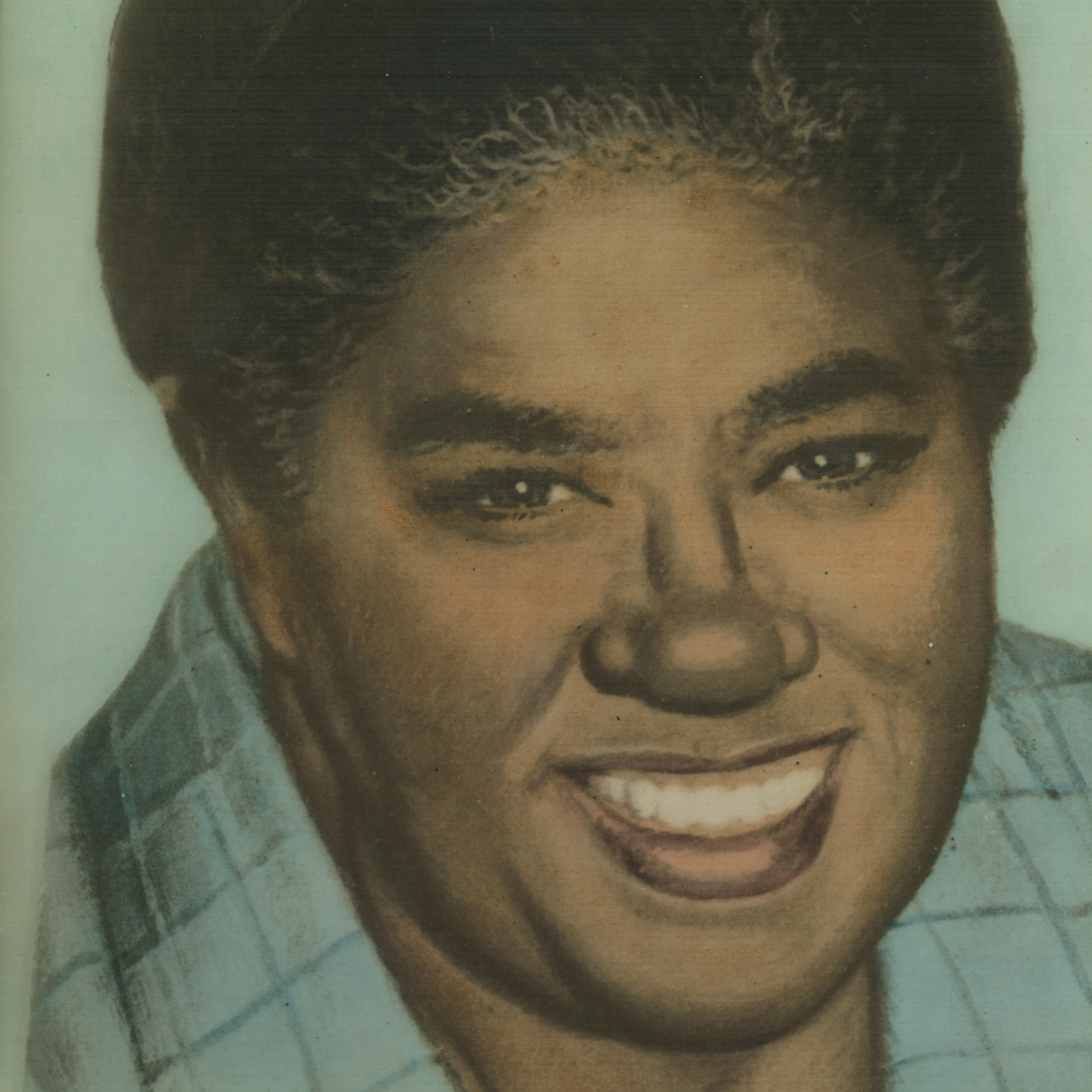
Lena Richard was a chef of Creole cuisine from New Orleans, famous for her shrimp bisque and spicy chicken gumbo. She not only had a cooking school, a cookbook, several restaurants and even a frozen food line (unusual for the 1940s), but she was also one of the first American women to have her own cooking show. Richard "is one of the most profound American women in history," says Zella Parmer of Dillard University in New Orleans, Louisiana. "It's so much we can learn from Lena Richard." This podcast episode explores Richard's early days as a domestic for a wealthy white family, to her turn as a student at the prestigious Fannie Farmer school in Boston, to her eventual reign as New Orleans' star chef.  Far from resting on her laurels, Richard established a cooking school in New Orleans designed to give Black chefs like herself the training and the credentialing to command higher wages. Just as she was truly achieving superstardom, Richard's life was tragically cut short. "We don't really know how far Lena would have gone with everything that she had done, but I imagine had she lived longer, more people would know her story," says Ashley Rose Young, a historian at the Smithsonian and Library of Congress.  The episode also features Chef Dee Lavigne of the Deelightful Roux School of Cooking, only the second Black woman after Richard to open a cooking school in New Orleans. (Image credit: Hand-tinted portrait of Lena Richards, via Newcomb Archives and Vorhoff Collection, Newcomb Institute, Tulane University. 2018 copyright by Tulane University. All rights reserved.)

November 17, 202526 min

Seasoned: Women Culinary Pioneers - Cecilia Chiang

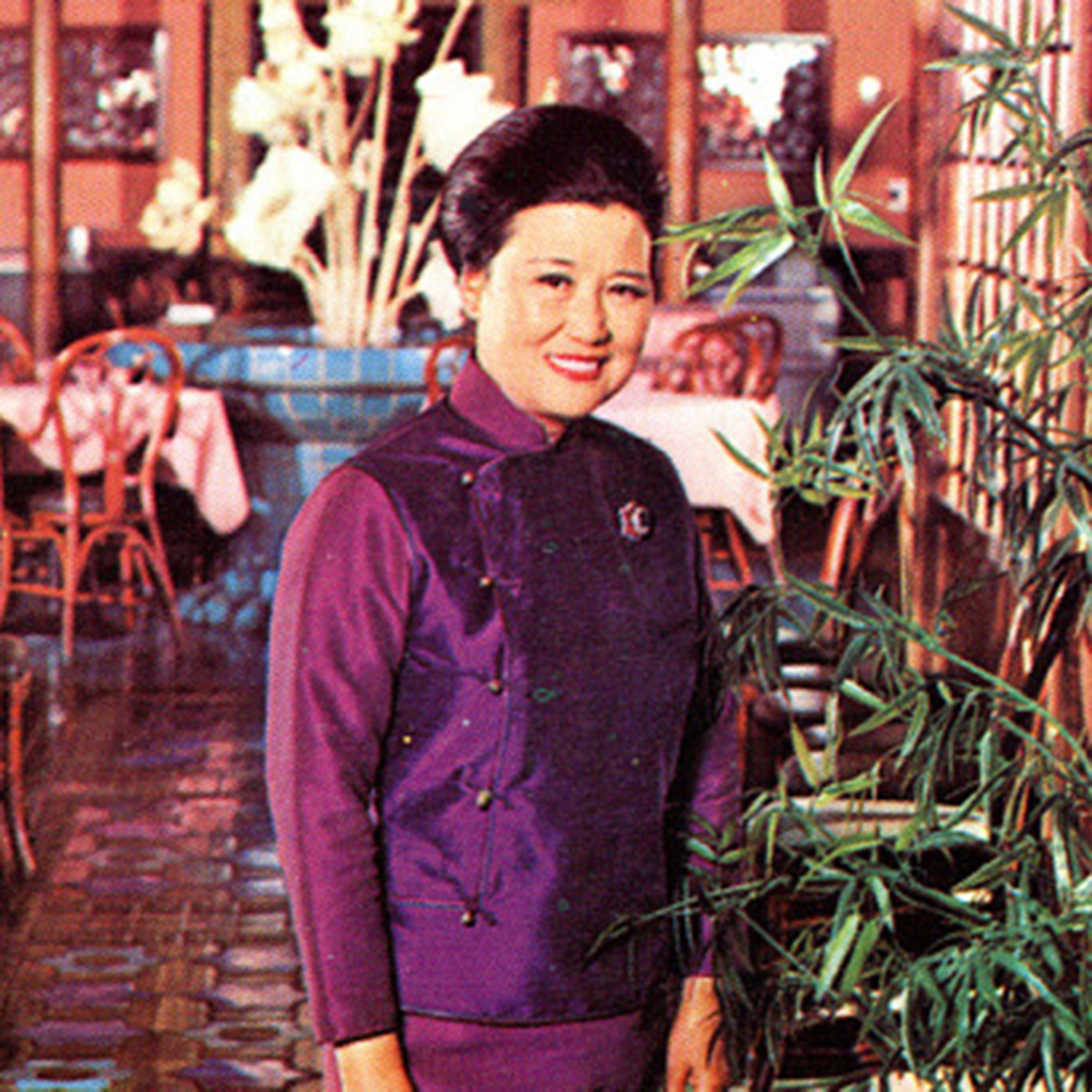
In San Francisco, an immigrant restaurateur brings authentic Chinese cuisine to the U.S. via The Mandarin. It's a love letter to her childhood in China, pre-Communist Revolution. On any given night in 1960s San Francisco, you could walk into the upscale dining room of the Mandarin restaurant, and hear the sizzle of pan-fried pot stickers, and smell signature dishes like beggar's chicken or peppery Sichuan eggplant, all of which most Americans hadn't seen before. And in the center of it all, holding court – often amid celebrity guests –  would be the owner, Cecilia Chiang. "My grandmother was a quintessential front-of-house host," says Siena Chiang. "They called her Madam Chiang, and she reveled in having the perfect outfit and creating a warm environment and welcoming people of all stripes." But behind the perfect hostess greeting, Madame Chiang had a backstory worthy of a Hollywood movie. Born to a wealthy family near Shanghai, she and her sister escaped the Japanese invasion on foot, eventually immigrating to the U.S. during the Communist Revolution. She opened the Mandarin, introducing diners to Chinese food beyond the stereotypical dishes of chop suey, egg foo young and chow mein. The episode also features Paul Freedman, author of "Ten Restaurants That Changed America" – one of which was the Mandarin. (Photo: Cecilia Chiang inside her award-winning Mandarin Restaurant. By Mike Roberts Color Reproductions, via National Museum of American History/The Smithsonian Institution.)

November 14, 202527 min

Seasoned: Women Culinary Pioneers – MFK Fisher

It's not a stretch to say that the way we think, eat and write about food can be traced directly back to MFK Fisher. The prolific California writer, born Mary Mary Frances Kennedy Fisher but better known by her initials, was "not a recipe writer," says her biographer Anne Zimmerman, author of "An Extravagant Hunger." "She was an eater. She was a sensual person. She enjoyed things. She observed things." In this podcast episode, we explore the life of Fisher, born in 1908, whose early musings on food while abroad in France turned into a literary career that produced "The Gastronomical Me," "How to Cook a Wolf" and "Consider the Oyster," among many others. While many write food memoirs today, she is widely credited as inventing the entire genre. In this episode, we explore Fisher's backstory, including a marriage that ended with her husband's suicide, and her insatiable curiosity with the world. "Women's lives are messy and they're episodic. There's reinvention and rebirth," Zimmerman says. "MFK Fisher, she's just an onion with the layers. It's just constantly morphing and shifting." (Image credit: Janet Fries/Hulton Archive via Getty Images.)

June 20, 202530 min

The State of Abortion, 3 Years Since Dobbs

When Roe fell, no one expected abortion rates to rise. Or pills to get easier to access. We talk to two women about leading the resistance, what the future holds, and how to manage fear. Angel Foster is a university professor who runs a shield-law practice out of Massachusetts that providers mifepristone and misoprostol to abortion seekers in all 50 states. Julie Burkhart, recently named to Time's 100 Most Influential People of 2025 list, is a clinic operator who has seen a colleague assassinated and her clinic fire-bombed. Combined, they have helped thousands of women secure safe abortions in the three years since Roe fell. To many listeners, their stories will inspire and provide hope -- although the future is uncertain. Abortion opponents are doubling down with criminal indictments and lawsuits. "They'll come after us. I'm sure," says Foster. Meanwhile, Burkhart, who's long dealt with intimidation, harassment and violence, shares her thoughts on managing fear. "If we can walk through it, even though it's so frightening and scary and paralyzing, it's okay on the other side," she says.

April 8, 202518 min

The Making of California Baby

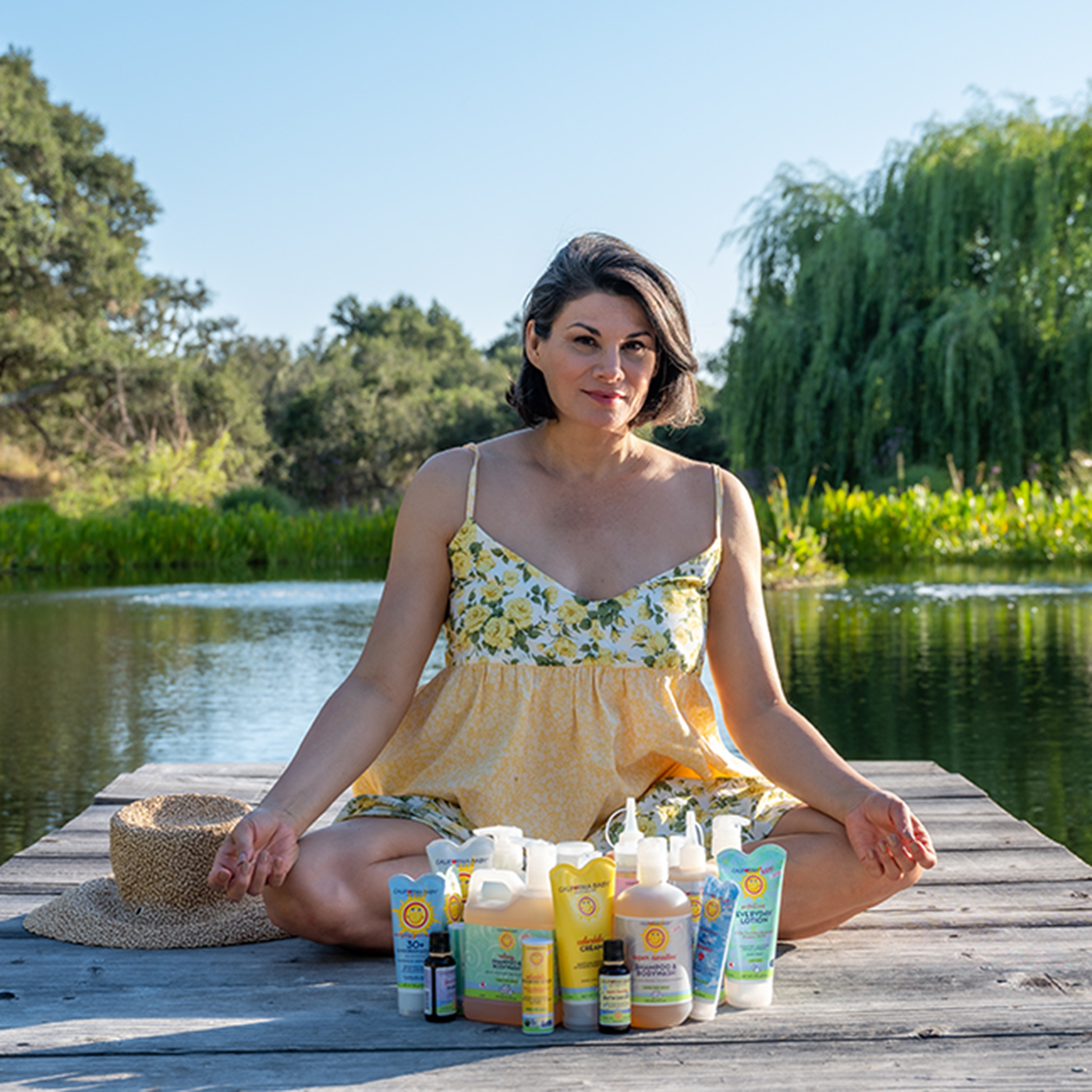
We bring you our fascinating conversation with Jessica Iclisoy, who founded California Baby some 30 years ago. As a new mom, she randomly spotted a chemical dictionary at her local library -- and discovered her son's baby shampoo was loaded with toxic chemicals. "It's one of those things where fate puts things in front of you," she says. Appalled, Iclisoy began an investigation into safer ingredients and ultimately deveped her own baby shampoo. Today, California Baby makes over 200 baby products from ingredients that are grown on its farm in Central California and bottled at its FDA-registered, organic-certified facility in Los Angeles.

March 28, 202516 min

The Woman Behind the Dating App Match.com

The year was 1994. "Friends" had just premiered, Bill Clinton was president, and online dating – if it happened at all – was a sketchy proposition. A startup called Match.com was trying to persuade the romantically inclined that the World Wide Web (as it was then known) was a hot spot to meet potential mates. Fran Maier, who had a background in marketing, joined Match.com to bring a woman's perspective to the burgeoning field. Her first decision? Nix the question about body weight. Listen to our conversation, where she talks about the highs and lows of building Internet companies over the past three decades -- and the big mistake she made with Match.com, that she'd like other women entrepreneurs to learn from. She's currently the CEO of BabyQuip.com, a baby gear rental platform.

September 23, 202421 min

Terrifying Weather Events, Part 2: Enter the Protesters

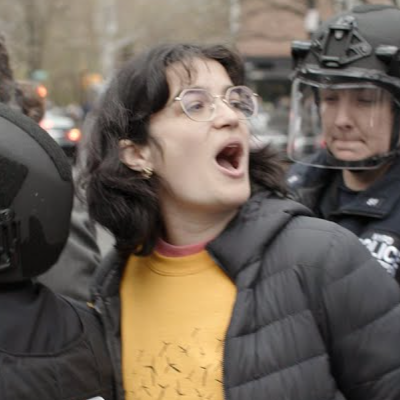
In 2003, a deadly heat wave hit Paris, causing the death of over 15,000 people. It was one of the first weather events where scientists could use data to show climate change was to blame. Since that time, we've seen an increasing number of deadly natural disasters, from Hurricane Katrina to Hurricane Harvey, to the 2018 California wildfires, all irrefutably linked to climate change. In this episode, we talk to the activists who say not enough is being done by politicians and big corporations to slow down the warming. We follow Marlena Fontes of Climate Families NYC to this year's "Summer of Heat" protests, where she is arrested. She was galvanized into action five years ago, by a heat wave that hit New York City right as her son was born. "It was definitely part of my postpartum experience, looking at my baby and then thinking about what was happening in the world," she says. And we hear from protestors including legendary actress Jane Fonda, who wants justice. "We have to fight," Fonda says. "If enough of us fight, we're going to win."Lastly, we look at the upcoming U.S. presidential election and how the candidates plan to address (or not address) climate change.

Is this your show?

Claim this listing to keep it up to date, reach guests who want to pitch you, and manage bookings with Guestify.

Claim this listing

More Business podcasts