Find partners
The Startup Podcast

The Startup Podcast

Hosted by Yaniv Bernstein and Chris Saad

Episodes

316

Latest episode

Oct 2026

Language

EN

About the show

Advice for founders and entrepreneurs who want to build disruptive startups like they do in Silicon Valley. Not another interview podcast: concrete tips and masterclasses on what founders need to know: raising Venture Capital, strategy, product, marketing, growth, and more. A guide to the unique mindset and approach that drives Silicon Valley style disruption. Hosts Chris Saad and Yaniv Bernstein share practical advice based on decades of experience at Google, Uber, and their own startups.

Listen to episodes

60 recent
November 11, 202649 min

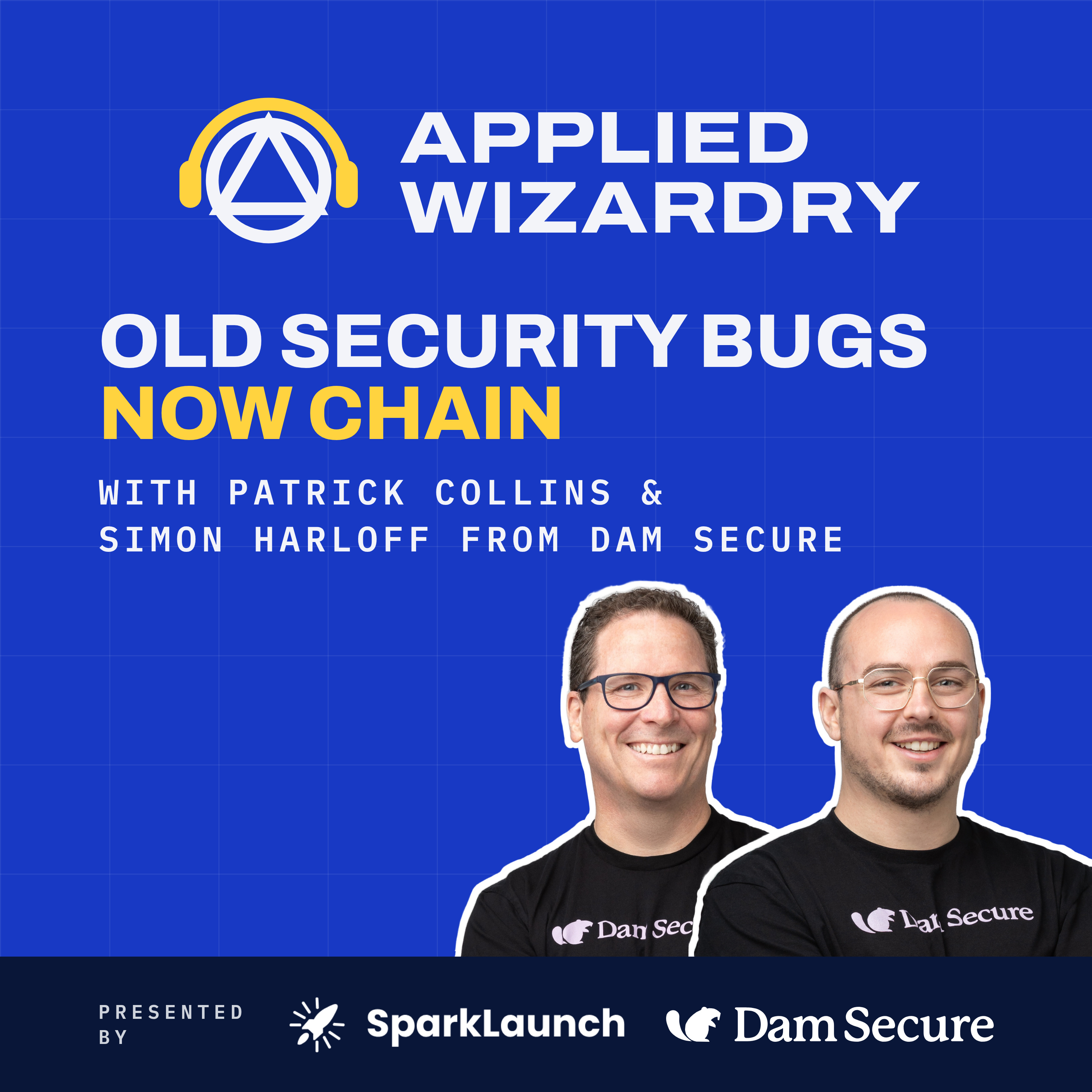
Securing code when the bad guys have AI, with Patrick Collins and Simon Harloff

The frontier models that refuse to help you hack your own software are, paradoxically, making you less safe—while open weights models like DeepSeek Flash V4.1 will comply, cost a tenth as much as GPT-6, and find more vulnerabilities in the process. Patrick Collins and Simon Harloff from Dam Secure join Yaniv to explain why agent-built code needs typed languages, why PR gating has flipped from taboo to essential, and how compliance frameworks like SOC 2 are lagging years behind actual threats. They name specific red teaming tools, model providers, and infrastructure choices, and lay out a three-stage security factory that slots into automated software pipelines without slowing human engineers down. Key takeaways Open weights models like DeepSeek will comply with requests to find exploits that frontier models refuse, making them essential for defence even as they raise attacker capability. DeepSeek Flash V4.1 outperforms GPT-6 on Dam Secure's benchmark of 80 repositories at roughly one-tenth the cost, though it generates more false positives that need filtering. Switching from JavaScript or PHP to TypeScript—or any typed language—dramatically improves both LLM reasoning quality and security posture, with teams now auto-migrating codebases via agents running 40–100 hours unattended. Modern threat models require always-on automated red teaming rather than annual pen tests; specialist vendors include Harmony Intelligence, Shinobi, and Expo, with PromptFu for LLM-specific attacks. The best defensive setup chains tools together: linting guardrails during implementation, security review at PR time, and active exploitation attempts against findings via red teaming software. PR gating is now accepted because it blocks agents, not humans, and auto-approval of low-risk PRs is emerging—but compliance auditors still require human batch review every one to two weeks. Citizen coders using tools like Lovable or Base44 should treat output as prototype-only and have a skilled engineer review before production; unauthenticated routes and missing RLS policies are common failures. Chapters 00:00 Introduction 00:38 Opening: Fight Fire with Fire 03:47 Open Source Vulnerabilities Accelerating 04:58 Burn the Bug Backlog 07:27 Typed Languages, No Exceptions 08:52 Infrastructure Choices 12:40 Always-On Red Teaming 16:46 The DeepSeek Advantage 19:53 Quantization and Provider Quality 26:50 Cutting Noise with Verification 30:14 Security in the Software Factory 34:50 PR Gating and Auto-Approval 38:20 Compliance vs Real Security 42:53 Actionable Advice by Role Links and tools mentioned DeepSeek: https://www.deepseek.com Vercel: https://vercel.com Cloudflare: https://www.cloudflare.com Supabase: https://supabase.com Railway: https://railway.app OpenRouter: https://openrouter.ai Harmony Intelligence: https://harmonyintelligence.com Expo: https://expo.dev PromptFu: https://promptfu.com Lovable: https://lovable.dev GitHub: https://github.com About Patrick Collins & Simon Harloff Patrick Collins and Simon Harloff are the founders of Dam Secure, a code security platform for AI-first engineering teams that builds adversarial agents to find vulnerabilities and runs model evaluations across 80 repositories to determine which LLMs are best at security review. This episode is presented by SparkLaunch and Dam Secure. SparkLaunch ( https://sparklaunch.io/wizardry ): Applied Wizardry listeners get an extra 20% off. Dam Secure ( https://damsecure.ai/wizardry ): Applied Wizardry listeners get their first month free. Credits Justin McArthur, Executive Producer and Video Editor: https://www.linkedin.com/in/justin-mcarthur/ Steph Hefferan, Editor: https://www.linkedin.com/in/steph-heff/
October 31, 202651 min

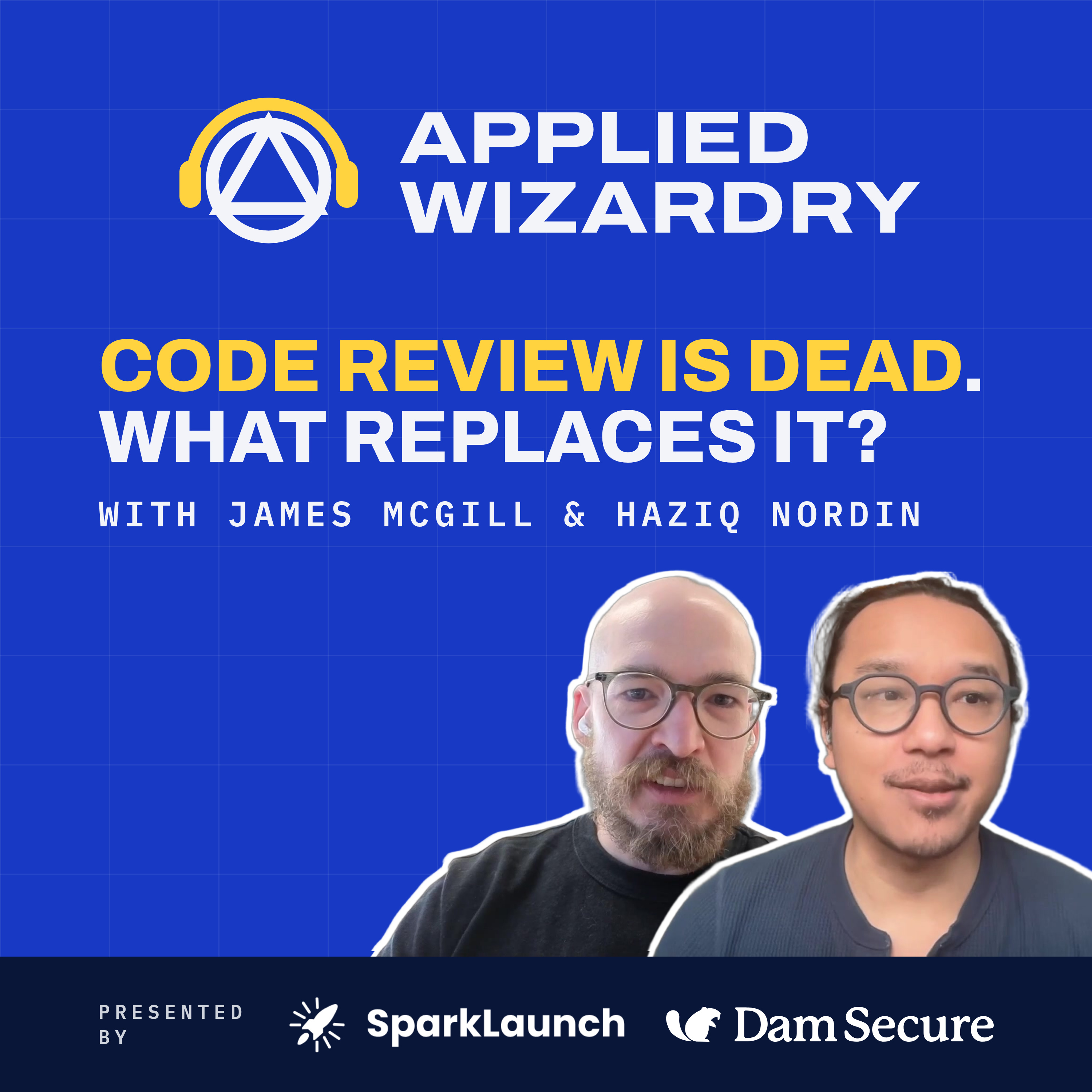
Where humans still matter when agents write the code

The traditional GitHub-style pull request review is a waste of opportunity cost for most code changes in the agentic era. Yet simply removing it without a replacement invites complexity death spirals and unbounded product behaviour that agents cannot unwind. James McGill and Haziq Nordin join Yaniv to argue that engineers should stop reading diffs line-by-line and instead scan for architectural complexity, shift accountability to spec quality, and build new verification patchworks of end-to-end tests, fuzzing, and product review. The conversation is for any engineer or founder trying to extract real leverage from AI coding tools rather than bottlenecking them with cargo-cult process. Key takeaways Line-by-line diff review is dead for most changes; the value now lies in catching complexity death spirals that agents propagate across prompts. Data mutability, not code mutability, is the hard constraint—stateless frontend changes need far less scrutiny than anything touching persistent state. The engineer's role is shifting from writing code to steering agents, writing specs, and verifying behaviour through tests rather than inspecting implementation. Accountability structures must change too: if organisations remain blame-distribution systems, they will hedge to maximum review and forfeit AI leverage. Compliance inertia (SOC 2, ISO) still mandates 'thorough review', creating first-mover risk for teams redefining what review means. Codebase malleability is higher than ever, but unbounded complexity accumulates as context for future prompts and eventually collapses agent reliability. Chapters 00:00 Introduction 00:38 The dead and the messy 03:28 Projector reviews to GitHub 05:31 What code review was for 07:09 Complexity as the last reason to read diffs 10:21 Code malleability, data hardness 15:51 Code review as accountability mechanism 18:50 Product review over code review 25:39 LLMs as spec compilers 32:48 Verification patchwork 36:40 Accountability and leverage 44:11 Where to find James and Haziq Links and tools mentioned GitHub: https://github.com Enhance Labs: https://www.enhancelabs.com Actuals: https://www.actuals.ai About James McGill & Haziq Nordin James McGill is a founding engineer at Actuals, building AI-native finance tools; Haziq Nordin is founder and CTO at Enhance Labs, working on product guardrails for agent-generated code. This episode is presented by SparkLaunch and Dam Secure. SparkLaunch ( https://sparklaunch.io/wizardry ): Applied Wizardry listeners get an extra 20% off. Dam Secure ( https://damsecure.ai/wizardry ): Applied Wizardry listeners get their first month free. Credits Justin McArthur, Executive Producer and Video Editor: https://www.linkedin.com/in/justin-mcarthur/ Steph Hefferan, Editor: https://www.linkedin.com/in/steph-heff/
October 24, 202655 min

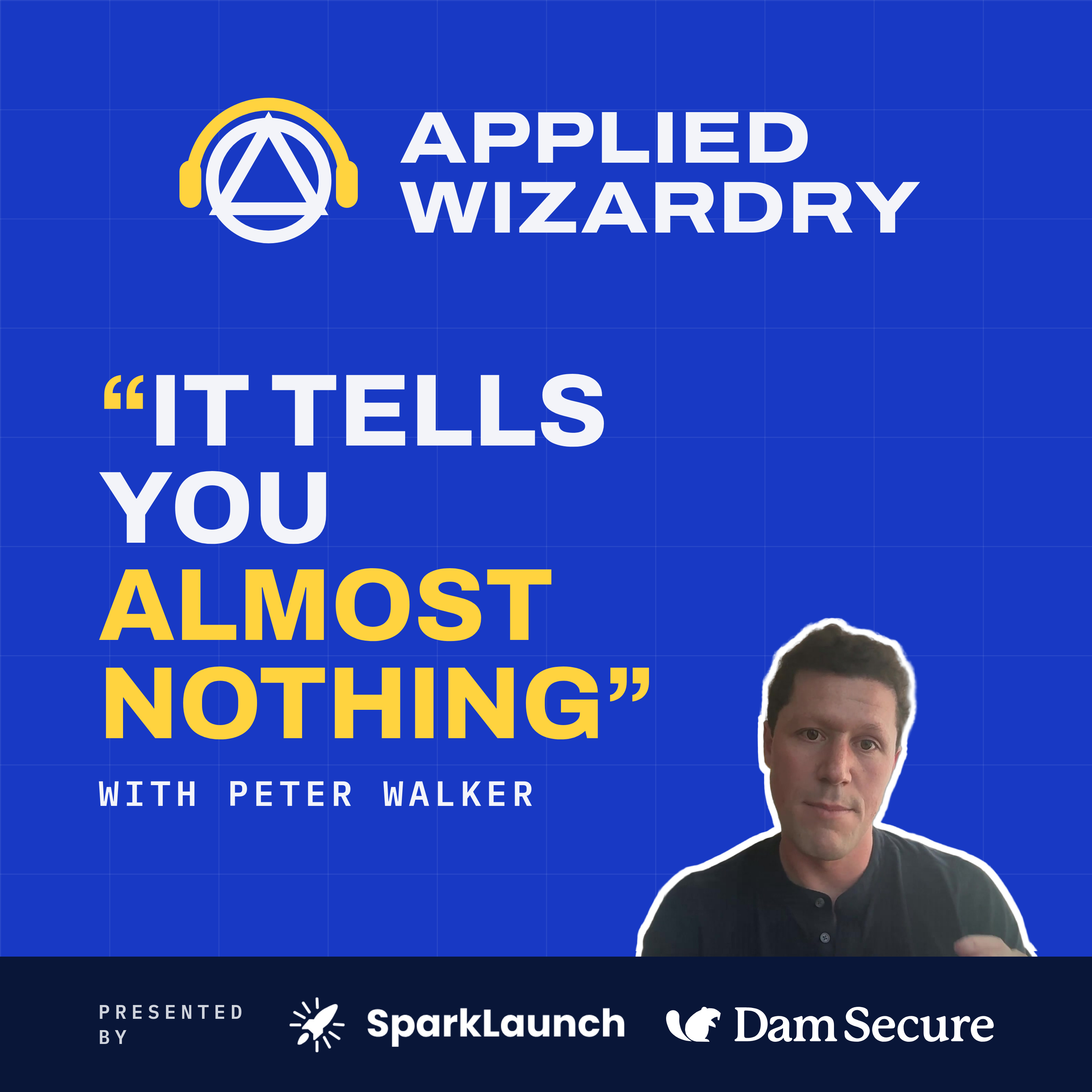
OpenRouter Head of Insights on how to choose the right model

Companies now use an average of 12 models per month, yet the biggest hidden variable isn't which model you pick—it's the inference provider serving it and whether your cache hit rate stays above 85%. Peter Walker from OpenRouter explains how the same open-weight model can have wildly different cost and performance depending on the provider's caching policy, latency tail, and whether a stealth provider is reselling your prompts. The conversation covers why agentic workloads broke cache economics in February 2026, how ZDR policies vary even among "zero data retention" claims, and why the frontier labs are now competing across price and intelligence spectrums simultaneously. For engineers choosing production models, this is a practical map of the dimensions that actually move the bill. The inference provider layer—not just the model layer—now has 200+ competitors, and provider choice directly determines effective cost, latency, and data sovereignty. Cache hit rate is the dominant cost lever for agentic workloads: a cache miss can cost 50-100x more per token, and median agentic cache rates have climbed from ~50% to ~85% in 2026. Most organisations use a 'hub and spoke' model architecture with one 'daily driver' taking the majority of tokens and spend, plus specialised models for departments like customer support or sales. Zero data retention claims vary in trustworthiness by jurisdiction and provider size; some stealth models on OpenRouter are free specifically because they are not ZDR. The gap between frontier and open-weight models is widening in raw capability but narrowing in perceived value, as daily tasks saturate below frontier intelligence. Reasoning-only models and jagged intelligence are driving demand for fast decision models like Jev and OpenAI's decision model for latency-critical paths. 00:00 Introduction 00:38 The New Complexity 04:07 Provider Layer Competition 06:09 Choosing a Provider 08:42 Data Retention Realities 12:39 Model Portfolios 15:23 Latency and Reasoning 18:29 Cache Economics 23:35 Cost-Performance Sweet Spot 26:24 What Comes Next 29:13 Open Weight vs Frontier 32:02 Specialisation and Product 34:14 Where to Follow Peter OpenRouter: https://openrouter.ai OpenRouter Data: https://openrouter.ai/data DeepSeek: https://www.deepseek.com Anthropic: https://www.anthropic.com OpenAI: https://openai.com Google AI: https://ai.google Cerebras: https://www.cerebras.net CoreWeave: https://www.coreweave.com ElevenLabs: https://elevenlabs.io Artificial Analysis: https://artificialanalysis.ai Groq: https://groq.com Peter Walker is Head of Insights at OpenRouter, where he analyses global model usage patterns across the inference layer. This episode is presented by SparkLaunch and Dam Secure. SparkLaunch ( https://sparklaunch.io/wizardry ): Applied Wizardry listeners get an extra 20% off. Dam Secure ( https://damsecure.ai/wizardry ): Applied Wizardry listeners get their first month free. Justin McArthur, Executive Producer and Video Editor: https://www.linkedin.com/in/justin-mcarthur/ Steph Hefferan, Editor: https://www.linkedin.com/in/steph-heff/
October 16, 20261 hr 0 min

Applied Wizardry: Cutting AI coding token costs, with Dave Slutzkin

Follow Applied Wizardry on its new feed to keep getting every episode. Dave Slutzkin, co-founder of Antiburn, joins Yaniv to break down what actually drives token costs in agentic development and how to bring them down. They cover how caching differs between Anthropic and OpenAI, when to reach for which model and thinking mode, and why the habit of compaction matters more than any other optimisation. If you're spending real money on AI-assisted development, you'll come away with concrete tactics for cutting token burn without cutting capability. Key takeaways Context window depth is the dominant driver of token cost; compacting actively at 200,000-300,000 tokens matters more than any other single action. Cache expiry behaviour differs materially between providers: Anthropic's cache expires at exactly 1 hour, OpenAI's Codex cache is best-effort and often drops in 5-20 minutes, but OpenAI subscriptions do not charge for cache writes while Anthropic subscriptions effectively do through quota. Using a frontier model with a simple prompt to delegate to cheaper subagents is a practical pattern that balances capability and cost without requiring complex harness engineering. High thinking modes often produce worse results than medium or low because models overthink, invent requirements, and fix unrelated bugs; the benchmark sweet spot is typically medium. Skills files, MCPs, auto-memories, and system prompts silently bloat context windows; regular clean-up every month or two reduces both cost and quality degradation. Fast mode costs 2.5x per token but can improve output quality through tighter interaction loops; it is best used deliberately rather than left on by default. Chapters 00:00 Introduction 00:38 The Token Burn Problem 03:12 Three Stages of Adoption 07:03 Model Choices Multiplying 11:14 The Cardinal Mistake: Depth 18:13 Worst-Case Usage Patterns 22:13 Picking Models by Feel 30:23 Thinking Modes and Overthinking 35:23 Fast Mode Trade-offs 48:46 Caching: Anthropic vs OpenAI 52:29 Context Window Ceiling 56:32 Cleaning Up Context Bloat 56:46 Where to Find Dave Links and tools mentioned Antiburn: https://antiburn.com Anthropic Claude: https://www.anthropic.com OpenAI Codex: https://openai.com/codex Harvey: https://www.harvey.ai Legora: https://legora.com About Dave Slutzkin Co-founder of Antiburn, a company that helps developers understand and optimise their token spend for AI-assisted coding. This episode is presented by SparkLaunch and Dam Secure. SparkLaunch ( https://sparklaunch.io/wizardry ): Applied Wizardry listeners get an extra 20% off. Dam Secure ( https://damsecure.ai/wizardry ): Applied Wizardry listeners get their first month free. Credits Justin McArthur, Executive Producer and Video Editor: https://www.linkedin.com/in/justin-mcarthur/ Steph Hefferan, Editor: https://www.linkedin.com/in/steph-heff/
August 3, 2026Episode 2646 min

ScaleStudio: The new tool putting our principles into practice

After nearly 300 episodes of The Startup Podcast, Chris Saad is bringing everything he's learned about building world-class products and product strategy into a single tool: ScaleStudio. In what may be our final episode (unless a white knight sponsor appears), Chris walks Yaniv through the product that could fundamentally change how founders approach strategy; from problem statement all the way to positioning, roadmap sequencing, and org design. Chris demonstrates how this one AI tool, housing his vast knowledge of Silicon Valley startup strategy, can give an overwhelming process a navigable structure, allowing founders to plot a deliberate course through the chaos. In this episode, you will: Discover how Scale Studio turns Chris's 30 years of product strategy expertise into an AI tool that guides you from problem statement through to roadmap and positioning See the complete strategy development workflow in action: from mapping all possible problem domains and solutions, to building the org structure required to execute Learn why mapping the entire solution space upfront prevents the "thrash" that derails most startups when customer requests pull the team in conflicting directions Understand the customer terrain framework that reveals which customer segments are easy wins and which are death traps, allowing you to carve the narrowest viable wedge into your market See how Scale Studio integrates with your development workflow through exports and MCP connections, turning high-level strategy into actionable execution roadmaps Explore how AI can now handle the heavy lifting of strategy generation and iteration in around an hour, while keeping guardrails in place to maintain quality and coherence across every section Timestamps 00:14 On Today's Show: The Last Startup Podcast? 01:39 Turning Our Advice Into A Product (ScaleStudio) 03:18 Homepage And Templates 04:40 Problem Statement 05:36 Copilot And Collaboration 08:10 Solutions And Editing 09:49 'How It Works' Stage 11:22 Building Strategy From Seed 13:32 Mapping The Solution Space 18:53 Customer Segments and Personas 20:46 Wedges And Customer Terrain 23:07 Customer Roadmap View 26:32 Org Design 28:03 How Does AI Change Hiring? 31:18 Roadmap To Unlocking Cohorts 33:51 Market Sizing 37:25 Planning the Future of ScaleStudio… in ScaleStudio? 39:08 The Future of Agentic Orgs 42:11 Closing Thoughts: 4 Years of TSP Resources mentioned in this episode ScaleStudio (Chris’s AI-powered product strategy tool): https://scalestudio.io/ Vera (Yaniv's Startup): https://vera.guide The Pact Honor the Startup Podcast Pact! If you have listened to TSP and gotten value from it, please: Follow, rate, and review us in your listening app Secure your official TSP merchandise at https://shop.tsp.show/ Follow us on YouTube for full video episodes: https://www.youtube.com/@startup-podcast Give us a public shout-out on LinkedIn or anywhere you have a social media following Key links This episode of the Startup Podcast is sponsored by .tech domains. Forget weird prefixes and creative misspellings; the availability for .tech domains is simply way better than .com. For a clean name that highlights your tech credentials, get a .tech domain at your favorite registrar. The Startup Podcast website: https://www.tsp.show/episodes/ Learn more about Chris and Yaniv Work 1:1 with Chris: http://chrissaad.com/advisory/ Follow Chris on Linkedin: https://www.linkedin.com/in/chrissaad/ Follow Yaniv on Linkedin: https://www.linkedin.com/in/ybernstein/ Producer: Justin McArthur https://www.linkedin.com/in/justin-mcarthur Assistant Producer: Steph Hefferan https://www.linkedin.com/in/steph-heff/ Intro Voice: Jeremiah Owyang https://web-strategist.com/

July 27, 2026Episode 2552 min

Rob Snyder demonstrates his PULL framework in real-time – using Yaniv's startup

A few weeks ago, Rob Snyder came on the pod to introduce his PULL framework for identifying real product-market fit. Now, Yaniv turns the tables and subjects his own startup, Vera, to the same scrutiny. Yaniv and Rob strip away the noise around Vera's mission to help adult children care for aging parents and get brutally honest about where the product actually has pull, where it doesn't, and what needs to change immediately. They identify a specific, unavoidable moment in the customer journey and pinpoint that is where the real business begins, and discuss more macro issues, such as AI vs. human expertise, founder blind spots, and more. In this episode, you will: Understand the difference between an aspiration and a project, and why this distinction is vital for PULL Learn how the PULL framework cuts through startup theory to identify the exact moment when customers will actually pull your product from your hands, before they have to wait for a crisis Discover why Vera's original problem was too abstract, and how narrowing to a specific market segment with intense, unavoidable need becomes your path to revenue and growth Hear the truth behind what really pushes your customers to adopt earlier: reality does the convincing, not your marketing Understand the challenge of reputation in AI: how do human-shaped applications build trust the way human experts do? Timestamps 00:00 Coming Up 01:38 On Today's Show: Yaniv Applies PULL to Vera 04:42 Defining PULL and Projects 05:54 Vera's Customer Goals 08:00 Unavoidable Moments and Crisis 11:25 Real Users and Traction 16:58 Mission vs Push Marketing 24:07 Why Isn't Google Enough? 28:21 Nailing the Specific Project 34:02 Testing Market With Ads 37:06 Bill Gates And AI Shift 38:47 Human Shaped Software Design 43:45 Trust And Reputation In Bots 48:48 About The Book Resources mentioned in this episode The Power of Pull by Rob Snyder: https://www.amazon.com/Power-Pull-Customer-Successful-Founders/dp/1541705955 Rob Snyder's website: https://www.robsnyder.org Vera (Yaniv's startup helping families care for aging parents): https://vera.guide Club Sandwich, Vera's podcast and community for the sandwich generation: https://clubsandwich.community What the sandwich generation is (and why it's Vera's market): https://clubsandwich.community/sandwich-generation The Pact Honor the Startup Podcast Pact! If you have listened to TSP and gotten value from it, please: Follow, rate, and review us in your listening app Secure your official TSP merchandise at https://shop.tsp.show/ Follow us on YouTube for full video episodes: https://www.youtube.com/@startup-podcast Give us a public shout-out on LinkedIn or anywhere you have a social media following Key links This episode of the Startup Podcast is sponsored by .tech domains. Forget weird prefixes and creative misspellings; the availability for .tech domains is simply way better than .com. For a clean and memorable name, go to https://⁠get.tech/tsp This episode of the Startup Podcast is sponsored by Vanta. Vanta helps businesses get and stay compliant by automating up to 90% of the work for the most in demand compliance frameworks. With over 200 integrations, you can easily monitor and secure the tools your business relies on. For a limited time offer of US$1,000 off, go to ⁠⁠⁠⁠ https://⁠www.vanta.com/tsp⁠⁠⁠⁠⁠ The Startup Podcast website: https://www.tsp.show/episodes/ Learn more about Chris and Yaniv Work 1:1 with Chris: http://chrissaad.com/advisory/ Follow Chris on Linkedin: https://www.linkedin.com/in/chrissaad/ Follow Yaniv on Linkedin: https://www.linkedin.com/in/ybernstein/ Producer: Justin McArthur https://www.linkedin.com/in/justin-mcarthur Assistant Producer: Steph Hefferan https://www.linkedin.com/in/steph-heff/ Intro Voice: Jeremiah Owyang https://web-strategist.com/
July 20, 2026Episode 2443 min

Why you should run your startup like a poker player (Replay)

This is a remastered Replay of one of our most popular episodes, "What Startups Can Learn From Poker", which was originally published on 21 December 2022. Enjoy! Original description: All season, Chris and Yaniv have talked about the mindset that is needed to succeed at venture-backed startups. For the final episode of Season 1, we tie it all together with an analogy: tournament poker. It is amazing how many things poker and startups have in common, so in this episode we use the lens of poker to discuss the big picture of how to approach building a successful startup. We dive into each of the following commonalities between poker and startup life: 01:56 Playing an iterative game 10:00 Burning cash 13:31 Making decisions based on uncertain information 18:46 Progressive learning 28:44 Avoiding 'resulting' 35:02 The relatively low probability of a successful outcome (and why that’s OK!) This episode was inspired by the book 'Thinking in Bets' by former pro poker player Annie Duke. The Pact Honor the Startup Podcast Pact! If you have listened to TSP and gotten value from it, please: Follow, rate, and review us in your listening app Secure your official TSP merchandise at https://shop.tsp.show/ Follow us on YouTube for full video episodes: @startup-podcast Give us a public shout-out on LinkedIn or anywhere you have a social media following Key links This episode of the Startup Podcast is sponsored by .tech domains. Forget weird prefixes and creative misspellings; the availability for .tech domains is simply way better than .com. For a clean and memorable name, go to https://⁠get.tech/tsp The Startup Podcast website: https://www.tsp.show/episodes/ Learn more about Chris and Yaniv Work 1:1 with Chris: http://chrissaad.com/advisory/ Follow Chris on Linkedin: https://www.linkedin.com/in/chrissaad/ Follow Yaniv on Linkedin: https://www.linkedin.com/in/ybernstein/ Producer: Justin McArthur https://www.linkedin.com/in/justin-mcarthur Assistant Producer: Steph Hefferan https://www.linkedin.com/in/steph-heff/ Intro Voice: Jeremiah Owyang https://web-strategist.com/ #TheStartupPodcast #startups #poker #texasholdem #investment #venturecapital #resulting #probability #ChrisSaad #YanivBernstein
July 13, 2026Episode 2456 min

Avoiding ‘team debt’ by building small and smart (w/ Matt Cook)

Is hiring a person still your default answer to a problem? For a growing number of startups, it shouldn't be. In this episode, Yaniv Bernstein is joined by returning guest Matt Cook, co-founder of Scouut, one of Australia's most respected engineering recruiters for early-stage startups, to unpack what's changed in engineering hiring since Matt's last visit. They cover ‘team debt’ (the AI-era sequel to tech debt), why AI is acting as an appetite suppressant for headcount, why the best engineers are now worth $400K+, and why the ‘software factory builder’ is becoming the most sought-after hire in tech. In this episode, you will: Understand "team debt", and why teams built to solve today's problems are already becoming obsolete Learn why "removing the crutch" (like scrapping a QA gating function) forces the kind of AI-native change that timid, incremental adjustments never will Discover why most startups were already overstaffed before AI, and why AI now acts as an ‘appetite suppressant’ for hiring rather than just an efficiency tool Hear why hiring should now be treated as a last resort, and what that actually means in practice for founders Understand why compensation banding and headcount-based budgeting are breaking down, and what smart companies are replacing them with Learn about the rise of the ‘software factory builder’: the rare, highly-paid engineer who uses their judgment to build airtight, AI-based infrastructure the rest of the team can lean on Timestamps 00:00 Coming Up... 00:58 On Today's Show: Matt Cook on 'Team Debt' 02:36 What is Team Debt? 05:12 Refocusing on AI Native Solutions 10:40 Unlearning Old Hiring Ladders 12:04 Why Companies Are Oversized 14:59 AI, the 'Corporate Ozempic' 19:25 Layoffs and Team Composition 24:02 Disrupting Yourself at Series B 28:12 The Salary Race for AI Engineers 34:01 Limitations of Headcount Budgeting 38:16 How Downsizing Can Help You Grow 41:13 ClickUp's 'Hail Mary' Pivot 44:26 Software Factory Builders and 'Forward Deployed' Automation 49:14 Maintaining Safe Internal Software 54:25 Closing Thoughts Resources mentioned Scouut (Matt Cook's engineering recruitment firm for early-stage startups): https://scouut.com.au/ Matt Cook on LinkedIn: https://www.linkedin.com/in/matthewmarkcook/ 'Corporate Ozempic' by Scott Galloway — the essay behind the AI/hiring analogy Yaniv references: https://www.profgalloway.com/corporate-ozempic/ The Pact Honor the Startup Podcast Pact! If you have listened to TSP and gotten value from it, please: Follow, rate, and review us in your listening app Secure your official TSP merchandise at https://shop.tsp.show/ Follow us on YouTube for full video episodes: https://www.youtube.com/@startup-podcast Give us a public shout-out on LinkedIn or anywhere you have a social media following Key links This episode of the Startup Podcast is sponsored by .tech domains. Forget weird prefixes and creative misspellings; the availability for .tech domains is simply way better than .com. For a clean and memorable name, go to https://⁠get.tech/tsp This episode of the Startup Podcast is sponsored by Vanta. Vanta helps businesses get and stay compliant by automating up to 90% of the work for the most in demand compliance frameworks. With over 200 integrations, you can easily monitor and secure the tools your business relies on. For a limited time offer of US$1,000 off, go to ⁠⁠⁠⁠ https://⁠www.vanta.com/tsp⁠⁠⁠⁠⁠ The Startup Podcast website: https://www.tsp.show/episodes/ Learn more about Chris and Yaniv Work 1:1 with Chris: http://chrissaad.com/advisory/ Follow Chris on Linkedin: https://www.linkedin.com/in/chrissaad/ Follow Yaniv on Linkedin: https://www.linkedin.com/in/ybernstein/ Producer: Justin McArthur https://www.linkedin.com/in/justin-mcarthur Assistant Producer: Steph Hefferan https://www.linkedin.com/in/steph-heff/ Intro Voice: Jeremiah Owyang https://web-strategist.com/
July 6, 2026Episode 2255 min

How good timing makes great products w/ Paul Orlando

Every startup pitch deck has a "why now" slide. Most of them are nonsense, barely considered, and only there to tick a box. But timing is more than a slide, it can make or break a company. It’s the difference between pets.com and the trillion-dollar company selling the exact same idea a decade later. In this episode, Yaniv Bernstein sits down with Paul Orlando, who has built four startup accelerators supporting over 300 companies, including Hong Kong's first accelerator and a program in Rome run in partnership with the Vatican, and has taught entrepreneurship at USC for over a decade, where he also runs one of LA's largest startup incubators. Paul has spent years obsessing over a single question: why do some ideas succeed while near-identical ones fail years earlier? The answer became his book, ‘Why Now? How Good Timing Makes Great Products.’ In this episode, you will: Learn Paul's framework of timing drivers, and the five that show up again and again: technology, social/behavioral change, regulation, installed base, and crisis Walk through the YouTube case study in detail to see how broadband penetration, digital camera adoption, and falling storage costs converged to make 2005 the right year, after the identical idea failed less than a decade earlier Discover why first-mover advantage is much narrower than founders assume, and the two specific conditions (locking in customers, locking out competitors) required for it to actually work Get a framework for balancing founder agency against timing, because you can't will your way into good timing, but you also can't wait passively for the perfect moment to arrive Timestamps 00:00 Coming Up... 01:04 On Today's Show: Why Timing Matters 01:44 Guest Intro: Paul Orlando 02:42 Is 'Why Now' Predictable? 05:40 Paul's Timing Drivers Framework 08:44 Case Study: YouTube's Market Timing 11:47 Business Model Shifts 15:16 Case Study: Pets.com Unit Economics 22:16 Case Study: AI Vibe Coding 24:11 What Are 'Sleeping Beauty' Startups? 27:46 Incorporating AI into Timing Drivers 28:52 Collapse of Build Costs 33:34 Case Study: Vera and Unit Economics of Voice 35:15 False 'Why Now' Risks 37:46 First Mover Reality 40:33 Reid Hoffman on Blitzscaling 41:49 Case Study: AT&T's Picturephone and Mobile Telephony 46:31 Lessons on Failure and Agency 54:09 Closing Thoughts Resources mentioned 'Why Now?: How Good Timing Makes Great Products' by Paul Orlando: https://www.amazon.com/Why-Now-Timing-Makes-Products/dp/B0CYXSNMT3 Paul's website, Startups Unplugged: https://startupsunplugged.com Paul on LinkedIn: https://www.linkedin.com/in/porlando Paul on X/Twitter: https://twitter.com/porlando The Pact Honor the Startup Podcast Pact! If you have listened to TSP and gotten value from it, please: Follow, rate, and review us in your listening app Secure your official TSP merchandise at https://shop.tsp.show/ Follow us on YouTube for full video episodes: https://www.youtube.com/channel/UCNjm1MTdjysRRV07fSf0yGg Give us a public shout-out on LinkedIn or anywhere you have a social media following Key links This episode of the Startup Podcast is sponsored by .tech domains. Forget weird prefixes and creative misspellings; the availability for .tech domains is simply way better than .com. For a clean name that highlights your tech credentials, get a .tech domain at your favorite registrar. The Startup Podcast website: https://www.tsp.show/episodes/ Learn more about Chris and Yaniv Work 1:1 with Chris: http://chrissaad.com/advisory/ Follow Chris on Linkedin: https://www.linkedin.com/in/chrissaad/ Follow Yaniv on Linkedin: https://www.linkedin.com/in/ybernstein/ Producer: Justin McArthur https://www.linkedin.com/in/justin-mcarthur Assistant Producer: Steph Hefferan https://www.linkedin.com/in/steph-heff/ Intro Voice: Jeremiah Owyang https://web-strategist.com/

June 29, 2026Episode 2153 min

Make your product irresistible: Rob Snyder on the PULL framework

You’ve done all the research, implemented every startup strategy you could find, but your product just isn’t selling. Where do you start looking for the problem? And how do you identify and implement the solution? In this episode, Yaniv Bernstein sits down with Rob Snyder – serial founder, fellow at Harvard Innovation Labs, operating partner on the venture side, and now author of 'The Power of PULL' – to discuss why most founders have fundamentally misunderstood demand, and how to accurately pinpoint it. In this episode, you will: Understand why pain points and problems alone are not demand, and why customers can have them indefinitely without ever buying anything Learn the PULL framework (Project, Unavoidable, List of options, Limitations): the four conditions that must all be present before a customer will rip a product out of your hands Hear how startup Ruby went from 10 nodding sales calls with no closes to rapid growth, simply by identifying the specific moment when their ICP's project became truly unavoidable Get Rob's two-step pull-based sales script: how to get a prospect to monologue their own pull framework back at you, and how to pitch in a way that fits their world rather than your vision Timestamps 00:00 Coming Up... 00:51 On Today's Show: Rob Snyder on When Sales Works 03:24 Why 'Demand' Is More Than Pain 05:51 What Are Other Frameworks Missing? 12:36 'Vitamins vs. Painkillers' 16:12 What is the PULL Framework?21:07 Case Study: Data Migration (Ruby) 26:04 Case Study: Fundraising (Campground) 29:11 Where Interviews Go Wrong 35:19 Practice Exercise: Rob Sells Yaniv The Book 40:14 Debrief: Why Listening Wins 42:48 How to Spot Real Buying Signals 43:58 Reverse Engineering Fast Deals 47:58 Founder Mindset and Sanity 50:54 Closing Thoughts: "Get Out Of The Building" Resources in this episode The Power of Pull by Rob Snyder: https://www.amazon.com/Power-Pull-Customer-Successful-Founders/dp/1541705955 Rob's website: https://www.robsnyder.org Rob on LinkedIn: https://www.linkedin.com/in/rsnyder1 Rob's Substack, 'The Physics of Startups': https://thephysicsofstartups.substack.com Eric Ries's TSP episode: https://youtu.be/HQ7cP1lGyiM April Dunford's TSP episode: https://youtu.be/QC4cKxlW81s Mark Roberge's TSP episode (also discusses product-market fit): https://youtu.be/j_UeeEn7p9o The Pact Honor the Startup Podcast Pact! If you have listened to TSP and gotten value from it, please: Follow, rate, and review us in your listening app Secure your official TSP merchandise at https://shop.tsp.show/ Follow us here on YouTube for full-video episodes: https://www.youtube.com/channel/UCNjm1MTdjysRRV07fSf0yGg Give us a public shout-out on LinkedIn or anywhere you have a social media following Key links This episode of the Startup Podcast is sponsored by .tech domains. Forget weird prefixes and creative misspellings; the availability for .tech domains is simply way better than .com. For a clean and memorable name, go to https://⁠get.tech/tsp This episode of the Startup Podcast is sponsored by Vanta. Vanta helps businesses get and stay compliant by automating up to 90% of the work for the most in demand compliance frameworks. With over 200 integrations, you can easily monitor and secure the tools your business relies on. For a limited time offer of US$1,000 off, go to ⁠⁠⁠⁠https://⁠www.vanta.com/tsp⁠⁠⁠⁠⁠ The Startup Podcast website: https://www.tsp.show/episodes/ Learn more about Chris and Yaniv Work 1:1 with Chris: http://chrissaad.com/advisory/ Follow Chris on Linkedin: https://www.linkedin.com/in/chrissaad/ Follow Yaniv on Linkedin: https://www.linkedin.com/in/ybernstein/ Producer: Justin McArthur https://www.linkedin.com/in/justin-mcarthur Assistant Producer: Steph Hefferan https://www.linkedin.com/in/steph-heff/ Intro Voice: Jeremiah Owyang https://web-strategist.com/

Is this your show?

Claim this listing to keep it up to date, reach guests who want to pitch you, and manage bookings with Guestify.

Claim this listing

More Business podcasts