
Find partners
The Side Hustle and Business Show with Eric Lindsey

The Side Hustle and Business Show with Eric Lindsey

Hosted by Eric Lindsey

Episodes

215

Latest episode

Nov 2026

Language

EN

About the show

We will provide you with up-to-date side hustles and business tips to help you operate a successful side hustle or business. You will learn how to manage your business while working full-time or having very little time to contribute to building your business. This podcast will supply you with the roadmap that leads to financial security. We will give you step-by-step actionable tips that you can implement in your everyday life to find success through side hustles, small businesses, part-time, or even full-time endeavors.

Listen to episodes

60 recent
November 12, 202628 min

Shams Merchant on Structuring Real Estate Syndications and Raising Capital

Episode Summary Shams Merchant is a former BigLaw attorney focused on commercial real estate transactions, syndications, investment funds, and private offerings. He works with investors, developers, sponsors, and private equity firms on acquisitions, financing, development, fund formation, and securities compliance. In this episode, Shams discusses why transactions began returning as buyers and sellers adjusted to the interest-rate environment. He explains how aggressive debt structures contributed to distressed properties and how knowledgeable counsel can help sponsors build compliant offerings, understand their documents, negotiate deals, and avoid costly mistakes. Key Takeaways Why activity can improve as buyers and sellers accept current financing conditions. How aggressive leverage and inadequate interest-rate protection can create distress. Why C-class assets may still work for operators who understand the risks. How integrated legal and title services can streamline commercial real estate closings. Why relationships with brokers, accountants, insurers, and specialists matter. Why new syndicators should select experienced counsel before launching an offering. How Regulation D structures and offering documents must match the capital raise. Why sponsors should understand every major term before speaking with investors. How legal support continues through investor onboarding, due diligence, and closing. What This Means for W2 Professionals For W2 professionals considering passive investments, legal documents explain the ownership structure, investor rights, fees, distributions, risks, conflicts, liquidity restrictions, and use of investor capital. Before investing, review the documents and understand the sponsor’s experience, debt strategy, assumptions, and compliance approach. Seek independent legal, tax, and financial advice when appropriate. About Shams Merchant Shams Merchant is a Texas-based commercial real estate, private equity, syndication, and investment-fund attorney with a national practice. He helps sponsors structure private offerings, form funds, complete transactions, and navigate securities compliance. A former BigLaw attorney, Shams has represented private equity firms, developers, investors, athletes, and major real estate companies. He is also a real estate investor and brings an operator’s perspective to capital raising. Guest Links Website: https://www.cre.law/ LinkedIn: https://www.linkedin.com/in/shams-merchant/ Email: shams@cre.law Phone: (832) 451-2594 Connect with Eric Lindsey / Moonlight Equities Free e-book: https://moonlightcre.com/ebook_download/ Website: https://moonlightcre.com/ Schedule a call: https://calendly.com/moonlightequitiesgroup/scheduled-conversation Learn more: https://linktr.ee/ericlindsey #RealEstateSyndication #PrivateEquity #RealEstateLaw #CapitalRaising #InvestmentFunds #PassiveInvesting #W2ToWealth


November 5, 202636 min

Building Wealth Through School District Rentals with Sean O’Dowd

Episode Summary Sean O’Dowd became interested in real estate after moving 22 times before college. While working a demanding W2 job, he spent 10–15 hours each week studying local housing markets, invested his own capital, and tested his strategy for roughly three years before accepting outside investor money. About four years after his first purchase, he moved into real estate full-time. In this episode, Sean explains why Scholastic Capital targets single-family rentals in highly rated school districts where family demand is strong and rental supply is limited. He also covers the fund structure, acquisition process, fixed-rate financing, tenant screening, property data systems, and the value of building deep expertise in a narrow market. Key Takeaways How Sean transitioned from a demanding W2 role into real estate full-time. Why investors should study one market until they understand its inventory and pricing. How school demand and limited rental supply shape Scholastic Capital’s strategy. Why a fund model helps the team act quickly when qualifying homes become available. How inspections and equipment records support preventive maintenance. Why conservative leverage and long-term fixed-rate debt can reduce financing risk. How tenant income, credit, and banking data are verified before a lease is approved. Why prospective LPs should ask how much of a GP’s net worth is invested alongside them. Why new investors should define a specific asset class, location, and tenant profile. Why long-term success requires protecting your health, not relying on endless hours. What This Means for W2 Professionals Sean’s journey shows that active real estate investing requires more than capital. Developing market expertise can demand months of research, while operating rentals adds responsibilities around financing, tenants, maintenance, and reporting. For professionals who want real estate exposure without building those systems themselves, a fund or syndication may offer another path. Sean recommends reviewing the operator’s experience, alignment, leverage, investment criteria, and tax assumptions—and consulting qualified financial and tax professionals before investing. About Sean O’Dowd Sean O’Dowd is the Founder and CEO of Scholastic Capital, a real estate private equity firm that acquires and rents single-family homes in elite public school districts. Its strategy focuses on areas with strong family demand and limited rental supply. Before launching Scholastic Capital, Sean advised private equity portfolio companies on operational turnarounds and began his career at Boston Consulting Group. He graduated with honors from The Wharton School. Guest Links Website: https://www.scholasticcapital.com/ LinkedIn: https://www.linkedin.com/in/sean-odowd/ X: https://x.com/SeanODowd15 Connect with Eric Lindsey / Moonlight Equities Free e-book: https://moonlightcre.com/ebook_download/ Website: https://moonlightcre.com/ Schedule a call: https://calendly.com/moonlightequitiesgroup/scheduled-conversation Learn more: https://linktr.ee/ericlindsey #RealEstateInvesting #PassiveInvesting #SingleFamilyRentals #RealEstateFunds #PrivateEquity #W2ToWealth

October 29, 202631 min

Private Lending and Debt Funds: Ruben Izgelov on Investing Without Direct Ownership

Episode Summary Ruben entered real estate as a teenager by helping his cousin find distressed properties in Queens. After leaving high school, he earned his GED, attended St. John’s University, completed law school, and continued acquiring, flipping, and developing properties while studying. Ruben explains how We Lend provides short-term financing for real estate investors and how States Capital gives accredited investors access to real estate-backed loans. He discusses appraisals, leverage, construction draws, borrower guarantees, first-lien security, creative underwriting, fund liquidity, and differences between debt funds and direct ownership. Key Takeaways How Ruben moved from humble immigrant beginnings into real estate finance. How We Lend finances residential, multifamily, and mixed-use investment properties. Why private bridge loans may close faster than conventional financing. Why every property is appraised before a loan is funded. How borrower experience, available capital, and deal quality affect leverage. Why construction funds are reimbursed after work is completed. Why borrowers need their own capital and “skin in the game.” How first-lien positions and personal guarantees support lender protection. Why lenders should analyze a project as carefully as an equity partner. How experienced operators may create value through subdivision, expansion, and conversion. How debt funds can spread capital across multiple loans and locations. Why debt investments have different liquidity, income, and tax characteristics than syndications. Why debt-fund investors generally do not receive property depreciation benefits. What This Means for W2 Professionals Busy professionals may want real estate exposure without finding properties, managing renovations, or handling tenants. A real estate debt fund offers another path by investing through property-backed loans instead of direct ownership. This does not remove risk. Investors should review underwriting standards, leverage, collateral, guarantees, fees, liquidity rules, performance, and offering documents. The appropriate strategy depends on your income goals, tax needs, time, and risk tolerance. About Ruben Izgelov Ruben Izgelov is the Co-Founder and Managing Partner of States Capital and We Lend . He has more than a decade of experience acquiring, flipping, developing, and financing over $500 million in real estate assets. He holds degrees from St. John’s University and Touro Law School. Guest Links LinkedIn: Ruben Izgelov We Lend: welendllc.com States Capital: Fund overview Instagram: @welendllc Email: ruben@welendllc.com Connect with Eric Lindsey / Moonlight Equities Free e-book: Download here Website: Moonlight Equities Schedule a call: Book a conversation Learn more: Eric Lindsey’s links #PrivateLending #PrivateCredit #RealEstateDebt #DebtFunds #PassiveInvesting #W2ToWealth

October 22, 202639 min

How Niyi Adewole Used House Hacking to Build Wealth Beyond His W2

Episode Summary Niyi purchased his first triplex in 2016, lived in one unit, and rented the other two. He continued buying small multifamily properties while earning promotions in medical-device sales and directing much of his commission income into investments. Niyi explains how he transitioned into full-time real estate, built an investor-focused team, expanded into short- and mid-term rentals, managed properties for other owners, and partnered on a self-storage development. He also discusses house hacking, professional property management, creative seller credits, investor-friendly financing, long-term ownership, and simple deal analysis. Key Takeaways How Niyi started with a triplex house hack while working a high-income W2. Why he treated real estate as a side business before leaving his career. How reinvesting commission income helped him expand his portfolio. Why he hired property managers as his responsibilities grew. How investments and management income helped him prepare for full-time real estate. Why an investor-friendly realtor should have personal investment experience. Why house hacking can be a practical starting strategy. How seller credits may support closing costs and property improvements. Why financing should match the buyer’s capital and investment plan. Why cash flow should support long-term ownership rather than be treated as guaranteed income. Why beginners should understand income, expenses, reserves, and cash flow first. How partnerships or passive investing may help people with limited time. What This Means for W2 Professionals Niyi’s journey shows that a demanding career can provide capital for investing. He did not immediately leave his job. He performed well at work, used house hacking to reduce housing expenses, reinvested income, and hired professionals when managing everything became unrealistic. If your career and family require most of your time, an active strategy such as flipping may create another job. House hacking, professional management, partnerships, or passive investing may be more suitable. Your strategy should reflect your time, capital, risk tolerance, and goals. About Niyi Adewole Niyi Adewole is the Founder and Team Lead of Ekabo Home Team , an investor-friendly real estate team. He is a real estate investor and host of the Ekabo Home Financial Freedom Mastermind Podcast. His experience includes multifamily properties, short- and mid-term rentals, property management, land, and self-storage development. Guest Links LinkedIn: Niyi Adewole Website: Ekabo Home Team Email: niyi@ekabohome.com All links: Ekabo Home Company: Ekabo Home Team Connect with Eric Lindsey / Moonlight Equities Free e-book: Download here Website: Moonlight Equities Schedule a call: Book a conversation Learn more: Eric Lindsey’s links Suggested Hashtags #RealEstateInvesting #HouseHacking #InvestorFriendlyRealtor #W2ToWealth #RentalProperties #FinancialFreedom

October 15, 202622 min

Keeping Your W-2? How Michella Chiu Uses Evenings, Partners, and Systems to Build Real Estate Part 2

Episode Summary Michella began investing around 2015–2016 while continuing her professional career. Before focusing on multifamily, she gained experience with smaller acquisitions, fix-and-flip projects, and private lending. In this episode, she explains how she balances real estate with her W2, works with partners whose skills and schedules complement hers, and evaluates opportunities during higher interest rates. She also discusses a Class A multifamily transaction in Louisville, a fund-of-funds capital-raising structure, market research, conservative underwriting, and using AI to reduce manual work while maintaining human review. Key Takeaways How Michella built real estate experience while keeping her W2. Why investors should decide whether real estate will remain a side business or eventually replace their employment. How compatible partners help manage responsibilities when time is limited. Why stable employment can reduce pressure to pursue unsuitable deals. How employment growth, supply, demand, occupancy, and competition influence market selection. Why conservative assumptions matter during higher interest rates. How relationships with local operators and property managers can uncover opportunities. How AI can speed up underwriting without replacing human review. Why systems, SOPs, and delegation can prevent burnout. Why new investors should focus on one or two strategies. How seller financing may help investors pursue smaller acquisitions. Why understanding potential losses is as important as estimating returns. What This Means for W2 Professionals Michella’s journey shows that keeping a W2 does not prevent someone from building real estate experience. A stable salary can provide the patience to evaluate opportunities carefully and walk away from deals that do not meet established criteria. However, investing beside a career requires disciplined scheduling, trustworthy partners, repeatable systems, and realistic expectations. Busy professionals should consider their available time, preferred level of involvement, financial goals, and risk tolerance before choosing between active and passive investing. About Michella Chiu Michella Chiu is the President of Steady Work Capital , a real estate investment company focused on multifamily, workforce, and affordable housing. Her background in research, analytics, and global marketing supports her data-driven approach to underwriting, market analysis, and investor communication. Guest Links Website: ⁠⁠⁠Steady Work Capital⁠⁠⁠ Instagram: ⁠⁠⁠@investwithmich⁠⁠⁠ Email: ⁠⁠⁠info@steadyworkcapital.com⁠⁠⁠ Company: Steady Work Capital Connect with Eric Lindsey / Moonlight Equities Free e-book: ⁠⁠⁠Download here⁠⁠⁠ Website: ⁠⁠⁠Moonlight Equities⁠⁠⁠ Schedule a call: ⁠⁠⁠Book a conversation⁠⁠⁠ Learn more: ⁠⁠⁠Eric Lindsey’s links⁠⁠⁠ Suggested Hashtags #RealEstateInvesting #MultifamilyInvesting #RealEstateSyndication #PassiveInvesting #W2ToWealth #AIUnderwriting

October 8, 202611 min

Keeping Your W-2? How Michella Chiu Uses Evenings, Partners, and Systems to Build Real Estate

Episode Summary Michella began investing around 2015–2016 while continuing her professional career. Before focusing on multifamily, she gained experience with smaller acquisitions, fix-and-flip projects, and private lending. In this episode, she explains how she balances real estate with her W2, works with partners whose skills and schedules complement hers, and evaluates opportunities during higher interest rates. She also discusses a Class A multifamily transaction in Louisville, a fund-of-funds capital-raising structure, market research, conservative underwriting, and using AI to reduce manual work while maintaining human review. Key Takeaways How Michella built real estate experience while keeping her W2. Why investors should decide whether real estate will remain a side business or eventually replace their employment. How compatible partners help manage responsibilities when time is limited. Why stable employment can reduce pressure to pursue unsuitable deals. How employment growth, supply, demand, occupancy, and competition influence market selection. Why conservative assumptions matter during higher interest rates. How relationships with local operators and property managers can uncover opportunities. How AI can speed up underwriting without replacing human review. Why systems, SOPs, and delegation can prevent burnout. Why new investors should focus on one or two strategies. How seller financing may help investors pursue smaller acquisitions. Why understanding potential losses is as important as estimating returns. What This Means for W2 Professionals Michella’s journey shows that keeping a W2 does not prevent someone from building real estate experience. A stable salary can provide the patience to evaluate opportunities carefully and walk away from deals that do not meet established criteria. However, investing beside a career requires disciplined scheduling, trustworthy partners, repeatable systems, and realistic expectations. Busy professionals should consider their available time, preferred level of involvement, financial goals, and risk tolerance before choosing between active and passive investing. About Michella Chiu Michella Chiu is the President of Steady Work Capital , a real estate investment company focused on multifamily, workforce, and affordable housing. Her background in research, analytics, and global marketing supports her data-driven approach to underwriting, market analysis, and investor communication. Guest Links Website: ⁠⁠Steady Work Capital⁠⁠ Instagram: ⁠⁠@investwithmich⁠⁠ Email: ⁠⁠info@steadyworkcapital.com⁠⁠ Company: Steady Work Capital Connect with Eric Lindsey / Moonlight Equities Free e-book: ⁠⁠Download here⁠⁠ Website: ⁠⁠Moonlight Equities⁠⁠ Schedule a call: ⁠⁠Book a conversation⁠⁠ Learn more: ⁠⁠Eric Lindsey’s links⁠⁠ Suggested Hashtags #RealEstateInvesting #MultifamilyInvesting #RealEstateSyndication #PassiveInvesting #W2ToWealth #AIUnderwriting

October 1, 202628 min

Working Full-Time? How Brian Alfaro Built Real Estate on the Side Before Going Full-Time Part 2

Episode Summary Brian Alfaro began investing in real estate in 2017 while working in the restaurant industry and operating coffee shop businesses. He started with single-family rentals, flips, and wholesale deals before realizing that reaching his income goals through individual houses would require managing a large number of properties. That realization led him toward multifamily investing and eventually capital raising. In this episode, Brian explains how he transitioned from active single-family investing into multifamily, became Director of Investor Relations at Headway Capital, and personally raised about $20 million for real estate deals. He also discusses active versus passive investing, navigating higher interest rates, acquiring distressed properties, and why strong relationships and asset management matter when building a real estate business. How Brian started investing while working in corporate America and operating coffee shops. Why he moved from single-family properties into multifamily investing. How having more time than money influenced his decision to become an active investor. Why busy professionals should evaluate whether active or passive investing fits their lifestyle. How Brian transitioned into real estate full-time and capital raising. Why his firm paused acquisitions during volatile interest-rate conditions. How relationships with sellers and lenders helped the team acquire distressed properties. Why fixed versus floating-rate debt can materially affect a real estate deal. Why strong asset management is critical after a property is acquired. Why new investors should focus on becoming a deal finder, dollar finder, or asset manager. Brian's journey shows that the right real estate strategy depends on your available time, capital, family responsibilities, and long-term goals. If your career already demands most of your time, becoming an active investor can create another major responsibility. For professionals who want real estate exposure without finding deals, managing properties, or dealing with lenders themselves, passive investing may offer another path. Brian emphasizes getting educated, understanding who you are investing with, and taking a long-term approach rather than expecting one deal to replace your paycheck. Brian Alfaro is the Director of Investor Relations at Headway Capital , a Houston-based real estate investment firm. He began his real estate journey in 2017 and later transitioned from single-family investing into multifamily and capital raising. According to the episode, Headway Capital has approximately 3,000 units in its portfolio and has raised more than $100 million in investor capital . Brian says he has personally raised approximately $20 million for real estate deals. LinkedIn: ⁠https://www.linkedin.com/in/balfaro89/⁠ Email: ⁠brian@headwaycapital.us⁠ Company: Headway Capital Free e-book: ⁠https://moonlightcre.com/ebook_download/⁠ Website: ⁠https://moonlightcre.com/⁠ Schedule a call: ⁠https://calendly.com/moonlightequitiesgroup/scheduled-conversation⁠ Learn more: ⁠https://linktr.ee/ericlindsey⁠ #RealEstateInvesting #PassiveInvesting #MultifamilyInvesting #RealEstateSyndication #CapitalRaising #W2ToWealth Key TakeawaysWhat This Means for W2 ProfessionalsAbout Brian AlfaroGuest LinksConnect with Eric Lindsey / Moonlight EquitiesSuggested Hashtags

September 24, 202617 min

Working Full-Time? How Brian Alfaro Built Real Estate on the Side Before Going Full-Time

Episode Summary Brian Alfaro began investing in real estate in 2017 while working in the restaurant industry and operating coffee shop businesses. He started with single-family rentals, flips, and wholesale deals before realizing that reaching his income goals through individual houses would require managing a large number of properties. That realization led him toward multifamily investing and eventually capital raising. In this episode, Brian explains how he transitioned from active single-family investing into multifamily, became Director of Investor Relations at Headway Capital, and personally raised about $20 million for real estate deals. He also discusses active versus passive investing, navigating higher interest rates, acquiring distressed properties, and why strong relationships and asset management matter when building a real estate business. How Brian started investing while working in corporate America and operating coffee shops. Why he moved from single-family properties into multifamily investing. How having more time than money influenced his decision to become an active investor. Why busy professionals should evaluate whether active or passive investing fits their lifestyle. How Brian transitioned into real estate full-time and capital raising. Why his firm paused acquisitions during volatile interest-rate conditions. How relationships with sellers and lenders helped the team acquire distressed properties. Why fixed versus floating-rate debt can materially affect a real estate deal. Why strong asset management is critical after a property is acquired. Why new investors should focus on becoming a deal finder, dollar finder, or asset manager. Brian's journey shows that the right real estate strategy depends on your available time, capital, family responsibilities, and long-term goals. If your career already demands most of your time, becoming an active investor can create another major responsibility. For professionals who want real estate exposure without finding deals, managing properties, or dealing with lenders themselves, passive investing may offer another path. Brian emphasizes getting educated, understanding who you are investing with, and taking a long-term approach rather than expecting one deal to replace your paycheck. Brian Alfaro is the Director of Investor Relations at Headway Capital , a Houston-based real estate investment firm. He began his real estate journey in 2017 and later transitioned from single-family investing into multifamily and capital raising. According to the episode, Headway Capital has approximately 3,000 units in its portfolio and has raised more than $100 million in investor capital . Brian says he has personally raised approximately $20 million for real estate deals. LinkedIn: https://www.linkedin.com/in/balfaro89/ Email: brian@headwaycapital.us Company: Headway Capital Free e-book: https://moonlightcre.com/ebook_download/ Website: https://moonlightcre.com/ Schedule a call: https://calendly.com/moonlightequitiesgroup/scheduled-conversation Learn more: https://linktr.ee/ericlindsey #RealEstateInvesting #PassiveInvesting #MultifamilyInvesting #RealEstateSyndication #CapitalRaising #W2ToWealth Key TakeawaysWhat This Means for W2 ProfessionalsAbout Brian AlfaroGuest LinksConnect with Eric Lindsey / Moonlight EquitiesSuggested Hashtags

September 17, 202630 min

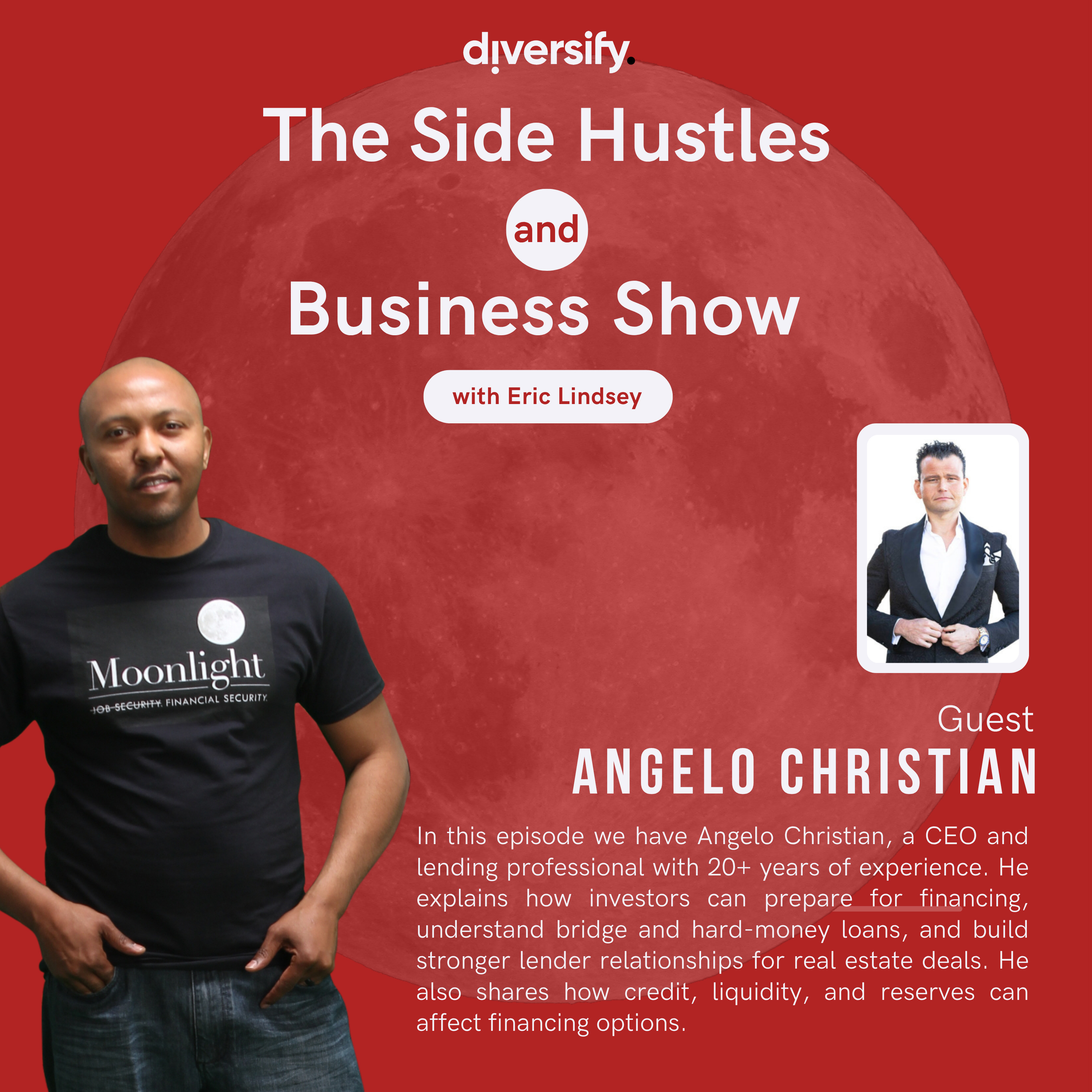
Bridge Loans, Hard Money, and Construction Financing with Angelo Christian

Episode Summary Angelo Christian entered the mortgage industry after studying finance and economics and says he initially knew very little about mortgages. After learning the business through a friend, he built his career during the subprime era and remained in lending through the market crash, shifting into conventional, FHA, VA, and other financing programs as conditions changed. Over time, Angelo expanded into private lending, hard money, bridge loans, business lending, and construction financing. In this episode, he explains why investors should understand their financing before going under contract, how bridge loans can help with acquisitions, renovations, and ground-up construction, and why credit, liquidity, reserves, and a strong lender relationship can make a major difference when trying to close a real estate deal. Key Takeaways How Angelo entered the mortgage industry and built more than 20 years of lending experience. Why his business had to adapt after the subprime market changed. How conventional, private, hard-money, and bridge lending serve different borrower needs. Why some investors are turning toward ground-up construction when existing deals are difficult to find. How bridge financing can support acquisitions, renovations, construction, and eventual refinancing. Why investors should build a lender relationship before putting a property under contract. How credit, liquidity, bank statements, and reserves can affect financing options. Why getting pre-approved or obtaining proof of funds can help investors prepare before making offers. How rising interest rates and floating-rate debt created problems for some real estate borrowers. Why the financing structure and exit strategy should be evaluated alongside the property itself. What This Means for W2 Professionals As a busy W-2 professional, you may have strong income and capital available to invest without having the time to become an expert in every type of real estate loan. Angelo's experience highlights the importance of preparing before you find yourself under a closing deadline. Understanding your credit, liquidity, reserves, financing options, and lender relationship can help you make better-informed decisions before committing to a property. The goal is not to create another full-time job learning every lending product. It is to build the right team, ask better questions, and understand how the debt behind a real estate investment can affect both opportunity and risk. About Angelo Christian Angelo Christian is a CEO and lending professional with 20+ years in the home lending industry . His work focuses on commercial, private, and residential lending, with financing options for investment properties, buyers looking to build homes, and other real estate financing needs. During his career, Angelo has worked across traditional mortgage lending as well as private lending, hard money, bridge financing, and construction-related financing. He discusses how adapting to changing market conditions has shaped his approach to lending and working with real estate investors. NMLS: #156333 Guest Links LinkedIn: https://www.linkedin.com/in/angelochristian/ Website: https://www.officialangelochristian.com Phone: 832-431-6331 Connect with Eric Lindsey / Moonlight Equities Free e-book: https://moonlightcre.com/ebook_download/ Website: https://moonlightcre.com/ Schedule a call: https://calendly.com/moonlightequitiesgroup/scheduled-conversation Learn more: https://linktr.ee/ericlindsey Suggested Hashtags #RealEstateInvesting #RealEstateFinancing #BridgeLoans #HardMoneyLending #RealEstateDevelopment #W2ToWealth

September 10, 202645 min

How Jasper Cool Built a Remote Real Estate Wholesaling Business From Scratch

Episode Summary Jasper Cool discovered real estate in 2018 while working as a restaurant server and looking for a way to create more income and freedom. With little money and no real estate experience, he learned wholesaling through YouTube, driving for dollars, and eventually real estate coaching. After his first contract fell through, Jasper closed his first successful deal for $4,700 and continued building from there. In this episode, Jasper explains how consistency, cold calling, texting, and long-term follow-up helped him build a remote wholesaling operation. He also shares how he uses virtual assistants, builds trust with sellers from a distance, evaluates deals in today's market, and tracks the numbers that matter when scaling a real estate business. Key Takeaways How Jasper went from waiting tables to pursuing real estate full-time. Why his first wholesale deal fell through and what happened next. How driving for dollars helped him find his first opportunity. Why cold calling became the foundation of his wholesaling strategy. How Jasper built a fully virtual team using virtual assistants. How cold calling and text messaging work together to generate leads. Why consistent follow-up can turn old leads into future deals. How to build trust and credibility when working with sellers remotely. What Jasper is seeing in today's wholesaling market. Why understanding KPIs, expenses, and profit is essential for scaling. What This Means for W2 Professionals Jasper's journey shows how someone with limited money and no real estate experience can begin building a business while working a job. His experience highlights the importance of learning the fundamentals, taking consistent action, following up, and eventually building systems that can create more freedom without relying entirely on your own time. About Jasper Cool Jasper Cool is the founder of Bright Home Offer, a North Carolina home-buying company focused on helping homeowners sell their properties off-market. Since 2018, Jasper and his team have helped hundreds of homeowners navigate the selling process and built a remote-focused operation serving North Carolina. Guest Links LinkedIn: https://www.linkedin.com/in/jasper-cool-96a441176/ Website: https://www.brighthomeoffer.com/ Bright Closings: https://www.brightclosings.com/ Connect with Eric Lindsey / Moonlight Equities Free e-book: https://moonlightcre.com/ebook_download/ Website: https://moonlightcre.com/ Schedule a call: https://calendly.com/moonlightequitiesgroup/scheduled-conversation Learn more: https://linktr.ee/ericlindsey Suggested Hashtags #RealEstateInvesting #RealEstateWholesaling #WholesalingRealEstate #CreativeFinancing #W2ToWealth

Is this your show?

Claim this listing to keep it up to date, reach guests who want to pitch you, and manage bookings with Guestify.

Claim this listing

More Business podcasts