Find partners
The Retail Pilot

The Retail Pilot

Hosted by Ken Pilot

BusinessManagementInterviews guests

Episodes

108

Latest episode

Jun 2026

Language

EN

About the show

The Retail Pilot is a series of interviews conducted by Ken Pilot with “Leaders and Legends” of the Retail industry. Ken will focus the conversation on his guests’ career journeys and their greatest career accomplishments and disappointments; gather insight into their leadership styles; learn who inspired them as they progressed through their careers; identify brands they admire; discover challenges they have faced; and talk about where they think Retail is headed and how they are leveraging technology to get there. Hosted on Ausha. See ausha.co/privacy-policy for more information.
Listen to episodes

60 recent
June 2, 202655 min

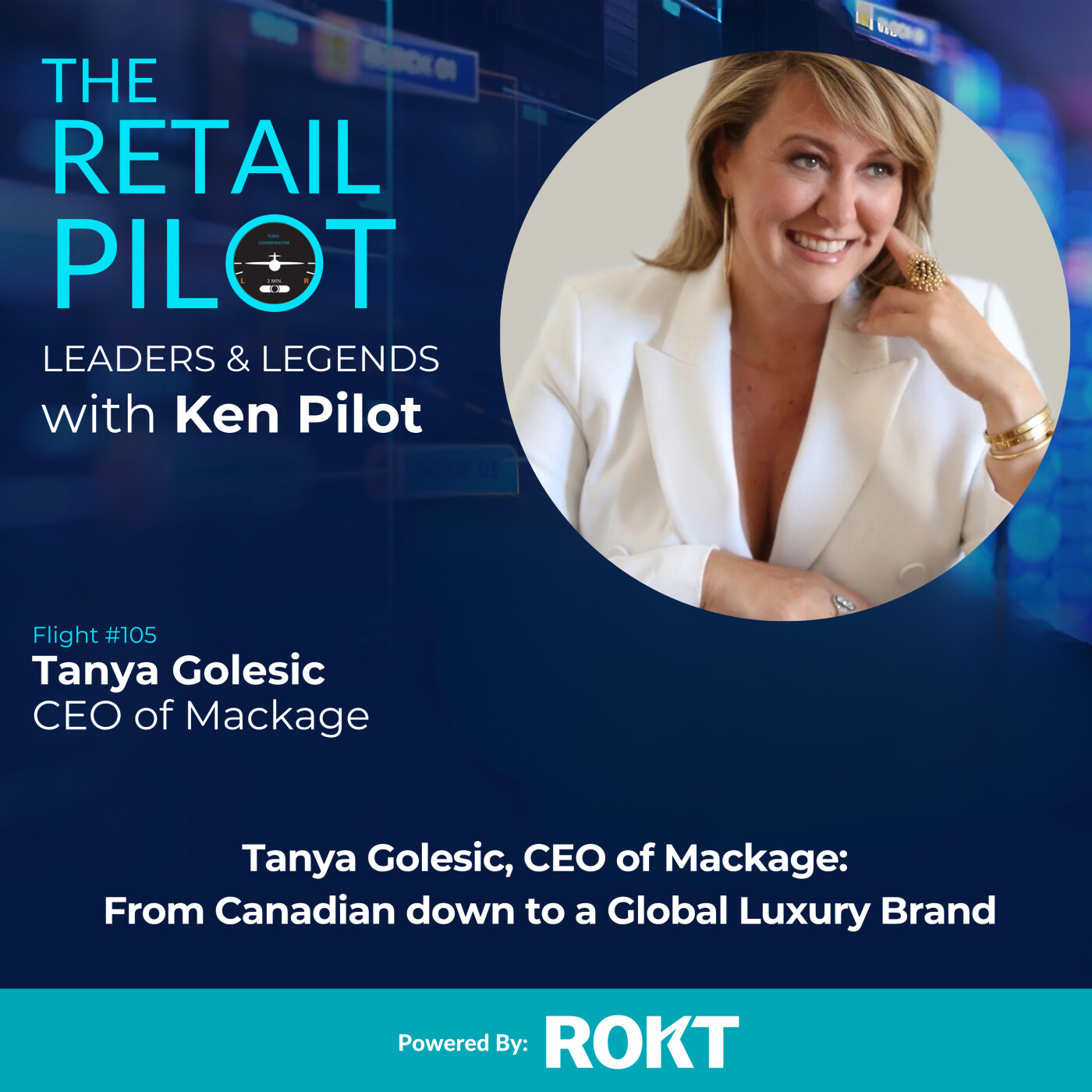
Tanya Golesic, CEO of Mackage: From Canadian down to a Global Luxury Brand

When Tanya Golesic took the helm of Mackage in July 2021, she inherited a Canadian brand with extraordinary product and almost no story. "The minute you put the product on, you wouldn't want to take the product off," Golesic tells Ken. "But it was lacking a brand story. It was lacking storytelling." Four years and a record-breaking 2025 later, the former Jimmy Choo president has transformed a down-outerwear specialist into a global luxury lifestyle brand—stretching price points to $3,500, balancing the men's-women's split, and betting on the Croatia national team at the World Cup. This is a masterclass in brand building from someone who learned the craft at Ralph Lauren, Marc Jacobs, Canada Goose, and LVMH.In this episode of The Retail Pilot, Ken sits down with Tanya Golesic, CEO of Mackage, to trace her journey from a Croatian immigrant family in Canada to the top of global luxury fashion, and to unpack how she's scaling Mackage beyond its outerwear roots. This is a conversation about craftsmanship, curation, building inside a private-equity-backed startup, and why fashion has more in common with sports than most people think.In this episode you'll learn:How Tanya went from a Croatian immigrant family in Canada to leadership at Ralph Lauren, Marc Jacobs, LVMH, Canada Goose, and Jimmy ChooWhy she turned down Mackage the first time—and how a "six-and-a-half-year interview" led her to the CEO roleThe "aesthetics that protect" brand ethos: why Mackage product must be fashionable, functional, and technical all at onceHow Mackage shifted from 50% heavyweight down to a 12-month lifestyle business spanning leather, cashmere, ready-to-wear, and rainwearWhy 2025 was a record year with double-digit growth—and how launching a real spring collection unlocked itThe logo strategy: segmenting between a "quiet luxury" customer and a streetwear customer with flexible brandingHow she stretched price points from $850–$1,200 up to $3,500 without raising prices across the boardThe wholesale discipline: applying the 80/20 rule and pulling back doors to focus on top-tier accountsMackage's global retail expansion across Canada, the US, Paris, Japan, China, and Korea—and when to use partners vs. going in-houseDon’t forget to subscribe to The Retail Pilot podcast for more conversations with retail industry leaders and visionaries shaping the future of commerce.If you missed our last episode, where Pete Nordstrom unpacks the eight-year journey to go private, the strategic partnership with Liverpool that made it possible, and what's actually changed since May 2025, be sure to tune in.Connect with Ken:-Follow Ken Pilot Ventures on LinkedIn, Instagram, and YouTube. Hosted on Ausha. See ausha.co/privacy-policy for more information.
May 19, 202645 min

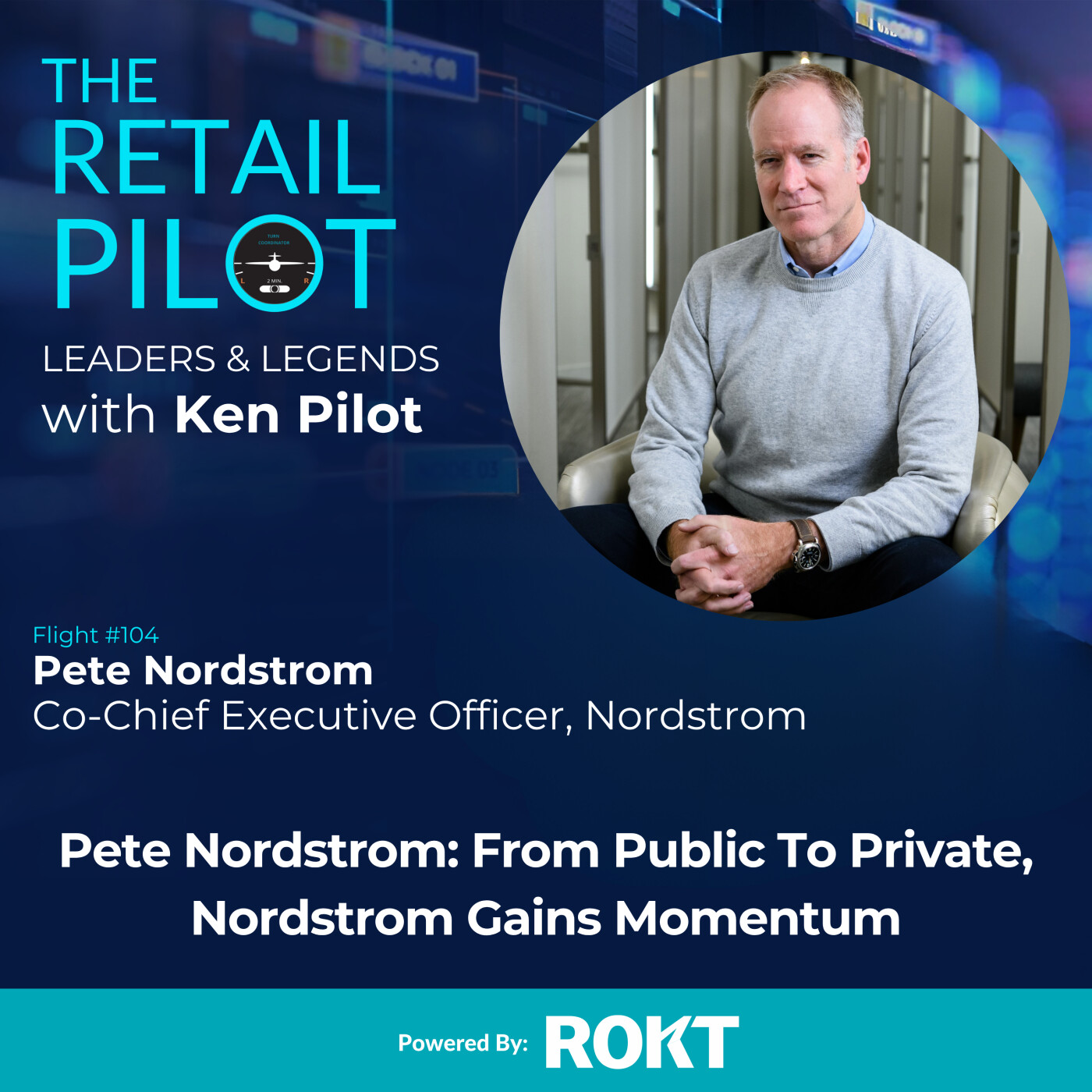
Pete Nordstrom: From public to private, Nordstrom’s gains momentum.

In this episode of The Retail Pilot, Ken sits down with Pete Nordstrom – Co-CEO of the 125-year-old fashion retailer – to unpack the eight-year journey to go private, the strategic partnership with Liverpool that made it possible, and what's actually changed since May 2025. They explore why the Saks-Neiman Marcus merger created an opening Nordstrom is now seizing, how the Rack is scaling toward 25+ new stores a year, and where AI is genuinely moving the needle. Pete is candid about the failed 2017 take-private attempt, the Canada expansion that became his generation's "biggest black eye," and why no department store has ever successfully exported its model abroad. This is a conversation about staying relevant across generations, competing with Amazon and Walmart, and the unglamorous discipline of just trying to be the best Nordstrom you can be.In this episode you'll learn:Why Nordstrom went private in May 2025, and why the 2017 attempt failedHow the Liverpool partnership came together: 51% Nordstrom family, 49% Liverpool, zero pressure to merge or exitThe real downsides of being a public company: morale, distraction, governance overhead, and a stock price tied to a struggling sector narrativeWhat's actually changed day-to-day since going private and the one thing Pete misses about public-company rigorWhy Pete sees the Saks-Neiman's merger as a once-in-a-generation opportunity for Nordstrom to capture market shareHow Nordstrom is winning brand partnerships, top talent (like Yumi Shin from Bergdorf Goodman), and customers from struggling competitorsThe Rack expansion strategy: 25 stores this year, with capacity to potentially open 50 annuallyWhy Nordstrom Rack competes more with Macy's than with TJ Maxx—and what that means for store growthThe competitive reality of Amazon and Walmart in beauty, marketplace, and replenishment, and why Nordstrom can't get left behindWhy Nordstrom's marketplace (launched 18 months ago) is one of the company's biggest untapped growth leversThe Canada lesson: Why no department store has ever succeeded outside its home country – and what Pete learned from tryingWhat Pete hopes will be true at Nordstrom's 150th anniversary – and why agility matters more than any specific planDon’t forget to subscribe to The Retail Pilot podcast for more conversations with retail industry leaders and visionaries shaping the future of commerce.If you missed our last episode, where Mickey Drexler tells all on how he operates with startup intimacy and five decades of wisdom, be sure to tune in.Connect with Ken:-Follow Ken Pilot Ventures on LinkedIn, Instagram, and YouTube. Hosted on Ausha. See ausha.co/privacy-policy for more information.
May 6, 20261 hr 9 min

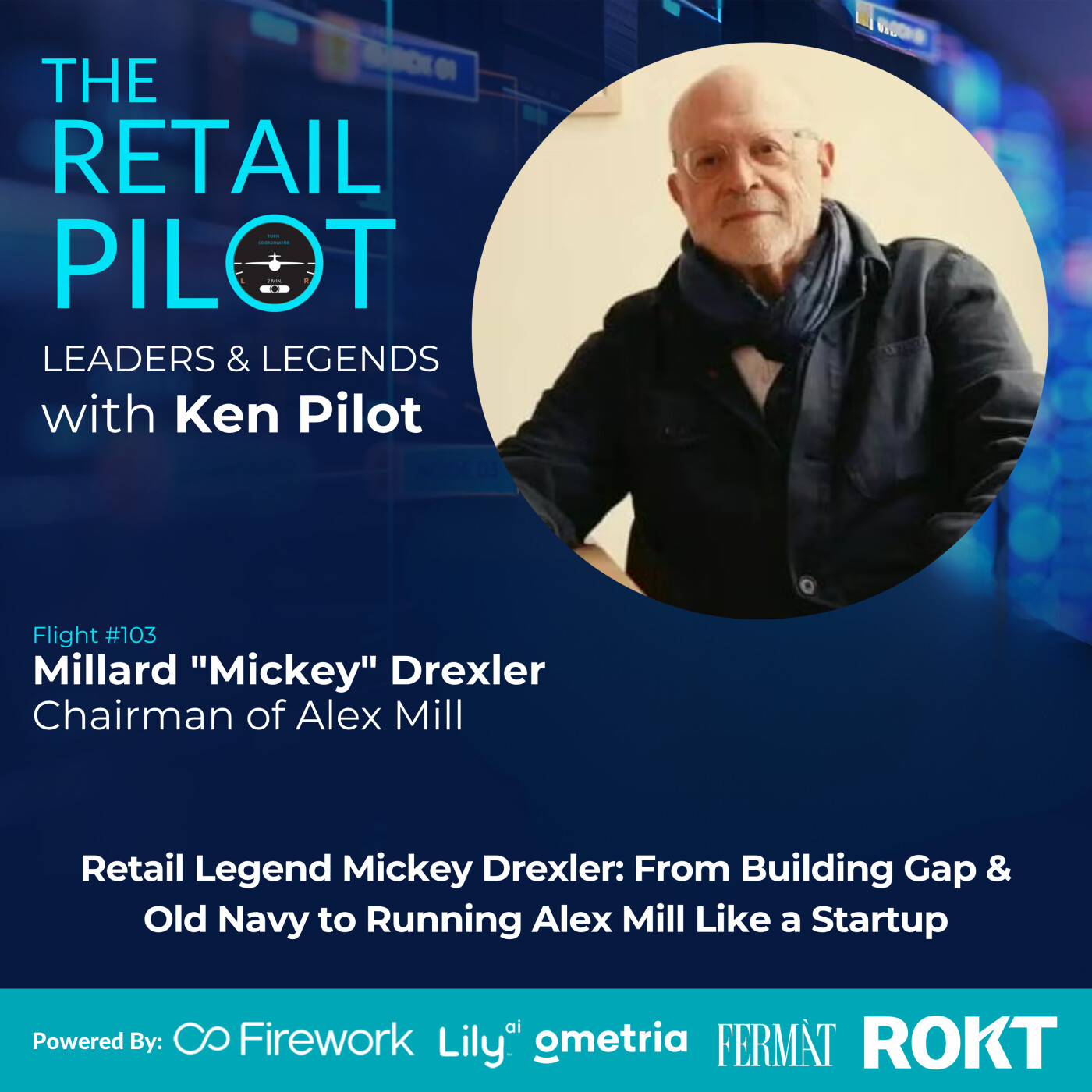
Retail Legend Mickey Drexler: From Building Gap & Old Navy to Running Alex Mill Like a Startup

Retail icon Mickey Drexler doesn't do retirement. At 80, the man who built Gap into a $14 billion empire, founded Old Navy, and revitalized J.Crew is running Alex Mill like a scrappy startup, and loving it. "I love what I do more now," Drexler says. "I don't have someone breathing down my neck." This is Mickey unfiltered: no corporate boards, no bureaucracy, no focus groups. Just 30 team members, two stores, and a merchant's eye as sharp as when he reinvented Ann Taylor in the 1980s.In this episode of The Retail Pilot, Ken goes behind the scenes at Alex Mill to explore how Mickey operates with startup intimacy and five decades of wisdom. They walk through design boards covered in vintage scarves, discuss why "a great store looks like it was bought by one person," and unpack Mickey's weekend update ritual - clipping magazines, photographing street style, bringing visual inspiration to the team every Monday.In this episode you'll learn:Why Mickey runs Alex Mill with only 30 people and why smallness is an advantageThe "white space" strategy: How Mickey identified opportunities at Ann Taylor, Gap, and Alex MillMickey's weekend update: How he curates inspiration from magazines, street style, and everyday observationsThe curation philosophy: Why less is more and how to edit 32 prints down to 3-5"If you know, you know": Mickey's brand-right approach and why focus groups are the enemyWhy AI will never pick colors and what technology can't replace in retailBiggest career mistakes: Hiring wrong executives, opening too many stores, expanding internationallyHow Mickey got fired from Gap with no notice after building $14B - and what he wishes he'd doneWhy wholesale helped Alex Mill reach minimums with only two storesThe tension between designers (what's next) and merchants (what's been) - and how to bridge itDon’t forget to subscribe to The Retail Pilot podcast for more conversations with retail industry leaders and visionaries shaping the future of commerce.If you missed our last episode, where Nate Checketts (Rhone CEO) on why wholesale saved his brand, how women's beat 8 years of men's in 2, and building mental fitness into brand DNA, be sure to tune in.Connect with Ken:-Follow Ken Pilot Ventures on LinkedIn, Instagram, and YouTube.See Mickey Live: Ken and Mickey will be together on stage at Commerce Next on June 24th - join them for an unfiltered conversation about the craft of retail.Learn More About Alex Mill:Visit AlexMill.com to shop the collectionFollow @AlexMill on InstagramHosted on Ausha. See ausha.co/privacy-policy for more information.

April 14, 202657 min

Rhone CEO Nate Checketts on Mind & Body Wellness: How Mental Fitness Built a $100M Performance Brand

Most performance apparel brands tell you they're building a lifestyle. Nate Checketts actually means it. As CEO and co-founder of Rhone, he's built a company where mental fitness isn't marketing—it's the foundation. "We say internally that we are a wellness company that just happens to sell clothes," Checketts explains. But here's what makes that more than a tagline: in year two of launching women's apparel, Rhone did more revenue than it generated in its first eight years of men's business combined.In this episode of The Retail Pilot, Ken Pilot unpacks Rhone's unconventional journey—from defying the "wholesale is dead" narrative to launching a women's line that's reshaping the company's trajectory. They discuss why Warby Parker's advice to embrace wholesale early changed everything, how the 12 Pursuits mental fitness framework became both internal culture and external brand positioning, and why Checketts spent years resisting a women's launch before discovering his best customers were already 30% female.In this episode you'll learn:Why Rhone embraced wholesale when every DTC brand said it was dead—and how it drove faster profitabilityHow Rhone's women's business generated more revenue in 2 years than 8 years of men'sThe mental health crisis that inspired Nate to start Rhone—and why he couldn't build "just another apparel brand"Rhone's 12 Pursuits framework: How Benjamin Franklin's 13 virtues became a scalable mental fitness systemWhy "commuter" apparel became one of Rhone's biggest categoriesHow Rhone navigated tariffs with a "third, third, third" model—splitting costs between suppliers, margins, and customersThe Rerun resale program with Archive: Why high-quality product beats greenwashingRhone's AI approach across design, merchandising, and customer service—and why "losing your job to someone who uses AI better" is the real riskHow Rhone differentiates from Lululemon and Alo by targeting "whole person health" vs. yoga-focused positioningEssential listening for: brand founders navigating wholesale vs. DTC decisions, retail operators building purpose-driven businesses, apparel executives considering gender expansion, and anyone interested in how premium performance brands compete in an oversaturated market.Subscribe to The Retail Pilot for more conversations with retail industry leaders shaping the future of commerce.Previous episode: Simeon Siegel (Guggenheim Securities) on the consumer spending paradox, 2026 stock picks, and why NPS should be banned from boardrooms.Connect: Follow Ken Pilot Ventures on LinkedIn, Instagram, and YouTube.Learn More: Visit Rhone.com for the 12 Pursuits mental fitness framework and free wall calendar.Hosted on Ausha. See ausha.co/privacy-policy for more information.
March 13, 202655 min

Guggenheim Analyst Simeon Siegel: Why Revenue Matters More Than Hype in Retail + 2026 Stock Picks

Retail earnings season just wrapped, and the headlines are telling one story while the data tells another. Consumer sentiment is dismal. Tariffs are squeezing margins. Geopolitical uncertainty looms. Yet average retail revenues grew 7-9% in Q4, and consumers keep spending. How do you reconcile these contradictions? Simeon Siegel, Senior Managing Director at Guggenheim Securities and one of Wall Street's most data-driven retail analysts, cuts through the noise with a simple philosophy: "The first thing I look at is revenues. Because it's very easy to conflate growth rates with revenue sizes."In this episode of The Retail Pilot, Ken sits down with Siegel to dissect what's really happening in retail beyond the sentiment surveys and macro doom-scrolling. From Nike's "dying" $47 billion business to Gap's viral comeback, from the D2C myth to why NPS scores should be banned from boardrooms, Siegel brings his signature contrarian analysis backed by hard numbers. This isn't about feelings—it's about what consumers are actually doing with their wallets, which stocks are positioned to win, and why the retail industry's most cherished beliefs might be leading CEOs astray.In this episode you'll learn:Why consumer spending remains strong despite abysmal consumer sentiment—and what that divergence really meansThe revenue vs. narrative disconnect: How Nike can be "dying" with $47-49 billion in salesWhich retail subsectors are winning and losing in the K-shaped economy (hint: it's a market share story, not a demographic one)Simeon's top stock picks for 2026: Why he's bullish on Nike, TJX, Ross, Birkenstock, Planet Fitness, and CapriThe real impact of tariffs on Q4 earnings: What retailers passed through vs. what they absorbedWhy Gap Inc.'s comeback under Richard Dickson is working—and whether it's sustainable beyond the hypeThe one KPI Simeon wants banned from retail boardrooms: Net Promoter Score (NPS) and why it misleads executivesWhy "D2C is not all it's cracked up to be": The data-driven case for wholesale distributionHow the Iran conflict could impact consumer spending, gas prices, and petroleum-based athleisure costsThe department store survival blueprint: What Macy's, Nordstrom, and off-price retailers are getting rightWhy TJ Maxx's lack of e-commerce is actually an asset for moving premium brand inventory "invisibly"Don’t forget to subscribe to The Retail Pilot podcast for more conversations with retail industry leaders and visionaries shaping the future of commerce.If you missed our last episode, where Terry Lundgren (former Macy's CEO) and Jan Rogers Kniffen dissect the Saks Global bankruptcy, predict the future of department stores, and reveal why some retailers will survive while others won't, be sure to tune in.Connect with Ken:-Follow Ken Pilot Ventures on LinkedIn, Instagram, and YouTube.Hosted on Ausha. See ausha.co/privacy-policy for more information.
February 24, 202659 min

The Department Store Crisis: Terry Lundgren & Jan Rogers Kniffen on Saks Global Bankruptcy and What The Future Holds for Department Stores

The department store industry just witnessed one of its most dramatic collapses. When Saks Global filed for bankruptcy in early 2026, it marked the end of an ambitious—but fatally flawed—attempt to merge two luxury retail icons. For Terry Lundgren, former Chairman and CEO of Macy's, and Jan Rogers Kniffen, one of retail's most respected strategists, the failure was inevitable. "Putting two very weak financially organizations together will not make anything other than one big financially weak organization," Lundgren warned before the deal even closed. In this episode of The Retail Pilot, host Ken Pilot brings together two industry veterans who've navigated mergers, bankruptcies, and retail transformation for decades. They reveal what killed Saks Global, why some department stores will survive while others won't, and what the retail landscape will look like in 2026 and beyond.In this episode you'll learn:Why the Saks Global and Neiman Marcus merger was "DOA" from the beginning and what red flags signaled the collapseHow Terry Lundgren successfully executed one of retail's most successful acquisitions: the May Department Stores deal that created a national Macy's footprintWhy department stores aren't broken—just overleveraged—and how the right balance sheet can save the modelThe "My Macy's" strategy: How localized assortments and 70 district buying teams drove billion-dollar growthThe marketplace opportunity: How third-party sellers can expand assortments without inventory riskWhy physical stores still matter and how to make them "fun" again with experiential retail, restaurants, and curated galleriesWalmart's dominance: How they're "firing on all cylinders" and taking market share from Target, Kohl's, and JCPenneyAmazon's retail store struggles and why they should "buy somebody that has stores and let them run it"The future in 10 years: Which department stores will survive (spoiler: Macy's, Bloomingdale's, Nordstrom, and Dillard's)What it takes to save Saks and Neiman Marcus: A "white knight with deep pockets" and a long-term visionThis episode is essential listening for retail operators managing consolidation and change, investors evaluating the department store sector, vendors navigating complex retail partnerships, and anyone seeking to understand the forces reshaping American retail from two executives who've been at the center of it all.Don’t forget to subscribe to The Retail Pilot podcast for more conversations with retail industry leaders and visionaries shaping the future of commerce.If you missed our last episode, where Lizanne Kindler, CEO of Knitwell Group, shares how she leads eight iconic fashion brands generating over $6 billion in revenue and successfully integrated three separate companies into one unified powerhouse, be sure to tune in.Connect with Ken:-Follow Ken Pilot Ventures on LinkedIn, Instagram, and YouTube.Hosted on Ausha. See ausha.co/privacy-policy for more information.
February 10, 202642 min

Lizanne Kindler Leading A $6 Billion Fashion Empire, The KnitWell Group

What does it take to lead eight iconic fashion brands generating over $6 billion in revenue? Lizanne Kindler's journey began at age 11 in a Washington D.C. department store, where her aunt—then president of the Garfinckles chain—gave her a glimpse into the magic of retail. "I remember feeling the buzz, the energy, the beauty," she recalls. That transformative summer set a young Danish girl on an unlikely path: move to America and build a career in fashion retail. Today, as Executive Chair and CEO of KnitWell Group, Kindler oversees Ann Taylor, Loft, Talbot's, Lane Bryant, Chico's, White House Black Market, and Soma—proving that childhood dreams fueled by curiosity and determination can reshape an entire industry.In this episode you’ll learn:-How a childhood experience in a D.C. department store sparked a lifelong passion for fashion retail-The strategy behind merging three separate companies into one unified $6+ billion powerhouse-Why brand marketing is "really back at the center" after years of performance-focused strategies-How growing up with deaf parents shaped Kindler's leadership style and ability to synthesize complex information-Why 75% of retail sales still happen in physical stores despite the digital revolution-The secrets behind Loft's "Summer of Loft" campaign and its massive customer acquisition success-How to maintain distinct brand DNA while managing eight different fashion brands-Micro-influencer strategies and the return of cultural relevance in marketingWhether you're interested in brand building, modern marketing strategies, organizational integration, or want insider insights on leading a multi-brand retail empire, this conversation offers actionable lessons on managing complexity at scale.Don’t forget to subscribe to The Retail Pilot podcast for more conversations with retail industry leaders and visionaries shaping the future of commerce.If you missed our last episode, where Amy Errett shares how she built Madison Reed into a high‑growth, tech‑powered beauty company with hundreds of millions in revenue and a fiercely loyal customer base, be sure to tune in.Connect with Ken:-Follow Ken Pilot Ventures on LinkedIn, Instagram, and YouTube.Hosted on Ausha. See ausha.co/privacy-policy for more information.
January 27, 202651 min

Breaking the Salon Ceiling: How Madison Reed Redefined Hair Color with Amy Errett

Amy Errett didn’t just enter the hair‑color category — she rewired it. In a space dominated by legacy brands, fragmented salons, and decades of “the way it’s always been done,” she built Madison Reed into a high‑growth, tech‑powered beauty company with hundreds of millions in revenue and a fiercely loyal customer base.In this conversation, Amy shares how she trusted her operator instincts, spotted a massive overlooked category, and built a business with SaaS‑like retention in a consumer wrapper. She breaks down the early decisions that shaped Madison Reed’s trajectory, the pivotal moment Ulta came calling, and how the pandemic revealed the company’s grit, resilience, and product superiority.We also explore how AI became a foundational advantage from color‑matching and personalization to labor modeling and customer experience and why staying obsessively focused on one thing has become Madison Reed’s moat.If you’re interested in category disruption, operational excellence, or building a brand that scales with intention, this episode is a masterclass in modern leadership.Show Notes• Amy’s shift from investor to operator and the “itch” she couldn’t ignore• Why hair color is a massive, misunderstood category hiding in plain sight• The early DTC years and the product‑quality proof points that changed everything• How Ulta became a breakthrough moment — and why Amy almost said no• The pandemic surge: demand, resilience, and the unexpected acceleration• Scaling from six stores to nearly 100 and building a membership‑driven model• The role of AI in formulation, staffing, personalization, and customer care• Why Madison Reed stays laser‑focused on hair color instead of expanding broadly• The economics behind the business — recurring revenue, retention, and margins• Amy’s perspective on IPO potential and why predictable revenue matters• International expansion, retail partnerships, and what’s next for the brandIf you’re building, scaling, or reinventing a category, this episode is packed with insights you won’t want to miss. Listen now and subscribe to The Retail Pilot for more conversations with leaders shaping the future of retail.Hosted on Ausha. See ausha.co/privacy-policy for more information.
December 16, 202532 min

Why Retail Is Holding Up Better Than Expected with Matt Shay

NRF President and CEO Matt Shay joins The Retail Pilot to break down what is really happening inside retail as the holiday season reaches its peak. From consumer resilience and record setting holiday sales forecasts to tariffs supply chain challenges and pricing pressures this conversation offers a clear view of the forces shaping retail performance right now.Matt shares how retailers are navigating uncertainty while continuing to execute at a high level and why consumers remain the driving force behind the economy. The discussion also explores how AI is being applied across retail operations from supply chain and fulfillment to marketing customer engagement and in store experiences and why AI is becoming a powerful equalizer for mid size retailers.Show Notes• Introduction and welcome to Matt Shay• The state of the consumer heading into the holiday season• Why retail performance remains strong across categories• NRFs outlook on holiday sales and economic confidence• The impact of tariffs on pricing supply chains and planning• Why uncertainty has made this year especially challenging for retailers• How AI is being used across retail today• AI and its role in customer experience and brand storytelling• What CEOs are saying about AI and the future of jobs• Why physical stores continue to matter• Gen Z and renewed energy around in store shopping• What to expect from NRF 2026 and upcoming industry priorities• Key questions mid size retailers should ask after the holidays• Rapid fire questions to close out the conversationIf you found this episode valuable subscribe to The Retail Pilot for more conversations with leaders shaping retail today. Share this episode with your team and leave a review to help others discover the show.Hosted on Ausha. See ausha.co/privacy-policy for more information.

December 12, 202553 min

A Legacy of Style and Innovation with Gene Pressman

In this episode of The Retail Pilot, we sit down with Gene Pressman, a third-generation leader behind the iconic Barneys New York, to unpack how a single store became a cultural force. From redefining American fashion to championing emerging designers, Gene shares the behind-the-scenes decisions, risks, and creative instincts that shaped Barneys into more than retail—it became an experience.Gene reflects on growing up inside the business, learning from his father and grandfather, and helping transform Barneys from a men’s discount store into a global destination for innovation, humor, and uncompromising taste. The conversation spans pivotal moments like discovering Giorgio Armani, building the women’s business, creating unforgettable windows and advertising, expanding globally, and navigating the realities of rapid growth.This is a candid, thoughtful look at creativity versus data, risk-taking versus safety, and why true merchants don’t give customers what they ask for—they give them what they don’t know they want yet.Show NotesGene Pressman’s role in transforming Barneys New York into a cultural and retail iconGrowing up in the Pressman family and learning the business from the ground upHow Barneys introduced American audiences to designers like Giorgio Armani, Comme des Garçons, Dries Van Noten, and moreThe shift from men’s fashion to building a groundbreaking women’s businessWhy humor, irreverence, and creativity were central to Barneys’ DNAThe decision to take advertising and creative in-house and what made Barneys’ campaigns unforgettableExpansion to Madison Avenue, Los Angeles, and Tokyo—and the challenges that came with growthBalancing creative vision with financial realities in large-scale retailWhy data can’t replace instinct in merchandising and brand buildingReflections on legacy, culture, and what Barneys represented beyond shoppingIf you enjoyed this conversation, subscribe to The Retail Pilot and leave a review—it helps more listeners discover the show.For the full story behind Barneys’ rise, challenges, and lasting impact, check out Gene Pressman’s memoir They All Came to Barneys.Follow The Retail Pilot for more conversations with the leaders shaping retail, culture, and brand innovation.Hosted on Ausha. See ausha.co/privacy-policy for more information.

Is this your show?

Claim this listing to keep it up to date, reach guests who want to pitch you, and manage bookings with Guestify.

Claim this listing

More Business podcasts