Find partners
The Raise Podcast

The Raise Podcast

Hosted by Jade Buffong-Phillips

Episodes

10

Latest episode

Oct 2024

Language

EN

About the show

A podcast that sheds light on the fundraising efforts of pre-seed and seed stage Founders. www.insidesmallgiants.com

Listen to episodes

10 recent
October 8, 202450 min

Ep 9: Lessons from Juniver's pre-seed round

Emilie’s Fundraising JourneyEmilie Faure is the Co-Founder of Juniver, a platform that provides science-based recovery programs for disordered eating, to help people reduce urges and get back to living their lives. Emilie and her team have closed a $1.2m pre-seed round last year, which was arguably one of the most challenging fundraising environments in the past decade.The problem: disordered eating can take place in many shapes and forms, and it requires proactive care and management to help those who are suffering from it to recover. While therapy can be incredible, it is often a reactive approach that helps people reflect once an episode has come and gone, but doesn’t necessarily equip them with the tools to handle the issues that disordered eating causes, in the heat of the moment.The solution: Juniver provides people suffering from disordered eating conditions with science-based personalised recovery programs, to help them better understand how their brain works, retrain it, connect with a community of people who understand and ultimately, reduce their urges.On this episode of The Raise, we speak to Emilie about everything her team has learned about fundraising.In this episode, we cover:[01:06] About Emilie and Juniver[07:01] What was your experience of fundraising in last years climate?[13:15] How did you balance fundraising with running the business and being there for the team?[17:30] How have you spun away from speaking about he risk mitigation to focus on the opportunity?[20:35] What are some core questions founders should be asking investors on calls or info they should gather before hand?[26:10] How did you decide that you wanted a second call?[28:31] What information and data should Founders share with Founders in their data room?[34:45] How do Founders protect the data they have when they've opened a data room?[40:42] How do Founders protect their time without running the risk of damaging relationships with investors?[44:50] If you could go back and do it all again, would you do anything differently?Some takeaways:For Founders raising 💰Emilie has created a platform that focusses on an issue that many people are familiar with but don't quite understand. Early on in the investment process, she recognised a need to add more educational information upfront in their pitch deck and being very selective with the people they reached out to in the first place. Make sure you take investor knowledge and exposure into consideration before you start your outreach.There are key questions that Founders should be asking investors to save time and energy. Are they deploying capital now or still raising? What is their cheque size? What spaces are they most interested in? Emilie had to ask a lot of these questions upfront as many funds weren't deploying when they were fundraising.There's a lot of information beyond a financial model that should be included on your data room. Emilie recommends including any recurring FAQs, research your team has conducted, product tours or demo versions of the platform investors can download, your pitch deck and any supporting information about your team.For aspiring founders 🤩If you’re a female founder, bear in mind that you may be asked more questions that require you to defend your idea, the market and ultimately shed light on the risks vs the opportunity. It’s important that you learn how to pivot the conversation to focus on the excitement and possibilities within your industry.Listen now on Apple, Spotify, Overcast, and YouTube.Where to find Emilie Faure:• LinkedInWhere to find Jade Buffong:• LinkedIn | Newsletter Get full access to Inside Small Giants at www.insidesmallgiants.com/subscribe
September 24, 202438 min

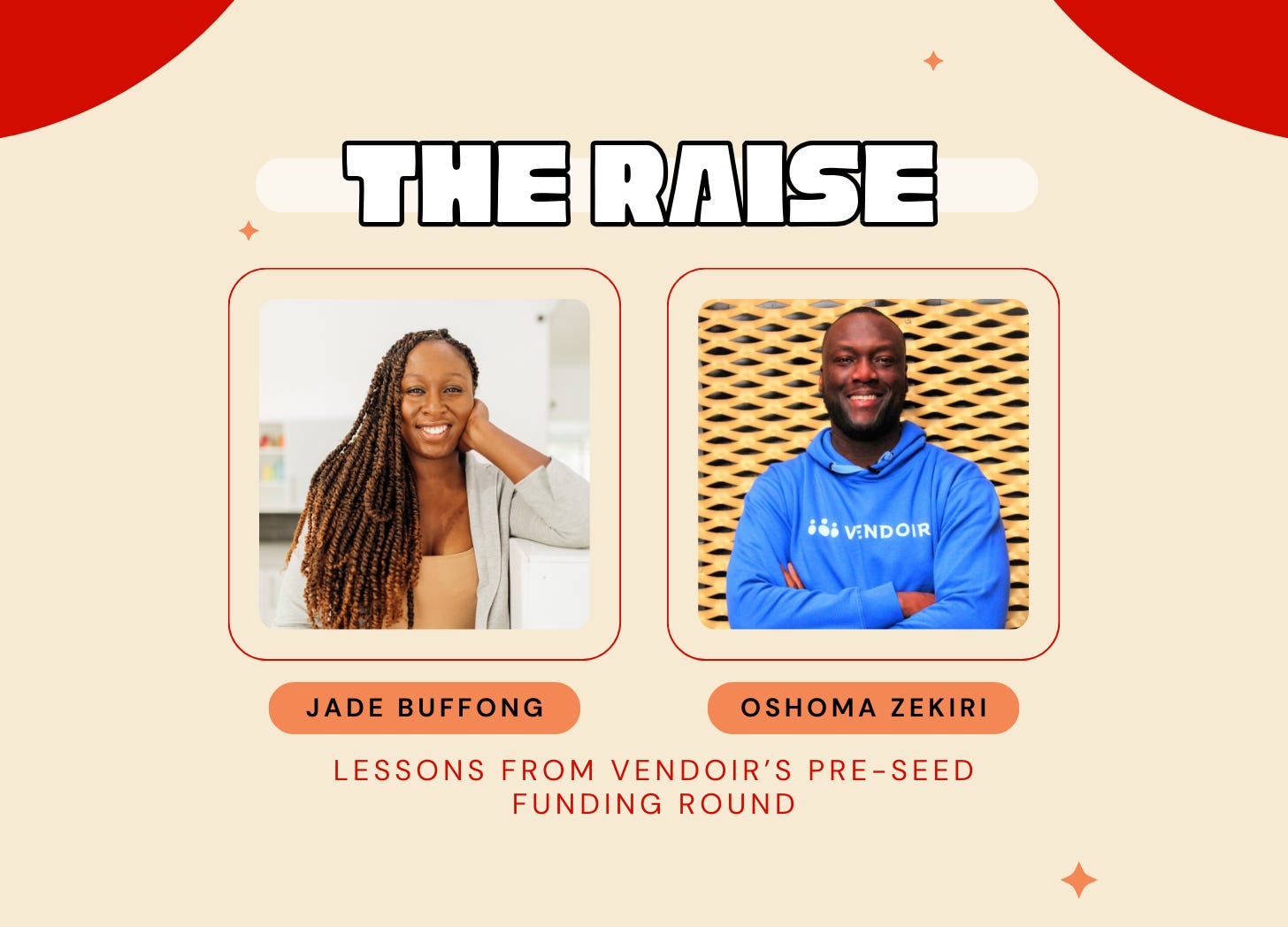
Ep 8: Lessons from Vendoir's Pre-Seed Round

Oshoma Zekiri is the co-Founder of Vendoir, an event planning platform that aims to make event planning stress-free, sustainable and inclusive. Since starting the company in 2020 (just before lockdown), Oshoma and his team have closed several crowdfunding rounds through platforms like Crowdcube and Seedrs. Join us as we talk about their experience of fundraising on this episode of The Raise. The problem: with the number of vendors it takes to get an event off the ground, event planning can often be time consuming, stressful and (more often than not) goes over budget. The solution: Vendoir is a platform that helps you to find and book the event suppliers people can trust, with instant pricing to ensure every decision made is budget friendly. Saving people time and money on every event they host. Oshoma thought about his idea for a few years before teaming up with his co-Founder just before the UK went into Lockdown. Since, they’ve brought in their third co-Founder and CTO, run three crowdfunding campaigns (one of which they were unable to close), all of which ahs helped them to get to where they are today. On this episode of The Raise, we speak to Oshoma about everything his team has learned about fundraising. In this episode, we cover:[01:22] Tell us about your background and why you started Vendoir[05:00] What were some early decisions you made about the type of investors you would pursue?[06:51] Walk us through the process of crowdfunding and what you were able to do with the £150k that you initially raised?[13:13] What other forms of funding have you secured and what did that help you move towards?[20:41] Why did you go to Seedrs instead of going back to Crowdcube?[23:36] Did anything unexpected happen that forced you and your founders to resolve it in the moment?[27:37] How did going through the fundraising process help you sharpen your skills as a founder?[31:05] What is the most important lesson you've learned from fundraising?[33:22] What advice do you have for founders who are fundraising in this environment?[35:10] If you could go back and do it all again, would you do anything differently?Some takeaways:For Founders raising 💰Oshoma and his team initially went to Crowdcube to try and raise money, but they needed backing from family and friends first. So they threw themselves into conversations with several people that they already knew. They secured 90% of the funding (£90k) this way, which helped massively. For Crowdfunding to work, you need to get at least 70% from your existing community, family, friends and colleagues before you put it forward to the public. At this stage, people are just backing you because they believe in you. Fundraising comes with its own risk. Oshoma and his team experienced this first hand when their lead investor pulled out of their second crowdfunding campaign which prevented them from closing the round. The investment landscape has changed dramatically since COVID. So Angel Syndicates and VCs will have requirements that may be a challenge for early start start ups to fill. Invest time in building up an audience, securing potential clients and Letters of Intent (LOI’s) to demonstrate the traction you’ve been able to achieve. Note; Crowdcube will ask people to pledge what they want to invest in a business, vs Seedrs that will actually collect the funds from them immediately. Remember it's small details like this that can be the difference between you managing to hit your fundraising target and missing it. For aspiring founders 🤩As a Founder, you need to be prepared to invest in the product that you're building and put your cash into the business to make it a success, so remember that investors will expect to see how much you're prepared to put in too. Listen now on Apple, Spotify, Overcast, and YouTube.Where to find Oshoma Zekeri:• LinkedIn Where to find Jade Buffong:• LinkedIn | Newsletter Get full access to Inside Small Giants at www.insidesmallgiants.com/subscribe
September 10, 202448 min

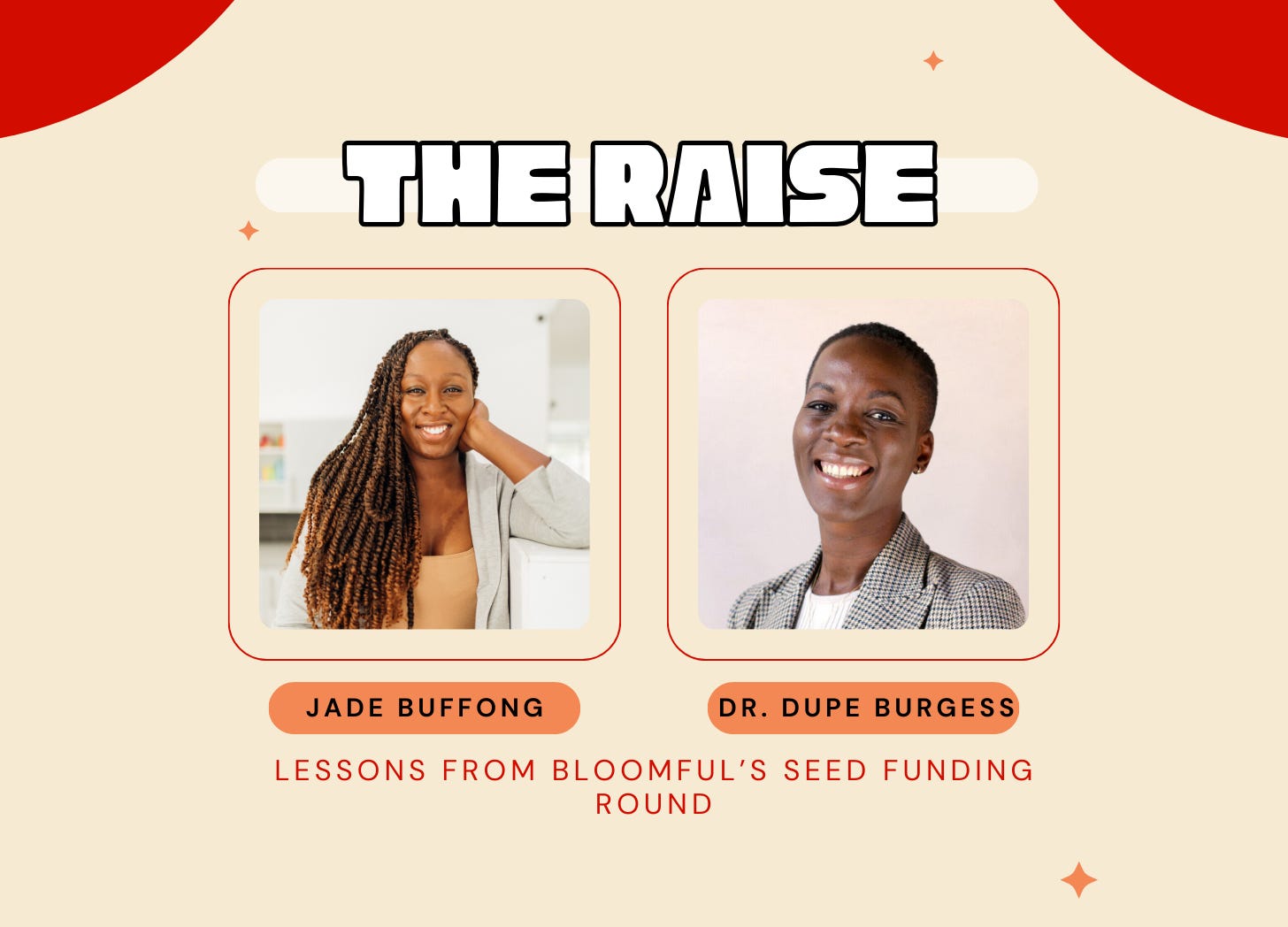
Ep 7: Lessons from Bloomful's Seed Round

Dupe’s Fundraising JourneyDr. Dupe Burgess is the Founder of Bloomful, a platform that delivers digital, holistic and therapeutic support for women’s gynaecology conditions. Since starting the company in 2021, Dupe and her team have closed a funding round and we’ll talk about how they achieved that in this episode of The Raise. The problem: with women receiving less health monitoring, often being misdiagnosed and having their concerns dismissed within the reals of traditional healthcare settings, they are taking fewer visits to the GP and struggling to find an alternative. The solution: Bloomful is a platform that delivers digital, holistic and therapeutic support for women’s gynaecology conditions. Bloomful delivers accessible care by matching women with best-in-class clinicians. Dupe spent over a decade working within the NHS, before leaving medicine and moving onto one of the most well-known business consultancies in the world. Having been through a series of accelerators, getting backed by Google, and securing a series of grants Dupe and the Bloomful team have recently closed an Angel round.In this episode, we cover:[01:03] More about Dupe and why she started Bloomful[06:35] What were some of the early decisions you made about the investment needed to get Bloomful up and running?[09:30] What were the pros and cons of speaking to Angel investors first?[13:58] How did getting backed by Google for Start-ups help with the business and fundraising?[18:25] What are some alternative methods of fundraising that founders should consider?[22:53] What have you added to your process to make grant application processes easier?[28:12] How should founders evaluate whether what they're building is big enough for VC backing?[32:55] What challenges do you and your team face as you were fundraising and how did you overcome them?[36:59] What advice do you have for Founders who want to develop their pitch?[44:34] If you could do it again, what would you do differently? Some takeaways:For Founders raising 💰There are plenty of things to take into consideration before deciding whether you should go after VC funding. Think about the vertical you’re in, can it move fast enough to match the growth standards of VCs? Do you want an 8-9 figure business and all that comes with it?If you do go after Angel investors, it will take longer to get the pot of money that you’re looking for. However, you can strategically look for well connected Angel’s that can be a signal to other potential investors and unlock more funding during the round. Start by going for small grants (e.g. £5k, £10k) to understand the application process and refine and apply your learnings to new applications (and avoiding heavy fees from grant writers). Bloomful has an entire system dedicated to securing grants as this has been a huge impact on their ability to get non-dilutive funds. Remember that grants are a way to secure money without giving up equity, while this often comes with terms and conditions, they enable you to maintain control over the business, without the heavy demands that often comes with investors. Become the master of your deck by memorising your pitch script. Dupe’s experience at medical school taught her a great deal about communication. While most of us won’t have been through the same rigorous training, it’s vital that every founder knows how to pitch in a room of strangers. Take the time to really memorise your content (and revise it in front of your friends and family) to make sure you’re over prepared for any conversations with investors. For aspiring founders 🤩Take advantage of all the initiatives for Founders. From accelerators specifically for your niche to those supporting female or underrepresented founders, these organisations can help open doors to a network and support that you, otherwise, may not be privy to.Listen now on Apple, Spotify, Overcast, and YouTube.Where to find Dr Dupe Burgess:• LinkedIn Where to find Jade Buffong:• LinkedIn | Newsletter Get full access to Inside Small Giants at www.insidesmallgiants.com/subscribe
July 9, 202451 min

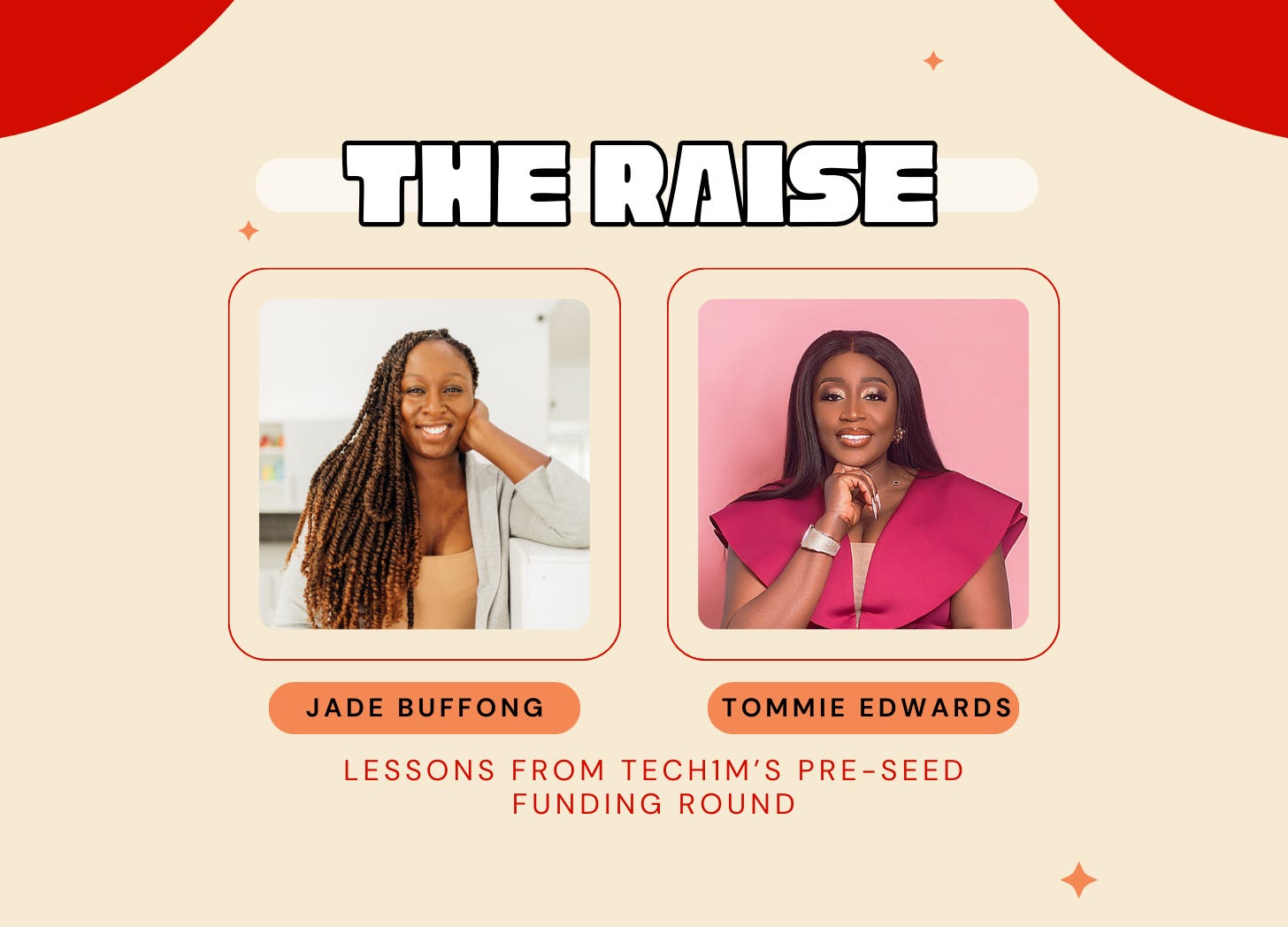
Ep 6: Lessons from TECH1M's Pre-Seed Round

Tommie’s Fundraising JourneyTommie Edwards is the Co-Founder of TECH1M, a recruitment automation and skills assessment platform that helps businesses attract, evaluate and hire quality candidates, allowing their users to hire exactly as they want to, in one platform. The problem: small businesses often have to hire quickly but they end up having long, painful recruitment process that are split across several platforms. From sifting through applications to running interviews, collecting feedback and running assessments, it can all feel like a chore. And, what’s worse is, the majority of platforms that solve this issue are for enterprise businesses, which completely price out the small and medium businesses that need this solution the most. The solution: TECH1M is a recruitment intelligence platform that leverages AI ad data analytics so they can find, hire and evaluate candidates from across the world. Tommie is a 3x founder, who bootstrapped her first two ventures before kick-starting TECH1M and becoming Angel and VC backed and going through a series of accelerator programs to develop their business strategy and close their round. Today, and we’re discussing the ins and outs of their round on the latest episode of The Raise. In this episode, we cover:[01:04] Tommie's background and why she started TECH1M[06:40] What did you learn from your experience of bootstrapping twice?[09:50] How did you manage the pressure of bootstrapping?[14:55] How did you find TechStars and do you recommend other Founders go down that path?[24:48] What does the process look like for some of these accelerators?[30:46] What differences did you notice when speaking to US and UK investors?[36:15] Did the SEIS/EIS scheme help you to close the raise faster?[40:25] What challenges did you face as you were raising this time round and how did you tackle them?[48:22] I f you could go back and do it again, would you do anything differently? Some takeaways:For Founders raising 💰The right accelerators can be instrumental in building your start-up and preparing for fundraising. Do your research and apply for different accelerators that can play a role in supporting the different arears of the business that need to be developed (e.g. sales, SEISS, fundraising, venture backed). If you meet 4-5 of the criteria, complete the application and see what happens from there. Be prepared to pitch at any moment in time. Translating your mission and vision in a couple of minutes is everything. You never know who you will meet in passing, so take the time to work on your pitch and test it on others. Understand the market that you are raising in. UK and US investors operate in a very different way. UK and European investors tend to be more risk averse. US investors expect you to be confident (on the line of arrogance, but not crossing it) to gain their confidence. On the other hand, UK investors prefer founders that present themselves more humbly. Bear this in mind when you're speaking to investors from different parts of the world. Evaluations in the US are more founder friendly vs those in the UK that are typically fixed (e.g. £2.5m for pre-seed). For aspiring founders 🤩Stress and teary days or nights are a normal part of the journey when you're a Founder. You are not the only one who experiences this or feels that way. If you need help during those times, reach out to your founder community and ask for it. While friends and family may mean well, there's a chance that they won't quite understand the pressures that you're experiencing. There is a time to be heads down and deep in the doing for your business, and there is a time to be heads up and networking with others to make sure you balance the two. Listen now on Apple, Spotify, Overcast, and YouTube.Where to find Tommie Edwards:• LinkedIn Where to find Jade Buffong:• LinkedIn | Newsletter Get full access to Inside Small Giants at www.insidesmallgiants.com/subscribe
June 25, 202453 min

Ep 5: Lessons from Finalrentals £370k Pre-Seed Round

Ammar’s Fundraising JourneyAmmar Akhtar is the Founder and CEO of Finalrentals, based in Cardiff, UK. A car rental brand and a digital eco system, currently operating in 32 countries and expanding quickly. In 2023 alone, Finalrentals has expanded to 14 countries under Ammar’s leadership.The problem: around 56% of all global car rentals are provided by local car hire companies. Local car hire companies are often recognised for their personal customer service and their local knowledge. However, they lack the resource and expertise to invest in digital advertising or technology platforms to grow sales or to operate efficiently like global rental car companies (such as Hertz). That represents a $54 billion market opportunity (as there are 56,883 local car companies globally).The solution: Finalrentals gives local car companies access to three tools to accelerate sales and optimise their business performance:an online booking platform, which is directly connected to the largest global websites where customers search for car rentals (Expedia, Kayak etc.)a cloud-based dashboard to manage all bookings efficiently; andan online system offering extras including insurance to boost customer transaction value.Ammar and his team closed a £370,000 pre-seed in October 2022 by taking advantage of the UK’s SEIS/EIS investment scheme, and we’re discussing the ins and outs of their round on the latest episode of The Raise. In this episode, we cover:[01:50] About Ammar and why he started Finalrentals[04:18] How has travelling shaped your joruney?[08:08] What are the SEIS/EIS schemes and how did they help you to close the round[12:25] How do the start-ups benefit from these schemes? [17:14] How did you educate investors who were unaware of the schemes about SEIS and EIS?[22:41] How did you build your investor pipeline to 5-10 calls a week?[28:38] What questions were investors asking again and again?[35:00] How did you drive investors down the conversation funnel?[39:42] What were the key numbers investors wanted to know?[42:52] What difficulties did you face and how did you overcome them?[45:53] How did using SeedLegals help you to tie up the round?[47:45] If you could go back and do it again, would you do anything differently?Some takeaways:For Founders raising 💰 Ammar started running his business with his own money and ran out of funds in 11 months by spending purely on paid ads (which wasn't sustainable). While paid channels are important, look for opportunities to build your audience organically. SEIS/EIS is a tax scheme that is run in the UK that incentivises Angel investors to back start-ups by minimising their risk. Many investors are unaware that these schemes exist, so it's your duty as a founder to make them aware. Don't expect people to write you a check after a call or two, take the time to build a relationship with them and work your way towards being able to pitch (especially with Angel investors). If someone has the money and they don't want to invest in you, they don't understand the business. Make it as simple as possible so they're clear on how it works, how you make money and how quickly you believe the business can grow. You should not only have your numbers at your fingertips but also know what is driving your revenue. Investors are not just interested in the metrics, but they want to know if you and your team are on top of them. For aspiring founders 🤩Travel can be a huge part of building your business. If you're in a position to, it's wise to consider going to other countries for an accelerator, or for an investment opportunity.Listen now on Apple, Spotify, Overcast, and YouTube.Where to find Tom Charman:• LinkedInWhere to find Jade Buffong:• LinkedIn | Newsletter Get full access to Inside Small Giants at www.insidesmallgiants.com/subscribe
June 11, 20241 hr 2 min

Ep 4: Lessons from a Stealth mode pre-seed round

Tom’s Fundraising JourneyTom is a data scientist with a decade of building companies under his belt (in travel tech and ed tech), and has spent a great deal of time building AI models for high risk environments. Tom’s team are building their company in stealth mode — which means the company name is still private — and they’re building a platform that will ultimately help product teams around the world run the right product experiments that lead to the better results. The problem: product teams often struggle to identify which experiments they should be running. 9/10 teams are working with homogenous data that makes it an uphill battle to decide what they should test right now. The solution: their AI platform helps product teams to better understand customers by predicting behaviour patterns and reduce the risk of running the wrong experiments (that ultimately wastes a tonne of time and money).After building their waitlist and initial customer base, Tom and his team closed a multi-million pre-seed round in all of 4 months (from predominantly US investors), and we’re discussing the ins and outs of their latest episode of The Raise. In this episode, we cover:[01:11] About Tom and why he started his AI tech company[05:31] What stage were you at with the product before you started fundraising?[09:34] What are the differences you've noticed between UK and US investors?[13:26] Can you walk us through how you and your team landed on $2 million to raise?[17:18] What are 2-3 other things founders need to consider before fundraising?[22:18] What decisions did you and the team make about the VCs you would approach?[29:12] How did you kick-start the process and start looking for investors?[34:10] Is cold outreach any better in the US than it is in the UK?[39:07] What challenges did you face as you were building your network and community?[42:29] How do you keep a spark or an interest with investors? [48:46] How have you balanced fundraising with running the business? [52:22] How did you navigate conversations around traction with investors when you were pre-product launch?[57:23] If you could go back and do it again, what would you do differently?Some takeaways:For Founders raising 💰When you're building, consider what customers are and aren't willing to pay for right off the bat. If you can build a product with monetisation in mind at the beginning (and letters of intent), that goes a long way to proving to investors that you can generate revenue. When you're thinking about how much to raise, consider what the target or benchmark is that you want to hit before you get to your funding round. That allows you to create a narrative to share with your community and investors alike. BONUS: When you figure it out how much you want to raise, add an extra 20-30% (because anything could happen, and you don’t want to cut your runway short). Remember, some investors will raise an eyebrow if they feel you aren’t raising enough. Never give away more than 20% for your first round, bear in mind that you may have future rounds to follow on to. But bear in mind that the percentage for your first raise will vary depending on where you are in the world, in San Francisco, for example, they aim for no more than 10%. Apply for accelerators and grant programs as they will help you to build a network quickly. Demonstrating that a group of people are willing to take a bet on you goes a long way to proving that you’re worth the risk. Good VCs will give you a no, quickly, and with some feedback. If you're in conversations with an investors who is a perfect fit and they say no, don't ask them to introduce you to other people in their network as their decision not to invest could be considered a red flag.For aspiring founders 🤩VCs are often very well connected so it’s worth considering this route if you believe that your business can be venture backed. Listen now on Apple, Spotify, Overcast, and YouTube.Where to find Tom Charman:• LinkedIn Where to find Jade Buffong:• LinkedIn | Newsletter Get full access to Inside Small Giants at www.insidesmallgiants.com/subscribe
May 28, 202449 min

Ep 3: Lessons from Yoxly's bridge round

Danae’s Fundraising Journey With almost a decade of experience as a Medical Doctor, Danae and her co-Founder, Judson, launched Yoxly just over four years ago to tackle some of the stigmas surrounding sexual health and wellbeing. What started as an at-home STI testing kit company, has turned into educational content and a community of over 1 million people who trust and depend on Danae and her teams sexual health advice. The problem: sexual health care is really fragmented and still entrenched with stigma and shame. Leading people across the globe to not fully understand the ins and outs of their sexual wellbeing and suffer from sexual health issues that have been diagnosed later rather than sooner.The solution: Yoxly understands that sexual health is about more than just the absence of a disease. It’s the physical, emotional and psychological safety that enables people to better understand their sexual needs. Not only has Yoxly created an at-home STI testing kit that can test for x different STIs, they have also launched an educational content series that helps people better understand their sexual needs, without judgement.After building a significant community and waitlist for their app in 2023, Danae and her team went on to raise a £400k bridge round toward the end of last year, which we’re discussing on this episode of The Raise. In this episode, we cover:[00:00] About Yoxly.[01:10] Tell us a bit about you and why you started Yoxly. [05:35] How did you transition from Danae the Doctor to the Founder?[10:18] How did Yoxly kick-start the fundraising process? [18:45] How did you and the team decide who to approach and how much you would raise?[23:25] What are some of the things you looked out for in investors to assess whether they were the right fit?[28:04] What challenges did you and your team face and how did you over come them? [32:11] How did you balance fundraising with managing Yoxly as a business?[35:13] How did the gaining 1 million social media followers and waitlist subscribers help with investor conversations? [38:41] If you could go back and do it all again, what would you do differently?[40:50] Is there anything else that first-time founder should know about fundraising?Some takeaways:For Founders raising 💰Make sure you have clearly defined why your product is different to anything on the market, how much money you actually need and what you will achieve with that money and how it will get you closer to the next raise. Once you’re confident in your deck, make sure you’re going after the right investors. Approach people/funds that are in the right sector, the right stage and have checks of the right size. If you already have investors on your cap table, look for people you can get warm intros to. An investor mis-match is more costly than it’s worth. Finding people who are a good fit, understand and appreciate the bigger mission and vision, will have a huge impact on the time and energy that you spend manging that relationship. You want people who are energising, not draining. For aspiring founders 🤩Listen to investor feedback, especially if you’re getting the same advice over and over again. Common tweak to be made with your deck? Change it. Do they require more traction? Focus on that. Whatever it is that you’re hearing repeatedly, take the time to do the work and change it.Listen now on Apple, Spotify, Overcast, and YouTube.Where to find Danae Maragouthakis:• LinkedIn | Yoxly website | Yoxly TikTokWhere to find Jade Buffong:• LinkedIn | Newsletter Get full access to Inside Small Giants at www.insidesmallgiants.com/subscribe
May 14, 202451 min

Ep 2: Lessons from Motley's pre-seed funding round & winding down

Cecily's fundraising journeyCecily is a second time entrepreneur. Her first company was VC backed B2C Jewellery company Motley London. Motley was known for fine jewellery at insider prices. Built on a new operating model for the jewellery industry, they worked directly with the world’s best independent designers and ateliers to bring brilliant design to the market - without the markupsThe problem: Jewellery is expensive and the mark-ups often out price every day women.The solution: Motley created it’s own supply chain and made jewellery from silver (not gold) which substantially reduced the price. After making the decision to work on Motley full-time, Cecily and her co-founder Alana, went on to raise and Angel round and then a VC round before going on to wind down the business shortly after the pandemic started when there had been a series of changes to Instagram’s algorithm that had a domino effect on their revenue generation and growth.As Cecily embarks on the journey of building her second company, we talk about what she learned from her experience of working on Motley having raised £360k. In this episode, we cover:[00:00] About Motley.[01:11] Tell us a bit about you and why you started Motley. [03:13] At what point did you decide to go for VC money?[08:11] How did you decide on what investors to target?[14:40] What was the biggest challenge that you and your co-founder faced while raising?[18:25] How did you learn to manage your emotions and energy to pull yourselves up when things felt bad? [25:07] How did you end up winding down the company? [34:00] What are two to three things that Founders should take into consideration before they fundraise?[44:30] If you could go back and do it again, what would you do differently?Some takeaways:For Founders raising 💰Fundraising is not linear and the amount of effort that you put in does not relate to what you get in the end. The hardest moments will be in the moments where it looks like it will not happen, but you often have to keep going and you’ll eventually close. People will commit and then pull out at any stage in the process. Try not to put all of your eggs in one basket with fundraising. Speak to investors and gain clarity over where you are in their process. The biggest threat to your business is that you get so tired that you don’t want to do it any more. That in mind, it’s important that you take time to look after yourself. Listen now on Apple, Spotify, Overcast, and YouTube.Where to find Cecily Motley:• LinkedIn Where to find Jade Buffong:• LinkedIn | Newsletter Get full access to Inside Small Giants at www.insidesmallgiants.com/subscribe
April 30, 202450 min

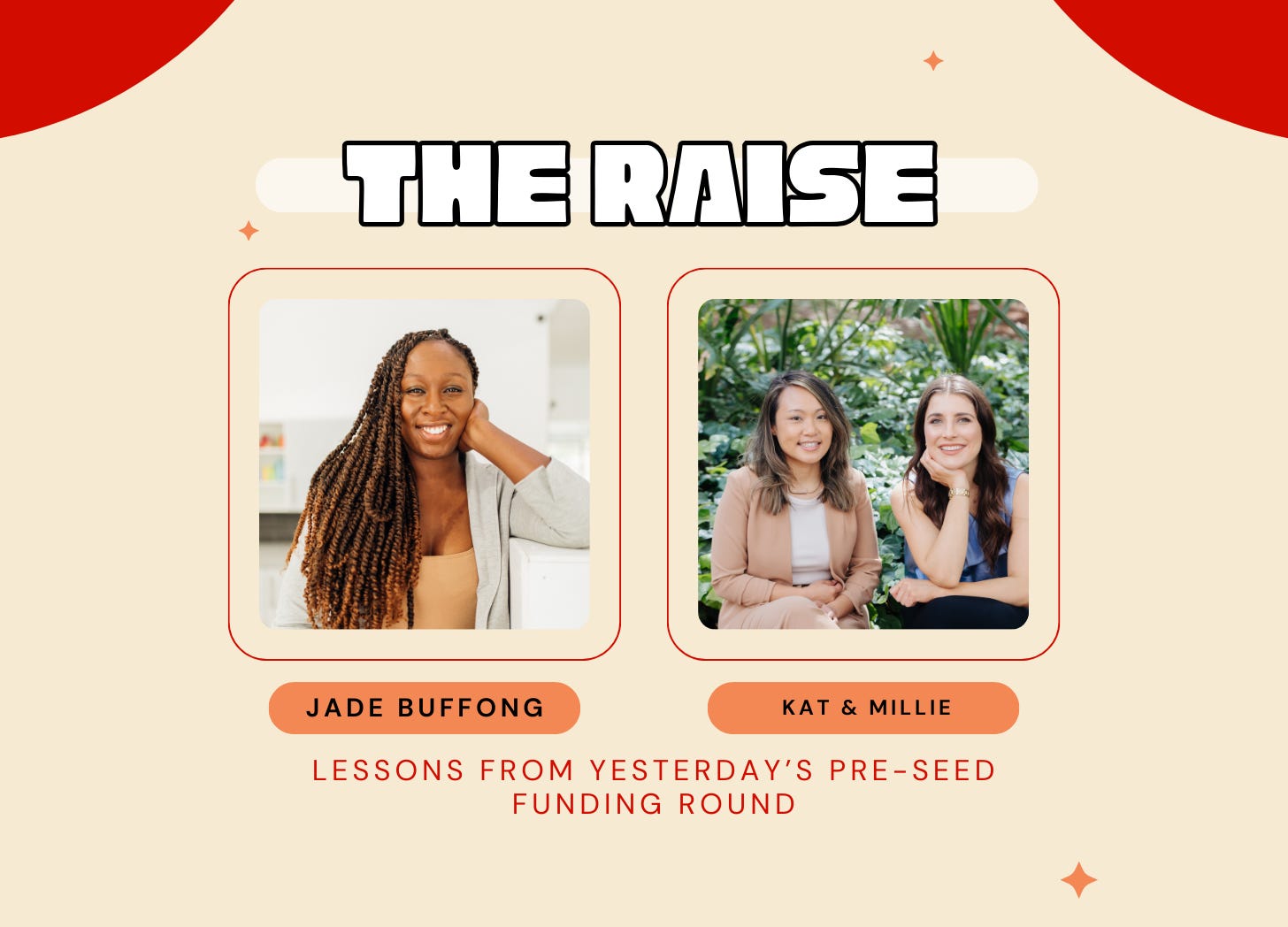
Ep 1: Lessons from Yesterday's pre-seed round

Millie Marconi & Kat Suy’s Raise JourneyBoth Millie & Kat have been in the start-up space for the last 5+ years, they both applied to a Antler’s VC start-up accelerator program with very little expectation of anything to come from it. It was pre-seed, they were both solo founders and happened to be enrolled in the same cohort. The two formally met, hit it off, started working together and quickly formed their ideal problem/solution and got to work building out the business plan of a VC backed business. * The problem: Hiring is still inefficient and costly, with recruiters spending countless hours manually reviewing CVs and struggling to make fair and timely decisions.* The solution: Yesterday streamlines hiring by automating candidate screening using AI and insights from hiring psychology. Over 8 weeks, they met with many VCs, angels and advisors, practised pitching weekly with an audience and then went on to pitch to an investment committee (IC) with a SAFE. The IC consisted of many VCs from a global day one investor who were running the accelerator and additionally external VC firms and many angel investors. The VC running the accelerator had the first rights to invest — Millie & Kat were thrilled they decided to proceed.  Both Founders felt it was a pretty gruelling process and coming out the other side see a lot of room for improvement in the space and process. In this episode, we cover:* [00:00] About Yesterday* [01:15] Why did you start Yesterday and what’s your career history?* [06:05] How have your past jobs and businesses prepared you for launching Yesterday?* [11:07] How did Antler’s program influence the way you fundraised?* [13:20] How have you fed back to each other as Co-Founders?* [17:28] What are some of the early decisions you made about the type of investors you would approach and how much you would raise?* [22:00] What did you learn from seeing your counterparts raise in Europe?* [24:48] What was the Australian market like when you were raising 6 months ago?* [31:00] What challenges did you constantly find yourself up against?* [35:12] What did it mean to go for VC money instead of other investment options?* [36:00] What was the most memorable moment of the fundraise?* [40:27] What are the top 2-3 things that Founders need to think about and prepare for before fundraising?* [43:40] What’s the one tip you have for Founders who are in the middle of fundraising?* [46:27] If you could go back and do it again, what would you do differently?Where to find Millie Marconi & Kat Suy:• Millie: LinkedIn | Yesterday• Kat: LinkedIn | YesterdayWhere to find Jade Buffong:• LinkedIn | NewsletterReferenced:* Antler’s Founder program Get full access to Inside Small Giants at www.insidesmallgiants.com/subscribe

April 15, 20241 min

Introducing The Raise

Welcome to the very first episode of The Raise!Every fortnight, I’ll interview pre-seed and seed stage Founders who have closed a funding round in the past 12 months to uncover actionable advice to help you as you fundraise.Music from #Uppbeat (free for Creators!): https://uppbeat.io/t/all-good-folks/summertime-jam.License code: E5NWOET0IHW2B1YV Get full access to Inside Small Giants at www.insidesmallgiants.com/subscribe

Is this your show?

Claim this listing to keep it up to date, reach guests who want to pitch you, and manage bookings with Guestify.

Claim this listing

More Business podcasts