Find partners
More Profitable Podcast | Business Podcast Strategy for Coaches and Consultants

More Profitable Podcast | Business Podcast Strategy for Coaches and Consultants

Hosted by Stacey Harris | Podcasting for Coaches & Marketing Expert

BusinessExplicit

Episodes

725

Latest episode

Jun 2026

Language

EN

About the show

The More Profitable Podcast is for service-based business owners who want their podcast to drive real sales—not just downloads. Hosted by Stacey Harris, founder of Uncommonly More, this show gives you the strategies, systems, and structure you need to turn your podcast into a sales tool. We’re not here for hacks or vanity metrics, we’re here to help you build a show that consistently attracts, qualifies, and converts right-fit leads. Each week, Stacey shares what’s working right now for her clients, real business owners using podcasts to sell high-ticket offers, shorten the sales cycle, and build trust at scale. Whether you’re managing your own show or working with a production team, you’ll learn how to create episodes that support your marketing, move your listeners closer to working with you, and keep your content sustainable. If you're tired of your podcast feeling like a time-suck that’s disconnected from your revenue, this is your show.

Listen to episodes

60 recent
June 10, 2026Episode 69923 min

How to Know When You Need Podcast Support Instead of Another Course

Established service providers are very good at convincing themselves they need to learn more before they can move. Another framework, another course, another round of “let me understand this better first.” And sometimes, yes, that is exactly the right move.But there is a point where more information does not create more progress. It just creates more homework. If your podcast has been sitting in the “I know this could be doing more” category for months, the missing piece may not be a better understanding of podcast strategy. It may be the capacity to actually get the damn thing built, produced, and working.In this episode of The More Profitable Podcast, I’m walking through when a podcast course or group program makes sense, when expert support is the better fit, and why I’m pausing Profitable Podcaster Summer Camp this year to focus on Podcast Launch Accelerator and done-for-you podcast production.1:28 - Why I’m pausing Profitable Podcaster Summer Camp this year2:43 - When more information is not the missing piece to launch your podcast5:19 - The difference between an information problem and a capacity problem6:36 - Why courses can still be the right investment in the right season9:44 - When learning the system yourself helps you hire better later10:33 - Using courses to build foundational clarity in an earlier business stage13:45 - Why capacity is the bigger issue for many podcasters right now15:59 - When podcast ideas start feeling like homework instead of strategy17:27 - Why I’m focusing on Podcast Launch Accelerator and done-for-you production supportMentioned In How to Know When You Need Podcast Support Instead of Another CoursePodcast Launch AcceleratorPodcast Production with Uncommonly MoreThe Podcast NewsroomRate and review The More Profitable PodcastSend Stacey a TextSupport the show

May 13, 2026Episode 69822 min

Your Podcast Episode Deserves More Than One Week of Promotion

You recorded the episode, you sent an email, you maybe promoted it on Instagram a couple of times. Done. On to the next one. But that episode you just moved past? It's still a perfectly good sales asset sitting in your Google Drive doing nothing.For most podcasters, episodes aren't tied to a date or a news cycle. They're evergreen. And yet we treat them like they expire after release week. I took four months off the podcast and still converted leads from episodes that were six to eight months old, because those episodes were built to keep working long after they went live.In this episode of The More Profitable Podcast, I'm walking through the production assets that give your episodes a longer shelf life, how to repurpose podcast episodes across social media, email sequences, and guest appearances, and why the fear of someone catching you sharing something twice is costing you reach you've already earned.2:41 - The assets we build at production and why you might not be creating all of them yet3:30 - How SEO at production drives leads months after an episode releases5:24 - Why branded language in your podcast title hurts discoverability6:39 - Marketing your episodes through social media, email, stages, and other people's podcasts8:35 - How we strategically tie episodes to guest appearances and pitches9:42 - Putting podcast episodes in your welcome sequence to train future clients10:55 - The production assets that power long-term social sharing12:11 - Why you need to share more than just this week's episode16:58 - Repetition builds your brand and your audience isn't tracking what you postMentioned In Your Podcast Episode Deserves More Than One Week of PromotionHow Valerie McDonnell Launched Her Podcast With the Launch AcceleratorPodcast Housekeeping SeriesPodcast Production with Uncommonly MoreThe Podcast NewsroomRate and review The More Profitable PodcastReady to have assets worth promoting more than once?Every episode you release should come with assets built to keep working long after release week. With podcast production, we build the SEO, the graphics, the audiograms, and the strategy that give every episode a real shelf life. Book a call to talk about production.Send Stacey a TextSupport the show

May 6, 2026Episode 69735 min

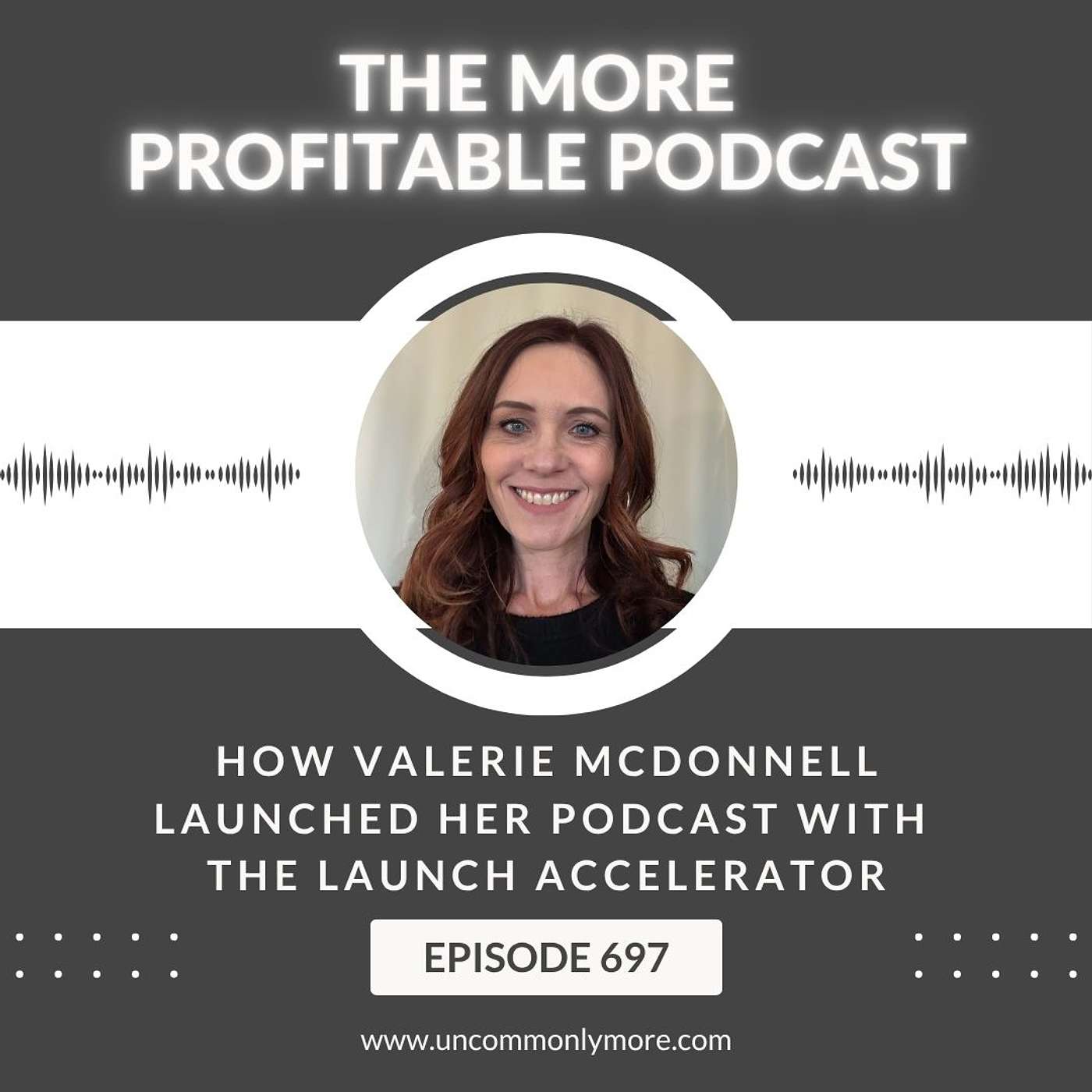
How Valerie McDonnell Launched Her Podcast With the Launch Accelerator

If you're running your business, working with clients all week, and trying to keep a life running at the same time, the idea of adding "learn how to produce a podcast" to that list is a non-starter. There isn't margin for it. That's the spot Valerie McDonnell was in when she decided to launch the RISE to Intimacy Podcast.Valerie came to the Launch Accelerator because she wanted a show, not a second job learning audio production, social platforms, and distribution. Together we built her strategy and produced her first season, and she's stayed on as an ongoing production client because the process worked.In this episode of The More Profitable Podcast, Valerie and I talk about what made her decide to hire production support from day one, what surprised her about the process of starting a podcast, and what working with our team has been like from her side of it.2:49 - Valerie introduces her practice and her trauma-informed approach to sex and couples therapy6:25 - What made Valerie want to launch a podcast in the first place9:00 - How a podcast works as a retention tool, not just a sales tool, for high-touch service providers12:19 - Why Valerie chose to hire production support instead of DIYing her launch14:37 - Why the shows that go live out of the Launch Accelerator are the ones that move into full production16:31 - What surprised Valerie about working with our team on her first season22:21 - Picking music for her show and why the selection process is more vibe-based than expected25:04 - Hating the sound of her own voice on the first episode and the small edits that fixed it29:35 - What Valerie would tell another business owner considering working with usMentioned In How Valerie McDonnell Launched Her Podcast With the Launch AcceleratorRise to Intimacy PodcastRise to Intimacy | Facebook | InstagramPodcast Launch Accelerator Ready to launch your podcast with production support from day one?The Podcast Launch Accelerator is a 90-day container where we build your show strategy together and produce your first season so you can launch a real asset in your business, not just generate another stack of to-dos.Book a call to talk about your launch.Send Stacey a TextSupport the show

April 29, 2026Episode 69630 min

Why Coaches Get Compliments But Not Conversions When Launching a Program

You finish your launch and the messages start coming in. "This was so helpful." "I learned so much." "You really know your stuff." And then you check the sales numbers and almost no one bought. The content landed. The sales didn't.This happens because most coaches and consultants treat launch episodes like teaching opportunities. You stack the content with frameworks and step-by-step training to prove how much you know, thinking that's what builds trust. What it actually does is overwhelm your listener, position you as the expert they could never be, and give them enough information to convince themselves they should try it on their own first.In this episode of The More Profitable Podcast, I'm walking through what your launch content actually needs to do to convert listeners into buyers, the three things every launch episode should include, and why cutting your teaching content in half is the move that finally gets your podcast doing the sales work you've been hoping it would do.0:00 - Why your launch content might be teaching too much1:08 - The proving trap coaches and consultants fall into during a launch1:55 - People don't hire you because you're smart; they hire you because you understand the outcome they want2:56 - What your launch content actually needs to make listeners believe in4:11 - Why teaching too much makes listeners say "I'll try that myself" instead of buying9:17 - The three things your launch content needs to do11:19 - Use your client's language to name their problem, not your expert language13:12 - Give them a small win or a perspective shift, not a 45-minute training15:19 - Highlight the gap between where they are now and the result they want20:53 - Cut your teaching content in half and only teach what shifts their thinking25:17 - Why your launch episodes need an actual ask, not a performative call to action27:10 - Make your launch content more about them and less about proving youMentioned in Why Coaches Get Compliments But Not Conversions When Launching a ProgramHow Many Downloads Per Episode Should Your Podcast Have?Stop Asking AI for Content Ideas and Look Here InsteadProfitable Podcast Summer CampPodcast ProductionThe Podcast NewsroomRate and review The More Profitable PodcastReady to build a launch that actually converts?Your listeners already know the result they want. What they don't see yet is that your program is the bridge to get them there, and that's the job your launch content has to do. If you're ready to stop getting compliments and start getting clients, our team can help you build a podcast that supports the sales work you're doing in your business. Book a call to talk about Podcast Production.Send Stacey a TextSupport the show

April 22, 2026Episode 69527 min

Where to Put Calls to Action in Your Podcast so They Actually Convert

Let's talk about the timing of your podcast calls to action. When you make your asks and what kind of ask you're making at each point changes how well they actually convert. Most podcasters are making one call to action per episode, usually at the end, usually rushed, and wondering why their show isn't converting.Here's what that one-CTA approach misses. A pre-roll ad does a different job than a mid-episode mention, which does a different job than a live read outro tied to the episode's content. When you only use one, you're skipping the placements that actually move listeners toward a decision. And the live read outro, the one tied directly to what you just taught, is the call to action most podcasters skip entirely. It's probably the one costing you the most clients.In this episode of The More Profitable Podcast, I'm walking through the four places to put calls to action in your podcast, what kind of ask belongs in each spot, and how to layer them so they work together instead of fighting for attention. I'm also getting into why you should be using at least two of these in every episode, three in most, and why the resistance you feel about "selling too much" is usually the exact thing keeping your show from converting.0:08 - Why the timing of your calls to action changes how well they convert2:08 - Why one CTA per episode means you're spinning your wheels3:14 - Why you'll always feel like you've talked about your offer a million times4:43 - How actively selling filters out the audience that was never going to buy anyway8:54 - The pre-roll dynamic ad and when to use it for timely promos11:27 - Why I keep pre-roll ads to 30 to 45 seconds13:09 - The mid-intro CTA and why this is where free offers belong16:06 - The live read outro, the CTA most podcasters skip16:28 - How to plant seeds earlier in the episode so the live read outro actually lands21:39 - The pre-recorded outro as the catch-all for ratings, free offers, and awareness23:07 - Why more than three asks in the pre-recorded outro confuses the listenerMentioned In Where to Put Calls to Action in Your Podcast so They Actually ConvertThe Podcast Newsroom5 Mistakes Business Owners Make When Launching a PodcastProfitable Podcast Summer CampPodcast Launch AcceleratorPodcast ProductionRate and review The More Profitable PodcastReady to build a podcast that actually converts?If your show isn't pulling its weight as a sales tool, the fix usually starts with strategy, not more content. We have one spot open for the Podcast Launch Accelerator and one spot for Podcast Production. Launch Accelerator is for new podcasters building a first season with support. Production is for established podcasters ready to commit to the long game. Book a call to talk through which one fits.Send Stacey a TextSupport the show

April 15, 2026Episode 69430 min

What to Ask Before You Hire a Podcast Pitching Service

Podcast pitching services look like a shortcut. Hire someone, get booked on shows, show up and record. But almost every person who asks me about these services is coming off a bad experience, and when I ask what the agency's process was, they can't answer the question. They never asked.Skipping that question is expensive. Not just in dollars, but in the relationships it can quietly damage when a cold template goes out to someone you know, or when you end up on 15 shows that have nothing to do with your actual buyers.In this episode of The More Profitable Podcast, I'm breaking down the four things to ask before you hire a podcast pitching service, including how they price their work, how they qualify shows, what their process actually looks like, and what you're still going to be responsible for no matter who you hire.0:32 - Why podcast pitching services often don't deliver on the promise1:07 - Why production clients are the ones asking me about pitching services6:09 - Process is the first thing to ask about and what good process looks like8:21 - What happens when a cold template goes to someone you already know9:29 - What a good pitching partner actually involves you in11:25 - Per pitch pricing and why it incentivizes volume over quality12:19 - Per booked appearance and why more yeses isn't always better13:21 - Flat monthly retainer and what it needs to include to be worth it15:05 - Matching pricing structure to your actual visibility goals18:25 - How they qualify shows and what the answers reveal20:26 - Red flags in show qualification21:55 - What you're still responsible for no matter who you hire25:07 - The difference between strategic visibility and vanity27:36 - Why I DIY my own pitching in this season of businessMentioned In What to Ask Before You Hire a Podcast Pitching ServicePodcast Launch AcceleratorBuzzsprout Global StatsThe Podcast NewsroomRate and Review The More Profitable PodcastReady to get your podcast launched and off your plate?We have one spot open in the Podcast Launch Accelerator for Q2. This is a 90-day container where we build your show strategy and optionally produce your first season so all you have to do is record. Learn more and grab your spot.Send Stacey a TextSupport the show

February 18, 2026Episode 69327 min

Stop Asking AI for Content Ideas and Look Here Instead

Stop asking ChatGPT for content ideas. Stop Googling "podcast topics for coaches." Stop posting on Instagram asking what your audience wants to hear. Your audience doesn't know what they need you to tell them. That's your job, not theirs.The best content ideas aren't sitting in AI tools or search results. They're already in your business. In your sales call recordings, your DMs, your client conversations. The places where people are actually asking questions, raising objections, and showing you exactly what they need to hear.In this episode of The More Profitable Podcast, I'm breaking down the three places I look for content ideas that actually convert, how using your clients' language makes your content both searchable and connectable, and why this approach trains people to be your best fit clients before they ever work with you.1:00 - Stop asking ChatGPT to give you content ideas2:36 - Worried about too many podcasts but copying everyone else's content5:01 - The client who found me through search and knew exactly what I do9:02 - Where I actually get my content ideas (three places)9:17 - Sales call recordings give you objections and conversion content12:14 - DMs and emails are where nurture content lives13:59 - Content that trains people to be great clients before they hire you16:24 - Your current clients are your best content source19:48 - Using their language makes content searchable and connectable23:31 - How we build content plans in Podcast Strategy IntensivesMentioned In Stop Asking AI for Content Ideas and Look Here InsteadFathom.aiMonday.comThe Podcast Newsroom Podcast Strategy IntensiveRate and Review The More Profitable PodcastReady to stop guessing at content and start using what's already working?The best content ideas aren't in ChatGPT or Google. They're in your sales calls, DMs, and client conversations. In a Podcast Strategy Intensive, we'll build your next 12 weeks of content by pulling from what's actually happening in your business right now. Book your Podcast Strategy Intensive.Send Stacey a TextSupport the show

February 11, 2026Episode 69232 min

Should You Add Video to Your Podcast This Year

There's a toxic belief spreading around the internet that if your podcast isn't on YouTube as a video show, you can't find an audience. That audio-only podcasting is dying. But that's an opinion being presented as fact, and it's causing podcasters to make expensive decisions without understanding if video actually makes sense for their business.The reality is 53% of podcast listeners still prefer pure audio. Audio completion rates are significantly higher than video retention. And if your show isn't already converting listeners, adding video won't fix that. But there are shows where video makes sense - where the visual element actually supports the education you're doing and helps convert listeners into clients. The key is making an informed decision instead of following what everyone else is doing.In this episode of The More Profitable Podcast, I'm walking through the actual pros and cons of video podcasting. I'm talking about when it makes sense to invest in video production, when audio-only is the smarter play, and the both-and strategy that lets you test video content for social without committing to a full YouTube show.0:59 - There's a toxic belief spreading that video podcasts are required for success1:42 - You're a business owner who creates content, not a content creator2:40 - Breaking down the pros, cons, and both-and strategy for video podcasting6:39 - Why comparing your podcast to Netflix shows or massive media podcasts doesn't work8:45 - Service providers need conversion engines, not media empires11:22 - Adding data to the feelings around video requirements11:45 - 53% of podcast listeners still prefer pure audio content14:06 - Your podcast goal is conversion, which means retention matters14:50 - Audio completion rates significantly outperform video retention rates16:13 - The real cost of video production and why batching is harder17:40 - Video production costs are 77% higher than audio on average21:04 - When video actually makes sense for your podcast23:40 - What does your client need to see to make a decision25:39 - The both-and strategy for testing video without full production commitment29:53 - Adding video will not fix a broken podcast strategyMentioned In Should You Add Video to Your Podcast This YearPodcast Launch AcceleratorThe Podcast NewsroomRate and review The More Profitable PodcastReady to launch your podcast in 2026?We have one open spot in our Podcast Launch Accelerator right now. This is a one-on-one intensive where we plan your show strategy and can optionally produce your first 12 episodes. Pricing increases at the end of Q1, so book now to lock in current rates. Reserve your spot today.Send Stacey a TextSupport the show

February 4, 2026Episode 69131 min

What Happened When I Stopped Podcasting for Four Months

Life gets hard sometimes. Things pile up. And when you're looking at what to put down, your podcast feels like an obvious choice, especially if you're the one doing all the work. But most podcasters assume that stepping away means their show stops working for them entirely.I didn't release a podcast episode from September through January. Four full months of silence. And during that time, I signed multiple new production clients. One found me through Google search, binged my existing episodes, and reached out ready to work together. My podcast kept doing its job even when I wasn't showing up to record.In this episode of The More Profitable Podcast, I'm breaking down why I was able to step away without tanking my business, what actually happened during those four months, how building your show as a long term asset means it can work whether you're releasing new episodes or not, and what re-entry looks like when you're ready to come back.1:49 - The reality of taking an unplanned break (and why most people didn't notice)4:12 - How I made the decision to step away and what I knew would keep working7:02 - Why my episodes are built as sales assets, not just content9:03 - What actually happened during the four months I was gone (spoiler: I signed new clients)11:50 - The long-term value of consistency and why stick-to-itiveness matters13:05 - How social media algorithms shifted and why podcasts matter more than ever now16:52 - Why long form content is what actually nurtures people into buyers19:18 - How to prepare for unexpected breaks by building strategically right now21:28 - Coming back: do you announce it or just start releasing again?24:07 - How to rebuild your podcasting muscles after time away26:05 - Being honest about capacity and what you actually need right now29:09 - Why this isn't the first time this has happened (and won't be the last)Mentioned in What Happened When I Stopped Podcasting for Four MonthsPodcast Strategy IntensivePodcast Production with Uncommonly MoreThe Podcast NewsroomRate and Review The More Profitable PodcastReady to build a podcast that works whether you're recording or not?The podcasts that keep converting during breaks aren't accidents. They're built with strategy from the start. If you want a show that functions as a sales asset even when life gets hard, let's talk about what production support looks like. Work with our team.Send Stacey a TextSupport the show

September 17, 2025Episode 69024 min

Why Quarterly Strategy Is Non-Negotiable if Your Podcast Is a Sales Tool

A commitment to “record and release in the same week” is the thing keeping your podcast stuck. If your show isn’t built around quarterly planning, it’s not going to work as the sales asset you need it to be.Every production client I’ve worked with - whether they’ve been with us six months or six years - comes to the table for quarterly strategy. Because the truth is, your content has to serve the sales goals of your business right now, not just fill airtime. When you skip this step, you waste time, confuse listeners, and miss the conversions you actually want.In this episode of The More Profitable Podcast, I’m breaking down what quarterly planning really looks like, the three questions you need to run your content through every 90 days, and why this is the difference between a podcast that sucks up time and one that books clients.0:32 - Why “record and release” keeps your podcast from working as a sales tool2:37 - How quarterly planning actually saves you time and stress4:08 - Why bad-fit clients are usually your fault - and how your podcast helps filter them7:14 - How intentional education raises the quality of your sales conversations8:31 - Why strategy intensives exist (and how they support DIY podcasters too)10:33 - Using quarterly planning to check if your podcast goals still align with your business13:15 - Why running week-to-week content leaves you behind when seasons shift16:04 - The three core questions to revisit every 90 days: What are you selling? Who are you selling it to? How are you selling it?18:50 - How sales path (course vs. high-touch offer) changes the content your podcast needs 20:31 - Why repeatable, re-shareable content is an asset that buys you time in busy seasonsMentioned in Why Quarterly Strategy Is Non-Negotiable if Your Podcast Is a Sales ToolPodcast Strategy IntensiveThe Podcast NewsroomRate and review The More Profitable PodcastReady to get serious about your podcast strategy?The last spots for this year’s Podcast Strategy Intensives are open now. If you want to start Q1 with a content plan built to drive sales, you need to book in October. Reserve your spot today.Send Stacey a TextSupport the show

Is this your show?

Claim this listing to keep it up to date, reach guests who want to pitch you, and manage bookings with Guestify.

Claim this listing

More Business podcasts