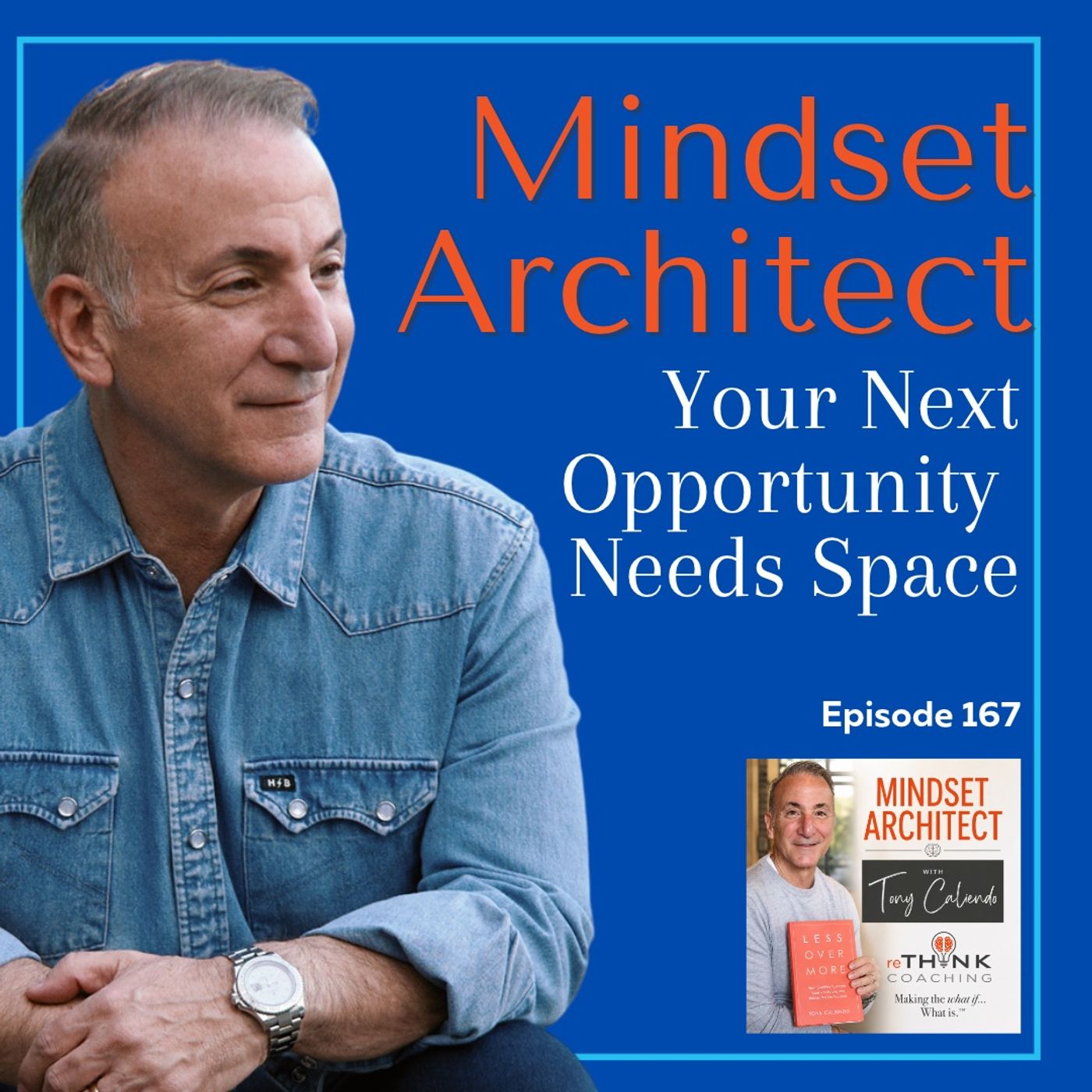
Your Next Opportunity Needs Space
You Cleared the Space... Now What? | How to Protect Your Calendar from Backfill When you finally eliminate low-value meetings, delegate outgrown tasks, or cut an underperforming service, what is your immediate instinct? In Episode 167 of the Mindset Architect Podcast, host Tony Caliendo tackles the subtle trap of "the refill urge"—the unconscious reflex that causes leaders to recreate the very clutter they just cleared. Tony explores why open calendar time feels deeply uncomfortable for high achievers who equate constant activity with importance and productivity. He explains that an available hour does not equal available mental capacity and shares why creating space is only the first step in strategic subtraction. Learn how to pause for 30 to 60 days before introducing new projects, use a clear decision filter to evaluate incoming requests, and measure what reclaimed whitespace makes possible in your business and personal life. In this episode, you’ll discover: Creating Space Is Only the Beginning : Why unassigned calendar time acts like a vacuum that attracts other people's priorities if left unprotected. Time vs. Capacity : Recognizing that an open slot on your schedule does not mean you have the mental, emotional, or financial bandwidth to take on more. The 30-to-60-Day Pause : Why you should resist adding new strategies immediately and instead realign reclaimed time toward existing high-value work. The Single-Priority Rule : How focusing on one meaningful initiative for 30 to 90 days prevents operational overwhelm and produces measurable lift. The Decision Filter : Three critical diagnostic questions to ask before any new opportunity earns access to your calendar. Breaking the Busyness Mindset : Using the Thought Flow Model to dismantle the limiting belief that an open calendar equates to laziness or lost ground. Connect with Tony: 🌐 Order the Book: lessovermore.com 🚀 Join the Group Coaching Program: rethinkcoaching.com/group-program CHAPTERS 0:00 - Intro: Your Next Opportunity Needs Space 1:05 - Connecting Subtraction to Execution: You Made Room, Now What? 1:50 - Principle 1: Creating Space Is Only the Beginning 3:35 - How Unprotected Time Invites Accidental Commitments 4:15 - Principle 2: An Available Hour Does Not Equal Available Capacity 6:25 - Principle 3: Give One Meaningful Priority Enough Room to Move 8:10 - The Danger of Introducing Too Many New Strategies at Once 11:00 - Principle 4: Decide What Earns Access to Your Space 12:10 - The Three-Part Decision Filter for Attractive Opportunities 14:40 - Principle 5: Expect the Reflexive Urge to Refill Your Calendar 16:15 - Dismantling the Myth That Busyness Equals Success 17:45 - Using the Thought Flow Model on an Open Schedule 19:00 - Principle 6: Measuring What the Space Actually Makes Possible 21:05 - Less as the Strategic Process, More as the Ultimate Outcome 22:15 - Closing Thoughts and Less Over More Book Details