The Learn-It-All™ podcast is built on the conviction that the leaders worth following aren't the ones with all the answers. They're the ones who never stop learning. If you've chosen growth over coasting, and curiosity over the comfort of being the smartest person in the room, you're a learn-it-all. And this podcast is for you. Host Damon Lembi is a 3x bestselling author, CEO of Learnit, and someone who has spent 30 years watching what separates leaders who keep growing from those who quietly become the ceiling that limits everyone around them. Each episode features real conversations with top executives, founders, NYT bestselling authors, and world-class athletes — people who've faced adversity, made costly mistakes, and done the hard, unglamorous work of growing. They share what they learned — and unlearned — to lead at the next level. Great leaders aren't born or made. They're always in the making. Let's not do that work alone. Stay curious. Keep learning. Subscribe to the Learn-It-All Podcast on your favorite platform to never miss an episode.
Listen to episodes
60 recent
September 8, 202651 min
329. Why Your Team Can't Focus | Shawn Vanderhoven, PAUSE Author, Partner at Liz Wiseman's Firm
In Business, "Got five minutes?" is almost never five minutes. And the impact on your team doesn't end when the task does Shawn Vanderhoven leads the executive development practice at The Wiseman Group and wrote the USA Today bestseller Pause: How to Lead Brilliant Work in a Busy World . His research found that there are two types of leaders: those who generate traction, and those who amplify distraction. In this episode, you will learn: The leadership practices that help teams focus in distracting environments The five questions to ask before you hand someone work The digital wake you leave every time you hit send The eight-question quiz that shows how distracting you are to your team An exercise to find the hidden issues slowing your team down The AI habit that produces more work instead of better work Topics discussed: (00:00) Introduction (01:05) The #1 Thing Holding People Back (02:18) Traction Leaders vs. Distraction Leaders (03:31) Tune In Before You Jump In (09:18) The Origin Story of Pause (13:23) Your Digital Wake (15:23) The Distraction Test and Your House Rules (18:01) Turn Out Your Pockets (21:11) Pausing Up With a Boss or Client (24:28) Bias for Action vs. Bias for Impact (27:49) Using AI for Better Work (32:58) What a Real Pause Looks Like (36:04) Two Bosses, Two Outcomes (41:45) Clearing Emotional Distraction (43:39) Writing the Book With His Wife (48:34) Which Practices to Start With Connect with Shawn Vanderhoven: https://www.linkedin.com/in/shawnvanderhoven/ https://www.pausebook.co/ About the Guest: Shawn Vanderhoven is the author of Pause: How to Lead Brilliant Work in a Busy World . He’s a Partner at The Wiseman Group, leading their development practice for senior executives and emerging leaders. He works with top brands like Apple, Johnson & Johnson, and Tesla, building strategies to leverage their greatest assets: talent. He lives with his wife, Anne, in Menlo Park, California. Let us know your key takeaways from the episode! And remember, great leaders aren't born. They're always in the making. New episodes of The Learn-It-All Podcast with Damon Lembi every week. Subscribe on YouTube: https://www.youtube.com/@TheLearnItAllPodcast?sub_confirmation=1 Get your FREE copy of The Learn-It-All Leader: https://dl.bookfunnel.com/3ingcx2pp5 Upskill yourself and your team with Learnit: https://www.learnit.com Follow Damon Lembi: LinkedIn: https://www.linkedin.com/in/damonlembi Instagram: https://www.instagram.com/damonlembi This episode was produced by Podcast Boutique https://www.podcastboutique.com
September 3, 202655 min
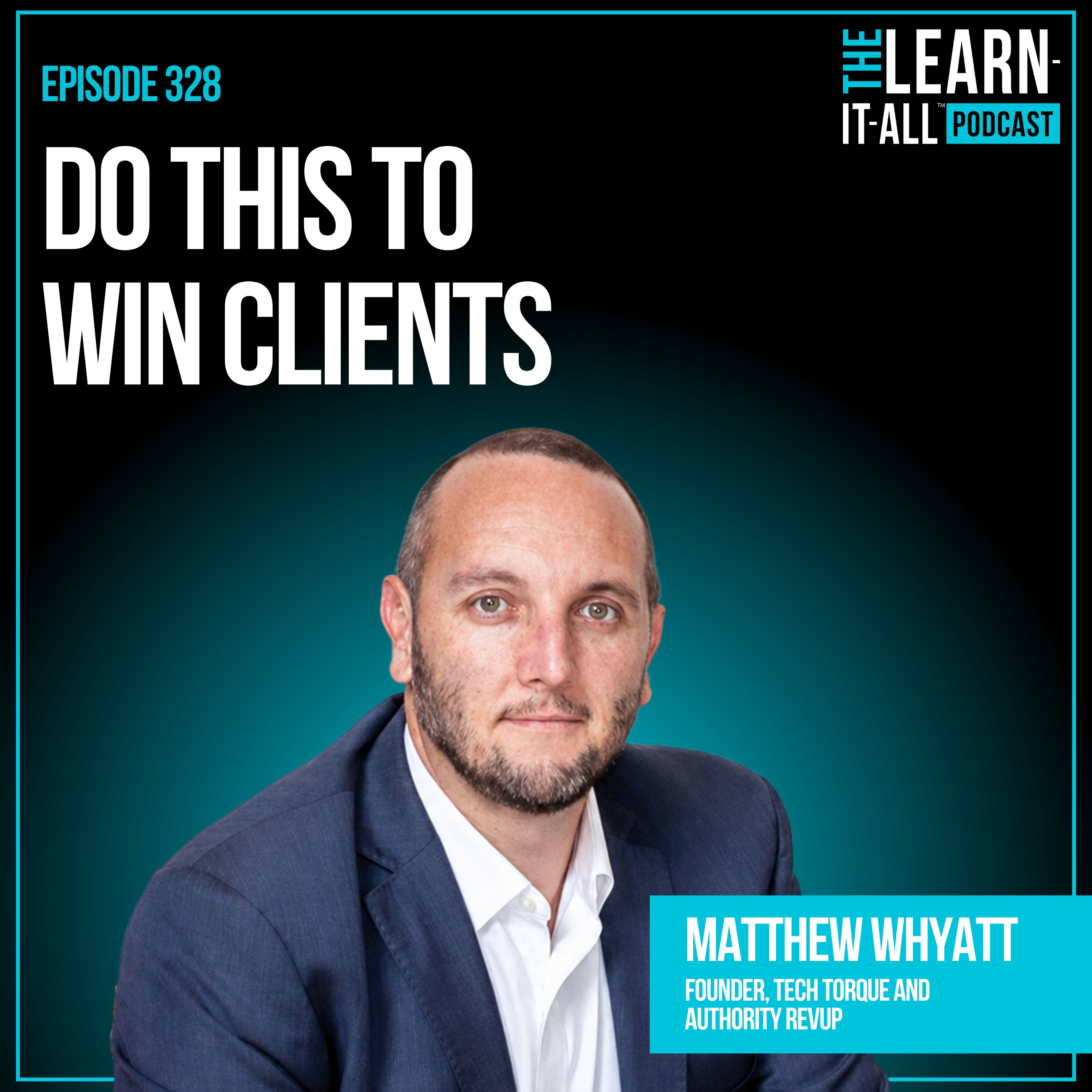
328: Why Generalists Are Getting Replaced First in the AI Era | Matthew Whyatt
What if AI is not replacing people because it is smarter, but because too many businesses have become broad, vague, and easy to copy? Matthew Whyatt, founder of Tech Torque and Authority RevUp, believes founders must “get known before they can get chosen.” In an emergency, nobody calls a generalist. They look for the specialist who understands the exact problem and can solve it faster than anyone else. In this episode of The Learn-It-All™ Podcast, Damon sits down with Matthew to unpack how founders can specialize without limiting their growth, identify their most profitable ideal customers, and build a repeatable B2B sales and marketing system. Matthew explains why a 90% close rate can signal a serious lead-generation problem, how to classify customers using his “absolute, beneficial, and convenient” framework, and why AI becomes jet fuel only after the underlying sales machinery works. They also explore how human taste, judgment, storytelling, and face-to-face relationships create trust in an AI-saturated market. 📘 Get a FREE copy of The Learn-It-All Leader Book: https://dl.bookfunnel.com/3ingcx2pp5 In this episode, you’ll learn... Why generalists become easier to overlook as AI makes basic knowledge and execution widely available Matthew’s “target, tolerate, and toss” framework for deciding which customers to pursue, accept, or avoid How job listings can reveal your ideal buyer’s education, responsibilities, performance metrics, and internal priorities Why your content strategy needs three distinct stages: growth, trust, and conversion Why an 80% or 90% close rate usually means you are not generating enough opportunities or taking enough calculated risks The difference between scaling from $2 million to $10 million and building the management structure required to reach $25 million Why AI is “jet fuel” for a working sales engine but helps broken companies “do more dumb stuff faster” How zero-based thinking helps leaders escape sunk-cost decisions: “Knowing what I know today, would I start this again?” Timestamps 00:00 - Introduction 01:22 - The four foundations founders need before using AI 02:18 - Specialization makes you harder to replace 03:52 - Growth, trust, and conversion are not the same content 05:19 - Which customers should you target, tolerate, or toss? 09:24 - When your largest account becomes your greatest threat 11:28 - Building a software company at 22 without a real plan 14:13 - The franchise mistake that exposed a broken system 18:49 - Escaping an endless cycle of “got a minute?” meetings 23:01 - Why identifying as a problem solver can hold you back 24:53 - The $230,000 betrayal Matthew never saw coming 28:41 - Why 50/50 partnerships create dangerous deadlocks 31:01 - The red flags that reveal someone is taking you for a ride 32:29 - The zero-based question that kills sunk-cost thinking 36:49 - Why growing from $2M to $10M is a different game 39:18 - The business math behind predictable customer acquisition 40:19 - Why a 90% close rate should make founders nervous 40:59 - AI is jet fuel, but what happens when the engine is broken? 43:21 - The one human advantage you cannot outsource 46:50 - The speed of growth is the speed of transferred trust 49:09 - The sales books Matthew keeps coming back to 51:04 - Matthew’s most practical daily AI workflow 52:31 - How a podcast created an unexpected career opportunity 54:43 - Where to connect with Matthew About Matthew Whyatt Matthew Whyatt is the founder of Tech Torque and Authority RevUp, a two-time startup founder with more than 25 years of experience in B2B software, SaaS, sales, and marketing. After starting his first software business at 22 and scaling a company through the messy transition from founder-led hustle to professional management, Matthew now helps technology companies build clearer positioning, stronger demand-generation systems, and revenue operations that do not depend entirely on the founder. He is also the host of The CEO and the Salesman Podcas t. Resources and Mentions Matthew Whyatt’s LinkedIn: https://www.linkedin.com/in/matthewwhyatt/ Tech Torque’s Website: https://techtorque.co/ Authority RevUp’s Website: https://authorityrevup.com/ The CEO and the Salesman Podcast: https://www.youtube.com/@TheCeoAndTheSalesmanPodcast Podcast Contact Information: Website: www.learnit.com Email: podcast@learnit.com Subscribe to the Learn-It-All Podcast: Youtube I Apple I Spotify Follow Damon Lembi: Linkedin I Instagram I Facebook I X
September 1, 202651 min
327. Fortune 500 Executive Coach: Why You're Winning at Work But Losing at Home | James "J.R." Reid
You may be hitting goal after goal, but where is your ambition actually taking you? For James "J.R." Reid, it took two years to notice his success on paper wasn't translating at home. While working with Hall of Famers, All-Star athletes, and Fortune 500 executives, he found the same problem: most underperformance can be traced back to one thing. In this episode, you will learn: Why the real problem isn’t your ambition (and what really is) Why you need someone you can be 100% honest with How to handle betrayal without becoming cynical The runner-up mindset holding you back The four questions behind his Diamond of Identity The habit that helps you reset before you get home Topics discussed: (00:00 Introduction (00:58) Ambition Isn’t the Problem (06:07) The New Leader Trap (09:34) Hold Yourself Accountable (15:37) Find Your 100% Person (17:10) When Trust Gets Broken (21:06)The Cost of Going Cynical (24:36) Executive Athletic vs. Runner-Up Mindset (27:43) One Change to His Pregame (30:55) Identity in the Age of AI (33:04) The Diamond of Identity (35:47) Inside The Clutch Club (43:10) Transition From Work to Home (48:50) What "Made It" Looks Like Connect with James Reid: https://www.linkedin.com/in/jamesjrreid/ https://jamesreid.com/ https://www.youtube.com/@jamesjrreid https://www.facebook.com/jamesJRreid https://www.instagram.com/jamesjrreid https://x.com/jamesJRreid About the Guest: J.R.” is the Founder of the J. Reid Group and an International Performance, Mental Game, & Life Strategist, Podcast Host, and Author. His work is designed to help relentless pro athletes, public figures, and leaders master life, business, mental, and emotional strategies so they can make winning a lifestyle. Since 2005, he’s empowered clients to excel in their pressure-packed careers while confidently upgrading their health and relationships. Some of his clients include World Series Champions, All-Stars, Hall of Famers, Fortune 500 Executives, and Award-Winning Entrepreneurs whose professional contracts have exceeded the hundreds of millions. By earning an M.B.A, J.D., M.S. in Human Performance, and a 9.8 average client satisfaction rating, J.R. has put himself in an elite category of trusted advisors. After a life-altering car accident gave him a major wake-up call, J.R. devoted himself to mastering human performance and showing up bigger for his wife and three kids. As a result, J.R. has been featured by Focus on the Family and New York Times Best-Selling Author and Leadership Expert, Michael Hyatt, in Your Best Year Ever. He also co-authored the book W.O.W. Factor: How Defining Words Can Define Your Life and regularly speaks to athletes, entrepreneurs, and executives on overcoming failure, winning in your career and at home, and maximizing human performance. Let us know your key takeaways from the episode! And remember, great leaders aren't born. They're always in the making. New episodes of The Learn-It-All Podcast with Damon Lembi every week. Subscribe on YouTube: https://www.youtube.com/@TheLearnItAllPodcast?sub_confirmation=1 Get your FREE copy of The Learn-It-All Leader: https://dl.bookfunnel.com/3ingcx2pp5 Upskill yourself and your team with Learnit: https://www.learnit.com Follow Damon Lembi: LinkedIn: https://www.linkedin.com/in/damonlembi Instagram: https://www.instagram.com/damonlembi This episode was produced by Podcast Boutique https://www.podcastboutique.com
August 27, 202647 min
326. Why High Earners Feel More Stuck Than Ever (The Success Trap) | Alexa DePaolo
What if earning more money didn’t create freedom, but quietly made you a hostage to the life you built? Real estate expert, Keynote speaker, and business strategist Alexa DePaolo escaped poverty, became a national top producer, and created the financial security she once dreamed about. Yet even after the desperation was gone, she continued answering calls at 11 p.m., stepping away from her daughters’ activities, and sacrificing family time to protect a success she feared could disappear at any moment. In this episode of The Learn-It-All™ Podcast, Alexa joins Damon to explain why high earners feel trapped by success, how a scarcity mindset can survive long after financial hardship ends, and why peace sometimes feels like laziness to high performers. She shares the boundaries that helped her stop operating from desperation, the 30-day hiring rule that prevents resentment, and why she now gives paying business away when a client’s values do not align with hers. If you are financially successful but still feel overworked, guilty when resting, or unable to disconnect from your business, this conversation will help you redefine success around freedom, family, meaningful relationships, and work you actually enjoy. 📘 Get a FREE copy of The Learn-It-All Leader Book: https://dl.bookfunnel.com/3ingcx2pp5 In this episode, you’ll learn... Why Alexa felt happier when she was poor and how the fear of losing everything kept her trapped in a desperation mindset even after she became successful How scheduling family time like a client closing prevents empty calendar space from automatically becoming more work Why overgiving is not always generous and how giving to everyone else can quietly take time, energy, and presence away from your family How avoiding an uncomfortable employee conversation caused Alexa to build resentment and become the kind of leader she never wanted to be Why Alexa evaluates new hires at 30, 60, and 90 days and believes poor performance during the “honeymoon phase” rarely improves later How high performers can stop chasing every deal, choose relationships that align with their values, and accept that calm can sometimes be the goal Timestamps 00:00 – Introduction 01:02 – Why Alexa was happier when she was poor 03:11 – Did ignoring an 11 p.m. call ever cost her a deal? 03:51 – The boundary that protects both business and family 04:43 – Growing up without water, electricity, or security 06:19 – The moment her daughter made change non-negotiable 07:20 – “I’ve survived worse than this” 09:52 – Learning to belong in rooms filled with wealth 11:35 – Giving value without giving yourself away 13:39 – When generosity becomes another person’s mess 15:39 – The people who showed Alexa what safety feels like 17:30 – Building a team where questions feel safe 19:08 – How kindness turned into resentment 21:37 – The 30-day rule that prevents bad hires 24:05 – Alexa’s no-bullshit approach to high performance 25:25 – Leaving a predatory leader and facing a lawsuit 28:47 – What broken trust taught her about leadership 31:13 – Why great leaders expect good people to leave 34:03 – The simple systems Alexa teaches from the stage 36:40 – The hustle-to-hostage trap high performers recognize 37:15 – Why peace can feel suspiciously like laziness 40:03 – Raising capable kids without recreating hardship 45:27 – Schedule family time before it is too late 46:42 – Where to connect with Alexa About Alexa DePaolo Alexa DePaolo is a real estate expert, business strategist, and national keynote speaker known for her authentic, no-fluff approach to growth. After rising from poverty and navigating single motherhood, she built a thriving career helping others turn grit into momentum. With almost 20 years in the mortgage industry, Alexa empowers real estate professionals, entrepreneurs, and sales teams to master their mindset, build sustainable systems, and create businesses they actually love. She is the founder of The Ripple Effect, both a live event and YouTube show where she sits down with professionals to hear their stories, business lessons, and real-world strategies for growth. Resources and Mentions Alexa DePaolo’s LinkedIn: https://www.linkedin.com/in/alexadepaolo/ Alexa DePaolo’s Instagram: https://www.instagram.com/thealexadepaolo/ Alexa DePaolo’s Facebook: https://www.facebook.com/AlexaCOHomeLender/ Alexa DePaolo’s Website: https://www.alexadepaolo.com/ The Ripple Effect: https://www.alexadepaolo.com/the-ripple-effect Podcast Contact Information: Website: www.learnit.com Email: podcast@learnit.com Subscribe to the Learn-It-All Podcast: Youtube I Apple I Spotify Follow Damon Lembi: Linkedin I Instagram I Facebook I X
August 25, 202654 min
325. Harvard Business Review Writer: The Goal You Just Set Only Has a 34% Chance of Success | Kyle Austin Young
Most people think there are two ways to succeed: be talented, or get lucky — but there are two more no one talks about. Kyle Austin Young is a strategy consultant and author of Success Is a Numbers Game , which outlines his probability hacking framework for achieving your goals. He's spent a decade using it with leaders and their organizations: mapping out what has to go right, removing risks, and stacking the odds in their favor. In this episode, you will learn: How to calculate the real odds on any goal you’re chasing The averaging trap that leaves you blind to failure How to find the real threats to your goal Why "think positive" can lower your odds of success Two paths to success most people never consider What to salvage when a goal falls apart Topics discussed: (00:00) Introduction (00:47) #1 Predictor of Success (01:56) The Success Diagram (05:52) Get Good Advice (07:53) Hired as a Director at 21 (12:01) Success Diagram for Hiring (14:16) Four Paths to Success (18:00) Probability Hacking (20:10) Why Businesses Fail (23:15) Think Negative (27:22) Repurposing Failure (30:40) The $6,000 Mistake (38:28) Context Changes Your Odds (40:02) Prioritizing Your Goals (44:22) The Edison Story (49:35) Success Diagrams for Sales Connect with Kyle Austin Young: https://www.linkedin.com/in/kyleaustinyoung/ https://kyleaustinyoung.com/ https://www.penguinrandomhouse.com/books/760298/success-is-a-numbers-game-by-kyle-austin-young/ Resources Mentioned: The JOLT Effect: How High Performers Overcome Customer Indecision by Matthew Dixon and Ted McKenna About the Guest: Kyle is an award-winning strategy consultant for leaders and teams in a wide range of fields. At the core of his methodology is a powerful system for accomplishing big, meaningful goals that focuses on understanding and changing your odds of success. The nicest compliment Kyle has ever received happened unexpectedly when the phone rang during dinner. The biotech CEO on the other end was brief. “I just felt like I should tell you that you’re the first consultant we’ve ever worked with who did exactly what he said he was gonna do.” That was nearly a decade ago, and it has set the tone for everything since. Let us know your key takeaways from the episode! And remember, great leaders aren't born. They're always in the making. New episodes of The Learn-It-All Podcast with Damon Lembi every week. Subscribe on YouTube: https://www.youtube.com/@TheLearnItAllPodcast?sub_confirmation=1 Get your FREE copy of The Learn-It-All Leader: https://dl.bookfunnel.com/3ingcx2pp5 Upskill yourself and your team with Learnit: https://www.learnit.com Follow Damon Lembi: LinkedIn: https://www.linkedin.com/in/damonlembi Instagram: https://www.instagram.com/damonlembi This episode was produced by Podcast Boutique https://www.podcastboutique.com
August 20, 202657 min
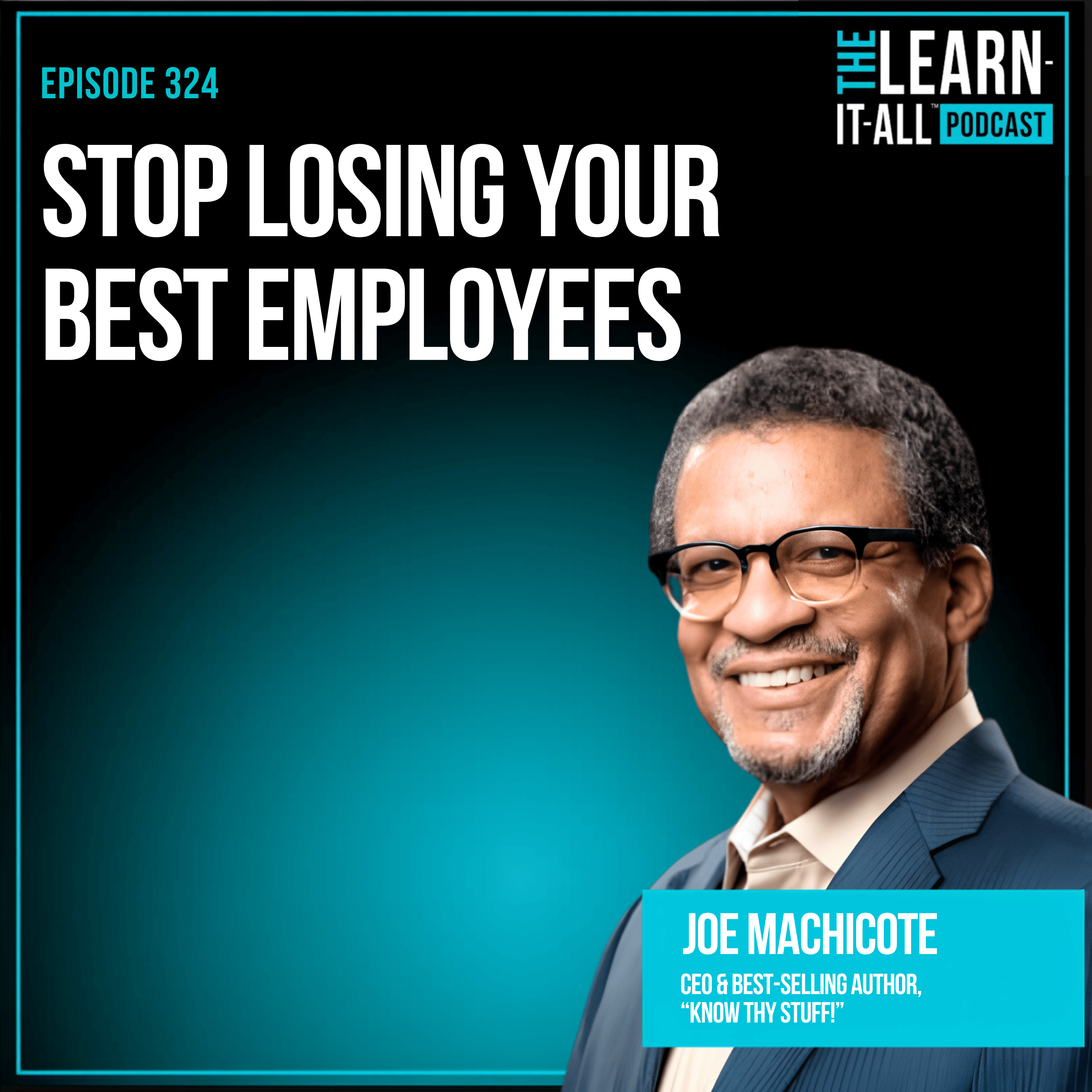
324. The BIG Leadership Mistake That's Quietly Destroying Your Team | Joe Machicote
When your company’s values are just words on the wall, trust crumbles—and so does your team. In this revealing episode of The Learn-It-All™ podcast, Joe Machicote , veteran leadership coach and bestselling author, joins to unpack the hidden (and costly) gap between what leaders say and what they actually do. Joe pulls back the curtain on why culture begins at the top, how one word can transform blame into trust, and why needing to be “right” can destroy more than any honest mistake ever could. Through candid stories, ranging from boardrooms to personal tragedy, Joe offers a masterclass in owning your actions, rebuilding credibility, and creating environments where people want to show up, not check out. You’ll walk away with tools to close the say/do gap, handle tough feedback, lead teams through conflict, and, most importantly, lead yourself with more humility and intention. What You’ll Learn: Why as much as 50% of turnover stems from leaders whose actions don’t match their words, and how to fix it The science behind trust: what happens when there’s a gap between stated values and daily behaviors How to hold even CEOs accountable (hint: it takes “straight talk” and real relationships) The magic of shifting from “you have a problem” to “we have a problem” Why owning your mistakes publicly actually builds more credibility than always being right Joe’s most vulnerable story of shifting from “why me?” to “why not me?” and how it made him a better leader and person In This Episode: 00:00 – The say/do gap: when visions & values don’t match employee experience 01:30 – Why up to 50% of people leave over leadership hypocrisy 02:49 – People “make stuff up” when behavior doesn’t match the wall 03:51 – How trust (or lack thereof) drives disengagement 04:40 – Can a CEO really shape a 150,000-person culture? (yes, here’s how) 06:47 – What happens when a leader “whispers”—the whole organization hears a roar 07:08 – How to deliver feedback up the chain and the power of straight talk 09:33 – “My bad”: Why quickly owning mistakes changes everything 11:38 – Joe’s early-career failure: choosing service over the need to be right 16:02 – The real price leaders pay for always needing to be right 17:59 – How to lead teams through collective mistakes and turn “you problems” into “we problems” 22:30 – Joe’s two life rules learned from his mother (and a dance studio metaphor you’ll remember) 37:14 – Pivotal life moments & leading through personal crisis 48:51 – Moving from “buried” to “planted”—the ultimate leadership mindset 54:20 – The impact you never see: how a single keynote changed a security guard’s life 56:10 – Why Joe’s company logo is a black steel butterfly About Joe Machicote: Joe Machicote is the Founder and CEO of Transformational Leadership Solutions Group and the #1 bestselling author of Own Thy Stuff. With more than 35 years of experience, Joe has helped CEOs and executives at organizations as large as 150,000 people build cultures where values aren’t just words, but daily realities. He’s passionate about closing the gap between what leaders say and do, reshaping trust, and leaving both people and organizations better than he found them. Resources Mentioned: Joe Machicote on LinkedIn Transformational Leadership Solutions Group Own Thy Stuff (Book by Joe Machicote) George Carlin on “Stuff” (YouTube video as mentioned) Maslow’s Hierarchy of Needs (Background on trust & self-esteem) Southwest Airlines & Herb Kelleher (More on culture leadership) Let us know your key takeaways from the episode! And remember, great leaders aren't born. They're always in the making. New episodes of the Learn-It-All™ podcast with Damon Lembi every week. Subscribe on YouTube 📘 Get a FREE copy of The Learn-It-All Leader Book Upskill yourself and your team with Learnit Follow Damon Lembi: LinkedIn Instagram
August 18, 202648 min
323. The Hidden Cost of Letting AI Do Your Thinking | Dr. Soren Kaplan
8 in 10 AI rollouts go the same way: high hopes and minimal results. Dr. Soren Kaplan, organizational psychologist and author of 𝘌𝘹𝘱𝘦𝘳𝘪𝘦𝘯𝘵𝘪𝘢𝘭 𝘐𝘯𝘵𝘦𝘭𝘭𝘪𝘨𝘦𝘯𝘤𝘦, has advised more than 30 Fortune 1000 companies and seen why AI adoption fails — it starts with people, not the technology. In this episode, you will learn: Where most companies go wrong with AI adoption What experiential intelligence is and why it matters How to rebuild the strategic skills AI is quietly eroding Why even good AI experiments don't scale How to turn experimentation into real results The three abilities that separate leaders in an AI world Topics discussed: (00:00) Introduction (00:49) Impact on Future Leaders (02:43) Experiential Intelligence (04:19) Innovation Outside AI (06:05) Why You're Losing Skills (08:33) Build Skills Through Real Work (11:20) The Ford Keynote (18:05) Why Companies Don’t Get Results (19:47) AI Adoption & Innovation (21:46) Fractured Adoption (24:27) What Leaders Can Do (28:52) The Three Abilities (31:20) What to Hand Off & What to Keep (33:07) Develop Experiential Intelligence (38:21) Using It to Your Advantage (42:38) Vulnerability, Risk & Failure (47:15) Your Challenge Connect with Dr. Soren Kaplan: https://www.linkedin.com/in/sorenkaplan/ https://www.instagram.com/soren.kaplan/ https://www.youtube.com/@drsorenkaplan About the Guest: Dr. Soren Kaplan helps leaders make sense of disruption. And act on it. A Wall Street Journal bestselling author, organizational psychologist, and innovation expert, he translates fast-moving shifts in business, technology, and society into clear strategic insight and practical action. He doesn’t just explain what’s changing. He shows leaders exactly what to do next. Soren brings three decades of work with organizations across industries — including Disney, JPMorganChase, PepsiCo, Colgate, Visa, Medtronic, Nucor, and Ascension — and leads executive education programs at USC’s Center for Effective Organizations. He has written multiple award-winning books, contributes to Harvard Business Review, Inc. Magazine, and Psychology Today, and has built numerous AI-powered businesses including SmartCoach365.com. Thinkers50 and Business Insider recognize him as one of the world’s top management thought leaders and consultants. He speaks on leadership, innovation, AI, organizational culture, and strategic change, always through the lens of what’s happening right now and what it means for the people and organizations navigating it. Let us know your key takeaways from the episode! And remember, great leaders aren't born. They're always in the making. New episodes of The Learn-It-All Podcast with Damon Lembi every week. Subscribe on YouTube: https://www.youtube.com/@TheLearnItAllPodcast?sub_confirmation=1 Get your FREE copy of The Learn-It-All Leader: https://dl.bookfunnel.com/3ingcx2pp5 Upskill yourself and your team with Learnit: https://www.learnit.com Follow Damon Lembi: LinkedIn: https://www.linkedin.com/in/damonlembi Instagram: https://www.instagram.com/damonlembi This episode was produced by Podcast Boutique https://www.podcastboutique.com
August 13, 202652 min
322. By Age 12, 75% of Your Time With Your Kids Is Already Gone | Jeff Wickersham
By the time your child turns 12, 75% of the time you’ll ever spend with them is already gone. So what are you doing with the time that’s left? High-performing dads can be crushing it at work, providing for their families, and still feel that nagging sense that something is off at home. In this episode of The Learn-It-All™ Podcast, Damon sits down with Jeff Wickersham, bestselling author, speaker, and founder of The Warrior Dad, to unpack what intentional fatherhood actually looks like when work, ambition, stress, and everyday life are competing for your attention. Jeff explains why the small “micro moments” matter more than most dads realize, why repeatedly saying no can eventually cause your kids to stop asking, and why one of the most powerful parenting habits is simply learning to answer the bid for attention. Jeff also shares the personal losses and struggles that reshaped his approach to fatherhood, including the final conversation with his mother that made him think differently about legacy. He walks Damon through his 15-minute “Morning Fire” routine for becoming a better husband, father, and leader, why consistency builds trust inside a family, and how making daily deposits into your family’s “love bank account” can strengthen connection even when you travel constantly. They also explore how to raise resilient kids without snowplowing every obstacle out of their way, why your children absorb your energy and behavior more than your advice, and how one intentional father can change the family tree for generations to come. 📘 Get a FREE copy of The Learn-It-All Leader Book: https://dl.bookfunnel.com/3ingcx2pp5 In this episode, you’ll learn... How to answer your kids’ bids for attention so they keep asking you to spend time with them, even when they become teenagers Why crushing it professionally can still leave high-performing dads feeling disconnected at home, and why Jeff believes true fulfillment comes from leaning into your family Jeff’s seven-part Morning Fire Protocol, a roughly 15-minute routine built around hydration, movement, meditation, declarations, love notes, gratitude, and learning Why consistency is more important than intensity, and how repeatedly starting and stopping habits can slowly erode trust with your spouse, kids, and even yourself How to make daily deposits into your family’s “love bank account” through simple notes, messages, hugs, and moments of connection that may seem small but matter deeply Why parents should resist the urge to “snowplow” every challenge out of their kids’ lives and instead help them develop resilience, grit, ownership, and the ability to bounce back How your mood, language, habits, and relationship with your spouse shape your children because, as Jeff puts it, “more is caught than taught” How to become the dad who “cuts the anchor,” changes the narrative, and changes the family tree instead of unconsciously passing old patterns into the next generation Timestamps 00:00 – Introduction 01:01 – Why winning at work can still feel empty at home 03:22 – The promise Jeff made to his mother before she died 05:34 – What happens when you stop running from pain 09:29 – The tragedy that gave The Warrior Dad its mission 13:13 – The inner voice high performers keep trying to numb 15:44 – What quitting alcohol taught Jeff about leading his sons 18:04 – Seven wins in 15 minutes: Jeff’s Morning Fire Protocol 23:59 – Why consistency beats waiting until you feel motivated 27:52 – The parenting rule Jeff wishes every dad would follow 31:36 – Why teenagers actually can still want to hang out with you 33:37 – Stop snowplowing the road in front of your kids 35:31 – How making excuses can quietly create a victim mindset 39:24 – How traveling dads can stay connected from thousands of miles away 40:45 – Your kids are absorbing your energy whether you realize it or not 44:10 – What Rocky II can teach fathers about refusing to stay down 47:27 – The surprising downstream effect of intentional fatherhood 49:04 – How one dad can change a family tree forever About Jeff Wickersham Jeff Wickersham is the founder of The Warrior Dad, where he helps high-performing fathers who are succeeding professionally become more intentional, present, and connected as husbands and dads. After the loss of his mother and his own struggles with alcohol, gambling, and feeling like he wasn’t living up to his potential, Jeff began experimenting with habits, routines, coaching, and personal development systems that transformed the way he approached his life and family. Today, his mission is to positively impact one million dads and more than two million kids by January 1, 2053, helping fathers lead from the front, build deeper relationships with their families, and create a legacy that lasts for generations. Resources and Mentions The Warrior Dad book: https://www.amazon.com/Warrior-Dad-Children-Family-Legacy/dp/B0DW49YK12 Jeff Wickersham’s Instagram: https://www.instagram.com/jeff_wickersham/ Jeff Wickersham’s LinkedIn: https://www.linkedin.com/in/jeff-wickersham/ The Warrior Dad Website: https://thewarriordad.com/ The Warrior Dad Blind Spot Assessment: https://blindspot.thewarriordad.com/ Podcast Contact Information: Website: www.learnit.com Email: podcast@learnit.com Subscribe to the Learn-It-All Podcast: Youtube I Apple I Spotify Follow Damon Lembi: Linkedin I Instagram I Facebook I X
August 11, 202635 min
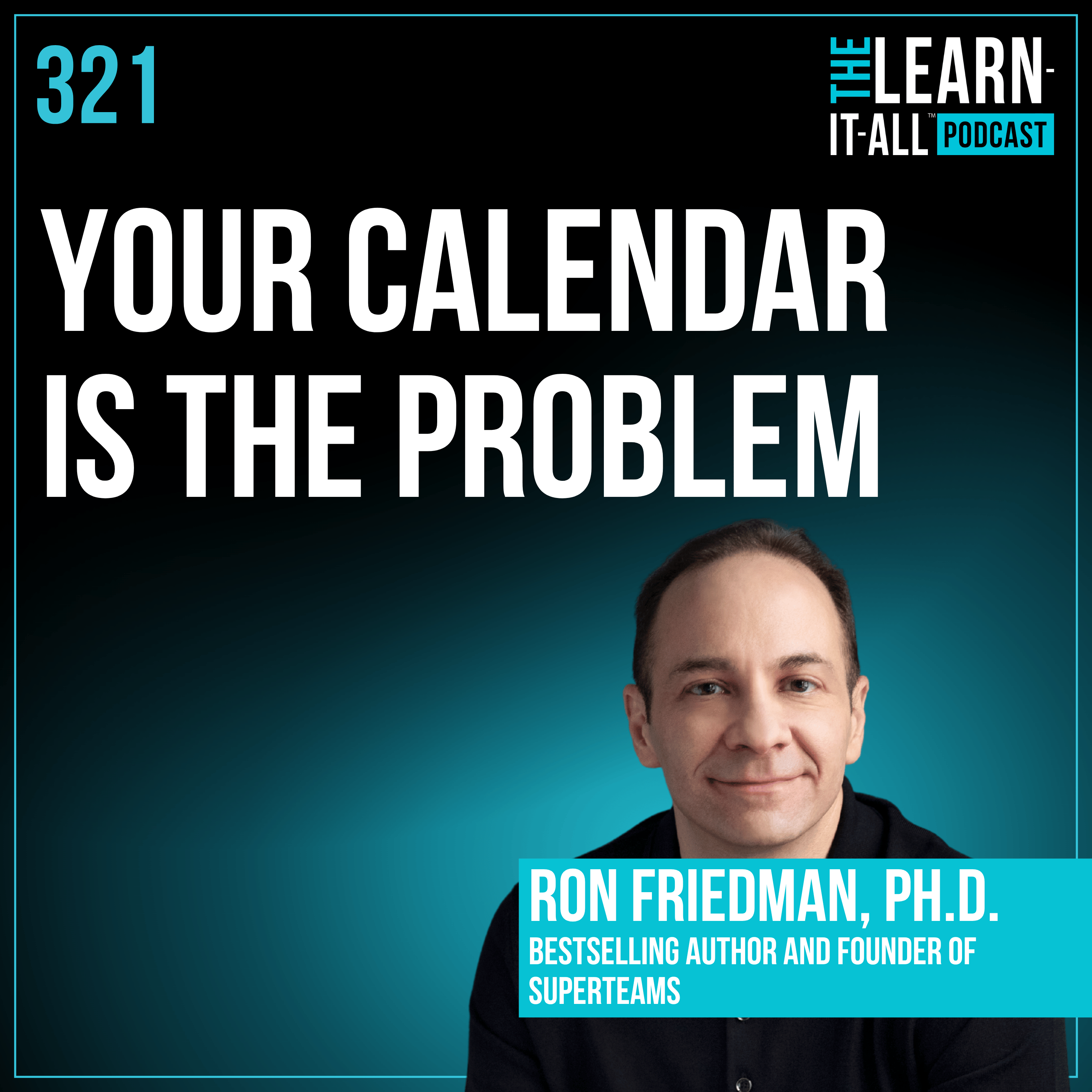
321. He Studied 1000s of Teams — You're Losing 29 Hours a Week and Don't Know It | Ron Friedman, Ph.D.
Only 8% of people are on superteams. The rest lose hours every week sitting in meetings, answering messages, and doing work that gets them nowhere. Ron Friedman, social psychologist and author of Superteams , researched thousands of teams to find out what high-performing teams do differently. In this episode, you will learn: Why most teams loses 29 hours every week How superteams handle wins and losses Why productivity hacks slow the whole team down Meeting rules that give your team its week back How superteams collaborate to get the best ideas The number one predictor of high performance Topics discussed: (00:00) Introduction (00:53) Three Factors of a Real Team (02:33) What Makes a Superteam (06:57) The Sunday Night Test (09:42) Team-First Culture (12:34) Why Teams Need to Fail (16:38) Where Your Week Disappears (18:23) Productivity Hacks That Backfire (20:15) Meeting Rules of Superteams (22:01) The Brainstorm Problem (25:59) What Drives High Performance (29:02) Best vs. Worst Teammate Traits (32:37) Why 97% Of Feedback Fails Connect with Ron Friedman: https://www.linkedin.com/in/ronfriedmanphd/ https://www.instagram.com/ronfriedmanphd/ https://x.com/RonFriedman https://www.threads.com/@ronfriedmanphd https://www.youtube.com/channel/UCIFgRGcGjxXjmovUEBcnbXA Book link: https://geni.us/superteams Superteams Masterclass: http://superteamsmasterclass.com Superteams Quiz: http://superteamquiz.com Ron’s Website: http://www.superteamsinc.com/ About the Guest: Ron Friedman is an award-winning social psychologist and bestselling author of The Best Place to Work and Superteams. His research on building high-performing teams has been featured in The New York Times, Bloomberg, and Harvard Business Review, where his article “How to Build a Superteam That Keeps Getting Better” is this month’s cover story. To learn more about his work, visit superteamsinc.com . Let us know your key takeaways from the episode! And remember, great leaders aren't born. They're always in the making. New episodes of The Learn-It-All Podcast with Damon Lembi every week. Subscribe on YouTube: https://www.youtube.com/@TheLearnItAllPodcast?sub_confirmation=1 Get your FREE copy of The Learn-It-All Leader: https://dl.bookfunnel.com/3ingcx2pp5 Upskill yourself and your team with Learnit: https://www.learnit.com Follow Damon Lembi: LinkedIn: https://www.linkedin.com/in/damonlembi Instagram: https://www.instagram.com/damonlembi This episode was produced by Podcast Boutique https://www.podcastboutique.com
August 6, 202642 min
320. The Mindset Shift High Achievers Need Before Burnout Forces It | Mairin Moore Cane
What if the mindset that made you successful is also the mindset quietly pushing you toward burnout? High achievers are rewarded for going, doing, achieving, and hustling, but leadership advisor, Keynote speaker, and bestselling author Mairin Moore Cane says there is a hidden cost when your identity and self-worth become tied to performance. You stop appreciating what you’ve already accomplished, failures start feeling personal, and slowing down can feel almost impossible. For Mairin, that pattern eventually became impossible to ignore. After years of pushing herself, people pleasing, and trying to show up for everyone else, chronic illness forced her from running nine miles a day to spending three years largely bedridden. In this episode of The Learn-It-All™ Podcast, Damon sits down with Mairin to explore the mindset shift high achievers and leaders need to make before burnout forces it for them. Mairin shares how to recognize when ambition has become misalignment, why knowing your values matters more than constantly proving yourself, and how her Root, Realign, and Rise framework helps people move through failure, pressure, identity shifts, and difficult seasons without letting those moments define them. Damon and Mairin also unpack authentic leadership, creating psychologically safe and connected teams, learning to say “I don’t have the answer,” and why some of the strongest leaders stop pretending they have everything figured out. If you’re navigating leadership burnout, performance-based self-worth, people pleasing, chronic stress, or the pressure to constantly achieve, this conversation offers a more sustainable way to succeed without losing yourself in the process. 📘 Get a FREE copy of The Learn-It-All Leader Book: https://dl.bookfunnel.com/3ingcx2pp5 In this episode, you’ll learn... The warning signs that you’re living out of alignment, including saying yes when something inside you wants to say no, constantly trying to fit in, and ignoring the feeling that something isn’t authentic Why strong leadership does not mean having every answer, and how Mairin learned to tell her team, “I don’t have an answer,” while inviting them to figure out the next step together How leaders can create safer, more connected teams by admitting their own weak points, understanding where employees are struggling, and taking two minutes to genuinely ask, “How are you doing?” How the Root, Realign, and Rise framework helps you separate a difficult circumstance from your identity, return to what is true, realign around your values, and use adversity as a foundation for what comes next Why Mairin sees failures as “launching points into the next pivot,” and how learning to move before you have everything figured out can build stronger leaders and more resilient teams Why becoming matters more than appearing perfect, and how difficult seasons can deepen your roots instead of proving that you are failing How gratitude, intentional pauses, and acknowledging what you have already accomplished can interrupt the constant pressure to rush toward the next goal Timestamps 00:00 Introduction 01:12 The hidden danger of tying self-worth to achievement 02:35 Why high performers struggle to slow down 05:48 The moment Mairin realized achievement wasn’t enough 08:41 Where the need to please everyone really began 10:48 The warning signs you’re losing yourself 12:36 Why control can quietly run your life 14:28 The leadership lesson she learned from having no answers 15:37 How to rewrite your identity as a leader 19:33 What business failure taught Mairin about resilience 23:37 How great leaders make failure feel safe 25:46 The two-minute habit that builds stronger teams 27:50 The Root, Realign, and Rise framework 33:18 What happens when you stop resisting who you’re becoming 34:54 Why Mairin doesn’t want her old life back 37:48 You don’t have to be whole to lead 38:47 The story that brought Mairin to tears 40:51 Finding purpose in the pain 42:13 Damon’s challenge: Are you really showing up? About Mairin Moore Cane Mairin Moore Cane is a leadership advisor, keynote speaker, bestselling author, entrepreneur, and host of the Root, Realign, Rise™ Podcast . After more than two decades of leading businesses through growth, uncertainty, difficult decisions, and major transitions, Mairin now helps leaders navigate pressure, strengthen resilience, and make clearer decisions without losing themselves in the process. Her work centers on authentic leadership, identity, performance under pressure, and the belief that you don’t have to have everything resolved before you can lead well. She is also the author of Rooted, Not Rushed: Healing, Reclaiming, and Rising in a World That Told You to Shrink . Resources and Mentions Rooted, Not Rushed book: https://www.amazon.com/ROOTED-NOT-RUSHED-Healing-Reclaiming/dp/1968250751 Mairin Moore Cane’s LinkedIn: https://www.linkedin.com/in/mairinmoorecane/ Root, Realign, Rise™ Podcast : https://mairinmoorecane.com/podcasts/ Mairin Moore Cane’s Website: https://mairinmoorecane.com/ Podcast Contact Information: Website: www.learnit.com Email: podcast@learnit.com Subscribe to the Learn-It-All Podcast: Youtube I Apple I Spotify Follow Damon Lembi: Linkedin I Instagram I Facebook I X
Is this your show?
Claim this listing to keep it up to date, reach guests who want to pitch you, and manage bookings with Guestify.