Find partners
The Impactful Capitalists with Max Getuba

The Impactful Capitalists with Max Getuba

Hosted by Max Getuba

Episodes

25

Latest episode

May 2026

Language

EN

About the show

We are a movement dedicated to make the world a more rational, truthful and impactful place by sharing important ideas. Welcome to our Podcast. theimpactfulcapitalist.substack.com

Listen to episodes

25 recent
May 11, 202621 min

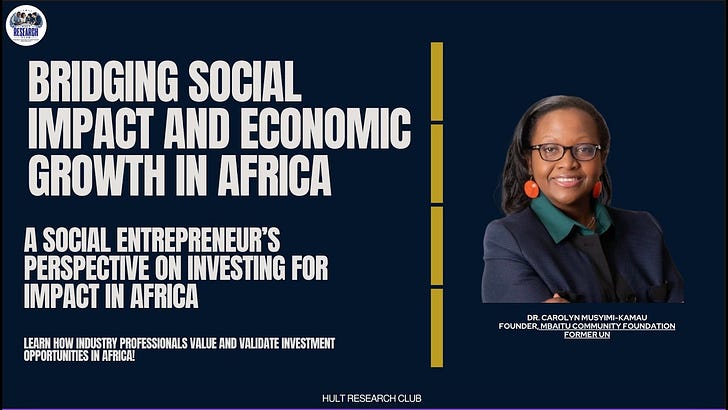
Bridging Social Impact and Economic Growth in Africa: A conversation with Dr. Carolyn Musyimi-Kamau

“The storyteller creates the memory survivors must have, otherwise surviving has no meaning.” That’s how this conversation begins, and it sets the tone perfectly.In this episode, Dr. Carolyn Musyimi-Kamau and Billie Nyakawa dive into what it actually means to build social impact in Africa, not as an outsider parachuting in with solutions, but as someone rooted in community, listening first, and amplifying what’s already there.Dr. Carolyn’s journey is instructive. After years at the UN working on policy in New York, she realized the disconnect: policy work was intellectually interesting but emotionally hollow. She wanted to be on the ground with people, witnessing real change. So she came home to New Hampshire, where she started working with refugee and migrant communities. But her heart kept pulling her back to southeastern Kenya, where her childhood roots run deep.What she found there changed everything. In seven years, Mbaitu Community Foundation has worked with 5,000 farmers across Kitui, Machakos, and Makueni. But here’s the shift in her thinking: the problem wasn’t that farmers needed outsiders to save them. It was that their knowledge, accumulated over generations, had been erased or replaced by chemicals, pesticides, and the assumption that all wisdom comes from outside.Farmers taught her how they preserved seeds under ash to keep weevils away. They showed her how they understand which crops thrive in their specific microclimates. They revealed challenges like contaminated water from Nairobi, wildlife destroying crops, and the loss of heirloom seeds to GMOs. Her PhD dissertation on food security became a dialogue, not a lecture.Billie brings the legal and pragmatic angle. Building an NGO across two systems—a 501c3 in Massachusetts and navigating CBO registration in Kenya—isn’t simple. There are loopholes, unclear rules, and the constant negotiation between outsider systems and local structures (like needing the chief’s consent before distributing seeds). But there’s also power: mentoring students coming to the US, connecting Kenyan universities with American institutions, building real partnerships.The conversation gets to something essential: how do diaspora investors and impact workers actually contribute without creating dependency? The answer isn’t guilt-driven charity. It’s mentorship, intentional partnerships, strategic investment, and, most importantly, recognizing that communities already have what they need. You’re just amplifying it.You’ll hear practical wisdom on how to give back: sponsor a student and watch them return to help their community. Invest in money markets that let you live off the returns. Find a student in Kenya and mentor them when they come to the US (because without guidance, people can lose 10 years to avoidable mistakes). Build university partnerships. Bring your hard-earned knowledge back home deliberately.This is what social impact looks like when you strip away the rhetoric and sit with real people solving real problems.In this episode:* Why Dr. Carolyn left the UN to work directly with farmers in southeastern Kenya* The seven-year journey of Mbaito Community Foundation: 5,000 farmers, 26 students sponsored* How to recognize and amplify knowledge that already exists in communities (instead of imposing solutions)* The gap in Kenyan markets: diaspora returning home with confidence and resources* Navigating NGO registration across two systems (Massachusetts 501c3 + Kenya CBO)* Real barriers to impact: water scarcity, loss of heirloom seeds, contamination, pest issues* Practical ways diaspora can contribute: mentorship, university partnerships, strategic investment* Why mentoring matters: the cost of isolation can be 10 years of mistakes* Investment options beyond charity: money markets, real estate, and financial stability* How to tell the stories that matter—the ones survivors need to haveTo watch the full video interview on YouTube, click the link below:Thanks for your support, and don’t forget to like, share and subscribe… it would mean the world to us! Keep safe, and we wish you all the best in your impact journey. This is a public episode. If you would like to discuss this with other subscribers or get access to bonus episodes, visit theimpactfulcapitalist.substack.com
May 11, 202612 min

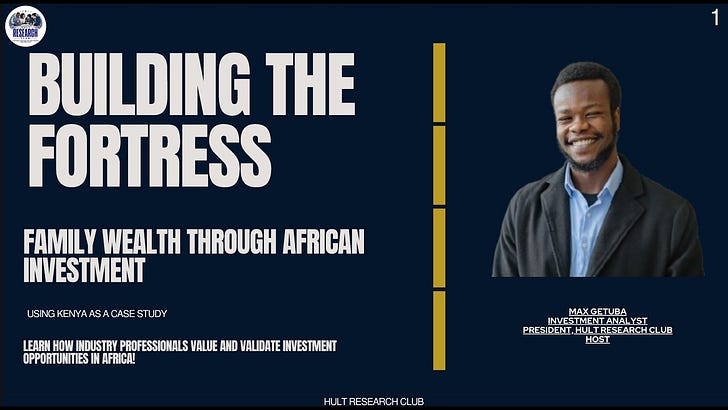
Building The Fortress: Family Wealth Through African Investment By Max Getuba

Here’s the hard truth: only 3% of African family wealth survives to the second generation. Globally, it’s 30%. That’s not just a number, it’s a crisis in wealth generation, preservation, and growth.In this episode, Max dives deep into why diaspora investors struggle to build lasting wealth in Africa, and more importantly, how to actually do it. This isn’t theory. It’s a practical framework built on case studies of real winners; companies like Acorn Holdings (student housing), SocoFresh (agricultural storage), and Victory Farms (large-scale aquaculture)—that cracked the code on African investment.The challenge is real. Currency volatility, inflation spikes, interest rate shifts, policy uncertainty, and the killer issue: taxation. If you’re investing from the US back home, you’re liable to both the Kenyan and US governments. That double tax bite fundamentally changes your investment thesis. Max breaks down exactly how it works and why it matters more than most investors think.But here’s what separates winners from losers: the six success factors he identifies. Right life cycle timing (getting in before competition destroys returns). Real tangible assets (depreciation shields you from taxes). Anchor customers (reliable cash flows). Execution capability. Capital efficiency. And tax structure, the piece most investors get wrong.You’ll learn the framework for identifying blue ocean opportunities in African markets, why structural indicators matter, what questions to ask about institutional quality, and how to think about financing: full equity, Kenyan debt, US debt (with FX risk), SACOs cooperative financing, or blended structures.The conversation is sharp and tactical. It’s designed for diaspora investors who are serious about building generational wealth, not just making quick returns. Max walks you through real examples—how Acorn saw the student housing crisis coming, how SocoFresh solved food loss in export chains—so you understand the pattern recognition required.This is the master class on African investment strategy.In this episode:* The 3% crisis: why African family wealth doesn’t survive to the second generation* How taxation works for diaspora investors (and why it’s the #1 factor)* The six success factors behind Africa’s winning investments* Real case studies: Acorn, SocoFresh, Victory Farms—and what they got right* How to identify blue ocean opportunities before competition arrives* Financing options for diaspora investors: equity, debt, SACOs, and blended structures* Why tangible assets matter (depreciation = tax efficiency)* The price you pay determines if a good investment stays goodClick the link below to watch the full video talk on YouTube:Thanks for your support, and don’t forget to like, share and subscribe… it would mean the world to us! Keep safe, and we wish you all the best in your impact journey. This is a public episode. If you would like to discuss this with other subscribers or get access to bonus episodes, visit theimpactfulcapitalist.substack.com
May 11, 202649 min

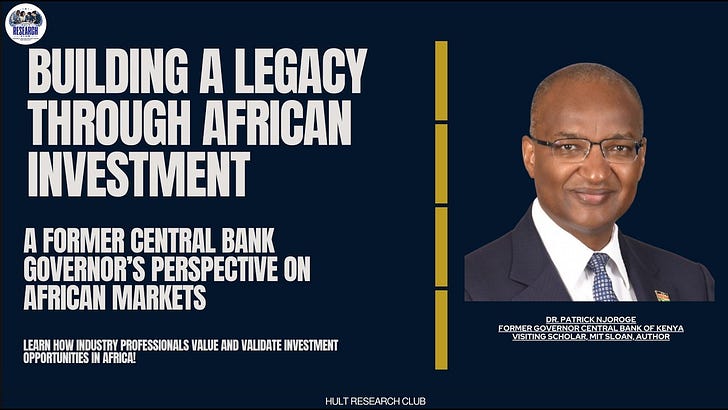
Building a legacy through African investment: A Conversation with Dr. Patrick Njoroge

What does it mean to build for Africa? In this conversation, Max sits down with Dr. Patrick Njoroge, former Governor of the Central Bank of Kenya, MIT visiting scholar, and one of Africa’s most influential voices on finance and economics, to explore what serious investment in Africa actually looks like.This isn’t a feel-good story about African potential. It’s a grounded, unflinching look at what’s required to unlock Africa as a genuine investment destination. Dr. Njoroge takes you through his own journey: from wanting to be an electrical engineer, to Yale economics, two decades at the IMF working across one-third of the world’s central banks, and the pivotal decision to return to Kenya as Central Bank Governor, leaving the comfort of Washington D.C. to lead during one of Kenya’s most critical economic periods.He talks candidly about the barriers to African investment: unclear business rules, government delays on contractor payments that push businesses into bankruptcy, and the absence of coherent policy frameworks. But he doesn’t stop there. He offers a compelling vision drawn from India’s tech boom, where diaspora returning home became the catalyst for transformation. That same energy, he argues, exists in Africa. But it requires policy makers, investors, and citizens to get serious about the fundamentals: clarity, consistency, institutional quality.You’ll hear him explain why conventional wisdom about Africa often gets it wrong, why risk exists everywhere (not just Africa), and what it actually takes to be part of the solution rather than a spectator waiting for perfect conditions. He compares Africa to a rose, beautiful but with thorns, a metaphor that captures both the opportunity and the work ahead.This is for anyone thinking about African markets, emerging markets broadly, or what it means to invest with impact and intention.In this episode:* Why Dr. Njoroge left the IMF to lead Kenya’s Central Bank* The real barriers to African investment (and why they’re fixable)* How India’s tech boom offers a playbook for African transformation* The difference between having good ideas and having coherent policy* Why you need to be part of the solution, not a passive observer* What serious investors should look for as signals of maturity in African economiesTo wacth the full video interview on YouTube, click the link below:Thanks for your support, and don’t forget to like, share and subscribe… it would mean the world to us! Keep safe, and we wish you all the best in your impact journey. This is a public episode. If you would like to discuss this with other subscribers or get access to bonus episodes, visit theimpactfulcapitalist.substack.com
May 11, 20261 hr 12 min

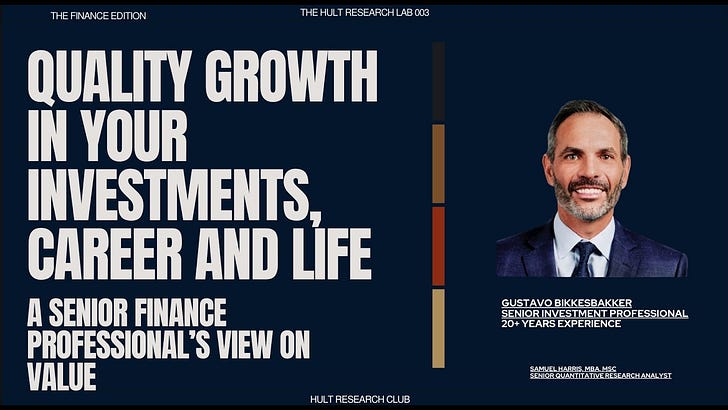
Quality Growth in Your Investments, Career and Life: A Conversation with Gustavo Bikkesbakker

What does it take to build a career that compounds? In this episode, Max sits down with Gustavo Bikkesbakker, a seasoned investment professional and Hult alumnus with nearly three decades of experience across hedge funds, consulting, and global portfolio management.Gustavo’s journey from Argentina through dictatorship and hyperinflation to Boston, Miami, and Scotland is anything but conventional, and it’s worth listening to. He talks candidly about the early failures that shaped his approach (his first hedge fund ran out of money), the unexpected turns that led him into investment management, and how he built a genuinely global perspective by rotating through different geographies and industries.But this isn’t just a career story. Gustavo brings a refreshingly grounded take to some of the fuzziest concepts in modern investing: how to think about quality growth, why ESG investing has become a political football (and what actually matters), and the difference between analysis and speculation. He walks through his framework at Walter Scott & Partners, where he focuses on companies with genuine competitive moats and durable growth, and why that intentional bias toward established companies isn’t a limitation, it’s a feature.You’ll also hear his thoughts on materiality in ESG (spoiler: most ESG ratings miss the point), why geopolitical risk is back on the menu, and how to build analytical rigor without losing the human judgment that separates professionals from amateurs.Whether you’re thinking about your next move in finance, building a long-term investment approach, or just curious how someone builds conviction in uncertain times, this conversation has substance.In this episode:* How Gustavo’s unconventional path shaped his investment philosophy* Why quality growth requires both analytical rigor and real global experience* The difference between genuine ESG investing and asset-gathering under a label* How to test whether your analytical framework actually works* Why specialists matter, and what that means for portfolio constructionTo experience the (audio) podcast on YouTube, click the link below:Thanks for your support, and don’t forget to like, share and subscribe… it would mean the world to us! Keep safe, and we wish you all the best in your impact journey. This is a public episode. If you would like to discuss this with other subscribers or get access to bonus episodes, visit theimpactfulcapitalist.substack.com
March 20, 20261 hr 4 min

Garbage In, Genius Out? The Truth About AI and Expertise

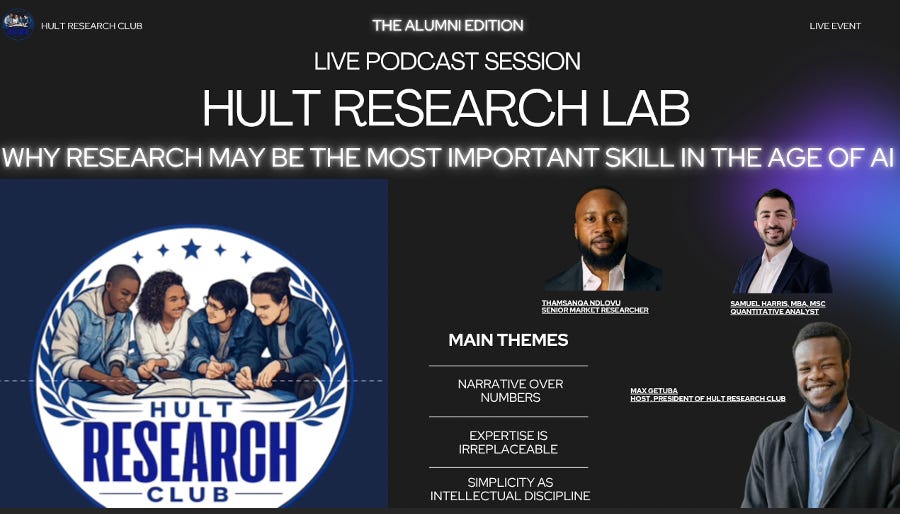
There is a version of research that looks like this: you collect data, you run the numbers, you present the output. Clean. Mechanical. Repeatable. And increasingly, with the right AI tools, almost anyone can do it.That version has always bothered me.Not because it’s wrong, but because it’s incomplete. Because the researchers I find most interesting, the ones whose work actually moves things, are doing something harder and less visible than that. They’re making judgment calls. They’re deciding which variables matter and which don’t. They’re reading a situation and knowing, before the model confirms it, that something important is hiding in the noise.That’s the conversation I wanted to have. So for the Alumni Edition of Hult Research Lab, I brought in two people who are living proof that research done well is one of the most demanding intellectual disciplines there is.Samuel Harris, MBA, MSc, is a quantitative analyst working at the intersection of mathematics and financial markets. His job, in his own words, is to apply mathematical, statistical and machine learning research to financial markets. The kind of work most people encounter only in movies, and usually don’t fully understand even then.Thamsanqa Ndlovu (Thami) is a senior market researcher and founder of Datadvise, a consultancy he built independently over the last six years. His background is in law, and his work spans solar energy deals in Southern Africa, mental health policy, competitive intelligence, and economic development advisory. On any given Tuesday, he might touch all four.Two different disciplines. Two very different career paths. And yet when I sat down with both of them, the same three ideas kept surfacing, each from a different angle, each landing in the same place.The first is that narrative is not the packaging around research. It is the research.Sam made this point from the quantitative side. AI tools, he argued, are only as useful as the expertise of the person using them. If you don’t understand the underlying story of what you’re analyzing, you can’t ask the right questions, and you won’t catch the wrong answers. Thami arrived at the same conclusion differently: a consulting deliverable that doesn’t build toward a coherent story is just paper. The numbers have to mean something. They have to point somewhere. This isn’t a philosophical preference. It’s the practical difference between work that changes decisions and work that gets filed away.The second is that intellectual restraint is a skill, and most people underestimate it.Sam’s instinct when facing a new problem is to ask how little complexity the problem actually requires. His current project, solved with a closed-form mathematical solution, could have been built with machine learning. He chose not to, because the simpler solution was equally accurate and significantly more efficient. The fancier option wasn’t better. It just felt better. Thami operates with a similar discipline. His seventy percent rule is a deliberate defense against the trap researchers know well, the belief that one more data point will finally make the decision obvious. It won’t. At some point, you have to trust your directional clarity and move.The third is what AI actually does to expertise, which is less than most people think, and more specific than most people admit.Both of them pushed back against the idea that AI meaningfully democratizes high-quality research. What they described instead is something more precise. AI raises the floor. It compresses the gap between nothing and average. But the gap between average and genuinely good, that still requires accumulated judgment, domain knowledge, and the ability to recognize when a confident-sounding output is quietly, completely wrong. If you don’t have the expertise to notice, you’ll never know it happened.What connects these three ideas is a conviction I share, that good research is not primarily a technical problem. It is a thinking problem. The tools matter, but they are downstream of something harder to build: the ability to ask the right question, hold a process with integrity, and know when you have enough to act.That is what this podcast is about. Not AI as a trend. Research as a practice. Thinking as a discipline worth taking seriously.This Alumni Edition is live. Go listen!Check it out on YouTube!Connect on LinkedIn for more consistent updates!— Max Getuba This is a public episode. If you would like to discuss this with other subscribers or get access to bonus episodes, visit theimpactfulcapitalist.substack.com
March 20, 202645 min

AI in the Academic Experience: A Conversation with Hult Faculty

A few weeks ago, I had the privilege of hosting a conversation that I believe sits right at the center of one of the most important questions facing students today:How should we think about AI in the academic experience?Together with Dean Sara Abhou-Fakher and Professor Thomas Sullivan, we recorded a podcast exploring how artificial intelligence is beginning to reshape the way students learn, research, and express ideas.It was a genuine privilege to do this with two truly brilliant minds who care deeply about the future of education and the intellectual development of students. Both Dean Abhou-Fakher and Professor Sullivan brought a thoughtful and balanced perspective to a topic that is often discussed in extremes.Rather than framing AI as something to either fear or blindly embrace, our conversation explored a more important question:How can students use AI responsibly while still developing their own thinking, voice, and intellectual integrity?Throughout the discussion we explored topics such as:* Whether professors can actually tell when students use AI in their assignments* Why proper citation and academic honesty matter even more in the age of AI* How over-relying on AI can weaken a student’s authentic voice and reasoning* Practical ways students can use AI as a tool for learning rather than a shortcut for thinking* How AI might reshape the future of education and academic assessmentOne of the most interesting insights from the conversation was that AI doesn’t remove the need for thinking, it actually makes strong thinking more valuable. When everyone has access to powerful tools, the real differentiator becomes judgment, curiosity, and the ability to ask better questions.In many ways, this conversation connects deeply with the mission of the Hult Research Club, which is built around a simple idea:In a world where information is everywhere, the advantage belongs to those who can turn information into clear ideas and thoughtful decisions.To make the conversation accessible to students, we’ve broken the podcast into short clips covering specific topics, ranging from AI detection and citation practices to broader reflections on the future of education.If you’re a student trying to understand how AI fits into your academic journey, I think you’ll find this discussion both practical and thought-provoking.I’m incredibly grateful to Dean Sara Abhou-Fakher and Professor Thomas Sullivan for their generosity in sharing their insights and engaging in such an open and thoughtful conversation.You can explore the full video podcast below:And as always, if you’re interested in conversations like this, about research, ideas, and the future of learning, I’d love to hear your thoughts.— Max GetubaPresident, Hult Research ClubDon’t forget to like, share and subscribe! This is a public episode. If you would like to discuss this with other subscribers or get access to bonus episodes, visit theimpactfulcapitalist.substack.com

January 30, 202658 min

Why Research May Be The Most Important Skill In The Age of AI!

Hey Impactful Capitalists!I hope you’re all doing well.I wanted to share how my year has started so far because it’s been one of those stretches that reminds you why you commit to the long game.First, I finished my first conference-grade research paper in emerging market finance, Disaggregating Country Risk, Industry Exposure, and Required Returns in Emerging Markets. This one mattered to me because it forced me to slow down, think rigorously, and build something that could actually stand up to scrutiny from serious academics, investors, and policymakers. It was proof to myself that disciplined thinking compounds.Second, I wrote a white paper that I’m incredibly proud of, Why Research Workflows Are Breaking—and What Replaces Them in the AI Age. This came from a simple obsession: AI is powerful, but only if humans learn how to work with it properly. Writing this helped me clarify how judgment, creativity, and structure still sit firmly on the human side of the equation.Third, I turned 25. That one’s personal, but it matters. It’s a checkpoint. A reminder that time is moving, the bar is rising, and the responsibility to build something meaningful doesn’t get lighter.Finally, I ran my first event as President of the Hult Research Club: a live podcast with some of our most distinguished faculty, exploring why research may be the most important skill in the age of AI. Hosting that conversation made one thing clear: human work isn’t going anywhere. AI is just another tool in our utility belt. The real edge now comes from how well we think, decide, and collaborate.All of these are linked below if you want to explore them.As always, keep following the journey. I hope you’re all working, in your own way, to realize the dreams you’ve committed to this year.Let’s keep going.Godspeed, Max This is a public episode. If you would like to discuss this with other subscribers or get access to bonus episodes, visit theimpactfulcapitalist.substack.com
April 14, 202537 min

Why is it so hard to build and preserve wealth in Africa? - An Impactful Conversation

Hello everyone! It has been a while but we can assure you that we are back and better!In this next installment of our impactful journey, we dive deep into The Psychology of Money—and this time, it’s personal. Join Max and Nia, our custom AI chatbot from The Impactful Capitalists, as they explore the real reasons why some people quietly build wealth while others lose it all, especially in the African context. This conversation unpacks the emotional and cultural forces that shape how we earn, save, and invest. If you’ve ever wondered why money feels so hard to manage—or what it really takes to stay wealthy in Africa—this one’s for you. So grab your headphones, settle in, and enjoy the ride.Here are the video chapters:00:00. Some highlights from our conversation01:46. Welcome back to the upgraded podcast!03:43. How Morgan Housel redefines wealth in 'The Psychology of Money'08:09. How better habits can lead to more wealth, long-term15:05. Do better habits mean you can't take any risks?20:31. How our biases affect how we view money23:15. Why it is so hard to build and preserve wealth in Africa32:28. How Africa's best wealth builders have built and preserved wealth37:40. Surprise that helps everyone on their personal finance journey!Click here or on the image below to watch the full video on YouTube!Ready to Discover Your Investor Profile?To make all this more actionable and fun, we invite you to take the next steps with us:* Click to take the Investment Personality Quiz – a short, interactive quiz to help pinpoint your risk tolerance, interests, and style. Are you a cautious saver, a balanced planner, or a go-getter investor? The quiz will tell you, and suggest which options might resonate most with your persona.* Click to explore the Investment Compass (Kenya Edition) – an interactive tool where you can input your goals (like “buy a car in 3 years” or “educate kids in 10 years” or “retire at 60 with X income”) and it will map out a possible mix of investments tailored to you, along with local examples. It’s like getting a mini-financial plan specifically for the Kenyan context.* Click to watch Our Behind-the-Scenes Video – join our team in a candid video where we each took the quiz and discovered our own investment personalities! It’s a fun, relatable way to see these concepts in action and how even we, as financial educators, balance our choices. Plus, you’ll get a laugh or two and plenty of inspiration as we build strategies that reflect our unique lives.* Click to download a free copy of our official e-book: “Building Wealth in Kenya: A Guide to Investment Options” - an engaging and easy-to-understand exploration of the most popular investment options in Kenya, including T-bills, bonds, money market funds, SACCOs, real estate, stocks, and more. The book walks you through where your money actually goes, the risks and rewards involved, how long you should plan to invest, and who each option is best suited for. Whether you're just starting or looking to grow smarter, this guide will help you make informed, confident decisions about your financial future.Thank you for spending your time with us…and being part of this growing community of curious, forward-thinking individuals who are determined to build a better financial future—for themselves, their families, and the generations to come. Your journey toward clarity, confidence, and impact in your money decisions is one we’re honored to walk with you. We hope today’s insights spark conversations, shift perspectives, and inspire real action.Until next time, keep it impactful.Max This is a public episode. If you would like to discuss this with other subscribers or get access to bonus episodes, visit theimpactfulcapitalist.substack.com
March 8, 20241 hr 4 min

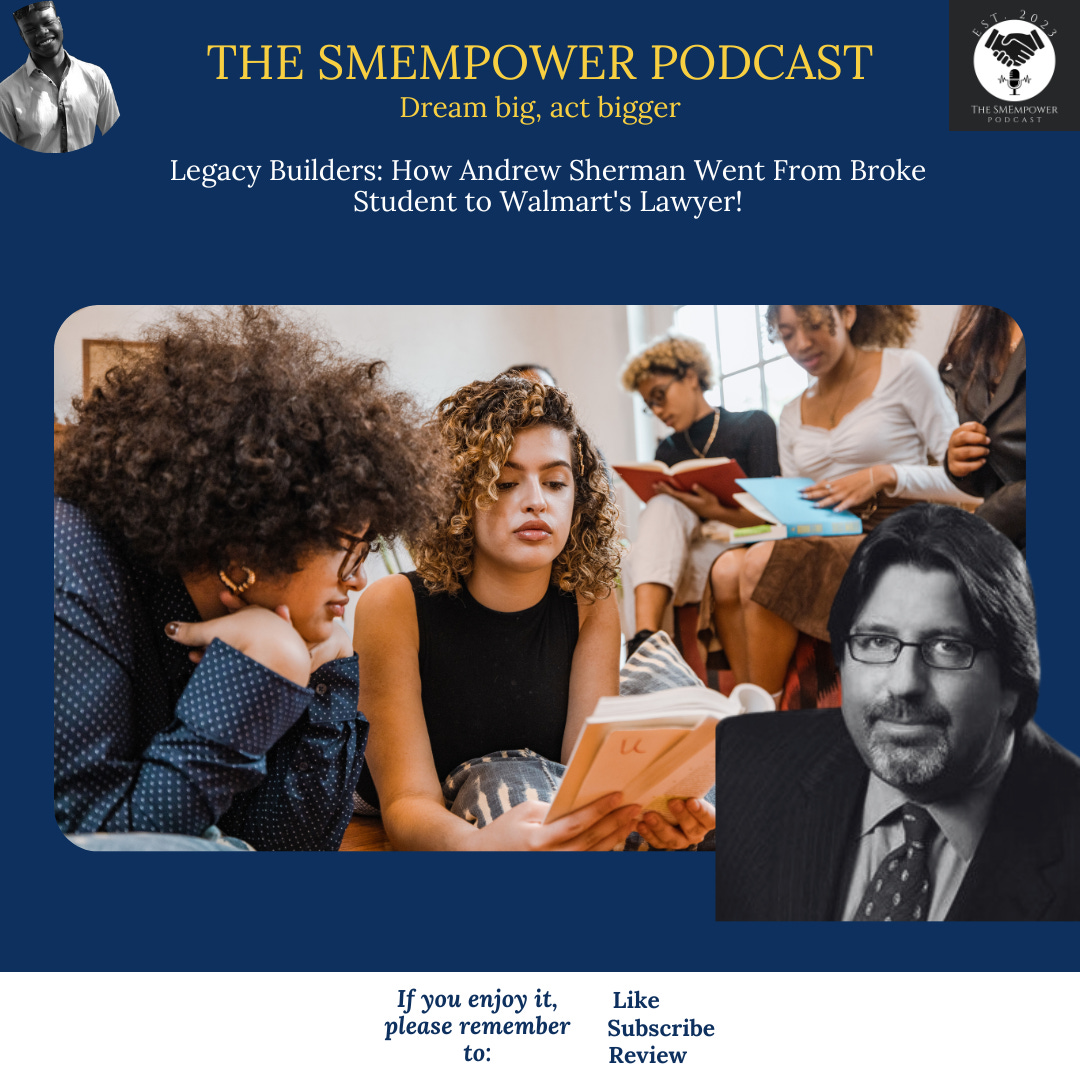
Legacy Builders: How Andrew Sherman Went From Broke Student to Walmart's Lawyer!

Quote of the week → “Knowledge is power… and we have a moral duty to share and empower others” - Andrew J. ShermanWatch the intro video here!I just found out how Andrew Sherman went from broke student to becoming a global thought leader in business and law!Andrew is a 28 time author who’s been acknowledged by magazines like Fortune, Inc. and many more as one of the world’s top minds in small and large business! I just had a conversation with him on our podcast and here are my top 3 takeaways: * Your gifts can turn into revenue streams - Andrew started freelance writing to pay bills when he was in college but he quickly discovered he had a gift for it and that led him to publishing a book by his first year as a practicing lawyer! * Entrepreneurs are stewards of investor money - Andrew calls the investor-entrepreneur relationship a marriage, based on trust. Entrepreneurs have to make themselves into trustworthy partners in order to succeed. * Money is a commodity - Andrew warns that you shouldn’t take investor money unless it comes with more… unless it comes with expertise, networks and time, it may not be worth it.Andrew became successful by applying empathy, building trust and being resourceful and we can do that too. Hey, there’s so much more to this story, listen to the full episode to find out… and if you like inspiring and actionable business stories subscribe!Special thanks to Andrew for coming on the podcast! He is a charming, funny and intelligent human being who I’ve been privileged to meet and talk to.Learn more about him and his books on his: LinkedIn Page - Andrew's LinkedIn!Wikipedia page - Andrew's Wikipedia!Brown and Rudnick’s Website Page - Andrew's Page!Amazon Author’s Page - Andrew's Author Page! If you like this episode, feel free to share it on your social media platforms…Feel free also to support us on our platforms…We’d love to hear your thoughts and comments on this episode’s ideas so feel free to… or message us…Until next time, Max This is a public episode. If you would like to discuss this with other subscribers or get access to bonus episodes, visit theimpactfulcapitalist.substack.com

September 22, 202328 min

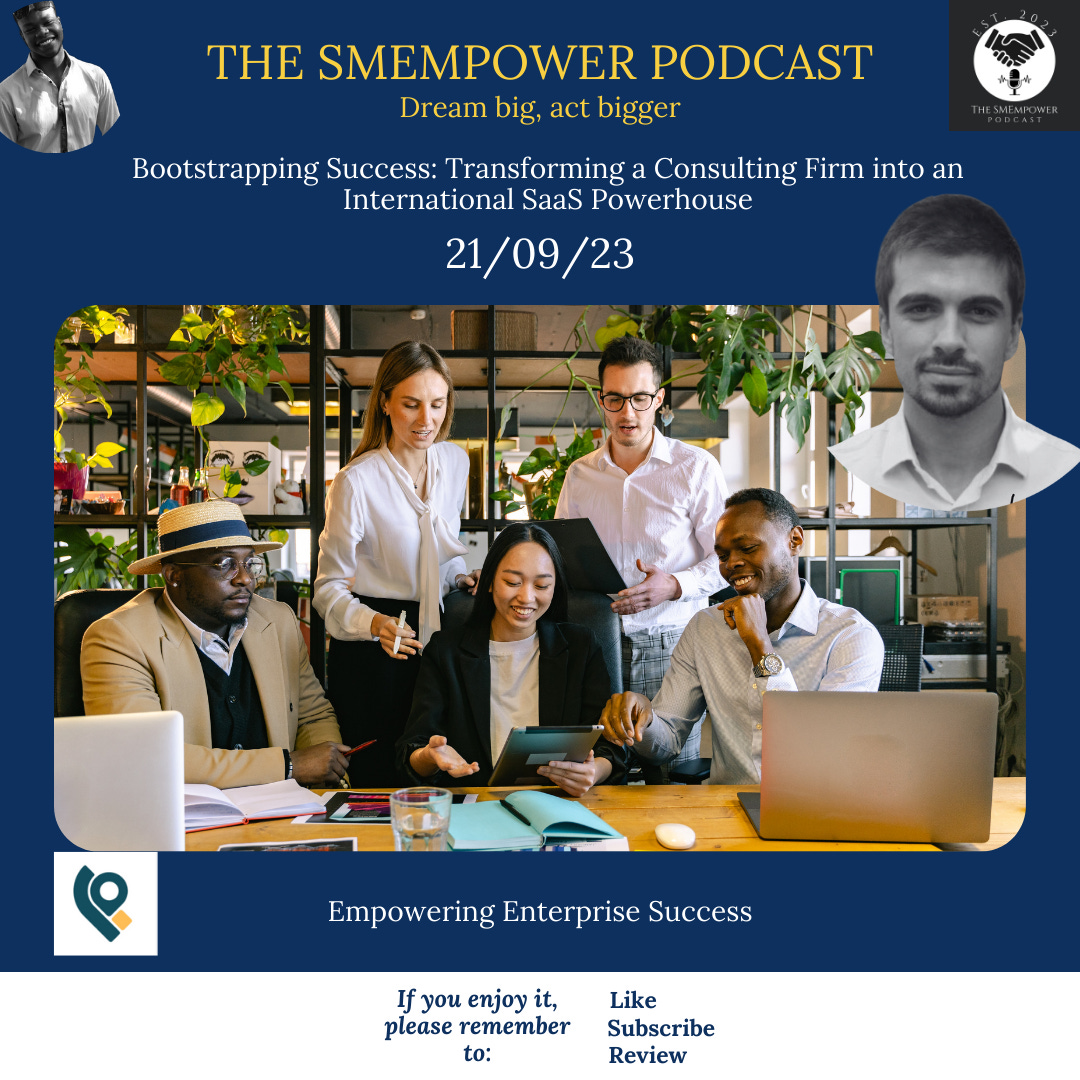
I found out how Loic Ballester bootstrapped an international tech company from East Africa!

I found out how Loic Ballester bootstrapped an international tech company from East Africa!Join us in this inspiring episode as we delve into the remarkable journey of Loic Ballester, the visionary founder who, along with his co-founders, turned a small market research consulting firm in Uganda into an international powerhouse. Over eight transformative years, Loic and his co-founders, steered his company through a remarkable evolution, ultimately emerging as a bootstrapped Enterprise SaaS leader in Field Force Automation Software.Discover the secrets behind their incredible success story as we explore their expansion from Uganda to Kenya, and how they managed to captivate the market, serving nearly 100 clients across almost 50 countries spanning three continents. With unwavering dedication and an unshakable vision, Loic has not only grown his company but empowered tens of enterprises worldwide. This episode is a testament to the entrepreneurial spirit and the boundless potential of taking risks to achieve remarkable outcomes. Don't miss this insightful conversation that offers invaluable lessons on business growth, resilience, and empowerment! Find Loic’s company, Optimetriks (Field Pro App) on: Website - https://www.fieldproapp.com/ Linkedin - https://www.linkedin.com/company/optimetriks/Find his entrepreneurial community, French Tech Nairobi on: Linkedin - https://www.linkedin.com/company/french-tech-nairobi/ Registration form - https://shorturl.at/abZ78Find Loic’s Linkedin hereWhat do you think about these ideas? Do you agree or disagree with this perspective? Let me know in the comments!Want to learn more about creating more wealth for yourself and the world?Sharing is caring!If you know someone who would find value in this post, please don't hesitate to share it with them via email, social media, or any other means. It would mean the world to us. This is a public episode. If you would like to discuss this with other subscribers or get access to bonus episodes, visit theimpactfulcapitalist.substack.com

Is this your show?

Claim this listing to keep it up to date, reach guests who want to pitch you, and manage bookings with Guestify.

Claim this listing

More Business podcasts