Find partners
The Harvest Growth Podcast

The Harvest Growth Podcast

Hosted by Jon LaClare

BusinessEntrepreneurshipInterviews guests

Episodes

276

Latest episode

Jul 2026

Language

EN-US

About the show

Listen to inspirational stories from successful inventors and entrepreneurs as our host, Jon LaClare, founder of Harvest Growth, leads interviews targeted at helping aspiring inventors and market-leading entrepreneurs alike. If you’d like to see how Harvest Growth can help grow your product business, click below.

Listen to episodes

60 recent
July 6, 2026Episode 27732 min

The Marketing Strategy Behind a Fast-Growing Wellness Brand

In this episode of the Harvest Growth Podcast, Jon LaClare sits down with Allie Egan, founder of Veracity, to discuss how she built a science-backed wellness brand by combining product innovation, expert-led marketing, and a deep understanding of the consumer health space.Allie shares how her background in finance, product marketing, eCommerce, and consumer brands helped shape her approach to entrepreneurship. From early experience with companies like Glossier and Estée Lauder to helping scale Cynthia Rowley’s direct-to-consumer business, she explains how understanding product, brand, finance, and marketing together can help founders build something that truly stands out.The conversation dives into the decision to raise outside capital, especially when building clinically backed consumer products that require more investment than a simple private-label launch. Allie explains why funding can help founders reduce personal risk, invest in better science, and tap into experienced consumer investors who bring more than just money to the table.Jon and Allie also discuss how Veracity has grown through expert-led content, including physicians and health professionals who genuinely believe in the product and science behind the brand. Rather than relying only on traditional influencers, Veracity has built trust by creating content rooted in education, authenticity, and real expertise.If you’re launching a product in a competitive category, trying to build trust with customers, or wondering how to scale a consumer brand without losing focus, this episode offers valuable insight into what it takes to create a brand with long-term potential.In today’s episode of the Harvest Growth Podcast, we cover:Why science-backed consumer products often require more capital than simple product launchesHow outside investment can support product development, clinical research, and growthWhy the right investors can bring valuable connections and brand-building experienceHow expert-led content can outperform generic influencer marketingWhy authenticity matters when working with influencers, physicians, and affiliatesHow to personalize marketing content for different customer segmentsWhy innovative products should build on what customers already understandimportance of focusing on one hero product before expanding too quicklyHow sampling and free trials can become powerful marketing enginesAnd so much more!Want to learn more about Veracity?Visit veracityhealth.co to explore their products and research. You can also follow Veracity on Instagram and TikTok at @veracityhealthco.Do you have a brand you’d like to launch or scale?Visit HarvestGrowth.com to book a free consultation and learn how our team has helped generate over $2 billion in product sales.

June 29, 2026Episode 27629 min

How Three Lollies Grew Through Amazon, Retail, and Healthcare Sampling

In this episode of the Harvest Growth Podcast, Jon LaClare sits down with Jim Pathman of Three Lollies, the company behind Preggie Drops and Queasy Drops, to talk about the real-world lessons that come from building a product brand over more than 20 years.Jim shares how the business started as a passion project rooted in helping people, then grew into a nationally recognized brand available through major retailers like Walmart, H-E-B, Meijer, and Amazon. Along the way, he learned hard but valuable lessons about retail contracts, chargebacks, partnerships, and why founders need to slow down and read the fine print before jumping into exciting opportunities.The conversation also explores how sampling became one of Three Lollies’ most powerful growth strategies. By getting products into the hands of OB-GYNs, doulas, midwives, hospitals, oncology teams, and other trusted healthcare professionals, Jim’s team built awareness through credibility, trust, and word-of-mouth.If you’re launching or scaling a consumer product brand, this episode offers practical insight into retail growth, Amazon strategy, sampling, founder mindset, and the value of building long-term relationships.In today’s episode of the Harvest Growth Podcast, we cover:Why early business mistakes can become valuable growth lessonsWhat founders should understand before entering retail partnershipsHow hidden retail fees and chargebacks can impact profitabilityWhy the right sales reps and brokers can make retail relationships strongerHow Three Lollies grew through Walmart, H-E-B, Meijer, and AmazonWhy sampling through trusted sources can drive word-of-mouth marketingHow healthcare professionals helped introduce the product to the right audiencesWhy slow, sustainable growth can be an advantage for foundersThe importance of relationships in building a business that lastsWant to learn more about Three Lollies?Visit threelollies.com to explore Preggie Drops, Queasy Drops, and their other natural queasiness relief products. You can also find their products on Amazon or in select retailers including Walmart, H-E-B, and Meijer.Do you have a brand you’d like to launch or scale?Visit HarvestGrowth.com to book a free consultation and learn how our team has helped generate over $2 billion in product sales.
June 22, 2026Episode 27548 min

How to Market a Product Globally: Lessons From Selling in 118 Countries

In this episode of the Harvest Growth Podcast, Jon LaClare sits down with Paul O’Brien, co-founder of AirPhysio, to break down how a respiratory health product grew from a competitive medical device category into a global brand sold in 118 countries.Paul shares how AirPhysio approached product development by studying competitors, identifying gaps, working with medical professionals, and prioritizing safety, testing, and education. He explains why cheaper alternatives can create serious trust and safety concerns, especially in the medical device space, and how strong educational marketing helps customers understand why quality matters.The conversation also dives deep into international expansion, distributor relationships, and the realities of selling across cultures, languages, regulatory environments, and sales channels. Paul explains why global growth can reduce risk by preventing dependence on one country, but also creates major challenges around compliance, documentation, local market strategy, and distributor performance.Paul also shares why AirPhysio shifted from the traditional doctor-referral model to a more direct B2C education strategy, helping customers discover the product first and then bring that awareness back to healthcare professionals. From Amazon growth to pharmacy support, localized marketing, social media targeting, and choosing the right distributors, this episode offers a practical look at what it really takes to scale internationally.In today’s episode of the Harvest Growth Podcast, we cover:Why product safety and testing matter when competing against cheaper alternativesHow customer education helps build trust in medical device marketingWhy understanding competitors can improve product design and messagingThe benefits and challenges of selling in 118 countriesHow global expansion helps reduce dependence on one marketWhy local distributors are critical for understanding culture, language, and buying behaviorHow to evaluate distributors based on channel strengths and follow-throughWhy B2C marketing can outperform traditional doctor-referral strategiesHow social media can support retail, pharmacy, and distributor growthWhy science, track record, and vision are essential when pitching distributorsIf you’re building a product brand, entering a regulated category, or trying to expand internationally, this episode offers valuable lessons on trust, education, distributor strategy, and global growth from a company that has successfully scaled around the world.To learn more about AirPhysio, visit AirPhysio.com or search for AirPhysio on Amazon.Do you have a brand you’d like to launch or scale?Visit HarvestGrowth.com to book a free consultation and learn how our team has helped generate over $2 billion in product sales.
June 15, 2026Episode 27425 min

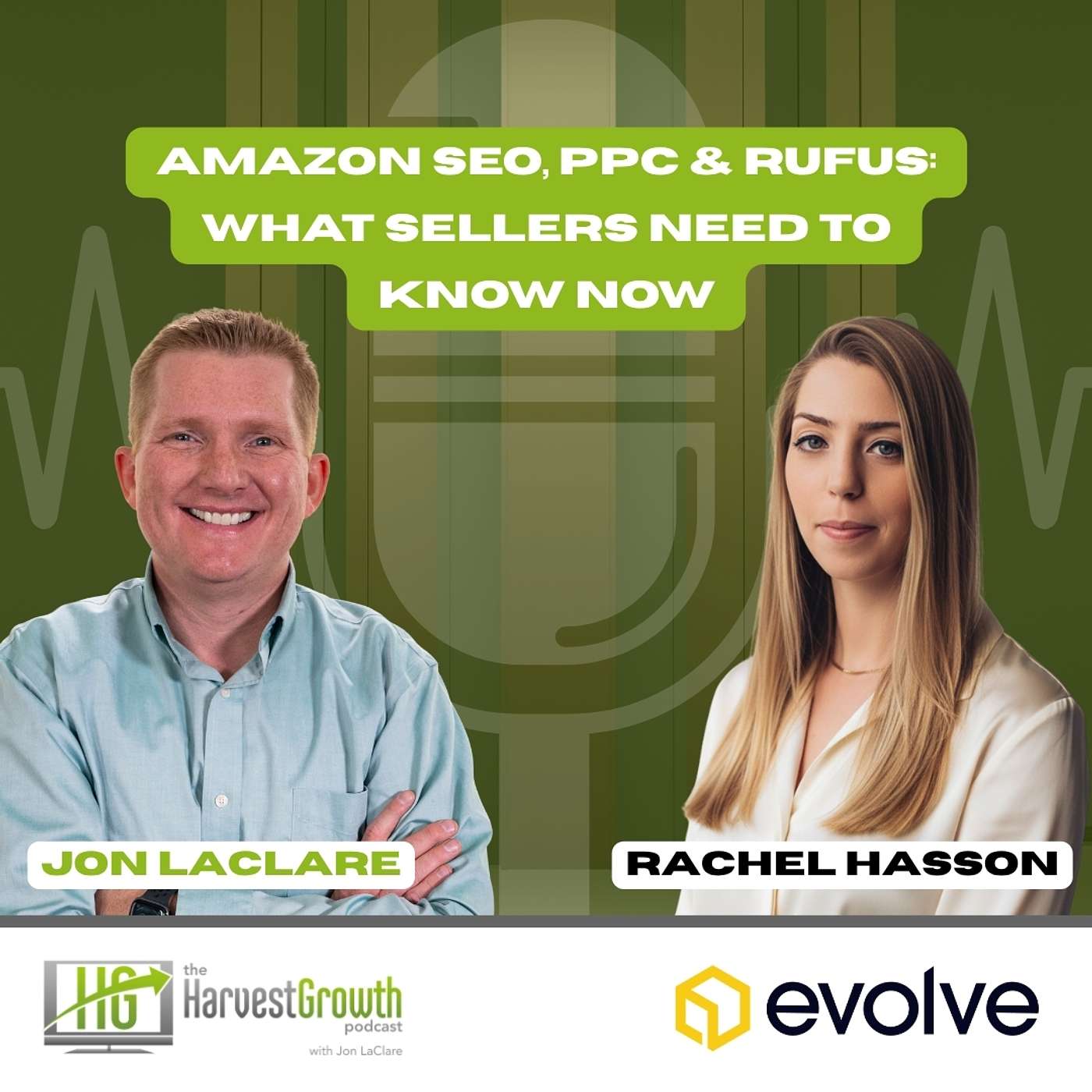
Amazon SEO, PPC & Rufus: What Sellers Need to Know Now

In this episode of the Harvest Growth Podcast, Jon LaClare sits down with Rachel Hasson, Amazon expert and founder of Evolve Ad Agency, to break down what brands need to know to compete and convert on Amazon today.Rachel shares how she built her Amazon expertise from the ground up, starting with listing optimization work on Fiverr while managing Amazon accounts in a full-time marketing role. Today, she helps brands improve their Amazon presence through better listing strategy, conversion optimization, PPC campaigns, and channel growth.The conversation dives into why so many brands make the mistake of copying their website content directly onto Amazon — and why that rarely works. Rachel explains what she looks at first when evaluating a brand’s Amazon presence, including main images, infographics, listing copy, backend attributes, A+ Content, and how well the listing is built to convert shoppers in a crowded marketplace.Rachel also shares timely insight into Amazon’s AI shopping assistant, Rufus, and why sellers need to start optimizing not only for shoppers, but also for how AI understands and recommends products. From alt text in A+ Content to image copy and product attributes, she explains how Amazon’s changing search experience is reshaping listing optimization.The episode also covers Amazon PPC, including why brands should fix conversion problems before spending more on ads, how video can help products stand out, and why sellers should be careful about trying to manage campaigns without fully understanding how quickly Amazon advertising changes.If you’re selling on Amazon, launching a new product, or trying to improve an existing listing, this episode offers a practical look at what actually drives visibility, clicks, conversions, and long-term marketplace growth.In today’s episode of the Harvest Growth Podcast, we cover:Why your Amazon listing should not simply copy your websiteHow to optimize your main image to stand out in search resultsWhy infographics and listing images matter for both shoppers and AIWhat Amazon Rufus is and why sellers need to optimize for itHow A+ Content, alt text, FAQs, and product specs can improve visibilityWhy conversion issues should be fixed before scaling PPCHow video ads can help brands stand out on AmazonWhy founders should be cautious about managing PPC themselvesHow to handle Amazon support issues with persistence and the right framingWhy TikTok Shop and Walmart.com can complement Amazon growthWant to connect with Rachel?Visit EvolveAdAgency.com to learn more about Rachel Hasson and Evolve Ad Agency.Do you have a brand you’d like to launch or scale?Visit HarvestGrowth.com to book a free consultation and learn how our team has helped generate over $2 billion in product sales.
June 8, 2026Episode 27230 min

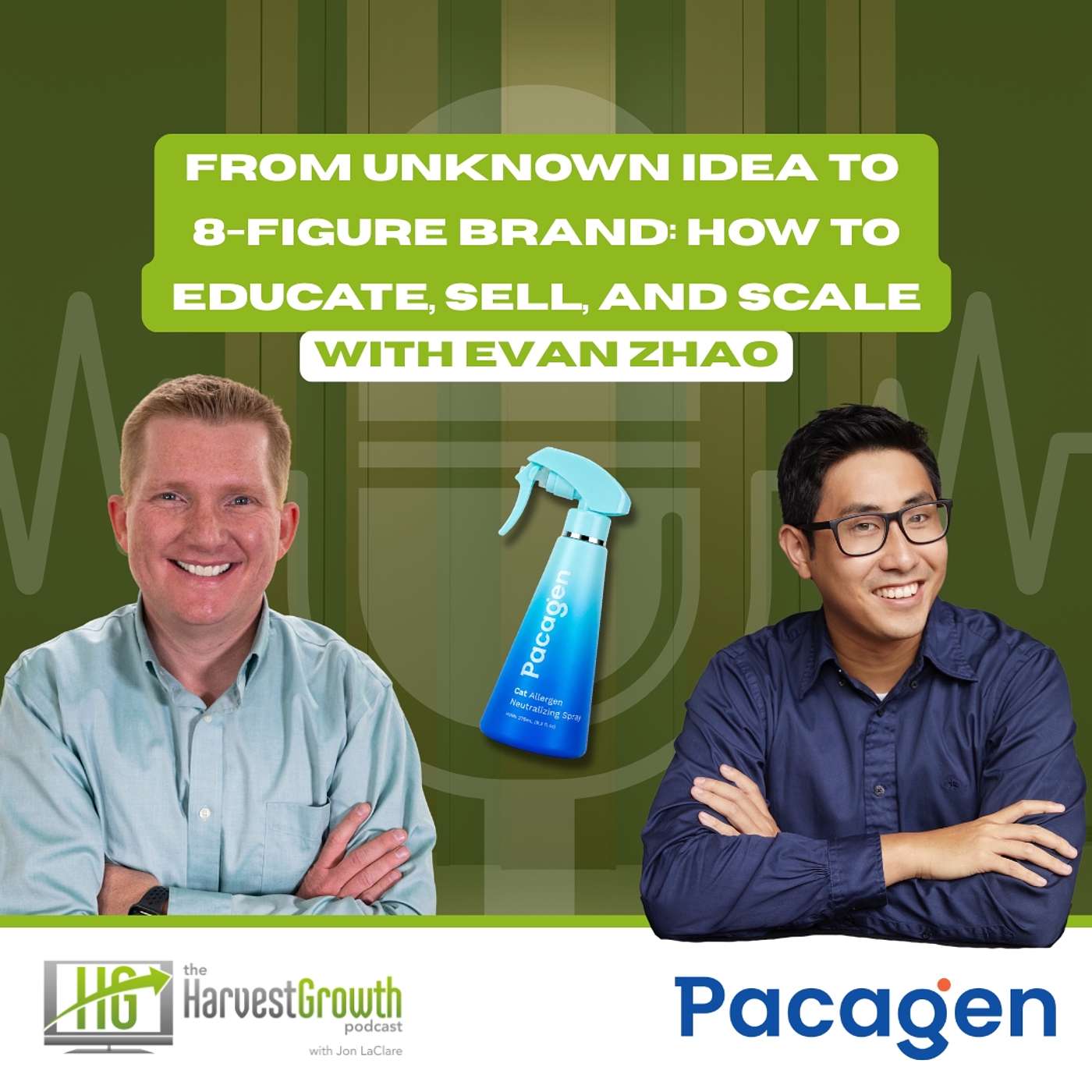
From Unknown Idea to 8-Figure Brand: How to Educate, Sell, and Scale

In this episode of the Harvest Growth Podcast, Jon LaClare sits down with Evan Zhao of Pacagen to discuss how his team developed and marketed a new kind of pet allergy solution designed to help people live more comfortably with the animals they love.Evan shares the challenge of bringing a product to market when customers do not already understand the category. Unlike products built around familiar trends like magnesium, creatine, or protein, Pacagen had to educate customers on why pet allergies happen, how their solution works, and why it is different from traditional options.The conversation dives into what it takes to build demand for a new product category, including how Pacagen approached longer sales cycles, performance marketing, website sales, Amazon, and customer education. Evan explains why products that require more explanation often perform better on a brand’s own website, where companies can capture customer information, retarget visitors, and continue educating them over time.Evan also shares why lifetime value is one of the most important drivers of growth, especially for a product customers may come back to repeatedly. From customer service to packaging, scent, shipping, and the full product experience, Pacagen focuses on improving every touchpoint to make sure customers have a reason to return.This episode also explores Pacagen’s work with shelters, where the company gives away free samples to help more people keep their pets instead of giving them up due to allergies. Evan explains why this is one of the few initiatives his team does without focusing directly on ROI — because helping pets stay in loving homes is valuable on its own.In today’s episode of the Harvest Growth Podcast, we cover:● How Pacagen created a new category in pet allergy relief● Why educating customers is critical when selling an unfamiliar product● How longer sales cycles impact performance marketing strategy● Why website sales can be more effective than Amazon for products that require explanation● How Amazon can serve as a demand capture channel● Why lifetime value depends on the full customer experience● How customer service helps improve product retention● Why product sampling can build trust, create goodwill, and support a larger mission● How Pacagen is helping pet owners and shelters reduce allergy-related pet surrenderIf you’re building a new product category, marketing a product that requires education, or trying to improve long-term customer value, this episode offers practical insight into how product quality, customer experience, and clear messaging work together to support sustainable growth.To learn more about Pacagen, visit Pacagen.com or search for Pacagen on Amazon.Do you have a brand you’d like to launch or scale? Visit HarvestGrowth.com to book a free consultation and learn how our team has helped generate over $2 billion in product sales.

June 1, 2026Episode 27133 min

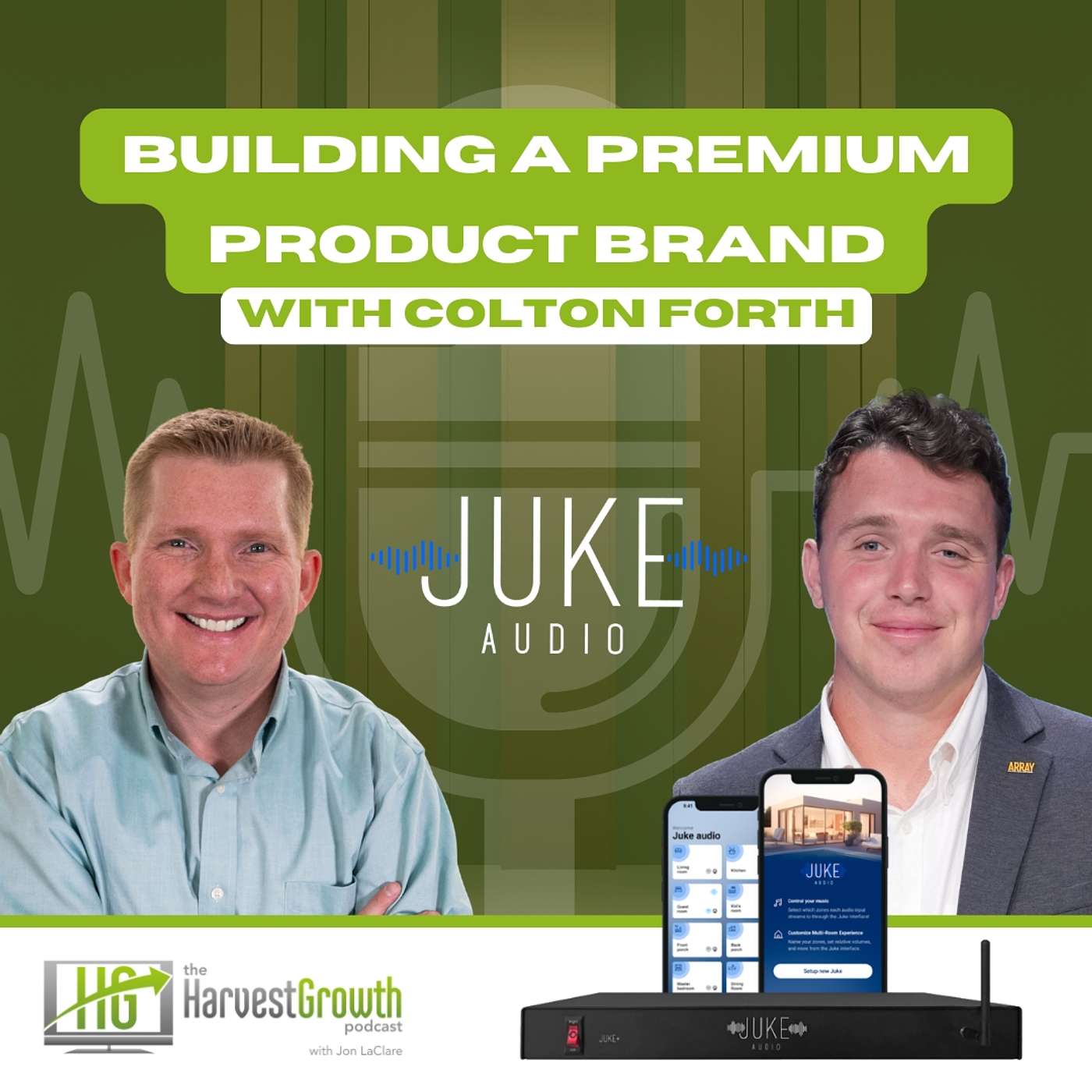
Building a Premium Product Brand: Colton Forth on Juke Audio, Customer Trust, and Copycats

In this episode of the Harvest Growth Podcast, Jon LaClare sits down with Colton Forth, President of Juke Audio, to discuss how a personal home audio problem turned into a fast-growing consumer electronics brand.Colton shares how he and his father originally developed Juke Audio for their own family home after receiving expensive five-figure quotes for an in-ceiling speaker system. What started as a practical solution for their own needs eventually became a commercial product designed to make whole-home audio more affordable, elegant, and reliable.The conversation explores the advantages of built-in audio systems over bulky “wireless” speakers, especially for new construction, remodels, and retrofits. Colton explains why hardwired, centralized audio systems can offer better aesthetics, stronger reliability, and higher sound quality than many plug-in alternatives.Colton also walks through the early days of launching Juke Audio, including the unforgettable first sale around Thanksgiving 2019, the simple website that helped validate demand, and the handwritten notes that helped create early customer loyalty. From there, he shares how the company built trust through industry trade shows, awards, customer support, Crutchfield, Amazon, authentic founder-led social media content, and user-generated videos.This episode also dives into one of the toughest challenges product brands face: copycats. Colton explains how Juke Audio dealt with a company that copied its product design, logo, listings, and marketing assets — and how patents, legal action, strong branding, and founder authenticity helped protect the business.In today’s episode of the Harvest Growth Podcast, we cover:Why built-in home audio can outperform bulky wireless speaker systemsHow Juke Audio started as a solution for Colton’s own family homeWhat Colton learned from the company’s very first saleHow handwritten notes and accessible customer support built early trustWhy industry awards and trade shows helped validate the brandHow Juke Audio earned a major retail partnership with CrutchfieldWhy authentic founder-led video ads can outperform overproduced contentHow user-generated content can fuel both marketing and product developmentWhat product founders should know about copycats, patents, and brand protectionWhy the best time to start building your business may be right nowIf you’re building a premium product, launching a technical consumer brand, or trying to create trust in a competitive market, this episode offers practical insight into product validation, customer support, authentic marketing, and long-term brand protection.To learn more about Juke Audio, visit JukeAudio.com. You can also find Juke Audio on Amazon and Crutchfield.Do you have a brand you’d like to launch or scale? Visit HarvestGrowth.com to book a free consultation and learn how our team has helped generate over $2 billion in product sales.

May 25, 2026Episode 27034 min

Why Getting Into Walmart Almost Broke This Product Business

In this episode of the Harvest Growth Podcast, Jon LaClare sits down with Scott Anderson, entrepreneur, Air Force veteran, and founder behind multiple growing businesses, including iFlex, Optimal Weight and Wellness Med Spa, and Get VA Help.Scott shares the story of iFlex, a phone holder product that saw exciting early momentum in retail stores like Walmart, Office Depot, Staples, and Fred Meyer. But what looked like success on the surface quickly revealed a painful lesson: revenue does not always equal profit. After cutting pricing dramatically to meet Walmart’s requirements and splitting already-tight margins between multiple partners, Scott realized the retail path was not the right long-term solution for his business.The conversation dives into how Scott took the product back, canceled the licensing deal, and rebuilt iFlex around customer feedback. By launching the improved iFlex Buddy, optimizing Amazon listings, investing in PPC, and paying closer attention to reviews, Scott was able to regain control of the brand and drive renewed growth on Amazon.Scott also shares how the lessons he learned from product development carried into his next venture: Optimal Weight and Wellness Med Spa in Sun City West, Arizona. What started as a one-room weight loss clinic quickly expanded into a seven-room med spa offering medically supervised weight loss, GLP-1 support, facials, dermaplaning, microneedling, massage therapy, red light therapy, and more.Finally, Scott introduces Get VA Help, a new platform designed to help veterans better understand their VA disability ratings. Powered by the Veteran Rating Intelligence System, or VRIS, the platform helps organize medical records, decision letters, exams, and supporting statements so veterans can better see how their records align with VA rating criteria.If you’re building a product brand, considering retail, growing on Amazon, launching a service business, or looking for a real-world example of how customer feedback can shape better decisions, this episode is packed with practical lessons.In today’s episode of the Harvest Growth Podcast, we cover:Why getting into Walmart is not always as profitable as it looksHow retail pricing pressure can destroy product marginsWhy Scott took iFlex back from a licensing dealHow customer feedback helped create the improved iFlex BuddyWhy Amazon reviews, PPC, and listing optimization helped restart growthHow Scott’s mindset shifted from passive licensing to hands-on business managementWhat product founders can learn from listening closely to customersHow Optimal Weight and Wellness Med Spa grew from one room to seven roomsWhy Google reviews and community trust matter for local service businessesHow Get VA Help is being built to support veterans with VA disability rating clarityAnd so much more!Want to connect with Scott?Search for iFlex phone holder on Amazon to find the iFlex Buddy. To learn more about Optimal Weight and Wellness Med Spa, visit myoptimallifeaz.com. If you are a veteran or family member of a veteran, visit getvahelp.org to learn more about Get VA Help.Do you have a brand you’d like to launch or scale?Visit HarvestGrowth.com to book a free consultation and learn how our team has helped generate over $2 billion in product sales.

May 18, 2026Episode 26928 min

The REAL Reason Customers Pay More (with Andy Auble)

In this episode of the Harvest Growth Podcast, Jon LaClare sits down with Andy Auble, entrepreneur behind Gluetread and Proof Razor, to explore how American manufacturing, fast product development, and customer trust can create a powerful competitive advantage.Andy shares the story behind Gluetread, a unique off-road tire sidewall repair product that was born from a real problem and eventually grew into a patented solution trusted by off-roaders, agricultural users, and even organizations like the U.S. Border Patrol. He explains how early skepticism was overcome through product demos, customer reviews, word-of-mouth, and a bold Rubicon Trail “torture test” that proved the product could perform under extreme conditions.The conversation also dives into Proof Razor, Andy’s premium Made-in-USA razor brand built around long-term quality, honest pricing, universal blades, and freedom from subscription lock-in. Unlike Gluetread, which created a new product category, Proof Razor competes in a crowded market—making its positioning, materials, customer experience, and manufacturing story even more important.Andy also shares practical advice for founders, including why entrepreneurs should fail fast, test minimum viable products, get feedback from people outside their personal circle, and avoid getting stuck chasing perfection before launch.In today’s episode of the Harvest Growth Podcast, we cover:Why moving quickly can be a major advantage for American-made product brandsHow domestic manufacturing can improve speed, quality control, cash flow, and relationshipsThe story behind Gluetread and how it solved a real off-road tire repair problemHow customer reviews, real-world demos, and torture tests build credibilityWhy premium products need strong proof, trust, and clear positioningHow Proof Razor challenges the traditional razor-and-blades business modelWhy founders should test minimum viable products before scaling too quicklyThe importance of failing fast, setting goals, and learning from real customersIf you’re building a product business, launching a new idea, or trying to stand out in a crowded market, this episode offers practical lessons on product validation, manufacturing, brand trust, and long-term growth.Want to connect with Andy or learn more about his products?Visit Gluetread.com or ProofRazor.com.Do you have a brand you’d like to launch or scale?Visit HarvestGrowth.com to book a free consultation and learn how our team has helped generate over $2 billion in product sales.

May 11, 2026Episode 26831 min

From Amazon to Retail: The Omni-Channel Strategy Behind Jaxon Lane’s Success

Over the past 20 years, the team at Harvest Growth has helped launch and grow hundreds of consumer products, generating more than $2 billion in revenue. On the Harvest Growth Podcast, we break down what actually works in product marketing—real stories, real strategies, and lessons you can put to work right away.In this episode, Jon LaClare sits down with Alex Penfold, co-founder of Jaxon Lane, to share how he built a leading men’s skincare brand by combining Amazon dominance, strategic PR, and a smart omni-channel expansion strategy.Alex explains how starting with a niche focus on long-tail keywords helped Jaxon Lane stand out on Amazon—even as competition and costs increased. From there, he leveraged PR exposure, including major publications and editorial features, to drive awareness, organic growth, and retail demand.The conversation dives deep into how Jaxon Lane expanded beyond Amazon into direct-to-consumer, Meta advertising, TikTok, and major retail partners like Urban Outfitters, Bloomingdale’s, and Saks Fifth Avenue—turning each channel into a growth engine that feeds the others.Alex also breaks down what it really takes to win with PR, why having a compelling product story matters more than just launching something new, and how consistent product innovation keeps brands relevant year after year.If you’re building a product brand and wondering how to scale beyond a single channel—or how to fund growth without outside investment—this episode offers a practical roadmap from someone who’s done it successfully.In today’s episode of the Harvest Growth Podcast, we cover:Why niche positioning and long-tail keywords drive early Amazon successHow PR exposure can accelerate brand awareness and organic growthThe role of retail as both a revenue channel and top-of-funnel marketingWhy omni-channel strategies outperform single-channel businessesWhat it takes to succeed on TikTok (and why it’s a completely different model)How to approach influencer and UGC strategies more efficientlyWhy product quality and manufacturing decisions directly impact growthThe advantages and challenges of bootstrapping vs. taking outside investmentHow to fund growth by reinvesting profits across channelsAnd so much moreIf you’re launching a product, scaling on Amazon, or looking to expand into retail, PR, or TikTok, this episode will help you think more strategically about long-term growth.To learn more about Jaxon Lane, visit jaxonlane.com or search for their products on Amazon.Do you have a brand you’d like to launch or grow?Want help from a partner that has successfully launched hundreds of brands totaling over $2 billion in revenue?Visit HarvestGrowth.com and set up a free consultation with our team today.

May 4, 2026Episode 26734 min

How a Simple Lip Balm Became a Best-Selling Product on Amazon

Over the past 20 years, our team at Harvest Growth has helped launch and grow hundreds of consumer products, generating more than $2 billion in revenue. On this podcast, we break down what actually works in product marketing—real stories, real strategies, and lessons you can put to work right away.In this episode of the Harvest Growth Podcast, Jon LaClare sits down with Dave Maloney, founder of a rapidly growing skincare brand built around simple, effective formulations and a commitment to product quality over hype.Dave shares how what started as a personal project—creating a product to help his mom—evolved into a thriving business, with his lip balm becoming a standout best-seller on Amazon. Drawing from his background in biotech and chemistry, Dave explains how understanding natural ingredients, testing formulations, and focusing on performance helped him create products that customers truly love.The conversation dives into why his lip balm outperformed other products, how customer behavior and repeat purchases drive growth, and why many competing products fail to deliver lasting results. Dave also breaks down his lean business model, explaining how he scaled quickly without building a large internal team by leveraging contractors and maintaining flexibility.You’ll also learn why starting small was one of his biggest advantages—testing products with minimal inventory, refining based on real customer feedback, and avoiding costly mistakes early on. Dave shares his perspective on Amazon as a sales channel, including its advantages, challenges, and why being where customers are ready to buy can make all the difference.In today’s episode of the Harvest Growth Podcast, we’ll cover:Why products that truly work drive repeat purchases and organic growthHow Dave formulated a high-performing product using natural ingredientsWhy his lip balm became the #1 seller—and what made it differentThe importance of starting small and validating product-market fit earlyHow to scale a business while keeping your team lean and flexibleWhy Amazon can be a powerful channel (if used strategically)The realities of getting reviews and building trust on AmazonWhy focusing on one “hero product” can accelerate growthThe importance of community and mentorship for entrepreneursAnd so much more!If you’re launching a product, scaling an eCommerce brand, or trying to build something that customers come back to again and again, this episode is packed with practical insights you can apply immediately.To be a guest on our next episode of the podcast, contact us today!Do you have a brand that you’d like to launch or grow? Do you want help from a partner that has successfully launched hundreds of brands totaling over $2 billion in revenues? Visit HarvestGrowth.com and set up a free consultation with us today!

Is this your show?

Claim this listing to keep it up to date, reach guests who want to pitch you, and manage bookings with Guestify.

Claim this listing

More Business podcasts