Find partners
The Freight Buyers' Club

The Freight Buyers' Club

Hosted by Mike King

Episodes

154

Latest episode

Aug 2026

Language

EN

About the show

The Freight Buyers’ Club podcast is a new home for anyone with a professional interest in international trade, container shipping, procurement, logistics and air cargo. Each episode your host, award-winning journalist Mike King, will be speaking to leading decision-makers, analysts, journalists, operators and shippers to get their take on current freight and logistics markets and the challenges and opportunities ahead. You can subscribe to receive each episode direct to your inbox at: thefreightbuyersclub.com

Listen to episodes

60 recent
September 9, 20261 hr 19 min

Agentic AI and Supply Chain Resilience, with e2open's Pawan Joshi, Northeastern's Nada Sanders and Andre Simha (ex-MSC)

Disruption is now the baseline for global trade, not the exception. This episode looks at what real resilience takes on the ground, how technology fits in as decision infrastructure, and covers agentic AI, including who's accountable when it gets the call wrong. Mike King speaks with three guests who bring experience and insight from different perspectives across the industry. Guests Pawan Joshi is Chief Strategy Officer at e2open, which became part of the $2 billion WiseTech Global group last year, after more than two decades building the company's supply chain platform. Nada Sanders is Distinguished Professor of Supply Chain Management at Northeastern University's D'Amore-McKim School of Business, ranked among the top 2% of scientists worldwide by Stanford, and author of The Humachine. Andre Simha spent nearly 39 years at MSC, the world's largest shipping line, the last five and a half as its digital transformation chief, and chaired the Digital Container Shipping Association for seven years. 0:00 Why Disruption Is Now the Baseline for Trade 2:02 Meet the Panel 4:35 Firefighting vs Preventing Supply Chain Risk 7:05 Planning for a Range of Futures, Not One Plan 9:20 Inside the Ocean Shipping Index 11:15 The COVID Lead Time Failure 14:05 Supply Chain Visibility vs Early Warning 17:00 Three Practices for Earlier Risk Detection 19:05 The Human Machine and the Unilever Example 23:30 AI Vendor Promises and Where the Human Role Shifts 28:35 Supply Chains Built for a 50 to 70 Year Old World 32:10 The Cold Chain Example and Closing the Loop 36:50 Why e2open and CargoWise Came Together 44:30 Trust, Not Standards, Is the Real Barrier 47:10 Digital Supply Chain Standards and the Adoption Problem 52:00 Agentic AI vs the Blockchain Evangelists 56:00 Agentic AI and the Football Match Maturity Question 62:00 Who's Accountable When Agentic AI Gets It Wrong 69:00 What's Not Being Taken Seriously 73:10 Closing Predictions, Reasons for Optimism #SupplyChain #Resilience #Logistics #GlobalTrade #Disruption #SupplyChainManagement #DigitalTransformation #FreightBuyersClub #AgenticAI #ArtificialIntelligence #ContainerShipping

September 2, 202637 min

Who's Really to Blame for Port Congestion? Drewry's Eleanor Hadland on Capacity, Carriers and the Hormuz Scramble

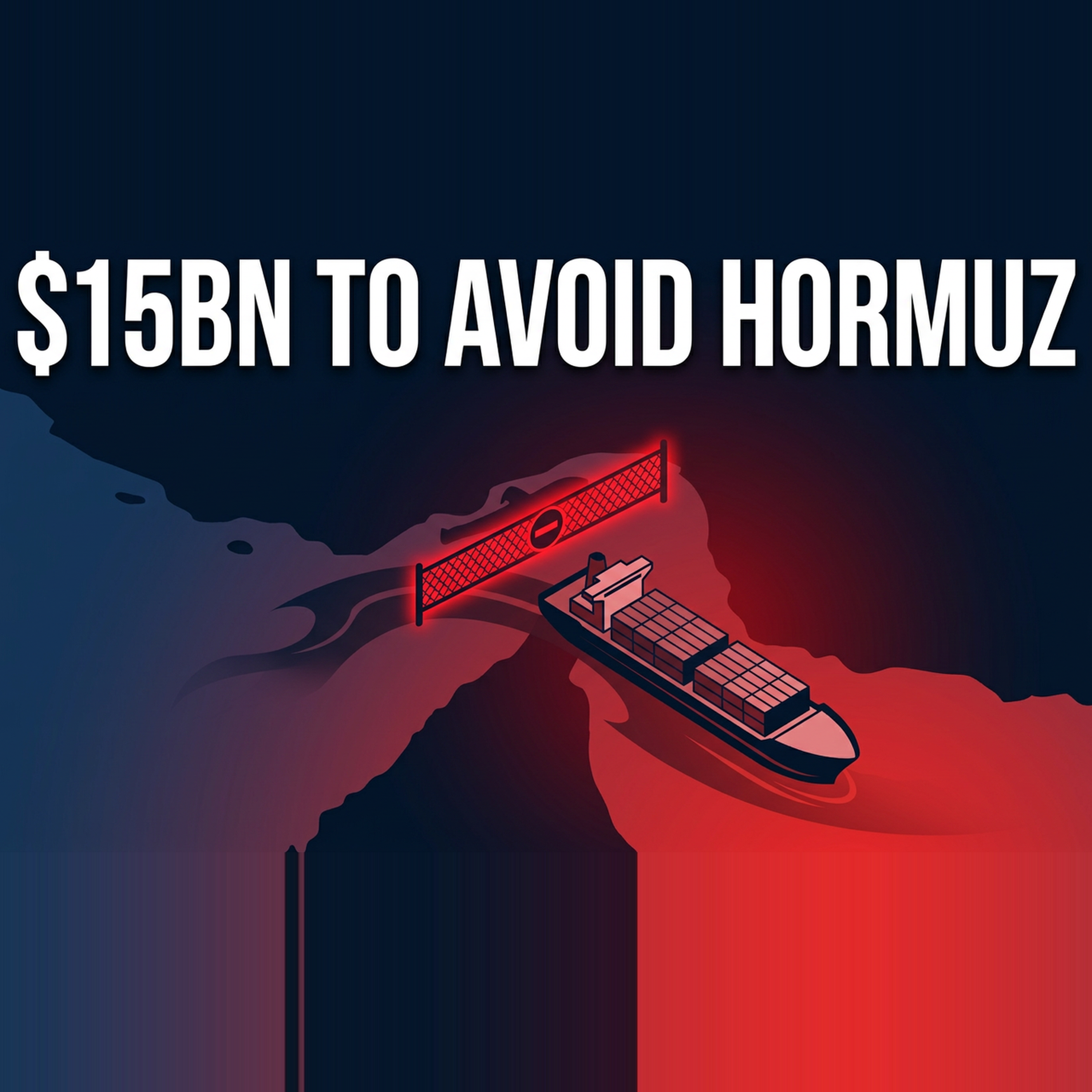
Maersk CEO Vincent Clerc says ports are to blame for the congestion hitting shippers this year. But ocean carriers now control nearly half the world's marine terminals, so how much of this is really down to a lack of port investment, and how much comes back to the carriers themselves? Mike is joined by Eleanor Hadland, who leads Drewry's ports and terminals research and runs her own advisory practice, Hadland Maritime. They get into whether Vincent Clerc's numbers on port underinvestment stack up, why carrier terminal ownership is only going to grow, and why congestion is arguably a supply chain problem, not just a port one. They then take a tour of the world's most disrupted trades: chronic congestion in Shanghai and Ningbo, low water and strikes hitting Europe's biggest hubs, the $15 billion scramble to build ports around the Strait of Hormuz after the closure that took Jebel Ali out of the world's top 30 ports, the Panama Canal's own water problems, and West Africa's paradox of huge investment alongside rising delays. Guest: Eleanor Hadland, Senior Analyst, Ports and Terminals, Drewry Maritime Research, and Director, Hadland Maritime. Thanks to Dimerco Express Group for supporting this episode. They are the best partner if you need a shipping or air cargo solution on the transpacific trades and beyond. Topics covered: Why Vincent Clerc blames a lack of port investment for global congestion. Whether carrier terminal ownership, now nearly 45 percent of global capacity, is part of the problem. Why Chinese ports are running at 85 percent stack utilisation with almost no buffer. Europe's low water, strikes and labour shortages. The Hormuz closure and the four country, fifteen billion dollar scramble to route around it. Panama Canal water levels and what they mean for routing decisions. Why West Africa keeps getting investment and still sees rising delays. What shippers should actually be watching over the next two years. 0:00 Maersk's Vincent Clerc blames ports for the shipping delays and congestion 1:00 Eleanor Hadland on Drewry's ports and terminals research and her career at Associated British Ports 3:00 Does Vincent Clerc's claim about 15 years of port underinvestment stack up 8:00 Ocean carriers own 45% of global marine terminals, are carriers profiting from the congestion they blame on ports 12:00 Port congestion in Shanghai, Ningbo and Southeast Asia, new terminals at Tuas, Port Klang and Pasir Panjang 14:00 Port congestion in Rotterdam, Antwerp and Europe, low water on the Rhine and labour shortages 18:00 Jebel Ali and the Strait of Hormuz closure, can Dubai's ports ever fully recover 19:00 The $15 billion race to build ports at Khorfakkan, Fujairah, Jeddah and Oman 26:00 US port investment at Savannah, Baltimore and Long Beach, plus Mexico's Lazaro Cardenas and Manzanillo 27:00 Panama Canal low water and how it is shifting container routing to the US East Coast 31:00 Port congestion in West Africa, Tema, Lome and the Durban Gateway Terminal in South Africa 34:00 Eleanor Hadland's three things shippers should watch over the next two years 35:00 Does chronic port underinvestment actually make Maersk more money #FreightBuyersClub #SupplyChain #Shipping #Ports #Maersk #Drewry #Logistics #ContainerShipping #Hormuz #OceanFreight

August 25, 202643 min

Air Cargo Unpacked: EU De Minimis, Cargo Theft, Tariffs, and Brandon Fried on Leaving the Airforwarders Association

Mike King and Neel Jones Shah are joined for the whole episode by Brandon Fried, Executive Director of the Airforwarders Association, who has announced his retirement after two decades leading the organisation. This month: how the AI data centre build-out is reshaping air cargo demand, and the fallout from the EU's de minimis change on volumes through Liège. Cargo theft losses hit $725 million last year across US and Canadian freight, and an Airforwarders Association survey found 83% of forwarders reporting reduced shipping volumes due to tariffs. We also dig into the fight over IATA's revised Direct Air Waybill framework, the rules governing who's liable when cargo is misdeclared or mishandled, which forwarders say could shift liability onto them. Plus the best rates analysis in the business from Neil Wilson at TAC Index, a tribute to Jan Krems as he steps down as President of United Cargo, and a look back at Brandon Fried's nearly 25 years leading the Airforwarders Association as he hands over the reins. Many thanks to Brandon Fried for joining us for the whole episode, to Neil Wilson for his rates analysis, and to TAC Index and the Baltic Exchange for their continued support of Air Cargo Unpacked. For more from the Freight Buyers' Club, subscribe wherever you get your podcasts and follow us on LinkedIn and YouTube.

August 19, 202651 min

Container Shipping Now: Carrier Profits, Reliability & the Weather Threatening Peak Season, with Nils Roche (Solvens Advisory) and Mark Chadwick (Global Shippers' Association)

Container carriers are pulling sailings on purpose, missing their own reliability targets, and posting some of their strongest profits in years. Mike King is joined by Nils Roche, Founder of Solvens Advisory and a former liner executive with senior roles at CMA CGM, Maersk and PIL, and Mark Chadwick, President of the Global Shippers' Association, representing some of the world's biggest cargo owners. He's one of the largest buyers in the industry, purchasing shipping capacity from both forwarders and carriers on behalf of his members. Topics include: carrier Q2 results, the gap between carrier reliability data and what shippers are actually experiencing, a 215% rise in blank sailings on some Asia lanes, the latest on Hormuz and Red Sea routing, a forecast "Godzilla" El Niño, record-low Rhine water levels, Panama Canal draft restrictions, and the current US tariff picture. This episode is sponsored by Dimerco Express Group ( https://dimerco.com/ ), your trading partner connecting Asia with the US and beyond. Big thanks to Xeneta for sharing their exclusive reliability data. Notes Links to Nils Roche, 2025 prediction on The Freight Buyers’ Club: https://youtube.com/shorts/-xxM1JS3mOU Link Hapag-Lloyd Vs US Retailers: Container Rates, Tariffs, ZIM And What Happens Next featuring Torsten Hartmann from Hapag-Lloyd and Jon Gold is VP for Supply Chain and Customs Policy at the National Retail Federation. https://youtu.be/HAeb1TjRupE Articles: Asian port congestion forcing container lines back to the Red Sea https://www.seatrade-maritime.com/containers/asian-port-congestion-forcing-container-lines-back-to-the-red-sea Rhine cut in two as European drought cripples inland shipping https://splash247.com/rhine-cut-in-two-as-european-drought-cripples-inland-shipping/ #ContainerShipping #SupplyChain #FreightBuyersClub #OceanFreight #Logistics #PeakSeason #Reliability #RedSea #ElNino #Tariffs

August 12, 202611 min

The Critical Window: Why Aerion is Moving Now

Mike King speaks with Adrien Thominet, Chairman and Founder of AERION, about why the GSSA model at the heart of air cargo is being reinvented from the ground up. Thominet explains how AERION has moved beyond the classic GSSA structure, building out dedicated arms for pharma (Healthcare), e-commerce (Mail & More), total cargo management (TCE) and digital transformation (CargoTech), all under one corporate umbrella. He makes the case that airlines are increasingly comfortable outsourcing more of their commercial and operational activity, and why AERION believes there's a limited window to lead that shift before the air cargo industry consolidates around a smaller number of players. The conversation covers: Why AERION thinks the GSSA concept needs to evolve into something closer to a "general logistics agent" How network scale let AERION pivot capacity from Dubai to Lebanon within weeks during regional disruption Where air cargo trade lanes are shifting, from China-to-Brazil e-commerce growth to hyperscaler demand out of Asia Dynamic pricing, shrinking planning windows, and why shippers are being pushed toward shorter-term commitments Which region Thominet flags as air cargo's most fragile market right now A hint at two acquisitions AERION plans to announce in the coming months This episode is brought to you by Dimerco Express Group, connecting Asia with the world: https://www.dimerco.com/ Guest: Adrien Thominet, Chairman & Founder, AERION LinkedIn: https://www.linkedin.com/in/adrien-thominet-48585371/ Company: https://www.linkedin.com/company/we-are-aerion/ #AirCargo #FreightForwarding #GSSA #Logistics #SupplyChain #AERION #AirFreight #GlobalTrade #Aviation #CargoIndustry

August 6, 202615 min

Global GSA Group CEO Aytekin Saray on Consolidation, the Amazon Question, and Expansion into Africa, India and the Gulf

Aytekin Saray, CEO of Global GSA Group, joins The Freight Buyers Club at Air Cargo China in Shanghai to explain where he sees air cargo's next growth, and why much of it sits in markets the GSA sector has underserved. Saray describes Africa as a major gap, with the Indian subcontinent, South America and the Middle East close behind, and says even competitors are thin on the ground in some of these regions. He talks through the group's moves into Egypt and Pakistan, an imminent Pakistan announcement, and his interest in Saudi Arabia. He argues that political tension, which he sees as more US and Western in origin, keeps re-engineering trade routes, and that the cargo industry feels the impact first. The conversation also covers the case for consolidation among GSAs, Saray's warning that too many unregulated players are undercutting rates, the shift from selling capacity to total corridor management, the role of CargoTech and automation in a more integrated GSA model, and what Amazon, UPS and e-commerce mean for the business. Saray predicts most of the market will still rely on GSAs. Guest: Aytekin Saray, CEO, Global GSA Group. Recorded at Air Cargo China, Shanghai. This episode is brought to you by Dimerco Express Group, your freight forwarder for connections from Asia to the rest of the world: https://dimerco.com/ #AirCargo #AirFreight #GSA #Logistics #SupplyChain #FreightForwarding #Cargo #AirCargoChina #GlobalGSAGroup #CargoTech #Ecommerce #Africa #India #MiddleEast #TheFreightBuyersClub #Dimerco

July 29, 202640 min

Air Cargo Unpacked: Anchorage sizzles as Asia-Europe cools

Anchorage keeps growing while air cargo from Asia to Europe falls away. Same freight, opposite directions. Mike King and Neel Jones Shah unpack a freight market pulling apart, with Sean Dolan of NorthLink Aviation on why Ted Stevens Anchorage is booming, and Neil Wilson of TAC Index, calculating agent for the Baltic Air Freight Indices, on rates and jet fuel. Also this month: war and tariffs reshaping the map, the end of EU de minimis, the AI and semiconductor boom filling Asian carriers, Farnborough's order book, Dimerco's survey of 57 Asia-Pacific shippers, and Glyn Hughes handing over the top job at TIACA to Mammen Tharakan. Produced with the support of Dimerco Express Group, your partner for Asia sourcing, manufacturing and China-plus-one supply chains. https://dimerco.com/ 00:00 Welcome and coming up this month 01:00 Two disruptions: war and tariffs 02:00 Houthis blockade Saudi Arabia, Red Sea at risk 04:00 Neel on the Middle East and the tariff scramble 08:00 Asia-Europe volumes collapse after de minimis 11:00 Anchorage: the world's third-busiest cargo hub 12:00 Sean Dolan: what's driving Anchorage's growth 13:00 Sean Dolan: the route picture and peak season 14:00 Neel: e-commerce, AI, and the transpacific boom 16:00 Neel: the debt behind the AI cargo boom 18:00 Rates: Neil Wilson, TAC Index 22:00 Seoul and Taiwan: the semiconductor lanes 24:00 Jet fuel: why it's not feeding through yet 29:00 Farnborough: MSC's order and DHL's converted freighter 32:00 Dimerco's shipper survey and ocean volatility 36:00 TIACA: Glyn Hughes hands over to Mammen Tharakan #AirCargo #Logistics #SupplyChain #Freight #AirCargoUnpacked

July 23, 202643 min

Rates, tariffs, ZIM and what happens next, with Hapag-Lloyd and US retailers

US container imports are heading for a record month, and then four months of decline. Mike King puts that to both sides of the transpacific: Torsten Hartmann, who runs the trade for Hapag-Lloyd, and Jon Gold of the National Retail Federation, representing America's retailers. They discuss where contract rates landed, why Hapag-Lloyd's long term rates are barely breaking even, what the ZIM deal would mean for the transpacific, and what happens to importers as one tariff expires and several more line up behind it. Produced with the support of Dimerco Express Group. https://dimerco.com/ 00:00 Welcome 02:00 2026 in three words 03:15 Hormuz and uncertainty 05:50 Spot rates and contracts 08:55 Hapag-Lloyd's profit upgrade 10:50 Surcharges and the FMC 13:40 Capacity and blank sailings 17:15 Hapag-Lloyd's transpacific outlier 18:58 The ZIM deal 20:20 Consolidation and the regulator 21:15 A record month, then the drop 23:10 Imports against the consumer 24:45 The tariff queue 27:45 Forced labour tariffs 30:10 Tariff refunds 31:55 Sourcing and investment 33:00 De minimis and e-commerce 36:40 The shift to Southeast Asia 37:30 Planning around policy 38:40 As good as it gets? 39:55 One ask each 42:30 Terminal handling charges

July 13, 202614 min

Lufthansa Cargo's Carolin Gerstenmaier on Semiconductors, Pharma and Ten Flights Per Chip

Carolin Gerstenmaier, Head of Industry Development at Lufthansa Cargo, joins the Freight Buyers Club at Air Cargo China in Shanghai to talk through the two highest value, fastest growing industries in air freight: semiconductors and pharma. She walks through why a single chip can involve up to ten separate air freight movements, how semiconductor manufacturing has shifted from the US and Europe to Asia over the last 30 years, and why radioactive cancer treatments are now flight critical logistics, needing to reach a patient within 24 hours. The conversation also covers sustainability pressure from customers, AI and real time tracking, and how Lufthansa Cargo's network adapts to geopolitical disruption. This episode is sponsored by Dimerco Express Group, connecting Asia to the rest of the world. Find out more at https://dimerco.com/ Chapters: 00:00 Introduction 00:41 Pharma and semiconductors: the growth outlook 01:56 How semiconductor demand has shifted to Asia 02:56 Why semiconductors aren't a one size fits all business 03:57 Building a consistent modular offer across the supply chain 04:41 China plus one and the shift in manufacturing origin 06:04 Lufthansa Cargo's role across the supply chain 06:41 Pharma: the second largest growing industry 07:38 Blockbuster medicine versus specialised, individualised medicine 08:52 Cold chain, speed and flight critical logistics 09:24 Sustainability and AI driven tracking 10:59 Geopolitics, tariffs and network adaptability 12:14 Compliance, certification and the GDP/CEIV framework 13:37 Where semiconductors and pharma go next

July 6, 202623 min

CargoTech's President on Consolidating Air Cargo's Software | Exclusive

Recorded at Air Cargo China in Shanghai, Mike sits down with Cédric Millet, President of CargoTech, for an exclusive look at how one company is pulling air cargo's software under a single roof. CargoTech is a holding company, backed by the same owner as ECS Group, the world's largest cargo GSA. It brings together specialist software companies, each focused on its own domain. Millet's pitch is a simple one: "we know cargo." He argues that because the portfolio's leaders came out of airlines, forwarders and GSAs, their software is built to solve cargo's real pain points, a claim he draws in contrast to the wave of generic tech newcomers now entering the space. What Mike and Cédric get into: Millet's case for why a group of specialists beats one do-everything platform The "we know cargo" argument, and why he thinks domain expertise wins How the group aims to cover the airline's full commercial chain, from capacity and revenue management to forecasting, distribution and charters His claim that CargoTech covers around 75% of airline needs today, and plans to expand into cargo operations, compliance and sanctions checks The 105 airlines and 20,000+ forwarders he says are connected The new Kuala Lumpur hub Why he sees clean data as the foundation Where AI actually fits, with Millet framing co-pilots and agentic automation as tools rather than the headline This episode of The Freight Buyers Club is brought to you by Dimerco Express Group, your forwarding partner for transport from Asia to the rest of the world. Big thanks to Dimerco for supporting independent journalism. Find out more at https://dimerco.com/ Guest: Cédric Millet, President of CargoTech, and Chief Strategy & Digital Officer, ECS Group

Is this your show?

Claim this listing to keep it up to date, reach guests who want to pitch you, and manage bookings with Guestify.

Claim this listing

More Business podcasts