The Decode Diary isn't just a podcast; it's your passport to the untold stories of the average-looking but extraordinary Joes who try their best to make it in life. I first stumbled upon the idea of providing insights and perception of the general public when I had so much to talk about but also had so much to learn from those around me. The Decode Diary is a journey and process to decode and decrypt the everyday actions of these people with whom we can relate so much. If you are interested in learning their behavior and actions, this is for you. Welcome onboard.
Listen to episodes
60 recent
April 29, 2025Episode 251 min
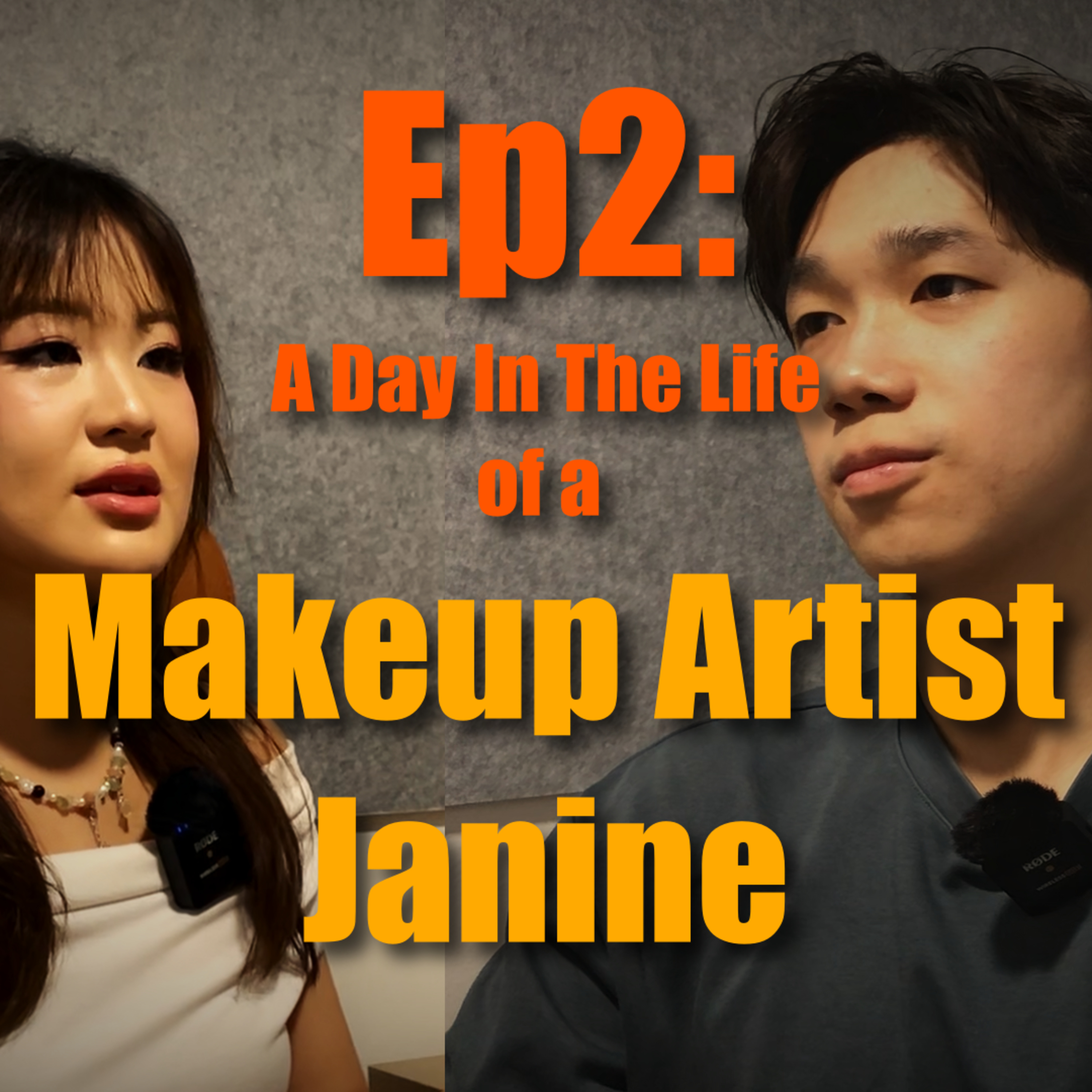
[FULL] Ep 2: A Day In The Life of a Makeup Artist based in Singapore - Janine
I never had the chance to speak to a makeup artist, let alone the chance to know what a day in the life of a makeup artist is like. It seems there is a lot more than I expect, from having to wash and dry a HUNDRED over brushes in a night to being treated unfairly despite being a junior in the industry. The pressure and suppression a makeup artist has to endure is probably one of the most understated in the industry, likely because they are expected to show up and just complete the job. I sat down with Janine, a freelance makeup artist based in Singapore, who shared with me how her day looks like when she has a gig to attend to. How do they price their work? Have they ever done makeup in an unsafe environment? Listen on to find out. Instagram: Janine - @janine.mkup Ray - @ray_low28 The Decode Diary - @thedecodediary
March 3, 2025Episode 11 hr 0 min
[FULL] 2024 Recap | Learning About Misogyny, Cancer, Starting A Business, Property Investments And More!
41 conversations in a year! I want to do this again, but my gut tells me to have more in-depth conversations to maximize my learning out of each story. Let me know what story you wish I would tell or make! "Resisting judgements" is a line I came up with that I think fits The Decode Diary very well. There may or may not be an agenda with a story, but it remains the top priority to let the story flow till the end before a conclusion is made. It simply preserves the genuinity of the story! Do you agree? Follow me on Instagram: @ray_low28 @thedecodediary
December 29, 2024Episode 1351 hr 20 min
[FULL] Farah: “I Cry A Lot Because It Is Really Exhausting”, Handling More Than 10 Patients All At Once As A Surgical Nurse, Offering Kindness To Total Strangers
As far as I can remember, I have never spoken to a nurse before, of course excluding the times I woke up in the middle of the night to get my blood drawn when I was at the hospital. But I didn’t speak to the nurses either, it wasn’t a conversation. In this episode, I sat down with Farah to learn the stories behind a nurse and all the kindness a nurse would offer to any random stranger, something even I struggle to do when times are bad. Think about nurses. The conversation helped me understand a few things. First and foremost, the empathy and kindness a nurse can offer to any stranger is unmatched and it melts my heart to see and hear any stories from a nurse taking care of their patients. They really take care of their patients as if they were their kids. But also, the issue of short-staffing never seems to get solved and the longer the problem sits, the more underappreciated these nurses go. The same goes to doctors and all healthcare providers. I hope conversations like this get heard and together, we can sit down and take the next step to solve a problem. Step by step. Listen on to know what nurses go through in their shift. Timeline: [00:00] What does a surgical nurse do? [05:41] A day in the life of Farah [08:38] What kind of decisions do nurses make? [10:05] Her early days of becoming a nurse [12:54] The career prospects of a nurse [19:07] The working hours of a surgical nurse [20:26] All about vital signs [22:16] False alarms from nurses [24:49] Things that happened in the ward that she would never tell [26:30] Teamwork in wards [27:43] Short-staffing in hospitals [31:48] Advice to future nurses [34:26] Difficult patients [37:51] A bad day in the life of a nurse [44:18] Room for errors [48:56] How would AI or technology help nurses? [50:37] Wards during Covid [59:28] The most rewarding part of the job [01:07:11] Does it ever get boring? [01:09:49] Ethical dilemma Sound effects obtained from https://www.zapsplat.com and https://www.epidemicsound.com/
November 10, 2024Episode 1341 hr 15 min
[FULL] Jia Yie: “Simple Giving, Simple Love, Simple Life, Love Life, Love Nature”, How She Runs A Sustainable GreenLife Project Founded By TuMa
This is my first time recording the episode very, very close to nature. As a nature lover and a scout during my high school days, camping is one of the most common activities we would do and being outdoors just makes sense to me. But not to many kids and parents. GreenLife Project is a green project started by TuMa, whom unfortunately wasn’t available on the recording day, with the ultimate mission of living simply with nature and contributing back in whatever ways she can. A near-death experience led TuMa to realize the importance of living life simply. Speaking with her assistant, Jia Yie helped me realize that living simply is something we all think we can do, but when it means you have to leave every single piece of item in your possession to be free in nature again, many would doubt the decision. Seeing the positive feedback from this project comforts me a lot, mainly because it is unusual to see nowadays that kids are enjoying being outdoors and in the sun. Without too much of a capitalist’s vision, I hope that this mission goes on so more kids get to play with nature without the worries of tomorrow. Timeline: [00:00] What is GreenLife project? [04:12] The origin of TuMaWu [05:54] What was Jia Yie’s upbringing like? [07:50] Core mission of GreenLife project for the kids [13:29] Simple Giving, Simple Living, Simple Life [16:10] Balancing the need for traditional and modern education [18:23] Turns out kids are smarter when they are with nature [21:22] Kids at Green Education [24:30] Day in a life at GreenLife camp [25:22] How Jia Yie calms crying kids at camps [26:40] How GreenLife project teaches kids not to be afraid of failures [30:42] Her own encounter of failures [33:17] Her one failure that taught her how to run this sustainable business [38:23] Day 2 of the camp [47:15] The rewarding parts of being a GreenPro mentor [49:50] How she responds to “Nature is not the best educator” [54:30] Parents are not allowed to visit [57:48] Do mentors/volunteers have certifications? [01:01:07] How do they ensure financial sustainability operating as a non-profit? [01:05:48] Plans to scale up GreenLife project Sound effects obtained from https://www.zapsplat.com and https://www.epidemicsound.com/ More information on GreenLife project: https://m.facebook.com/GLP630/
October 27, 2024Episode 1331 hr 13 min
[FULL] Jing Wen: "Sugar Does Not Feed Cancer Cells", The Sweet Debate Of What To Eat When You Are Diagnosed With Cancer
As someone who has family members diagnosed with cancer, I am deeply concerned about this topic. For whatever reason, the idea of sticking to a healthy diet, having a fixed sleep routine and working out to keep my joints and muscles active have appealed largely in the past year for me. 10 months have passed, I’m not entirely sure about the results, and talking to a dietician/nutritionist is the only way to find out if I have been eating healthy. There have been noises about sugar feeding cancer cells and I want to find out if it is the truth. In fact, there is a twist to this. Also, why do cancer patients lose weight during their treatment? How can we help them increase their food intake to a regular level? Can they eat anything and everything? What about anti-cancer diets? Do they exist? Join me as I speak to Jing Wen, a nutritionist in Singapore, working for a non-profit cancer nutrition center, who happens to know what a cancer fighter should eat. If you stay longer, I also showed her my medical health report to see if I’m really healthy. Timeline: [00:00] What does she do and why does she do what she does [01:45] I thought everyone should have the same diet, why customize? [04:18] Do cancer fighters change their diet overnight? [06:44] The difference between the advice given from a dietitian/nutritionist and a medical doctor [09:37] Healthy grocery shopping with the healthy choice label and nutrigrade labels [14:20] 3-in-1 coffee in Singapore is healthier than in Malaysia? [17:38] Nutrigrade labels - is this referring to the sugar content only? [22:39] Can we tell if we are at risk of cancer by looking at these numbers? [25:31] How often should we get screened for cancer? [28:01] Should we get screened multiple times at once to avoid false positives? [29:26] Who are some of the people that consult her for diet advice except cancer fighters? [31:02] The things she tells cancer fighters BEFORE the treatment? [32:24] What about DURING the treatment? [35:40] Maintaining the BMI throughout the treatment [38:08] So she says we can eat anything during the treatment… [40:41] Changing our diet going into the treatment to increase our blood cell count [43:23] Tackling nausea and vomiting during treatment [47:55] What to do about declining weight during the treatment? [51:12] Anti-cancer diets [54:04] Keep them happy or healthy during treatment? [55:57] Post-treatment diet/nutrition [57:03] What happens if the cancer fighters have diabetes too? [57:43] Is my diet risk-free of cancer? [01:02:59] Any signs of over intake of protein? [01:03:37] My health lab report [01:07:24] Misconceptions about cancer nutrition Sound effects obtained from https://www.zapsplat.com and https://www.epidemicsound.com/
October 13, 2024Episode 1321 hr 8 min
[FULL] Mei Xin: “Only 9% Of Plastic Is Recycled In Malaysia”, On Phasing Out Single-Use Plastics By Renting Out Reusable Foodware Plastics From OPack
When I first heard of this new startup which has only been around for 8 months since the start of 2024, I had a lot of skepticism. Particularly, the way it solves the plastic problem because it actually introduces more plastic into the ecosystem. Sure, they could have introduced another material and still call it a green company, but I think the problem of single-use plastics is still there. The idea and concept of single use. I get it, because it’s so convenient and far too much time saved if we just dispose of our containers and utensils after every meal. I am guilty of this too. The idea of introducing reusable plastics is not new and novel, but the logistics of having it in every corner we visit might just make it work. I see there is a huge hurdle for the team at OPack to encourage the switch to reusable plastic, or any other material in that context, but having collaborated with companies and event organizers, they are on track to make an impact never before seen in Malaysia. But should there be a punish/reward system for this to be successful? I’ll let you make the verdict after you finish the episode. Timeline: [00:00] What does OPack do? [02:34] Measuring her own plastic usage [04:58] The feedback she got about her business idea [06:07] How eco-friendly is the process of making her plastic products? [11:30] The reason biodegradables are not on her list [15:21] Green-washing and the reason why recycling rate is low in Malaysia [18:35] Isn’t OPack producing more plastics? [21:38] Aren’t there already reusable plastics? [23:42] Partners of OPack [25:42] Missing out on the consumer market [30:53] Rental rate = Amount of single-use plastic avoided [34:35] Is it already a profitable business? [36:19] The pilot projects that kicked off OPack [38:54] The single hardest part of running the business [40:20] Large corporations still prefer single-use plastics due to the low cost of logistics [43:27] Are deposit systems the best way to increase the rental rate? [45:22] Why aren’t there more companies doing what OPack does? [46:43] Can technology step in to help? [49:11] CSR and ESG of companies matter to OPack [54:58] She wanted to stop doing this back in 2022 [01:00:03] Her motivation to keep doing this [01:01:05] Her day-to-day routine as a founder [01:03:58] The last happiest moment for OPack [01:05:55] Short-term goals for OPack Sound effects obtained from https://www.zapsplat.com and https://www.epidemicsound.com/
September 22, 2024Episode 1311 hr 34 min
[FULL] Xin Hui: “It’s The Entire Concept And Package For Your Brand”, What Goes On Behind An Online Bakery Business And Keeping Up With The Trend
I’ve known Xin Hui since young and witnessing this journey of her life is just heartwarming. It takes not only courage but also strategic thinking, commitment and the undying fire in her to start Tiny Pockets, an online bakery business during the Covid period. Many would have said it was easy to start back then, but it is a whole different story to persist till today. Xin Hui’s unique approach to her bakery business has made her one of the successful women I know today, all while having a side gig of modeling. She knows she can’t satisfy all the taste buds in the world, but as long as she enjoys her own tarts and cookies, she’s willing to sell them. Keeping the desserts fresh and off the artificial ingredients is also one of her unique selling points, and as one of her customers, I can attest to that. Rainy days are ahead and as we talk about Tiny Pockets’ success story, buckle up as we listen to her plans moving forward getting ready for a tough market. Timeline: [00:00] How she started her online bakery business [09:46] Her dream team [11:11] There was a Butter Pockets before [16:52] If you are lost in life, check your resume [21:14] How Tiny Pockets came about [23:11] The typical ingredients in pastry and desserts [25:48] She can’t please everyone’s taste buds [28:52] Quality checks [32:32] Baking is easier to fail than cooking [34:49] Logistical challenges running an online bakery business [38:26] The different trends running the business [45:06] A myriad of taste in her products [48:04] Her top three best-sellers [49:08] Baking for corporate events and individual customers [49:57] Handling deadlines for customers [53:17] Her bakery team [54:33] Handling everything alone and burnout [58:11] A major setback [01:08:14] Does she still love baking? [01:15:00] The most important skill for a business owner [01:21:52] Rebranding Tiny Pockets [01:24:21] The brand origin story Sound effects obtained from https://www.zapsplat.com and https://www.epidemicsound.com/
September 1, 2024Episode 1301 hr 31 min
[FULL] Zul: “These Bajau People Are Not What People Portray Them To Be!”, Volunteering To Help Out These Bajau People In Semporna Malaysia
The story that you are going to hear is a story that reminded me of how lucky I am today in terms of what I have and what I do. That is a luxury some of these Bajau people will never get to enjoy because of the environment they grow up in. But Zul vows to help lift them out of poverty and provide proper education to them. In fact, he and his team have set up a 10-year plan to, quoting his own words, help these people reach the level of underprivileged people in Singapore because that level is also a luxury to have. Zul, a go-getter all his life, suddenly puts behind his current life and pushes forward to help these kids at a beautiful island on the east side of Malaysia, called Semporna. Anyone visiting would drop their jaws upon the sight of the sea and beaches. But little does anyone know about the dark side of this place where many social problems tend to linger around for many years… Join me and Zul as we understand what goes on truly on this side of the island. Timeline: [00:00] Why is he into volunteering? [01:29] The dark side of Semporna [04:59] From thinking of building a business to volunteering [10:48] Lifestyle changes for him and his family [13:54] What did his wife think about this? [16:54] HUGS project [20:06] Sea gypsies and homeless kids [23:23] These Bajau people are not what tourists portray them to be [27:38] Bajau people are good fishermen [28:47] You’d never expect this from the Bajau people [31:39] What if they learnt to beg for more? [38:00] Would they beg for education had their basic necessities been secured? [40:53] The progress in volunteering so far [44:06] They rely on generators on islands [45:18] What about pirates and the dangerous stuff? [48:20] Why is there tension between the Bajau Darat and Bajau Laut people? [49:42] Resisting donations [50:26] Culture first, then progress [57:37] Bad exploitations [01:03:45] How can one start volunteering? [01:04:39] Glue sniffing problem [01:16:50] The need for volunteering Sound effects obtained from https://www.zapsplat.com and https://www.epidemicsound.com/
August 25, 2024Episode 1291 hr 18 min
[FULL] Stephen: “Build Things People Ask For, Don’t Build Things People Don’t Need”, How He Started His Startup Called FireJet, A Solution By Developers For Developers
Listening to Stephen’s journey of starting his business helped me gain a tremendous amount of insight into a founder’s mind as we all try to grasp what actually goes on in one. The startup founders we know from the Silicon Valley may be raking in millions of dollars while delivering superb value to customers, FireJet is a business from which Stephen and his co-founder stumbled upon a problem while building a website for a client and started a company. The solution may be simple on the outside, but the journey is never easy. Among all the effort they have put in for the company and product, one of the amazing feats was the application to Y Combinator, a US-based startup accelerator. They got through to the interview stage and like many others who failed, they were given the reason why they were not picked. I liken this conversation to one of the best that I’ve put out because of the lessons I took away from Stephen as a startup founder. If you are launching your product or scaling up your team, you must not miss this conversation. Give it a listen, I assure you there will be a ton of interesting information. Timeline: [00:00] Why is his company called FireJet? [02:36] What does FireJet do? [03:30] How was the idea born? [05:15] The rise of no-code tools [07:19] Who are FireJet’s customers? [08:30] How important are websites to companies these days? [10:49] What was the MVP like in the early days? [12:40] It could have been just an API instead of a company [18:05] His first paying customer [21:25] His product is entirely reliant on this company [24:18] Applying to Y Combinator [25:53] How to apply to Y Combinator [27:36] Getting rejected multiple times [28:50] Questions from Y Combinator [30:31] Why were they actually rejected? [32:06] A quick YC mock interview [36:41] The underlying problems of his product [39:31] The 80/20 rule [41:41] Experiments from the company [46:04] How to build a company? [49:49] In terms of hiring [52:28] Co-founder partnership [55:57] What is his daily routine like running a startup? [58:08] The team is the best product you’ll ever build [01:01:28] How long is the runway for his company? [01:02:33] Can AI solve the code quality problem? [01:03:21] The core feature of his product [01:09:13] Build things people ask for [01:10:39] The goal for the company Sound effects obtained from https://www.zapsplat.com and https://www.epidemicsound.com/
August 18, 2024Episode 1281 hr 3 min
[FULL] Isya: “How You Do One Thing Is How You Do Everything”, Make Sure You Have Contracts To Protect Yourself When Starting A Business!
I, for one, couldn’t stand the idea of listening to just one side of the story when Sha came onto the show and talked about her entrepreneurial journey with Isya. I had to get Isya on. Just like I thought, their stories are aligned! One would be extra motivated listening to both their stories of how they set out to start a business of their own. One would be even deeply touched to hear how they stood for each other during bad times. But speaking to Isya was more than about her journey, it was because of one lesson Sha made sure I learnt, which was to get yourself a contract when in business. Isya taught her this. If you are starting your own business, Isya couldn’t stress enough how important contracts are, not to deceive, but to protect all parties involved. This is just the kind of conversation I yearn for when I start out on a journey of entrepreneurship. Timeline: [00:00] Isya’s current phase of life [01:55] What took her so long to get her law degree? [04:46] The difference between the paralegal and the legal industry [05:39] What is contractual law? [07:33] Why she does what she does [12:41] How she felt leaving her job [14:02] How her partnership with Sha kicked off [17:58] How they got customers together [20:10] How Isya likes the self-employment journey [23:50] The childhood cause that made her jump into entrepreneurship [28:46] The two biggest traits to have for an entrepreneur [32:47] How her parents supported her [35:28] Who gets the most say? Isya or Sha? [37:56] Surely Isya saw the need to bring in a third decision-maker [39:15] Sha still got her pay when she was ill. Why? [41:12] The toughest part of the journey [46:12] From business partners to friends, or the other way round? [48:10] Things to know when starting a business [51:26] Do we really need a lawyer? [53:52] Her advice to someone starting a business [55:46] Her financial runway [57:58] Current distractions in life Sound effects obtained from https://www.zapsplat.com and https://www.epidemicsound.com/
Is this your show?
Claim this listing to keep it up to date, reach guests who want to pitch you, and manage bookings with Guestify.