Find partners
The Crude Truth

The Crude Truth

Hosted by The Crude Truth

BusinessInvestingNewsInterviews guests

Episodes

205

Latest episode

Nov 2026

Language

EN-US

About the show

A Podcast With A Flare We are thrilled to bring this podcast to the airwaves. We live in an age of miscommunication, and it is important to hear the truth about and around the energy markets. Stay tuned, buckle up, and enjoy some great conversations.

Listen to episodes

60 recent
November 6, 202634 min

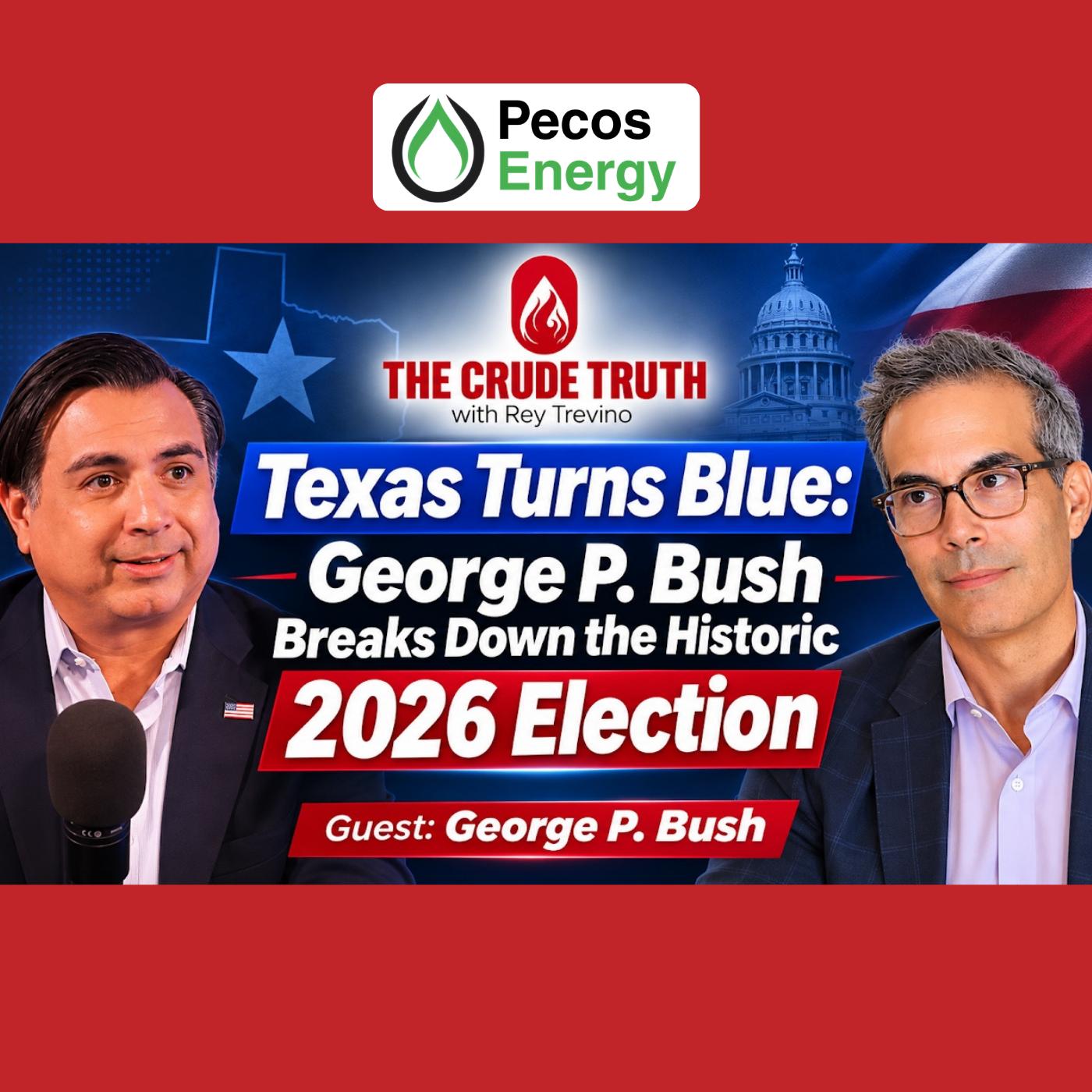
Texas Turns Blue George P Bush Breaks Down the Historic 2026 Election

On November 3rd, 2026, Texas experienced what host Rey Trevino calls a "blue tsunami"—a historic political shift that saw Democrats sweep nearly every major statewide office in a state that had voted Republican by over 12% just two years prior. In this Crude Truth podcast episode, Trevino sits down with George P. Bush, CEO of Pine Cove Strategies and former Texas Land Commissioner, to dissect what went wrong for Republicans and what it means for the future of Texas politics and the nation. Together, they explore the perfect storm of Republican missteps: the drag of controversial candidates, the loss of the Hispanic vote, messaging failures on kitchen-table issues like housing and inflation, and an over-reliance on cultural warfare rather than practical solutions. With insights drawn from exit polling data and election analytics, this conversation reveals not just why Republicans lost, but what the party must do to recover from what Bush describes as "the worst night for Republicans since the end of Reconstruction in Texas." 1. The 2026 Texas Election Results ("Blue Tsunami") The episode centers on the shocking outcome of the November 3rd election, where Texas experienced a major political shift with Democrats winning nearly every major statewide position. This was unexpected given Texas's recent Republican dominance and Trump's 12% victory margin in the state just two years prior. 2. Republican Underperformance & Strategic Failures George P. Bush discusses why Republicans underperformed so dramatically: Lack of a backup plan or contingency strategy Failure to address everyday concerns like affordability, cost of living, housing, and grocery prices Over-reliance on rural Texas without building a message or ground game in urban, suburban, and ex-urban areas Excessive focus on "culture wars" rather than practical issues 3. The Hispanic Vote Collapse A significant focus is on Republicans' loss of the Hispanic vote, which they had successfully won in 2024: Border security was no longer a top voter concern after Trump's policies mitigated the asylum crisis Lack of authentic connection with Latino communities Controversial statements by candidates (like Beau French) that alienated Hispanic voters Questions about whether Latinos feel welcomed in the Republican Party 4. Ken Paxton's Drag on the Ballot The discussion examines how Attorney General Ken Paxton's nomination may have hurt other Republican candidates: Paxton was the lowest-performing Republican candidate on the ballot Early polling showed Paxton losing or in a toss-up against Talarico The elimination of straight-party ticket voting meant voters had to choose each race individually, allowing Republicans to skip voting for Paxton Questions about whether Paxton's presence depressed turnout for other candidates like Governor Abbott 5. The Governor's Race Dynamics Despite Abbott receiving 4.5 million votes (up from 4.4 million in 2020), he lost to Gina Hinojosa who received over 5 million votes. The discussion explores: How Hinojosa rode Talarico's coattails despite being outspent 10-to-1 The impact of massive independent expenditures ($400 million) that focused on divisive cultural issues rather than policy solutions Abbott's underperformance compared to historical Republican performance 6. National Political Implications The episode discusses what Texas's shift means nationally: The Senate Republican majority is now only five votes away from a filibuster-proof Democratic Senate The need for new Republican leadership and direction Comparison to other states like Florida where Republicans performed well by focusing on state-specific issues Questions about the future of the Republican Party post-Trump 7. Democratic Strategy & Messaging The hosts examine how Democrats won despite not offering specific solutions: Democrats successfully complained about corruption, cost of living, and billionaire influence They ran on a message of change and integrity without detailed policy proposals Independent voters trusted Democrats more, even without specific policy commitments 8. The Path Forward for Republicans The episode concludes with recommendations for Republican recovery: Need for younger, fresher candidates with practical solutions Return to small government conservative principles Focus on state-specific issues rather than national divisiveness Rebuilding trust with Hispanic and suburban voters Subscribe to The Crude Truth for more conversations about energy, business, technology, and the future of Texas. https://pecoscrudetruth.substack.com/ For More information on Tax-Advantaged Investments: https://pecos.energy/info/ Check out LFS Chemistry, sponsor of the Crude Truth, here: https://lfschemistry.com/ Air Compressor Solutions https://acsir.com/ Follow Rey on his LinkedIn: https://www.linkedin.com/in/reytrevinoiii/ Also, Pecos Operating Website: https://pecos.energy/
November 5, 202615 min

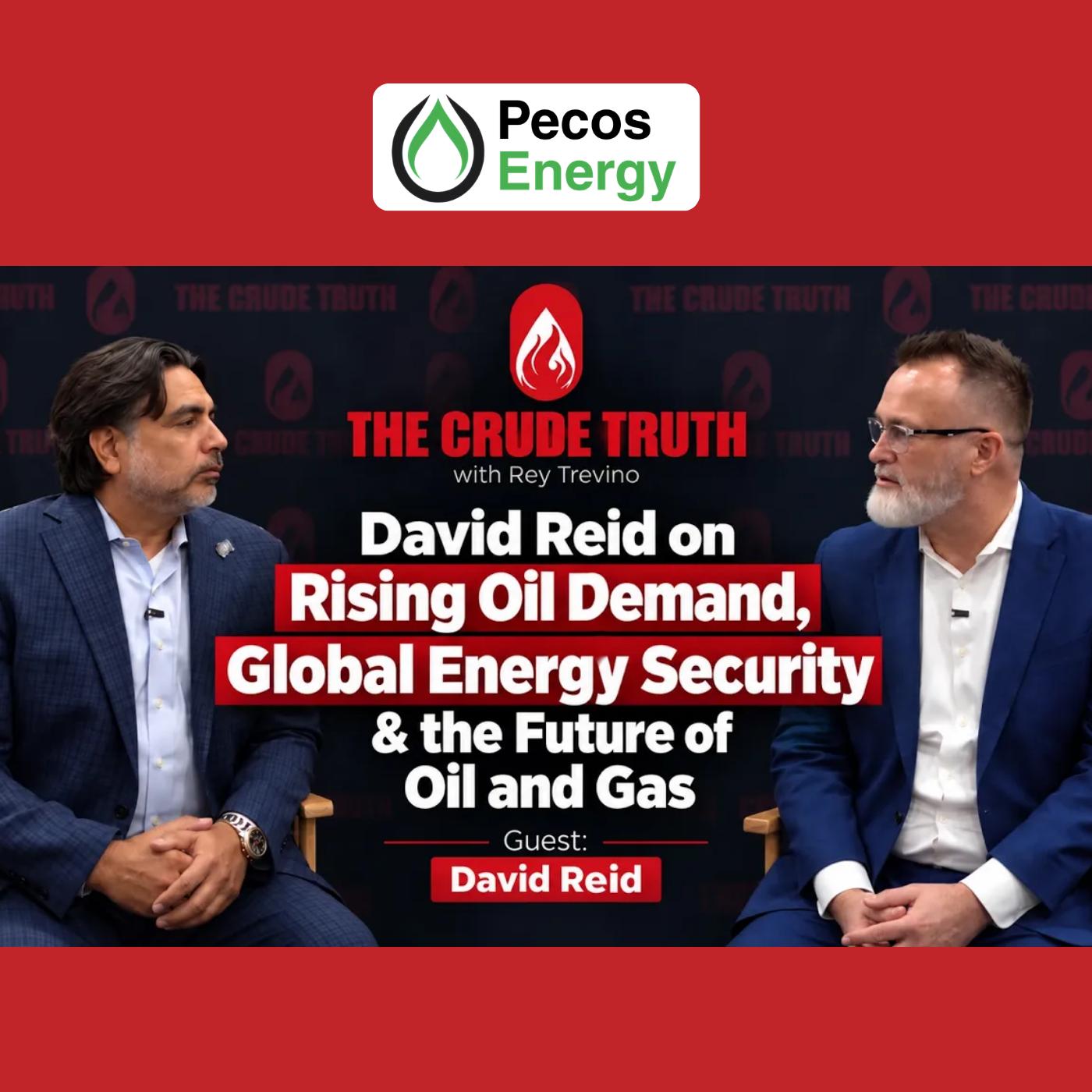
David Reid on Rising Oil Demand, Global Energy Security and the Future of Oil and Gas

At SuperDug 2026 in Houston, Rey Trevino sits down with David Reid, Chief Technology Officer and Chief Marketing Officer of NOV, to discuss the dramatic shifts reshaping the global energy landscape. As geopolitical tensions in the Middle East intensify and countries worldwide prioritize energy independence, the oil and gas industry is experiencing a resurgence of optimism not seen in years. Reid breaks down how NOV and other major players are navigating tariff pressures, supply chain challenges, and unprecedented long-term international deals—while also exploring emerging opportunities in Venezuela and the strategic pivot by Saudi Aramco. Beyond market dynamics, Reid also shares his passionate work with Red M, a nonprofit combating child trafficking in the energy sector. This conversation captures a pivotal moment in the industry where energy security, market confidence, and social responsibility converge. Connect with David on LinkedIn: https://www.linkedin.com/in/davidred/ Check out NOV https://www.nov.com/ 1. Market Dynamics & Pricing Strategies David Reid discusses how NOV and other companies are adapting to inflation and material supply issues. While some businesses have maintained stable pricing despite market pressures, they're actually gaining market share. For larger projects, pricing adjusts based on tariff changes, while spot products have remained relatively stable. The discussion highlights how strategic purchasing (like NOV's fiberglass business buying raw materials ahead of anticipated price increases) helps companies navigate volatility. 2. Energy Security & Geopolitical Shifts A major theme is how countries worldwide are prioritizing energy independence following Middle East tensions. This echoes the 1970s oil crisis response. The conversation covers: US production facilities running at 100% capacity Long-term energy deals with new international partners Countries like Brazil and West Africa ramping up production European oil and gas companies re-engaging with the sector after years of divestment 3. OPEC Fragmentation & Market Restructuring The podcast explores the breakdown of OPEC unity, with UAE leaving, Qatar and Iraq considering departure, and Venezuela's shifting role. This represents a significant realignment in global oil politics. 4. Venezuela's Emerging Opportunities Despite political uncertainty, there's renewed interest in Venezuelan oil and gas production. Companies like Chevron are making major investments, while NOV maintains a cautious but engaged approach, recognizing both potential and risks in the changing political landscape. 5. Saudi Arabia's Strategic Pivot Aramco's decision to resume Jackup rig construction signals confidence in the market and represents a significant shift after a period of pause. 6. Red M: Human Trafficking Prevention David Reid discusses his nonprofit organization's work combating child trafficking and grooming, particularly within the energy industry. Red M has intervened in 45 trafficking cases and distributed 3,600 care packages, with over 7,000 volunteers involved. Subscribe to The Crude Truth for more conversations about energy, business, technology, and the future of Texas. https://pecoscrudetruth.substack.com/ For More information on Tax-Advantaged Investments: https://pecos.energy/info/ Check out LFS Chemistry, sponsor of the Crude Truth, here: https://lfschemistry.com/ Air Compressor Solutions https://acsir.com/ Follow Rey on his LinkedIn: https://www.linkedin.com/in/reytrevinoiii/ Also, Pecos Operating Website: https://pecos.energy/
November 4, 202654 min

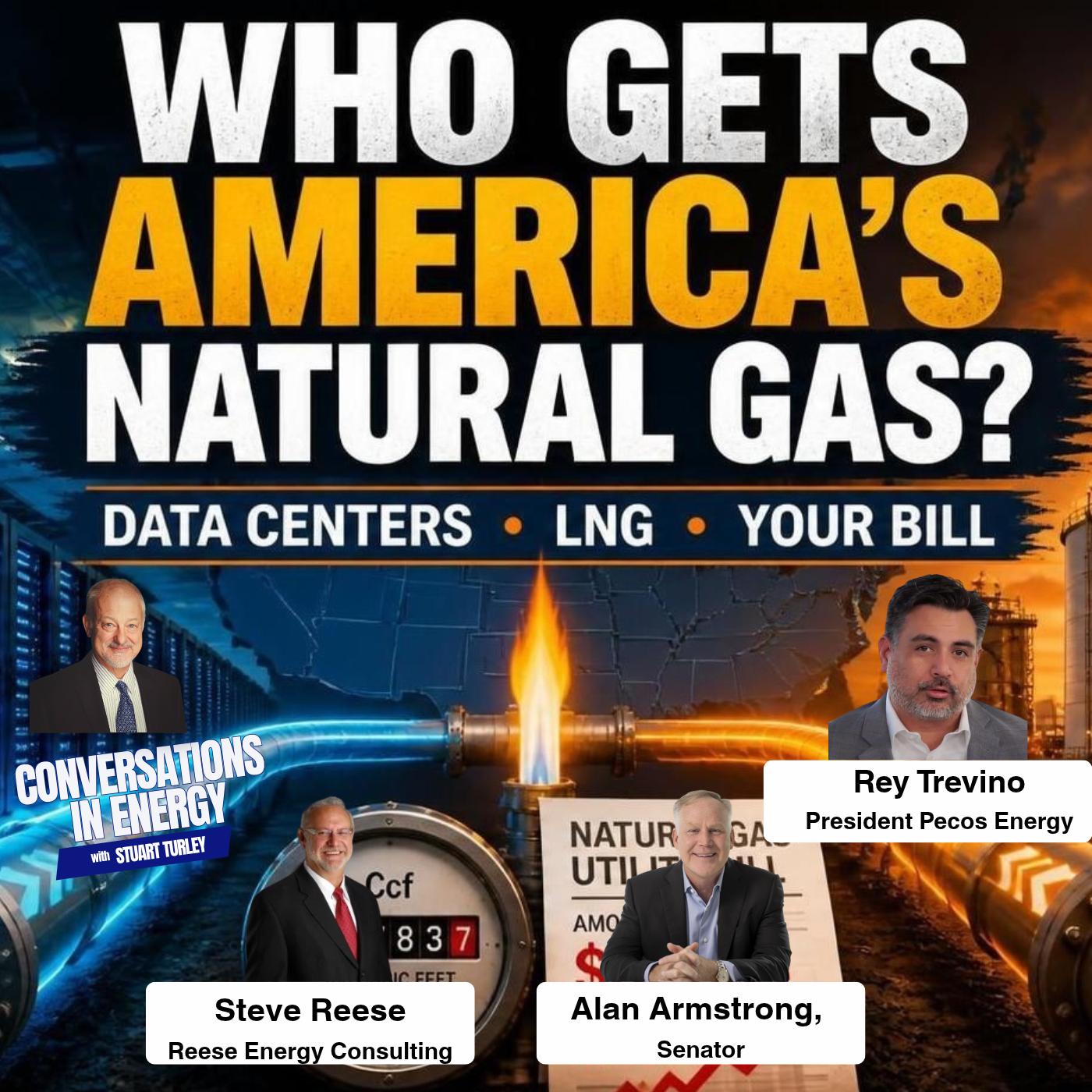
The Energy Reckoning: How Election Results, Data Centers, and Permitting Reform Will Reshape America's Power

In this special joint episode of The Crude Truth and Energy Newsbeat podcasts, hosts Rey Trevino and Stu Turley sit down with Oklahoma Senator Alan Armstrong and energy consultant Steve Reese to discuss the seismic shifts in U.S. energy policy following the 2024 election. With Democrats gaining significant ground in Texas—a traditionally Republican energy stronghold—and Republicans consolidating power nationally, the panel explores the critical intersection of politics and energy infrastructure. The conversation centers on three interconnected challenges: the explosive growth of data centers demanding unprecedented amounts of electricity and natural gas, the urgent need for permitting reform to unlock pipeline development, and the widening gap between climate rhetoric and the practical realities of energy production. Against this backdrop, Senator Armstrong provides insider perspective on the Senate's legislative priorities, while the panelists debate how America can balance energy affordability, reliability, and environmental goals—and what happens when political decisions override market forces. 1. 2024 Election Results & Political Implications The podcast opens with discussion of the recent "blue tsunami" in Texas, where Democrats won major statewide offices including Governor, Lieutenant Governor, and the Railroad Commission. This contrasts sharply with Oklahoma's solid Republican performance. The hosts express concern about how these results will impact energy policy. 2. Data Centers & Energy Demand A significant focus is the rapid expansion of data centers and their massive energy requirements. The incoming Texas governor has plans to ban data centers, which concerns the panel. They discuss how data centers represent a critical new demand driver for electricity and natural gas, and how regulatory decisions could shift these investments to other states like Oklahoma. 3. Permitting Reform Senator Armstrong emphasizes that permitting reform is the critical legislative priority before Congress adjourns. He explains that the first Senate vote will be on a cloture motion for a bipartisan permitting reform bill designed to streamline infrastructure projects across all energy sectors (renewables, natural gas, hydropower, etc.) without picking winners or losers. 4. Natural Gas & LNG Export The panel discusses the importance of expanding natural gas infrastructure, particularly: LNG export capacity and international demand The need for new pipelines, especially in the Northeast (New England) How natural gas is more reliable than renewables for powering data centers The disconnect between politicians' climate goals and their opposition to natural gas infrastructure 5. Infrastructure & Pipeline Development A recurring theme is the aging U.S. infrastructure (50-100 years old) and the need for modern natural gas pipelines. They highlight specific projects like the Marcellus Shale development and the challenges of building pipelines through states like New York that have regulatory barriers. 6. Regulatory Burden & State vs. Federal Authority The discussion covers how state-level permitting (particularly in New York) has blocked pipeline projects, and how the permitting reform bill addresses this by requiring states to use the "least burdensome" environmental protection methods rather than arbitrary standards. 7. Energy Pricing & Consumer Impact The panel analyzes how permitting delays and regulatory restrictions drive up energy costs for consumers, particularly: High heating oil prices in New England ($6.10/gallon) Diesel prices nationally (~$6.35/gallon) How these costs are driven by refinery capacity constraints and net-zero policies 8. Messaging & Political Strategy Discussion of how Republicans failed to effectively communicate their energy message during the campaign, including the benefits of low natural gas prices and the real causes of high fuel costs. 9. Personal Reflections The podcast concludes with Senator Armstrong's reflections on leaving office and Steve Reese sharing his recent kidney transplant recovery, adding a human element to the discussion. We would also like to give our sponsors a shout-out. Also entering Sponsor Rey Trevino, Pecos Operating https://pecos.energy/

October 28, 202639 min

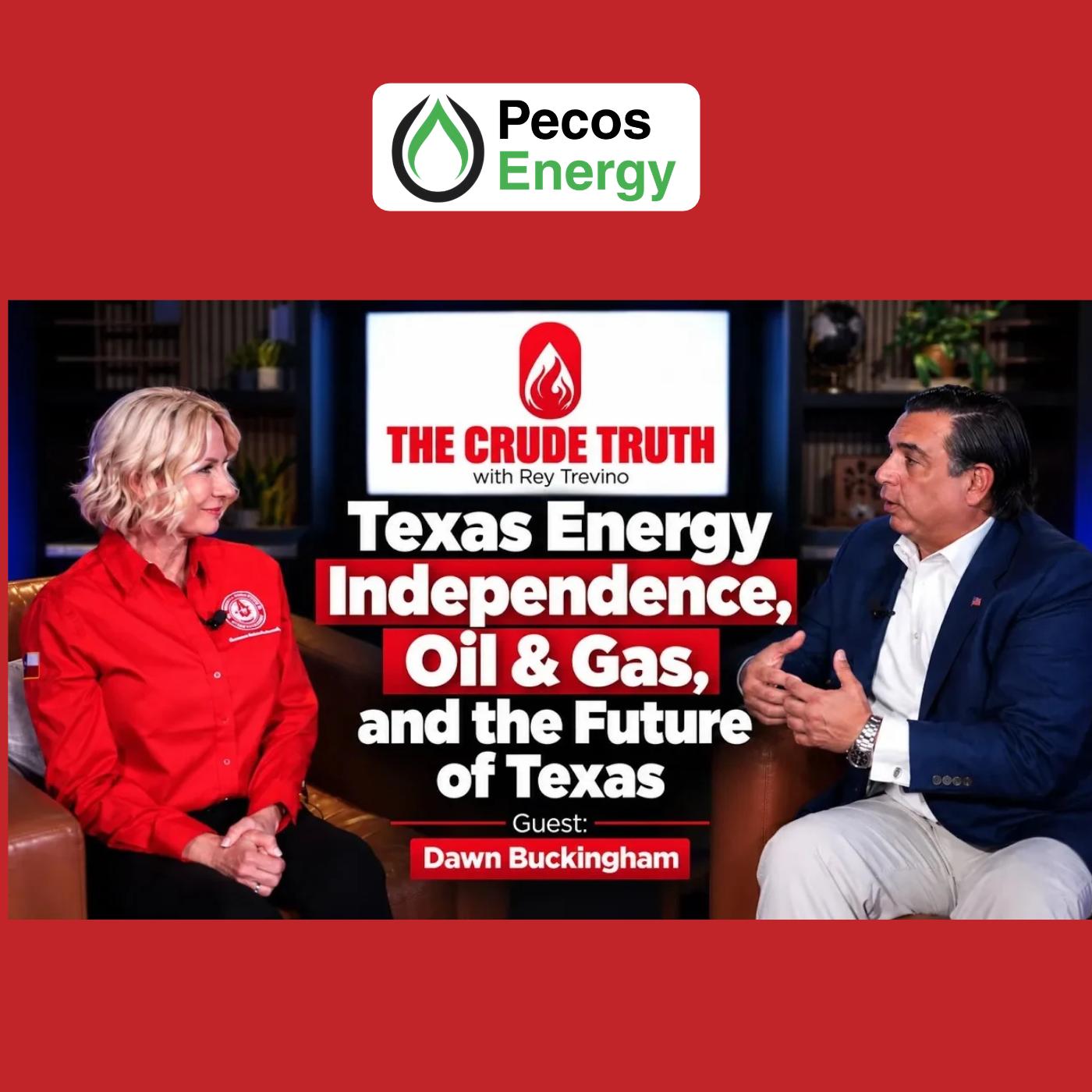
The Texas Engine: How One State is Securing Energy, Mineral, and Food Independence for America

Dr. Dawn Buckingham, Commissioner, Texas General Land Office, stops by the CrudeTruth In this episode of "The Crude Truth," host Rey Trevino sits down with Dr. Dawn Buckingham, Texas General Land Commissioner, to explore the ambitious vision driving Texas's economic future. As the state faces critical challenges and opportunities in energy, national security, and sustainable development, Dr. Buckingham unveils the Texas Engine Initiative—a comprehensive strategy designed to secure Texas's independence across energy, minerals, food production, and infrastructure. From breaking China's monopoly on rare earth minerals to transforming oil and gas industry byproducts into agricultural assets, from protecting Texas's vulnerable coastline to preserving the state's rich historical legacy, this conversation reveals how the General Land Office operates as the "tip of the spear" for Texas's prosperity. With $6 billion in education funding generated in just four years and billions more invested in disaster recovery and coastal resilience, Dr. Buckingham discusses how strategic stewardship of Texas's vast resources and lands is positioning the state—and by extension, the nation—for long-term security and growth. 1. Texas Engine Initiative (TEI) The centerpiece of the conversation is Dr. Buckingham's comprehensive economic development strategy with five pillars focused on: Energy Independence: Developing dispatchable energy sources including oil & gas, nuclear, geothermal, and utilizing transmission line corridors Mineral Independence: Breaking China's monopoly on rare earth minerals critical for national security (phones, jets, military equipment) Food Production Independence: Ensuring Texas doesn't rely on foreign nations for food Manufacturing & Industrial Development: Creating jobs and economic growth (e.g., Waxahachie industrial complex bringing 10,000 jobs and $1.5B annual revenue) Infrastructure Development: Master-planned communities and strategic land use 2. Produced Water Innovation A major focus on converting oil and gas industry waste into an asset: Cleaning produced water to agricultural quality for irrigation Growing crops (alfalfa, wheat, sorghum, native grasses) on GLO land in Pecos Potential to generate ~1 million barrels of water daily for agricultural use Transforming West Texas into productive farmland 3. Education Funding The General Land Office contributes $6 billion to public education in four years through the Permanent School Fund The fund is now worth $65 billion and is the oldest sovereign wealth fund in the country Revenue helps reduce property taxes for Texas citizens 4. Rare Earth Minerals Texas possesses the world's most complete set of rare earth minerals not controlled by China Estimated 100+ year supply worth tens of billions of dollars Critical for national security and technological advancement Commitment to domestic processing rather than exporting raw materials to China 5. Oil & Gas Industry Defense Defending against Biden administration policies (LNG export ban, Endangered Species Act weaponization) Supporting the first new refinery in 50 years near Brownsville Emphasizing oil and gas as essential to American independence and economic strength Contrasting Republican stewardship with Democratic opposition to the industry 6. Coastal Protection & Disaster Recovery $14 billion in active disaster recovery projects $1 billion in flood mitigation projects Largest beach renourishment project in the country "Coastal Spine" infrastructure project (dunes, levees, storm gates) from Louisiana to Mexico Orphaned well remediation in bays Managing three Marine Leagues (10.3 miles) of state waters in the Gulf 7. Border Security & Cartel Prevention Declaring islands in the Rio Grande as Texas territory to eliminate cartel safe havens Strategic land acquisition (354,000 acres) to prevent foreign ownership and secure border components Preventing China from acquiring strategic Texas land 8. Historical Preservation "Save Texas History" program protecting the Alamo and other state monuments Teaching Texans their heritage and the significance of historical events Emphasizing the sacrifices of early Texans and their legacy of independence 9. Texas Sovereignty & Independence Highlighting Texas's unique position as a state that retained its public lands (unlike Western states that ceded land to the federal) Revenue from state lands stays in Texas and funds education Emphasis on Texas's independent approach to governance and problem-solving The Texas Pledge and distinctive Texas identity 10. Economic Impact & Political Philosophy Contrasting Republican stewardship (controlling spending, generating revenue) with Democratic approaches Emphasizing that Texas's success serves as a model for the nation and world The importance of maintaining Republican leadership to preserve these initiatives Subscribe to The Crude Truth for more conversations about energy, business, technology, and the future of Texas. https://pecoscrudetruth.substack.com/ For More information on Tax-Advantaged Investments: https://pecos.energy/info/ Check out LFS Chemistry, sponsor of the Crude Truth, here: https://lfschemistry.com/ Air Compressor Solutions https://acsir.com/ Follow Rey on his LinkedIn: https://www.linkedin.com/in/reytrevinoiii/ Also, Pecos Operating Website: https://pecos.energy/
October 22, 202650 min

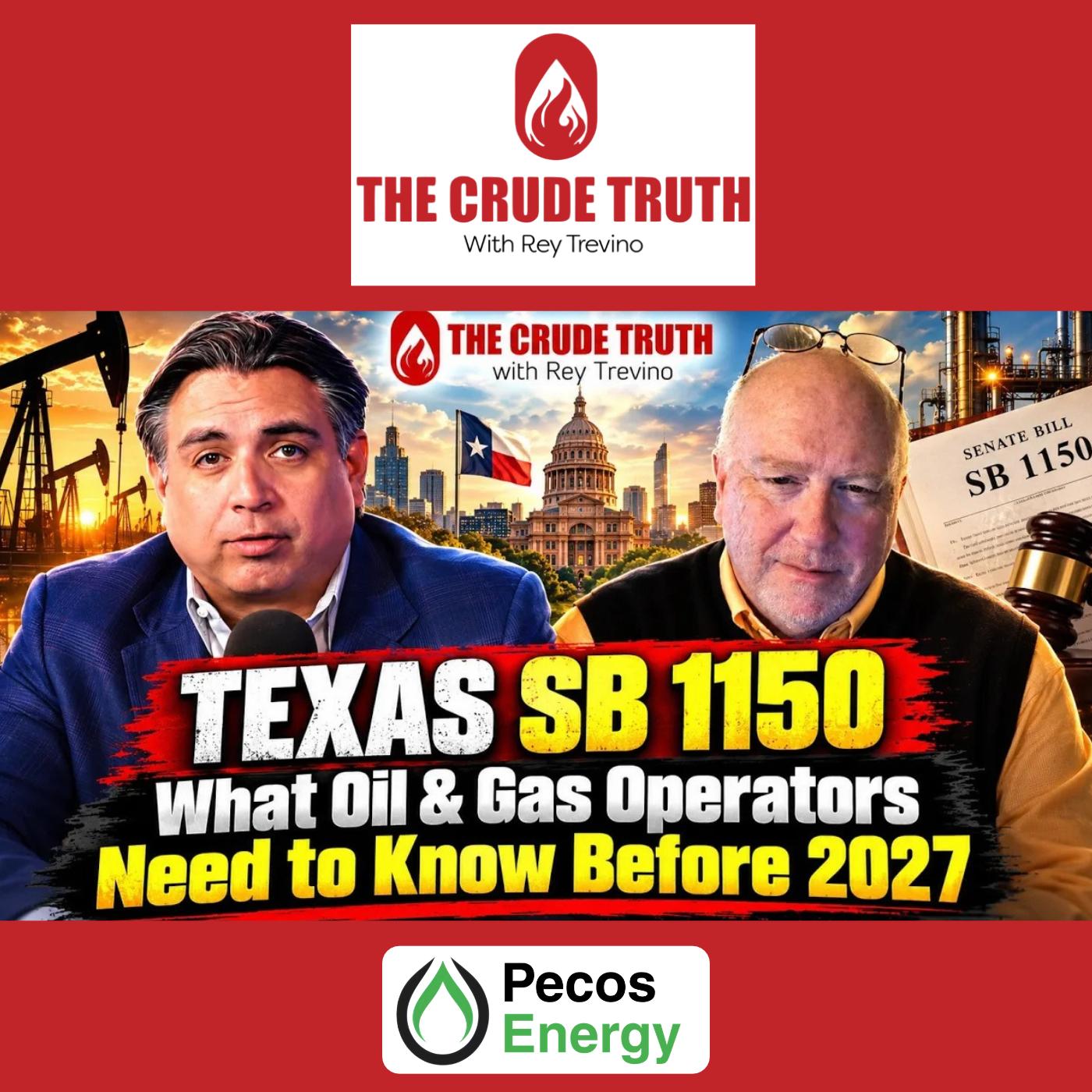
Texas Senate Bill 1150 What Oil and Gas Operators Need to Know Before 2027

Texas oil and gas operators are facing a significant regulatory shift with Senate Bill 1150, which fundamentally changes how the state manages its vast inventory of inactive wells. As the energy industry continues to thrive—with Texas now producing nearly 6 million barrels of oil per day and accounting for over 42% of the nation's crude oil—a growing challenge has emerged: the state has accumulated approximately 120,000 inactive wells that are not producing but remain under operator bonds and responsibility. Senate Bill 1150 addresses this issue by requiring operators to either plug or return to service all wells that have been inactive for 15 years and were completed 25 or more years ago within a 15-year compliance window beginning September 1, 2027. With an estimated $2 billion in plugging costs looming and rising service expenses, this legislation represents one of the most significant regulatory challenges facing independent and large oil and gas operators in Texas, requiring careful planning, financial stewardship, and industry advocacy to ensure the rules are implementable and don't inadvertently harm the state's energy production capabilities. Connect with Karr Ingham on LinkedIn: https://www.linkedin.com/in/karr-ingham-9b62333a/ The Texas Alliance of Energy Producers: https://www.texasalliance.org/ 1. Senate Bill 1150 & Inactive Well Regulations The central focus of the episode is Senate Bill 1150, which addresses the plugging of long-inactive oil wells in Texas. The bill targets wells that have been inactive for 15+ years and were completed 25+ years ago (referred to as "1525 wells"). The legislation aims to accelerate the timeline for either plugging these wells or returning them to service. 2. Timeline & Implementation The bill came into effect September 1, 2025 New rules are set to take effect September 1, 2027 The Railroad Commission will adopt the final rule by December 31, 2026 Operators will have a 15-year compliance period (through 2042) to deal with their inactive well inventory 3. Financial Impact & Costs Estimated $2 billion in plugging work needed across Texas operators Rising plugging costs due to increased demand for plugging services Money spent on plugging diverts resources from drilling, development, and production activities Potential impact on energy prices for consumers 4. Key Regulatory Criteria The Railroad Commission is evaluating operators based on: Track record of returning wells to service Financial stewardship and ability to pay Financial hardship provisions for extensions Compliance plans for managing the 15-year timeline 5. Challenges & Concerns Non-transferable compliance timeline: If an operator sells leases before completing plugging, the new owner gets only the remaining time Rolling inventory: New wells age into the 1525 category during the compliance period, adding to the workload Insufficient evaluation time for operators acquiring well packages Bond requirements and full-cost calculations for plugging 6. Industry Context & Production Growth Texas oil production has grown from ~1 million barrels/day to ~6 million barrels/day over 15 years Texas now produces 42-43% of U.S. crude oil The rise in inactive wells correlates with increased drilling activity during the energy renaissance Orphan/abandoned wells (~10,000-12,000) are relatively small compared to inactive wells (~120,000) 7. Advocacy & Operator Input The Texas Alliance of Energy Producers played a crucial role in: Extending the initial 10-year compliance period to 15 years Pushing back the implementation date from September 1, 2025 to September 1, 2027 Advocating for financial hardship provisions Encouraging operator feedback during the public comment period (ending November 13) 8. Economic & Market Implications Reduced capital available for new development and production Potential for new plugging service companies to emerge Impact on property taxes and severance taxes from future production Broader implications for energy affordability and supply Subscribe to The Crude Truth for more conversations about energy, business, technology, and the future of Texas. https://pecoscrudetruth.substack.com/ For More information on Tax-Advantaged Investments: https://pecos.energy/info/ Check out LFS Chemistry, sponsor of the Crude Truth, here: https://lfschemistry.com/ Air Compressor Solutions https://acsir.com/ Follow Rey on his LinkedIn: https://www.linkedin.com/in/reytrevinoiii/ Also, Pecos Operating Website: https://pecos.energy/
October 12, 202635 min

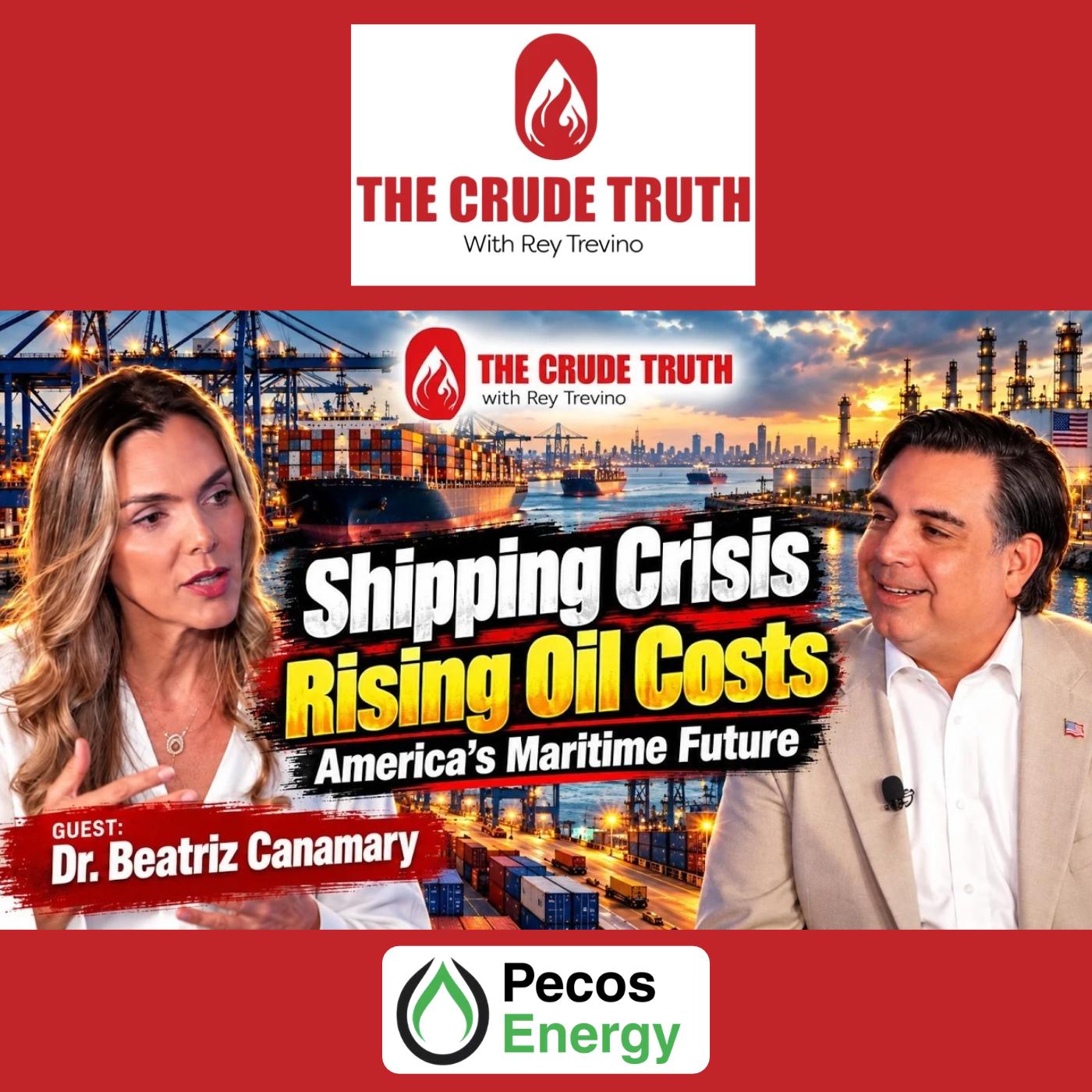
Shipping Crisis, Rising Oil Costs and America’s Maritime Future with Dr. Beatriz Canamary

As global conflicts disrupt shipping lanes and drive up transportation costs, what does the future hold for America’s maritime industry and energy security? On this episode of The Crude Truth, Rey Trevino welcomes maritime expert Dr. Beatriz Canamary to discuss the growing connection between oil and gas, global shipping, and national security. Together, they explore how geopolitical tensions surrounding the Strait of Hormuz and the war in Ukraine are impacting shipping costs, insurance rates, and global supply chains. Dr. Beatriz Canamary shares her insights on rebuilding America’s commercial shipbuilding industry, the importance of U.S.-flagged vessels, and how Texas can help lead the way. They also discuss autonomous ships, nuclear-powered maritime technology, port modernization, and the role of the American Maritime Industrial Coalition (AMIC) in advancing the industry’s future. Connect with Dr. Canamary on her LinkedIn: https://www.linkedin.com/in/beatrizcanamary/ In this episode, we discuss: Why global conflicts are driving up shipping and insurance costs How America lost its commercial shipbuilding dominance Why domestic shipbuilding and U.S.-flagged vessels matter for national security How oil and gas cargo can help revitalize American shipping The future of autonomous ships, nuclear energy, and physical AI in maritime operations Why Texas is positioned to play a major role in America’s maritime resurgence Shipping Insight and the industry’s plans for 2027 Rebuilding America’s maritime capabilities will require investment, innovation, workforce development, and collaboration across industries. If you’re interested in the future of energy, global trade, and American industrial strength, this is an episode you won’t want to miss. Subscribe to The Crude Truth for more conversations about energy, business, technology, and the future of Texas. https://pecoscrudetruth.substack.com/ For More information on Tax-Advantaged Investments: https://pecos.energy/info/ Check out LFS Chemistry, sponsor of the Crude Truth, here: https://lfschemistry.com/ Air Compressor Solutions https://acsir.com/ Follow Rey on his LinkedIn: https://www.linkedin.com/in/reytrevinoiii/ Also, Pecos Operating Website: https://pecos.energy/
October 2, 202630 min

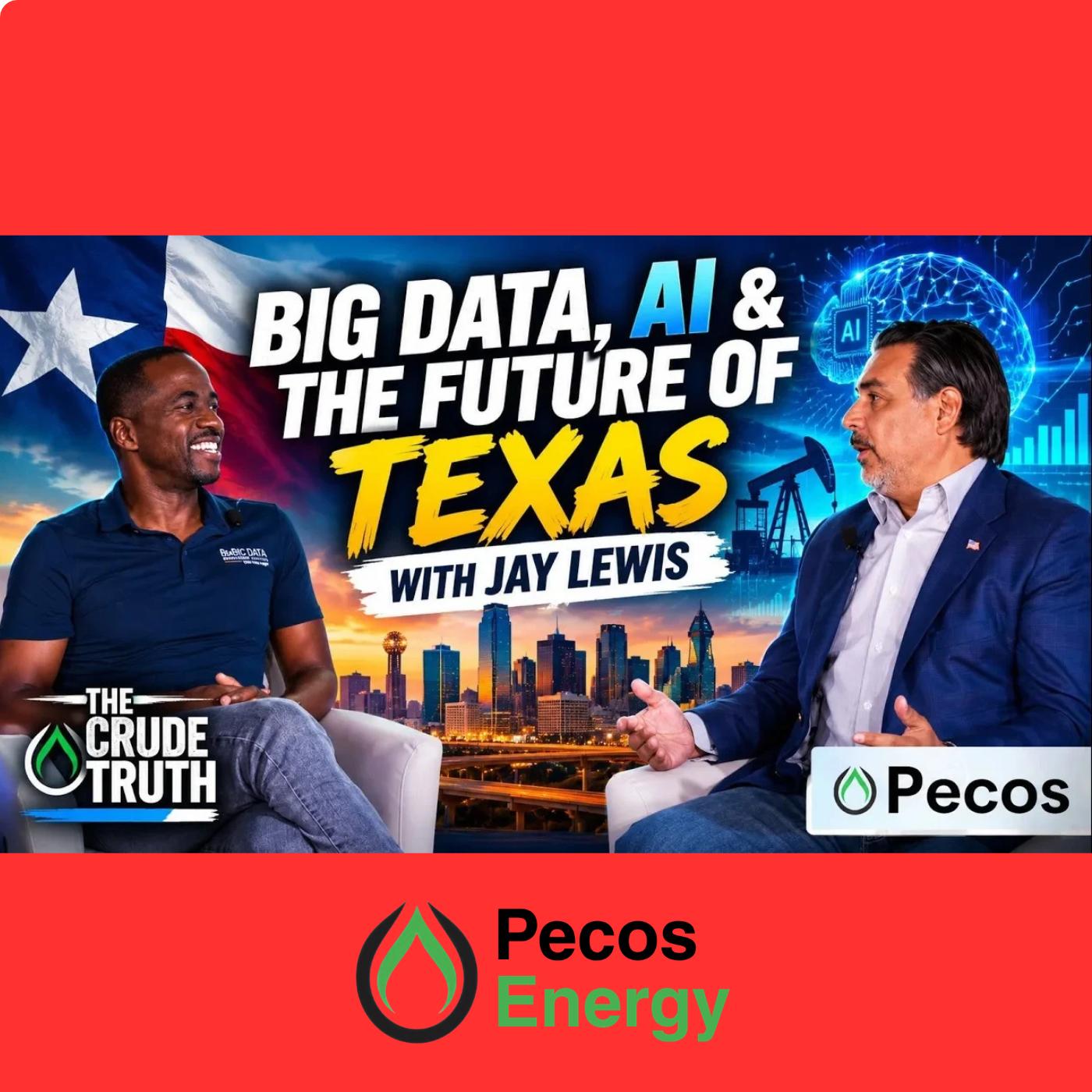
Big Data, AI and the Future of Texas with Jay Lewis on The Crude Truth

Big data is transforming the way businesses operate—and Texas is quickly becoming a major hub for data centers, AI, and the infrastructure needed to power them. In this episode of The Crude Truth, we sit down with Jay Lewis, Founder and CEO of Big Data, to break down what “big data” really means and why clean, reliable, and secure data is becoming one of the most valuable resources in the modern economy. Jay Lewis explains how businesses can turn data from a cost of doing business into an asset, why “garbage in, garbage out” matters, and how automation can reduce the manual work involved in gathering, cleaning, and reconciling data. We also explore the growing demand for data centers, power generation, cybersecurity, and the infrastructure needed to support the rapid expansion of AI. From oil and gas to electricity, smart technology, and business analytics, this conversation looks at how data is changing traditional industries—and why Texas is positioned to lead the way. Connect with Jay Lewis on LinkedIn here: https://www.linkedin.com/in/james-lewis-138242162/ Check out BigData.com's site here: https://bigdata.com/ Topics discussed: What big data actually means The rapid growth of data centers and AI in Texas Data quality, security, and “garbage in, garbage out” Automation and reducing manual data work The importance of data in oil and gas Smart meters and the explosion of data Data reconciliation and reducing costly mistakes Public vs. private data infrastructure Why information may be America’s most valuable resource The future of AI, data, and Texas Thank you to our sponsors: LFS Chemistry, NAPE Expo, Air Compressor Solutions, Sandstone Group, Exec Crew, Texas Star Alliance, Pecos Country Operating, and Real News Communications Network. Subscribe to The Crude Truth for more conversations about energy, business, technology, and the future of Texas. https://pecoscrudetruth.substack.com/ For More information on Tax-Advantaged Investments: https://pecos.energy/info/ Check out LFS Chemistry, sponsor of the Crude Truth, here: https://lfschemistry.com/ Air Compressor Solutions https://acsir.com/ Follow Rey on his LinkedIn: https://www.linkedin.com/in/reytrevinoiii/ Also, Pecos Operating Website: https://pecos.energy/
October 1, 202641 min

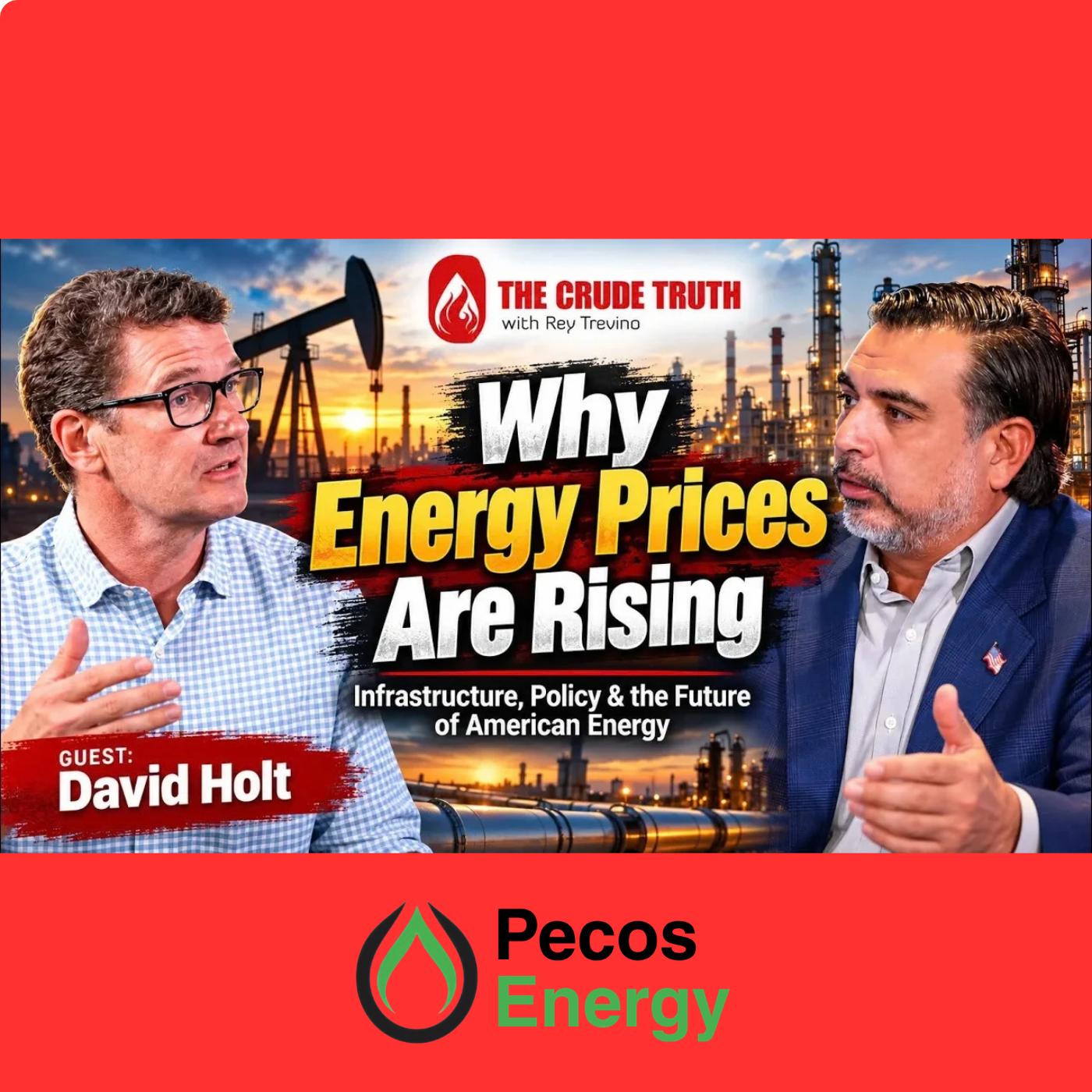
Why Energy Prices Are Rising: Infrastructure, Policy & the Future of American Energy Special Guest, David Holt

Why are energy costs continuing to rise, and how much of it comes down to infrastructure? On this episode of The Crude Truth, Rey sits down with David Holt, President of the Consumer Energy Alliance, to break down the forces affecting energy prices across the United States. They discuss America’s position as a major global energy producer, the impact of infrastructure on electricity and natural gas prices, and the challenges facing the nation as energy demand grows. David explains why transmission lines, pipelines, refining capacity, natural gas, nuclear power, and other energy resources all play a role in keeping energy reliable and affordable. The conversation also explores the growing energy demands from data centers, the future of the Texas power grid, refinery capacity, diesel prices, and the relationship between energy policy and consumers. From pipelines and refining to electricity bills and the future of American energy, this episode takes a closer look at the infrastructure behind the energy we use every day. Guest: David Holt, President of the Consumer Energy Alliance. Connect with David on his LinkedIn: https://www.linkedin.com/in/david-holt-a207946/ Check out the Consumer Energy Alliance: https://consumerenergyalliance.org/ For More information on Tax-Advantaged Investments: https://pecos.energy/info/ Check out LFS Chemistry, sponsor of the Crude Truth, here: https://lfschemistry.com/ Air Compressor Solutions https://acsir.com/ Follow Rey on his LinkedIn: https://www.linkedin.com/in/reytrevinoiii/ Also, Pecos Operating Website: https://pecos.energy/
September 11, 202638 min

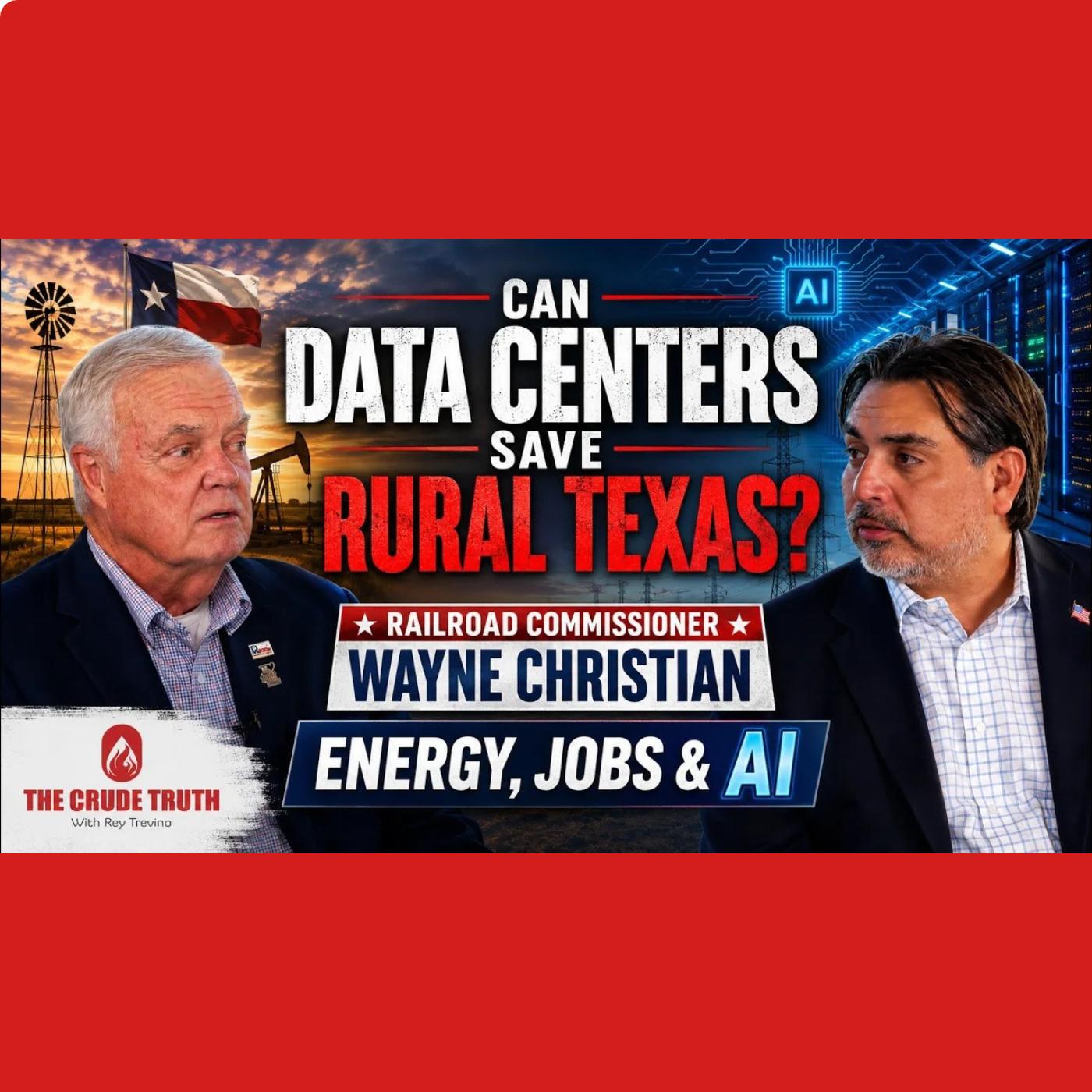
Can Data Centers Save Rural Texas? Railroad Commissioner Wayne Christian on Energy, Jobs and AI

Rural Texas is sitting on the biggest economic opportunity it has seen in a generation, and most people have not connected the dots yet. Data centers are coming to this state whether anyone plans for them or not. The only question left is whether small towns end up with the schools, the jobs, and the tax base, or whether someone else writes the rules first. Texas Railroad Commissioner Wayne Christian joins The Crude Truth to lay out the case. Data center expansion could push billions in private investment into parts of the state that have been waiting a long time for good news, with high paying jobs and real school funding attached. The hard parts get covered too. Electricity. Water. Farmland. Private property rights. Those questions are fair, and the communities absorbing this growth deserve straight answers on every one of them. The thread running through all of it is power. AI runs on electricity, and reliable electricity in Texas runs on natural gas. That is not a talking point, that is load math. ERCOT is already feeling this demand curve, and it is the independent producers, the ones working leases nobody else wants, who are going to carry it. Growing the economy and protecting the people who live here are not opposing goals. They just require a plan, and Texas does not have one yet. 1. Rural America's Economic Decline The episode opens with the central concern that rural America is dying. Commissioner Wayne Christian uses specific examples like his hometown of Tinney Hall, Texas, where businesses have closed and families have had to leave to find work. The discussion emphasizes how rural communities have lost their economic foundations and how young people are forced to leave to find employment. 2. Data Centers as Economic Solution The primary focus is whether data centers can revitalize rural Texas economies. Christian argues that billion-dollar data center facilities can bring permanent, well-paying jobs (50+ jobs per facility) and significantly increase school funding through property taxes. He cites the example of a $100 million lithium facility in Wauking, Texas, which would generate $1 million annually in school property tax for 700 students. 3. The Governor's Data Center Pause Texas Governor Abbott implemented a pause on data center permitting and construction. Both hosts discuss whether this is a strategic pause to develop proper guidelines or a delay that could harm economic development. Christian supports the pause but emphasizes the need for a comprehensive "Texas plan" that addresses legitimate concerns while enabling development. 4. Political Opposition to Data Centers Christian claims that opposition to data centers is being driven by socialist politicians (Bernie Sanders, AOC) and funded by George Soros, with a $100 million PR campaign. He argues this is part of a larger "Great Reset" agenda to weaken American energy independence and shift power away from Texas. 5. Energy Security and Reliability A major theme is Texas's energy grid challenges. Christian criticizes the state's over-reliance on wind and solar, which proved unreliable during Winter Storm Uri. He argues that natural gas should be the primary energy source and criticizes the lack of new natural gas or coal-fired power plants despite increasing demand. 6. Water Usage Concerns Water is identified as a legitimate concern for data centers. However, Christian provides context: oil and gas uses less than 3% of Texas water, and data centers use only 4% nationally. He explains that data centers recycle water like swimming pools and proposes solutions using recycled oil field water and thermal water sources. 7. Private Property Rights vs. Government Regulation Christian strongly opposes giving local governments power to restrict data centers, arguing this represents socialism and threatens rural property rights. He warns that allowing zoning restrictions for data centers could lead to restrictions on other rural industries like chicken farms and cattle ranches. 8. Oil and Gas Industry Challenges The discussion includes how small independent oil and gas operators are disadvantaged compared to large international corporations. Christian notes that independents produce 60-70% of Texas oil and gas but lack legislative influence. He also criticizes preferential treatment given to wind and solar over traditional energy sources. 9. Global Energy Responsibility Christian emphasizes that Texas and America have a moral obligation to provide energy to developing nations. He points out that one-third of the world relies on wood and animal manure for energy, and many lack basic electricity, clean water, and medicine. 10. The Need for a Comprehensive Texas Plan Both hosts stress the importance of developing balanced policies that address environmental and community concerns while enabling economic development and maintaining Texas's energy independence and leadership. Whether you work in the patch, live in one of these towns, or you are just trying to understand where this state is headed, this conversation is worth your time. And that is ????️ The Crude Truth Check out LFS Chemistry Sponsor of the Crude Truth here: https://lfschemistry.com/ Air Compressor Solutions https://acsir.com/ Follow Rey on his LinkedIn: https://www.linkedin.com/in/reytrevinoiii/ Also, Pecos Operating Website: https://pecos.energy/
September 10, 202654 min

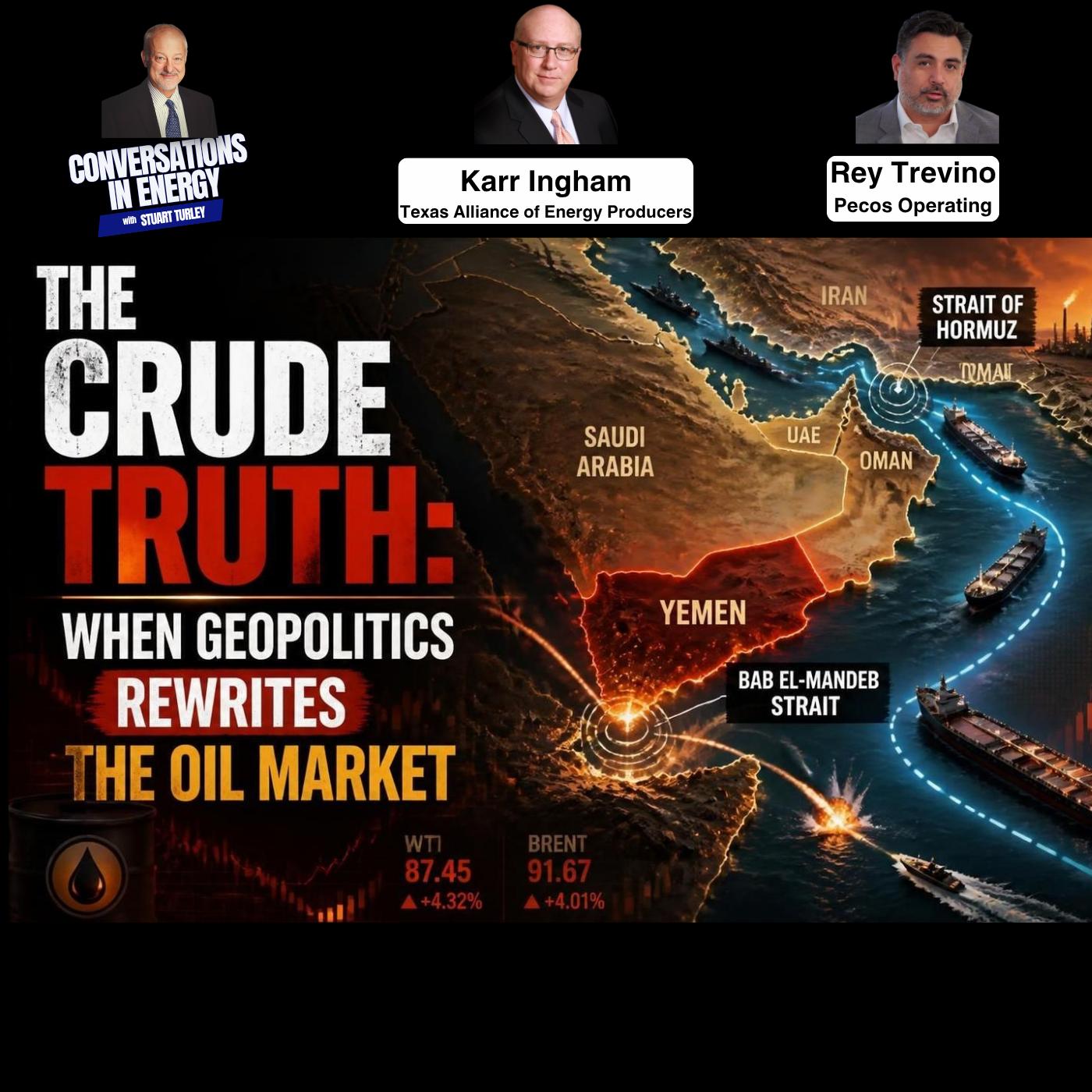
The Crude Truth: When Geopolitics Rewrites the Oil Market

In early 2026, the global oil market experienced a seismic shift. When geopolitical tensions with Iran escalated, crude prices surged—and Texas responded. In this episode, economist Karr Ingham, oil producer Rey Trevino, and energy journalist Stu Turley break down how a single conflict triggered a cascade of market changes: rig counts climbing for the first time in years, jobs returning to the industry, and a historic deal securing 65 billion barrels of Venezuelan oil. But here's the real story: how these moves reshape energy independence, refinery infrastructure, and consumer prices for the next decade. Check out the Texas Alliance of Energy Producers: https://www.texasalliance.org Connect with Karr on his LinkedIn https://www.linkedin.com/in/karr-ingham-9b62333a/ Connect with Rey on his LinkedIn https://www.linkedin.com/in/reytrevinoiii/ 1. Global Oil Market Transformation The hosts discuss dramatic shifts in global oil supply and demand, particularly focusing on: China's changing import patterns (buying Russian oil at elevated prices, reduced purchases from Iran and Iraq) The impact of the Iran conflict on crude oil prices and market dynamics Russia's refinery capacity reduction (down 40%) due to drone strikes Global diesel shortage and its economic implications 2. Venezuela's Oil Resources & U.S. Policy A significant focus on the recent U.S. deal securing 65 billion barrels of Venezuelan oil over 25 years: The removal of Maduro and its impact on oil production potential Secretary Chris Wright's role in facilitating investment opportunities for Chevron, Exxon, and independents Plans to increase Venezuelan production by 1 million barrels per day The strategic importance of liberating these resources for global markets 3. Texas Oil & Gas Production Trends Detailed analysis of Texas's response to market changes: Rig count recovery: from 229 rigs in December to 282 currently (41 rigs added year-over-year) Production increases despite declining rig counts (efficiency and productivity gains) Job creation returning to the industry after losses in 2024-2025 The Permian Basin's continued dominance 4. Crude Oil Quality & Refinery Infrastructure Discussion of different crude types and refining capabilities: Light sweet crude (Texas) vs. heavy sour crude (Venezuelan, Canadian) Why the U.S. exports light sweet crude (refineries worldwide are better equipped to process it) Plans for a new refinery in Brownsville to process Texas sweet crude domestically The importance of crude oil trade and energy independence 5. U.S. Energy Independence Progress Reduction in crude oil imports from 60-65% twenty years ago to approximately 10% today The lifting of the crude oil export ban in 2015 as a critical milestone Current import sources: primarily Canada (20%), minimal imports from the Strait of Hormuz (1.5-2%) California's hypocrisy in importing oil from Russia, Ecuador, and Iran while opposing domestic production 6. Tariffs & Trade Policy Debate A nuanced discussion on tariffs and trade: Karr's anti-tariff stance vs. Stu's perspective on managed tariffs The weaponization of the U.S. dollar through sanctions Canada's importance as a reliable energy partner The need for balanced trade relationships 7. Regulatory & Legislative Challenges Texas Alliance of Energy Producers' ongoing work: Produced water management from increased oil and gas production Associated natural gas handling from Permian crude production Orphan wells regulation and inactive well management Preparation for the 2027 Texas legislative session Federal-level advocacy in Washington D.C. 8. Renewable Energy Accountability A critical look at wind energy infrastructure: 79,000 wind turbines in the U.S., with 40% approaching end-of-life in 3-5 years $89 billion liability for decommissioning and recycling with no funding mechanism Contrast with oil and gas industry's established orphan well remediation processes This episode presents a comprehensive view of how geopolitical events, policy changes, and market dynamics are reshaping the global and U.S. energy landscape, with particular emphasis on Texas's strategic role. Check out LFS Chemistry Sponsor of the Crude Truth here: https://lfschemistry.com/ Air Compressor Solutions https://acsir.com/ Follow Rey on his LinkedIn: https://www.linkedin.com/in/reytrevinoiii/ Also, Pecos Operating Website: https://pecosoperating.com/

Is this your show?

Claim this listing to keep it up to date, reach guests who want to pitch you, and manage bookings with Guestify.

Claim this listing

More Business podcasts