Find partners
Talking TA

Talking TA

Hosted by Denise Chaffin

BusinessCareersInterviews guests

Episodes

86

Latest episode

May 2026

Language

EN-US

About the show

Welcome to Talking TA, your go-to podcast for talent acquisition insights. Hosted by Denise Chaffin, join us for conversations with HR and recruitment experts. Uncover trends, best practices, and strategies to elevate your recruitment game. Expect insider discussions, exploration of talent acquisition techniques, and insights into pressing HR issues. Stay ahead with Talking TA—your key to building and retaining a top-tier team.

Listen to episodes

60 recent
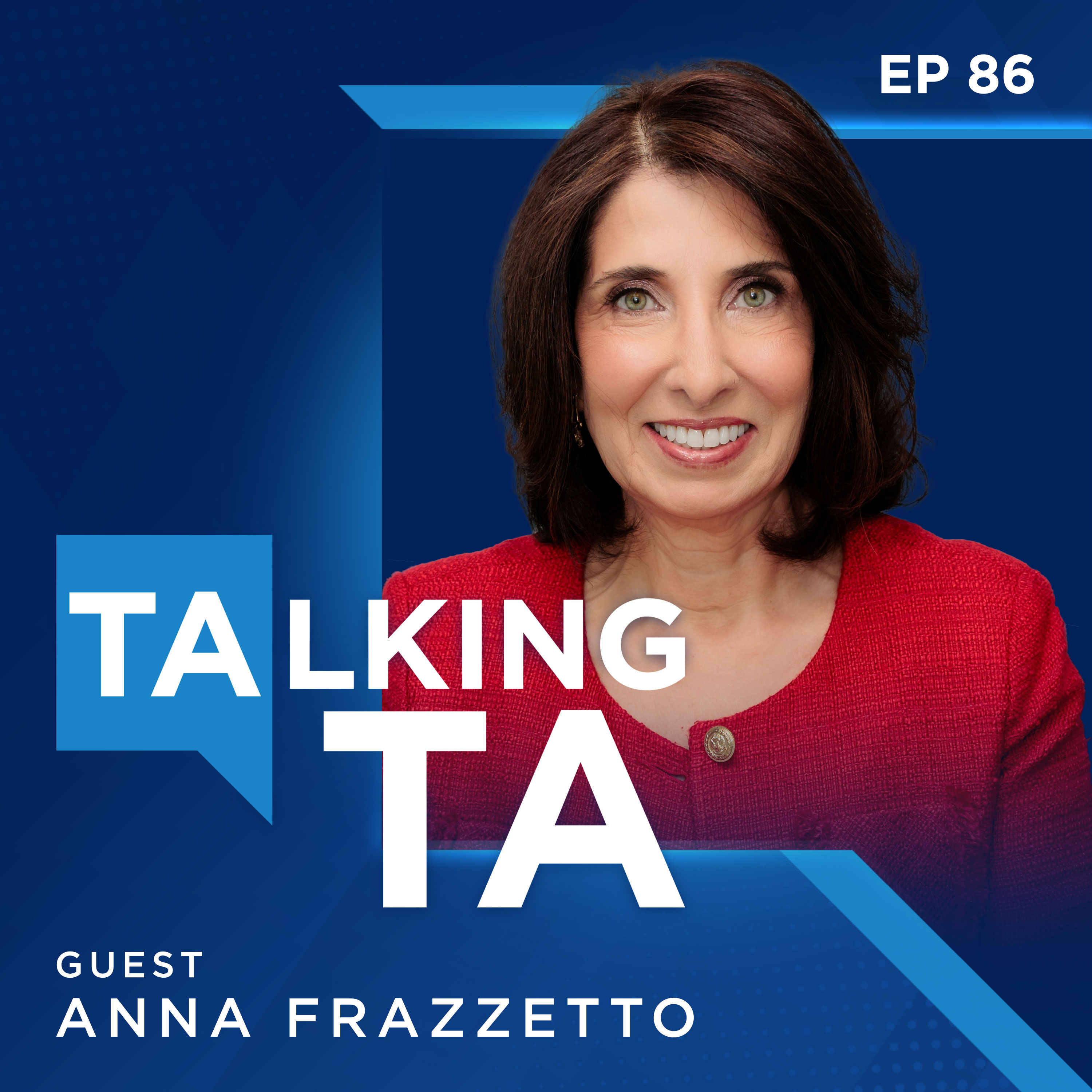
May 29, 2026Episode 8652 min

Transactional Recruiting Is Dead, with Anna Frazzetto

Anna Frazzetto is the Founder and CEO of Affirm Strategic Partners, sales leadership expert, and author of Sales Leadership in Action.In a world increasingly driven by automation and AI, the recruiters who stand out aren't the ones sending more messages, they're the ones building stronger relationships. This conversation explores why transactional recruiting is losing effectiveness and what it takes to become a trusted advisor in today's hiring landscape.Denise Chaffin sits down with Anna Frazzetto to discuss the growing intersection of recruiting, sales, and relationship-building. They explore storytelling as a recruiting tool, overcoming hiring manager resistance, candidate objections, compensation challenges, retention issues, AI-assisted workflows, follow-up strategies, and the shift toward consultative recruiting. Anna shares practical lessons from decades of leadership experience and explains why understanding business problems is becoming more important than simply filling positions.After listening, you'll be thinking less about how to fill jobs and more about how to solve problems. The recruiters who thrive moving forward will be the ones who combine technology with trust, ask better questions, challenge assumptions, and position themselves as strategic partners rather than transactional vendors.Timestamps(00:00) Why Most Recruiters Lose People Immediately(03:12) Anna Frazzetto's Journey from Developer to CEO(05:12) Why Sales and Recruiting Training Often Miss the Mark(08:33) The Shift from Filling Jobs to Solving Problems(12:24) What Hiring Managers Get Wrong About Compensation(15:48) Transactional Recruiting vs. Trusted Advisorship(19:28) Why Storytelling Wins More Candidates and Clients(23:14) How to Sell Candidates to Hiring Managers(27:30) The First 30 Seconds Can Make or Break a Conversation(32:15) Building Relationships Through Better Follow-Up(36:00) Using AI Without Losing the Human Connection(40:04) Closing Candidates and Handling Last-Minute Objections(47:14) Lessons from Recruiting Across Multiple Industries(50:15) What Makes a Recruiter Truly Indispensable

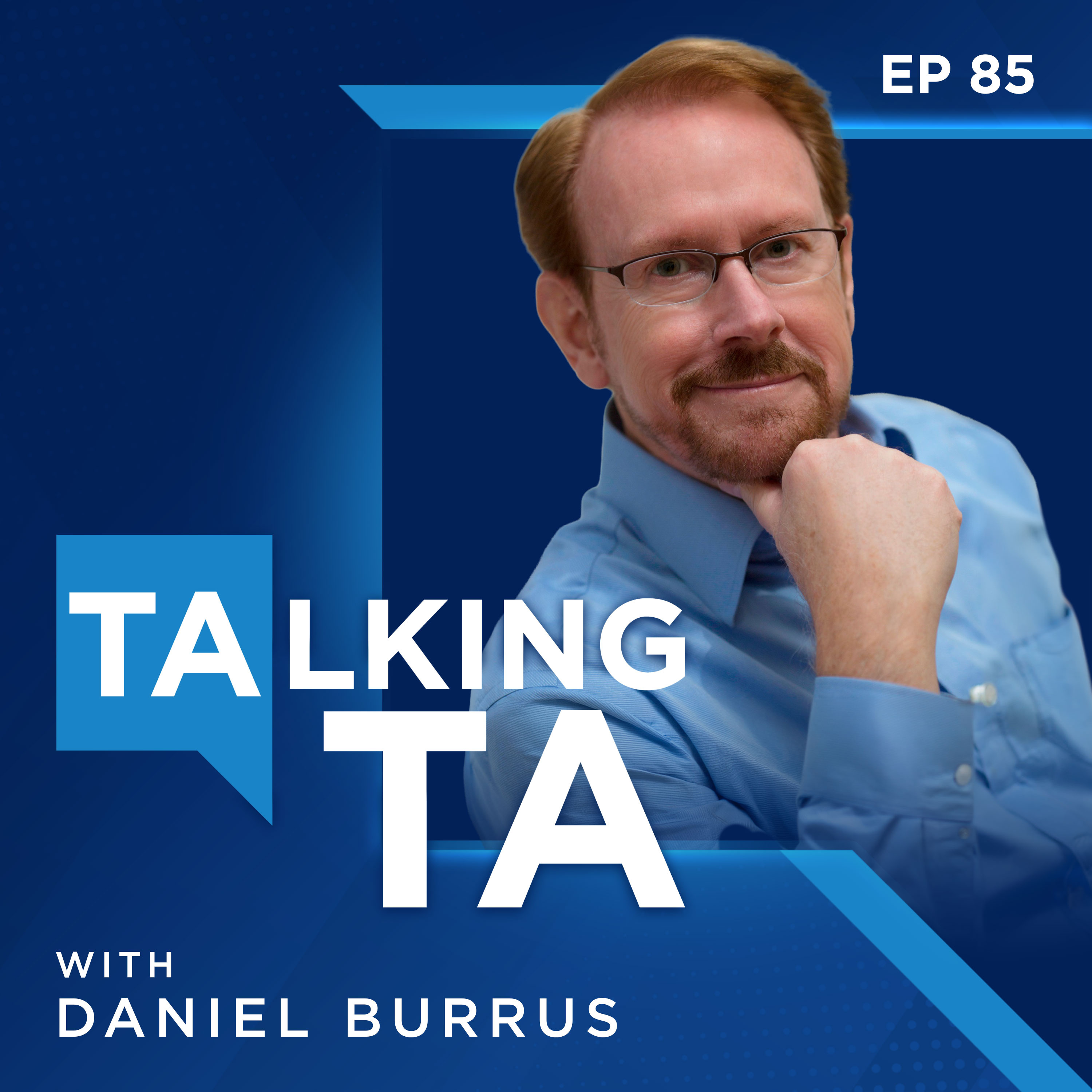
May 15, 2026Episode 8554 min

The Future Belongs to Human-First Leaders | Daniel Burrus | Ep 85

Futurist, innovation expert, and bestselling author Daniel Burrus joins Talking TA to discuss AI, leadership, and the future of work.The future of recruiting is becoming more human, not less. Daniel explains why organizations are approaching AI the wrong way, and why the leaders who succeed will use AI to amplify human capability instead of replacing it.The episode explores trust in the AI era, hard trends vs. soft trends, workforce transformation, generational hiring shifts, and how talent acquisition leaders are evolving back into strategic advisors and problem solvers. Daniel also shares practical frameworks for anticipating disruption before it happens and staying relevant in a rapidly changing business environment.After listening, you’ll be talking about why AI alone is not the competitive advantage. The organizations that elevate trust, human judgment, strategic thinking, and anticipatory leadership will be the ones that stay relevant as the future of work continues to evolve.Time Stamps:(00:00) The Future Belongs to Anticipatory Leaders(02:32) Meet Futurist Daniel Burrus(04:22) Why AI Should Magnify Humans, Not Replace Them(06:46) The Real Future of AI and Human Expertise(09:31) Why Trust Becomes a Competitive Advantage(15:01) The Danger of Letting AI Do Everything(18:09) Hard Trends vs. Soft Trends Explained(20:08) How to Predict Disruption Before It Happens(30:07) Transforming the Employee Experience(33:36) The Future of Talent Acquisition Is Changing Again(35:51) Your Biggest Problem Might Be the Wrong Problem(38:56) Generational Recruiting and Workforce Shifts(44:27) Managing AI Employees and AI Agents(52:25) Become More Relevant or Be DisruptedCheck out today’s guest, Daniel BurrusWebsite: https://www.burrus.com/Linkedin: https://www.linkedin.com/in/danielburrus/Youtube: https://www.youtube.com/user/danburrusInstagram: https://www.instagram.com/burrusdanielTikTok: https://www.tiktok.com/@danielburrusfuturistResources MentionedAI Strategy Report: https://www.aistrategyreport.com/25 Tech Trends Report: https://www.25techtrendsreport.com/Check out Talking TA:Website: https://talkingta.com/Linkedin: https://www.linkedin.com/company/talking-ta/Youtube: https://www.youtube.com/@TalkingTAPodcastInstagram: https://www.instagram.com/talkingtapodcastTikTok: https://www.tiktok.com/@talkingtapodcast

May 14, 2026Episode 8442 min

Why the Best Employees Are More Than a Resume | Stephane Rivard

In this episode of Talking TA, host Denise Chaffin sits down with Stephane Rivard to explore how AI-driven hiring, soft skills assessments, and automation are reshaping talent acquisition, recruiting performance, and workforce strategy.The conversation dives into why traditional resumes and credentials are becoming less reliable indicators of performance, how “credential inflation” is changing hiring practices, and why companies are increasingly prioritizing communication, adaptability, critical thinking, and relational skills over static technical experience. Stephane explains how AI-powered screening tools are helping organizations identify top candidates more effectively by evaluating real-world responses instead of relying solely on resumes or interviews.Denise and Stephane also unpack the growing challenges facing recruiters today, including fake AI-generated resumes, mass one-click applications, and the operational burden created by enormous applicant volumes. They discuss how automated screening systems can reduce bias, improve retention, lower absenteeism, and help recruiters evolve from resume screeners into strategic talent advisors.The episode also explores the future of work, AI’s impact on education and career development, the rise of vocational and trade careers, and why human-centered skills may become the most durable advantage in an AI-driven economy.If you work in talent acquisition, recruiting operations, HR leadership, workforce strategy, or people operations, this episode offers a practical and forward-looking perspective on the future of hiring.Key Episode Segments:• Credential Inflation & Skills-Based HiringWhy resumes and degrees are becoming weaker indicators of real performance, and how companies are shifting toward skills-first hiring.• The Rise of Fake AI CandidatesHow AI-generated resumes and one-click apply systems are creating major recruiting challenges for employers and sourcing teams.• Why Soft Skills Matter More Than EverThe growing importance of communication, adaptability, rapport building, and critical thinking in modern hiring.• Recruiters Becoming Talent StrategistsHow automation is shifting recruiters away from manual screening and toward more strategic workforce decision-making.• The Future of Work & Human SkillsWhy human-centered skills may become the most future-proof advantage in an AI-driven workforce.

May 8, 2026Episode 8352 min

Recruiting Is Broken, AI Is Just Exposing It | Matt Alder

What if the real problem in recruiting isn’t AI taking jobs, but the fact that many of those jobs shouldn’t exist in the first place?In this episode of Talking TA, Denise Chaffin sits down with Matt Alder, CEO of Recruiting Future, to challenge the foundation of modern hiring. With over two decades in talent acquisition, Matt breaks down why recruiting processes have barely evolved, despite waves of technological innovation.They explore how AI is exposing deep inefficiencies, from resumes and interviews to biased decision-making and outdated job structures. Instead of fixing hiring, organizations are layering automation onto a system designed for a completely different era.This conversation dives into what needs to change, what roles may disappear, and where human value actually matters in a world of automation. From skills-based hiring to experience design and the growing gap between AI capability and human mindset, this episode pushes leaders to rethink everything they believe about talent acquisition.Key Episode Segments:• Hiring Is Built on Constraints, Not StrategyModern recruiting processes were designed around human limitations, not optimal decision-making. • AI Is Exposing, Not Solving, the ProblemAutomation is amplifying inefficiencies, not fixing them. • Resumes and Interviews Are Fundamentally FlawedLong-standing hiring tools persist despite evidence they don’t predict success. • Human Bias Is a Bigger Risk Than AI BiasOrganizations scrutinize AI, while ignoring deeply embedded human decision flaws. • The Future Role of Recruiters Is Experience DesignValue shifts from processing candidates to designing better hiring systems and interactions.

April 21, 2026Episode 8256 min

You Don’t Have a Brand Problem, You Have an Alignment Problem | Ken Pasternack

What does “brand” actually mean inside an organization, and why are most companies getting it wrong?In this episode of Talking TA, Denise Chaffin sits down with Ken Pasternack, EVP and Chief Strategy Officer at Two by Four, to break down the real connection between brand, culture, and talent acquisition. This isn’t about logos or messaging. It’s about the alignment between what companies promise and what people actually experience.Ken introduces a powerful lens: brand lives at the intersection of promise and perception. When those are misaligned, organizations lose trust, talent, and performance. From there, the conversation goes deeper into how values must translate into behaviors, why “employee experience” starts long before hiring, and how companies can rebuild authentic relationships in an increasingly automated world.They also tackle the tension between AI and human judgment, exploring where automation helps and where it must never replace human decision-making. The discussion challenges leaders to rethink talent acquisition, not as a transactional process, but as a relationship-driven system rooted in clarity, communication, and shared purpose.If you’re navigating AI, culture shifts, or employer branding, this episode gives you a grounded framework for building organizations that actually deliver on what they promise.Key Episode Segments:• Brand = Promise + PerceptionWhen those don’t match, trust breaks and performance follows. • Values Without Behavior Are UselessIf you can’t define how a value shows up in action, it doesn’t exist. • Relationships Beat TransactionsOrganizations that define relationships as metrics miss the human impact. • AI Should Enhance, Not Replace, JudgmentThe future belongs to those who combine automation with human discernment. • Culture Alignment Can’t Be AutomatedHiring, firing, and culture fit must remain human-led decisions.

April 10, 2026Episode 8254 min

Most AI in Recruiting Is Noise, Here’s What Actually Works | Trent Cotton & Lisa Fiondella

Most AI in recruiting is noise. The problem is knowing what actually works.In this episode of Talking TA, host Denise Chaffin sits down with Trent Cotton, Head of Talent Acquisition Insights and Analyst Relations, and Lisa Fiondella, SVP of AI, Data, and Platform at iCIMS, to explore how AI, automation, and agentic systems are reshaping talent acquisition, recruiting performance, and HR strategy.AI is often positioned as a silver bullet in hiring, but the reality is far more nuanced. This conversation breaks down the difference between automation, generative AI, and agentic AI, and where each actually adds value inside the recruiting process. From reducing friction in candidate experience to embedding intelligence directly into ATS workflows, the discussion focuses on what works in practice, not just in theory.The episode also explores the evolving role of recruiters as AI removes low-value tasks and shifts the function toward higher-impact, relationship-driven work. Topics include responsible AI, governance, hiring manager bottlenecks, candidate experience breakdowns, and how leading organizations are thinking about risk, compliance, and ROI when implementing AI in hiring.If you work in talent acquisition, HR leadership, recruiting strategy, or people operations, this episode offers a fresh perspective on how to use AI and automation to improve outcomes without losing the human element in hiring.Key Episode SegmentsAI vs Automation vs Agentic AIA clear breakdown of the three types of AI shaping recruiting today, and why most leaders misunderstand how each should be used.What’s Real vs Noise in AI for HiringCuts through the hype to define where AI actually creates value in talent acquisition and where it falls short.Where Automation Works (And Where It Doesn’t)Explores how to identify low-value tasks for automation while protecting the human moments that matter most in hiring.The ATS Is Evolving Into a System of ActionA look at how modern ATS platforms are embedding AI directly into workflows, expanding beyond systems of record.Will AI Replace Recruiters? The Real AnswerWhy AI won’t eliminate recruiters, but will force a shift toward higher-value, relationship-driven work.

February 20, 2026Episode 8055 min

The Future Belongs to Leaders With Generational Intelligence | Ellen Raim

What happens when hiring shortcuts collide with a generation that refuses to stay quiet?In this powerful conversation, Denise sits down with Ellen Raim, early career advisor and founder of People Matter, LLC, to unpack the growing trust gap in today’s workforce.With Gen Z projected to represent 30% of the workforce by 2030 and 50% when combined with younger millennials, the cultural shift isn’t coming. It’s already here.Ellen shares firsthand insights from working with early career professionals navigating a frustrating hiring landscape filled with ghosting, vague feedback, endless interview loops, and “entry level” jobs requiring years of experience.They discuss:Why trust is eroding in hiring processesHow AI screening may be filtering out strong talentThe real cost of cutting internships and rotational programsThe generational friction around communication, work-life boundaries, and transparencyThe concept of “Generational Intelligence” and why it may determine which companies win long termThis episode isn’t about blaming Gen Z. It’s about rethinking systems.If leaders continue optimizing for speed and cost while ignoring trust, loyalty, and culture, the long-term talent pipeline will suffer.But companies that invest in transparency, feedback loops, and early career development will build something far more powerful than efficiency. They’ll build trust.Key Episode Segments:1. Ghosting Destroys TrustWhen candidates hear nothing after applying or interviewing, it erodes confidence in both the company and the profession.2. Entry Level Isn’t Really Entry LevelMany so-called entry-level roles now require 1–3 years of experience, leaving true graduates locked out.3. Feedback Is a Generational ExpectationGen Z grew up with constant feedback. Silence feels like rejection, not independence.4. Generational Intelligence Is a Competitive AdvantageCompanies that learn to bridge generational friction will outperform those that dismiss it.5. Hiring Is a Long GameSpeed and cost matter, but ignoring trust, culture, and development today creates talent gaps tomorrow.

February 5, 2026Episode 791 hr 1 min

Growth and Comfort Don’t Coexist, and That’s the Point, with Minette Norman

In this episode of Talking TA, Denise Chaffin sits down with leadership expert and author Minette Norman, founder of Minette Norman Consulting to unpack what it truly means to lead with humanity in today’s workplace. Drawing from her 30-year career in Silicon Valley and her books The Psychological Safety Playbook and The Boldly Inclusive Leader, Minette shares real-world stories that expose the hidden costs of fear-based leadership, emotional reactivity, and exclusion.The conversation explores why leaders don’t need to have all the answers, how listening is one of the most underdeveloped leadership skills, and why normalizing mistakes is essential for innovation and trust. Minette also dives into inclusive leadership, dismantling in-groups, and the neuroscience behind workplace exclusion. This episode is a powerful reminder that leadership is not about control or perfection, but about creating environments where people feel safe to speak up, contribute, and do their best work.Key Episode Segments:• Psychological safety is shaped by leader behaviorLeaders set the emotional tone, how they respond under pressure determines whether people speak up or shut down.• Listening is a leadership skill, not a personality traitTrue listening requires presence, curiosity, and resisting the urge to prepare your response while others are speaking.• Admitting “I don’t know” builds credibility, not weaknessLeaders gain trust when they elevate others’ expertise instead of pretending to have all the answers.• Failure must be discussed to drive improvementTeams that openly talk about mistakes learn faster and perform better than teams that hide them.• Inclusion is intentional, not accidentalLeaders must actively dismantle in-groups, share power, and ensure all voices are heard.

January 22, 2026Episode 781 hr 13 min

Workplace Happiness Isn’t Soft, It’s Profitable, with Valerie Alexander

Workplace happiness is often dismissed as a “nice to have,” but this conversation makes it clear, it’s one of the most powerful business levers leaders can pull. Denise Chaffin sits down with Valerie Alexander, CEO of Speak Happiness, to unpack the real economic impact of unhappy workforces, from turnover and absenteeism to product defects, safety issues, and lost productivity.Valerie breaks down decades of research showing that happy employees deliver better outcomes across nearly every measurable metric. The discussion goes deeper into leadership behavior, layoffs, boardroom decision-making, and why so many organizations continue to repeat costly mistakes. They explore how culture is shaped at the top, why accidental managers cause long-term damage, and what leaders can do immediately to rebuild trust after layoffs.The episode also tackles inclusion, gender dynamics in leadership, and why systems reward the wrong behaviors. Valerie offers clear, practical frameworks leaders can use to improve workplace happiness through accomplishment, autonomy, and acknowledgment, without gimmicks or corporate buzzwords. This is a must-watch conversation for leaders who want sustainable performance, not short-term optics.Key Episode Segments:• Happiness Directly Impacts the Bottom LineOrganizations with happy workforces see lower turnover, fewer errors, and stronger financial performance.• Layoffs Rarely Solve the Problem Leaders Think They DoShort-term financial optics often create long-term damage to productivity, trust, and retention.• Culture Is Set at the Top, Not from the MiddleSustainable culture change only happens when leadership models the behavior they expect.• Inclusion Drives Better Decisions, Not Just RepresentationDiverse leadership teams outperform because they reduce risk and expand perspective.• Three Things Create Workplace HappinessAccomplishment, autonomy, and acknowledgment consistently predict engagement and

January 15, 2026Episode 7549 min

Why Your Best Talent Knows More Than Your Systems, with David Warren

In this episode, Denise Chaffin sits down with David Warren, founder of Oomiyasa and former digital transformation leader at companies like Zara and Salesforce, to unpack one of the most overlooked challenges in modern organizations, the loss of tacit knowledge.David explains why companies have become good at documenting processes but struggle to capture judgment, experience, and decision-making insight, the kind of knowledge that lives in people’s heads and walks out the door when they leave. Together, Denise and David explore how this gap affects hiring, onboarding, retention, and time-to-proficiency, especially as companies navigate skills-based hiring, AI disruption, and shifting workforce models like contractors and fractional talent.The conversation dives into practical ways organizations can identify critical capabilities, interview for judgment instead of credentials, reduce ramp-up time for new hires and contractors, and build cultures that reward wisdom-sharing rather than hoarding expertise. David also introduces orchestration as a core future skill, the ability to coordinate people, systems, AI, and external partners in an increasingly complex workplace.This episode is essential listening for TA leaders, HR practitioners, and business leaders who want to future-proof their organizations without buying more software or chasing the latest trend.Key Episode Segments:1. Tacit knowledge is where real value livesWhat makes top performers successful is rarely documented. It’s how they think, read signals, and make decisions under uncertainty.2. Skills-based hiring requires better questions, not better resumesJudgment and capability are revealed through scenario-driven questions, not job titles or past employers.3. Time-to-proficiency matters as much as proficiency itselfOrganizations lose money when new hires and contractors spend months figuring out how things really work.4. Knowledge hoarding is often a trust issue, not a people issueEmployees withhold insight when they fear replacement or lack clarity on how their expertise will be valued.5. Orchestration is an emerging must-have capabilityThe future workforce will include humans, contractors, AI agents, and bots, and someone must coordinate it all.

Is this your show?

Claim this listing to keep it up to date, reach guests who want to pitch you, and manage bookings with Guestify.

Claim this listing

More Business podcasts