Find partners
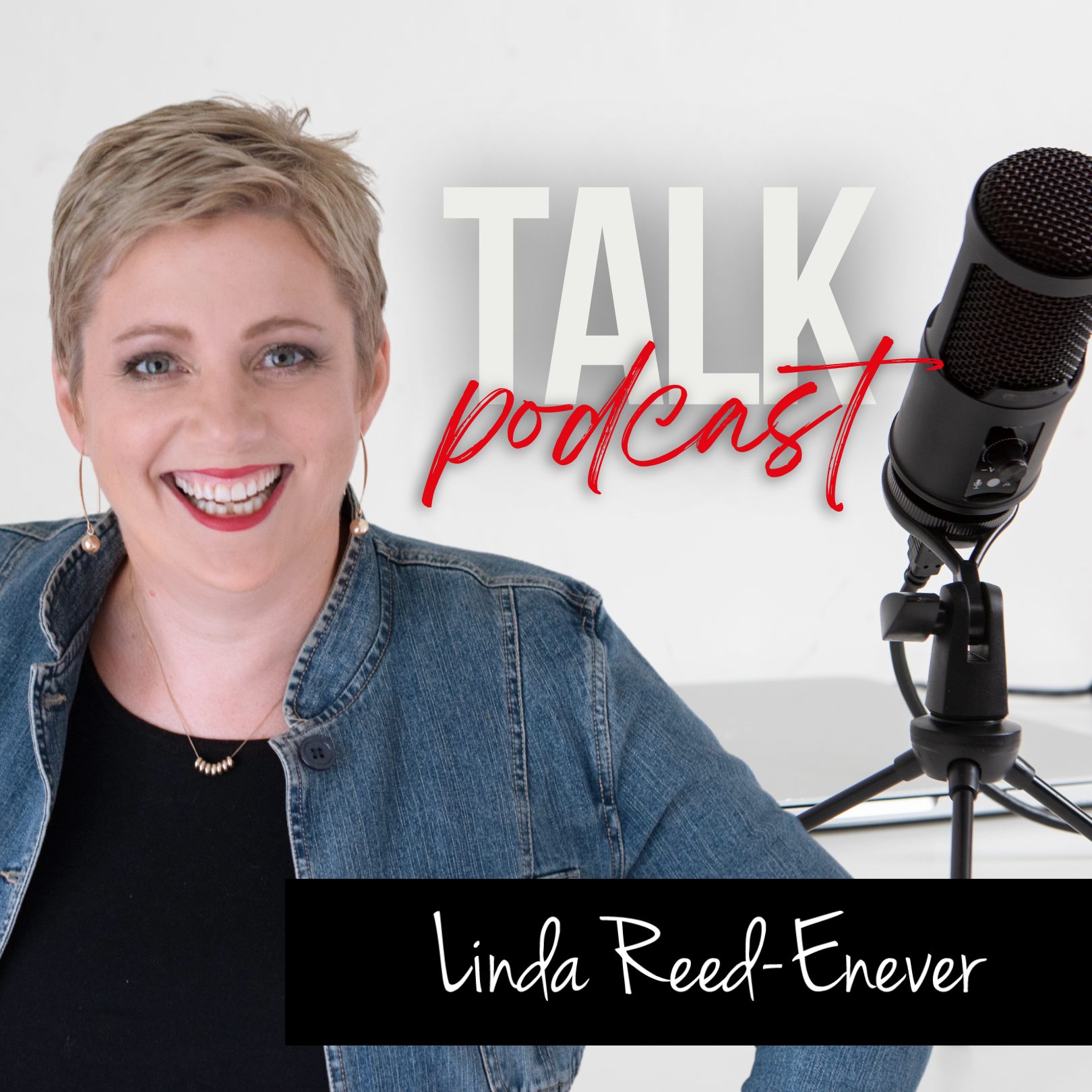
Talk with Linda Reed-Enever

Talk with Linda Reed-Enever

Hosted by Linda Reed-Enever

BusinessExplicit

Episodes

158

Latest episode

Aug 2026

Language

EN

About the show

Talk is home to talk on Marketing, PR, Social Media and sharing your message with the PR and Marketing go to girl Linda Reed-Enever. With her enthusiasm for new experiences and love of finding new things Linda was destined to grow to be either a professional Geo-Cacher, or become the inspiring leader in Communications that she is today and in Talk she shares her tips with you via 5 Minute Marketing Ideas and Ask Linda where you ask her your marketing questions and she answers them. As well as tips and updates on all things marketing

Listen to episodes

60 recent
September 3, 202612 min

Is Your Marketing Routine Actually Working?

As business owners, we hear a lot about the importance of creating a marketing routine. Make time for your marketing, plan the content, send the email, share the posts and keep showing up. Consistency matters, but completing the routine does not automatically mean the routine is working. You can publish three social posts every week, send an email every fortnight and record a podcast every month, but if you are not stopping to look at what those activities are producing, marketing can become another collection of tasks you tick off because they are on the list. In this episode of the Talk Podcast, I'm looking at how to review your routine through consistency, engagement, leads and sales, so you can see what is helping your business move forward and what might need adjusting. Create a Rhythm You Can Maintain Consistency does not mean you need to post every day or constantly create something new. You need a rhythm that fits your business and can continue when client work gets busy. For one business, that might be an anchor piece of content each fortnight, a weekly email and several social posts created from that central idea. For another, it could be a monthly podcast, fortnightly emails and regular conversations inside groups or communities. There is no prize for having the busiest marketing schedule. Your routine needs to support your business without taking over your business. Compare What You Planned With What You Did Start by looking at your output. What did you intend to create, and what did you actually complete? Your Marketing Planner gives you somewhere to capture your campaigns, content, offers and activities. You can look back and see whether the podcast was recorded, the emails were sent, and the campaign was promoted. But do not stop at saying, "Yes, I completed my marketing." That is only the first part of the review. Now we need to look at what happened as a result. Look Beyond the Likes Engagement tells us whether people are noticing and connecting with our ideas, but it is not limited to likes and comments. Someone might reply to an email, share an article, visit your website, register for an event or ask a question. A podcast listener may never comment, but when they enquire, they tell you they feel as though they already know you. When you review engagement, ask: Are people responding, asking questions or starting conversations? Are they sharing or mentioning what you have created? Are they visiting your website, joining your list or attending something? Are they moving closer to your business? Marketing is a conversation. A healthy routine includes making time to engage with people, not simply publishing and disappearing. Connect the Routine to Leads and Sales We also need to look at what is happening inside the business. How many leads and general enquiries came in? What sales did the business make? Are those numbers growing, staying steady or beginning to slow? You do not need to make this overly complicated or attribute every sale to one post. Marketing rarely works that way. Someone may find you through Google, read an article, follow you on LinkedIn, listen to your podcast and book a call three months later. There is not always one magical piece of content that created the sale. Different parts of your Marketing Tree work together to build familiarity, demonstrate your expertise and help the next step feel right. What Are the Results Telling You? Looking at consistency, engagement, leads and sales together helps you spot useful patterns: Consistent marketing, healthy engagement and leads coming in suggest the routine is supporting the business Content is going out, but leads have slowed, so the message, offer, visibility or next step may need reviewing Engagement is strong, but sales are not following, so people may not understand what you offer or how to work with you Leads and sales are coming in, but the routine is exhausting, so the marketing may be producing results without being sustainable This is also where the art of the subtle mention matters. Talk about your products, services and memberships within your content so people can see how to take the next step. Use the Planner and Progress Trees Together Your Marketing Planner shows you what you intended to do. Your Marketing Progress Trees help you track what happened as a result. You can create trees for engagement, leads and enquiries, sales or marketing output, then colour them in as progress happens. It makes the results visual and gives you a much better view than looking at your completed task list alone. Give the routine enough time to show you a pattern. One quiet post does not mean the idea was wrong, just as one post with lots of likes does not automatically mean it contributed to the business. Try This With Your Marketing Look back over the past month and identify: One marketing activity you completed consistently One activity that created engagement or conversation One activity that contributed to a lead, enquiry or sale One part of the routine you could simplify, adjust or stop Then use what you discover to shape next month's routine. The goal is not to add more marketing to your list. It is to create a routine that is realistic, repeatable and connected to the outcomes you want your business to achieve. Tools and Resources Mentioned The Marketing Tree Method See how the different parts of your marketing work together to build visibility, familiarity, trust and opportunities. https://enevergroup.com.au/product/the-marketing-tree-method/ Marketing Progress Trees Make tracking visual by creating trees for your engagement, leads, enquiries, sales or marketing activity. https://academy.enevergroup.com.au/courses/progress-colouring-tracking-trees-tracking-growth-in-business Marketing Planner Plan your campaigns, content, offers and activities, then look back at what you completed and what happened as a result. https://enevergroup.com.au/product/marketing-planner/ Highlights 00:00 Is your marketing routine actually working? 01:00 Consistency versus simply creating content 02:00 Create a marketing rhythm you can maintain 03:00 Compare what you planned with what you did 04:00 Look beyond likes when measuring engagement 06:00 Connect marketing with leads and sales 07:00 Read the patterns in your results 08:00 Use the Marketing Planner and Progress Trees 10:00 Give your marketing routine time to work 11:00 Review and adjust your routine

August 27, 202614 min

How Your Audience Signals True Thought Leadership

Thought leadership isn't reserved for keynote speakers, published authors, or people with a large number of social media followers; in reality, it is much simpler than that. Thought leadership is what happens when people begin to trust the way you think. Someone might initially discover your business because of a specific product or service, but they stay engaged because your ideas empower them to make better decisions. Any business owner, whether you are a plumber, florist, accountant, dog trainer, or physiotherapist, can demonstrate thought leadership by educating their market and helping customers see their challenges with absolute clarity. In this episode of the Talk podcast, I'm unpacking how to track the real, human signals of thought leadership. While campaign sales and website clicks are easy to measure, true thought leadership begins working long before the sale takes place. So let's explore the markers and ways that you will know that your thought leadership is working within your marketing: Your Audience Starts Asking Better Questions Right on track with our thought leadership content. Our prospective clients, the inquiries we have, arrive with an understanding of the problem because we've already explained it. The inquiry shifts: Instead of asking surface-level questions like "How much does this cost?", educated prospects ask informed questions like "Will this specific option fit the way my household operates?" How this shows up: Thought Leadership shows up here, in the questions people ask in emails, discovery calls, and appointments to see if their understanding has evolved compared to six months ago. People Repeat Your Words and Ideas Back to You This is a great moment in time in thought leadership, and you'll start to hear it. You'll see that little cheeky smile come across your face. Because when clients repeat your framework or advice back to you, it means your message didn't just reach them, but it resonated and changed their behaviour. Impact in Action: Whether a client says, "We took extra time on planning because we remembered your tip about build changes," or "I checked the stitching quality because of your video," these moments prove your ideas are actively guiding decisions. Track the Off-Screen Wins: These signals happen on sales calls, at the counter, or in direct messages. While they don't show up in standard analytics, they are gold-standard proof that your content is working. Your Sales Conversations Become Effortless Thought leadership prepares clients before the sale ever happens. This is where people are referring to you. They are commenting on your content. They are engaging before they're even ready or know that they're ready to buy. And that means that because your audience has consumed your content beforehand, they arrive with realistic expectations and a clear understanding of your methodology. You Attract the "Right-Fit" Clients and Clear Referrals This is where you begin to know your thought leadership is working. When you're attracting more right-fit clients, you know your thought leadership is working. We are filtering people out because we attract clients who are sharing our values, and we're not finding those people who are looking for the cheap or the quick fix unless we deliver that and get specific word-of-mouth referrals here. Instead of a vague referral ("I know someone who does accounting"), your referrals become hyper-specific ("You should call this accountant because they explain cash flow in plain English"), carrying instant trust. Thought Leadership should be delivered Across Your Team Leadership isn't just a nice visual to appear on social media about how great your business is; it should flow through your entire business. Great thought leaders empower their staff and their team to create great thought leadership experiences too! This alignment not only builds trust but also turns every interaction into a reinforcement of your expertise, making your brand feel reliable, professional, and uniquely valuable at every stage of the customer journey. Thought leadership isn't about sounding clever, posting controversial hot takes for attention, or trying to be the loudest voice in the room. It is about helping people think more clearly and delivering the solution to a problem. When you consistently share useful ideas, you change how people think, act, and buy. Here's my thought leadership challenge for you to try this week: Choose one core idea or piece of advice that you regularly share in your business. Look through your recent touchpoints and find: One question a client asked that showed they understood your message. One comment, email, or message where someone quoted your advice or methodology back to you. One example where that idea influenced a sale, referral, or client decision. Highlights 00:00 What Thought Leadership Means 00:48 Everyday Business Examples 01:56 How to Spot Early Signals 02:21 Measure Better Questions 04:08 People Repeat Your Ideas 06:01 Easier Sales Conversations 07:57 Attracting Better Fit Clients 09:22 Clearer Referrals 10:39 Conversations Beyond Likes 12:00 Teamwide Message Clarity My Resources to Support Your Journey The Marketing Tree Method Grab a copy of my book to learn how to turn your core authority ideas into a deep-rooted marketing ecosystem. https://enevergroup.com.au/product/the-marketing-tree-method/ Discovery Call with Me Ready to clarify your point of difference and map out your thought leadership strategy? Book a 1:1 strategy session with me. https://enevergroup.com.au/booking-linda/

August 20, 20267 min

Using Metrics to Inspire Fresh Campaigns

Metrics are a topic that business owners often either completely avoid or become totally obsessed with… We often talk about the pressure of analytics, and I know how overwhelming it can feel to stare at numbers that don't seem to be moving fast enough. But what if we stopped looking for validation and started looking for lessons? In this episode of the Talk podcast, I'm sharing why we need to stop asking "Are my numbers good enough?" and start asking "What are my numbers trying to teach me?" Metrics are simply feedback, your audience's way of having a conversation with you even when they haven't sent a message. Every click, share, email open, and saved post is a clue you can use to fuel your next marketing campaign. Stop Looking for Validation & Get Curious One of the biggest mistakes after opening your analytics is looking for immediate validation, asking if enough people liked or watched a piece of content. Curiosity is one of the greatest marketing skills you can develop. Shift from Judgment to Learning: Instead of saying "Only 20 people commented," ask "What made those 20 people stop scrolling?" Focus on the Spark: If 35% of your list opened an email, ask "What headline or topic made 35% of my audience stop what they were doing and open it?" Look Backward to Move Forward Instead of constantly stressing over "What should I create next?", look back at your stats from the last few months. Your audience has already given you the answer: Podcast & Video Analytics: Which episodes continue to get listened to or downloaded months later? Blog Traffic: Which articles consistently attract traffic? (I have a blog post written almost five years ago that still brings us consistent monthly traffic!) Social Engagement: Which posts generated real conversations or saves rather than just superficial likes? Inbox & Events: Which questions keep popping up in your inbox, and which workshop topics fill up the fastest? These aren't random wins. They are clear patterns showing what your audience deeply values. Review Trends, Not Isolated Numbers Business owners frequently make rash decisions based on a single data point, deciding reels don't work because one didn't perform, or that email marketing fails because of one low open rate. One number never tells the whole story. The timing might have been off, the headline unclear, or the message didn't quite connect at that moment. Marketing is rarely about one piece of content working or failing, but about recognising patterns over time. Don't Ignore the "Quiet Metrics" Some of your most valuable metrics don't sit inside a dashboard. Pay attention to: Client questions during sales calls Comments made after a live workshop Word-of-mouth referrals Emails that begin with "I've been following you for ages..." These quiet metrics tell you that trust is building, familiarity is growing, and your message is landing. Key Takeaway When you find a topic that repeatedly gets traffic, saves, and questions across different channels, that isn't just a post idea, but that is your next campaign. Build a Campaign Tree around that central message, letting your podcasts, blogs, emails, social posts, and workshops branch off from a single idea backed by evidence rather than guesswork. My Practical Challenge For You Spend 30 minutes this week being a "marketing detective": Open your website, podcast, email, and social analytics. Identify topics or questions that appear more than once. Ask yourself: "If I had to build one campaign around what my audience is already telling me they care about, what would that campaign be?" Enjoyed this episode? I'd love to know what pattern or topic your metrics revealed this week! Let me know in the comments. Remember, in business, sharing is caring. If this episode helped change how you view your numbers, please pass it along to another business owner! Highlights 00:00 Metrics Mindset Shift 01:31 Stop Seeking Validation 02:24 Find What Works 03:33 Patterns Over Numbers 04:14 Audience Led Campaigns 04:55 Build The Campaign Tree 05:37 Track Quiet Metrics 06:21 30 Minute Detective Exercise My Resources to Support Your Journey The Marketing Tree Method Grab a copy of my book to learn how to build campaign trees that turn audience feedback into sustainable growth. https://enevergroup.com.au/product/the-marketing-tree-method/ Discovery Call with Me Want to look at your analytics together and build a campaign tree based on your real data? Book a 1:1 strategy session with me. https://enevergroup.com.au/booking-linda/

August 13, 202613 min

Three Tools that Save You Hours Every Week

There is a particular kind of optimism that comes with signing up for a new business tool. You watch the demonstration, look at the list of features, and think, "This is it! This tool is finally going to organise everything for me." Fast forward a few hours, and you have 17 tabs open, you're halfway through a tutorial, and a simple task has turned into a massive implementation project! The truth is, no software will magically run your business. A tool only saves you time when it solves a specific, recurring problem, fits naturally into the way you work, and is actually used consistently. In this episode of the Talk podcast, I'm sharing the three core tools that carry a massive load in our business: ClickUp, MeetEdgar, and Acuity Scheduling (or Squarespace Scheduling). Together, they lower our administrative load, reduce decision fatigue, and save us hours of mental space every single week. ClickUp: Where Our Work Lives One of the biggest time-wasters in business isn't doing the work, but trying to remember what needs to happen, searching for lost documents, and figuring out what comes next. ClickUp gives our projects a central home where tasks, comments, files, and deadlines live together. Stop Relying on Memory: Trying to keep track of client emails, meeting notes, and task details in your head takes up immense mental bandwidth. ClickUp captures everything so you don't have to rely on memory to keep projects moving. Templates for Repeated Processes: Producing a single podcast episode involves planning, recording, editing, uploading, writing show notes, creating graphics, and promoting. Rather than recreating the wheel every time, we use a ClickUp template that lays out every step in the right order and assigns roles to the team. Remove the Mental Load: We use templates for onboarding, client projects, workshops, and marketing campaigns. It doesn't do the work for us, but it removes the decision fatigue and stops us from missing steps. MeetEdgar: Giving Content a Longer Life Content takes time to create. You might spend hours writing a blog, recording a podcast, or crafting a thoughtful social post, only for it to disappear down the feed where most of your audience never sees it. A Categorised Library: MeetEdgar allows us to build an organised library of content divided by topic and format. It continuously schedules and shares our best evergreen posts over time. Repurposing with Intention: In my book, The Marketing Tree Method , I teach the importance of content trees. One podcast episode can become a blog article, several social posts, quote graphics, email newsletters, and discussion prompts. MeetEdgar gives all those sub-assets a place to live and keep working for us. Resurfacing Your Gold: Reusing content doesn't mean repeating the exact same words forever. It means taking the central idea and evolving the opening, changing the graphic, or tweaking the format so your archive of gold content continues helping people. Acuity Scheduling: Eliminating "Email Tennis" Before online schedulers, arranging a simple meeting could take an astonishing number of back-and-forth emails. Playing "calendar tennis" often took more time than the actual meeting itself! Frictionless Booking: Acuity (or Squarespace Scheduling) removes the back-and-forth by letting people see your available times and select what works best for them. Intake Questions for Preparation: When someone books a strategy session, we ask what they want to focus on and what they've already tried. Instead of wasting the first 15 minutes figuring out why they are there, we dive straight into real strategy. Protecting Calendar Boundaries: Convenience for the client doesn't mean opening every blank space in your week. Acuity allows you to limit daily bookings, set meeting-specific days, block out buffer times between calls, and prevent last-minute appointments. It protects your deep focus time while giving the client a smooth booking experience. Key Takeaway Don't sign up for all three tools at once! Look at your working week and identify where you are repeating instructions, losing information, or wasting time on manual back-and-forth communication. Set up the simplest version of a system that solves that specific friction point. A simple system you actually use will save you hours every single week. My Practical Challenge For You Choose one repeated administrative task to make lighter this week: Turn one recurring process into a simple ClickUp template. Take five useful pieces of existing content and add them to your MeetEdgar library. Create one Acuity booking link for the meeting you organise most often. Enjoyed this episode? I'd love to know which of these three tools you are going to implement or refine first! Let me know in the comments. Remember, in business, sharing is caring. If this episode helped you simplify your systems, please pass it along to another business owner who is ready to save time. Highlights 00:00 Tool Hype Reality 01:07 Three Tools Overview 02:13 ClickUp Workflow Hub 03:23 ClickUp Templates Setup 05:18 MeetEdgar Reuse Content 06:20 Repurposing Content Library 07:47 Acuity Scheduling Boundaries 09:25 Protect Your Calendar 11:07 Choose Problems First 11:53 Weekly Challenge Wrap Up My Resources to Support Your Journey The Marketers Toolkit Explore my curated list of essential software, tools, and systems designed to help your business run smoothly. https://enevergroup.com.au/the-marketers-toolkit/ The Marketing Tree Method Grab a copy of my book to learn how to build a deep-rooted marketing ecosystem that supports your business growth. https://enevergroup.com.au/product/the-marketing-tree-method/ Sponsored Content: Some of the links included in this post may be affiliate links, meaning we may earn a small commission if you sign up through them at no additional cost to you. Please note that we only ever recommend and share tools that we personally use, trust, and rely on within our own business every day.

August 6, 202610 min

Measuring Event Success Beyond Registrations

When we talk about event success, the top-line number most people reach for is registrations because it's easy to find, simple to report, and often used as a vanity metric. But registrations only tell us that someone filled in a form. They don't tell us if that person actually attended, stayed, engaged, took action, or even remembered what the event was about a week later. A massive registration list looks impressive in a report, but if only a fraction show up and fewer take action, the event hasn't truly delivered. Conversely, an event with small numbers where every single person turns up, engages, and takes action is a massive win. In this episode of the Talk podcast, I'm unpacking why we need to move past registration counts and look at the real indicators of movement and connection. Attendance: Interest vs. Commitment Your attendance rate gives you an early indication of how well your reminders, positioning, and pre-event communications performed. The Communication Gap: If registrations were high but attendance was low, the issue usually isn't the event itself. It often means people registered too far in advance, forgot why the event mattered, or didn't receive enough touchpoints to protect the time on their calendar. Shift to Commitment: Attendance tells you whether your audience successfully moved from basic interest to actual commitment. Engagement: Passive Observers vs. Active Participants We need to evaluate what happens during the event itself. Look at chat activity, poll responses, resource downloads, social media mentions, or post-session conversations with you and your team. Designing Opportunities: An online room can have hundreds of attendees while remaining completely silent. If that happens, evaluate how the experience was designed. Did you give clear prompts to chat and interact, or did you leave them as passive observers? In-Person Connection: For live events, engagement shows up in how long people stick around, session attendance, and whether they approach speakers or exhibitors afterwards. Retention: Strength of the Experience How long do people actually stay? Tracking drop-off points, especially in online sessions where people can leave without the social pressure of walking out of a room, gives you critical data. Spotting Dips: If people leave at a specific point, ask why. Did the session get too promotional? Did the energy slow down? Was the transition between speakers too long? Educating vs. Selling: Finding the delicate balance between delivering rich education and presenting your offer keeps your retention high. Action & Movement: The Real Ultimate Metric An event should never exist in isolation, but it should lead people somewhere. What did people do after the session? Post-Event Indicators: Track whether attendees booked a call, downloaded a resource, replied to your follow-up emails, joined a program, or recommended the event to a peer. The Subtle Mention: If people enjoyed your session but didn't take action, it's a design problem. We use the "art of the subtle mention" throughout our sessions to naturally weave in our memberships, programs, and client results so the next step feels completely obvious and unforced. Key Takeaway Events shorten the distance between your business and your audience, giving them a deeper experience of your ideas, personality, and approach. Stop defining success purely by registration numbers. Define what success looks like before the event begins, whether that metric is engagement, feedback, relationship growth, or post-event action. My Practical Challenge For You Before running your next event, choose three specific measures of success: One metric that tracks attendance rate. One metric that tells you how attendees engaged during the session. One metric that measures the clear action they took afterwards. Enjoyed this episode? I'd love to know what success metric you're committing to tracking for your next event! Let me know in the comments. Remember, in business, sharing is caring. If this episode helped you reframe event metrics, please pass it along to a friend or colleague who is running events! Highlights 00:00 Why Content Flops 01:06 Audience Insight Made Simple 02:23 Test 1: Engagement Signals 04:08 Test 2: Ask Directly 05:16 Test 3: Search Listening 06:41 Combine Tests For Clarity 07:41 10 Minute Weekly Challenge My Resources to Support Your Journey Workshops & Events I run regular online and in-person interactive sessions to help you build your profile and refine your event strategy. https://enevergroup.com.au/events-learning/

July 30, 20269 min

How Marketing Leadership Shows Up in Audience Growth

Growing an audience is not just about posting more content, no matter what the gurus are telling you. It is also not simply about increasing your reach, gaining followers or trying to stay ahead of the latest algorithm change. Audience growth is also about leadership. It is about knowing what you stand for, understanding the people you want to reach and guiding them towards ideas that can help them. It means being clear enough that people understand your message, consistent enough that they remember you and useful enough that they want to come back. When that leadership is missing, marketing becomes reactive. You post because you suddenly realise you have been quiet for two weeks, change your message because someone else appears to be getting better results, join a new platform because everyone is talking about it or create a new offer because the last one did not sell immediately. Before long, your marketing is being led by trends, competitors, algorithms and whatever idea appeared in your feed that morning. In this episode of Talk, I explore what changes when you stop asking, "What should I post today?" and start asking, "What does my audience need to hear from me?" Marketing Leadership Begins With Clarity People cannot follow a message they do not understand…and neither can you. Your content can cover different subjects, formats and platforms, but there still needs to be a clear thread connecting the things you share. Someone should be able to look at your recent content and quickly understand what you talk about, what you help with and why your message matters to them. You might talk about social media, email marketing, websites, publicity and content planning. Those subjects look different on the surface, but the bigger message connecting them might be that marketing should be practical, manageable and easy to understand. That is the idea your audience begins to associate with you. People are more likely to stay when they know what they can rely on you for. Reinforce Your Point of View There is a difference between repeating yourself and reinforcing what you believe. Business owners often worry that they have already covered a topic, but your audience does not see everything you create. Even your most engaged followers will miss posts, emails, videos and podcast episodes, which means you need to return to your most important ideas. Your beliefs might include building trust before asking for a sale, using marketing to help people make better decisions or recognising that small businesses do not need to be everywhere, but they do need to show up consistently somewhere. You can explore those ideas through different stories, examples, formats and conversations. The wording changes, but the point of view remains clear. People do not only follow information. They follow perspectives. They want to know what you notice, what you question and what you believe is worth doing differently. Teach Something People Can Use One of the best ways to grow an audience is to help people achieve small, practical wins. You might help someone improve their social media bio, turn one customer question into several pieces of content, test the links on their website or understand why their marketing message feels vague. These wins matter because they create trust. When someone uses one of your ideas and gets a result, your content becomes more than something they watched or read; it becomes something useful. Useful content gives people a reason to return and a reason to share your work. They send an episode to a friend, share your post with a colleague or say, "This person explains it in a way that makes sense." A helpful question to ask when planning your content is: "What will someone be able to do after hearing this?" Not only what will they know, but what will they be able to change, improve, test or complete? Give Your Audience Direction Good marketing does not leave people standing in the middle of a pile of information. It shows them what to do next. That next step could be downloading a resource, listening to another episode, replying to an email, registering for an event or simply spending ten minutes completing a task. A call to action does not always need to be a sales pitch. Sometimes it is simply helpful direction. Your audience grows when people feel your content is taking them somewhere. It helps them explore an idea, solve a problem, challenge an assumption or make a decision. Choose Who You Are Here to Lead Marketing leadership also requires choices, you do not need to speak to everyone and trying to appeal to everyone often weakens your message until it becomes broad, cautious and difficult to remember. Leadership means being willing to say, "This is who I am here to help," and, "This is the approach I believe will help them." Not everyone will agree with every opinion you share, and that is part of having a point of view. Your goal is not to attract every person online. It is to build a connected audience of people who understand your message and value the way you deliver it. A smaller, engaged audience can create far more opportunity than a large audience with no real connection to you. Bring More Leadership Into Your Marketing This Week Start by choosing one message you want your audience to remember. It might be something you want them to understand, an idea you want them to question or a simple action you want them to take. Then explore that message in several different ways: Share a personal story connected to it. Answer a common question. Create a checklist. Challenge a popular assumption. Record a short video. Interview someone who brings another perspective. The format can change while the leadership message stays consistent. Next, choose one small audience win you can create. Help people improve one part of their marketing or give them a task they can complete today. The goal is to help them leave with progress, not just more information. Finally, give them a clear next step. Do not assume people will work it out for themselves. Tell them what to consider, download, read, watch or do next. Your Action From This Episode Look at the last five pieces of marketing content you created and ask: Is there a clear message running through them? Did they give your audience something useful? Did each piece show people what to do next? Did your content demonstrate the kind of leadership you want your business to be known for? Audience growth is not only about attracting attention. It is about becoming someone worth paying attention to. That happens through clarity, consistency, useful teaching and confident direction. Marketing leadership turns content into connection, followers into an audience and, over time, that audience into a community of people who trust your ideas and value your guidance. Because audience growth does not begin with the algorithm. It begins with how you choose to lead. Ready to Put This Into Action? If this episode has encouraged you to bring more clarity, consistency and direction into your marketing, these resources from my library can help you take the next step. Creating Marketing Consistency eBook — $9.97 A practical guide to building a recognisable brand, engaging your audience and developing a consistent marketing approach that builds trust. How to Get More From Your Content $47 : Learn how to optimise, repurpose and extend the content you already create so your core ideas can reach more people in more ways. The Ideas, Impact & Marketing Circle : Join my inner circle and get ongoing practical support, live learning sessions and access to my library of self-paced courses, templates and tools to help you put your marketing into action consistently. Keep Exploring Linda Reed-Enever's Marketing Ideas Make Your Brand Voice Clear and Consistent Clarity and consistency help people recognise your message wherever they find you. From Guesswork to Connection: Know What Your Audience Wants Use practical tests to understand what your audience is responding to and create with greater intention. How to Write Marketing Messages Your Clients Actually Repeat Explore how clear, memorable messaging helps your audience understand, remember and share what you stand for. A Guide to Effective Content Planning Turn your ideas into an aligned content plan that supports consistency, connection and audience growth. Create Anchor Content Your Future Self Will Love Use one strong leadership message as the foundation for blogs, videos, emails, social posts and more. Highlights 00:00 Audience Growth Is Leadership 00:52 The Reactive Marketing Trap 01:45 Lead With Clarity 02:40 Reinforce Your Point of View 03:58 Teach Practical Wins 05:26 Give Clear Direction 06:17 Choose Who You Serve 06:59 Bring Leadership Into Your Marketing 08:19 Audit Your Last Five Pieces of Content 08:40 Lead, Rather Than Follow the Algorithm

July 23, 20268 min

A Guide to Delivering Content Your Audience Wants

Have you ever had a week where one of your posts goes completely gangbusters, and the next sinks without a trace? Don't worry, you aren't cursed, and the algorithm isn't out to get you. Hit-and-miss content usually comes down to a lack of clarity about who we are talking to. When we don't fully understand our audience, our message lands by accident instead of with clear intention. In this episode of the Talk podcast, I'm sharing three simple, practical, and fast tests that I use with my clients to strip away the guesswork and build real connection. You don't need expensive surveys or a PhD in analytics to gain deep audience insights. You just need a few intentional moments of listening and observing. Test 1: The Engagement Test (Reviewing What Works) The best place to start is by looking at what is already resonating with your audience. Audit your content from the last two to four weeks, or even the last two to three months, and look for specific signals: Public Reactions: What got people commenting, sharing, or starting conversations? Private and Quiet Signals: What did people save, rewatch, or message you about privately? Some of the most golden engagement signals happen away from public view. Connection Over Production: Many business owners assume their highly produced content is best. Often, it is the simple, quick pieces delivered straight from the heart that create the deepest connection. Spot these patterns so you can replicate them intentionally. Test 2: The Direct Question Test (Just Ask!) This test is laughably simple, yet it works every single time. Move away from assuming what your audience wants and ask them directly! You can run a poll, drop a social post, or email your list using these two easy prompts: What is one thing you'd love to learn more about from me in the coming months? What is the biggest challenge you have right now with [insert your topic]? When you ask, people are happy to tell you. The common themes they share will instantly map out your content roadmap for you. Test 3: The Search Test (Speaking Their Language) Your audience is asking questions all over the internet, not just on your personal channels. Step outside your own platforms to see what conversations are already happening: Explore Search Engines: Look at Google's "People Also Ask" section, read through Reddit threads, or browse industry forums. Use Practical Tools: Use tools like Answer the Public to type in your keywords and generate a word cloud of real-world searches. Ditch the Corporate Jargon: Pay attention to the exact, natural words people use to describe their frustrations. When you reflect their actual thoughts to them using their own language, they feel instantly understood. This builds trust faster than any polished copywriting ever could. Key Takeaway When you combine what your audience engages with, what they tell you directly, and what they are searching for online, you find your marketing magic. Your messaging sharpens because you are speaking to real, lived needs instead of the imagined ones in your head. My Practical Challenge For You I challenge you to choose just one of these tests and spend a single 10-minute block on it this week. You will be amazed by what you discover when you show consistent curiosity about your audience. Enjoyed this episode? I'd love to know which of these three tests you are going to try first. Let me know in the comments! Remember, in business, sharing is caring. If this episode helped make marketing feel a little lighter for you, please share it with another business owner who is ready to create content with intention. Highlights 00:00 Why Content Flops 01:06 Audience Insight Made Simple 02:23 Test 1: Engagement Signals 04:08 Test 2: Ask Directly 05:16 Test 3: Search Listening 06:41 Combine Tests For Clarity 07:41 10 Minute Weekly Challenge My Resources to Support Your Journey Progress Colouring Tracking Trees Inside the Circle, we use specialised Progress Colouring Tracking Trees to visually colour in and track exactly what is working, helping you map out your business growth with clarity. https://academy.enevergroup.com.au/courses/progress-colouring-tracking-trees-tracking-growth-in-business

July 16, 202610 min

The Trust Factor in Community Marketing

There is a lot of buzz out there at the moment about community led or community driven marketing. Having run communities for more years than I care to mention, I want to unpack what this buzzword actually means, why you should care, and how it can empower your business. Community driven marketing is all about making your audience active participants in the co-creation of your marketing and branding journey. Instead of just treating them like a megaphone target and broadcasting at them, you are bringing them along for the ride. Listen Before You Lead The foundation of successful community driven marketing comes down to one core rule: you have to listen before you lead. Tune In to Their Needs: Pay close attention to what is happening for your potential audience and the community you want to serve. You can start by engaging in other relevant industry groups and Facebook spaces to hear what people are struggling with. Design Better Solutions: When you genuinely listen to your clients and community, they will tell you exactly what they want. This allows you to create products and services that naturally enjoy a higher uptake because you're delivering the exact solution they're looking for. Our Ecosystem: In my own business at Enever Group, we have run our Business, Business, Business (BBB) community for over 11 years. Listening to that space directly shapes the content I create, the strategies Clive shares, and it even inspired us to form The Youngpreneurs Society . Empowering Your Brand Advocates Great communities naturally build advocates, people who love what you do and want to shout about it. Leap Beyond Cold Ads: A recommendation from an advocate travels faster and converts better than cold advertising. Trust drastically shortens conversion times and increases the perceived value of your offers. The Layered Strategy: You can build a public-facing community to welcome people, and then establish a high-value, monetised "inner circle" space for next-level support. For me, many of the best members inside my Ideas, Impact & Marketing Circle originally came from our free BBB community because they wanted closer contact. Be an Advocate Too: Advocacy goes both ways. For example, I am a Thinkific Approved Expert, which means I proudly advocate for their platform while they transfer trust back to me by recognising my expertise. The Game-Changers: Feedback Loops & Retention When you shift your perspective from running simple promotional campaigns to creating safe, ongoing relationship spaces, your business gains two massive advantages : The Instant Feedback Loop: Instead of waiting six months or testing ideas via expensive focus groups, turning up live with your community gives you an instant feedback loop. You can immediately hear their real-time reactions, allowing you to adjust and pivot your marketing campaigns much faster than the competition. Retention Beats Reach: You do not need to go viral to build a successful business. You just need to reach the right person at the right moment. When you retain the people who already trust you, you can support them from the moment they plant a "seed of interest" all the way until they climb to your highest-level premium services. Key Takeaway Community driven marketing requires a permanent mindset shift: your audience becomes active participants, your marketing becomes facilitation, and your selling transforms into growing with your people. Three Ways to Start Nurturing Your Community Today Invite Collaboration: Don't guess what your market wants. Run polls, host Ask Me Anything (AMA) sessions, or launch community challenges to get input on your upcoming products or packaging. Feature User-Generated Content: If a client shares a great video or wins, spotlight them. Celebrating your community's success is incredibly powerful, and honestly, seeing my members succeed is often more exciting to me than my own marketing wins! Co-Create Experiences: Partner with aligned brands or experts to run combined training sessions. We do this regularly here with brands like Thinkific and MeetEdgar to share value and naturally cross-pollinate our audiences. Enjoyed this episode? I'd love to know what action step you are taking to listen to your crowd this week. Are you running a poll, opening an AMA thread, or mapping out your touchpoints? Let me know in the comments! Remember, in business, sharing is caring. If this approach helped you view your audience as true participants, please share it with another business owner who is ready to grow. Highlights 00:43 What Community Marketing Means 00:58 Real World Community Examples 01:37 Listen Before You Lead 02:26 Empower Advocates 03:15 Create Safe Spaces 04:29 Why It Works 06:55 Three Ways to Build 08:43 Getting Started Steps 09:18 Pitfalls and Mindset Shift My Resources to Support Your Business Evolution The Marketing Tree Method Grab a copy of my book to learn the core foundations of letting your audience climb your business ecosystem branch by branch. https://www.enevergroup.com.au/product/the-marketing-tree-method/ Business, Business, Business (BBB) Come join our free, massive community space to connect with fellow business owners, share your daily wins, and network with thousands of peers. https://www.facebook.com/groups/BusinessBusinessBusiness/

July 9, 20268 min

When and Why to Review Your Offers

Have you noticed that your offers aren't working for you quite like they used to? It is incredibly common to put an offer out there, watch it convert time and time again successfully, and then suddenly hit a wall. As your business grows, the market shifts, your audience evolves, and your own personal needs change. What was once a perfect fit for your business and your market might no longer serve you. Reviewing your offer suite regularly isn't just a nice-to-have task, but absolutely essential to keep your business in alignment with where you are now and where you are heading. In this episode of the Talk podcast, I'm sharing why we need to stop treating our products and services like permanent fixtures. Think of your business like a garden: some offers are thriving and healthy, others need pruning, and some simply need to be composted to make room for fresh growth. The Three-Question Offer Audit To get started, pull out every single offer currently in your ecosystem, from your signature programs down to your smallest entry-level digital products, and lay them out where you can visually see them. Once they are in front of you, ask yourself these three critical questions: Does this still serve my audience? Client needs change over time. What they valued three years ago may not be what they are searching for right now. If an offer no longer matches their current stage of life or business, it's time to update or retire it. Does it still excite me? This is often overlooked, but if you have fallen out of love with your offer, you won't market it effectively. Your audience will immediately sense that energetic disconnect. Is it still profitable? Look at profitability in terms of money, time, and your personal energy. It is perfectly okay if an offer takes more time than it returns financially, provided it serves a strategic purpose like growing your audience or building authority . But if it continuously drains you without a clear return, its structure must be rethought. If you can confidently say yes to all three, it goes straight to your "keep" pile. If you hesitate on any of them, it's time to look a lot closer. Sorting Your Offers Into Pathways Once you have answered those hard questions, sort your services and products into three distinct action piles: Keep and Focus: These are your clear winners. They perform beautifully, you love delivering them, and your audience loves receiving them. Double down on these to make them more visible and scalable. Refresh and Reimagine: These offers have great bones, but they've gone a little stale. Sometimes a minor tweak to the delivery method or core promise can completely reignite interest. I've retweaked several of my own past programs this year, and they are back better than ever. Retire and Replace: These are the ones that have served their purpose and run their course. Letting go of an offer is not a failure, but a sign of business maturity that frees up space for your next big step. Key Takeaway Simplifying your offer suite takes the pressure off both you and your clients. A cluttered suite leads to decision fatigue, and a confused mind will neither buy nor market. You do not need to be everything to everyone. You just need to be exceptional at what matters most. My Practical Challenge For You I want you to add a regular offer review into your quarterly plans. Ask yourself this honest question: "If I was starting my business completely fresh today, would I still create this specific offer?" If the answer is no, take that as your cue to make a change. Enjoyed this episode? I'd love to hear what your offer review reveals. Which offer are you committing to refresh, or which one is it finally time to beautifully retire? Let me know in the comments! Remember, in business, sharing is caring. If this episode helped give you permission to simplify, please pass it along to another business owner who is ready to clear out the clutter. Highlights 00:00 Why Offers Stop Working 01:06 Garden Mindset for Offers 01:52 The Three Review Questions 02:41 Serve Your Audience 03:06 Excitement and Energy 03:28 Profitability Check 03:47 Keep Refresh Retire 04:54 Simplify Your Offer Suite 05:33 Design for Future Goals 06:24 Build a Clear Pathway My Resources to Support Your Business Evolution The Marketing Tree Method Grab a copy of my book to learn how to create "pathway alignment". Your offer suite should tell a clear story where your entry-level offer introduces your method, your mid-tier helps apply it, and your premium tier delivers the final transformation. https://www.enevergroup.com.au/product/the-marketing-tree-method/ Workshops & Events I host interactive, information-packed online and in-person sessions on a regular basis to help you future-proof your business. Be sure to check out our upcoming sessions. https://www.enevergroup.com.au/events/

July 2, 20268 min

Building Authority Through Consistency

Authority isn't about big launches, hype, or trying to be everywhere at once. It is not an overnight success; it is something we build quietly over time. Your authority cannot simply be declared the moment you walk through the door. It is earned through consistency, clarity, and genuine follow-through. In this episode of the Talk podcast, I'm busting the myth of the "overnight expert." You don't need anyone's permission or a massive platform to become a trusted voice. You can start right where you are with what you already have, compounding your everyday actions into deep, sustainable authority. Know Who and What You Stand For Authority begins with absolute clarity. People simply cannot buy from you if they don't trust you or understand what you do. Find Your Focus: Ask yourself: What do I want to be known for? What do I believe about this space? What am I here to help people with? Point of View Over Volume: Your specific point of view matters infinitely more than being the loudest person in the room. It stops you from talking to the generic masses and connects you deeply with your ideal audience. Create Conviction: When you choose to stand for something consistently, you stop blending in and start creating a real journey for your people. For me, that means standing firmly for supporting small business owners to grow and understand marketing. Show Up in the Quiet Seasons The hardest part of building authority is showing up consistently when it is quiet, and in the early days, it will be quiet. This is exactly when most people quit, but it's actually the time to keep persevering. Presence Over Repetition: Consistency doesn't mean repeating the same message word-for-word; it means repeating your presence on a regular schedule so you become reliable. Diversify Your Presence: You can maintain this rhythm by appearing in Facebook groups to answer questions, guesting on podcasts, or sending a regular newsletter. Quiet Impact Counts: A lack of public likes or comments does not mean a lack of impact. Quiet observers are often saving your content and reflecting on it privately. Steady, targeted visibility beats chasing a single viral moment that attracts the wrong crowd. Position Yourself as a Guide Through Teaching If you want to be recognised as an authority, teaching is part of the game. Teaching automatically positions you as a trusted guide rather than a transactional salesperson pushing for a quota. Simplify the Next Step: True educational marketing looks like simplifying complex ideas, explaining processes, and offering a clear path forward. Give a Taste of Value: You don't need to give away your entire playbook for free, but you do need to offer a genuine taste of your expertise. Showing that you truly know your stuff builds community trust. Over time, this is what gets you recommended and tagged in industry circles. Humanise Your Message with Lived Experience Storytelling is one of the oldest and most effective forms of marketing because people trust real human experiences far more than empty claims. Share the Real Moments: Don't just make claims; share client lessons, behind-the-scenes insights, and even the moments where things went completely wrong. Lived Experience over Qualifications: Real authority rarely stems from a piece of paper or standard qualifications. It comes from your lived experiences and your proven ability to handle things when the plan falls apart. Sharing your flaws and solutions makes your authority human, helping your audience see themselves in your work. Master the Follow-Through The ultimate foundation of real authority comes down to your behavioural habits. No amount of flashy marketing can save a business that fails to deliver on its backend promises. Reliable Delivery: To be seen as a true expert, you must do what you say, deliver exactly what you promise, and treat your people exceptionally well. The Ripple Effect: Reliable delivery builds massive organic momentum because delighted people naturally share their great experiences through word of mouth. Key Takeaway Authority is not a sprint, a massive launch, or a final finish line. It is a way of life and a form of daily behaviour. True authority welcomes imperfection. It is built through the everyday actions of showing up, teaching, sharing, and reliably delivering your value. My Practical Reflection Exercise For You Take a moment to step back and evaluate your current visibility with these three quick questions: What pieces of content or messages are genuinely connecting with my audience right now? What are the quiet observers or active clients responding to the most? Where can I choose to be a little bit clearer or braver in my daily marketing? Enjoyed this episode? I'd love to hear your thoughts from our reflection exercise this week. Where are you choosing to be clearer or braver in your marketing? Let me know! Remember, in business, sharing is caring. If this formula helped you, please pass it along to another business owner who is ready to step into their authority. Highlights 00:00 Authority Myth Busted 00:24 Start Where You Are 01:12 Know What You Stand For 02:18 Show Up Consistently 03:46 Teach To Build Trust 04:55 Storytelling That Connects 05:59 Deliver What You Promise 06:34 Reflection And Next Steps Resources to Support Your Journey The Marketing Tree Method You can grab a copy of my book to learn the core foundations of building a deep-rooted, sustainable marketing ecosystem that drives consistent connection. https://www.enevergroup.com.au/product/the-marketing-tree-method/ The Ideas, Impact & Marketing Circle This is my inner circle community where business owners gather to learn and discuss marketing together. We meet twice a month to dive straight into the nuts and bolts of strategy, and you gain instant access to my entire course library full of resources to build your skills. https://academy.enevergroup.com.au/bundles/MarketingCircle Workshops & Events I run highly interactive online and in-person training sessions regularly to help you master business, marketing, and course creation. https://www.enevergroup.com.au/events/

Is this your show?

Claim this listing to keep it up to date, reach guests who want to pitch you, and manage bookings with Guestify.

Claim this listing

More Business podcasts