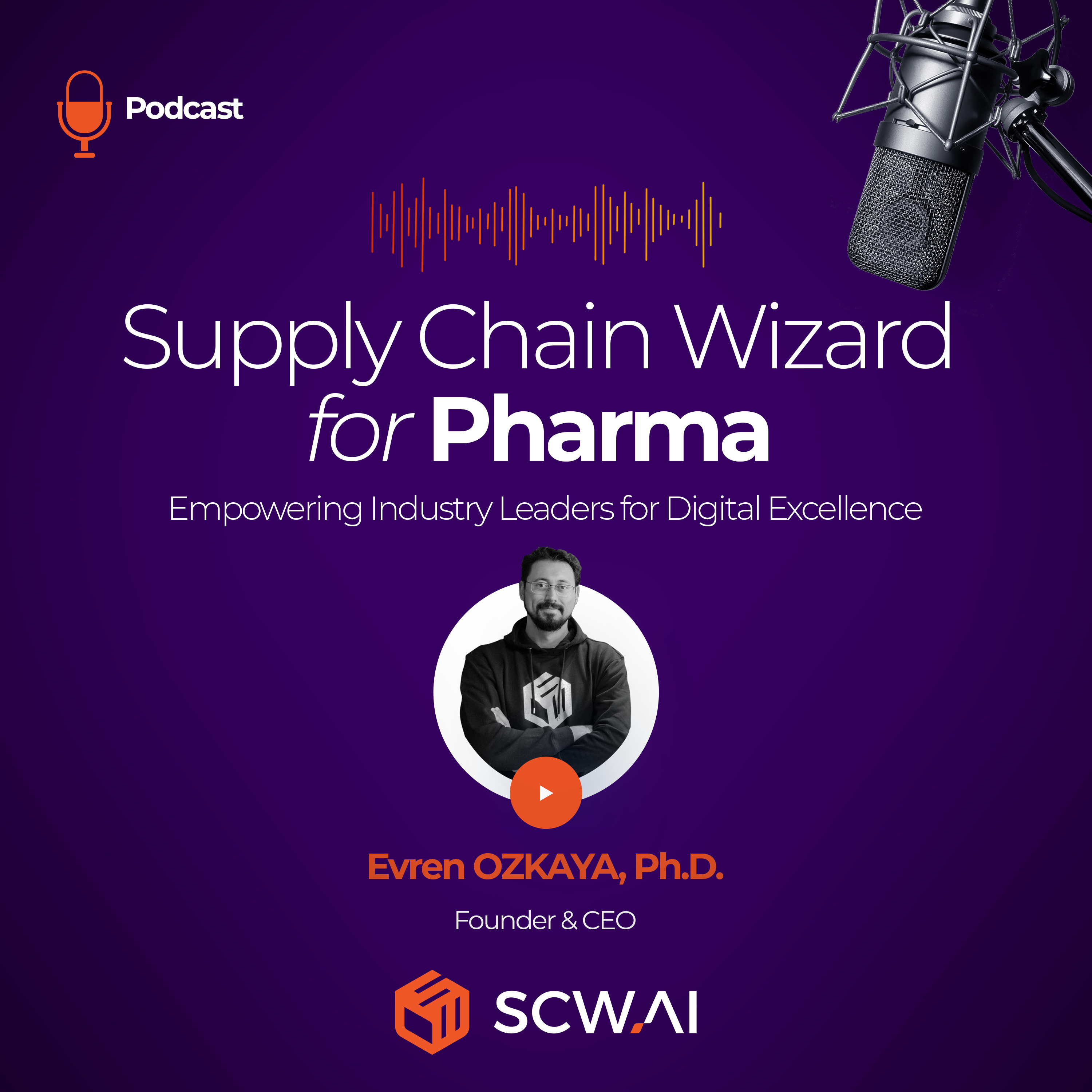
Dose #28: Is Pharma Ready for AI? The Digital Maturity Challenge with Evren Ozkaya (SCW.AI)
In this special episode of SCW for Pharma, the usual roles are reversed: Evren Ozkaya, Ph.D., Founder and CEO of SCW.AI, steps in as the guest alongside host Joe Agresta, Assistant Professor and Program Director of the Master of Science Supply Chain Analytics Program at Rutgers Business School. The conversation explores Evren’s journey across supply chain, consulting, and entrepreneurship, addressing a crucial question: Is pharmaceutical manufacturing truly ready for AI? Evren shares his trajectory from studying industrial engineering and continuing his education at Georgia Tech to working at Intel, McKinsey, and Sandoz/Novartis. While navigating pharma track-and-trace regulations in 2013, he recognized the industry's low digital maturity. Driven by a desire to avoid solving the same problem repeatedly, he founded Supply Chain Wizard as a consulting firm. Addressing packaging line efficiency led to the creation of the OEE Tracker, eventually evolving the company into SCW.AI—an Pharma 4.0 provider offering a Digital Factory Platform that integrates monitoring, execution, compliance, planning, IoT, and AI. Today, SCW.AI has completed over 500 projects with more than 40 pharma companies. Turning to digital transformation, Evren identifies change management as pharma manufacturing's main rate-limiting factor. Paper- and Excel-driven workflows, limited machine connectivity, fragmented data, and legacy mindsets continue to hinder progress. He stresses that technology alone is insufficient; lasting transformation requires leadership alignment, change champions, and bottom-up engagement that wins the trust of shop floor operators. Addressing the "elephant in the room"—artificial intelligence—Evren explains why AI should not be the starting point, despite it being in SCW.AI’s name. He introduces a three-dimensional framework centered on Data, Dashboards, and Decisions. Reliable AI-driven decisions require granular, real-time, automated data collection and contextualized information first. Currently, only a small minority of pharma facilities possess the digital maturity needed to deploy AI at scale, as data remains trapped in paper, spreadsheets, and disconnected silos. A Digital Factory establishes this critical foundation by unifying assets, production, workforce, SOPs, batch records, and scheduling into a harmonized ecosystem where humans and AI can evaluate factory operations holistically. Looking ahead, Evren predicts pharma’s modernization will accelerate rapidly rather than taking decades, driven by growing executive enthusiasm. He closes with advice for future supply chain leaders: build broad supply chain fundamentals, cultivate deep domain expertise, develop digital literacy, and remain relentlessly curious. Building a more efficient pharmaceutical industry requires advanced technology paired with people committed to continuous learning and driving meaningful change.