
Find partners
Superclusters - The Emerging LP Podcast

Superclusters - The Emerging LP Podcast

Hosted by Superclusters by David Zhou

Episodes

82

Latest episode

Jun 2026

Language

EN

About the show

Superclusters is a podcast designed to help the emerging LP think like an established LP allocating to venture capital as an asset class. Our goal is to answer one question: How do the world's wealthiest institutions and individuals pick VC firms to invest in?

Listen to episodes

60 recent
June 15, 2026Episode 101 hr 13 min

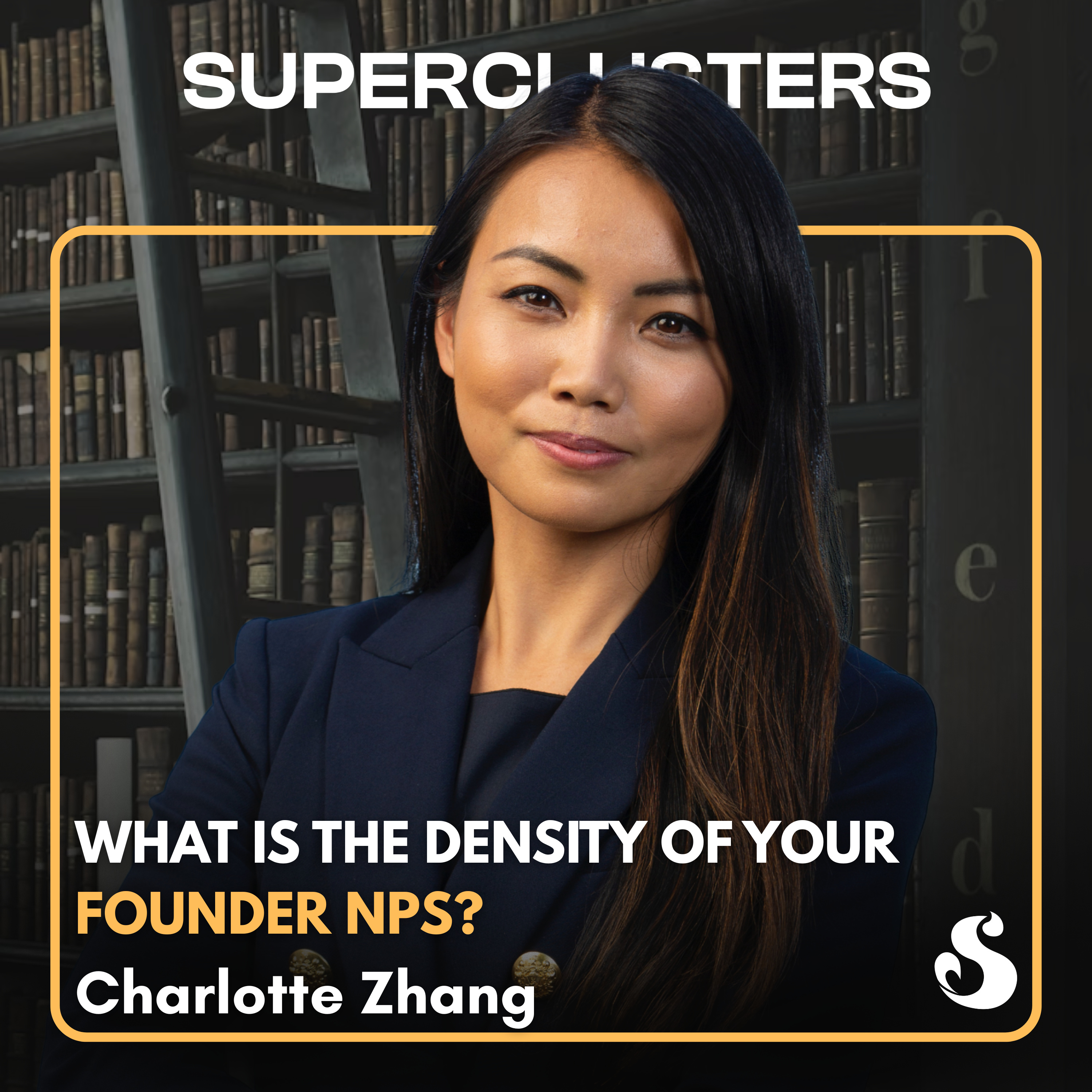
What is the density of your founder NPS? | El Pack w/ Charlotte Zhang

“We’re going into a world where there will be an increase in inequality in terms of the have’s versus have-not’s. And so if you are invested in some of the have’s, I would actually bet on their acceleration of value aggregation in the later stages of scaling which is why I, personally, think a winning strategy is to hold onto them for as long as possible."Charlotte Zhang from Inatai Foundation is back! And if you've tuned into her first episode on Superclusters, you'll know exactly why. Charlotte has been one of my favorite guests on the podcast, marrying both her profound ability for deep analysis with strong framework-oriented assessments. You might remember her 4 P's to underwriting every manager from our prior episode.Naturally I had to have her back for an El Pack episode to answer your questions on how to build a venture capital fund. We bring on 3 GPs at VC funds to ask 3 different questions.99VC's Lisa Yu asks about what LPs look for in Fund I's beyond track record.Escape Velocity's Mahesh Ramakrishnan asks about recycling and what happens when you have 30% of your fund size as distributions in the first few years of the fund.Founder Embassy's Helena Gagern asks about investing in AI frontier labs where the first round of financing already puts the company at $400M+ in valuation. And also, how do you communicate to LPs that you have an "exceptionalism" bucket to invest out of?As the director of investments at Inatai Foundation, Charlotte Zhang oversees the selection of external investment managers, conducts portfolio research, and helps to institutionalize processes, tools, and resources. She previously served as a senior associate at ICONIQ Capital and, before that, Medley Partners. When not working, you can find her globetrotting (18 countries and counting), writing a Yelp review about the best bite in town, or cuddling up with a book and her two adorable cats.You can find Charlotte on her LinkedIn here:LinkedIn: https://www.linkedin.com/in/charlotterzhang/OUTLINE:(00:00) Intro(01:04) What's new in Charlotte's life?(04:06) LPs Charlotte would love to meet(05:41) Who is Lisa and 99VC?(09:31) What qualities does Charlotte look for beyond track record?(14:55) How does a GP know if they have a differentiated strategy?(15:49) Charlotte's pet peeve(17:29) The bottoms up exercise of building a fund strategy(18:00) Consistency of execution(20:05) The highest level of signal you can get from a founder reference(22:18) The ask(22:51) Who is better at bowling: Mahesh or David?(24:44) Who is Mahesh and Escape Velocity?(25:20) Why is Escape Velocity spelled as EV^3?(27:10) What happens when you have 30% DPI in the first 2 years of your fund?(30:19) Does early DPI matter more in Fund I than Fund III?(33:26) Should you sell secondaries at the Series B as a pre-seed/seed GP?(37:34) Venture is under siege for no DPI(38:18) Would Charlotte rather have 4X in 10 years or 7X in 15 years?(39:42) Have's and have-not's(40:35) Who is Helena and Founder Embassy?(44:45) What is Charlotte's reaction when a pre-seed GP invests in a $400M post valuation?(49:23) How do the best GPs communicate betting off-thesis?(50:44) How many GPs have an "exceptionalism" bucket to invest out of?(55:56) How much underwriting goes into a GP breaking the rules?(58:10) "A-players are obvious" but what isn't?(1:00:38) Charlotte's last piece of advice for LPs(1:03:43) Charlotte's last piece of advice for GPs(1:07:18) Why you should talk about the anti-portfolio(1:09:33) David's favorite moment from Charlotte's previous episodeFollow David Zhou for more Superclusters content:For podcast show notes: https://cupofzhou.com/superclustersFor Superclusters After Hours: https://superclusterslp.substack.com/Follow David Zhou's blog: https://cupofzhou.comFollow Superclusters on X: https://x.com/SuperclustersLP
June 8, 2026Episode 91 hr 18 min

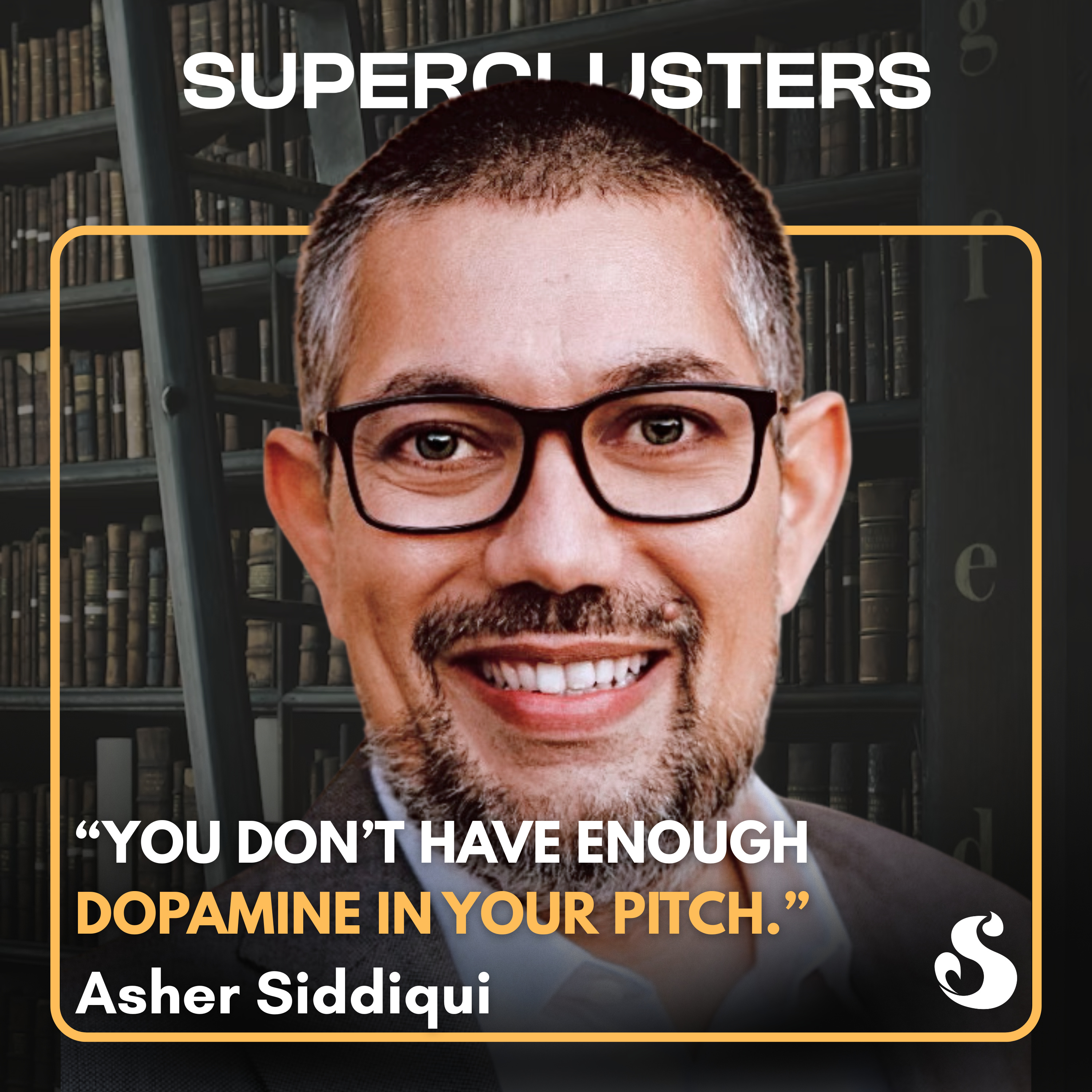
"You don't have enough dopamine in your pitch!" | El Pack w/ Asher Siddiqui

“How you modulate a good story is by inserting dopamine, oxytocin, serotonin, and endorphins at the right times to be able to deliver that story so that the person listening to that story can form an opinion.”Asher Siddiqui from the Song Family Office joins me on El Pack to answer your questions on how to build a venture capital fund. We bring on 3 GPs at VC funds to ask 3 different questions.Inuka Capital's Gautam Shewakramani asks about what GPs typically overshare and under-share when they're pitching an LP. As well as how an LP identifies if a GP has great sourcing if they're a generalist fund.Unshackled Venture's Manan Mehta asks if VC is still only one asset class. Is early stage now a combination of discovery and validation capital?Keymaker VC's Tim Wang asks what do most LPs overvalue in GPs.Asher Siddiqui is a global tech investor, M&A dealmaker, and venture fund builder with over 25 years of hands-on experience across venture capital, entrepreneurship, and more than $15B in executed M&A transactions.He began his career as a software engineer and entrepreneur in the US and UK before spending a decade leading M&A and corporate venture at Etisalat Group (now e& Group), one of the world’s largest listed TMT investment groups. There, he led acquisitions, exits, and strategic transactions across multiple continents.In 2016, Asher joined the global leadership team at 500 Startups in San Francisco, helping scale the platform to $2B+ AUM, with a portfolio that includes 35+ unicorns and 160+ centaurs.Since then, he has helped launch and scale several institutional VC firms—including Race Capital, Lumikai, Sukna Ventures, Zayn VC, and Humanrace Capital—and serves on the advisory boards of funds such as FootPrint Coalition Ventures, Merus Capital, and The Treasury.To date, Asher has made 100+ venture investments (both direct and LP), raised hundreds of millions in LP commitments, mentored hundreds of emerging VC managers globally, and advised countless founders.You can find Asher on his socials here:LinkedIn: https://www.linkedin.com/in/ashersiddiqui/X / Twitter: https://x.com/ashercdkeyOUTLINE:(00:00) Intro(02:09) The DOSE framework for underwriting pitches(04:19) Asher's new role(05:38) Who is Gautam and Inuka Capital?(09:19) What do most GPs overshare and undershare on?(15:19) How does Asher differentiate sourcing ability in generalist funds?(20:01) The first date analogy(22:38) What emotions do each of DOSE represent?(27:23) Too much dopamine, not enough endorphins(30:02) Who is Manan and Unshackled Ventures?(31:33) Unshackled's most recent big win(32:46) Discovery capital vs validation capital(33:31) Is venture still only one asset class?(43:29) The Song Family Office portfolio construction(51:41) Asher's stance on reserves(55:00) Why it makes sense to go to zero AGMs(56:23) The ask(57:27) Who is Tim and Keymaker VC?(58:45) What do most LPs overvalue in GPs?(1:04:40) A new way to share the team's personality on the deck?(1:08:09) Asher's last piece of advice(1:14:57) David's favorite moment of Asher in S5Follow David Zhou for more Superclusters content:For podcast show notes: https://cupofzhou.com/superclustersFor Superclusters After Hours: https://superclusterslp.substack.com/Follow David Zhou's blog: https://cupofzhou.comFollow Superclusters on X: https://x.com/SuperclustersLP
June 1, 2026Episode 81 hr 32 min

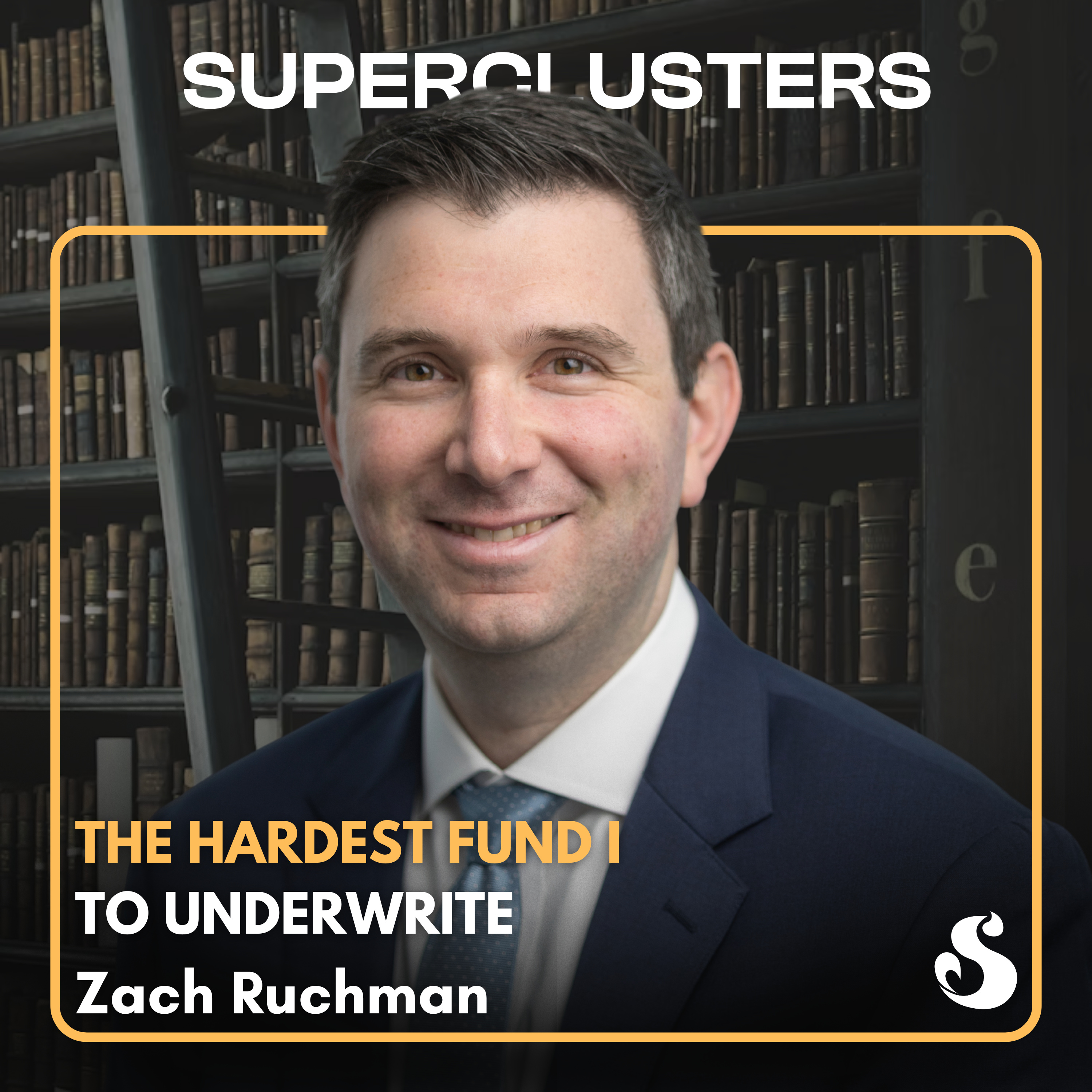
The Hardest Fund I to Underwrite | Zach Ruchman

“The question at Fund IV is, ‘Okay, you’ve proved that you’re a great firm builder. Congratulations, you’re raising Fund IV. Are you still a great investor?’”Zach Ruchman joined HB Wealth in 2025 as a Shareholder after working with WMS Partners since 2023. In his role as Managing Director, Private Markets, Zach leads the team responsible for research and due diligence of private market investment opportunities across a variety of asset classes, including private equity, growth equity, venture capital, private credit, infrastructure, and real assets.Before joining HB Wealth, Zach was a Senior Vice President at RockCreek and a Vice President at BlackRock, where he led direct co-investment transactions as well as manager research for both primary and secondary commitments in the Americas, Europe, and Asia on behalf of both institutional and family office clients. He began his career as a consultant with Alvarez & Marsal. In this episode, we also talk about how he worked out of the National Democratic Institute's DC office writing grants and tracking political regimes in the Middle East, including the Arab Spring.In the community, Zach serves as a member of the finance committee for the Howard and Geraldine Polinger Family Foundation.You can find Zach on his socials here:LinkedIn: https://www.linkedin.com/in/zruchman/X / Twitter: https://x.com/zmrphotoOUTLINE:(00:00) Intro(03:04) When 9/11 entered Zach's life(12:20) Interest in the Middle East(15:00) Returning to the US(17:49) What's in the foreign service exam?(22:29) From pursuing the state department to consulting(25:39) Consulting to allocating(32:20) Business school and mentors(36:34) The ask(37:07) How Zach makes re-up decisions?(40:15) The difference between a Fund I and Fund IV(43:26) Alignment between senior and mid-level investors(45:33) Deal attribution at big VCs(46:40) Questions to ask to references to find deal attribution(49:12) Avoiding a reference's scripted answer(52:14) Top 1% performers leaving organizations(53:45) The hardest Fund I to underwrite(1:00:57) Does radical transparency work?(1:06:15) "Private assets work best when they're inefficient."(1:09:20) Does AI change VC investing?(1:11:33) Sourcing that AI cannot do(1:14:26) Can AI write good memos?(1:19:11) Pattern vs exception recognition(1:25:03) An example of how a GP proved he worked hard(1:28:00) Best advice for action photographyFollow David Zhou for more Superclusters content:For podcast show notes: https://cupofzhou.com/superclustersFor Superclusters After Hours: https://superclusterslp.substack.com/Follow David Zhou's blog: https://cupofzhou.comFollow Superclusters on X: https://x.com/SuperclustersLP
May 25, 2026Episode 71 hr 12 min

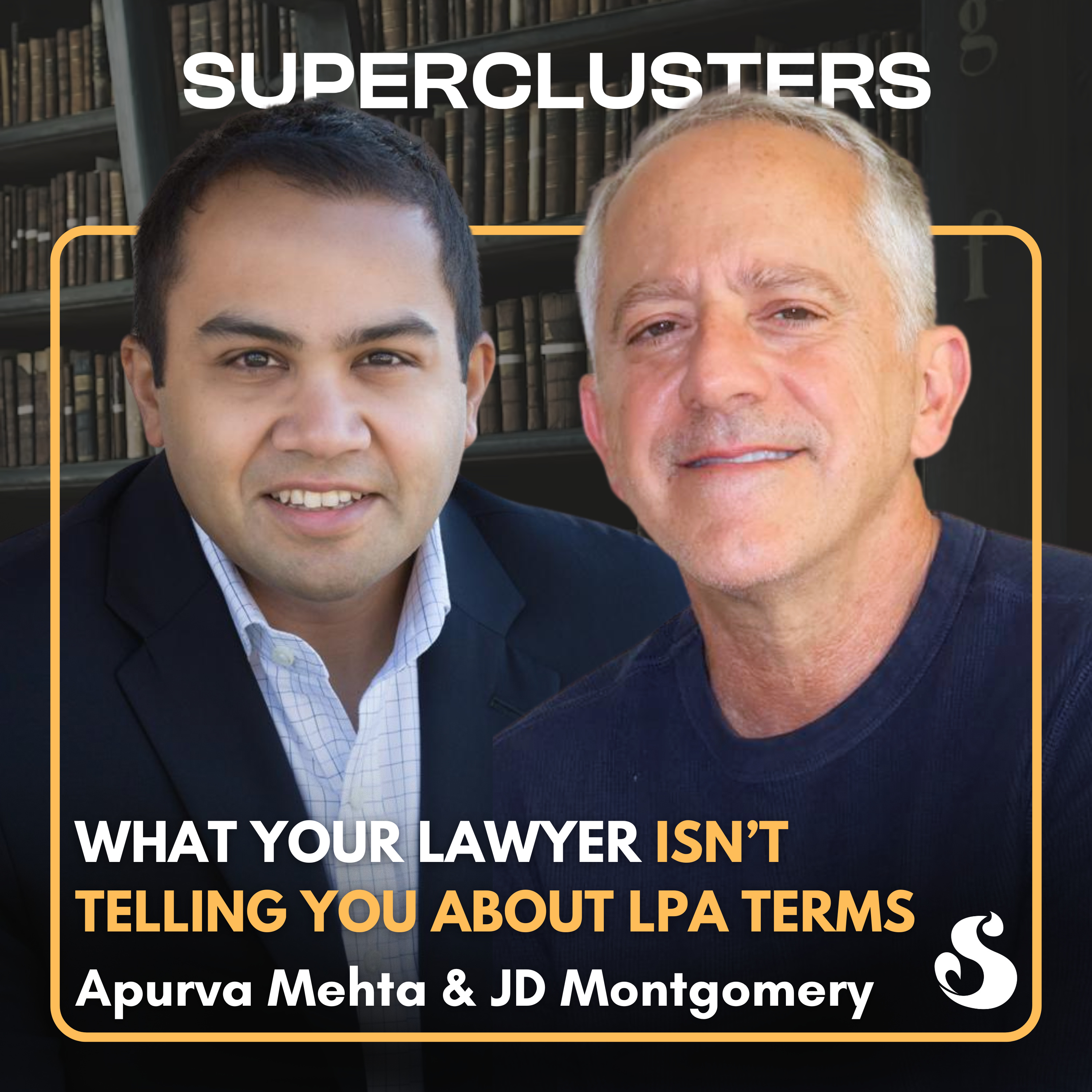
What Your Lawyer Isn't Telling You About LPA Terms | Apurva Mehta & JD Montgomery

“Our best GPs are talking to their founders all the time. And our best GP relationships, we talk to all the time.” — Apurva Mehta“If you can’t handle something going to zero, then you shouldn’t do one.” — JD MontgomeryApurva Mehta is the co-founding Managing Partner of Summit Peak Investments, a fund-of-funds that boasts a portfolio of both venture fund investments and direct investments, including the likes of Affirm, Anduril, Airtable, Opendoor, and Wish, just to name a few.Prior to starting Summit Peak in 2018 with his co-founder, Patrick O'Connor, he previously served as Vice President and Deputy Chief Investment Officer for the Children's Hospital Endowment Portfolio in Fort Worth, Texa. From 2008 to 2011, he was the Director of Portfolio Investments at The Juilliard School in New York City. Apurva began his career in investment consulting and investment banking at Citigroup and Lehman Brothers. He was recognized for his expertise when he was named to aiCIO Magazine’s Top Forty Under Forty in 2012 and 2013 and honored as a Rising Star by Institutional Investor. He holds a BBA in Finance from The George Washington University. You can find Apurva on his socials here:LinkedIn: https://www.linkedin.com/in/apurvaamehta/JD Montgomery leads the Family Office division at Canterbury Consulting and is a seasoned advisor with nearly four decades of experience serving prominent families with a focus on strategy, organization and measurement. Based in Newport Beach, he serves a select group of multi-generational families and helps them navigate the complexities of wealth, purpose, and legacy. Mr. Montgomery partners with his clients to help them optimize the allocation of their resources across generations. Over the years, Mr. Montgomery has developed a deep network of relationships in the venture capital industry. He has helped his clients gain meaningful exposure to venture funds and direct investments and develop relationships with leading innovators and investors globally. He is a Managing Director, shareholder, and board member at Canterbury Consulting. He graduated from Stanford University and holds the Chartered Alternative Investment Analyst (CAIA) designation.You can find JD on his socials here:LinkedIn: https://www.linkedin.com/in/jd-montgomery-6161341b/OUTLINE:(00:00) Intro(01:53) How did this episode come to be?(06:56) What do LPs get right/wrong with co-invests?(12:06) GP best practices for co-investments(14:35) How do you know a GP is capable of pre-empting a round?(16:37) How often should GPs be talking to their portfolio founders?(17:52) Why Apurva goes to AGMs(18:17) How Apurva/JD stays in touch with GPs(23:33) The ask(24:01) Solo GPs(31:42) Types of solo GPs who join multi-stage firms later(34:32) What's the skew in the benchmarking data?(39:22) What lawyers don't tell you about carveout capital in LPAs(44:46) LPA terms that LPs redline(45:44) Carry ratchets that LPs hate(48:15) How higher fees impact IRR(49:39) Outlandish fees on SPVs(50:49) How much should a GP's salary be?(52:56) Cashless GP contributions(53:59) Do $1T outcomes change venture math?(59:17) Should private market investors be public market investors?(1:04:30) What made Apurva nervous? What does he love?(1:07:57) What does JD love?Follow David Zhou for more Superclusters content:For podcast show notes: https://cupofzhou.com/superclustersFor Superclusters After Hours: https://superclusterslp.substack.com/Follow David Zhou's blog: https://cupofzhou.comFollow Superclusters on X: https://x.com/SuperclustersLP
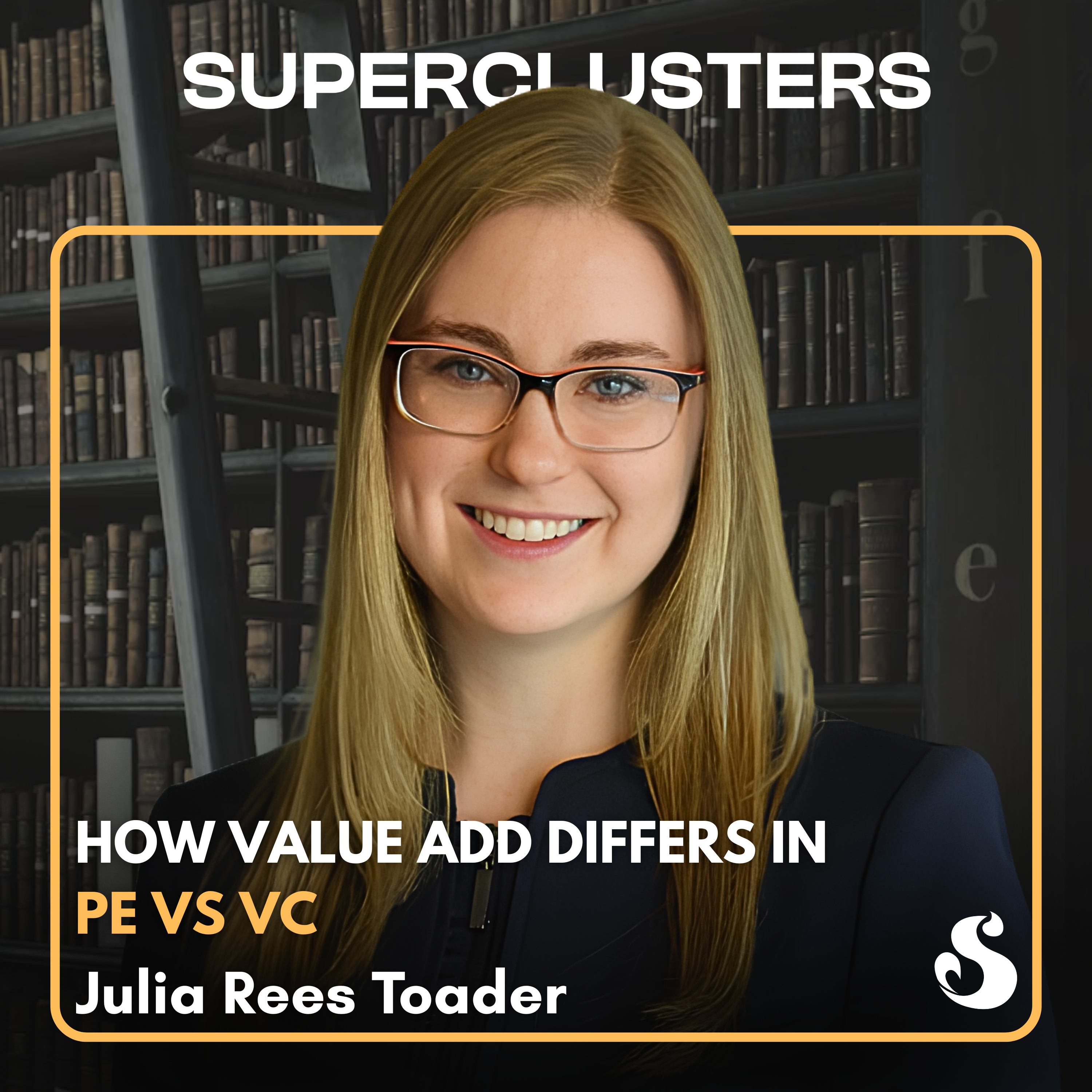
May 18, 2026Episode 61 hr 18 min

How Value Add Differs in PE vs VC | Julia Rees Toader

"In private equity, some of the older tricks about just picking on more leverage are not going to work as well now because rates are higher. We need to have more focus on operational improvement and margin expansion. And in venture, you’re not expected to have good margins.” — Julia Rees ToaderJulia Rees Toader is the Founding Partner of PrinCap, an independent investment portfolio strategy firm working with institutions and individuals on manager selection, asset allocation, and strategic advisory. Prior to PrinCap, she was the Head of Portfolio Strategy and Head of Relationship Management at Heritage Holdings, a multi-family office. Before Heritage, Julia was the head of Portfolio Strategy at Goldman Sachs Asset Management ($3Tr assets under supervision). She and her team advised sovereign wealth funds, pensions, financial advisory firms, private banks, and other long-term asset owners on asset allocation. She studied mechanical engineering and computer science at Princeton University and is a CFA charterholder. Before Goldman Sachs, she worked on M&A and business development for an early-stage medical device biotech firm.You can find Julia on her socials here:LinkedIn: https://www.linkedin.com/in/julia-rees-toader-cfa-22871030/OUTLINE:(00:00) Intro(01:38) A 'happy accident' at 16(04:03) Julia's first startup experience(06:32) Why did Julia join Goldman Sachs?(07:30) When did Julia's appreciation for finance start?(08:05) Conversations around the Rees and Toader dinner table(09:48) Finance vs mechanical engineering(13:26) On exceptional talent(15:18) How to keep a cool head when you're successful(20:19) Do small emerging managers outperform?(22:27) How do you know if a GP is founder-friendly?(23:39) The bad pitch meeting(25:00) Value adds in PE vs VC(29:49) Difference between PE vs VC portfolio construction models(31:19) Timelines to return in PE and VC(33:17) Secondaries(34:34) The ethics of continuation vehicles(36:07) The subscription ask(36:40) Are all secondaries created equal?(38:30) What is 10+1+1?(40:32) Hedge funds looking like private market funds(41:16) What do you do when you have $3B?(44:43) What is home country bias?(46:40) How do you know you're overweighted on allocation?(47:15) The endowment effect in secondaries(48:32) Leaderless investment committee sessions(49:52) The merits of GP stakes(54:10) Why private credit is interesting(56:21) The duration of GP stakes(57:36) The duration of hedge fund GP stakes(58:11) How much GP stake is worth it?(1:00:33) Hedge funds: How much is a good GP stake?(1:02:00) How much is the max an LP wants to own of a hedge fund?(1:03:12) Tax structuring is another form of alpha(1:06:52) Cheetos Pelotazos(1:09:15) Advice to women in finance(1:12:28) Post-credit scene: Age of Empires, Starcraft, and ZeldaFollow David Zhou for more Superclusters content:For podcast show notes: https://cupofzhou.com/superclustersFor Superclusters After Hours: https://superclusterslp.substack.com/Follow David Zhou's blog: https://cupofzhou.comFollow Superclusters on X: https://x.com/SuperclustersLP
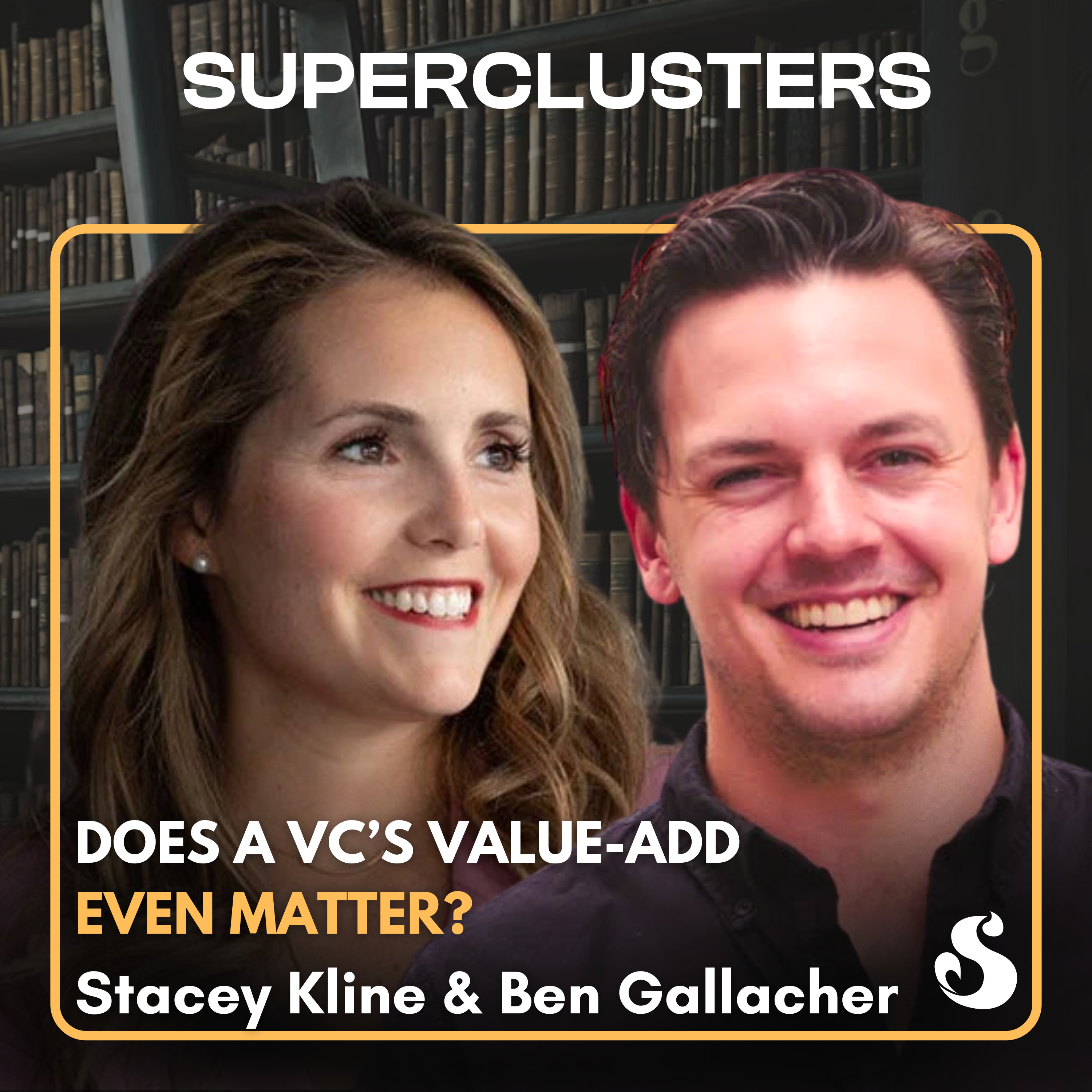
May 11, 2026Episode 51 hr 14 min

Does a VC's Value-Add Even Matter? | Stacey Kline & Ben Gallacher

“GPs over-index on how that value-add ties into a portfolio strategy.” — Stacey KlineStacey Kline and Ben Gallacher are co-founders of February Capital, a fund-of-funds dedicated to providing access to the best in venture. Prior to starting February, they've each held roles as professional athletes, corporate lawyers, startup founders, emerging managers themselves, family office allocators, just to name a few.We spend much of this episode talking about their backgrounds that led them to where they are today, but also on why Stacey and Ben spend so much time underwriting emerging managers' value-adds, as well as their controversial take on it.You can find Stacey on her socials here:LinkedIn: https://www.linkedin.com/in/staceykline/You can find Ben on his socials here:LinkedIn: https://www.linkedin.com/in/benjamingallacher/OUTLINE:(00:00) Intro(04:03) Why did it take 22 months to set up fund of funds in Canada?(07:22) Toughest moments when building February Capital(10:12) How did Ben know he wanted to be an LP?(12:58) How did Stacey know she wanted to be an LP?(16:53) The doctor's advice no one expected(18:32) Ben's first NO from Stacey(23:06) Why is it called February Capital?(23:58) What is the role of the LP today?(27:59) What Ben and Stacey look for in GPs(31:08) When does non-consensus thinking lead to portfolio divergence?(36:28) How much portfolio overlap is fair for February?(39:31) How large is February's portfolio?(43:17) Picking an ecosystem vs picking an investor(46:24) What types of GPs did Stacey change her mind on?(47:56) Underwriting a GP's story(49:44) Stacey's controversial take on value-adds(53:07) Why value-adds affect sourcing(57:10) Examples of negative value-add(59:19) Refreshing your value add(1:03:36) An example of when GP and founder incentives are misaligned(1:05:12) The February Capital OS you don't seeFollow David Zhou for more Superclusters content:For podcast show notes: https://cupofzhou.com/superclustersFor Superclusters After Hours: https://superclusterslp.substack.com/Follow David Zhou's blog: https://cupofzhou.comFollow Superclusters on X: https://x.com/SuperclustersLP
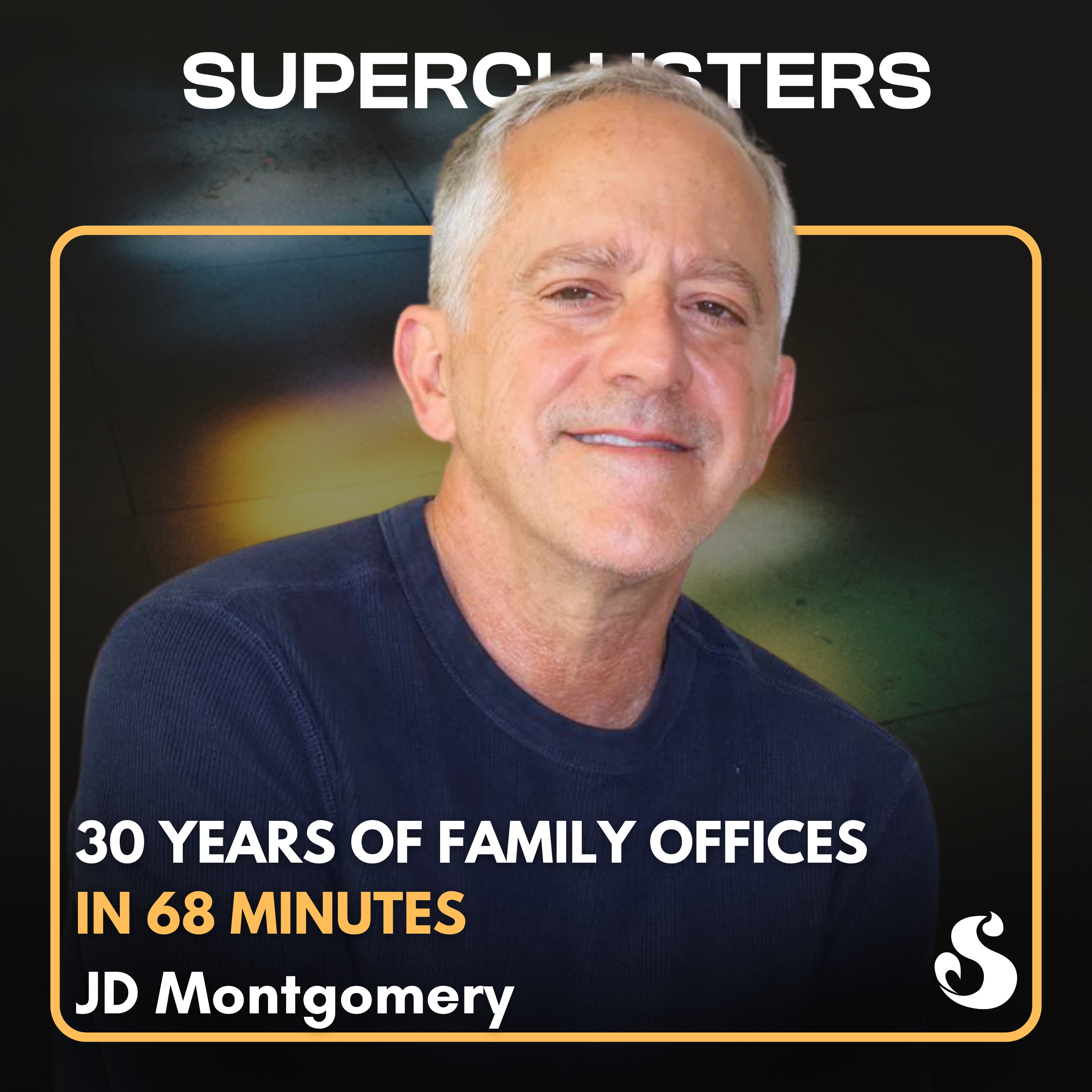
May 4, 2026Episode 41 hr 8 min

The 3 Big Family Office Transitions That No One Talks About | JD Montgomery Part 2

“To whom much is given, much is expected.” — JD MontgomeryJD Montgomery leads the Family Office division at Canterbury Consulting and is a seasoned advisor with nearly four decades of experience serving prominent families with a focus on strategy, organization and measurement. Based in Newport Beach, he serves a select group of multi-generational families and helps them navigate the complexities of wealth, purpose, and legacy. Mr. Montgomery partners with his clients to help them optimize the allocation of their resources across generations. Over the years, Mr. Montgomery has developed a deep network of relationships in the venture capital industry. He has helped his clients gain meaningful exposure to venture funds and direct investments and develop relationships with leading innovators and investors globally. He is a Managing Director, shareholder, and board member at Canterbury Consulting. He graduated from Stanford University and holds the Chartered Alternative Investment Analyst (CAIA) designation.You can find JD on his socials here:LinkedIn: https://www.linkedin.com/in/jd-montgomery-6161341b/OUTLINE:(00:00) Intro(02:00) The definition of family offices(03:01) Generation 1 vs 2(06:25) Building a family office at Gen 1(07:48) The 3 considerations for succession planning(11:14) The "why" of succession planning(12:59) Building self-esteem in children(17:14) How do you help children choose their long-term passions?(20:16) When should next gen of family offices know how rich they are?(23:35) How do next gen family office members first get exposure to VC?(32:25) When do you give next gens influence over the family's capital?(35:28) What % of the family capital should you give a next gen?(37:42) The ask(38:09) The hard and soft issues of wealth(42:41) How often do next gens inherit their parents' support system?(46:35) How does a GP know how sophisticated an FO is?(53:43) How does an advisor know an FO's sophistication?(59:10) Sophisticated simplicity(59:50) When's the last time JD's OS changed?(1:05:23) Post-credit scene: Time is a constructFollow David Zhou for more Superclusters content:For podcast show notes: https://cupofzhou.com/superclustersFor Superclusters After Hours: https://superclusterslp.substack.com/Follow David Zhou's blog: https://cupofzhou.comFollow Superclusters on X: https://x.com/SuperclustersLP
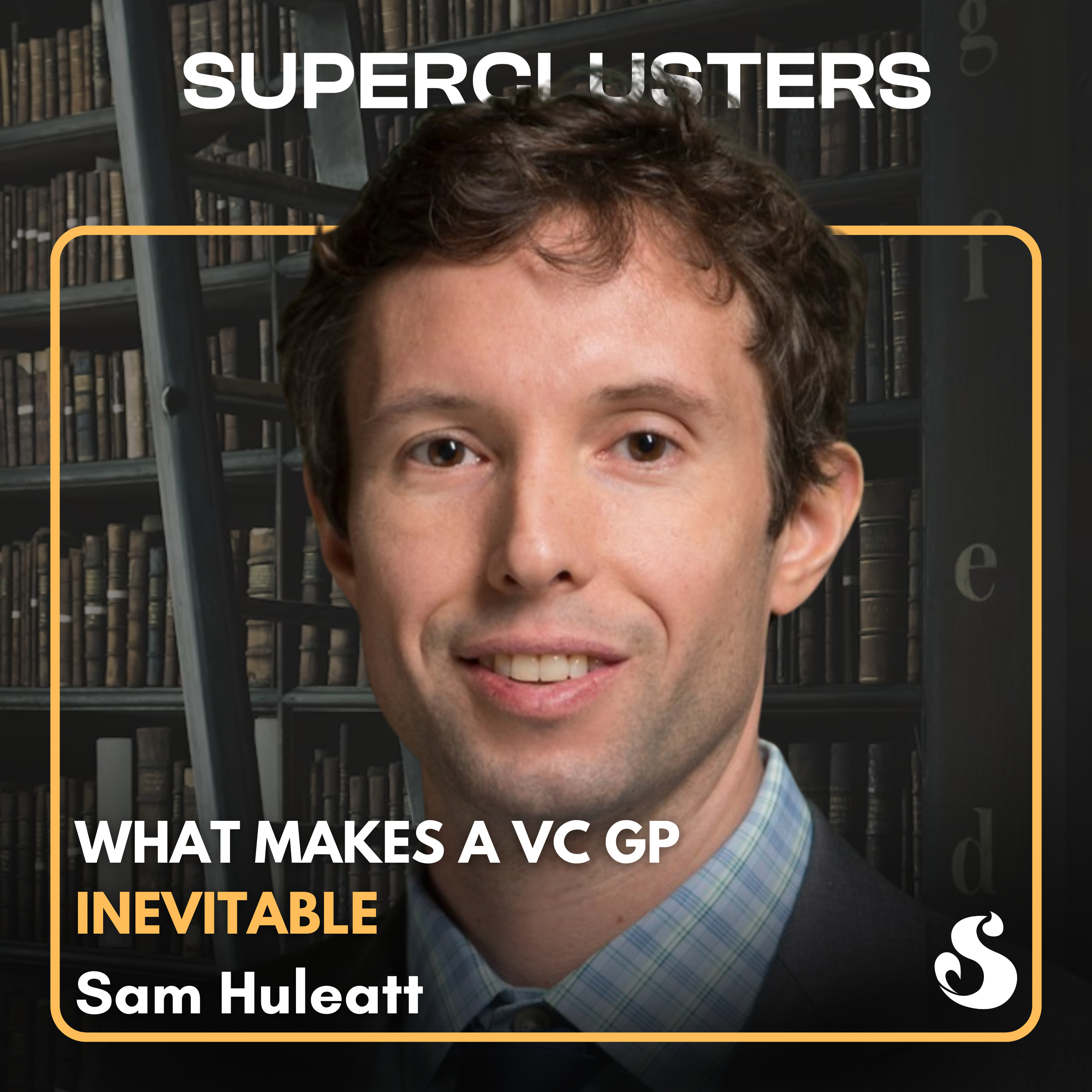
April 27, 2026Episode 31 hr 19 min

What Makes a VC Inevitable | Sam Huleatt

“Lower barriers to entry doesn’t mean higher probabilities of success.” — Sam HuleattSam Huleatt is the co-founder of The Side Letter, a platform driving network-based research for capital allocators. Prior to The Side Letter, he created and ran the The LP Institute at VC Lab, as well as let On Deck Angels at On Deck. Moreover, he's a serial founder, active angel investor in over 35 companies, and an active allocator in emerging fund managers, including the likes of Notation Capital, Orange Fund, Inuka Capital, Asylum Capital, and more.You can find Sam on his socials here:LinkedIn: https://www.linkedin.com/in/samhuleatt/X / Twitter: https://x.com/samhuleattOUTLINE:(00:00) Intro(01:34) Sam's childhood(03:24) The most persistent myth about Sam he never bothered to correct(05:47) Bottom-up vs top-down investor(13:37) Can career VCs develop empathy for the founder(18:43) Traits of someone who should definitely start a fund(26:45) Traits of someone who should NEVER start a fund(28:09) Air of inevitability(33:44) Why was Outlander VC inevitable?(36:11) Where should 60% of your Fund I capital come from?(41:47) Starting a VC fund is hard(44:46) Do LPs like GP accelerators?(51:35) Top 3 considerations for first-time LPs(58:03) How many GPs should 1st-time LPs meet?(1:01:06) Governing law of VC: Adverse selection(1:04:40) Incentive alignment on fees(1:06:36) Terms in LPAs vs side letters(1:11:16) What is The Side Letter?Follow David Zhou for more Superclusters content:For podcast show notes: https://cupofzhou.com/superclustersFor Superclusters After Hours: https://superclusterslp.substack.com/Follow David Zhou's blog: https://cupofzhou.comFollow Superclusters on X: https://x.com/SuperclustersLP
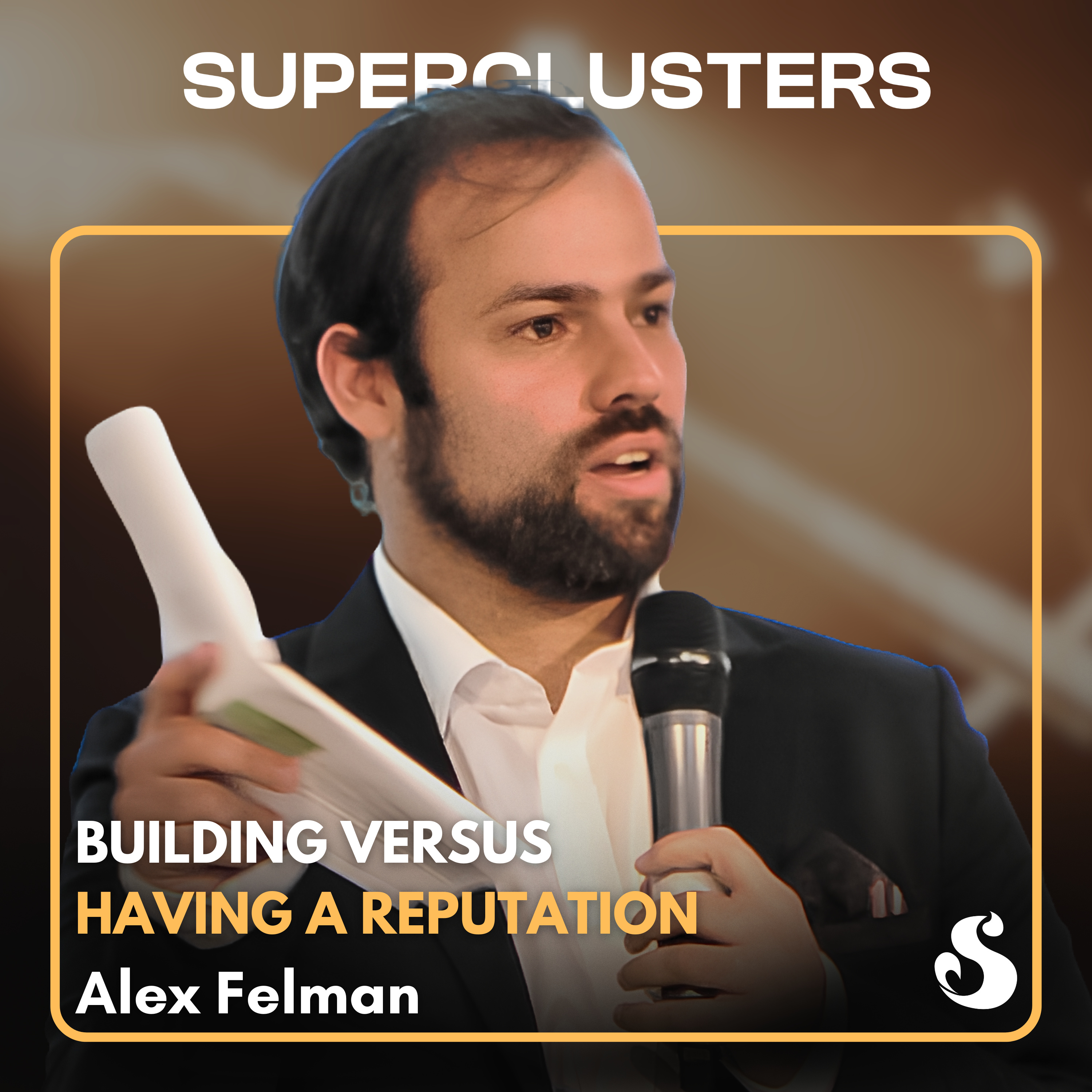
April 20, 2026Episode 21 hr 6 min

"I Write-Off Every Sourcing Slide" | Alex Felman

“The game you play as you’re building a reputation becomes a different game than when you have a reputation. And I tend to find, from an LP’s perspective, when you’re building reputation, that’s actually when you deliver the most value.” — Alex FelmanAlex Felman is an entrepreneurial and family office professional. For over 10 years, as a second-generation member, he has run his own family office, Felman Family Office, and works with family offices around the world through his family's multifamily group, MSF Capital Advisors. Using his expertise in Molecular Toxicology and Bio-entrepreneurship (B.A from University of California -Berkeley, MBA from Copenhagen Business School), he advises them in biotechnology, healthcare, and other futuristic tech industries with the goal of maintaining long-term wealth through innovation. He regularly speaks at family office and private wealth events on topics such as tech investment, manager selection, generation and succession issues, rising generation trends, and more.He has used his experience within the family office industry and 20 year background as an educator to create Exponential U, a family office education program designed to help families become multigenerationally sustainable. His proprietary L^3 framework (Learn, Leverage, Legacy) allows the holistic development of family members to ensure a smooth leadership transition. You can find Alex on his socials here:LinkedIn: https://www.linkedin.com/in/alexwfelman/OUTLINE:(00:00) Intro(04:36) The 'tastemaker' for family offices(05:54) Exploration vs discipline(08:15) The hero's journey in investing(09:49) The life line(13:39) Building and having reputation(16:06) Risk appetites for asset owners & allocators(18:44) Why won't an institution invest in me?(19:50) The quiet thing LPs don't talk about(25:15) When did Alex get involved with his family office?(29:09) Writing off sourcing slides(35:33) Different flavors of "sourcing from YC"(38:41) Emerging GPs are "investments-as-a-service"(40:08) Fund power law is greater than startups'(43:44) Emotional value of investing in funds(44:45) Most VC funds are scams!(50:01) Optimistic cynic(51:43) Reminders today about the good ol' days(54:17) Late stage capitalism(59:10) Post-credit scene: Dave Chappelle and podcastsFollow David Zhou for more Superclusters content:For podcast show notes: https://cupofzhou.com/superclustersFor Superclusters After Hours: https://superclusterslp.substack.com/Follow David Zhou's blog: https://cupofzhou.comFollow Superclusters on X: https://x.com/SuperclustersLP
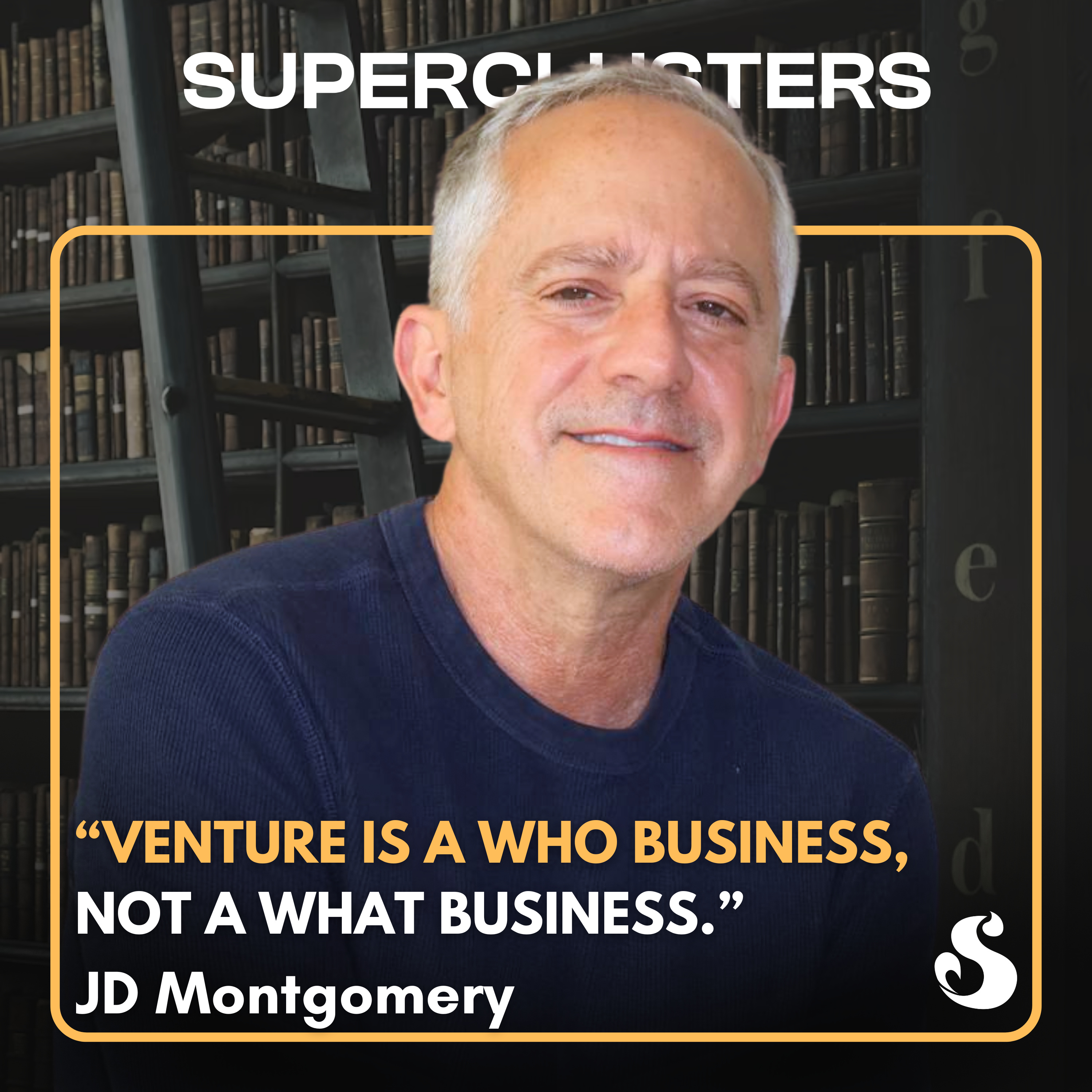
April 13, 2026Episode 11 hr 17 min

"Venture is a Who Business, Not a What Business" | JD Montgomery

“One thing that is unique to private equity and venture capital is persistence is a little easier because of the brand. ‘They did good deals, so therefore, the good deals come to find you.’ If you were in a long-only private equity shop or hedge fund, Amazon is not going to come find you because you invested in Shopify.” — JD MontgomeryJD Montgomery leads the Family Office division at Canterbury Consulting and is a seasoned advisor with nearly four decades of experience serving prominent families with a focus on strategy, organization and measurement. Based in Newport Beach, he serves a select group of multi-generational families and helps them navigate the complexities of wealth, purpose, and legacy. Mr. Montgomery partners with his clients to help them optimize the allocation of their resources across generations. Over the years, Mr. Montgomery has developed a deep network of relationships in the venture capital industry. He has helped his clients gain meaningful exposure to venture funds and direct investments and develop relationships with leading innovators and investors globally. He is a Managing Director, shareholder, and board member at Canterbury Consulting. He graduated from Stanford University and holds the Chartered Alternative Investment Analyst (CAIA) designation.You can find JD on his socials here:LinkedIn: https://www.linkedin.com/in/jd-montgomery-6161341b/OUTLINE:[00:00] Intro[02:18] The "some day" exercise[11:12] Why does JD do "some day" every 6 months?[12:33] JD's life line[16:44] When JD is 85 years old...[18:05] JD's relationship with fatherhood despite the trauma[22:40] Annual dad report cards[25:33] Intentionality with GPs[28:41] How to avoid one-hit wonders[33:43] How to transfer self-esteem[36:05] How do you get GPs off of their talk track?[37:36] Non-obvious things JD looks for in GPs[41:43] Is selling 0.2X DPI in the first 4 years meaningful?[44:27] Should you recycle capital or deploy out of the next fund?[46:34] Why did JD choose to work with families?[48:07] "Never eat alone"[51:34] How does JD think about time allocation?[55:06] How many new GPs does JD meet with?[59:07] How did JD pass on then back Founders Fund?[1:03:22] The difference between unexplored gold veins and rotting trash[1:08:13] Mayan Mocha at Austin's Picnik[1:08:58] JD's secret street taco recipe[1:11:09] JD's reminder that we're still in the good ol' days[1:13:20] Post-credit scene: No garlic and onionsFollow David Zhou for more Superclusters content:For podcast show notes: https://cupofzhou.com/superclustersFollow David Zhou's blog: https://cupofzhou.comFollow Superclusters on X: https://x.com/SuperclustersLP

Is this your show?

Claim this listing to keep it up to date, reach guests who want to pitch you, and manage bookings with Guestify.

Claim this listing

More Business podcasts