
November 16, 2022Episode 5445 min
Episodes
180
Latest episode
Jul 2026
Language
EN-US
About the show
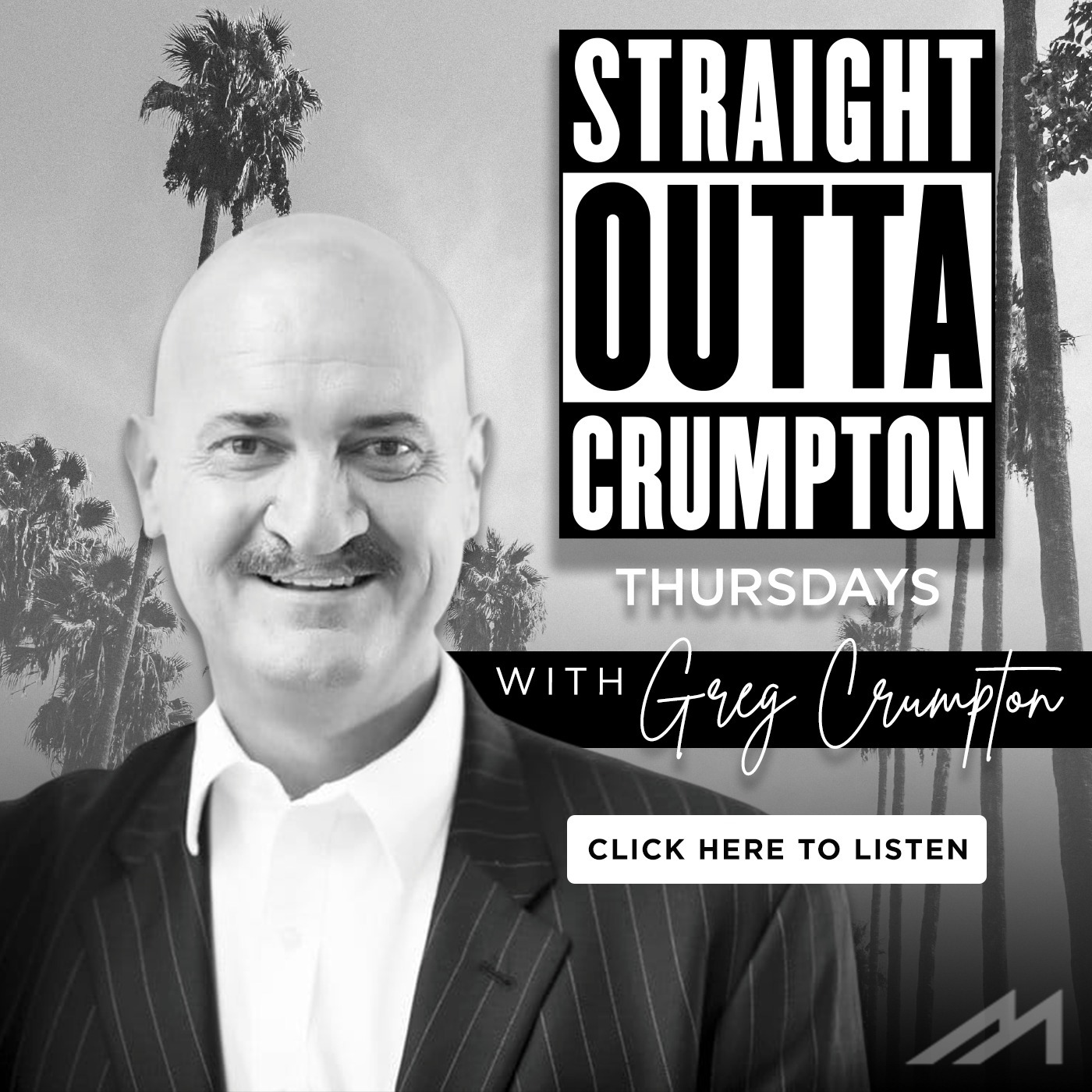
Greg Crumpton lives by a simple mantra: Relationships drive business. Each week on Straight Outta Crumpton, Crumpton dives into the lost art of networking and speaks with the biggest influencers in business services to learn how they build, nurture and value their professional relationships.
Listen to episodes
August 4, 2022Episode 5246 min
The Impact of the Chip Shortage on Vehicle Life Cycles
Alliance DriveAway Solutions is a logistics company. As Lijun Ji, CEO at Alliance DriveAway Solutions, puts it, DriveAway is like ordering an Uber for machinery. Their solution focuses on the transportation of class A trucks. Ji spoke with Tyler Kern and Greg Crumpton about her business and its unique offering in the marketplace. When a North Carolina factory manufactures a truck for use in Oregon, it needs to get there somehow. That’s where Alliance DriveAway Solutions takes over. Alliance pulls from many people and drivers to make such deliveries happen safely and efficiently. “One of our essential functions as a business is to remove the risk from the end user,” Ji said. “When we pick up from the seller to deliver to the buyer, A to B, it’s all taken on by Alliance.” Everyone in the process recognizes risk as a significant factor to mitigate, so Alliance builds its foundation on trust to ensure deliveries go without a hitch. Part of building, and earning trust, means honesty. Ji said Alliance needs to be open and honest when a request comes in for a delivery. If Alliance can’t make the timeframe requested, it is better to say they can’t do it, then to say yes, and then not deliver on the promise. As Diesel prices skyrocket, uncertainties and questions impact the industry, making gauging the future tricky. Ji said Alliance feels the pressure driver shortages and the other economic impacts on today’s trucking industry. “Right now, we only use CDL drivers, which is operating class A,” Ji said. “So, that’s a 50,000 shortage.” Alliance utilizes an extensive contractor network spread throughout the United States to combat these driver shortages. “It’s important to form an infrastructure,” Ji said. “That’s what we’re doing now to be able to specialize them to utilize them more efficiently.”
June 6, 2022Episode 5145 min
Building the Next Generation Through Sharing Knowledge
As technology continues to find ways to keep growing, sharing knowledge and building trustful relationships plays an important role in the next generation. Hosts Greg Crumpton and Tyler Kern sat down with Ron Vokoun, the Director of Critical Facilities at OAC Services, to discuss the industry and the factors around its growth. When Vokoun entered into the industry, he started with construction management for data centers. “I’m blessed to be in an industry that has completely evolved, it's like watching the discovery channel every day, it's been amazing,” Vokoun said. The journey through relationships too evolves over the span of the industry, with data centers, and the introduction of liquid metal, a perspective that Vokoun knows too well. “As the relational aspects morph, so does the business. When I look back, they’ve changed my career from the very start. If you look at the tech industry there are different family trees that grow out of starts,” he said. “It's amazing how it impacts your career and it's great to see them grow up in the industry and to know you’ve had a small part in it.” No matter how large a company is, it comes down to the people at the leadership level that you can trust. “That’s the karma of the industry. If you are genuinely a good person and you help people, it will come back to you,” Vokoun said. Sharing knowledge and building up the next generations starts with those relationships. “ If that knowledge is not passed down, and since there are a lot of us that don’t have a long shelf life, if we don't pass the information down, to carry on, it's a missed opportunity and a risk to the industry, “ he said. “I wonder how an industry like construction has not improved their production in 50 years.”
June 30, 2022Episode 5147 min
Building Relationships the Family Way
Is it time to reveal some family secrets? Greg Crumpton navigated some familiar waters with his latest guest, his sister, Angela Leissa, or as Crumpton calls her, Dr. Leissa. Leissa, a retired Primary/Secondary Education Professional, was a former DeKalb County, Georgia School System Principal for thirty years. On Crumpton’s show, he often discusses professionals who know how to form long-lasting relationships, and Leissa is one of the best relationship-builders he knows. Leissa wanted to be a teacher from the time she was a child. She left for college with a teaching career in mind. And it was at college that Leissa met Missy, her close friend for over forty years. At her first teaching job, Leissa met her future husband, not first husband, but future. Leissa left her home state to work in other education systems but found her way back to DeKalb County through friendships formed during her first teaching job. And relationships would continue to play an integral role in Leissa’s career progression. Leadership became something that Leissa enjoyed throughout her years in education. “I like leading people and collaborating with adults,” Leissa said. This desire led to advanced education degrees and her first assistant principal role. Eventually, Leissa went on to head up one of the first Montessori programs in Georgia. And while she headed up that program within a school, she was the school’s principal. Leissa set forth to build relationships from day one. “There were teachers there who were scared, and there were teachers that were happy I was there,” Leissa said. “It was kind of a mix. And it took me a while to do that trust-building and to bring them in because these teachers had already been at the school for ten and fifteen years. So, they had their culture developed.”
July 21, 2022Episode 5149 min
Integrated HVACD Solutions for Cannabis Cultivation
The cannabis industry is quickly going mainstream. As more and more states legalize cannabis, the stigma attached to this horticulture specialty is drifting away, and a varied mix of people are finding enormous business potential and growth in the product. Adrian Giovenco, Founder & CEO of InSpire Transpiration Solutions, sat down with the Straight Outta Crumpton duo, Tyler Kern and Greg Crumpton, to share how the industry’s shaping up and the innovations his company brings to cannabis through integrated HVACD solutions. Giovenco said it’s a joy to serve the cannabis industry, and many innovations are coming into the space. “What we do on a day-to-day basis at InSpire is try to help push the boundaries of commercial, industrial cultivation, and drying and curing in particular. The environmental control is so paramount to their overall success.” Climate control of the cultivation space is the name of the game in today’s cannabis market. The VPD, vapor pressure deficit, or differential between the inside and outside of the leaf will help drive healthy plant growth. Integrated HVACD systems help achieve the goals of growers, making commercialization possible. Commercial HVAC applications maintain and protect mission-critical environments, so it doesn’t come as a surprise that the integration of these types of solutions is well-suited for a product that relies on perfect conditions for growth. And while utilizing HVAC methods in the commercial cultivation of cannabis is a relatively new endeavor, Giovenco loves that his company gets to be involved in leading a revolutionary change for the industry. “There are so many different ways to come up with the best solution, and it’s hard to say that one way’s better than another,” Giovenco said. “It’s going to take some time to figure out the best ways to do this challenge. One of our guys, Jessie, coined the phrase, HVACD, which is a little bit of an oxymoron in the air conditioning world because one of the main methods of air conditioning is by dehumidifying.” In the cannabis industry, having a system that both cools and dehumidifies means growing control.
May 19, 2022Episode 5045 min
Apprenticeships are Vital in Developing the Next Generation of Workers
Trevor Matthews worked in refrigeration until he admittedly, lost his joy. Greg Crumpton refers to it as a complacency rut, “in a rinse repeat cycle.” Today Matthews, Founder of Refrigeration Mentor, has re-sparked his joy. “Refrigeration Mentor started because I have a passion for the refrigeration industry,” said Matthews. He recognized a void in the commercial refrigeration space, where professional development, training, education, and mentorship have the potential to thrive. Matthews works with technicians and contractors, helps identify their skills, and creates programs to elevate their strengths. Trevor’s passion for training and educating others. “I thrive when seeing people progress,” said Matthews. He invested in his training and education. He returned to university to train others. So, why does this matter? First, blue-collar jobs lead the way in on-the-job training, but Matthews recalls feeling overwhelmed and anxious in the early days of his career. He admits there were times he didn’t know what to do. After training, we “hand over the keys and send them out,” said Matthews. “Data out there that people perform at their best through mentorship,” said Crumpton. Crumpton expands, “it’s accountability, is what it really comes down to.” In Matthews's experience, there's a total lack of professional development, career progression, and check-ins. Managers need to create regular check-ins with their team to help them develop and encourage their growth. Matthews would like to see further development in “guide[ing] students and new people in finances.” The influx of money from working as a refrigeration technician can get some young, immature newbies into trouble. They also need to be able to see a future in their careers. Throughout the refrigerator tech’s career, there are multiple pathways. Matthews mentions “a project manager, sales, and engineering” as a few opportunities for development. This trend isn’t isolated to refrigeration. According to Hustle, a recent Opportunity@Work study found there are 32m Americans who lack college degrees but have the skills to transition to higher income jobs. “New Collar Workers” are those who previously held blue-collar or labor jobs and are now transitioning into desk jobs. Specifically, as technology intertwines into every industry, this trend is expected to develop. NU Property Casual believes that expanding apprenticeships is key to developing the next generation of the workforce. Maintaining that workforce going is going to take more mentoring and career development.
June 17, 2022Episode 5045 min
The Leadership Lessons to Learn from the World of Ballroom Dancing
The way relationships maintain in the world of ballroom dancing is a unique aspect in its own. Professional ballroom dancer Kristie Simmonds discusses with Straight Outta Crumpton hosts Greg Crumpton and Tyler Kern. From Sydney, Australia, Simmonds entered into her professional career at 18 where she moved to Europe to train and compete. “I was very lucky to travel around and to come to the states, where it was my first time living in America. That was my first-time dancing full time, competing, teaching practicing, and traveling, it was basically my life at that point,” she said. In Simmonds world, which she calls “the ballroom bubble, it’s a very out-there sport to do, it’s not like playing soccer or football,” she said. With a community as tightknit as ballroom dancing, Simmonds is highly recognized in the dance community for her work. “I would say for the true professionals who dedicate their life, it’s your career, it’s what you do, what you know, there is a mutual respect and admiration we know how hard it is, what it’s like,” Simmonds said. “The playing field in that aspect is equal, so you have this unspoken understanding, and after you retire, it’s like being an old friend, we’re all in the same boat.” Much of those relationships also translate into her business. “When we opened the studio, we had three owners and within the first year of having the business opened things came to light, but my instructor stood by me, and that rapport and relationship and understanding will last because I have so much respect because they have stood by me.”
May 6, 2022Episode 4939 min
What Is Required for a Controlled Environment Agriculture HVAC System?
Anders Peterson started working in the cannabis industry fifteen years ago. Today, he’s a cell molecular biologist, and 30 years old, his obsession with the science behind the plants drives his career. Today, Peterson is a Cannabis Operations Specialist at Inspire Transpiration Solutions. Inspire specializes in integrated HVDC systems for proper temperature, humidity, and airflow for indoor plant environments, specifically with indoor cannabis cultivation facilities or controlled environment agriculture (CEA). Cornell defines CEA as “an advanced and intensive form of hydroponically-based agriculture where plants grow within a controlled environment to optimize horticultural practices.” UC Davis frames CEA as agriculture that “encompasses a variety of systems that take a technology-based approach to farming.” The most advanced CEA systems are “fully automated, closed-loop systems with controlled lighting, water, and ventilation, from simple shade structures to greenhouses or vertical farms.” “The cannabis HVAC world is an interesting one,” said Peterson, “I’m obsessed with the science of growing plants inside.” As the industry becomes legal from state to state, there’s been an influx of investors building grow facilities rapidly. “A lot of investors getting into the space forget at the end of the day that this is farming. Farming is not a get-rich-quick scheme,” said Peterson. However, if investors are researching and engineering their space correctly, the opportunity for long-term income is there. “Invest in the right systems upfront, and you’ll have an asset that will continually make you money for 15 plus years,” Peterson explained. Podcast host, Greg Crumpton, chimed in that his interest in the cannabis industry stems from (no pun intended). “I want to be able to understand the evaporation of water from a plant. Going back to the science. Going back to the facts.” What happens to the plant after he fits out the environment is not his business. “My point is to give it a healthy environment,” said Crumpton. The cannabis industry is rapidly growing, and legalization from state to state shows promise of federal legalization on the horizon. Peterson has seen exponential growth in cannabis knowledge and industry standards. He points out that new career botanists are spoiled with accessible information and research. He spent hours digging into forums and online discussions to research and find legitimate answers compared to when he started. “The best way to legitimize the industry is transparency. The industry has evolved at an exponential pace, and you either have to adapt, or you’re left behind,” said Peterson. Peterson predicts that when federal laws lift the sanctions on the state-to-state trading, growing will become consolidated and cheap growers will be weeded out (again, no pun intended). For cannabis growing, hyper controllable HVDC systems engineer an ideal CEA. In this unique application, Peterson parallels the plants to little humidifiers. “They are drinking water through their roots. When the lights are on, the vapor pressure deficit is driving the water through the plant and out of its leaves,” said Peterson. After 12 hours, the space has a dramatic shift to combat after the lights are off. The humidity will create a swamp if not adequately drawn out, and temperatures drop by 12-15 degrees. HVAC controls help balance spikes that would otherwise damage the plants. Growers controlled these spikes with plant care products, fans, and other implementations in the past. “But now, your HVAC system is the best risk mitigation tool,” explained Peterson.
April 14, 2022Episode 4842 min
Start-ups Need to Focus on Creating Value Before Expanding
When the pandemic hit, many businesses were told to shut their doors, some of which never reopened them. Though unfortunate for many, others had different outcomes. Founder and CEO at Volta Energy, Dr. Denis Kouroussis, sits down with Greg Crumpton and Tyler Kern to highlight his upbringing, company, and the effects of the pandemic. After building a heavy background in tech and engineering, including a stint in developing the components of the motorola razr and tech investment, Dr. Kouroussis founded and developed Volta Energy, a technology company aimed at making electronic systems safe and efficient. Coming from a Greek immigrant family, Dr. Kouroussis learned to work hard and, from this, that a successful startup must be aimed at creating the “ultimate customer value.” Volta Energy reflects this belief, while also understanding the impact the topic of energy as a Canada-based company has, “energy has always been a big thing in Canada,” said Dr. Kouroussis. With lots of projects happening all over, “The challenge has always been if you try to go into a big market as a small startup you can spend a lot of cycles trying to penetrate that market unsuccessfully.” Instead of doing this, Dr. Kouroussis said he has learned as an entrepreneur to, “focus on something small that can create value and expand on that.” The pandemic highlighted this notion. While others shut down, the pandemic fast-forwarded the EV and automation world and allowed Volta Energy to really expand their toolset and hire more engineers. “It was one of the best years we’ve ever had quite honestly,” stated Dr. Kouroussis. And while people in the industry might currently be hesitant to dive headfirst into a career given the fragility of the pandemic, Volta Energy is only set to continue growing.
April 7, 2022Episode 4244 min
Why Community and Mentorships Are Vital to a Great Business
Hosts Tyler Kern and Greg Crumpton sit down with industry insider Blair Newsham, the President of HSA Mechanical Services, to talk about their experiences in HVAC, the importance of community, and teaching soft skills for long-term leadership. “The next generation is always on my mind,” said Crumpton. As an experienced vet of the hvac contracting industry, Newsham values empathy, “If you have a lot of technical talent but you…have no empathy…then you’re not going to be very successful in this industry. I think we need to focus on being customer driven, being customer focused,” he delivered. For Crumpton and Newsham community outreach is pertinent in building active business interaction and benevolence within the industry to help “change lives.” “When you can find that thing that you really connect with, it is such a rewarding thing,” said Crumpton. “It does make you feel like you’re a part of the community,” highlighted Newsham. Newsham and Crumpton both recognize the value of community in the industry, - but they also value raising teams that strive to treat themselves and the business well, “My mission is to raise the team,” and through teaching people the trade and showing them this is a viable and great career path, Newsham said, “if you treat yourself well and treat it (the business) well then it will be there for you.” For HSA Mechanical, community and mentorship are vital to providing good business. “There's not many places that make you feel like they really care about you as a person and that’s what we are trying to show,” said Newsham. The next generation of workers and of leadership knows the value of community and recognizes the importance of empathy in business for having a balanced work-life community. But for those that struggle to empathize, Newsham said mentorship is key, “A lot of that is modeled behavior, not just taught.” To find more information about Blair Newsham and his team, visit https://hsamechanical.com.
Is this your show?
Claim this listing to keep it up to date, reach guests who want to pitch you, and manage bookings with Guestify.
Claim this listingMore Business podcasts

The Enneaology Podcast
Stefanie Shaughnessy
BusinessEntrepreneurship

The Investors Corner
An iad UK Podcast
BusinessInvestingInterviews guests
The Goal Achievement Podcast
Matt East
BusinessEntrepreneurship

Website 101 Podcast
Sean Smith, Mike Mella, & Amanda Lutz
Business
SLOT888: Kupas Cara Bandar Slot Mahjong Menang Maxwin! | Link Resmi Betwin89 Slot Online Gacor Hari Ini
BusinessInterviews guests

Payments Beats
Payments Consulting Network
BusinessInterviews guests