Find partners
Startup Project: Build the future

Startup Project: Build the future

Hosted by Nataraj

BusinessInterviews guests

Episodes

124

Latest episode

May 2026

Language

EN

About the show

Conversations with founders, operators and investors who are building the future. Listen to find the stories, ideas, tactics & investments behind the products that will define the future of technology. https://startupproject.substack.com/

Listen to episodes

60 recent
May 31, 202643 min

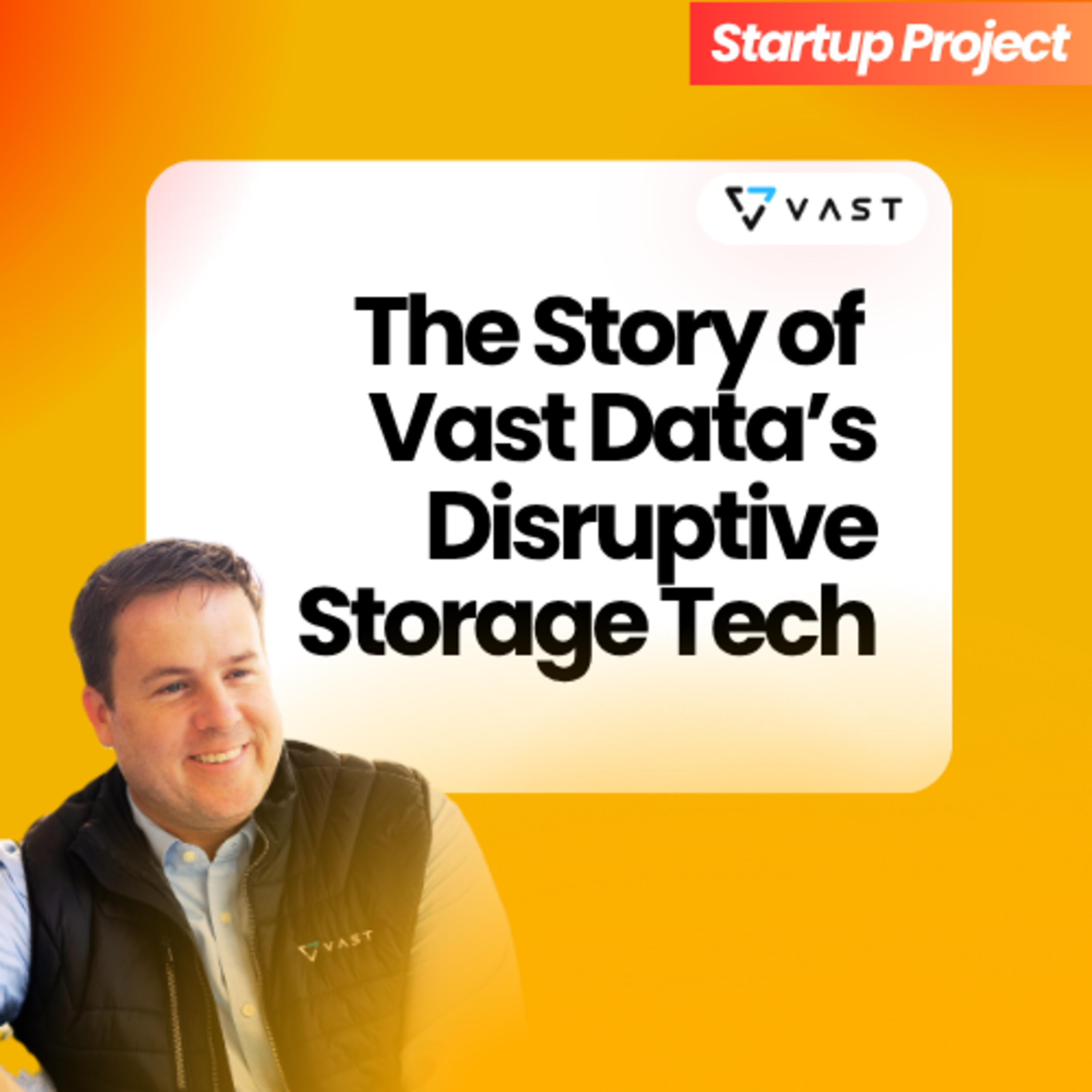
The Story of Vast Data’s Disruptive Storage Tech | Co-Founder Vast Data Jeff Denworth

In this episode, we explore how Vast Data is revolutionizing storage solutions to support the exponential growth in AI workloads. Jeff Denworth shares insights into their innovative architecture, market strategy, competitive differentiation, and how they’re shaping enterprise data management in the era of AI.Main topics:The origin and evolution of Vast Data’s innovative storage architecture since 2016How Vast’s solutions support large-scale AI and deep learning workloadsThe strategic focus on enterprise features, multi-tenancy, and integration with hyperscalersThe impact of data reduction and cost efficiency on global flash supplyNew opportunities unlocked by Vast’s platform for analytics, vector search, and long context inferenceBusiness model nuances for cloud and on-premise deploymentsVast’s profitability, market traction, and future growth prospectsTimestamps:00:00 - The AI super cycle and storage bottlenecks creating new opportunities02:20 - Understanding Vast Data's origin story and core architecture04:15 - How Google’s distributed systems influenced new storage innovations06:10 - Addressing scalability limitations of traditional storage systems08:00 - The shift from hard drives to flash and its market implications10:05 - Supporting AI workloads through scalable, enterprise-grade storage solutions12:00 - Customer sectors: life sciences, finance, and AI cloud providers14:15 - On-premise focus versus cloud deployment and hyperscaler strategies16:05 - Vast’s competitive differentiation: features, performance, and new data modalities18:15 - Integration with vector databases, analytics, and real-time AI inference20:30 - Business models: capacity-based, subscription, and partner collaborations22:50 - Addressing flash supply chain constraints and global market impact26:10 - The role of data reduction, federated data management, and long context storage30:50 - Unlocking enterprise data monetization and AI agent scalability34:15 - Impact of advanced storage on inference, context windows, and model efficiency36:50 - The current hardware procurement landscape and Vast’s software-led approach40:05 - Profitability metrics, growth, and the valuation of Vast Data42:25 - Final thoughts: the evolving data infrastructure landscape driving AI innovationResources & Links:Connect with Jeff Denworth:

May 1, 202636 min

Why AI Runs on Object Storage & How MinIO is Competing with AWS S3

In this episode, Garima Kapoor, co-founder and co-CEO of Min.io, shares insights into how storage infrastructure is evolving in response to AI, cloud, and enterprise needs. She offers a clear view of the market dynamics, innovative trends, and the strategic role of open-source technology in shaping the future.Key topics:The origins and motivation behind Min.io’s developmentHow data growth influences storage strategies and the shift toward hybrid and private cloudsThe impact of AI on storage infrastructure and workloadsCompetitive landscape with giants like AWS, Azure, GCP, and the rise of Neo CloudsThe importance of open standards for application portability and data gravityEvolving customer adoption: from open source developer community to enterprise salesThe role of AI in accelerating product development, coding, and organizational decision-makingHow AI’s rapid evolution is shifting the fundamentals of skills and fundamentals for engineersFuture market opportunities: exponential growth in storage needs driven by AI and IoTTimestamps:00:00 - Introduction to Garima Kapoor and Min.io00:31 - Motivation behind starting Min.io & market needs for object storage01:07 - The founding story and personal drivers for creating Min.io02:13 - Data growth drivers and the importance of data proximity over cloud location03:05 - Business landscape: cloud vs. on-premises and hybrid environments04:01 - Data migration challenges and promoting application portability06:10 - Early product-market fit through open source and developer community growth07:19 - Enterprise adoption journey from open source to cloud-native architecture08:17 - Customer acquisition strategies blending bottom-up developer growth and enterprise sales09:27 - Competing with Amazon, Microsoft, Google in the cloud storage space11:33 - Impact of AI on storage: demand, infrastructure evolution, and market timing12:51 - Min.io’s advantage in AI workloads due to cloud-native architecture13:21 - Penetration of AI in storage: training, inferencing, and data utilization15:01 - AI for enterprise applications: storage, models, and data lakes16:26 - Neo Clouds and their role in GPU-optimized storage architectures18:58 - The increasing demand for object storage driven by AI and data creation21:02 - The effect of AI coding tools on product development speed and engineering skills23:36 - Internal AI-driven solutions for operational efficiency24:44 - The role of AI in reducing reliance on SaaS tools and infrastructure security27:22 - Managing costs and building for the future in AI investment and storage29:01 - The opportunity cost of tokens and AI-driven productivity gains31:00 - Skills for early engineers in an AI-enabled future33:32 - Min.io’s next steps and market expansion plans34:36 - The paradigm shift: every business becoming AI and data-driven by 2026Resources & Links:Connect with Garima Kapoor:⁠Min.io Official Website⁠⁠Garima Kapoor - LinkedIn⁠⁠OpenAI⁠⁠NVIDIA GDC Announcements on Object Storage⁠⁠Nataraj's previous interview on startup infrastructure⁠⁠LinkedIn⁠⁠Twitter⁠

April 2, 202652 min

Autonomous AI Agents Are Changing How We Interact with the Web | Abhishek Das - Co-founder and Co-CEO of Yutori

Discover how Yutori is revolutionizing web interactions through autonomous AI agents designed for digital and web-based tasks. In this episode, Abhishek shares insights into building agentic AI, the technical challenges, and the evolving landscape of AI-powered automation.Main insights:Yutori's founders come from Meta’s AI division, bringing top-tier expertise in AI and ML.The motivation behind Yutori's product stems from a long-standing interest in productivity tools and autonomous agents.Scouts by Yutori are AI agents monitoring web for specific signals, reducing manual browsing and keeping users up-to-date.The architecture relies heavily on specialized subagents, optimizing costs and relevance in web navigation.Abhishek emphasizes the transition from reactive to proactive AI, enabling agents to oversee tasks without constant prompts.The importance of user-centric design is reflected in a simplified UI, API integrations, and customizable workflows.Cost-effective strategies, like subagent architecture, help balance performance with scalability.The web is shrinking in terms of contribution and content creation; autonomous agents could change the landscape by managing and synthesizing information.Future product directions include deeper integrations, multi-task workflows, and enhanced proactivity in AI agents.Abhishek predicts a shift towards outcome-based pricing for AI tools, aligning value with costs.The conversation also explores implications for robotics, data generation, and the potential disruption of traditional content ecosystems.Timestamps:00:00 - Introduction to Yutori and its core product Scout02:01 - Motivation for building autonomous AI agents03:25 - The technical evolution from simulation to physical robots04:44 - Origins of the Scout idea and focus on productivity tools07:11 - The vision for web automation and agent-driven interactions09:38 - Push vs Pull content systems and control over web consumption10:38 - Demo of Scout setup and operation14:00 - Technology foundation: web crawling, in-house navigation, and orchestration16:28 - Data indexing and real-time monitoring approaches18:20 - Subagents' distinct roles: navigator, researcher, social media scout20:37 - Reporting, alerting, and workflows with Scout outputs22:07 - Practical examples: monitoring market trends, personal tasks, and competitive intelligence23:42 - Extending Scout functionality to actions and integrations24:24 - The future vision: integrating Scout results into broader workflows25:53 - Developer flexibility with subagents and API controls27:03 - Cost considerations and architecture efficiencies28:50 - The move towards proactive, autonomous agent behaviors30:33 - Challenges of consumer adoption and simplifying interfaces32:23 - Incentives for content creation and web ecosystem evolution37:33 - Building trust and reliability in agent systems39:18 - The web’s evolution and the rise of self-hosted content41:24 - Impact of agent-based systems on content quality and SEO43:32 - Measuring product-market fit and collecting user feedback44:51 - Strategies for user acquisition and word-of-mouth growth45:35 - Meta’s AI investments and industry trends47:04 - Business models: subscription vs usage-based pricing49:55 - Robotics advancements and synthetic data generation52:22 - Final thoughts and opportunities for developersResources & Links:Yutori API → https://yutori.com/apiAbhishek Das → https://abhishekdas.com/Nataraj Sindam → https://www.linkedin.com/in/natarajsindam/Startup Project Episodes → https://thestartupproject.io/episodes

March 20, 202639 min

How Yoodli is Replacing Boring Sales Training with AI Roleplays | Varun Puri, Co-Founder & CEO of Yoodli

In this episode, Varun, co-founder of Yoodli, shares insights into how his startup leverages AI to enhance communication skills, from public speaking to enterprise sales training. Tune in to understand how AI can empower humans rather than replace them, and the strategic evolution from consumer to enterprise products.Key Topics:The origin story of Yoodli and its focus on helping people find their voiceTransition from B2C to B2B: What was learned along the wayThe role of storytelling as a meta-skill in a world dominated by AIUsing AI to make communication more authentic and humanHow large organizations like Google and Snowflake are integrating YoodliThe evolution of AI capabilities, from role plays to experiential learningBuilding modular, customizable AI products that adapt to customer needsThe importance of deep integrations and the challenge of SaaS vendor proliferationReal-world growth stats: 900% revenue increase and millions of usersInsights into leadership, authenticity on social media, and the value of vulnerabilityPersonal stories from Sergey Brin’s projects and leadership lessons learnedTimestamps: 00:00 – Introduction to Varun and Yoodli’s journey 02:01 – Early days of Yoodli: Founding thesis and initial challenges 04:19 – Key lessons about public speaking skills 05:45 – The importance of recording and reviewing oneself 06:25 – Describing Yoodli as “Duolingo for public speaking” 07:25 – The role of storytelling in high-performance communication 08:21 – Building AI to enhance, not replace, human authenticity 09:07 – Judgment as a differentiator in AI-enabled work 10:01 – How Yoodli expanded into enterprise with Google & others 11:24 – Social media as a branding tool for founders 12:38 – The impact of authenticity on LinkedIn and lead generation 14:09 – The Google GTM training case study: How it started 15:07 – Product features for enterprise sales training 16:05 – Impact on sales onboarding and role play automation 17:32 – The future of experiential learning and AI role plays 20:17 – The broader vision for AI in education and training 21:26 – Impressive growth stats and customer insights 22:01 – The technological foundation: Modular AI architectures 23:52 – The influence of LLM improvements on product features 24:46 – The commoditization of AI role plays and experiential learning 25:12 – Building deep, customizable, scalable AI solutions 26:36 – The importance of scale and deep integrations 30:03 – Product differentiation through vertical focus and deep specialization 33:07 – Market challenges: Demand, consolidation, and customer expectations 34:42 – How to find and connect with Varun 35:30 – Sergey Brin’s projects, leadership lessons, and human insights 37:36 – Overcoming imposter syndrome: Everyone’s learning curve39:01 – Final reflections and looking aheadResources & Links:Varun on LinkedinNataraj on LinkedinTry Yoodli

March 8, 202642 min

Inside the Battle for AI Cloud Dominance — Why Cloud Builders like TensorWave are Rethinking NVIDIA’s Monopoly | Jeff Tatarchuk, Co-Founder of TensorWave

Rethinking AI Compute Infrastructure: The TensorWave ApproachIn this episode, Jeff Tatarchuk, co-founder of TensorWave, shares how his deep industry experience and innovative mindset are transforming AI compute infrastructure. We explore how building specialized data centers, focusing on AMD GPUs, and creating flexible ecosystems are shaping the future of scalable AI.In this episode:The evolution of cloud companies and the rise of Neo clouds focused on AI computeTensorWave’s unique strategy of deploying AMD GPUs in custom data centersLessons learned from FPGA cloud business and transitioning into GPU infrastructureThe technical challenges and solutions in scaling data centers quickly amidst power and supply chain constraintsThe importance of software ecosystems, interoperability, and supporting AMD’s software stackHow TensorWave differentiates itself from purely financial arbitrage models and pure Nvidia-centric cloudsAMD’s advantages in memory capacity, chiplet architecture, and software supportThe technical intricacies of CUDA versus ROCm, and efforts to build an open ecosystemFuture vision: democratized, reliable, and flexible AI compute options for enterprise and labsTimestamps:00:00 – Introduction to TensorWave and the AI compute landscape02:30 – The rise of Neo clouds and innovation waves in cloud infrastructure06:00 – How TensorWave’s FPGA cloud background shaped its GPU strategy10:00 – Challenges in deploying large data centers: power, supply chain, and permitting14:00 – Building and scaling AMD GPU data centers quickly and efficiently19:00 – Software ecosystems: the CUDA moat and TensorWave’s ‘Beyond CUDA’ summit23:00 – Market differentiation: technical and operational challenges in the Neo cloud space27:00 – Supporting enterprise fine tuning and large-scale training demands32:00 – AMD’s technical advantages: VRAM, chiplet architecture, and software support36:00 – Building an open, heterogeneous AI ecosystem beyond CUDA40:00 – What success looks like: a resilient, accessible AI compute futureResources & Links:⁠TensorWave⁠⁠Beyond CUDA Summit⁠⁠Scalar LM by Greg De Almos⁠⁠AMD MI300X Data Center Chip⁠⁠Nvidia H100⁠⁠RoCM Software Stack⁠⁠LinkedIn⁠⁠Twitter⁠This conversation offers a strategic look at how focused infrastructure development, software ecosystem support, and hardware differentiation are critical in shaping the future of accessible, scalable AI compute. Whether you're building data centers, developing AI hardware, or just interested in industry shifts, this episode provides valuable insights into how companies like TensorWave are reshaping the landscape.

February 20, 202656 min

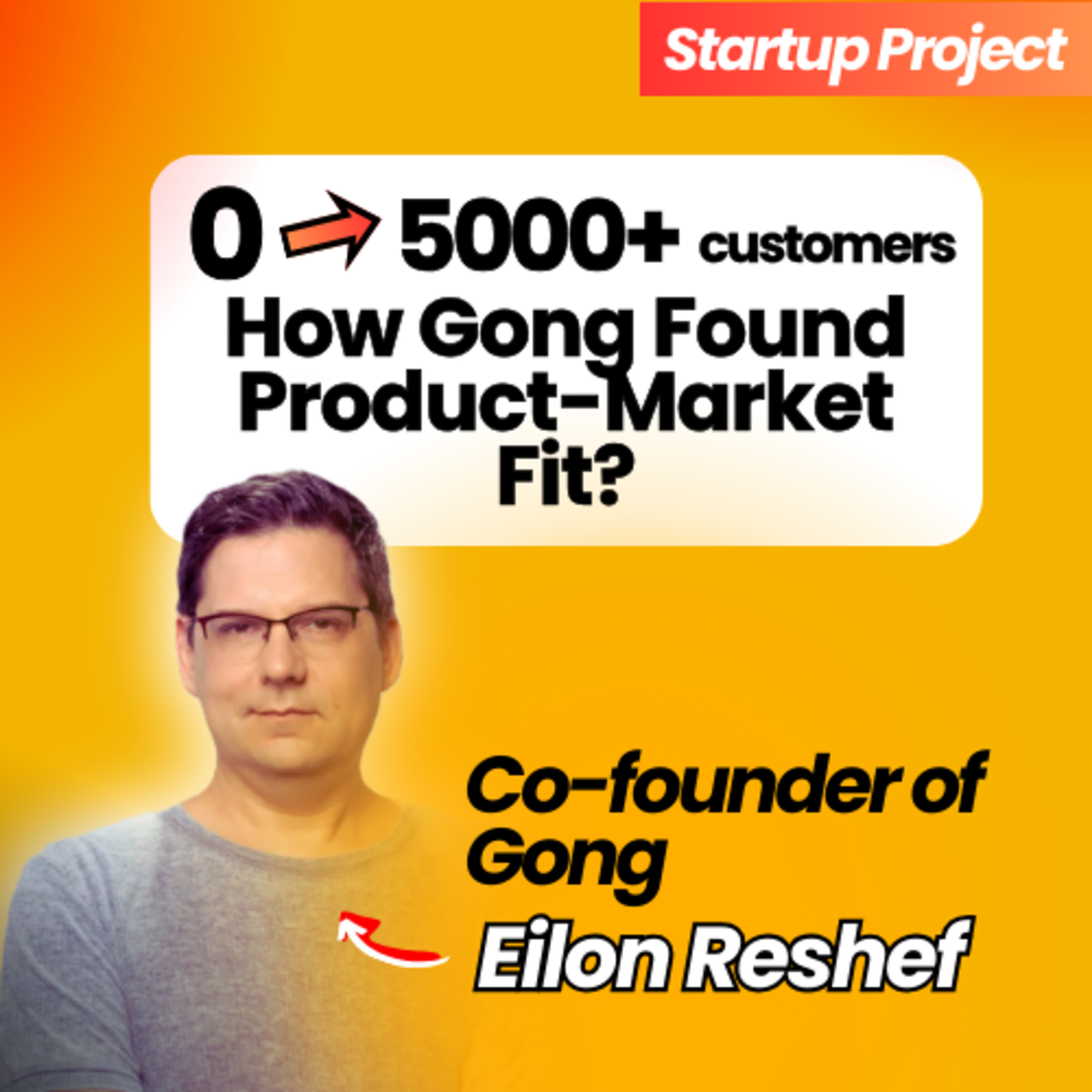
Building the AI Operating System for Revenue: How Gong scales to 5,000+ customers | Eilon Reshef (CPO, Gong)

How Gong Built a $7B AI Category: From "Conversation Intelligence" to the Revenue Operating SystemMost sales teams fly blind. They rely on "gut feel" and "art" rather than data and science. Eilon Reshef (Co-founder & CPO of Gong) realized this in 2015 and built a platform that captures the reality of every customer interaction to drive predictable growth.In this episode of Startup Project, Eilon breaks down the evolution of Gong, how they achieved 57% higher win rates for companies like PayPal and DocuSign, and why the "Revenue Graph" is the next frontier of enterprise AI.If you are a founder, a product leader, or a sales professional looking to understand how AI is actually transforming the enterprise, this deep dive is for you.What you’ll learn in this episode:The Genesis of Gong: Why Eilon moved from a successful exit at WebCollage to solving the "black box" of sales conversations.The "Science" of Sales: How to move away from subjective CRM updates to hard data captured from video, email, and phone calls.The Revenue Graph: Why Gong’s proprietary data model is more valuable than a generic LLM.Scaling to 5,000+ Customers: The tactical steps Gong took to achieve product-market fit in a crowded SaaS landscape.The Future of AI Agents: Why "Vibe Coding" and prosumer AI are just the beginning, and how the enterprise shift is happening now.Timestamps:0:00 - Intro: Meeting Eilon Reshef2:15 - The "Aha!" moment that led to Gong10:45 - Moving from transcription to "Revenue Intelligence"18:30 - How Gong achieves 57% higher win rates for customers25:50 - Building a proprietary AI layer on top of LLMs34:10 - The "Revenue Graph" explained42:15 - Why most enterprise AI implementations fail50:00 - Advice for founders building in the AI era54:14 - Closing thoughtsConnect with Eilon & Gong:Website: https://www.gong.io/Eilon’s LinkedIn: https://www.linkedin.com/in/eilonreshef#Gong #AI #SalesTech #StartupGrowth #Entrepreneurship #RevenueIntelligence #SaaS #ProductMarketFit #EilonReshef #StartupProject

February 1, 202654 min

How Klaviyo Built a $7B+ Public Company With Just $15M Raised | Andrew Bialecki, Co-founder and CEO of Klaviyo

In this episode of Startup Project, host Nataraj sits down with Andrew Bialecki, Co-founder and CEO of Klaviyo, to unpack one of the most capital-efficient growth stories in modern SaaS history.Klaviyo grew into a $7B+ public company while raising just $15M in total funding—a sharp contrast to today’s venture-backed growth playbooks. Klaviyo now powers the marketing and growth of thousands of ecommerce brands worldwide, using data, automation, and AI to help businesses build deeper relationships with their customers.This conversation goes deep into the real work behind that outcome: the long road to product-market fit, the tradeoffs the team made early on, and why Klaviyo intentionally avoided blitzscaling in favor of building a durable, data-driven platform.Andrew shares candid insights into Klaviyo’s early years, when growth was slow, uncertainty was high, and the company looked nothing like a future public-market success story. We discuss why finding product-market fit took longer than expected, how early customer feedback shaped the product, and why patience turned out to be one of Klaviyo’s biggest competitive advantages.Rather than chasing short-term growth metrics, Klaviyo focused on deeply understanding ecommerce customers and building infrastructure that could scale for the long term. That discipline ultimately shaped the company’s culture, product roadmap, and go-to-market strategy.A major theme of the episode is how AI and customer data are reshaping the future of ecommerce marketing.Andrew explains why data—not features—is the real moat in modern marketing platforms, and how Klaviyo’s architecture allowed the company to benefit from AI as the technology matured. We explore how AI is changing personalization, segmentation, and automation for ecommerce brands, and why many AI marketing tools miss the point by focusing on surface-level automation instead of foundational data infrastructure.This is a thoughtful, grounded discussion about where AI actually creates leverage in marketing—and where hype often distracts teams from doing the hard work.At a time when many startups raise hundreds of millions of dollars to fuel growth, Klaviyo’s story stands out as a case study in capital efficiency.Andrew walks through why the company chose to raise so little capital, how constraints shaped better decision-making, and what founders today can learn from building with discipline. We also discuss the tradeoffs of avoiding aggressive fundraising, the pressure that comes with slower growth, and why capital efficiency can be a long-term strategic advantage rather than a limitation.This episode is especially valuable for:Startup founders building SaaS or ecommerce companiesMarketers and ecommerce leaders navigating AI-driven changeProduct and growth leaders thinking about data as a moatInvestors and operators interested in capital-efficient businessesAnyone curious about how enduring companies are actually builtHow Klaviyo became a $7B+ public company with only $15M raisedThe long path to product-market fitWhy capital efficiency beat hypergrowthBuilding an AI-powered marketing platform for ecommerceTurning customer data into a durable competitive moatHow AI is reshaping ecommerce and digital marketingLessons for founders building long-term SaaS businessesNataraj is the host of Startup Project, an investor and product leader who explores how real companies are built—from early product decisions to scaling with discipline. Startup Project features in-depth conversations with founders who’ve achieved genuine product-market fit, focusing on the thinking, tradeoffs, and execution behind enduring businesses.🌐 Startup Project: https://startupproject.substack.com/🔗 Klaviyo: https://www.klaviyo.com🔗 Follow Nataraj (Host): https://www.linkedin.com/in/natarajsindam/

January 26, 202649 min

Enterprise procurement: AI frameworks for supplier data and visibility

In this episode of Startup Project, host Nataraj speaks with Ilya Levtov, Founder and CEO of CraftCo, an AI-powered platform designed to help organizations better understand and organize supplier information.The conversation focuses on how enterprises and public-sector organizations manage large supplier networks, bring together data from multiple systems, and use AI-driven tools to improve visibility and operational efficiency. Ilya shares insights from building an enterprise software company, working with complex customers, and applying data and automation to support better decision-making across procurement and supply chain teams.This episode is intended for listeners interested in enterprise technology, AI platforms, procurement software, and the practical challenges of building and scaling data-driven companies.Topics discussedAI-powered supplier intelligenceSupply chain data organization and visibilityProcurement software and enterprise workflowsBuilding scalable enterprise platformsLessons from founding and growing a technology company🎙 Guest: Ilya Levtov, Founder & CEO, CraftCo🎧 Host: Nataraj📌 Podcast: Startup ProjectFollow Startup Project for more conversations with founders building modern enterprise and AI-driven technology companies.

January 16, 20261 hr 3 min

Inside Story of Building the World’s Largest AI Inference Chip | Cerebras CEO & Co-Founder Andrew Feldman

Discover how Cerebras is challenging NVIDIA with a fundamentally different approach to AI hardware and large-scale inference.In this episode of Startup Project, Nataraj sits down with Andrew Feldman, co-founder and CEO of Cerebras Systems, to discuss how the company built a wafer-scale AI chip from first principles. Andrew shares the origin story of Cerebras, why they chose to rethink chip architecture entirely, and how system-level design decisions unlock new performance for modern AI workloads.The conversation explores:Why inference is becoming the dominant cost and performance bottleneck in AIHow Cerebras’ wafer-scale architecture overcomes GPU memory and communication limitsWhat it takes to compete with incumbents like NVIDIA and AMD as a new chip companyThe tradeoffs between training and inference at scaleCerebras’ product strategy across systems, cloud offerings, and enterprise deploymentsThis episode is a deep dive into AI infrastructure, semiconductor architecture, and system-level design, and is especially relevant for builders, engineers, and leaders thinking about the future of AI compute.🎧 Listen to the full episode of Startup Project on YouTube or your favorite podcast platform.

January 4, 202638 min

How AI Is Unlocking Materials We’ve Never Been Able to Build | Radical AI

Discover how Radical AI is revolutionizing material science using self-driving labs.About the episode:Nataraj hosts Joseph Krause, CEO of Radical AI, to explore how they're speeding up material R&D by combining AI, engineering, and robotics. Joseph shares his journey from material science to venture capital, highlighting Radical AI's mission to create a self-driving lab that autonomously designs tests and discovers new materials. The episode dives into Radical AI's materials flywheel concept, their open-source engine, and how they're attracting funding to drive innovation in material science. Discover how Radical AI is set to revolutionize industries from aerospace to energy with cutting-edge material discovery.What you’ll learnUnderstand the traditional challenges hindering the commercialization of new materials and how Radical AI is overcoming them.Discover the materials flywheel concept and how it accelerates the speed of material discovery.Learn about the types of customers who are seeking new materials and the diverse applications across various industries.Explore the role of AI in simulating and experimenting with materials, and the importance of experimental validation.Understand the types of AI models Radical AI uses, including machine learning, generative AI, and computer vision.Identify Radical AI’s hiring strategy to build an interdisciplinary team across machine learning, software engineering, robotics, and material science.Comprehend the importance of experimental data in materials science and how self-driving labs capture and utilize this data.Learn about Radical AI’s stepwise approach to focus on customer-driven problems and enabling technologies.About the Guest and Host:Guest Name: Joseph Krause, Co-founder and CEO of Radical AI, aiming to revolutionize material science with AI, engineering, and robotics.Connect with Guest: → LinkedIn: https://www.linkedin.com/in/josephfkrause→ Website: https://www.radical-ai.com/Nataraj: Host of the Startup Project podcast, Senior PM at Azure & Investor. → LinkedIn: https://www.linkedin.com/in/natarajsindam/  → Substack: ⁠https://startupproject.substack.com/⁠In this episode, we cover   (00:01) Introduction to Radical AI and Joseph Krause(01:15) Joseph’s diverse background and how it led to Radical AI(05:01) Traditional ways preventing commercialization of new materials (09:06) Radical AI’s product: novel materials for aerospace, defense, and energy(11:36) Customers seeking new materials and the advantage of speed in the materials flywheel(13:39) Challenges in digital research and the importance of physical experimentation(16:18) How Radical AI picks directions for new material discovery(23:48) The AI part of Radical AI: hiring and AI models used(27:13) Predicting crystal structures with AI(31:57) Why New York is the best place for Radical AI(33:37) Joseph’s best AI use case for personal research(37:35) Material research happening at AppleDon’t forget to subscribe and leave us a review/comment on YouTube Apple Spotify or wherever you listen to podcasts.#RadicalAI #AI #MaterialScience #Robotics #DeepTech #Innovation #VentureCapital #Aerospace #Defense #Energy #NewMaterials #SelfDrivingLabs #MachineLearning #GenerativeAI #OpenSource #Podcast #Startup #Technology #Research #NVIDIA

Is this your show?

Claim this listing to keep it up to date, reach guests who want to pitch you, and manage bookings with Guestify.

Claim this listing

More Business podcasts