Find partners
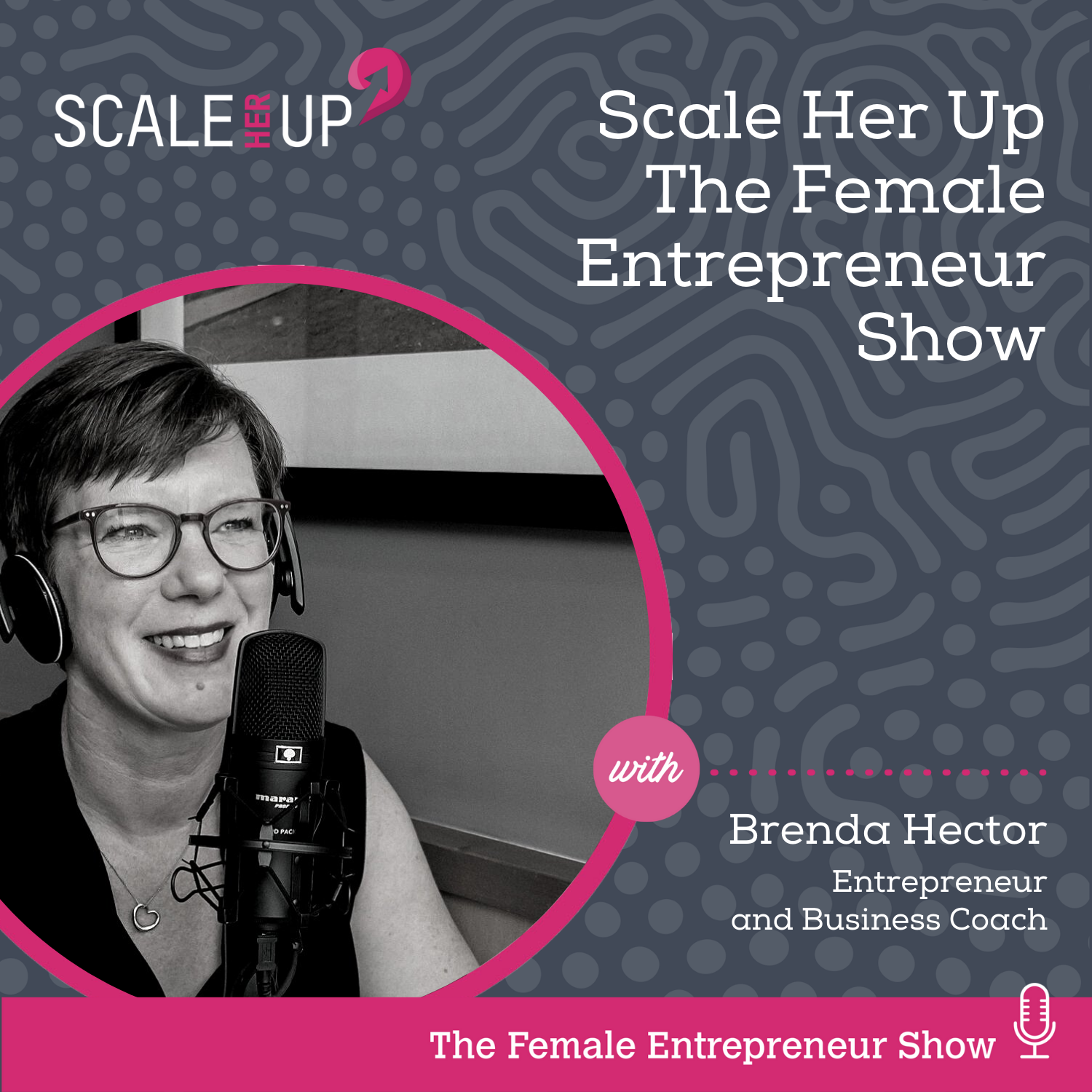
Scale Her Up: Female business stories and expert tips for business growth and success

Scale Her Up: Female business stories and expert tips for business growth and success

Hosted by Brenda Hector

Episodes

198

Latest episode

Nov 2026

Language

EN

About the show

If you are a female business owner, self-employed freelancer, or girl boss who wants to build a successful business i.e. work less hours, make more money, and get better results from your staff, then this is the podcast for you. Hosted by Dr Brenda Hector MBA from ActionCOACH UK, this podcast provides relatable and accessible business advice and inspiration from successful businesswomen who have been there and done it before you. This podcast is where you can • hear female business stories • share business success • learn how to overcome business challenges • get advice for businesswomen aspiring to success • find out what needs to change • discover how we can bring about that business revolution Only 1 in 3 UK entrepreneurs are female. UK men are 5 times more likely than women to build a business of over £1million turnover If UK women matched UK men in starting and scaling businesses, it would add £250 billion to the UK economy (Alison Rose, The Rose Review of Female Entrepreneurship 2018) As a woman in business, a business coach, and a business growth expert, Brenda’s mission is to help business owners grow their companies, achieve their goals and live the lifestyle of their dreams. She's the help you need to grow your business.

Listen to episodes

60 recent
November 13, 202628 min

She Was One of Eight Women in a 1990s Architecture Degree. Now She's Helped Deliver Over £1 Billion in Public Projects: Angeline Robertson of hub West Scotland

In this episode of Scale Her Up, I'm joined by Angeline Robertson — Partnerships Director at hub West Scotland, a public-private joint venture that commissions, designs, and delivers public sector construction projects across the Greater Glasgow area. Angeline qualified as an architect in the early 1990s, when she was one of only eight women on her course. From there she moved into project management, then worked on construction sites — hard hat and all — before joining hub West Scotland as one of its first three employees 14 years ago. The business has since delivered over £1 billion in public projects: schools, health centres, community centres, and more. This is an episode for anyone working in a male-dominated field, building a career without a roadmap, and figuring out what confidence actually looks like when you grow into it over time. We cover: What hub West Scotland is and how the hub model changed public sector construction procurement Working in construction as a woman in the 1990s — and what's changed (and what hasn't) The rooftop story: an older tradesman, a building site in Edinburgh, and the attitude that just made her laugh What Angeline has learned about herself: good under pressure, led by relationships, motivated by challenge Why she always asks her boss "what have I not done well?" at her performance review The relationships built over 14 years in construction — and what they meant when she lost her husband Getting more women into trades — and why the answer starts with what we tell young girls Advice to her 18-year-old self: more confidence, sooner Quote of the episode: "I'm really motivated by a challenge. Yes, it's pressure, but it keeps me alive." — Angeline Robertson Playlist song: "Titanium" — David Guetta ft. Sia

November 10, 202636 min

She Was 27 and Terrified of Getting It Wrong. 16 Years Later, She's Built a Salon She's Proud Of: Alex Thaddeus Hairdressing

In this episode of Scale HER Up, I'm joined by Alex Thaddeus — owner of Alex Thaddeus Hairdressing, a salon she started in 2010 at the age of 27 because she wanted to build something that felt safe, that felt good, and that didn't replicate the environments she'd heard about. Alex has five stylists, a 20-year-old trainee she's bringing up through the business, and a team she describes — without irony — as genuinely having each other's backs. She's been building it for 16 years. She's also been thinking, the whole time, about what it means to invest in people, to train them up, to watch some of them leave, and to be proud of them anyway. This conversation covers the culture and the craft, the juggle and the energy management, what it means to protect a sliver of yourself when you're in a service business that takes everything you've got, and why she thinks "be stubborn" is some of the best advice she can give to anyone thinking about starting a business. We cover: Why Alex chose the business ownership model over going self-employed — and what she was afraid of at 27 The team culture she's intentionally built: a safe space to learn, grow, and genuinely have fun Training staff who then leave — and why she mostly thinks it's worth it anyway The service industry and burnout: why the person delivering the service needs fuelling too Moving to bigger premises with an 18-month-old, entering competitions, learning Afro hair The "sliver of yourself" — protecting a small piece of daily life that belongs to no one else How she stopped being the parent permanently on a device and started reading books instead Why being stubborn, fight-not-flight, is the thing that's kept her going through every hard moment Bon Jovi at Murrayfield, family festivals, and a daughter with a dirt bike Quote of the episode: "None of us would be where we are if somebody didn't believe in us somewhere along the line." — Alex Thaddeus

November 6, 202623 min

She Was Appointed Director the Week She Went on Maternity Leave — and She Didn't Turn It Down: Mairi Laverty of Collective Architecture

In this episode of Scale HER Up, I'm joined by Mairi Laverty — director of Collective Architecture, an employee-owned architectural practice with studios in Glasgow, Edinburgh, and Dundee. Collective Architecture is one of Scotland's earlier examples of an employee-owned practice. Founded around 20 years ago as Chris Stewart Architects, the business transitioned to employee ownership not as a succession strategy, but as a philosophical one: to give every colleague an equal voice in the direction of the company. The shares are held in a trust with no majority shareholder. The structure has always been flatter than a typical firm. Mairi joined as a graduate student in 2009, at the height of the recession. She's been there for nearly 17 years. Around four years ago, when two of the founding directors stepped aside and new directors were appointed, she became one of them — almost in the same week she started maternity leave. She went back after a year and took up the role. We cover: What employee ownership in an architecture practice actually looks like — the flat structure, the open pay scale, the trust model The pressures facing the architectural profession: fees not keeping pace with responsibility, legislation, construction costs, and constant change How Mairi grew into leadership as a "quiet leader" — building skills gradually rather than pursuing a title Why becoming a director going into maternity leave is exactly the kind of thing Collective actively supports The juggle: having half the time doesn't mean getting half the work done Jude Barber — the mentor and fellow director who first saw what Mairi could bring, and whose approach to lifting others up has shaped how Mairi thinks about leadership Women in Architecture and the mentoring opportunities opening up across the profession Advice to her 18-year-old self: stop worrying. Try and do what you can do well. Quote of the episode: "Stop worrying about what you can't do anyway. Just try and do what you can do well." — Mairi Laverty

October 30, 202625 min

Made Redundant in the Financial Crash, She Started Her Own Business — and Merged It With Her Dad's Ten Years Later: Debbie Rennie of Instinct Marketing and PR

In this episode of Scale HER Up, I'm joined by Debbie Rennie — owner and managing director of Instinct Marketing and PR, a marketing consultancy based in the northeast of Scotland. Debbie's background is in-house marketing, but her route into it wasn't straightforward: she started in finance, retrained in marketing part-time, worked at NCR in Dundee doing global product marketing, then in the charity sector, and then in a recruitment firm that made her redundant during the 2008 financial crash. At that point, newly married with no children, she decided to go it alone. At the same time — and separately — her dad was running his own small marketing business he'd set up in 2002. For several years they were effectively friendly competitors. Then, in 2015, it stopped making sense to stay apart. They merged their businesses. And after COVID changed the shape of the industry and her dad started thinking about what came next, Debbie rebranded to Instinct in 2021 and moved the business fully forward under her own leadership. Today Instinct is a small, deliberately bespoke team — three people internally plus freelancers and a contractor in Australia — working with founder-led SMEs and some corporate organisations across a wide range of sectors. They're embedded partners, not transactional agencies. Debbie is particular about that distinction. We cover: Why Instinct calls itself a consultancy rather than an agency — and what that means in practice The full arc: finance, marketing, employed, redundant, self-employed, merged, rebranded The oil crash, COVID, cash flow, and what mental toughness actually looks like in the thick of it Sitting in a meeting breastfeeding a two-month-old while having a serious conversation about the business The COVID idea Debbie had to gift unused service time to charities — and what actually happened Why she works with founder-led SMEs and what the cross-pollination between sectors brings What she'd do differently: believe in herself more, ask for help earlier, and stop undercharging Being a flexible employer — and why that carries through to how she runs the team The husband who doesn't always understand the business but has total belief in her anyway Quote of the episode: "Resilience is absolute key. In business, the mental toughness of that whole journey is the most important piece." — Debbie Rennie Playlist songs: "Good To Be Alive" — Pete McCredie "In The Water" — Pete McCredie

October 27, 202633 min

She Helped Fix the Edinburgh Tram Project, Then Built a £3.2M Consultancy From Scratch at the Start of COVID: Cath Leech of Anturas Consulting

In this episode of Scale HER Up, I'm joined by Cath Leech — managing director of Anturas Consulting Limited, an Edinburgh-based infrastructure consultancy she co-founded with her husband Rob and business partner Sheena. Anturas supports clients delivering major infrastructure projects — predominantly mass rapid transit, rail, and light rail — providing strategic advice, governance, and the kind of efficient, collaborative delivery structure that gets complex projects over the line on time and on budget. One of their most significant commissions has been the Edinburgh Tram Project, where Cath's team has been involved since the first phase was being salvaged after its troubled start, right through to the delivery of the second phase through COVID. The business was formally scaled up at the start of 2020. It now has 23 people and is turning over around £3.2 million. That's not despite COVID — it's partly because of it. When projects had to go remote, Anturas could suddenly draw from a national talent pool and bring in clients they couldn't have reached before. Cath is a chartered civil engineer who spent years working across contractors, design consultancies, and client-side organisations before founding the business. She became managing director not through a sophisticated recruitment process — she's the first to say so — but because her business partners recognised she was the best person to lead the growth while they stayed in their technical lanes. We cover: What Anturas does: the "cog between organisations" that gets major infrastructure projects to communicate, collaborate, and deliver The Edinburgh Tram Project: walking into something that hadn't gone well, and helping deliver something Edinburgh now couldn't do without How COVID became an unexpected enabler — and what it means to build back toward face-to-face The forming, storming, norming, performing journey of three co-founders — and why it took five years to really get there What a civil engineer has to unlearn to become an effective managing director Why asking for help is a sign of efficiency, not weakness The BHAG she never let herself have at 18 — and why she'd do it differently now Women in STEM and the broader skills crisis facing infrastructure Quote of the episode: "You don't have to be a certain type to run a business. If you're passionate about something, running your own business might be the best way to fully recognise that passion and dream." — Cath Leech Playlist song: "Small Town Boy" — Bronski Beat

October 23, 202630 min

She Said She Wouldn't Eat in the Cafe. Her Husband Said "You Run It Then." She Had No Business Training. Here's What Happened: Jane Cox of Glendoick Garden Centre

In this episode of Scale HER Up, I'm joined by Jane Cox — co-owner of Glendoick Garden Centre, the third-generation family business on the Perth to Dundee road that's been running for 73 years. Jane didn't grow up in the business. She came up from London, where she'd worked in publishing, and married into it. She also came with opinions. Specifically: she wouldn't eat in the cafe. Her husband Ken's response, as she tells it, was fairly direct — "You effing run it then." So she did. With no culinary training, no business training, and a chef who turned out not to know how to cook, she set about transforming what the garden centre served and how it operated. That was 27 years ago. Today Glendoick Garden Centre is a third plants, a third cafe, and a third non-plant retail — bookshop, clothing, home, gift — built up gradually from Jane's ideas. She's the ideas person, she's always been the ideas person, and she freely admits that some of those ideas were mad. She never got the woodland ice rink. But she got most of the rest. We cover: What Glendoick does: rhododendron and azalea specialists, nursery, mail order, and a garden centre that's almost a mini department store The cafe transformation: fresh food, proper coffee, cooking everything from scratch — and dealing with the chef who hadn't known how to cook Learning HR, delegation, margins, and Excel sheets on the fly — while chopping carrots The family business dynamic: in-laws who mostly said no, a husband who gave her the platform, and what that taught her about honing an idea Why bringing in a consultant changed the business — and what it means to let go of your ego Hiring mothers returning to work after children, and why it's been a game changer for loyalty and retention The COVID story: over a million plants, 5.5 hours of watering a day, orders across 200 pieces of paper, and a kitchen table covered in postcodes Post-COVID: the joy of people fighting over plants like a January sale Where she is now at 64: a strategic role, and honest thoughts about the future of physical retail Why she thinks plants may be the one thing AI can't touch Quote of the episode: "Give them the opportunity to flower, because they will." — Jane Cox Playlist songs: "I Will Survive" — Gloria Gaynor

October 20, 202632 min

She Studied Fashion. Her Parents Founded an IT Business in 1992. Now She's CEO and Growing the Team: Pamela Malpas of One Office Technologies

In this episode of Scale HER Up, I'm joined by Pamela Malpas — CEO of One Office Technologies, a second-generation family IT business that's been running since 1992. Pamela didn't exactly plan to end up here. She studied fashion at Heriot-Watt in the Borders, went into visual merchandising in Aberdeen, and was working in marketing in Edinburgh when her dad suggested she come in and try it. She walked through the door intending to do marketing, and never did a day of it. She's a self-described "born fixer" — and once she got into the business, the operations side pulled her in and never let go. One Office Technologies is an IT partner for small and medium-sized businesses: the outsourced internal IT department that builds strategies, plans, budgets, and implements the technology that keeps businesses running. Pamela runs it alongside her brother, who came up through the business as a photocopier engineer and now handles account management and sales. Their parents — who founded the company — have now fully stepped away. And Pamela has discovered that helping a founding generation retire is its own kind of project management. We cover: What One Office Technologies actually does — and why getting the IT fundamentals right matters more than chasing the latest tech trend The danger of reacting too quickly to new technology: cloud, AI, and building blocks that fall The transition from reactive support to proactive, planned IT strategy What Pamela learned walking into the family business "to do marketing" and ending up running operations How she and her brother navigated taking over — and helped their parents learn how to retire The responsibility of inheriting a business someone else built from scratch Women, risk aversion, perfectionism, and why done really is better than perfect A walk in the sunshine that ended in a drenching — and everything it says about keeping your blinkers on The coach, the pod of 10, and the wider support network that keeps her going Why opportunities don't always present themselves the way you'd expect — and how to stay open to them Quote of the episode: "Don't make decisions for fear. Because you're scared of something, don't avoid it — head into it. Get comfortable with the feeling." — Pamela Malpas

October 16, 202639 min

She Moved to Scotland at 18 with No Plan, Applied for the Wrong Job, and Ended Up Running the Region — Sarah Medcraf, Moray Chamber of Commerce

Sarah Medcraf moved to Moray at 18 because her boyfriend was in the RAF and she thought, "if it doesn't work, I'll just move back to Yorkshire." That was 2009. Today she's the CEO of Moray Chamber of Commerce, a director of Scottish Chambers of Commerce, and one of the most quietly compelling voices on what it actually takes to lead a business, a team, and a region through everything from a global pandemic to a wildfire season. She didn't take a straight path. She applied for a marketing role she wasn't qualified for, got turned down, and was offered a different job on the same phone call. She spent the first four or five years digging in and proving why she was there. It wasn't until she came back from maternity leave in 2018 that everything clicked — she finally knew what the region needed, what the chamber was supposed to be, and how to get there. In this conversation, Sarah talks about imposter syndrome in a way you won't have heard before — including the uncomfortable truth that it gets harder, not easier, as you get older and learn how much you don't know. She talks about the importance of knowing when to sit in the mud with someone, and when to get the whiteboard out. And she shares two ideas from this episode that I guarantee you'll be using by next week. The pizza boardroom. The I love me folder. You need both. Moving to a new region at 18 with a wing and a prayer — and what happened next The job rejection that led to the right job, on the same phone call Why the chamber is nothing like the "stuffy old man's club" people assume it is Imposter syndrome gets harder as you get older — here's why, and what to do about it "Do you want comfort or solutions?" — the one question that changes every difficult conversation What the first week of COVID looked like from inside the chamber: 78 phone calls, zero answers Emotional contagion: why Sarah's mood sets the tone for her whole team every morning The pizza boardroom — how to run a boardroom without forming one The I love me folder — the simplest, most effective thing you'll do this week Why women focus on the one negative instead of the 99 positives — and how to stop Quote of the episode: "Do you want comfort, or do you want solutions? Tell me what you need, and we'll deliver that." — Sarah Medcraf Playlist song: This Girl Is On Fire — Alicia Keys

October 13, 202633 min

From Library Cards to 60 Staff: The Accidental Entrepreneur Who Built a Publishing Institution — Lesley Whyte of Bibliographic Data Services

Lesley Whyte didn't set out to be an entrepreneur. She was studious, academic, and fully expected a career inside universities. What she didn't expect was that a job in Dumfries, a chance meeting with an IT-minded colleague named Eric, and a radical idea about how libraries could access information would lead her to co-found a business that now employs 60 people and underpins how libraries and publishers across the UK work every day. Bibliographic Data Services — BDS — provides metadata for books, music, film, and computer games to libraries, retailers, and e-tailers. It's a niche that didn't really exist when Lesley started out in 1987, and a business model she and Eric had to essentially invent. When they launched in late 1994, the internet was barely a word most people had heard — and yet it was the internet that made BDS possible. In this episode, Lesley talks honestly about the confidence she didn't have as a young woman, the slow accumulation of experience and self-belief that changed everything, and why she thinks women need to stop standing in each other's way. She also shares one of the more striking stories you'll hear on this show — her mother's reaction when Lesley announced she was starting a business. This is a conversation about the long game: building something over three decades, finding the right co-founder, adapting to technology, and choosing, every time, to believe that what you're doing has value — even when the people closest to you aren't so sure. How BDS got started in 1994 — and why the internet made it possible when nothing else would have The Princess Diana publishing story: how BDS proved its model on the day the world changed Co-founding with Eric — a partnership that has lasted 30 years and never had a dull moment Why Lesley had no idea she was an entrepreneur until she was already one The mother who said "the last thing you need is to start a business" — and the church member who called it criminal Why women are sometimes the least supportive of other women — and what Lesley thinks we should do about it AI at BDS: using it to cut the laborious work while protecting the human expertise that makes metadata valuable "Be brilliant" — the mantra John gave Lesley that she now uses with her whole team Quote of the episode: "If we don't allow women to advance, then what's the point in educating them?" — Lesley Whyte

October 9, 202634 min

Her Mum Spotted a Job Ad in the Newspaper — Now She's MD of an Employee-Owned Company That Works for the UN and the EU: Lucy Harrier of Prepress Projects

In this episode of Scale HER Up, I'm joined by Lucy Harrier — managing director of Prepress Projects Limited, a copy editing, proofreading, and publishing services company based in Perth, Scotland. Prepress Projects has been going since the early 1990s, started by a husband and wife team. In 2022, it transitioned to employee ownership — a succession model that kept the business and the jobs in Perth. Fourteen of the 16 staff are women. Their clients include UNICEF, UN Women, the UN Population Fund, and the Publications Office of the European Union. Most of their work is with overseas clients — they've worked with over 53 UNICEF country offices across the world, from Vietnam to Afghanistan to Uzbekistan. Lucy came to Prepress from a completely different direction. She had a PhD in plant molecular biology and spent nearly a decade as a lecturer. Her mum spotted a small ad in the Courier and suggested she apply. She joined as a publishing assistant, enrolled in an MSc in publishing at the same time, and 20-plus years later is the MD. We cover: What employee ownership actually means for a business — and why it was the right succession option for Prepress Brexit: how it wiped out ~15 EU agency contracts overnight, and the creative solution (a Luxembourg partnership with Lexilux) that got them back in Trump-era UN funding cuts: what geopolitics does to a small company in Perth with a global client base AI and copy editing: not a threat, but potentially a bigger opportunity — because AI-generated text still needs a human to check it The Institute of Directors: why becoming a Chartered Director transformed how Lucy approaches her role, and why she recommends it to anyone stepping into a directorship Resilience: navigating Brexit, a lost major UK contract, and personal bereavement at the same time The Monday Motivation: what Lucy publishes to the team every week A meeting in 2026 where a business contact spoke to her male colleague and ignored her entirely — and what happened next Quote of the episode: "Treat people how you want to be treated yourself." — Lucy Harrier Playlist song: Human — Rag'n'Bone Man ("It doesn't rev me up, but it gives me peace.")

Is this your show?

Claim this listing to keep it up to date, reach guests who want to pitch you, and manage bookings with Guestify.

Claim this listing

More Business podcasts