Find partners
saas.unbound

saas.unbound

Hosted by Ryan Wardell

BusinessInterviews guests

Episodes

297

Latest episode

Oct 2026

Language

EN

About the show

saas.unbound is a podcast where inspiring founders and experts share their stories of founding and scaling their businesses all the way to success and eternal love from their customers. At saas.unbound we have casual chats with entrepreneurs who have already walked from 0 to 1, to 10, and sometimes to a life-changing exit. They share their experiences, actionable insights, and mistakes to avoid. Your host is Ryan Wardell, Head of Community at saas.group . Ryan was formerly the CEO & Founder of StartupSauce and a mentor at several startup accelerators around the world. saas.unbound is brought to you by saas.group

Listen to episodes

60 recent
November 9, 202651 min

Sued Three Times for Cold Email in Germany, He Pivoted to AI Agents and Hit Zero Churn | Daniel Quiroga @ PUNKU.AI

Daniel Quiroga built an AI SDR startup on cold email, got sued three times in Germany, and watched the entire outbound playbook collapse under new anti-spam rules. He pivoted to AI agents for tour operators and museums, priced it with a money-back guarantee, and hasn't lost a single customer since. This conversation is about what happens when the market pulls you somewhere you didn't plan to go, why a 63-year-old castle owner in Italy became one of his most active users despite a complete language barrier, and how staying monthly-only on purpose taught him more about retention than any annual contract ever could. In this episode: → Why cold email became legally and technically unworkable in Germany, and what killed the AI SDR pitch → The customer request that pulled PUNKU.AI from AI SDR into AI agents for tourism and entertainment → Why Daniel priced PUNKU.AI with a money-back guarantee and still hasn't had a single customer churn → The castle owner in Italy who built her own AI agent despite a full language barrier → Why he kept subscriptions monthly-only on purpose, and how customers moved to yearly without discounts → How a co-developed MCP integration and a warm customer referral became PUNKU.AI 's best growth channel For founders mid-pivot, anyone building AI agents on top of legacy software, and anyone who thinks cold outbound still works the way it used to. ----------- Episode's Chapters ----------- 0:00 – Introduction 0:20 – What is PUNKU AI 1:08 – Controversial SaaS Opinions 3:52 – The Origin Story of PUNKU 7:05 – Pivoting Away from AI SDR 12:08 – Zero Churn and Customer Retention 23:00 – Marketing and Partnerships 28:31 – Co-Founders and Final Advice 🎙️ Daniel Quiroga — https://www.linkedin.com/in/daniel-quiroga/ PUNKU AI — https://www.punku.ai/ 👉 Subscribe for weekly conversations with SaaS founders, operators, and acquirers.

October 26, 202647 min

He Met His Company Through M&A Due Diligence — Then Grew It From $3M to $5M ARR | Marc @ Ayrshare

Marc Blinder didn’t found Ayrshare — he met it during due diligence. Brought in by saas.group to evaluate the acquisition, he spent a month inside the business, pitched exactly what he’d do as CEO, and then got the job. Less than a year later, Ayrshare has gone from $3M to over $5M ARR, processes nearly a billion API calls a month across 14 social networks, and powered over 300 million video views during the World Cup. This conversation is about what happens when a California growth operator takes over a profitable European engineering culture, why AI moved his bottleneck from writing code to reviewing it, and why he thinks the one-person billion-dollar company is the worst idea in tech. In this episode: → Why M&A due diligence is the “dream way” for a CEO and a company to meet → How Ayrshare grew from $3M to $5M+ ARR by layering sales, support, and marketing onto an all-engineer culture → The three eras of AI transformation inside the company: single-player, multiplayer, and re-architecting the entire product process → The AI “support debugger” — an agent orchestrating sub-agents — that lets non-engineers deliver engineer-level support 24/7 → The World Cup project with X that drove 300M+ video plays through Ayrshare’s API → Why every department shares the same business goals and the whole team reviews the financials monthly → Profitability vs. growth: what California founders should learn from Europe, and vice versa For anyone selling to engineers, CEOs stepping into someone else’s company, and founders rethinking how their team works in the age of AI coding. ----------- Episode’s Chapters ----------- 0:00 – Introduction & Ayrshare’s Growth 1:36 – Becoming CEO of Ayrshare 4:21 – Marc’s Career Journey & Startup Lessons 8:10 – What is Ayrshare? 11:51 – The Technology Stack 15:20 – AI in the Workplace 23:00 – AI-Powered Support & Selling to Engineers 28:00 – Culture, Profitability & Advice for CEOs 🎙️ Marc Blinder — https://www.linkedin.com/in/marcblinder/ Ayrshare — https://www.ayrshare.com/ 👉 Subscribe for weekly conversations with SaaS founders, operators, and acquirers.

October 12, 202641 min

Three Failed Products Before Product-Market Fit: The Pivot Behind Saber's Growth | Rehman @ Saber

Rehman built two products that both found paying customers and both hit a wall on growth, before he and his co-founder distilled everything down to the one data point users actually valued. This conversation is about what happens when talking to users and moving fast still isn't enough, why salespeople will love your product and still never be the one who buys it, and how ditching an MCP for a CLI turned into the fastest growth curve his startup has seen. In this episode: → Why two products with real paying customers still weren't enough to build a business → The "happy ears" problem: why glowing feedback doesn't mean anyone's going to pay → The one data point buyers cared about, and why almost everything else Saber built didn't matter → Why salespeople can love your product and still have zero authority to buy it → How ditching an MCP for a CLI closed Saber's first deal within a month → Why 95% of Saber's biggest users now run the entire product from inside Claude Code For founders mid-pivot, tired of "build it and they'll come," and curious what it actually takes to land on the one thing that works. ----------- Episode's Chapters ----------- 0:00 — Introduction & Claude Fable Release 1:33 — Meet Rahman: Building Saber 4:40 — Biggest Startup Failures 13:12 — Rethinking the MVP in the AI Era 20:27 — Sponsor Break: Rewardful 24:43 — Pivoting Again: Lessons from Growth Struggles 31:12 — The Claude Code Breakthrough for Saber 35:10 — Team Decisions & the Future of AI 🎙️ Rehman — https://www.linkedin.com/in/rehmanabdur/ Saber — https://www.saber.app/ 👉 Subscribe for weekly conversations with SaaS founders, operators, and acquirers.
September 28, 202645 min

Building Global SaaS From India: The Structural Advantages Nobody Talks About | Ayush @Voibe

Ayush Chaturvedi spent 11 years at Samsung before quietly running side projects since 2017 — newsletters, apps, ebooks — none of them hits, all of them signal. In 2021 he quit, bootstrapped an AI writing tool to 5,000 users worldwide, then moved on to build Voiv, a privacy-first on-device dictation app. He now runs Indie Masterminds and Super Frameworks, facilitating weekly founder calls across 15 countries. What he hears on those calls — and what never makes it to LinkedIn — is the real story here. In this episode: → The "golden handcuffs" moment that made him realize he was running the wrong race → Why he thinks the real SaaS moat in 2026 isn't distribution — it's retention → How building from New Delhi, not San Francisco, shaped his distribution strategy → The privacy-as-architecture niche he believes bootstrappers should be betting on now → What founders actually talk about in private mastermind calls (that they'd never post publicly) → Why India's payment infrastructure, talent pool, and jugaad mindset are converging into a "perfect storm" for SaaS This one is for founders wherever they're building from — especially if you're sitting in a corporate job wondering if the experiments are adding up yet. ----------- Episode's Chapters ----------- 0:00 – Welcome to SaaS Unbound: Introducing Ayush 3:38 – Leaving the Corporate Race 5:28 – Building Elephas & the Move to Voibe 8:43 – Privacy-First AI & Niche SaaS Strategy 12:24 – Building from India: Talent, Culture & Infrastructure 31:37 – AI, Distribution & the New SaaS Moat 36:02 – Founder Loneliness, Resilience & Closing Thoughts 🎙️ Ayush Chaturvedi — https://www.linkedin.com/in/ayushchat88/ Voibe - https://www.getvoibe.com/ 👉 Subscribe for weekly conversations with SaaS founders, operators, and acquirers.
September 14, 202634 min

$60K to $1M in 7 Months: What Unlocked It for This Legal AI Founder | Devansh @ Irys

Devansh went from $60K bootstrapped to $1M in revenue in seven months — without losing a single enterprise customer. He's also behind one of the largest independent AI newsletters in the world, with 350K subscribers he openly says he doesn't write for. This conversation is about what's actually broken in legal AI, why most tools are glorified RAG wrappers, and how to make real bets in a market full of noise. In this episode: → Why Devansh built his newsletter for 5 people — and doesn't care about the other 349,995 → The three infrastructure bets (memory, user steering, latent-space reasoning) that gave Iris AI a 100% head-to-head win rate → Why workflow-owners will get acquired but platform players will win the market → Why SaaS pricing is dead and usage-based is the only honest model for AI companies → What AI actually does for the technical/non-technical divide — and what it doesn't → The one advice for founders: study the history of a problem before trying to solve it For founders, operators, and builders who are tired of AI hype and want to understand where the real leverage is. ----------- Episode's Chapters ----------- 0:00 Introduction 0:23 Devansh's Journey into Legal AI 2:22 Reading the AI Moment: Signal vs Noise 5:00 Irys's Core Technical Bets 8:25 Building a 350K-Reader Newsletter 15:18 Scaling Irys: $60K to $1M in Revenue 24:41 Is SaaS Dead? Usage-Based Pricing 29:53 AI and the Technical/Non-Technical Divide 🎙️ Devansh — https://www.linkedin.com/in/devansh-devansh-516004168/ Irys - https://www.irys.ai/ 👉 Subscribe for weekly conversations with SaaS founders, operators, and acquirers.
August 31, 202635 min

Why distribution and attention are the real bottleneck in B2B SaaS | Pete Hunt @Dagster

Pete Hunt was a core React team member at Facebook, helped build Instagram's first web app, sold a company to Twitter, and now runs Dagster Labs — the open-source data orchestration company behind Dagster and Dagster Plus. Anna sat down with him to talk about what AI is actually doing to engineering teams, where it isn't helping, and how a $62M-funded company thinks about hiring, distribution, and shipping. In this episode: → The two types of engineers in the AI era — and why "journey people" hate it while "destination people" love it → Where AI gives Dagster a 5:1 compression (and where it gives almost none) → Why they didn't cut hiring after raising — and what high-growth companies actually do with productivity gains → How they handle "slop landing in master" and the alignment work humans are inheriting → Why distribution and attention — not product — are now the real bottleneck → Their 4-week sprint, 2-week cool-down development cycle and what gets done in each → How the open-source product funds the commercial one (and when companies should pay) For founders, engineering leaders, and operators figuring out what AI actually changes about how software gets built and sold. ----------- Episode's Chapters ----------- 0:00 Introduction & Welcome 0:56 Pete's Background and Dagster 3:43 From Engineer to CEO 6:38 AI and Developer Experience 11:17 Data Privacy and Security 14:19 How AI is Changing Product Development 19:16 Developer Productivity and Hiring 26:01 Open Source Strategy and Go-To-Market 🎙️ Pete Hunt - https://www.linkedin.com/in/pwhunt/ Dagster Labs - https://dagster.io/ 👉 Subscribe for weekly conversations with SaaS founders, operators, and acquirers.
August 17, 202639 min

How to actually get your brand into AI search results | Guillaume Ang @Psyke

Guillaume Ang co-founded Psyke after a B2B SaaS exit at 27 and five years running one of Australia's first grocery delivery startups. His company now publishes thousands of pages a day for B2B customers — and reports 6 to 10x returns on the work. Anna sat down with him to pressure-test programmatic SEO in the age of AI search, hallucinations, and slop. In this episode: → Why programmatic SEO isn't dead — and how to do it without producing slop → The three ingredients that make AI-generated pages get cited: your brand voice, your unique data, and what the LLM already knows → The "chunking" technique that gets your content printed word-for-word in LLM answers → How Psyke uses creator-verifier agent loops to handle hallucinations at scale → The pivot story: from a 25,000-user SaaS to programmatic SEO, and why investors called them the dark horse of the portfolio → The SEO and brand cost of a rebrand — and why he still hasn't switched to the .com domain → The one thing he refuses to delegate to AI: accountability For founders and marketers trying to figure out what AI actually changes about content, search, and trust. ----------- Episode's Chapters ----------- 0:06 Introduction & Welcome 4:35 Programmatic SEO & AI Search Concerns 10:04 Creating Content That's AI & Human Friendly 16:15 Handling AI Hallucinations & Guardrails 21:08 AI Consciousness & Agent Personalities 24:08 The Pivot & Rebrand Story 30:51 What AI Still Can't Do 35:00 Closing Hack: Building Personal Influence 🎙️ Guillaume Ang - https://www.linkedin.com/in/guillaumeang/ Psyke - https://psyke.co/ 👉 Subscribe for weekly conversations with SaaS founders, operators, and acquirers.
August 3, 202636 min

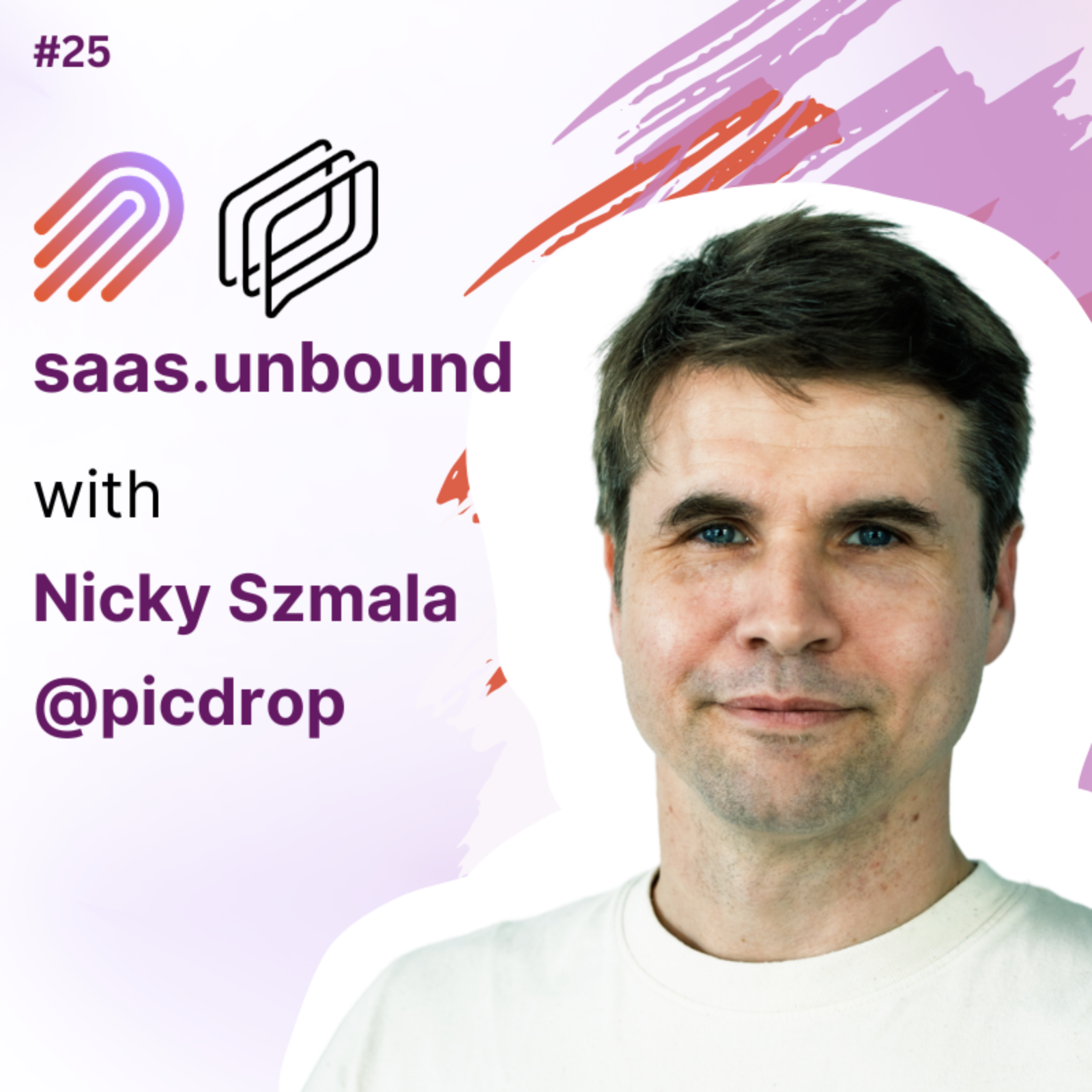
Turning users into influencers. How to run a community-based SaaS | Nicky Szmala @picdrop

Nicky Szmala joined PicDrop as CEO after the acquisition — walking into a company built by photographers, for photographers, with a growth engine already running. What he found was a community-led model that's quietly outperforming the shortcuts everyone else is chasing. In this episode: → How picdrop finds and works with influencers who already use the product → The two-engine growth model driving international expansion → What it actually looks like to lead a team post-acquisition (and why openness is everything) → Why picdrop team bets on events even though it's "100% not scalable" → Nicky's take on AI, photography rights, and community trust in a shifting landscape This one's for founders and operators who want real talk on brand building, community-led growth, and what life looks like inside a SaaS acquirer's portfolio. ----------- Episode's Chapters ----------- 0:06 — Meet Nicky: From Asia to PicDrop CEO 1:23 — Why Anna Was Skeptical About the Acquisition 2:44 — Joining a Company Post-Acquisition: Nicky's Approach 7:03 — Nicky's Background: From Berlin to 16 Years in Asia 14:27 — What Is PicDrop and Who Uses It 25:20 — How saas.group 's Central Teams Supercharge Small Brands 🎙️ Nicky Szmala - https://www.linkedin.com/in/nickyszmala/ picdrop - picdrop.com Subscribe to our channel to be the first to see the interviews that we publish - https://www.youtube.com/@saas-group Stay up to date: Twitter: https://twitter.com/SaaS_group LinkedIn: https://www.linkedin.com/company/14790796

July 20, 202635 min

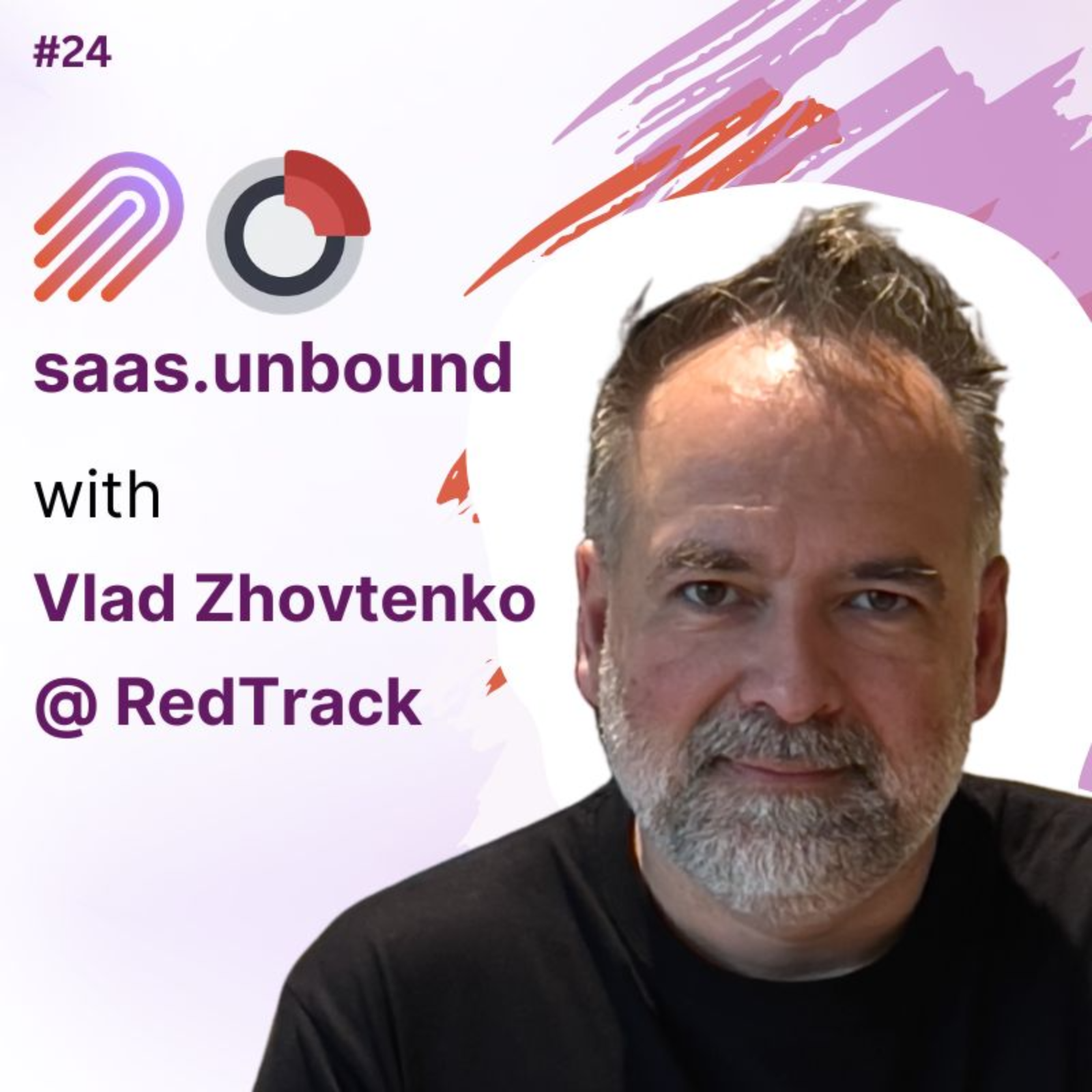
A SaaS founder's reality check vs linkedin AI hype | Vlad Zhovtenko @ RedTrack

Vlad has been online since 1997 — long enough to have seen every "this changes everything" cycle. Now, as founder of RedTrack, he's built a clear-eyed framework for what AI actually changes in SaaS, and what it doesn't. In this episode: → Why AI is the new internet — and the parts of the hype he's not buying → How iOS 14.5 quietly turned media buying from programmatic into algorithmic → The first-party data foundation every SaaS company should be building right now → What happened when RedTrack connected AI agents to three years of historical data → The four levels of AI adoption — and why most companies are stuck on level one → Why he's not raising another round, even as AI costs rise across the industry For SaaS founders trying to separate signal from noise on AI, attribution, and the "agent manager" hype. ----------- Episode's Chapters ----------- 0:06 — Internet Origins: How Vlad Found Digital Marketing 0:49 — AI vs. the Dot-Com Era: What's Actually Different This Time 3:16 — What Gen Alpha Really Thinks About AI 4:39 — The Birth of RedTrack and First-Party Data 7:33 — Is Attribution Still Relevant in a Cookieless World? 10:01 — How AI Is About to Break (and Rebuild) Media Buying 14:11 — Processing Work vs. Cognitive Work: Where AI Belongs 21:25 — Building an AI-Powered Company: Champions, Workflows, and Mandates 28:00 — Do You Need to Manage AI Agents? (Spoiler: No) 31:41 — LinkedIn Hype vs. Reality: What's Actually Happening With AI in Business 32:44 — To Raise or Not to Raise: Funding Strategy in the Age of AI 🎙️ Vlad - https://www.linkedin.com/in/zhovtenko/ RedTrack - https://www.redtrack.io Subscribe to our channel to be the first to see the interviews that we publish - https://www.youtube.com/@saas-group Stay up to date: Twitter: https://twitter.com/SaaS_group LinkedIn: https://www.linkedin.com/company/14790796

July 6, 202624 min

Zero outbound, 90% SEO: how to grow without a sales team | Hiren Hasmukh @Teqtivity

Hiren bootstrapped Tectivity from a smart locker idea into an IT asset management SaaS that competes with VC-funded rivals — with 25 people, zero outbound, and a customer base that refers each other across job changes. In this episode: → Why he pivoted from hardware to software, and the years he wishes he'd gotten back → How a two-week feature turnaround beats competitors who "charge for innovation" → The $900K his team saved one enterprise from a couple of reports on mobile phone usage → The security breach that hit them four years ago — and how they rebuilt trust with SOC 2 and forensics reports → Why founder-led support stops working, and when to actually step back → How 90% of growth comes from SEO and referrals — with zero cold outreach For founders building bootstrapped B2B SaaS in crowded, well-funded categories. ----------- Episode's Chapters ----------- 0:06 — Introduction & Hiren's Background 1:10 — How the Smart Locker Idea Was Born 2:05 — Pivoting from Hardware to SaaS 2:29 — Why Hiren Chose to Stay Bootstrapped 3:44 — Founder-Led Support on Slack: Sustainable? 4:41 — Customizing the Product for Each Customer 6:35 — Word of Mouth as the Primary Growth Engine 9:54 — SEO vs. AI Search: What's Actually Driving Traffic 14:03 — The Security Breach & Lessons Learned 15:47 — Building Remote Culture with a 25-Person Team 20:24 — Biggest Win, Biggest Failure & Final Hack 🎙️ Hiren Hasmukh - https://www.linkedin.com/in/hiren-teq/ Teqtivity - https://teqtivity.com/ Subscribe to our channel to be the first to see the interviews that we publish - https://www.youtube.com/@saas-group Stay up to date: Twitter: https://twitter.com/SaaS_group LinkedIn: https://www.linkedin.com/company/14790796

Is this your show?

Claim this listing to keep it up to date, reach guests who want to pitch you, and manage bookings with Guestify.

Claim this listing

More Business podcasts