
Find partners
Rethink Retail

Rethink Retail

Hosted by Rethink Retail

Episodes

500

Latest episode

Oct 2026

Language

EN

About the show

Rethink Retail - the evolution of retail in today’s connected world. Join us as we explore the most recent trends and innovations in commerce.

Listen to episodes

60 recent
October 21, 202615 min

The Customer Signals That Sent Amazon Prime to Colombia

Amazon runs full operations in 22 countries, yet shoppers in more than 100 countries buy from it. Deciding where to invest next comes down to reading what those customers are already doing. Kasturi Pal (Amazon), who leads worldwide marketing for Amazon’s international cross-border business, joined Jeremy Goldman at Shoptalk to discuss how to read customer signals across very different markets, and what they led Amazon to do in Colombia. INSIDE THE EPISODE: Let customer signals choose the market Growth across Latin America is fast but volatile. Colombia stood out, holding steady despite regional headwinds, and its shoppers behaved differently from those in Brazil, Mexico, or Argentina. They wanted more selection, faster shipping, and better prices, so Amazon launched Prime there with its full shopping and entertainment benefits, making it the only market to get them without full in-country operations. Keep asking why Data only helps when teams keep questioning it. When a campaign’s click-through rate beats expectations, the next step is asking what drove it, whether it was new, and why it didn’t work before. Repeating that habit reveals patterns and teaches teams how deep to dig and when to stop. Small teams, simple problems Many Amazon teams start with fewer than four people and sometimes less than $1 million, so focus matters. State the customer problem in a single sentence, bring in only the people needed to solve it, and keep everyone else informed. Listen above to hear how customer curiosity can guide where a brand expands next.

October 20, 202615 min

Is Micro-Fulfillment the Winning Strategy in the US?

Online now makes up more than 19% of US grocery sales, and most of those orders are still picked off store shelves. That gets grocers online quickly, but it brings missing items, substitutions, and picking that’s hard to speed up or automate. Petr Lizner (Veloq & Rohlik Group) and Dalibor Patek (Rohlik Group) joined Jeremy Goldman at Groceryshop to discuss when micro-fulfillment makes sense for US grocers, and what it takes to make it pay off. INSIDE THE EPISODE: Volume decides when to move Moving fulfillment into a dedicated space beside the store, covering 70 to 80% of the assortment, gives grocers more control over accuracy and speed while the store handles the rest. Around 300 online orders a day is a reasonable point to start exploring it, and around 600 is when automation enters the conversation. Geography matters too. Delivery suits dense markets like the Northeast, while pickup remains popular across the more spread-out Midwest. Automation is only half the investment Grocers tend to focus on choosing the right robots and underestimate what it takes to run them. Staffing, inventory, picking, and last-mile delivery all have to work together every day, and that coordination is where many operations fall short. Rohlik Group spent 12 years building those systems, a reminder of how much of the work sits beyond the hardware. Consistency is the real test A fulfillment site built around its best-case capacity can look strong on paper and still disappoint customers daily. Some grocers new to online have seen double-digit error rates on orders, while experienced operators like Rohlik hold errors below 1%. Hidden costs shape the experience too. In the US, tips and fees that rise with order size can discourage bigger baskets. Listen above to hear what changes when grocers treat fulfillment as a driver of growth.

October 19, 202635 min

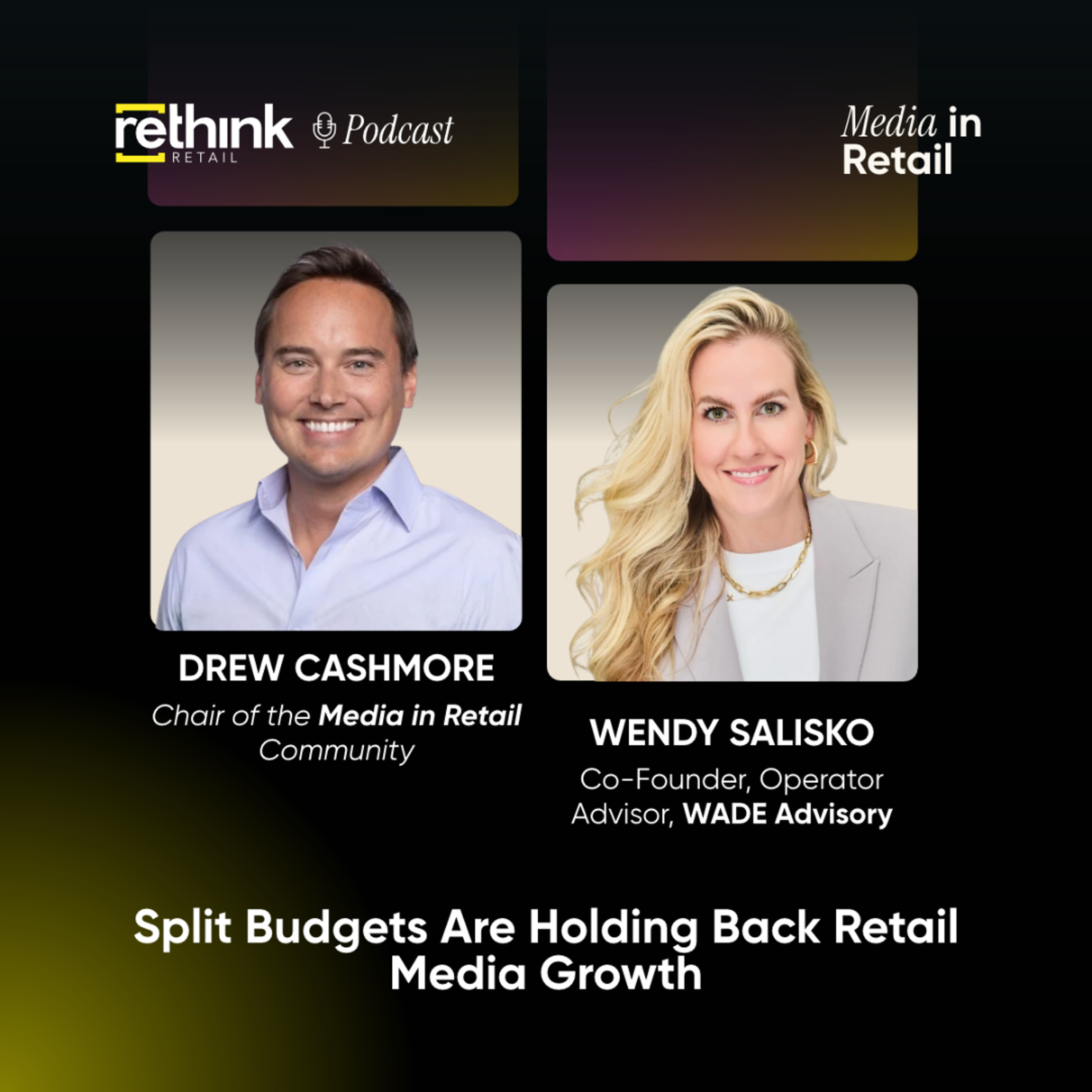
Split Budgets Are Holding Back Retail Media Growth

Retail media replaced the printed flyer, but the way brands plan for it hasn’t changed much. Budgets still roll over year to year like a trade expense, split across teams that each chase their own numbers. Wendy Salisko (WADE Advisory), who spent 22 years in enterprise CPG before co-founding a firm that advises challenger brands, joins Drew Cashmore (Chair, MiR) on this episode of Media Mondays to discuss what it takes to turn retail media into a source of growth. INSIDE THE EPISODE: Siloed budgets work against the brand Trade, shopper marketing, brand, and retail media dollars usually sit with different teams, each optimizing for its own KPI. The person buying retail media often has no say over the endcap or the depth of a discount, so no one can move the next dollar to where growth is. Brands that pull their investments into one view, or set aside a shared budget for experiments, give themselves room to try something new with retailers. Discovery now drives the choice Shoppers have grown numb to constant promotions, and in categories like beauty and wellness, more of them pick a brand based on what they discover, often before they reach the store. Many brands now build that demand on TikTok first and land on shelf later, yet shoppers often don’t know the brand is available there. Retail media can close that gap by telling shoppers what’s new in store. Challenger brands are the best test partners Retailers looking to innovate in retail media should start with challenger brands. These fast-growing brands move money across teams freely, worry less about immediate measurement, and are eager to co-create. Their budgets are smaller, but they let retailers test new formats, like creator campaigns, and prove them out before offering them to larger brands. Listen above to hear why smaller brands and retailers, the ones closest to shoppers, are likely to change retail media first.

October 16, 202658 min

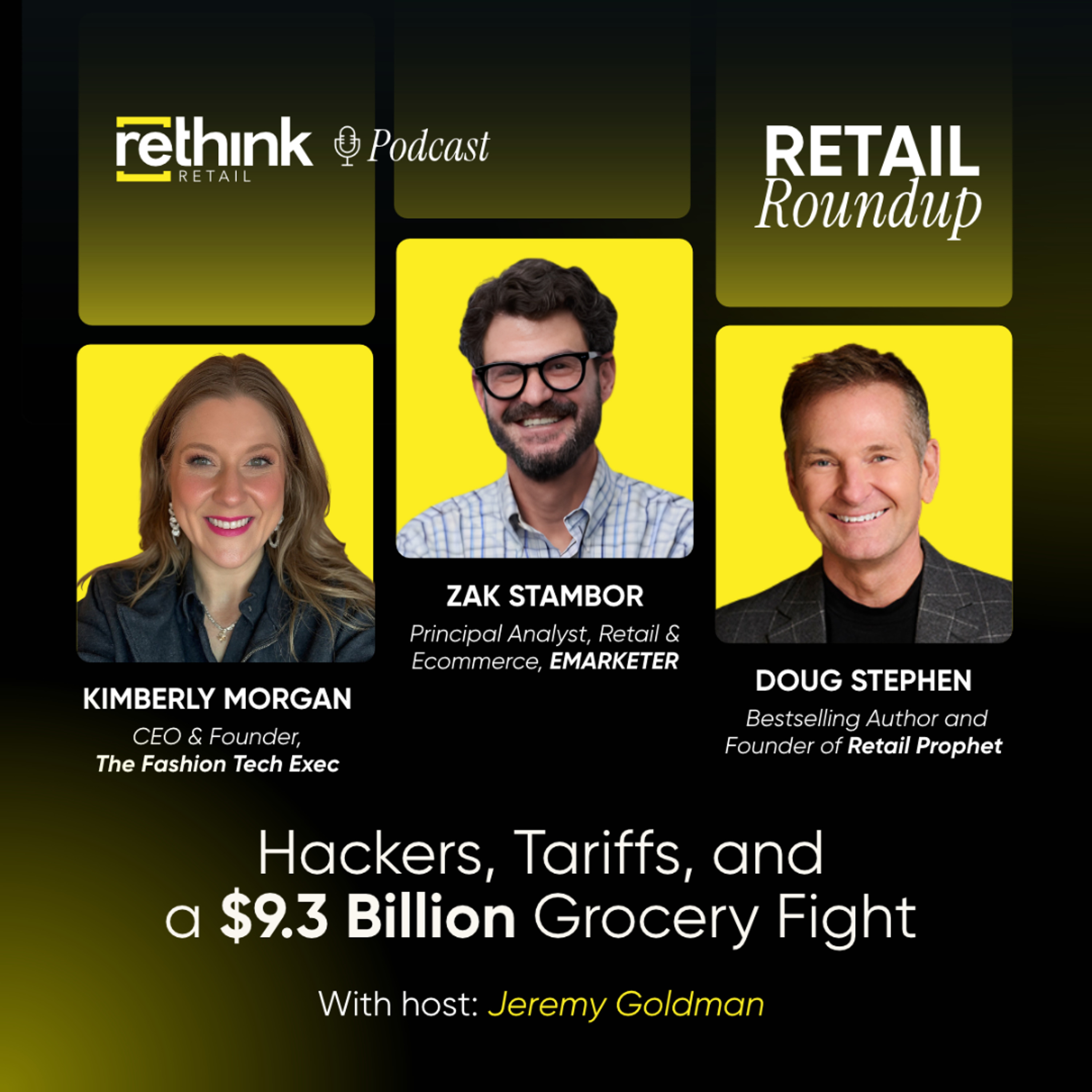
Hackers, Tariffs, and a $9.3 Billion Grocery Fight

Welcome to another edition of Retail Roundup, your weekly brief helping retail leaders decode the biggest shifts in retail, AI, and commerce. This week, Jeremy Goldman is joined by Kimberly Morgan (The Fashion Tech Exec), Zak Stambor (EMARKETER), and Doug Stephens (Retail Prophet) to discuss what’s squeezing traditional grocers, how connected store technology is becoming a security risk, and whether tariffs will dampen the holiday season. Inside the episode: A $9.3 billion breakup bill Albertsons is seeking up to $9.3 billion from Kroger over their failed $24.6 billion merger. The demand comes as Albertsons reports flat quarterly revenue and a 0.8% drop in same-store sales. Both grocers are squeezed between discounters and giants like Walmart and Amazon that can treat groceries as a loss leader, and neither gives shoppers a clear reason to choose them. Hackers hit the cold aisle A coordinated cyberattack on French supermarkets, including Intermarché and Carrefour, remotely pushed refrigeration temperatures as high as 122°F, forcing stores to throw out chilled and frozen goods. As stores connect more equipment and add AI agents, every connected system gives hackers another way into a retailer’s operations. A holiday season pulled forward The New York Fed estimates tariffs added nearly three percentage points to consumer goods inflation, and Circana projects average holiday spending will dip to $779. Shoppers say they’ll buy fewer gifts and hunt for deals, so earlier promotions may just shift purchases from later in the season. Also in the episode: a $15,000 mechanical bird that sparked a Kelly Clarkson feud, a marathoner who trained on Planet Fitness treadmills, and a recall of Oribe’s luxury hair care. After the break: Doug Stephens joins Jeremy to discuss his new book, The Future of Competitive Advantage. His argument is that every retailer can buy the same technology, so the lasting edge comes from how well its people use it. Costco shows the payoff, paying well above the industry average and keeping employee turnover around 8%. Listen above to hear why a retailer’s most lasting advantage may be the people using its tools.

October 14, 202614 min

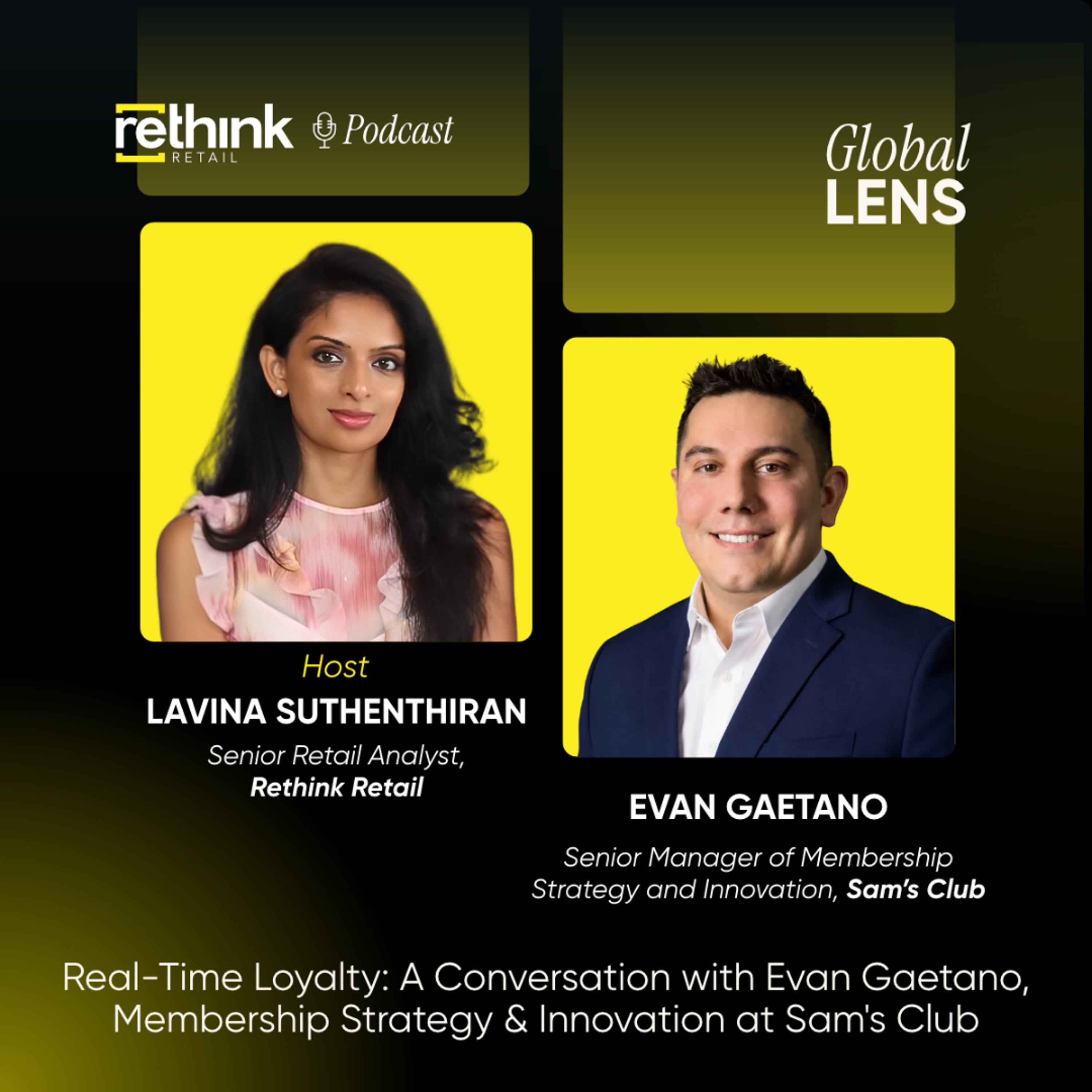
Real-Time Loyalty: A Conversation with Evan Gaetano, Membership Strategy & Innovation at Sam's Club

Walmart sources produce from 10,000 American farms. Many shoppers who relied on Walmart for cereal and coffee had no idea, and crossed the street to buy fruit and vegetables from grocers they saw as more local. Evan Gaetano, helped close that gap at Walmart and now works on membership strategy at Sam’s Club. He joins Lavina Suthenthiran on this week’s Global Lens to discuss how retailers can prove they deserve trust, keep earning it, and carry that approach into markets where “local” means something different. INSIDE THE EPISODE: Start with what’s already true Retailers often hold the proof that would earn customer trust without realizing it. That proof lives with sourcing teams and suppliers, not in front of shoppers. At Walmart, it took asking the sourcing team a simple question: how many American farms supply our produce? The answer was 10,000, a number Walmart had never shared with customers. The first story built on it featured Kate Thornton, a fourth-generation apple and pear grower in Tonasket, Washington, whose family anchored a shoppable fall apple shop on Walmart.com. Let the people closest to the work tell it A farmer talking about her family’s orchard carries more weight than a corporation talking about agriculture. Thornton had full creative control, and her video of her father seeing their story on Walmart.com for the first time became the campaign’s defining moment. Paid members keep score all year At Sam’s Club, members pay before they buy anything, and that raises the bar. American households juggle 12 to 14 memberships and subscriptions, according to Deloitte, but usually only one or two paid retail memberships. Sam’s Club keeps earning its spot by bringing members into the process, with more than 150,000 members testing ideas and products, and by acting on what they say, like removing more than 40 ingredients, including synthetic dyes, under its Made Without commitment. Listen above to hear why a retailer’s best story, in any market, is often already sitting in-house, waiting for someone to ask.

October 12, 202632 min

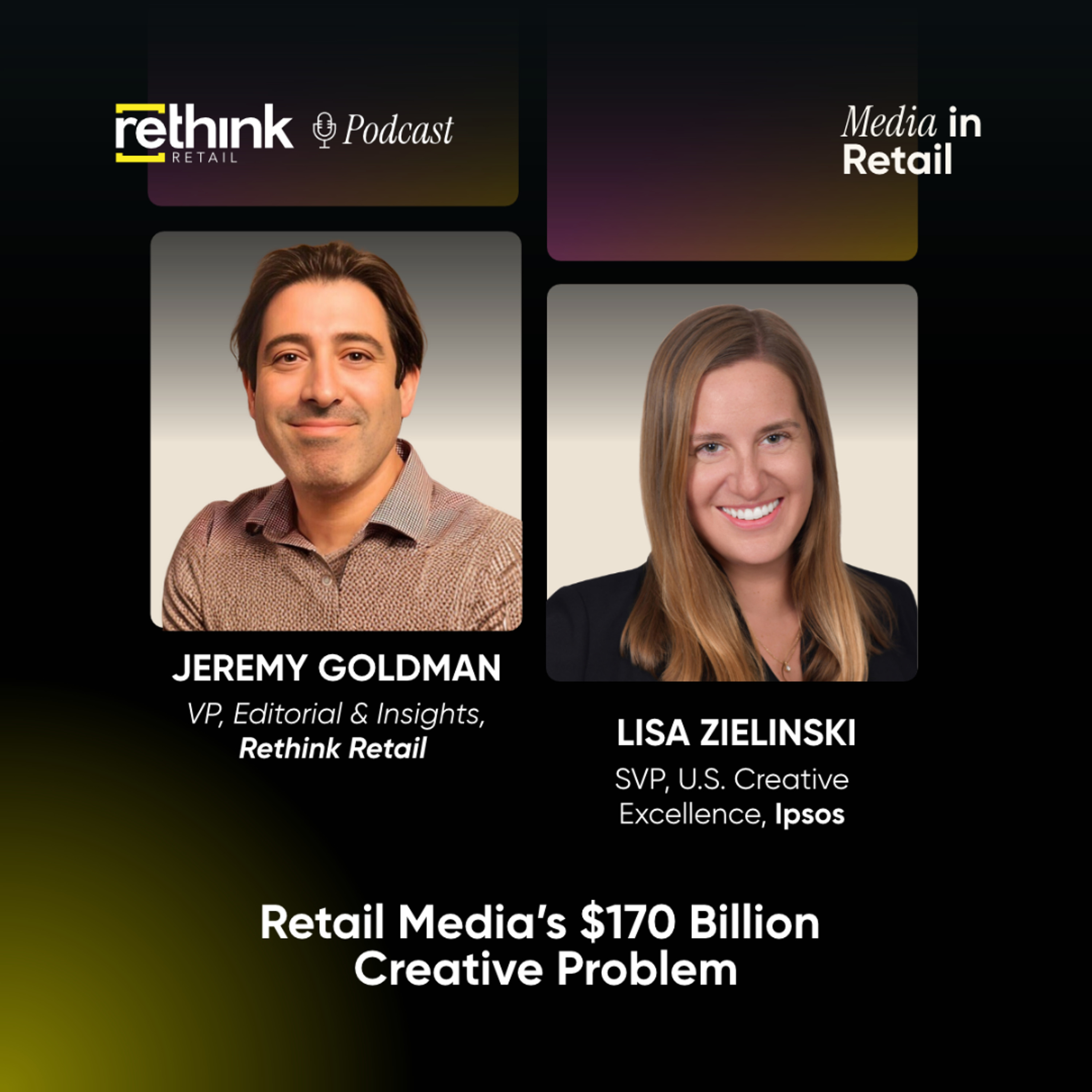
Retail Media’s $170 Billion Creative Problem

Retail media now draws $170 billion a year, more than TV and CTV combined, and much of that money buys ads few shoppers remember. Lisa Zielinski (Ipsos) joins Jeremy Goldman on this episode of Media Mondays to unpack Creativity Over Clicks, Ipsos’s study of more than 21,000 simulated shopping trips on Amazon and Walmart, and what it means for brands and retail media networks. INSIDE THE EPISODE: Retail sites are a tough place to be remembered Ads on retailer sites were 47% less likely to be remembered than standard web placements. Shoppers are on a mission, surrounded by competitors’ product shots, and most ads look like one more pack shot with a “Buy Now” button. Every network needs its own creative Only 29% of display ads and 64% of video ads performed similarly across Amazon, Walmart, and the open web. With brands now advertising on about eight retail networks, and some on as many as 30, reusing the same banners everywhere wastes real money. Social platforms have spent years teaching advertisers what works on their sites, and retail networks have room to do the same. ROAS misses the shoppers who matter most Short-term ROAS mostly measures shoppers who already knew what they’d buy. Creative quality barely moves them. Strong creative matters for undecided shoppers and people not yet shopping the category, delivering a 21% advantage with the latter. Because ROAS can’t see that effect, in several cases it would have pointed brands toward their weaker ad. Listen above to hear what it takes for retail media to build brands as well as sell products.

October 9, 202651 min

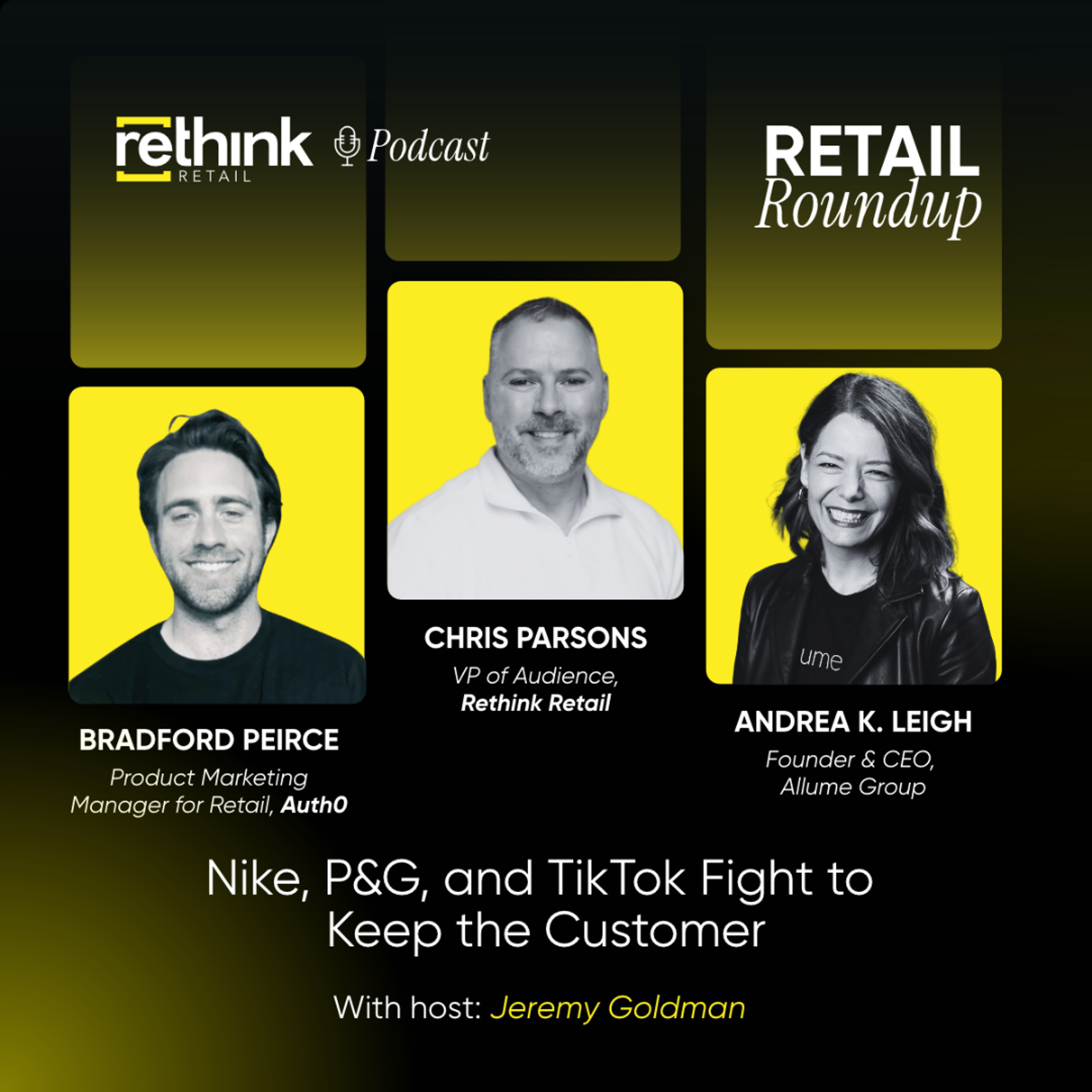
Nike, P&G, and TikTok Fight to Keep the Customer

Welcome to another edition of Retail Roundup, your weekly brief helping retail leaders decode the biggest shifts in retail, AI, and commerce. This week, Jeremy Goldman is joined by Andrea K. Leigh (Allume Group) and, for the first time behind the Rethink mic, our own Chris Parsons to discuss how brands and retailers are fighting to keep their customers as loyalty fades and AI changes how people shop. INSIDE THE EPISODE: Nike’s turnaround gets harder Greater China sales fell 26%, and Nike extended its turnaround timeline with more layoffs and a restructuring aimed at $2.5 billion in savings through fiscal 2031. The bigger issue may be cultural relevance, as shoppers who grew up in Jordans now reach for New Balance, Salomon, and Hoka. Pulling back from retailers to focus on direct sales also made Nike harder to find for the many shoppers who still buy shoes in stores. Private label tests brand pricing power P&G’s new CEO takes over as shoppers question whether brands like Tide and Pampers are worth the premium. Target now runs 11 owned brands, each topping $1 billion a year, and Allume Group found that 49% of shoppers have tried a new private-label product. P&G says it isn’t seeing a meaningful shift. Even so, rising costs that vary sharply by region and store shelves that offer little guidance beyond price are making brand loyalty harder to maintain. TikTok puts an AI agent between discovery and checkout TikTok’s new Shopping Assistant answers questions about sizing and shipping, and Buy Direct lets shoppers purchase without leaving the feed. Platforms now compete for share of time as much as share of wallet. Twenty years ago, Amazon worked to cut time on site with 1-Click checkout. Now everyone wants shoppers to linger, leaving retailers to decide how much of the customer relationship they’ll give up for the sale. Also in the episode: ads arrive in ChatGPT, a lawsuit over Starbucks’ “sugar-free” drinks, brands betting on microdramas, and why self-checkout may be retail’s version of a missed rom-com moment (yes, we’re linking Say Anything). Plus: Ask an AI agent to buy you a TV, and it could come back with a hundred. Bradford Peirce (Auth0) explains why that risk grows as agents move from recommending products to buying them, and why retailers need to know what each agent is allowed to spend. For a closer look at how retailers can verify agents before they buy, download Auth0’s Agentic Commerce eBook. Listen above to hear whether retailers should meet shoppers on other platforms or bring those platforms onto their own sites.

October 7, 202618 min

Lessons in Global Growth From Crocs and BioSteel

Leverage, local knowledge, and high margins. That's the recipe Andrew Nichols (Warroad Original Hockey Co.) has learned to grow a consumer brand across new channels and countries. His perspective comes from more than 20 years in consumer brands, starting at Unilever, spending nearly a decade at Crocs in Canada, and growing BioSteel to a sale in 2019. He joins Lavina Suthenthiran on this week's Global Lens to share what separates brands that scale at retail from those that stall. INSIDE THE EPISODE: Find the retailer that shares your goal Specialty chains like GNC demanded steep margins from new brands, so BioSteel started in sporting goods stores, where shoppers already spent on peak performance. Grocers growing their wellness aisles followed by the time BioSteel approached GNC, its sales elsewhere gave it leverage to negotiate fairer terms. Every market buys differently Canadian shoppers tend to spend more cautiously. The US offers room to grow fast. Europe brings strict rules and multiple languages on every hang tag. Brands that invest in people and infrastructure before understanding a market's pricing and readiness risk pulling out entirely. Margin decides how far a brand can go Selling direct online means paying a long line of partners before the brand sees a dollar. Advertising on Meta alone can eat up to 25% of revenue, and Shopify, warehouses, and shipping carriers all take their cut too. Without mid-to-high 70s margins at full price, a brand can't cover those costs as it grows. Listen above to hear how Crocs outlasted predictions of its collapse in 2008, and why a brand built on a real customer need can outlive any trend.

October 6, 202623 min

How Adyen Unified SharkNinja's Global Payments

Until 2024, SharkNinja ran its direct-to-consumer business on two separate tech stacks, one for North America and one for Europe. Every new market added more complexity just as the company wanted to grow faster. So it rebuilt its storefront, order management, and payments on one global foundation, all while getting ready for a new kind of shopper: the AI agent that buys on a customer's behalf. Greg Sheive and Michael Cicchetti (SharkNinja), along with Priyanka Agrawal (Adyen), joined Lavina Suthenthiran to discuss what it takes to rebuild a global stack without slowing down, and what changes when checkout moves off your own website. INSIDE THE EPISODE: One stack beats many Running payments market by market carries costs that never show up on an invoice. Entering a new country can mean building new technology to accept a local payment method. Scattered payment data leads to more declined transactions and finance teams that are juggling five or more vendor contracts and separate reports. One platform turns all of that into a single view of the business. Change one thing at a time A global replatform has fewer ways to fail when every piece doesn't move at once. SharkNinja switched to Adyen for payments while still on its old platform, then moved each country to Salesforce Commerce Cloud. Checkout was already stable before the bigger migration began, and the phased rollout ran with zero downtime. Checkout is moving off your website Selling through AI agents brings three new problems. Product, inventory, and delivery data have to update instantly, or an agent promises something that's out of stock. Fraud systems built to block bots may block a real customer's agent. And if an agent invents free overnight shipping, it's unclear who pays. SharkNinja expects some of these early bets to miss and treats them as a way to learn fast. Listen above to hear how SharkNinja is building one tech foundation that can handle every new channel, including the ones run by AI.

October 5, 202633 min

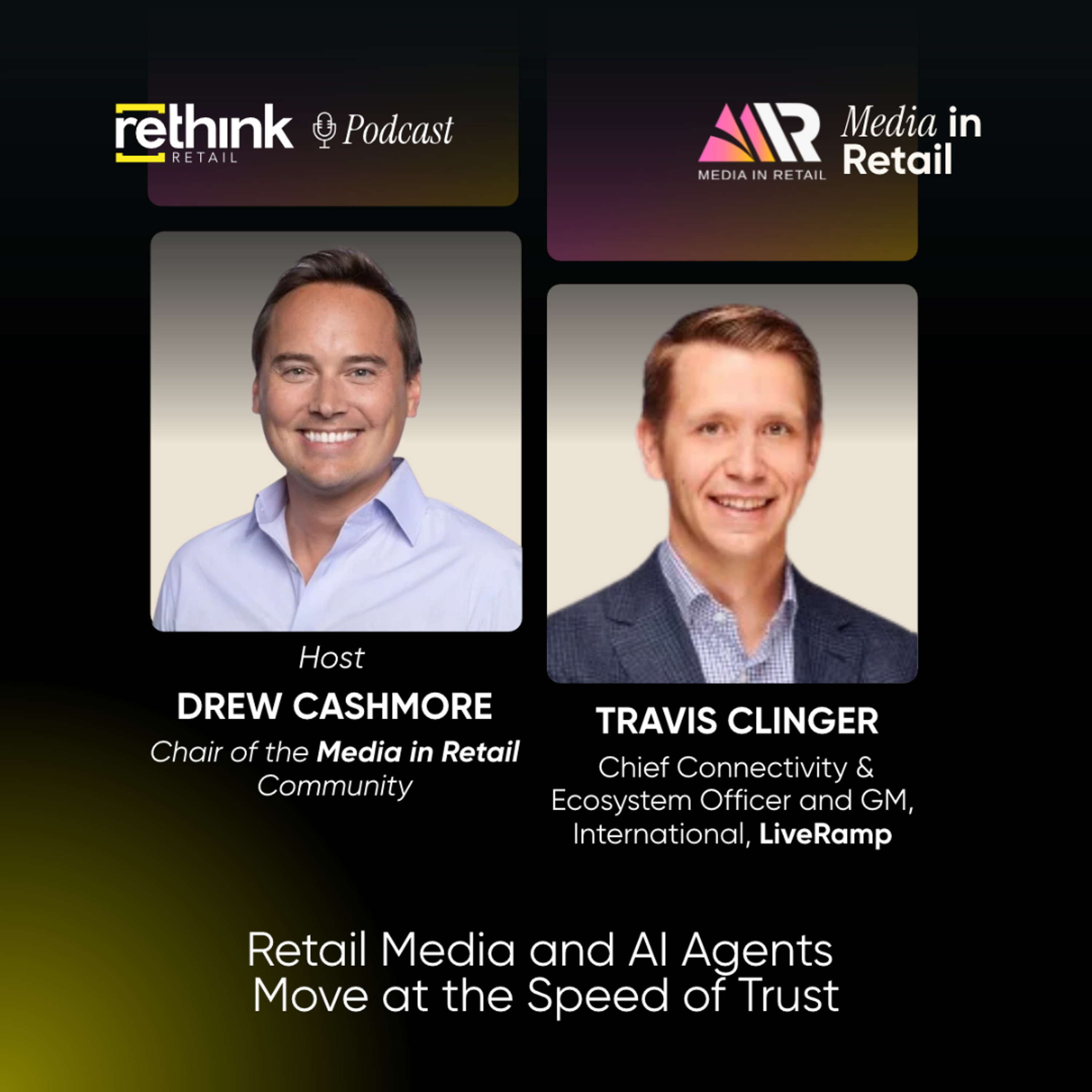
Retail Media and AI Agents Move at the Speed of Trust

Retail media moves at the speed of its people. Shopper habits, trust between retailers and brands, and comfort with handing work to AI all set the pace more than any piece of technology. Travis Clinger (LiveRamp) joins Drew Cashmore (Vantage and Chair, MiR) on this episode of Media Mondays to unpack what that means for building a lasting retail media network. INSIDE THE EPISODE: SHOPPERS MOVED FASTER THAN REGULATIONS Many in the industry expected regulators or Google to end the cookie by 2020 or 2021. Instead, shoppers moved to streaming TV and AI platforms so quickly that the cookie stopped mattering on its own. Reaching those shoppers now means matching the emails and phone numbers they share with each platform they use. TRUST IS THE SLOWEST STEP Retailers know what shoppers actually buy, online and in stores, and that proof is valuable enough that even airlines are now selling ads. Getting that data into a brand's hands takes far longer. A single data-sharing agreement can take six months, and suppliers repeat the process with every retailer they work with. Standard contracts and access rules would let the whole ecosystem move faster. AI AGENTS NEED PERMISSION FIRST Anyone can build an AI agent. Getting IT, security, and legal to approve one that touches company data takes much longer, and for good reason. LiveRamp is building every new feature for agents, but most work on its platform is still done by people, and tightly limited, trackable agents are likely to fill that role until companies are ready to hand over more. Listen above to hear why the retailers that make their data easiest to trust and use are the ones built to last.

Is this your show?

Claim this listing to keep it up to date, reach guests who want to pitch you, and manage bookings with Guestify.

Claim this listing

More Business podcasts