Find partners
Real Estate Team OS

Real Estate Team OS

Hosted by Ethan Beute | Follow Up Boss

BusinessEntrepreneurshipInterviews guests

Episodes

170

Latest episode

Jul 2026

Language

EN

About the show

Real Estate Team OS is your guide to starting, growing, and optimizing a real estate team. Weekly episodes give you stories, insights, decisions, and hard-learned lessons of team leaders, operations leaders, brokerage owners, and real estate agents at every stage of business growth from solo agent to mega team.

Listen to episodes

60 recent
July 28, 202648 min

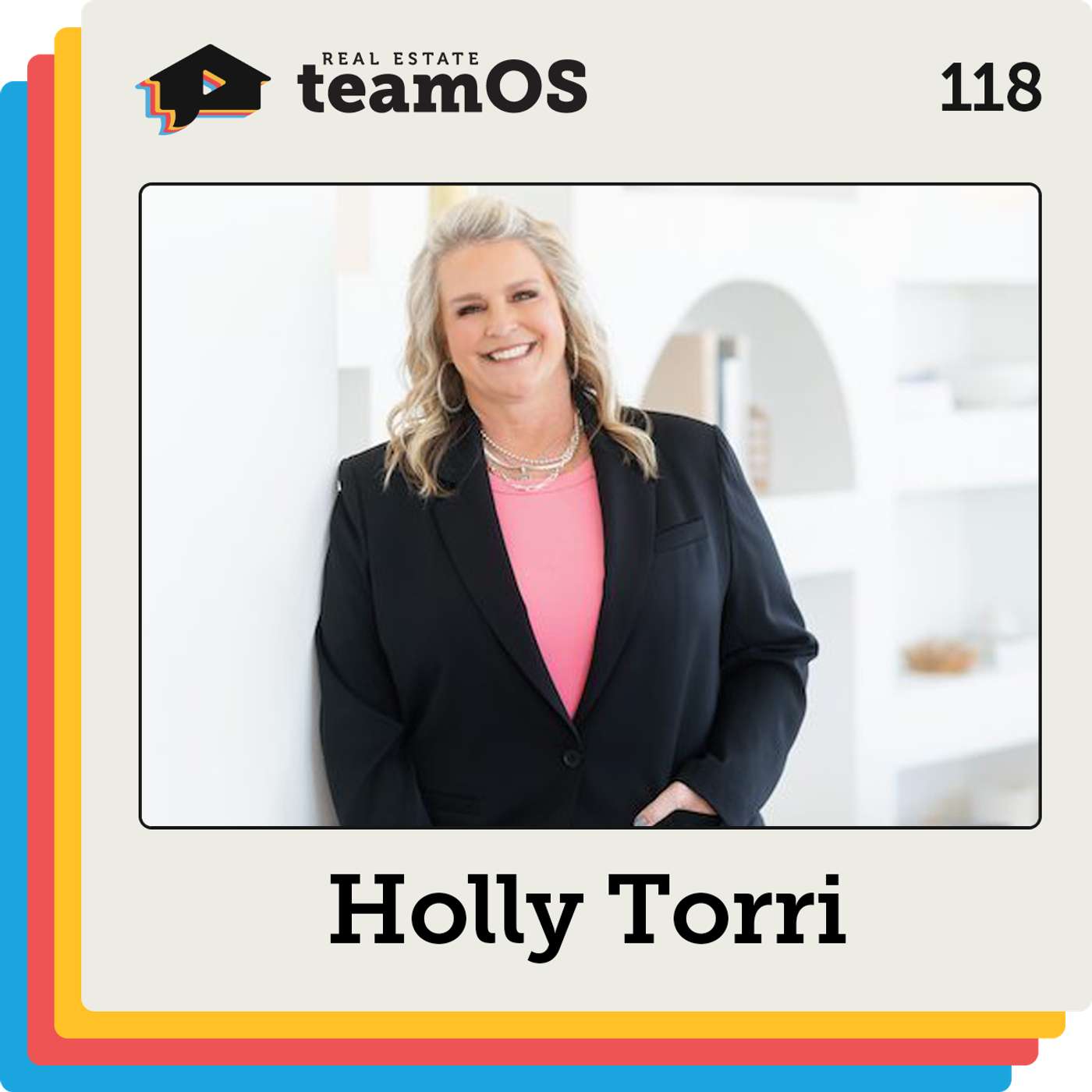
How to Add Renovation Revenue to Your Real Estate Business with Holly Torri | Ep 118

If you've ever scheduled a contractor for a client repair, managed a make-ready before a listing, or spent an afternoon coordinating vendors so a seller could get to market faster, you've already done the work of a renovation business. You just haven't been getting paid for it. Holly Torri figured that out and built a business around it. She's a fifth-generation DFW resident and the founder of Torri Realty, a boutique independent brokerage in the Dallas-Fort Worth metroplex where she still produces, coaches her own agents, and deliberately keeps her roster between 7 and 15. Alongside the brokerage, she runs property management and a make-ready and renovation company, a separate LLC she built from the vendor network she'd already been managing for years. The same crews have been showing up for a decade, in part because she pays them the same day every time. Her renovation business tends to pick up exactly when the sales market slows down, which means she's evened out her revenue flows. In this conversation, Holly walks you through how the three businesses fit together, what it took to go from an informal vendor network to a formalized operation, and what she's learned in six years of running an intentionally small indie brokerage her way. Watch or listen for Holly's insights into: 0:00 Intro and welcome 2:46 Why your online presence and your in-person presence need to tell the same story 4:29 How a relocation, a career pivot into real estate, and two years inside a property management company shaped the brokerage she eventually built 8:33 What Torri Realty looks like today and why she built it to stay small 9:56 Why she chose indie over franchise and what becomes possible when you retain full control over culture and standards 15:10 How to structure a week as a producing broker who also coaches agents and runs two other businesses 18:17 Why your ops person doesn't need a real estate license, and what happened when Holly finally found the right support with someone who had never sold a house 22:15 How the make-ready and renovation business started and why it tends to pick up exactly when the sales market slows down 28:00 How to turn an informal vendor network into a real business: separate LLC, negotiated rates, project plans, and the payment philosophy that's kept the same crews coming back for a decade 30:26 How to position make-ready and renovation services to other agents without making them feel like you're competing for their clients 36:17 What a high acceptance rate on Zillow Pro sphere connections looks like in practice, and why it's a manual process not a mass one 41:09 What she would tell an agent on the fence about starting a team or going indie 43:17 At the end, hear about a laminated $18.39 electricity bill, vintage Pyrex, Mahjong tiles, and a Monument Valley road trip with no plan and no cell service. Check out Zillow Pro: → https://www.zillow.com/agents/zillow-pro/ Connect with Holly Torri and Torri Realty: → https://www.facebook.com/holly.torri → https://www.instagram.com/hollytorrirealty/ → https://www.facebook.com/torrirealty → https://www.instagram.com/torri_realty/ Connect with Real Estate Team OS: → https://www.realestateteamos.com → https://linktr.ee/realestateteamos → https://www.instagram.com/realestateteamos/
July 14, 202652 min

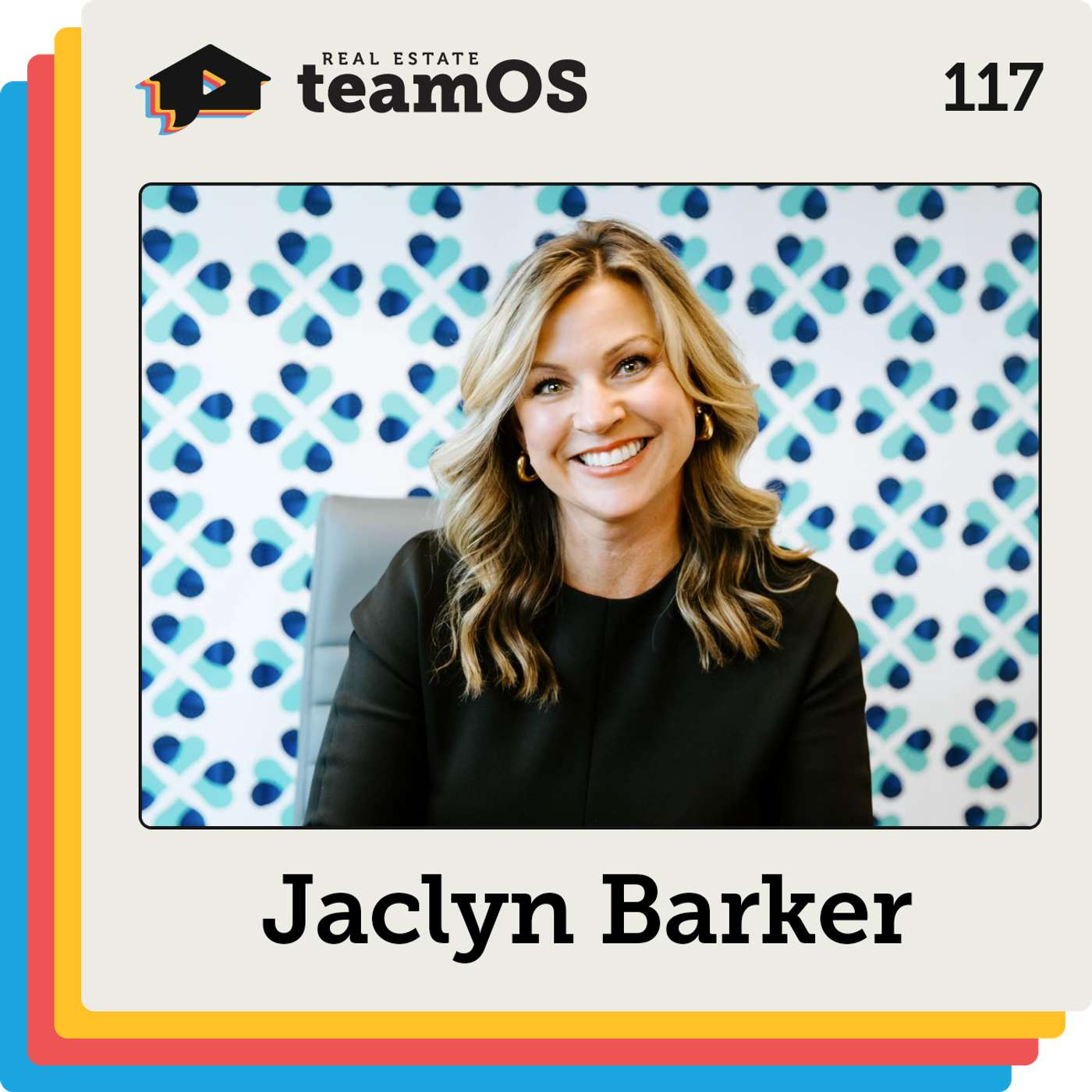
How a 400-Agent Team Recruits Without Cold Calling with Jaclyn Barker | Ep 117

After nearly 25 in real estate sales, Jaclyn Barker found her next right fit, joining Tiffany Williamson at Navigate Realty as a full-time recruiter. Over the past few years, Navigate has grown from roughly 80 agents across two North Carolina markets to approximately 400 agents in seven active locations, with Tennessee getting ready to launch. In Raleigh alone, the team is bringing in 15 to 20 new agents a month. None of this growth came through cold calls, robo-calls, or robo-texts. As Jaclyn says in this conversation, “I despise cold calling … it’s just not my thing.” Watch or listen to have Jaclyn walk you through the philosophy, process, and system behind this growth. Learn why she treats recruiting exactly the way a great agent treats a client relationship, why she insists on in-person interviews of at least an hour with every candidate, and why she'll sometimes tell someone they're not ready to make the jump yet. Find out what it looks like to build a recruiting function from scratch, when to make your first recruiting hire, and why retention is the half of the equation most teams ignore. Watch or listen for Jaclyn's insights into: 0:00 Intro and welcome 2:25 How drive shows up early in a recruiting conversation if you know what to look for 3:38 Why recruiting and real estate sales are the same kind of people business, built on discovery and fit rather than pitching 5:33 How a long career in real estate, a difficult market, and one conversation with Tiffany Williamson led to a full-time recruiting role 10:30 What Navigate Realty looked like when she joined versus what it looks like today 12:36 The interview that shaped her entire approach, and what she decided she would never do to a candidate 18:06 Why net agent count is the only number that matters, and what it means for how you think about retention 20:53 How the recruiting function has scaled alongside Navigate's growth, and what triggered each new hire 23:28 Why she spends at least an hour with every candidate and what that kind of time in the room actually reveals 25:47 What an ATS is, why you need one, and how they selected their applicant tracking system (ATS!) 27:51 The recruiting process from first contact to offer, and why in-person interviews are non-negotiable 33:30 “I despise cold calling” - why building something worth joining eventually becomes your most powerful recruiting tool 38:15 When to hire a full-time in-house recruiter, and the investment logic that makes it worth it 40:50 Why being honest with candidates about how hard real estate is makes her better at recruiting, not worse 46:41 At the end, Jaclyn reveals how a frugal instinct went sideways, when her Apple Watch triggers, and why true crime podcasts share equal car time with real estate podcasts. Related episodes: → 90-Minute Recruiting Workshop ( sign up free for all the subscriber-only episodes) → When, Why, and How to Build Your Recruiting Department with Tiffany Williamson Connect with Jaclyn Barker and Navigate Realty: → https://navigaterealty.com/join/ Connect with Real Estate Team OS: → https://www.realestateteamos.com → https://linktr.ee/realestateteamos → https://www.instagram.com/realestateteamos/
June 30, 202650 min

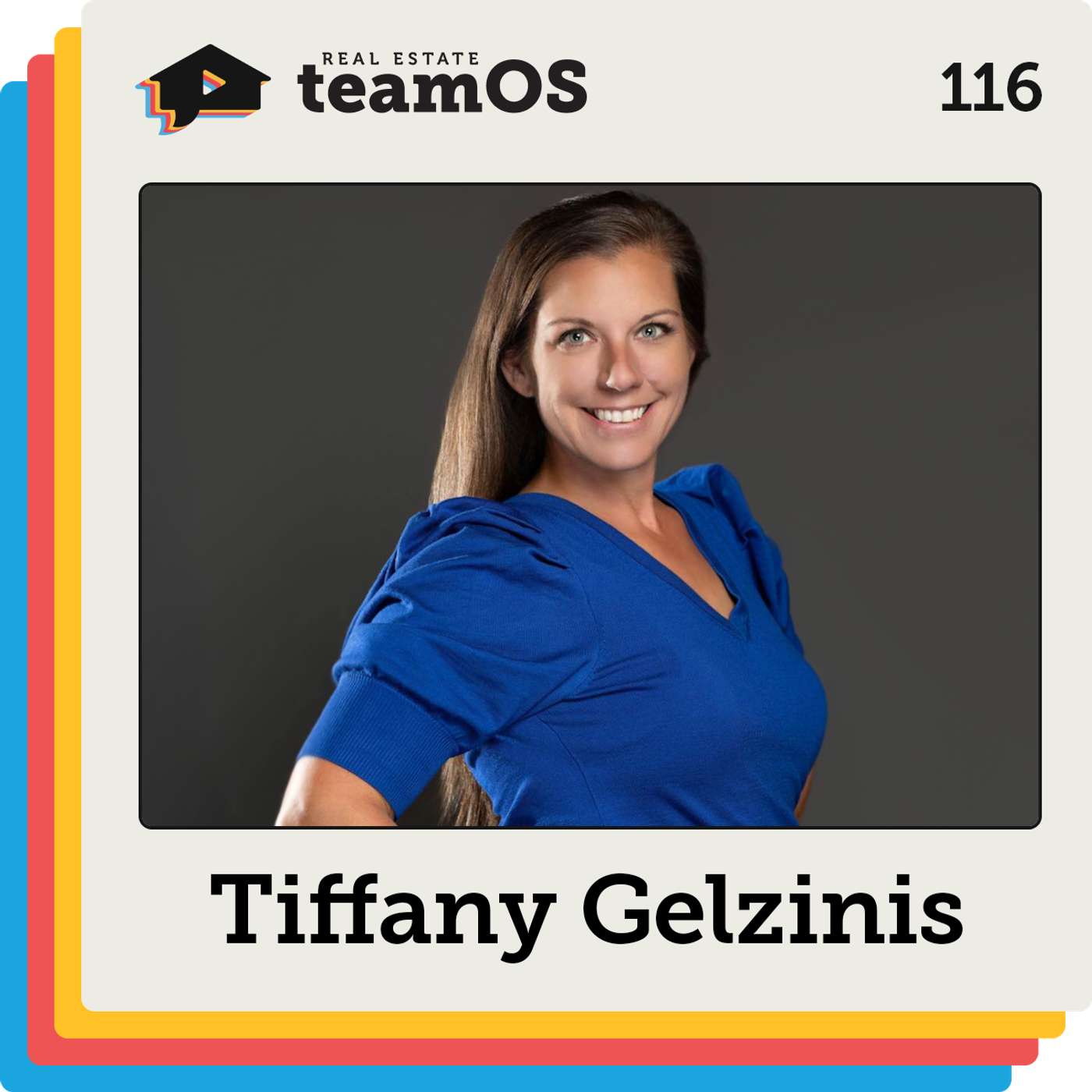
Why Real Estate AI Must Serve Clients Not Just Agents with Tiffany Gelzinis | Ep 116

Most conversations about AI in real estate start and end with the same question: what can the agent stop doing? Tiffany Gelzinis thinks that's the wrong question. As a real estate team leader and Realtor in Residence at Follow Up Boss who has been operating at the intersection of real estate and technology for years, she makes a different argument: that AI's real value isn't in what it removes from the agent's plate, but in what it does for the client. When the technology is deployed with that in mind, everything else gets better too: agent morale, consistency, response rates, and the relationships that drive repeat and referral business. Learn the framework Tiffany uses to think about where AI is going, including a distinction between generative AI (you tell it what to do) and agentic AI (you train it to think like a role) that clarifies how to prepare for what's coming next. Get what she calls the nurture black hole in every real estate database, how behavioral signals from tools like Zillow Pro surface the opportunities hiding inside it, and why the quality of your CRM data is the foundation everything else depends on. And hear what smart messages actually do differently from standard outreach, why human-in-the-loop is non-negotiable regardless of how good the AI gets, how Automations 2.0 adds leverage with new triggers, and how she elevated a top-producing agent into a team leader role while she stepped fully into tech optimization. Watch or listen for Tiffany's insights into: 0:00 Intro and welcome 1:39 Consistency as the must-have characteristic and why agents get in their own way more than anything else does 3:00 Why you don't always need to tell agents you deployed new technology, how to simplify for adoption, and why to focus agents on calling the right people at the right time 7:33 Elevating a top producer to team leader, including what to look for and what the transition costs in production before it pays off 16:38 The two jobs of real estate AI: operational efficiency and top-line lead surfacing, and why most real estate teams are only thinking about one 22:18 What the nurture black hole is and why every database has one 25:10 The difference between generative AI and agentic AI, how to create the right expectations, and how to deploy it effectively 27:54 Why human-in-the-loop isn't optional, what AI slop looks like in practice, and why you can't just set it and forget it 32:54 How smart messages improve response rates with contextual relevance and dynamic agent voice 34:50 Why your AI is only as good as your CRM data and the specific habits that feed the model right now 39:47 Automations 2.0 with new triggers, and the light switch analogy that makes the whole concept click 41:35 The consumer experience trend Tiffany is most excited about and how to capitalize on it 44:29 At the end, Tiffany covers travel soccer and deluxe kits for her two boys, cutting her own hair since COVID and never going back, and sea glass hunts on beach walks. Related episodes → Ep 005 Patience, People, Process, and Profit with Tiffany Gelzinis → Ep 076 AI Voice and Texting with Tiffany Gelzinis and Kyle Draper Connect with Tiffany Gelzinis → https://www.instagram.com/tiffany_gelzinis/ Connect with Real Estate Team OS → https://www.realestateteamos.com → https://linktr.ee/realestateteamos → https://www.instagram.com/realestateteamos/
June 16, 202649 min

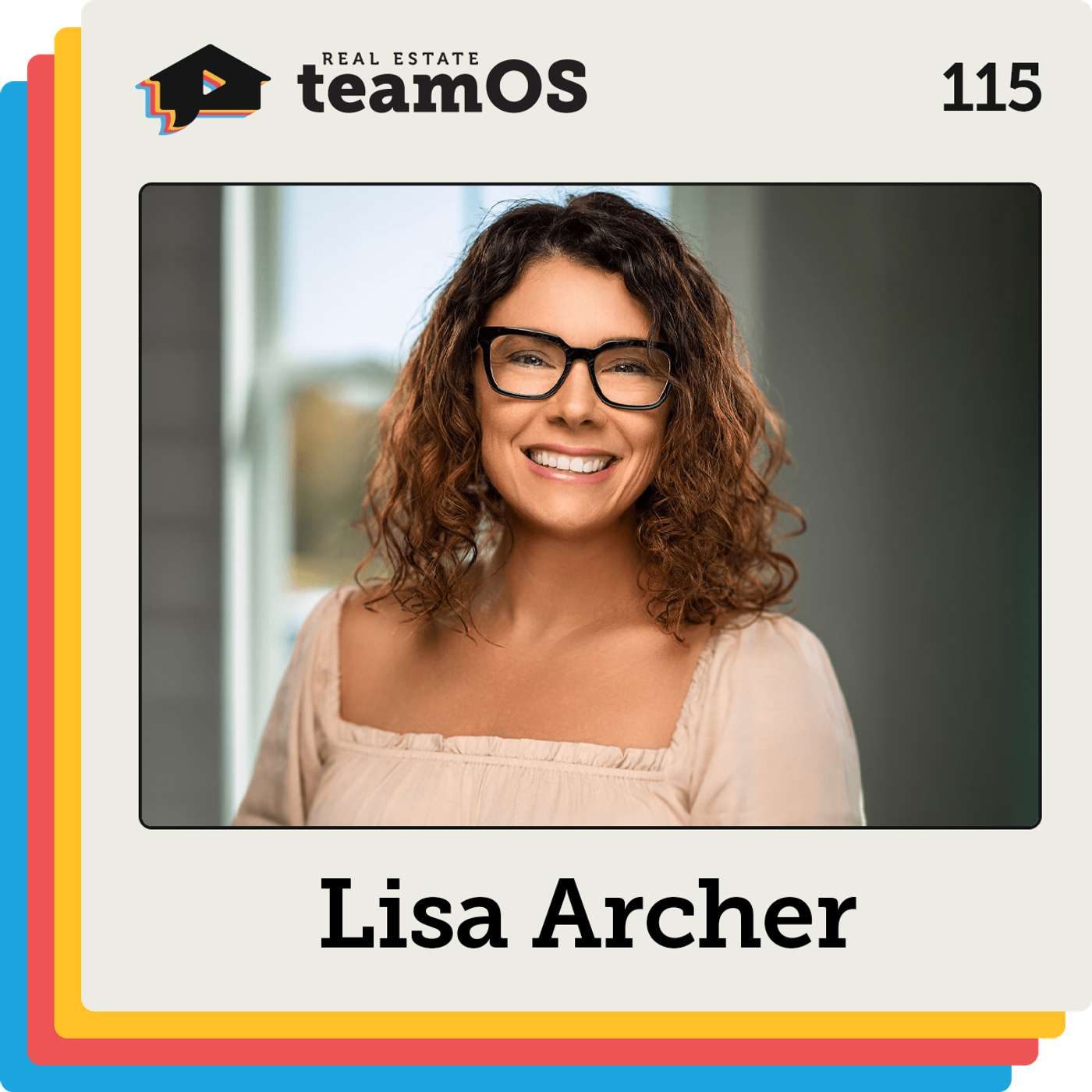
The Open House Strategy That Works Seven Days a Week with Lisa Archer | Ep 115

Lisa Archer has more than doubled production at Live Love Homes in under two years. A meaningful part of that growth runs through open houses. Not weekend opens hosted reluctantly, but a deliberate seven-day strategy that last year produced 32 sales where the buyer only came through an open house. She's on pace to at least double that number this year. You'll learn how that strategy works - the seven-day cadence, why Monday through Friday beats the weekend for relocating buyers in high-growth markets, and how virtual opens cover the gaps. You'll learn how she captures contact information without printing a single piece of paper, why she pre-knocks the neighborhood before every open, and how one listing done right generates four or five clients on the same street. Lisa also explains why most agents say open houses don't work, why she disagrees, how she uses them to close price conversations with sellers, and what she says at expired listing appointments when the answer to "how many open houses did you have?" is zero. Lisa founded Live Love Homes in Charlotte, North Carolina, where she runs a local team of 10 agents, plus agents in expansion markets in Wilmington, Myrtle Beach, Charleston, Columbia, and Greenville - as well as in southern Mississippi. She's been building real estate teams and expansion markets since before most people knew what either one was, and she still teaches and trains on all kinds of topics. Watch or listen for Lisa's insights into: 0:00 Intro and welcome 1:49 Grit as the must-have characteristic, and why the agents most likely to make it are the ones who've had to persevere through something before real estate 2:55 How to spot the new agent who's going to make it: coachability, what they've had to push through, and what it looks like when the path has always been straight up 7:10 How Live Love Homes started: banking career, her dad's KW office, the Red Book model, and the buyer's agent who has been with her for 18 years 14:36 What more than doubling production in under two years actually looks like: the Place partnership and P&L accountability that changed the business 18:15 Why the team model keeps winning: agents who ask "why would I want to do it on my own?" and the failure rate teams solve for 22:10 What 15 years of market expansion teaches you: lead with revenue, lead with someone willing to do the work, and why sphere-first is the only safe starting point 24:57 The real job of an open house: the most intimate lead gen available, a mobile office, and a tool for neighborhood domination that most teams are leaving on the table 27:46 How to capture contact info without printing anything: survey, floor plan, and disclosure as three separate reasons to get a number 31:08 Why agents say open houses don't work, and what's actually going on when they say it 33:51 The seven-day open house strategy: why Mon-Fri works in high-growth relocation markets, what partners of job candidates are doing while the interview happens, and how virtual opens cover the rest 38:17 The neighborhood domination play that created several new clients from a single street 39:45 How open houses make price conversations easier: sellers see the work being done and come to you on price instead of the other way around 43:36 At the end, Lisa shares several baseball teams and dogs named after players, reveals her Tesla is both her most frivolous purchase and her best cheapskate habit, and shares the recovery protocol she's built since a serious car accident three and a half years ago: PT, sauna, red light, power plate, and a growing obsession with peptides and hormones that she admits she could geek out about for hours. Mentioned in this episode → Power Plate http://powerplate.com → Hormone Havoc by Dr. Amy Shah https://amymdwellness.com/book/hormone-havoc/ Connect with Lisa Archer → (704) 755-3433 → lisaarcher at kw dot com → https://www.instagram.com/lisaarcher/ → https://www.facebook.com/lisaludlowarcher/ Connect with Real Estate Team OS → https://www.realestateteamos.com → https://linktr.ee/realestateteamos → https://www.instagram.com/realestateteamos/
June 2, 202650 min

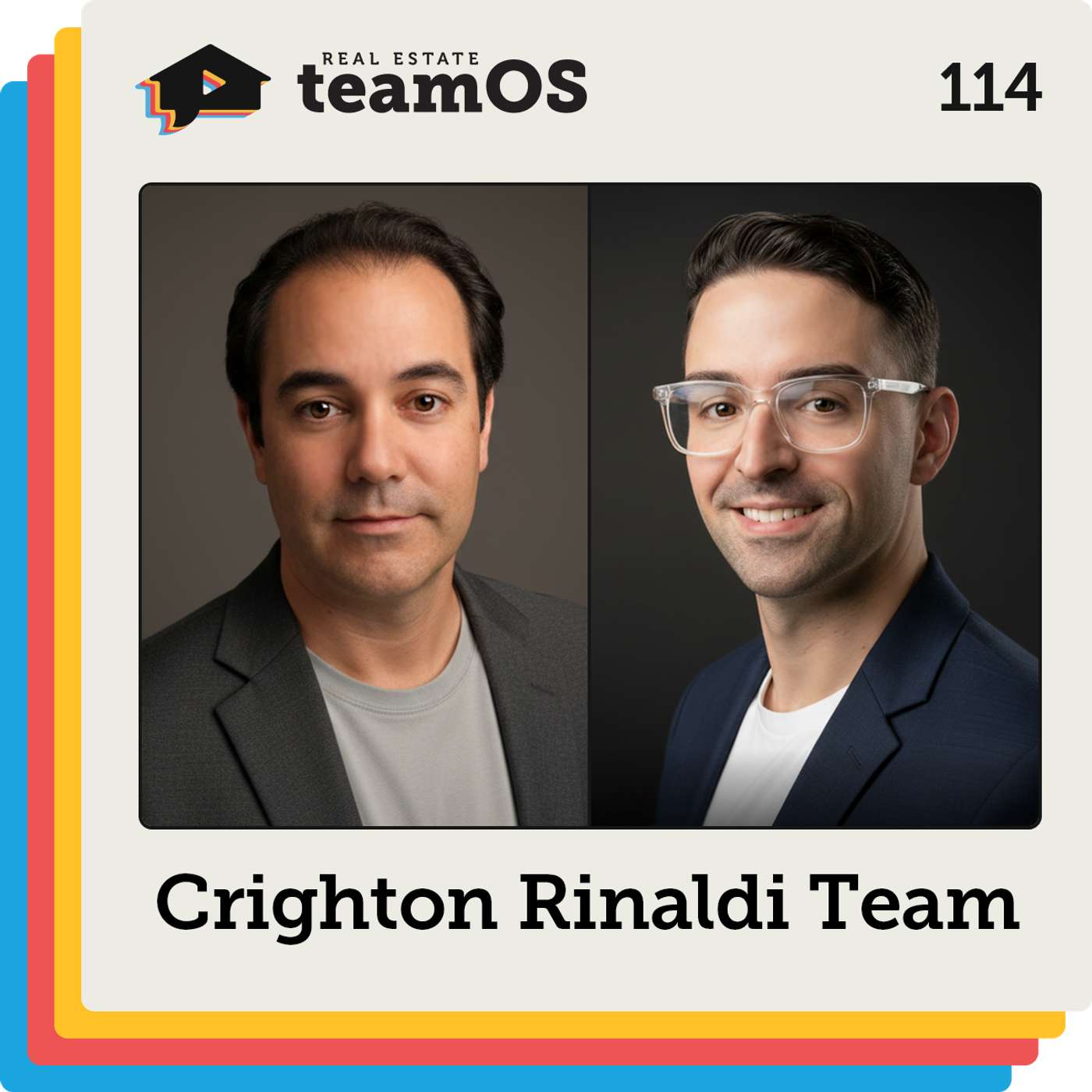
From Appointment-Fed to Well-Rounded Agents with Ryan Crighton and Danny Rinaldi | Ep 114

Many real estate teams try to build an appointment-fed model with ISAs serving agents ready-to-go opportunities. This can work - it can create efficient production. But when Ryan Crighton and Danny Rinaldi tried it, they discovered it wasn’t building agents who were as strong and well-rounded as they wanted. Learn how the shift from appointment-fed to well-rounded happened, including what prompted it, what it took, and what it produced for their 23-agent team serving clients in Las Vegas, Henderson, and Boulder City. Learn the accountability structure that’s enforced more by the environment than by team leaders and the vibe-first recruiting approach that attracts new agents who exceed performance standards before anyone asks them to. And learn how Danny evolved from ISA to coach to sales manager, what that role looks like day to day, and how he and Ryan complement each other in a partnership that lets each of them operate in their strongest area. Watch or listen for Danny's and Ryan's insights into: 0:00 Intro and welcome 1:22 Being in the weeds as the must-have characteristic — and why agents watch what you do more than they ask what to do 2:08 The difference between vibe and culture — and why vibe is what actually drives performance and retention 4:11 How Ryan built from REO listings in the 2008 downturn to a 23-agent brokerage team, and how Danny went from Brooklyn phone sales to Las Vegas sales manager 10:00 Why new agents book appointments before they know anything about real estate — and why knowledge without attitude slows them down 16:17 Why Danny leads recruiting conversations with vibe, not accountability — and how accountability reveals itself before the agent ever joins 17:34 How the Creighton Rinaldi accountability system enforces itself. No manager required. 19:06 How the peer accountability pod model (inspired by Brett Jennings, Ep 98) turned Danny into a facilitator — with agents coaching each other for most of the hour 26:59 Why Danny makes phone calls side-by-side with every new agent within 24 hours of joining — and what that did to prospecting adoption 29:32 How Nevada's two-month gap between passing the real estate exam and receiving a license became a training opportunity 32:37 Why handing agents ready-made appointments produced weaker agents — and what happened when they stopped 37:25 Why too much focus on market stats gives agents an excuse not to prospect — especially in one of the most volatile real estate markets in the U.S. 40:23 Why the team model is the only structure built to meet what today's real estate clients actually expect 41:51 At the end, Danny gives an impossible-to-follow team story and a sought-after spreadsheet and Ryan reveals a frivolous ride and a timely sports team. Related episodes → Peer Accountability Pods with Brett Jennings → Leadership Structure with Ryan Rodenbeck and Johnny McCarthy Book mentioned in this episode → The War of Art by Steven Pressfield Connect with The Crighton Rinaldi Team → Ryan at CRHomeTeam dot com / 702 217-1048 → Danny at CRHomeTeam dot com / 347 598-0913 → https://www.instagram.com/dannyrinaldi/ → https://www.instagram.com/crightonrinalditeam/ → https://www.crightonrinalditeam.com/team-page Connect with Real Estate Team OS → https://www.realestateteamos.com → https://linktr.ee/realestateteamos → https://www.instagram.com/realestateteamos/
May 19, 202658 min

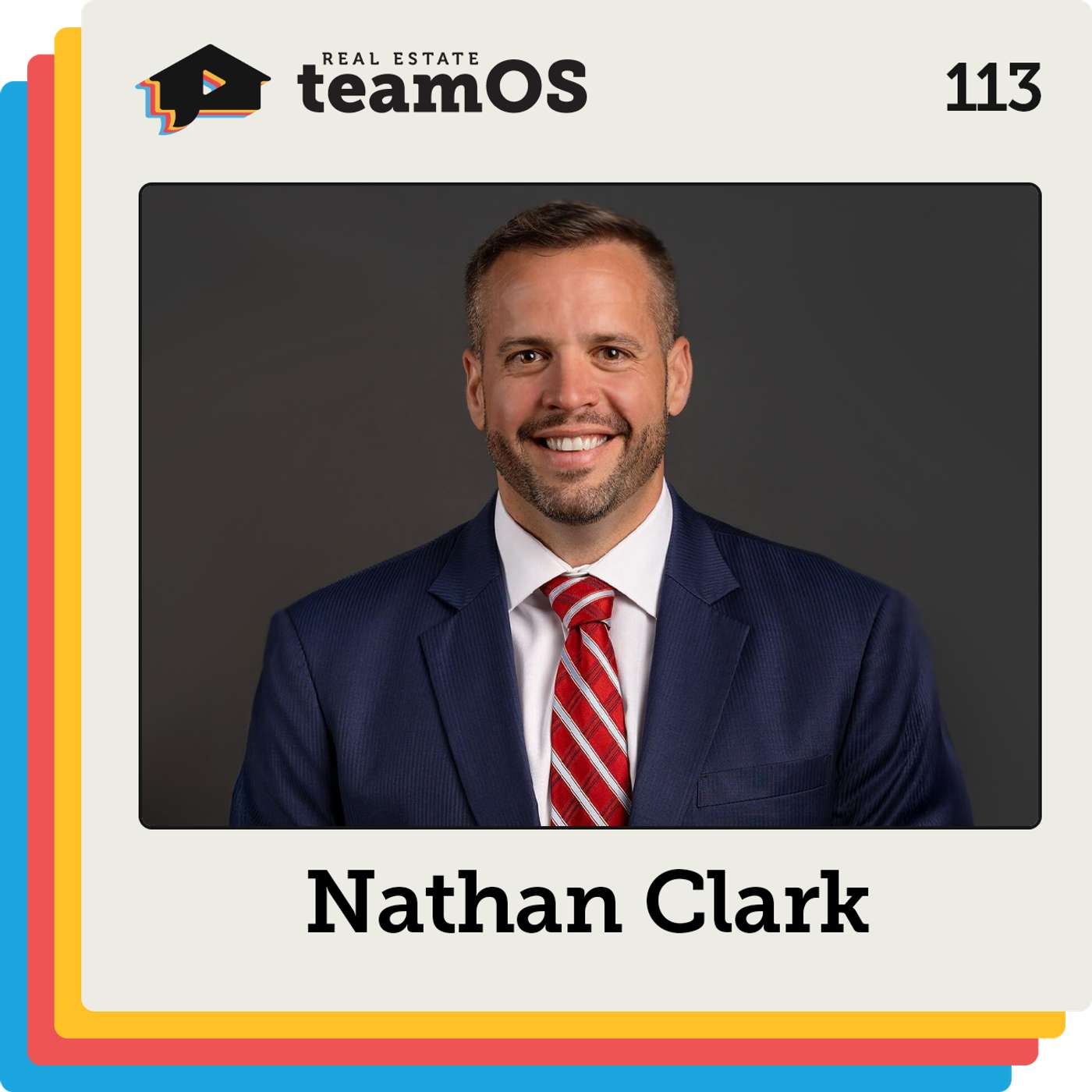
30% Net Profit from a Real Estate Team That Runs Without You with Nathan Clark | Ep 113

Most real estate teams are built around their leader. And at some level, most team leaders know it. Nathan Clark identified that problem early, named it clearly, and spent 20 years solving it. The result is a 600-plus transaction, 24-agent, 5-ISA, and 7-staff real estate team in Rhode Island that generates 30 to 35% net profit annually and genuinely runs without him: 15 to 20 hours of work per week, five race cars, and a full year away from the business when his family needed him. The team kept running. You'll learn how Nathan structures the financial model that makes that possible, starting with the COGS ceiling most teams quietly violate and the full P&L benchmark he reviews weekly. You'll learn why he charges sellers $2,000 and buyers $1,000 before showing a single home, how that generates $40,000 to $50,000 per month in working capital, and how that revenue funds better advertising and a better agent income on a lower split. You'll also learn when to step out of production, the ideal ISA:agent ratio, what team size has been most profitable for them, how to grow revenue per client instead of chasing transaction count, and what Nathan believes the team model will look like when AI is fully in the picture. Watch or listen for Nathan’s insights into: 0:00 Intro and welcome 1:43 Why speed, going all in, and staying focused would make more leaders successful 6:57 What "runs without you" actually looks like 10:36 Specific lessons learned between 200 and 600 transactions, including the right ISA:agent ratio 17:34 Starting with the end in mind and making your team or brokerage more valuable 21:49 Why your cost of sale should be 40%, what that means for your splits, and how your agents can still get ahead 27:20 Raising your commission when everyone else is cutting it 29:06 Getting paid three times on each transaction, including upfront (and what he's doing with the $40-50k/month in working capital that generates) 36:36 Why they were most profitable at 20-25 agents and when you should be able to leave sales production 39:34 Why growing GCI by 50% doesn't require 50% more agents and 50% more closings 43:35 The weekly or monthly meeting you must have, even if it's just with yourself 44:36 The P&L benchmarks: 40% COGS max, 15% advertising, 14-15% payroll (including yourself), 1-3% rent, 25% base profit, up to 35% with add-ons 48:24 Why teams modeled after enterprises will continue to take market share and how AI can empower a 600-transaction team to scale to 2-3k 51:37 At the end, learn about the underdog and the goat, an addiction that runs fast and costs a fortune, and a personal crisis that proved his business was worth every hour he put into it over the years. Mentioned in this episode: → Mike Schumm “ The Hidden Curve That Kills Real Estate Team Profit ” → Andy Mulholland “ Mastering Real Estate Business Financials ” → Anthwon Thomas “ Preserving Your Profit Margins ” Connect with Nathan Clark: → Nathan at NathanClarkTeam dot com Learn about the systems Nathan runs on: → https://hs.yhsgr.com/maib Connect with Real Estate Team OS → https://www.realestateteamos.com → https://linktr.ee/realestateteamos → https://www.instagram.com/realestateteamos/
May 12, 202647 min

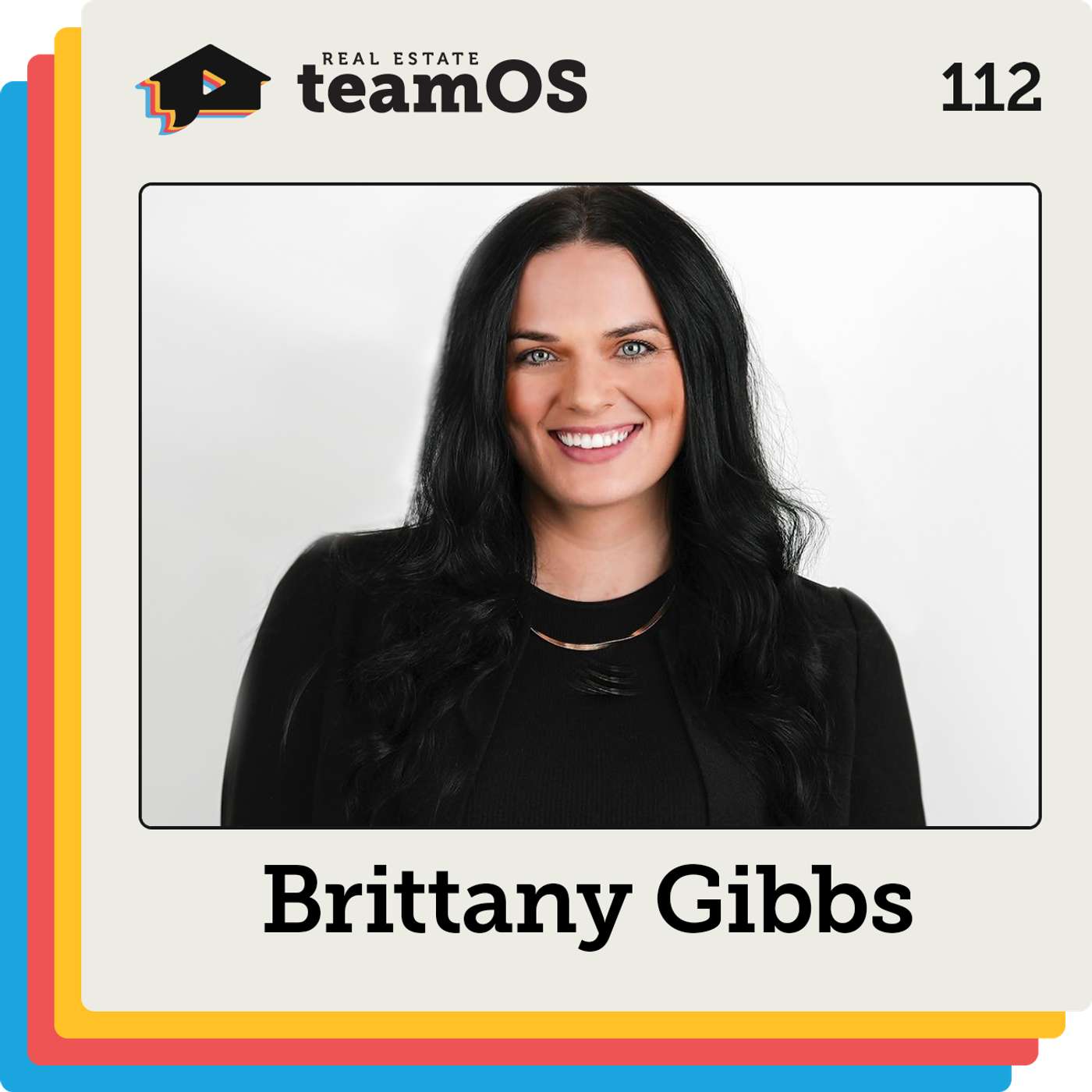
Why Fast Growth Breaks Real Estate Team Culture with Brittany Gibbs | Ep 112

Most real estate team leaders assume more is better. More agents, more channels, more tech, more systems, more growth, more quickly. Brittany Gibbs built her brokerage on the opposite premise. When she opened Move Real Estate the day she got her principal broker's license, she made a deliberate choice to do less and focus more: fewer agents added at a time, simpler systems, one channel done well instead of ten done poorly. That philosophy has protected something most fast-growing teams eventually lose - the culture that made the business worth building. Brittany Gibbs founded Move Real Estate in Portland, Oregon, growing it over 12 years to 60 agents serving Portland Metro. She recently expanded to Seattle, adding 15 agents, and runs both markets with 6 total staff. She still sells real estate herself, closing 60 homes in what she calls a bad year. In this conversation, you’ll learn how Brittany thinks about growth and why she limits herself to roughly one new agent a quarter after 12 years of building, as well as what happened to her culture during a period of mass hiring, why she'll never do it again, and how slowing down in hiring, in systems, and in what she asks agents to focus on has produced better agents and a more sustainable business. Watch or listen for her mentor-based integration model, the production-tiered coaching structure that serves four different agent groups with four different conversations, and the simplicity philosophy that cuts through the noise of everything real estate teams are told they need to do. Watch or listen for Brittany's insights into: 0:00 Intro and welcome 2:25 Why making changes too slowly or too late early in her career was her most expensive way to learn it 4:06 Starting a team in year one and a brokerage at year three 7:29 What the broker-owner role actually costs in time, compliance, and liability that nobody warns you about 8:14 Why she didn't name the brokerage after herself and how her reputation in Portland preceded her all the way into Seattle 17:36 The mass hiring lesson: 10-15 agents added to meet demand, immediate culture shift, never again. She now adds one agent a quarter. 20:13 How to protect culture during growth: clear vision, intentional hiring, and a mentor paired to each new agent by personality fit 23:04 The simplicity philosophy: CRM mastery and talking to people outperform social media, AI tools, and other distractions 27:58 60 solo deals in her worst year, not working weekends, done at 4:30 or 5pm every day — and trying to figure out how to leave production completely 33:22 The value prop and what leverage is provided to agents 36:25 The Thursday all-hands mastermind where new agents and veterans solve problems together 38:20 Who gets hired and who doesn't: personality and mindset over experience, and why "I got into real estate for my schedule" is an automatic no 40:06 The 4-group Tuesday coaching model segmented by production level (baseline, brokerage leads, transitioning, and heavy hitters) 43:19 Where the team model is heading and what it will take to succeed 44:23 At the end, Brittany reveals she's a fully invested sports mom, holds more cheapskate habits than she needs to, and recharges by finding passion in whatever she's doing — from a 100-acre farm where no neighbors are visible. Connect with Brittany Gibbs: → https://moverealestate.org Connect with Real Estate Team OS → https://www.realestateteamos.com → https://linktr.ee/realestateteamos → https://www.instagram.com/realestateteamos/
May 5, 202650 min

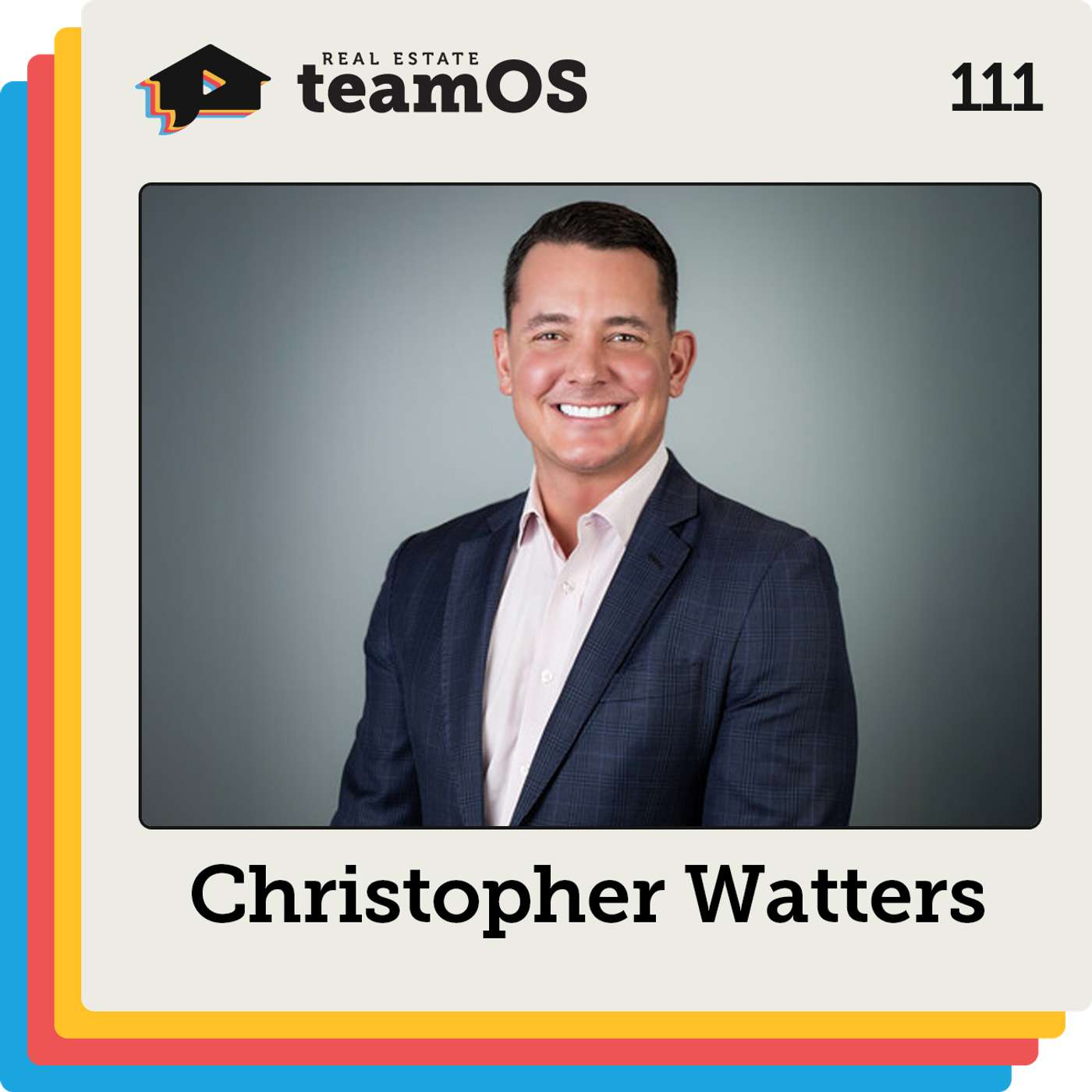
The Real Estate Team Bottleneck That AI Now Solves with Christopher Watters | Ep 111

Most real estate teams hit a wall they can't see clearly. As production grows, sales leadership becomes the bottleneck. Not because your leaders aren't talented, but because accountability and inspection work alone requires roughly 80 hours a month before recruiting, onboarding, or training even starts. AI is now changing that math. Learn how that bottleneck forms, what it costs teams at every stage of growth, and how Christopher Watters is rebuilding the leadership layer with AI tools and a vision of an emerging, AI-powered Enterprise Model of real estate team. The author of The Million Dollar Real Estate Team, Chris also shares a lead quality strategy that reaches a 1.6 to 1 lead-to-appointment ratio and drives per-agent productivity of 60+ homes per year. Watch or listen for Chris's insights into: 0:00 Intro and welcome 1:40 What stays stable over time for a real estate team and what changes every 3-6 months 5:06 The two switches that unlock agent productivity: high-intent leads and the enforcement loop 10:49 What happens at approximately 150 deals per year that bottlenecks too many real estate teams 18:30 The time constraints for sales leaders and how AI unlocks them 20:43 What Chris built, burned, and rebuilt into a model where agents close 60-100 homes per year regardless of experience level 26:40 What should be centralized and what should be local for expansion teams (based on a lot of trial and error) 29:34 The 5-phase, 90-day onboarding process that both weeds out agents and produces high retention 33:12 How to identify high-intent leads producing a 1.6-to-1 lead-to-appointment ratio 41:46 How the emerging Enterprise Model changes the roles of real estate leaders and real estate agents and the processes of booking appointments and managing transactions Books mentioned in this episode: → The Million Dollar Real Estate Team → Rare Find Series Mentioned in this episode: → Techtember Check out Christopher’s AI solution → https://tableos.ai/ Connect with Real Estate Team OS → https://www.realestateteamos.com → https://linktr.ee/realestateteamos → https://www.instagram.com/realestateteamos/
April 28, 202651 min

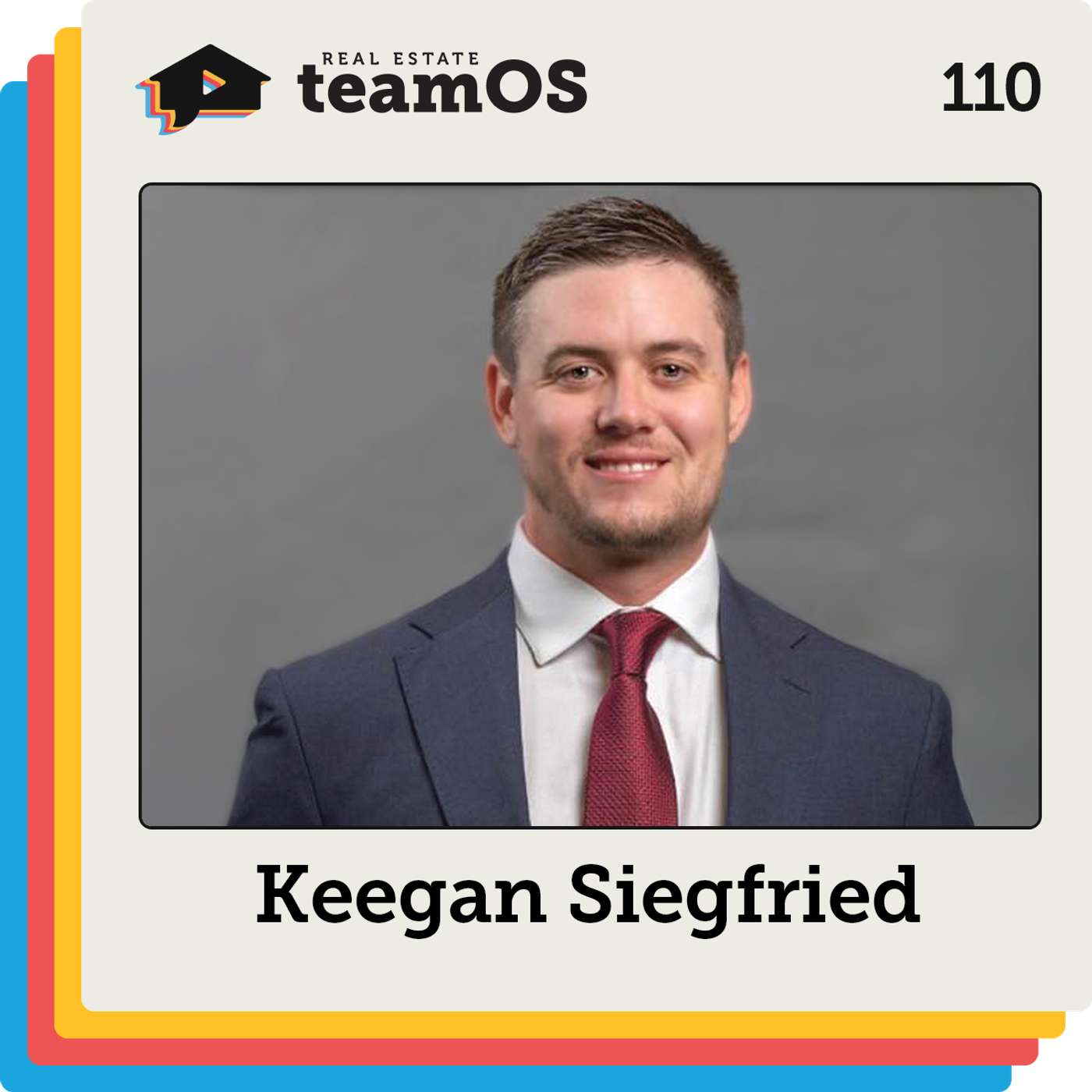
How Leadership Training Becomes a Market Expansion Engine with Keegan Siegfried | Ep 110

Some of your best agents will eventually start wondering what it takes to build a team. Instead of letting that curiosity play out on its own, which might mean losing them, Keegan Siegfried gets ahead of it. He brings high-potential agents behind the curtain: P&Ls, budgets, accountability meetings, the real cost of hiring and firing, all of it. Many realize they don't actually want to build a team. Some have become expansion market leaders — empowered, retained, and even financially backed by Keegan himself. What started as a fix for an agent retention problem became the engine behind his growth from 15 agents in Tampa to 175 agents across five markets in about three years. You'll learn exactly how that program works — and what it produces. You'll also learn how to use your onboarding process as an agent selection tool, what the financial J-curve of scaling actually looks like from the inside, how the "Race to 200 transactions" drives agent success, and what he’s learned adding ancillary businesses to the real estate operation. Keegan Siegfried leads Paramount Home Group, one of the first teams ever to join LPT Realty, now spanning Tampa, Stuart, West Palm Beach, Orlando, Miami, and Chicago. Watch or listen for Keegan's insights into: 0:00 Intro and welcome 1:55 Why coachability and work ethic beat interview performance 5:24 How Keegan's team started almost accidentally and why he had to leave the brokerage it started in 10:01 Why LPT Realty and mentor Robert Palmer were the ideal fit for his growth path 11:31 From 15 agents in Tampa to 175 agents across 5 markets in 3 years by focusing on agent outcomes and bottom line 13:29 How each of 5 markets came to be, who leads them, where those leaders came from, and the centralized-ops-plus-local-RVP model that holds it all together 21:42 The leadership training program that started as a retention fix and ended up supporting expansion 27:21 The J-Curve of scaling and what cash reserves, churn math, and financial sacrifice look like in practice 31:47 The "Race to 200" value proposition for agent success and "PALS" program for agent voice 36:17 When and why he added mortgage, insurance, and title businesses 44:08 Where the real estate team model is heading and which teams will succeed 48:23 At the end, learn about purple and gold Ravens fans, Michelin star restaurants and the team leader dinners worth traveling for, and an eight-week-old and almost-four-year-old who completely reorganized what recharging looks like. Mentioned in this episode: → Mike Schumm “ The Hidden Curve That Kills Real Estate Team Profit ” → Grant Johnson “ How Commercial Agents Boost Team Revenue and Referrals ” → Jon Cheplak “ Why Most Real Estate Team Leaders Shouldn’t Be Team Leaders ” Connect with Keegan Siegfried: → https://www.facebook.com/keegan.siegfried Connect with Real Estate Team OS → https://www.realestateteamos.com → https://linktr.ee/realestateteamos → https://www.instagram.com/realestateteamos/
April 21, 202652 min

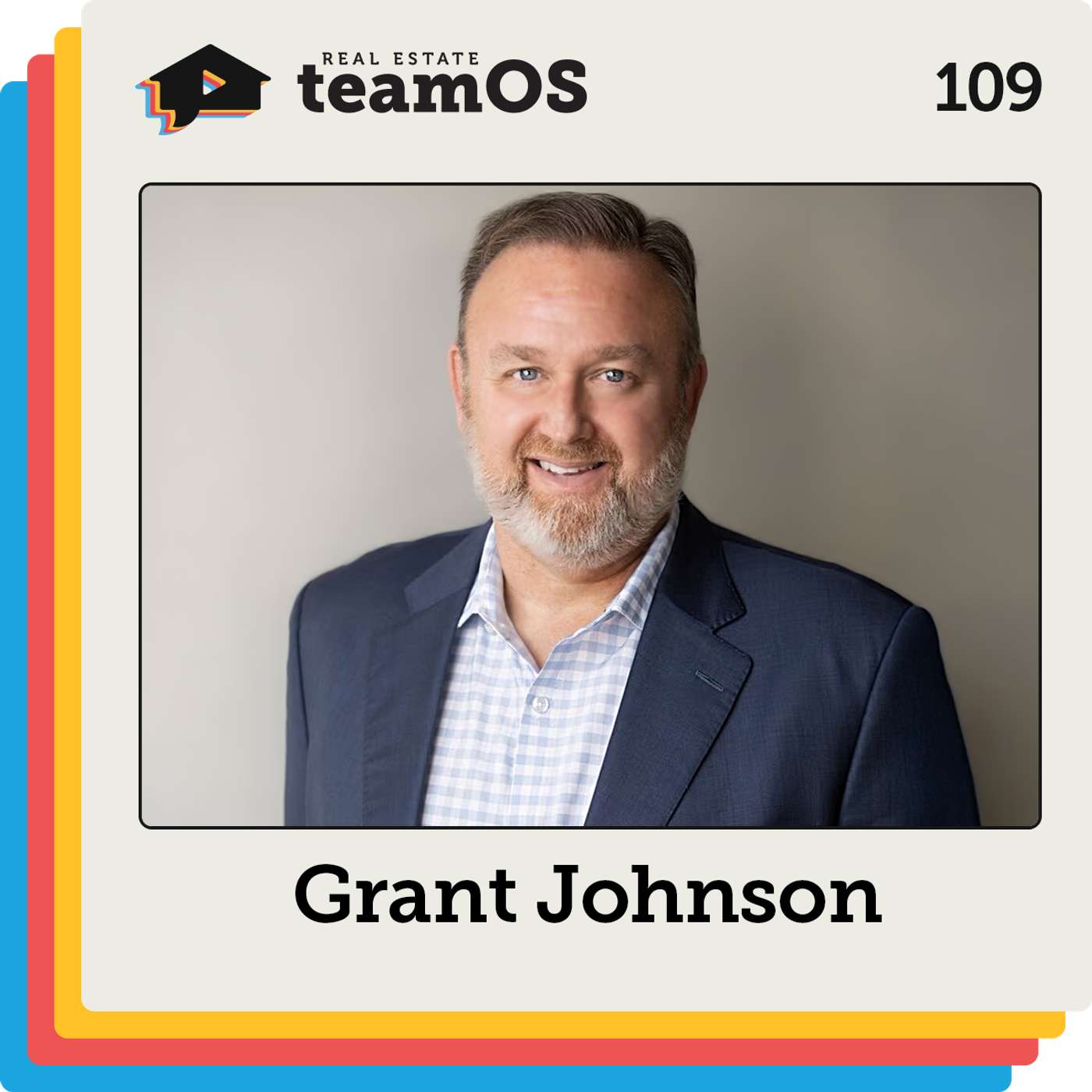
How Commercial Agents Boost Team Revenue and Referrals with Grant Johnson | Ep 109

What would a commercial division add to your residential real estate team? And what does it look like when one generates roughly $100M in active listings — and a $25M portfolio sale — in its first year? You're about to find out. But this episode is about a lot more than a shower-thought-turned-11-agent commercial division. Grant Johnson's Twin Cities team went from selling 100-150 homes per year for nearly a decade to 270, then 539, then 830+ — while adding only 2 staff members along the way. Learn how his 120-agent organization can run with just 5 staff, why they brand around the agent rather than the team, and what he’s learned about how (and how not) to expand into new markets. Grant is candid about mistakes and backwards moves to avoid and cautions for aspiring team leaders - all based on his extensive experience. Watch or listen for Grant's insights into: 0:00 Intro and welcome 1:35 Why 75% of agents should never start a team and what puts someone in the 25% who should 12:31 How to run 120 agents on 5 staff, including the specific roles that held them together as production grew from 150 to 830+ homes per year in 3 years 19:03 Why group coaching sessions segmented by production level beat 1-on-1s at scale — and how a culture of peer accountability fills in the rest 21:53 How a shower thought became a commercial division in one week that now includes 11 agents, ~$100M in listings, and a $25M portfolio sale in year one 23:28 Why applying residential marketing (like high-end video walkthroughs) to commercial listings is attracting commercial agents 27:31 The referral flywheel between residential and commercial agents (a $5M sale, a 25% referral fee, and zero deal work for the residential side) 31:59 Why cold calling agents is the wrong first move in market expansion (and what he's doing differently for the next expansion) 37:00 Why you don't need to incessantly brand your real estate team (even if someone tells you to) 39:29 The weekly meetings and monthly financial reviews that keep the team connected in a high-growth environment 47:07 At the end, learn about rooting for your competitors, a $60-a-day coffee habit, what happens when two universities politely ask you not to come back, and learning from people rather than pages. Mentioned in this Episode: → Scaling a Real Estate Team to $6 Billion in Production with Jason Mitchell → Building a Real Estate Company That Works Without Your Production with Jason Mitchell → Why Most Real Estate Team Leaders Shouldn’t Be Team Leaders with Jon Cheplak Connect with Grant Johnson: → https://www.instagram.com/thereal.grantjohnson/ → grant at grantjohnson dot com → 651 324 3787 Connect with Real Estate Team OS: → https://www.realestateteamos.com → https://linktr.ee/realestateteamos → https://www.instagram.com/realestateteamos/
Is this your show?

Claim this listing to keep it up to date, reach guests who want to pitch you, and manage bookings with Guestify.

Claim this listing

More Business podcasts