Find partners
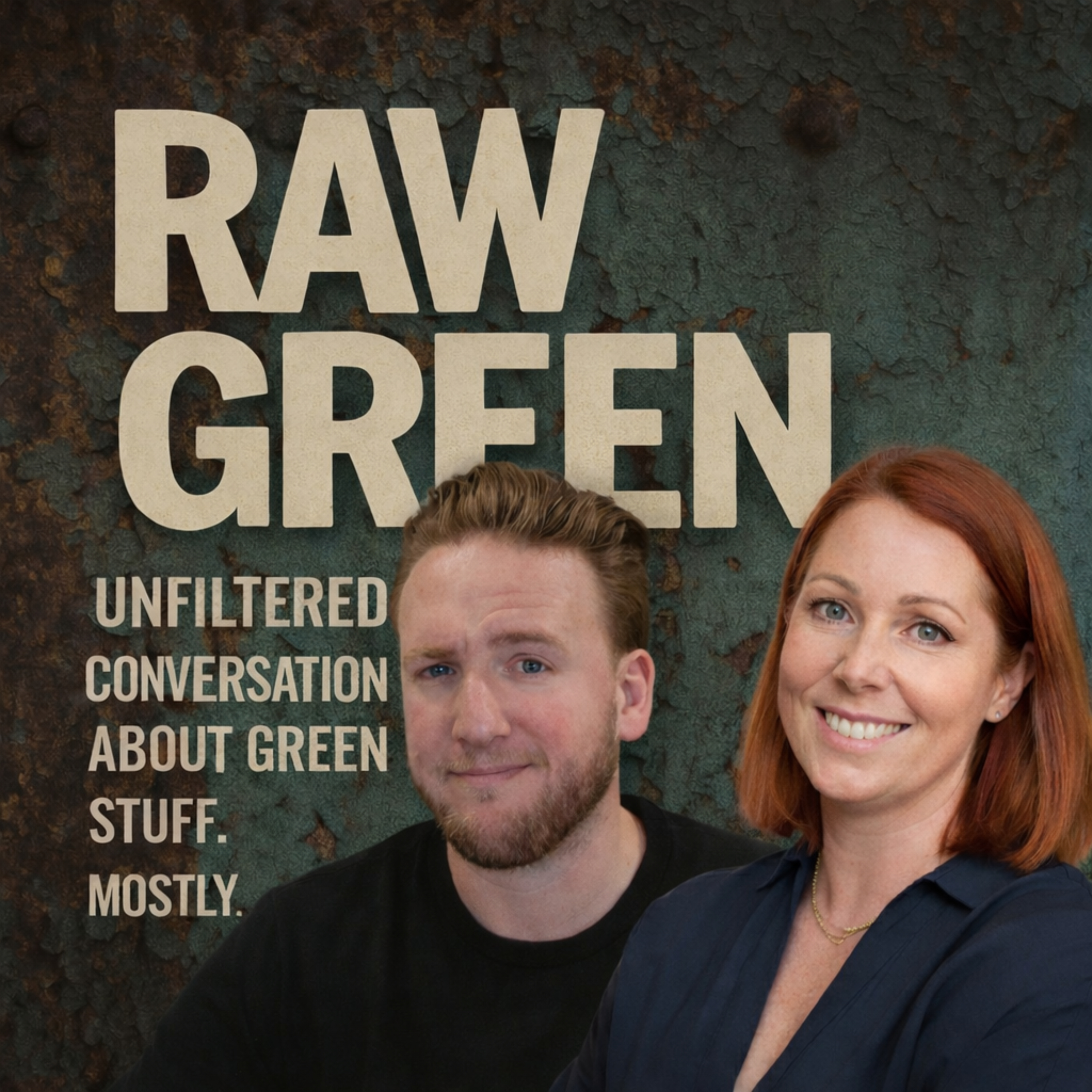
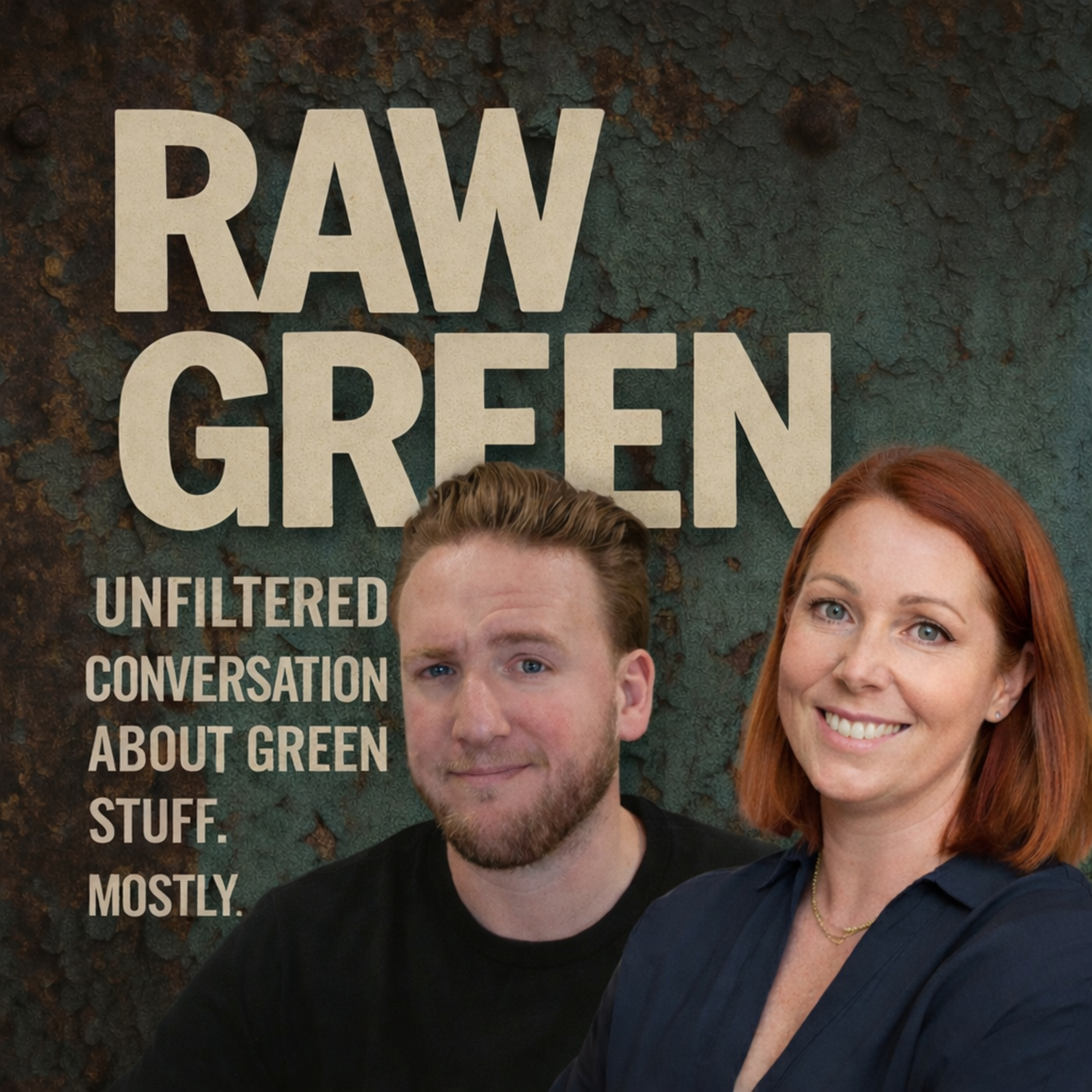
RAW GREEN

RAW GREEN

Hosted by OBE Sustainability

BusinessInterviews guests

Episodes

58

Latest episode

Aug 2026

Language

EN

About the show

Raw, unfiltered chats about the tech, policy and money behind climate solutions. Hosts Francesco De Lieto (OBE Sustainability Managing Director) and Emma Mee (Chief of Staff, Colbridge Ventures) sit with founders, scientists, academics and investors on what works, what doesn’t, and what still needs inventing. With a touch of humour. Produced by OBE, a sustainability consultancy specialising in life‑cycle assessment, research and climate tech. More: • oneobe.com • youtube.com/@RAWGREEN_1 • linkedin.com/company/on‑behalf‑of‑earth Ciiiao!

Listen to episodes

58 recent
August 13, 202637 min

Episode 057 - Can Small Wind Finally Take Off? | Daniel Farb

Small wind has been around for decades. So why has it never taken off like solar? In this episode of Raw Green , Francesco De Lieto and Emma Mee speak with Daniel Farb , CEO of Flower Turbines (https://www.flowerturbines.com/), about whether small vertical-axis wind can finally move from niche technology to serious distributed energy. Flower Turbines is trying to tackle many of the problems that have held small wind back: cost, noise, vibration, aesthetics, siting and poor economics. Its key innovation is the “bouquet effect”, where turbines installed close together can improve each other’s performance. But technology is only part of the story. Unlike solar, where generation forecasts can be built quickly from highly mature irradiance datasets, small wind still faces a harder problem: proving output with enough confidence to support a robust financial case without making project development prohibitively expensive. We cover: Why small wind has historically disappointed How commercial deployments are assessed Flower Turbines’ technology and bouquet effect The economics of clustered installations Selling electricity instead of turbines Manufacturing, China and IP UK vs US market dynamics What small wind still needs to compete with commercial solar Can small wind finally take off? Don’t forget to follow the podcast to catch the next episode. Raw Green is produced and sponsored by OBE, a sustainability consultancy specialised in Life Cycle Assessment, research and climate technologies. For more information: ⁠⁠⁠⁠⁠⁠https://oneobe.com/⁠⁠⁠⁠⁠ ⁠⁠⁠⁠⁠⁠⁠⁠⁠⁠⁠ ⁠⁠⁠⁠⁠⁠https://www.linkedin.com/company/on-behalf-of-earth/⁠⁠⁠⁠⁠ ⁠⁠⁠⁠⁠⁠⁠⁠⁠⁠⁠ ⁠⁠⁠⁠⁠⁠https://www.youtube.com/@RAWGREEN_1⁠⁠⁠⁠⁠⁠ Suggestions or ideas for future episodes?Email us at ⁠⁠⁠⁠⁠⁠info@oneobe.com⁠⁠⁠⁠⁠⁠ Ciiiiao!

July 29, 202640 min

Episode 056 - Cooling Buildings Without More Air Conditioning | Molly Allington

When buildings overheat, the usual answer is simple: add more cooling. But what if part of the solution was not another machine, but a material? In this episode of Raw Green , Francesco De Lieto and Emma Mee speak with Molly Allington , CEO and co-founder of Albotherm (https://albotherm.com/), a Green Angel Ventures portfolio company developing heat-responsive coatings and films for glass. Albotherm’s technology is clear when it is cooler and turns white and reflective when temperatures rise, helping to reduce solar heat gain before air conditioning is needed. The company began by working on greenhouse coatings, where overheating can affect crops, workers and yields, and is now moving into retrofit window films for homes, offices, schools, public buildings and commercial spaces. The conversation covers passive cooling, building overheating, energy efficiency, climate adaptation, solar-control films, greenhouse trials, Part O overheating regulations, public health, product durability, environmental trade-offs, and the manufacturing challenges of scaling a materials start-up. If we want buildings to cope with hotter summers without simply increasing electricity demand, technologies like Albotherm may become part of the next wave of practical climate adaptation. Don’t forget to follow the podcast to catch the next episode. Raw Green is produced and sponsored by OBE, a sustainability consultancy specialised in Life Cycle Assessment, research and climate technologies. For more information: ⁠⁠⁠⁠⁠https://oneobe.com/⁠⁠⁠⁠ ⁠⁠⁠⁠⁠⁠⁠⁠⁠ ⁠⁠⁠⁠⁠https://www.linkedin.com/company/on-behalf-of-earth/⁠⁠⁠⁠ ⁠⁠⁠⁠⁠⁠⁠⁠⁠ ⁠⁠⁠⁠⁠https://www.youtube.com/@RAWGREEN_1⁠⁠⁠⁠⁠ Suggestions or ideas for future episodes?Email us at ⁠⁠⁠⁠⁠info@oneobe.com⁠⁠⁠⁠⁠ Ciiiiao!

July 15, 202656 min

Episode 055 - How climate tech earns serious capital | Bailey Morrow

How does climate tech earn serious capital? In this episode of RAW GREEN , Francesco De Lieto and Emma Mee sit down with Bailey Morrow, Managing Director at HSBC Innovation Banking (https://www.hsbcinnovationbanking.com/en), to unpack one of the biggest bottlenecks in climate tech: bankability. Many climate technologies can prove they work through pilots, LCA data, early customers and technical milestones. But proving that a technology works is not the same as proving it is financeable. Bailey explains what lenders actually look for when assessing climate tech companies, why debt moves differently from venture capital, and why founders often confuse being VC-fundable with being bank-financeable. The conversation covers the gap between technical validation and commercial maturity, the role of liquidity, customer contracts, offtake agreements, recurring revenue, and the importance of building lender relationships early. The episode also explores the differences between the US, UK, Europe and China when it comes to climate tech scale-up, risk appetite, speed of execution, regulation and deployment. From software-enabled climate tech to hardware, FOAK projects, project finance, venture debt and customer-side financing, this is a practical discussion on what it really takes for climate technologies to move from promising innovation to serious capital. If you are a climate tech founder, investor, lender, corporate buyer or anyone working on scaling clean technologies, this episode is a clear guide to how capital thinks , and what climate tech needs to prove before banks lean in. Don’t forget to follow the podcast to catch the next episode. Raw Green is produced and sponsored by OBE, a sustainability consultancy specialised in Life Cycle Assessment, research and climate technologies. For more information: ⁠⁠⁠⁠https://oneobe.com/⁠⁠⁠ ⁠⁠⁠⁠⁠⁠⁠ ⁠⁠⁠⁠https://www.linkedin.com/company/on-behalf-of-earth/⁠⁠⁠ ⁠⁠⁠⁠⁠⁠⁠ ⁠⁠⁠⁠https://www.youtube.com/@RAWGREEN_1⁠⁠⁠⁠ Suggestions or ideas for future episodes?Email us at ⁠⁠⁠⁠info@oneobe.com⁠⁠⁠⁠ Ciiiiao!

June 30, 202647 min

Episode 054 - Can Rocks Remove CO₂? Enhanced Rock Weathering | Mat Meredith

In this episode of RAW GREEN, Francesco De Lieto and Emma Mee speak with Mat Meredith, Chief Technology Officer at UNDO (https://un-do.com/), about enhanced rock weathering, one of the most promising carbon removal pathways with real gigatonne potential. Enhanced rock weathering sounds almost too simple: take crushed silicate rock, spread it on land, let rain and soil chemistry do the work, and remove CO₂ from the atmosphere. But behind that simple idea sit some of the hardest questions in climate tech: how do you prove the carbon has actually been removed, how do you measure it across messy real-world soils, and how do you turn it into a credible carbon credit? Mat explains how ERW works in plain English, why different rocks such as basalt and wollastonite behave differently, what happens to the captured carbon over time, and why MRV (measurement, reporting and verification) is the key challenge for the sector. We also discuss UNDO’s work with farmers and landowners, the soil-health benefits of spreading crushed rock, the carbon footprint of quarrying and processing, the instability of the carbon credit market, and what needs to happen for ERW to become bankable and scalable. A conversation about rocks, rain, soil, carbon removal, climate finance, and whether enhanced rock weathering can become one of the major tools in the fight against climate change. Don’t forget to follow the podcast to catch the next episode. Raw Green is produced and sponsored by OBE, a sustainability consultancy specialised in Life Cycle Assessment, research and climate technologies. For more information: ⁠⁠⁠https://oneobe.com/⁠⁠ ⁠⁠⁠⁠⁠ ⁠⁠⁠https://www.linkedin.com/company/on-behalf-of-earth/⁠⁠ ⁠⁠⁠⁠⁠ ⁠⁠⁠https://www.youtube.com/@RAWGREEN_1⁠⁠⁠ Suggestions or ideas for future episodes?Email us at ⁠⁠⁠info@oneobe.com⁠⁠⁠ Ciiiiao!

June 16, 202647 min

Episode 053 - Plastic Foam, Biochar & the Fight to Replace Styrofoam | Elizabeth Lee

Plastic foam is everywhere. It protects our deliveries, insulates buildings, keeps food cold, cushions products, and makes modern logistics work. But materials like expanded polystyrene - better known as Styrofoam - are still largely fossil-based, difficult to recycle in practice, and often end up as long-lasting plastic waste. In this episode of RAW GREEN 🎤 🌵, Francesco De Lieto and Emma Mee speak with Liz Lee, founder and CEO of Carbon Cell, a UK climate tech company developing a plastic-free foam made with biochar and natural materials. We explore what plastic foam is made of, why EPS became so dominant, why it is so hard to dispose of properly, and whether biochar-based materials could offer a real alternative to fossil-based foams in packaging, insulation and construction. Liz explains how Carbon Cell’s material works, why biochar is more than just a soil amendment, what “carbon negative” really means, and why sustainable materials need to compete on performance, cost and scalability - not just environmental claims. We also discuss the wider shift away from fossil-based materials, the challenge of scaling climate tech hardware, fundraising for sustainable materials companies, regulation, supply chain resilience, and the future of plastic-free foam. Don’t forget to follow the podcast to catch the next episode. Raw Green is produced and sponsored by OBE, a sustainability consultancy specialised in Life Cycle Assessment, research and climate technologies. For more information: ⁠⁠https://oneobe.com/⁠ ⁠⁠⁠ ⁠⁠https://www.linkedin.com/company/on-behalf-of-earth/⁠ ⁠⁠⁠ ⁠⁠https://www.youtube.com/@RAWGREEN_1⁠⁠ Suggestions or ideas for future episodes?Email us at ⁠⁠info@oneobe.com⁠⁠ Ciiiiao!

May 13, 202621 min

Episode 052 - Live at Cerulean - Part II: Wave Energy, Ocean Tech & Microgrids: The Future Beyond the Grid?

Recorded live at Cerulean II in London organised by Samudra Oceans, this Raw Green episode explores one of the most overlooked areas in climate tech and energy infrastructure: the ocean. Our host Francesco De Lieto is joined by Ophelia Chua (CFO, Rypples) and Laura Duggan (CEO, Fetch Energy), the discussion moves from ocean automation and climate tech investment to wave power, microgrids, energy security, and the future of decentralised infrastructure. Together, they unpack: Why ocean technologies are still lagging behind broader climate tech Whether consolidation and M&A will reshape the sector The real challenge of scaling ocean innovation: capital, deployment, and commercialization A new approach to wave energy generation with simplified mechanics and no critical materials Why bypassing the grid could unlock faster deployment and new business models The rise of microgrids, local energy systems, and China’s net-zero industrial zones Energy security, geopolitics, and the increasing urgency to deploy resilient infrastructure Commercial maritime applications, electric vessels, and solving “range anxiety” at sea The conversation highlights a broader shift happening across energy systems: moving from centralized infrastructure toward more distributed, flexible, and locally integrated solutions. If you are interested in climate tech, blue economy innovation, wave energy, or the future of energy infrastructure, this episode offers a grounded look at where the sector may be heading next. Don’t forget to follow the podcast to catch the next episode. Raw Green is produced and sponsored by OBE, a sustainability consultancy specialised in Life Cycle Assessment, research and climate technologies. For more information: ⁠⁠⁠https://oneobe.com/⁠⁠ ⁠⁠⁠⁠⁠ ⁠⁠⁠https://www.linkedin.com/company/on-behalf-of-earth/⁠⁠ ⁠⁠⁠⁠⁠ ⁠⁠⁠https://www.youtube.com/@RAWGREEN_1⁠⁠⁠ Suggestions or ideas for future episodes?Email us at ⁠⁠⁠info@oneobe.com⁠⁠⁠ Ciiiiao!

May 6, 202636 min

Episode 052 - Live at Cerulean - Part I: Deep Sea Mining Debate: Robots vs Regulation | Ocean Tech, Battery Metals & Unknown Ecosystems

Recorded live at Samudra Oceans Cerulean event in London, this Raw Green episode dives straight into one of the most controversial frontiers in climate tech: deep sea mining. Joined by Alexander Nesiah (Founder, nMech Robotics / Atlas) and Dr. Nick Hardman-Mountford (marine scientist, policy advisor), the conversation explores whether ocean-based mineral extraction is a necessary step for electrification — or a risk we still don’t understand. Together with Francesco and Emma, they unpack: A radically different approach to deep sea mining using swarms of small robots instead of dredging The environmental trade-offs between seabed extraction and land-based mining (rainforests, Congo, Indonesia) The reality of how little we know about deep ocean ecosystems — and why that matters “Dark oxygen” and new discoveries that could reshape our understanding of planetary systems Regulation, the International Seabed Authority, and whether governance can keep up with technology The tension between urgency (energy transition, AI demand) and the precautionary principle Why major companies (Microsoft, BMW, Volvo, Google, and others) are already rejecting deep sea minerals This is not a settled debate — it’s a live collision between engineering ambition, scientific uncertainty, and global demand for critical minerals. If you care about ocean tech, climate infrastructure, or the future of resource extraction, this episode sits right at the edge of what comes next. Don’t forget to follow the podcast to catch the next episode. Raw Green is produced and sponsored by OBE, a sustainability consultancy specialised in Life Cycle Assessment, research and climate technologies. For more information: ⁠⁠https://oneobe.com/⁠ ⁠⁠⁠ ⁠⁠https://www.linkedin.com/company/on-behalf-of-earth/⁠ ⁠⁠⁠ ⁠⁠https://www.youtube.com/@RAWGREEN_1⁠⁠ Suggestions or ideas for future episodes?Email us at ⁠⁠info@oneobe.com⁠⁠ Ciiiiao!

April 8, 202643 min

Episode 051 - What’s Really Inside a Battery? | EV Manufacturing, Defects & Gigafactories | Dan Brett

EV batteries, manufacturing, defects, and gigafactory scale explained. Battery production is scaling fast — but how much do we actually see inside the cells being produced? In this episode of Raw Green, Francesco De Lieto and Emma Mee speak with Dan Brett (CEO of Sention Technologies) about EV battery manufacturing, lithium-ion battery defects, and how gigafactories manage quality at scale. We cover where defects come from, why many issues only show up later, and how new diagnostic approaches like ultrasound can help detect problems earlier — across R&D, production, and second-life batteries. The conversation also explores scrap rates in gigafactories, energy use, battery recycling, and the broader supply chain challenges shaping battery production in Europe and globally. A grounded look at how battery manufacturing actually works today — and what changes when you can finally see inside the cell. Don’t forget to follow the podcast to catch the next episode. Raw Green is produced and sponsored by OBE, a sustainability consultancy specialised in Life Cycle Assessment, research and climate technologies. For more information: ⁠https://oneobe.com/ ⁠ ⁠https://www.linkedin.com/company/on-behalf-of-earth/ ⁠ ⁠https://www.youtube.com/@RAWGREEN_1⁠ Suggestions or ideas for future episodes?Email us at ⁠info@oneobe.com⁠ Ciiiiao!

March 26, 202641 min

Episode 050 - How Secure Is the Energy Transition? | Uri Sadot

The energy transition is accelerating — solar, storage, electrification. But as energy systems become more connected and more distributed, they also become more exposed. In this episode of Raw Green , Francesco De Lieto and Emma Mee speak with Uri Sadot , Managing Director of Solar Defend (https://solardefend.eu/) , about a topic that is quickly moving from theory to reality: cybersecurity in energy infrastructure. Uri explains how renewable energy assets — particularly solar — are increasingly treated as critical infrastructure, and why that shift is forcing a new level of attention from regulators, investors, and operators. The conversation covers real-world incidents, including coordinated attacks on energy assets in Europe, and what these mean for the future of the grid. Beyond risk, the discussion moves into economics. How much does it actually cost to secure a solar plant? What happens when cybersecurity becomes a compliance requirement? And should resilience be factored into how energy assets are valued and financed? The episode also explores the role of AI — both as a tool for attackers and defenders — and why, despite increasing complexity, most vulnerabilities still come down to basic “cyber hygiene”. From grid resilience to investment decisions, this conversation looks at how the energy transition is evolving from a question of deployment to one of maturity — and what it takes to build a system that is not only clean, but robust. Don’t forget to follow the podcast to catch the next episode. Raw Green is produced and sponsored by OBE, a sustainability consultancy specialised in Life Cycle Assessment, research and climate technologies. For more information: https://oneobe.com/ https://www.linkedin.com/company/on-behalf-of-earth/ https://www.youtube.com/@RAWGREEN_1 Suggestions or ideas for future episodes? Email us at info@oneobe.com Ciiiiao! 🌱
March 11, 202644 min

Episode 049 - Is Carbon Fibre Actually Sustainable? | Gary Owen

Carbon fibre is one of the most advanced materials in modern engineering. It makes aircraft lighter, electric vehicles more efficient, wind turbines stronger, and high-performance sports equipment possible. But behind these advantages lies a major challenge. Producing carbon fibre is extremely energy-intensive, manufacturing generates large amounts of waste, and recycling composites remains technically difficult. In this episode of Raw Green , Francesco De Lieto and Emma Mee speak with Gary Owen , CEO at Lineat (http://lineat.co.uk/), a UK climate technology company developing industrial processes to recover and reuse carbon fibre. Gary explains why carbon fibre recycling has historically been so difficult, why large amounts of composite material are wasted during manufacturing, and how new technologies could help bring circularity to one of the most important materials used in aerospace, automotive, and advanced manufacturing. The conversation explores the real carbon footprint of carbon fibre, the growing demand for lightweight materials in sectors like EVs and wind energy, and how recycled composites could become both a sustainability solution and a new industrial opportunity. From aircraft and Formula One to tennis rackets, electronics and electric vehicles, this episode looks at how advanced materials are shaping the future of engineering — and whether one of the most powerful materials ever developed can finally become circular. Don’t forget to follow the podcast to catch the next episode. Raw Green is produced and sponsored by OBE , a sustainability consultancy specialised in Life Cycle Assessment, research and climate technologies. For more information: https://oneobe.com/ https://www.linkedin.com/company/on-behalf-of-earth/ https://www.youtube.com/@RAWGREEN_1 Suggestions or ideas for future episodes? Email us at info@oneobe.com Ciiiiao! 🌱
Is this your show?

Claim this listing to keep it up to date, reach guests who want to pitch you, and manage bookings with Guestify.

Claim this listing

More Business podcasts