
Find partners
People of Packaging Podcast

People of Packaging Podcast

Hosted by www.adampeek.com

Episodes

362

Latest episode

Nov 2026

Language

EN

About the show

This is a podcast where we illuminate the stories of people in the packaging industry and proudly sponsored by TheLabelKing.com Hosted by the Label King of the Mountains, Adam Peek encase.substack.com

Listen to episodes

60 recent
November 9, 2026Episode 36430 min

364 - Josh Pauna’s story from pizza to packaging

Most people don’t set out to work in packaging. Josh Pauna definitely didn’t. Adam Peek sits down with Josh, a Minnesota native now living in New York City and working as an independent packaging consultant with Presence Fieldwork. The conversation starts with the usual podcast chaos (a quick attempt at live music, and a detour into Rhymesayers and Brother Ali) before settling into the real story. Josh’s path into the industry is classic “fell into it.” He grew up in northern Minnesota, baled hay as a kid, worked construction with his stepdad, then spent years delivering and managing for Domino’s Pizza. Those pizza days taught him the simple version of what still matters in packaging work: answer the phone with a decent tone, know your product, set clear expectations, and deliver what you said you would. Do that consistently and people call you back. From there it was commercial moving (including helping relocate Best Buy into their headquarters), a stint at Dunwoody Technical College in Minneapolis where the electrician program was full so he tried printing, running a flexo press on NyQuil labels for P&G, then a desk job on the Target packaging team at Color House. That role sent him to Mumbai to train art workers, which led to more international work with SGS/Propelis and eventually years with Arpac living in Hong Kong and managing a China team supporting big retail customers. Today as a consultant he focuses less on the physical package itself and more on the mess that surrounds it: communication, data, connecting dots between teams, and helping companies navigate things like EPR compliance. He works especially well with small and mid-sized companies (roughly 100 to 1,000 SKUs) that need a fractional packaging director rather than a full-time hire, though he also helps larger organizations figure out which specialists to bring in. Key Moments * 00:47 – Meet Josh Pauna of Presence Fieldwork * 02:04 – Minneapolis Music Scene & Rhymesayers * 04:30 – From Domino’s Pizza to Packaging * 09:52 – Lessons from Delivery: Set Expectations, Deliver * 10:58 – Commercial Moving & Seeing Big Business * 12:20 – Dunwoody, Flexo Press & NyQuil Labels * 14:29 – Target Packaging Team & the India Trip * 18:10 – Living in Hong Kong & Managing a China Team * 21:27 – What a Packaging Consultant Actually Solves * 24:47 – Who He Works With & Fractional Packaging Director * 29:07 – How to Connect with Josh A couple of lines that stuck“If you do it right, you deliver the pizza, what they ordered, they’re going to call back. And so that’s organic sales growth in a nutshell.”“The biggest problem doesn’t have anything to do with packaging. It’s communication, it’s data, it’s connecting the dots between teams.”“I’m a big next step guy. Where do we go? What do we need to do to grow the business?” Josh’s background is unusual even by packaging standards: pizza, moving trucks, pressroom, India, Hong Kong, and now consulting from New York. If you like hearing how people actually end up in this industry and what the work looks like once they get there, this one’s worth a listen. This is a public episode. If you would like to discuss this with other subscribers or get access to bonus episodes, visit encase.substack.com
November 4, 2026Episode 36447 min

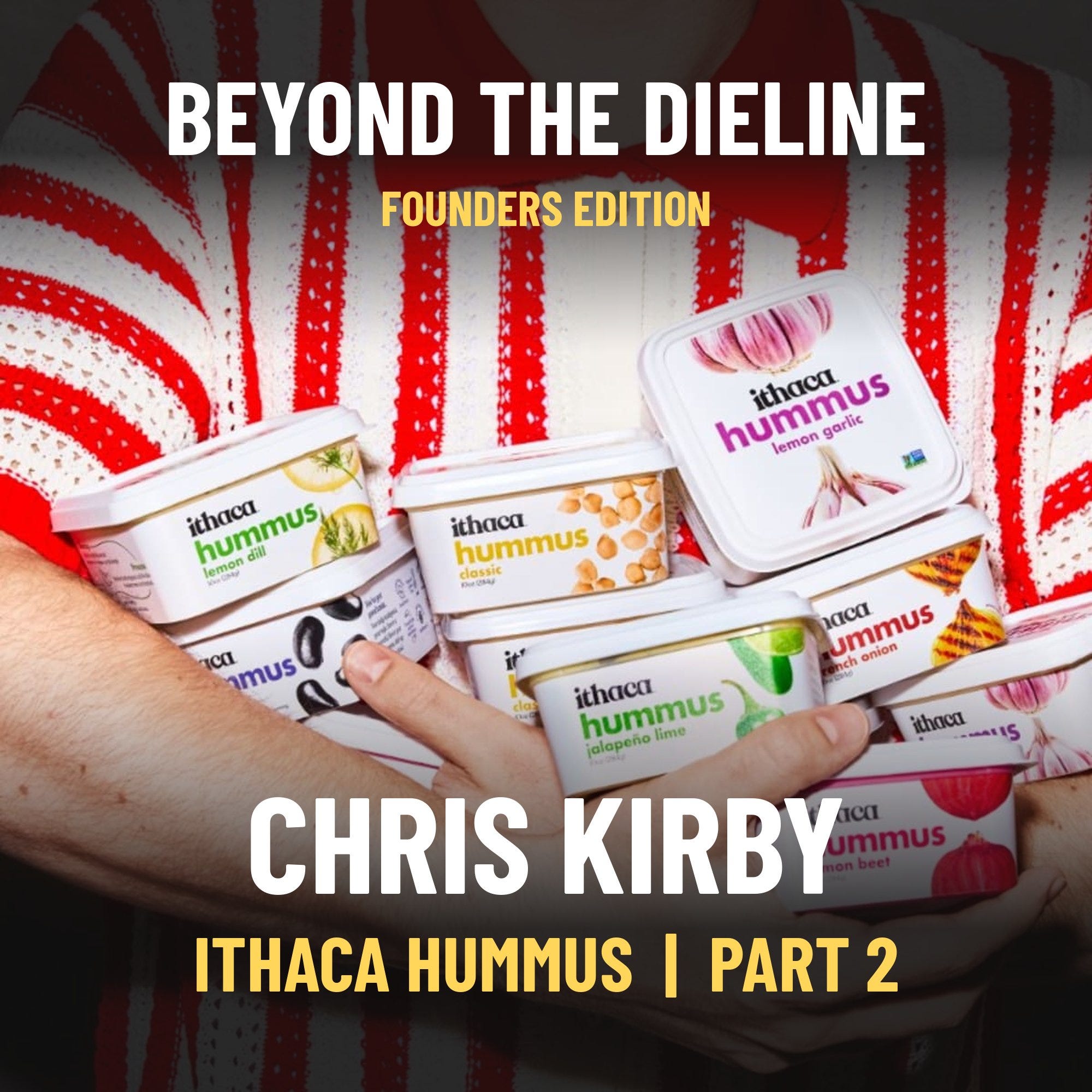
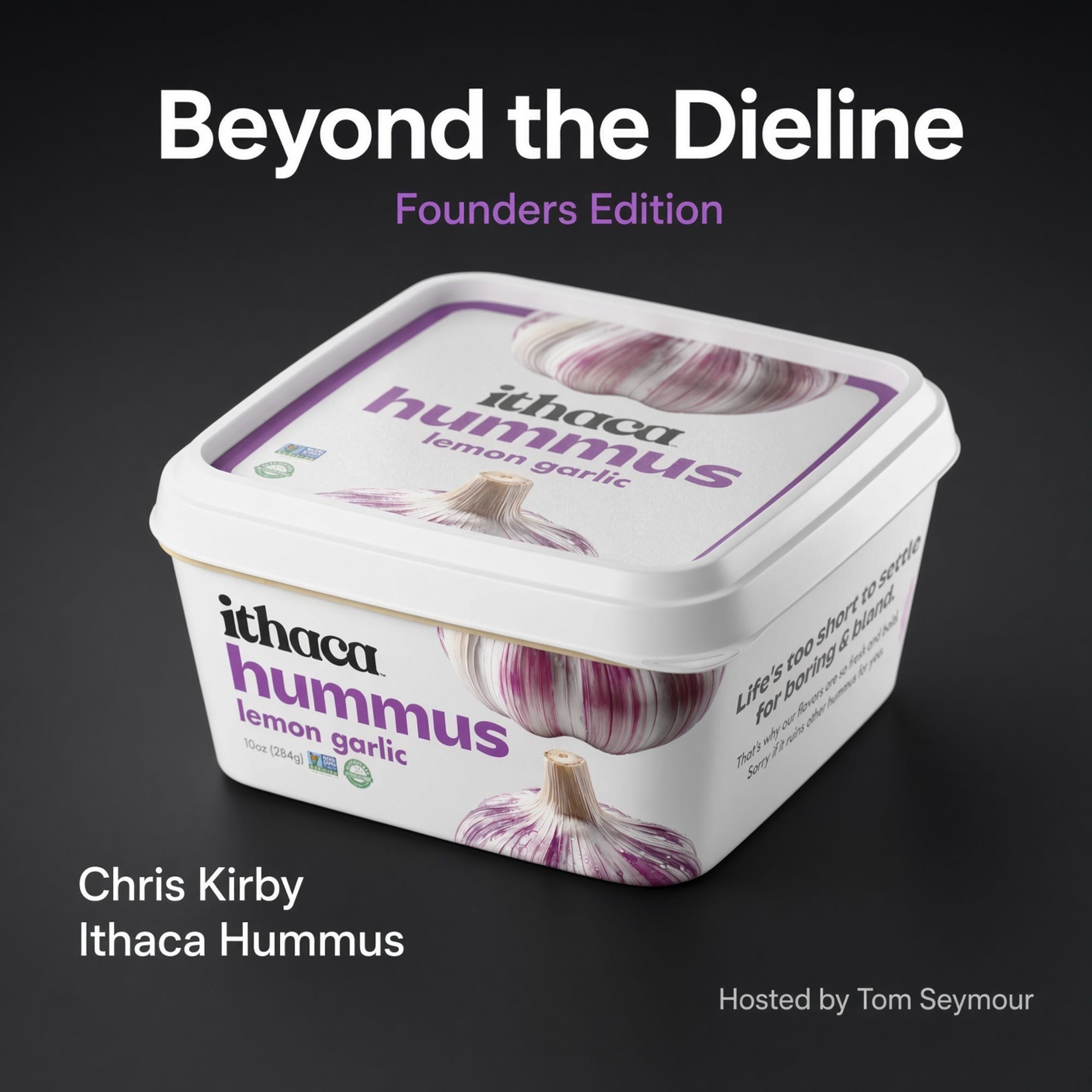
The Hardest Years of Ithaca Hummus (and Why Chris Kirby Wouldn’t Trade Them) - part 2 of the Beyond the Die Line interview

Tom picks up where Part 1 left off. Chris finally tells the story he teased last time: the FLX Foods dinner in Rochester, held at Danny Wegman’s Next Door Bar and Grill, where he needed to make an impression on a room full of influential upstate New York food people. His opener was a borrowed grocery joke about a store opening in Green Bay, Wisconsin. Danny loved it. The category manager did not. From there, the two talk about how the original FLX Foods group helped bring HPP to the region, including the HPP testing facility at Cornell and an HPP tolling facility, at a time when clean label, fresh and refrigerated products were taking off. Chris describes all of that as an accelerant on top of a good product, and credits the Finger Lakes community for backing him. Tom adds his own view on how New York State and programs like Grow New York come to the table for food and ag tech brands. Then things get real. Chris walks through the years he self manufactured Ithaca Hummus: a 10,000 square foot building full of secondhand equipment with no owner’s manuals, a team that had never worked in manufacturing, trucks lined up at the dock waiting on late orders, nights in a sleeping bag on the floor, and a malfunctioning filling line squirting hummus in his face at three in the morning in a 35 degree room. There is also the New Year’s Eve delivery of a 5,000 pound mixer that didn’t fit through the door. Tom shares the advice he gives founders about working on the business instead of in it. Chris pushes back on the idea that it ever gets easier. The problems just get bigger. What changes is the mindset: “show me to the problem,” take the most important one first, and keep going. The two also compare low barrier categories like granola with the noisy, hard to crack beverage space. The second half turns to Guillermo Salsa. Chris explains how a golf round with talent agent James “Baby Doll” Dixon, years earlier, led to a Zoom pitch with Jimmy Kimmel, a partnership with Guillermo, and a launch in Costco in the Northeast. He talks about why the salsa needed its own brand, why an authentic story matters as much as a big megaphone, and why he sees Guillermo as proof that the American dream is alive and well. Tom shares his own family’s immigrant story. They close with what’s next for Ithaca, which Chris says is the number two brand in the hummus category behind Sabra, and with Chris’s advice for founders in their first couple of years. Key takeaways Be memorable. Chris opened his FLX Foods pitch with a joke so he would be remembered, even if not everyone loved it. Luck meets preparation. HPP, the FLX Foods dinners and a supportive Finger Lakes community accelerated a product that was already good. Self manufacturing is not romantic. Secondhand equipment, an inexperienced team and constant cash pressure made it one of the hardest stretches of the Ithaca journey. It doesn’t get easier, you get better. The problems grow from $100,000 to millions. The skill is breaking them down and solving the most important one first. A megaphone helps, authenticity matters more. Guillermo Salsa pairs an award winning product with a real story. You’re stronger than you think you are. Chris’s advice: focus on the next right thing, add value for the consumer, and do the thing you want to do least. Listen to the customer. Tom and Chris agree that answers aren’t found in a boardroom. They come from the people you serve. Chapters 00:00 Welcome to Beyond the Dieline 02:05 Part 2 recap 05:07 The FLX Foods dinner joke 11:59 FLX Foods, HPP and the Finger Lakes 14:57 New York State and Grow New York 17:50 Obstacles and the problem solving mindset 19:30 Self manufacturing struggles 25:21 It never gets easier 27:41 Granola, beverage and barriers to entry 29:35 Launching Guillermo Salsa 41:26 What’s next: chasing number one 42:25 Advice for emerging brands About the guest Chris Kirby is the founder of Ithaca Hummus and Guillermo Salsa. He built Ithaca Hummus in the Finger Lakes region of New York, starting out self manufacturing before growing the brand into the number two player in the hummus category, according to Chris. Guillermo Salsa, a partnership with Guillermo of Jimmy Kimmel Live, launched in Costco in the Northeast. About the show Beyond the Dieline, Founders Edition is a special series from the People of Packaging Podcast. Host Tom Seymour explores the real stories behind today’s emerging food and beverage brands and how packaging, manufacturing and the supply chain turn ideas into products people love. Published by Adam Peek. Thanks for reading People of Packaging Podcast with Adam Peek! This post is public so feel free to share it. This is a public episode. If you would like to discuss this with other subscribers or get access to bonus episodes, visit encase.substack.com
October 30, 2026Episode 36335 min

Beyond the Dieline - How Chris Kirby built Ithaca Hummus (part 1)

You know those origin stories that sound a little too clean? This isn’t one of them. In the first episode of Beyond the Dieline’s Founders Edition, Tom Seymour sits down with Chris Kirby, the chef who left the kitchen, grabbed an ice cream scooper, and started selling hummus at the Ithaca Farmers Market. No big master plan. No deep-pocketed investors. Just a stubborn belief that hummus could taste better than the stuff already on the shelf, and that if he got people to try it, the rest would figure itself out. Chris walks through the real early days: the high-school and culinary-school background, the moment he decided restaurant life wasn’t for him, and those first weekends standing at the market handing out samples until his arm got tired. Then the conversation gets into the category itself. Sabra had done the hard work of making hummus feel normal (even cool) instead of “weird lunchbox food.” But once the category blew up, value engineering took over and everything started tasting… fine. Same-ish. Chris saw an opening for something that actually tasted like it was made by someone who cared. The packaging story is especially good. People look at those distinctive square white tubs and assume it was a calculated branding move to stand out. Chris is refreshingly blunt about it: they ended up in square containers because LiDestri already had the tooling, and retooling for round cups would have cost about $60,000 they simply didn’t have. Constraint became the differentiator. Combined with High Pressure Processing (HPP) arriving in Western New York through the FLX Foods, Wegmans, and LiDestri partnership, that decision helped turn a local farmers-market product into a national brand without sacrificing the cold-crafted, fresh-ingredient approach Chris refused to compromise on. They wrap by talking about luck, not as magic, but as preparation meeting opportunity, and tease a Part 2 that digs into the later scaling challenges, packaging evolution, and everything that happened after the early wins. Key Moments00:00 – Welcome to Beyond the Dieline01:00 – How Tom and Chris first connected03:00 – Origin story: chef life to “what am I actually going to do?”08:00 – Farmers market days: sampling, feedback, and early validation13:00 – Sabra, the sea of sameness, and why the category was ready for something better17:30 – The real (and slightly accidental) story behind the square tubs19:00 – HPP, the right partners, and preparation meeting opportunity21:50 – Wrap-up and the Part 2 teaser A couple of lines that stuck“The reason we’re in square packaging is because we didn’t have any money.”“Sabra took the category from weird to cool… then value engineering started happening… and you ended up with a complete sea of sameness.”“Luck is where preparation meets opportunity.” This is Part 1. Chris and Tom plan to pick it back up soon to get into the harder, less-glamorous middle of building the business. If you like founder stories that skip the highlight reel and talk about the actual constraints, partnerships, and stubborn product decisions that shape a brand, this one’s for you. Listen above (chapters are embedded if you’re on a player that supports them) This is a public episode. If you would like to discuss this with other subscribers or get access to bonus episodes, visit encase.substack.com
October 21, 2026Episode 36227 min

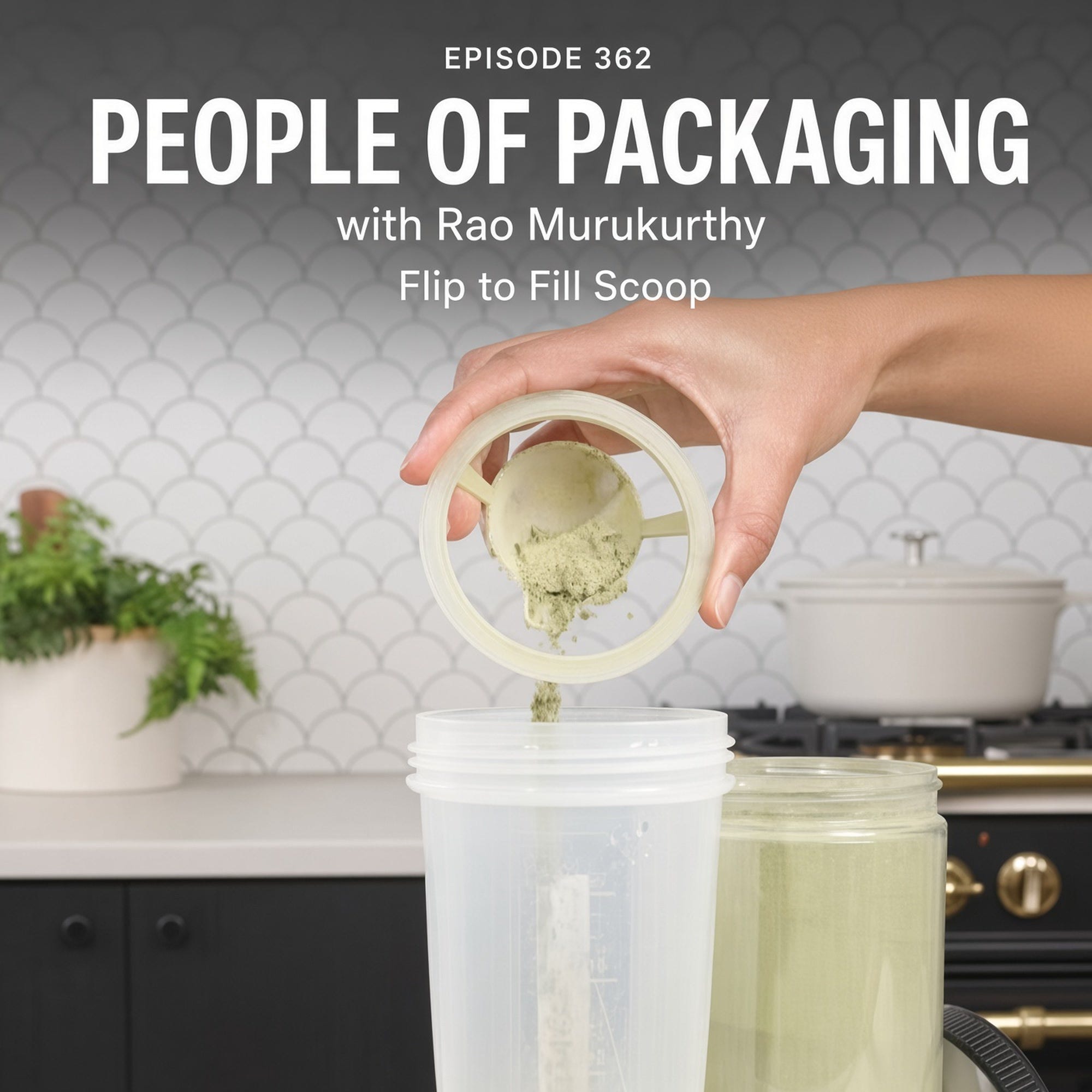
362 - KEEP YOUR DIRTY FINGERS OUT OF YOUR MOUTH! Flip to Fill inventor Rao Murukurthy

Rao Murukurthy started as a mold maker and bottle designer working for his father in the Chicago area. He spent more than a decade there, then moved into plastics and custom blow molding, where the shop was making a large share of the bottles you would see at GNC, from small vials up to the protein tubs. He later ran Denver Custom Packaging and exited it. About a decade in Denver, he was in the executive MBA program at CU Boulder when he pulled an older version of a scoop out of a box of 3D-printed prototypes. Roughly twenty iterations later, that is Flip to Fill. The problem is familiar. The scoop sinks. Someone reaches into the tub with whatever was on their hands after practice. All the filling, barrier, and hygiene work that went into the pack ends at the kitchen counter. Flip to Fill sits between the jar and the cap. Turn the bottle upside down, turn it back, open the cap, and a pre-measured dose is waiting to pour into the shaker. Put the cap back on. It is ready the next day. He filed a provisional patent in the summer of 2023 after graduating, then a utility patent, not just a design patent, covering anything that sits between the jar and the cap for liquid, powder, or granules. The published application is US 20250115401 The engineering is the part packaging people will recognize. The scoops nest, so case count is high and they are easier on a contract manufacturer than bulk-packed scoops that get dropped in by hand. They can be placed in line: powder drops, a chute feeds the scoop, a mechanical arm gives it a squeeze, it drops in, then the cap and the torquer. It does not interfere with the induction liner. Brands can put one in every jar, or send it as an add-on so a first-time customer gets it and reuses it. It is dishwasher safe and meant to last through about twelve bottles. Sizes cover the 89 millimeter neck for amino acids and green drinks, and the 110 and 120 millimeter necks for protein. Molds are modular, so the volume changes without a new tool. The brand logo is an insert, not a whole mold. They pay for the insert. He sells scoops, not tools. On EPR, a traditional scoop is often under two inches and falls through the screen. This one, on an 89 millimeter jar, is about three and a half inches across, so it is designed for recyclability even though it is meant to be reused. It is made from post-consumer recycled polypropylene, with an FDA no-objection letter from a Colorado manufacturer, and made in the US. They are both pushing and pulling the PP stream. The site is fliptofill.com, no hyphens. The form goes straight to his email. Brands can also reach him at info@fliptofill.com or on LinkedIn . Instagram is Flip to Fill Scoop . They recorded on October 5. The injection mold was being built, with real scoops for brands in November. * 00:00 Welcome, Adam Peek, People of Packaging * 01:01 Rao Murukurthy joins * 02:13 How they met on Clubhouse in 2020 * 03:42 Mold maker, GNC bottles, Denver Custom Packaging, CU Boulder * 05:42 How Flip to Fill works * 06:15 Hands in the jar, and why that undoes the filling work * 09:52 Utility patent, not a design patent * 10:23 Nesting, case count, and automation on the line * 12:08 One in every jar, or an add-on for DTC * 14:28 89, 110, and 120 millimeter, modular molds, brand logo insert * 17:15 EPR, fist-size rule, post-consumer recycled PP * 20:30 fliptofill.com and how brands reach out * 24:04 Mold in November, where to follow Guest: Rao Murukurthy, Flip to Fill, fliptofill.com. Host: Adam Peek, People of Packaging. (00:00) Welcome to People of Packaging (01:01) Rao Murukurthy joins (02:13) How they met on Clubhouse (03:42) From mold maker to Flip to Fill (05:42) How the scoop works (06:15) Hands in the jar (09:52) A utility patent, not a design patent (10:23) Nesting and the filling line (12:08) In every jar, or as an add-on (14:28) Sizes, modular molds, brand logo (17:15) EPR and designed for recyclability (20:30) fliptofill.com (24:04) Mold in November, where to follow This is a public episode. If you would like to discuss this with other subscribers or get access to bonus episodes, visit encase.substack.com
October 13, 2026Episode 36138 min

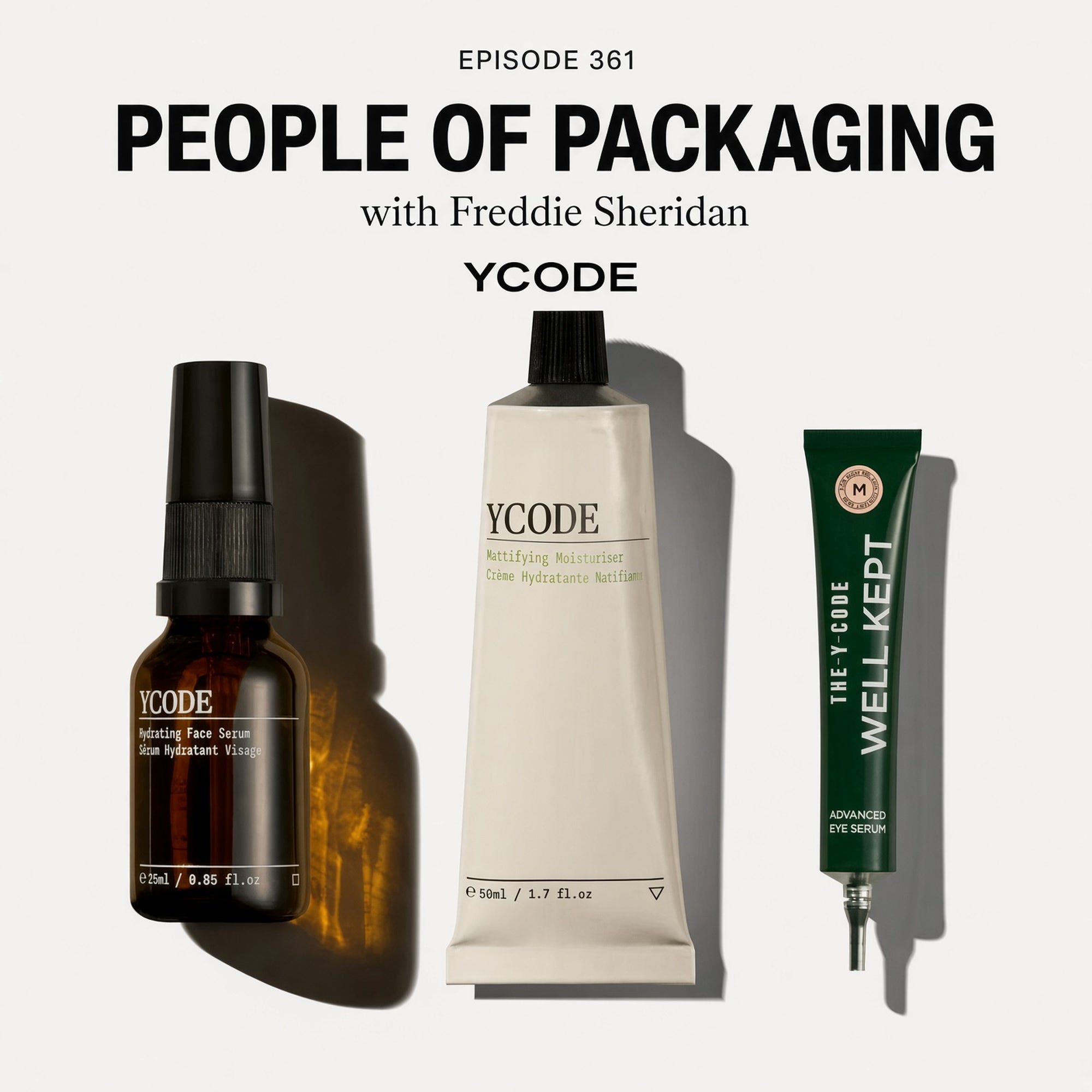
361 - Men have skin too and love good packaging design! W/ Freddie Sheridan from YCODE

First of all, before we get to the show notes, I wanted to say sorry to my amazing guest Freddie Sheridan! I thought I had published this episode a few months ago and was going through my recordings and saw that, in fact, it hadn’t been aired yet! You can time stamp the interview when we discuss the World Cup actually :) Secondly, you might notice the podcast got a small upgrade. Each episode will now have it’s own thumbnail and will have chapters so you can skip through to each chapter on Apple Podcasts On to the episode! Freddie Sheridan grew up in the family agency his parents started in the early 1980s, designing retail experiences for luxury beauty brands. He was eight years old with a wash bag bigger than most men carry today. Cleanser, moisturizer, eye cream, exfoliator. He looked around the school washroom and wondered why everyone else was so quick. YCODE started from a gap he kept seeing. Men’s skincare was flagged as one of the biggest growth markets in beauty, and men were not adopting it. Apathy. No education. And the products themselves were usually women’s formulas in masculine packaging. No one was designing them for men’s skin from scratch. Men’s skin is about 25% thicker, has roughly twice the oil, a lower pH, and a denser collagen structure on a different timetable. Freddie’s point is the same one packaging people already know: the right fuel for a Formula One car is not a generic one. Specific purpose gets better results faster. YCODE spent about five years in development before anything hit the market. The brand launched in October and November 2024 with one product, the Well Kept Advanced Eye Serum, because the eye area was men’s single biggest issue. In November 2025 they added the Hydrating Face Serum and the Mattifying Moisturiser. The packaging was developed on the same timeline, so it did not have to be rushed. The name is the Y chromosome, the thing that makes men biologically distinct, plus the code they study to design for it. The original outer box is a matchbox. Men were not used to skincare, but they were used to a matchbox. Nudge it from the bottom, the product reveals, no instructions required. Racing green and gold, because a vintage Porsche is more exciting to a lot of guys than a skincare aisle. The paper is from GF Smith, already in the color they wanted, FSC certified. Lettering is indented on the outside so the gold reads against the matte green, and slightly raised and gloss on the inside. A glue dot holds the tube centered and quiet in transit. Freddie will tell you it was too firm. That is the learning for the next batch. They rebranded early. The first identity was at 70 or 80 percent of what it could be, and they would rather fix it before the world got used to it. Dark green became a cleaner white. The logo was tightened. Stereotypes about what men want, dark colors, bro language, heavy fragrance, were the thing they were trying not to repeat. They kept the inner tray and the primary pack and only swapped the sleeve, so the first batch was not thrown away. Batch two catches the tray and the tube up. The tube itself is an old-school super glue tube, all aluminum, including the cap. Ordinary aluminum tubes still needed a plastic cap hard enough to thread onto metal, and that plastic could not be recycled. This one removes that problem. Opening it the first time is like shaving the first time. Someone has to show you. Hold the tube lightly, snap the lid, do not squeeze, or you lose product. There is no air in the tube on purpose. Fresher, and the customer gets a full fill. YCODE is available at ycode.co . Chapters (00:00) Welcome to People of Packaging (00:52) Freddie Sheridan joins (02:16) Why YCODE, and the name (04:30) Born into skincare (05:31) Women’s formulas in masculine packaging (06:29) Launched with the eye serum (07:11) Serum and moisturizer (09:02) Arriving at the original box (11:40) The matchbox men already know (12:55) Racing green, gold, and GF Smith (15:07) The glue dot that was too firm (16:48) Indented outside, raised inside (18:09) The early rebrand, without the waste (22:43) Do people judge your skin? (24:24) A routine that still gets you out the door (26:43) A super glue tube, all aluminum (28:22) How to open it the first time This is a public episode. If you would like to discuss this with other subscribers or get access to bonus episodes, visit encase.substack.com
October 8, 2026Episode 3601 hr 9 min

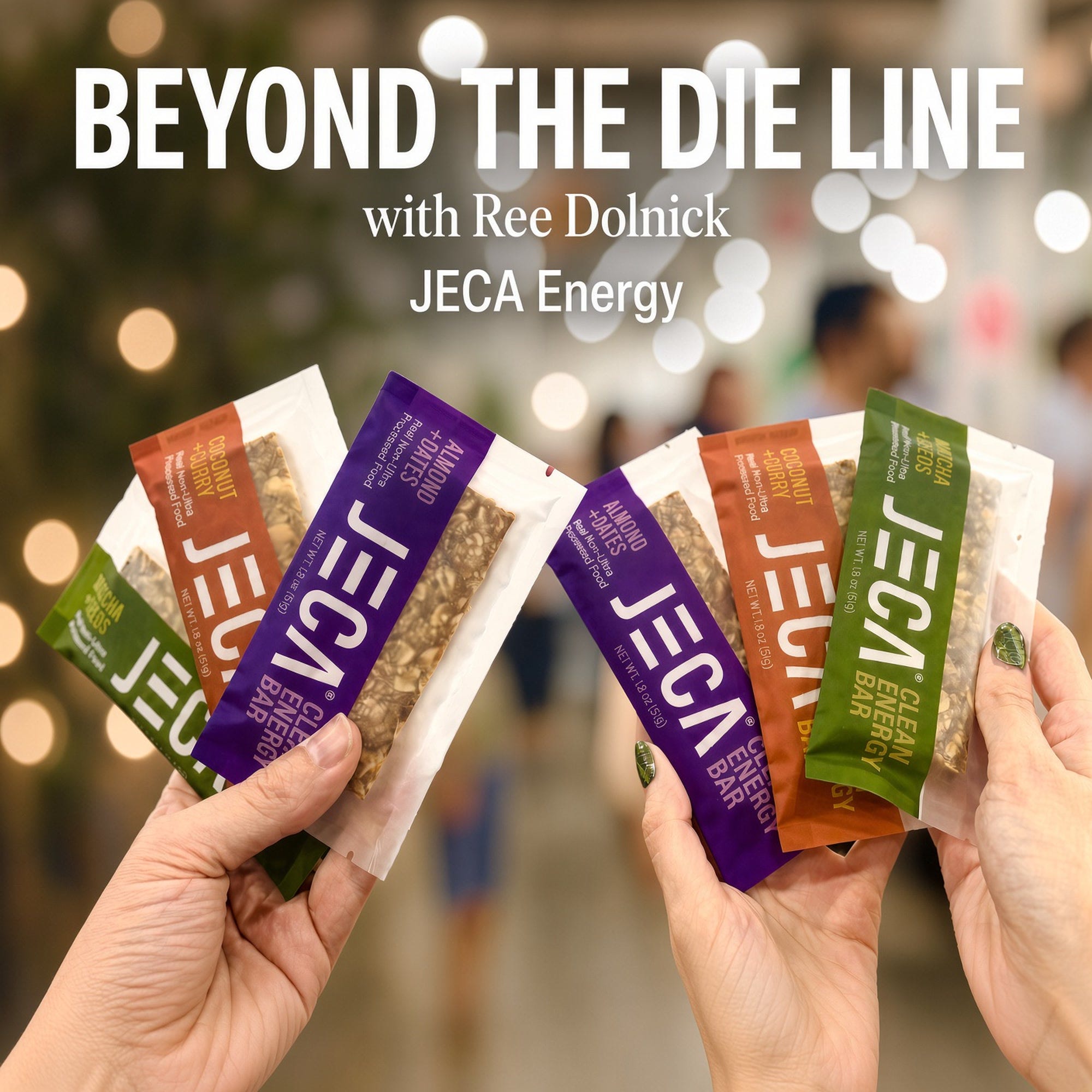
360 - Beyond the Die Line - The pitch was awful. They liked the bar! Tom Seymour and Ree Dolnick

Ree Dolnick did not set out to leave science. She was a cancer researcher who got handed lab bars she would not eat: chalky, too sweet, and a label she could actually read. She had worked her way through school as a sous chef, so she treated the kitchen like a lab and started writing recipes in a notebook. The company name came from her daughter. Kids at daycare could not say Jessica. They called her Jekka. Ree trademarked JECA, registered the company, and then did nothing with it for six or seven months. Someone finally asked if she was going to use the trademark she had paid for. What followed is the part founders usually skip. A bad pitch at Ignite Buffalo that still won, because the judges liked the bar. A website with zero hits. A winter farmer’s market where the limit on sales was how many bars she could make after a full-time job. Customer discovery at UB Cultivator that proved the buyer was not the person she had pictured. And a co-man search that died because they could not make the recipe, wanted it changed, and needed huge runs to make the math work. She kept the recipe. With an engineer out of medical-device manufacturing and the team at RIT, JECA built its own equipment, owns the IP, and controls quality and minimums. Buyers like the short turns. She works more. The packaging lesson is the one this show is for. The first design could not run on the machine. Plain film, then a digital printer, then ePac, then a color change after John Lawson said he could not read yellow on white and the message was not clear. A wrapper is a billboard with nanoseconds of attention. The window on the pouch does some of the talking the words cannot. JECA bars are at Whole Foods, Wegmans, Big Y, and Tops, plus Amazon and jecabar.com. If you can buy direct, that is the margin that keeps a self-manufacturer alive. Then put one in the cart at the store so the retailer keeps the shelf. * 00:02 Open, Tom Seymour and Ree Dolnick * 02:19 Before CPG: cancer research, not a planned career * 05:00 Lab bars she would not eat, sous-chef pantry, kitchen as a lab * 08:28 The name JECA, from Jessica * 09:32 Trademark sat unused, then Share Workspace * 13:01 Ignite Buffalo: awful pitch, they liked the bar * 15:14 Website crickets, winter farmer’s market * 21:50 Lifestyle, boutique, or scale, and defending margin * 26:01 Friends will not tell you the truth * 26:44 UB Cultivator and six months of customer discovery * 38:21 Six a.m. to eleven p.m., seven days * 39:32 Why co-man failed, and building the line with RIT * 45:08 “There shouldn’t be any aftertaste” * 53:29 Packaging: film, digital print, ePac, John Lawson * 1:02:08 Where to buy, and why direct matters Guest: Ree Dolnick, JECA Energy Bars, jecabar.com. Host: Tom Seymour, Beyond the Die Line. Thanks for reading People of Packaging Podcast with Adam Peek! This post is public so feel free to share it. This is a public episode. If you would like to discuss this with other subscribers or get access to bonus episodes, visit encase.substack.com
September 21, 202635 min

359 - The most interesting way AI is disrupting packaging design with Andy Kurtts from Buttermilk Creative

So normally, I would have AI create some show notes for me and just copy and paste, however this particular episode needs a special human touch. Which is ironic because myself and Andy Kurtts talk a lot about AI on this episode Spoiler alert to the episode, the most interesting component today is around the topic of agentic shoppers and designing the product packaging graphics to catch the eyes of the agents to recommend products I, personally, had never though about this idea before and was stoked when Andy brought it to my attention! Roughly 18 minutes into the episode we do a live demo using Gemini If you work for a brand and aren’t really thinking about his, I highly recommend hitting up Andy at Buttermilk Creative on LinkedIn. He’s all over this topic and can help guide you through the madness and stay up to date. Between these agentic shoppers and the new GS1 Sunrise 2027 barcode change, packaging design is undergoing a massive shift. Don’t get left behind like Kirk Cameron (that’s a deep cut of a joke). Check out what he’s built at www.readmypack.ai or send him a DM on LinkedIn to get going! Thanks for reading People of Packaging Podcast with Adam Peek! This post is public so feel free to share it. This is a public episode. If you would like to discuss this with other subscribers or get access to bonus episodes, visit encase.substack.com
September 9, 202639 min

358 - Former NBA President/GM Tommy Sheppard drops some leadership NUGGETS!

Ok, I get it, this is a weird one for the People of Packaging Podcast but it’s so worth it! Tommy is a business and leadership coach with global experience leading teams and developing talent. Why wouldn’t you want to learn from him? His website is www.tommysheppard.com and his LinkedIn is another way to connect Here are some show notes! In this crossover episode for the People of Packaging and Utah HS Hoops podcasts, Adam Peek sits down with veteran sports executive Tommy Sheppard to discuss servant leadership, building relational equity, and navigating a career in an NBA front office. The conversation bridges the gap between basketball operations and everyday business management by highlighting how genuine connections and treating people right remain the ultimate metrics for success. Episode Timestamps * 00:00 Introduction to the unique crossover format and welcoming listeners. * 01:17 Tommy Sheppard details his background and entry into the sports industry. * 02:00 Early career steps working in sports information at UNLV under Jerry Tarkanian. * 02:15 Joining the Denver Nuggets in 1994 and experiencing a decade of massive organizational change. * 03:41 The emotional rollercoaster of the NBA, from thrilling playoff runs to a historically difficult 11 win season. * 06:16 A humorous look at the contrast between teenage sports fandom and the reality of working alongside professional athletes. * 08:26 Honoring the life and legacy of Joe Wolf, emphasizing the profound and lasting impact of authentic friendships. * 11:32 Tommy explains his internal transition from public relations into scouting and formal basketball operations. * 12:24 The journey to the Washington Wizards, ultimately taking on the General Manager role after years of dedicated work. * 15:00 Core leadership principles, the necessity of humility, and why executives should never take themselves too seriously. * 18:00 The immense value of servant leadership and building relational equity instead of relying on purely transactional interactions. * 20:52 Final reflections on maintaining a positive attitude, protecting your work ethic, and controlling what you can control. Key Takeaways * Servant Leadership Translates Everywhere: Whether managing an NBA roster or a corporate team, prioritizing people and prioritizing relational equity consistently yields the best long term results. Tommy highlights that job titles are temporary, but the way you treat people endures forever. * Control the Controllables: Attitude, daily effort, and how you treat your colleagues are entirely within your control. Even when external circumstances fluctuate wildly, showing up with gratitude makes a tangible difference in team culture. * Authenticity Over Ego: Moving through various roles requires checking your ego at the door. Remaining grounded, remembering your roots, and acting with kindness toward everyone in the organization builds a resilient and supportive professional environment. This detailed exploration of the human side of sports provides practical lessons that apply directly to navigating any corporate landscape, proving that solid fundamentals win both on the court and in the boardroom. This is a public episode. If you would like to discuss this with other subscribers or get access to bonus episodes, visit encase.substack.com
August 24, 202635 min

357 - Dustin Steerman is putting Vert on the map and changing how packaging is bought

Welcome to another exciting episode of the People of Packaging podcast! Host Adam Peek is back at it, coming to you live from the Label King studios. In this episode, Adam sits down with Dustin Steerman, founder and CEO of Vert. Dustin shares his journey through the packaging world—from paper and labels to digital flex pack—and breaks down how he is building a 35,000-square-foot powerhouse facility in Longmont, Colorado. Key Discussion Points: * Industry Origins: Growing up around paper mills, early Philly roots, and leaving Philadelphia sports fandom on a high note after the Eagles’ Super Bowl win. * The Digital Shift: How Dustin identified early gaps in digital flexible packaging around 2014 and launched Vert in 2023. * Cannabis Packaging Realities: Navigating strict state-by-state regulations, multi-state operator (MSO) complexities, and how short-run digital printing solves artwork versioning headaches. * Vert’s Scalable Model: Building out 35,000 square feet, running short to long-run pouch lines, and targeting 10–15 million pouches per month capacity. * Expanding Verticals: Moving beyond cannabis into sports nutrition, pet treats, and the natural products epicenter in Boulder/Longmont. * The Service Gap: Why exceptional customer service, 24-hour quote turnarounds, and direct communication are the ultimate business differentiators today. Connect with Dustin Steerman: * Dustin Steerman on LinkedIn * Website: vertpack.com Connect with Adam Peek: * LinkedIn: www.linkedin.com/in/adampeek * TikTok: @thelabelking About the People of Packaging Podcast: The People of Packaging Podcast dives deep into the stories of the human beings making the packaging world tick. Host Adam Peek interviews leaders, disruptors, and innovators across the industry to give you an insider look at what is happening today and where the market is heading next. This is a public episode. If you would like to discuss this with other subscribers or get access to bonus episodes, visit encase.substack.com

August 17, 202637 min

356 - A very bubbly interview with fellow CSU Ram and Bom Dia founder, Kevin Selvy

Welcome to another exciting episode of the People of Packaging Podcast! Adam Peek sits down with Kevin Selvy, Founder and CEO of Bôm Dia, to unpack the wild, 3.5-year journey of bringing Brazilian sparkling wine to North America in both screen-printed bottles and portable cans. Bom Dia’s packaging design is almost as good as the sparkling wine! Key Takeaways & Highlights * From Finance to Fermentation: How Kevin transitioned from stock trading in Europe to brewing, winemaking, and mastering beverage packaging. * The “Two Hardest Things”: Why carbonation and cardboard are hands-down the toughest hurdles in the industry. * Cracking the Brazilian Bubble: Brazil is a top 10 sparkling wine producer globally, yet Bôm Dia became the very first canned wine exported out of the country. * Bottles vs. Cans Science: How Kevin re-engineered the fermentation process so the wine tastes identical whether popped from a glass bottle or cracked open from a slim can. * Ditching Paper Labels: Why Bôm Dia opted for direct screen-printed glass to avoid peeling, bubbling, and label headaches during humid ocean freight transit. * Mid-Ocean Curveballs: What it was like getting hit with a surprise 50% import tariff while shipment containers were literally floating on the water in month two of business. * Creative Details That Pop: From jaguar wire cages on the corks to custom-shaped barcodes inspired by a cider can from an African road trip, proving even UPCs can be creative. Connect with Bôm Dia * Website: bomdiabubbles.com Connect with Adam Peek * LinkedIn: www.linkedin.com/in/adampeek * TikTok: @thelabelking This is a public episode. If you would like to discuss this with other subscribers or get access to bonus episodes, visit encase.substack.com

Is this your show?

Claim this listing to keep it up to date, reach guests who want to pitch you, and manage bookings with Guestify.

Claim this listing

More Business podcasts