
Find partners
Sold Out Offers

Sold Out Offers

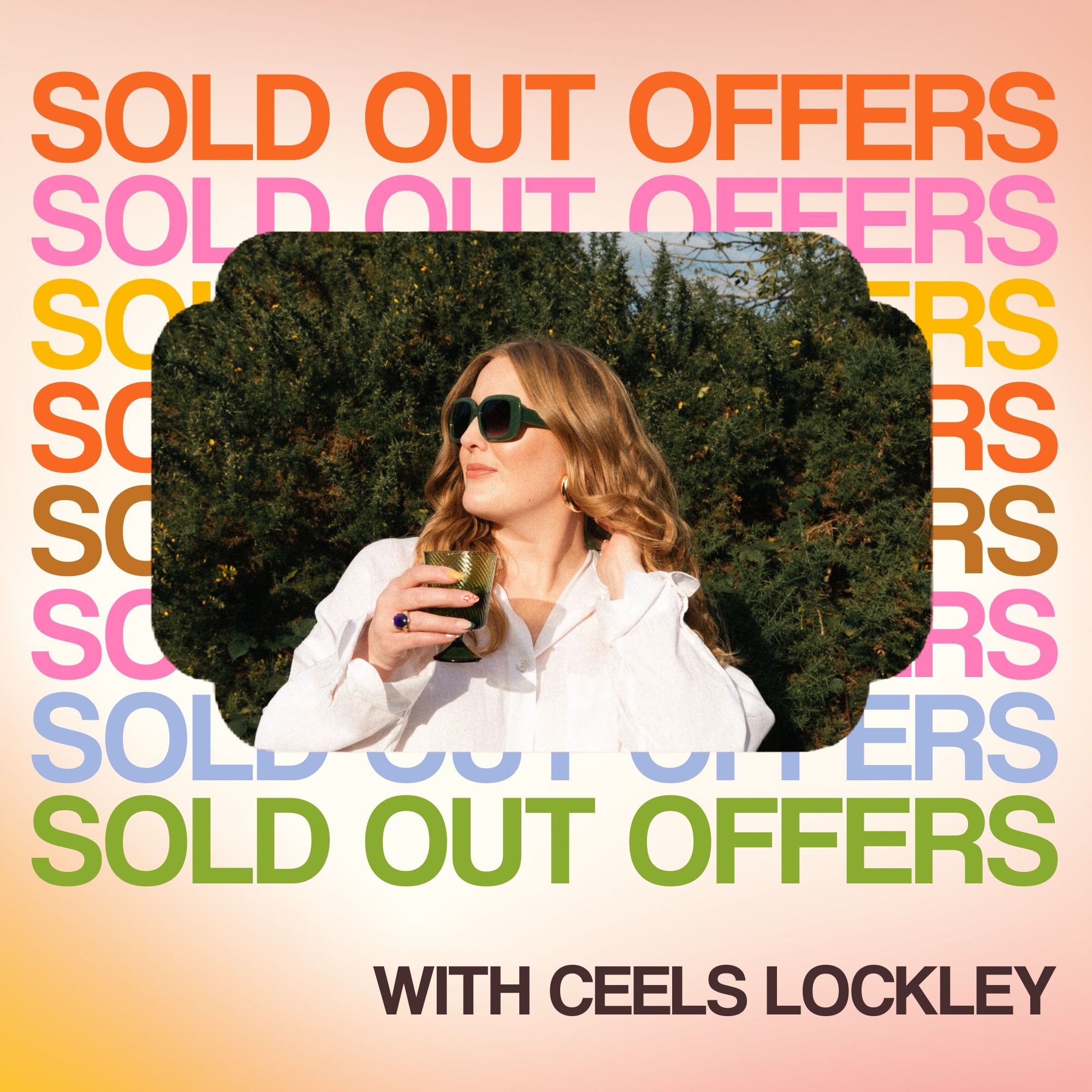
Hosted by Ceels Lockley | Offer Strategy Expert

Episodes

228

Latest episode

Aug 2026

Language

EN

About the show

Sold Out Offers is the industry-leading podcast for service provider experts who want to create and sell innovative and in-demand offers that build reputation and revenue on repeat.

Listen to episodes

60 recent
September 1, 20268 min

Sold Out but Burnt Out: Why Being Busy Can Still Mean Your Offers are Broken

Being fully booked sounds like the dream, doesn’t it? A full client roster, consistent income, plenty of work coming in and the ability to announce on Instagram that you’re officially SOLD OUT. And look, I love seeing this kind of win. But there’s a nuance to being booked out that we don’t talk about enough, because being busy with bookings and client work is only a success brag when the business behind it is actually working for you. In this episode, I’m digging into what can really be happening behind the scenes of a fully booked business. You can have clients lined up for the next six months and still be working long days, spilling into evenings and weekends, feeling stressed and discovering that once you actually account for the hours you’re putting in, you’re chronically under-earning. Busy is contextual, and a packed calendar doesn’t automatically tell us that a business is healthy. So if being fully booked currently means there’s no breathing room left in your week, I want you to look beyond the number of clients on your books. Good offer design should allow you to do work you love, with clients you enjoy, during the hours you actually want to work, while earning the money you want to earn. Those things matter just as much as being able to say you’re sold out. What You’ll Learn in This Episode Why being fully booked doesn’t automatically mean a business is thriving The five signs that being sold out could actually be pushing you towards burnout How undercharging and under-earning can hide behind a packed client roster Why the wrong clients can make a successful-looking business feel completely joyless What I mean by the delivery loop and how service providers get stuck in it Why capacity needs to include your life outside of work The four things your offers need to support for your business to feel sustainable “You can be very busy with the wrong type of work, with the wrong type of clients.” Mentioned in this episode: Join Dreamium If your offers don't quite make sense together or feel aligned with where your business is heading, you probably need an offer ecosystem. Go back to school on your offers this September inside my offer design school, Dreamium. Just five places available for right-fit students. Apply today at ceelslockley.co/dreamium for your dreamy offer plus a back-to-school bonus: two 30-minute private lessons with me. Dreamium

August 25, 20267 min

5 Uncomfortable Truths About Your Current Offers

Sometimes the most useful thing you can hear about your offers isn’t that they’re brilliant. It’s where you’re making things harder for yourself. In this episode, I’m giving you a quick offer strategy pep talk with five uncomfortable truths that might sting a tiny bit, but could also change the way you approach your offers. We’re starting with patience, because constantly changing your offers means constantly starting the process of selling them all over again. Your audience needs time to understand what you sell, who it’s for and why they should care. And while we’re letting those offers settle, we also need to actually work on them . Offer strategy shouldn’t suddenly become a priority when sales are quiet; your offers deserve the same ongoing attention you give your marketing, numbers and content. I’m also challenging the idea that an offer can ever really be “done”. Your clients change, the market changes, your expertise grows and the way you want to run your business evolves. The offer you’re selling today probably won’t look exactly the same three years from now, and that’s a good thing. Instead of trying to create something perfect, the goal is to keep noticing where you could refine the delivery, improve the client experience, make things more efficient or strengthen the value. And finally, we need to talk about what you’re spending your time on when you’re not hitting your revenue goals. A new freebie, more Instagram posts or another little offer can feel productive, but sometimes they’re a very convincing form of procrastination. When revenue needs your attention, your priority should be the offers most capable of generating it. Consider this your loving kick up the bum to stop fiddling around the edges and put your energy where your business actually needs it. What You’ll Learn in This Episode Why constantly changing your offers makes selling harder Why your offer strategy needs ongoing attention The improvements you could be making to delivery and client experience Why your offers will never truly be “finished” How your offers will naturally evolve as your business and the market change Why perfection is a particularly unhelpful goal in offer design The non-revenue-generating activities that might be distracting you Why your signature headliner offer deserves your attention when revenue is the priority “Every offer you create will take time to bed in.” Mentioned in this episode: Join Dreamium If your offers don't quite make sense together or feel aligned with where your business is heading, you probably need an offer ecosystem. Go back to school on your offers this September inside my offer design school, Dreamium. Just five places available for right-fit students. Apply today at ceelslockley.co/dreamium for your dreamy offer plus a back-to-school bonus: two 30-minute private lessons with me. Dreamium

August 18, 202634 min

Everything I'm Doing in My Mid-Year Business Reset

Halfway through the year is a useful moment to ask whether the plan you made in January is still the plan you actually want. In this episode, I’m taking you backstage into my own mid-year business reset and sharing the honest reflections, difficult decisions and practical changes shaping the second half of 2026. The biggest realisation was that more support had not automatically created more space. I hired a brilliant team, tightened up my systems and freed up my time… then promptly filled that time with more ideas, more layers and more work. I talk about why I’ve felt so consumed by the business this year, the mental load created by unnecessary complexity, and why I’m no longer interested in building the bigger company I once thought I wanted. I also share the more personal side of this reset, including what happened when I stepped back from social media and recognised how much I had been using work, scrolling and constant output as a distraction. We talk about the pressure to keep performing online, the relief of being less available, and the importance of remembering that there is a whole human being underneath the business owner. From retiring The Secret Set and ending the Parade sales club to simplifying my team, narrowing my content focus and moving Dreamium to an application model, I walk you through exactly what is coming off the plate and where that energy is going instead. This isn’t about stripping the business back for the sake of it. It’s about protecting the work that matters most, improving what is already working and building a business that leaves room for an actual life. What You’ll Learn in This Episode Why more support can sometimes lead to more complexity rather than more freedom The difference between having the capacity to do something and it being a genuine priority Why I’m simplifying my team, offers and delivery What I learned from stepping back from social media Why The Secret Set and the current Parade sales club are ending How I’m refocusing the business around Dreamium and offer design What is changing inside my evergreen funnel and application process Why email, the podcast and a more focused marketing strategy are leading the next chapter “If you get more capacity, you do not need to fill the gap with more work.” Mentioned in this episode: Join Dreamium If your offers don't quite make sense together or feel aligned with where your business is heading, you probably need an offer ecosystem. Go back to school on your offers this September inside my offer design school, Dreamium. Just five places available for right-fit students. Apply today at ceelslockley.co/dreamium for your dreamy offer plus a back-to-school bonus: two 30-minute private lessons with me. Dreamium

August 11, 202621 min

Why AI is Making Us Better at Offer Strategy

AI is making everything faster, easier and, quite frankly, a little bit samey. We can generate an entire sales page in seconds, ask for 100 content ideas before breakfast and get Claude to spit out a new offer before we've even decided whether anyone actually wants it. But I think there's an unexpected upside to all of this: AI might actually be making us better at offer strategy. In this episode, I'm making the case for why the rise of AI is raising the bar for service providers rather than lowering it. When everyone has access to the same tools, producing more stuff isn't particularly impressive anymore. The real advantage comes from your discernment: your ability to look at all the possible ideas, messages and strategies in front of you and know which ones are actually worth pursuing. We also talk about the things AI simply can't manufacture for you: lived experience, taste, war wounds, client conversations and the lessons that come from taking an offer into the real world and discovering what actually happens. Your best offers aren't created because you found the perfect prompt. They're refined through launches that flop, clients who surprise you, ideas that need tweaking and all the messy experience that eventually makes your judgement worth paying for. And perhaps most importantly, we're entering an era where imperfection feels increasingly valuable. When everything can be polished into competent, perfectly structured AI copy, the odd phrase, niche joke, strong opinion and unmistakably you bit of your business becomes part of the appeal. What You’ll Learn in This Episode Why mass AI content creates a bigger opportunity for brilliant human work Why discernment is becoming one of your strongest differentiators The parts of offer strategy you can't outsource to a chatbot Why lived experience makes your offers more valuable What flop launches and difficult clients teach you that AI can't Why imperfection can build trust in an increasingly polished online world How to use AI without allowing your offers to become beige, safe and samey "Mass mediocrity is really where true brilliance gets to shine brighter." Mentioned in this episode: Join Dreamium If your offers don't quite make sense together or feel aligned with where your business is heading, you probably need an offer ecosystem. Go back to school on your offers this September inside my offer design school, Dreamium. Just five places available for right-fit students. Apply today at ceelslockley.co/dreamium for your dreamy offer plus a back-to-school bonus: two 30-minute private lessons with me. Dreamium

August 4, 20269 min

One Price Won't Fix a Broken Ecosystem

Raising your prices is often the first piece of advice service providers hear when something feels off in their business. And whilst pricing is incredibly important, it's only one piece of a much bigger puzzle. In this episode, I'm sharing why changing your prices alone won't magically transform your business and what actually needs your attention if you want to build offers that consistently sell. We revisit the pricing work we've covered over the last few episodes and explore what happens after you've landed on the right numbers. Because an offer isn't just a price tag, it's your positioning, your buyer journey, your messaging, your client experience, and the role each offer plays within your business. If those pieces aren't working together, even perfectly calculated prices can struggle to gain traction. I also explain why so many business owners invest heavily in branding, websites, marketing and content before they've properly designed the offers they're trying to sell. It's a trap I see time and time again. When your offer ecosystem isn't clear, every other part of your business has to work much harder to compensate. If you've been wondering why your new prices haven't created the momentum you hoped for, this episode will help you see the bigger picture. What You’ll Learn in This Episode Why pricing is only one layer of a successful offer The role your offer ecosystem plays in sustainable growth Why positioning matters just as much as your prices How disconnected offers create friction for buyers The common mistake business owners make after raising their rates Why offer design should come before branding and marketing "The moral of the story is you don't need one great offer. You actually need a clear ecosystem and buyer journey." Mentioned in this episode: Join Dreamium If your offers don't quite make sense together or feel aligned with where your business is heading, you probably need an offer ecosystem. Go back to school on your offers this September inside my offer design school, Dreamium. Just five places available for right-fit students. Apply today at ceelslockley.co/dreamium for your dreamy offer plus a back-to-school bonus: two 30-minute private lessons with me. Dreamium

July 28, 202618 min

Hourly Rates to Value-Based Pricing: A Real Walkthrough Of The System To Stop Your Under-Earning

If you've ever found yourself opening a calculator before sending a proposal, multiplying your hourly rate by the number of hours you think something will take and hoping the final figure feels "about right", this episode is for you. I'm walking you through a real-life pricing example to show the difference between pricing an offer based on time versus pricing it based on value, using my TESSA Pricing System to demonstrate exactly how the two approaches compare. Rather than talking about pricing in theory, I break down the numbers step by step and explain why charging for hours often leaves experienced service providers underpaid. We explore the hidden factors that create value beyond the time you spend with a client, from your expertise and specialist skills to the assets you've built and the results you're capable of delivering. Along the way, I also share why so many of us stay stuck in an undercharging cycle, even when we know we want to charge more. If you've been waiting until you feel "ready" before increasing your prices, this episode will encourage you to think differently about what your clients are really paying for and why confidence comes from having a pricing strategy, not simply picking a bigger number. Whether you're reviewing an existing offer or creating a brand new one, this episode will help you move beyond hourly thinking and start pricing in a way that reflects the true value of your work. Because when you understand why your prices are what they are, selling them becomes so much easier. What You’ll Learn in This Episode The difference between hourly pricing and value-based pricing A live walkthrough of my TESSA Pricing System Why charging for time often undervalues your expertise The five factors that influence value-based pricing Why so many service providers get stuck undercharging How to build confidence in your prices through strategy rather than guesswork "You have to say the real number, you have to go bigger out loud to a real client." Mentioned in this episode: Join Dreamium If your offers don't quite make sense together or feel aligned with where your business is heading, you probably need an offer ecosystem. Go back to school on your offers this September inside my offer design school, Dreamium. Just five places available for right-fit students. Apply today at ceelslockley.co/dreamium for your dreamy offer plus a back-to-school bonus: two 30-minute private lessons with me. Dreamium

July 21, 202610 min

What Your Prices Are Really Saying About Your Offers & Money Mindset

Your prices are doing far more than telling people how much something costs. They're shaping first impressions, attracting (or repelling) certain buyers, and communicating where your business sits in the market. In this episode, I will unpack one of the most overlooked parts of pricing: what your prices are saying about your offers before you've even spoken to a potential client. Using real-world examples, I explore why so many talented service providers unintentionally attract clients who question every decision, haggle over every invoice, and expect far more than they paid for. We look at how pricing influences perception, why "great value" isn't always the positioning you're aiming for, and how trying to make yourself feel more affordable can actually move you further away from the clients you really want to work with. If you've ever wondered why your dream clients aren't enquiring, or why you keep attracting buyers who are laser-focused on getting the cheapest option, this episode will encourage you to look beyond the number itself. What You’ll Learn in This Episode Why pricing is one of the biggest positioning decisions you'll make How your prices influence the type of clients you attract The hidden messages different pricing strategies communicate Why "affordable" isn't always the smartest positioning The problem with Goldilocks pricing and endless discounts How to align your prices with the clients you actually want to work with Why pricing confidence starts long before someone enquires "Your price is a signal to the people you want to attract." Mentioned in this episode: Join Dreamium If your offers don't quite make sense together or feel aligned with where your business is heading, you probably need an offer ecosystem. Go back to school on your offers this September inside my offer design school, Dreamium. Just five places available for right-fit students. Apply today at ceelslockley.co/dreamium for your dreamy offer plus a back-to-school bonus: two 30-minute private lessons with me. Dreamium

July 14, 202618 min

Why Are You Undercharging? The Psychology of Pricing Fears

What if undercharging has nothing to do with confidence… and everything to do with conditioning? In this episode, I’m digging into the psychology behind pricing fears and why so many talented service providers find themselves charging less than they're worth without even realising it. I share my own journey from charging £35 an hour for almost everything I did to finally feeling confident standing behind my prices. Along the way, I explore how our childhood experiences, corporate careers, and fear of rejection shape the way we price our offers today. Your brain naturally focuses on avoiding rejection rather than creating opportunity, and this can keep you trapped in an undercharging cycle. I explain why higher prices often signal higher quality to buyers and why charging less doesn't necessarily make your offers easier to sell. If pricing has been feeling heavy, awkward or confusing lately, this episode will give you a fresh perspective on what's driving those fears. Because once you understand the psychology behind your pricing decisions, it becomes much easier to make them with confidence rather than fear. What You’ll Learn in This Episode Why pricing feels so emotional for so many service providers How childhood, education and corporate life shape your money beliefs The link between avoidance and undercharging Why most business owners rely on guesswork when setting prices How people-pleasing influences your pricing decisions The first step towards pricing with confidence instead of fear "Undercharging isn't usually a maths problem. It's an avoidance behaviour." Mentioned in this episode: Join Dreamium If your offers don't quite make sense together or feel aligned with where your business is heading, you probably need an offer ecosystem. Go back to school on your offers this September inside my offer design school, Dreamium. Just five places available for right-fit students. Apply today at ceelslockley.co/dreamium for your dreamy offer plus a back-to-school bonus: two 30-minute private lessons with me. Dreamium

July 7, 202624 min

A Big Old Pricing Q&A

Pricing your services can feel like one of the hardest parts of running a business. Charge too little and you end up overworked and underpaid. Charge too much (or at least what feels like "too much") and suddenly the imposter syndrome kicks in. In this episode, I'm sharing the pricing framework I've developed after working with hundreds of service providers, and why moving away from hourly rates can completely change the way you value your work. I take you behind the scenes of my TESSA pricing system, the framework I've now taught to more than 300 business owners inside my programmes. We unpack why hourly pricing keeps so many service providers stuck in a time-for-money cycle, what actually influences the value of your work, and why confidence in your pricing comes from having a strategy rather than simply picking a number that feels comfortable. We also tackle one of the biggest fears around raising your rates: objections. What do you do when someone tells you it's too expensive? How do you know whether your prices are genuinely the problem or whether someone simply isn't ready to buy? I share how I approach pricing conversations, why follow-up matters far more than most people realise, and how to stop taking pricing objections personally. This episode will help you think differently about pricing, because charging well is all about creating prices that reflect your expertise, support your business, and allow you to deliver your best work. What You’ll Learn in This Episode Why hourly pricing keeps so many service providers feeling stuck How the TESSA pricing framework works The factors you should consider when pricing your offers Why guessing your prices creates unnecessary stress How to handle pricing objections with confidence Why "I can't afford it" doesn't always mean "no" The importance of following up with warm leads "A no isn't a no until somebody says, 'No, I don't want to work with you ever.'" If pricing is the thing that's been holding you back from selling with confidence, I've created something just for you. Rave Your Rates is my step-by-step pricing course that will help you confidently price your offers, raise your rates, and build a business that's profitable as well as enjoyable to run. Pre-order here ! Mentioned in this episode: Join Dreamium If your offers don't quite make sense together or feel aligned with where your business is heading, you probably need an offer ecosystem. Go back to school on your offers this September inside my offer design school, Dreamium. Just five places available for right-fit students. Apply today at ceelslockley.co/dreamium for your dreamy offer plus a back-to-school bonus: two 30-minute private lessons with me. Dreamium

June 30, 202632 min

The Anatomy of a £10K/Month Group Program

What does it take to build a group programme that consistently generates around £10K a month? Spoiler: it isn't just a clever launch strategy, a huge audience, or squeezing hundreds of people into a membership. In this episode, I'm taking you behind the scenes of Dreamium as it celebrates its second birthday and sharing exactly how I've designed, refined and grown it into one of the strongest assets in my business. I walk you through the decisions that shaped the programme, from choosing a six-month model over a membership to intentionally capping student numbers so every client receives a genuinely high-touch experience. We also talk about why designing around your capacity, lifestyle and delivery standards creates a far more sustainable business than chasing arbitrary revenue goals. I also share the reality that nobody sees: the curriculum rewrites, the systems, the onboarding tweaks, the extensions, the evergreen funnel, the client experience improvements and the hundreds of tiny refinements that have happened over the last two years. Whether you're dreaming of launching your first group programme or refining one that's already running, your offer doesn't need to be perfect on day one. What You’ll Learn in This Episode Why I chose a group programme instead of a membership How I designed Dreamium around my lifestyle and capacity first The importance of curriculum, community and client experience Why small, high-touch groups can outperform larger programmes The systems that support recurring revenue and long-term retention The biggest lessons I've learned after two years of refining Dreamium What I'd do differently if I were building it all over again "I didn't build a £10K-a-month programme. I built an asset." If you're building a group programme—or even thinking about creating one—I'd love to hear what you're working on. And if you'd like to take a peek inside Dreamium and see how we've built a premium offer ecosystem around one flagship programme, you can check more here . Mentioned in this episode: Join Dreamium If your offers don't quite make sense together or feel aligned with where your business is heading, you probably need an offer ecosystem. Go back to school on your offers this September inside my offer design school, Dreamium. Just five places available for right-fit students. Apply today at ceelslockley.co/dreamium for your dreamy offer plus a back-to-school bonus: two 30-minute private lessons with me. Dreamium

Is this your show?

Claim this listing to keep it up to date, reach guests who want to pitch you, and manage bookings with Guestify.

Claim this listing

More Business podcasts