Owl Have You Know is Rice Business’ podcast created to share the experiences of alumni, faculty, students and other members of our business community – real stories of belonging, failing, rebounding and, ultimately, succeeding. During meaningful conversations, we dive deep into how each guest has built success through troubles and triumphs before, during and after they set foot in McNair Hall. The Owl Have You Know Podcast is a production of the business school at Rice University (Rice Business) and is produced by University FM.
Listen to episodes
60 recent
October 14, 2026Episode 7732 min
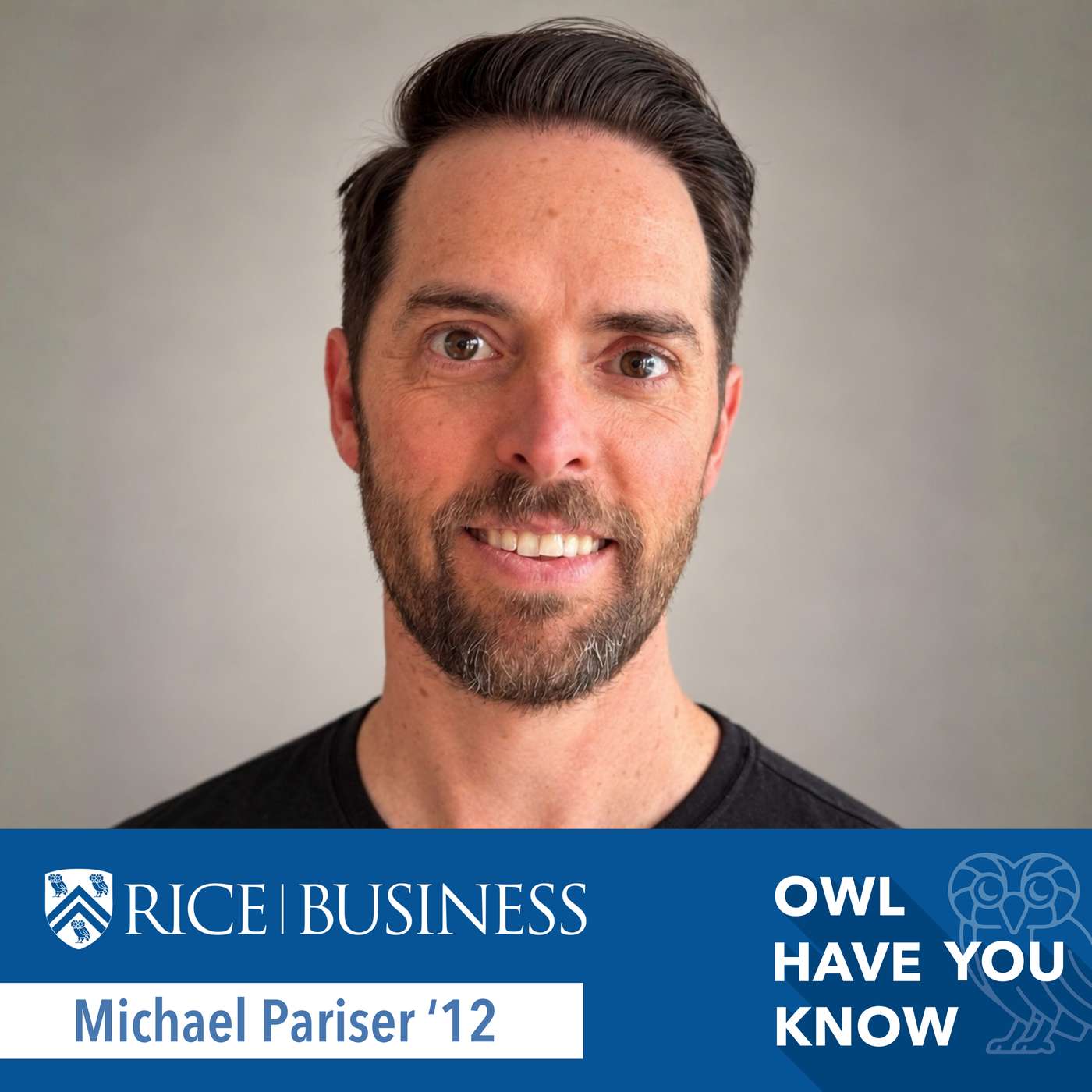
Powering AI With Clean Energy feat. Michael Pariser ’12
Michael Pariser ’12 was a banker at Lehman Brothers when the 2008 financial crisis pulled the rug out from under him. But after buying a one-way ticket to Southeast Asia and exploring the world, he stumbled into the work that would reshape his career: finding clean energy solutions. That experience led Mike straight to Rice Business and into a career that has taken him from selling utility-scale wind and solar at NextEra Energy and EDF Renewables to buying power for Walmart, Microsoft, and now Oracle, where he oversees global energy procurement and clean energy strategy for one of the largest AI data center buildouts in history. In this conversation with co-host Brian Jackson ’21, Mike unpacks what it actually takes to get electricity to a data center in 2026, why the U.S. grid is struggling to keep pace with AI's appetite for power, and how embedding environmental justice commitments directly into power purchase agreements can turn billion-dollar infrastructure projects into engines for local community investment. He also offers career advice for Rice students eyeing the power sector and explains how his monthly happy hour became a go-to gathering for Houston’s energy and power crowd. Episode Guide: 00:00 Meet Michael Pariser 01:04 From Lehman to Clean Energy 02:08 Southeast Asia Reset 11:01 Why Choose Rice MBA 14:14 Houston Energy Future 16:07 Networking Happy Hour 17:54 Buyer vs Seller Insights 19:25 Speed to Power Explained 24:45 Energy Trends Crystal Ball 30:10 Advice for New Grads The Owl Have You Know Podcast is a production of Rice Business and is produced by University FM. Episode Quotes: When an entrepreneurial idea becomes a business plan 13:20: I always have had an admiration for entrepreneurs and never had the courage to go out and strike on my own, but that is something that obviously Rice is really strong in. In fact, with one of my MBA 2012 colleagues, Phil Leach, we were in the Rice MBA business plan competition, and we even won $10,000 for best elevator pitch for our product at the University of Louisville business plan competition that year, which was Action Figure Laboratories, and our tagline was, “It is like Build-A-Bear, but for boys.” From Rice MBA to a career in clean energy 02:41: I actually remember doing all of my Rice MBA admissions interviews at midnight, wearing a jacket on the top and pajamas on the bottom, off camera, all the Rice admissions folks. And so my wife and I, who are all from Miami, we came to Houston. I loved my experience at Rice. I was a full-time 2012 MBA. And when I came out, I went into clean energy. I sold for almost ten years utility-scale wind and solar and battery energy storage projects to utilities and increasingly to corporate buyers, such as data centers, who have really large energy procurement goals and 100% clean energy procurement goals at that. Turning energy infrastructure into community investment 06:03: The good thing is, when you sign a 20-year deal and you structure it in the right way, you provide a runway of 20 years of seven- to eight-figure revenue for this nonprofit fund to operate from, and so they can plan some pretty impressive, impactful local projects. Show Links: Transcript Guest Profile: Michael Pariser | LinkedIn
September 30, 2026Episode 7638 min
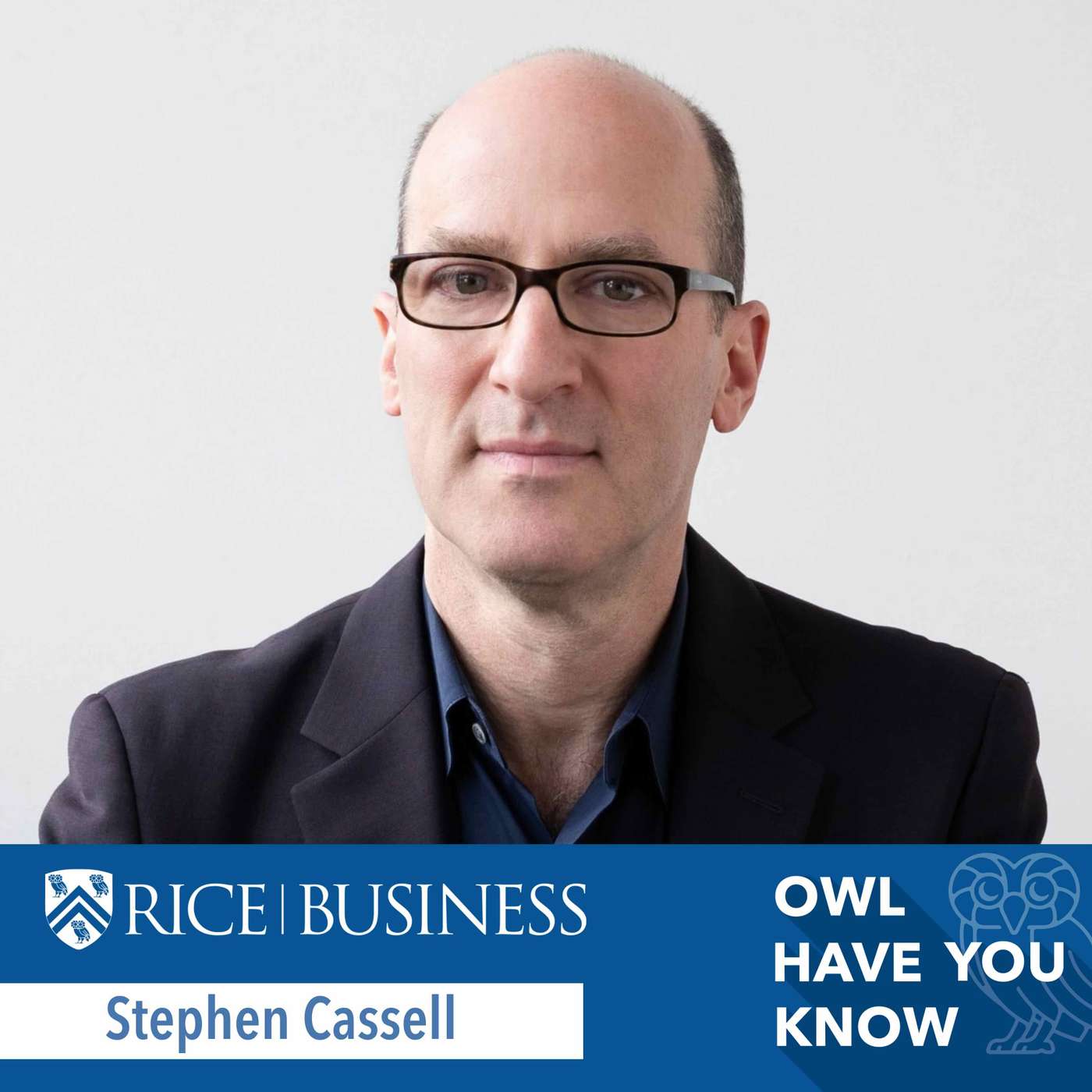
The Making of Virani Hall feat. Stephen Cassell
Stephen Cassell, principal at Architecture Research Office and lead architect of Asha and Farid Virani Hall, joins Maya Pomroy ’22 for a behind-the-scenes look at the making of Rice Business’ incredible new 112,000-square-foot home. Stephen shares the decisions, constraints and unexpected opportunities that shaped Virani Hall — from protecting the artistic vision behind James Turrell’s “Twilight Epiphany” Skyspace to reinterpreting McNair Hall’s distinctive brickwork and creating spaces designed to bring undergraduate and graduate students, faculty and the wider Rice community together. In this conversation, Stephen talks about designing spaces that encourage people to linger, connect and cross paths — from sculptural staircases and gathering spaces to Audrey’s and the West Quad. He also talks about designing for a future no one can fully predict, building flexibility into classrooms and gathering spaces that will evolve with the school’s needs. The result is a building that looks forward without losing sight of where Rice came from. Stephen also reflects on what it means to see students finally inhabit a place that, for four years, existed largely as an idea. More About Asha and Farid Virani Hall Located next to McNair Hall, Asha and Farid Virani Hall offers an additional 112,000 square feet for graduate and undergraduate business education at Rice Business. Skanska, one of the world’s largest project development and construction companies, and Sugar Land-based B. Bell Builders broke ground on the building in May 2024. Architecture Research Office led the design, with Houston-based Kirksey Architecture serving as executive architect. The facility was completed in 2026 and named in recognition of the generosity from Asha Virani ’89 and Farid Virani, Houston community and business leaders who helped establish the Virani Undergraduate School of Business in 2024. This impressive structure was built to accommodate the evolving needs of our community and our unprecedented growth — and features state-of-the-art classrooms, modern office spaces and vibrant amenities such as dining areas, open gathering spaces and facilities for private events. Virani Hall was made possible by the generosity of many. Thanks to our donors who made the space possible: Asha ’89 (B.A.) and Farid Virani The Estate of Ralph S. O'Connor The Elkins Foundation Judy Ley Allen Patti ’66 (B.A.) and Richard Everett ’67 (B.A.) Starlett and Ben Hollingsworth ’64 (B.A.) Nina and Sonu Kalra MD Anderson Foundation Karen and Chris Kreidler ’85 (B.A.; MBA, 1987) Russ Pitman ’58 (B.A.) Rice Business Alumni Association Board Amy Sutton ’89 (B.A.; MBA, 1990) and Gary Chiles ’86 (B.A.) Leslie ’81 (MAcc) and Jack Blanton ’01 (MBA) Kathy and Paul Mann ’96 (MBA) Rice Business Partners Board Jennifer ’92 (B.A.) and Charlie Geer ’92 (B.A; MAcc, 1993) Vivian L. Smith Foundation Anadarko Rice Business Alumni Heather and Daniel Bradshaw ’22 (MBA) Isabel and Ransom Lummis ’89 (MBA) Kristen and Gregory Mancini Clara and Emeka Oyolu ’05 (MBA) Waverly ’95 (B.A.) and Adam Peakes ’95 (B.A.) EMBA Class of 2000 Class of 2006 Katherine and Osmar Abib ’81 (B.A.) Karen ’77 (B.A.; MAcc, 1978) and Larry George Melissa and Tim Griffy ’79 (B.A.; MAcc, 1980) Kris and Richard McGee ’83 (B.A.) Angela Minas ’86 (B.A.; MBA, 1987) Debbie and Chris Patton ’92 (B.A.; MAcc, 1992) Emily ’94 (B.A.; MAcc, 1995) and Kevin Rabbitt ’95 (B.A.) Episode Guide: 00:00 Guest Intro 01:37 First Impressions of Rice 02:07 From Science to Architecture 05:04 Houston and Rothko Chapel 05:48 Proposal for Four-Year Build 07:40 Designing for Connection 11:21 Materials and Rice Identity 16:05 Challenges and Constraints 18:44 Nesting Old and New 20:53 Dining and Community 23:59 Future Impact Vision 33:12 Rothko Chapel Work 35:41 Light Pollution and LEED 37:14 Closing Thanks and Credits The Owl Have You Know Podcast is a production of Rice Business and is produced by University FM. Episode Quotes: Connecting Rice's architectural past and future 18:49: Rather than placing a larger addition just at one end of the building that was a lot taller because we needed a certain amount of square feet just to get what we want, it meant really that if you had the two buildings, they're really side by side, they follow each other, they almost nest against each other. And that basic idea for the building is they nest against each other, but they pull apart a little bit. And then where they pull apart, that's where those triple-height spaces are. And that was the opportunity. It was like, oh, we can use the character of the existing building to really shape those spaces and have the modern and the new architecture on the inside in dialogue with the old. And in some ways that's a metaphor of really also talking about how the building speaks to the future of Rice Business, but really does tie in to the, sort of, amazing past of Rice, right? And all this, learned knowledge that comes with the university. Turning limitations into innovations 12:43: Sometimes that narrow band of materials that we have is, like, it could seem limiting, but it actually allows for invention and experimentation. How do you do something that feels new, because there was real discussion that the building should really speak to the future of Rice Business but connects to the historic campus? And if you look carefully at the brickwork on the outside, in addition to using the bricks... This is me nerding out a little bit for architecture, the joints between the bricks are very thick. They're almost an inch, which is very unusual. You don't see that anywhere else, except Rice. And so it gives a very distinct coloration and feel and warmth to the brickwork at, all of the buildings on campus. On designing spaces that brings people together 08:23: One of the things that was really missing is the informal spaces of interaction of different scales, and that's really important for the life of a school and really important for a business school. Because people make connections. It might just be two people sitting informally having a conversation, or running into a professor, or sort of larger events, and the school needed to support that. It was really missing that space. So, we did some analysis, like, "Listen, you need these classrooms, and you need these offices and things, but I think you really need a lot more of the, sort of, informal gathering spaces of different scales that support the life of the school and support the interaction between the business community that comes in and all these different events that Rice Business has to engage with your students." Show Links: Asha and Farid Virani Hall | Rice Business Rice University Jones School of Business | ARO
September 16, 2026Episode 7532 min
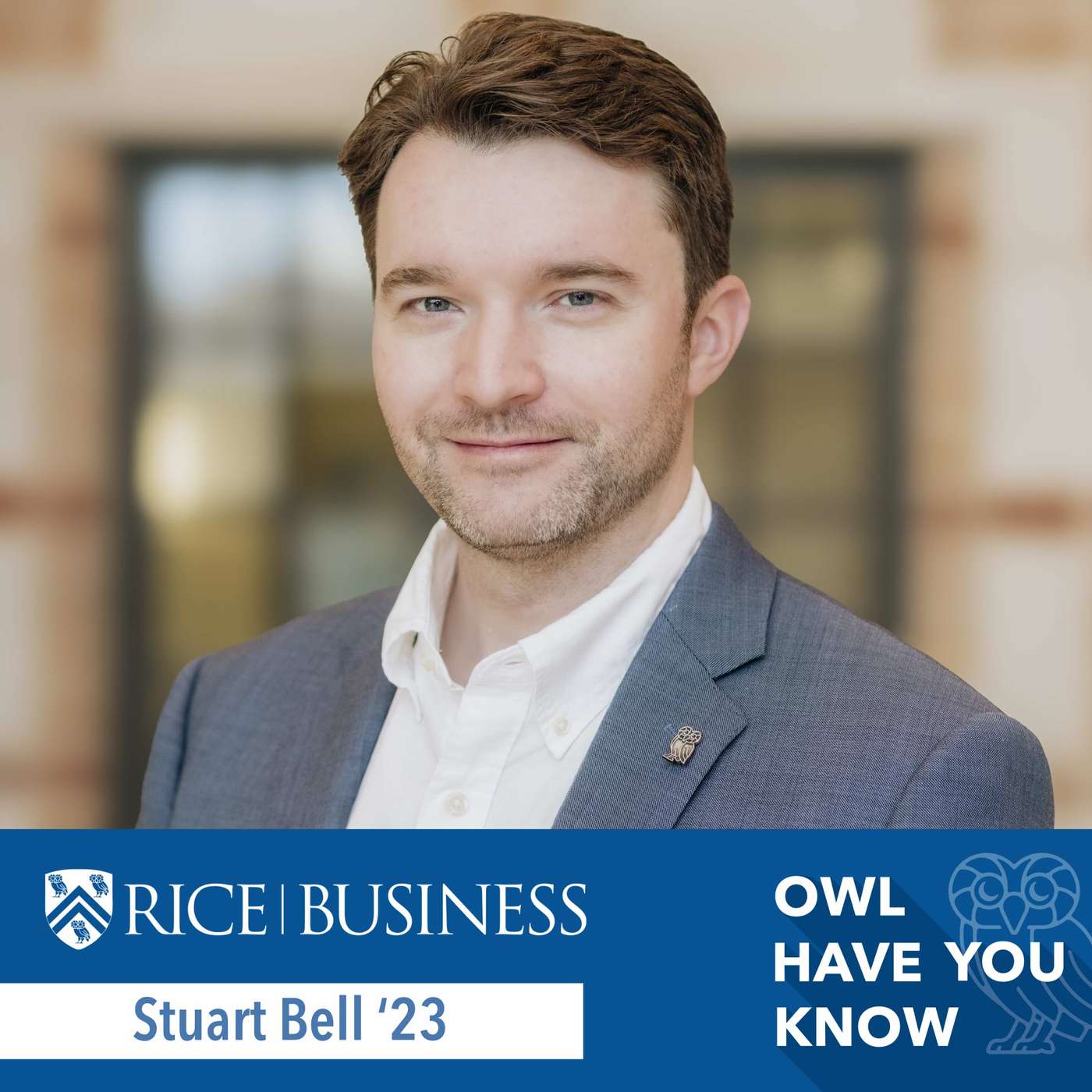
Finding What Drives You Mid-Career feat. Stuart Bell ’23
With over 15 years of experience at Chevron Phillips Chemical Company, Stuart Bell ’23 is leaving his mark on the sustainability world through his mission-driven and service-oriented mindset – a mindset that, he says, Rice Business helped him unlock. Beginning as a process engineer, Stuart has held a multitude of positions across the Chevron Phillips ecosystem and is now the senior manager of sustainability. Stuart joins co-host Maya Pomroy ‘22 to discuss why, a decade into his career, he decided to enroll in an MBA program and how Rice Business has helped shape the way he leads and sees the world. They also chat about his experience participating in Rice Board Fellows, why he started a wine club for Rice Business alumni, and his ultimate “ROI” from his time at Rice: a fiancee! Episode Guide: 00:00 Meet Stuart Bell 01:32 Roots in Sports and Academia 03:45 Choosing Chemical Engineering 06:01 Chevron Phillips Career Journey 08:47 The MBA Spark Moment 10:47 Why Rice Business 13:33 Board Fellows and Giving Back 17:13 Wine Club and Houston Favorites 19:40 MBA ROI and Career Pivots 23:37 Sustainability and Leadership Lessons 29:43 Advice to Future Owls The Owl Have You Know Podcast is a production of Rice Business and is produced by University FM. Episode Quotes: How Rice shaped Stuart’s sustainability path 22:14: I'm a very mission-driven person. You know, the way you opened the dialogue around community really sticks with me, that we want to be service-oriented. And so, within our business, I saw sustainability as a way to merge so many of my passions, passions for the outdoors, passions for the communities that we serve, and leverage a lot of the both experience I'd had at CPChem, but also the lessons I'd learned while at Rice, and hopefully, help advance the organization and that mission. And so for me, I would say pivoting then again a second time out of the commercial space into the sustainability one, is a direct result of my time at Rice. On embracing the complexity of sustainability 24:34: I think there was a change in the pace for sustainability these last two years. And, I think it's true. I think the world's learned that it's complicated, these are complex problems that involve a ton of different people and have a ton of different impacts. And so let's not run away from that truth. Let's engage it, because that's how we're actually going to advance. That's how we're going to make the next step in the narrative. That's how we're going to make the change that so many people think does. So, I think a lot of it is very healthy in that we're having to find out what really matters and make disciplined decisions. But, it's certainly facing more headwinds today than it was a handful of years ago. How Board Fellows turned service into action 14:22: So Board Fellows is a program that Rice puts together that pairs MBA candidates with various nonprofit organizations around the city. For me, that was something that I was very interested in. Obviously, my father being in education, the nonprofit sector is very close and adjacent. This mindset of service back to the community and society, is something that was important to me and it was an itch I wanted to scratch. So Board Fellows gave me a very structured way to go about doing that. Show Links: The Strategic Career by Bill Barnett Thinking, fast and slow by Daniel Kahneman Transcript Guest Profile: Stuart Bell | Rice Business Stuart Bell | LinkedIn
September 2, 2026Episode 7433 min
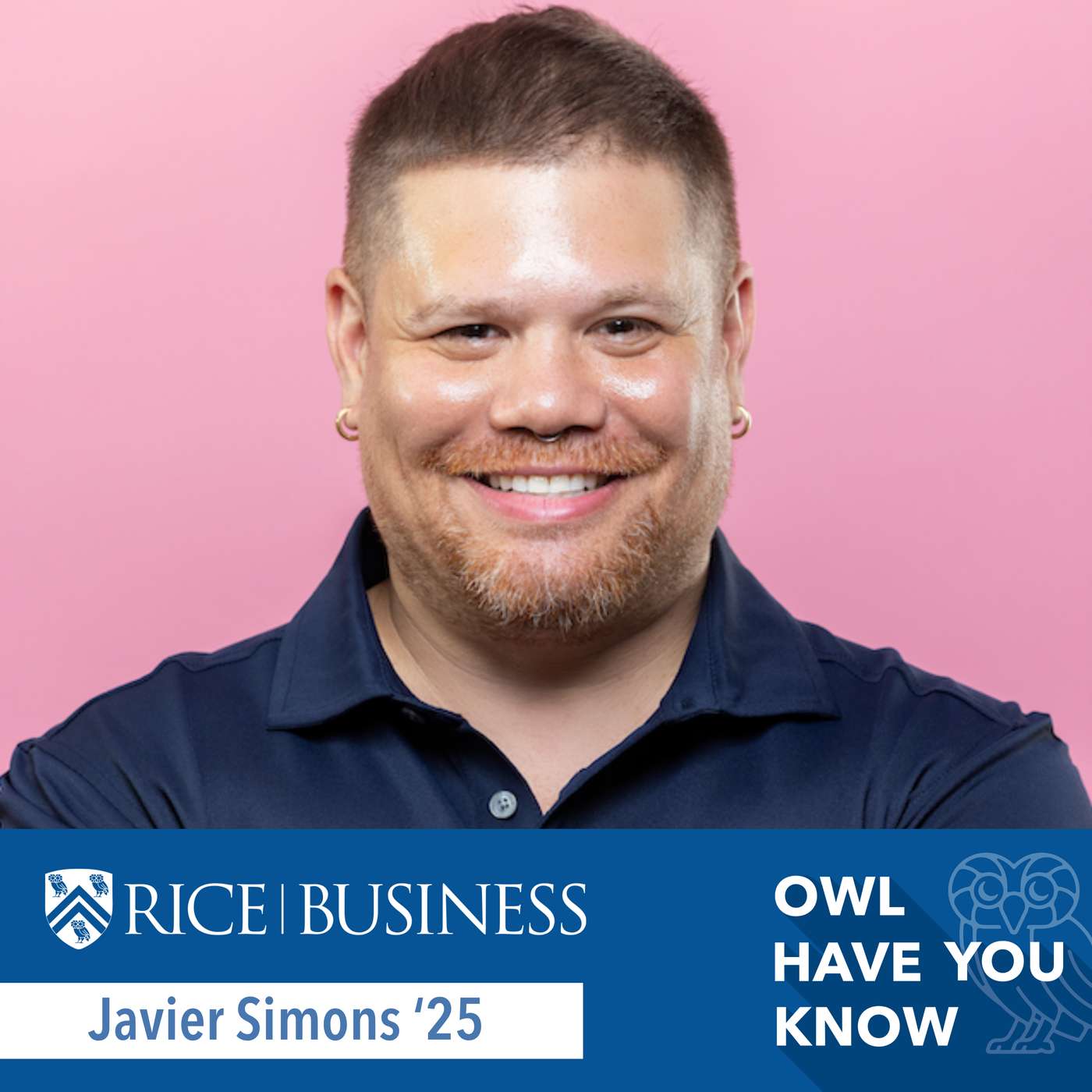
The Business of Live Entertainment feat. Javier Simons ’25
If you told a young Javier Simons that he would one day own his own talent agency and hold an MBA from Rice Business, he would have been in disbelief. Growing up in Panama, Javier’s path into the music industry was anything but conventional, he says. After years of waiting tables, Javier taught himself the business of entertainment from backstage, and fell in love with the in’s and out’s of talent booking and artist management. It was this passion that drove him to creating KOQ Agency, a global touring and talent agency representing independent artists. With the help of an MBA from Rice Business, Javier has scaled KOQ internationally, even booking Danish band Aqua’s first U.S. tour. Javier joins co-host Brian Jackson ’21 to talk about his path from club promoting to entrepreneur, what it really takes to build an artist's career from the ground up, how the MBA gave him the financial and leadership toolkit he was missing, what leading the Entrepreneurship Through Acquisition Conference meant to him, and why staying “delusional” is the key to chasing and achieving your dreams. Episode Guide: 00:00 Javier Simons Introduction 01:03 Early Spark for Live Entertainment 03:59 Hard Knocks Education 06:53 Founding KOQ Agency 09:42 Earning Artist Trust 12:30 Booking Aqua U.S. Tour 18:16 Riders and Show Crises 21:06 Leadership at Denver Pride 23:37 Why Rice MBA 26:01 Entrepreneurship Through Acquisition Conference Legacy 29:01 Advice for Breaking Into The Music Industry The Owl Have You Know Podcast is a production of Rice Business and is produced by University FM. Episode Quotes: On taking the risks to discover your potential 15:20: One of the things that entrepreneurs need to have is take the risk, because I didn't know my full potential until I did that. Once I did Aqua, that's when I realized that there was no challenge big or small enough that I couldn't achieve. It was really an eye-opening moment, especially when I was going through launch week and starting my first semester of the MBA program. And I remember texting my, my core team at 5:00 AM. I said, "If you see me with bags under my eyes and you don't hear from me until 5:30 before class, this is why." And I sent them the poster of the tour before it had released, and they were so supportive. They were, they were very excited. I think in general, I was the only person working in music, so it was kind of fascinating to them to see somebody that was kind of working a field that I don't think anybody in my, in my cohort was, was working. I took them on a journey with me. What we call delusion as an adult is what a kid calls a dream 28:19: What we call delusion as an adult is what a kid calls a dream, you know? And we always need to keep dreaming. I think as adults, we tend to not dream anymore. We tend to just go by facts and figures and, and analytics and, and understanding what the results and predictability and we really lose that charm, that innocence that really drove us when we were young to do things that we would never thought we could do. And I know that this is the beginning of something great, because I feel a big change coming. What’s the biggest misconception artists have about building a sustainable career? 36:07: I think the biggest misconception artists have is that there is only one pathway to monetize their art, and that is not true. A musician can monetize their music five different ways. Through publishing, through licensing, through live events, and ancillary revenue can be merchandised through the image of the artist and brand partnerships, of course. And there's also the element of music writing and being a producer, right? So learn how your art can be monetized. Don't record a song and throw it on, on SoundCloud and hope that it sticks. Show Links: Championing Diversity from Concerts to Classrooms: Meet Javier Simons, Professional MBA Student | Rice Business, Student Stories Transcript Guest Profile: Javier Simons | Rice Business Javier Simons | LinkedIn
August 19, 2026Episode 7336 min
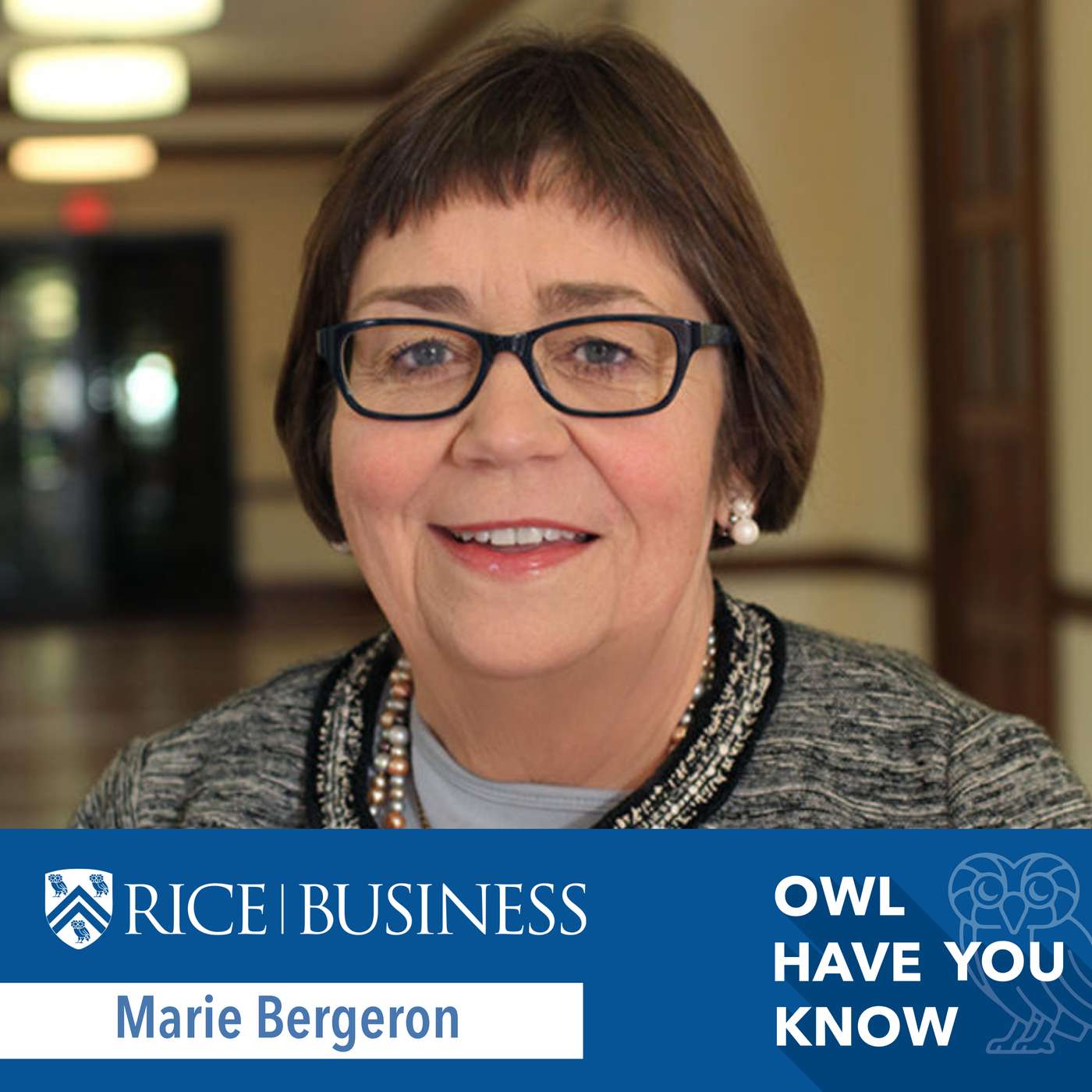
You’ve Been Laid Off: Now What? feat. Marie Bergeron
It’s one of the most feared moments in anyone’s career – finding out you’ve just lost your job. After a layoff or an unexpected career transition, it can be hard to know where to start when it comes to finding your next opportunity, especially in the age of AI tracking systems and applicant pools of hundreds or even thousands of job candidates. So what can you do to stand out from the crowd? On the inaugural episode of Owl Have You Know’s “Field Notes,” Marie Bergeron, director of career development for experienced hires and alumni at Rice Business, shares her top tips for landing a new job. Step by step, she walks co-host Brian Jackson ’21 through the processing, planning and networking stages of the job hunt. Episode Guide: 00:00 Layoff Survival Roadmap 01:14 First 24 Hours 02:02 Use Benefits and Severance 04:05 Build a Targeted Plan 06:37 Polish LinkedIn and Resume 07:50 First Month Networking Wins 11:20 Reaching Out the Right Way 13:44 Avoid Panic Mistakes 15:06 Compartmentalize the Emotions 20:07 Spotting Desperation Signals 23:24 Explaining the Layoff in Interviews 29:31 Negotiate the Offer Confidently 33:46 The Critical Role of Networking The Owl Have You Know Podcast is a production of Rice Business and is produced by University FM. Episode Quotes: The biggest mistake job seekers make 20:14: [Brian Jackson] How can you pretty quickly tell that someone's doing their search from a place of panic rather than purpose? 20:34: [Marie: Here's the killer, "I'll take anything." This is not helpful. This is not helpful. If you're networking and telling somebody, "I'll take any job," they have no idea how to help you. You have to say, "I think I want to go into supply chain or perhaps procurement." You know? And that way the people's minds can go to who do they know in those areas. How to recover after a layoff 16:13: In the old days, losing your job was a shame, you know? You did something wrong because people were employed for life, so to speak. But in today's world of private equity takeovers and quarterly reports of profitability and whatnot, companies reorg constantly to make their financial outcomes align with what the market wants, right? And so it happens so regularly now that it really shouldn't be as big an emotional outcome as it is, you know? And we do have to compartmentalize and say, "That's just business." Even though you think, "No, my boss hated me," or, "This one was talking about me and that's why it happened." It happened, and you have to put that in one box, and the other box is executing on my plan to get to where I want to be. Looking for a job can be fun 22:33: You know, this is going to sound odd, but looking for a job can be fun. You reconnect with people you haven't talked to in a long time. You learn about opportunities you never thought that you might fit into. You, you feel kind of smart about the market. And if you like people, you're having coffee with people, you're having lunch with people, instead of sitting in your office in front of a computer screen, and it literally can be fun. And I realize there's a financial thing kinda sitting on your shoulder. But it's something that you can actually enjoy if you're doing it right. Show Links: Rice Business’ Career Development Office Transcript Guest Profile: Marie Bergeron | Rice Business Marie Bergeron | LinkedIn
August 5, 2026Episode 7242 min
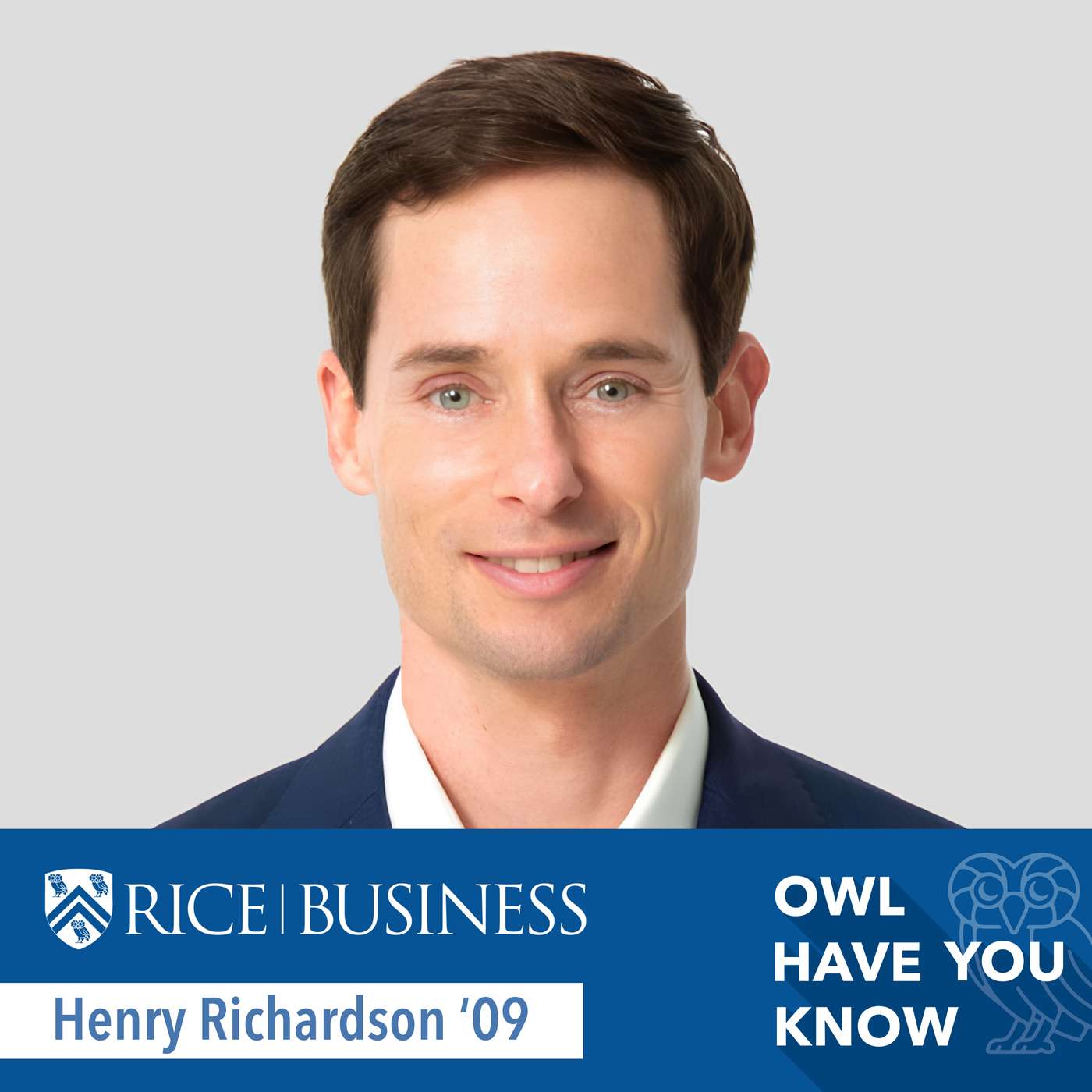
Don’t Take a Job Just Because It’s Available feat. Henry Richardson ’09
Henry Richardson, a former national champion diver, has built a career centered around health, wellbeing, and community. After earning his MBA at Rice Business, Henry founded the fitness studio chain, DEFINE body & mind, a nod to a professor’s words about defining your role in this world. Henry’s work with DEFINE has since evolved into Define Living, apartment communities with health and wellbeing at their core. In this episode of Owl Have You Know, hosted by Brian Jackson ‘21, Henry shares his journey from all-star athlete to entrepreneur, how he’s creating environments that shape behavior and improve wellbeing, and why he believes business, at its best, is a spiritual practice. Episode Guide: 00:00 Meet Henry Richardson 00:55 Life in Tepoztlán 02:40 From Diving to Teaching 05:33 Yoga Turning Point 09:19 Choosing Rice MBA 10:39 The Moment That Sparked DEFINE 14:29 Environment Shapes Behavior 16:34 Define Living Community Model 22:10 Leadership in Real Estate 25:14 Positive Psychology Proof 27:26 Feronia Retreat Vision 31:56 Business As A Spiritual Practice 35:46 Advice for Disconnection 38:10 Defining His Role Today The Owl Have You Know Podcast is a production of Rice Business and is produced by University FM. Episode Quotes: The lightbulb moment Henry knew he had to build something of his own [11:34] I was in business school 2007 through 2009, and that was literally the time of the Great Recession. And so my first semester of my second year was when everything just essentially was bleak. I remember one of my professors, he said, "Look, last year 75% of students at this point had job offers, and this year only 25%. So it's a complete flip, right? And so things aren't as hopeful as they perhaps were over a year ago.” And he said the phrase you just mentioned. He said, "Listen, don't take a job just because it's available. Take something that's going to define your role in this world." And I just, like, stopped in my foot track, like, this may not be exactly what I do, but if I do, if I open up a studio, a fitness studio, I'm calling it Define.That's exactly the thing I needed. And I actually have to admit, I cut my next class, which I am not one prone to do. I feel like I'm a good student, right? But I cut my next class, and I filed my DBA for Define in Harris County. On why Henry sees business as a spiritual practice, not just a hustle [32:12] Business is actually a very spiritual process. It is discipline. It's devotion. It is connecting to something that's bigger than yourself so that you can be better than just the individual self that you are. And I think business is very much like that. I feel like if you are working in an industry that you're passionate about, that you want to contribute to, it can be something that can be utilized for the good of humanity. You know, doing well by doing good, that whole mindset. His calculated approach to big leaps like taking the plunge at Rice Business School [13:17] I'm creative, and I'm adventurous for sure. I mean, I used to dive from a 10-meter platform. But I'm not just, like, blindly foolish in anything I do. I'm pretty calculated in terms of the approach that I take to most things. Like in diving, you start on the one meter, and then you go to the three, and then you go to the five, and then you go to the seven, and then you go to the ten. And so there's these steps that take you along this path, and the exact same thing happened with me at business school. And it was so powerful because Rice was the quote-unquote "platform" for me to dive and jump into my business, and it gave me the path and the training to feel confident. Show Links: Define Living Feronia | Retreat and Event Venue Breathing Life Back in Business, Henry Richardson | TEDx Transcript Guest Profile: Henry Richardson | LinkedIn Henry Richardson | Rice Business
July 22, 2026Episode 7134 min
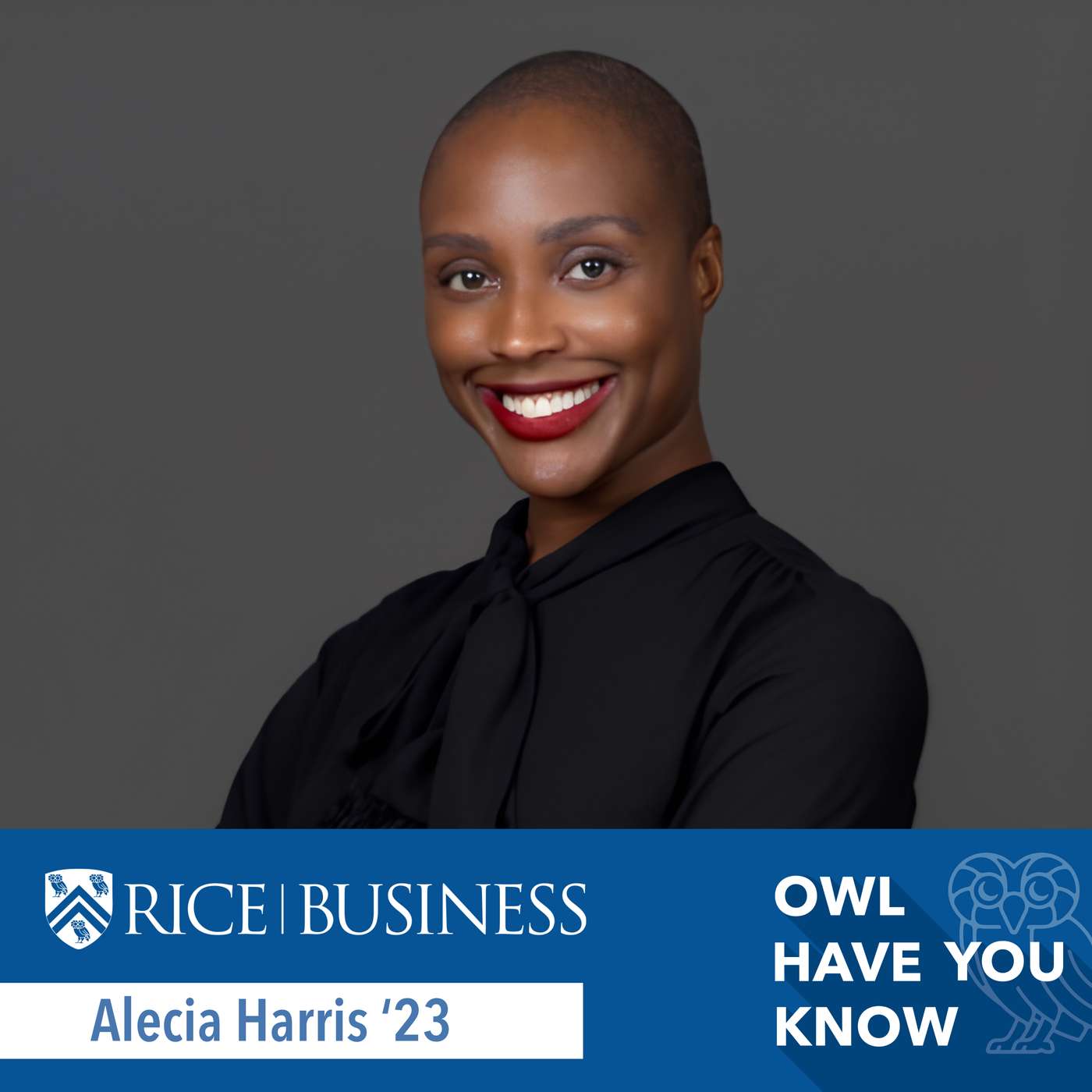
A New Chapter for the Rothko Chapel feat. Alecia Harris ’23
For Alecia Harris ’23, art is as essential as breathing, and it’s something everyone deserves to have access to. So she’s turned that belief into a career that sits at the intersection of art and business, with a mission focused on making art accessible. After years working in arts programming and visitor engagement at Rice University’s Moody Center for the Arts, she earned her Professional MBA from Rice Business, then pivoted into private wealth management at J.P. Morgan, where she built a client book of art collectors and museum donors. Now, as chief development officer at the Rothko Chapel, she’s channeling all of that experience into leading fundraising and development for one of Houston’s most iconic cultural institutions, during a pivotal moment in its history. Alecia joins co-host Brian Jackson ’21 to discuss her winding path from art history to finance and back, what “radical hospitality” means in practice, how her MBA gave her the 50,000-foot view she needed, and why Houston’s next generation of patrons must step up to steward the city’s world-class cultural institutions into the future. Episode Guide: 00:00 Meet Alecia Harris 01:09 Finding Art History 02:29 Art Without Intimidation 05:02 Radical Hospitality 06:26 The Rothko Chapel 07:39 Renovation and Light 09:13 Why Get an MBA 12:21 From Arts to JPMorgan 14:26 MBA Learning Curve 15:46 Art Advantage in Banking 21:37 Development Role Day to Day 23:43 Leadership Across Sectors 28:17 Travel for Art 31:08 Houston Hidden Gems The Owl Have You Know Podcast is a production of Rice Business and is produced by University FM. Episode Quotes: Why arts shouldn't be a luxury 5:41: If you stand in front of a piece of work, often Rothko paintings, like people talk about having your Rothko moment, like people are moved to tears. They have these transformative experiences in front of it. Why shouldn't that be available to everybody? And for me, even when I was working in, at JPMorgan, and I was working in finance, I had to have access to art every day because for me, it's like breathing. And I think good art holds a mirror up to society. It helps you process universal truths. It helps you connect to people. It's so important to me. It's not a luxury. It's something that I think everybody has to have access to it. And so anything that I can do to make people feel as if they also have an ownership over this, they have a right to access it, that's something that I'm very motivated by. The 50,000-foot view of leadership 23:15: I never would have had that 50,000 square foot view or really been able to understand how all the different pieces came together if I hadn't gone to business school. So I'm so, so fortunate that I have that perspective. One, just the scope of programs that we learned at Rice, but then also getting that experience working at the bank and now being able to bring all of that to this very worthwhile organization is incredibly meaningful. Why curiosity makes better leaders 23:55: For me, there's not really the qualities that I look for in a leader that I don't look for and think are worthwhile in just general human beings. Like this curiosity and openness, a willingness to listen. I think we can learn so much from unexpected places, take inspiration from unexpected places. I'm somebody that's a big info gatherer, and I'll take something and it's like I don't really know what I'm going to do with that or why I needed to know that right now, but I'll put it, you know, in my back pocket. And then those moments when you're able to make the connection later and it kind of unlocks new meaning or new opportunity, those are always really rewarding. Show Links: Rothko Chapel Moody Center for the Arts | Rice University Transcript Guest Profile: Alecia Harris | Rothko Chapel
July 8, 2026Episode 7042 min
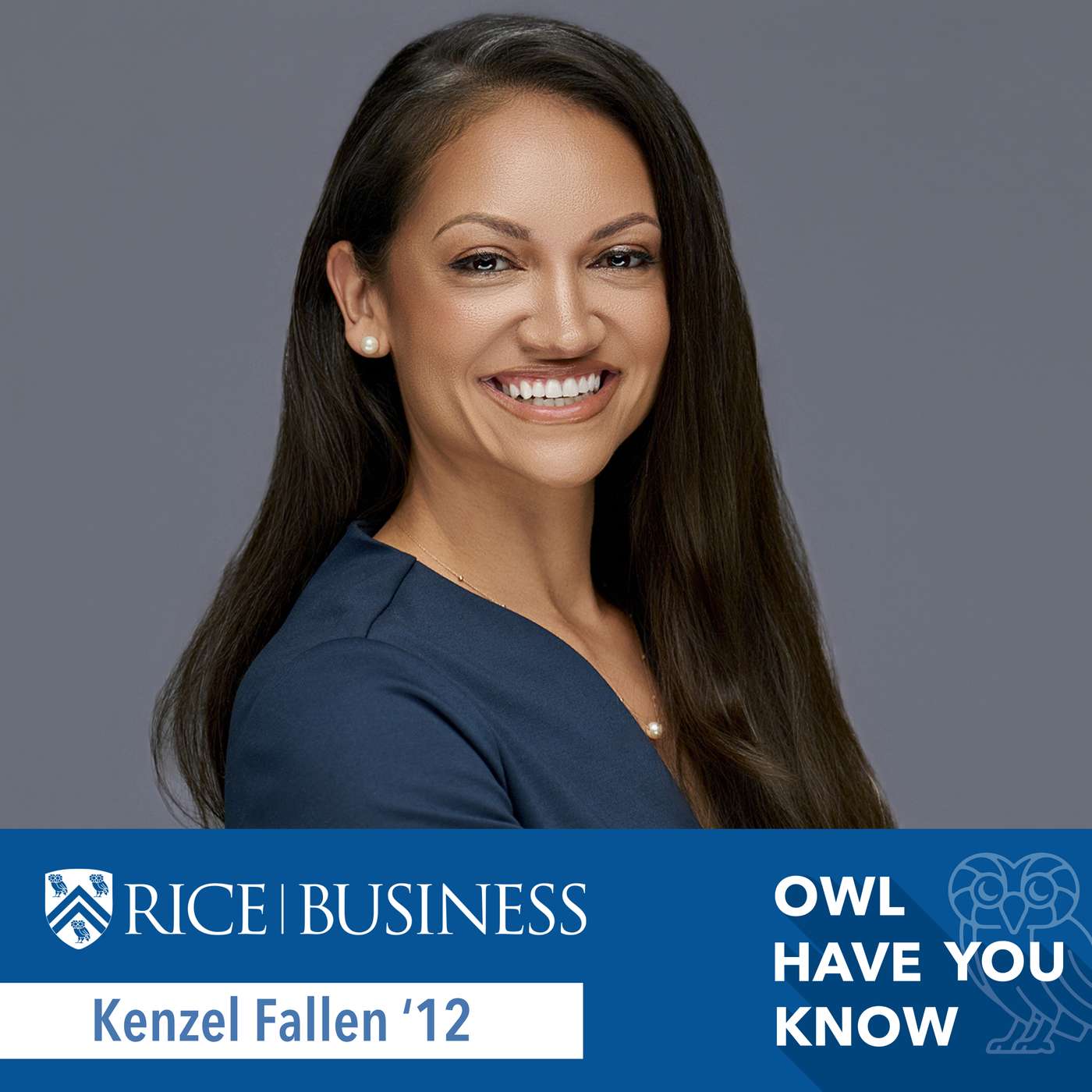
How a Side Project Became Texas’ Best Coffee Roaster feat. Kenzel Fallen ’12
After building a career in enterprise risk management and rising to senior leadership in banking, Kenzel Fallen ’12 and her husband Tio turned a shared passion for specialty coffee into Three Keys Coffee — a roastery and cafe focused on sustainability, creativity and music. What started as a side project during COVID has since landed on the shelves of Trader Joe's and been named Food & Wine's “Best Coffee Roaster in Texas.” As CEO of Three Keys Coffee, Kenzel is combining her Rice MBA training with her risk management mindset to navigate the daily challenges of owning a rapidly growing business. On this episode, she joins co-host Brian Jackson ’21 to chat about the inception of Three Keys Coffee, why entrepreneurship was a surprising path for her, and how Rice Business provided the right launchpad. Episode Guide: 00:00 Meet Kenzel Fallen 01:02 How Love Brought Her to Rice Business 05:27 From Risk to Coffee Entrepreneurship 09:13 Shopping Your Values 12:00 Working as a Couple 14:59 COVID Launch and Growth 18:08 Sourcing and Supply Chain 21:35 Jazz Brand Inspiration 25:03 Awards and Recognition 30:41 Coffee Impact and Purpose 35:04 What's Next for Three Keys 37:31 Distinguished Alumni Honor 39:10 Advice for Aspiring Founders The Owl Have You Know Podcast is a production of Rice Business and is produced by University FM. Episode Quotes: Your network is your education 04:36: Sometimes when people hear that, you know, your network is your net worth, it's almost more of a sense of, someone can just get you an introduction, or they can get you in a room. And it's not so much about having adjacency to people. I think that's more, that's like social climbing, right? But when you network, I see that as sharing. I see that as exchanging information and insights. And so, for me, when I think of that phrase, like "network is your net worth," I look at that as enhancing your education, enhancing your perspective, enhancing how deeply you understand the world and society that we live and work in. And sometimes you do have to rely on a lot of different experiences and perspectives. And for me, that's how that network expands. Bringing the cafe experience at home 22:50: Jazz was actually one of the genres that helped with the advent of, you know, vinyl albums. You know, people wanted to be able to take that live music experience but be able to enjoy it and celebrate it at home. Prior to some of the early jazz recordings, there really was just, like, classical music that had actually been put on vinyl. And so jazz allowed people to bring home that concert and that live band experience, and that's the same thing that we kind of wanted to do with coffee. It's like, "Hey, you don't have to go to a shop. You get the right beans. You understand how to make them. You can have that cafe experience at home." And so kind of drawing that parallel as well in the way that we wanted to create coffee and share coffee with people. The email that changed everything 25:25: I remember getting an email that was like, "Hey, we're thinking about doing, you know, highlighting different coffee shops. Can you send us some pictures of your shop?" And it was from Food & Wine, but I'm just thinking, "Oh, they're just going to highlight a bunch of folks." I had no clue. I truly had no clue until the announcement was made that we were named. They had us on the list as the best in Texas. We were just, I mean, mind-blown. Show Links: Three Keys Coffee Transcript Guest Profile: Kenzel Fallen | Rice Business Kenzel Fallen | LinkedIn
June 24, 2026Episode 6939 min
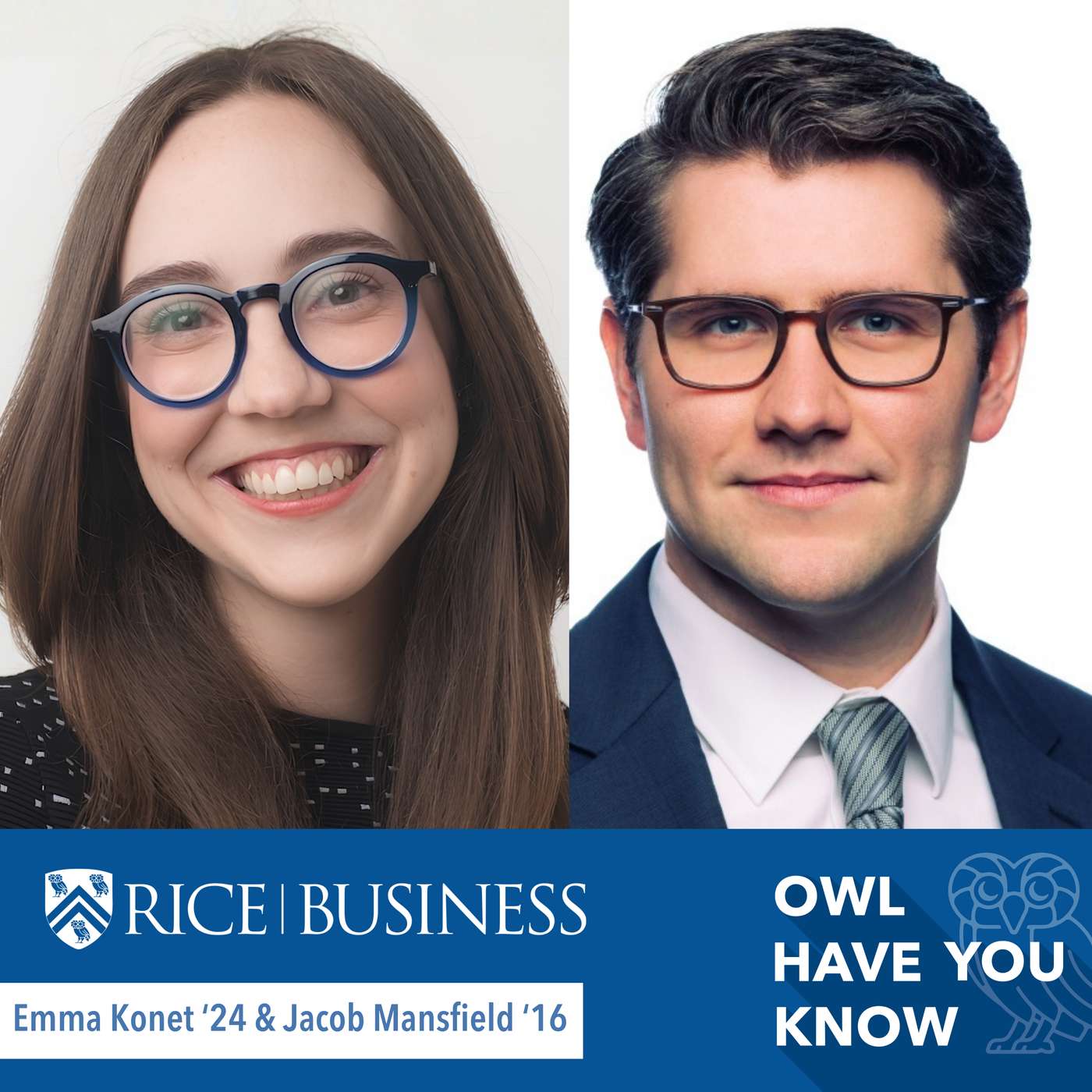
The Startup Using AI To Rethink Energy Storage feat. Emma Konet ’24 and Jacob Mansfield ’16
Two Rice alums are shaking up the renewable energy world with Tierra Climate, an AI-powered energy storage platform that’s quietly reshaping how the power grid works. Co-founded by Jacob Mansfield (BA ’16) and Emma Konet (PMBA ’24), Tierra Climate is driven by a shared belief that the transition to clean power needs to happen faster. Both have been passionate about the energy space since early in their careers, and when they saw an opportunity to use AI and software to accelerate the deployment of storage on the grid, they committed fully, leaving stable careers behind to build something that could make a real impact on climate change. They join host Brian Jackson ’21 to trace their unlikely path from Citibank trading desks to startup life. They open up about the underlying anxiety of early-stage founding but why entrepreneurship is still worth it, how large-scale batteries are being underutilized on the grid, and the ways the Rice network keeps showing up. Episode Guide: 00:00 Introductions & Origin Stories 06:29 Founding Tierra Climate 11:39 Customers & the Energy Storage Market 16:36 The Startup Journey 23:11 Taking the Leap & Building with AI 29:29 The Rice Network & Industry Trends 35:33 What's Next & the Texas Pilot The Owl Have You Know Podcast is a production of Rice Business and is produced by University FM. Episode Quotes: Magic happens when you commit 20:13: [Jacob Mansfield] I had a professor in business school that said that magic happens when you commit. There’s some sort of like lucky space of serendipity that you invite, and you talk to people, and you clearly come from the space and you understand their pain points, and yet you’ve kind of left all of that world to try to solve the problem. I think that’s pretty compelling for folks. I think it’s committing at inception, but it’s like a continual process of commitment throughout the entire journey. On finding the courage to go all in 18:48: [Emma Konet] I think going into that program, I’m not sure I ever would’ve quit my job and foregone health insurance and taken the big risk, because I was scared. I mean, I was genuinely like, "Oh, like, that feels really risky. I’m not sure my risk tolerance is there." But through the process of my MBA, I think because Rice is so focused on entrepreneurship, that’s kind of in the veins of the MBA program throughout. I basically got convinced that it wasn’t as big of a risk as I thought, and I think throughout that program, it just made me realize, you know what? Just do it. Like, it was kind of the "just do it, just take the leap" mentality that pushed me over the edge, and I’m very glad that I went full-time on this. On building something that matters 16:11: [Jacob Mansfield] Emma and I used to joke early on this concept of existential dread, which I’m sure founders can relate to. You know, when you work in a big organization, it may get some little nervousness around, like bonus day or when you hear, there’s going to be some reorg. But generally speaking, I wasn’t concerned, going in day in and day out, that Citibank would be in existence. It was one of the largest companies in the world. And so I think the difference is when you start a company, you do have, like, those butterflies in your stomach or that kind of like, okay, like, I want to make sure that what I’m building is going to amount to something and be meaningful. Show Links: Tierra Climate “Clean Energy’s Missing Link” | Rice Magazine Transcript Guest Profile: Jacob Mansfield | LinkedIn Emma Konet | LinkedIn
June 10, 2026Episode 6827 min
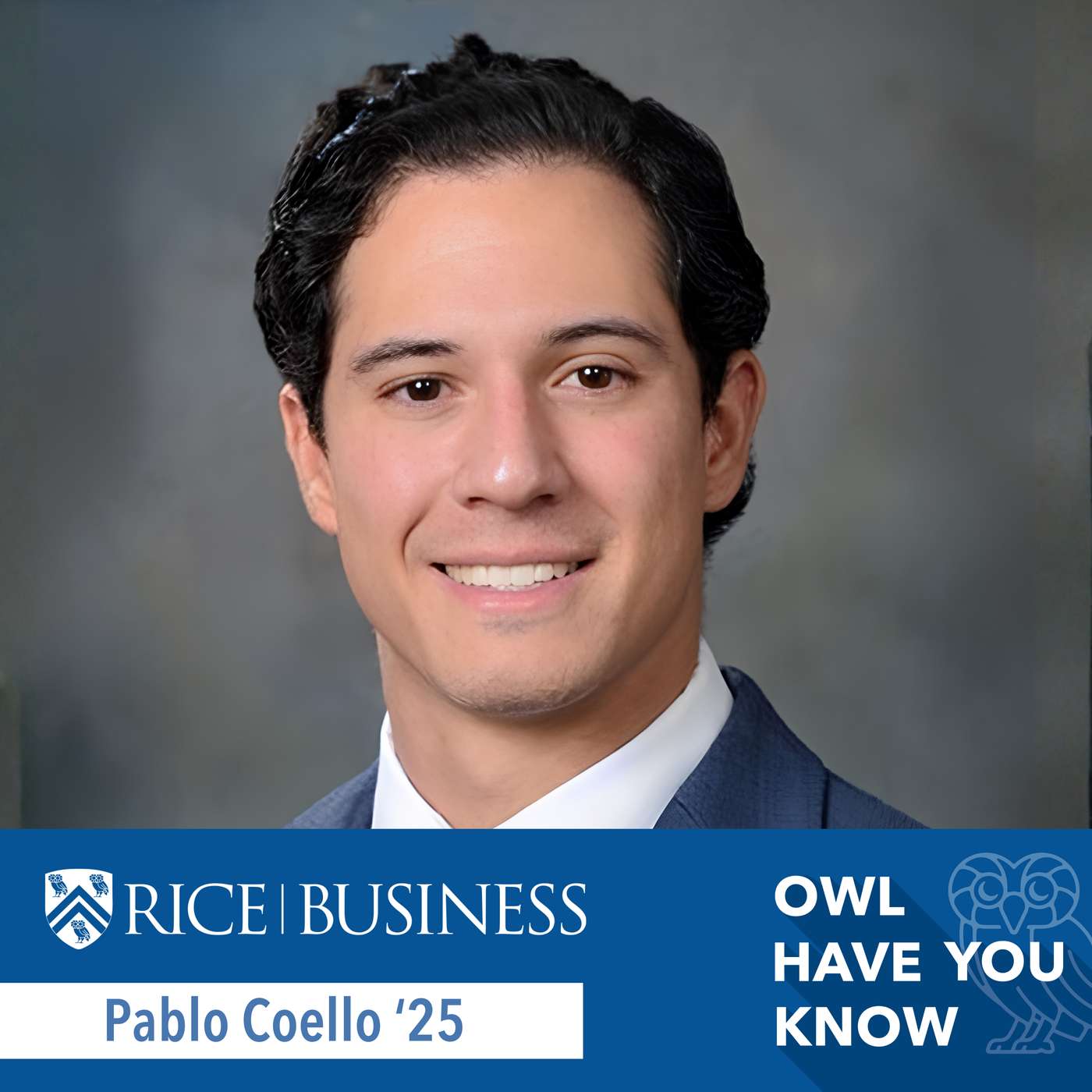
Why Every Med Student Needs an MBA feat. Pablo Coello ’25
When Pablo Coello began his medical training, he noticed a persistent gap in healthcare: clinicians and administrators often weren’t speaking the same language, and the result was inefficiency that directly affected patient care. That realization ultimately led him to pursue a dual MD/MBA through Baylor College of Medicine and Rice Business. Now an orthopedic surgery resident at UC Health, Pablo brings a dual perspective to medicine — one grounded in clinical practice and another shaped by business training. That combination allows him to think not only about individual patient outcomes, but also about system-wide decisions that affect hospitals and communities. In this episode of Owl Have You Know, hosted by Maya Pomroy '22, Pablo shares why more physicians need business fluency, how teamwork at Rice reshaped the way he practices medicine and what it means to look beyond the exam room to the health of an entire community. Episode Guide: 00:00 Meet Pablo Coello 01:14 Why Pursue an MBA Alongside an MD 03:26 Early Path to Medicine 04:13 Harvard Research Summers 06:33 OR Inefficiencies Spark Change 11:00 Inside the Rice MD MBA 13:28 Biggest MBA Takeaways 17:01 Advice for Med Students 22:16 Defining Success Long Term 25:33 Closing Thoughts The Owl Have You Know Podcast is a production of Rice Business and is produced by University FM. Episode Quotes: Why a hospital is an entity in a community 17:51: Medicine is so much more than just what you do in a clinic, in the OR, in the hospital in general. A hospital is an entity in a community. It's not just a place you go. I've noticed this even…especially now that I'm actively practicing and training. There are people that actively need your help. And if you broaden your skills, eventually your level of impact is not just going to be on a patient-to-patient basis. It's on a community as a whole. And that's why I got my MBA, and that's why I would argue as any med student in the Houston area, any med student in general that has access to a business school, especially one as good as Rice, in their backyard or anywhere close, should ideally, if it's financially possible and the timeline works out, get an MBA so that they can have that impact in their community eventually. Medicine is a team sport 14:02: Medicine is a team sport. You hear that all the time because we interact with other teams all day, every day. As an orthopedic surgery resident, our field is very specialized. So as a result, we get called by a lot of people, and we have to also call a lot of other people to help us manage things that we simply do not know how to manage. And I think having learned what I learned in the MBA helped a lot in terms of managing a lot of different things at once, different voices, if you will, in the clinical setting, which I did not really expect, to tell you the truth. But it helped because I learned also to not rely on myself as much. On fixing the structures that fail patients 08:53: The supportive structures around the OR and other clinical aspects are simply not where they should be; we are failing the patient, and we are doing that over and over and over and over again. And it's affecting the overall health of the community. It's affecting the overall opinion of the community on the healthcare system, and it's costing the hospital—whatever hospital—thousands of dollars a day, every day for eternity. So I'm not going to sit here and tell you that I got this MBA because I wanted to be like this knight in shining armor, and I was going to solve all the problems, because I'm not. That's unrealistic, and I get it. But I want to be part of the solution, if you will. Show Links: Transcript Guest Profile: Pablo Coello | LinkedIn
Is this your show?
Claim this listing to keep it up to date, reach guests who want to pitch you, and manage bookings with Guestify.