Find partners
Of Interest

Of Interest

Hosted by Gareth Vaughan

BusinessNewsInterviews guests

Episodes

116

Latest episode

Jul 2026

Language

EN

About the show

Longform interviews with key opinion makers about the New Zealand economy

Listen to episodes

60 recent
July 20, 202638 min

Hamilton Confidential, the Worldclear podcast, Episode 4

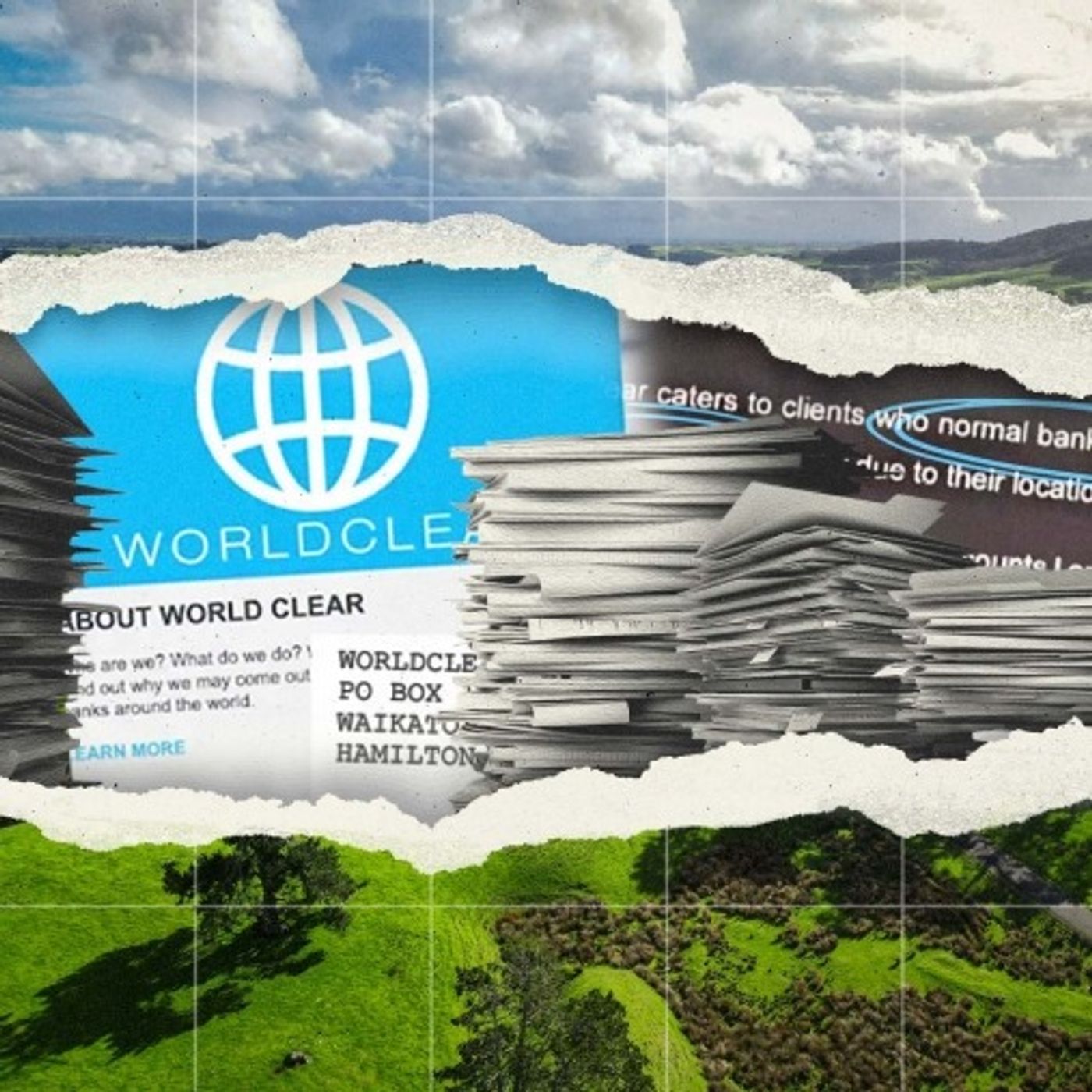
Hamilton Confidential is a podcast about Worldclear Ltd, based on leaked documents from the New Zealand financial services provider. Obtained by Interest.co.nz and shared with the Organized Crime and Corruption Reporting Project, Lithuania's 15min.lt, the Belarusian Investigative Center, and Sweden's Expressen, the leak shows Worldclear processing money transfers for a colorful global clientele over a five year period. With a staff of no more than a dozen people, one internal document claims Worldclear had "grown to process about $500 million in payment values per year." Worldclear was found by Department of Internal Affairs supervisors to have failed to comply with several anti-money laundering requirements. And two minority Worldclear shareholders had convictions for financial crimes overseas, with one having an Interpol red notice out in his name for an unserved jail sentence in Panama for money laundering. There is no evidence that Worldclear or its staff knowingly facilitated financial crimes. David Hillary, Worldclear's founder and managing director, denied any wrongdoing by himself or the firm, saying neither had ever; “knowingly or recklessly facilitated criminal offending, acted for the purpose of assisting any person to commit an offence, or designed or operated services for the purpose of concealing the source, destination, or beneficial connection of illicit funds.” Here are the first four episodes in the series. Episode 1, What was Worldclear and what did it do? An overview of what Worldclear was, how it operated, who its customers and owners were, and why the story matters for New Zealand. Episode 2, Richard Whitham; from Hamilton to Changi prison. Featuring an interview with Richard Whitham, who worked for Worldclear as a banking relationships establishment project officer, and ended up spending more than two years in Changi prison. Whitham was the key source of the leak. Episode 3; International customers; Michael Wilson, Guenther Klar & Odebrecht Overseas Ltd. Featuring a customer wanted by the FBI who chartered a private jet and fled Canada for Vietnam, along with his wife, mother, and three dogs. A British citizen who was later convicted in Denmark of defrauding Danish tax authorities. And a Bahamas company whose Brazilian parent company had pleaded guilty in the US to involvement in a multi-billion dollar bribery scandal. Episode 4; The Belarus & Lithuanian connection. A discussion with Belarusian and Lithuanian journalists who worked on the investigation, looking at why the Worldclear leak is of interest in their countries, and what it's like to be a Belarusian investigative journalist working from exile. Podcast hosts Gareth Vaughan and Emanuel Stoakes, producer Erica Wood. Separate text stories published as part of the investigation can be found here. Interest.co.nz is grateful for funding support from the Brian Gaynor Business Journalism Initiative and the readers who Support us, in helping bring this project to fruition. Audio soundtrack opening is licensed from Shutterstock, Track 1219389 Monetization ID TFGEPGEI0LHEIJAI
July 20, 202642 min

Hamilton Confidential, the Worldclear podcast, Episode 3

Hamilton Confidential is a podcast about Worldclear Ltd, based on leaked documents from the New Zealand financial services provider. Obtained by Interest.co.nz and shared with the Organized Crime and Corruption Reporting Project, Lithuania's 15min.lt, the Belarusian Investigative Center, and Sweden's Expressen, the leak shows Worldclear processing money transfers for a colorful global clientele over a five year period. With a staff of no more than a dozen people, one internal document claims Worldclear had "grown to process about $500 million in payment values per year." Worldclear was found by Department of Internal Affairs supervisors to have failed to comply with several anti-money laundering requirements. And two minority Worldclear shareholders had convictions for financial crimes overseas, with one having an Interpol red notice out in his name for an unserved jail sentence in Panama for money laundering. There is no evidence that Worldclear or its staff knowingly facilitated financial crimes. David Hillary, Worldclear's founder and managing director, denied any wrongdoing by himself or the firm, saying neither had ever; “knowingly or recklessly facilitated criminal offending, acted for the purpose of assisting any person to commit an offence, or designed or operated services for the purpose of concealing the source, destination, or beneficial connection of illicit funds.” Here are the first four episodes in the series. Episode 1, What was Worldclear and what did it do? An overview of what Worldclear was, how it operated, who its customers and owners were, and why the story matters for New Zealand. Episode 2, Richard Whitham; from Hamilton to Changi prison. Featuring an interview with Richard Whitham, who worked for Worldclear as a banking relationships establishment project officer, and ended up spending more than two years in Changi prison. Whitham was the key source of the leak. Episode 3; International customers; Michael Wilson, Guenther Klar & Odebrecht Overseas Ltd. Featuring a customer wanted by the FBI who chartered a private jet and fled Canada for Vietnam, along with his wife, mother, and three dogs. A British citizen who was later convicted in Denmark of defrauding Danish tax authorities. And a Bahamas company whose Brazilian parent company had pleaded guilty in the US to involvement in a multi-billion dollar bribery scandal. Episode 4; The Belarus & Lithuanian connection. A discussion with Belarusian and Lithuanian journalists who worked on the investigation, looking at why the Worldclear leak is of interest in their countries, and what it's like to be a Belarusian investigative journalist working from exile. Podcast hosts Gareth Vaughan and Emanuel Stoakes, producer Erica Wood. Separate text stories published as part of the investigation can be found here. Interest.co.nz is grateful for funding support from the Brian Gaynor Business Journalism Initiative and the readers who Support us, in helping bring this project to fruition. Audio soundtrack opening is licensed from Shutterstock, Track 1219389 Monetization ID TFGEPGEI0LHEIJAI
July 20, 202652 min

Hamilton Confidential, the Worldclear podcast, Episode 2

Hamilton Confidential is a podcast about Worldclear Ltd, based on leaked documents from the New Zealand financial services provider. Obtained by Interest.co.nz and shared with the Organized Crime and Corruption Reporting Project, Lithuania's 15min.lt, the Belarusian Investigative Center, and Sweden's Expressen, the leak shows Worldclear processing money transfers for a colorful global clientele over a five year period. With a staff of no more than a dozen people, one internal document claims Worldclear had "grown to process about $500 million in payment values per year." Worldclear was found by Department of Internal Affairs supervisors to have failed to comply with several anti-money laundering requirements. And two minority Worldclear shareholders had convictions for financial crimes overseas, with one having an Interpol red notice out in his name for an unserved jail sentence in Panama for money laundering. There is no evidence that Worldclear or its staff knowingly facilitated financial crimes. David Hillary, Worldclear's founder and managing director, denied any wrongdoing by himself or the firm, saying neither had ever; “knowingly or recklessly facilitated criminal offending, acted for the purpose of assisting any person to commit an offence, or designed or operated services for the purpose of concealing the source, destination, or beneficial connection of illicit funds.” Here are the first four episodes in the series. Episode 1, What was Worldclear and what did it do? An overview of what Worldclear was, how it operated, who its customers and owners were, and why the story matters for New Zealand. Episode 2, Richard Whitham; from Hamilton to Changi prison. Featuring an interview with Richard Whitham, who worked for Worldclear as a banking relationships establishment project officer, and ended up spending more than two years in Changi prison. Whitham was the key source of the leak. Episode 3; International customers; Michael Wilson, Guenther Klar & Odebrecht Overseas Ltd. Featuring a customer wanted by the FBI who chartered a private jet and fled Canada for Vietnam, along with his wife, mother, and three dogs. A British citizen who was later convicted in Denmark of defrauding Danish tax authorities. And a Bahamas company whose Brazilian parent company had pleaded guilty in the US to involvement in a multi-billion dollar bribery scandal. Episode 4; The Belarus & Lithuanian connection. A discussion with Belarusian and Lithuanian journalists who worked on the investigation, looking at why the Worldclear leak is of interest in their countries, and what it's like to be a Belarusian investigative journalist working from exile. Podcast hosts Gareth Vaughan and Emanuel Stoakes, producer Erica Wood. Separate text stories published as part of the investigation can be found here. Interest.co.nz is grateful for funding support from the Brian Gaynor Business Journalism Initiative and the readers who Support us, in helping bring this project to fruition. Audio soundtrack opening is licensed from Shutterstock, Track 1219389 Monetization ID TFGEPGEI0LHEIJAI

July 20, 202634 min

Hamilton Confidential, the Worldclear podcast, Episode 1

Hamilton Confidential is a podcast about Worldclear Ltd, based on leaked documents from the New Zealand financial services provider. Obtained by Interest.co.nz and shared with the Organized Crime and Corruption Reporting Project, Lithuania's 15min.lt, the Belarusian Investigative Center, and Sweden's Expressen, the leak shows Worldclear processing money transfers for a colorful global clientele over a five year period. With a staff of no more than a dozen people, one internal document claims Worldclear had "grown to process about $500 million in payment values per year." Worldclear was found by Department of Internal Affairs supervisors to have failed to comply with several anti-money laundering requirements. And two minority Worldclear shareholders had convictions for financial crimes overseas, with one having an Interpol red notice out in his name for an unserved jail sentence in Panama for money laundering. There is no evidence that Worldclear or its staff knowingly facilitated financial crimes. David Hillary, Worldclear's founder and managing director, denied any wrongdoing by himself or the firm, saying neither had ever; “knowingly or recklessly facilitated criminal offending, acted for the purpose of assisting any person to commit an offence, or designed or operated services for the purpose of concealing the source, destination, or beneficial connection of illicit funds.” Here are the first four episodes in the series. Episode 1, What was Worldclear and what did it do? An overview of what Worldclear was, how it operated, who its customers and owners were, and why the story matters for New Zealand. Episode 2, Richard Whitham; from Hamilton to Changi prison. Featuring an interview with Richard Whitham, who worked for Worldclear as a banking relationships establishment project officer, and ended up spending more than two years in Changi prison. Whitham was the key source of the leak. Episode 3; International customers; Michael Wilson, Guenther Klar & Odebrecht Overseas Ltd. Featuring a customer wanted by the FBI who chartered a private jet and fled Canada for Vietnam, along with his wife, mother, and three dogs. A British citizen who was later convicted in Denmark of defrauding Danish tax authorities. And a Bahamas company whose Brazilian parent company had pleaded guilty in the US to involvement in a multi-billion dollar bribery scandal. Episode 4; The Belarus & Lithuanian connection. A discussion with Belarusian and Lithuanian journalists who worked on the investigation, looking at why the Worldclear leak is of interest in their countries, and what it's like to be a Belarusian investigative journalist working from exile. Podcast hosts Gareth Vaughan and Emanuel Stoakes, producer Erica Wood. Separate text stories published as part of the investigation can be found here. Interest.co.nz is grateful for funding support from the Brian Gaynor Business Journalism Initiative and the readers who Support us, in helping bring this project to fruition. Audio soundtrack opening is licensed from Shutterstock, Track 1219389 Monetization ID TFGEPGEI0LHEIJAI
June 12, 202628 min

David Mahon: China will watch Election 2026 closely

Chinese officials are watching the 2026 election for a signal on whether New Zealand’s more United States-aligned security posture will become a permanent fixture. If they assess that it is, the trade relationship might be at risk. That’s the opinion of David Mahon, a Kiwi business consultant based in Beijing. “New Zealand–China relations are already at their worst stage since diplomatic recognition,” he told the Of Interest podcast. “At the moment, there's not some sword hanging over us, partly because China is so busy dealing with a massive geopolitical mess, as all great powers and smaller and medium sized powers are.” But Mahon sees two risks in the future: China could retaliate by blocking the import of some non-essential luxury goods, or it could simply become “indifferent” towards its relationship with New Zealand. “New Zealand sells a lot of things to China. None of them are irreplaceable. In the end, it's just milk. In the end, it's just fruit or honey. That's something that we need to acknowledge.” “If you look at our free trade agreement, the profit margin, the rationale for many of our companies trading with China is only based on the fact we pay no tax. If we lost that free trade agreement. We would lose much of our business with China”. Mahon doesn’t think the Free Trade Agreement is currently at risk but there are signs Kiwi businesses in China are nervous about the deteriorating relationship. An article written by China trade consultant Anna-May Isbey in a report published by the NZ Business Roundtable in China warned there could be direct consequences for geopolitical policies. “The language used by governments when navigating geopolitical tensions can have real commercial consequences. Exporters consistently express the view that New Zealand’s longstanding, pragmatic, and independent approach to international engagement should continue,” she wrote. This perspective contrasts against security analysts in Wellington and elsewhere who are increasingly concerned about China as a security risk, and want New Zealand to bolster its defence capabilities and diversify its export markets. Government agencies have linked China to both foreign interference and cyber espionage in New Zealand, such as hacking the Parliamentary Service network in 2021. But a political pivot towards the United States, which began while Jacinda Ardern was Prime Minister, has been complicated by the country’s plunging popularity in New Zealand. The United States is now seen by Kiwis as more of a threat than China, according to an annual survey commissioned by the Asia NZ Foundation. Mahon believes New Zealand should “learn to do less” and avoid taking sides in geopolitical competition which doesn’t directly affect it. “Stop seeking the approval of these big countries that impress you so much, including Beijing … If we do less, and our need for the approval of other nations is less, then I think the navigation is going to be a lot simpler,” he said. Audio soundtrack opening is licensed from Shutterstock, Track 1219389 Monetization ID TFGEPGEI0LHEIJAI

May 30, 202625 min

The Detail interview with Gareth Vaughan

IAn international collaboration and months of forensic investigation and fact-checking has helped a small Kiwi financial journalism website break a story involving a New Zealand company that moved massive amounts of money for multiple clients who were later convicted of financial crimes. Worldclear Limited - a banking clearing house based in Hamilton which is no longer operating - was able to set up and trade without breaking any rules, and it denies it knew anything about what its more colourful clients were up to. Those clients included a politically connected Belarusian oligarch, a UK citizen convicted as part of a large-scale European tax swindle, a Canadian-American guilty of wire fraud, and a Swedish national for whom there is still an international Red Notice out. The resulting story features this week on the front page of the website of the Organised Crime and Corruption Reporting Project, a global network of journalists rooting out stories of bribery, coercion and dirty deals in all corners of the globe. It was written by Gareth Vaughan, the editor of interest.co.nz, but he says he had a lot of help - from journalists from countries including Belarus, Lithuania, Sweden and Singapore. He has been following the Worldclear story for 10 years, but this investigation was really sparked in 2024 by a leak from a former employee who had been jailed in Singapore for financial crimes. "I sort of started looking at it and I just realised, there's a lot here," he says. "This is about events that happened a few years ago ... it's undoubtedly going to be interesting. I had no idea of the scale of it. I didn't realise the business had been anywhere near as big as it actually was in terms of the volumes ... we're talking tens of millions of dollars and various currencies, and customers literally from every corner of the world." Interest.co.nz applied for a Brian Gaynor Business Journalism Initiative grant and got more than $76,000 to hire temporary cover so that Vaughn could spend time pursuing the story. Worldclear's business model was to make international banking transactions for customers who were having difficulty doing that, either because banks turned them down or they were from jurisdictions that reputable banks wouldn't deal with. Under anti-money laundering rules it was classed as a remittance company. It targeted high risk clients facing banking or payment problems - the company says that is not evidence of knowing about or facilitating crimes, and there is no evidence that was the case. Using firms like Worldclear is a slow and expensive way to transfer money, but it makes transactions harder to track. It was not a bank so did not have to comply with Reserve Bank standards, and didn't break any rules under what are widely held to be 'light touch' financial regulations in New Zealand - regulations that have the World Bank classing the country as the easiest in the world to do business. "It's very attractive for business people, right, so anyone who wants to set up a company. [For] legitimate business, it's fantastic, it's great, and it's brilliant. "But it does mean that there may be people out there whose reasoning may not be completely wholesome - it's easy for them to do as well. "So Worldclear registered as a New Zealand company, and then it registered as a New Zealand Financial Service Provider. And registering as a Financial Service Provider doesn't mean that you're actually regulated - that's a separate issue. So there are some areas where you can register as a New Zealand Financial Service Provider and provide certain financial services internationally, and you're not actually regulated in New Zealand. "They didn't do anything wrong in the way they set the company up at all. They followed all the rules. And you can effectively operate as a bank internationally but you're obviously not licenced by the Reserve Bank. "By international standards this is quite light-touch." Two of the company's shareholders had financial criminal records, but Worldclear had no obligation to dig into their backgrounds. "You could set up in the same way today, as Worldclear did," says Vaughan. "There may be closer oversight of you today... also one of our experts we spoke to said he just didn't think banks would take on a company like this today." The Department of Internal Affairs, which had oversight of such financial companies, did two inspections and was quite biting about the company's methods in the second one - but no charges were ever laid. By the time that report came out, Worldclear had in 2019 left the Financial Service Provider's register. It is still a registered company but it has not filed an annual return since 2024 and the Companies Registrar has started the process of de-registering it. Inland Revenue has opposed the company's deregistration. Check out how to listen to and follow The Detail here. Audio soundtrack opening is licensed from Shutterstock, Track 1219389 Monetization ID TFGEPGEI0LHEIJAI

March 12, 202635 min

David Cay Johnston: NZ's objective with Trump should be 'to not become the focus of his wrath'

Under the leadership of President Donald Trump there's a danger the United States will become an autocratic nation, not unlike China, Saudi Arabia or Russia, and New Zealand should strive to avoid becoming the focus of Trump's wrath, suggests David Cay Johnston. Johnston, a Pulitzer Prize winning investigative journalist, co-founder of DCReport and journalism professor at Rochester Institute of Technology, spoke to interest.co.nz in a new episode of the Of Interest podcast. Johnston first met Trump in Atlantic City in 1988, and has probed and written about the affairs of Trump for decades. Domestically he says Trump's under pressure from his MAGA (make America great again) base with the economy not doing well, and over the Epstein files and the US attack on Iran. With the US mid-term elections looming in November, Johnston says checks and balances via the likes of Congress, the courts and the Constitution supposed to limit the President's power, are failing. "The checks and balances system isn't working, plain and simple. He thinks he's the world's dictator. He hasn't consolidated his power even in the US, but that's his goal, totally consolidate his power, to be totally unaccountable, unfortunately," Johnston says. He says Trump's presidency could effectively be over if he loses control of the House and Senate in the mid-term elections, which is "weighing on his mind." Against this backdrop Johnston says voter intimidation and suppression is underway. Asked how the Trump era may end, Johnston says he fears for US democracy. "At the moment, the United States is a dictatorship. It is not fully consolidated, but it is a dictatorship. Whether we restore our democracy is not clear at this point. We may cease to be a democracy." Johnston says opposition emerged through the No Kings demonstrations, which he'll be watching closely over the coming US summer. These protests come against the backdrop of danger the US becomes "a huge autocratic nation, not unlike Xi's China, MBS's [Mohammed bin Salman Al Saud's] Saudi Arabia, [and] Putin's Russia. "And that would be a terrible thing for the whole world." For NZ, as a small, trading nation, Johnston suggests at this stage we ought to keep our heads down. "The key objective is to not become the focus of Donald's wrath because he could say, 'well, I'm going to prevent anyone from moving to New Zealand or coming from New Zealand. I'm going to ban Air New Zealand. He could do all sorts of things to make trouble. So my fundamental advice would be just try to stay off his radar, go on living your lives." In the podcast audio Johnston talks in more detail about why he believes Trump's tariffs are illegal, the US war with Iran, attack on Venezuela and other countries Trump could target, Trump and the Epstein files, the US economy, who Trump listens to and who influences him, the mid-term and primary elections and more. Johnston previously spoke to interest.co.nz about Trump in 2016 and in 2018. *You can find all previous episodes of the Of Interest podcast here. Audio soundtrack opening is licensed from Shutterstock, Track 1219389 Monetization ID TFGEPGEI0LHEIJAI

February 23, 202633 min

Mark Laurence: 'Flabbergasted that AI hasn't become a political talking point'

Artificial intelligence (AI) should be a key election year issue especially given the technology has major potential to help improve New Zealand's productivity, says Mark Laurence. Laurence, founder and CEO of Ten Past Tomorrow which is an AI consultancy and education business, spoke to interest.co.nz in a new episode of the Of Interest podcast. "I'm kind of flabbergasted that it hasn't become a political talking point," Laurence says, noting AI "has become a really hot political topic" in the United States over the past six months. He describes AI as "a general purpose technology." "My focus is how does New Zealand, as a small, educated, economically prosperous and politically stable country, how do we become the best users of this technology where we as a nation, we're very skilled and very literate and know how to use it, know when to use it, know how to use it responsibly and ethically?" "Because you can scale from the individual productivity to national GDP on a very clear line." Laurence points out Singapore is spending NZ$1.25 billion over five years with the goal of tripling their AI practitioner workforce. The United Kingdom is investing US$500 million per year over the next five years with the goal of having 10 million AI literate workers by 2030. And Finland is spending €100 million per year for the next four years in AI readiness training. So does he think getting a more AI literate NZ population needs to be government led? "I do [think so] and I think importantly it needs to be non-partisan," Laurence says. " Whichever party wins [the election], this needs to happen. It's like to me, it's that critical to New Zealand productivity challenges. And so yes, it absolutely needs to be publicly led." However, he adds that in the countries making public investment he cites, private investment generally "floods in behind it." "We [NZ] have an AI strategy which was released last year. It's pretty flimsy and really if you kind of read between the lines, it's basically saying at the moment we're leaving this to the private sector to kickstart. I do think the stimulus needs to come, the action needs to come, the motivation needs to come, from public sectors," says Laurence. "Simply, this nation has an obsession with productivity challenges that we've developed in the last number of years. That's why I say sitting still is not a neutral option, it's a decision with consequences. The gap compounds [and] moves from being a gap to actually a chasm." In the podcast audio Laurence also talks about how NZ businesses are working with and thinking about AI, AI training, education opportunities from AI, guardrails and regulation, the previous technological breakthrough he compares AI with, how the effect and harms of AI on children could be worse than social media, why he says "AI is going to make lazy people super lazy and it will give dedicated people superpowers," and more. *You can find all previous episodes of the Of Interest podcast here. Audio soundtrack opening is licensed from Shutterstock, Track 1219389 Monetization ID TFGEPGEI0LHEIJAI

February 6, 202634 min

Imre Speizer: Differing levels of 'assertiveness' between RBNZ & RBA the reason for big cash rate difference

​By Gareth VaughanThe Reserve Bank of Australia's decision to lift its cash rate 25 basis points this week means it's now 160 basis points higher than the Reserve Bank of New Zealand's official cash rate highlighting differing levels of assertiveness between the two central banks, Imre Speizer, Head of New Zealand Strategy at Westpac, says.The RBS's cash rate is now at 3.85% with the RBNZ's OCR at 2.25%. Speaking in a new episode of the Of Interest podcast, Speizer says it has been 13 or 14 years since there has been such a gap, with the two economies tending "to cycle together most of the time.""It comes down to a different central bank approach. The RBA has deliberately maintained a fairly dampened approach to tackling either low inflation or high inflation. So when it has needed to hike or cut, it has done [so] in a very cautious and drawn out manner. And by doing so it hasn't had to flip around as much as the likes of some other countries," says Speizer."The central bank of New Zealand has been pretty much an activist in terms of tackling inflation. So when inflation was high in the most recent cycle it went fairly hard and hiked rates a lot to bring it back down again, and that then amongst other things did help to engineer a brief recession.""It paid a cost to do so but it got inflation under control. Now we're basically coming out of that era and [economic] growth is starting to pick up. And so the Reserve Bank [of NZ] is now faced with the task of thinking well at what point do we need to start thinking about pushing rates up to prevent inflation from running away?""I guess it just means the assertiveness of the relative central banks is probably explained [in] why we've ended up with such big differences between New Zealand interest rates and say the Australian interest rate. In time that will rectify itself and will get back to something that looks a bit more normal, I.E. Kiwi rates a little bit higher than Aussie rates. But I think it's going to be some way down the track," Speizer says.He says lots of people are asking how the cash rate differential between New Zealand and Australia might play out with mortgage rates."There shouldn’t be any direct impact if the cause of Australian rate rises is unique to Australia. But much of the time, there is a common global factor at play, so New Zealand rates do follow Australian and US term rates," Speizer says answering a follow-up question to the podcast interview."Also, if the strong Australian economy is seen as eventually benefitting New Zealand’s economy, New Zealand term rates could rationally follow Australian rates higher in dampened fashion."In the podcast audio he also speaks about the direction of swap rates and what it means for mortgage rates, what the yield curve's suggesting at the moment, the outlook for NZ government bonds, the impact the volatility of US President Donald Trump's administration has on the US dollar and financial markets more broadly, incoming Federal Reserve Governor Kevin Warsh, the impact of US government shutdowns on economic data availability, geopolitics and more.​ Audio soundtrack opening is licensed from Shutterstock, Track 1219389 Monetization ID TFGEPGEI0LHEIJAI

January 30, 202639 min

Steve Symon: Following the money while playing whack-a-mole against the large commercial enterprises of organised crime

By Gareth VaughanA new all-of-government strategy to tackle organised crime aims to make New Zealand the hardest place in the world for organised criminal groups to do business and following the money is key to the fight, says the Chairman of the Ministerial Advisory Group on Transnational, Serious and Organised Crime.One of the Ministerial Advisory Group's recommendations is to broaden the legal definition of money laundering, with barrister Steve Symon, who chaired the Advisory Group, saying money is the key driver."The reason they operate in New Zealand is money. I'm not saying that we will cure the problem of organised crime globally, but we can make New Zealand the hardest place for organised crime to operate, such that they'll see other markets as more lucrative," Symon says in a new episode of interest.co.nz's Of Interest podcast."We're effectively saying 'organised crime don't operate here, go elsewhere to do that.' We have to make it as challenging as possible for organised crime to profit from it, to use money.""The money laundering regime is a key aspect of that. Obviously there has to be a way for organised crime to take the money that they get from crime and benefit from it. Transfer it, launder it... into a way that they can use it," says Symon."The challenges that we have in relation to the current money laundering regime [are] probably best demonstrated by the small number of money laundering cases that go through our courts. We know that the drug trade is driven by organised crime. And...theoretically, for every drug case you should have a money laundering case as well."Symon says fortunately most New Zealanders won't be aware of the problem of organised crime, but they will see the symptoms of it."The methamphetamine use, particularly in our rural communities, [which] is decimating some of our rural communities. The advent of the fraud that is spreading. One in 10 New Zealanders are the victim of fraud and that number is escalating.""And there'll be touch points that the public are not aware of, where they are interacting with people who are exploited migrants who have been exploited by organised crime," says Symon."We will see new and emerging threats through organised crime, such as a black market in tobacco which has been, escalating in New Zealand. And these things are growing and becoming more complex. What we're also seeing is organised crime working in more nefarious ways. So working on corrupting individuals, corrupting New Zealanders going about doing their work to try and maximise the return they can get from their crime.""Organised crime is working more and more like large commercial enterprises. So when you think of large companies and how they spend their energy on facilitating and maximising the return that they can get for their investors, it's the same logic you should apply to organised crime," says Symon.In the podcast audiohe also talks about the challenge of cash "the primary currency of organised crime" and the recommendation to stop cash payments in certain industries, why the Advisory Group recommends a dedicated Transnational, Serious and Organised Crime Minister, funding the fight against organised crime, why more is needed from Inland Revenue, working across government agencies, the role of the private sector, cryptocurrency, the need for international cooperation and more.Just before Christmas Associate Police Minister Casey Costello unveiled a new all-of-government strategy to tackle organised crime. Costello released this strategy document, and this action plan. Details on the Ministerial Advisory Group and all its reports can be found here.*You can find all episodes of the Of Interest podcast here. Audio soundtrack opening is licensed from Shutterstock, Track 1219389 Monetization ID TFGEPGEI0LHEIJAI

Is this your show?

Claim this listing to keep it up to date, reach guests who want to pitch you, and manage bookings with Guestify.

Claim this listing

More Business podcasts