
Find partners
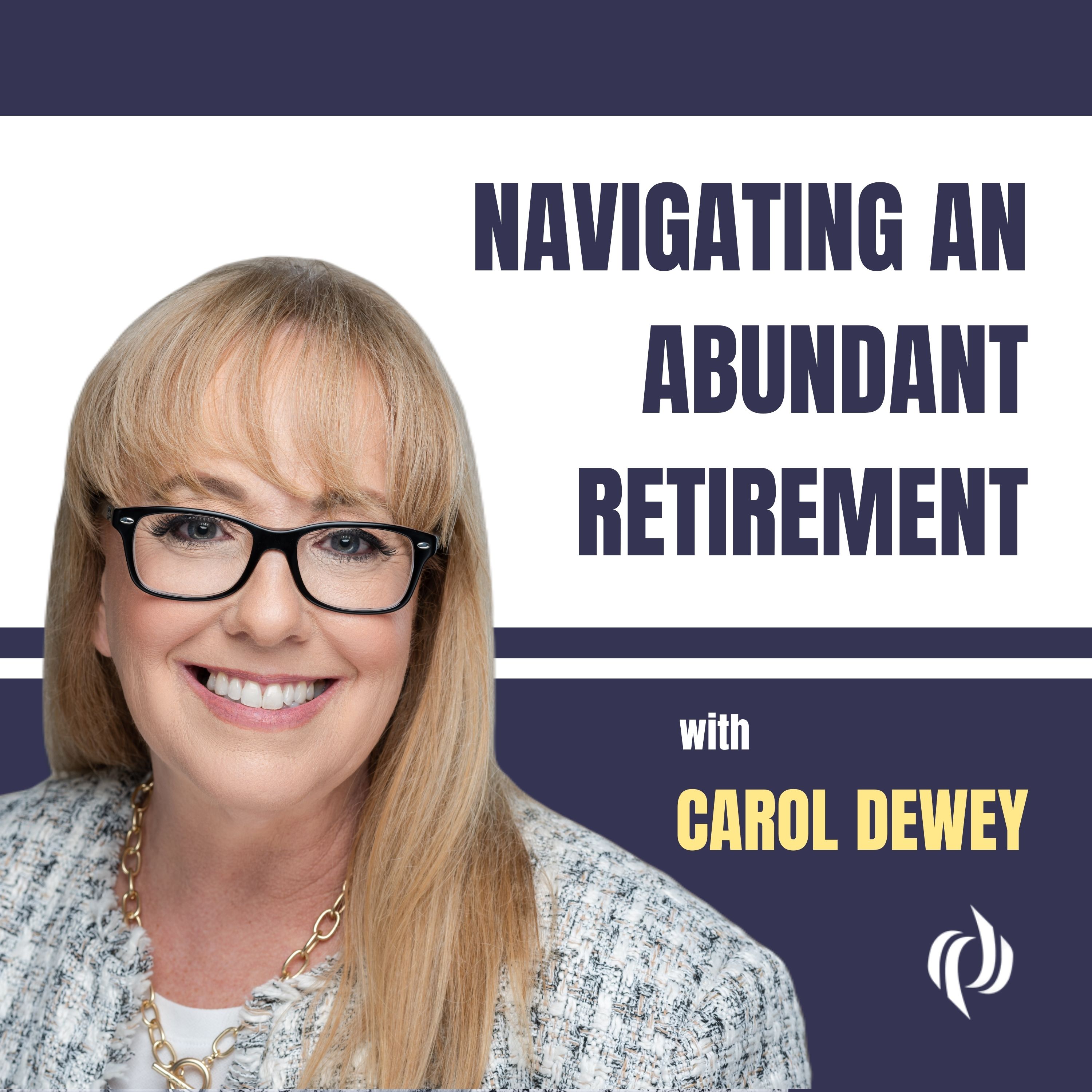
Navigating an Abundant Retirement with Carol Dewey

Navigating an Abundant Retirement with Carol Dewey

Hosted by Carol Dewey

Episodes

95

Latest episode

Jun 2026

Language

EN

About the show

Hey! This is Carol Dewey I’m excited to be bringing you Navigating an Abundant Retirement. This show is going to be your GPS to the principles to create a more worry-free retirement with less stress…... In this podcast you will: 1. Get crystal clear on your destination 2. Identify the biggest retirement obstacles retirees now must overcome 3. Gain new mindset to retiring abundantly 4. Have new solution to retiring abundantly AFTER THE EMBRAER 176 touched down at Chicago O’Hare, I put the draft of the manuscript I was finishing on the seat and grabbed my bag from the overhead compartment. “Wow! That’s a wonderful goal,” said the woman in seat 3D. Her comment startled me, and I wasn’t exactly sure what she meant. Until I turned around. She was pointing at the title, Retire Abundantly. To the woman in 3D, the question of how to retire abundantly was a daunting challenge. It is for many people: “Retirement” is a subject that returns 241,000,000 Google results. Two hundred and forty-one million! Our three-legged retirement system, made up of Social Security, pensions, and personal savings, has changed a lot in the past 30 years. Social Security contributes less than it used to, pensions have become 401(k)s, and personal savings aren’t what they used to be, because people are living longer. And worse, traditional financial planning techniques can make this situation worse. Pat advice that doesn’t take into account your goals and situation can cause serious damage to the happiness you should enjoy in your retirement years. No wonder the woman in 3D was struck by my title. You want answers. This podcast can deliver some.

Listen to episodes

60 recent
June 4, 202612 min

How to Organize Your Financial Life After Losing a Spouse

Losing a spouse often means inheriting a new set of responsibilities at a time when you're already carrying the emotional weight of grief. In this episode of Navigating Abundant Retirement, Carol Dewey discusses why financial organization feels so overwhelming after loss and shares a simple framework for making the process more manageable.Key Takeaways:Why financial paperwork feels emotionally overwhelming after losing a spouseThe difference between financial organization and financial perfectionHow the Four-Pile System can help simplify decision-makingWhy you do not need to become a financial expert overnightThe importance of having the right guide to help coordinate the moving piecesHow clarity creates confidence and confidence creates progressThe goal is not to organize paperwork for the sake of organization. The goal is to create enough clarity and confidence that you can get back to living the life waiting on the other side of it.Resources & LinksSpotifyApple PodcastsYouTube

May 21, 202612 min

The First Financial Decisions a Widow Should NEVER Rush Into

After the loss of a spouse, many widows find themselves facing an overwhelming number of financial decisions at the exact moment they feel least prepared to make them.In this episode of Navigating Abundant Retirement, Carol Dewey discusses some of the biggest financial decisions widows should never rush into—and why slowing down can often be the smartest financial move. From selling a home too quickly to making emotional investment changes, Carol shares practical guidance to help widows move from uncertainty and pressure toward clarity, confidence, and control.Key TakeawaysGrief affects decision-making, confidence, and concentrationMajor financial decisions rarely need to be made immediatelyPressure often comes from family, advisors, deadlines, and fearSlowing down creates space for better decisionsOrganization should come before actionUnderstanding income and cash flow is essential before making major changesThe right financial guidance provides clarity—not pressureFinancial Decisions Widows Should Never Rush Into🏡 Selling the Home Too QuicklyYour home is more than a financial asset. It represents stability, routines, memories, and comfort. Before making a decision to sell, downsize, or relocate, take time to evaluate both the emotional and practical implications.📈 Making Emotional Investment ChangesFear and uncertainty can lead to drastic investment decisions. Before moving assets, liquidating accounts, or shifting everything to cash, take time to understand what you own, how it works, and how it supports your long-term goals.💰 Tax Decisions Without Understanding the ConsequencesThe loss of a spouse often changes tax filing status, income thresholds, Medicare premiums, and distribution requirements. Understanding the ripple effects before making decisions can help prevent costly mistakes.👨‍👩‍👧 Helping Family Too QuicklyMany widows feel pressure to help adult children or distribute inherited assets immediately. Giving yourself time to stabilize your own financial situation first is not selfish—it is wise.🤝 Trying to Handle Everything AloneFinancial isolation can create unnecessary stress and confusion. The right support system can help you move forward with clarity and confidence during a difficult transition.What to Focus on FirstInstead of rushing into major decisions, focus on:📋 OrganizationGather and organize:Financial accountsInsurance policiesBeneficiary informationIncome sourcesLegal documents💵 Understanding IncomeIdentify:Social Security benefitsPension incomeSurvivor benefitsInvestment incomeRequired distributions⚖️ Legal & Tax CoordinationReview:WillsTrustsBeneficiary designationsPowers of attorneyHealthcare directivesTax implicationsCore MessageYou do not need to become a financial expert overnight.You do not need every answer today.You simply need a process, a plan, and the right people to help guide you through the next step.Reflection QuestionWhat financial decision in your life right now might benefit from more clarity—and less urgency?LinkedIn-Friendly TakeawayOne of the biggest mistakes widows make is believing they need to have everything figured out immediately.But confidence doesn't come from moving faster.It comes from understanding your options, slowing down when necessary, and making thoughtful decisions from a place of clarity—not pressure.Resources & LinksNavigating Abundant Retirement – SpotifyNavigating Abundant Retirement – Apple Podcasts📺 Perpetual Wealth Financial YouTube ChannelEpisode Quote"There is no prize for making fast financial decisions while emotionally overwhelmed. The goal is not perfection. The goal is progress with the right support." — Carol Dewey

May 7, 20269 min

Where Do I Even Start? The First Financial Decisions After Losing a Spouse

Losing a spouse changes everything and for many women, it also means suddenly stepping into financial responsibilities they never had to manage before.In this episode of Navigating Abundant Retirement, Carol Dewey walks through the emotional and financial realities that often follow the loss of a spouse and explains why the first step is not rushing into major financial decisions but creating clarity, stability, and protection first. Through the story of “Susan,” Carol shares the most common mistakes made during this vulnerable period and offers a calm, structured framework for moving forward with confidence.Key TakeawaysMost major financial decisions should not be made immediately after losing a spouseGrief can affect decision-making and increase vulnerability to pressureSlowing down is often the smartest financial decision you can makeThe early focus should be on:ClarityStabilityProtectionYou do not need to have everything figured out right awayA trustworthy advisor helps you understand options—not pressure you into decisionsWhat Matters Most in the Early Days🔹 ClarityUnderstand:What accounts existHow assets are titledWhat income sources are availableYour current financial picture🔹 StabilityEnsure:Bills are being paidIncome continues uninterruptedDay-to-day financial life remains manageable🔹 ProtectionReview:BeneficiariesAsset transfersPotential risks or gaps during the transitionA Critical ReminderThis is not the time to make permanent financial decisions based on temporary emotions.You do not need to:Restructure everything immediatelyReinvest account quicklySell major assets right awayRush into commitmentsYou are allowed to slow down and think clearly first.Core MessageThe goal is not perfection.The goal is progress—with the right support, at the right pace.Reflection QuestionAre you making decisions from clarity—or from pressure to feel in control again?One of the biggest mistakes after losing a spouse is feeling pressure to “figure everything out” immediately.But clarity rarely comes from urgency.Sometimes the strongest financial decision is giving yourself permission to slow down, gather information, and move forward one thoughtful step at a time.Resources & Links🎧 Spotify Show, Apple Podcasts, YouTube

April 23, 20269 min

Why Successful Business Owners Still Feel Out of Control Financially

Many business owners look highly successful from the outside—strong revenue, consistent income, and growing companies. But behind the scenes, many still feel financially disorganized, overwhelmed, or uncertain if everything is truly working together.In this episode of Navigating Abundant Retirement, Carol Dewey explains why success does not always create clarity. Often, financial lives are built by solving problems one at a time—hiring a CPA, working with an advisor, setting up legal structures—but without an overall coordinated strategy. Over time, this fragmentation can create hidden inefficiencies, missed opportunities, and the feeling that you are carrying everything alone.Key TakeawaysStrong income does not automatically create financial organizationSolving problems individually is not the same as having a coordinated strategySeparate advisors may do their jobs well, but still leave gaps between decisionsFragmentation can lead to higher taxes, missed planning opportunities, and income inefficienciesFinancial pressure often comes from trying to connect all the pieces aloneClarity and confidence improve when decisions are aligned under one strategyWhy It Feels Out of ControlMany business owners have:A collection of accountsA CPA focused mainly on past taxesAn advisor focused on investmentsAn attorney focused on legal protectionEach piece may function individually, but no one is asking:How does all of this work together?That disconnect creates friction over time.What Changes EverythingInstead of trying to fix everything at once:Step back and review the full pictureIdentify gaps and inefficienciesBuild a coordinated strategyAlign business success with personal financial freedomMove from reacting to planningCore MessageThis is not about needing more advisors or making more money.It is about coordination.When your financial life is connected properly, decisions become clearer, confidence grows, and you stop carrying the burden alone.Reflection QuestionAre your financial decisions connected by a strategy—or just built one problem at a time?Resources & Links🎧 Spotify Show 🍎 Apple Podcasts📺 YouTube

April 9, 20268 min

The First 90 Days After a Major Financial Transition: What NOT to Do

In this episode of Navigating Abundant Retirement, Carol Dewey explores what happens in the first 90 days after a major financial transition—and why this period is often the most vulnerable for decision-making.When financial responsibility suddenly increases, whether due to a life event, business growth, or shifting roles, pressure builds quickly. Many feel the need to act immediately. But as Carol explains, the real risk isn’t the market or external factors; it’s making permanent financial decisions in a temporary emotional state.This conversation focuses on slowing down, creating space, and making thoughtful decisions that truly align with your life today, not your past circumstances.Key TakeawaysPressure rises faster than clarity during major financial transitionsThe biggest risk is making irreversible decisions too quicklySpeed is not the same as clarity—and often leads to misalignmentNot all advice is aligned with your best interestYour intuition matters, especially when something feels rushedFinancial strategies should be reevaluated, not rushedWhat NOT to Do in the First 90 DaysDon’t rush to move all accounts or restructure everything immediatelyDon’t make irreversible financial decisions without time to thinkDon’t assume all advice is aligned with your goalsDon’t ignore internal hesitation or uncertaintyA Better ApproachGive yourself permission to pauseCreate space before making major financial decisionsSeek education over pressureWork with someone who helps you move step-by-step with clarityCore MessageUncertain moments don’t require faster decisions; they require better ones.And better decisions only happen when you give yourself the space to think clearly.Reflection QuestionAre you making decisions based on clarity or reacting to pressure?Subscribe Spotify, Apple Podcasts, YouTube

March 26, 20269 min

Income Is Not the Same as Wealth

In this episode of Navigating Abundant Retirement, Carol Dewey explores a critical distinction that many retirees overlook: income does not equal wealth.While generating income in retirement is important, income alone does not guarantee stability, flexibility, or long-term peace of mind. Carol explains why true retirement confidence comes from structure, coordination, and after-tax clarity, not just how much money is coming in.Key TakeawaysIncome is a flow — wealth is a structureHigh income does not always mean stable or sustainable incomeTrue wealth is measured by net spendable, after-tax incomeTax inefficiency can quietly erode long-term retirement incomeStability and predictability matter more than maximizing incomeThe 3 Layers of Wealth PlanningIncome – What comes in monthlyStability – How predictable and tax-efficient that income isLongevity & Legacy – How income sustains your lifestyle and supports your long-term goalsMost retirement plans stop at income. True wealth planning addresses all three.Why Structure MattersWithout coordination, income can be fragile:Market-dependent income may fluctuateTax exposure can reduce net incomeLongevity and healthcare costs can strain resourcesPoor planning can impact legacy goalsWealth is not just what you have—it’s how efficiently it supports your life over time.Reflection QuestionsIf markets decline, does your income decline?If taxes rise, does your net income drop significantly?If one spouse passes away, does your income structure change?If healthcare costs increase, does your lifestyle adjust?If you’re unsure, income alone may not be enough.Core MessageIncome may feel reassuring—but coordination creates true wealth. Clarity leads to confidence. Resources📘 Free Download: 8 Key Drivers of Company Value📅 Book your Complimentary Lifestyle & Legacy Assessment💬 Website: https://www.perpetualwealthfinancial.com 💬 LinkedIn: https://www.linkedin.com/in/perpetualwealth/🎧 Listen & Subscribe: Spotify , Apple Podcasts , YouTube

March 12, 20269 min

The Hidden Risk in “Set It and Forget It” Retirement Plans

In this episode of Navigating Abundant Retirement, Carol Dewey explores a subtle but significant retirement risk: the belief that once a plan is created, it can simply run on autopilot.While long-term investing discipline is important, retirement is not a static phase of life. Markets shift, tax laws evolve, healthcare costs rise, and personal circumstances change. Without regular review and intentional adjustments, even a well-designed retirement plan can slowly drift off course. Key Risks of “Set It and Forget It” PlanningTax DriftMany retirees hold a large portion of their assets in tax-deferred accounts like IRAs and 401(k)s. Without proactive tax coordination, withdrawals can unintentionally trigger higher tax brackets, increased Social Security taxation, or Medicare IRMAA surcharges.Risk MisalignmentPortfolios designed for accumulation may remain too aggressive in retirement. If volatility causes stress or reactive decisions, the investment strategy may no longer match the retiree’s true risk tolerance.Unstructured WithdrawalsTaking income from investments “as needed” can lead to inefficient withdrawal sequencing, missed tax planning opportunities, and increased portfolio pressure during downturns.Healthcare & Longevity RisksMedicare covers many expenses, but not everything. Long-term care, extended healthcare needs, and longevity require proactive planning.Estate Plan DriftBeneficiaries, laws, and family circumstances change over time. Estate plans that are never revisited may no longer reflect current intentions or tax realities.Why Regular Review MattersRetirement planning isn’t about constant changes—it’s about intentional oversight.An annual review should evaluate:Tax projections and Roth conversion opportunitiesWithdrawal sequencing strategiesIRMAA thresholds and tax exposurePortfolio risk alignmentHealthcare planning and longevity assumptionsEstate documents and beneficiary designationsEven small adjustments can significantly improve long-term outcomes. Core MessageRetirement isn’t autopilot—it’s navigation.Confidence in retirement doesn’t come from ignoring the plan. It comes from reviewing, refining, and adjusting it as life evolves.Resources📘 Free Download: 8 Key Drivers of Company Value📅 Book your Complimentary Lifestyle & Legacy Assessment💬 Website: https://www.perpetualwealthfinancial.com 💬 LinkedIn🎧 Listen & Subscribe: Spotify, Apple Podcasts, YouTube

February 26, 202610 min

Retirement Shouldn’t Depend on the Market Showing Up

In this episode of Navigating Abundant Retirement, Carol Dewey addresses a critical shift that many retirees miss: moving from accumulation thinking to income thinking.While markets are powerful wealth-building tools, they are not income plans. If your retirement lifestyle depends entirely on market performance, you may be relying on hope rather than structure. Carol explains why income predictability—not portfolio size—is the foundation of retirement confidence. Retirement Shouldn’t Depend on …Key Topics Covered🔹 The Danger of Sequence of Returns RiskWithdrawals change the math. Early downturns during retirement can permanently damage income sustainability—even if markets eventually recover.🔹 Why Averages Don’t Protect Cash FlowLong-term returns don’t guarantee short-term stability. Structure protects income. Hope does not.🔹 Income Layering StrategyCarol introduces a tiered approach to retirement income:Layer 1: Guaranteed IncomeSocial Security, pensions, and contractually guaranteed income sources.Layer 2: Structured, Lower-Volatility IncomeBond ladders, dividend portfolios, and fixed-income strategies.Layer 3: Growth AssetsEquities and long-term appreciation investments for lifestyle expansion.This framework separates essential expenses from market exposure. Retirement Shouldn’t Depend on …Taxes: The Overlooked RiskPre-tax retirement accounts come with future tax obligations. Required Minimum Distributions (RMDs), Medicare surcharges, and Social Security taxation can quietly erode net income.Retirement planning is not just about returns, it’s about after-tax income. Retirement Shouldn’t Depend on …Core Reflection QuestionIf the market dropped 25% next year, would your retirement lifestyle change?If yes, your income plan may be too dependent on growth. If no, you likely have a structure in place.Core MessageThe market is a wealth-building tool not a retirement income strategy.Retirement shouldn’t feel fragile. It should feel free. Retirement Shouldn’t Depend on …What’s NextIn the next episode, Carol explores another hidden risk: the danger of “set-it-and-forget-it” retirement planning and how complacency can quietly erode long-term security.Resources📘 Free Download: 8 Key Drivers of Company Value📅 Book a Complimentary Lifestyle & Legacy Assessment💬 Website: https://www.perpetualwealthfinancial.com 💬 LinkedIn: https://www.linkedin.com/in/perpetualwealth/🎧 Listen on Apple Podcasts, Spotify, and YouTube

February 12, 20269 min

Why Most Retirement Plans Fail — And the Navigator Framework That Fixes It

In this episode of Navigating Abundant Retirement, Carol Dewey addresses a hard truth: most people don’t actually have a retirement plan; they have a collection of financial products.Even successful savers and investors often feel uncertain about taxes, market downturns, healthcare costs, and income sustainability. The issue isn’t effort; it’s framework. Carol explains why traditional retirement planning fails and introduces the Navigator Framework, a coordinated, adaptive approach designed to help retirees move from accumulation to confident navigation. Why Most Retirement Plans Fail …Why Most Retirement Plans Break DownAssumption-based planning that ignores real-world volatilityProduct-first recommendations without integrated strategyFailure to manage sequence-of-returns riskStatic plans that cannot adapt when life changes Why Most Retirement Plans Fail Retirement doesn’t happen in a spreadsheet. Markets shift. Tax laws evolve. Health and family dynamics change. A plan built on assumptions collapses under reality.The Shift: From Accumulation to NavigationRetirement requires a different skill set. You are no longer racing toward a number; you are steering through uncertainty.The Navigator Framework focuses on:Clarity – Understanding your true income, tax exposure, and riskCourse Mapping – Coordinating income, taxes, risk, and legacy planningNavigation Tools – Choosing strategies that fit the plan, not products sold in isolationCourse Corrections – Adjusting as markets, laws, and life evolve Why Most Retirement Plans Fail …Key QuestionIf the market dropped 20% tomorrow, would your retirement lifestyle change?If the answer is yes or even maybe, the issue isn’t how hard you’ve worked. It’s how your plan is structured.Core MessageAbundance doesn’t come from predicting the future. It comes from navigating it well. Why Most Retirement Plans Fail Resources📘 Free Download: 8 Key Drivers of Company Value 📅 Book a Complimentary Lifestyle & Legacy Assessment💬 Website: https://www.perpetualwealthfinancial.com 💬 LinkedIn: https://www.linkedin.com/in/perpetualwealth/🎧 Listen on Apple Podcasts, Spotify, and YouTube

January 29, 202612 min

The Risks No One Warns You About After Financial Success

In this episode of Navigating Abundant Retirement, Carol Dewey explores the hidden risks that often emerge after financial success, the ones that don’t show up in performance reports or headlines. These risks are subtle, gradual, and frequently overlooked, yet they can quietly undermine confidence, income, and peace of mind in retirement.Carol explains why success can create blind spots, how retirement changes the rules around decision-making, and why abundant retirement planning requires more than strong investment returns. The Invisible Risks No One Warn…Key TakeawaysThe biggest retirement risks are often invisible, not market-drivenTiming and sequence of withdrawals can matter more than portfolio sizeTaxes quietly erode income over time without proactive planning“Safe” strategies without coordination can introduce new risksFamily, legacy, and communication gaps create emotional and financial exposurePurpose and identity matter as much as money after success The Invisible Risks No One Warn…Core MessageAbundant retirement isn’t about predicting the future; it’s about preparing for variability. True confidence comes from coordinated planning that addresses income, taxes, family dynamics, and purpose, not just accumulation. The Invisible Risks No One Warn…What’s NextIn the next episode, Carol explains why income—not net worth—is the true foundation of retirement confidence. The Invisible Risks No One Warn…Resources📘 Free Download: 8 Key Drivers of Company Value📅 Book a Complimentary Lifestyle & Legacy Assessment💬 Website: https://www.perpetualwealthfinancial.com 💬 LinkedIn: https://www.linkedin.com/in/perpetualwealth/🎧 Listen on Apple Podcasts, Spotify, and YouTube

Is this your show?

Claim this listing to keep it up to date, reach guests who want to pitch you, and manage bookings with Guestify.

Claim this listing

More Business podcasts