Find partners
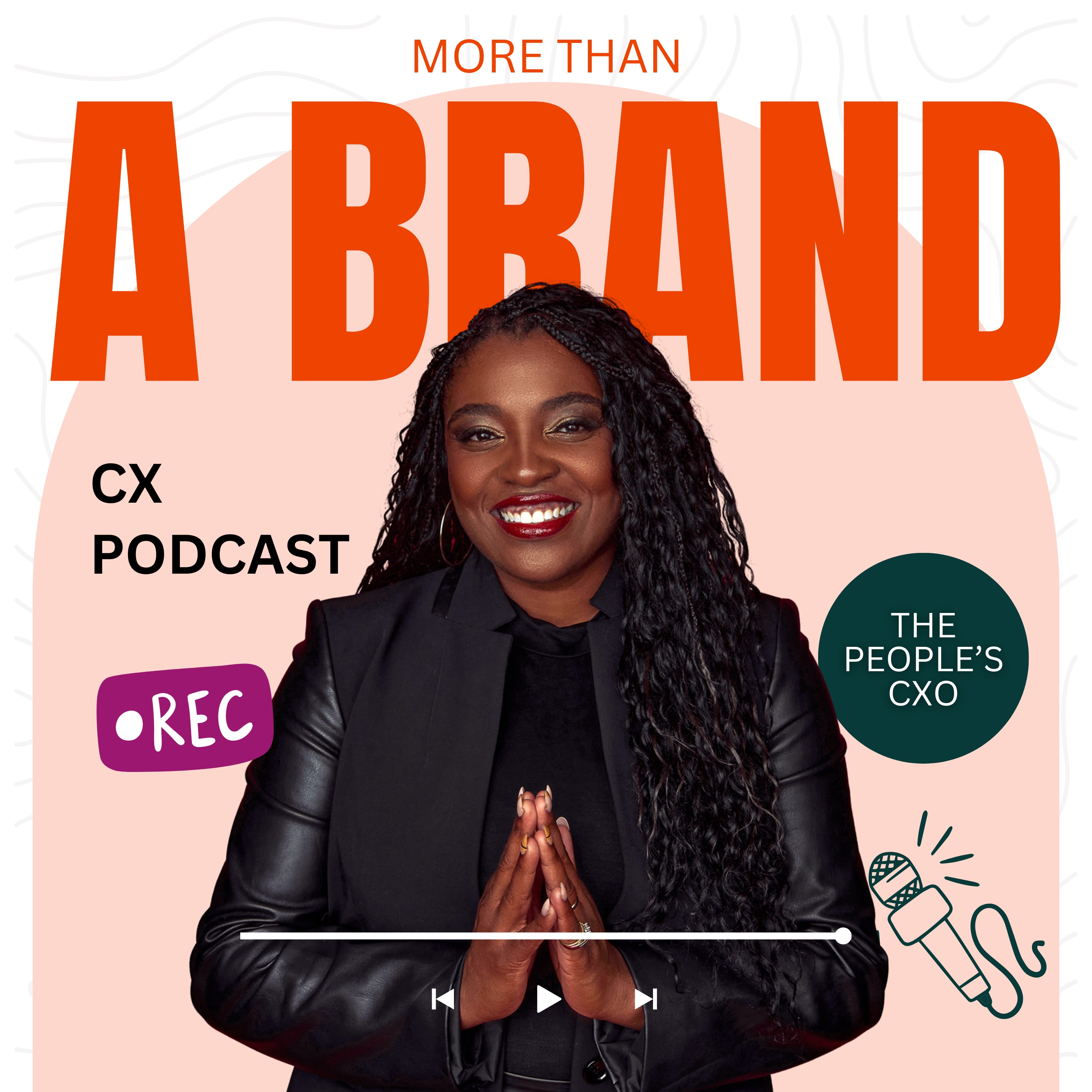
More Than A Brand: CX Podcast

More Than A Brand: CX Podcast

Hosted by Lindsay Tramel-Jones

Episodes

62

Latest episode

May 2026

Language

EN

About the show

You built your business on relationships. Your clients stayed because of how you made them feel — seen, valued, and taken care of. Then you hired a team, and somewhere in that handoff, the standard you built stopped showing up the way it used to. Clients are quieter. Renewals feel less certain. And you're still jumping into conversations you thought you'd handed off. More Than a Brand is for growth-stage service business CEOs who are done being the only reason their client relationships hold. Every episode is about building the relationships that keep clients coming back without it all depending on you. No generic retention advice. No marketing tactics dressed up as relationship strategy. Just honest, specific conversations about what it actually takes to transfer your relationship standard to your team — and make it stick. Hosted by Lindsay Tramel-Jones — 19-year U.S. Army veteran, CEO of Fierceified Consulting, and Client Relationship Strategist — More Than a Brand is where CEOs stop chasing the next lead and start stewarding the ones they already have.

Listen to episodes

60 recent
May 14, 202618 min

Prepping Your Business for a New Hire

Build the PORCH Before Your First Hire: The Pre-Hire Foundation That Protects Client Experience Lindsay Tramel-Jones explains that founders near their first hire often ask “Am I ready to hire?” instead of “Is my business ready for someone else to do the work?” She introduces the PORCH framework—a five-part pre-hire foundation that helps a new employee or long-term contractor integrate into a service business without client experience “drift”: Persona (document your client psychology), Onboarding (a structured 30-day plan for observing, practicing, and owning relationship standards), Roadmap (specific tasks, cadence, and escalation standards), Conduct (defined expectations for client-facing communication), and Heart (the emotional target at each stage of the client journey). She provides one diagnostic question per dimension, explains how to score readiness (0–5), and invites listeners to a $20 live virtual workshop on June 5 at 12:00 PM ET.00:00 First Hire Anxiety 01:11 Ready to Hire vs Ready Business 02:06 PORCH Framework Overview 06:19 P Persona Defined 07:47 O Onboarding Plan 09:00 R Roadmap Battle Rhythm 10:34 C Conduct Standards 11:59 H Heart Emotional Targets 13:21 Score Your Porch 15:55 Next Steps Workshop Invite Learn more about Hire With Intention Workshop 17:12 Final TakeawayMentioned in this episode:Hire With Intention Promo

April 23, 202613 min

Your Business Should Be Able to Run Without You. Here's How You Know If It Can.

Could Your Team Run the Business Without You?Building a Shared Client Relationship Standard Lindsay Tramel-Jones shares a story about a client who was seriously injured in a car accident and couldn’t communicate or physically work, yet her team successfully ran a pre-scheduled in-person event, made sales, and proactively contacted customers about potential order delays with transparency and a request for grace. Lindsay explains that as service businesses grow, a CEO’s instinctive standards often get “translated” and watered down across hires, creating inconsistent client experiences. She argues that SOPs, onboarding, and supervision don’t define what clients should experience; what works is a shared, intentionally built relationship standard grounded in the brand’s mission and voice, created with the team so they can carry the mission when the CEO is out. She closes by urging CEOs to assess whether their team can represent the brand without them and notes this is what FlowTribe helps build.https://www.instagram.com/fierceified.agency00:00 Client Accident Wake Up Call01:16 Podcast Intro And Mission01:58 Why Standards Get Lost03:33 Copy Of A Copy Problem04:14 Team Runs Event Without CEO05:40 Proactive Client Communication07:29 Beyond SOPs And Onboarding09:33 The One Question For CEOs10:38 How To Fix It Flow Tribe 11:08 Client Update And ClosingMentioned in this episode:FlowTribe Team Engagement68% of clients leave service businesses not because of price or a competitor — because they felt unappreciated. That is not a marketing problem. That is a relationship problem. And it almost always lives in how your team shows up when you are not in the room. FlowTribe is the two-week team engagement Lindsay Tramel-Jones built to fix that. Not a course. Not coaching for the CEO. A facilitated engagement for your whole team — using your FlowLab data to diagnose exactly where the client relationship is breaking down, train the team to build a stronger standard, and assign clear ownership to every touchpoint. By the time FlowTribe ends, your team knows how to build the client relationship without you in every conversation. Applications are open. Founding client spots are available at a reduced investment. Go to Flowtribe.co to apply.

April 18, 202619 min

Build Relationships, Not Just SOPs: Where Teams Fall Short

Lindsay Tramel-Jones explains that when a service business grows, client churn often comes from a missing relationship standard—not a skills problem—because team members default to their own client style when expectations aren’t explicit.She describes how an original hire may deliver 80–85% of the founder’s standard by proximity, a middle hire 60–70% through partial observation and SOPs, and a newest hire 40–50% by relying on personal instincts, creating inconsistent client experiences that clients notice before the CEO does. She notes research that clients leave due to feeling unappreciated (68%), perceived indifference (34%), and inconsistent experience (18%). Addressing veteran-owned businesses, she distinguishes operational excellence from relational consistency and argues a standard is not a script: define what great looks like while letting each team member deliver it through their strengths.She invites listeners to assess gaps with the free Flow Lab tool and apply to Flow Tribe to build the standard together.00:00 Episode Setup00:26 Show Intro01:06 When Standards Drift03:19 Founder Standard Problem04:35 Ops vs Relationship06:17 Standard Gets Diluted07:44 Three Team Versions08:02 OG Hire Strength09:38 Middle Hire Gap10:50 Newest Hire Reality12:21 Veteran Founder Pushback13:18 Script vs Standard14:37 Build Like a Unit16:29 One Question Close17:40 Free Tools and CTA18:14 Final OutroRESOURCES To Get StartedStart FlowLab free — Relationship Health Assessment:Apply for FlowTribe:Book a discovery call Book Lindsay For a KeynoteMentioned in this episode:FlowTribe Team Engagement68% of clients leave service businesses not because of price or a competitor — because they felt unappreciated. That is not a marketing problem. That is a relationship problem. And it almost always lives in how your team shows up when you are not in the room. FlowTribe is the two-week team engagement Lindsay Tramel-Jones built to fix that. Not a course. Not coaching for the CEO. A facilitated engagement for your whole team — using your FlowLab data to diagnose exactly where the client relationship is breaking down, train the team to build a stronger standard, and assign clear ownership to every touchpoint. By the time FlowTribe ends, your team knows how to build the client relationship without you in every conversation. Applications are open. Founding client spots are available at a reduced investment. Go to Flowtribe.co to apply.

April 8, 202620 min

Amazon Knows Your Order Number. Chewy Knows Your Dog's Name.

Customer Experience vs. Client Relationships: Why Service Businesses Lose Clients They’ve Already EarnedLindsay Tramel-Jones explains that customer experience (systems, processes, touchpoints, efficiency) and client relationships (feelings of being seen, valued, and appreciated) are fundamentally different, and warns growth-stage service businesses often try to solve relationship problems with CX frameworks, costing them retention. She notes research that 68% of clients leave because they feel unappreciated, then contrasts Amazon’s frictionless but transactional experience with Chewy’s relationship-led approach (fast human support, handwritten notes, condolence flowers), citing Chewy’s $3.35B sale, 41% market share, and strong retention. She also highlights Zappos’ culture of empowered teams (no scripts, no time limits, $2,000 to quit) and emphasizes relationships must be delivered by the whole team, not the CEO. She closes with three diagnostic questions and invites listeners to take the free Flo Lab assessment.00:00 Welcome and Big Idea02:01 Experience vs Relationship02:44 Why CX Tools Fail04:59 Amazon Transactional CX07:14 Chewy Relationship Playbook11:52 Zappos Team Culture15:12 Three Diagnostic Questions17:34 Bottom Line and Next Steps19:14 Closing and SubscribeRESOURCES To Get StartedStart FlowLab free — Relationship Health Assessment: Apply for FlowTribe: Book a discovery call Book Lindsay For a KeynoteMentioned in this episode:FlowTribe Team Engagement68% of clients leave service businesses not because of price or a competitor — because they felt unappreciated. That is not a marketing problem. That is a relationship problem. And it almost always lives in how your team shows up when you are not in the room. FlowTribe is the two-week team engagement Lindsay Tramel-Jones built to fix that. Not a course. Not coaching for the CEO. A facilitated engagement for your whole team — using your FlowLab data to diagnose exactly where the client relationship is breaking down, train the team to build a stronger standard, and assign clear ownership to every touchpoint. By the time FlowTribe ends, your team knows how to build the client relationship without you in every conversation. Applications are open. Founding client spots are available at a reduced investment. Go to Flowtribe.co to apply.

April 1, 202612 min

How to Choose the Right Retention Strategy: The RISE Method

Lindsay Tramel-Jones explains that retention isn’t a quick fix and only works once acquisition is consistent, then shares a step-by-step framework to choose and implement the right retention strategy for different businesses. She emphasizes starting with research by analyzing customer data to identify lifecycle drop-off points and pairing it with direct feedback from engaged clients to learn what would keep them buying, referring, and staying in the ecosystem. Next, she advises innovating by brainstorming programs and touchpoints (e.g., loyalty, referral, tiered services, VIP community) that customers want and the business can sustain, then strategizing with a rollout plan and defined KPIs before launch. Finally, she stresses evolving through ongoing measurement and customer input, framing retention as a continuous culture. She summarizes this as the RISE method: Research, Innovate, Strategize, Evolve.00:00 Retention Strategy Setup01:04 Podcast Intro and Promise01:35 Acquisition Before Retention02:44 Research Your Data04:19 Talk to Best Clients05:54 Innovate Retention Ideas07:23 Strategize and Rollout Plan08:38 Measure and Evolve09:54 RISE Method Recap11:14 Wrap Up and Call to ActionWatch Qualitative Vs Quantitative Data VideoWork With UsMentioned in this episode:Learn about FlowtribeFlowTribe is our 10 CX Accelerator for founders that are ready to stop being the bottleneck and ready to retain clients.

March 25, 20269 min

What is A Customer Retention Strategy

Lindsay Tramel-Jones shares a realization from Goldman Sachs Black and Business cohort nine: she needs to better explain what she does as a customer retention strategist, since people often reduce it to “emails.” On the More Than a Brand podcast, she clarifies that retention strategy isn’t the first priority if a business lacks a steady flow of new clients, and that acquisition and retention work together. She defines retention strategy as the systems, processes, and initiatives used to keep clients you’ve already won, emphasizing it’s more than repeat purchases—it’s keeping people in your ecosystem through buying, referrals, content engagement, and community. She illustrates this with loyalty programs (like Chick-fil-A win-back offers) and referral programs that incentivize clients to advocate and stay connected, helping businesses stop “starting from zero” and reducing reliance on cold leads and algorithms.00:00 Goldman Cohort Realization01:04 Podcast Mission Intro01:41 Retention vs Acquisition02:45 What Retention Means03:43 Loyalty Program Example05:03 Referral Program Example06:20 Mindset Shift and Wrap07:31 Call to Action OutroMentioned in this episode:Learn about FlowtribeFlowTribe is our 10 CX Accelerator for founders that are ready to stop being the bottleneck and ready to retain clients.

March 13, 20268 min

Can your customer experience survive a sold out launch?

Host Lindsay Tramel-Jones uses the Hanifa Day experience to highlight a key business lesson for scaling founders: being operationally ready for best-case demand. She describes how Hanifa, a Congolese American luxury clothing brand known for inclusive sizing and strong loyalty, saw major customer turnout for Hanifa Day (pre–Black Friday 2025), but delays and unfulfilled orders led loyal customers to air frustrations on social media, reversing the brand’s referral engine and damaging retention. She argues the brand wasn’t broken by a bad product or lack of attention, but by infrastructure that couldn’t handle success, and notes word-of-mouth can flip quickly. She commends the owner for publicly taking responsibility and pausing the brand to improve while fulfilling orders, then urges listeners to ask before launches: if everyone shows up tomorrow, are you truly ready?00:00 Viral Story Setup00:34 Podcast Intro01:10 What Happened at Hanifa Day01:47 Fulfillment Breakdown Fallout03:02 The Real Lesson Are You Ready04:37 Retention Word of Mouth Reversal06:38 Grace Accountability and Pausing07:26 Your Next Launch Readiness07:49 Strategy Call and Wrap UpVisit us at https://fierceified.agency/ to learn more about how we can help.

March 5, 202611 min

Why Customer Retention is The Most Underrated Growth Strategy For Small Businesses

On the More Than a Brand podcast, Lindsay Tramel-Jones, CEO of Fierceified Creative and Consulting, challenges scaling founders to examine how much time they spend chasing new leads versus serving existing customers, arguing that the gap is costing them growth. She explains that acquiring new customers can cost up to five times more than retaining current ones, and that selling to existing customers has a 60–70% probability compared to 5–20% for new prospects. Lindsay reframes retention as more than funnels, email sequences, or loyalty tactics, emphasizing customer experience across every touchpoint—awareness, consideration, purchase, onboarding, delivery, post-sale follow-up, and referrals. She highlights that simple, intentional actions like remembering details, checking in, and celebrating milestones create loyalty, community, and word-of-mouth, turning retention into the real engine behind sustainable growth.00:00 Welcome to the Show00:30 The Awareness Trap02:23 Retention Math That Matters03:49 What Retention Really Is06:44 Customer Journey Touchpoints08:28 Referrals and Word of Mouth09:02 Retention Without Big Tools09:58 Plug the Leaky BucketVisit us at fierceified.agencyTry our free CX Audit tool at flowlab.fierceified.agencyMentioned in this episode:Learn about FlowtribeFlowTribe is our 10 CX Accelerator for founders that are ready to stop being the bottleneck and ready to retain clients.

February 19, 202615 min

Hold the Shift: Retention Systems for the Influx of Conscious Customers

Lindsay Tramel-Jones, CEO of Fierceified Creative and Consultant, opens More Than a Brand by naming a cultural and economic shift in 2026: consumers are paying closer attention to where their money goes and are increasingly choosing small businesses over big corporations for trust, connection, and perceived quality. She frames this as an opportunity—but warns that if a small business backend is “duct taped together,” growth will feel like pressure, not progress. Centering customer retention, she shares that a 5% retention improvement can increase profits by up to 65%, and explains how retention creates breathing room by reducing the cycle of constant launching and starting revenue from zero. She offers three practical retention strategies to prepare for an influx of customers: (1) follow up quickly and consistently before and after the sale to maintain momentum and communicate care; (2) anticipate post-purchase needs with clear instructions and education, illustrated through a cold-pressed juice brand that supports customers with storage guidance and videos to protect product quality and build confidence; and (3) reward loyalty intentionally through referrals, tiers, points, bundles, or built-in tools like Shop Pay, emphasizing that incentives drive repeat purchases and turn retention into acquisition via returning customers who bring others. She closes by challenging founders to focus not just on attracting customers but on keeping them, strengthening the experience between “we’re interested” and “we’re in,” and plugging leaks in the pipeline as the foundation for steady growth and wealth-building.00:00 Welcome to More Than a Brand (Customer Retention for Scaling Founders)00:38 A Shift Is Happening: Conscious Spending & Small Business Opportunity04:17 Why Retention Matters Now (and the 5% = 65% Profit Wake-Up Call)06:15 Retention Strategy #1: Follow Up Like You Want the Relationship08:59 Retention Strategy #2: Anticipate What Customers Need After the Sale11:05 Retention Strategy #3: Reward Loyalty on Purpose (Simple Programs That Work)13:15 Can You Keep Them? Holding Growth, Plugging Leaks & Final Takeaways14:23 Outro: Subscribe + Where to Find Fierceified OnlineClick Here to learn more about LindsayVisit us at https://fierceified.agency/Mentioned in this episode:Learn about FlowtribeFlowTribe is our 10 CX Accelerator for founders that are ready to stop being the bottleneck and ready to retain clients.

February 13, 202610 min

Creating Value Your Customers Crave

In this episode of More Than a Brand, Lindsay Tramel-Jones, CEO of Fierceified Creative and Consultant, explores the importance of aligning product offerings with customer needs. She discusses the pitfalls creative CEOs face when they launch products without customer input and emphasizes the need for strategic timing and capacity in launching new initiatives. Lindsay shares insights on predicting customer journeys and ensuring each touchpoint in the business ecosystem delivers a seamless experience. This episode is a must-listen for scaling founders who want to transform from being the bottleneck to the architect of exceptional customer experiences.00:00 Introduction to More Than a Brand Podcast00:48 Challenges Faced by Creative CEOs01:56 The Importance of Customer Feedback03:28 Timing and Capacity in Business Decisions05:04 Predicting Customer Journeys07:01 Final Thoughts and Advice09:14 Conclusion and Social Media LinksClick here to learn more about Lindsay Learn more: https://fierceified.agency/Mentioned in this episode:Learn about FlowtribeFlowTribe is our 10 CX Accelerator for founders that are ready to stop being the bottleneck and ready to retain clients.

Is this your show?

Claim this listing to keep it up to date, reach guests who want to pitch you, and manage bookings with Guestify.

Claim this listing

More Business podcasts